
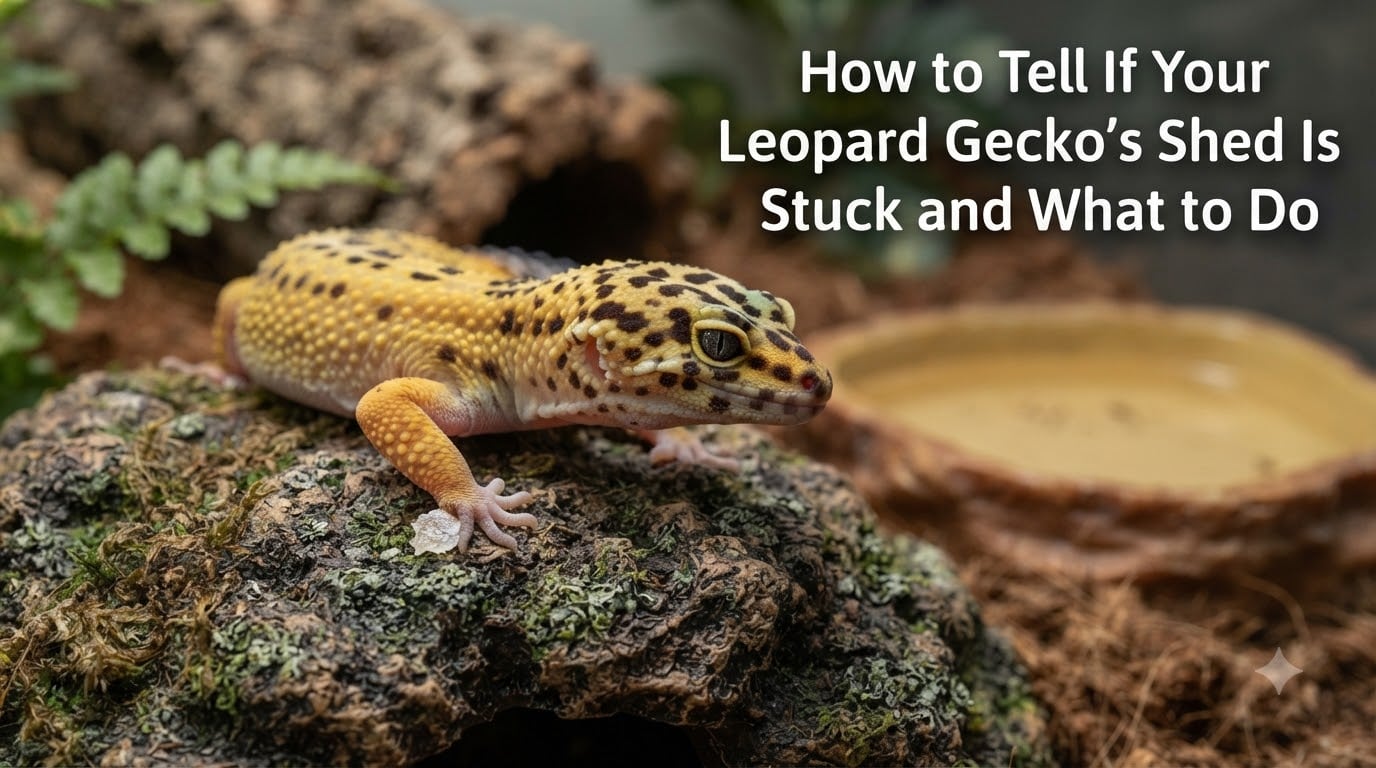
I still remember the first time I noticed my leopard gecko had white tips on her toes that wouldn’t come off. I panicked, grabbed tweezers, and almost made things worse. That was years ago, and since then I’ve helped dozens of keepers work through leopard gecko stuck shed issues. This guide covers everything I’ve learned, from spotting the earliest warning signs to safely removing retained shed and preventing it from coming back.
Stuck shed (also called retained shed) happens when old skin fails to peel off completely during the shedding cycle. Left untreated, it acts like a tiny tourniquet around toes and tail tips, cutting off circulation. The good news: with the right humidity setup and a calm approach, most cases resolve at home without a vet visit.
Table of Contents
What Is Stuck Shed and Why It Happens?
Stuck shed is exactly what it sounds like: a piece of old skin that stays attached after the rest has come off. Healthy leopard geckos shed their entire skin in one piece every 2-4 weeks for juveniles, or every 4-8 weeks for adults.
The shedding process, called ecdysis, starts when a new layer of skin grows underneath the old one. A whitish fluid separates the two layers, and the gecko rubs against rocks and décor to peel the old skin away, often eating it for the nutrients.
Stuck shed usually happens for three reasons: humidity is too low, the gecko is dehydrated, or a health issue is slowing the process. In my experience, low humidity in the cool side of the enclosure is the culprit about 80% of the time.
How to Identify Leopard Gecko Stuck Shed
Identifying stuck shed early makes removal dramatically easier. The visual cues are pretty consistent once you know what to look for.
Stuck shed usually looks white, gray, or pale yellow against your gecko’s normal coloration. The skin feels dry and crispy to a gentle touch, almost like a piece of old tape. You’ll often see it clinging in thin bands or patches, particularly on toes, tail tips, around the eyes, and along the vent area.
Check the toes first. Stuck shed on toes is the most common location and the most dangerous. Watch for white tips that don’t peel off within 24-48 hours of the rest of the shed completing. If the skin starts to look like a tight ring around a toe, treat it as urgent.
The eyes are another area to inspect carefully. The clear eyelid scale (called the spectacle) can also retain shed. You’ll see a cloudy, wrinkled patch over one or both eyes that looks different from the normal milky pre-shed appearance.
Normal pre-shed coloration turns the whole gecko pale and milky for 1-2 days, then clears up after shedding. If pale patches persist longer than that, or stay stuck on specific body parts, that’s stuck shed, not normal pre-shed coloring.
Common Areas Where Stuck Shed Appears
Stuck shed doesn’t spread randomly. Leopard geckos have specific trouble spots where the skin is thinner, more delicate, or harder to rub off.
Toes and Feet
Toes are the number one trouble spot. The skin there is thin, and shed can wrap around each toe like a tiny rubber band. Over days, this constricts blood flow, and the toe can turn purple, black, or simply die and fall off. I’ve seen keepers lose 2-3 toes before realizing what was happening.
Tail Tip
The tail tip is the second most common spot. Like toes, it’s narrow, with thin skin and limited blood flow. A constricting band of shed can cut off the tip, and while the tail usually regenerates, the new tail rarely matches the original.
Eyes and Eyelids
Stuck shed on the eye spectacle is particularly worrying. It can harden and press against the eye, causing irritation or infection. Unlike skin on the body, you can’t simply rub it off. Removal often requires a vet.
Vent and Belly
The vent area (cloaca) and folds along the belly can trap shed. This is less dangerous but still uncomfortable. Stuck shed here often signals overall humidity issues rather than just a one-off problem.
Step-by-Step: How to Remove Stuck Shed Safely
Removing stuck shed takes patience, not force. Pulling dry skin off can damage the new skin underneath and stress your gecko. Here’s the method that works best in my experience.
Supplies Checklist
Gather these before you start:
A small plastic container with ventilation holes (a deli cup works perfectly)
Paper towels or sphagnum moss
Lukewarm water (around 85°F / 29°C)
Cotton swabs (Q-tips)
Blunt-tipped tweezers
A clean towel
The Gecko Sauna Method
This is the safest and least stressful approach, especially for first-timers.
Step 1: Line the deli cup with damp paper towels or moist sphagnum moss. The substrate should be damp but not dripping. Squeeze out any excess water. Wetness, not standing water, is what you want.
Step 2: Place your gecko inside the cup and cover the top loosely with a paper towel to keep humidity high.
Step 3: Set the cup somewhere warm but not hot, around 80-85°F. Leave your gecko inside for 10-15 minutes. The humid air softens the stuck shed.
Step 4: Take your gecko out and gently work on the softened skin with a damp cotton swab. Roll the swab along the skin in the direction of growth, never against it. The shed should start sliding off easily.
Step 5: For stubborn bits on toes or tail, use blunt-tipped tweezers. Grip only the loose edge, never pinch the toe itself. Pull gently in the natural direction.
Step 6: If the shed doesn’t budge, repeat the sauna once more. Never pull dry, crispy skin. Stop and try again later if your gecko is stressed.
The Shallow Soak Method
For thicker stuck shed on the body, a shallow soak can help. Fill a container with lukewarm water no deeper than your gecko’s belly. Soak for 5-10 minutes while supervising. Many keepers report their geckos relax and even drink during soaks.
After the soak, use a damp cotton swab to roll the softened skin away. This works particularly well for body shed and belly folds.
What to Avoid
Never pull stuck shed off dry. Never use sharp tweezers, never soak in deep water (geckos can drown), and never force the eye spectacle off yourself. Eye caps require a vet’s touch.
How to Prevent Stuck Shed From Coming Back?
Prevention is mostly about humidity, but there’s a critical distinction most guides miss.
Humidity vs Wetness
Humidity means moist air, while wetness means standing water. Leopard geckos come from arid regions and don’t do well on wet substrate. What they need is a humid hide, a small enclosed space with damp moss or paper towels, available during shedding.
A proper humid hide holds humidity around 70-80% inside while the rest of the enclosure stays at 30-40%. This gives your gecko the choice to seek moisture when needed. Many geckos will spend most of their shed cycle inside the humid hide once they learn what it’s for.
Setting Up a Humid Hide
Use a small plastic container with an entry hole cut into the side. Place damp sphagnum moss or paper towels inside. Mist the moss lightly every 2-3 days during shedding. Replace the substrate weekly to prevent mold.
Position the hide on the warm side of the enclosure. Warm air plus moisture equals effective shedding support.
Hydration Matters
Always provide a shallow water dish with fresh water. Some geckos drink by licking droplets off décor, so misting one corner lightly each evening can encourage drinking. Well-hydrated geckos shed cleanly the first time.
Why Stuck Shed Recurs in the Same Spot
If stuck shed keeps coming back on the same toes, something deeper is going on. The most common causes are chronic low humidity, a previous injury that scarred the skin, or an underlying health issue like poor nutrition. A vet check is worth scheduling if you see the same spot repeatedly affected.
When to See a Veterinarian
Most stuck shed resolves at home, but some situations need professional help.
See a reptile vet if the toe or tail tip has turned purple, black, or swollen. Those colors mean circulation has been compromised, and waiting risks losing the digit. Eye caps that won’t come off after two sauna sessions also need a vet. Trying to remove them yourself risks damaging the eye.
Watch for signs of infection: redness, swelling, discharge, or foul smell around stuck shed areas. Prolonged retained shed can trap bacteria and lead to dermatitis. Open wounds or visible tissue under stuck shed mean it’s time to book an appointment.
Finally, if your gecko stops eating, becomes lethargic, or shows abnormal behavior along with stuck shed, those are systemic signs. A vet visit within 24 hours is appropriate.
Frequently Asked Questions
How to help a leopard gecko with a stuck shed?
The safest method is the gecko sauna. Place your gecko in a small container with damp paper towels for 10-15 minutes, then gently roll the softened skin off with a cotton swab. For stubborn bits, blunt-tipped tweezers help. Never pull dry, crispy shed.
How long do leopard geckos shed again?
Juvenile leopard geckos shed every 2-4 weeks because they grow quickly. Adults shed every 4-8 weeks, sometimes less often. If your gecko sheds more or less frequently than this, check humidity and overall health.
What does a stuck shed on a leopard gecko look like?
Stuck shed appears as white, gray, or pale yellow patches that feel dry and crispy to a gentle touch. It often shows up as tight bands around toes, tail tips, or wrinkles over the eye. Unlike normal pre-shed coloration, stuck shed stays in place for days.
How long to soak a leopard gecko for a stuck shed?
For shallow water soaks, limit sessions to 5-10 minutes under direct supervision. For the sauna method, 10-15 minutes is ideal. Repeat once if needed, but never leave your gecko unattended in water.
Key Takeaways for Leopard Gecko Stuck Shed Care
Leopard gecko stuck shed is one of the most common health issues keepers face, and most cases are fully preventable. The single biggest step you can take is providing a properly humid hide during every shed cycle. That alone solves the problem for about 80% of geckos.
When stuck shed does appear, move quickly but gently. The sauna method gives you the best balance of effectiveness and safety, especially for first attempts. Watch toes, tail tips, and eyes closely because those areas can become emergencies within days.
Trust your instincts. If something looks wrong, if a toe has changed color, or if stuck shed keeps returning to the same spot, a reptile vet visit is worth the cost. Most importantly, don’t panic. With patience and the right setup, your gecko will shed cleanly again.