
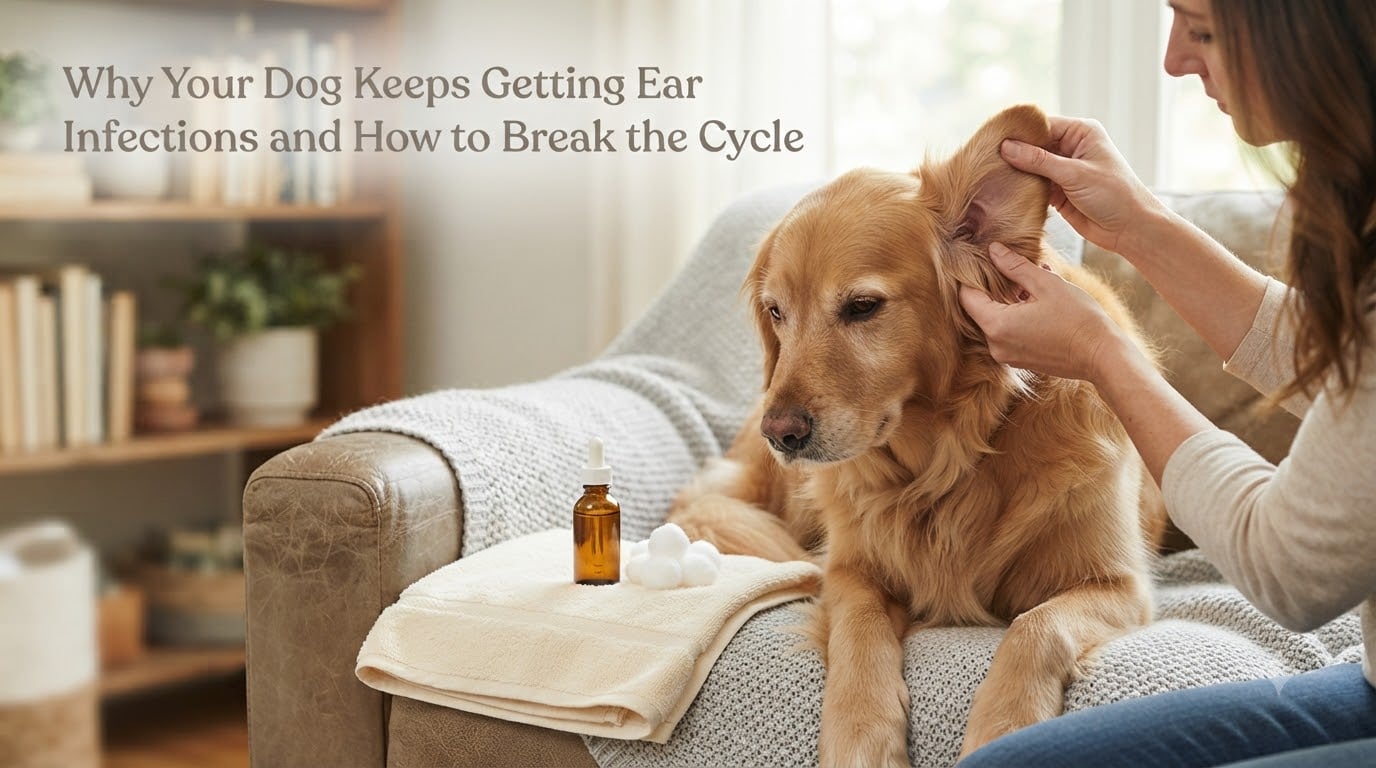
If your dog keeps getting ear infections, you already know the cycle. You notice the head shaking, catch the smell, make a vet appointment, get medicated drops, the infection clears up, and then three weeks later it is back. You are frustrated, your dog is miserable, and you are starting to wonder if something is fundamentally wrong.
You are not imagining it. When dog ear infections keep coming back, the problem is rarely the infection itself. The infection is a symptom of something deeper, and treating it with drops alone is like bailing water out of a boat without plugging the leak.
In this guide, we will explain exactly why your dog keeps getting ear infections and how to break the cycle for good. We will cover the root causes that most owners miss, the symptoms that warrant an immediate vet visit, step-by-step ear cleaning instructions, breed-specific risks, and when it is time to ask for a specialist referral.
Our team has dug through veterinary research, competitor articles, and hundreds of real owner experiences from forums like r/DogAdvice to build a resource that goes beyond the standard advice. By the end, you will have a clear action plan to help your dog stay comfortable and infection-free.
Table of Contents
Why Dog Ear Infections Keep Coming Back: Understanding the Cycle
Chronic ear infections in dogs follow a predictable pattern, and understanding that pattern is the first step to stopping it. The cycle starts when something disrupts the natural environment inside your dog’s ear canal. This allows bacteria or yeast that normally live in small numbers to multiply out of control.
Your vet prescribes medicated drops. They kill the overgrowth. The infection appears gone. But the underlying trigger, whether that is an allergy, excess moisture, or anatomical narrowing, is still there. So the bacteria or yeast regrow, and within weeks you are back at the clinic.
Dogs have deep, L-shaped ear canals that trap moisture and debris far more easily than human ears. This unique anatomy means that once the environment inside the canal is compromised, it stays compromised unless you address the root cause. Breaking the cycle requires identifying what is disrupting that environment in the first place.
The Root Causes of Chronic Ear Infections in Dogs
Most recurring ear infections trace back to one of five root causes. Finding which one applies to your dog is the key to permanent relief.
1. Allergies: The Number One Culprit
Up to 75 percent of dogs with chronic ear infections have an underlying allergy. Allergies inflame the skin lining the ear canal, causing it to produce excess wax and oil. This warm, waxy environment becomes a perfect breeding ground for yeast and bacteria.
Environmental allergies (atopic dermatitis) trigger reactions to pollen, dust mites, mold spores, and grass. These tend to cause seasonal flare-ups. Food allergies, on the other hand, can cause year-round infections and are often overlooked. Common food triggers include chicken, beef, dairy, wheat, and soy.
Many owners on r/DogAdvice report that their dog’s chronic ear infections only resolved after completing a strict 8-to-12-week food trial with a hydrolyzed protein diet. If your dog’s infections keep returning despite treatment, allergies should be the first thing you investigate with your vet.
2. Ear Anatomy and Floppy Ears
Breed anatomy plays a massive role in ear infection frequency. Dogs with long, floppy ears, like Cocker Spaniels, Basset Hounds, and Bloodhounds, have ear flaps that trap heat and moisture inside the canal. Dogs with narrow canals or heavy hair growth inside the ears, like Poodles and Schnauzers, face similar problems.
This is why some breeds seem to battle infections constantly while others never have a single one. The anatomy is not something you can change, but knowing your dog is at higher risk means you can stay ahead with preventive cleaning.
3. Moisture Trapped in the Ear Canal
Water is one of the most common ear infection triggers. Dogs that swim frequently, get bathed often, or live in humid climates are at much higher risk. Water gets trapped in the deep L-shaped canal and creates the damp environment yeast and bacteria love.
If your dog loves the water, this does not mean swimming is off limits. It means you need a post-swim routine that includes drying the ears and using a vet-approved drying solution.
4. Hormonal Imbalances and Underlying Disease
Less common but important to rule out, conditions like hypothyroidism and Cushing’s disease can weaken the immune system and alter skin health, making ear infections recurrent. These conditions typically come with other symptoms, such as weight gain, hair loss, or increased thirst.
If your dog has chronic infections that do not respond to standard treatment and no allergies have been identified, ask your vet about running a thyroid panel or other bloodwork.
5. Resistant Bacteria and Biofilm Formation
Sometimes the infection itself becomes the problem. Repeated courses of antibiotics can select for resistant bacteria, particularly methicillin-resistant Staphylococcus pseudintermedius. These bacteria can also form biofilms, protective layers that shield them from medication.
If your dog has been treated multiple times with the same medication and the infection keeps returning, your vet should perform a culture and sensitivity test. This identifies the exact bacteria present and tells the lab which antibiotics will actually work against it.
Dog Ear Infection Symptoms You Should Never Ignore
Catching infections early prevents them from becoming chronic. Here are the signs to watch for, progressing from early to severe.
Early signs include head shaking, scratching at one or both ears, and mild redness inside the ear flap. You might notice a slight odor or a small amount of clear to light brown discharge. At this stage, cleaning and monitoring may be enough.
Moderate signs include persistent scratching, visible discomfort, a strong smell, yellow or brown discharge, and swelling of the ear flap. Your dog may whimper when you touch the ear or tilt their head to one side.
Severe signs that require immediate veterinary attention include bleeding from the ear, a swollen ear flap that feels like a water balloon (this is an aural hematoma), loss of balance, circling, or signs of extreme pain. These can indicate a ruptured eardrum or deep infection that has spread beyond the ear canal.
Why Treating the Symptoms Is Not Enough
The biggest mistake owners make, and it is completely understandable, is treating each infection as an isolated event. You see the symptoms, you get drops, the infection clears, and you move on. But every time the infection returns, the ear canal changes.
Chronic inflammation causes the skin inside the ear canal to thicken and narrow. The canal becomes even more prone to trapping moisture and debris. Over months and years, this can progress to a condition called end-stage otitis, where the ear canal is permanently damaged and may require surgery.
Total Ear Canal Ablation (TECA) is a salvage surgery that removes the entire ear canal. It is a last resort for dogs with irreversible ear damage from years of untreated chronic infections. This is why breaking the cycle early matters so much. Every recurrent infection is doing cumulative damage.
The forum insights tell the same story repeatedly. Owners express frustration at spending hundreds of dollars on repeat vet visits and medications without ever getting to the root cause. The solution is not more drops. It is a diagnostic workup that identifies the trigger.
How to Break the Cycle: Treatment and Prevention
Breaking the cycle of recurring ear infections requires a systematic approach. Here is the step-by-step framework that veterinary dermatologists recommend.
Step 1: Get a proper diagnosis. Before any treatment, your vet should perform ear cytology. This involves taking a swab of the discharge, staining it, and examining it under a microscope. This tells you whether you are dealing with yeast, bacteria, or both, and ensures the right medication is prescribed from the start.
Step 2: Complete the full treatment course. Even if the ears look better after three days, continue the medication for the full duration your vet prescribed. Stopping early allows surviving organisms to rebound, often with resistance.
Step 3: Identify and address the underlying trigger. This is the step most owners skip. If allergies are suspected, discuss food trials or environmental allergy testing. If anatomy is the issue, commit to a preventive cleaning routine. If hormones are involved, pursue bloodwork.
Step 4: Establish a regular ear cleaning routine. Use a vet-approved ear cleaner once a week for maintenance, or after every swim or bath. The right cleaner helps dry the canal and maintains a healthy pH.
Step 5: Recheck before stopping treatment. Book a follow-up appointment even if the ears look clear. Your vet can confirm the infection is truly resolved, not just suppressed. Many recurrent infections are actually the same infection that was never fully eliminated.
Step 6: Consider a specialist referral. If your dog has had three or more infections in a year, ask your vet for a referral to a veterinary dermatologist. Specialists have advanced diagnostic tools and access to treatments that general practitioners may not offer.
How to Clean Your Dog’s Ears Safely at Home
Regular ear cleaning is one of the most effective preventive measures you can take. Done incorrectly, however, it can push debris deeper or cause irritation. Follow these steps for safe, effective cleaning.
Step 1: Gather your supplies. You need a vet-approved ear cleaning solution (never use alcohol, hydrogen peroxide, or water alone), cotton balls or gauze, and treats for positive reinforcement.
Step 2: Hold the ear flap up to expose the canal opening. Gently fill the canal with cleaning solution until you can see liquid at the opening.
Step 3: Massage the base of the ear for 20 to 30 seconds. You should hear a squelching sound. This helps break up wax and debris deep in the canal.
Step 4: Let your dog shake their head. This brings the loosened debris up and out of the canal naturally.
Step 5: Use a cotton ball or gauze pad to gently wipe the visible part of the ear canal and the ear flap. Never insert anything deep into the canal, including cotton swabs, which can pack debris further in or damage the eardrum.
Step 6: Reward your dog generously. Building a positive association makes future cleanings easier for both of you.
Breeds Most Susceptible to Ear Infections
Some dogs are genetically predisposed to chronic ear problems. If you own one of these breeds, preventive care should start before the first infection ever appears.
Cocker Spaniels top nearly every list of ear infection-prone breeds. Their long, heavy ears and naturally narrow canals create the perfect storm for chronic infections. Owners on dog forums consistently mention Cockers when discussing recurring ear issues.
Basset Hounds, Bloodhounds, and other hound breeds face similar challenges with their pendulous ears. Poodles, Schnauzers, and other dogs with heavy hair growth in the ear canals need regular plucking to maintain airflow.
Bulldogs, Shar-Peis, and other breeds with skin folds and narrow canals are also at elevated risk. For these dogs, a weekly cleaning routine is not optional. It is essential preventive medicine.
Natural Remedies vs Medical Treatments
Many owners want to know if they can treat ear infections naturally. The honest answer is that natural remedies have a role, but it is a supporting role, not a replacement for veterinary care.
Diluted apple cider vinegar can help maintain healthy ear pH in dogs with no active infection. Probiotic supplements support overall immune function and may reduce allergy-related inflammation. Omega-3 fatty acids, whether from fish oil or food, help reduce skin inflammation throughout the body, including the ear canal.
Dietary changes are perhaps the most impactful natural intervention. If food allergies are driving the infections, switching to a limited-ingredient or hydrolyzed protein diet can eliminate the trigger entirely. This is natural prevention at its most powerful.
However, once an active infection is present, natural remedies alone are rarely sufficient. Medicated drops prescribed after cytology are necessary to eliminate the overgrowth of bacteria or yeast. Attempting to treat a painful, advanced infection at home only prolongs your dog’s suffering and risks permanent ear damage.
When to See a Veterinarian?
Not every ear redness requires a vet visit, but knowing when to go can save your dog from serious complications. Seek veterinary care if you notice any of the following.
Your dog has had more than two ear infections in a six-month period. This is the threshold that indicates a chronic pattern requiring diagnostic investigation rather than another round of generic drops.
The infection has not improved after five to seven days of treatment. This suggests the medication may not be targeting the right organism, or that a resistant strain is present.
You see signs of pain, head tilt, loss of balance, or a swollen ear flap. These indicate a more serious problem that needs immediate attention.
Your dog’s ear discharge has changed color, consistency, or smell between treatments. This can signal a shift from yeast to bacteria or vice versa, requiring a different medication entirely.
Frequently Asked Questions
How to stop recurring ear infections in dogs?
To stop recurring ear infections, work with your vet to identify and treat the underlying cause, not just the infection itself. This typically involves allergy testing and management, regular ear cleaning with a vet-approved solution, addressing anatomical or hormonal factors, and completing the full course of prescribed medication. Food trials, environmental allergy management, and routine ear maintenance are the most effective long-term strategies.
What foods cause yeast infections in dogs’ ears?
Foods high in sugar and simple carbohydrates can feed yeast overgrowth in dogs. Common culprits include wheat, corn, soy, and certain grains. Dogs with food sensitivities may also react to specific proteins like chicken or beef. A limited-ingredient diet or grain-free formula recommended by your vet can help identify whether food is triggering chronic yeast ear infections.
How to naturally cure dog ear infection?
Mild ear infections may respond to natural approaches like diluted apple cider vinegar wipes (never use on raw or bleeding ears), probiotic supplements to support immune health, and dietary adjustments to reduce yeast. However, natural remedies should complement, not replace, veterinary care. Chronic, painful, or discharge-heavy infections require medicated treatment to prevent permanent ear canal damage.
Why will my dog’s ear infection not go away?
Ear infections that refuse to heal usually have an untreated underlying cause: unmanaged allergies, resistant bacteria, hormonal imbalances like hypothyroidism, a foreign body lodged in the canal, or anatomical narrowing of the ear canal. If your dog has had two or more infections in six months or an infection that persists beyond two weeks of treatment, ask your vet about ear cytology, culture testing, or a referral to a veterinary dermatologist.
Are yeast ear infections in dogs caused by allergies?
Yes, allergies are the most common underlying cause of recurrent yeast ear infections in dogs. Both food allergies and environmental allergies (pollen, dust mites, mold) inflame the ear canal lining, creating warm, moist conditions where Malassezia yeast thrives. Treating the infection without managing the allergy almost guarantees the yeast will return.
How can I tell if my dog’s ear infection is bacterial or yeast?
Yeast infections typically produce a sweet, musty odor with dark brown or reddish-brown discharge. Bacterial infections often have a stronger, foul smell with yellow-green or pus-like discharge. However, the only way to know for sure is through ear cytology, where your vet examines discharge under a microscope. Guessing can lead to the wrong treatment and prolonged suffering.
Breaking the Cycle for Good
Understanding why your dog keeps getting ear infections changes everything. The infections are not bad luck or a weakness in your dog’s immune system. They are a signal that an underlying issue needs attention, whether that is an allergy, anatomical predisposition, trapped moisture, or something else entirely.
The path forward is clear. Get a proper cytology diagnosis, complete the full treatment course, investigate the root cause with your vet, and build a preventive cleaning routine that fits your dog’s risk factors. If infections persist, advocate for a specialist referral sooner rather than later.
Your dog does not have to live with chronic ear pain. By shifting from treating symptoms to addressing causes, you can break the cycle and give your dog the comfortable, infection-free life they deserve.