
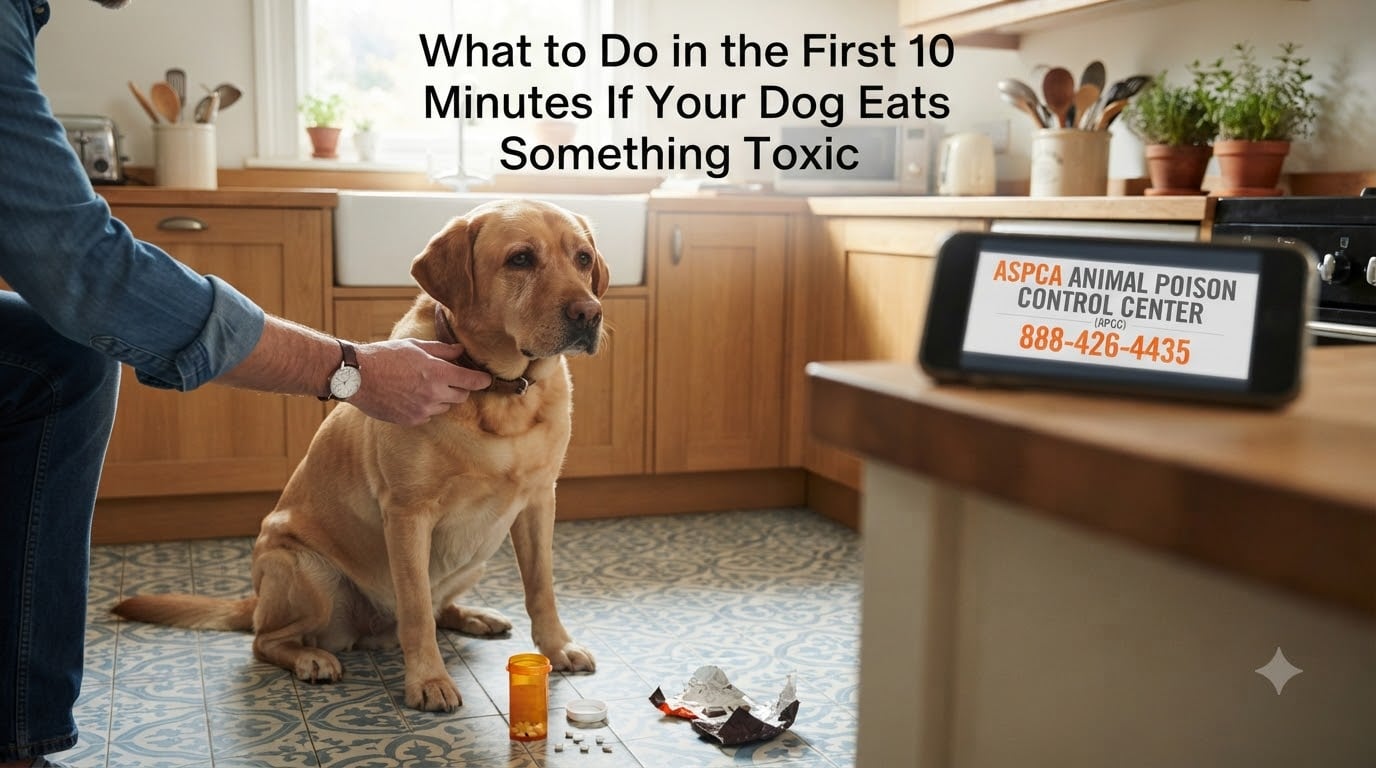
When your dog eats something toxic, the first 10 minutes can mean the difference between a quick recovery and a life-threatening emergency. I have talked to dozens of veterinary toxicologists and emergency vets, and they all say the same thing: the actions you take in those opening minutes directly shape the outcome.
In this guide, I will walk you through the exact 10-minute action plan that emergency veterinarians recommend when a dog eats something toxic. You will get clear steps, the warning signs that demand an immediate vet visit, and the home remedies you should never try. Save the emergency hotline numbers now, before you ever need them.
Table of Contents
Recognizing the 10-Minute Window
The first 10 minutes after your dog eats something toxic are the most important window for intervention. Many toxins absorb into the bloodstream rapidly, and once they do, treatment becomes harder and more expensive. For example, xylitol can cause dangerous blood sugar drops within 10 to 60 minutes. Chocolate theobromine reaches peak blood levels in about 1 to 2 hours, but the damage to the heart and nervous system begins much sooner.
Veterinary toxicologists at the Pet Poison Helpline report that dogs who receive decontamination within the first hour have significantly better outcomes than those treated later. The 10-minute window is your chance to stop further exposure, gather information, and reach a professional who can guide your next move.
Why You Cannot Wait for Symptoms
Many dog owners wait for vomiting or seizures before acting, but by then the toxin has already entered the bloodstream. Acting before symptoms appear is the safest and most effective approach.
Step 1: Stay Calm and Assess the Situation
Take a slow breath. Panic causes mistakes, and your dog reads your energy. I know how hard this is when your dog is your family, but a calm owner can follow the steps below without missing anything critical.
Quickly assess your dog’s condition. Check your dog’s airway and breathing. Look at the gum color by gently lifting the lip. Pink gums mean good circulation. Pale, white, blue, or yellow gums mean a real emergency. Note the time you believe the ingestion happened. This single piece of information helps the vet or poison control determine how much toxin has likely been absorbed.
Check your dog’s level of alertness. Is your dog standing, walking, or collapsed? Look for any obvious symptoms including drooling, vomiting, tremors, or seizures. Write down what you see. Even a quick note on your phone helps the vet act faster.
Step 2: Remove Your Dog From the Source
Move your dog away from the toxic substance immediately. Put your dog in another room or outside on a leash if needed. This prevents additional ingestion and keeps your dog safe while you gather information.
Secure any remaining toxin. Put the package, pill bottle, plant, or chemical container out of reach of children, other pets, and your dog. Do not throw it away. You will need the label, active ingredients, and concentration to help the vet calculate risk. If the substance is on your dog’s fur or paws, prevent your dog from licking it. A quick rinse with lukewarm water is fine for surface toxins, but do not delay calling for help.
Step 3: Identify What Was Eaten
Knowing exactly what your dog ate is essential information for the vet. Keep the packaging, label, or any leftover material. If the substance was a plant, take a photo or cut a sample. If it was human medication, count how many pills are missing from the bottle.
Estimate the amount consumed and your dog’s weight. A 10-pound dog and a 90-pound dog face very different risks from the same piece of chocolate. Write down your dog’s breed, age, and any current health conditions or medications. These details shape the treatment plan.
Note the time you first noticed the ingestion. If you did not see it happen, give the vet your best estimate based on when your dog was last unsupervised.
Step 4: Call Poison Control or Your Emergency Vet
Once you have the basic information, call for professional guidance. Do not drive to the vet first. The poison control experts will tell you whether you need to rush in, whether you should induce vomiting, and what symptoms to watch for on the way.
Here are the two main 24/7 hotlines every dog owner should save in their phone:
ASPCA Animal Poison Control Center: 888-426-4435 (a consultation fee may apply)
Pet Poison Helpline: 855-764-7661 (a consultation fee may apply)
When you call, have the following information ready: your dog’s breed, age, weight, and current symptoms. The toxin name, active ingredients, and strength. The estimated amount ingested and the time you think it happened. Any medications or health conditions your dog has.
The toxicology expert will tell you whether to monitor at home, drive to your regular vet, or head straight to the nearest emergency clinic. Follow their exact instructions.
Critical Signs Requiring Immediate Vet Visit
Some symptoms mean you should skip the call and go straight to the emergency vet. If your dog shows any of these signs, every minute counts.
Seizures or tremors are among the most dangerous symptoms. They indicate neurological involvement and can signal poisoning from chocolate, xylitol, rodenticide, or antifreeze. Difficulty breathing, pale or blue gums, or collapse means your dog is in shock and needs oxygen and IV support immediately. Loss of consciousness or unresponsiveness is a true emergency. Excessive drooling combined with vomiting or retching can signal caustic ingestion or bloat.
If your dog’s heart rate seems very fast, very slow, or irregular, that is a warning sign. Internal bleeding signs like bloody vomit, bloody diarrhea, or unexplained bruising should send you straight to the clinic. Do not wait for these to worsen.
What NOT to Do in the First 10 Minutes
Well-meaning owners often make things worse with home remedies. The veterinarians I spoke with all emphasized the same list of things to avoid.
Do not induce vomiting unless a vet or poison control expert specifically tells you to. Some toxins cause more damage coming back up than going down. Caustic substances like drain cleaner or bleach can burn the esophagus a second time. Sharp objects can puncture the esophagus on the way out. Inducing vomiting in a dog that is already unconscious or seizing can cause aspiration pneumonia.
Do not give milk, oil, salt, or any food. Milk does not bind toxins in dogs the way it sometimes does in humans. Oil can cause aspiration. Salt can cause salt poisoning, which adds another problem to the original one. Do not give activated charcoal from a pharmacy without dosing guidance. The dose varies by weight and the wrong amount can be dangerous.
Do not search for home remedies online while your dog is in crisis. Call a professional hotline instead. Do not wait for symptoms to appear. Many toxins cause internal damage before outward signs show.
Common Toxic Substances and Their Warning Signs
Here is a quick reference for the most common household toxins. Use it to compare what your dog ate against the symptoms you are seeing.
Chocolate contains theobromine and caffeine, both toxic to dogs. Symptoms include restlessness, panting, vomiting, diarrhea, tremors, and seizures. Dark chocolate and baking chocolate are the most dangerous. Symptoms usually appear within 6 to 12 hours.
Xylitol is a sugar substitute found in sugar-free gum, peanut butter, baked goods, and toothpaste. It causes a sudden drop in blood sugar and can lead to liver failure. Symptoms include vomiting, lethargy, collapse, and seizures. Onset can be within 10 to 60 minutes.
Grapes and raisins can cause sudden kidney failure. The exact toxic dose is unknown, which makes any amount concerning. Symptoms include vomiting, diarrhea, lethargy, and decreased urination. Onset can take 24 to 72 hours, so early intervention is critical.
Onions, garlic, chives, and leeks damage red blood cells and cause anemia. Symptoms include weakness, pale gums, rapid breathing, and dark-colored urine. Repeated small exposures are as dangerous as a single large exposure.
Antifreeze (ethylene glycol) is one of the deadliest substances dogs can encounter. It has a sweet taste that attracts dogs. Symptoms include staggering, vomiting, excessive thirst, and kidney failure. Onset is within 30 minutes to 12 hours.
Rat poison (rodenticide) comes in several types, each with different symptoms. Anticoagulant types cause internal bleeding days later. Neurological types cause tremors and seizures within hours. Bromethalin types cause brain swelling.
How Long Before Symptoms Appear
The time between ingestion and symptoms depends on the toxin. Some act within minutes, others take days. Use this general timeline when deciding how to act.
Fast-acting toxins (10 minutes to 1 hour) include xylitol, antifreeze, and certain medications. Medium-acting toxins (1 to 6 hours) include chocolate, grapes, and many household chemicals. Slow-acting toxins (12 to 72 hours) include anticoagulant rodenticides, raisins, and some mushrooms. Because symptom timing varies so widely, you should never wait for signs before acting.
After the First 10 Minutes: What Comes Next
If the hotline advised you to go to the vet, transport your dog safely. Keep your dog calm and warm. Bring the toxin container or a photo of the label. Call the clinic ahead so the team can prepare.
At the clinic, the vet may induce vomiting, administer activated charcoal, start IV fluids, run bloodwork, or give specific antidotes. Treatment depends on the toxin, the time of exposure, and your dog’s current condition. Recovery time ranges from a few hours for mild cases to several days for severe ones.
The cost of emergency treatment varies widely depending on your location and the toxin involved. Pet insurance and care credit can help with unexpected bills. Many clinics offer payment plans. The hotline counselors can sometimes give you a rough estimate over the phone.
Building a Dog First Aid Kit for Poisoning
Preparation saves precious minutes. Keep these items in a clearly labeled bag at home and in your car.
The ASPCA and Pet Poison Helpline numbers in large print
Your regular vet’s number and the nearest emergency clinic address
A digital kitchen scale for weighing your dog
A flashlight for checking gum color
A blanket for safe transport
A small notebook for recording symptoms and times
A list of your dog’s current medications and weight
Refresh the kit every year and replace any expired contact numbers. Share the kit location with everyone in your household.
Frequently Asked Questions
How do you flush poison out of a dog’s system?
Only a veterinarian can safely decontaminate a dog. The vet may induce vomiting, administer activated charcoal, give IV fluids, or use specific antidotes depending on the toxin. Do not try to flush poison out at home without professional guidance, as some toxins cause more damage when vomited back up.
How long after eating something toxic will a dog get sick?
It depends on the toxin. Xylitol and antifreeze can cause symptoms within 10 to 60 minutes. Chocolate symptoms usually appear within 6 to 12 hours. Anticoagulant rat poison can take 2 to 5 days. Because timing varies so much, you should never wait for symptoms before calling for help.
Will milk help a poisoned dog?
No. Milk does not bind toxins in dogs the way it sometimes does in humans. Giving milk can cause additional stomach upset and may delay proper treatment. Keep your dog from eating or drinking anything until a vet or poison control expert gives you specific instructions.
Can a dog recover from poisoning on its own?
Some dogs recover from very small exposures to mild toxins, but you should never assume this will be the case. Many toxins cause internal organ damage that only becomes obvious hours or days later. Calling a vet or poison control immediately gives your dog the best chance of full recovery.
What are the symptoms if a dog eats something toxic?
Common symptoms include vomiting, diarrhea, drooling, loss of appetite, lethargy, tremors, seizures, pale gums, difficulty breathing, and loss of coordination. Some toxins cause specific symptoms like jaundice from liver damage or bloody urine from kidney damage. Any sudden change in behavior after possible exposure warrants a call to the vet.
Should I induce vomiting if my dog ate something toxic?
Only induce vomiting if a veterinarian or poison control expert specifically tells you to. Some toxins, like bleach, drain cleaner, or petroleum products, cause more damage when vomited up. Inducing vomiting in a dog that is unconscious, seizing, or struggling to breathe can cause aspiration pneumonia. Always call first.
Final Thoughts on the First 10 Minutes
If your dog eats something toxic, the first 10 minutes will test your preparation. Save the ASPCA Poison Control number (888-426-4435) and the Pet Poison Helpline (855-764-7661) in your phone right now. Build a first aid kit today. Share this guide with anyone who watches your dog.
Quick action turns panic into a plan, and a plan saves lives. When a dog eats something toxic, the choices you make in those first minutes matter more than almost any other decision you will make as an owner.