
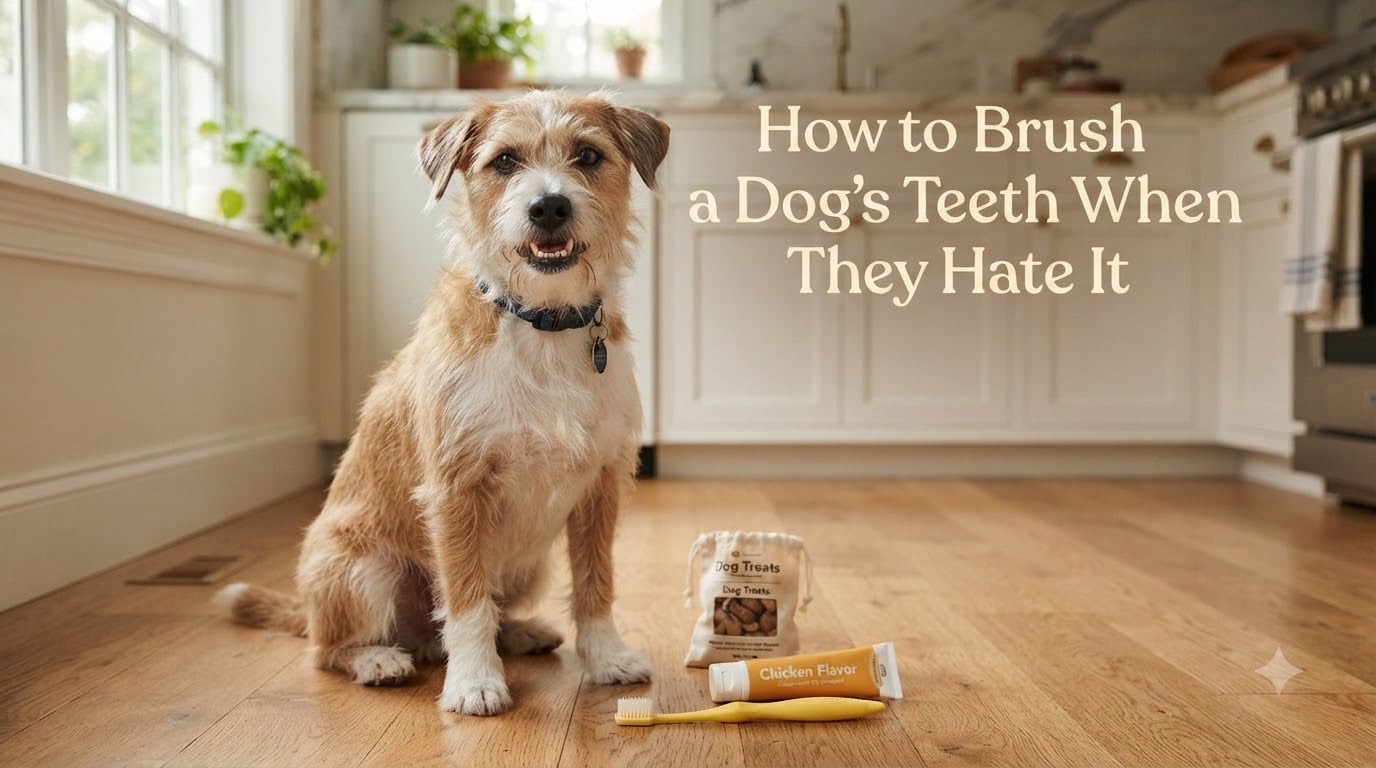
My foster dog, a 6-year-old terrier mix named Biscuit, turned into a snarling gremlin every time I approached his mouth with a toothbrush. I tried once, got a warning snap, and gave up for six months. Sound familiar? If you’re learning how to brush a dog’s teeth when they hate it, you already know the guilt, the scratched hands, and the sinking feeling that you’re failing your dog.
The good news: I eventually cracked the code with our family dog. It took 11 days, a tube of chicken-flavored enzymatic toothpaste, and a complete mindset shift. This guide shares the exact 7-day desensitization plan I developed, plus troubleshooting for the worst-case scenarios. By the end, you’ll have a realistic path forward even if your dog has tried to bite you, run away, or hidden under the bed.
Dental disease is the most common health issue in adult dogs, affecting 80% of dogs over age 3. But here’s what most guides miss: a dog who hates brushing can still get excellent dental care. You just need a different approach.
Table of Contents
Why Dental Care Matters More Than You Think?
Dental disease in dogs is not just bad breath. Untreated plaque hardens into tartar within 36 hours, and tartar triggers gingivitis within weeks. Left unchecked, that inflammation spreads below the gumline and destroys the bone that holds teeth in place.
Our vet showed me a dental X-ray of a dog whose teeth looked perfectly white on the surface but had bone loss so severe the teeth were essentially floating in pus. That’s periodontal disease, and it affects 4 out of 5 dogs over age 3.
Here’s the part that kept me up at night: the bacteria from infected gums enters the bloodstream and damages the heart, liver, and kidneys. Studies from the American Veterinary Medical Association show dogs with severe dental disease have a 25% shorter lifespan than dogs with healthy mouths. That’s roughly 1.5 to 2 years lost.
The cost gap is also striking. A professional dental cleaning under anesthesia runs $300 to $800 depending on your location. Treating a tooth abscess or extracting infected teeth can hit $1,500 to $3,000. Daily home care is dramatically cheaper than emergency treatment, which is exactly why I committed to brushing our family dog’s teeth even when Biscuit fought me.
Why Your Dog Hates Having Their Teeth Brushed?
Dogs don’t hate brushing because they’re stubborn. They hate it because their mouths are sensitive, they’re not used to being handled there, and they have no idea what you’re doing.
Three reasons drive most resistance. First, unfamiliar sensation: a foreign object rubbing their teeth feels weird and threatening. Second, past negative experiences: if you’ve ever pried open their mouth forcefully, they remember it. Third, control anxiety: dogs who struggle with handling in general (nail trims, ear cleaning) often escalate that anxiety around dental care.
Small breeds tend to have more dental crowding and faster tartar buildup, which can make their mouths more sensitive. Rescue dogs sometimes have histories that make mouth handling especially scary. None of this means brushing is off the table. It means you need to start slower than you think.
The Tools You Need Before You Start
You need four things, and none of them are expensive. Get these before day one so you’re not scrambling mid-training.
Pet-specific enzymatic toothpaste. Human toothpaste contains xylitol and fluoride, both toxic to dogs. Pet toothpaste comes in flavors like chicken, beef, and peanut butter. Enzymatic formulas actively break down plaque bacteria even before you start brushing. I recommend starting with chicken or beef since most dogs find these irresistible.
A finger brush or soft-bristled pet toothbrush. Finger brushes (small rubber caps that slip over your fingertip) give you more control and feel less threatening to nervous dogs. Soft-bristled brushes with angled heads work better once your dog accepts the routine. Skip electric toothbrushes until your dog is fully comfortable with manual brushing.
Dental wipes. These are gauze pads with mild cleaning solution. They’re a bridge option for dogs who refuse brushes but will tolerate your fingers. They remove less plaque than brushing but more than nothing.
High-value treats. You need something better than their regular kibble. Small pieces of cheese, cooked chicken, or freeze-dried liver work best. The treat has to outweigh the stress of the experience, so choose something your dog will work for.
The 7-Day Desensitization Plan
This is the method I refined after working with our veterinary behaviorist. The core rule: never force anything. Every day should end on a positive note, even if you only got 30 seconds of progress.
Day 1: Smell and taste only. Put a small dot of pet toothpaste on your finger and let your dog lick it off. Don’t touch their mouth. Don’t try to brush. Just create a positive association with the flavor. Repeat 2-3 times throughout the day.
Day 2: Repeat with enthusiasm. Same drill as Day 1, but add verbal praise and a treat afterward. Your dog should start expecting the toothpaste dot. If they walk away when they see you coming, pause and try again later. You’re not looking for compliance, you’re looking for enthusiasm.
Day 3: Touch the muzzle. Apply toothpaste to your finger, let them lick halfway, then gently touch their muzzle and lift their lip for one second. Reward immediately. Don’t try to reach the teeth yet. The goal is just contact with the mouth area.
Day 4: Touch the teeth. Repeat Day 3, but this time run your finger along the outer surface of their front teeth (the canines and incisors) for 1-2 seconds after lifting the lip. Reward. End the session.
Day 5: Introduce the finger brush. Put toothpaste on the finger brush and let them lick it. Once they’re comfortable, gently rub the brush along the outer front teeth for 5 seconds. Reward heavily.
Day 6: Expand to the side teeth. Move to the premolars and molars on one side. Use small circular motions. Keep the session under 30 seconds. If your dog pulls away, let them go and try again later.
Day 7: Full brushing attempt. Brush the outer surfaces of all teeth for 30-60 seconds. Don’t worry about the inner surfaces yet (dogs accumulate less tartar there). Reward and celebrate.
Some dogs need 14 days instead of 7. If your dog regresses at any point, go back to the previous day’s step. Progress is not linear, and consistency matters more than speed.
Step-by-Step Brushing Technique Once Your Dog Accepts the Brush
Once your dog tolerates the brush, technique matters. Hold the brush at a 45-degree angle against the outer surface of the teeth, where the tooth meets the gum line. That angle lets the bristles slide just under the gumline where plaque hides.
Use small circular motions rather than scrubbing back and forth. Circular motions clean under the gums without pushing bacteria deeper. Spend about 5 seconds on each tooth, focusing on the back molars where tartar builds up fastest.
The outer surfaces are 80% of the job. The inner surfaces (facing the tongue) accumulate much less tartar in dogs because their tongue scrapes against them constantly. If your dog only tolerates outer-surface brushing, that’s enough.
Keep sessions between 60 and 90 seconds. Longer than that, and most dogs lose patience. You can always do a quick touch-up the next day. Three sessions per week minimum prevents plaque from hardening into tartar. Daily brushing is the gold standard, but weekly is far better than nothing.
Troubleshooting Specific Resistance Behaviors
Even with a perfect desensitization plan, problems come up. Here’s how to handle the four most common scenarios.
Dog bites or snaps when you approach the mouth. Stop immediately. You’re moving too fast. Go back two steps in the desensitization plan. Make sure you’re using high-value treats and ending every session before your dog gets stressed. Never punish a snap. A snap is communication, and punishing it teaches your dog to skip the warning and go straight to a bite.
Dog runs away when they see the toothbrush. You’re carrying a visual trigger. Leave the brush out on the floor during the day so it becomes boring. Only pick it up right before a session. Also, start approaching with the brush and giving a treat without brushing, so the visual cue predicts food rather than contact.
You see a little blood when brushing. A tiny amount of pink on the brush is normal if your dog already has gingivitis. Healthy gums don’t bleed, but mildly inflamed ones will, and the bleeding often stops as gum health improves over 2-3 weeks. If the bleeding is heavy, persistent, or comes with swelling and pain, see your vet.
Dog clamps their mouth shut and won’t open. Don’t pry the mouth open. Work on the outer surfaces only. You can effectively brush without them opening wide by gently sliding the brush along the closed mouth at the gum line. It’s less thorough, but it’s something.
Alternative Cleaning Methods When Brushing Fails
Some dogs will never accept a toothbrush, and that’s okay. Realistic home care beats no care at all. These alternatives range from most to least effective.
Dental chews with VOHC approval. The Veterinary Oral Health Council evaluates dental products for effectiveness. Look for the VOHC seal on the package. Approved chews reduce plaque by 30-50% when used daily. Choose chews sized for your dog’s weight and avoid anything harder than a dog can dent with their thumbnail (too hard risks tooth fractures).
Water additives. You add a small amount of liquid to your dog’s drinking water daily. It contains enzymes that fight bacteria in the mouth. Most dogs accept the taste. It’s not a replacement for brushing, but it reduces bacteria by 25-40% in studies. Pick an additive without alcohol, which can irritate gums.
Dental wipes and pads. You wrap the pad around your finger and wipe the outer tooth surfaces. Most dogs tolerate this better than a brush. Effectiveness is around 15-25% plaque reduction. It’s a good middle ground.
Dental diets. Prescription dog foods like Hill’s t/d have kibble shaped to mechanically scrub teeth as your dog chews. They reduce plaque by 15-30% and work alongside other methods. Talk to your vet before switching foods.
Raw bones and chews. Recreational raw bones (like raw knuckle bones from a butcher) help some dogs. Avoid cooked bones (splinter risk) and weight-bearing bones of large animals (too hard, fracture risk). Supervise every session. This is a supplement to other care, not a stand-alone solution.
No single alternative matches the effectiveness of brushing. But combining methods works. A dog who chews VOHC-approved dental chews daily plus gets water additives plus eats a dental diet can maintain good oral health without ever accepting a toothbrush.
How Often Should You Brush Your Dog’s Teeth?
Daily brushing is the gold standard recommended by veterinary dentists. Every 24 hours, plaque starts to harden into tartar, and once it does, only a professional cleaning can remove it.
Realistically, though, our team found that brushing 3 times per week still prevents most tartar buildup. Twice a week is enough to slow disease progression significantly. Even once a week makes a measurable difference compared to nothing.
Pick a frequency you can actually maintain. A consistent 3-day-per-week schedule beats an ambitious daily schedule you abandon after two weeks. Many owners do best with a fixed brushing day (Sunday, Wednesday, Friday) so it becomes a habit.
Age-Specific Approaches for Puppies, Adults, and Seniors
Puppies between 8 and 16 weeks are in the ideal learning window. Their adult teeth are coming in, and their brains are primed to accept new experiences. Spend 30 seconds per day touching their mouth and letting them lick toothpaste. By the time they’re 6 months old, brushing should feel normal. I started with Biscuit as a puppy and never had resistance. The 6-year-old foster was a different story, which is why the 7-day plan exists.
Adult dogs (1-7 years) can learn the routine, but it takes patience. Follow the desensitization plan above. Most adult dogs reach full brushing tolerance within 3-4 weeks.
Senior dogs (8+) need gentler handling. Their gums are more sensitive, some have missing teeth, and they may have arthritis that makes positioning uncomfortable. Use a finger brush instead of a bristle brush, work in shorter sessions (15-30 seconds), and stop at any sign of pain. Senior dogs benefit most from a combination of brushing plus VOHC-approved chews plus regular vet checkups.
One more thing: if your dog is 10 or older and has never had their teeth brushed, don’t despair. It’s not too late. Start with the Day 1 protocol (toothpaste on finger) and progress as fast as your dog allows. I’ve seen 12-year-old dogs accept brushing for the first time. The older dogs take longer, but every session still helps.
Frequently Asked Questions About Brushing a Resistant Dog’s Teeth
What to do when your dog won’t let you brush their teeth?
Don’t use force. Start by letting your dog lick pet toothpaste from your finger, then gradually progress over 7-14 days to touching their teeth, then introducing a brush. Keep sessions under 60 seconds and reward every bit of progress with high-value treats. If your dog snaps, back up two steps in the process and proceed more slowly.
How to brush an uncooperative dog’s teeth?
Begin with a 7-day desensitization plan that builds tolerance step by step. On day 1, let your dog lick toothpaste from your finger. By day 3, lift their lip and touch a tooth. By day 7, you’re doing a full brushing of the outer surfaces. Always end on a positive note, use chicken or beef flavored enzymatic toothpaste, and keep sessions short (30-90 seconds).
How to clean dogs’ teeth if they hate it?
Use VOHC-approved dental chews daily as your primary method, add an enzymatic water additive to their drinking water, and wipe their teeth with dental pads a few times per week. You can also feed a dental diet like Hill’s t/d. While brushing is more effective, combining these alternatives can keep your dog’s teeth reasonably clean even if they never accept a toothbrush.
Is it too late to start brushing dogs’ teeth?
No, it’s never too late. Senior dogs can learn to accept brushing with patience and a slower desensitization timeline. Even if you only manage 30 seconds twice a week, you are slowing plaque buildup and reducing the risk of painful dental disease. Talk to your vet about your dog’s specific dental condition before starting.
How often should I brush my dog’s teeth?
Daily brushing is ideal because plaque hardens into tartar within 24-48 hours. However, brushing 3 times per week still prevents most tartar buildup. Twice a week is better than nothing. Consistency matters more than frequency, so pick a schedule you can realistically maintain long-term.
Do I actually need to brush my dog’s teeth?
Yes, ideally. By age 3, 80% of dogs have some form of dental disease, and untreated dental disease shortens lifespan by damaging the heart, liver, and kidneys. If daily brushing isn’t possible, combine VOHC-approved dental chews with water additives and regular professional cleanings to significantly reduce the risks.
Final Thoughts on Brushing a Dog’s Teeth When They Hate It
If you take one thing from this guide, let it be this: don’t force it. Forcing brushing creates a dog who fights harder next time, and you’ll both end up miserable. The 7-day desensitization plan works because it gives your dog a real choice at every step, and that choice builds trust rather than fear.
Start today with Day 1. Put a dot of chicken-flavored toothpaste on your finger and see what happens. If your dog licks it, you’re already further along than most resistant dogs. If they walk away, try again tomorrow. There’s no deadline, only progress.
Learning how to brush a dog’s teeth when they hate it is one of the most frustrating parts of pet parenthood, but the payoff is real. A healthy mouth means a longer, healthier, less painful life for your dog. And one day, brushing will just be a normal Tuesday night thing.