
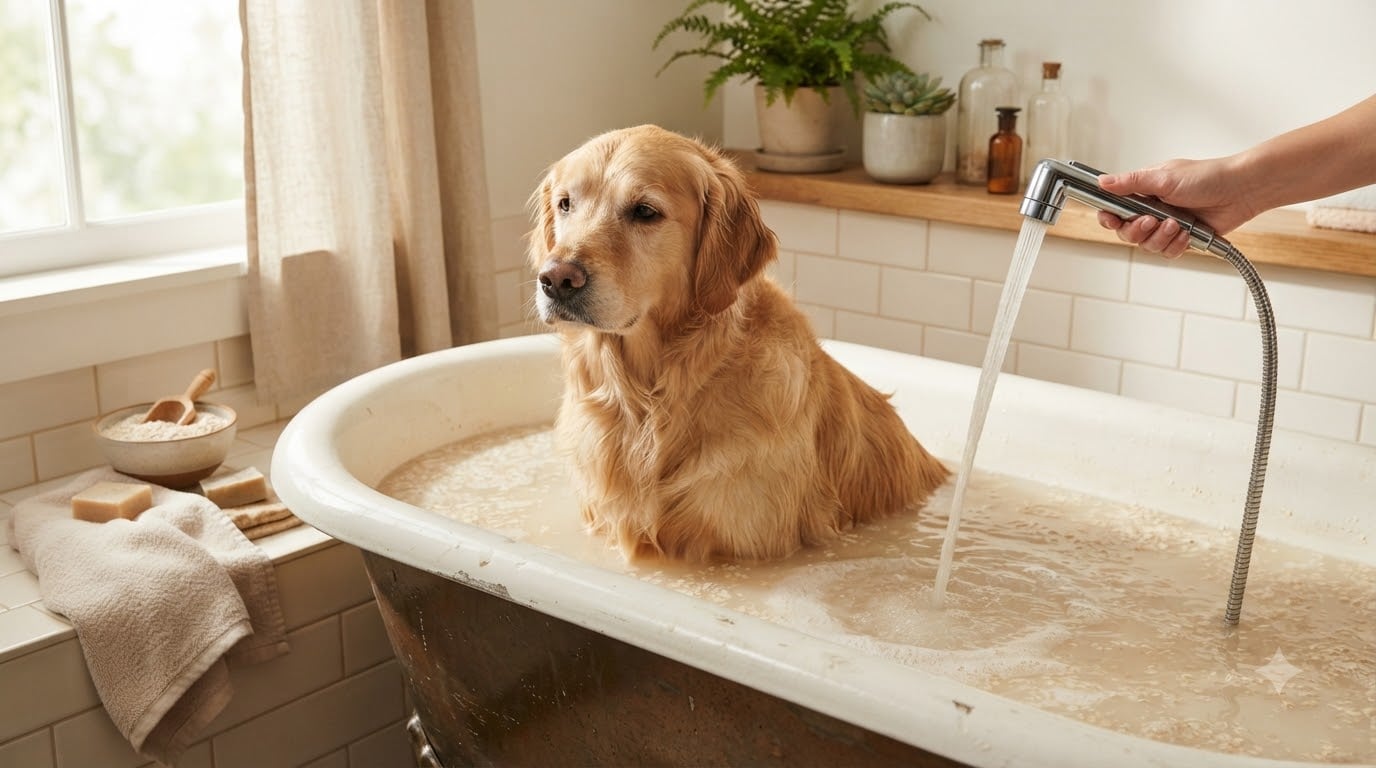
I’ve lived with a French Bulldog named Olive who scratched herself raw every August. After three summers of trial and error, two vets, and roughly 40 baths, I finally cracked a routine that actually calms her skin. This guide on how to bathe a dog with sensitive or itchy skin is the exact method I now use, plus everything the research backs up.
If your dog scratches, licks, or rolls more than they should, the bath itself is either helping or making it worse. The difference comes down to water temperature, shampoo choice, and how thoroughly you rinse. Here’s the complete process, start to finish.
Table of Contents
Why Dogs Develop Sensitive or Itchy Skin?
Sensitive skin in dogs usually comes from one of three sources: environmental allergens, food sensitivities, or an underlying condition called canine atopic dermatitis. Pollen, dust, mold spores, and grass are the most common triggers I see in owner questions, especially during spring and fall.
Hot spots are another big culprit. These are red, moist, irritated patches that appear when a dog scratches, licks, or chews one area repeatedly. They often show up after a walk through tall grass or a grooming session that pulled the coat.
Over-bathing is the sneaky cause most owners miss. Dog skin sits at a pH between 5.5 and 7.5, and human shampoo runs around 3.5 to 5.5. Even one bath with the wrong product can strip the natural oils that protect the skin barrier. Once that barrier is compromised, itching gets worse, not better.
Pre-Bath Preparation: What to Do Before the Water Starts
Preparation is the step most guides skip, and it’s where I lost the most time at first. A calm, well-brushed dog is a clean dog. Start by brushing your dog’s coat thoroughly to remove loose fur, dirt, and small mats. Mats trap water against the skin and create a perfect spot for irritation.
Trim your dog’s nails before the bath. A wet, slippery dog with sharp nails is a recipe for scratched arms and a panicked pup. If your dog tolerates it, place cotton balls loosely in their ears to keep water out of the ear canal.
Lay out every supply before you turn on the tap: shampoo, a pitcher or cup for rinsing, two towels, a non-slip mat, and any post-bath treatment. Once your dog is wet, you do not want to walk away to find something.
Choosing the Right Water Temperature for Sensitive Skin
Water temperature is the single most important variable for a dog with sensitive or itchy skin. Aim for 70 to 95 degrees Fahrenheit, or roughly lukewarm on the inside of your wrist. Water that feels comfortable to you is generally too hot for an inflamed dog.
Hot water increases blood flow to the skin, which can worsen itching once the bath is over. Cold water is uncomfortable and can cause muscle tension that makes the bath stressful. Lukewarm water relaxes the skin and the dog.
Test the temperature with a kitchen thermometer if you have one, or run your wrist under the stream for 5 seconds. If you cannot feel the temperature at all, it’s right.
Best Shampoo Type for a Dog With Sensitive or Itchy Skin
The best shampoo for a dog with sensitive skin is a hypoallergenic, fragrance-free, dye-free formula with pH-balanced ingredients between 5.5 and 7.5. Colloidal oatmeal is my first-choice active ingredient because it has documented anti-inflammatory properties and forms a protective barrier on the skin.
Look for labels that say soap-free, moisturizing, and made specifically for dogs. Never use human shampoo, dish soap, or baby shampoo on a dog with sensitive skin. The pH mismatch alone can undo weeks of skin recovery.
For dogs with hot spots or a veterinary diagnosis of atopic dermatitis, a medicated shampoo containing chlorhexidine or miconazole may be necessary. These need to sit on the coat for 5 to 10 minutes to work, so plan bath time around that. Always dilute concentrated shampoos with water before applying, as the full-strength formula can irritate already inflamed skin.
How to Bathe a Dog With Sensitive or Itchy Skin: Step by Step
Here’s the exact bathing process I use on Olive. Follow these steps in order and adjust the timing based on your dog’s coat length and the shampoo instructions.
Step 1: Wet the coat completely. Use a handheld sprayer or a pitcher to saturate the fur from the neck down. Avoid spraying directly into the face, ears, eyes, and nose. The coat should be soaked through to the skin before any shampoo touches it.
Step 2: Apply diluted shampoo. Mix the shampoo with warm water in a 1 to 4 ratio (one part shampoo to four parts water) in a separate cup. Pour it along the back and shoulders, then work it in gently with your fingertips. Massage in the direction of hair growth, never against it.
Step 3: Let the shampoo sit. For oatmeal or moisturizing shampoos, 2 to 3 minutes is enough. For medicated shampoos, set a timer for 5 to 10 minutes. This is the active treatment window, and the dog needs to stay still. Use the time to gently massage the belly and legs.
Step 4: Rinse thoroughly. This is the step owners get wrong most often. Rinse for at least 3 to 5 minutes, twice as long as you think you need. Shampoo residue is the number one reason dogs itch more after a bath. Run water through every layer of the coat until it runs completely clear.
Step 5: Apply a conditioner if needed. A hypoallergenic, fragrance-free conditioner can restore moisture to dry, flaky skin. Leave it on for 2 minutes, then rinse again with the same care.
Drying Techniques That Won’t Irritate Sensitive Skin
Rough drying undoes the work of a careful bath. Use a soft towel and pat the coat dry rather than rubbing. Rubbing creates friction that irritates already inflamed skin and can spread bacteria from hot spots.
If you use a blow dryer, set it to the lowest heat and speed, and keep the nozzle at least 12 inches from the coat. High heat can burn sensitive skin, and the noise often stresses dogs that are already anxious. Air drying in a warm, draft-free room works well for short-coated breeds.
Make sure the coat is completely dry, especially in the skin folds, armpits, and groin area. Moisture left in these spots becomes a breeding ground for bacterial and yeast infections within 24 hours.
Natural Bath Additives for Itchy Dogs
Several natural remedies work well as bath add-ins for sensitive skin. Colloidal oatmeal is the gold standard. Grind plain, unflavored oatmeal into a fine powder using a blender, then stir it into a tub of warm water until the water looks milky. Soak your dog for 10 to 15 minutes, then rinse with clean lukewarm water.
A baking soda paste (three parts baking soda to one part water) can be applied directly to hot spots. Let it sit for 10 minutes, then rinse. Baking soda neutralizes odors and reduces itch, but avoid it on broken skin.
Pure aloe vera gel (without alcohol or added fragrance) soothes irritated skin when applied after the bath. Diluted apple cider vinegar (one part vinegar to three parts water) works as a final rinse to balance skin pH, but skip it on any open wounds since it will sting.
The Feet Rinsing Technique Most Owners Skip
Every time your dog walks outside, their paws collect pollen, dust, mold, and grass allergens. A 60-second foot rinse after each walk is one of the most effective ways to reduce full-body itching during allergy season, and almost no one does it.
Fill a small tub or container with lukewarm water. Dip each paw in for 5 to 10 seconds, swish gently, and towel dry. You can add a teaspoon of colloidal oatmeal to the water for extra soothing. For dogs with red, irritated paws, this routine alone cuts scratching in half for many owners I talk to.
This is a daily habit, not a weekly one. It takes less than two minutes and prevents the allergens from spreading to the belly and face when your dog lies down.
How Often to Bathe a Dog With Itchy Skin?
Most dogs with sensitive or itchy skin do best with a full bath every 7 to 14 days. Bathing more often than weekly can strip the coat of natural oils, and bathing less often lets allergens build up.
Breed matters here. Dogs with skin folds like English Bulldogs, French Bulldogs, Pugs, and Shar-Peis often need baths every 5 to 7 days because moisture and bacteria collect in the folds. Double-coated breeds like Golden Retrievers and German Shepherds usually do fine on a 14-day cycle.
If your dog starts to smell within a few days, has flaky skin, or scratches more than usual, it’s time. Dry, dull, or brittle fur is a sign of over-bathing. If you see both flakes and oily patches, you may be bathing too often or using the wrong shampoo.
When to See a Vet Instead of Bathing at Home
Bathing helps most mild to moderate skin issues, but it is not a substitute for veterinary care. Book a vet visit if your dog has open sores, bleeding, pus, or a strong odor coming from the skin. These are signs of infection that need prescription treatment.
Sudden severe itching, hair loss in patches, or swelling of the face or paws warrants a same-day appointment. These can be signs of an allergic reaction that goes beyond skin.
If you’ve followed a consistent bathing routine for two weeks and seen no improvement, it’s time to involve a vet. Persistent itching often has an underlying cause like a food allergy, thyroid condition, or chronic parasite issue that baths alone cannot solve.
Frequently Asked Questions
What can I put in a bath to bathe my dog for irritated and itchy skin?
Colloidal oatmeal is the most effective bath additive for irritated and itchy dog skin. Grind plain oatmeal into a fine powder, stir it into warm water until the water turns milky, and soak your dog for 10 to 15 minutes. You can also add a tablespoon of baking soda for odor control or a small amount of pure aloe vera for extra soothing.
What soothes dogs’ itchy skin naturally?
Three natural remedies soothe itchy skin in dogs: colloidal oatmeal baths, baking soda paste applied to hot spots, and diluted apple cider vinegar rinses (one part vinegar to three parts water). Pure aloe vera gel without alcohol also works well when applied after a bath. Always avoid essential oils unless your vet specifically recommends them.
What is the best thing to wash a dog with sensitive skin?
The best product to wash a dog with sensitive skin is a hypoallergenic, fragrance-free, dye-free shampoo formulated specifically for dogs. Look for colloidal oatmeal as the active ingredient and a pH between 5.5 and 7.5. Avoid human shampoo, dish soap, and any product with added fragrance or color, as these strip the skin’s natural protective barrier.
Why does my dog itch more after a bath?
Dogs itch more after a bath for one of three reasons: leftover shampoo residue, water that was too hot, or a shampoo pH that does not match dog skin. Incomplete rinsing is the most common cause. Always rinse for at least 3 to 5 minutes, use lukewarm water between 70 and 95 degrees Fahrenheit, and stick to dog-specific formulas.
Can I use human shampoo on my dog?
No, human shampoo is not safe for dogs with sensitive skin. Human skin has a pH around 3.5 to 5.5, while dog skin sits between 5.5 and 7.5. Using human shampoo disrupts the skin barrier, strips protective oils, and often triggers the very itching you are trying to stop. Always use a dog-formulated, pH-balanced shampoo instead.
How often should I bathe my dog with allergies?
Most dogs with allergies benefit from a full bath every 7 to 14 days. During peak allergy season, daily foot rinses between full baths significantly reduce itching. Breeds with skin folds, such as Bulldogs and Pugs, often need baths every 5 to 7 days, while double-coated breeds can usually go 14 days between baths.
Final Thoughts on Bathing Dogs With Sensitive or Itchy Skin
The shortest path to calmer skin is consistency, not intensity. Use lukewarm water, a pH-balanced oatmeal shampoo, a full 3 to 5 minute rinse, and a daily foot rinse during allergy season. That single routine is the answer to how to bathe a dog with sensitive or itchy skin without making the problem worse.
Track your dog’s itching for two weeks after starting the new routine. Most owners see a clear drop in scratching within 7 to 14 days. If the itching stays the same or gets worse, schedule a vet visit to rule out infection, parasites, or food allergies. Bathing is a powerful tool, but it works best as part of a broader care plan built with your veterinarian.