
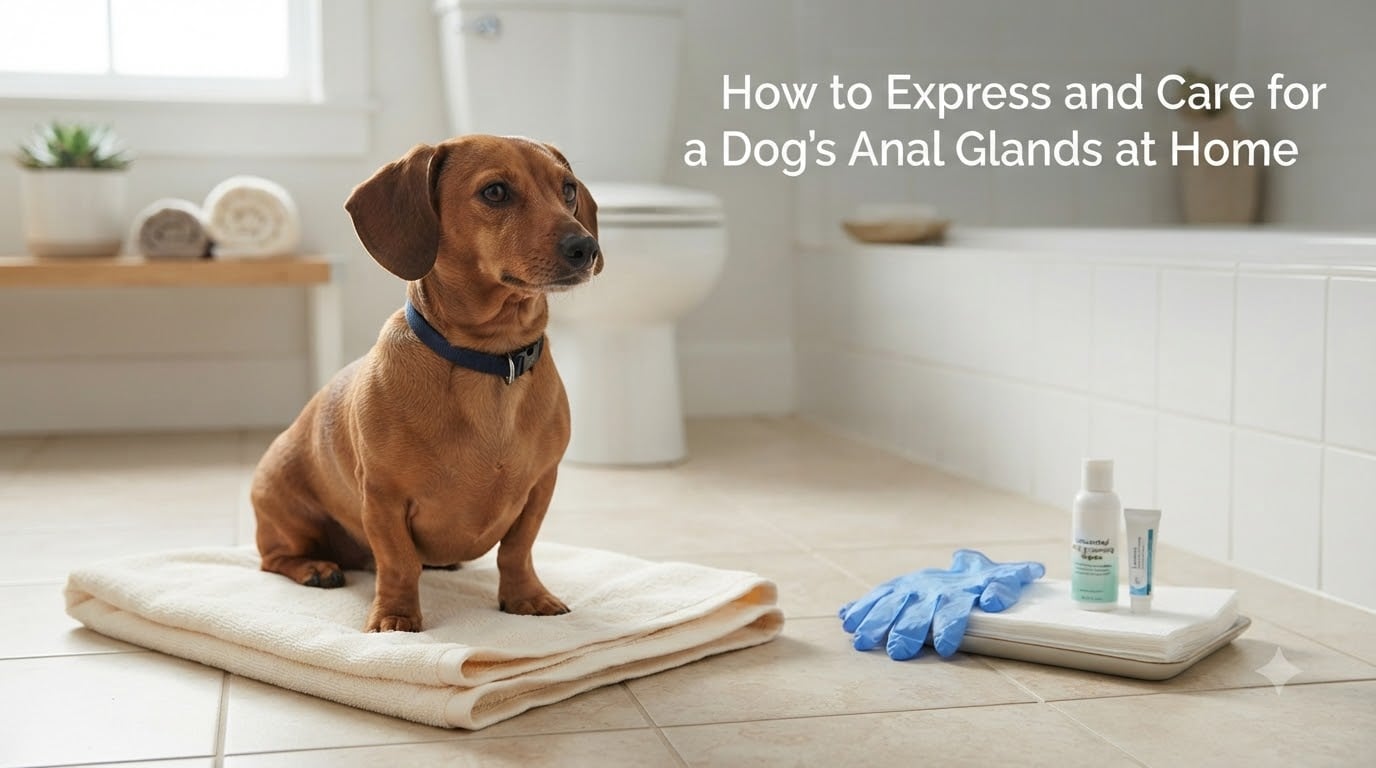
Learning how to express dog anal glands at home can save you repeated trips to the vet or groomer and give your dog fast relief from a genuinely uncomfortable problem. I have helped dozens of dog owners work through this process, and the biggest hurdle is usually not the technique itself but the worry about doing it wrong.
This guide walks you through everything step by step. You will learn what anal glands are, how to tell when they need attention, the supplies to gather, and two expression methods with clear, numbered instructions.
I will also cover warning signs that mean you should stop and call your vet, how to reduce your dog’s stress during the process, and diet changes that can prevent problems from coming back. By the end, you will know exactly what to do and when to leave it to a professional.
Table of Contents
What Are Dog Anal Glands?
Anal glands, also called anal sacs, are two small pouches located just inside your dog’s anus at roughly the 4 and 8 o’clock positions. Think of them as nature’s scent markers. Every time your dog has a bowel movement, a small amount of fluid from these glands gets squeezed out naturally, leaving a chemical signature that tells other animals who was there.
The fluid these glands produce is normally a thin, brown or amber liquid with a strong, fishy odor. That smell is completely normal. It becomes a problem when the fluid builds up and the glands cannot empty on their own.
Some dogs never have an issue with their anal glands. Others, especially small breeds and dogs with certain health conditions, need regular help. When the glands fill up and do not empty, the fluid thickens and the glands become impacted. Left untreated, impaction can progress to infection and eventually a painful abscess.
Signs Your Dog’s Anal Glands Need Expressing
Your dog will usually tell you something is wrong before the problem gets serious. Here are the most common signs that it is time to express your dog’s anal glands:
Scooting: Dragging their bottom across the floor or carpet is the number one indicator. Your dog is trying to relieve pressure.
Excessive licking or biting: Repeatedly licking the anal area means your dog feels discomfort or irritation back there.
Fishy odor: A sudden, strong fishy smell on your dog, your furniture, or your dog’s bed means the glands may have leaked or are full and ready to release.
Swelling or redness: Visible bumps or redness near the anus suggest the glands are enlarged.
Straining to defecate: If your dog seems to struggle or takes much longer than usual, full glands could be the cause.
Chasing the tail: Some dogs spin or bite at their rear end when they feel the pressure building.
If you notice any combination of these signs, check the area gently. Swelling, heat, or signs of pain when touched mean you should have a vet look first rather than trying to express at home right away.
Supplies You Need to Express Dog Anal Glands
Before you start, gather everything you need so you do not have to stop midway through. Here is the full checklist:
Disposable gloves: Latex or nitrile gloves are essential for hygiene.
Paper towels: Have a generous stack ready. You will use them to catch the discharge and clean up.
Petroleum jelly or water-based lubricant: Needed only for the internal method.
Warm, soapy water: For cleaning the area before and after.
Treats: High-value treats like small pieces of chicken or cheese to keep your dog calm and reward cooperation.
A helper: Especially for your first few attempts, having someone hold and soothe your dog makes a big difference.
A towel: Place it under your dog to protect your floor or grooming surface.
Do this outside or in a bathroom with washable surfaces. The smell lingers, and you will thank yourself for choosing the right location.
How to Express Dog Anal Glands: External Method
The external method is the safest approach for home expression and the one I recommend starting with. It does not require entering the rectum, which makes it less invasive and less likely to cause injury. Here is the step-by-step process:
Step 1: Position your dog. For small dogs, place them on a table or counter with a towel underneath. For large dogs, have them stand on the floor. In both cases, have a helper hold your dog gently but firmly to prevent sudden movements.
Step 2: Locate the glands. Put on your gloves and lift your dog’s tail gently. Feel for two small swellings at the 4 and 8 o’clock positions around the anus. If the glands are full, you will feel them as firm, pea-sized or larger lumps under the skin.
Step 3: Cover with a paper towel. Place a folded paper towel over the anus to catch the discharge. This prevents the fluid from spraying and keeps the mess contained.
Step 4: Apply pressure. Using your thumb and forefinger on opposite sides of the anus, press inward and upward at the same time. Imagine you are gently squeezing the glands toward the center and slightly forward, toward the tail base. Use firm but gentle pressure, similar to milking a tube.
Step 5: Watch for discharge. You should see a small amount of brown fluid come out. It may come out in a thin stream or a few drops. Some fluid is thick and pasty, which means the glands were getting impacted. Both are normal results.
Step 6: Repeat if needed. Gently massage and squeeze one or two more times to make sure both glands have emptied. If no more fluid comes out, you are done.
Step 7: Clean up. Wipe the area with warm soapy water, then pat dry. Praise your dog and give treats immediately.
If you feel the glands but nothing comes out after several gentle attempts, stop. Forceful squeezing can cause bruising, pain, or rupture. At that point, the fluid may be too thick for the external method, and you should see your vet.
How to Express Dog Anal Glands: Internal Method
The internal method involves inserting a lubricated, gloved finger into your dog’s rectum to express each gland individually. It is more effective for glands that are deeply impacted but also carries more risk of injury. I strongly recommend having your vet demonstrate this technique in person before you try it yourself.
Step 1: Lubricate your gloved finger. Apply petroleum jelly or a water-based lubricant generously to your index finger.
Step 2: Position your dog. Same as the external method. Have a helper hold your dog steady.
Step 3: Gently insert your finger. Slowly and gently insert your lubricated finger into the rectum about one inch. Your dog may tense up, so pause and let them relax before continuing.
Step 4: Locate the first gland. Feel along the wall of the rectum for a swollen area. You are looking for a grape-sized lump, typically at the 4 o’clock or 8 o’clock position depending on which side you are working on.
Step 5: Pinch and squeeze. Place your thumb on the outside of the anus directly opposite the gland you feel inside. Press your thumb and finger together, pushing the gland upward and outward. The fluid should release through the duct.
Step 6: Switch sides. Repeat the process for the gland on the opposite side.
Step 7: Clean and reward. Wipe the area clean and give your dog plenty of praise and treats.
If your dog cries, yelps, or tries to bite at any point during the internal method, stop immediately. This could mean the glands are infected or abscessed, and attempting further expression can cause serious harm.
Tips for a Stress-Free Experience
Many dog owners on forums like Reddit’s r/dogs report that their dogs become anxious or even traumatized after anal gland expression, especially after rough handling. Your dog’s comfort matters just as much as getting the job done. Here is how to keep the experience as calm as possible.
Start by choosing the right time. Do not attempt expression when your dog is already anxious, hungry, or overstimulated. Pick a quiet moment after a walk or play session when your dog is naturally relaxed.
Build positive associations before you even try expressing. Handle your dog’s rear end gently during regular petting sessions over several days. Give treats each time so your dog learns that being touched there means good things happen.
Use a calm, confident voice throughout. Dogs pick up on your tension, so if you are nervous, they will be too. Move slowly and narrate what you are doing in a soothing tone.
Never force a resistant dog. If your dog is growling, snapping, or struggling hard, stop and try another day or consult a professional. Forcing the process can create a lasting negative association that makes every future attempt harder.
Some dogs do better with the external method because it does not involve penetration. If your dog tolerates that but not the internal method, stick with external and have your vet handle the internal work when needed.
Risks of Not Expressing: Impaction, Infection, and Abscess
Ignoring full anal glands is not just uncomfortable for your dog. It can lead to a progression of increasingly serious problems. Understanding this sequence helps you know what is at stake.
Impaction happens first. The fluid inside the glands thickens and builds up until the glands cannot empty naturally. Your dog feels constant pressure and discomfort. This is the stage where scooting and licking begin.
Infection develops when bacteria multiply in the trapped fluid. The discharge may change from brown to yellow, green, or bloody. The area becomes red, swollen, and painful. Your dog may develop a fever and lose appetite.
Abscess is the most severe outcome. Pus builds up inside the gland until it ruptures through the skin, creating an open wound beside the anus. This requires urgent veterinary treatment, often including antibiotics and sometimes surgery. An abscess is extremely painful and can take weeks to heal.
There is one more reason regular expression matters. During the process, your vet can check for signs of anal gland cancer, specifically adenocarcinoma. This is a rare but serious cancer that can be detected early through routine rectal exams. If you only ever express at home, you may miss this important screening, which is one reason to have your vet check the glands at least once a year.
Preventing Anal Gland Problems Through Diet
The best treatment is prevention. Many dogs who need frequent anal gland expression benefit from simple diet changes that help the glands empty naturally during bowel movements.
The key is producing firm, bulky stools. When stool is the right consistency, it presses against the glands during defecation and naturally squeezes out the fluid. Soft or loose stools do not create enough pressure, so the glands stay full.
Here are the most effective dietary strategies:
Add fiber: Pumpkin puree (not pie filling), psyllium husk, or a fiber supplement formulated for dogs can bulk up stool significantly. Start with one tablespoon of pumpkin per meal for medium dogs and adjust from there.
Choose the right food: If your dog has chronic soft stool, a diet change may be in order. Some dogs do better on higher-fiber kibble, while others need a limited-ingredient diet to address food allergies that cause loose stools.
Manage weight: Overweight dogs are more prone to anal gland issues because excess body fat changes the angle and pressure of defecation. Keeping your dog at a healthy weight reduces the frequency of problems.
Consider supplements: Products containing pumpkin seed powder, digestive enzymes, and probiotics are designed specifically to support anal gland health. Many owners on dog forums report good results with these when combined with dietary fiber.
Address allergies: Food allergies often cause chronic soft stool and inflammation. If your dog has skin issues, ear infections, and anal gland problems together, allergies may be the common thread.
With the right diet, many dogs go from needing expression every few weeks to needing it rarely or never. It takes some trial and error, but the payoff is worth it.
When to Call the Vet Instead
Home expression is safe for routine maintenance, but certain signs mean you should stop and call your veterinarian. Do not attempt expression if you notice any of the following:
Blood or pus in the discharge: This signals infection that needs antibiotics.
Severe pain when touched: If your dog cries or snaps when you touch the area, the glands may be infected or abscessed.
A visible open wound or swelling that feels hot: This could be a ruptured abscess requiring immediate care.
Foul, rotten smell (worse than normal fishy odor): A sign of bacterial infection.
Fever, lethargy, or loss of appetite: Systemic symptoms that suggest the problem has spread.
No fluid comes out after multiple gentle attempts: The impaction may be too severe for home treatment.
When in doubt, call your vet. A professional can express impacted glands quickly and check for infection at the same time. The cost of a vet visit is far lower than treating a ruptured abscess.
Frequently Asked Questions
What comes out when dog glands are expressed?
A brown or amber fluid with a strong fishy odor comes out of each gland. Normal fluid is thin and liquid. If the glands are impacted, the fluid may be thick, pasty, or granular. Yellow, green, or bloody discharge indicates infection and requires veterinary attention.
Do dogs feel better after glands are expressed?
Yes, most dogs show immediate relief after expression. The scooting, licking, and restless behavior typically stop within hours. If your dog still seems uncomfortable after expression, the glands may not have fully emptied or there could be an underlying infection.
How long can a dog go without expressing glands?
Most dogs never need manual expression because their glands empty naturally during bowel movements. Dogs with chronic issues typically need expression every 3 to 4 weeks. If your dog goes longer than a month between expressions and starts scooting, it is time to check.
What can I feed my dog to help express his glands naturally?
Adding fiber is the most effective dietary change. Plain pumpkin puree, psyllium husk, and high-fiber dog food help produce firm, bulky stools that naturally press the glands during defecation. Supplements with pumpkin seed powder and probiotics can also support gland health.
Is it normal for my dog to be reluctant during anal gland expression?
Yes, reluctance is common and understandable. Many dogs feel anxious about being handled in this sensitive area. Go slowly, use treats to build positive associations, and never force a struggling dog. If your dog is consistently distressed, have your vet or groomer handle the expression instead.
Conclusion
Knowing how to express dog anal glands at home gives you a practical skill that keeps your dog comfortable between vet visits. Start with the external method, go slowly, and always prioritize your dog’s comfort over getting the job done fast.
If you hit any warning signs like blood, pus, severe pain, or a hot swollen area, call your vet right away. Pair your home care with diet changes that produce firm stools, and you may find that your dog needs fewer expressions over time.
Your next step is simple. Gather your supplies, pick a calm moment, and try the external method. If it does not go smoothly the first time, that is completely normal. With practice and patience, both you and your dog will get more comfortable with the process.