
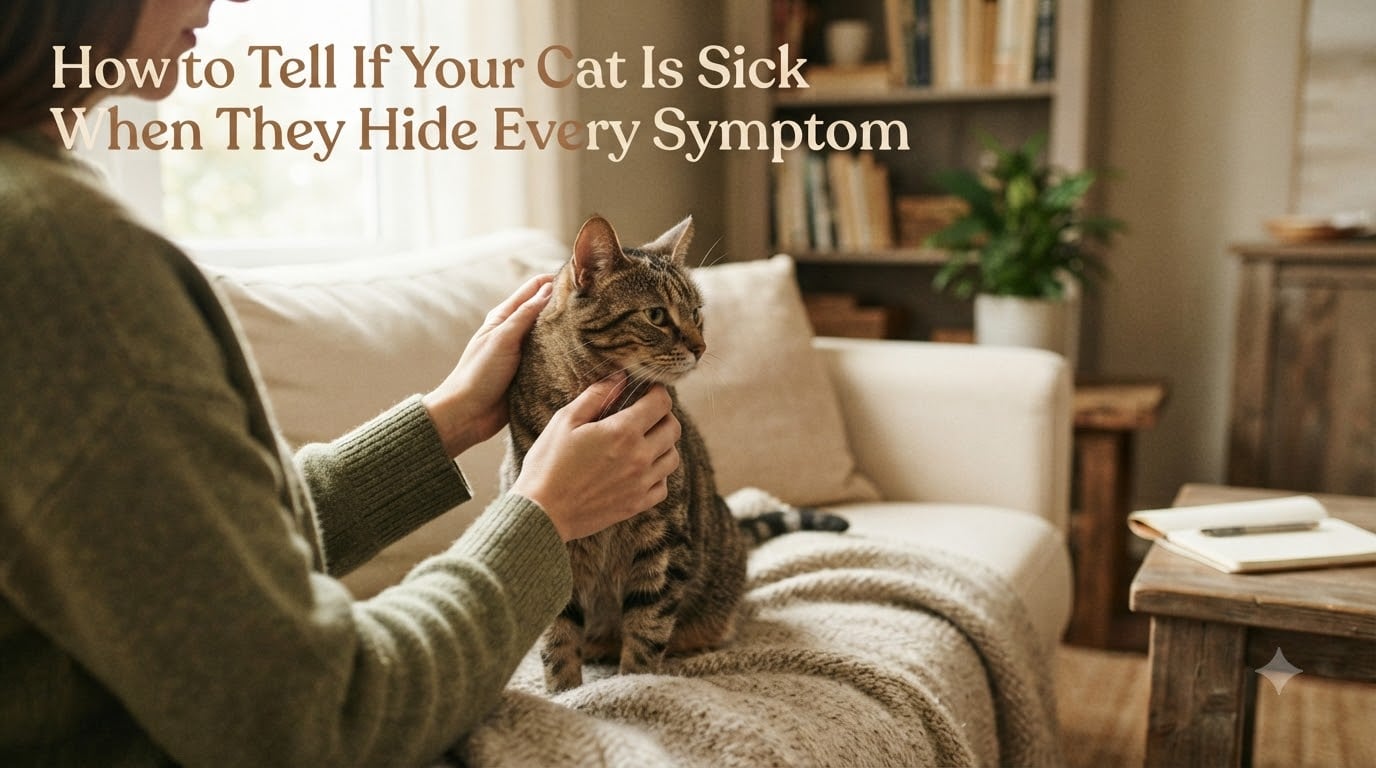
Cats have evolved to hide signs of illness as a survival instinct from their wild ancestors. This means by the time your cat “looks sick,” the illness may have progressed significantly.
I’ve lived with cats for over fifteen years, and I learned this the hard way. My cat Mochi stopped jumping on the counter one summer, and I assumed it was age. Two weeks later, the vet diagnosed hyperthyroidism. I wish someone had told me earlier that this small change was a red flag.
This guide will walk you through exactly how to tell if your cat is sick when they’re doing their best to act normal. You’ll learn the evolutionary reason cats hide illness, the subtle behavioral shifts that signal trouble, and the home monitoring techniques that catch problems early. We’ll cover the 3-3-3 rule for new cat owners, the skin tenting test for dehydration, and the emergency warning signs that mean you need a vet right now.
Table of Contents
Why Cats Hide Illness: The Evolutionary Instinct
Cats are both predators and prey in the wild, which created a powerful survival instinct to mask weakness. Showing signs of illness in the wild would attract predators or signal weakness to rival cats. So sick cats learned to withdraw and hide instead of displaying obvious symptoms.
This evolutionary holdover persists in our domestic cats, even though they sleep on velvet cushions and never face a predator. A cat that visibly appears sick is, in most cases, a very sick cat. The illness has often progressed past the point of easy concealment.
One veterinarian I spoke with put it bluntly: “If you can see your cat is sick, they have probably been sick for a while.” This is why understanding the subtle early warning signs is critical for every cat owner. Cats don’t get sick overnight, but they can hide symptoms for days or weeks before you notice anything obvious.
The flip side is also important. Even though cats hide illness, they still give signals. You just need to know what to look for and pay close attention to changes from your cat’s normal baseline.
Behavioral Changes That Signal Something Is Wrong
Behavioral changes are usually the earliest signs that your cat is sick, often appearing before any physical symptoms become obvious. Cats are creatures of habit, so any deviation from their normal routine deserves attention.
Withdrawal and hiding. A cat who suddenly spends more time under the bed, in a closet, or in a quiet room may be sick. Hiding is one of the most common early signs of illness in cats. If your cat is social but starts avoiding you or other pets, take note.
Unusual clinginess or neediness. The opposite can also signal trouble. Some sick cats become clingier and demand more attention than usual, especially cats dealing with pain or anxiety. A normally independent cat who suddenly won’t leave your side could be feeling unwell.
Aggression or irritability. Cats in pain often hiss, swat, or bite when touched, even if they’re normally affectionate. If your cat suddenly growls during petting or reacts aggressively to being picked up, illness or pain is a likely cause.
Vocalization changes. Increased meowing, yowling, or unusual silence can all indicate illness. Older cats with cognitive dysfunction or hyperthyroidism often vocalize more at night. A typically quiet cat who suddenly becomes loud, or a chatty cat who goes silent, both warrant a closer look.
Restlessness or trouble settling. A sick cat may pace, shift positions frequently, or seem unable to get comfortable. This can indicate pain, nausea, or difficulty breathing.
Physical Appearance Warning Signs You Should Not Ignore
Physical changes are easier to spot than behavioral ones, but they often appear later in an illness. Here’s what to look for during your daily interactions with your cat.
Coat condition. A healthy cat grooms regularly and has a soft, shiny coat. A sick cat often has a greasy, matted, or unkempt appearance because they stop grooming. Pay attention if your cat’s fur looks dull, clumpy, or has flakes.
Eye discharge and the third eyelid. Watery eyes, thick discharge, or a visible third eyelid (the haw) crossing the eye are all warning signs. The third eyelid becomes visible when cats are dehydrated, in pain, or generally feeling unwell. Anisocoria (unequal pupil sizes) is another concern that requires immediate vet attention.
Pale, white, or yellow gums. Healthy cat gums are pink. Pale gums can indicate anemia or shock, while yellow gums point to liver problems. Lift your cat’s lip gently during normal cuddling to learn what their normal gum color looks like.
Hunched posture or tucked limbs. A cat who sits in a hunched position with their head lowered and paws tucked under is often in pain. This “loaf with head down” posture is different from a relaxed loaf, and it’s a sign your cat needs medical attention.
Visible weight loss or muscle wasting. Run your hands along your cat’s spine and hips regularly. If you start feeling bones more prominently, or notice your cat’s waist looking more defined, weight loss may be happening even if their appetite seems normal.
Appetite, Thirst, and Weight Changes in Sick Cats
Changes in eating and drinking are among the most reliable early indicators of feline illness. Both increases and decreases matter.
Decreased appetite. A cat who eats less than usual, skips meals, or shows no interest in treats may be sick. Cats who stop eating entirely for more than 24 hours are at risk for hepatic lipidosis, a dangerous liver condition that can develop quickly. This is a medical emergency.
Sudden increase in appetite. A ravenous cat who can’t seem to get enough food may have hyperthyroidism, diabetes mellitus, or intestinal malabsorption. If your cat is constantly begging for food but not gaining weight, schedule a vet visit.
Increased thirst. Drinking more water than usual can indicate kidney disease, diabetes, or hyperthyroidism. Track your cat’s water bowl levels and litter box output to spot this change early.
Sudden weight loss. Weight loss in cats is always concerning, even if appetite seems normal. Many illnesses cause muscle wasting and fat loss before other symptoms appear. Weigh your cat monthly at home using a kitchen scale to catch gradual changes.
Litter Box Changes: What to Watch For
The litter box is one of the best windows into your cat’s health. Changes in urination or stool are often early warning signs of serious conditions.
Urinating outside the box. When a cat who reliably uses the litter box starts peeing on the floor, bed, or elsewhere, illness is a common cause. Urinary tract infections, bladder stones, kidney disease, and diabetes can all cause this behavior.
Straining to urinate. A cat who visits the litter box frequently, produces only small amounts of urine, or cries while trying to urinate may have a urinary blockage. This is a life-threatening emergency, especially in male cats. Go to the vet immediately.
Changes in stool. Diarrhea, constipation, or blood in the stool all indicate illness. Black, tarry stool can signal internal bleeding, while pale stool may indicate liver or pancreatic problems. Any stool change lasting more than 24 hours warrants a vet visit.
Increased or decreased frequency. More trips to the litter box, or going less often than usual, both signal potential problems. Keep track by scooping daily and noting any changes.
Energy Levels and Grooming Habits
Energy and grooming go together because pain or illness affects both. The key is knowing your cat’s baseline so you can spot deviations.
Lethargy beyond normal napping. Cats sleep 12 to 16 hours a day, so lethargy can be hard to spot. The difference is that a sick cat is hard to rouse, ignores favorite activities, and shows no interest in play or food. A tired cat will wake up for dinner. A lethargic cat won’t.
Over-grooming. Cats who lick, chew, or scratch one area excessively may be dealing with pain, allergies, or stress. Bald patches, hot spots, or irritated skin often point to an underlying medical issue. Watch for obsessive licking of the belly, legs, or tail base.
Under-grooming. A cat who stops grooming entirely is usually feeling too sick or too painful to bother. The coat becomes greasy, matted, or unkempt, especially around the back end where cats have trouble reaching. This is a clear sign your cat needs help.
How to assess baseline energy. Spend a few minutes each day just watching your cat. Note their normal activity level, favorite napping spots, and grooming habits. Subtle changes are easier to catch when you know what’s normal.
How to Monitor Your Cat at Home Between Vet Visits?
Regular home monitoring helps you catch illness early, when treatment is most effective. These are the techniques our team uses with our own cats and recommends to friends.
Skin tenting test for dehydration. Gently pinch the skin at the back of your cat’s neck or between the shoulder blades, then release. In a well-hydrated cat, the skin snaps back immediately. If it stays tented or slowly returns, your cat is likely dehydrated. This is a quick test you can do anytime.
Daily routine observation. Spend two to three minutes each day watching your cat. Look at their coat, eyes, posture, and movement. Note eating, drinking, litter box use, and energy. Small changes add up, and you are more likely to notice them if you’re paying attention.
Keep a health journal. Write down anything unusual, even if it seems minor. A simple notebook or phone note works well. Include the date, what you noticed, and how long it lasted. This record helps your vet see patterns over time.
Video record unusual behavior. If you see something strange, grab a quick video on your phone. Cats often behave differently at the vet, so showing your vet what you see at home is incredibly helpful. Videos are especially useful for odd gait, breathing changes, or seizure-like episodes.
Check gum color and capillary refill time. Press a finger gently against your cat’s gum until it blanches white, then release. The color should return within two seconds. Slower refill can indicate poor circulation or shock.
What Is the 3-3-3 Rule for Cats?
The 3-3-3 rule is a guideline for understanding how long it takes a new cat to adjust to a home. Knowing this timeline helps you distinguish between normal adjustment behavior and actual illness signs, especially in the early days.
The first 3 days: Decompression. New cats are often overwhelmed and may hide, refuse to eat, or seem shut down. This is normal stress behavior, not necessarily illness. Give them a small, quiet room with food, water, litter, and a hiding spot. Don’t force interaction.
The first 3 weeks: Settling in. Your cat starts to explore, develop a routine, and show their real personality. You’ll see their true energy level, appetite, and sociability emerge. This is when you can establish a baseline for what’s normal.
The first 3 months: Feeling at home. By three months, most cats are fully bonded and comfortable. Their personality is established, their habits are set, and you have a solid baseline for noticing any future changes.
Why this matters for illness detection. If you adopt a new cat, give yourself the full three months before deciding what their “normal” looks like. A cat who is still adjusting may show behaviors that look like illness but are actually stress. Once you have a clear baseline, any deviation from it becomes a useful red flag.
Emergency Warning Signs: When to See a Vet Immediately
Some symptoms cannot wait for a regular appointment. These emergency warning signs require same-day veterinary care or an emergency vet visit.
Difficulty breathing. Open-mouth breathing, rapid breathing, or blue gums are emergencies. Cats rarely pant, so any sign of respiratory distress needs immediate care.
Straining to urinate or inability to urinate. A blocked urinary tract can kill a cat within 24 to 48 hours. This is especially common in male cats. If your cat is making repeated trips to the litter box with no output, go to the vet now.
Sudden collapse or extreme lethargy. A cat who cannot be roused, has cold extremities, or is unresponsive needs emergency care immediately. This can indicate shock, severe dehydration, or organ failure.
Seizures or loss of consciousness. Any seizure activity, even a single episode, requires urgent evaluation. Loss of consciousness without explanation is also an emergency.
Severe vomiting or diarrhea. Repeated vomiting or diarrhea, especially with blood, can lead to dangerous dehydration quickly. More than two or three episodes in a few hours warrants an urgent vet visit.
Suspected poisoning or toxin exposure. If you know or suspect your cat ate something toxic (lilies, antifreeze, medications, certain plants), call your vet or the ASPCA Animal Poison Control Center at 888-426-4435 right away.
Trauma. Any fall, attack by another animal, or visible injury needs prompt veterinary assessment, even if your cat seems fine. Internal injuries are not always obvious right away.
Frequently Asked Questions
Do cats usually hide when they are sick?
Yes, cats usually hide when they are sick. This behavior comes from their wild ancestors, who concealed weakness to avoid predators. A cat who visibly appears sick is often very sick, since they’ve been hiding symptoms for days or weeks.
Can a cat be sick and not show symptoms?
Yes, cats can be sick and not show obvious symptoms for a long time. Cats have evolved to mask illness, so by the time a cat acts sick, the illness may have progressed significantly. Subtle behavioral changes are often the only early warning signs.
How long will a sick cat hide?
A sick cat may hide for days or even weeks, depending on the illness. Cats instinctively withdraw when they feel unwell, and the duration depends on how serious the condition is. Watch for changes in eating, litter box habits, and energy level, since hiding alone may not tell you how long they’ve been sick.
Is it normal for a sick cat to hide?
Yes, it is normal for a sick cat to hide. Hiding is an evolutionary survival instinct inherited from wild ancestors who concealed vulnerability. However, prolonged or unusual hiding, especially combined with other changes, is a sign your cat needs veterinary attention.
Conclusion
Learning how to tell if your cat is sick when they hide every symptom comes down to knowing your cat’s normal baseline and watching for subtle changes. Behavioral shifts, appetite changes, litter box patterns, grooming habits, and energy levels are your best early warning signs.
Trust your instincts. If something feels off, even if you can’t put your finger on it, call your vet. Cats are experts at hiding illness, so the fact that you’re paying attention already puts you ahead. Use the skin tenting test, keep a health journal, and don’t hesitate to seek care when something seems wrong. Your cat is counting on you to notice what they’re trying to hide.