
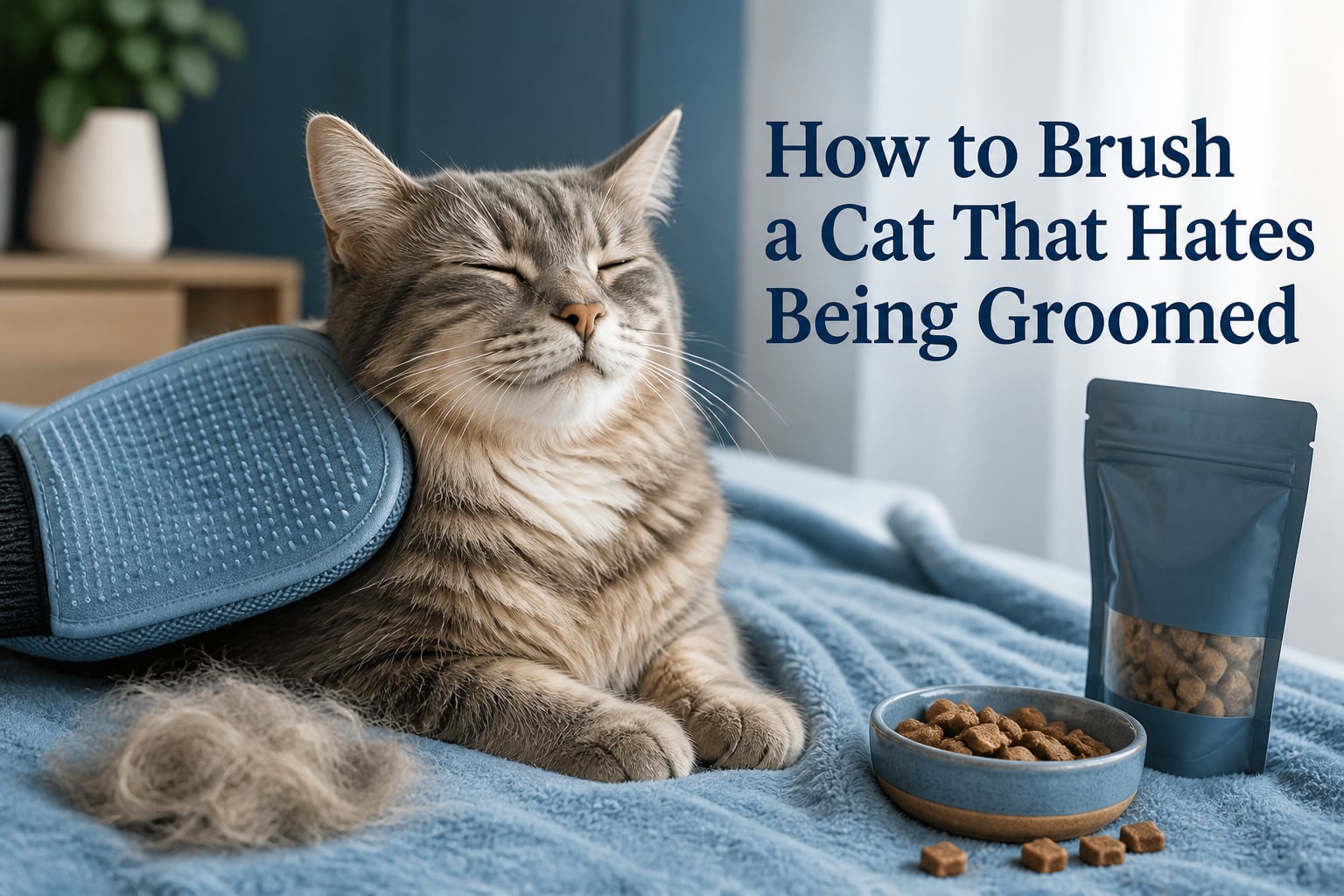
Learning how to brush a cat that hates being groomed changed everything for me and my two rescue cats. One of them, a tabby named Olive, used to bite, scratch, and bolt the second a brush appeared. I spent months figuring out what actually works.
The truth is, brushing a cat that hates being groomed requires patience, the right tools, and a gradual desensitization process. You cannot force it. Your cat has to learn that grooming is safe, and that takes a plan.
In this guide, I’ll walk you through everything I learned from groomers, behaviorists, and my own trial and error. From reading your cat’s body language to picking the right brush, you’ll have a complete roadmap for grooming even the most reluctant feline.
Table of Contents
Why Cats Hate Being Brushed?
Understanding why your cat hates being groomed is the first step toward fixing the problem. Cats are not being difficult for fun. There is almost always a real reason behind the resistance.
Over-stimulation is one of the biggest culprits. Cats have sensitive nerve endings across their skin, and repeated brushing can quickly become overwhelming. What starts as tolerable contact turns into sensory overload within minutes.
Past trauma also plays a role. If your cat had a painful grooming experience, perhaps mats being pulled or a rough brush dragged through their coat, they remember. They now associate the brush with pain and will fight to avoid it.
Matting pain is another major factor. When fur knots close to the skin, every brush stroke pulls at those tight tangles. Your cat is not being dramatic. The pain is real, and they are telling you to stop the only way they can.
Finally, some cats simply dislike being touched in certain areas. The belly, hindquarters, and base of the tail are common trouble zones. Approaching these spots too quickly triggers a defensive response before you even complete a single stroke.
Warning Signs of Over-Stimulation to Watch For
Reading your cat’s body language during grooming can prevent bites, scratches, and setbacks. None of the top competitors cover this in depth, which is surprising because it is the single most useful skill for grooming a difficult cat.
Here are the warning signs that tell you to stop immediately:
Tail flicking or thumping: A swishing tail means your cat is getting annoyed. Fast, aggressive thumping means stop right now.
Flattened ears: Ears pressed back against the head signal fear or irritation building toward aggression.
Dilated pupils: Large, dark pupils indicate your cat is in a heightened state of arousal or stress.
Skin twitching or rippling: Visible twitching along the back means the sensory input is becoming too much.
Vocalizing: Growling, hissing, or low grumbles are clear verbal warnings to back off.
Looking back at the brush: If your cat keeps turning to watch your hand, they are tracking the threat and preparing to react.
Restless shifting: Moving away repeatedly, trying to stand up, or repositioning means they want the session to end.
The key rule is simple. Stop at the first sign, not the third or fourth. Pushing past warnings is how you get bitten and how you create a lasting negative association with grooming.
I learned this the hard way with Olive. I kept going for “just one more minute” and ended up with a bite that needed antibiotics. Now I stop the moment her tail starts moving, and our sessions last longer overall because trust was rebuilt.
How to Choose the Right Brush for Difficult Cats?
The brush you use matters more than you might think. A cat that hates a slicker brush might tolerate a grooming mitt perfectly. Matching the tool to your cat’s temperament and coat type makes a huge difference.
Here is how the main brush types compare for difficult cats:
Grooming mitts are my top recommendation for cats that hate traditional brushes. They look like a regular glove with rubber or silicone nubs on the palm. Your cat feels like they are being petted, not groomed. Several forum users on r/CatAdvice confirmed their cats accepted mitts when nothing else worked.
Slicker brushes have fine wire bristles and work well for removing loose fur and preventing mats in medium to long coats. However, the wire tips can feel scratchy on sensitive cats. Use a soft slicker with coated tips for reluctant groomers.
Pin brushes resemble human hair brushes with rounded metal pins. They are gentler than slickers and good for long-haired cats that need detangling without scraping the skin. They are a solid middle-ground option.
Bristle brushes are the softest option and work best for short-haired cats. They distribute natural oils and remove loose surface fur. They are unlikely to cause pain but may not reach deep enough for dense or matted coats.
Dematting combs and undercoat rakes are for serious tangles and undercoat removal. These are more invasive tools, so use them only after your cat has accepted basic brushing and only on areas that truly need it.
One trick I picked up from forum discussions is the two-brush method. You hold one brush for grooming and place a second identical brush on the floor. Your cat attacks the spare brush while you sneak in strokes with the real one. It sounds silly, but it genuinely works for some cats.
Step-by-Step: How to Brush a Cat That Hates Being Groomed
This is the core process I developed and refined over months of working with resistant cats. Follow these steps in order, and do not rush ahead even if early steps seem too basic.
Step 1: Trim your cat’s nails first. This protects you from serious scratches if your cat reacts badly. Use scissor-style clippers and only take the sharp tip. A calm nail trim before grooming also signals that handling is coming, giving your cat time to settle.
Step 2: Let your cat investigate the brush. Place the brush on the floor near your cat without picking it up. Let them sniff it, rub against it, and even bat at it. You can dab a tiny amount of catnip on the bristles to encourage interaction. Do this for several days before you ever attempt to brush.
Step 3: Pick a calm moment. Time grooming sessions after your cat has eaten and played, when they are naturally relaxed and sleepy. A wound-up cat will never tolerate brushing well.
Step 4: Start with your hands, not the brush. Pet your cat in their favorite spots for a minute or two. Once they are purring and relaxed, pick up the brush and gently stroke the same areas using the same motion. The transition should feel seamless to your cat.
Step 5: Brush only the easy areas first. The head, cheeks, chin, and neck are where most cats enjoy being touched. Stay there for the entire first few sessions. Do not attempt the back, sides, belly, or hindquarters yet.
Step 6: Keep sessions extremely short. We are talking 30 seconds to 2 minutes for the first week. End the session while your cat is still calm, not after they start resisting. This builds a positive association because every session ends on a good note.
Step 7: Reward immediately. Give a high-value treat, a favorite snack, or a sprinkle of catnip right after every session. Your cat needs to connect grooming with something wonderful happening.
Step 8: Gradually expand to harder areas. Over days and weeks, slowly extend brushing toward the back, then the sides, then the hindquarters. The belly should come last, and only if your cat has fully accepted everything else.
Step 9: Use mother-cat strokes. Brush in the direction of fur growth with firm but gentle pressure, mimicking how a mother cat grooms her kittens. Short, rhythmic strokes are more reassuring than long, dragging motions.
Step 10: Build it into a daily routine. Consistency matters more than duration. Two minutes every single day is far more effective than one long session per week. Your cat comes to expect and accept grooming as part of their daily rhythm.
Towel Wrap and Restraint Techniques for Aggressive Cats
Some cats are too aggressive to brush safely without restraint. If your cat bites, scratches, or panics when restrained, focus on the desensitization steps above first. Restraint should be a last resort, not a first response.
The towel wrap, sometimes called the burrito method, is the safest restraint technique for grooming. Here is how to do it:
Lay a large towel flat and place your cat in the center. Wrap one side snugly around their body, then fold the bottom edge up, and wrap the other side. Only the head and the area you are brushing should be exposed. The gentle pressure is calming for many cats and prevents them from swiping or bolting.
Never use scruffing as your primary restraint for adult cats. While mother cats carry kittens by the scruff, scruffing an adult cat can cause fear, pain, and escalated aggression. If you must hold the scruff briefly for safety, do so gently and release the moment you are done.
An Elizabethan collar, the cone used after vet visits, can also protect you from bites during grooming. This is a technique professional groomers use for genuinely aggressive cats. It prevents biting while leaving your hands free to work on problem areas.
If your cat needs restraint every single time you groom, consider whether professional grooming or veterinary sedation is the better path. Some cats have such severe anxiety that forcing grooming at home causes more harm than good.
Grooming Alternatives and Calming Aids
If traditional brushing is simply not working despite your best efforts, several alternatives can help keep your cat’s coat healthy while you work on desensitization.
Grooming mitts and gloves remove loose fur through normal petting. They are the least threatening option and many cats accept them on day one. Forum users repeatedly mentioned mitts as the tool that finally broke through with their difficult cats.
A damp toothbrush is a clever trick from experienced cat owners. The soft bristles and small size feel gentle, almost like another cat grooming them. It works surprisingly well for short-haired cats and kittens.
Grooming sprays designed for cats can make brushing easier by reducing static and detangling loose fur. Look for sprays with calming ingredients like lavender or chamomile, but always check that they are feline-safe.
Self-grooming stations are wall-mounted or corner-mounted brushes your cat rubs against voluntarily. You can find them for a few dollars online. Rub catnip on the bristles to attract your cat, and they will groom themselves on their own schedule.
Feliway pheromone diffusers release synthetic calming pheromones that reduce stress in cats. Plug one in the room where you groom, and give it a week to build up. Many cat owners report noticeably calmer behavior during grooming sessions after introducing Feliway.
How Often Should You Brush Your Cat by Coat Type?
Grooming frequency depends heavily on your cat’s coat length, age, and health. Here is a practical breakdown so you know what to aim for.
Long-haired cats need daily brushing. Breeds like Maine Coons, Persians, and Ragdolls develop mats quickly, sometimes within 48 hours. Aim for a short daily session rather than a long weekly one.
Short-haired cats typically need brushing two to three times per week. This removes loose fur, reduces shedding around your home, and helps prevent hairballs. A bristle brush or soft grooming mitt works well.
Senior cats often need more frequent grooming regardless of coat length. As cats age, they become less flexible and may stop grooming themselves effectively. Daily gentle brushing helps prevent mats and gives you a chance to check for lumps, skin issues, or weight loss.
Overweight cats face the same problem as seniors. They physically cannot reach their back end to self-groom, so mats form around the hips and base of the tail. Pay extra attention to these areas and brush daily if needed.
Frequently Asked Questions
How do you groom an unwilling cat?
Start by letting your cat sniff and investigate the brush without using it. Then brush only their favorite spots for 30 seconds to 2 minutes, reward with treats or catnip, and stop before they get upset. Gradually increase session length and expand to harder areas over weeks. Never force grooming on a resistant cat.
Why does my cat hate getting groomed?
Cats typically hate grooming because of over-stimulation from sensitive skin, past painful experiences with mats or rough brushing, or discomfort when touched in sensitive areas like the belly and hindquarters. Identifying which trigger affects your cat helps you adjust your approach.
How to clean a cat who can’t groom themselves?
For cats that cannot self-groom due to age, weight, or illness, use a grooming mitt during daily petting sessions. Focus on hard-to-reach areas like the back, hips, and base of the tail. A damp cloth or pet wipe can handle surface dirt, and a self-grooming station lets them groom voluntarily.
What brush works best for cats that hate being brushed?
Grooming mitts and gloves work best for difficult cats because they feel like petting rather than brushing. A soft pin brush or coated-tip slicker brush is a good second choice. Avoid harsh wire brushes and dematting tools until your cat has fully accepted basic grooming.
Conclusion
Figuring out how to brush a cat that hates being groomed takes time, but it is absolutely possible. Start with the right brush, read your cat’s warning signs, keep sessions short, and reward every small step forward. Patience beats force every single time.
Olive now lets me brush her for five minutes straight, which seemed impossible a year ago. If your cat is resisting, the problem is not them. It is the approach. Slow down, build trust, and the grooming will come.