
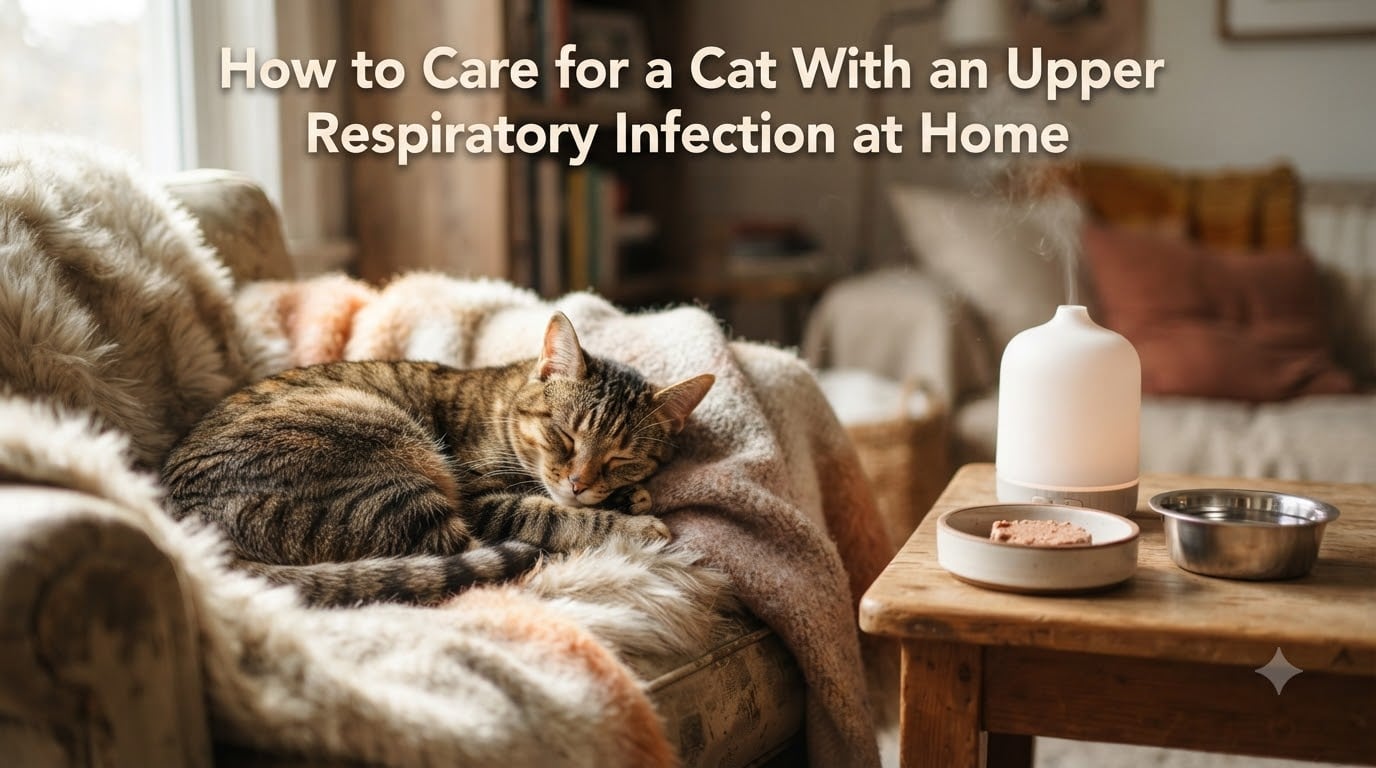
If your cat is sneezing, has goopy eyes, and sounds congested, you are probably looking for a plan. I have nursed multiple cats through upper respiratory infections over the years, and I want to share what actually works at home. This guide covers how to care for a cat with an upper respiratory infection at home, from the first sneeze to full recovery.
An upper respiratory infection, often called cat flu, is one of the most common health issues cats face. The good news is that most cases are mild and respond well to supportive home care. The tricky part is knowing when your cat needs a vet and when a humidifier and some warm chicken baby food will do the job.
I have talked with veterinarians, read through hundreds of forum threads from real cat owners, and pulled together the practical advice that helps cats recover faster. Whether you are dealing with a kitten from a shelter or a senior cat having a flare-up, you will find clear steps here.
You will learn how to recognize symptoms, what causes these infections, and exactly how to set up a recovery routine at home. I will also cover the warning signs that mean you should skip home care and head straight to the vet.
Table of Contents
What Is a Feline Upper Respiratory Infection (URI)?
A feline upper respiratory infection is a contagious disease that affects a cat’s nose, throat, and sinuses. Think of it as the cat equivalent of a bad cold. The infection inflames the mucous membranes in the upper airway, which is why your cat sneezes, gets a runny nose, and develops eye discharge.
Veterinarians often use the abbreviation URI, and you may also hear it called feline viral rhinotracheitis or simply cat flu. These terms describe the same family of infections, though the specific virus or bacteria involved can vary.
Most URIs are viral in origin, meaning the body needs to fight off the virus while you manage the symptoms. Some cases involve bacteria either as the primary cause or as a secondary infection that moves in once the respiratory lining is already damaged.
URI is extremely common in shelters, multi-cat households, and among cats that spend time outdoors. It spreads easily, which is why recognizing it early and starting supportive care makes a real difference in recovery time.
Common Symptoms of Cat URI
Recognizing the symptoms early helps you start supportive care before the infection worsens. Most cats show a combination of the following signs within a few days of exposure.
The most common symptoms include sneezing, nasal discharge, and congestion. You may notice your cat’s nose running clear at first, then turning thick and yellowish or greenish as the infection progresses. Eye discharge and conjunctivitis are also frequent, especially with feline herpesvirus infections.
Here are the symptoms I watch for, ranked from mild to moderate:
Sneezing (sometimes in rapid bursts)
Clear or colored nasal discharge
Watery or thick eye discharge
Squinting or partially closed eyes
Nasal congestion and noisy breathing
Lethargy and sleeping more than usual
Loss of appetite or reduced interest in food
Mild fever
Coughing (less common but possible)
In more severe cases, you might see mouth ulcers, drooling, labored breathing, or complete refusal to eat. Those last two are red flags that require immediate veterinary attention rather than home care.
Kittens tend to show symptoms more intensely because their immune systems are still developing. Senior cats and cats with underlying conditions like FIV or feline leukemia can also experience more severe symptoms.
Causes: Viruses and Bacteria Behind Cat URI
About 80 to 90 percent of feline upper respiratory infections are caused by two viruses: feline herpesvirus type-1 (FHV-1) and feline calicivirus (FCV). Understanding which pathogen is involved helps explain why some cats recover quickly while others deal with recurring episodes.
FHV-1, also called feline viral rhinotracheitis, is the more aggressive of the two. It causes severe eye symptoms, heavy nasal discharge, and sneezing. Once a cat contracts FHV-1, the virus stays in the body for life in a dormant carrier state. Stress, illness, or other triggers can reactivate it, causing flare-ups months or even years later.
FCV tends to cause milder respiratory symptoms but is known for causing painful mouth ulcers. Cats with calicivirus may drool, paw at their mouths, and refuse food because eating is painful. Some strains of FCV are more virulent than others.
The remaining 10 to 20 percent of cases involve bacteria. Bordetella bronchiseptica and Chlamydophila felis are the most common bacterial culprits. Chlamydophila specifically targets the eyes and is a frequent cause of persistent conjunctivitis in cats.
Bacteria often show up as secondary invaders. When a virus damages the respiratory lining, bacteria take advantage of the compromised tissue. This is why some cats seem to improve and then get worse again, a pattern that usually means a secondary bacterial infection has developed.
Knowing the cause matters because bacterial infections respond to antibiotics while viral infections do not. Your vet can help determine whether antibiotics are appropriate based on the symptom pattern and duration.
How Cats Get Infected and How URI Spreads?
Cats catch URI through direct contact with infected cats or contaminated objects. The viruses and bacteria spread through respiratory droplets when an infected cat sneezes, coughs, or grooms. Shared food bowls, water dishes, litter boxes, and bedding can all transmit the pathogens.
The incubation period ranges from 2 to 10 days after exposure. This means your cat could have been exposed days ago and only now start showing symptoms. If you recently adopted a cat from a shelter or brought a new cat home, that is often the source.
Here is how transmission typically happens:
Direct contact with an infected cat (grooming, sleeping together)
Inhalation of sneeze droplets in shared air spaces
Shared food bowls, water fountains, and litter boxes
Contaminated bedding, toys, or human hands and clothing
Stress reactivation in cats carrying dormant FHV-1
Cats remain contagious as long as they are shedding the virus, which can continue for weeks after symptoms resolve. Some cats become chronic carriers, shedding virus periodically even when they look perfectly healthy. This is why multi-cat households need careful management during and after an outbreak.
The good news for humans is that feline URI viruses do not infect people. You cannot catch cat flu from your cat. However, you can carry the pathogens on your hands and clothes between cats, so hand washing and changing clothes matters when handling a sick cat.
Treatment Options: Veterinary Care and Home Recovery
Treatment for feline URI falls into two categories: veterinary medical treatment and supportive home care. Most cats need a combination of both, and the right balance depends on severity.
For viral infections, there is no cure that kills the virus directly. Treatment focuses on supporting the cat’s immune system while it fights off the infection. Antibiotics do not work against viruses, but vets often prescribe them when a secondary bacterial infection is suspected or to prevent one from developing.
Common veterinary treatments include:
Antibiotics like doxycycline or amoxicillin for bacterial infections
Antiviral eye drops or ointments for severe eye involvement
L-lysine supplementation (debated but widely used for FHV-1)
Appetite stimulants like mirtazapine for cats refusing food
Subcutaneous fluids for dehydrated cats
Nebulizer treatments for severe congestion
Can cats recover from URI without antibiotics? Yes, many viral cases clear up with supportive care alone. However, if symptoms persist beyond 7 to 10 days, worsen after initial improvement, or include thick colored discharge, a vet visit is warranted to check for bacterial involvement.
Home care is where you spend most of your effort. The next section breaks down exactly what to do, step by step, to make your cat comfortable and speed up recovery.
Step-by-Step Home Care for a Cat With URI
Home care is the backbone of recovery for most cats with upper respiratory infections. I have refined this routine over years of caring for cats, and it addresses the biggest challenges: congestion, appetite loss, and discomfort.
Step 1: Use a Humidifier or Steam Therapy
Congestion is the symptom that makes cats most miserable because it blocks their sense of smell, which directly kills their appetite. A humidifier in the room where your cat rests makes a noticeable difference within hours.
If you do not have a humidifier, take your cat into the bathroom, shut the door, and run a hot shower for 15 to 20 minutes. The steam loosens mucus and soothes inflamed nasal passages. I do this twice a day during the worst of the infection.
From my experience and what I have seen in cat owner communities, humidifier use often clears up eyes and nose faster than medication alone for mild viral cases.
Step 2: Clean Eye and Nose Discharge Gently
Discharge crusts over and blocks your cat’s nose and eyes, making breathing and seeing difficult. Clean the area two to three times daily with a cotton ball or soft washcloth soaked in warm water.
Use a gentle dabbing motion rather than rubbing. For stubborn crusts, hold the warm damp cloth against the area for 30 seconds to soften before wiping. Use a fresh cotton ball for each eye to avoid cross-contamination.
If your vet prescribed eye ointment, apply it after cleaning so the medication reaches clean tissue.
Step 3: Encourage Eating With Strong-Smelling Soft Foods
A cat that cannot smell will not eat, and a cat that does not eat for more than 24 to 48 hours risks developing hepatic lipidosis, a dangerous liver condition. Getting food into your cat is critical.
Warm the food slightly to amplify the aroma. Offer strong-smelling options like tuna, chicken baby food (check that it contains no garlic or onion powder), or warmed wet cat food. The smell is what draws them in.
Forum tips that real cat owners swear by include offering meat-based human baby food, syringe-feeding bone broth, and hand-feeding small bites on your fingertip. Sometimes the personal attention is enough to get a reluctant cat started.
If your cat has not eaten in 24 hours, call your vet. Appetite stimulants or assisted feeding may be necessary.
Step 4: Maintain Hydration
Sick cats dehydrate quickly, especially when they are not eating normally and are losing fluid through nasal discharge. Offer fresh water in multiple locations and consider adding a pet water fountain, since many cats prefer running water.
You can also add warm water or low-sodium chicken broth (no onions or garlic) to wet food to increase fluid intake. If your cat’s skin tent test shows dehydration (gently pinch the skin between the shoulder blades; if it does not snap back immediately, the cat is dehydrated), contact your vet.
Step 5: Create a Warm, Quiet Recovery Space
Sick cats need rest and warmth. Set up a comfortable area away from household traffic, other pets, and noise. Provide soft blankets, a heating pad set on low (with a towel barrier so the cat can move off if too warm), and easy access to food, water, and litter.
Keep the room comfortably warm and use the humidifier here. Minimize handling to reduce stress, which can worsen symptoms in cats carrying FHV-1.
Step 6: Administer Medications as Prescribed
If your vet prescribed antibiotics, eye drops, or other medications, follow the schedule precisely. Stopping antibiotics early can allow the infection to rebound stronger. Set phone reminders so you do not miss doses.
For liquid medications, draw the dose into a syringe, gently tilt the cat’s head back slightly, and administer slowly into the side of the mouth. Follow with a small treat to create a positive association.
Recovery Timeline: How Long Does URI Last?
Most cats with an uncomplicated URI start improving within 7 to 10 days. With good home care and veterinary support when needed, symptoms typically peak around days 3 to 5 and then gradually resolve.
Here is what I generally expect day by day for a typical viral URI:
Days 1 to 2: Sneezing begins, mild nasal discharge, cat still eating normally
Days 3 to 5: Peak symptoms, congestion worsens, appetite may drop, eye discharge increases
Days 6 to 8: Gradual improvement, congestion eases, appetite returns, energy picks up
Days 9 to 14: Symptoms largely resolved, occasional sneeze, back to normal eating
Cats on antibiotics often recover faster when bacteria are involved, sometimes showing improvement within 3 to 5 days of starting medication. Without treatment, viral URIs typically take about 1.5 weeks to clear.
Some cats become chronic carriers of FHV-1. These cats may experience recurring episodes throughout their lives, usually triggered by stress, illness, or environmental changes. With good management, flare-ups are typically shorter and milder than the initial infection.
If symptoms last longer than two weeks, worsen after improving, or never fully resolve, your cat may have a secondary infection, a resistant bacterial strain, or an underlying condition weakening the immune system. A follow-up vet visit is warranted.
When to See a Vet: Emergency Warning Signs
While most URIs can be managed at home, certain symptoms signal that your cat needs immediate veterinary attention. Do not wait with these signs because delays can lead to pneumonia or worse.
Take your cat to the vet or emergency clinic immediately if you observe any of the following:
Difficulty breathing, open-mouth breathing, or gasping
Blue or pale gums and tongue (sign of oxygen deprivation)
Complete refusal to eat for more than 24 hours
Complete refusal to drink for more than 12 hours
Extreme lethargy, unresponsiveness, or inability to stand
High fever (above 104 degrees Fahrenheit)
Severe drooling or inability to close the mouth
Blood in nasal discharge or saliva
Symptoms that worsen after 7 days instead of improving
Seizures or neurological symptoms
Kittens under 6 months old and senior cats over 12 years old should see a vet sooner rather than later. Their immune systems are less resilient, and what starts as a mild URI can progress to pneumonia quickly in these age groups.
Cats with FIV, feline leukemia, or other immune-compromising conditions also need earlier veterinary intervention. If you are ever unsure, call your vet and describe the symptoms. Most clinics will tell you over the phone whether an immediate visit is needed.
A good rule of thumb I follow: if your cat’s breathing looks labored, the gums are not a healthy pink, or the cat has stopped eating entirely, skip home care and go to the vet the same day.
Preventing URI and Protecting Other Cats
Prevention matters because some cats carry these viruses for life and can infect others even when they appear healthy. If you have a multi-cat household, one sick cat can quickly become several.
Vaccination is the most effective prevention tool. The core FVRCP vaccine protects against feline herpesvirus and feline calicivirus. While it does not completely prevent infection, it significantly reduces symptom severity. Keep vaccinations current, especially for cats that go outdoors or live with other cats.
If one cat in your household gets URI, isolate that cat immediately in a separate room with its own food, water, and litter box. Wash your hands between handling cats, and change clothes if possible. Do not share bowls, toys, or bedding between the sick cat and healthy cats.
Keep the isolation in place until symptoms have fully resolved and your vet confirms the cat is no longer contagious. For some viral infections, shedding can continue for weeks, so ask your vet about the right timeline for your specific situation.
For cats carrying FHV-1, reducing stress is the single best way to prevent flare-ups. Maintain consistent routines, provide hiding spots and vertical spaces, use pheromone diffusers, and address any environmental changes gradually. A stable, low-stress environment keeps the dormant virus quiet.
New cats entering the household should be quarantined for at least two weeks before being introduced to resident cats. This is especially important for shelter and rescue cats, who are far more likely to be carrying URI pathogens.
Frequently Asked Questions
How long does it take a cat to heal from an upper respiratory infection?
Most cats recover from an uncomplicated URI within 7 to 10 days. Symptoms typically peak around days 3 to 5 and then gradually improve. Cats with bacterial infections may recover faster once antibiotics are started, while cats with severe cases or underlying health conditions can take two to three weeks to fully recover.
What foods help a cat with a URI?
Strong-smelling, soft foods work best because congestion kills a cat’s sense of smell and appetite. Warm wet cat food slightly, offer tuna, chicken baby food without garlic or onion powder, meat-based broths, or tuna water drizzled over regular food. Warming the food amplifies the aroma, which helps entice a cat that cannot smell well.
How long is a cat contagious with an upper respiratory infection?
Cats can remain contagious for several weeks after symptoms resolve because they continue shedding the virus. Some cats become chronic carriers of feline herpesvirus and shed the virus periodically for life, especially during stressful periods. Keep infected cats isolated from other cats until your vet confirms they are no longer contagious.
Can cats recover from URI without antibiotics?
Yes, many cats recover from viral URIs without antibiotics because antibiotics only treat bacterial infections, not viruses. Supportive home care including humidifier use, gentle discharge cleaning, soft food, and hydration is often sufficient. However, if symptoms persist beyond 7 to 10 days or involve thick colored discharge, a vet should evaluate for a secondary bacterial infection that may require antibiotics.
Can humans catch upper respiratory infections from cats?
No, the viruses and bacteria that cause feline URI do not infect humans. Feline herpesvirus, calicivirus, Bordetella, and Chlamydophila felis are species-specific. However, humans can carry the pathogens on their hands and clothing between cats, so hand washing and changing clothes after handling a sick cat is important to protect other cats in the household.
Final Thoughts on Home Care for Cat URI
Caring for a cat with an upper respiratory infection at home is mostly about patience, consistency, and paying close attention to symptoms. A humidifier, warm soft food, gentle cleaning, and a quiet recovery space handle the majority of cases. Watch for the warning signs that mean a vet visit is needed, and never let a cat go more than 24 hours without eating.
With the right home care routine, most cats bounce back within a week to ten days. Trust your instincts, keep your vet’s number handy, and remember that your attention and comfort make a bigger difference than you might think.