
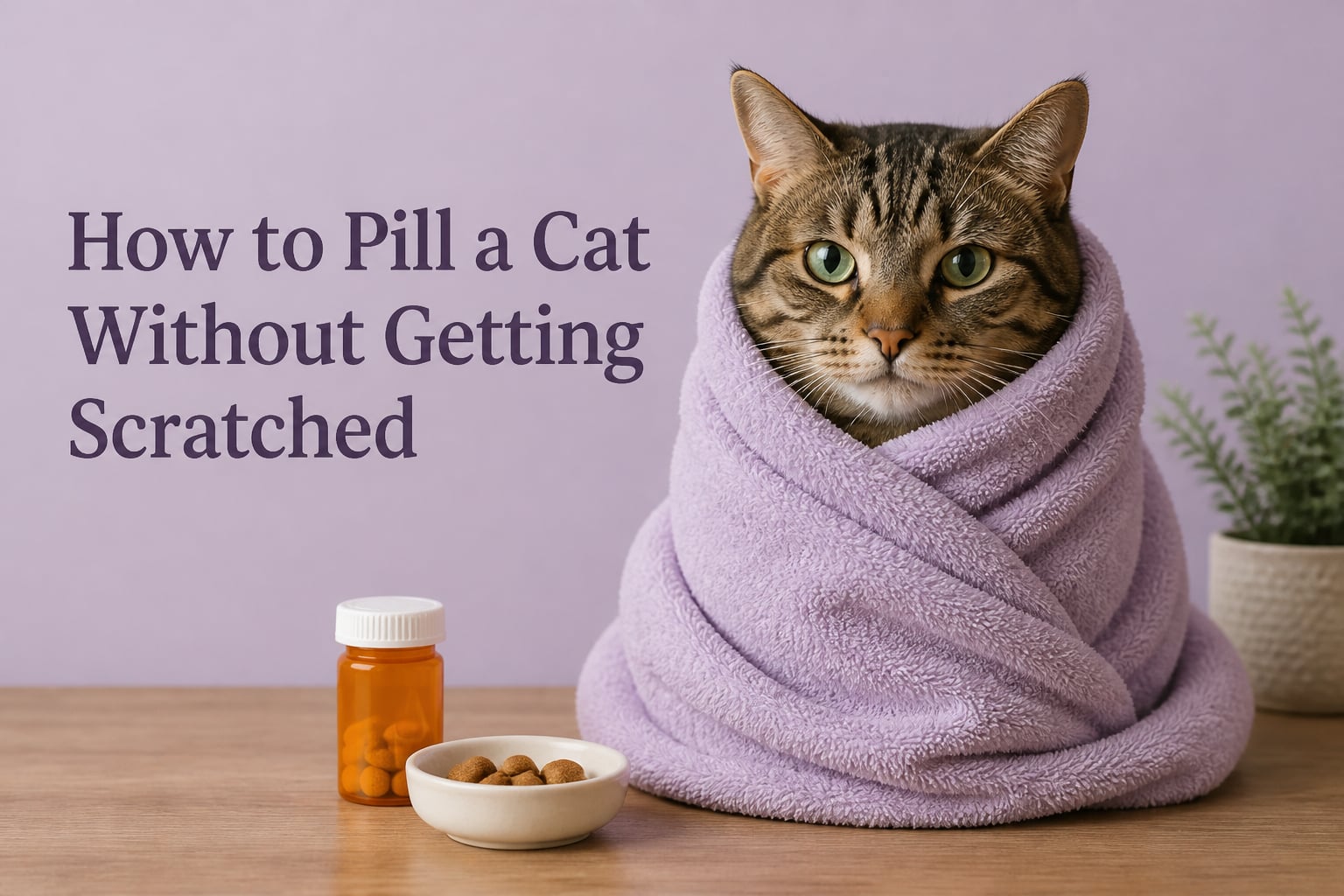
If you have ever tried to give a cat medication, you already know the struggle. Cats are masters at detecting pills, clamping their jaws shut, and turning your arms into a scratching post. Learning how to pill a cat without getting scratched comes down to preparation, the right technique, and a few clever tricks that experienced cat owners and shelter workers swear by.
In this guide, I will walk you through every method that actually works, from the cat burrito wrap to treat disguises and pill shooters. Whether your cat needs daily medication or a short course of antibiotics, these step-by-step techniques will help you get the job done safely and with minimal stress for both of you.
Table of Contents
Prepare Before You Start: Tools and Setup
The number one reason people get scratched is rushing in without a plan. Take five minutes to gather everything you need before you even touch your cat.
Here is what I recommend having on hand:
A large towel or fleece blanket for the burrito wrap
The pill itself, plus a pill shooter (also called a pet piller or pill popper) if you have one
Empty gel caps, which mask bitter-tasting medication
High-value treats like a meat tube (Churu), pill pockets, or FortiFlora powder
A dab of butter or coconut oil to coat the pill and help it slide down
A syringe of water or tuna juice to encourage swallowing
Trim your cat’s claws the day before if possible. This single step reduces scratch damage dramatically. Pick a quiet room with the door closed, and make sure you have a non-slip surface to work on. If your cat is food-motivated, have a pile of plain decoy treats ready nearby.
How to Pill a Cat Without Getting Scratched: The Cat Burrito Method
The cat burrito is the single most effective way to protect yourself from scratches while pilling. Wrapping your cat snugly in a towel restricts their legs without causing harm, leaving only their head exposed.
Here is the step-by-step process I use:
Step 1: Lay a large towel flat on a table or the floor. Place your cat in the center, facing away from you.
Step 2: Gently wrap one side of the towel over your cat’s body, tucking the front leg in snugly. Repeat with the other side so both front legs are pinned against the chest.
Step 3: Fold the bottom edge up and over, creating a secure wrap around the hindquarters. Your cat should now look like a tight little burrito with only the head sticking out.
Step 4: Hold the wrapped cat against your body with your non-dominant arm. Use that same hand to gently grip the top of their head, right behind the cheekbones.
Step 5: Tilt the head back slightly. When the head tilts upward, the jaw naturally drops open a small amount.
Step 6: Use your dominant hand to place the pill as far back on the tongue as possible. If you are using a pill shooter, insert it past the canine teeth and depress the plunger.
Step 7: Close the mouth immediately, keeping the head tilted. Gently stroke the throat in a downward motion or blow lightly on the nose to trigger a swallow.
Step 8: Follow immediately with a syringe of water or a small amount of meat tube to confirm the pill went down and to wash away any bitter residue.
Keep the wrap secure until the pill is swallowed. Never release an agitated cat mid-process, as they may bolt and injure themselves.
Hand-Pilling Technique Step by Step
If your cat is calm and trusts you, you may not need the towel wrap at all. Hand-pilling is faster but requires confidence and quick reflexes.
Start by sitting with your cat on your lap or on a raised surface at chest height. Hold the pill between your thumb and index finger of your dominant hand. Grip the top of your cat’s skull with your other hand, placing your thumb and middle finger behind the canine teeth on opposite sides.
Tilt the head back gently. The lower jaw will relax and drop open. Use your ring finger or pinky of the pill-holding hand to press the lower jaw down further if needed. Drop the pill far back on the center of the tongue, then quickly close the mouth.
Hold the mouth closed and stroke the throat downward. Watch for a licking motion, which usually indicates swallowing. Always offer a high-value treat immediately after so your cat associates the experience with something positive.
If your cat clamps their jaw and refuses to open, do not force it. Switch to the burrito method or a pill shooter instead.
Treat Disguise Methods That Actually Work
Hiding medication in food sounds easy, but cats are notoriously good at detecting pills. Studies suggest that up to 70 percent of cats can find and spit out a pill hidden in food. The trick is using strong-smelling, high-value items your cat cannot resist.
Pill Pockets and Treat Sandwiches
Commercial pill pockets are soft, moldable treats with a hollow center. Mold one around the pill completely so no white shows. To outsmart a suspicious cat, prepare three or four plain treats alongside the loaded one. Feed the plain treats first, then quickly follow with the loaded pocket, then another plain treat. This rapid-fire approach keeps the cat focused on the next treat rather than inspecting each one.
Meat Tube Method
Squeeze a line of lickable treat like Churu onto a plate. Drop the pill into the center and cover it with more meat tube. Many cats will lap up the entire portion without noticing the pill. For best results, use a meat tube flavor your cat has not had recently so novelty drives enthusiasm.
FortiFlora Powder Coating
FortiFlora is a probiotic powder that cats find irresistible due to its animal digest coating. Roll a sticky pill in FortiFlora powder, or sprinkle it over a small portion of wet food containing a crushed or whole pill. The strong scent masks medication odors that cats would otherwise detect.
Gel Caps Method for Bitter Pills
Some medications taste extremely bitter, and cats will foam at the mouth or drool excessively. Empty gel caps solve this problem. Place the pill inside an appropriately sized gel capsule, then coat the outside of the capsule with butter. The capsule dissolves in the stomach, and the butter helps it slide down the throat smoothly.
Using a Pill Shooter or Pet Piller
A pill shooter is a plastic tool with a soft rubber tip that holds the pill and a plunger that launches it to the back of the throat. It keeps your fingers away from your cat’s teeth, which makes it ideal for cats that bite.
To use a pill popper, load the pill into the rubber tip. With your cat wrapped in a towel, tilt the head back and insert the shooter past the canine teeth. Aim toward the back of the tongue at a slight downward angle. Press the plunger firmly but gently, then close the mouth and stroke the throat.
Practice with an empty shooter first so you understand the force needed. Never jam the tool against the back of the throat, as this can cause injury. Pill shooters are inexpensive and available at most pet stores and veterinary offices.
Tips for Highly Suspicious Cats
Some cats seem to develop a sixth sense for medication. If your cat refuses every standard method, try these advanced strategies from experienced shelter workers.
The Decoy Strategy: Offer three to five identical treats in rapid succession. Slip the loaded treat in the middle of the sequence. The cat eats on autopilot before realizing anything is different.
The Step-Away Technique: Place the loaded treat on the floor, then turn and walk away. Some cats refuse anything handed directly by their owner but will happily eat the same item when left unattended.
The 3-3-3 Rule: This rule, borrowed from cat adoption guidance, suggests that cats need three days to decompress, three weeks to learn a routine, and three months to feel fully settled. Apply this patience to medication. If your cat is new to pilling, expect resistance early on and celebrate small victories. Consistency and a calm demeanor will eventually win them over.
Random Treat Sessions: On days when no medication is due, hand your cat plain treats using the same routine. This breaks the association between your pilling setup and something unpleasant, making the cat less suspicious when the real thing happens.
What to Do When Your Cat Refuses Everything?
If you have tried every method and your cat still fights every attempt, talk to your veterinarian about alternatives. Many medications are available in liquid form, which can be squirted into the side of the mouth with a syringe. Some drugs come as transdermal gels absorbed through the skin inside the ear flap.
A compounding pharmacy can reformulate medications into flavored liquids, smaller pills, or even treats. They can also adjust the texture or taste to suit your cat’s preferences. This option costs more but saves enormous daily stress for both of you.
For temporary medication courses, such as a short round of antibiotics, ask your vet whether the schedule can be adjusted to fewer doses or whether an injection administered in-office is an option.
Frequently Asked Questions
How do you give an unwilling cat a pill?
Wrap the cat in a towel (the burrito method), tilt the head back, and use a pill shooter to place the pill far back on the tongue. Close the mouth and stroke the throat to encourage swallowing. Always follow with a treat.
What is the 3 3 3 rule for cats?
The 3-3-3 rule states that cats need three days to decompress, three weeks to learn a routine, and three months to feel fully settled in a new home. Applied to medication, it means patience and consistency are key when introducing a pill routine.
What can I mix my cat pill with?
You can hide pills in pill pockets, meat tubes like Churu, wet food, tuna juice, FortiFlora powder, or butter. Strong-smelling, high-value foods work best because they mask the odor of medication.
Is it best to crush a pill or leave it whole for a cat?
Leave pills whole unless your vet confirms crushing is safe. Some medications are extended-release or taste extremely bitter when crushed, which can cause your cat to drool or refuse the food entirely. Always check with your vet first.
Conclusion
Learning how to pill a cat without getting scratched takes patience, but it is absolutely achievable with the right approach. Start with preparation, master the cat burrito wrap, and always reward your cat afterward. If one method fails, move to the next until you find what works for your particular cat. When all else fails, your vet can offer liquid, transdermal, or compounded alternatives that make daily medication stress-free for everyone involved.