
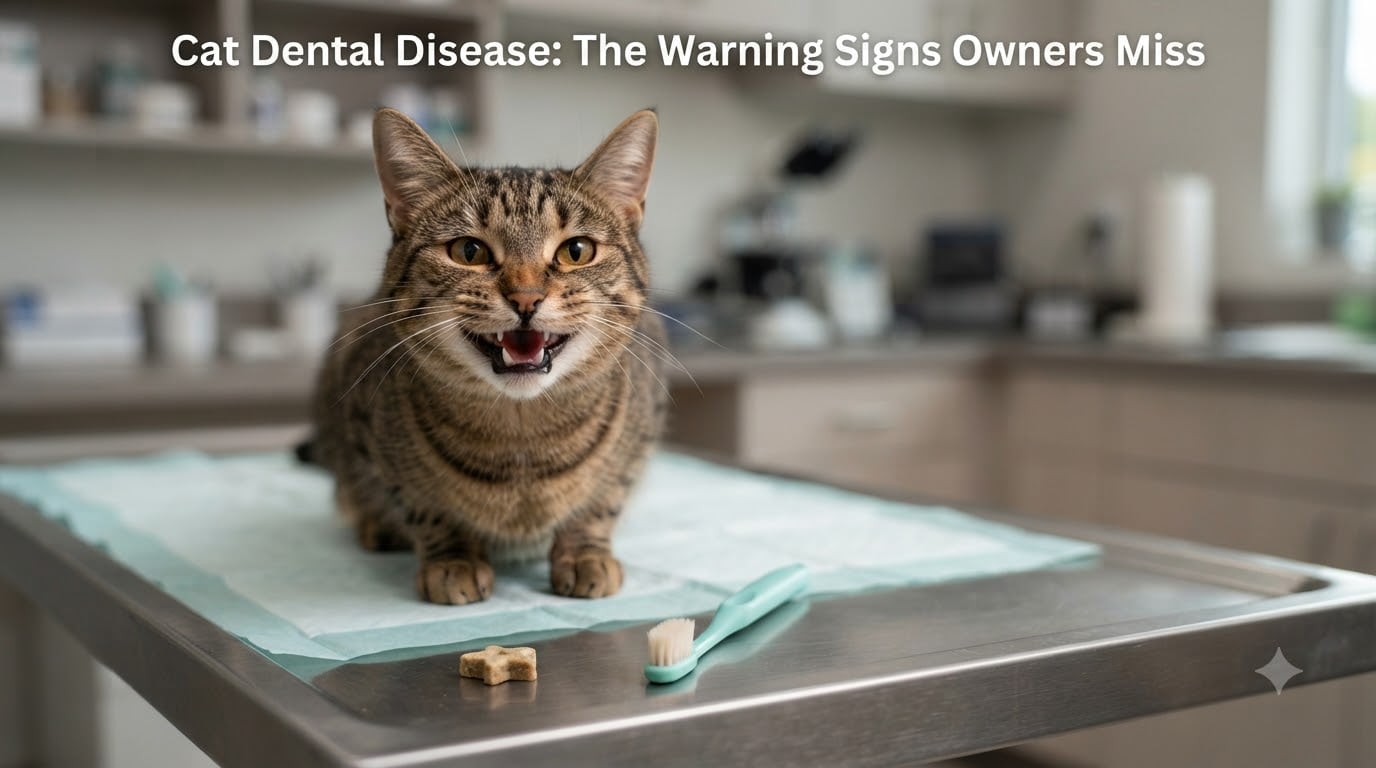
By the time most owners notice something is wrong, their cat has been hiding dental pain for months. Cats are masters at masking discomfort, an instinct rooted in their evolutionary need to avoid appearing vulnerable to predators. This means feline dental disease often goes unnoticed until it reaches an advanced, painful stage.
The statistics are sobering. Roughly 70 to 80 percent of cats show signs of dental disease by the time they reach three years of age. Many of these cats suffer in silence while their gums recede, their teeth loosen, and bacteria from oral infections enter their bloodstream.
In this guide, we walk through every cat dental disease warning sign you might be missing, explain what happens inside your cat’s mouth at each stage, and share what you can do at home to protect them. Whether you have a kitten or a senior cat, knowing these signs could spare your companion years of hidden pain.
Table of Contents
What Is Dental Disease in Cats?
Dental disease in cats is a progressive infection of the gums, ligaments, and bone surrounding the teeth, caused by plaque and bacteria buildup. It begins as mild gum inflammation and can advance to tooth loss, jaw bone damage, and infection spreading through the bloodstream to major organs.
Here is how the process unfolds. Within hours of eating, a sticky film of bacteria called plaque forms on your cat’s teeth. If that plaque is not removed through chewing or brushing, it hardens into tartar within a few days. Tartar is rough and porous, which allows even more bacteria to cling to the tooth surface and irritate the gum line.
As bacteria accumulate, the gums become inflamed. This early stage is called gingivitis. Left untreated, the inflammation spreads deeper into the tissues and bone that anchor the teeth, progressing into periodontitis. At this point, the damage becomes irreversible without professional intervention.
Cats can also develop a condition unique to felines called tooth resorption, or FORL (Feline Odontoclastic Resorptive Lesions). This painful condition occurs when cells called odontoclasts break down the tooth structure itself, starting at the root and working upward. It affects an estimated 30 to 60 percent of cats, and the exact cause remains unknown.
Cat Dental Disease Warning Signs: 9 Red Flags to Watch For
Recognizing cat dental disease warning signs early can mean the difference between a simple cleaning and full-mouth extractions. Here are the nine most common symptoms, ranked roughly from earliest to most advanced.
1. Bad Breath That Will Not Go Away
Persistent bad breath, clinically known as halitosis, is one of the earliest and most overlooked signs of dental disease in cats. Many owners dismiss foul breath as normal “cat breath,” but a healthy cat’s mouth should not smell offensive.
The odor comes from bacteria multiplying along the gum line and decomposing food particles trapped between teeth. As gum tissue becomes infected, the smell intensifies. If your cat’s breath has a sour, rotten, or fishy quality that lingers regardless of what they eat, it is time to look more closely at their mouth.
I have spoken with countless cat owners on forums like Reddit’s r/catcare who admit they ignored bad breath for months, only to discover advanced periodontal disease during a vet exam. The breath is not just unpleasant, it is a signal that bacterial infection is actively damaging oral tissue.
2. Difficulty Eating or Dropping Food (Quidding)
When a cat begins eating more slowly, favors one side of their mouth, or drops pieces of food while chewing, something is wrong. One specific behavior to watch for is called quidding.
Quidding in cats refers to the act of dropping partially chewed food from the mouth, often accompanied by tilting or shaking the head while eating. It happens when chewing becomes painful, usually due to inflamed gums, loose teeth, or oral lesions. You may find soggy wads of kibble dropped around the food bowl.
Some cats switch from crunching kibble to only eating wet food, or they may stop eating altogether. What looks like fussiness is often a desperate attempt to avoid pain. If your cat suddenly changes their eating habits, dental disease should be near the top of your suspicion list.
3. Excessive Drooling
Cats do not normally drool the way dogs do. If you notice strings of saliva hanging from your cat’s mouth, or wet fur around their chin and chest, it is a sign that something in their mouth is causing irritation or pain.
Drooling associated with dental disease happens when inflamed gums, infected teeth, or oral ulcers trigger excess saliva production. The drool may be thick, stringy, or tinged with blood. In some cases, your cat may also paw at their mouth while drooling, a clear distress signal.
4. Pawing at the Mouth or Face
A cat that repeatedly swipes at their mouth, rubs the side of their face along furniture, or scratches near their jaw is often trying to relieve oral pain. This behavior is especially telling when it happens during or after meals.
Pawing at the mouth indicates that the discomfort has become noticeable enough for your cat to act on it. Since cats typically hide pain until it is severe, this gesture means the problem has likely been building for some time. Pay attention if the pawing becomes frequent or frantic.
5. Red, Swollen, or Bleeding Gums
Healthy cat gums should be a uniform pale pink. Gums that appear bright red, especially along the tooth line, are inflamed. This redness, called gingivitis, is the hallmark of the earliest stage of periodontal disease.
Lift your cat’s lip gently and look at the area where the gum meets the tooth. If you see redness, swelling, or a yellow-brown crust of tartar on the teeth, dental disease is present. Bleeding gums, whether spontaneous or after eating, indicate that the inflammation has progressed and the tissue is actively infected.
6. Weight Loss or Reduced Appetite
When chewing hurts, cats eat less. Gradual weight loss is one of the warning signs of dental disease that owners frequently attribute to other causes, like aging or picky eating. But unexplained weight loss in a cat should always prompt an oral examination.
You might notice your cat approaching the food bowl with enthusiasm, only to walk away after a few bites. They may seem hungry but reluctant to eat, or they might start swallowing kibble whole to avoid chewing. Over weeks or months, this reduced intake leads to noticeable weight loss and muscle wasting.
7. Behavioral Changes and Irritability
Dental pain changes a cat’s personality. A normally social and affectionate cat may become withdrawn, hiding under beds or in closets. A cat that used to tolerate handling might start growling, hissing, or swatting when you touch their face or pick them up.
Other behavioral changes include reduced grooming, sleeping more than usual, reluctance to play with toys that require biting, and a general decrease in activity. These shifts are easy to dismiss as mood swings or normal aging, but they often point to chronic oral pain.
8. Loose, Broken, or Missing Teeth
In advanced dental disease, the structures holding the teeth in place deteriorate. Teeth become loose, shift position, or fall out entirely. You might find a tooth on the floor or notice a gap where a tooth used to be when you look inside your cat’s mouth.
Broken teeth are also a red flag. Cats can fracture teeth on hard objects, but more commonly, weakened teeth break during normal chewing because the supporting bone has been destroyed by infection. A broken tooth exposes the sensitive inner pulp, causing sharp pain and requiring immediate veterinary attention.
9. Sneezing and Nasal Discharge
This one surprises many owners. The roots of the upper teeth sit very close to the nasal cavity. When infection from a diseased tooth spreads upward, it can breach the nasal passages and cause chronic sneezing or nasal discharge.
If your cat has persistent sneezing accompanied by a one-sided nasal discharge, especially on the same side as a diseased tooth, the two symptoms may be connected. This scenario often indicates a condition called an oronasal fistula, an abnormal opening between the mouth and nasal cavity that requires surgical repair.
The Four Stages of Cat Dental Disease
Veterinarians classify periodontal disease in cats using a four-stage grading system. Understanding these stages helps you appreciate how the condition progresses and why early intervention matters.
Stage 1, the earliest stage, is gingivitis. Plaque and tartar have accumulated along the gum line, causing redness and mild inflammation. The gums may bleed when touched, but the bone and ligaments supporting the teeth are still intact. This stage is fully reversible with a professional cleaning and improved home care.
Stage 2 is early periodontitis. Inflammation has spread below the gum line, and early bone loss begins. Some gum recession may be visible. At this stage, professional treatment can halt the progression, but the early bone loss is permanent.
Stage 3 is established periodontitis. Significant bone loss has occurred, and the teeth may start to feel loose. Gums recede further, creating deep pockets where bacteria collect. Treatment involves deep cleaning, possible extractions, and ongoing management.
Stage 4 is advanced periodontitis. More than half of the tooth’s supporting bone has been lost. Teeth are loose or have already fallen out. The infection is severe, painful, and likely spreading through the bloodstream. Cats at this stage often need multiple tooth extractions and antibiotic therapy. Without treatment, Stage 4 dental disease can become life-threatening.
What Happens If Cat Dental Disease Goes Untreated?
The consequences of ignoring dental disease extend far beyond the mouth. Bacteria from infected gums and tooth roots do not stay put. They enter the bloodstream through inflamed gum tissue and travel throughout the body, settling in major organs.
The kidneys are especially vulnerable. Cats with advanced dental disease have a significantly higher risk of developing chronic kidney disease, one of the leading causes of death in older cats. The kidneys filter waste from the blood, and when bacteria-laden blood passes through repeatedly, it damages the delicate filtering structures over time.
The heart is another common target. Bacterial endocarditis, an infection of the heart valves, has been linked to dental disease in both cats and dogs. Bacteria from the mouth lodge on the heart valves, causing damage that can lead to heart murmurs and eventually heart failure.
The liver can also suffer. Bacteria traveling through the bloodstream from oral infections can cause liver inflammation and, in severe cases, abscesses. Forum users on Reddit have shared harrowing stories of cats developing acute kidney failure traced back to untreated dental infections.
Can a cat live with dental disease? Technically yes, for a while. But the quality of life during that time is poor. Chronic pain suppresses appetite, reduces activity, and wears down the immune system. Left untreated long enough, dental disease can contribute to a cascade of organ failures that ultimately prove fatal.
Causes and Risk Factors for Feline Dental Disease
Plaque and tartar buildup is the root cause of most dental disease in cats. But certain factors accelerate that process and make some cats more vulnerable than others.
Age is the biggest risk factor. By age three, most cats already have some gingivitis. By age six, many have developed periodontitis. Senior cats aged ten and older frequently have significant dental damage, missing teeth, or painful resorptive lesions. Dental disease is progressive, so the longer a cat lives without proper dental care, the worse it gets.
Breed also plays a role. Purebred cats like Siamese, Persians, Abyssinians, and Maine Coons are predisposed to dental problems, partly due to the shape and crowding of their teeth. Brachycephalic breeds with short faces and crowded mouths are especially prone to plaque retention.
Diet contributes as well. Cats that eat only soft, wet food tend to accumulate plaque faster than those who crunch dry kibble, because the mechanical action of chewing hard food provides some natural cleaning. That said, diet alone is not enough to prevent dental disease, even cats on dry-food diets need regular dental care.
How to Prevent Dental Disease in Cats?
Prevention is always easier and less expensive than treatment. Here are the most effective steps you can take at home to protect your cat’s oral health.
Brush your cat’s teeth daily. This is the single most effective thing you can do. Use a soft-bristled pet toothbrush or finger brush and toothpaste formulated specifically for cats, never human toothpaste, which is toxic. Start slowly, letting your cat taste the paste first, then gradually work up to brushing the outer surfaces of the teeth.
Offer veterinary-approved dental treats and diets. Products carrying the Veterinary Oral Health Council (VOHC) seal have been tested and proven to reduce plaque and tartar. These work through special textures or ingredients that mechanically clean teeth as your cat chews.
Schedule annual veterinary dental exams. Your vet can spot early signs of disease that you might miss at home, including problems hiding below the gum line that require dental X-rays to detect.
Plan for professional dental cleanings under anesthesia as recommended by your vet. These cleanings remove tartar both above and below the gum line, something no amount of at-home brushing can achieve. Most cats benefit from a professional cleaning every one to two years, depending on their individual needs.
When to See a Vet
If you notice any of the warning signs described in this article, schedule a veterinary exam promptly. Bad breath, drooling, difficulty eating, pawing at the mouth, red gums, weight loss, or behavioral changes all warrant a professional evaluation. Do not wait for symptoms to worsen, because the longer dental disease progresses, the more painful and expensive it becomes to treat.
Frequently Asked Questions
How painful is dental disease in cats?
Dental disease is extremely painful for cats, but they hide it remarkably well. Gum inflammation, infected tooth roots, and resorptive lesions all cause significant chronic pain. Most cats do not show obvious signs of discomfort until the pain becomes severe, which means by the time you notice something is wrong, your cat has likely been hurting for weeks or months.
What is quidding in cats?
Quidding is when a cat drops partially chewed food from their mouth while eating. It happens because chewing has become painful, usually due to gum inflammation, loose teeth, or oral lesions. You may find wet wads of kibble around the food bowl. Quidding is a strong indicator of dental disease and should prompt a veterinary exam.
Can a cat live with dental disease?
A cat can survive with dental disease for some time, but their quality of life suffers significantly. Chronic pain suppresses appetite and activity, and the infection can spread through the bloodstream to the kidneys, heart, and liver. Without treatment, dental disease eventually contributes to organ damage that can shorten a cat’s lifespan.
What is Stage 4 dental disease in cats?
Stage 4 is advanced periodontitis, the most severe form of dental disease. More than half the bone supporting the teeth has been lost, teeth are loose or missing, and infection is deep-seated. Cats with Stage 4 disease typically need multiple tooth extractions and antibiotic treatment. It is painful and can become life-threatening without intervention.
What happens if dental disease goes untreated in cats?
Untreated dental disease allows bacteria from infected gums and tooth roots to enter the bloodstream and spread to major organs. This can lead to chronic kidney disease, heart valve infections, and liver damage. The pain also causes weight loss, reduced activity, and a weakened immune system. Over time, the combination of chronic pain and organ damage can be fatal.
At what age do cats start having dental problems?
Most cats begin showing signs of dental disease by age three. Studies estimate that 70 to 80 percent of cats have some degree of dental disease by this age. Gingivitis can start even earlier, especially in breeds with crowded teeth. The disease progresses with age, so regular dental care should begin in kittenhood and continue throughout your cat’s life.
Does dental disease go away in cats?
No, dental disease does not resolve on its own. Gingivitis, the earliest stage, can be reversed with a professional cleaning and consistent home care. But once the disease progresses to periodontitis with bone loss, the damage is permanent. Treatment focuses on stopping progression and managing pain, not reversing the structural damage already done.
How do cats act when they have dental pain?
Cats with dental pain often become withdrawn, hiding more than usual and avoiding interaction. They may eat less, eat slowly, drop food, or avoid hard food entirely. Some cats paw at their mouth, drool excessively, or stop grooming. Behavioral changes like irritability, reduced playfulness, and sleeping more are also common. Any sudden personality shift in an older cat warrants an oral exam.
Do Not Wait for the Signs to Get Worse
Cat dental disease warning signs are easy to miss because cats are wired to hide their pain. Bad breath, quidding, drooling, weight loss, and behavioral changes may seem minor individually, but together they paint a picture of oral disease that demands attention. The sooner you act, the more treatment options your vet will have and the less your cat will suffer.
Start by lifting your cat’s lip and checking their gums today. Schedule a veterinary dental exam if you notice redness, tartar, or any of the symptoms we covered. Then commit to a daily brushing routine and regular professional cleanings. Your cat depends on you to notice what they cannot tell you, and their mouth is one place where early action truly saves lives.