
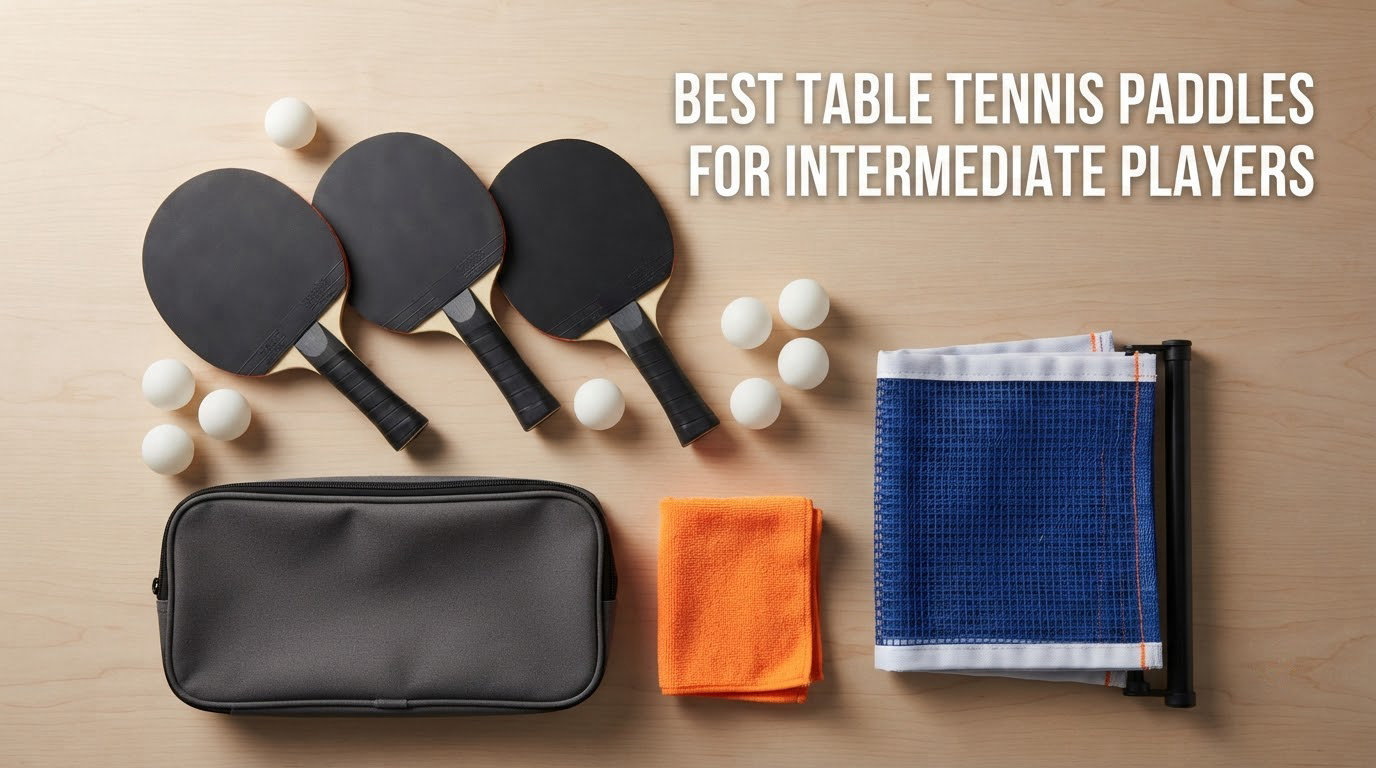
If you have been playing for six to eighteen months and can already loop, read spin and control placement, your racket is probably the thing holding you back. The best table tennis paddles for intermediate players are not the most expensive ones on the shelf — they are the ones that stop absorbing the energy your stroke is finally putting into the ball.
After comparing all ten paddles in this roundup side by side on blade construction, sponge thickness, weight, grip and tournament legality, the PRO-SPIN Carbon Paddle comes out on top. It has the highest rating and the highest review count in the group, and its 7-ply carbon blade with 2.0mm sponge sits in the middle of the speed and control range where a developing loop can actually work.
The rest of the list is deliberately uneven. If your problem is placement rather than power, a control-first paddle will do more for your score than a faster one. If your problem is that your loops die on the net, you need sponge and tack, not stiffness. Every pick below is assigned to a specific gap in your game, and every one carries a note on who should skip it.
Table of Contents
Top 3 Picks for Intermediate Players in 2026
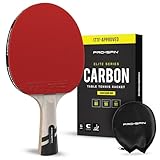
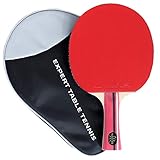
PRO-SPIN Carbon Paddle
- 7-ply carbon blade
- 2.0mm sponge
- ITTF-approved rubber
- Replaceable rubber sheets

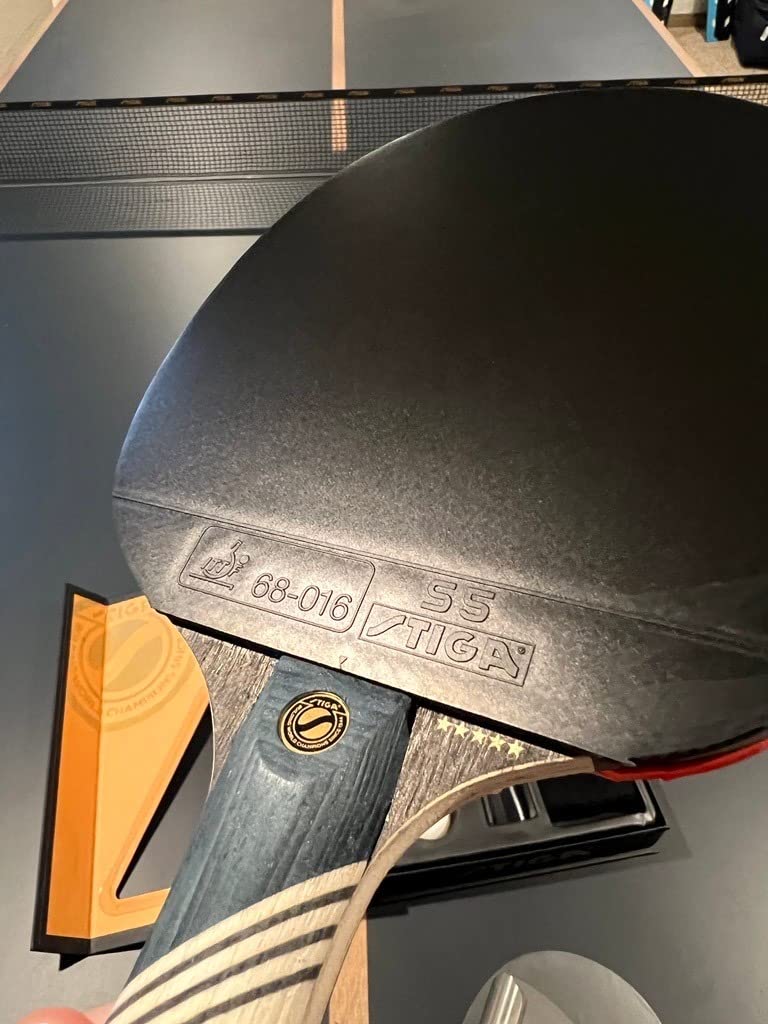
STIGA Pro Carbon+
- 5 balsa plies plus 2 carbon layers
- 2mm sponge
- Flared handle
- Speed 99 Spin 100 Control 80
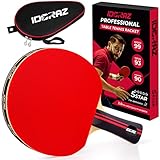
Idoraz Professional Paddle
- All-wood frame
- ITTF-approved 2.0mm rubber
- Spin 93 Speed 99 Control 90
- Carrying case included
The PRO-SPIN Carbon is the safest single answer to the question intermediate players ask most, because it does three things at once: it is fast enough to punish a blocked ball, forgiving enough to survive an inconsistent block, and built so the rubber can be peeled off and replaced rather than thrown away.
the STIGA Pro Carbon+ takes the second slot on feel. It is light, it recovers quickly and it comes with a long flared handle, but reviewers repeatedly note that its bounce is fast and its spin bite is modest, so it suits a player who already generates rotation. The Idoraz Professional rounds out the top three as an allrounder with a 90 control rating that is the higher of the two all-wood options in this group.
10 Best Table Tennis Paddles for Intermediate Players (October 2026)
| Product | Specs | Action |
|---|---|---|
| PRO-SPIN Carbon Paddle |
|
Check Latest Price |
| STIGA Pro Carbon+ |
|
Check Latest Price |
| Idoraz Professional Paddle |
|
Check Latest Price |
 JOOLA Carbon X Pro JOOLA Carbon X Pro |
|
Check Latest Price |
 Butterfly 401 Butterfly 401 |
|
Check Latest Price |
 Killerspin Jet 800 Speed N2 Killerspin Jet 800 Speed N2 |
|
Check Latest Price |
 JOOLA Carbon Control JOOLA Carbon Control |
|
Check Latest Price |
 JOOLA Infinity Carbon JOOLA Infinity Carbon |
|
Check Latest Price |
 Palio Master 3.0 Palio Master 3.0 |
|
Check Latest Price |
 STIGA Carbon+ Bundle STIGA Carbon+ Bundle |
|
Check Latest Price |
Read that table as a map rather than a ranking. The lighter weights in the group include the JOOLA Carbon Control at 0.18 kg, the Palio Master 3.0 at 200 g and the JOOLA Carbon X Pro at 0.22 kg, and those are three of the most control-oriented picks. The heaviest listed weight belongs to the STIGA Carbon+ Bundle at 0.3 kg, which is also the most deliberately offensive design here.
1. PRO-SPIN Carbon Paddle – Best Overall for Spin and Control
PRO-SPIN Ping Pong Paddles – ITTF Approved Professional Table Tennis Rackets with Carbon Fiber for Superior Control | 7-Ply Blade, Premium Rubber, 2.0mm Sponge (Red, 1-Pack)
7-ply carbon blade
2.0mm sponge
ITTF-approved rubber
6.5 oz
Pros
- Strong spin with controllable placement
- Light feel that is easy to swing
- Replaceable rubber keeps the blade alive
- Durable under heavy regular play
Cons
- Rubber surface collects lint and dust
- Included case is a tight fit
- Less raw power than premium blades
This is the paddle we keep coming back to. The blade is five plies of wood — silver walnut and ayous — with two carbon layers, which is a much more moderate stiffness than a pure carbon pro blade. The 2.0mm sponge underneath the ITTF-approved rubber is what makes it feel generous rather than punishing.
Reviewers describe loops that carry spin and still land where you aimed them, and serves that hold their shape. The concave handle with an inner carbon tube takes a lot of the sting out of hard incoming shots, and at 6.5 ounces the whole thing moves easily enough for fast exchanges.
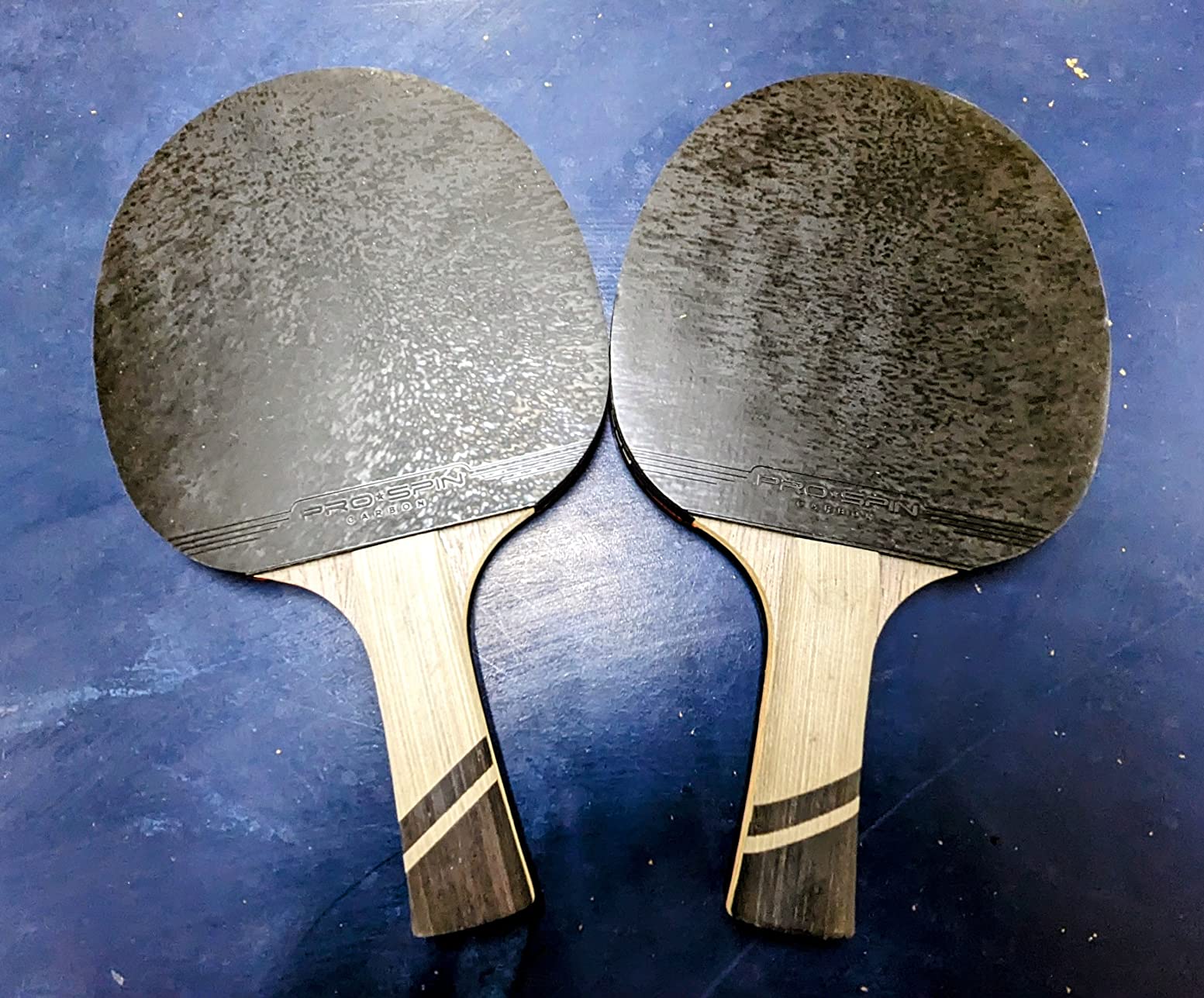
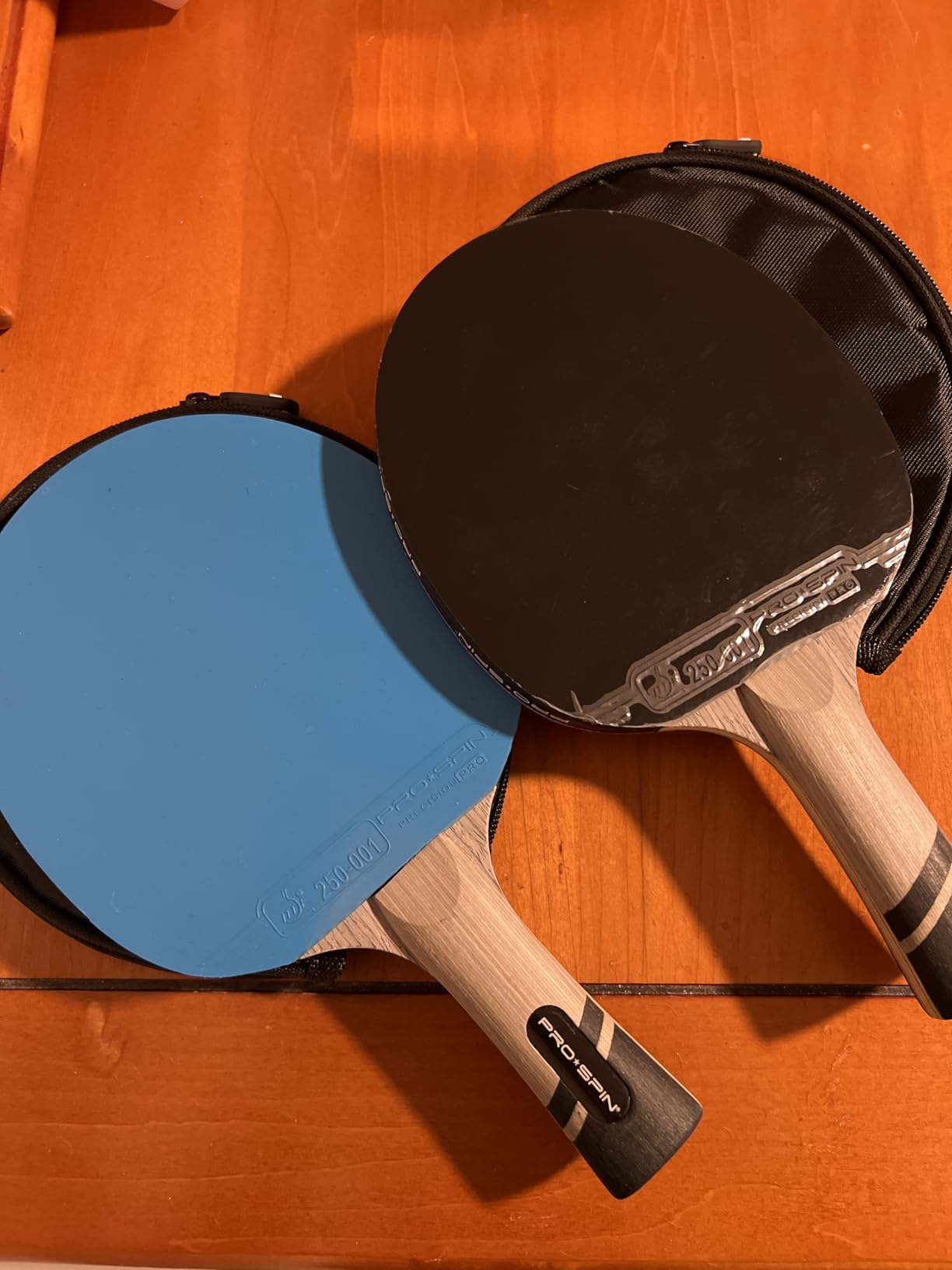
The detail that separates this from almost every other pre-assembled paddle in the roundup is the rubber. It peels off, which means you can keep the blade indefinitely and re-rubber it as your game changes rather than replacing the whole racket every eighteen months. A long-term owner reports the paddle holding up through a year and a half of heavy play.
The trade-offs are real but small. The rubber gathers lint and dust quickly and needs regular wiping, the supplied protector case is a tight squeeze that can press on the rubber edges, and the rubber carries no printed ITTF certification number even though the listing describes the rubber as competition grade.
Check this before you buy
If you play rated league matches, ask the seller for the ITTF certification number on the rubber, because it is not printed on the sheet. If you play for fun at the club twice a week, the wording on the listing is enough and the light 6.5-ounce weight will feel great in fast rallies.
Who should skip this paddle
Skip it if you want maximum raw power from a minimum swing, or if you are the type of player who will never re-rubber and only buys new. The replaceable-rubber advantage only pays off for someone who will actually take it to a table-side pressing service a year from now.
2. STIGA Pro Carbon+ – Best for a Fast Loop Game
STIGA Pro Carbon + Raptor Performance-Level Table Tennis Racket
5 balsa plies plus 2 carbon
2mm sponge
ITTF S5 rubber
Flared handle
Pros
- Very light and fast-feeling
- Long comfortable flared handle
- Large face helps on defense
- Consistent response across the surface
Cons
- Bouncy with limited actual spin bite
- Average materials for the tier
- Control trails slower allround blades
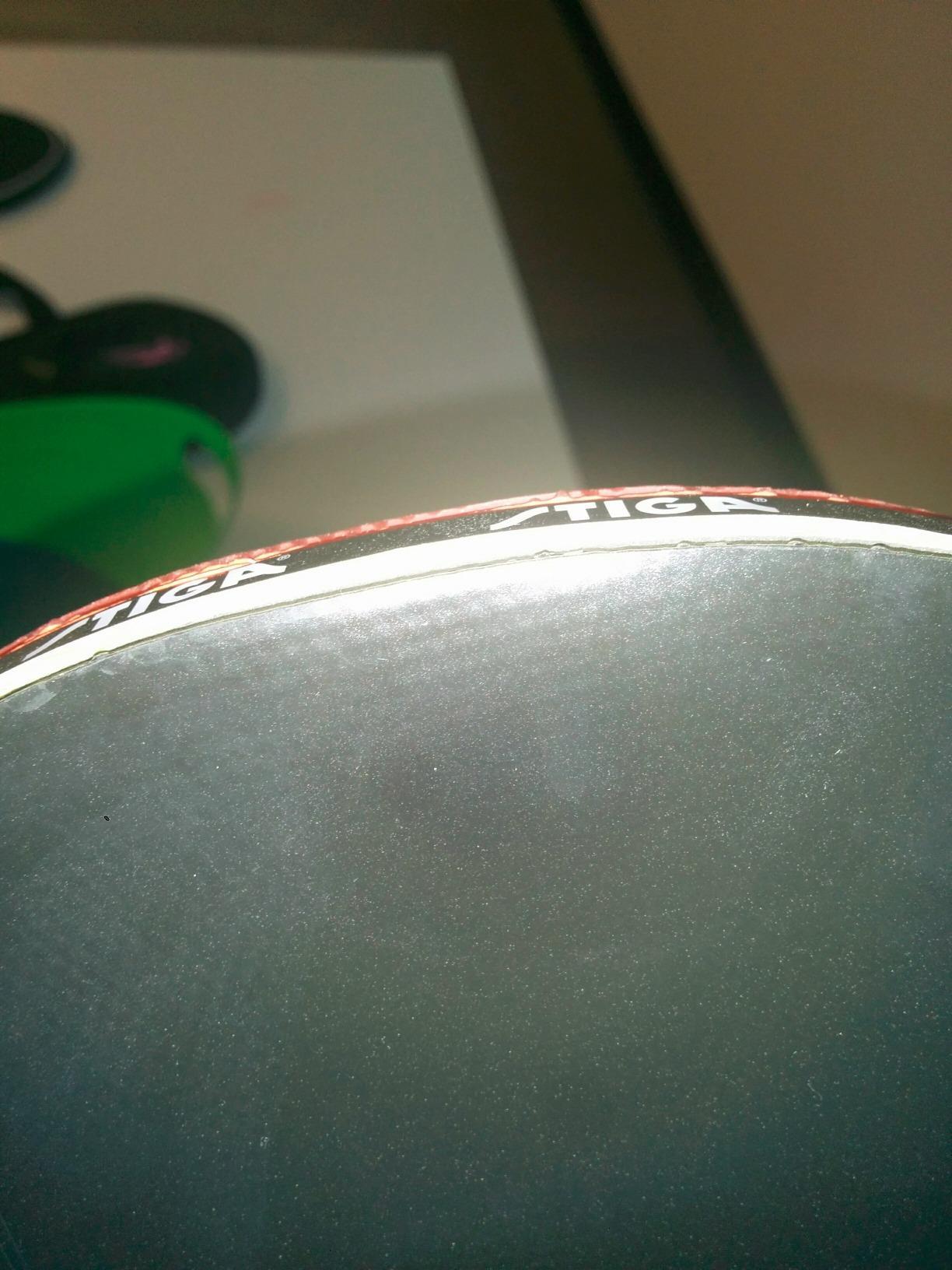
Five layers of balsa wood with two integrated carbon layers make this a light, lively blade, and the Crystal and WRB technologies are there to keep it stiff and balanced. STIGA publishes performance ratings of Speed 99, Spin 100 and Control 80, which tells you almost everything about the character of the racket in three numbers.
Owners consistently describe it as very light and fast to swing, with a long flared handle that suits larger hands and a generous face that makes blocking against hard returns easier. For a player building an attacking loop, that combination is exactly the right feel.
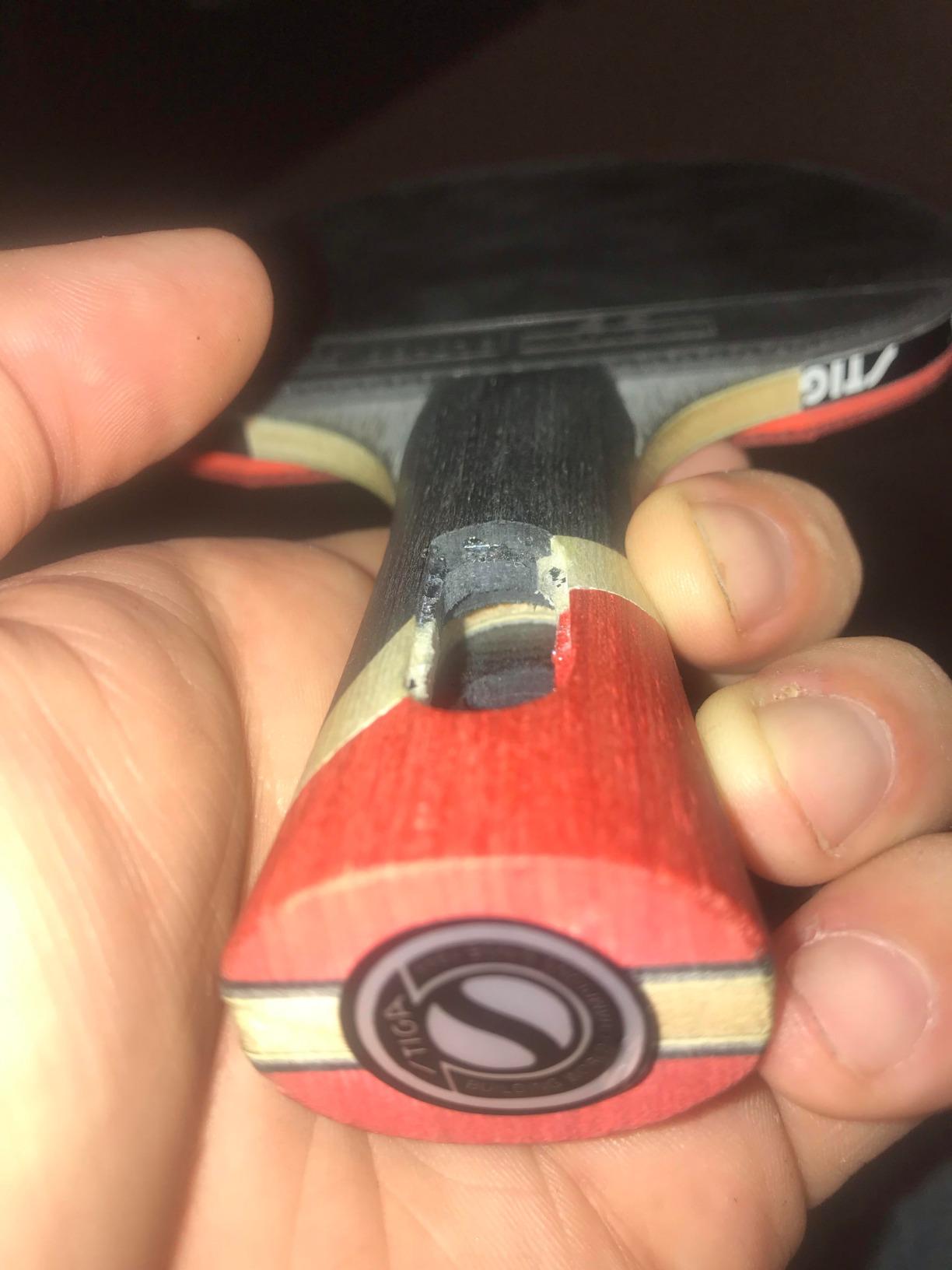
The reservation that shows up again and again in head-to-head buyer comparisons is that the S5 rubber is bouncy without being deeply spin-generating. The blade sends the ball quickly, but the rubber does not grip it as hard as a tackier inverted sheet, so a heavy topspin loop takes work to produce.
Control is the other trade. An 80 control rating is low for a paddle that intermediate players will pair with a developing loop, and buyers who came from slower all-wood blades report that placement work got harder. Materials also feel average next to paddles in a higher tier.
Check this before you buy
Make sure the long flared handle actually suits your hand. At 11 inches by 6.5 inches the racket has a large face, so if you like a compact head you may find it stretched between your hands, and the extra length changes where the balance point sits.
Who should skip this paddle
Skip it if your game is built on placement and spin rather than pace. It is built for someone who wants the ball to leave the racket quickly; if your problem is that your loops land long, this is the wrong end of the trade to be at.
3. Idoraz Professional Paddle – Best Allround Balance
Professional Ping Pong Paddle with ITTF Rubber and Carrying Case
All-wood frame
2.0mm ITTF rubber
6.4 oz
11.9 x 7.6 in face
Pros
- High stated spin and speed for a premade
- Tacky approved rubber
- Balance that supports attack and defense
- Carrying case included
Cons
- Soft sponge grip is less refined
- Wood frame less stiff for hard hitters
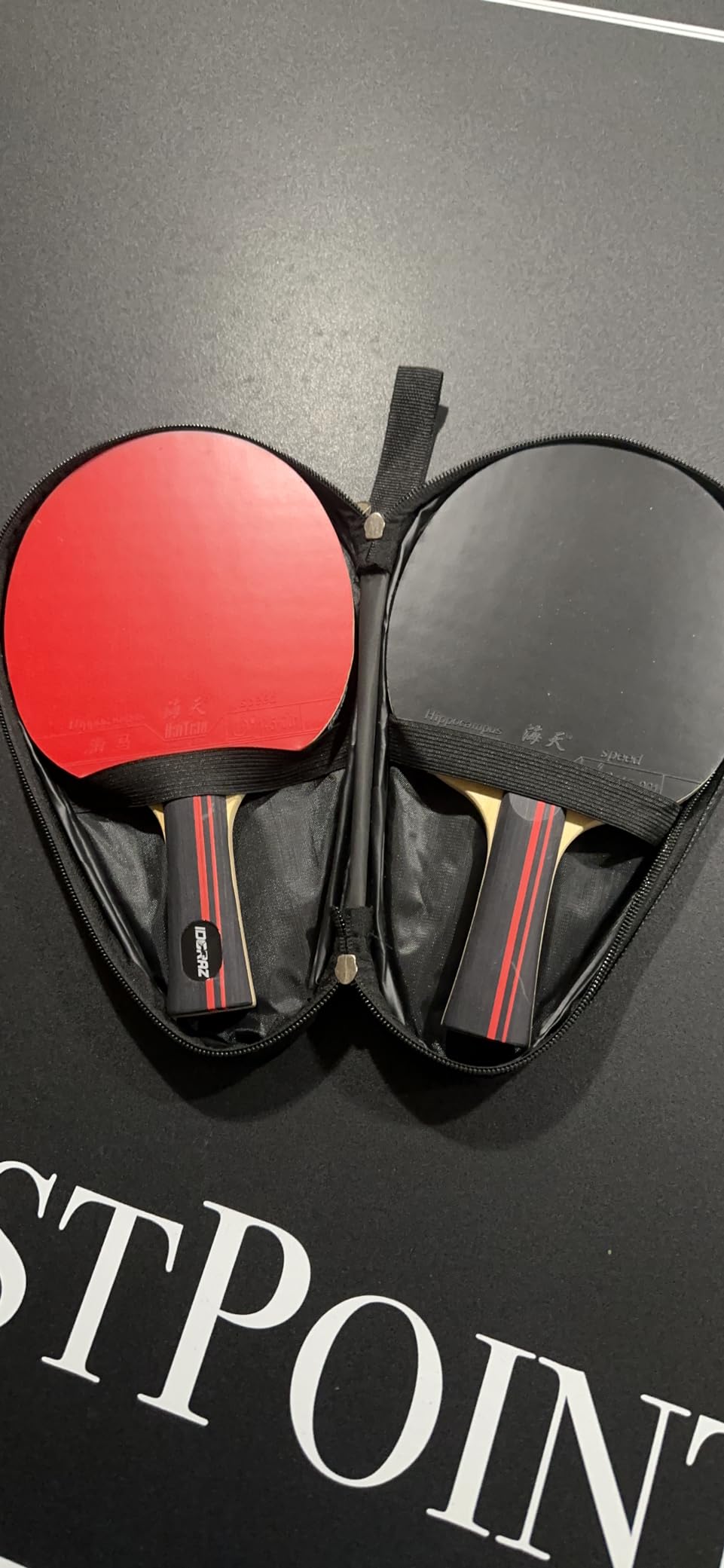
The published ratings here are spin 93, speed 99 and control 90, and that combination is unusual among pre-assembled paddles. Most of them trade control for speed; this one holds a 90 control figure while still claiming near-maximum speed, and reviewers back that up by describing it as usable on both sides of the ball.
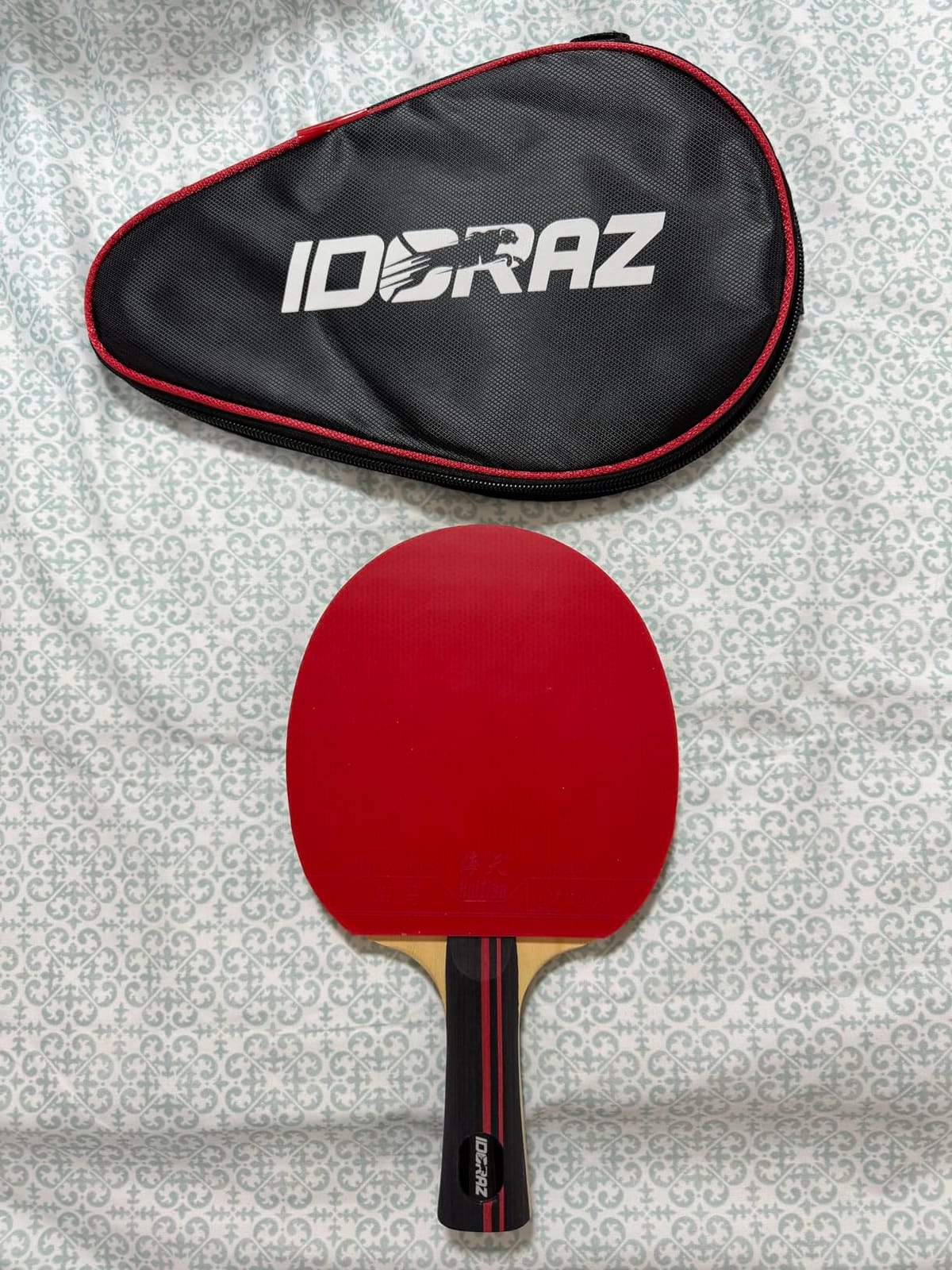
Underneath is an ITTF-approved 2.0mm rubber with a tacky surface, mounted on a solid wood frame. The face is a genuinely large 11.9 by 7.6 inches, which is why buyers mention a large sweet spot and a stable response on off-centre hits.
What makes it interesting for an intermediate player is that the two-handed backhand and the short game both get enough feel here. You can push, block and then loop with the same racket without the control collapsing the way it does on a stiff carbon blade, and the tacky rubber helps you brush the ball rather than merely hit it.
The grip is the weak point. It is a soft sponge-style grip rather than a shaped flared or concave handle, which some players find vaguer to angle through, and the wood frame has less stiffness than any carbon build here, so a genuinely hard-hitting intermediate may grow out of it before the rubber wears out.
Check this before you buy
Compare the handle shape against the flared grips on the STIGA and Butterfly paddles in this list. If you have played with a shaped handle before, a soft cylindrical grip can feel imprecise for a few sessions, and that is a real adjustment rather than a small one.
Who should skip this paddle
Skip it if you are already swinging hard and want a stiff, fast response through the wood, or if handle feel is the thing you care about most. It is the right pick for a two-way player and the wrong pick for a pure attacker.
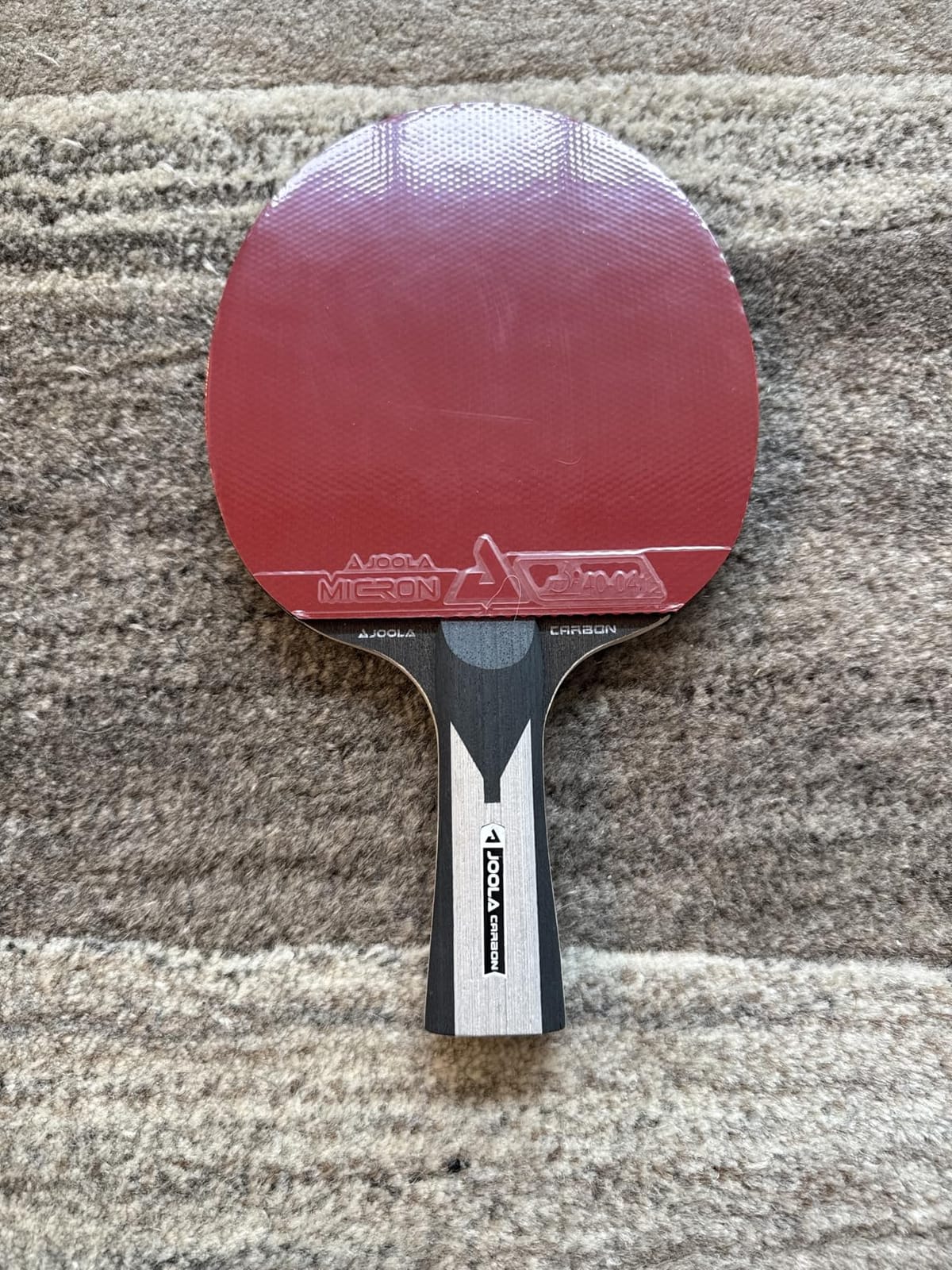
4. JOOLA Carbon X Pro – Best for Heavy Spin
JOOLA Carbon X Pro Performance Ping Pong Paddle – Ergonomic Grip Handle & Pro Friction Technology – ITTF Approved – Ping Pong Racket for Advanced Control & Speed – Table Tennis Racket – Red
Carbon composite blade
2mm MICRON rubber
Ergo Grip
Vibro Control
Pros
- High spin output from 2mm MICRON rubber
- Concave handle comfortable in long sessions
- Vibro Control absorbs hard incoming shots
- Consistent across the surface
Cons
- Stiffness makes it less forgiving
- Printed ratings oversell the feel
The rating scale on this one is on a different footing from the others — speed 120, spin 116 and control 106 — and those numbers belong to JOOLA’s own system, so they tell you about its character rather than allowing a fair comparison with the STIGA figures. Read them as a description of an offensive, spin-forward paddle.
The 2mm JOOLA MICRON rubber with Pro Friction technology is the reason for the spin output. Buyers put it simply: it grips the ball, and the concave Ergo Grip handle stays comfortable through long sessions where a straight grip would start to hurt.
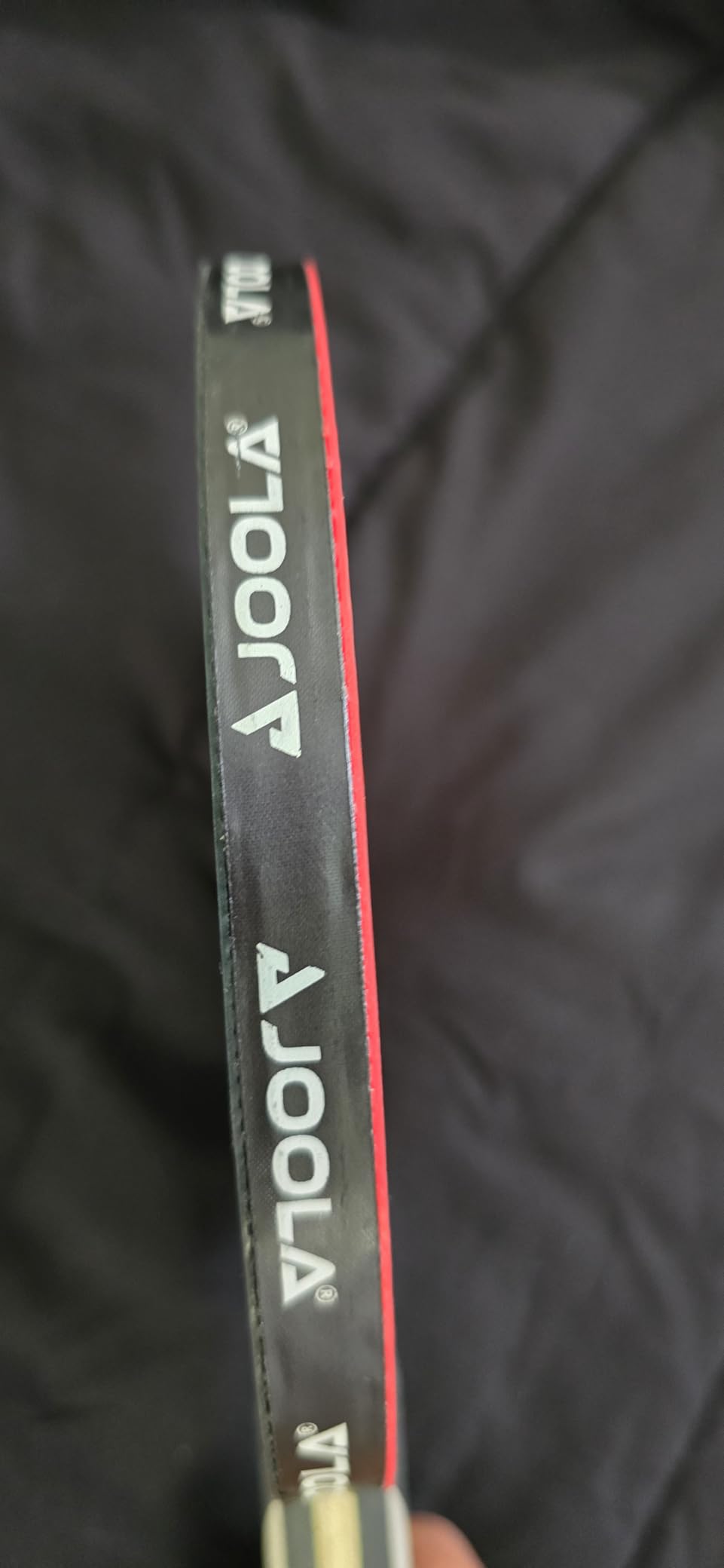
Vibro Control is the underrated feature here. It absorbs the shake on powerful incoming shots, which means blocks against a hard drive do not rattle up your forearm, and the carbon composite build keeps the response consistent across the whole face rather than only in the middle.
Both of the listed drawbacks are the same drawback from different angles. A stiff carbon composite is less forgiving than a slower allround blade, so an inconsistent block that used to land half in and half out now misses, and the oversized printed ratings oversell how it feels in a club game.
Check this before you buy
Ask yourself whether your spin comes from your brush or from your feet. This paddle is a spin multiplier, and if you are still learning to load a loop it will amplify your mistakes as readily as your technique. Players on r/tabletennis repeatedly warn against buying into this stiffness too early.
Who should skip this paddle
Skip it if you are still developing touch and placement, or if you are moving up from a cheap box set in your first six months. It is built for a player who already rotates the ball deliberately and wants more of it.
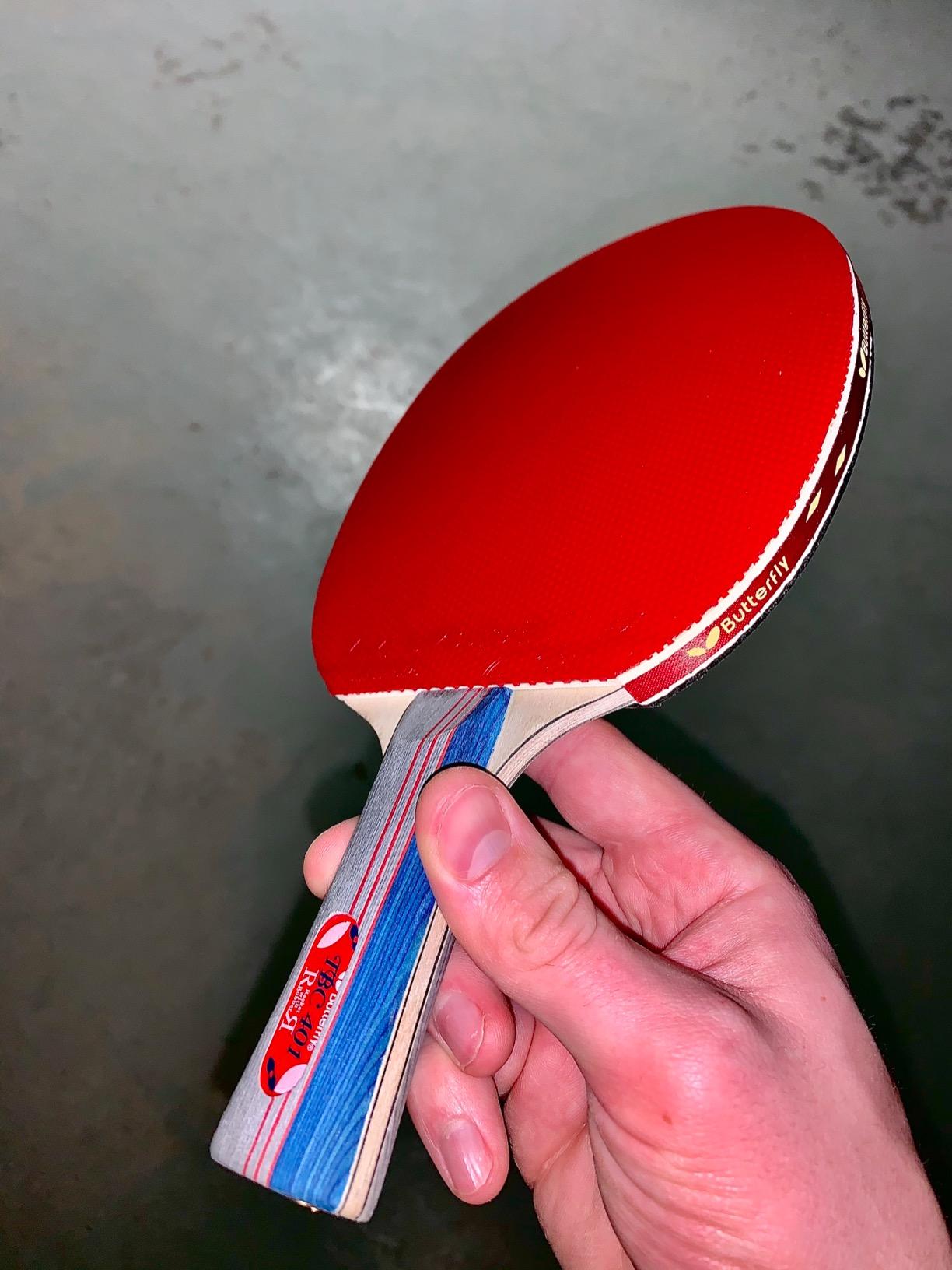
5. Butterfly 401 – Best First Step Into a Real Brand
Butterfly B401 Shakehand Table Tennis Racket – Medium Speed & Spin – Recommended for Beginning Level Ping Pong Players – Attractive Gift Box Set Includes A Free Racket Case – Makes A Great Gift!
5-ply wood blade
Yuki rubber
2.1mm sponge
FL handle
Pros
- Very tacky Yuki rubber for spin
- Large forgiving sweet spot
- Durable glue resists edge damage
- Case and gift box included
Cons
- Rubber loses bite with heavy use
- Returns less energy on hard drives
- Handle can run short for large hands
A five-ply all-wood blade with a flared concave handle, Yuki inverted rubber and a 2.1mm sponge. That is a conventional, tournament-legal recipe, and it explains why so many club players start here.
The Yuki rubber is very tacky for a paddle at this level, and owners report it still biting after 200 hours of play when it is cleaned periodically. The large sweet spot makes it forgiving on defense and on serves, and the glue line between rubber and sponge is reported as holding up over years.
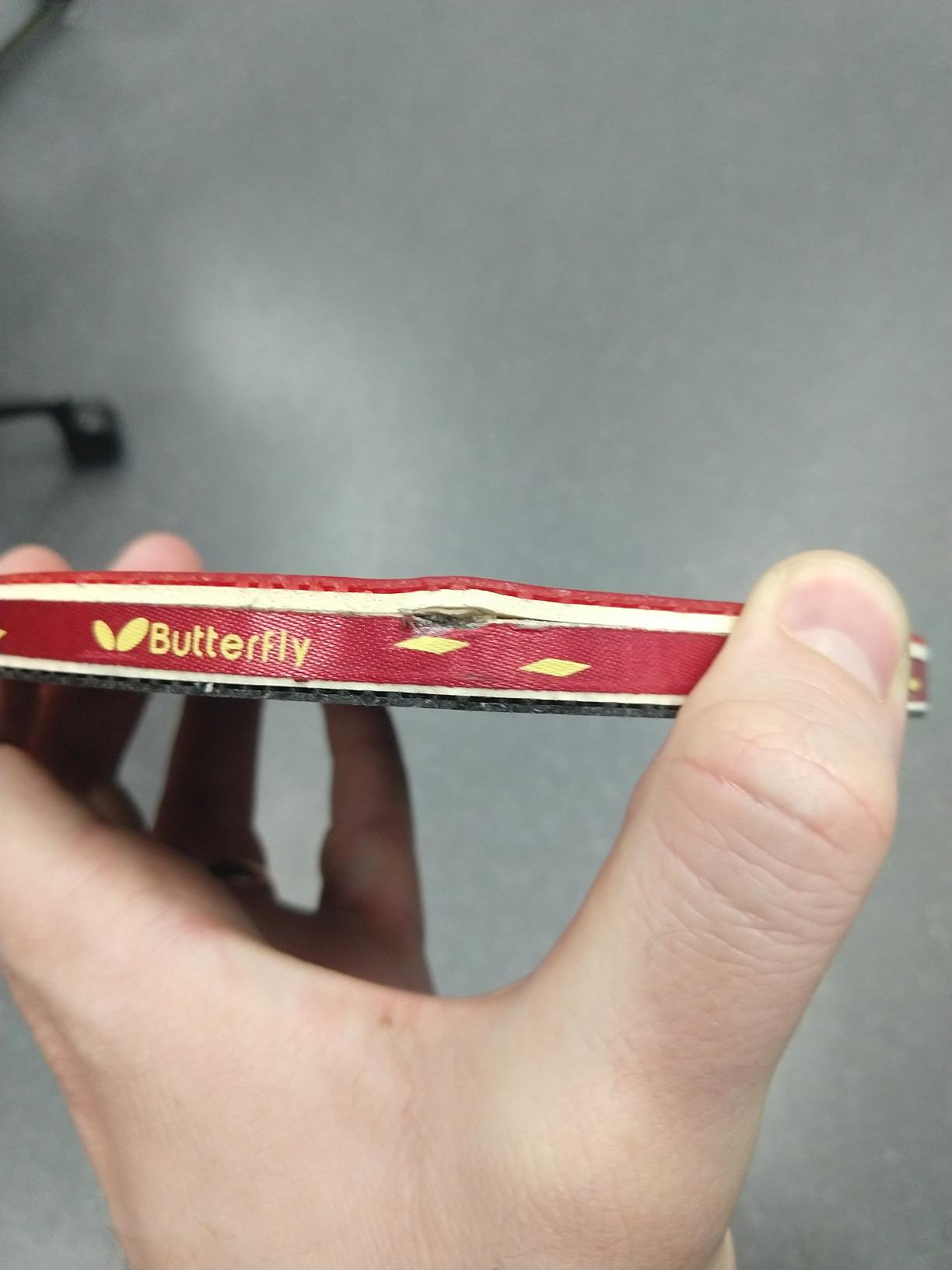
Long-term owners treat the 401 as a step up into a real brand rather than as a final answer, and they are the reason the review volume is as high as it is. A player who buys it, plays with it for a year and then knows exactly whether they want a faster or a slower blade has made a better upgrade decision than one who guesses at a carbon racket on day one.
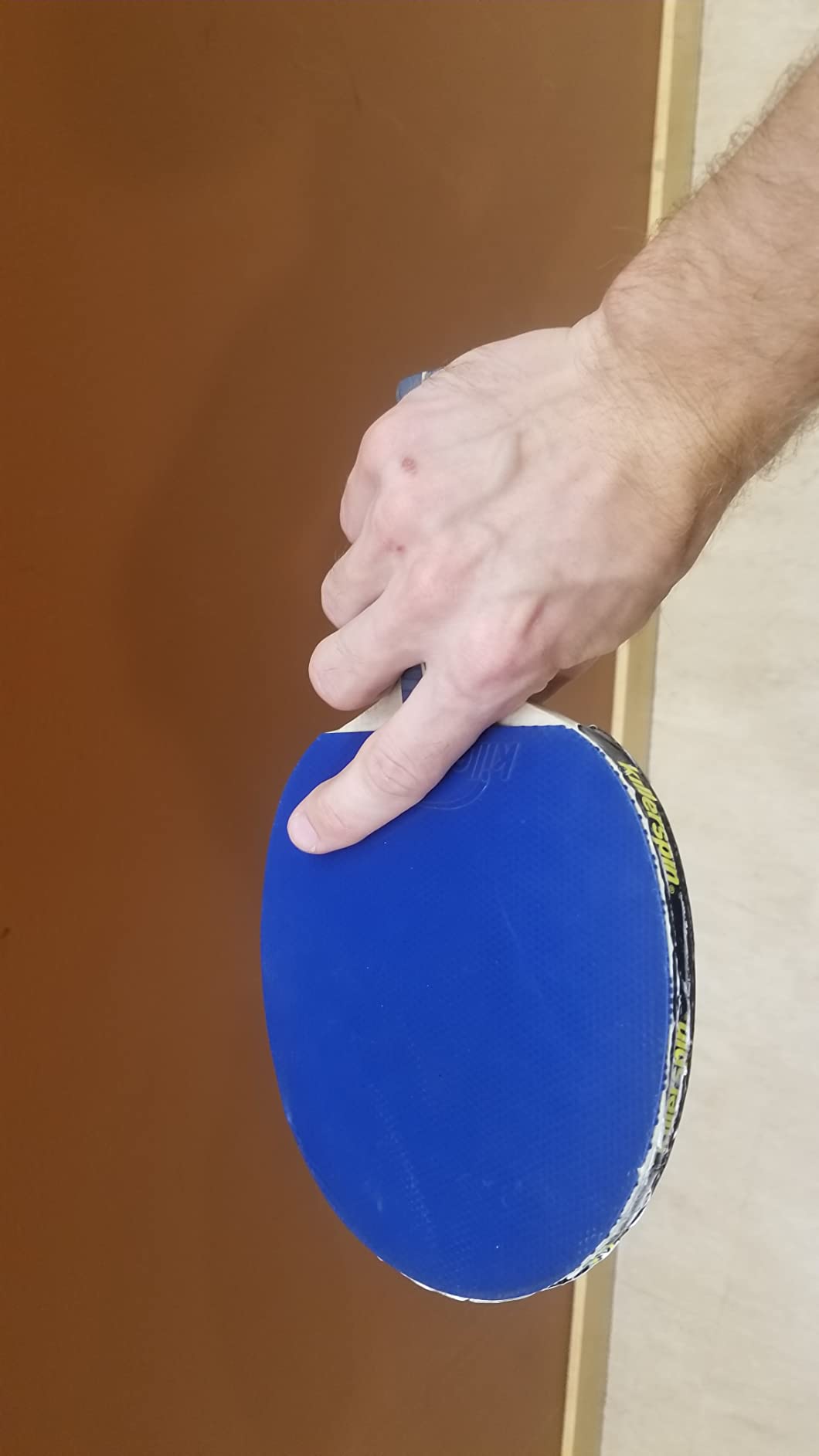
The rounded cross-section of the flared handle is a genuine split in opinion — some players find it easier to angle, others find it harder to judge. It also returns less energy on very fast, spiky shots than a stiffer blade would, and the handle can run short for large hands.
Check this before you buy
Measure your hand against the handle before you commit. The 4 1/2 inch flare is the most popular handle shape in the sport and it works for most people, but it is not universal, and a short grip changes wrist mobility more than any spec on the box.
Who should skip this paddle
Skip it if you play a fast, attacking league game and want to hit through the ball. It gives spin and forgiveness rather than pace, which is a gift to a developing player and a limitation to a hitter.
6. Killerspin Jet 800 Speed N2 – Premium Pick for Attackers
Killerspin Jet 800 Speed N2 – A Professional Grade Ping Pong Paddle – Competition Grade, Advanced Players, Red/Black
7-ply wood and carbon
1.8mm Nitrx-4Z
Spin 9/10 Speed 9/10
Case plus two balls
Pros
- Exceptional power with little effort
- Tacky rubbers for spin-loaded serves
- Large sweet spot defends against smashes
- High build quality
Cons
- Takes time to adapt to the response
- Heavier feel than most in this range
- Handle runs short for large hands
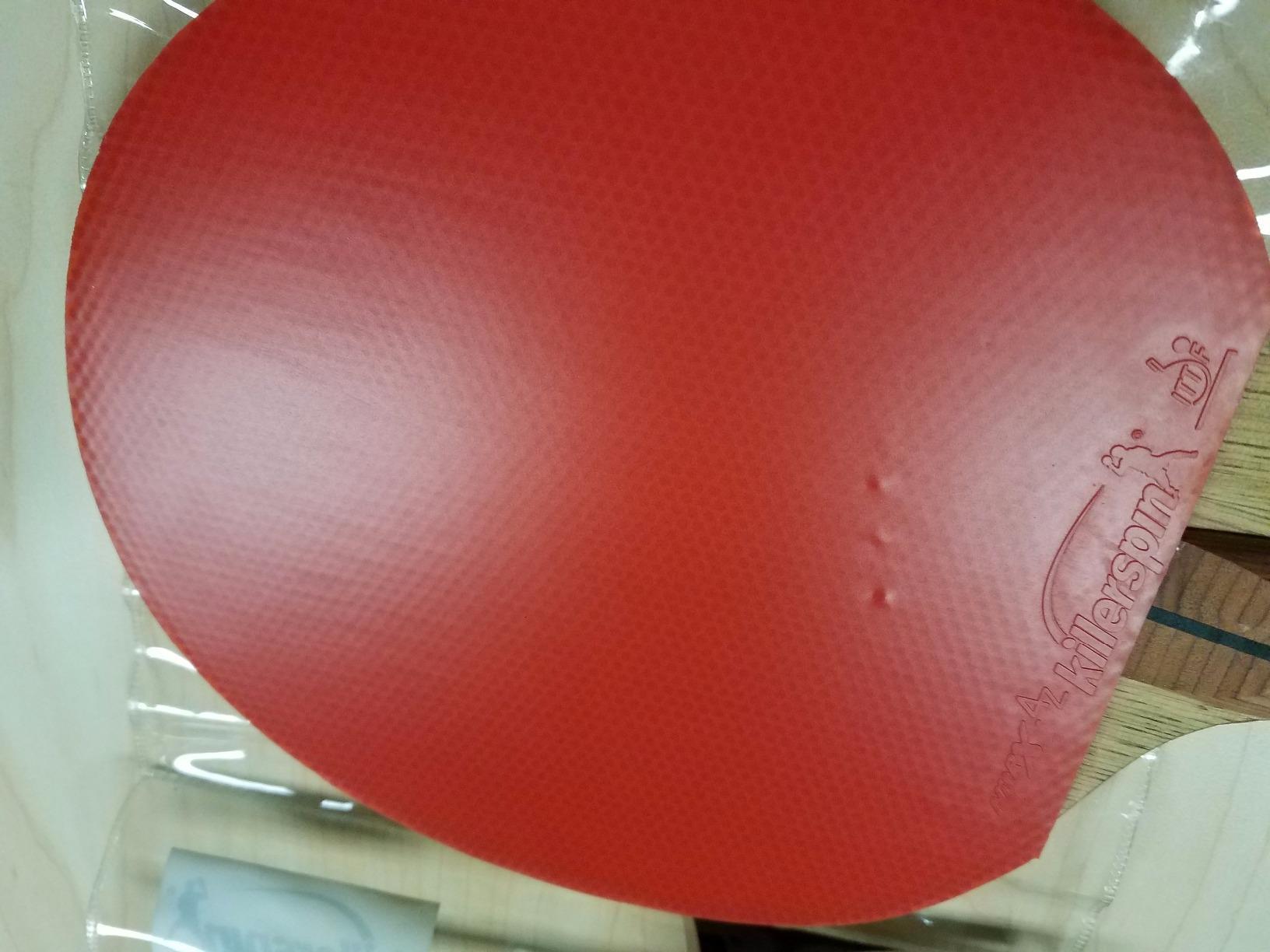
The Nitrx-4Z rubbers are 1.8mm on both sides, red one side and black the other, mounted on a seven-ply composite wood and carbon blade. The published ratings are spin 9 out of 10, speed 9 out of 10 and control 7.5 out of 10, and experienced players describe that profile accurately: this is a weapon.
What owners keep coming back to is how much comes out of the racket with very little effort. Blocks and short counters arrive with pace you did not put in, the tacky rubbers put heavy spin on serves and aggressive loops, and the large blade gives you a generous sweet spot to defend against a smash.
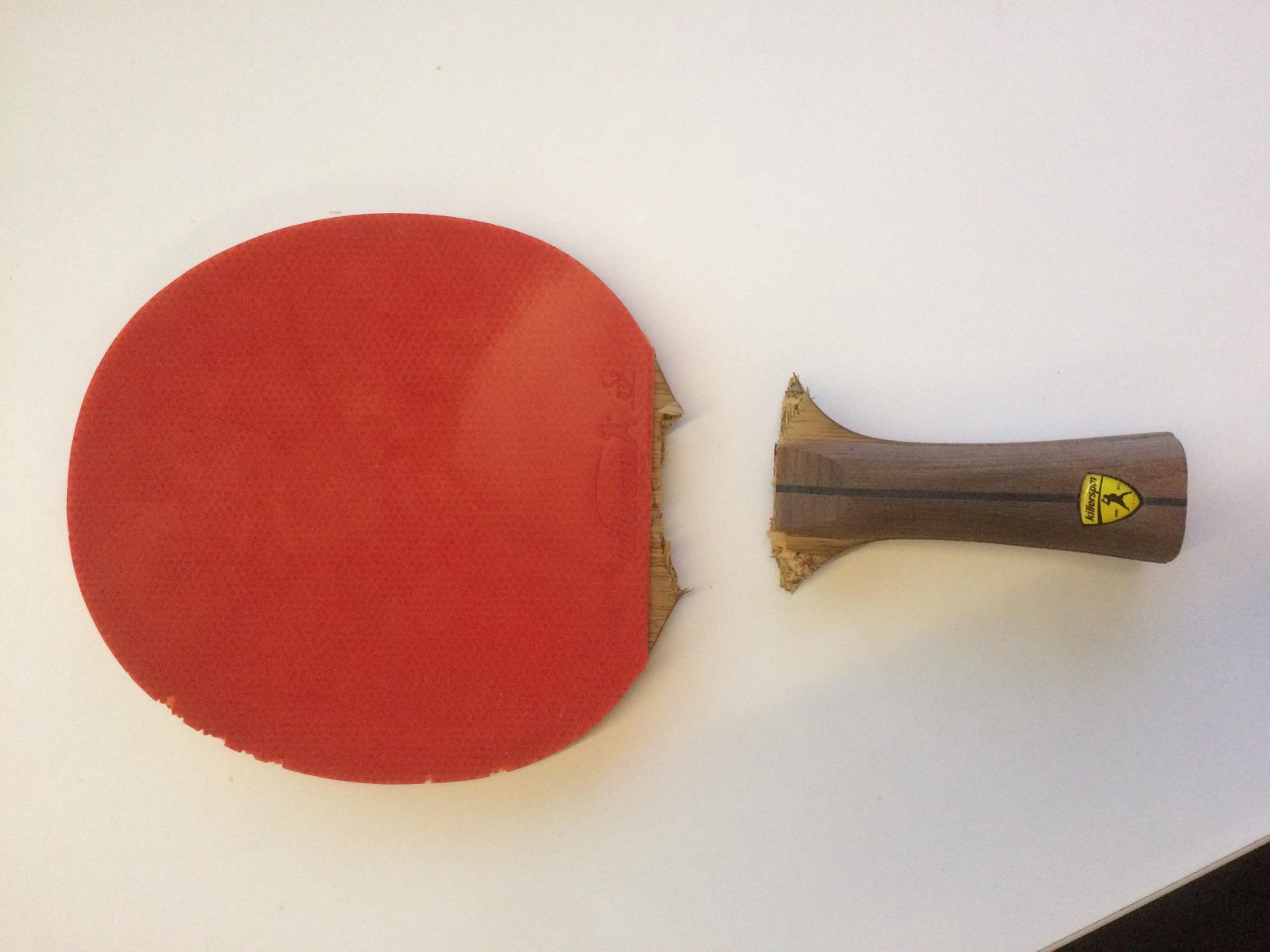
Build quality is high and the carbon stiffening is reported as durable, and one buyer who received a unit with a rare defect reports prompt, free replacement service. The Memory Book style case and two 1-star training balls in the box are a sensible extra for a club player who drills serves.
The consensus caution is that it needs an adjustment period. The tacky, sensitive response takes a few weeks to trust, the feel is heavier than most paddles at this level, and the handle runs short for players with large hands. It is explicitly not a beginner paddle.
Check this before you buy
Count your hours. A paddle this demanding punishes the six-month player far harder than it rewards them, and the transition period is when most people put an aggressive racket down for good. If you have been playing weekly for a year or more, that period is short.
Who should skip this paddle
Skip it if spin technique is still a work in progress, or if you dislike a heavy racket at the end of a two-hour session. The power is real, and so is the fatigue.
7. JOOLA Carbon Control – Best Value Control Paddle
JOOLA Carbon Control Performance Ping Pong Paddles – Ergonomic Grip Handle & Vibration Control – ITTF Approved – Professional Ping Pong Paddle for Advanced Playability – Table Tennis Racket – Red
Carbon composite blade
Vizon ITTF rubber
0.18 kg
Speed 92 Spin 93 Control 112
Pros
- Highest printed control rating in the group
- Carbon build damps vibration
- Very light at 0.18 kg
- Vizon rubber gives usable spin
Cons
- Lower speed and spin ceiling
- Standard handle is less refined
This is the control-first JOOLA, and the printed ratings say it plainly: speed 92, spin 93, control 112. That 112 is the highest printed control figure in this roundup, and it comes with a carbon composite build that damps vibration rather than amplifying it.
At a listed 0.18 kg it is among the lightest paddles here, and that number matters more than it sounds. A light racket is easy to swing through a fast exchange and easy to recover after a wide reach, which is exactly the weakness beginners and developing intermediates have.
Owners like the clean, solid feel on contact and say the Vizon rubber delivers usable spin for club play. If your problem is that you are hitting the ball but not placing it, this is the pick that addresses the actual complaint rather than adding more power you cannot control.
The two costs are clear. The speed and spin ceiling sit below the offensive carbon paddles, so a hard-driven game will outrun it, and the handle is a standard profile rather than the concave Ergo Grip used on the more expensive JOOLA models.
Check this before you buy
Decide whether you want the lightest racket in your bag or the most precise one. Those are not always the same thing, and a very light racket with a standard handle is a specific combination of feel that you should try before committing.
Who should skip this paddle
Skip it if your game depends on a heavy topspin loop that needs to punch through a backspin block. This is the paddle for the player who wins points by putting the ball somewhere specific.
8. JOOLA Infinity Carbon – Best Lightweight Allrounder
JOOLA Carbon Speed Ping Pong Paddle with Paddle Cover – Ergonomic Grip – ITTF Approved – Professional Ping Pong Paddles for Advanced Power & Speed – Table Tennis Racket – Black
Carbon speed layer
Vizon Pro Friction rubber
260 g
Bag and three balls
Pros
- Very light for long sessions
- Strong spin on backspin and topspin
- Medium speed with good control
- Concave grip and balanced feel
Cons
- Soft rubber can separate at the edges
- Adhesive odour once hands sweat
- Thin protective packaging
The carbon speed layer gives stability and power, and the ITTF-approved Vizon rubber with Pro Friction technology handles the ball. Owners describe it as a well-balanced, lightweight paddle with genuinely strong spin and a comfortable, balanced feel, and at a listed 260 g it is light without being twitchy.
That medium speed profile is the point. You get usable spin on backspin, topspin and even trick shots, with enough control to place the ball, and the centralized weight distribution keeps the racket from feeling like it is tipping forward on a forehand loop.
It is more often described as a game-improving step up than a tournament blade, which is exactly the register an intermediate player should be shopping in. The concave comfort handle and the Vibro Control feedback round out a paddle that stays pleasant over a long session.
The recurring complaints are durability and packaging rather than play. The rubber is on the soft side and can start separating at the edges over time, the adhesive gives off an unpleasant odour once your hands sweat, and a few buyers received scuffed bats and flattened balls because the protective packaging is thin.
Check this before you buy
Look at the edge of the rubber when it arrives, and photograph it before you fit it. If the edge is already lifting, send it back rather than playing with it, because that separation only gets worse once the sponge is exposed.
Who should skip this paddle
Skip it if you are a hard hitter who wants maximum pace, or if you play in conditions where you cannot store a paddle properly for a few days. It is built for regular, moderate club play rather than for the extremes.
9. Palio Master 3.0 – Best for Control and Placement
Palio Master 3.0 Table Tennis Racket & Case | ITTF-Approved Intermediate Ping Pong Paddle | Allround Speed, Spin and Control
All-wood blade
Palio CJ8000 rubbers
200 g
ETT Speed 6 Spin 9 Control 10
Pros
- Control-first feel for loops and placement
- Forgiving sweet spot
- Very light at 200 g
- CJ8000 delivers real spin
Cons
- Feels slow with little bounce
- Reports of a snapped handle
- Inconsistent edge tape on arrival
The ETT ratings here read plainly: speed 6 out of 10, spin 9 out of 10, control 10 out of 10. This is an all-wood blade with a redesigned flared handle and ITTF-approved Palio CJ8000 rubbers, and the numbers describe a paddle that gives you feel and placement rather than free pace.
Intermediate players rate it as a control-first upgrade that noticeably improved their game. The forgiving sweet spot helps a developing stroke, the CJ8000 rubbers produce real spin, and at a listed 200 g it is easy to swing for long stretches.
The CJ8000 is repeatedly described on forums as a workhorse training rubber that teaches proper contact and stroke mechanics before a player moves to a more expensive top sheet, and the Master 3.0 is a good way to use it. It is also the clearest step up the Palio line, with thicker edge tape protecting the rubber and a case included.
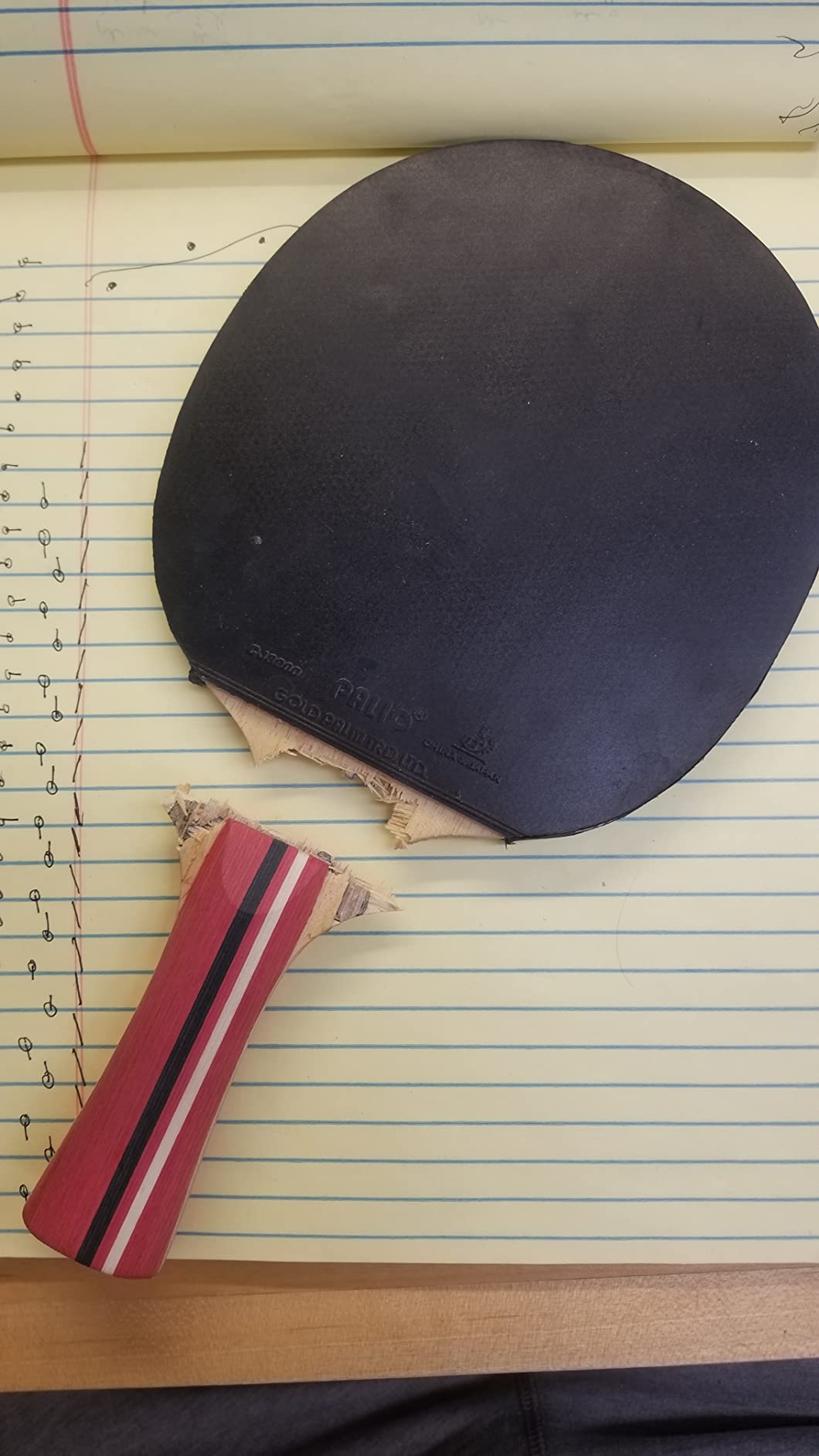
The honest limitation is that it feels slow with very little bounce, which disappoints anyone coming from a fast carbon blade. A minority of reviews also report a handle snapping at the neck after about a month, and inconsistent assembly with edge tape not flush and nicked rubber on arrival.
Check this before you buy
Inspect the edges and the handle neck the day it arrives, and keep the packaging. With a small review base and some reports of assembly inconsistency, a two-minute check is worth more here than on any other paddle in this list.
Who should skip this paddle
Skip it if you have already outgrown slow equipment once and do not want to go back. If your previous paddle felt dead, this will feel like the same problem with better spin.
10. STIGA Carbon+ Bundle – Best Complete Bundle
STIGA Carbon+ Ping Pong Paddle
7-ply balsa and carbon
2mm sponge
S5 rubber with ACS
0.3 kg
Pros
- Extra light blade that recovers quickly
- Clean contact across the sweet spot
- Explosive speed and strong spin
- Concave Pro handle is secure
Cons
- Control rating of 75 is low
- Rewards players who generate their own spin
This bundle pairs a seven-ply blade of lightweight balsa with integrated carbon layers, ITTF-approved smooth inverted S5 rubber with ACS technology, a 2mm premium sponge and a concave Pro handle. The published ratings are speed 98, spin 94 and control 75, a deliberately aggressive profile for a developing attacker.
Owners credit the extra light carbon construction with quick recovery and clean contact over the whole face, and the S5 rubber with explosive speed and strong spin output. Crystal Technology gives the blade hardness and WRB Technology balances the weight recovery.
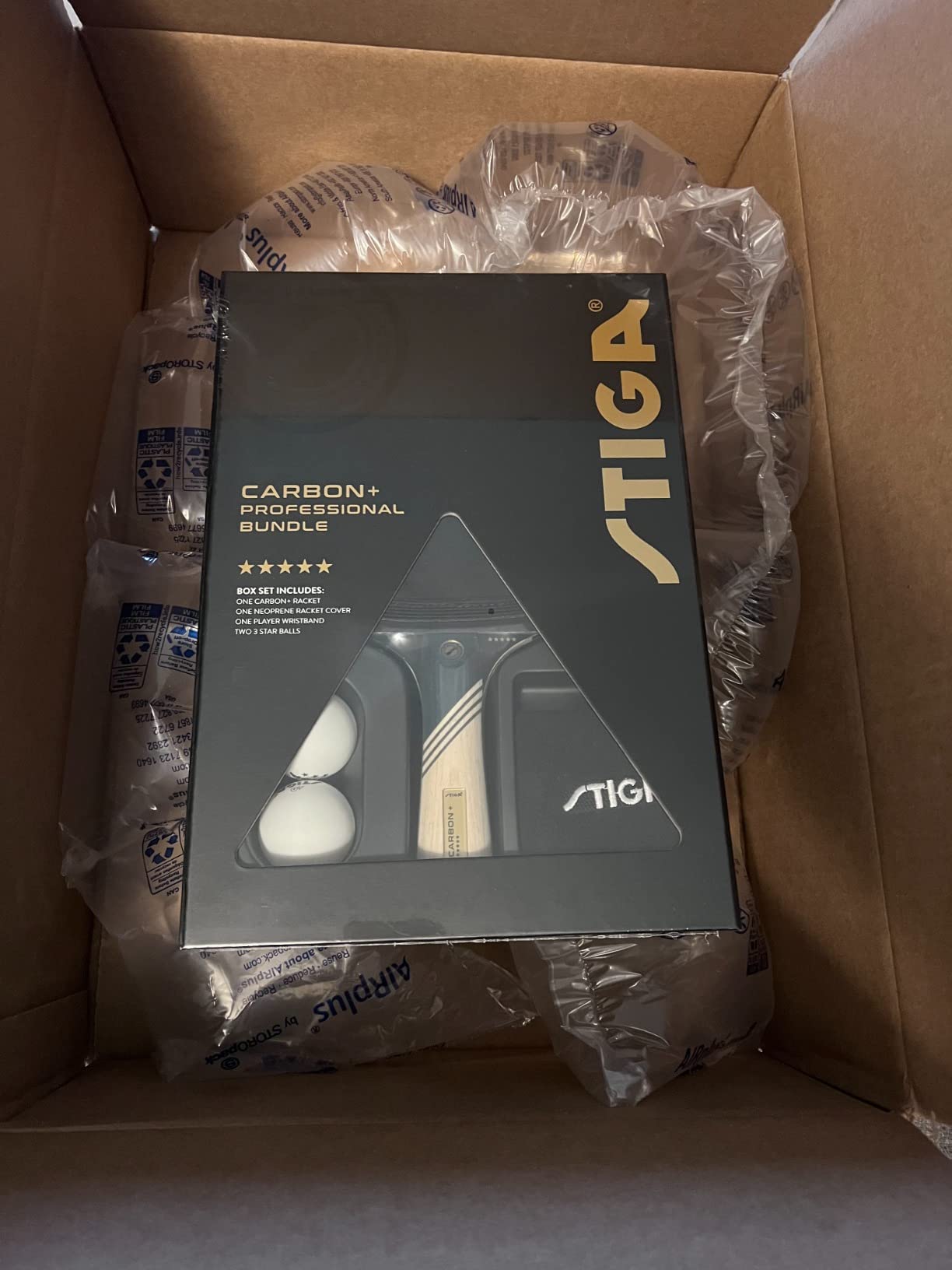
The bundle itself is the reason to look here. It comes with two 3-star tournament balls, a neoprene racket cover and a player wristband, which means a new club player can start playing with proper equipment on day one without a second order for a case and practice balls.
The control rating of 75 is the reason to hesitate. It is deliberately an aggressive character, and the reviewers are consistent that it rewards players who already generate their own spin rather than those still working on placement, so it belongs later in your upgrade path than most of this list.
Check this before you buy
Check your total weight tolerance. At a listed 0.3 kg this is the heaviest weight stated in the roundup, and an offensive blade that is too heavy for your forearm will have you blaming your technique for a month.
Who should skip this paddle
Skip it if placement is your development focus, or if you already own a case and a bag of balls. Buy it for the offensive character, not for the accessories.
How Do You Know You Have Outgrown Your Beginner Paddle?
Three symptoms tell you the equipment, not your technique, is the problem. If you recognise two or more of them, an upgrade is justified.
Your topspin will not clear the net with pace. A cheap box-set paddle has thin, hard rubber and soft wood that absorb the energy of an improving stroke. You are generating real rotation and the racket is eating it.
You read the spin correctly and still mis-hit. You can tell a heavy backspin block is coming, you adjust, and the ball still flies. That is a sweet-spot and forgiveness problem, and it is the fastest quality jump you will get from an upgrade.
You lose to players with obviously worse technique. If you are reading better than your opponent and still losing, the gap is in the response: their rubber grips and yours slides.
If none of those apply, save your money and re-rubber instead. Replacing the rubber on a blade you already own fixes most of these symptoms at a fraction of the cost of a new racket.
How to Choose a Table Tennis Paddle for an Intermediate Player
Speed, spin and control are the triangle you trade between
Any two of the three can be maximised only at the cost of the third. Thicker sponge and stiffer carbon add speed and spin, while thin sponge and an all-wood build add control and ball feedback. Decide which two matter for your game and accept the third as the price.
Be sceptical of the numbers on a box. There is no standard scale, and a 99-speed blade with a control-oriented rubber plays nothing like a 99-speed blade with a tacky one. Use published ratings as a description of the design, never as a comparison between brands.
Blade construction: 5-ply wood, 7-ply wood or carbon
A five-ply all-wood blade is the most forgiving and gives the clearest feedback, which is why it is the right default for a player six to twelve months in. Seven plies add drive without demanding much in return. Carbon layers add stiffness and speed and take away forgiveness, which is a fair trade only once your contact is reliable.
Forum consensus on r/tabletennis and mytabletennis.net is consistent on this point: buy the blade that fixes your specific complaint, not the fastest one you can afford. A carbon blade bought too early does not raise your level, it hides the flaw in your technique.
Rubber type and sponge thickness
Inverted rubber with a tacky surface is the standard for anything above beginner level, because tack is what converts a brush into a spin. Sponge thickness runs 1.5mm to 2.2mm, and 1.8mm to 2.0mm is the range most intermediate players land on.
Thinner sponge gives a crisper, more direct response and suits fast exchanges. Thicker sponge gives more arc, more dwell time on the ball and more grip, which suits a loop that needs to arc over the net. If you are choosing one number for a developing loop, choose 2.0mm.
Weight: 165g, 170g or heavier
Weight is the cheapest performance upgrade available to you and the one most players ignore. The weights in this roundup run from 0.18 kg on the JOOLA Carbon Control to 0.3 kg on the STIGA Carbon+ Bundle, which is a wide enough spread to change how a paddle plays.
A lighter racket under about 170 g is easier to swing, easier to recover after a wide reach, and better for fast exchanges and reflex blocking. A racket around 170 g to 180 g is the allround sweet spot and gives you a little more stability through a heavy loop. Above 180 g you get more power and solidity through the ball and more fatigue over a long session.
If you are torn between 165 g and 170 g, match the weight to your style rather than to your strength. Point players and fast exchangers do better light, loopers and hitters do better heavier, and a heavier racket will not fix an inaccurate stroke.
Handle shape and grip sizing
Three handle codes cover almost everything you will meet. FL is flared and concave, the most popular shape and a good default for most hands. ST is straight, the simplest option and the one to try if you have large hands or prefer a square feel. AN is anatomic, shaped to the hand with a narrower throat.
Handle size changes your game more than most buyers expect. A short handle forces more wrist movement, which helps short-game touch and hurts reach; a long handle stabilises the racket and suits larger hands. Ask for the handle length in inches before you buy rather than assuming.
ITTF approval and tournament legality
ITTF approval on the rubber is what makes a paddle legal for sanctioned tournaments and rated club leagues. It costs nothing to check and it is the one specification that can make an otherwise good purchase useless to you, so verify it in the listing or ask the seller before you order.
Some listings in this roundup carry the ITTF description in the title but print no certification number on the rubber itself. Ask for the number, and if you cannot get it, treat the paddle as a practice-only racket.
Premade paddle or custom blade and rubber
A premade paddle is a blade with rubber already mounted, which means you cannot change the balance or the handle and you cannot tune the setup later. A custom build lets you choose each layer, but it costs more and the trial-and-error adds up fast.
Experts on the forums are consistent that custom builds are not worth the experimentation until you can articulate a specific complaint, such as too slow or a backhand that feels wrong. Until then, a premade paddle with replaceable rubber, like the PRO-SPIN at number one, gives you most of the tuning benefit with none of the risk.
Should you buy a new blade or just re-rubber?
Re-rubbering a blade you already like is almost always the smarter first move. Blades last for years while rubbers dull long before that, and a slick, shiny surface is frequently mistaken for a technique regression when the rubber is simply done.
Re-rubber when the surface goes glossy and you can no longer feel the brush, when serves stop spinning as much as they should, or when the sponge has been compressed to the point where control feels spongy. Until one of those happens, spend your money on the blade only when you can name the specific feel problem the current blade creates.
Whatever the paddle, a spare setup for practice is worth having. Club players who travel to matches will thank themselves for a second racket, and it is also the cheapest way to test whether a different rubber suits them before committing.
One last practical note: if your practice table lives in a garage or a converted workshop, the same slow, deliberate build-it-right-the-first-time approach applies to the space around it. We covered that in our 8 best table saws under $500 guide for a home setup.
Frequently Asked Questions
What is the best table tennis racket for an intermediate player?
The PRO-SPIN Carbon Paddle is the strongest all-round answer here. Its 7-ply carbon blade with a 2.0mm sponge and ITTF-approved rubber sits in the middle of the speed and control range, and the rubber can be replaced without discarding the blade.
Are rackets, bats and paddles the same thing?
Yes. Table tennis racket, bat and paddle are three names for the same equipment, and retailers use them interchangeably on the same listing. Search results mix all three, so searching for one brings up the others.
Is a 165 or 170 gram ping pong paddle better?
Neither is better in general. A light racket near 165 g suits fast exchanges, point play and reflex blocking, while one around 170 g to 180 g gives a more stable loop and is the usual allround choice. Match the weight to your playing style rather than to your strength.
Is Butterfly better than STIGA?
Butterfly is the stronger name for premade, tournament-grade paddles and is often the safer long-term choice. STIGA covers more of the mid tier and usually costs less, and its Pro Carbon+ is a fine choice for a player who wants a light, fast loop game. Neither brand is bad news at the intermediate tier.
Is a premade paddle worse than building your own blade and rubber combo?
No. A good premade is a proven, balanced combination that you can play with immediately. A custom build lets you tune the handle, weight and rubber, but it costs more and the trial and error adds up, so most players are better served by a premade paddle with replaceable rubber until they can name a specific feel problem.
How do I know if I have outgrown my beginner paddle?
Three signs point to the equipment rather than your technique. Your topspin will not clear the net with pace even though you are generating rotation, you read the spin correctly and still mis-hit because the sweet spot is too small, and you lose to players whose technique is clearly worse because their rubber grips and yours slides.
Conclusion
The best table tennis paddles for intermediate players are not the fastest paddles available, they are the ones that answer a specific complaint. The PRO-SPIN Carbon Paddle takes the top spot because its 2.0mm sponge, moderate carbon build and replaceable rubber fix control, spin and longevity all at once, and it is the safest first upgrade in this roundup.
Pick the STIGA Pro Carbon+ if you want a light, fast blade for an attacking loop, the Idoraz Professional if you want the most balanced allrounder with genuine control on both sides of the ball, and the JOOLA Carbon Control or Palio Master 3.0 if placement is the problem you are actually trying to solve.
Wait a moment before you buy, though. Check the three symptoms above, and if your only real issue is that the ball slides off your rubber, re-rubbering the blade you already own will fix it for a fraction of what a new racket costs. When you are ready to move, start with the gap in your game rather than the price on the shelf, and use the comparison table here to match the specification to the shot you are missing.