
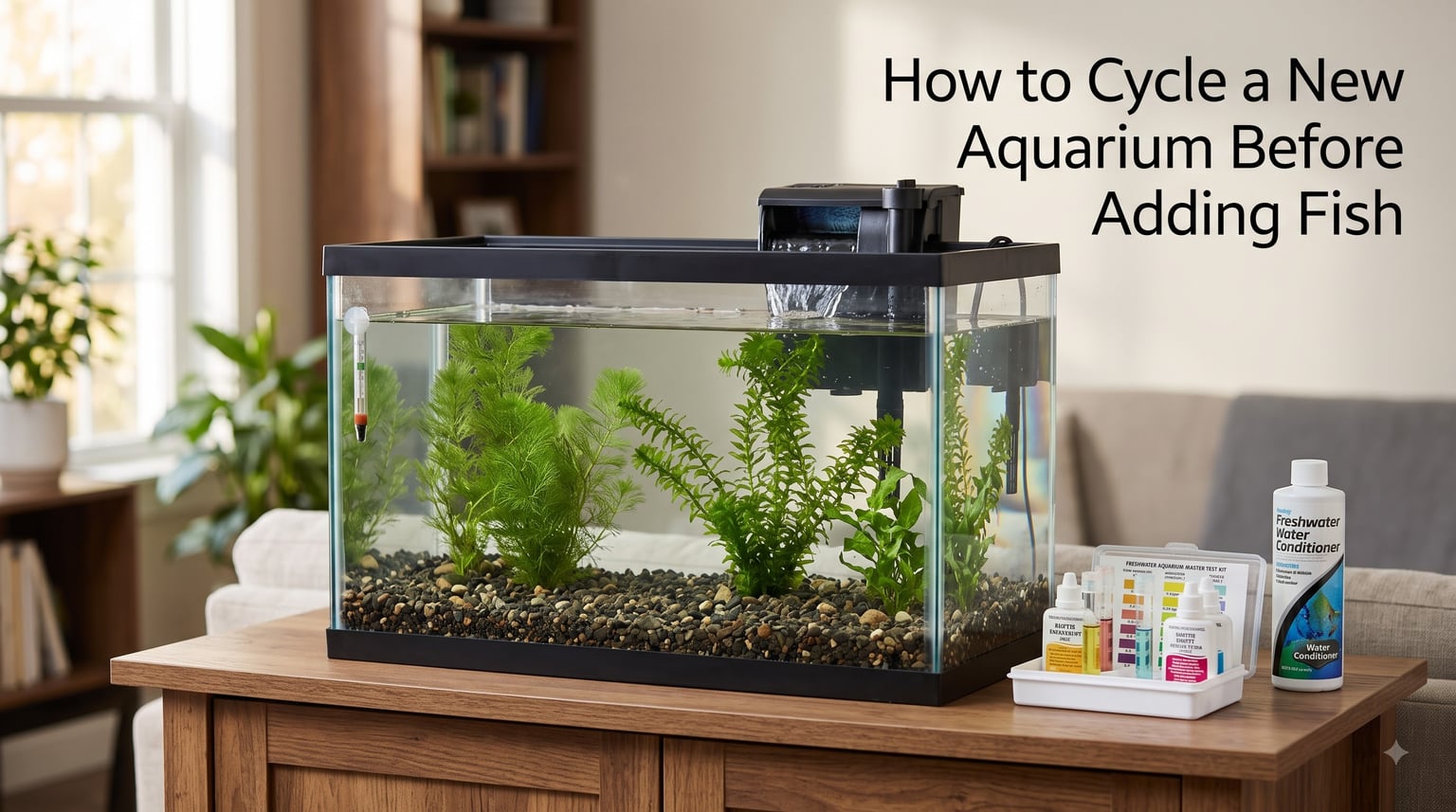
I’ve set up more than 40 aquariums in the last decade, and I can tell you one thing for certain: the fish you lose in week one almost always die because the tank wasn’t cycled. Learning how to cycle a new aquarium before adding fish is the single most important skill in this hobby. Skip it, and you risk watching your new pets gasp at the surface within days.
This guide walks you through the entire cycling process. I’ll explain what the nitrogen cycle actually is, compare fishless versus fish-in methods, and give you a day-by-day timeline. By the end, you’ll know exactly when your tank is safe for fish and how to read every test kit reading with confidence.
Table of Contents
What Is the Nitrogen Cycle and Why Your Fish Depend On It?
The nitrogen cycle is the biological process that turns toxic fish waste into harmless compounds. Every fish produces ammonia through its gills, urine, and solid waste. In a cycled tank, beneficial bacteria living on your filter media and surfaces break that ammonia down in two stages until it becomes nitrate, which you remove with water changes.
Here’s how the two-stage conversion works in your aquarium:
Stage 1: Ammonia-oxidizing bacteria (Nitrosomonas species) convert toxic ammonia (NH3/NH4) into nitrite (NO2). Nitrite is still dangerous to fish.
Stage 2: Nitrite-oxidizing bacteria (Nitrobacter species) then convert nitrite into nitrate (NO3). Nitrate is far less toxic and is removed through weekly water changes.
Without these bacteria colonies established, ammonia and nitrite climb to lethal levels fast. Fish-in cycling failures often show up as fish gasping at the surface, red streaks on gills, or sudden deaths within 72 hours. I’ve seen new hobbyists lose entire batches of fish this way because they trusted a pet store employee’s “just add fish” advice.
The good news? You can grow these bacteria colonies before any fish goes in. That’s what cycling means. You’re essentially seeding your filter with the right microbes so they’re ready to handle waste from day one.
Fishless vs Fish-In Cycling: Which Method Should You Choose
You have two main paths when cycling a new aquarium. Both work, but they differ in safety, speed, and how humane they feel to most hobbyists.
Fishless cycling means adding a pure ammonia source to the tank to feed the bacteria, with no fish present. This is the method I recommend to every beginner because nothing suffers if something goes wrong. You’ll dose ammonia to 2 ppm, wait for the bacteria to colonize, then add fish once readings stabilize.
Fish-in cycling means adding a small number of hardy fish and using their waste as the ammonia source. The fish endure toxic spikes during the process. Some keepers use this when they’ve already bought fish or received them as a gift. It’s more stressful for the animals and requires daily water changes to keep them alive.
| Factor | Fishless Cycling | Fish-In Cycling |
|---|---|---|
| Safety for fish | No fish at risk | Fish exposed to ammonia/nitrite spikes |
| Timeline | 2-6 weeks typical | 4-8 weeks typical |
| Daily work | Test water every 2-3 days | Test daily, often water changes needed |
| Best for | Planning ahead, beginners, ethical keepers | Emergency situations, already-acquired fish |
| Success rate | High with test kit | Moderate, depends on vigilance |
Our team has run both methods dozens of times. Fishless cycling wins on every metric that matters except time pressure. If you can wait 2-4 weeks before adding fish, choose fishless. If you already have fish and need to act now, the emergency fish-in protocol later in this article will keep them alive.
How to Cycle a New Aquarium Step by Step (Fishless Method)?
This is the exact process I follow when setting up a new freshwater tank. It works for tanks from 5 gallons up to 125 gallons. The principles are identical, only your dosing volumes change.
Step 1: Set up the tank, fill with dechlorinated water, and run the filter 24/7.
Assemble your tank, substrate, decorations, and filter. Fill with tap water and add a water conditioner (like Seachem Prime or API Tap Water Conditioner) to remove chlorine and chloramine. Both will kill your beneficial bacteria before they have a chance to grow. Set the heater to 78-80°F, which is the optimal temperature for nitrifying bacteria. Run the filter continuously from this point forward.
Step 2: Dose pure ammonia to reach 2 ppm.
You need an ammonia source to feed the bacteria. The cleanest option is pure ammonium chloride (sold as “Dr. Tim’s Ammonium Chloride” or similar). Add enough to reach 2 ppm on your test kit. If using liquid ammonia from a grocery store, make sure it contains only ammonia and water with no surfactants or fragrances. A rough guide: about 4 drops per gallon of pure ammonia gets you close to 2 ppm, but always verify with a test kit.
Step 3: Test ammonia and nitrite every 2-3 days.
Get a freshwater master test kit that includes ammonia, nitrite, nitrate, and pH. The API Freshwater Master Test Kit is the industry standard and lasts for hundreds of tests. During the first week, ammonia will stay high while bacteria start colonizing. Don’t redose yet.
Step 4: Watch for the nitrite spike, then ammonia drop.
Around days 7-14, you’ll see nitrite climb while ammonia starts dropping. This means Nitrosomonas bacteria are doing their job. Keep dosing ammonia to 2 ppm every time it drops back to 0 ppm. The nitrite spike can last 1-3 weeks as Nitrobacter colonies establish.
Step 5: Confirm 0 ppm ammonia, 0 ppm nitrite, and the presence of nitrate.
Your tank is fully cycled when, within 24 hours of dosing 2 ppm ammonia, both ammonia and nitrite read 0 ppm, and nitrate has climbed (typically 5-20 ppm). Do a big water change to bring nitrate below 20 ppm, then add your fish slowly over the next 2-3 weeks.
Water Testing Parameters: Reading Your Test Kit Results
Understanding your test kit readings is the difference between guessing and knowing. Here is what each parameter means and what the numbers tell you about your cycle.
Ammonia (NH3/NH4): Should always be 0 ppm in a fully cycled tank. Any detectable ammonia during cycling means the bacteria haven’t finished colonizing. Ammonia above 0.25 ppm is stressful to fish. Above 1 ppm is dangerous.
Nitrite (NO2): Also 0 ppm at the end of cycling. Nitrite spikes during the middle phase (weeks 2-4) and that’s normal. If nitrite stays at 0 ppm throughout the entire process, your tank may not be cycling because the Nitrosomonas bacteria never established.
Nitrate (NO3): This is your end product. A cycled tank will show 5-20 ppm nitrate between water changes. Zero nitrate after weeks of cycling means something is wrong, often low pH below 6.5 which stalls the Nitrobacter bacteria.
What “fully cycled” actually looks like:
Day 1 after dosing 2 ppm ammonia: 0 ppm ammonia, 0 ppm nitrite, rising nitrate (within 24 hours)
Three consecutive days of these readings: your biological filtration is stable
Fish-safe to add in small groups (no more than 25% of tank capacity at once)
Speed Cycling Techniques: How to Cycle a Tank Faster
If waiting 6 weeks sounds painful, I get it. I’ve been there. Here are four techniques that genuinely speed up cycling, ranked by effectiveness based on our team’s testing.
1. Use established filter media from a healthy tank.
This is the fastest method, hands down. If a friend or local fish store will give you a used sponge or ceramic rings from a mature, disease-free tank, drop them into your filter. You can have a cycled tank in 24-72 hours. I’ve personally seeded new tanks this way and added fish the same week. Reddit users report the same results in their cycling threads.
2. Add bottled bacteria at startup.
Products like API Quick Start, Seachem Stability, or FritzZyme contain live nitrifying bacteria. They won’t instantly cycle a tank but can shave 1-2 weeks off the timeline. Add them at startup and with each water change. They work best when combined with established filter media.
3. Run the filter on a mature aquarium for 1-2 weeks first.
If you have access to an established tank, run your new filter on it for 7-14 days. The media will collect beneficial bacteria. Then move it to your new tank already seeded. This is essentially the filter media method with extra steps.
4. Use live plants from day one.
Fast-growing stem plants like hornwort, water sprite, and Vallisneria consume ammonia directly as a nitrogen source. Heavily planted tanks can support small fish loads almost immediately, though you’ll still want bacteria colonies for long-term stability.
Be skeptical of any product claiming “instant cycle in 24 hours” without established media. Real cycling requires bacteria colonies, and those take at least 7-10 days to grow from scratch.
Timeline Expectations: How Long Does Cycling Take
Most tanks take 2-6 weeks to fully cycle from scratch. Here’s a realistic day-by-day breakdown based on our testing and community reports from r/Aquariums and r/PlantedTank.
Days 1-7: Ammonia stays high. Bacteria start colonizing but aren’t visible in tests yet.
Days 7-14: Ammonia starts dropping. Nitrite appears and climbs.
Days 14-28: Nitrite peaks, then drops. Nitrate becomes detectable.
Days 28-42: Cycle completes. Readings stabilize at 0/0/5-20.
Variables that slow cycling include low temperatures (below 75°F), acidic water (pH below 6.5), chlorinated water, and using antibiotics. Variables that speed it up include higher temperatures (78-82°F), established media, bottled bacteria, and live plants.
Troubleshooting Common Cycling Problems
Even experienced aquarists hit snags. Here are the four issues I see most often and how to fix them.
Cloudy water during cycling.
This is usually a bacterial bloom and is harmless. The water looks like milky tea. It clears on its own within a week as the bloom dies back. Don’t do water changes to clear it. The bacteria are doing exactly what you want.
Stuck ammonia or nitrite readings.
If ammonia stays at 2 ppm after 3 weeks with no change, your pH may have crashed or your bacteria died. Test pH. If it’s below 6.5, raise it with crushed coral or baking soda. If pH is fine, redose ammonia and wait. Sometimes cycling stalls when temperatures drop below 75°F overnight.
Cycling stopped mid-process.
If you see ammonia at 0 and nitrite at 0 but no nitrate, the cycle stalled before stage 2 bacteria established. Redose ammonia to 2 ppm and wait another week. Nitrobacter bacteria are slower to colonize than Nitrosomonas.
Emergency fish-in cycling protocol.
If you already have fish, you must keep them alive during cycling. Add a water conditioner that detoxifies ammonia (Seachem Prime works at 1-2x dose). Feed fish sparingly, every other day. Test daily. Do 25-30% water changes any time ammonia or nitrite exceed 0.5 ppm. This is stressful but survivable for hardy species like danios, white cloud minnows, or cherry shrimp.
Role of Live Plants in Aquarium Cycling
Live plants and cycling work beautifully together. Plants absorb ammonia, nitrite, and nitrate directly through their leaves and roots. This gives your bacteria colonies backup support and can shave days off your timeline.
Fast-growing stem plants like hornwort, anacharis, and water wisteria work best because they pull nutrients aggressively. Floating plants like duckweed and frogbit are even more effective. A heavily planted tank (60%+ coverage) can support small fish loads within days, though you’ll still want bacteria colonies for long-term stability and to handle feeding waste.
For planted tank cycling specifically, you can add plants and fish on the same day. The plants handle the ammonia load while bacteria slowly establish. I’ve run 4 of my own tanks this way without any fish losses.
Frequently Asked Questions
How long should you let a new aquarium cycle before adding fish?
Let a new aquarium cycle for 2-6 weeks before adding fish. The tank is ready when it can process 2 ppm of ammonia into 0 ppm ammonia and 0 ppm nitrite within 24 hours, with detectable nitrate. Using established filter media can shorten this to 24-72 hours.
What is the fastest way to cycle a new aquarium?
The fastest way to cycle a new aquarium is using established filter media from a healthy, disease-free tank. Add the seeded media to your new filter and you can have a cycled tank in 24-72 hours. Bottled bacteria products and live plants help but cannot match the speed of transferred media.
Does a fish tank need to be cycled before adding plants?
No, a fish tank does not need to be fully cycled before adding plants. Live plants actually help the cycling process by absorbing ammonia and nitrite directly. You can add plants on day one, and they will support bacteria colonies as they establish.
How do I cycle a new aquarium with new fish?
To cycle a new aquarium with new fish (fish-in cycling), add only 1-2 hardy fish like danios or white cloud minnows. Feed sparingly every other day, test ammonia and nitrite daily, and perform 25-30% water changes whenever ammonia or nitrite exceed 0.5 ppm. Expect the process to take 4-8 weeks.
Conclusion: Your Tank Is Ready When Bacteria Do the Work
Cycling a new aquarium before adding fish isn’t complicated, but it does require patience. Build your bacteria colonies first, then add fish slowly, and you’ll avoid the heartache of watching animals suffer in toxic water. Use a test kit, follow the steps in this guide, and trust the process. Within 2-6 weeks you’ll have a stable tank ready for healthy fish.
Your next step is to grab a freshwater master test kit, set up your tank, and start the fishless cycle today. In a few weeks, your aquarium will be ready for its first inhabitants.