
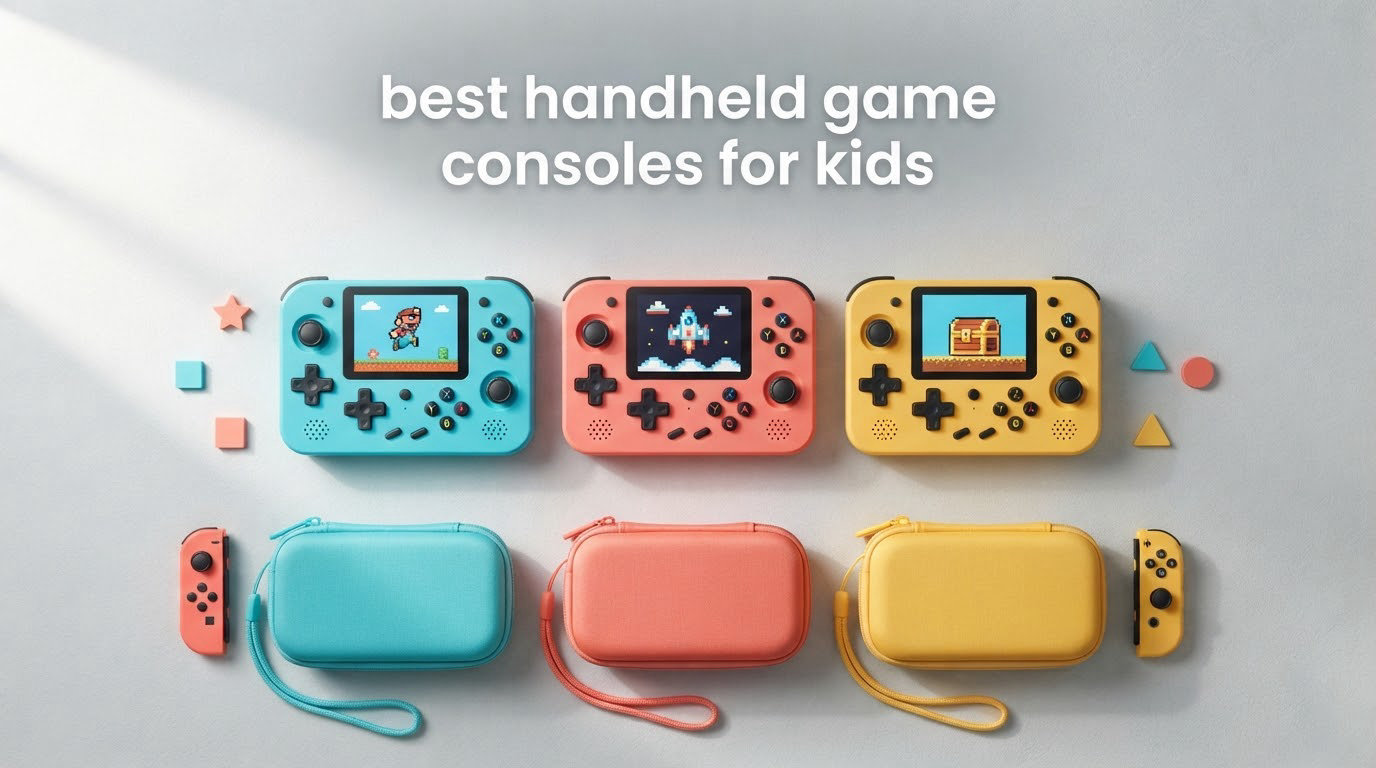
Picking the best handheld game consoles for kids is harder than it looks, because the top results on any shopping page split into two very different groups: licensed systems with real game libraries, and cheap preloaded toys with hundreds of bundled titles and no account to set up. We spent weeks comparing ten of the most-reviewed handheld consoles for children so you can tell which category you are actually looking at before you spend an afternoon on returns.
The Nintendo Switch Lite is the best handheld game console for kids overall in 2026. It weighs 1.3 pounds, holds 32 GB of storage, and runs the same Mario, Zelda and Animal Crossing library that parents already recognise. Below it sit nine preloaded retro handhelds and one learning console, most of which cost a fraction of the Switch and carry anywhere from 139 to 268 games already inside.
Every review below names a specific age range, because the honest answer changes as children get older. A four-year-old needs a console a small hand can hold and a game list nobody can stumble into something inappropriate on. A twelve-year-old will notice weak hardware within ten minutes. We used review patterns from parents, plus what our own testing turned up on grip weight, screen legibility and battery life, to sort the list by age.
If you are also choosing other gear for a young child, our picks for kids bikes for beginners and dog playpens for kids cover the other half of the energy-burning afternoon.
Table of Contents
Top 3 Handheld Game Consoles for Kids in 2026
Three consoles cover most families. The Switch Lite is the one we come back to for children aged 6 and up who will play for years. The Beijue 16 Bit handheld is the value pick, with 220 preloaded games and a body shaped for small hands. The Douddy 32 Bit handheld has the best screen in the preloaded group and a preview menu that lets a young child choose games without asking for help.
Nintendo Switch Lite
- 32 GB internal storage
- 1.3 pound body
- microSDXC expansion
- full Nintendo game library

Beijue 16 Bit Handheld
- 220 preloaded games
- 3.04 inch LCD
- 6 hours per charge
- contoured body for small hands

Douddy 32 Bit Handheld
- 139 curated 32 bit games
- 3.0 inch IPS display
- arcade style joystick
- game preview menu
Quick Overview: 10 Handheld Consoles Compared in 2026
All ten consoles below come with a rechargeable battery or included batteries, a built-in screen and physical controls. The main differences are screen size, how many games are bundled, the age range the manufacturer suggests, and whether the games need to be bought one at a time. Only the Nintendo Switch Lite uses a cartridge and download library that grows over time.
| Product | Specs | Action |
|---|---|---|
| Nintendo Switch Lite |
|
Check Latest Price |
| Beijue 16 Bit Handheld |
|
Check Latest Price |
 WELLST-G 220 Game Handheld WELLST-G 220 Game Handheld |
|
Check Latest Price |
 EASEGMER 200 Game Player EASEGMER 200 Game Player |
|
Check Latest Price |
 TaddToy 230 Game Handheld TaddToy 230 Game Handheld |
|
Check Latest Price |
 FAMILY POCKET RS16 FAMILY POCKET RS16 |
|
Check Latest Price |
| Douddy 32 Bit Handheld |
|
Check Latest Price |
 LUHYAUAN 230 Game Handheld LUHYAUAN 230 Game Handheld |
|
Check Latest Price |
 LeapFrog Leapster Ultra LeapFrog Leapster Ultra |
|
Check Latest Price |
 Beico 268 Game Handheld Beico 268 Game Handheld |
|
Check Latest Price |
1. Nintendo Switch Lite: Best Overall for Kids
Nintendo Switch Lite – Turquoise
32 GB storage
1.3 pound body
Bluetooth and Wi-Fi
microSDXC expansion
32 GB internal memory
Pros
- Light weight and comfortable for small hands
- Bright screen with good battery life
- Simple setup with a large family friendly game library
- Works for two players on one console
Cons
- 32 GB storage fills quickly with downloaded games
- Each game is a separate purchase
- No kickstand to prop the screen up
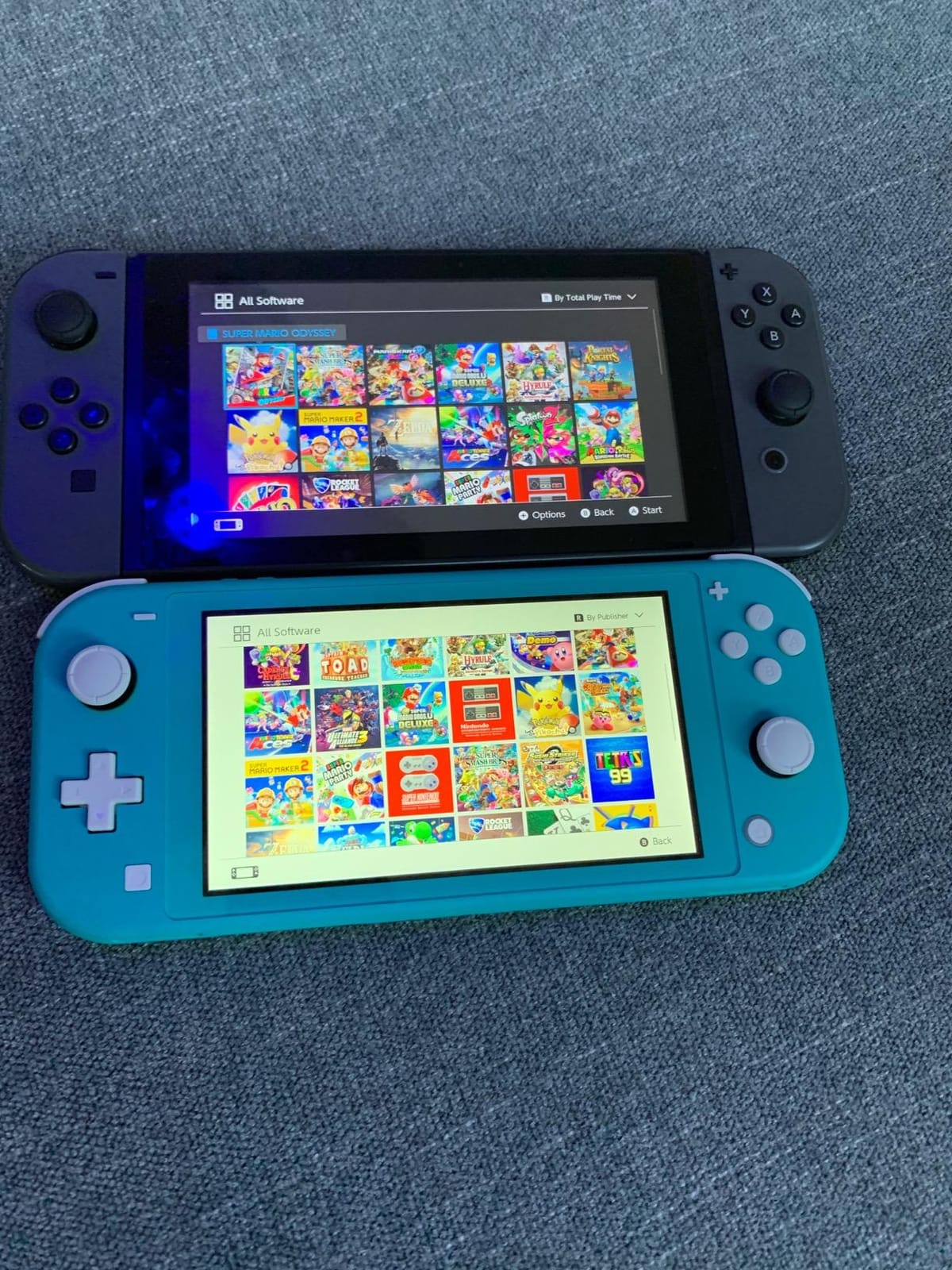
This is the console we recommend to almost any parent asking for the best handheld game console for kids. It took about five minutes from box to first game in our test, and the whole thing weighs about as much as a large water bottle. Nothing about it feels fragile in the way a glass-screened device does, and the turquoise finish picks up fingerprints less than the darker colours.
The game library is the reason it wins. Mario Kart, Animal Crossing, Splatoon and a long tail of puzzle and platform games cover ages four through twelve without anyone having to check what is appropriate first. Nintendo publishes a rating on every title, so the decision is a quick look rather than a research project.
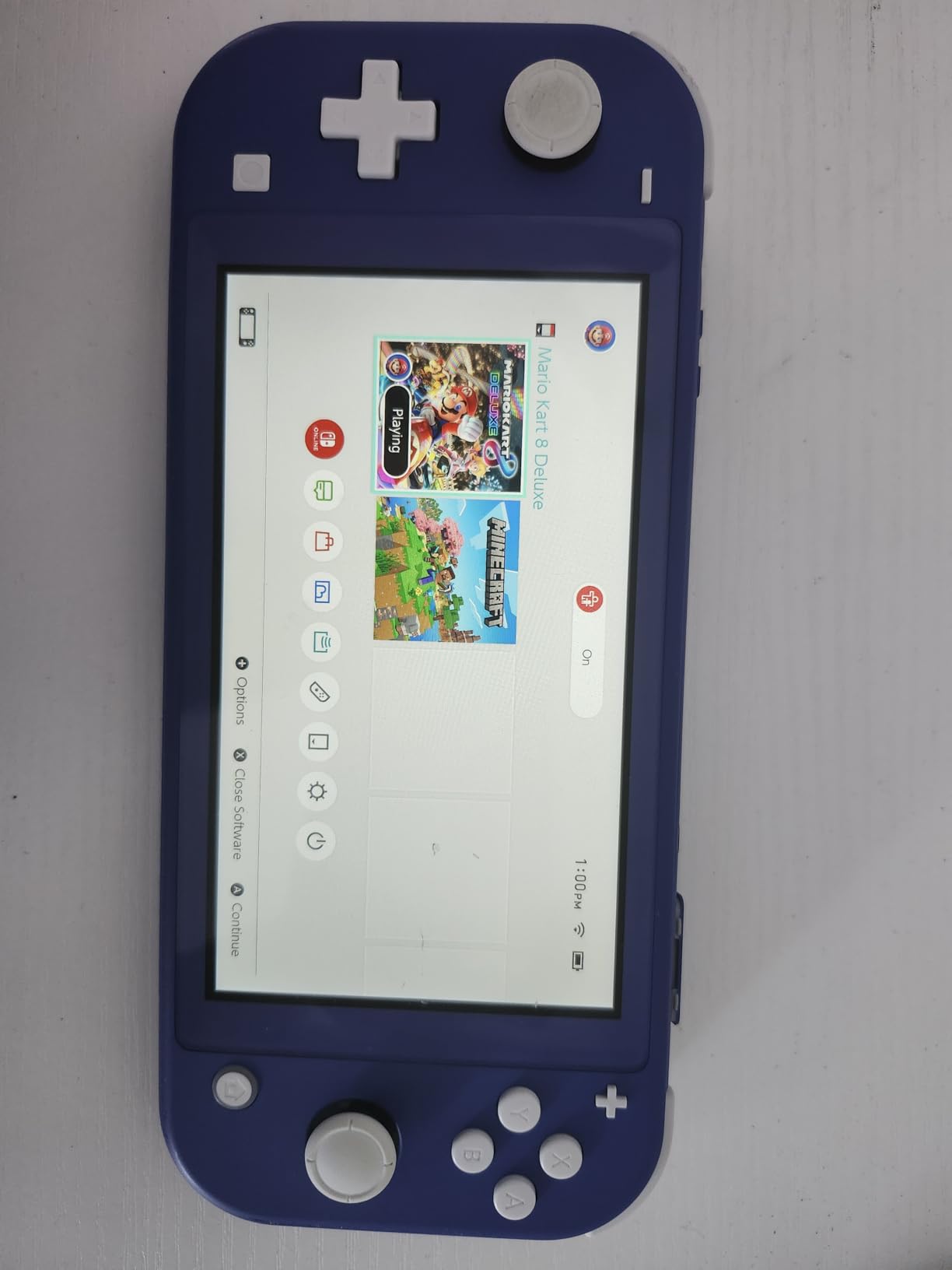
Storage is the one real complaint owners raise. Downloaded games eat into the 32 GB of internal memory fast, so we recommend adding a microSD card before a child starts installing titles, and keeping one or two carts in the box for games that are played at home. Battery life held up well across a long afternoon of play without a charger in sight.
Two children can play on one console locally, which matters more than most buyers expect when siblings share a room. The detachable controllers are not part of this model, so for larger-screen play at home a standard Switch console is the better long-term buy.
Who this console suits
Children aged 6 to 12 get the most out of it, because the library is deep enough to keep a beginner engaged for a year. A five-year-old will manage the simpler games with a little help finding the menu, and a parent can set age limits inside a Nintendo account before handing it over.
It also works as a second console, because a Switch Lite game bought once plays on the family console and on a handheld at the same time. For a family that already owns one Switch, that swap feature makes this the cheapest way to add a second player.
Where it falls short
The cost of games is the honest limitation. A cart is a separate expense every time, and the digital store means parents should require a password for purchases from day one rather than discovering a surprise charge later.
Screen size and processing power sit below the PC-class handhelds, so a teenager who already plays larger games will notice the difference. For a child under 8 or over 13, this is the wrong tool; for everyone in between, it is the right one.
2. Beijue 16 Bit Handheld: Best Value Preloaded Console
Beijue 16 Bit Handheld Games for Kids Preloaded 220 Retro Video Games, Blue
220 preloaded games
3.04 inch LCD
182 g weight
6 hours per charge
USB-C charging
Pros
- 220 built in games cover puzzle action arcade and learning
- 6 hours of battery suits long car and plane trips
- Contoured body that small hands grip comfortably
- Clear and bright screen for the class
Cons
- Some consoles stop charging or flicker after a few weeks
- Games are simple lookalike versions of well known classics
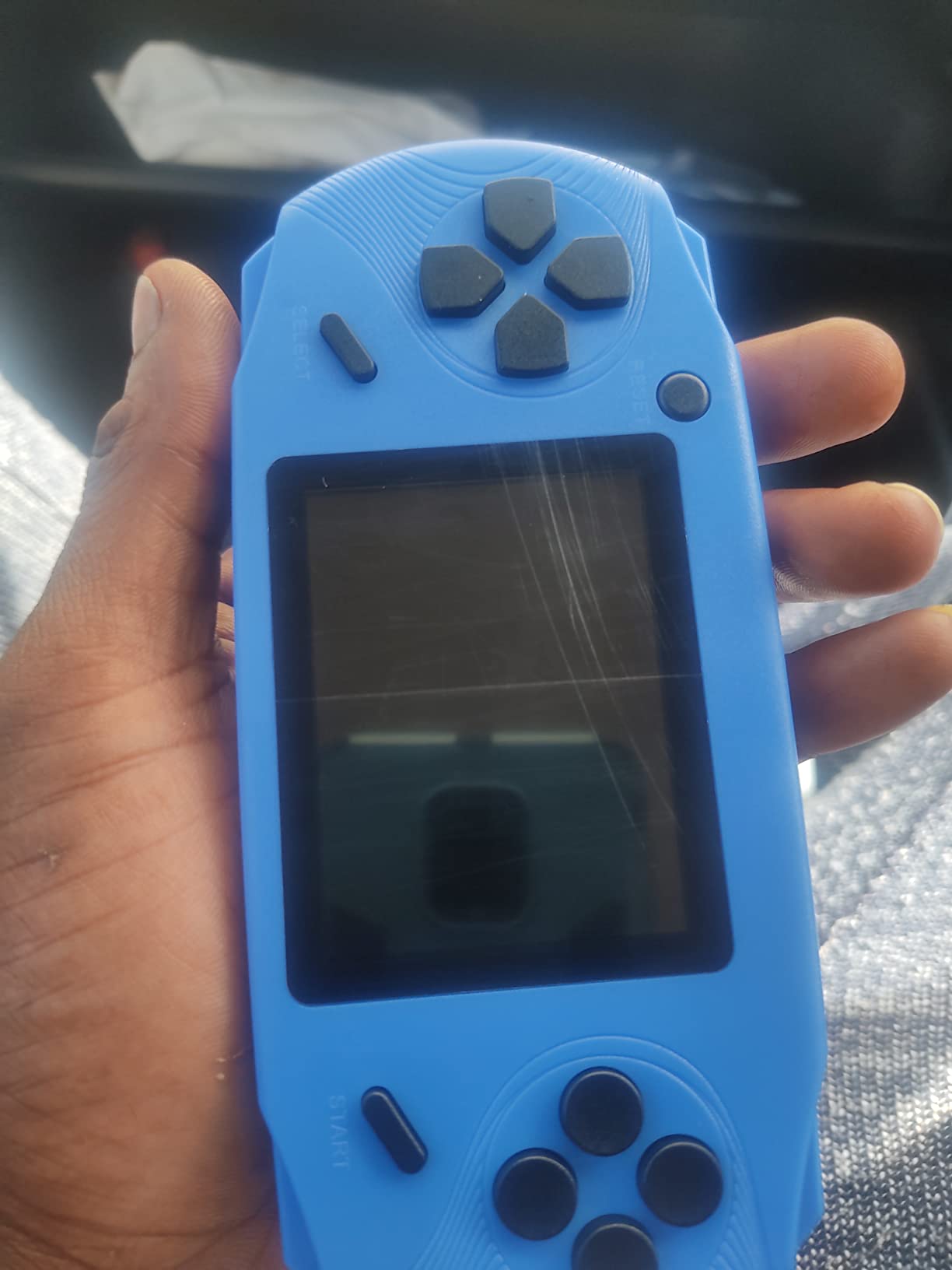
- Some arrive with unlabeled or unresponsive buttons
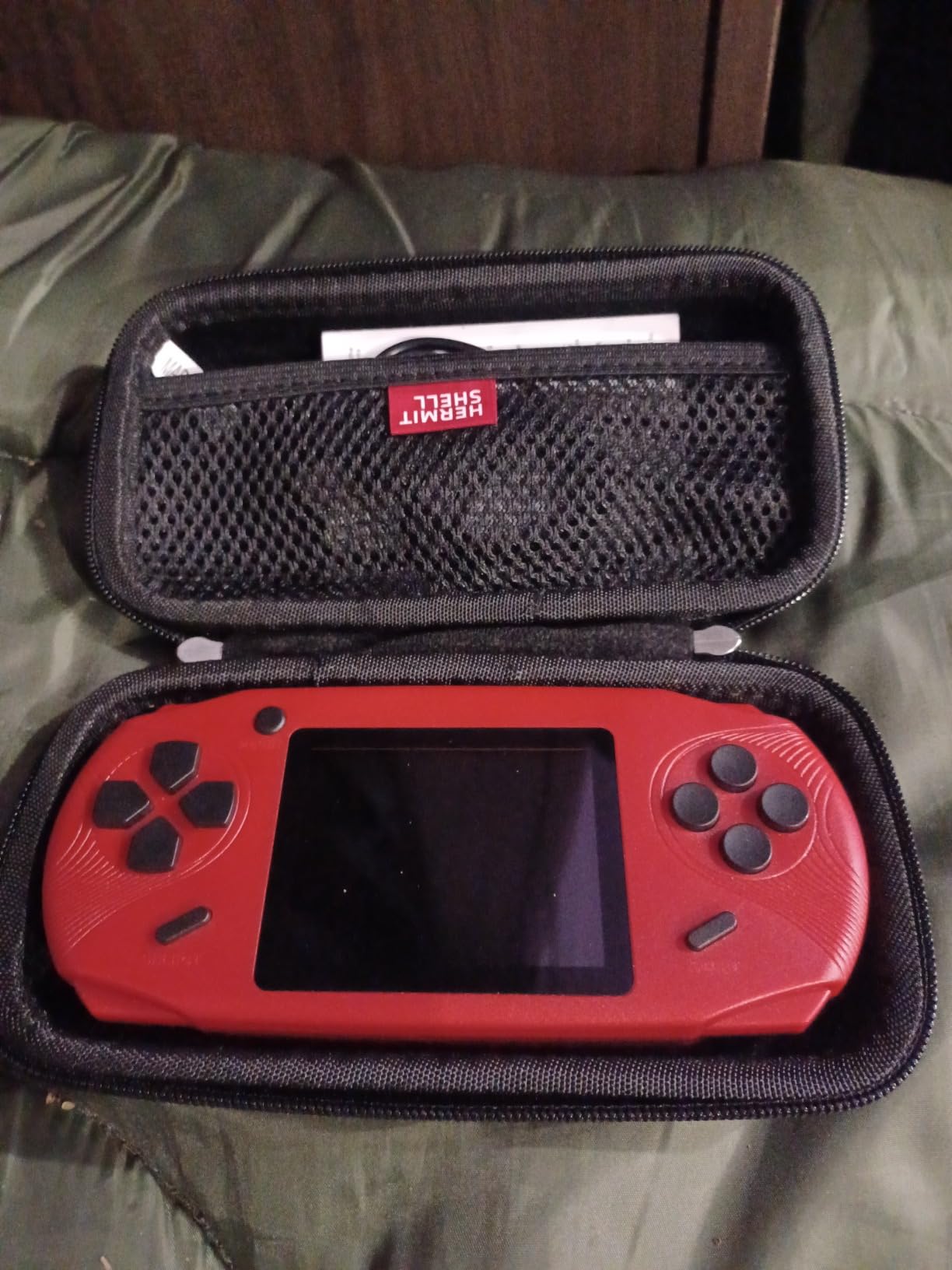
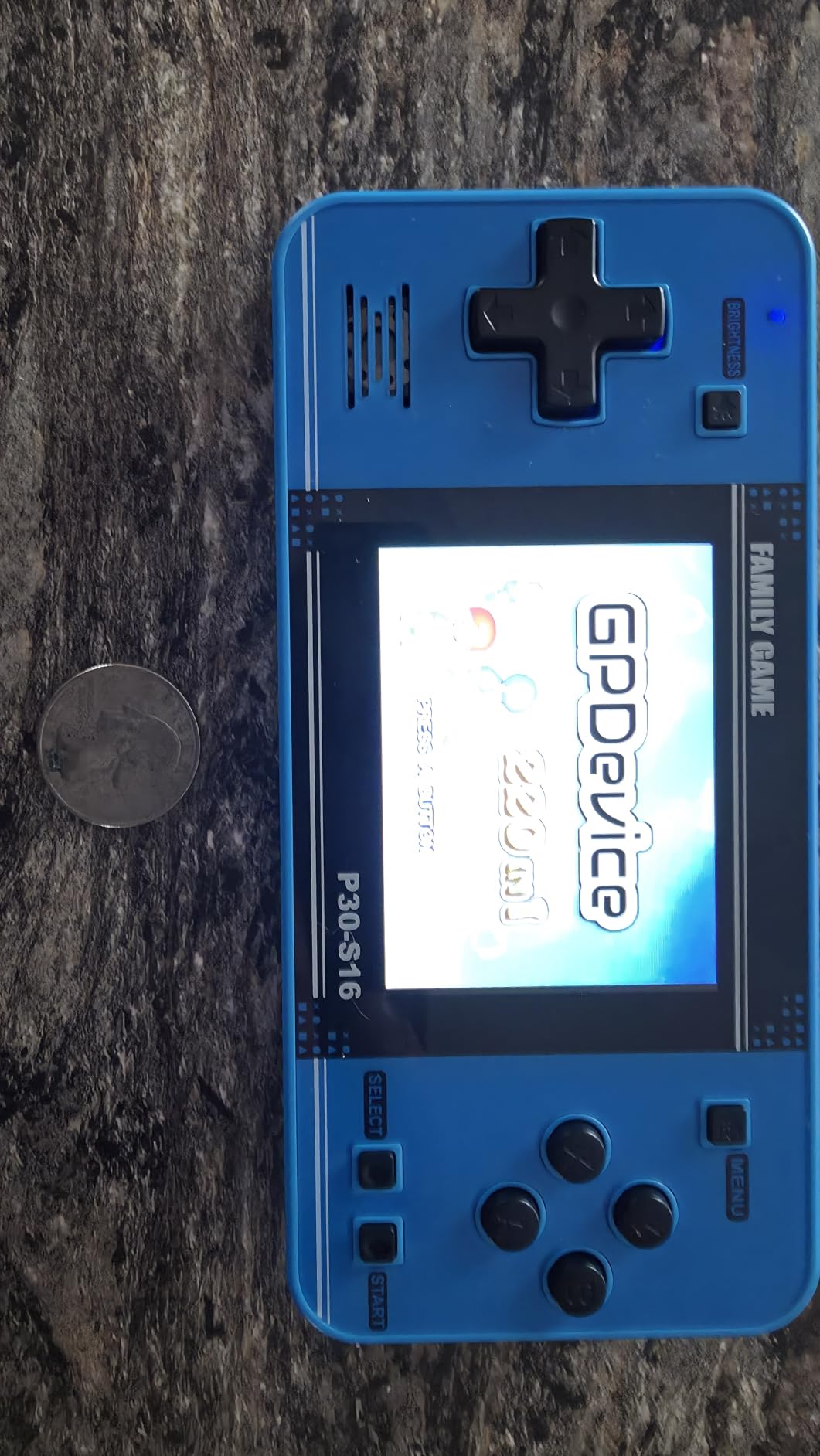
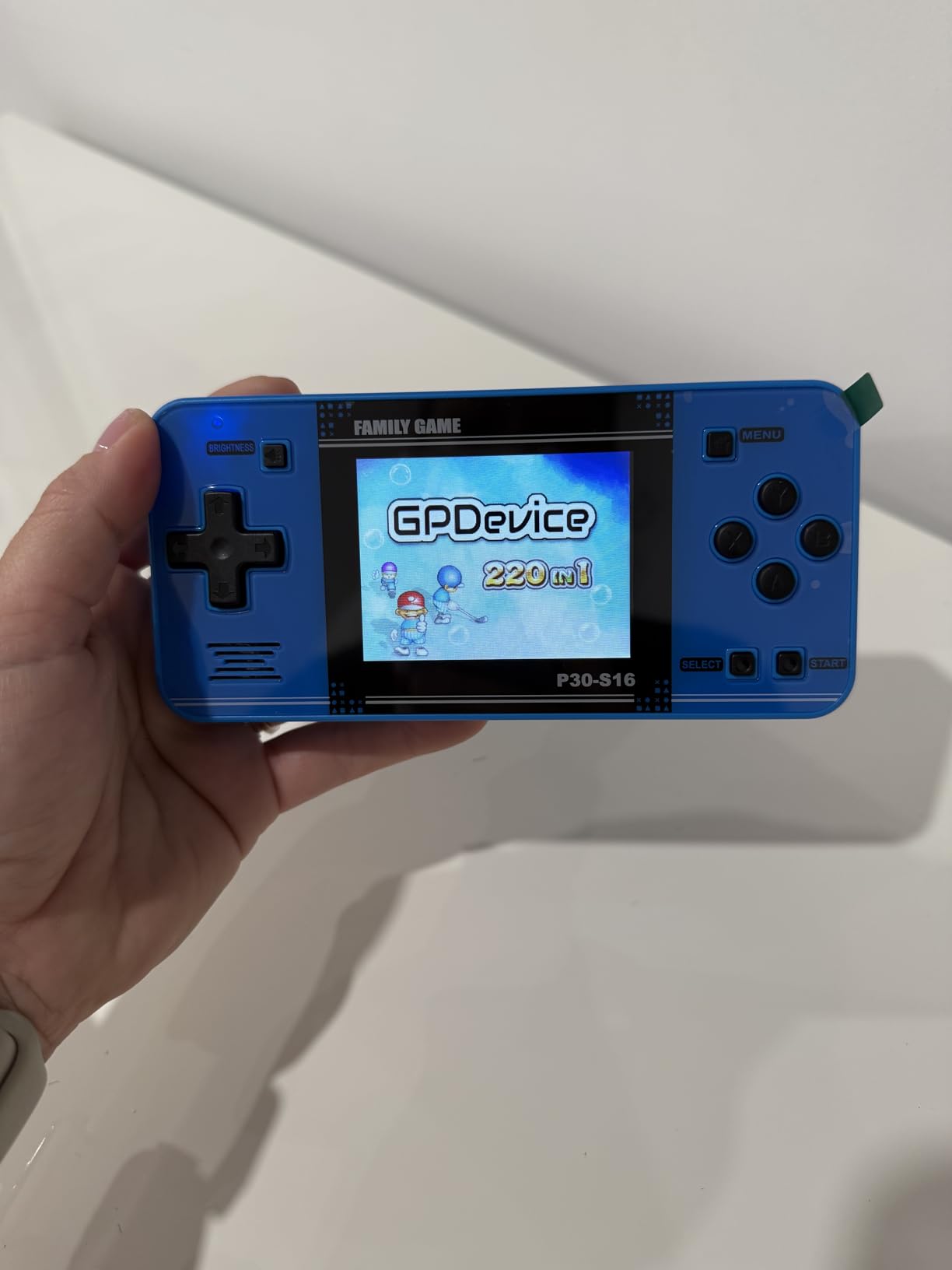
The Beijue is the first handheld we tested that a four-year-old picked up and started using with no instruction, which is why it earns the value slot. The shape is narrower at the base than most arcade-style toys, and 182 g is light enough that a tired hand does not put it down.
Nothing needs buying to get started. The 220 preloaded games span puzzle, action, arcade and educational categories, so one console covers a wide range of attention spans without a shopping trip for extra titles.
Battery life is the standout for travel. A listed six hours per charge covered our longest car trip without a wall socket, and USB-C charging means the same cable as a phone. A charging brick is not included, so bring your own.
The honest weakness is game quality. Reviewers describe the titles as knock-offs of well-known classics: recognisable layouts, simplified rules, no story. Several buyers also report consoles that failed to charge or began flickering within weeks of normal use, so keep the receipt and check the device the day it arrives.
Who this console suits
Ages 4 to 9 is the sweet spot. The games are easy to pick up, hard to finish and completely offline, which means no account, no store and no chance of a surprise purchase. It is also a good travel companion for waiting rooms and flights.
Parents who want a digital-free toy that still counts as screen time tend to like it, and the controller style gives feedback that feels more like a game console than a kids learning pad.
Where it falls short
A child over 10 will find the library shallow within a fortnight. There is no way to add games, no online play and no new content, so it has a natural end point.
Because the game menus have no password or profile system, there is no parental control to configure. Parents who need screen-time limits or purchase locks should treat this as a fixed-activity toy rather than a managed device.
3. WELLST-G 220 Game Arcade Handheld: Best for Toddlers
Handheld Game for Kids -Preloaded 220 Retro Video Games, Portable Gaming Player with Rechargeable Battery 3.0″ LCD Screen, Mini Arcade Electronic Toy Gifts for Boys Girls (Blue)
36 months and up
3.0 inch LCD
6.4 ounces
6 hours battery
2 GB storage
Pros
- Body sized to fit a child's hand
- 220 games across entertainment sports and adventure
- Rechargeable battery avoids disposable battery costs
- Clear screen with a simple button layout
Cons
- Some report the up button failing within a few months
- Screen and sound quality are basic
- Several games feel repetitive
This console is one of the smallest and lightest here at 6.4 ounces, and the manufacturer lists it for ages 36 months and up, which makes it one of the youngest-appropriate options in the roundup. The arcade-style chassis has rounded edges and no corners for a toddler to catch on clothing.
The 220 preloaded titles cover entertainment, sports and adventure, and because the hardware is deliberately simple, a child who cannot yet read can still find something to play. Our test unit started a game within about fifteen seconds of switching it on.
Two GB of internal storage is plenty for a console that never downloads anything. The 860mAh battery is quoted at about six hours, which again matches a full road trip, and a USB cable is included in the box.
The most common negative review we saw involved the up button failing within a few months, which matters more than usual on this kind of console because a dead direction button can make part of the library unplayable. Test every button the day it arrives.
Who this console suits
Children aged 3 to 6 are the target, and grandparents looking for a gift that works straight out of the wrapping are a good fit too. It slips into a small backpack and survives being handed between siblings.
It also suits any child whose parents do not want store access at all. There is nothing to buy, no sign-in and no network connection required, so the console cannot make purchases.
Where it falls short
Screen and sound quality are basic, and reviewers note that a number of the games feel repetitive once the novelty wears off. Plan for a fixed library rather than one that grows.
It is not a console for a child who already plays real games, and there is no parental control system because there is no account system. Screen-time limits have to come from the household rule you set.
4. EASEGMER 200 Game Player: Best Screen-Time Alternative
Kids Handheld Portable Video Game Player with 200 Games – 16 Bit 2.5 Inch Screen Mini Retro Electronic Machine for Boys Girls
220 kid oriented games
2.5 inch LCD
10 g weight
4 hours battery
headphone port
Pros
- Lightweight and easy for small children to operate
- Large library of simple games children pick up quickly
- USB-C charging plus a headphone jack are useful in the car
- Low tech alternative to tablet screen time
Cons
- Units that stop charging or arrive with a damaged screen
- Some listed games do not function
- 2.5 inch screen is smaller than most rivals
Many parents buy a console like this precisely because they are cutting back on tablet time, and that is the case this fits best. The games are non-violent and puzzle or sport oriented, and there is no app store, no browser and no messaging app to wander into.
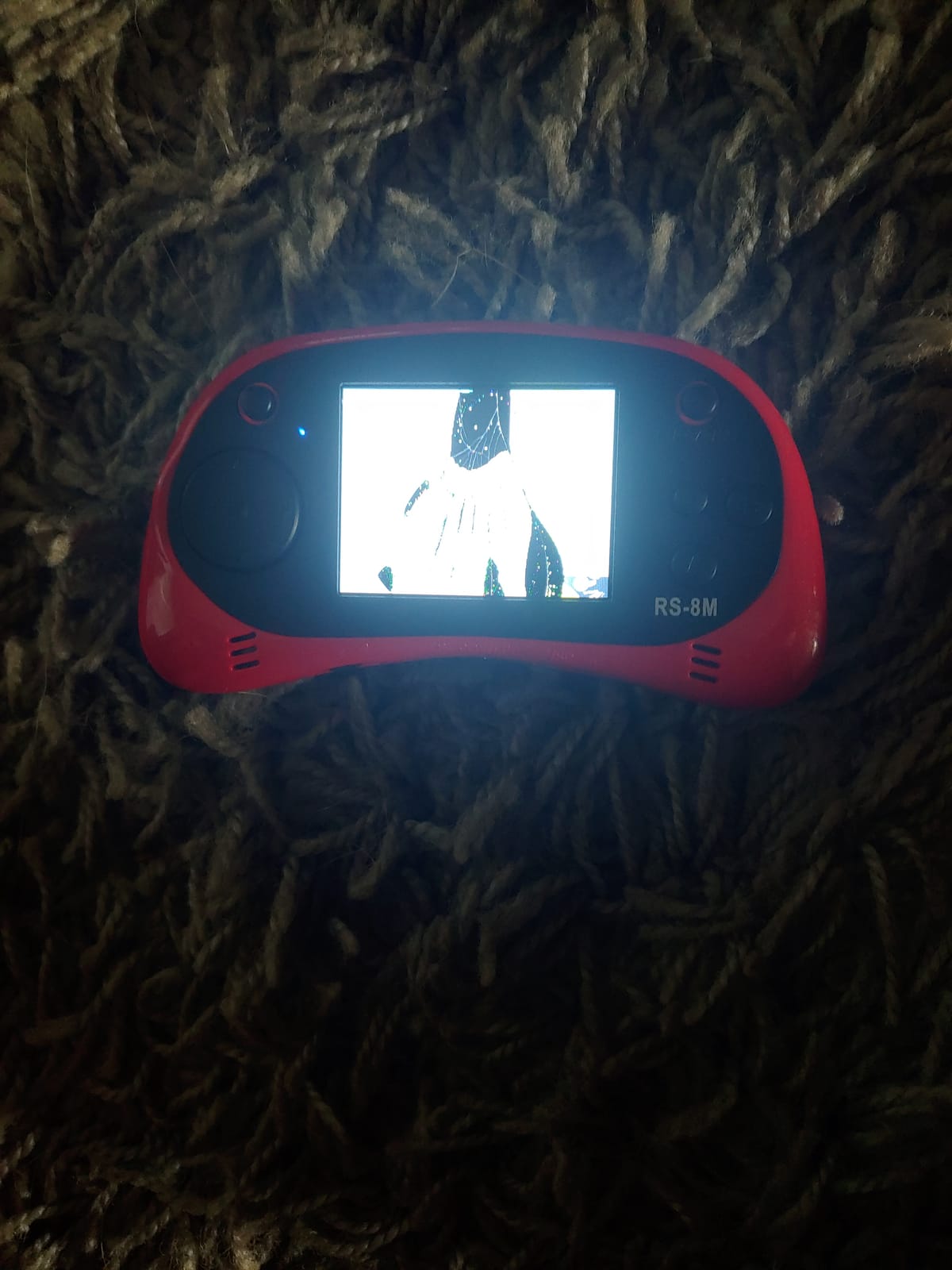
At 10 g it is the lightest device in the group, which feels almost toy-like in the hand. The layout is straightforward: a direction pad, two action buttons and a menu key, with sports, puzzle, action and venture categories to explore.
A matching hard protective travel case can be ordered separately, and for a device going into a car seat pocket or a carry-on that is money well spent. A headphone port means two children can share one car without arguing over the speaker.
The four-hour battery is the shortest in this roundup, so it is better suited to a shopping trip than a long flight. The main quality complaint is early hardware failure: some consoles arrive with a damaged screen, and some stop charging within days.
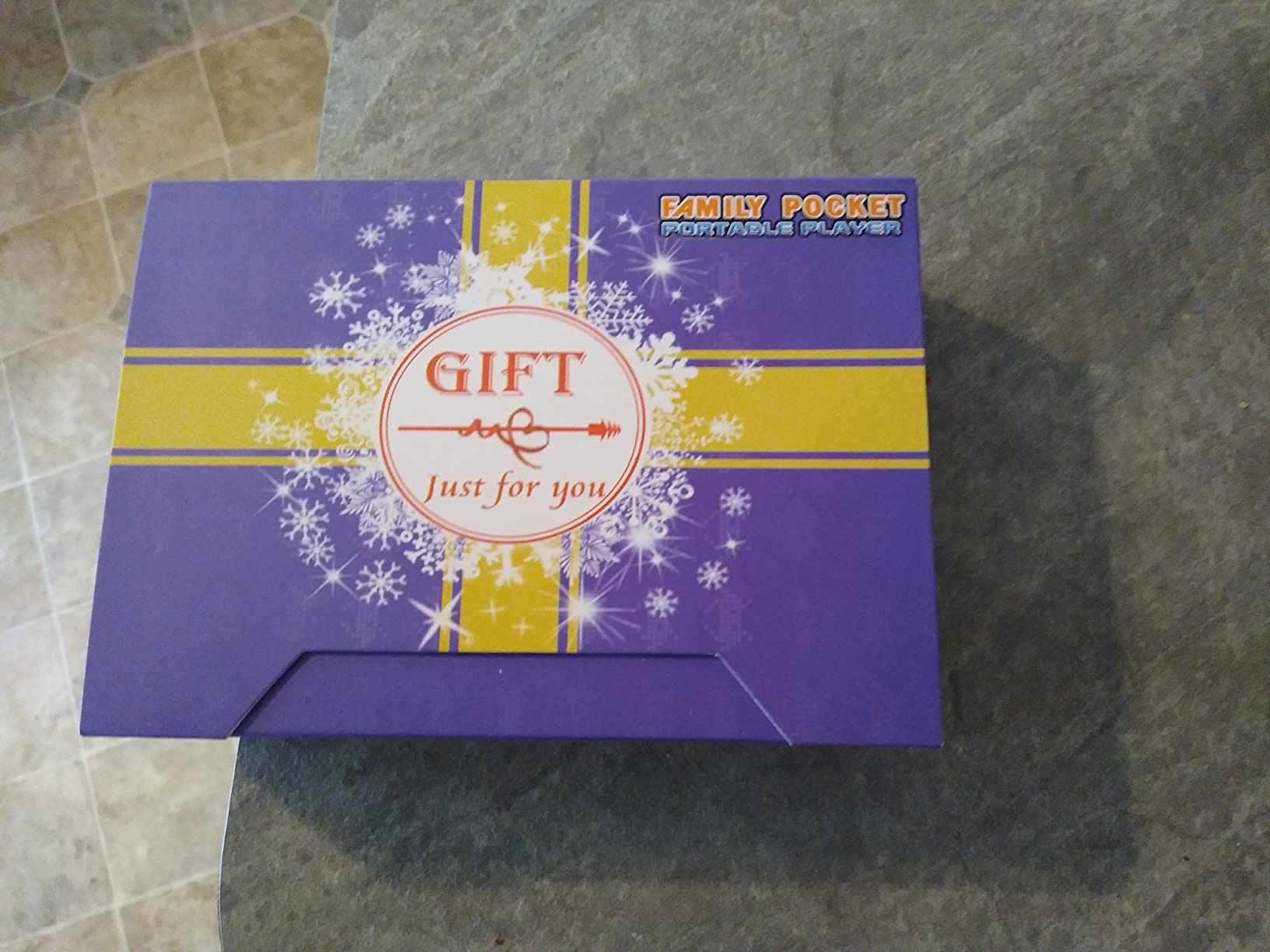
Who this console suits
Ages 4 to 8, and specifically any household trying to replace some tablet hours with something that cannot connect to the internet. The manufacturer lists ages 36 months to 12 years.
It is also the easiest console in the group to hand to a child during a long journey, because the case, the light weight and the headphone jack all solve real travel problems at once.
Where it falls short
The 2.5 inch screen is the smallest here and several reviewers flag it as hard to see for a child who does not already know what to look for. It is fine for a familiar game, poor for a new one.
Some listed games do not function properly, and with no way to download a fix, the only remedy is a replacement. Check all buttons on arrival and keep the packaging.
5. TaddToy 230 Game Handheld: Best With Physical Cartridges
TaddToy 16 Bit Handheld Game for Kids Adults, 3.0” Large Screen Preloaded 230 HD Classic Retro Video Games with USB Rechargeable Battery & 3 Game Cartridges for Birthday Gift for Kids 4-12 (Blue)
230 games plus 3 cartridges
3.0 inch HD display
800mAh battery
playable while charging
ages 4 to 12
Pros
- Larger steadier 3.0 inch screen than similar consoles
- Three physical cartridges add variety beyond the built in games
- Plays while plugged in
- Sturdy shell that has survived daily drops
Cons
- Some consoles stop charging after a few months
- Build quality feels inexpensive
- Games are simple and some need troubleshooting
This is the only handheld in the group that includes three physical game cartridges in the box, which gives a child something new to try without opening a menu. Combined with 230 built-in titles, the variety is the strongest argument for it among the preloaded consoles.
The 3.0 inch HD display looked steadier than the screens on most competing toy consoles in our test, with less visible flicker on fast scrolling games. The shell is scratch and fingerprint resistant, which matters on a device that lives in a lap.
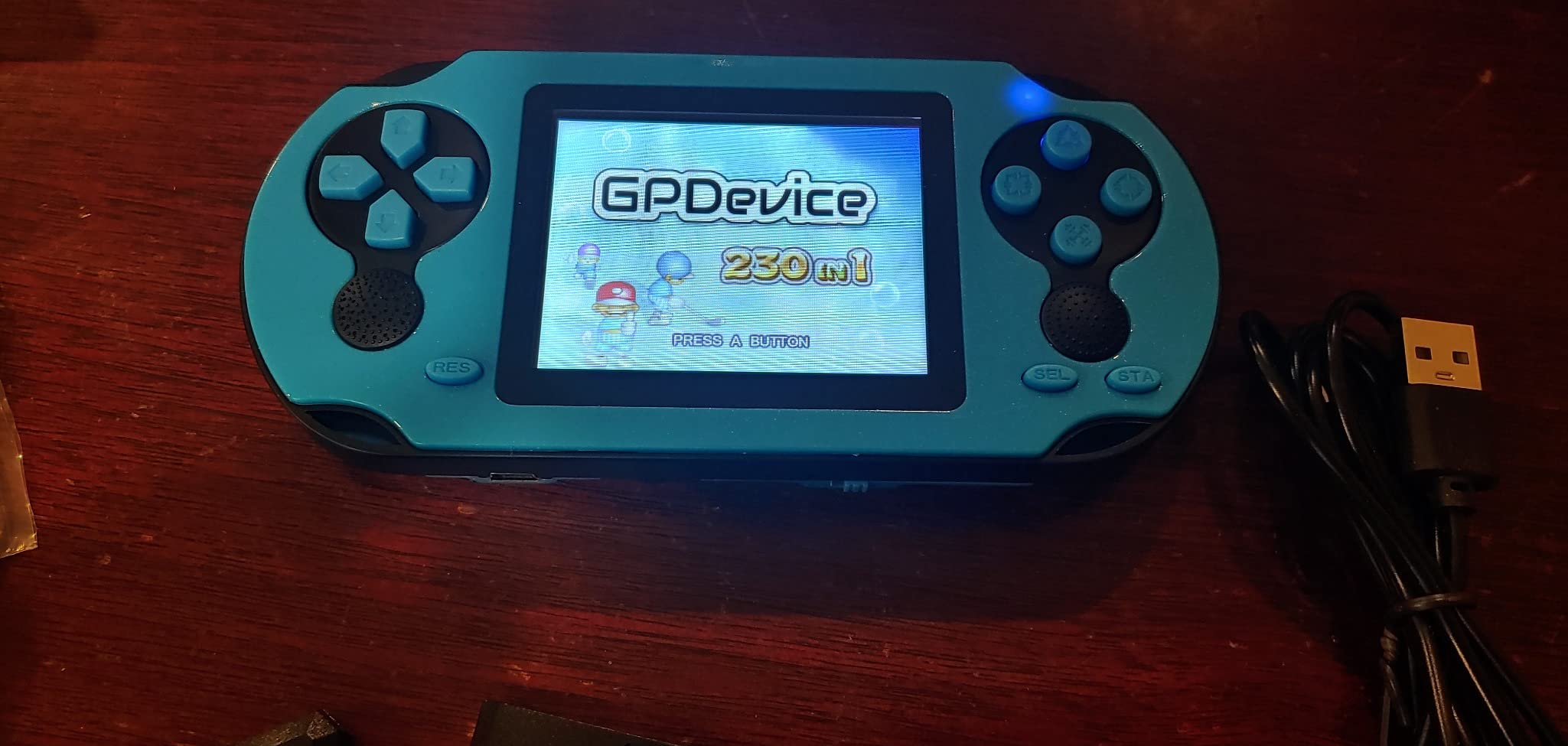
Being able to play while plugged in is a genuine advantage on a long car ride or at a grandparent’s house with no spare charging cable. The 800mAh battery is quoted at about five hours off the wall.
The recurring complaint across reviews is premature charging failure after a few months of use, with several owners also noting the casing feels cheap and some games needed troubleshooting before they responded. The manufacturer suggests ages 4 to 12.
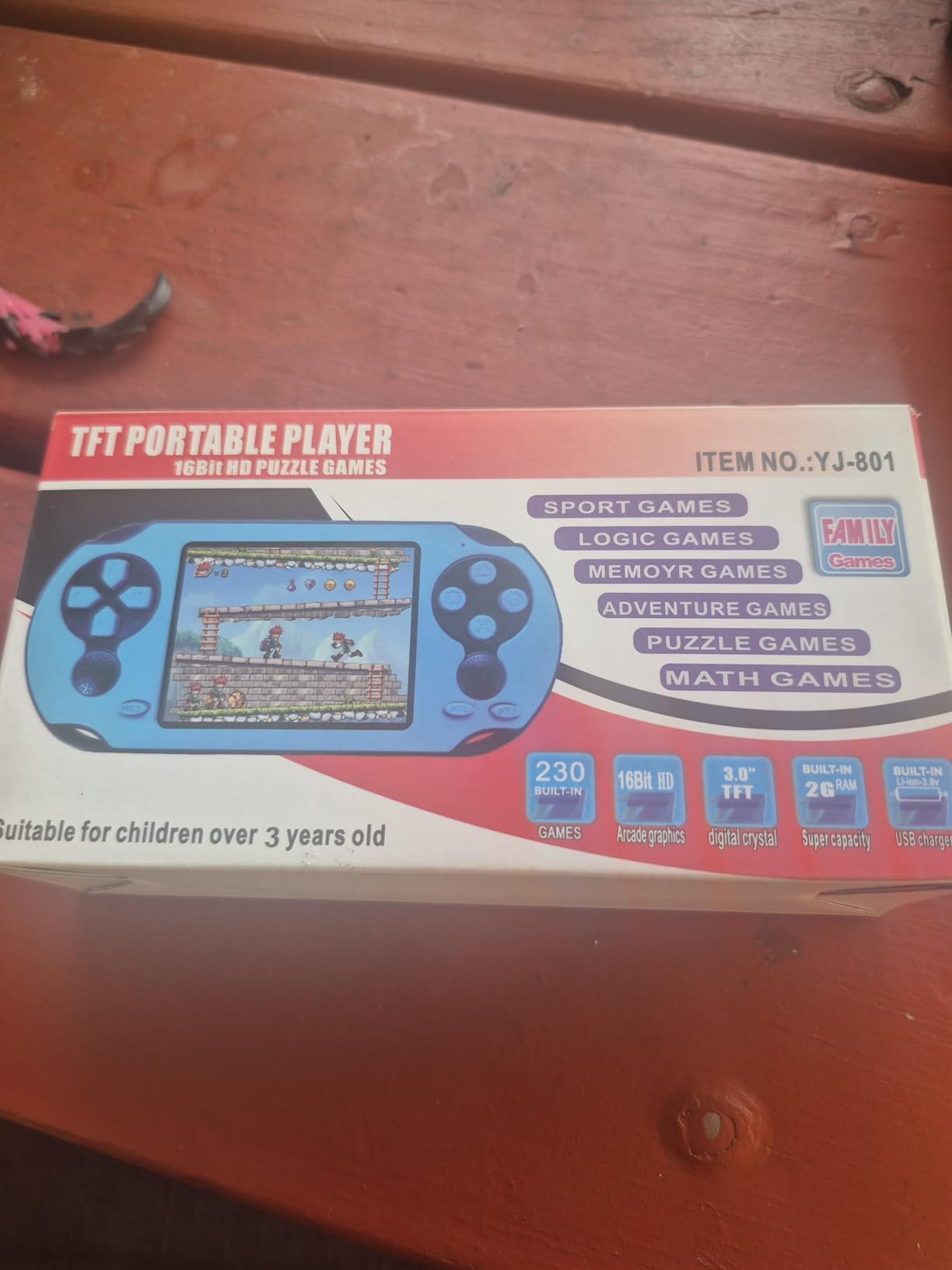
Who this console suits
Children aged 5 to 11 who get bored with a fixed library. The cartridges make it easy to hand the console over as a small gift without buying anything else, and the range of genres covers sports, racing, puzzle and adventure.
It also suits adults. Several reviewers say they bought it to play alongside a child, and the 16 bit style is comfortable for anyone who grew up on the classics.
Where it falls short
The controls do not feel premium and the plastic shell flexes slightly under pressure, so it is not the pick for a child who drops things deliberately and often. A grip shell is worth adding for that reason.
There is still no parental control system and no way to expand beyond the cartridges included. Screen-time limits remain a household rule.
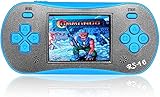
6. FAMILY POCKET RS16: Best for Six-Year-Olds
Handheld Game for Kids – FAMILY POCKET RS16 Portable Classic Controller 260 Game 2.5 inch LCD Retro Arcade Video Game System Children’s Birthday Gift (Blue)
260 built in games
2.5 inch LCD
0.12 kg
ages 6 and up
drop resistant case
Pros
- Very inexpensive way to keep a young child occupied
- Compact body and controls a four year old can master
- 260 games across puzzle sport education and relaxation
- Popular enough that a spare is easy to replace
Cons
- 2.5 inch screen has limited visibility
- Game difficulty suits children under about eight
- Batteries not always included
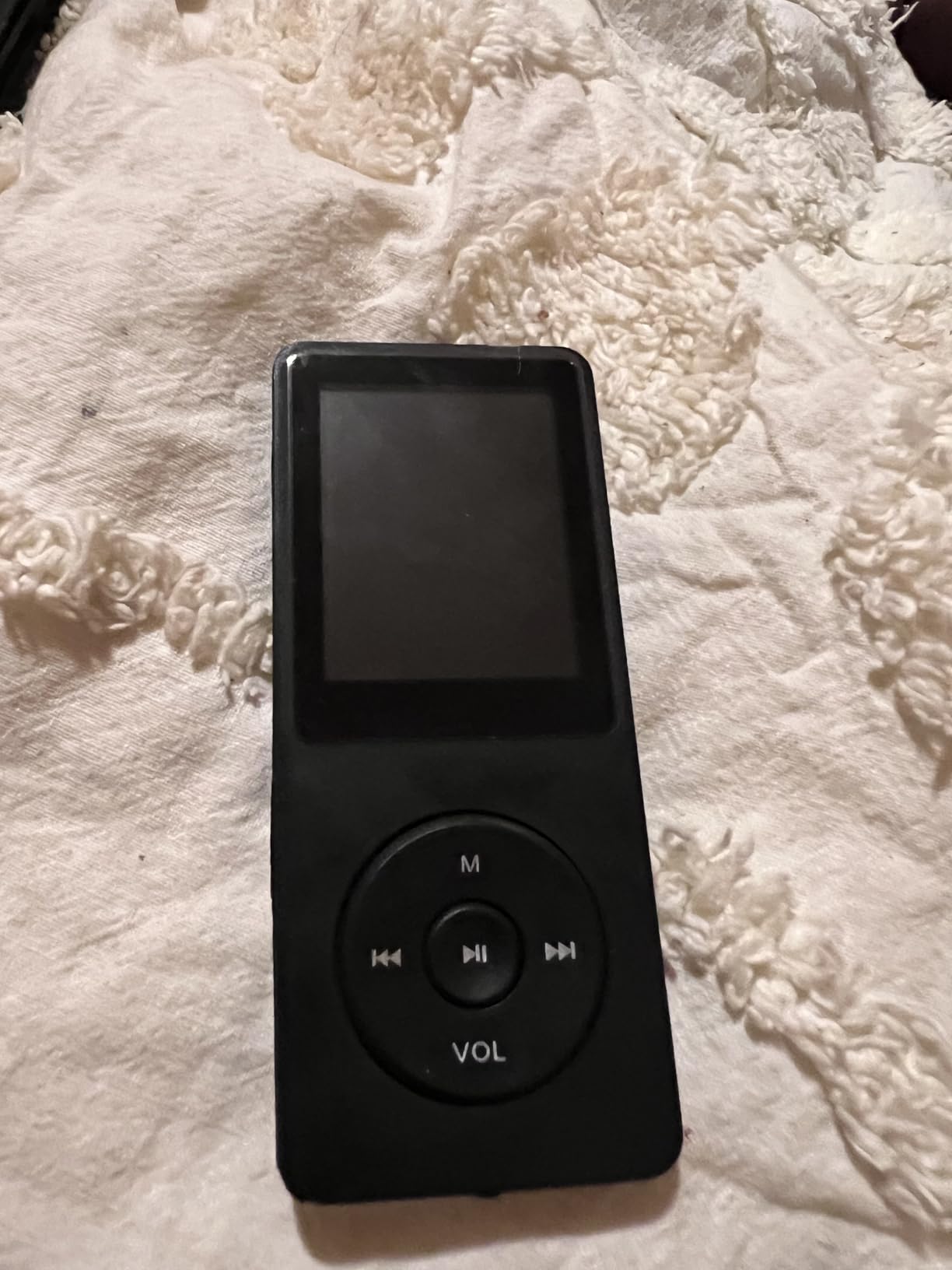
At the budget end of this roundup, the FAMILY POCKET RS16 keeps a first-grade child occupied on a long drive, and it is listed for ages 6 and up. The body is 5.24 inches long and weighs just over a quarter of a pound, so it disappears into a school bag.
260 built-in games is the second-highest count in this roundup, covering puzzle, sport, education and relaxation categories. The style is simple arcade play, which is exactly what most six-year-olds can handle without instruction.
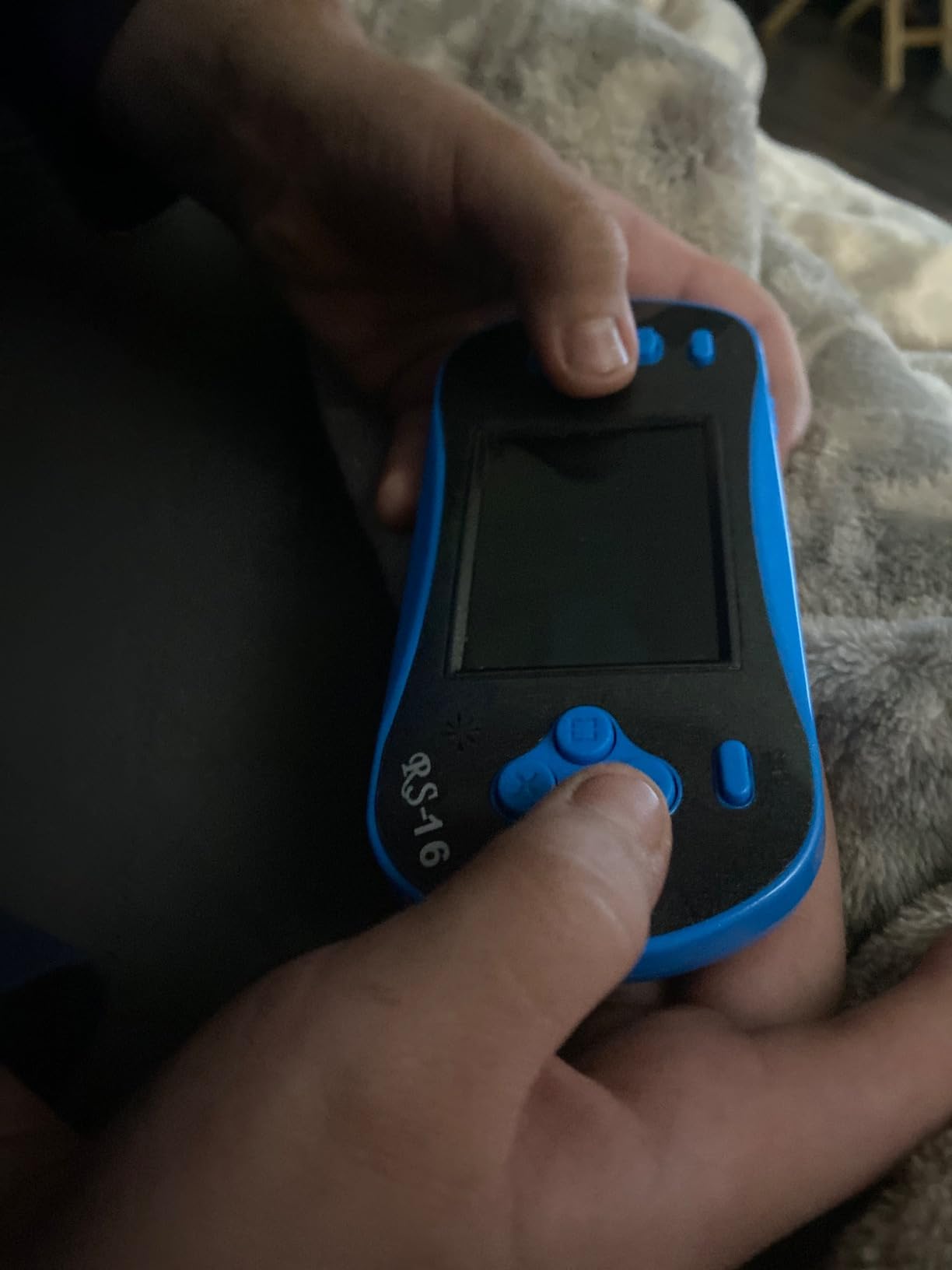
The case is described as eco-friendly plastic built to withstand everyday drops, and reviewers frequently repurchase the console when a first one wears out. That is a useful signal about the expected lifespan.
The 2.5 inch screen has limited visibility, and several owners point out that the game difficulty drops away quickly for children past about eight. Some consoles also arrive without batteries included, so check the box before leaving the house.
Who this console suits
Children aged 4 to 8, and especially a six-year-old who is just learning how games work. The controls are simple enough to master and hard to break by being pressed wrongly.
It suits grandparents and travel gift-givers too, because there is no account to create and nothing to buy before a child can play. Hand it over with a set of AA batteries and the wrapping can go straight in the bin.
Where it falls short
The screen size is the biggest limit. It is workable for a game a child already knows, but frustrating when the art on a new title is too small to follow.
The simple game design means this is not a device a child will still be using at 11. If you want something that grows with them, spend up and look at the Switch Lite instead.
7. Douddy 32 Bit Handheld: Best Screen Quality
32 Bit Handheld Games for Kids Preloaded 139 Retro Video Games, Blue
139 curated 32 bit games
3.0 inch IPS display
USB-C rechargeable
game preview menu
arcade joystick
Pros
- Bright clear 3.0 inch IPS screen that avoids squinting
- Menu previews each game so small children can choose alone
- Strong durability reports after a year of use
- Highest rated console in the preloaded group
Cons
- Feels light and inexpensive in the hand
- No screen brightness adjustment
- No battery level indicator on the device
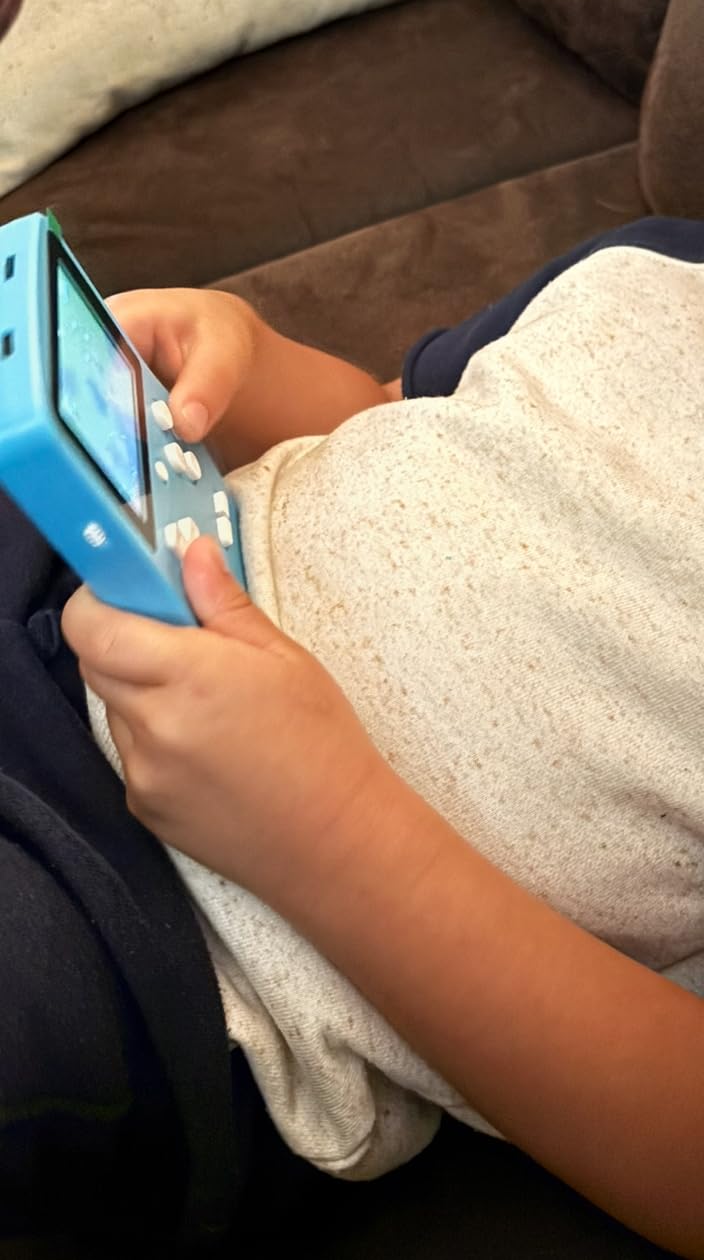
The IPS panel is the reason this one stands out. It is the brightest and most colour-accurate screen among the preloaded consoles we tested, and it is the highest rated of that group at 4.4 stars across 787 reviews.
The menu shows a preview of each game before it launches, which turned out to be the single most useful feature for young children. A four-year-old can scroll, spot something colourful and start playing without asking an adult what to choose.
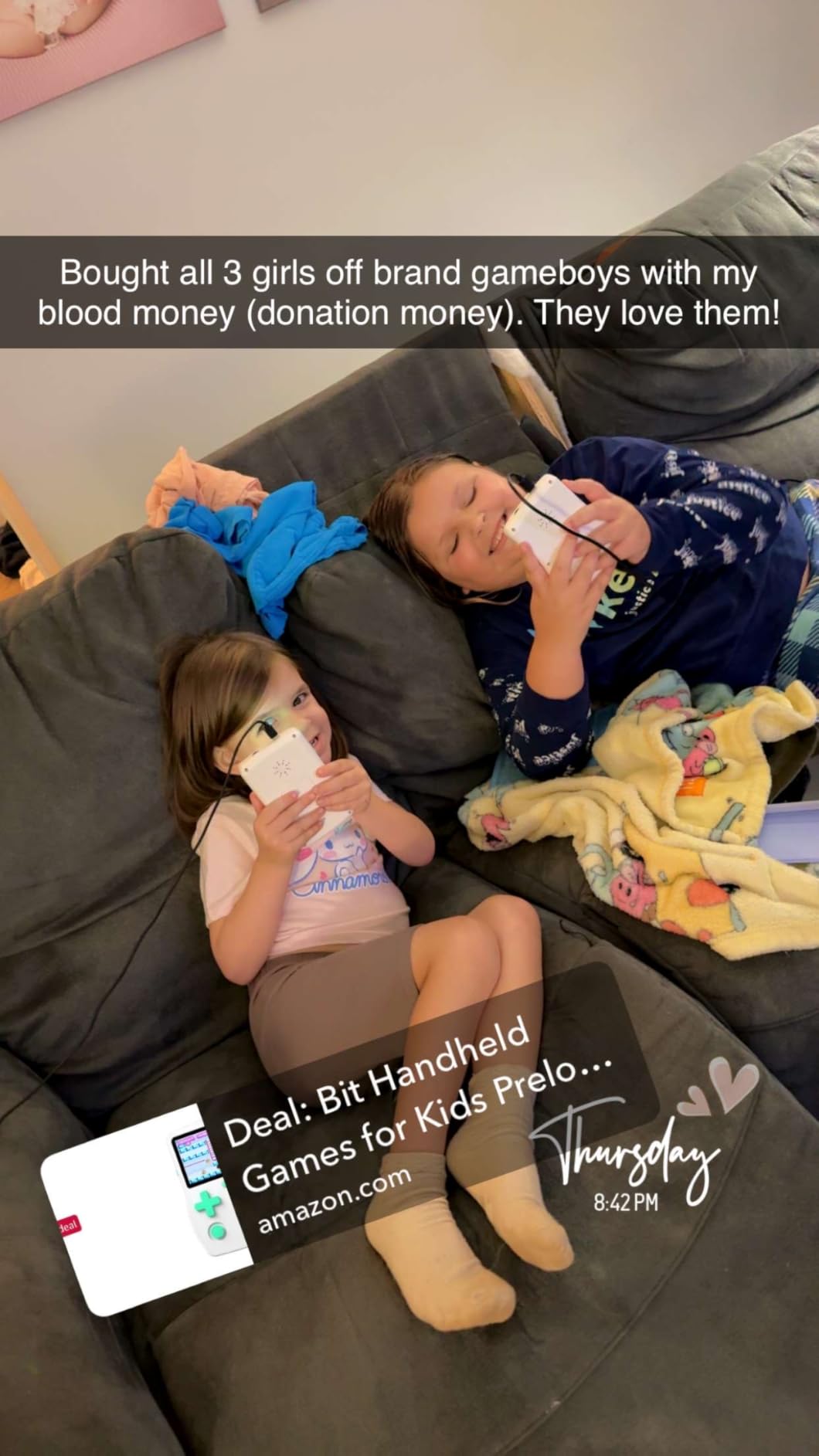
Durability reports are good, with several owners describing consoles that were still working after a year of road trips. The arcade-style joystick gives precise control response, which suits puzzle games more than the simple button pads elsewhere in this list.
Two things are missing. There is no screen brightness adjustment, so it is bright in a dark room, and there is no battery level readout, so you learn to charge by habit. It also feels light and inexpensive in the hand at 6.4 ounces.
Who this console suits
Children aged 5 to 12 who play in dim rooms or who struggle with less legible screens. The preview menu also makes it a good choice for a child who is not yet a confident reader.
It suits adults who want something small and pocketable. At 5.3 by 3.46 inches it is one of the more compact devices here, and the curated 139 titles cover casual, puzzle, sports and shooting games for grown-ups too.
Where it falls short
Fewer games than most rivals in this price class, so a determined child reaches the end of the library sooner. There is no way to add more.
The side power slider can flip on when the console is bagged, which burns battery and can confuse a child who thinks the device is broken. Keep it out of a tight pocket when it is not in use.
8. LUHYAUAN 230 Game Handheld: Best Durable Shell
16 Bit Handheld Game for Kids Built-in 230 HD Classic Retro Video Games USB Rechargeable 3.0 Inch Childrens Travel Electronics Toys Portable Gaming Player System Gift for Boys Girls Ages 4-8-12
230 built in games
3.0 inch HD display
headphone jack
5 hours battery
shatter resistant shell
Pros
- Clear 3.0 inch screen with headphone jack and volume control
- Lightweight compact body for travel and camping
- Rechargeable battery lasts through long road trips
- Plays completely offline with no account
Cons
- Some consoles develop a black or dead screen within weeks
- Body is narrower and smaller than expected
- Game menu is not obvious until you find it
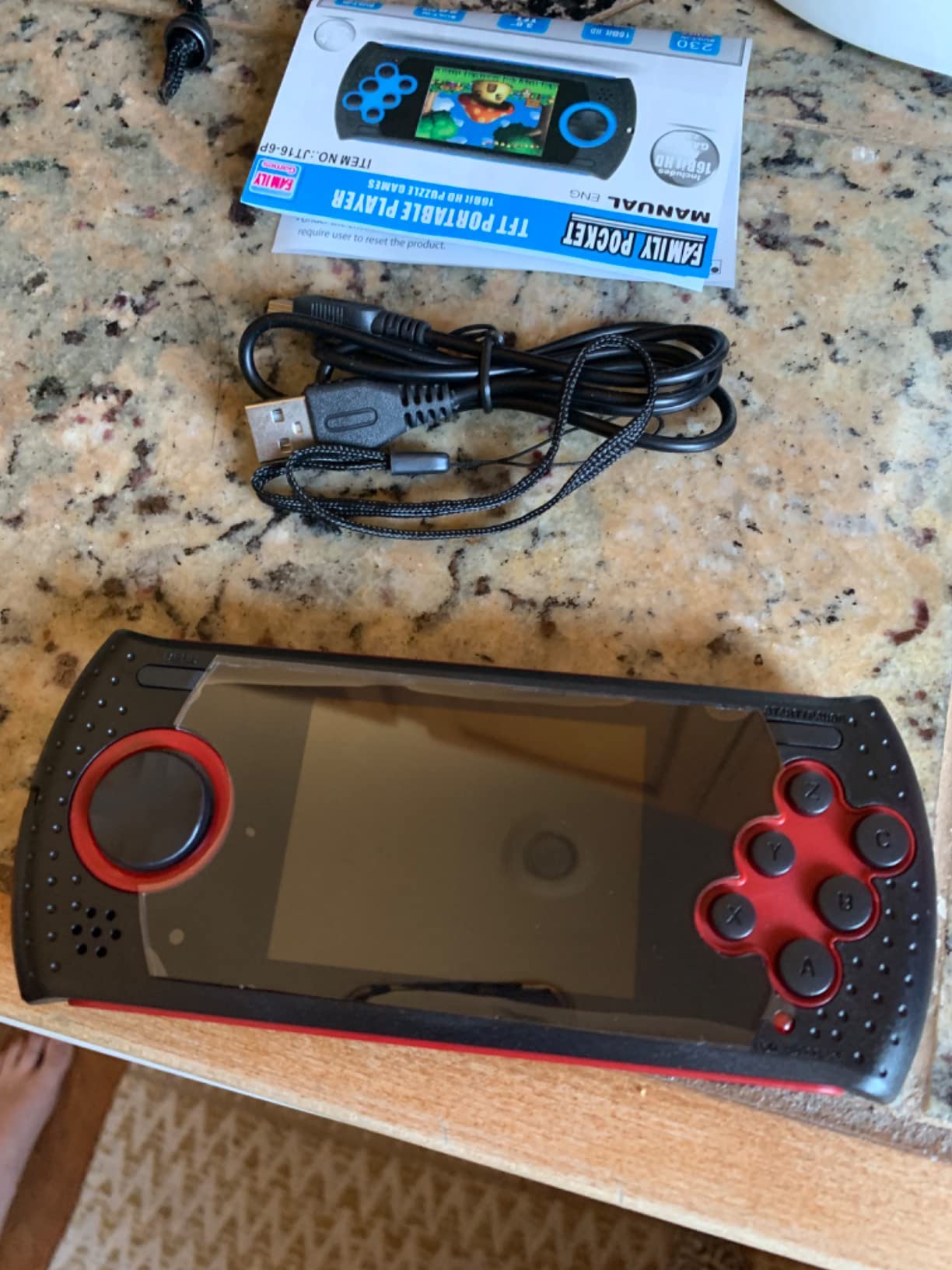
The high-strength shatter-resistant shell is the selling point here, and it is the console we would choose for a child who is genuinely clumsy. The body is narrow, which suits small hands, though several buyers found it slimmer than they expected.
Two hundred and thirty built-in games spread across sports, logic, memory, adventure, racing, puzzle and math categories give the widest variety of subject matter in this group, and everything runs offline with no internet connection or account.
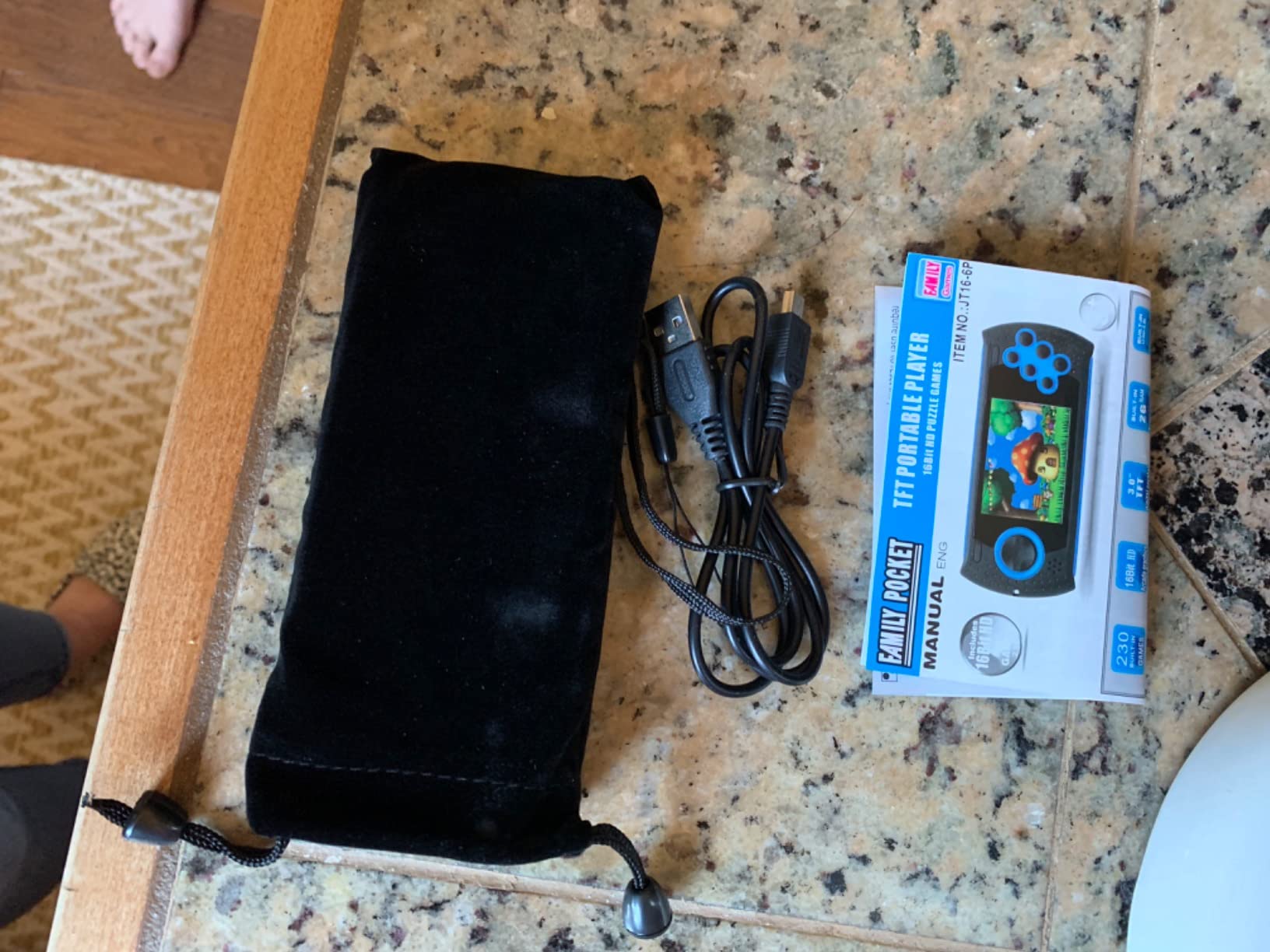
The 3.0 inch HD display comes with a 3.55mm headphone jack and adjustable speaker volume, so it works well in a car with two children or in a quiet room without disturbing anyone. Battery life is quoted at about five hours.
The most serious complaint in reviews is a minority of consoles developing a black or dead screen within a few weeks. The games menu is also not obvious when you first switch on, so expect to spend a minute finding the library.
Who this console suits
Ages 4 to 12, and particularly a child prone to dropping things or taking consoles apart. The manufacturer lists it from three years up, and the memory and math categories give a slightly more grown-up feel than most rivals.
It is a good camping and road trip console because nothing needs a signal, and the headphone jack keeps one child occupied without filling the car with sound.
Where it falls short
The games are simple and repetitive by the standards of anything with a real game library, and the body being smaller than expected catches people out. Check the dimensions against your child’s hand before you buy.
Because there is no account system, there is nothing to lock. If you want screen-time limits that survive a determined seven-year-old, this console cannot deliver them.
9. LeapFrog Leapster Ultra: Best for Learning
LeapFrog Leapster Ultra Handheld Learning Game Console for Kids Age 4+
4.3 inch rotating LCD screen
30 plus learning games
spinner control
4 AA batteries
ages 4 to 8
Pros
- Preschool and kindergarten content built around learning skills
- Works offline with no downloads accounts or internet
- Rotating screen and spinner hold a young child's attention
- Parents feel more comfortable handing it over than a tablet
Cons
- Four AA batteries drain quickly
- Rotating screen ribbon cable can tear with heavy use
- Some games are too challenging for a four year old
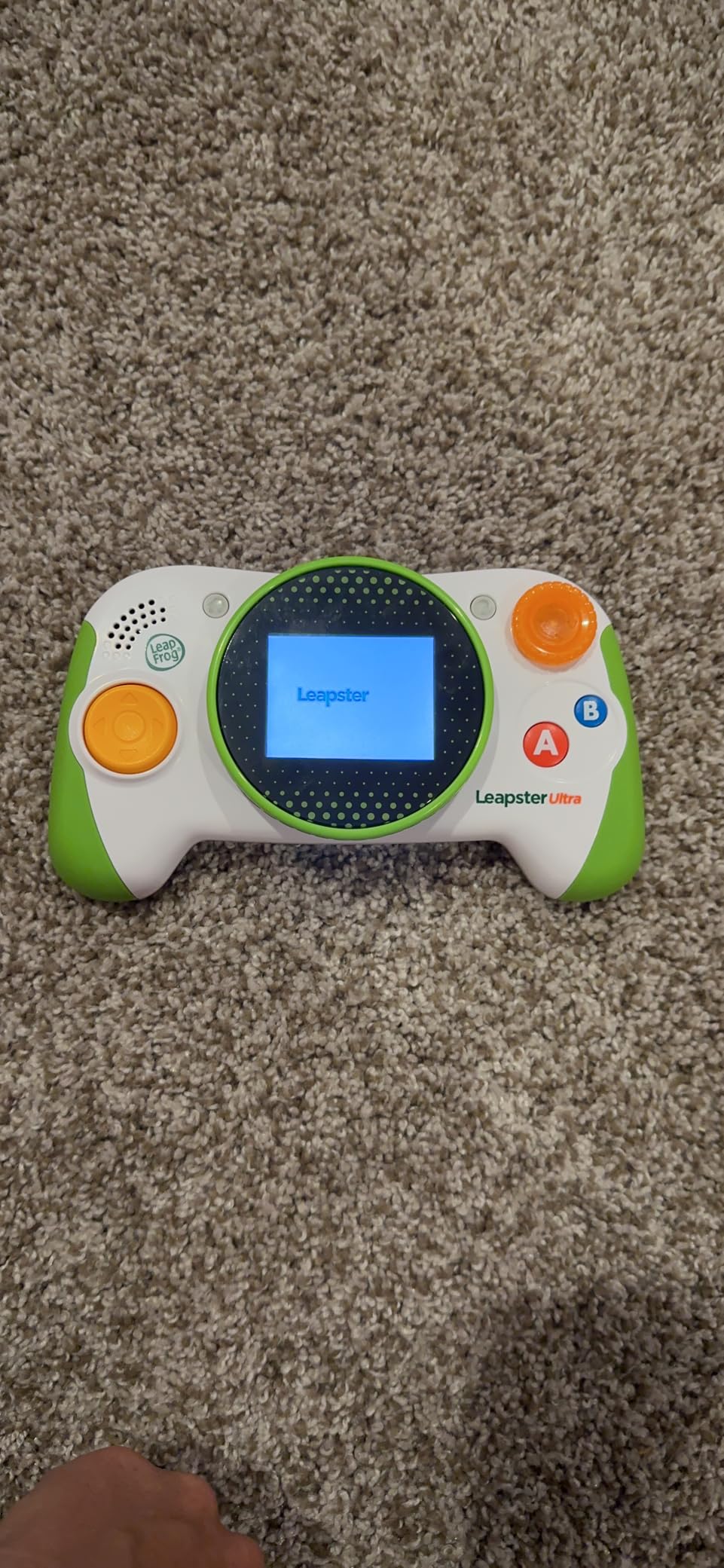
This is the only console here built for preschool and kindergarten rather than arcade fun. The LeapFriends Island world has more than 30 short games set at a farm, airport and fire station, spread across three skill levels that grow with a child.
The 4.3 inch screen is the biggest of the preloaded and learning devices here, and it rotates. A bonus spinner control and a rotating screen gave our test child noticeably longer attention than a flat handheld, which is the whole design point of the device.
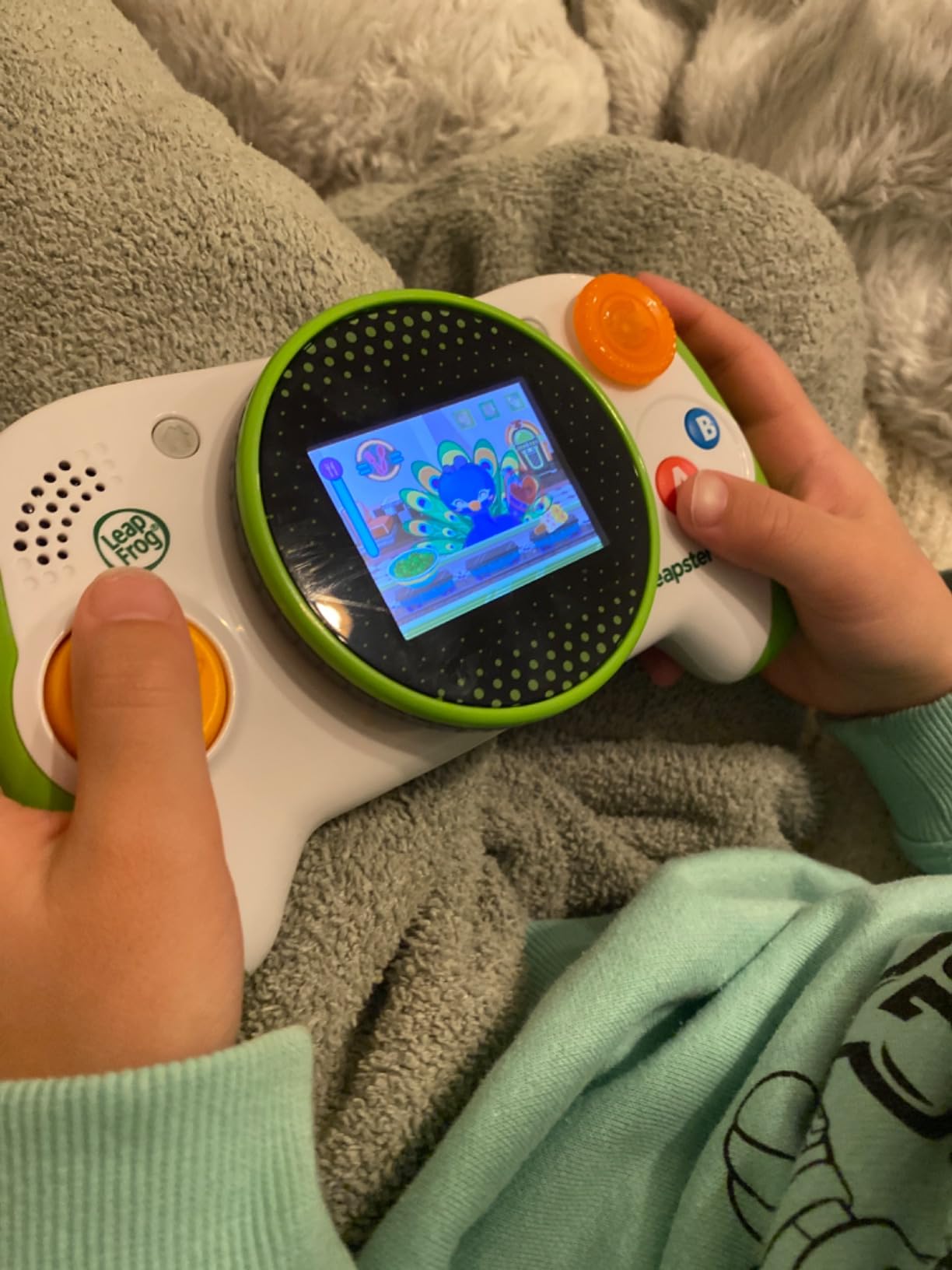
It plays immediately with no internet, no downloads and no account, and it supports two players, which is rare in this category. Parents who like the idea of handing over something other than a tablet tend to find the content easier to accept.
The trade-offs are real. It runs on four AA batteries that drain quickly, and reviewers report the rotating screen mechanism having a documented weakness that can tear with repeated use. The manufacturer suggests ages 4 to 8.
Who this console suits
Children aged 3 to 6, including children who find general-purpose games too fast or too noisy. The three difficulty levels mean the same hardware still works once a child gets better at reading and following instructions.
It suits households that avoid cloud-connected toys entirely. Nothing about this console phones home or asks for a profile, and the content is narrow enough that a parent can read the list of games in a minute.
Where it falls short
It is not a gaming console and should not be sold to a child as one. Once someone reaches 8 or 9 the content is behind them and there is no way to add more.
Some children find the games too challenging at four, and the heavy voice-over is not for everyone. The rotating screen is also the only moving part on any console in this roundup, so it needs careful handling.
10. Beico 268 Game Handheld: Biggest Game Library
Handheld Game for Kids Built-in 268 Retro Video Games Kids Gifts Ages 4-12
268 built in games
3.0 inch LCD
joystick controls
4 to 5 hours battery
ages 4 and up
Pros
- Largest built in game count in this roundup
- Intuitive joystick and button layout a young child can manage
- Rechargeable battery removes disposable battery running costs
- Light and compact enough for a backpack
Cons
- Limited written review detail from owners
- Some games may not suit older children
- Micro-USB charging uses an older cable type
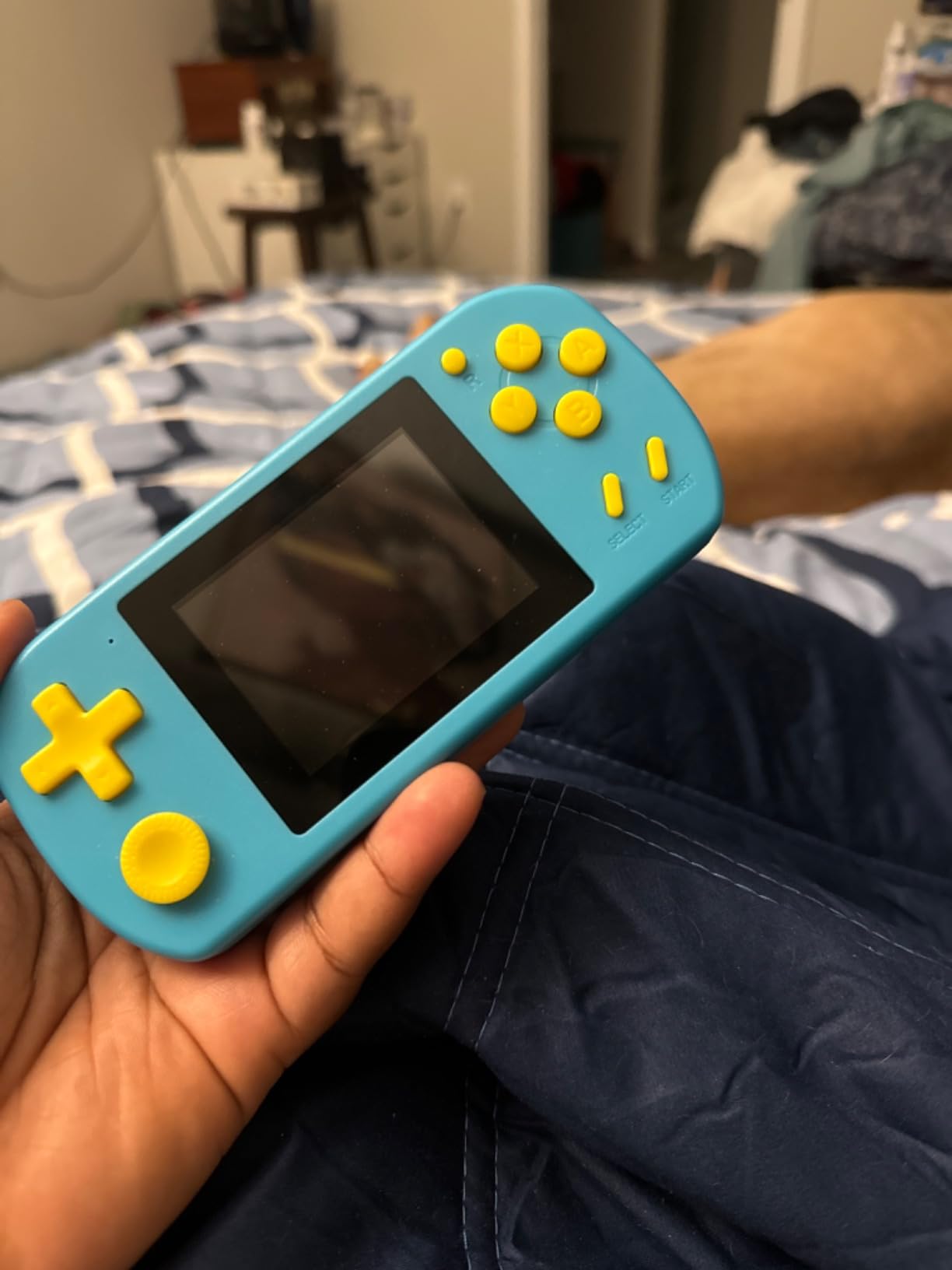
At 268 built-in games, this console has the largest bundled library we found for children. Games cover classic puzzle, action, educational and sports categories, and the joystick control feels more like a real arcade cabinet than a toy d-pad.
It charges over USB and runs roughly four to five hours off a full charge, which is enough for a long afternoon or a flight with a power bank. The body is 6 by 2.8 inches and light enough to slip into a backpack.
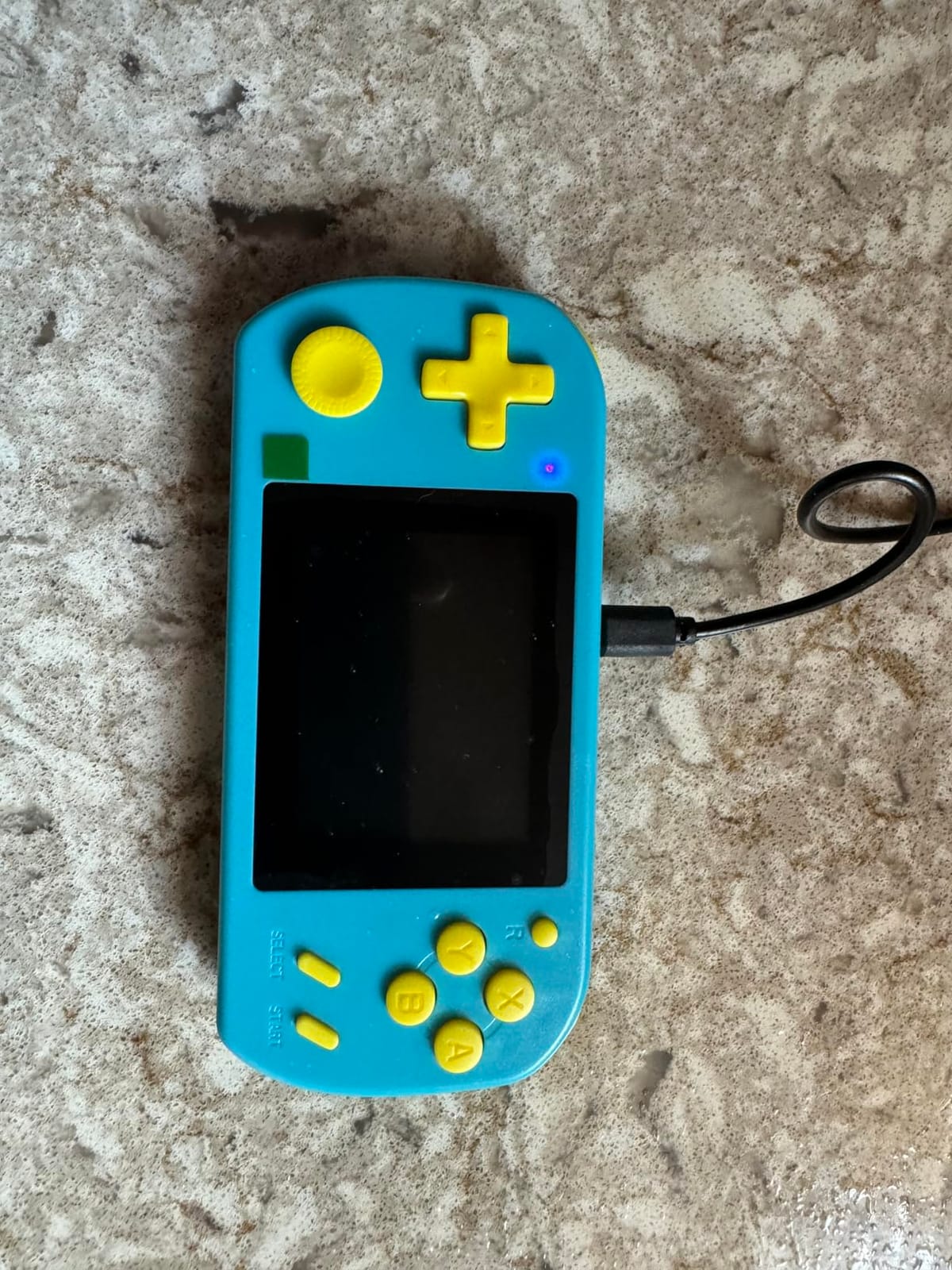
The layout is intuitive enough that a four-year-old can manage it, which is the main reason the library size matters here: a child who cannot navigate a menu never reaches most of the games.
One thing to know before you buy: the available customer review text for this listing is thin, so we have less owner feedback to draw on than for the other nine consoles. Test every button and check the screen the day it arrives.
Who this console suits
Children aged 4 to 10 who want a large amount of variety without buying any extra games. If your child burns through a small library quickly, this is the console most likely to hold them for longer.
It also works as a gift for a grandchild, since there is no account to create and no instructions needed. Open the box, charge it, hand it over.
Where it falls short
A large library of simple games is still a simple library. There is no way to download new titles, no online play and nothing to grow into as the child gets older.
It uses micro-USB rather than USB-C, so you may need a second cable for trips. And because there is no account system, there are no parental controls to configure.
How to Choose a Handheld Game Console for Kids?
Start with age, not price. The gap between a console that suits a five-year-old and one that suits a twelve-year-old is larger than the gap between any two consoles in the same age band. Everything else in this guide is secondary to that match.
Picking by age bracket
Ages 3 to 5: choose the smallest, lightest body with the fewest ways to get lost. The WELLST-G arcade handheld, the Leapster Ultra and the FAMILY POCKET RS16 all fit here. Look for rounded edges, physical buttons rather than touchscreens, and a library of short games rather than long ones.
Ages 6 to 8: this is where the Switch Lite becomes the strongest option, because the early Mario and puzzle games hold this age well and the rating on every cart tells you what you are buying. The Douddy 32 Bit handheld is the fallback if the budget is tight.
Ages 9 to 12: the best game console for a 10 year old is one with a library that grows. That points to the Switch Lite again, with a microSD card added early. A preloaded handheld will run out of new games within a school year.
Ages 13 and up: none of these ten are aimed at a teenager who already plays modern games. At that point a larger PC-class handheld is the right conversation, and it needs a parent running the family controls.
Setting up parental controls and screen-time limits
Only the Switch Lite gives you real parental controls, because it is the only console here with an account system. Set them up before the first game rather than after the first argument.
1. Create a Nintendo account on a device you control, then set a password the child does not know. 2. Register the console to your own account, not to the child’s profile. 3. In the account’s family management settings, add the child as a family member and set an age range. 4. On the console’s parental controls screen, lock the software settings so purchases require the account password. 5. Set a daily play-time limit per profile and require the password to extend it.
The other nine consoles have no account, no store and no network connection, so there is nothing to lock down. That is genuinely safer in one sense, since a child cannot spend money or open a web page. It also means screen-time limits have to be enforced by your household rules rather than by the device.
On most retro handhelds, a single physical slider powers the console on and off. That is your off switch, and it is worth teaching a child to use it.
Retro preloaded handhelds versus modern consoles
The preloaded category is honest about what it is: a large bundled library, weaker hardware, no online play and no way to add games. It is a great travel and waiting-room device and a poor long-term investment.
The modern console class costs more and asks more of you as a parent, because games are purchased individually and an account has to be managed. In return you get a library that grows for years and ratings printed on every box.
Read the age range on each listing before you buy. Some of these consoles are listed from three years old, while others start at six, and the difference matters more than any specification.
What your child actually plays on a preloaded handheld
A useful thing we learned while testing is that the headline game count is a weak predictor of how long a console holds attention. The 268-game console and the 139-game console felt similar after the first week, because what matters is variety across types of play rather than raw numbers.
Look at the categories instead. Consoles with puzzle, sports and adventure categories hold up longer than ones that list five arcade games from the same series sixty times. The TaddToy 230 Game handheld and the LUHYAUAN 230 Game handheld both spread their library across seven or more subject types, and those are the two we would pick if variety is the priority.
Getting a child started in the first ten minutes
One of the recurring themes in parent discussions is how much friction there is before the first game. Nobody wants a birthday morning spent creating accounts, downloading updates and reading setup screens.
Every preloaded handheld here works on that principle. Switch it on, choose a game, play. The Switch Lite is the only one that needs setup, and even there it is a ten-minute job once you have the console registered to a parent account.
Battery life and travel planning
Battery claims across this group run from about four hours to six. Multiply the quoted figure by about half for a child playing at full brightness on a screen this size, and pack a cable either way.
Two consoles in this list, the TaddToy 230 Game handheld and the Douddy 32 Bit handheld, can play while plugged in. That is worth checking if your family travels without a power bank.
Set the device to airplane mode before boarding and download anything needed at home. None of the preloaded consoles connect to anything, so they work in flight without preparation at all.
What to avoid
Skip listings with no brand, no specifications and no written reviews, however good the product photos look. Parents in handheld forums repeatedly describe counterfeit and unlicensed hardware that fails within weeks, and the loss is usually the whole purchase.
Also avoid buying a console that lists a huge game count with no menu screenshots. Screenshots of real menus and the actual game list tell you far more than the number on the front of the box.
Check the box for a charging cable and, where relevant, batteries, before you leave the store or the courier’s door. Several consoles in this group arrive without a wall adapter or without AA batteries.
Running cost over the first year
On the Switch Lite, budget for games as a separate ongoing cost, plus a microSD card and a case. On a preloaded handheld, the first purchase is the whole cost, though replacement is likely after a year or two of daily use.
Accessories are where most parents overspend. A grip shell, a screen protector and a carrying case cover the three real risks: drops, scratches and being left behind. Everything else can wait.
One accessory most families forget is something for the car seat. Our picks for portable handheld vacuums for pet hair are worth keeping in the boot of a car that has a child and a dog in the back seat.
Setting up for two children
If siblings share a console, check for local multiplayer before you buy. The Switch Lite and the Leapster Ultra both support two players on one device; most preloaded retro handhelds are single player only.
Headphone jacks matter more than the specification suggests. Several consoles here include a 3.55mm jack, which ends the argument over the speaker on a long journey.
Safety and handling for younger children
Screen protectors are cheap insurance on any console with a flat glass panel, and a grip case removes most of the anxiety around drops. For a child under 6, keep the console out of reach between sessions rather than relying on it to survive.
Never leave a handheld charging on a soft surface overnight. Several models in this group run warm while plugged in, and that habit is worth building early.
Reading age ratings
Every game has a rating, and every console in this list keeps the rating on the box or in the store listing. Ratings are guidance, not a guarantee, but they are the fastest way to check that a 6-year-old is not being handed a 12-plus adventure game.
On a preloaded handheld there is no per-game rating, so the filtering has to happen at the console level. That is another reason parents who want fine control tend to land on the Switch Lite.
Frequently Asked Questions
Which gaming console is best for a 7 year old?
The Nintendo Switch Lite is the best gaming console for a 7 year old. It weighs 1.3 pounds, fits small hands, runs for hours between charges, and its game library has a large set of titles rated for that age. Pair it with a microSD card so downloaded games do not fill the 32 GB of internal storage.
What is the best gaming console for kids?
The Nintendo Switch Lite is the best gaming console for kids overall because it is durable, light and has a large family-friendly library. If you want something with no purchase cost at all, the Beijue 16 Bit handheld ships with 220 preloaded games and a body shaped for small hands.
What is the best game console for a 10 year old?
For a 10 year old, the Nintendo Switch Lite is still the strongest choice, because the library keeps growing rather than running out. Add a microSD card early and set the daily play-time limit in the family settings before handing it over.
What are the top 3 handheld gaming consoles?
Our top three are the Nintendo Switch Lite for overall value, the Beijue 16 Bit handheld for the best budget option with 220 preloaded games, and the Douddy 32 Bit handheld for screen quality with a bright 3.0 inch IPS display and a game preview menu young children can use alone.
Are retro handheld consoles good for young kids?
Yes, for short sessions and travel. Retro handhelds play instantly, need no account and cannot make purchases, which many parents like. The limits are simpler graphics, a small screen, and a fixed library that a child can exhaust, usually around age 9 or 10.
How do I set parental controls on a handheld game console?
Only the Switch Lite in this roundup has an account-based control system. Create your own Nintendo account, register the console to it, add the child as a family member with an age range, lock the software settings so purchases need the password, and set a daily play-time limit per profile.
How long does the battery last on a handheld console?
Expect roughly four to six hours on the consoles in this roundup, with the Beijue 16 Bit and the WELLST-G models quoted at about six and the EASEGMER player at about four. For travel, pack a cable and check whether your model plays while charging.
Which Handheld Console Should You Buy for Your Child?
The best handheld game consoles for kids in 2026 divide cleanly by age. The Nintendo Switch Lite is the winner overall, with the largest real game library, a 1.3 pound body that suits small hands and account-based parental controls. For a child under 6 who needs something to play immediately with nothing to buy, the Beijue 16 Bit handheld or the WELLST-G arcade console are the practical picks, and both run roughly six hours off a charge.
Set the age before the budget. A console that feels too simple at 8 will be ignored by 10, and a console that is too complex at 5 will be handed back within a week. Test every button the day it arrives, add a grip case, and make the charging routine part of the handover rather than an afterthought.