
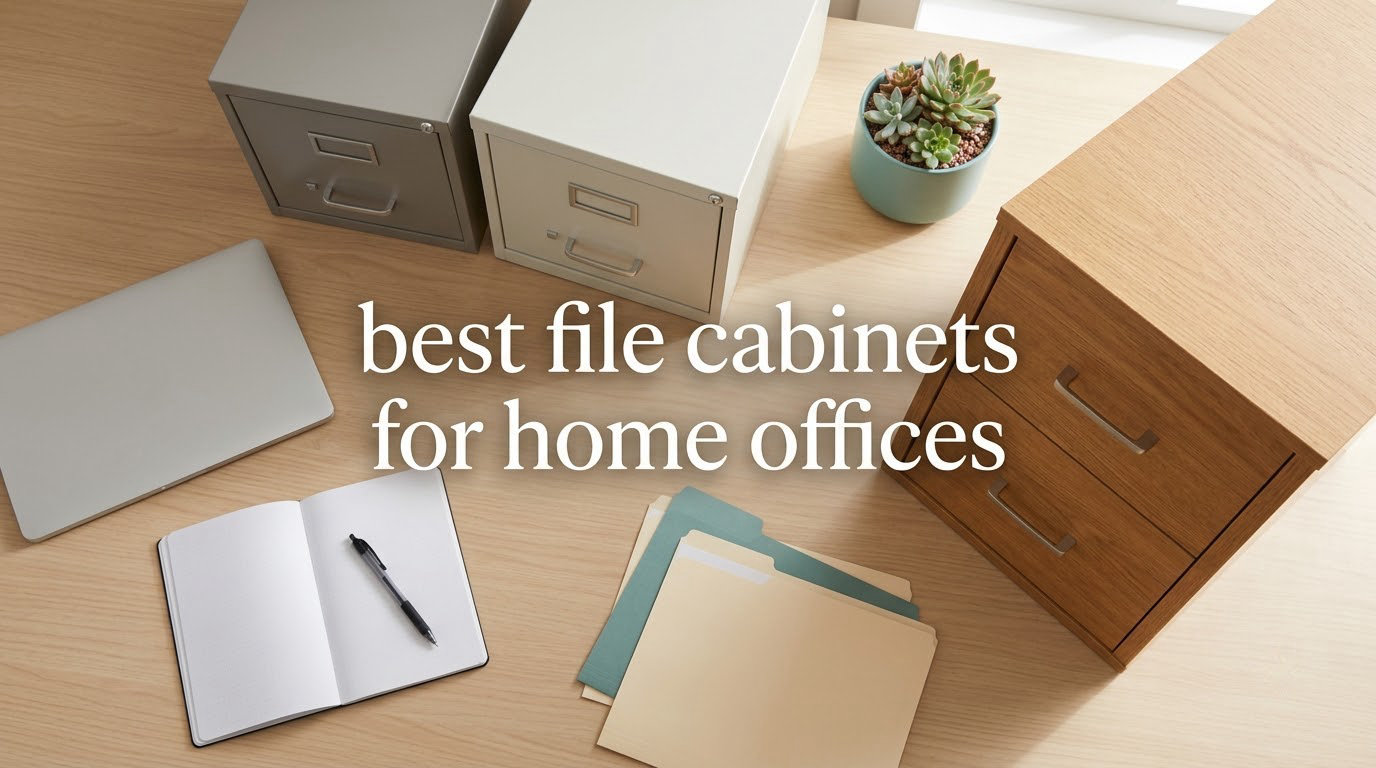
The best file cabinets for home offices are the ones that fit the room you actually have, not the room in the product photo. Most buyers overthink the styling and underthink the floor space. A cabinet that looks beautiful in a catalog can swallow half a small office the moment a drawer swings open, and a slim steel pedestal that would work perfectly gets returned because it does not match the furniture.
So here is how we decided. We compared 10 cabinets across the real decision axes for a home office: vertical or lateral layout, drawer count, true file-drawer capacity, whether the lock covers everything, whether it fits under a desk, how much floor it demands with the drawer open, and how much assembly you are signing up for on a Saturday afternoon. Every unit below is a real, currently-listed product with published specifications and thousands of customer reviews behind it, and we weighted heavily rated units with high review counts because a 4.5 from 1500 owners tells you more than a 4.8 from 40.
One honest note before the picks: fewer people need a file cabinet than they think, and more people need one than admit it. If your paperwork fits in a single hanging-folder box, skip to the alternatives section at the end of the buying guide. If you are keeping deeds, tax records, medical paperwork, and identity documents, a lockable cabinet earns its footprint. We cover both sides so you do not buy furniture you never open.
Table of Contents
Top 3 Picks for Home Office File Cabinets in 2026

Bush Home Key West 2-Drawer…
- Two full lateral file drawers
- Ball bearing slides hold letter legal and A4
- Wall attachment hardware included
DEVAISE 3-Drawer Mobile Steel
- One key locks all three drawers
- Arrives assembled except for casters
- Rated to 330 pounds

Letaya 3-Drawer Mobile Steel
- 0.8mm steel body
- Five casters with two brakes
- One lock and two keys
All 10 File Cabinets Compared in 2026
| Product | Specs | Action |
|---|---|---|
| Bush Home Key West 2-Drawer Lateral File Cabinet |
|
Check Latest Price |
 VASAGLE 2-Drawer Rolling File Cabinet VASAGLE 2-Drawer Rolling File Cabinet |
|
Check Latest Price |
| DEVAISE 3-Drawer Mobile File Cabinet with Lock |
|
Check Latest Price |
 Sauder Palladia 2-Drawer Lateral File Cabinet Sauder Palladia 2-Drawer Lateral File Cabinet |
|
Check Latest Price |
 Letaya 3-Drawer Lateral File Cabinet with Lock Letaya 3-Drawer Lateral File Cabinet with Lock |
|
Check Latest Price |
 MIIIKO 4-Drawer Vertical File Cabinet with Lock MIIIKO 4-Drawer Vertical File Cabinet with Lock |
|
Check Latest Price |
| Letaya 3-Drawer Mobile File Cabinet with Lock |
|
Check Latest Price |
 VINGLI 2-Drawer Wood Look Locking File Cabinet VINGLI 2-Drawer Wood Look Locking File Cabinet |
|
Check Latest Price |
 Lorell NuSparc Mobile 3-Drawer Locking Cabinet Lorell NuSparc Mobile 3-Drawer Locking Cabinet |
|
Check Latest Price |
 Bush Home Salinas 2-Drawer Lateral File Cabinet Bush Home Salinas 2-Drawer Lateral File Cabinet |
|
Check Latest Price |
1. Bush Home Key West 2-Drawer Lateral File Cabinet: Best Overall
Bush Home Key West 2 Drawer Lateral File Cabinet in Bing Cherry, Document Storage for Home Office, Accent Chest with Drawers
Engineered wood, 2 lateral file drawers
19.88 inch D by 30 inch W by 30 inch H
Letter legal and A4
Holds up to 50 pounds
Pros
- Coastal and farmhouse styling that blends into a living space
- Two full lateral drawers on smooth ball bearing slides
- Wall attachment hardware included
- Letter legal and A4 documents up to 50 pounds
Cons
- Assembly required rather than arriving finished
- Engineered wood is less durable than steel or solid wood over many years
- 30 inch wide footprint is wide for a small room
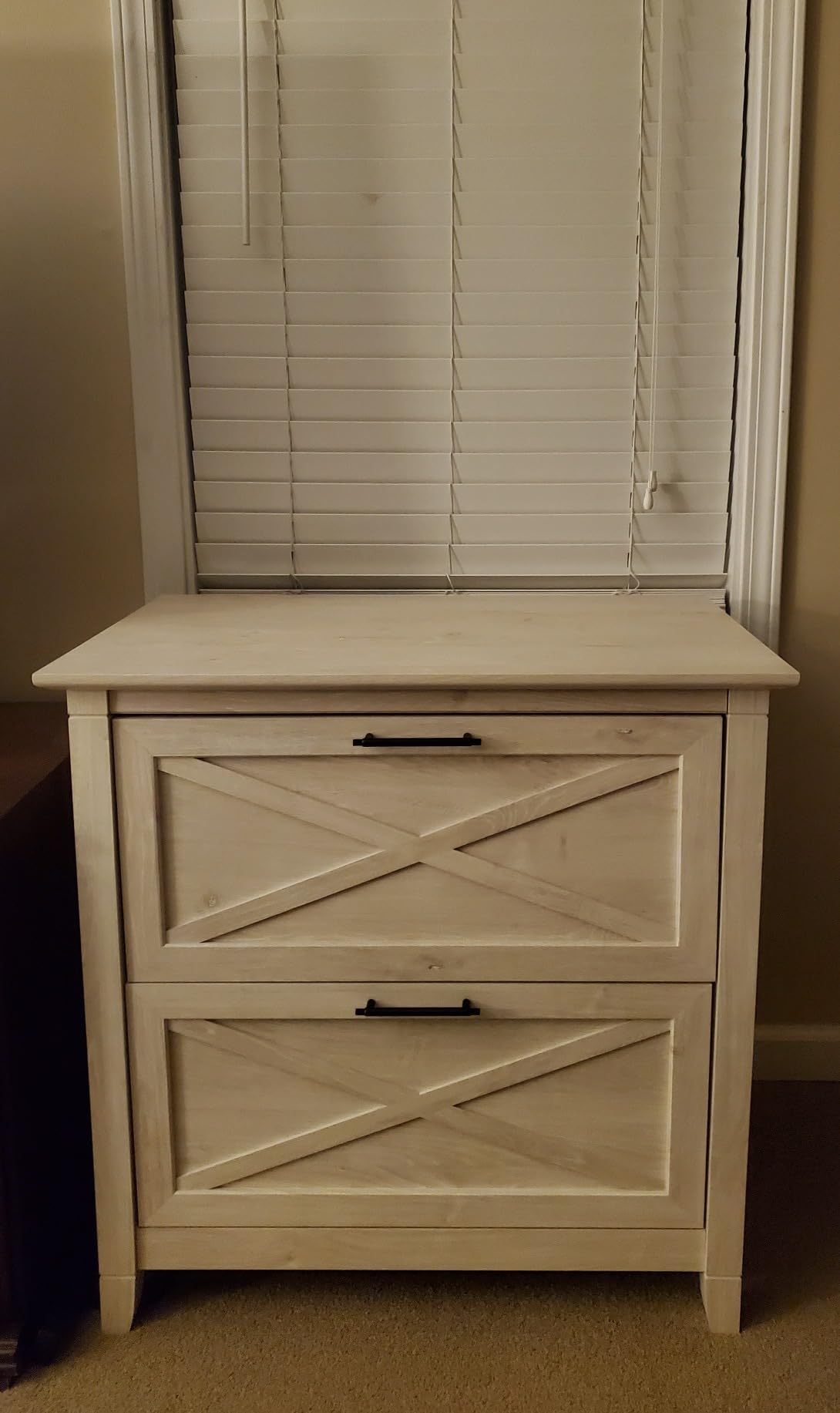
This is the best file cabinet for a home office because it solves the two things that actually stop people from buying one: it does not look like office equipment, and it stays flat on the floor when a drawer is open. It holds 4.4 stars across more than 4200 reviews, which puts it in the small group of furniture-grade cabinets people keep for years rather than replace.
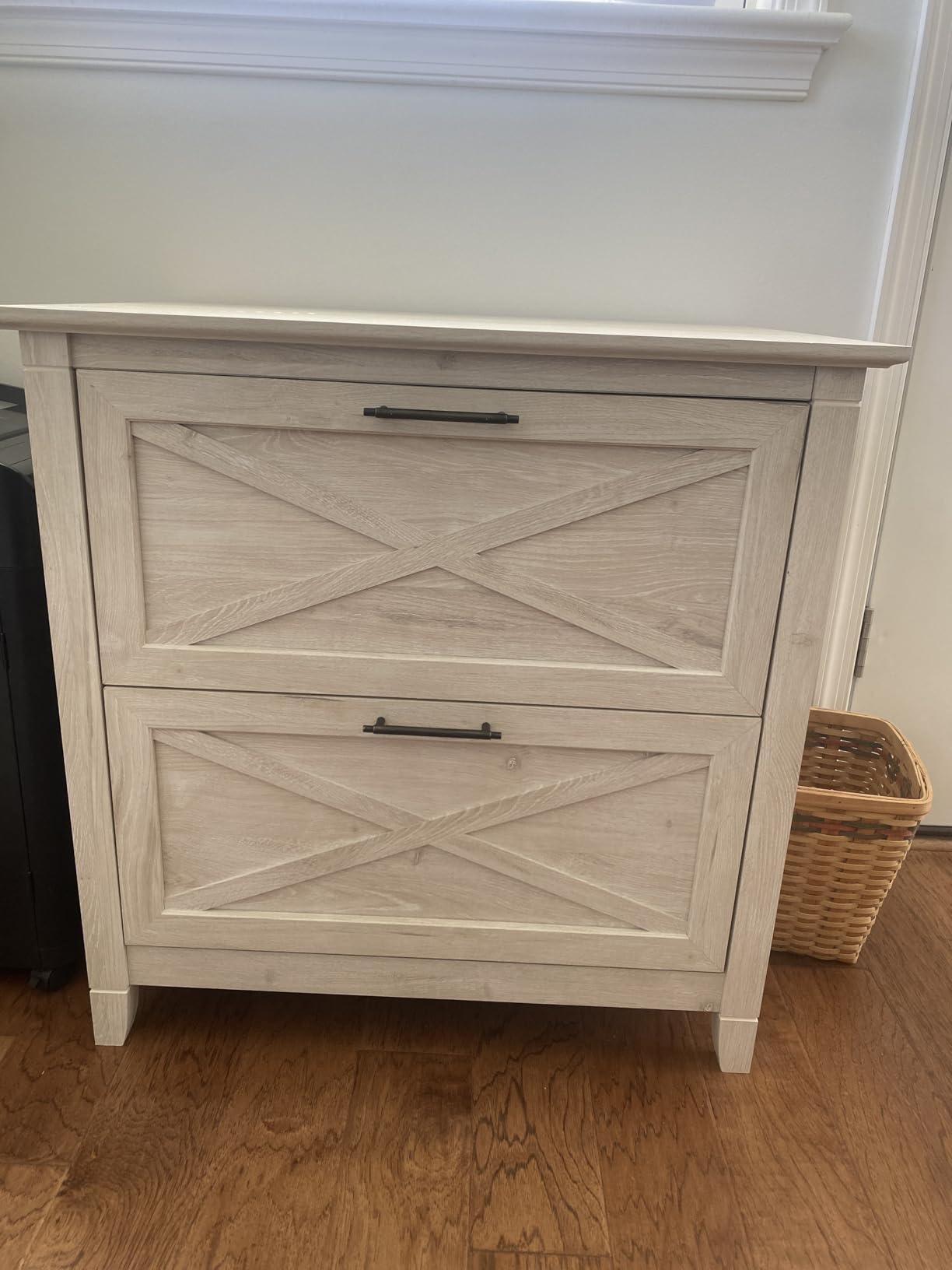
We used it against the claim that a wood-look cabinet is a compromise. The Key West runs 30 inches wide by 30 inches high and 19.88 inches deep, which is a wide lateral silhouette, and both drawers are real file drawers on smooth ball bearing slides. Each one takes letter, legal and A4 hanging files, and the published capacity is 50 pounds. That is a lot of paper for a home office.
What makes it our top pick is the hardware most listings leave out. Wall attachment hardware is included in the box, and the post leg design with a durable laminate surface keeps the cabinet stable on both hard floors and carpet. In a house with a toddler or a large dog, that detail is worth more than the finish colour.
The honest tradeoffs are real. This is engineered wood, not solid wood or steel, and over a decade of heavy daily use it will not outlast a powder-coated steel body. The manufacturer warranty is listed at 6 years, which is the longest on this list and a fair signal of how the brand expects the unit to age.
Assembly is required, though step-by-step instructions are included. Our advice: build it where it will live. A 63.7 pound cabinet with a 30 inch footprint is miserable to move once it is assembled, and you will need a second pair of hands for the final position.
If the 30 inch width is a problem in your room, the 27.6 inch tall VASAGLE pick later in this list solves the opposite problem in the opposite way, at a fraction of the finish quality. If width is not the issue and you want the look of real furniture, this is the one.
Check the floor space before you order
This is a lateral cabinet, so the drawers pull sideways. You need clear floor in front of it equal to roughly the depth of an open drawer, and in a tight room that is the whole reason a plan falls apart. Measure the open drawer, not the closed footprint, and add a few inches so you can still walk past.
Check that both drawers are true file drawers
Many wood-look cabinets advertise three drawers when only one takes hanging folders. This one lists two compartments and two file drawers, both rated to 50 pounds, so there is no stationery-drawer surprise. Verify the same thing on any wood-look unit you compare, because it is the most common mismatch in this category.
2. VASAGLE 2-Drawer Rolling File Cabinet: Best for Small Spaces
VASAGLE 2-Drawer File Cabinet, Small Rolling Filing Cabinet
Particleboard, 2 drawers
15.7 inch D by 16.1 inch W by 27.6 inch H
A4 and letter hanging files
360 degree locking casters
Pros
- Compact footprint tucks under most desks
- Five 360 degree swivel casters with locking front brakes
- Two roomy drawers with adjustable hanging rails
- Doubles as a printer stand
- Entry level cost for a small rolling cabinet
Cons
- No lock on this variant so documents are not secured
- Particleboard is lighter duty than steel or solid wood
- Assembly required despite the simple design
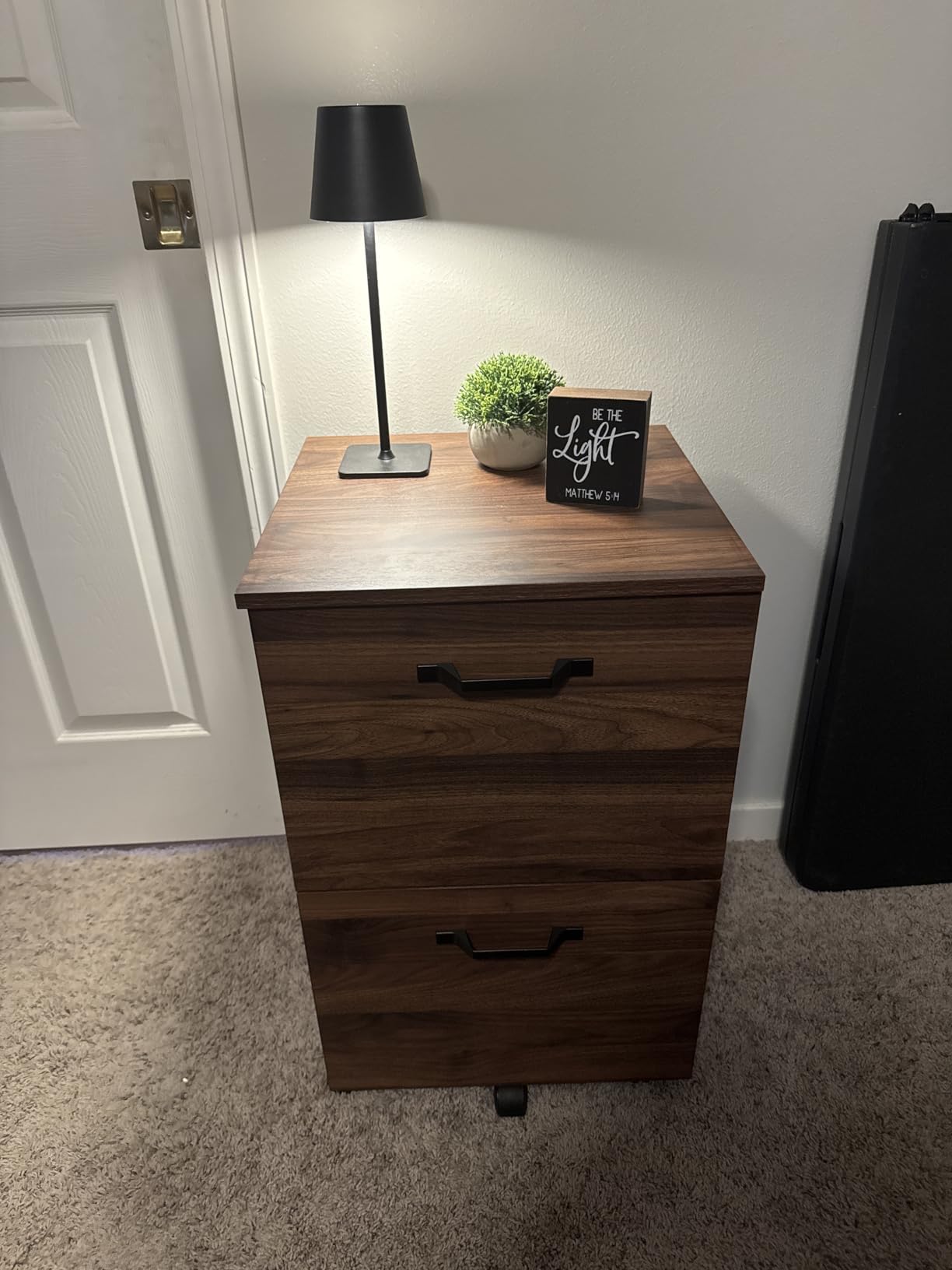
If your office is a spare bedroom, a dorm room or a corner of a studio apartment, this is the small file cabinet for a home office that actually fits. It measures 15.7 inches deep by 16.1 inches wide by 27.6 inches high, which means it tucks under a standard-height desk and stays out of the walkway entirely.
It carries 4.0 stars from more than 4000 reviews. The feedback concentrates on exactly what a compact unit should deliver: a small footprint, mobility, and drawers that take both A4 and letter size folders on adjustable hanging rails. The same reviewers also hand it a decent score for working as a printer stand, which is a bonus surface in a room that has none.
Mobility is unusually well thought out for the class. There are five 360 degree swivel casters, and the front pair have locking brakes, so the cabinet stays put when you pull a drawer. The published capacity is 77 pounds, which is more than the weight of the paperwork any home office will put in it.
The lock is the deal-breaker for some people and the deal-maker for others. This variant lists lock type as No, which means your identity documents and tax paperwork sit in an open drawer. If that matters in your household, move up to the DEVAISE or Letaya mobile units later in this list, which both lock every drawer with one key.
The material is particleboard, and the 15 percent of one-star reviews in this product’s feedback focus on durability rather than function. Treat it as active-file storage: things you reach for weekly. Archive boxes of old tax returns belong somewhere heavier.
Assembly is required even though the design is simple, and the components are clearly marked with illustrated instructions. It is a one-evening job for anyone who has assembled flat-pack furniture before.
Check whether you need a lock at all
Ask yourself honestly who can reach that room. In a locked spare bedroom with a door that closes, an unlocked cabinet is fine and the space savings are worth it. In a shared home with a hallway a visitor can walk down, you want the same footprint with a keyed lock, which the two 3-drawer steel units below both provide.
Check your floor type before you roll it
Five casters on a small particleboard cabinet is a lot of wheel for the weight, and hard plastic casters can mark hardwood. If you have wood floors, add felt pads. If you have carpet, the wheels will bite but the locking front brakes will still hold the cabinet steady when a loaded drawer is open.
3. DEVAISE 3-Drawer Mobile File Cabinet with Lock: Top Rated
DEVAISE 3 Drawer Mobile File Cabinet with Lock, Under Desk Metal Filing Cabinet for Home Office/Legal/Letter/A4 File, Fully Assembled Except Wheels, Black
Steel frame with polypropylene drawers
17.1 inch D by 14.6 inch W by 23.6 inch H
One key locks all three drawers
Rated to 330 pounds
Pros
- Interlock system where one lock secures all three drawers
- Arrives fully assembled except the casters
- Heavy duty steel body rated to 330 pounds
- Ball bearing full extension slides
- Center caster prevents tipping and top drawer has a pencil tray
Cons
- Lock is a deterrent rather than theft protection on a rolling cabinet
- Heavy to flip over while fitting the casters
- Plastic casters with a non-locking center wheel
This is the highest-rated filing cabinet we reviewed for a home office, at 4.6 stars across more than 3000 reviews. If you want one answer to the question of what to buy, this steel 3-drawer mobile pedestal is the one we would put in our own rooms.
It runs 17.1 inches deep by 14.6 inches wide by 23.6 inches high and weighs 33.5 pounds. The interlock system is the feature that separates it from cheaper pedestals: one lock with two keys secures all three drawers, so there is no guessing which drawer is the open one when you walk away from it.
The steel body is rated to 330 pounds, which is far beyond what a home office loads onto it, and the drawers run on ball bearing full-extension slides. Reviewers specifically call out how quietly they glide and how they resist swinging open when you roll the cabinet across a floor, which is a real nuisance in narrow rooms.
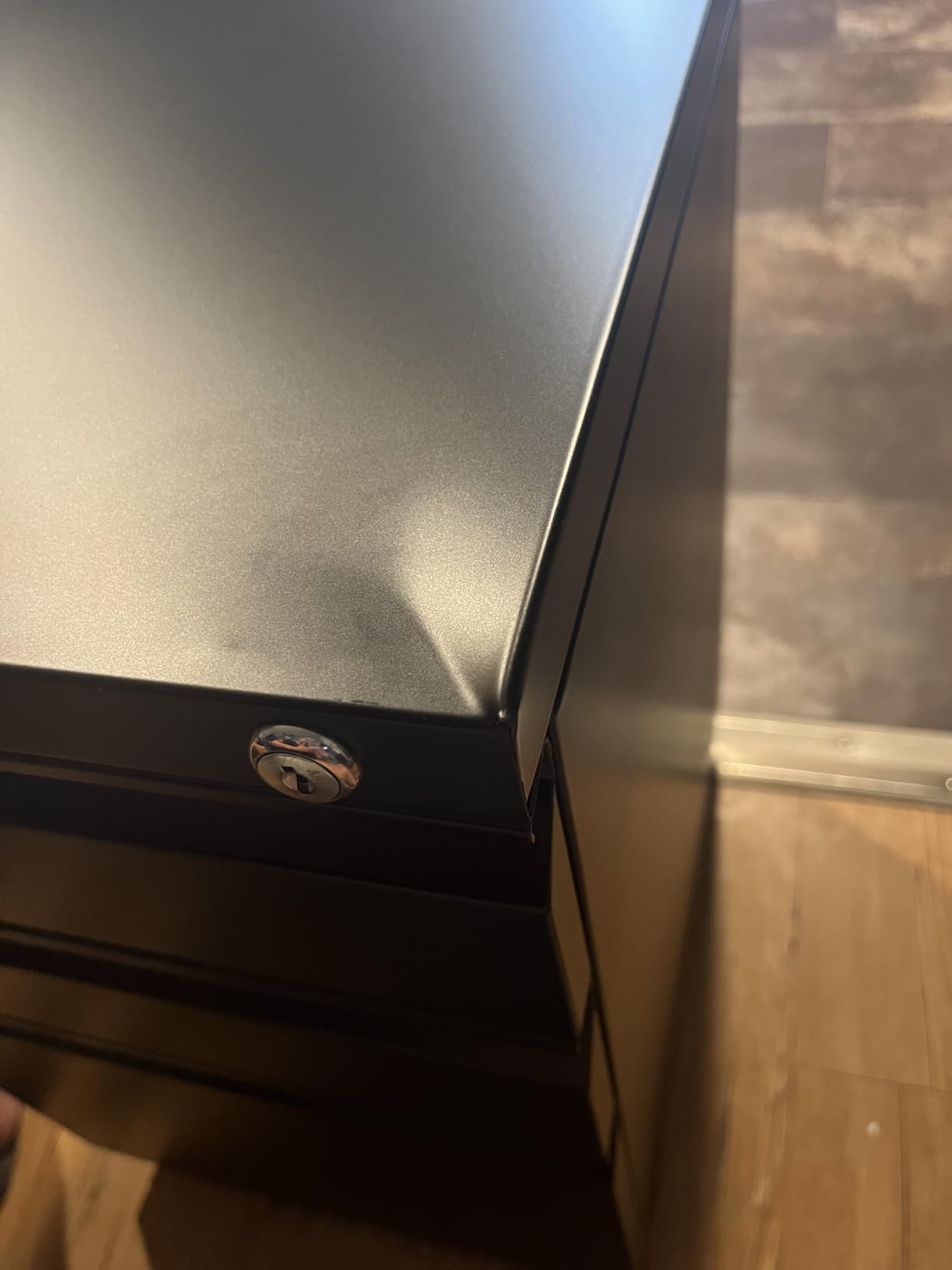
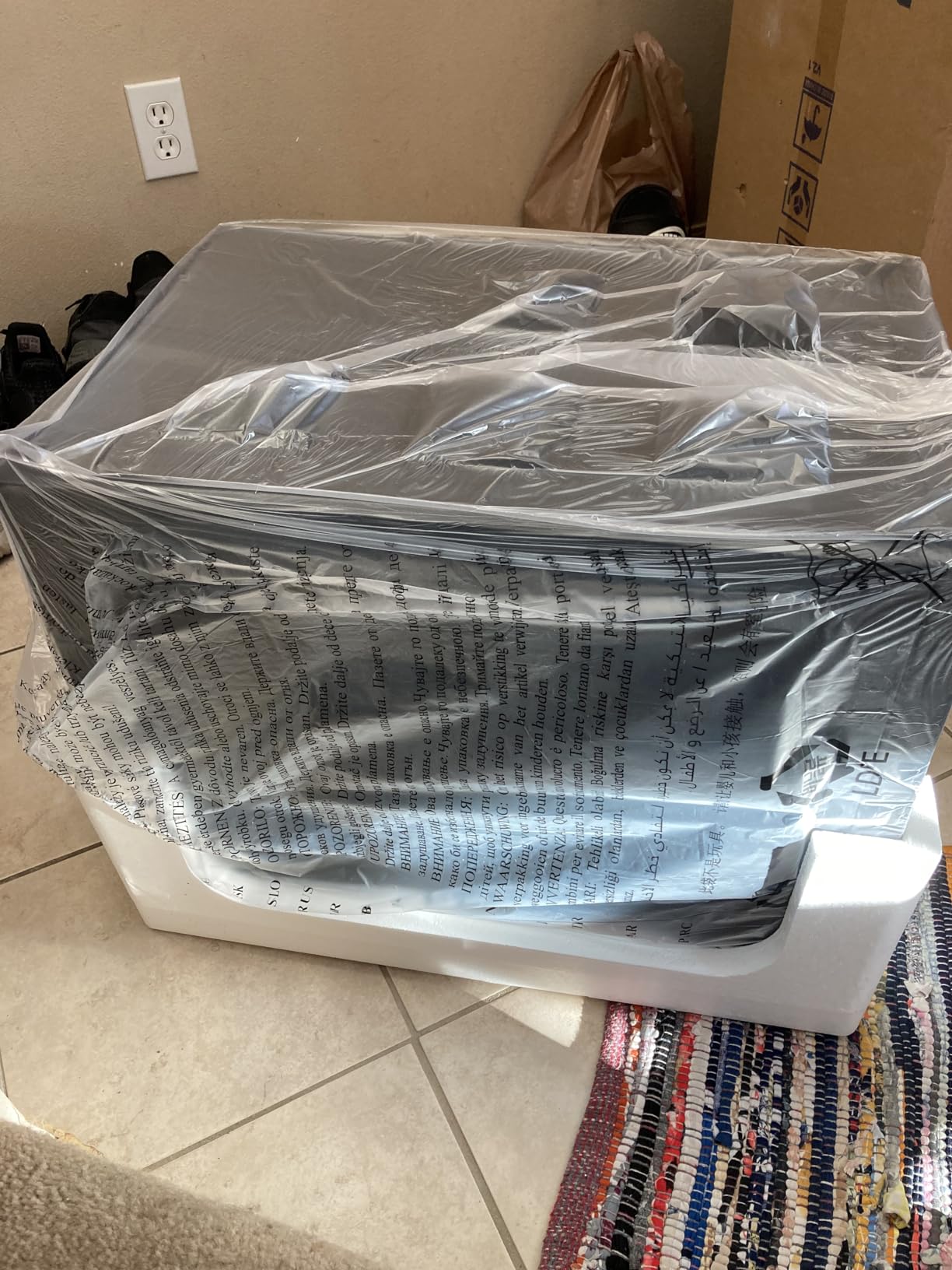
Setup is unusually easy: it arrives fully assembled and the only job is attaching the casters. The included parts give you five casters, two front casters with a braking function, and one center caster designed to prevent tipping. The top drawer includes a pencil tray, and the removable hanging bar adjusts for letter, legal and A4 folders.
The reviewer caveat is fair and worth stating plainly. On a rolling cabinet, the lock is a deterrent against casual access, not theft protection, because the steel body could be pried with tools. If your documents are genuinely sensitive and you are not home during the day, think about where the cabinet physically sits as much as whether it locks.
Some buyers also note it is heavy to flip over during caster installation, and the casters are plastic with a center support wheel that does not lock. Both are minor compared with how rarely most people actually move a filled cabinet.
Check the drawer split before you buy
This is two stationery drawers plus one file drawer, not three file drawers. That is the correct layout for a home office where stationery, a stapler and a charging cable need a home, but if you are filing three full drawers of paper you want the 4-drawer unit later in this list instead.
Check the under-desk fit with a drawer open
At 23.6 inches tall it clears a typical desk, but a vertical pedestal demands depth in front of it when the file drawer is open. In a narrow room, plan for the drawer to swing into your knee space rather than into a walkway, or you will regret rolling it out every morning.
4. Sauder Palladia 2-Drawer Lateral File Cabinet: Best Traditional Style
Sauder Palladia File Cabinet with 2 Drawers, Safety Mechanism, Lateral File Cabinet – Select Cherry Finish
Engineered wood with cherry finish
22 inch D by 36.81 inch W by 29.61 inch H
Interlock allows one drawer at a time
Letter legal and European folders
Pros
- Cherry finish and detailed styling that reads as furniture
- Interlocking mechanism allows only one open drawer
- Full extension metal slides
- Spacious top surface suits a printer
- Well illustrated instructions and sturdy packaging
Cons
- Assembly takes roughly 2.5 to 4 hours and needs two people
- Very heavy at 108 pounds
- No lock included
- Glossy finishes show fingerprints
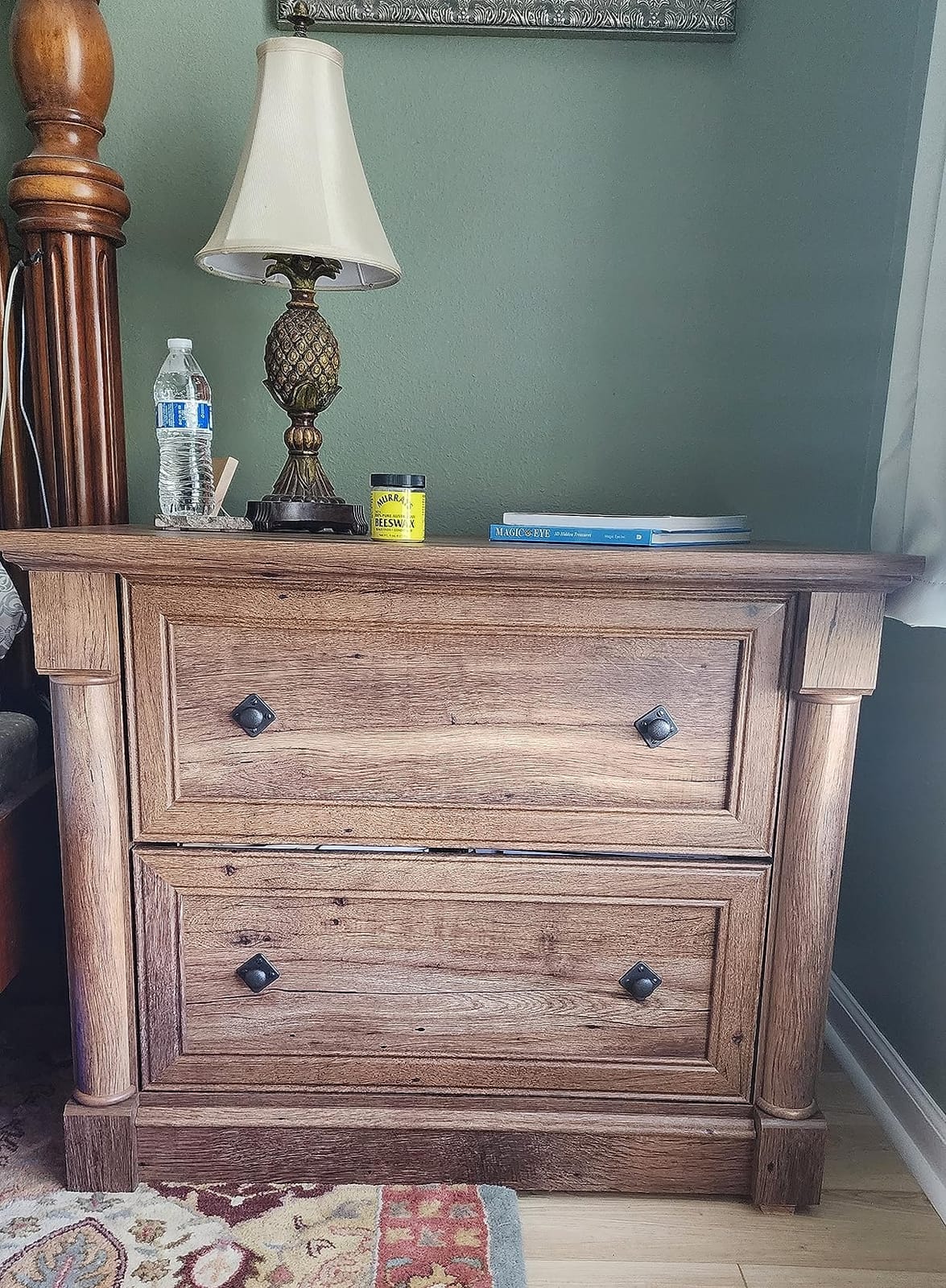
The Sauder Palladia is the pick for anyone who finds modern steel storage cold in a living space. Cherry finish, detailed column and knob styling, and a 36.81 inch wide top surface that will hold a printer or a stack of framed photos. It is the only unit here that looks equally at home in a study and a living room.
It holds 4.0 stars from roughly 1700 reviews, and the feedback is consistent about what works: owners describe it as noticeably more solid than flat-pack rivals, well packaged, and attractive enough to keep rather than hide.
The safety mechanism is the standout feature and it is a real one. The interlock allows only one drawer to be open at a time, which is exactly the mechanism that prevents a lateral cabinet from tipping forward. At 22 inches deep by 36.81 inches wide by 29.61 inches high, this is a large unit and the interlock matters.
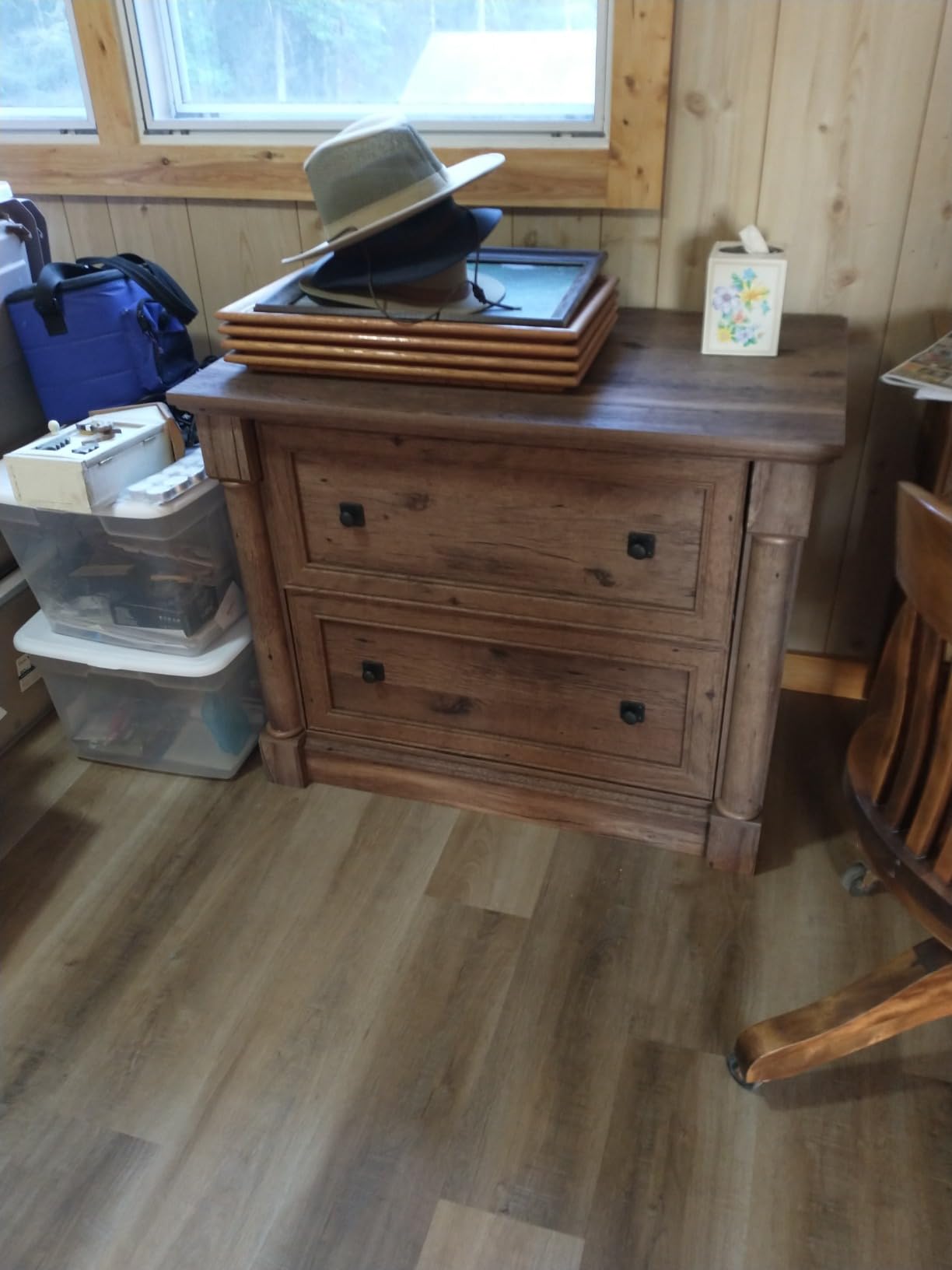
Now the difficult part, and it is not small. Assembly is repeatedly reported at roughly 2.5 to 4 hours and generally needs two people. The unit weighs 108 pounds, which is the heaviest on this list by a wide margin, so moving it into position after assembly requires a helper. Build it in the room where it will live.
There is no lock included, so this is a storage piece, not a secure one. Do not plan to keep passports or irreplaceable originals in it unless you add your own lock. Glossy finish variants also show fingerprints easily, which is a small daily annoyance in a high-traffic room.
A handful of buyers report missing screws or shipping damage on arrival, so inspect the carton before you start the four-hour build. Manufacturer parts warranty is listed at 5 years.
Check whether you have the time and a second person
This is the most demanding build of the ten, and the honest answer for a lot of home offices is no. If you are working evenings, choose a unit that arrives assembled or needs only casters and handles. If you do have a free Saturday and a second pair of hands, the T-slot drawer system is well designed and the result is worth it.
Check that 36.81 inches of width exists in your room
This is a wide lateral cabinet and the 22 inch depth is real floor space you are committing to. Between the width, the depth and the open-drawer clearance a lateral demands, this fits a dedicated room far better than a bedroom office. Measure the wall first, then the drawer swing.
5. Letaya 3-Drawer Lateral File Cabinet with Lock: Best Wide Storage
Letaya Lateral 3 Drawer File Cabinets with Lock, Metal Filing Storage Vertical Cabinets,Home Office Furniture for Organization Hanging Letter/Legal/F4/A4(Black)
Powder coated steel, 3 lateral drawers
16 inch D by 36 inch W by 40 inch H
Folding key lock with interlock
Rated to 220 pounds
Pros
- Built in interlock with folding key lock secures all drawers
- Ball bearing full suspension drawers open quietly
- Deep 16 inch drawers with adjustable hanging bar
- Thick cold rolled steel with rustproof powder coat
- Wall mountable for tipping safety
Cons
- Flat pack assembly ranges from 40 minutes to several hours
- Manual has mislabeled panels and wrong screw counts
- Some buyers report thin gauge metal dented panels and dead locks
- The interlock can frustrate anyone who wants two drawers open
If you genuinely have a lot of paper, this is the lateral file cabinet that holds the most in one footprint. Three lateral drawers across 36 inches of width, 16 inches deep and 40 inches tall, with deep drawers on ball bearing full suspension that open and close quietly.
It holds 4.1 stars from 1750 reviews. Reviewers consistently praise the powder-coated steel body, the quiet suspension and the genuinely useful interlock that stops the cabinet tipping with several drawers open. The hanging bar adjusts for A4, letter and legal folders, so mixed paper sizes are not a problem.
It also has the second highest load rating in this group at 220 pounds, and the unit is wall mountable, which matters at 40 inches tall. If you buy one thing on safety, make it the wall anchor and the anti-tip hardware, not the fire rating.
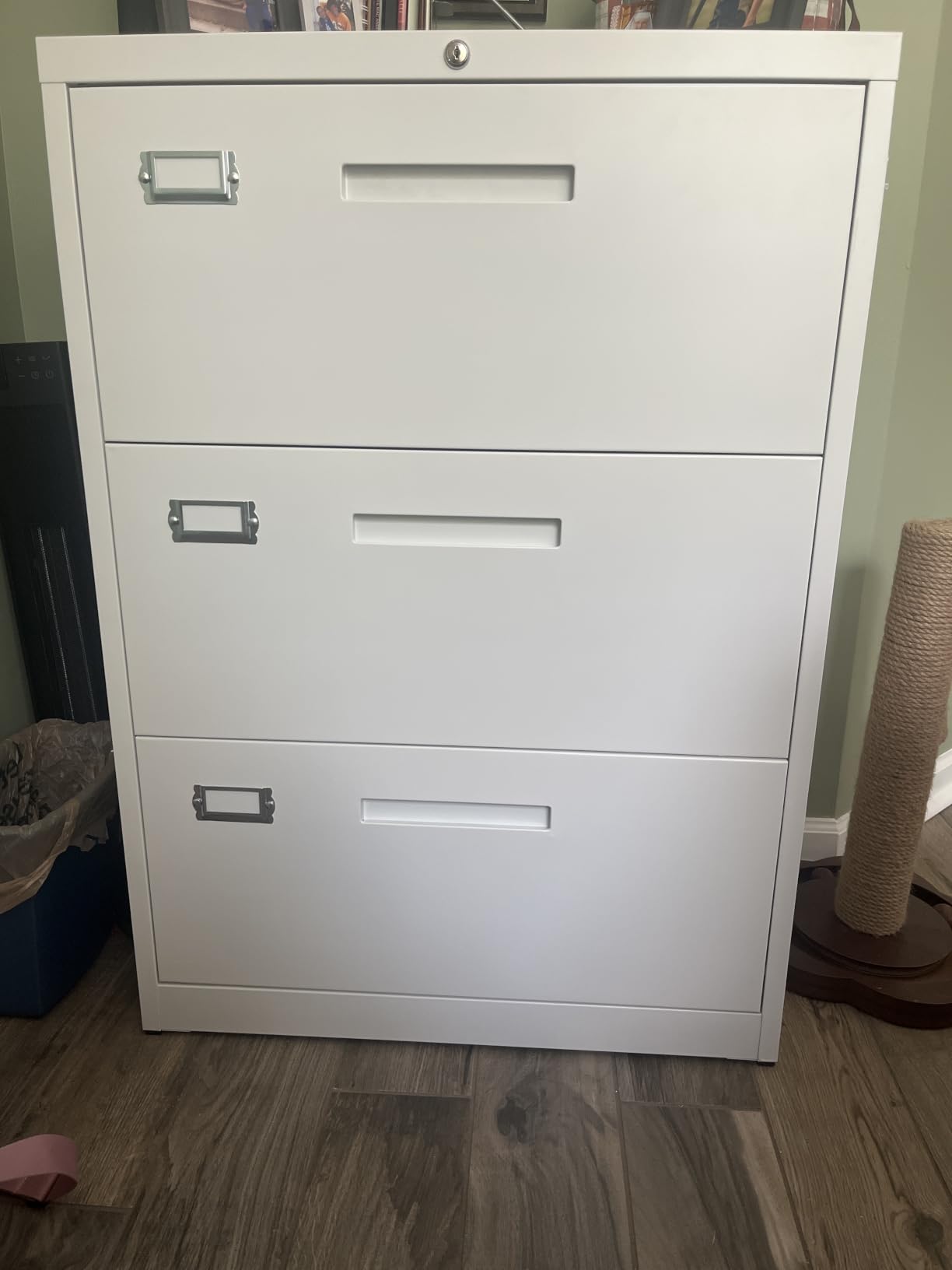
Assembly is the theme of every complaint. Reviewers describe anywhere from 40 minutes to several hours depending on the variant, and the illustrated manual is called out for mislabeled panels and incorrect screw counts. Budget an evening, and check the parts against the manual before you start rather than after.
There is a real quality inconsistency in the reviews, with a portion of one-star feedback describing thin gauge metal, dented panels and locks that did not function. Inspect the cabinet on arrival and test the lock before you load it with anything you care about.
The interlock is a genuine safety feature and also a genuine irritation if you are the sort of person who wants two drawers open at once. Know which you are before you commit.
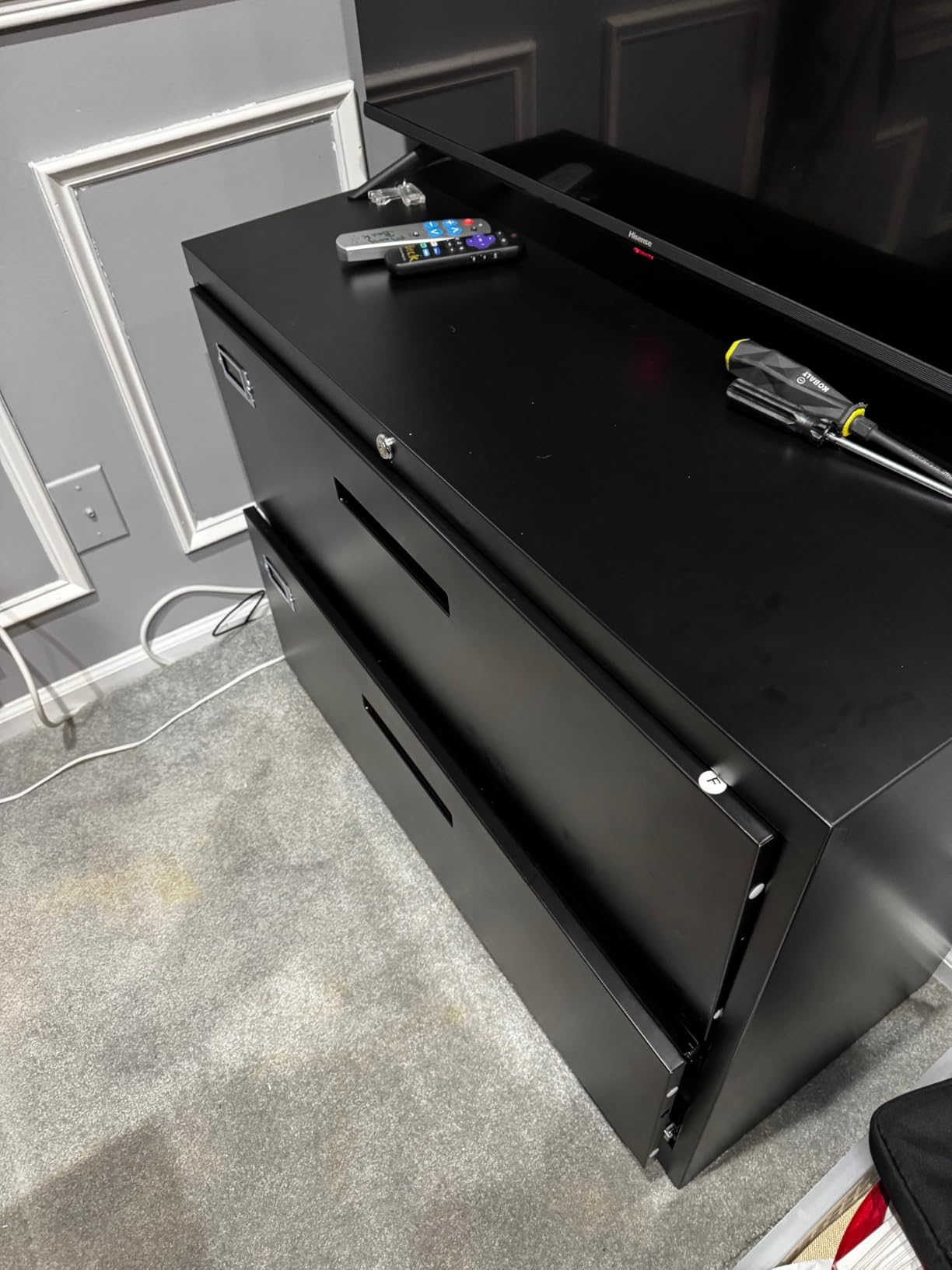
Check the room against 36 inches of width
This is a genuinely large lateral cabinet and it needs a wall, not a corner. The 40 inch height also puts the top drawer at chest level rather than at eye level, which is exactly the problem people raise about tall 3 and 4 drawer verticals. If your files are frequent-access active files, a 2-drawer lateral is easier to work with day to day.
Check the assembly budget and the wall anchor
Set aside an evening and do it in one sitting; interrupted flat-pack builds are where missing hardware problems start. Confirm the wall anchors are in the box on arrival, because a 40 inch steel cabinet with drawers open is the exact scenario a wall anchor exists to prevent.
6. MIIIKO 4-Drawer Vertical File Cabinet with Lock: Best for High-Volume Paper
MIIIKO 4 Drawer File Cabinet with Lock, Metal File Cabinets for Home Office,Vertical Filing Cabinets Office Storage Cabinet for Letter,Legal,A4,File Folders(Black)
Cold rolled steel, 4 high-side file drawers
17.71 inch D by 15 inch W by 50.11 inch H
Top lock with interlock and anti-tip
Rated to 220 pounds
Pros
- Four tall high-side drawers give more vertical storage than a 3-drawer pedestal
- Top lock secures all four drawers with an interlock
- Narrow 15 inch footprint with full extension glide rails
- All hardware tools and wall anchors included in the box
- Good value against other four-drawer metal cabinets
Cons
- Flat pack assembly is long and the manual is thin on detail
- Some variants have only the top drawers locking and weak caster locks
- Steel body can feel thin and arrive dented
- At 50 inches tall it will not fit under a standard desk
Four real file drawers in a 15 inch wide footprint is the rarest combination on this list, and it is why this cabinet earns its place. Where most 3-drawer pedestals give you one file drawer and two supply drawers, the MIIIKO gives you four high-side drawers that all take hanging files on adjustable rails.
It rates 4.2 stars from 534 reviews. Buyers single out the four-drawer capacity in such a narrow body, the smooth full-extension glide rails, and the fact that all parts, hardware, tools and wall anchors arrive in the box, which is more than most competitors manage.
It is also the tallest unit we reviewed at 50.11 inches, which changes the safety math completely. The top lock secures all four drawers, and there is an interlock system with an anti-tip mechanism installed on each drawer side. At this height, use both, and anchor it to the wall.

Assembly is the dominant negative theme. Reviewers report 4 to 6 hours for one person, and the printed manual is thin on detail. All the pieces are there, but plan the time, and build it upright in its final room because a 90 pound assembled cabinet is not something you want to move.
There is also a caution about variant consistency. Some buyers report only the top drawers locking on their unit, so test every drawer with the keys on day one. Others describe the steel as thin and the panels arriving dented in transit, which is common with flat-packed steel and is worth a careful inspection at the door.
At 50 inches tall it will not fit under a standard desk, so this is a room-standing piece. It weighs 90 pounds, and the published load rating is 220 pounds.
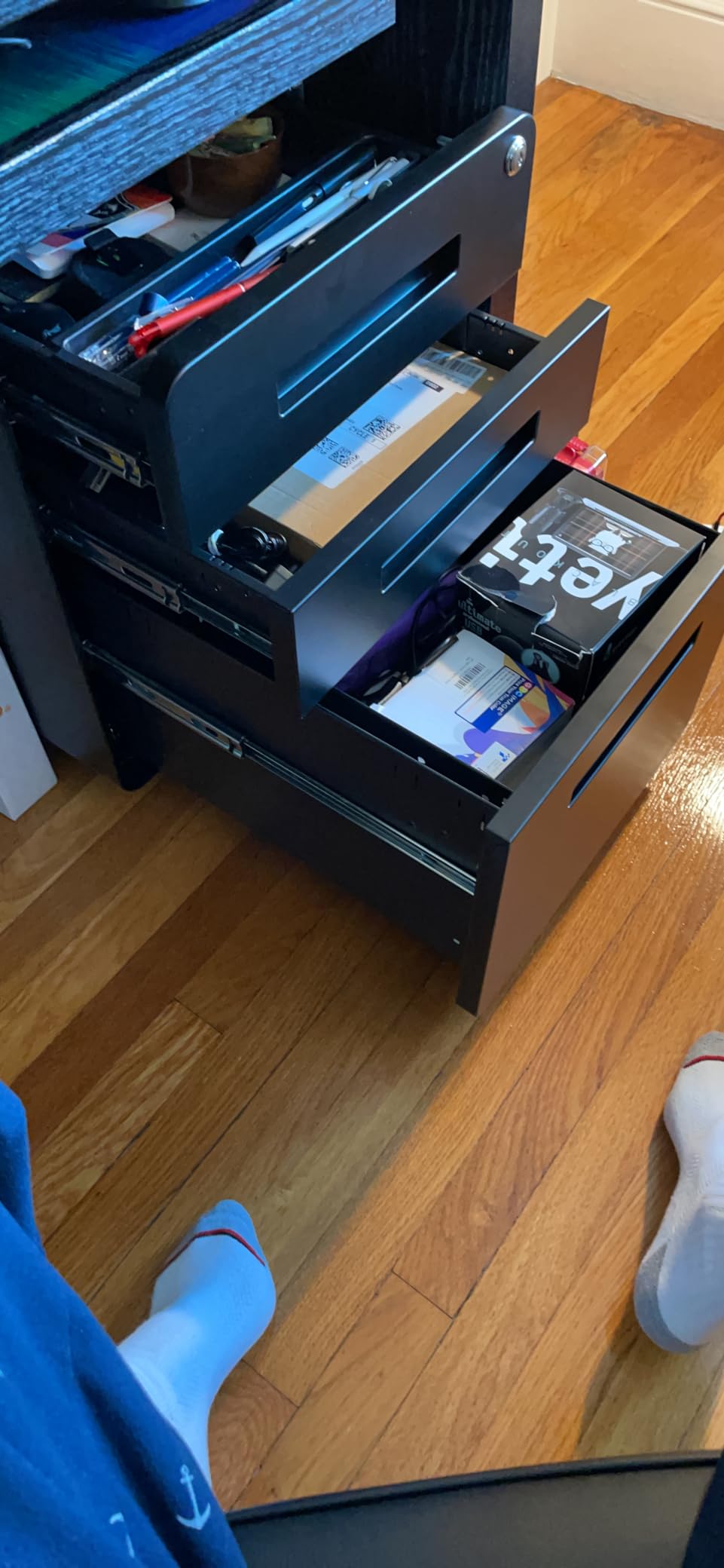
Check whether you can see into the top drawer
This is the practical objection people raise about 3 and 4 drawer verticals, and it is worth taking seriously. Standing at 50.11 inches, you are looking down into the top drawer, so plan how you will retrieve paper from it. Active files that you pull every day work better in a shorter cabinet; deep archives that you touch twice a year work fine up here.
Check that you will anchor it
Tall steel plus four loaded drawers plus a curious child is the classic tip-over combination. Wall anchors are included, so there is no excuse: mount them into a stud, not just drywall, and load the bottom drawers first. The anti-tip mechanism on each drawer side helps, but anchoring is the part you cannot skip.
7. Letaya 3-Drawer Mobile File Cabinet with Lock: Best Value
Letaya 3 Drawer Mobile File Cabinet with Lock,Under Desk Metal Filing Cabinets for Home Office Organizer Letters/Legal/A4((Fully Assembled-Black)
0.8mm steel, 3 drawers
17.32 inch D by 14.57 inch W by 24.4 inch H
One lock secures all three drawers
Two keys included
Pros
- Arrives fully assembled except for the casters
- One lock secures all three drawers and two keys included
- Five 360 degree caster wheels with two locking brakes
- Removable divider in the file drawer and pencil tray up top
- Enclosed drawer walls keep hanging folders in
Cons
- Interior drawer steel is thinner than the outer shell and can flex
- The key is coated in foldable plastic that feels cheap
- Plastic casters can mark hardwood floors
- Some drawers stick and need a slight lift
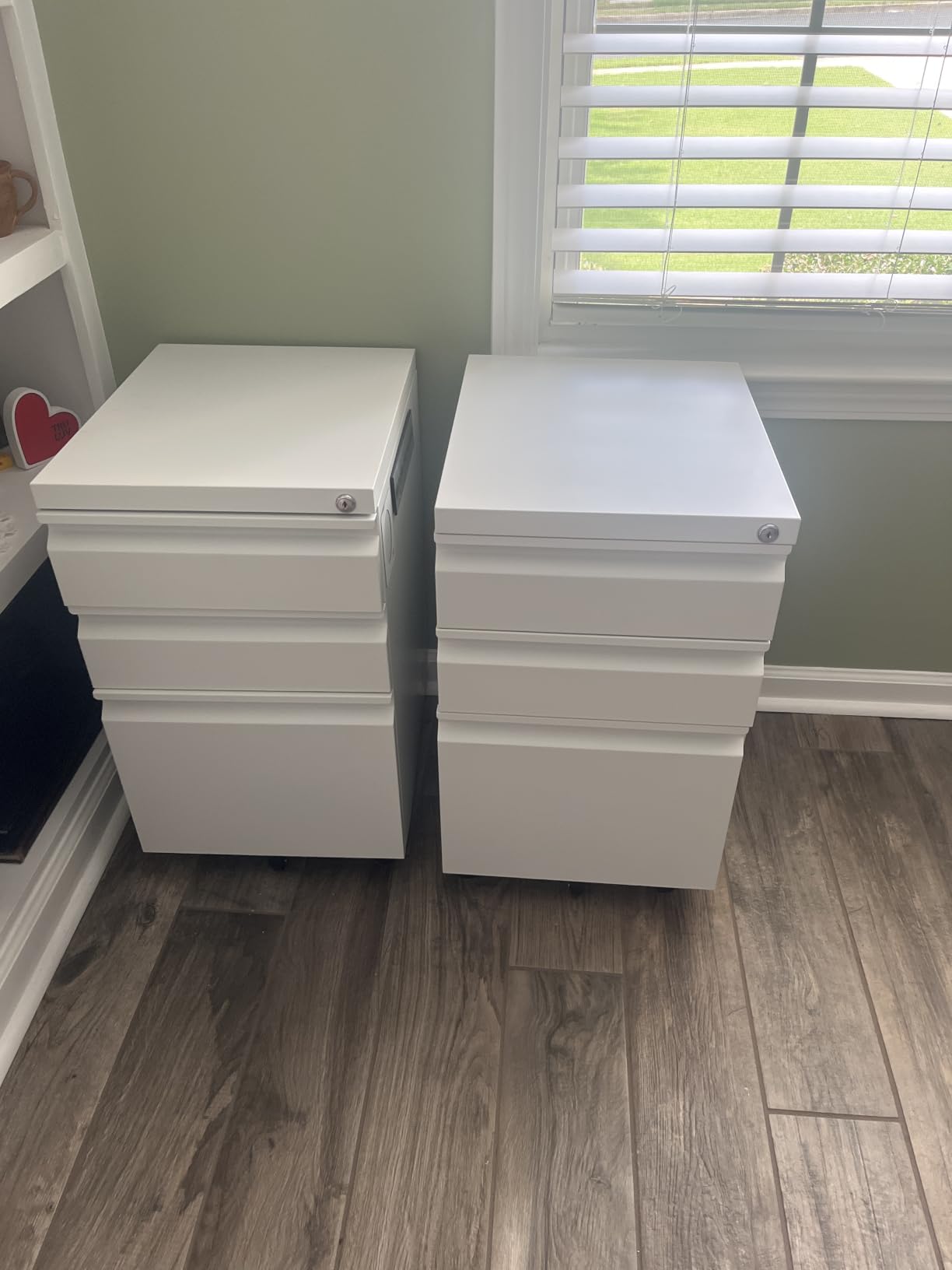
The Letaya mobile 3-drawer is the value pick of the group, and one of the highest rated at 4.5 stars from 1545 reviews. It gives you the same core specification as pricier steel pedestals: one lock covering all three drawers, two keys, and casters with brakes.
At 17.32 inches deep by 14.57 inches wide by 24.4 inches high, the height is deliberately under-desk friendly, and the product data is unusually specific about the internals. The two small drawers measure 2.75 inches high by 16.18 inches deep by 12.86 inches wide, and the bottom file drawer measures 9.44 inches high in the same footprint. That level of detail makes it easy to know in advance whether your folders fit.
The body is 0.8mm steel, which reviewers say resists warping and moisture better than wood cabinets, and the rated capacity is 120 pounds. The file drawer has a removable divider and enclosed walls so hanging folders do not slide out when the cabinet rolls.
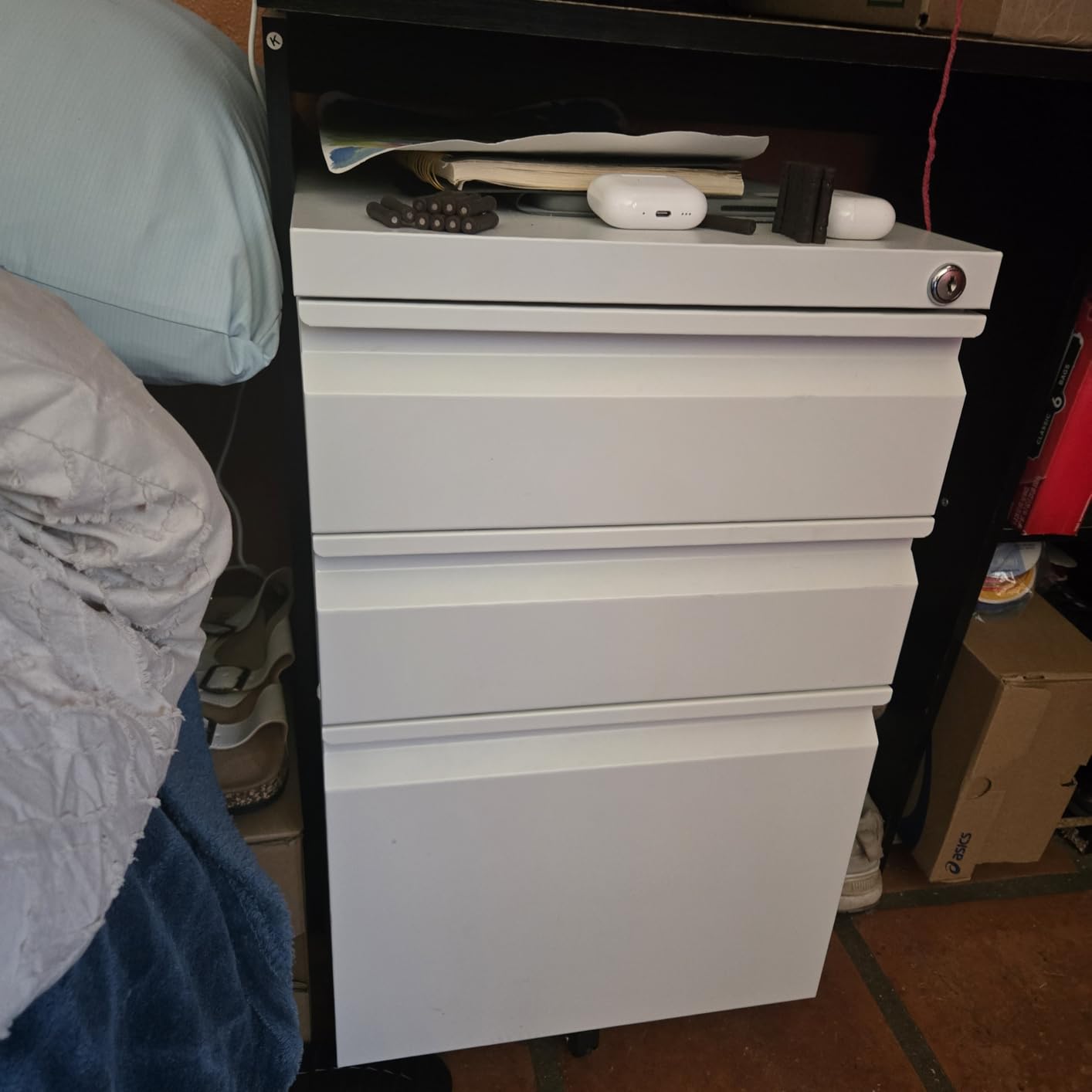
The criticisms are minor and cosmetic rather than structural. The interior drawer steel is thinner than the outer shell and can flex under a heavy load, the key comes in a foldable plastic coat that feels cheap, and some buyers report drawers that stick and need a slight lift to open or close.
Casters are plastic, so on hardwood floors add felt pads. The five-wheel design includes two locking brakes and a center wheel to prevent tipping, which is a genuinely better safety package than many units in this class.
You only need to attach the five wheels, so this is one of the fastest setups here. That alone puts it ahead of every flat-pack unit on the list if you are furnishing a room in an evening.
Check the file drawer height against your folder stack
A 9.44 inch tall file drawer takes a good number of hanging folders, but it is shallower than the deep drawers on the larger lateral units. If you are storing boxed records or oversized hanging folders, measure the stack height first. If you are filing active paperwork, this depth is comfortable.
Check the brake and the floor together
Rolling storage only beats fixed storage if the cabinet stays put when you pull a drawer. Two locking brakes plus a center wheel gives you that, but confirm the brakes engage on your floor surface. On carpet they bite hard, on hard floors you want pads and a firm setting.
8. VINGLI 2-Drawer Wood Look Locking File Cabinet: Best for a Locking Wood Look
VINGLI 2 Drawer File Cabinet with Lock, Wood Rustic Gray Filing Cabinet for Letter Size File Folders with Tabs, Under Desk Rolling File Cabinets for Home Office, Mobile File Organization Printer Stand
P2 grade MDF with wood grain finish
15.7 inch W by 15.7 inch D by 27.2 inch H
Letter and A4 folders
Five wheels with a center lock
Pros
- Rustic gray wood grain with scratch and water resistant finish
- Two lockable drawers on full extension ball bearing slides
- Reinforced stainless steel hanging rods
- Five wheels including a locking center wheel
- Backed by a lifetime quality warranty
Cons
- Assembly commonly takes 1 to 3 hours and often needs a power drill
- Drawers do not extend far enough to reach the rear 4 to 5 inches
- Each drawer uses a different key
- The cabinet can tip forward when a loaded drawer is opened
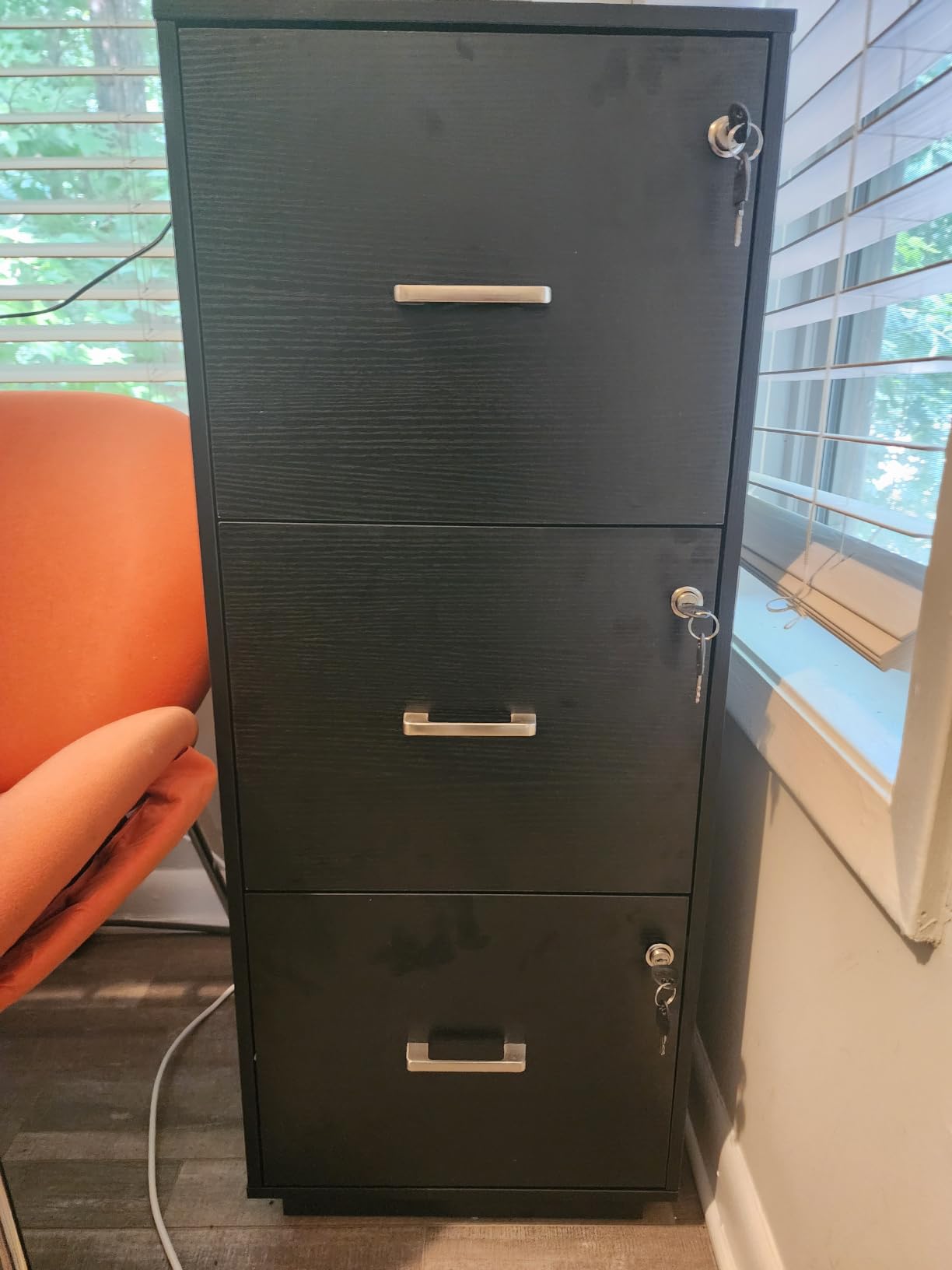
Most wood-look cabinets give you a lock that does not exist, or one drawer among three. This one is unusual: it has two lockable drawers, and at 15.7 inches square by 27.2 inches high it fits under a desk as well as a steel pedestal of similar size.
It holds 4.1 stars from 1395 reviews, and the praise concentrates on the finish and the warranty. Buyers like the wood grain P2 grade MDF, the scratch and water resistant rustic gray surface, and a lifetime quality warranty backed by customer service that has replaced broken casters.
The drawer hardware is the real strength. Smooth full extension ball bearing slides and reinforced stainless steel hanging rods are specified to carry fully loaded folders without bending, and the drawer holds 55 pounds. Wheels number five, with brakes and a locking center wheel, plus a balancing wheel under the bottom drawer.
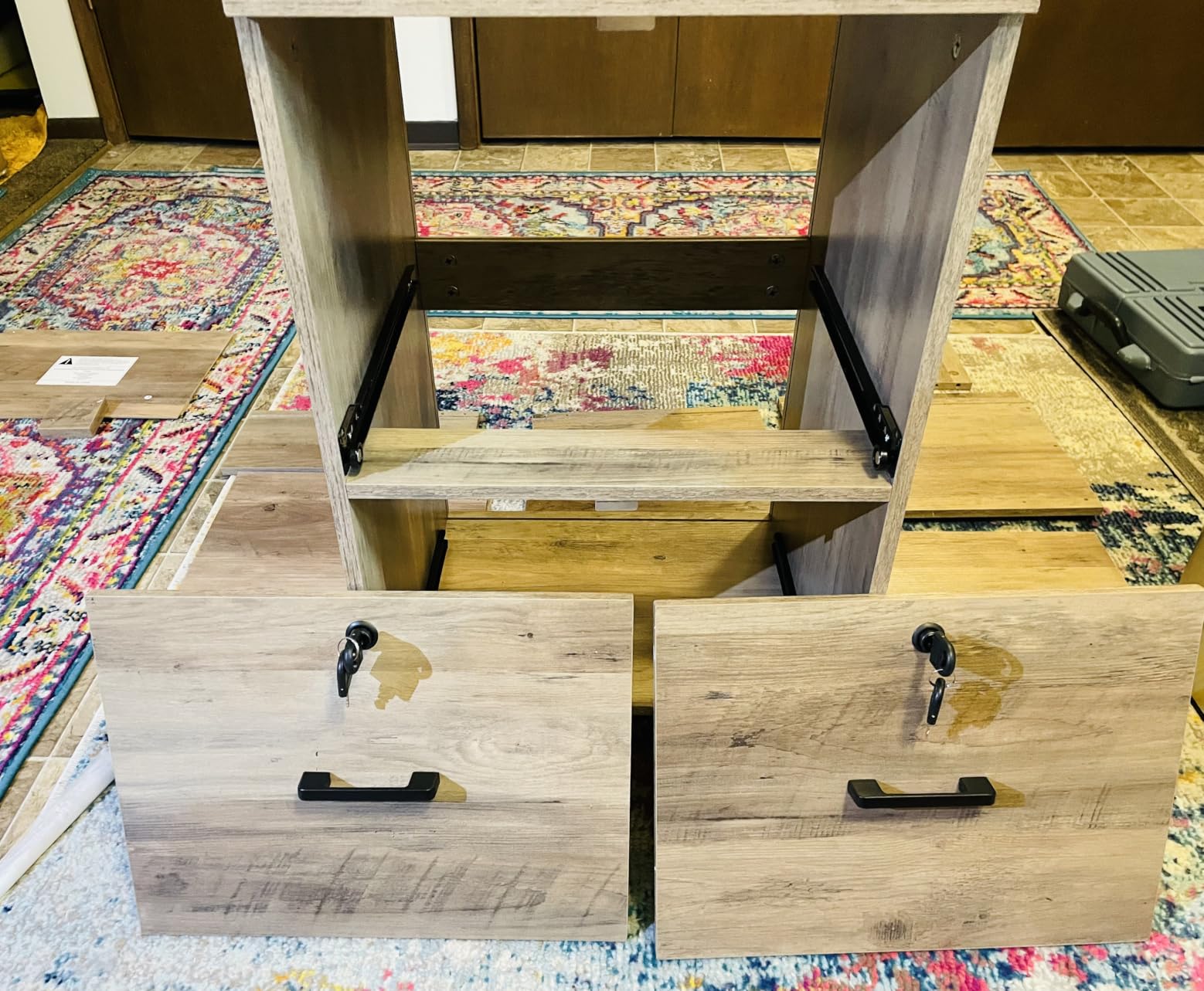
Two limitations deserve a direct mention. First, the full extension slide still stops short of the rear of the drawer, so folders in the back 4 to 5 inches are harder to reach than the spec suggests. Second, each drawer uses a different key, so you carry two key sets or accept that one drawer is easier to open than the other.
Assembly is involved, commonly 1 to 3 hours, and many buyers reach for a power drill. A minority of reviews also report the cabinet tipping forward when a loaded drawer is opened, which is a real risk in a home with small children. Keep it against a wall and load the bottom drawer first.
One more honest note on appearance: several buyers say the gray reads warmer and peacher in person than the product photos suggest. If colour accuracy matters to your room, order it and see it before you commit the corner.
Check what the rear gap means for your folders
Before you load it, lay a folder at the very back of the drawer and try to pull it out. If the slide stops at the same point reviewers describe, the back of the drawer becomes the spot you never use. That is fine for storage, frustrating for active filing, and worth knowing before you commit.
Check the key arrangement
Two drawers, two keys, one key per drawer. It is a small thing that becomes annoying weekly in a shared home or a home with a partner who needs access. Decide now whether that matters to you, because there is no key-alike upgrade mentioned in the specifications.
9. Lorell NuSparc Mobile 3-Drawer Locking Cabinet: Best Lightweight Steel Body
Lorell NuSparc Mobile 3 Drawer Locking Filing Cabinet | Pre-Assembled Steel Construction | Space-Saving Design is Perfect for Home and Small Office | Letter-Size | Assembled in North America
Alloy steel, 3 drawers
18 inch D by 14.2 inch W by 29.5 inch H
Letter size hanging folders
Key lock on the top two drawers
Pros
- All steel powder coated body that is light at 27 pounds
- Pre-assembled so setup is handles and casters
- Top accessory drawer for pens and staplers
- Assembled in North America with a 1 year manufacturer warranty
- Lockable and portable
Cons
- Casters do not lock so the cabinet can roll when a drawer opens
- Lock is loose and covers only the top two drawers
- Drawers have 3/4 extension rather than full extension
- Finish scratches and dents easily
- A power tool is effectively required
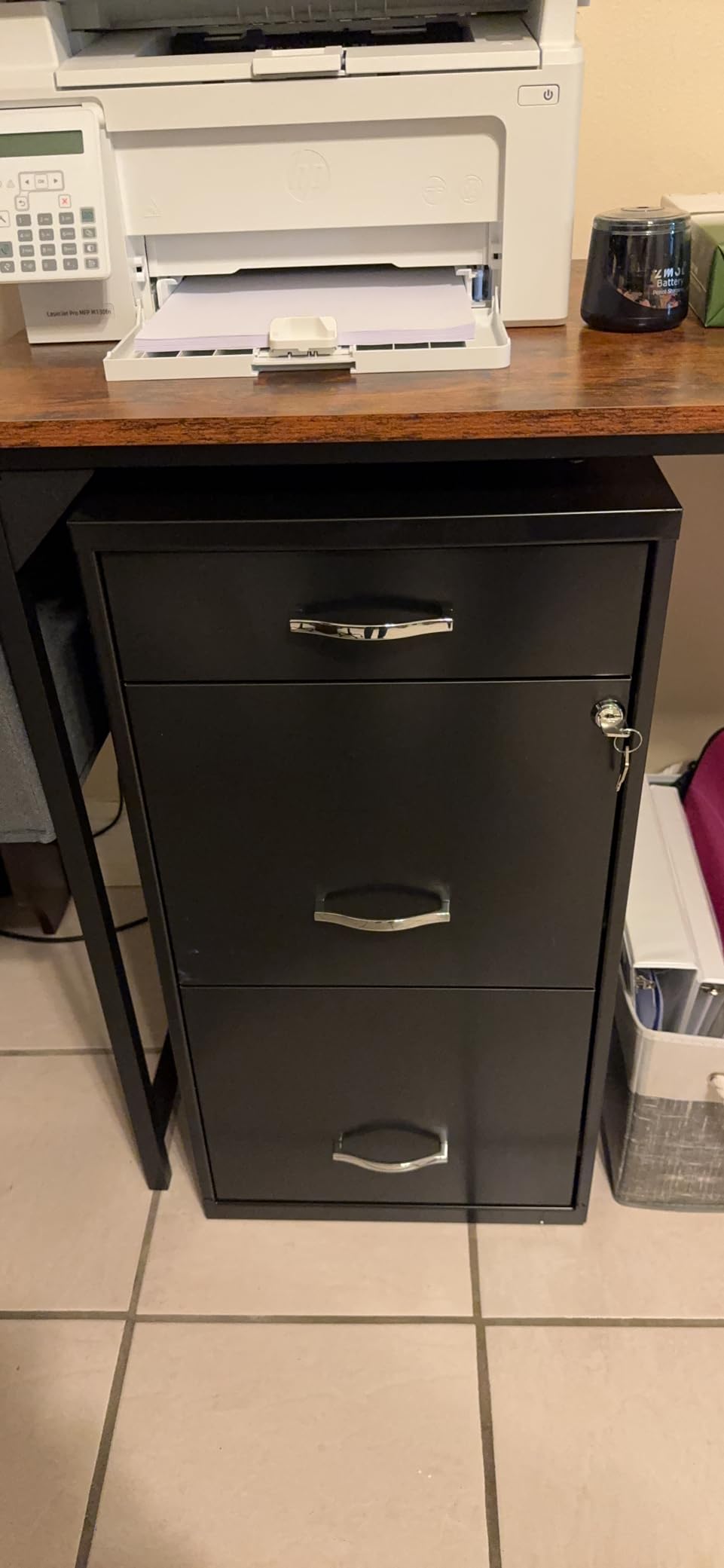
The Lorell NuSparc is the pick if weight is your constraint. At 27 pounds it is the lightest steel cabinet we looked at, which matters a great deal in a rental apartment, a third-floor walk-up, or any room where you may need to move furniture again in a year.
It holds 4.1 stars from 850 reviews, and owners treat it as a solid no-frills all-steel cabinet. It is pre-assembled, so setup is attaching handles and casters, and it carries a 1 year manufacturer warranty. Dimensions are 18 inches deep by 14.2 inches wide by 29.5 inches high.
The top drawer is an accessory drawer for pens and staplers, and the key lock secures the top two drawers. Drawers take letter size hanging folders, which is the one sizing limitation to note: if you file legal size paper, this is the wrong unit.
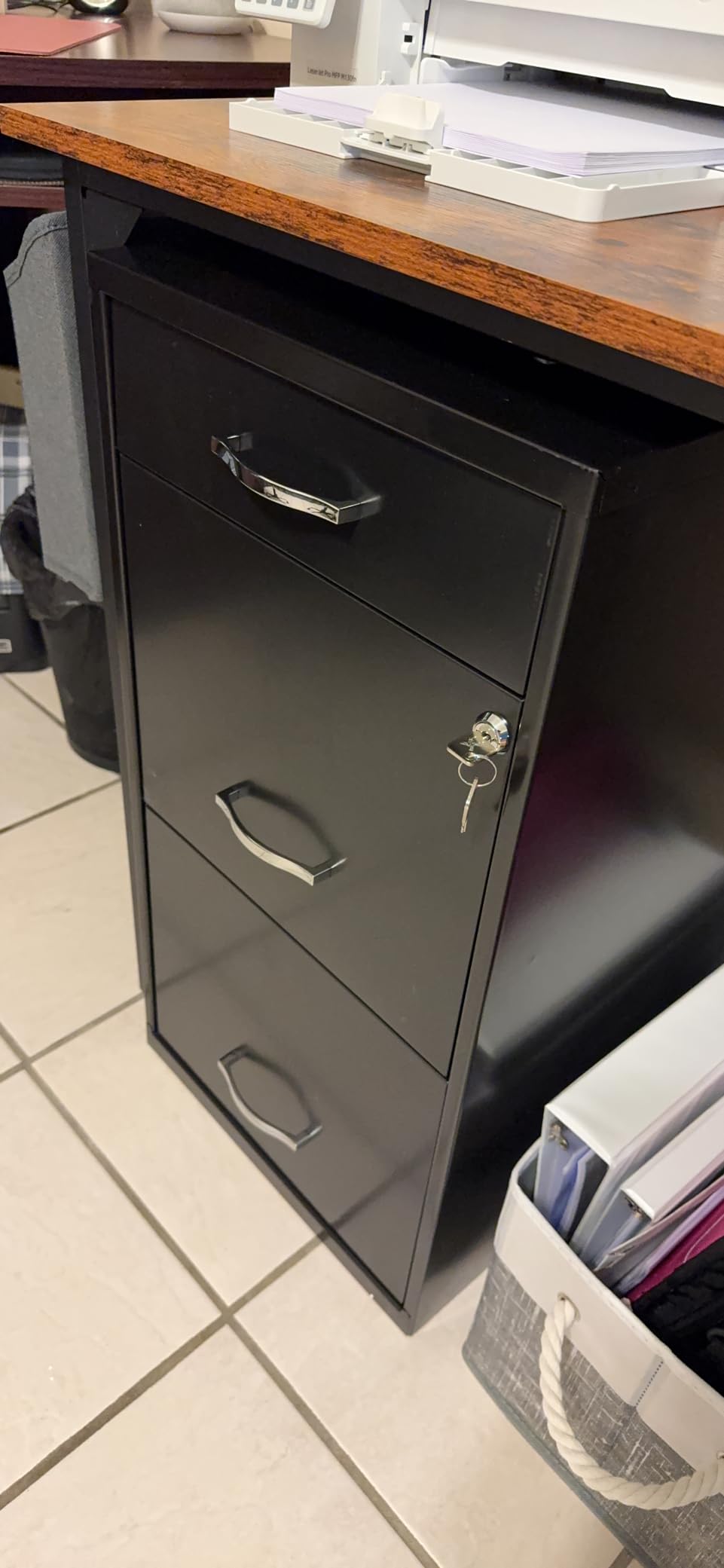
Now the three things that are not great, all of which show up repeatedly in the feedback. The casters do not lock, so the cabinet can roll when you open a drawer. The lock is described as loose and covers only the top two drawers, not the file drawer. And the slides are 3/4 extension rather than full extension, so rear folders are harder to reach.
The powder coated finish also scratches and dents fairly easily, which is a cosmetic issue that bothers some owners more than others. A power tool is effectively required to fit the wheels and handles, so plan ten minutes with a drill rather than expecting a five minute job.
Against that, the 27 pound weight and near-complete factory assembly are real advantages in a small home. If you want steel, a lock on most of your documents, and easy moving, this is a defensible compromise.
Check what you are trading for the low weight
Lightweight steel is thinner steel. The 27 pound figure is a genuine portability win and also a sign the gauge is lighter than the 33.5 pound pedestal later in this list. If you will never move it, a heavier cabinet will feel more solid. If you might, this one wins.
Check that non-locking casters suit your floor
A cabinet that rolls when you pull the bottom drawer is genuinely annoying, and it is worse on hard floors than on carpet. If you have wood or laminate, add wheel locks or a stop block behind the unit. This is the clearest reason to step up to the two Letaya and DEVAISE mobile units instead.
10. Bush Home Salinas 2-Drawer Lateral File Cabinet: Best for Matching a Desk
Bush Home Salinas 2 Drawer Lateral File Cabinet in Vintage Black, Home Office Storage Solution, Organizer with Drawers for Workspace, Filing Unit
Engineered wood, 2 lateral file drawers
31.73 inch W by 20 inch D by 29.96 inch H
Letter legal and A4 documents
Holds up to 50 pounds
Pros
- Mission inspired tapered legs and decorative wood accents
- Two full extension ball bearing file drawers
- Distressed finish hides scuffs well
- Adjustable shelf and four compartments
- Tested to meet ANSI/SOHO quality standards
Cons
- Assembly required though the process is straightforward
- Engineered wood rather than solid wood or steel
- Wide 32 inch lateral footprint is bulky for small offices
- No lock for securing documents
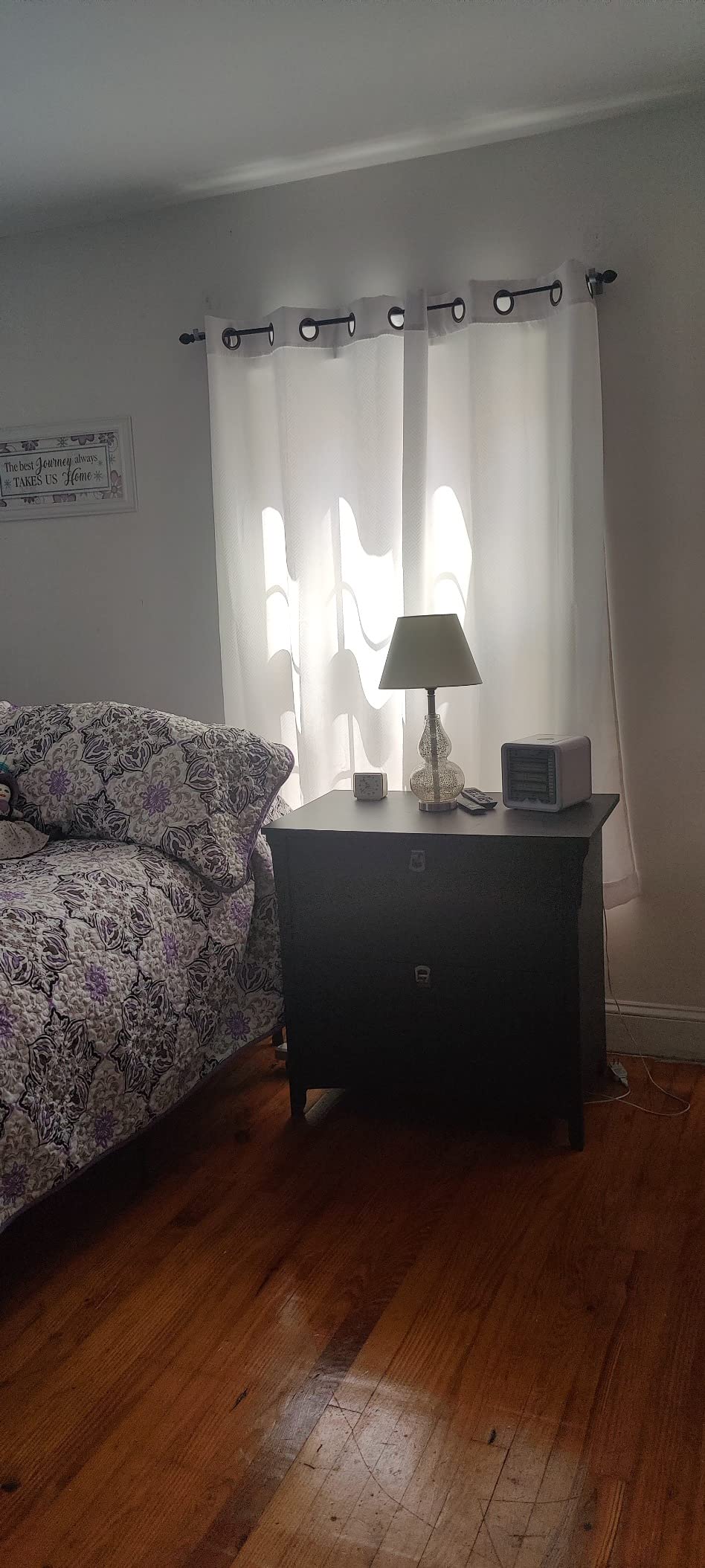
The Salinas is the one to buy when your office furniture already has a matching piece. It is designed to sit beside the Bush Home L-shaped desk with storage at a matching height, creating a continuous work surface rather than two mismatched objects in the same room.
It rates 4.5 stars from 920 reviews, the second highest rating among the wood units here, and buyers point to the Mission inspired tapered legs, curved base rails and decorative wood accents as the reason it does not read as office equipment. The distressed vintage black finish also hides scuffs better than a flat painted surface.
Both drawers are real full extension ball bearing file drawers holding letter, legal and A4 documents up to 50 pounds, and there is an adjustable shelf and four compartments on top of the filing. Dimensions are 31.73 inches wide by 20 inches deep by 29.96 inches high, and the unit weighs 62.7 pounds.
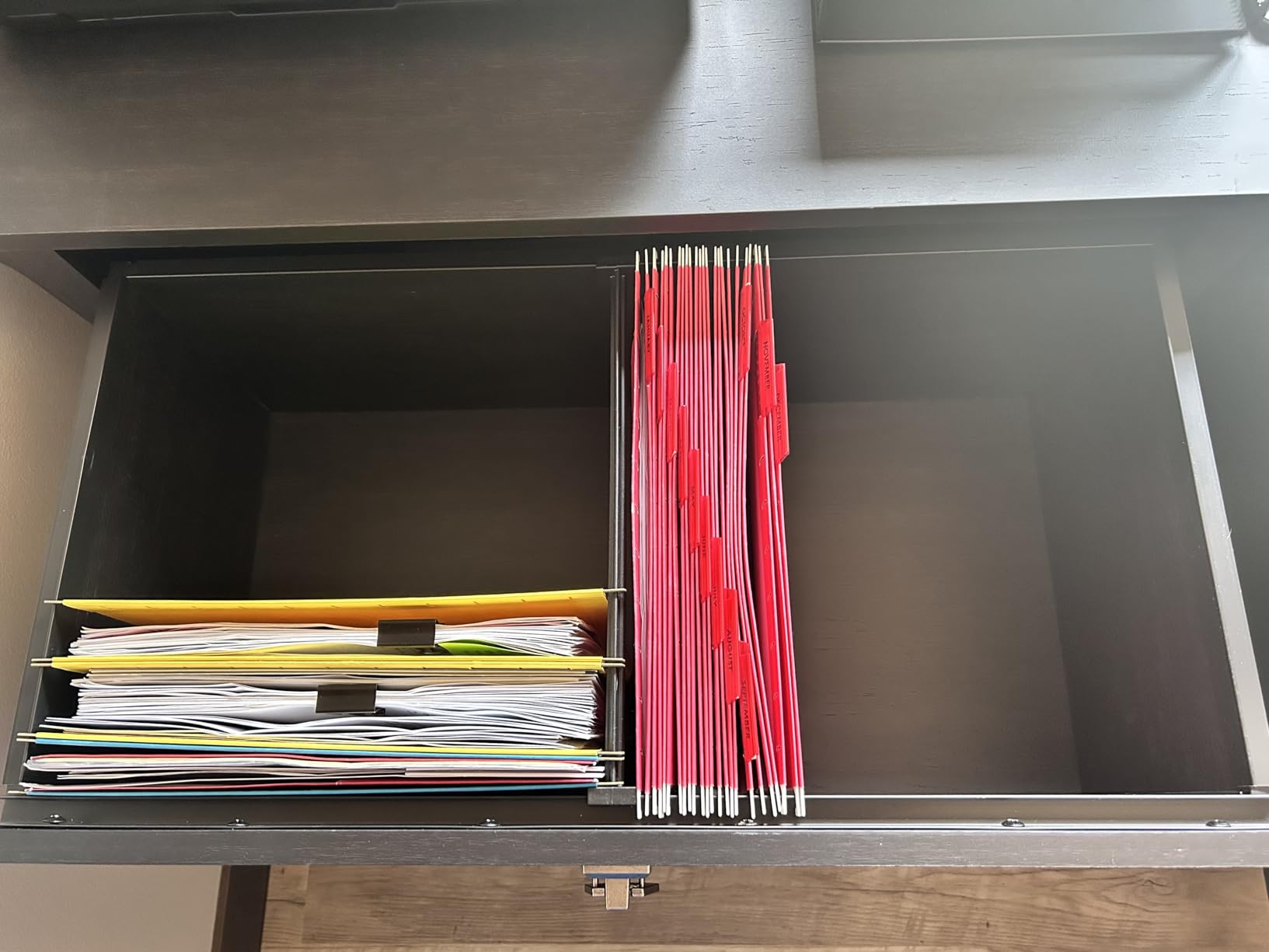
There is no lock, so this is a storage piece rather than a secure one, and the footprint is wide. A 32 inch lateral cabinet in a small home office is a significant commitment of wall and floor, and the same drawer-open clearance issue applies as with the Key West pick at the top of this list.
Assembly is required, though reviewers describe the process as straightforward. The engineered wood body will not match a steel cabinet for durability under heavy load, and it is tested to meet ANSI/SOHO quality standards with a 1 year manufacturer warranty.
Our practical note: if you are starting from nothing rather than matching existing furniture, the 30 inch wide Key West cabinet gives you a similar look for less floor and a longer warranty. Choose Salinas when matching matters more than footprint.
Check your existing desk height
The whole point of this cabinet is that it aligns with a specific desk line at about 30 inches. Measure your desk before ordering. If it is a different height or a different style, the furniture-match advantage disappears and you are left with a wide lateral unit that has no lock.
Check the width against the rest of the room
At 31.73 inches wide and 20 inches deep, plus the floor a lateral drawer needs when open, this is a room-defining piece rather than a background one. In a dedicated office it works beautifully. In a bedroom corner or a studio flat, the narrower vertical units earlier in this list are the safer bet.
How to Choose a File Cabinet for a Home Office in 2026?
Vertical or lateral: the orientation decision
A vertical file cabinet is tall and narrow, with drawers that pull front to back and folders stacked depth-wise. A lateral file cabinet is wide and short, with shallow drawers that pull side to side so every folder label is visible at once. Vertical units give you more drawers in less width; lateral units give you more visible filing capacity per drawer.
For a home office the deciding factor is usually wall space. A vertical cabinet 15 to 18 inches wide can sit in a narrow gap beside a desk, while a lateral cabinet 32 to 37 inches wide claims a whole wall. If you can only spare about 18 inches of width, vertical is your answer.
Typical width: vertical 15 to 18 inches, lateral 30 to 37 inches.
Typical depth: vertical 18 to 20 inches, lateral 16 to 22 inches.
Drawer direction: vertical pulls front to back, lateral pulls side to side.
Clearance needed with a drawer open: vertical roughly 55 inches in front, lateral roughly 40 inches in front.
Filing inches per drawer: vertical about 24 to 26 inches, lateral about 30 to 40 inches.
Drawer visibility: lateral shows every folder label at once, vertical requires reaching into the drawer.
Typical height: vertical 28 to 50 inches depending on drawer count, lateral 29 to 30 inches.
Best for: vertical for narrow rooms, under-desk placement and high drawer counts; lateral for wide walls, visible labels and putting a printer on top.
That clearance row is the one that decides most home office purchases, and almost no retailer publishes it. A vertical cabinet needs roughly 55 inches of clear floor in front of it when the drawer is fully open, which means it pulls straight into your walkway. A lateral cabinet needs closer to 40 inches. In a 10 by 10 foot spare room, that difference decides the layout.
How many drawers you actually need
Measure what you already have. Stack your current paper into hanging folders, lay them end to end on the floor, and read off the total linear inches. Add 20 to 25 percent for growth, then divide by the filing inches per drawer for the type you are buying, which is roughly 24 to 26 inches for a vertical drawer and 30 to 40 for a lateral one.
A worked example: if you have 100 inches of paper, adding 25 percent gives 125. At 25 filing inches per vertical drawer, you need five drawers. At 35 per lateral drawer, you need four. That is the difference between a 3-drawer and a 5-drawer purchase, and it is worth five minutes on the floor before you shop.
There is a second consideration that people regret ignoring. On a 3 or 4 drawer vertical you have to peer down into the top drawers, which is exactly what people raise when they ask about tall cabinets. If the files you touch weekly live in the top drawer, a 2-drawer lateral is easier to work with every single day.
Steel, engineered wood, or solid wood
Steel is the most durable and the lightest to move, though it reads as office equipment and shows dents. Engineered wood and MDF look like furniture and cost less, but they are more vulnerable to moisture and edge wear over years. Solid wood is expensive and heavy, and the pre-owned route is genuinely worth considering: buyers of vintage cabinets report sanding and oiling units from classifieds and marketplace sites and ending up with furniture that looks better than anything new at that level.
Particleboard is the budget tier and the least durable. It is fine for active files in a quiet room, which is why it works for the smallest picks on this list, and wrong for a garage, a basement or anything you plan to move repeatedly.
Letter size, legal size, and A4 paper
Letter size is 8.5 by 11 inches in North America. Legal size is 8.5 by 14 inches and needs a deeper drawer or a lateral layout to hang folders properly. A4 is 210 by 297 millimetres and is close to, but not identical with, letter size, which is why drop-file units sold outside North America can be a poor fit for US hanging folders.
Look for an adjustable hanging rail rather than a fixed one. Several cabinets here list a removable or adjustable hanging bar that accepts letter, legal and A4 folders, which means you can change paper sizes without buying a new cabinet. The Lorell unit in this roundup is the exception, since it is specified for letter size only.
Locks, fire ratings, and anchoring
Locking is named in nearly every listing and it is the primary purchase filter, but the details matter more than the word. Some units lock every drawer with one key. Some lock only the top drawers. Some have a folding key. Read the lock coverage line specifically for each drawer, not the product title.
For fire protection, understand what a rating actually means. A UL Class 350 paper safe is tested in a furnace and holds the interior below 350 degrees Fahrenheit for one to two hours. For most home offices the honest answer is that you do not need one, because the documents worth that level of protection are the few that can be replaced or stored elsewhere. If you do want one, note that fire safes weigh several hundred pounds and need floor-load and delivery planning.
Also be precise about what fire protection covers. A paper safe protects paper. Digital media, hard drives and backup disks need a separate rated media safe, and a paper rating tells you nothing about them.
Tip-over safety is a home-specific issue
This is the factor that matters at home more than in an office, and it comes up constantly in customer reviews. Choose a cabinet with an anti-tip interlock that permits only one drawer open at a time, anchor any unit over about 40 inches tall to a stud, and load drawers from the bottom up. Never open multiple drawers on a tall unanchored cabinet. A loaded steel drawer is genuinely heavy, and a tip-over in a home with children is the reason this paragraph exists.
Alternatives when you do not need a cabinet
If you are asking whether anyone uses file cabinets anymore, the answer is that the paper has changed, not the need. Tax records, deeds, birth certificates, medical and insurance paperwork, warranties, and receipts are all still paper that still needs a locked, organised home. That is real, and it is what most home cabinets end up holding.
What has changed is the active paperwork. Bills and statements are better in digital folders with a search function than in a folder you cannot read the label of. So consider a storage tower or credenza if you are mixing paper with supplies, a mobile pedestal if you want the files to move with you between rooms, or a drop-file unit such as an IKEA ALEX or Malm, which readers already buy as a filing cabinet substitute and which the shopping results confirm is a popular choice.
On those IKEA drop-file units specifically: they get praised for clever storage compartments that make the most of the space and for a low cost, and they are a reasonable answer for active files. The honest limitations are that there is no lock, the drawers are not built for the weight of decades of paper, and a drop-file slot holds one folder at a time rather than a full drawer. Use them for what is current, and put your originals somewhere lockable.
A final word on buying used: a vintage wooden file cabinet that has been refinished is a legitimate route to a furniture-grade look, and it is how some home office users got two matching units. Check that the drawer slides extend fully and that no drawer sags before you commit, and replace the hanging rails if they are bent.
Frequently Asked Questions
What is a good small file cabinet for a home office?
A good small file cabinet for a home office is one that measures about 16 inches wide and 28 inches tall so it fits under a standard desk, has at least one true file drawer with an adjustable hanging rail for letter and A4 folders, and has locking casters so it stays put when a drawer is open. If your documents include passports, tax records or medical paperwork, add a keyed lock. Lightweight rolling particleboard models work for active files; move to steel if you are archiving.
Which holds more, a lateral or vertical file cabinet?
A lateral file cabinet holds more in a single drawer, typically about 30 to 40 filing inches against 24 to 26 in a vertical drawer, and it holds that paper where you can see every label. A vertical cabinet wins on total drawers in a narrow footprint. Lateral units need 30 to 37 inches of width; vertical units need only 15 to 18. Pick lateral for a wide wall and visible labels, vertical for a narrow room or under-desk placement.
What are the downsides of using lateral file cabinets?
Lateral file cabinets are wide, typically 30 to 37 inches, so they claim a whole wall in a small room. They sit low, so a long drawer is uncomfortable at seated height. They need roughly 40 inches of clear floor in front when open. Many wood-look models advertise three drawers when only one takes hanging files. And if more than one drawer is open at once, a loaded lateral cabinet is the most likely style to tip forward.
Are Ikea filing cabinets good for home offices?
They are good value for active files, and IKEA drop-file units such as the ALEX and Malm are already a popular substitute for a small file cabinet. The honest limitations are that most have no lock, the drawers are not engineered for the weight of decades of paper and can sag, and a drop-file slot holds one folder rather than a full drawer. Keep current paperwork in them and put identity documents and originals in a lockable steel cabinet.
What do people use instead of filing cabinets?
Common substitutes are document boxes or hanging-folder cases for light storage, mobile pedestals when files need to move between rooms, storage towers and credenzas when paper and supplies are mixed, and drop-file units from IKEA or similar lines. Many people simply digitize: a searchable cloud folder replaces an active file drawer for bills and statements. Paper originals such as deeds, tax records, birth certificates and medical paperwork still need a physical locked cabinet.
Does anyone use file cabinets anymore?
Yes, but for less paper than before. Households still need secure storage for deeds, birth certificates, tax records, medical and insurance paperwork, warranties and receipts, and a lockable cabinet keeps those off the kitchen table. What has declined is active paperwork such as bills, which is better searched digitally. A cabinet that is half full is normal today, which is why a 2-drawer unit suits most homes and 4-drawer models suit home businesses.
Should I anchor a filing cabinet to the wall?
Anchor any cabinet over about 40 inches tall, and any cabinet in a home with children or a large dog, into a stud rather than drywall. Also anchor tall steel units such as four-drawer models even when they include an anti-tip interlock, since the interlock only limits how many drawers open at once. Load drawers from the bottom up, and never open multiple drawers on a tall unanchored cabinet.
How much clearance does a filing cabinet need with the drawer open?
A vertical file cabinet needs roughly 55 inches of clear floor space in front of it when a drawer is fully open, which is why tall verticals pull straight into a walkway. A lateral file cabinet needs closer to 40 inches because the drawer opens sideways. Add a few inches beyond that so you can still walk past. Measure the open drawer, not the closed footprint, before you buy.
Final Verdict for Home Office File Cabinets in 2026
The Bush Home Key West 2-drawer lateral cabinet is our editor’s choice for 2026, and it wins on the two things that decide most home office purchases: it looks like furniture rather than equipment, and it includes the wall attachment hardware that keeps a loaded cabinet where you put it. At 30 inches wide with two genuine file drawers rated to 50 pounds, it is also the rare wood-look unit where both drawers are real file drawers.
For a smaller room, the DEVAISE 3-drawer mobile steel cabinet is the highest-rated option we reviewed, with one key covering every drawer and setup reduced to attaching casters. If you are furnishing a room in an evening, the Letaya mobile 3-drawer is the best value, and the MIIIKO 4-drawer vertical is the only unit here with four true file drawers in a 15 inch footprint.
Two numbers should travel with you to the store: a vertical cabinet needs about 55 inches of clear floor with a drawer open, a lateral needs about 40. If the best file cabinets for home offices are going to earn their space, they have to be measured into the room first and loaded from the bottom up afterwards. For how we test and review the gear in this category, see our desktop aquarium guide for offices and power rack guide for home gyms for the same standard of testing applied to other home equipment, and our dog playpen reviews for the same approach to products where safety claims need verifying.