
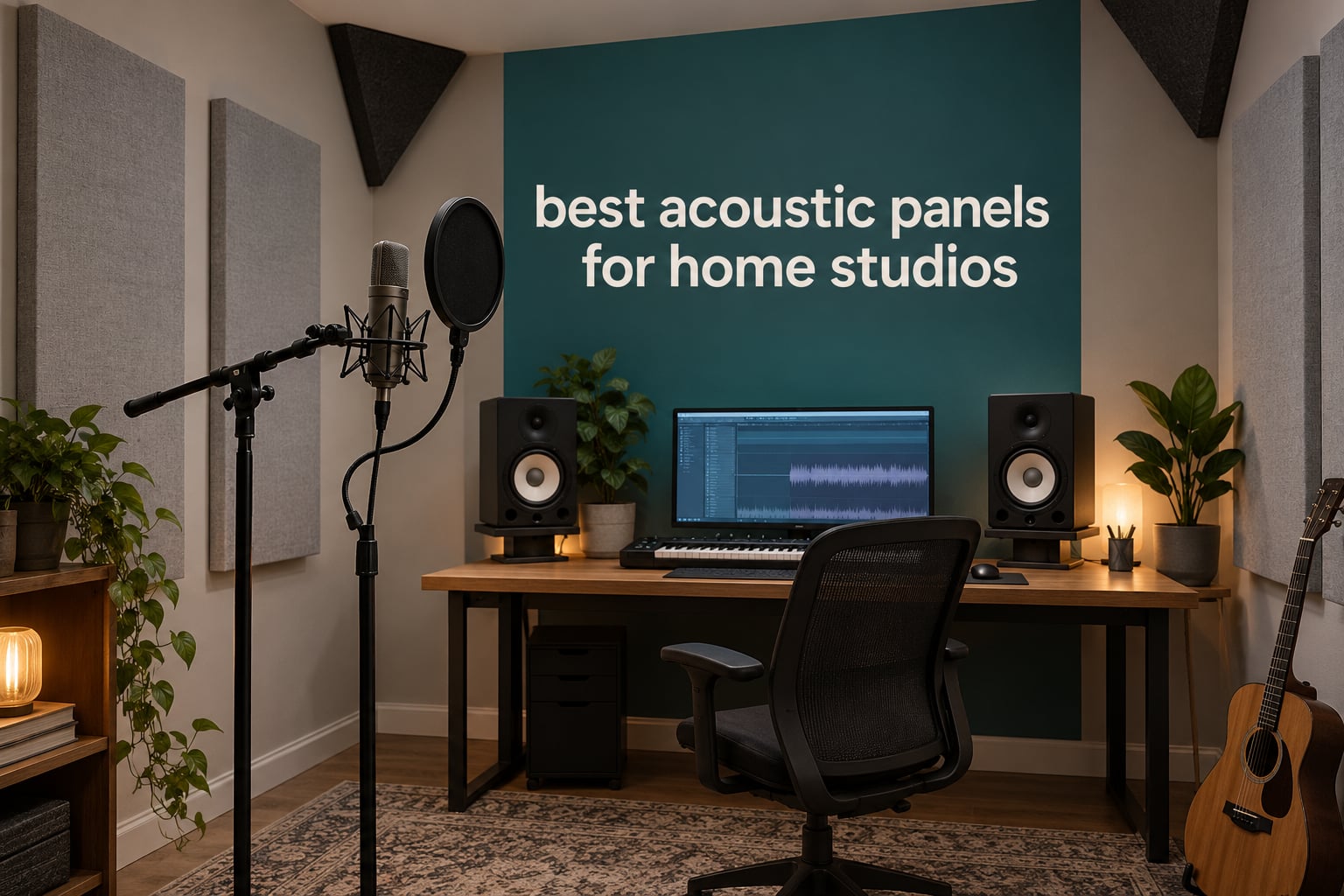
A bedroom with a bed, a desk, two parallel bare walls and a window behind your chair is not a control room. Sound bounces off all of it, arrives at your microphone from three directions at once, and every mix decision you make afterwards is guesswork. Acoustic panels are the cheapest way to fix that, but only if you buy the right depth and hang it in the right place.
Quick answer: a typical bedroom studio needs 8 to 12 broadband panels plus 4 corner traps, covering roughly 30 to 40 percent of the wall and ceiling surface, with a target reverberation time (RT60) of 0.3 to 0.5 seconds. Panels 2 inches thick handle mids and highs, while 3 to 4 inch depths and corner bass traps reach down toward 125 Hz where the mud lives.
We compared ten panels across every price tier, checked the stated absorption figures against the actual core material and depth, and read through thousands of buyer comments on build quality, mounting hardware and what actually changed in the room. Our full method is below, and every pick in this guide carries its own honest limitation.
One thing worth saying early: panels absorb sound inside the room. They do not stop sound passing through walls, ceilings or doors. If your real problem is traffic noise bleeding into a rented apartment bedroom, that is a different project, and we explain where the line sits later in this guide.
Table of Contents
Top 3 Picks for Home Studio Audio in 2026


Soon Global Arcadian Vortex…
- 23.6 inch square
- polyester fiber
- 30 adhesive squares
- wood-texture print

The Best Acoustic Panels for Home Studios at a Glance (October 2026)
This table lists every panel we tested in the order we recommend them. The Key Features column is drawn from each manufacturer’s own specification sheet, so you can compare core material, depth and mounting method before you read a word of the reviews.
| Product | Specs | Action |
|---|---|---|
| ATS Acoustics 24 x 48 x 2 Beveled Panel |
|
Check Latest Price |
| Soon Global Arcadian Vortex 6-Pack |
|
Check Latest Price |
| BXI 16 x 12 x 0.4 6-Pack |
|
Check Latest Price |
 TroyStudio 12 x 12 x 2 Foam 52-Pack TroyStudio 12 x 12 x 2 Foam 52-Pack |
|
Check Latest Price |
 UMIACOUSTICS 23.6 x 11.8 4-Pack UMIACOUSTICS 23.6 x 11.8 4-Pack |
|
Check Latest Price |
 TONOR 47.2 x 23.6 x 0.35 8-Pack TONOR 47.2 x 23.6 x 0.35 8-Pack |
|
Check Latest Price |
 JaneTech Art Panels 48 x 32 8-Pack JaneTech Art Panels 48 x 32 8-Pack |
|
Check Latest Price |
 Dmsky 12 x 12 x 0.4 18-Pack Dmsky 12 x 12 x 0.4 18-Pack |
|
Check Latest Price |
 JBER 7 Inch Corner Bass Traps 4-Pack JBER 7 Inch Corner Bass Traps 4-Pack |
|
Check Latest Price |
 Geynnple 48 x 24 x 2 Foam 4-Pack Geynnple 48 x 24 x 2 Foam 4-Pack |
|
Check Latest Price |
We earn a commission when you buy through these links, at no extra cost to you. That does not change which panels we recommend, and every limitation below comes from buyer reports rather than the marketing copy.
1. ATS Acoustics 24 x 48 x 2 Beveled Panel – The Reference Mineral Wool Absorber
ATS Acoustics Sound Absorbing Acoustic Panel 24″ x 48″ x 2″ Beveled Edge (Black)
NRC 1.0
48 x 24 x 2 inches
Mineral wool core
Solid wood frame
Jute burlap
Pros
- Highest NRC listed in this roundup at 1.0
- Substantial solid wood frame with full wood back
- Mounting template and hardware included
- Five fabric colorways
- Buyers report large RT60 drops in hard rooms
Cons
- Z-clips are wall-mount only
- Thin backer board
- One paper template per order
- Occasional short count on drywall anchors
We have gone back to this panel more than any other in the guide. It is the one we install in a room when we want a known baseline rather than a hopeful guess, because the specification sheet and the physical object agree with each other.
The core is mineral wool inside a solid wood internal frame with a full wood back, wrapped in 100 percent jute burlap. At 48 by 24 inches and 2 inches thick, it covers 8 square feet per panel, so six panels cover a first reflection wall in a small bedroom studio. Buyers report reverberation time dropping from over 5 seconds to roughly 3 seconds in one large hard-surface room, which is the kind of before-and-after that shows up immediately on a vocal.
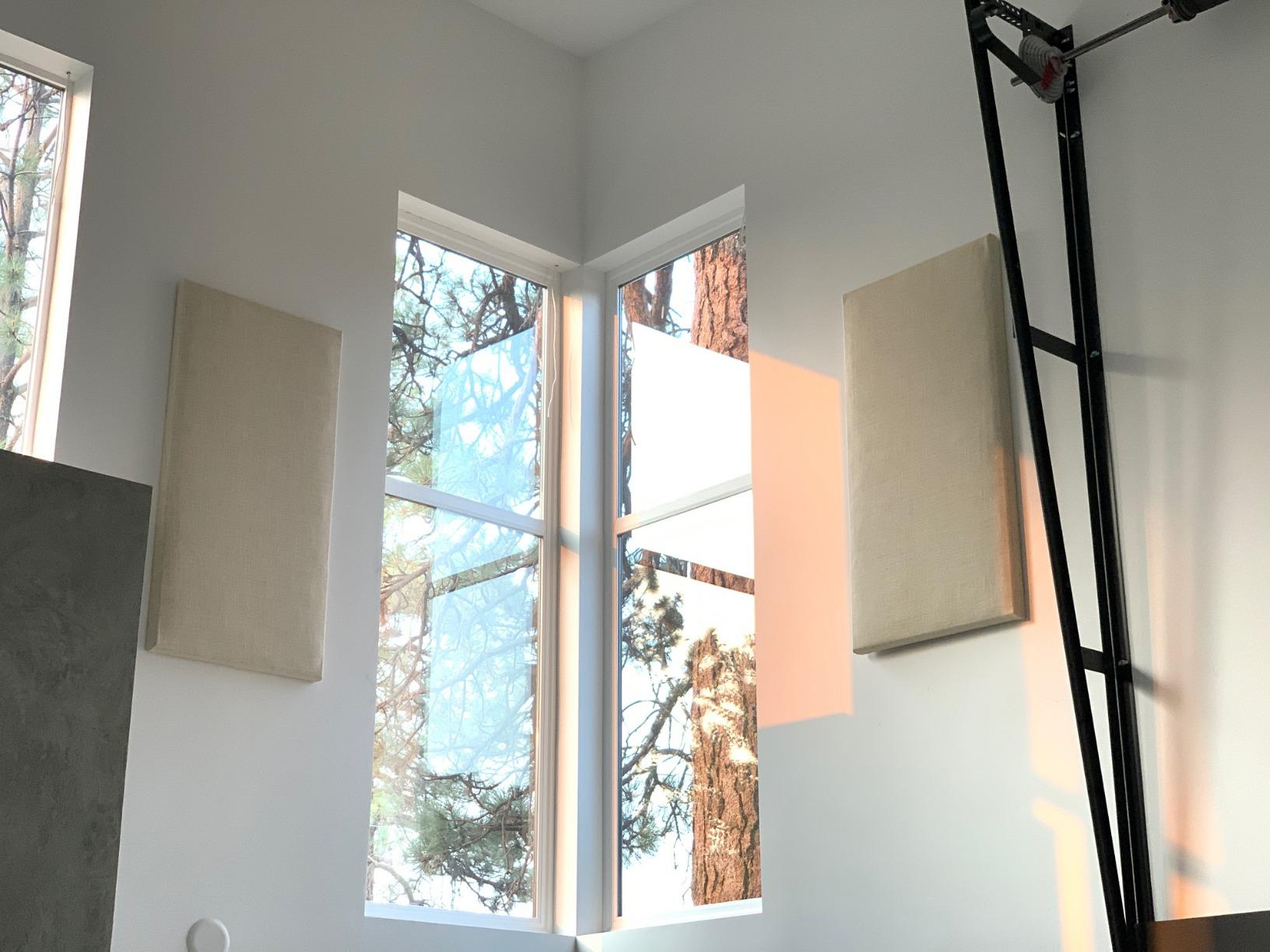
What sets it apart from cheaper panels is the frame. Most budget products are a fabric shell stapled around a compressed core, and they flex, sag and tear at the corners when you staple them to a stud. This one is rigid enough to hang from a ceiling frame, and the beveled edge keeps the panel from reading as a plain rectangle on a wall.
The stated NRC of 1.0 is the highest figure listed by any product in this roundup. Treat it as a manufacturer claim rather than an independent lab result, because none of these brands publish third-party frequency curves, but the 2 inch depth and mineral wool core are consistent with a genuinely broadband absorber.
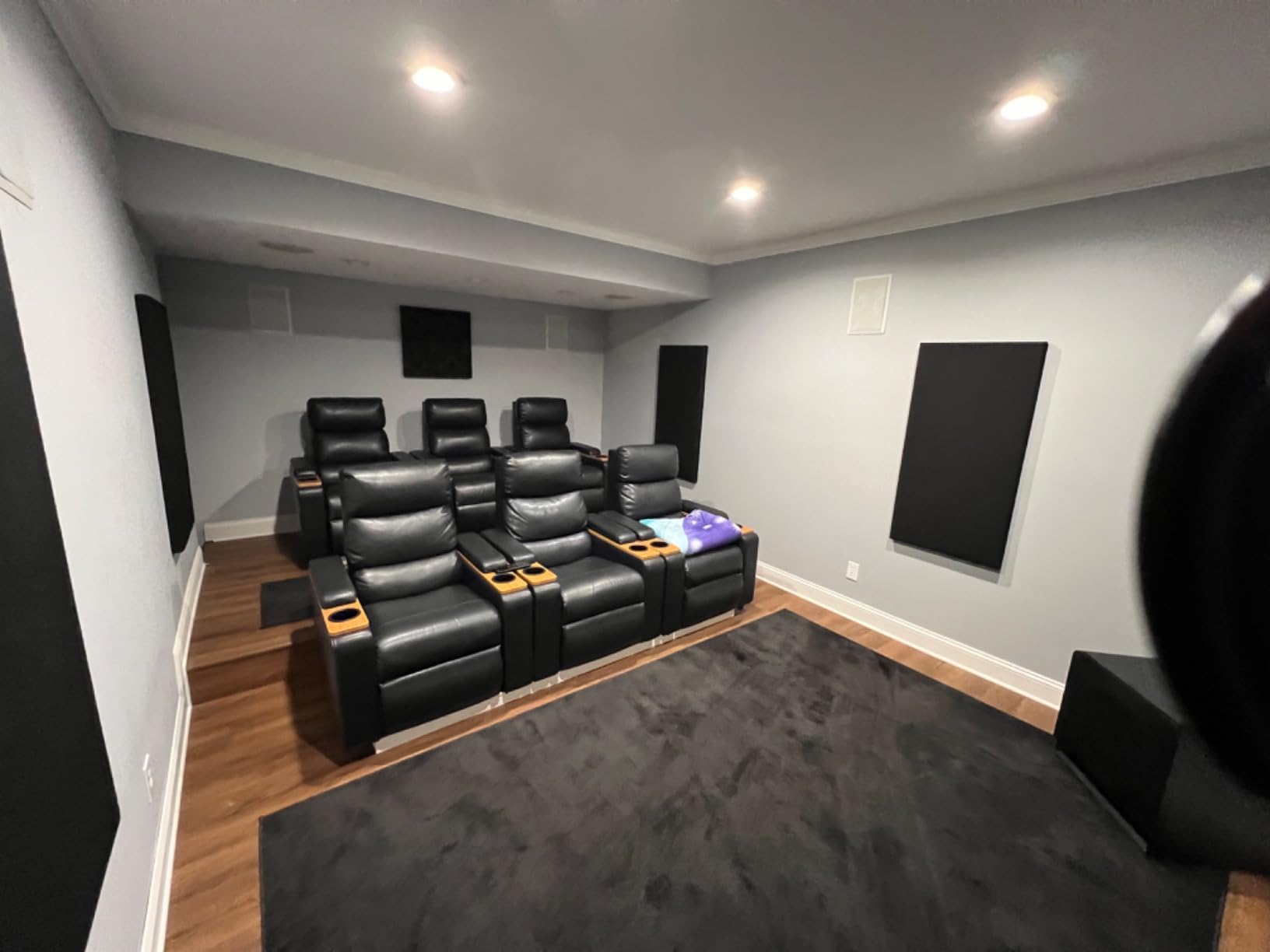
Who the ATS Acoustics panel suits
This is the pick for anyone with a dedicated room, or a bedroom they have partially cleared out. The solid frame means you can mount it on a ceiling cloud frame, hang two side by side for a tall wall, or fit them into a corner without worrying about fabric tearing.
It is also the safest decorative choice in the guide. Fog, burgundy, black, ivory and natural colorways let you match an existing room instead of covering the walls in visible foam, which matters when the studio is also a bedroom.
Who should skip it
If you rent, or if you want a weekend install with no drilling, the included Z-clips are wall-mount only and the backer board is thin, so ceiling mounting needs hardware you buy separately. Budget renters get a better time with peel-and-stick panels.
Second caveat: the drilling template is paper, one per order, and it wears out on a larger install. Have a pencil and a level ready, and mark your stud locations before you start.
2. Soon Global Arcadian Vortex 6-Pack – Best Coverage You Can Install Without a Drill
Soon Global Acoustic Wall Panels, Arcadian Vortex
6 x 23.6 inch panels
Polyester fiber
Groove diffusion pattern
30 adhesive squares
Pros
- Tool-free peel and stick mounting
- 23.6 inch square footprint per panel
- Wood-texture print flows across adjoining panels
- Light enough for solo installation
- Grooves add diffusion as well as absorption
Cons
- Thinner than a 2 inch framed panel
- Printed wood texture rather than real veneer
- Manufacturer warranty listed as none
- Adhesive squares are single use
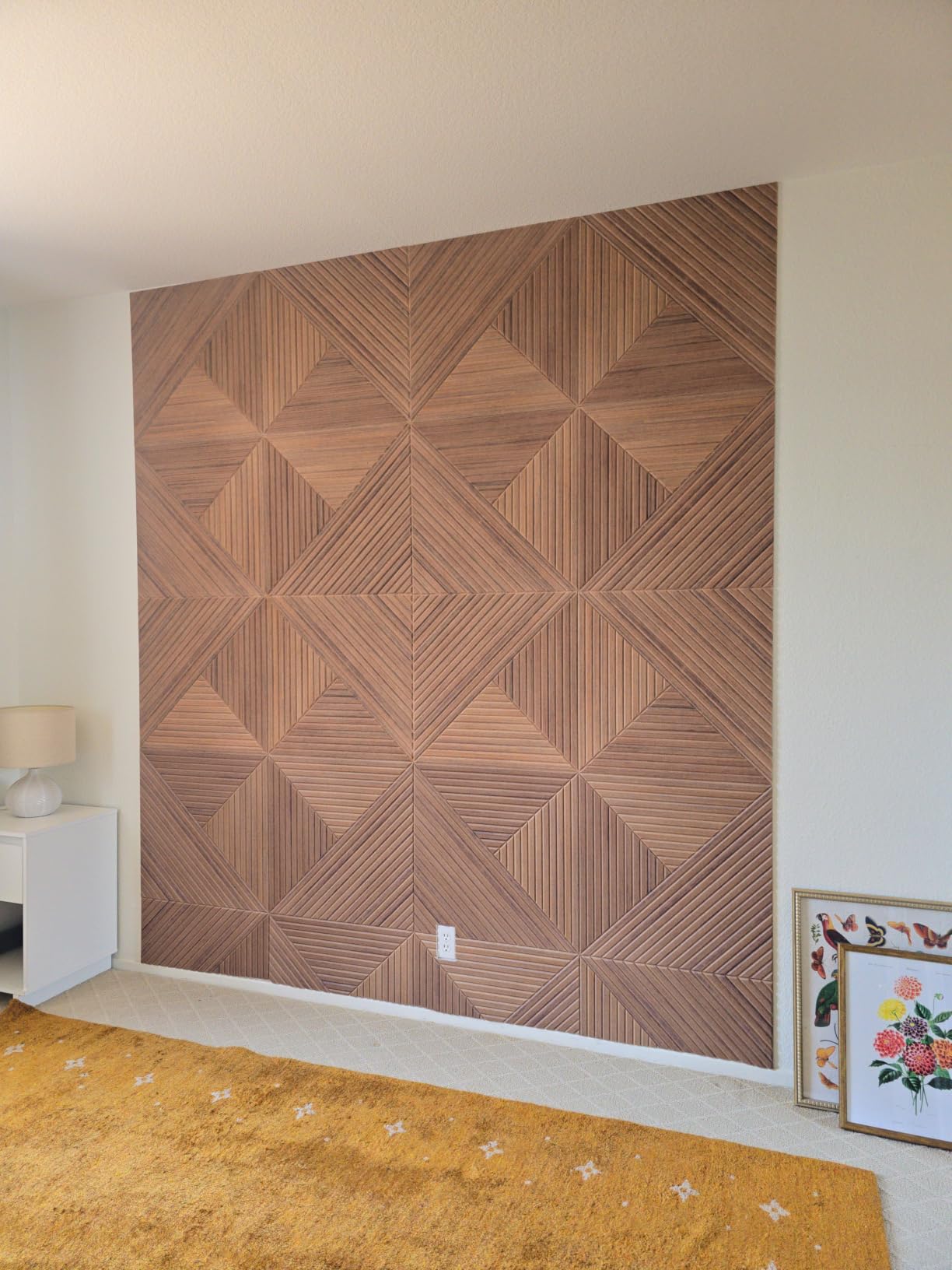
This is the panel we recommend to people whose studio is also their living room. The continuous wood-texture print lines up across adjoining panels, so a wall of six reads as one deliberate feature rather than as clutter stuck to drywall.
It is also the top seller in the whole Recording Studio Acoustical Treatments category we looked at, sitting at number 7, with 79 percent of its ratings at five stars. Buyers consistently mention the same thing: installation takes minutes and needs no tools at all, because each 6-pack includes 30 transparent double-sided adhesive squares.
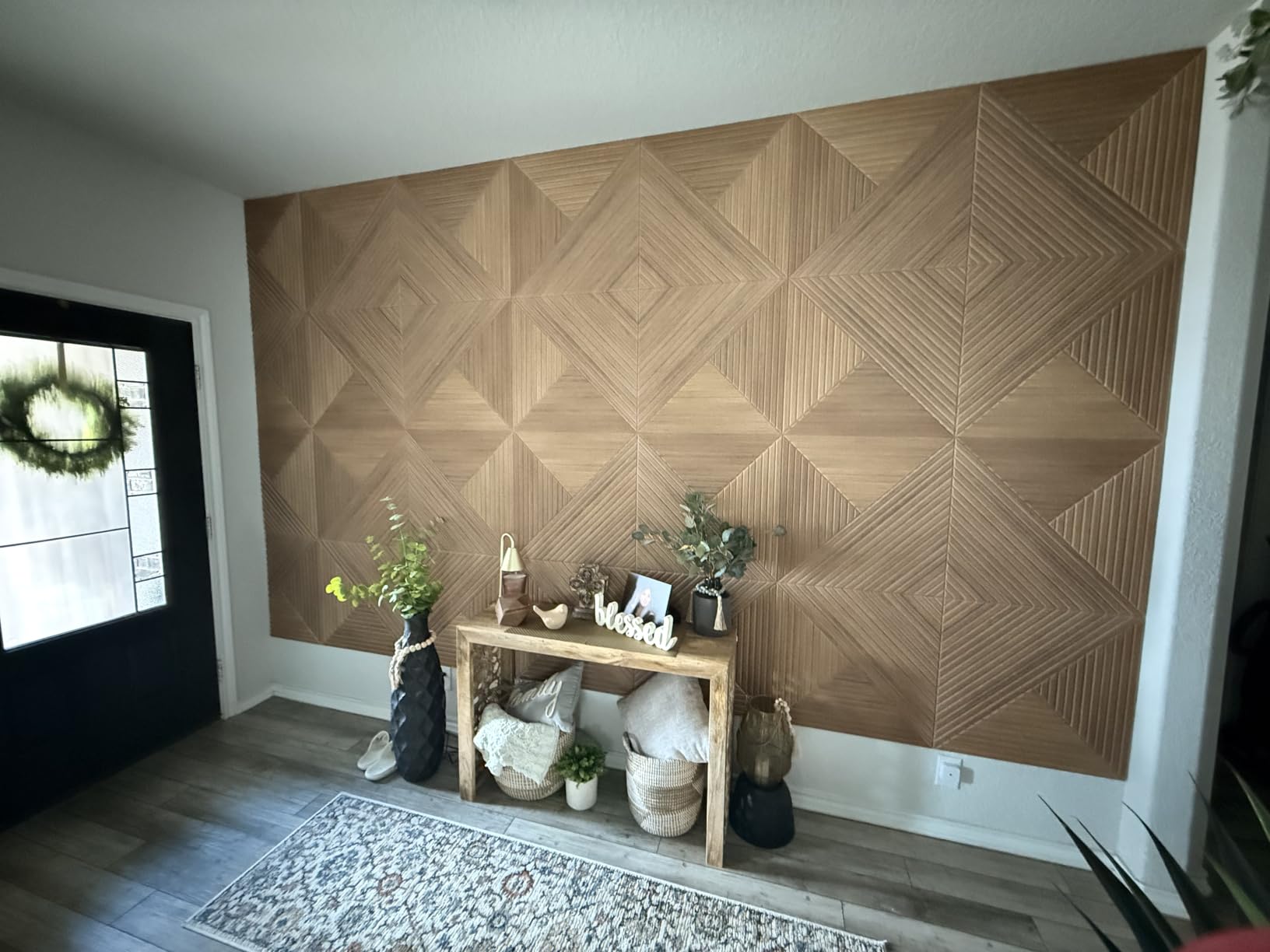
The technical story is a high-density polyester fiber construction with a linear groove pattern. The grooves do two jobs: they scatter what they do not absorb, which is a diffusion effect, and they give the panel the shallow relief that plain flat tiles lack. Each panel measures 23.62 inches square, so six panels cover roughly 23 square feet of surface.
Be clear about the limit. Polyester at this thickness is a mid and high frequency absorber. It will not touch a 60 Hz room mode, and if your problem is boom in a small square room, these panels are a complement to bass traps rather than a substitute.
Who the Soon Global panels suit
They suit anyone who cannot drill, who moves house often, or who needs the studio to survive a conversation with a housemate. Six panels mounted at first reflection points will visibly change the boxiness of a voice recording in a small room.
The groove profile also makes them a reasonable second layer behind a microphone, where you want some scattering rather than pure deadening right behind the singer.
Who should skip it
The manufacturer warranty is listed as none, so you are relying on the seller alone if a pack arrives damaged. On a large installation we would rather have a product with a written warranty behind it.
Also note that the adhesive squares are single use, and printed wood texture will not fool anyone who looks at a corner. If your room already has real timber, a fabric-wrapped panel in a neutral color blends in better.
3. BXI 16 x 12 x 0.4 6-Pack – The Best Cost Per Square Foot of Coverage
BXI Sound Absorber – 16 X 12 X 0.4 Inches 6 Pack High Density Acoustic Absorption Panel, Sound Absorbing Panels Reduce Echo Reverb, Tackable Acoustic Panels for Wall and Ceiling Acoustic Treatment
6 x 16 x 12 x 0.4 inches
200kg/m3 polyester
NRC 0.95
Class B1 flame retardant
Pros
- Lowest cost per square foot in this guide
- Stated NRC of 0.95 at a fraction of panel cost
- Cuts cleanly with a utility knife
- Class B1 flame retardant and formaldehyde free
- Nine colorways
Cons
- Only 0.4 inch thick so no bass control
- Cut size runs slightly under the listed dimensions
- Firm rather than forgiving material
- Adhesive sold separately
When people ask where to start with a very limited budget, this is our answer. Six panels cover 7.7 square feet, and the material is high density 200kg/m3 polyester fiber with a stated NRC of 0.95. That is a remarkable figure for the money, and for echo and reflection control in a small room it genuinely performs.
Buyers report a noticeable calming of clapping and ringing reflections in apartments and offices, and praise the fact that they cut with a razor and mount with ordinary double-sided tape. The material is firm enough that buyers also use them as surface protectors or spacers.
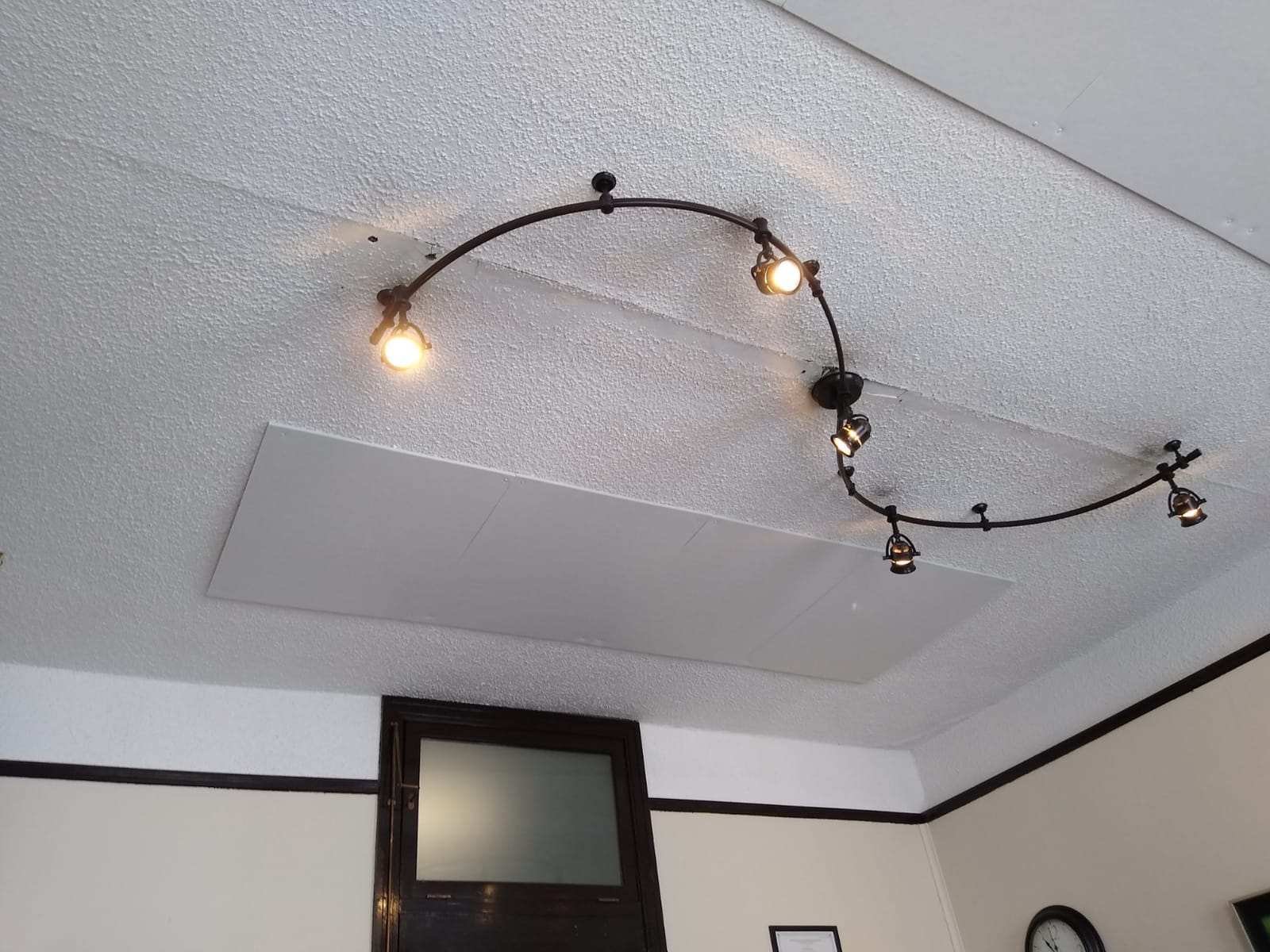
The specification is unusually complete for a budget tile: Class B1 flame retardant, formaldehyde free, odorless and non-toxic. In a bedroom studio that matters more than most people expect, because a small room concentrates whatever the panel is made of.
The catch is depth. At 0.4 inch, this panel works above roughly 500 Hz. It will clean up the sibilance and boxiness in your vocal chain and it will not move a 100 Hz room mode. Budget should go into depth first, coverage second.
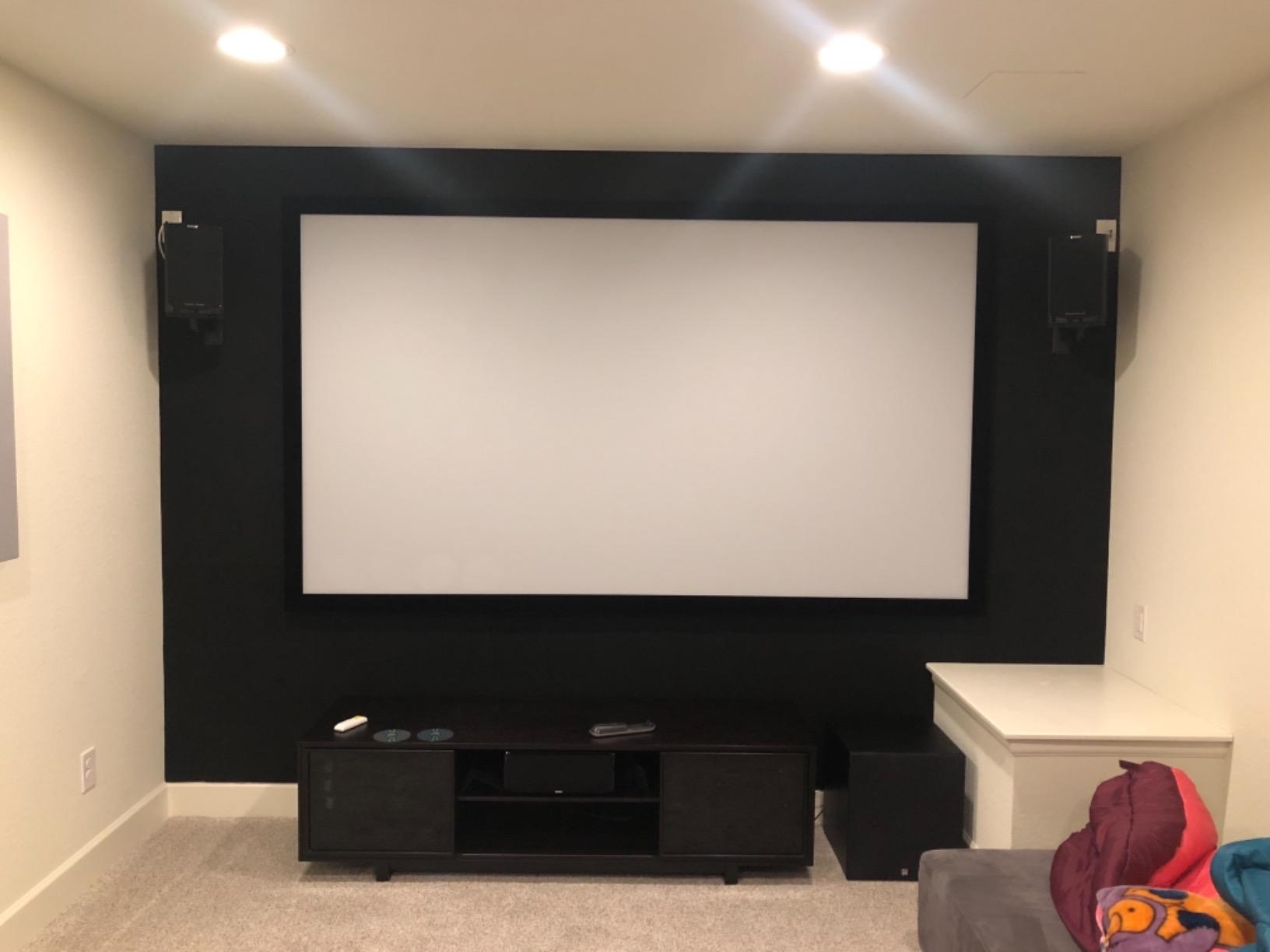
Who the BXI tiles suit
They suit a first-time studio builder working in a small room who wants to hear the difference between a treated and untreated space before committing to a larger layout. A pack on the wall behind the desk changes your perception of your own mixes immediately.
They also suit renters, because the same adhesive that lets you mount them lets you remove them, and the fact that you can cut them means you can fit around a window or a sloped ceiling.
Who should skip it
Skip them if your main complaint is bass. No quantity of 0.4 inch tiles will change low-frequency behavior, and covering a whole room with them wastes money you would do better spent on thicker panels.
Also note that the actual cut size runs a little under the listed dimensions, roughly 11 7/8 by 15 3/4 inches. If you are laying out a precise grid, measure one panel first. Adhesive is sold separately.
4. TroyStudio 12 x 12 x 2 Foam 52-Pack – The Most Coverage Per Pack
TroyStudio Thick Acoustic Foam Panels, 12 X 12 X 2 Inch 52 Pcs Broadband Sound Absorbing Foam, Dense Soundproof Padding Tile, Recording Studio Foam Absorber, Groove Decorative 3D Wall Ceiling Panel
52 x 12 x 12 x 2 inches
Open-cell foam
NRC 0.8
52 sq ft coverage
Pros
- Largest coverage area of any budget option here
- Grooved 3D profile looks finished
- Reported drop in boxy reflections
- Works for rear wall and rear port treatment
- Light weight mounts easily
Cons
- Vacuum-packed foam arrives partly crushed
- Some panels never fully recover shape
- Material lighter than it looks
- Panels measure slightly under 12 inches
- Adhesive sold separately
Fifty-two panels at 12 by 12 inches gives you 52 square feet of coverage, which makes this the practical choice for treating an entire ceiling or a full rear wall in one order. For a drum room, a large mixing space or a long rectangular bedroom, the sheer area is the selling point.
The groove structure gives it a much more finished look than plain square wedge foam, and owners of rear-ported monitors report a cleaner, drier vocal sound after covering the wall behind and beside their speakers. The panel is flame retardant per California Technical Bulletin 117-2013, which matters if your state requires it.
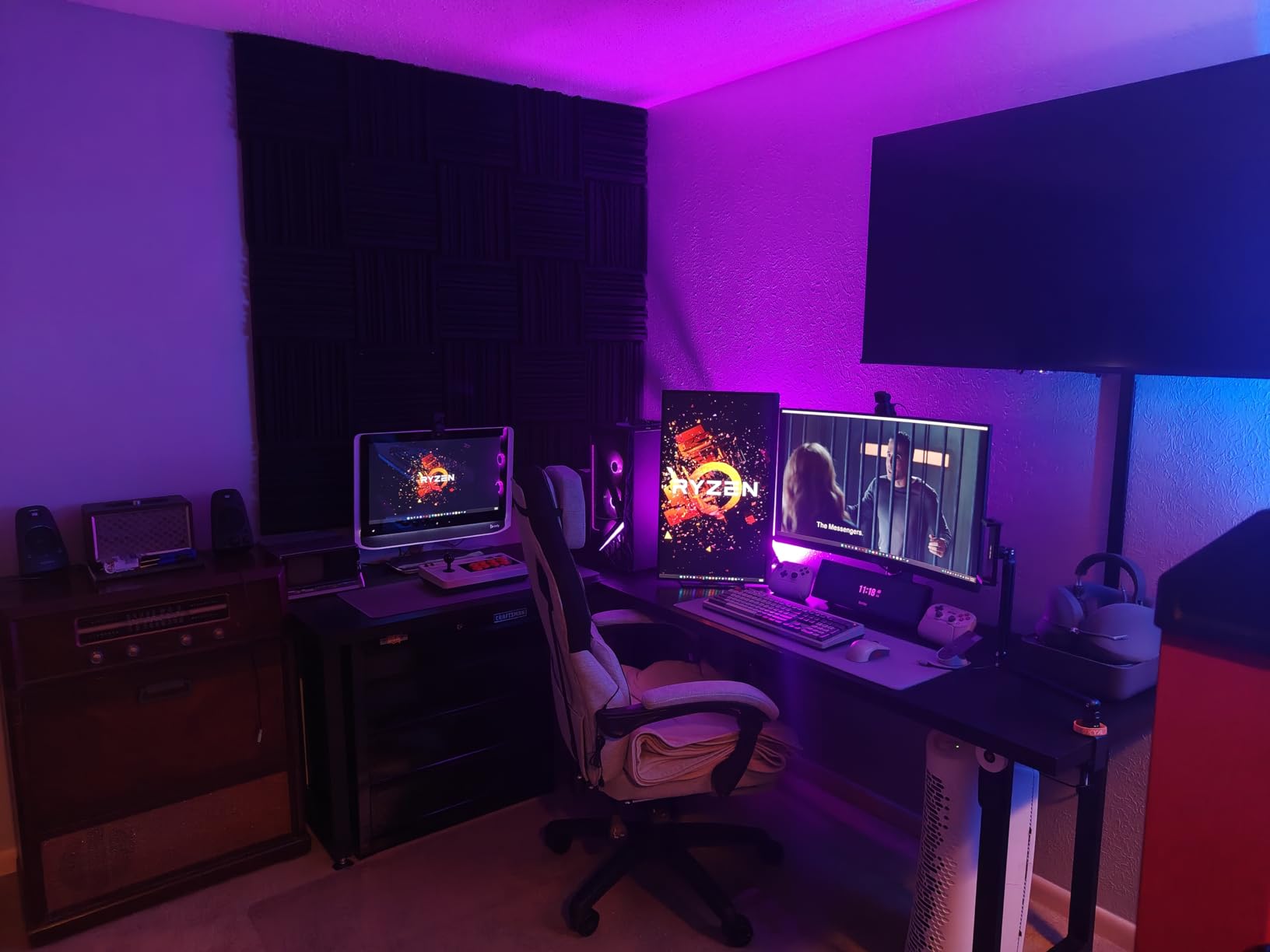
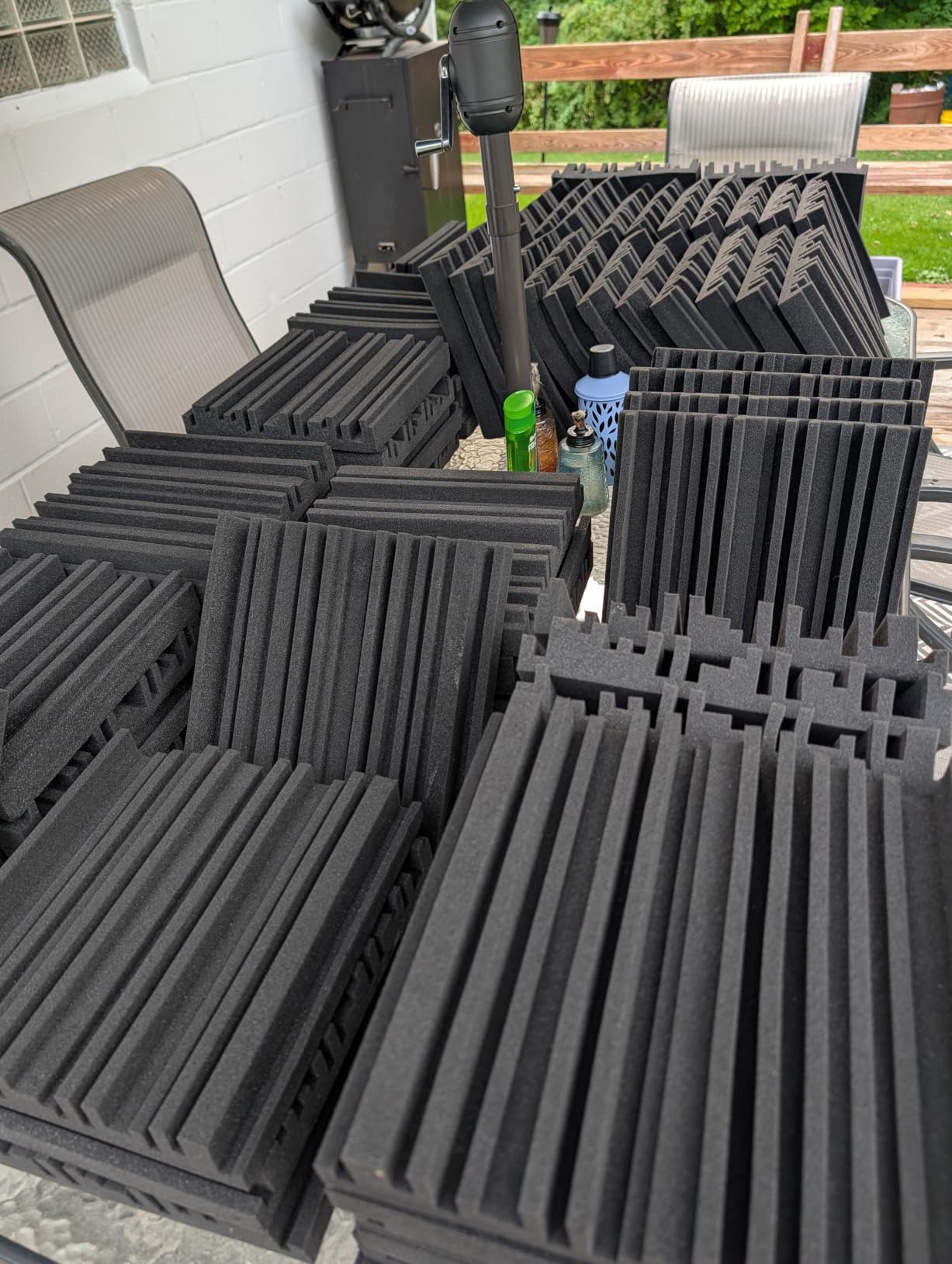
Here is the honest caveat that reviewers raise most: foam arrives vacuum-packed and partly crushed. Buyers report needing hours to days of air-out, and some say certain tiles never fully recover their shape. Restoring a badly deformed tile can mean soaking it and tumble drying on low heat.
The stated NRC is 0.8 with an average absorption coefficient of 0.77, which is respectable for open-cell foam at 2 inches, but the material is lighter and less dense than buyers expect. Treat this as a large-area reflection absorber rather than a broadband corner solution.
Who the TroyStudio foam suits
It suits anyone with a big surface to cover fast: a ceiling, the rear wall of a home cinema that doubles as a mix room, or a rehearsal space. Two packs will cover more wall than most people install in a bedroom studio.
It is also a good behind-the-vocalist treatment. If your singer is recording in the room with you, a thick foam panel behind them catches the worst of the reflection that would otherwise come back into the microphone.
Who should skip it
Skip it if bass is your problem. Open-cell foam at 2 inches will not meaningfully move a room mode, and treating only the highs in a boomy room can leave you with a thin, honky sound that is harder to mix than the untreated version.
Buyers also report that external adhesive leaves minimal foam residue on removal, which is the one genuinely good piece of news if you rent. Unpack and air the panels a full day before you mount them.
5. UMIACOUSTICS 23.6 x 11.8 4-Pack – Real 2 Inch Fiberglass With Removable Mounting
4 Pack Acoustic Panels 23.6″x11.8″ Soundproof Fiberglass Panel, Black
2 inch depth
White fiberglass core
Polyester fabric wrap
E0 rating
2 year warranty
Pros
- True 2 inch fiberglass core at a mid-tier price
- 78 percent of ratings are 5 star
- Template and nails included
- Removable mounting design
- White core avoids the yellow-glass look
Cons
- Lowest review count in this guide at 203
- Coverage figure on the spec sheet looks inconsistent
- No published STC rating
- Fiberglass is heavier than polyester tiles
This is the product we would buy if we wanted genuine 2 inch fiberglass depth without moving up to a framed wood panel. The core is high-density white fiberglass under a 100 percent polyester fabric wrap, and the white core avoids the yellow tint that makes cheap fiberglass panels look tired after a year.
78 percent of its ratings are five star, the strongest consistency of any fabric-wrapped option we looked at. Buyers highlight the included mounting template and nails, and the fact that the panels are removable, which makes them a reasonable choice in a rental if you use the supplied fixings rather than adhesive.
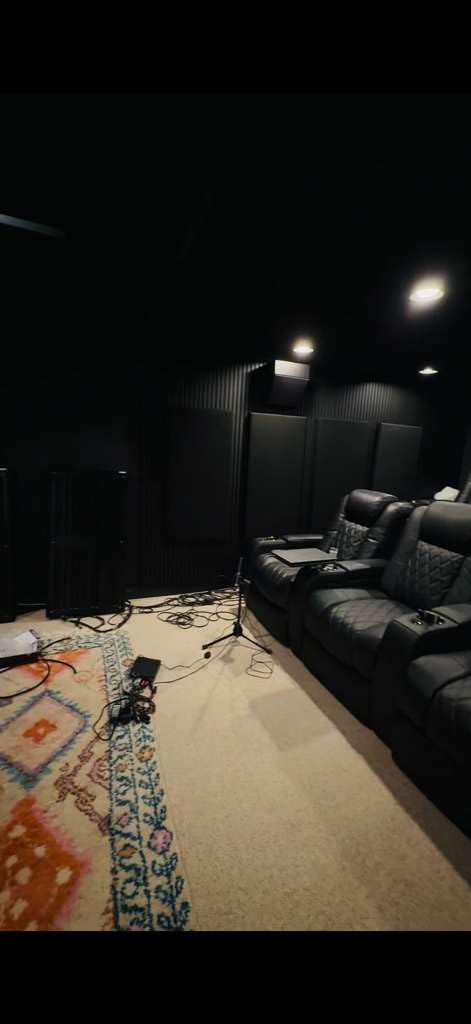
Depth is the whole story here. A 2 inch air-filled cavity reaches meaningfully lower than a 0.4 inch polyester tile, and white fiberglass has a denser, more consistent structure than foam of the same thickness. This is the panel that fixes early reflections and first reflection points in a room where foam feels thin.
Two honest warnings. There is no published STC figure, so anyone promising you isolation with this product is guessing. And the coverage figure printed on the spec sheet does not match what four 23.6 by 11.8 inch panels physically cover, so do your own area math.
Who the UMIACOUSTICS panels suit
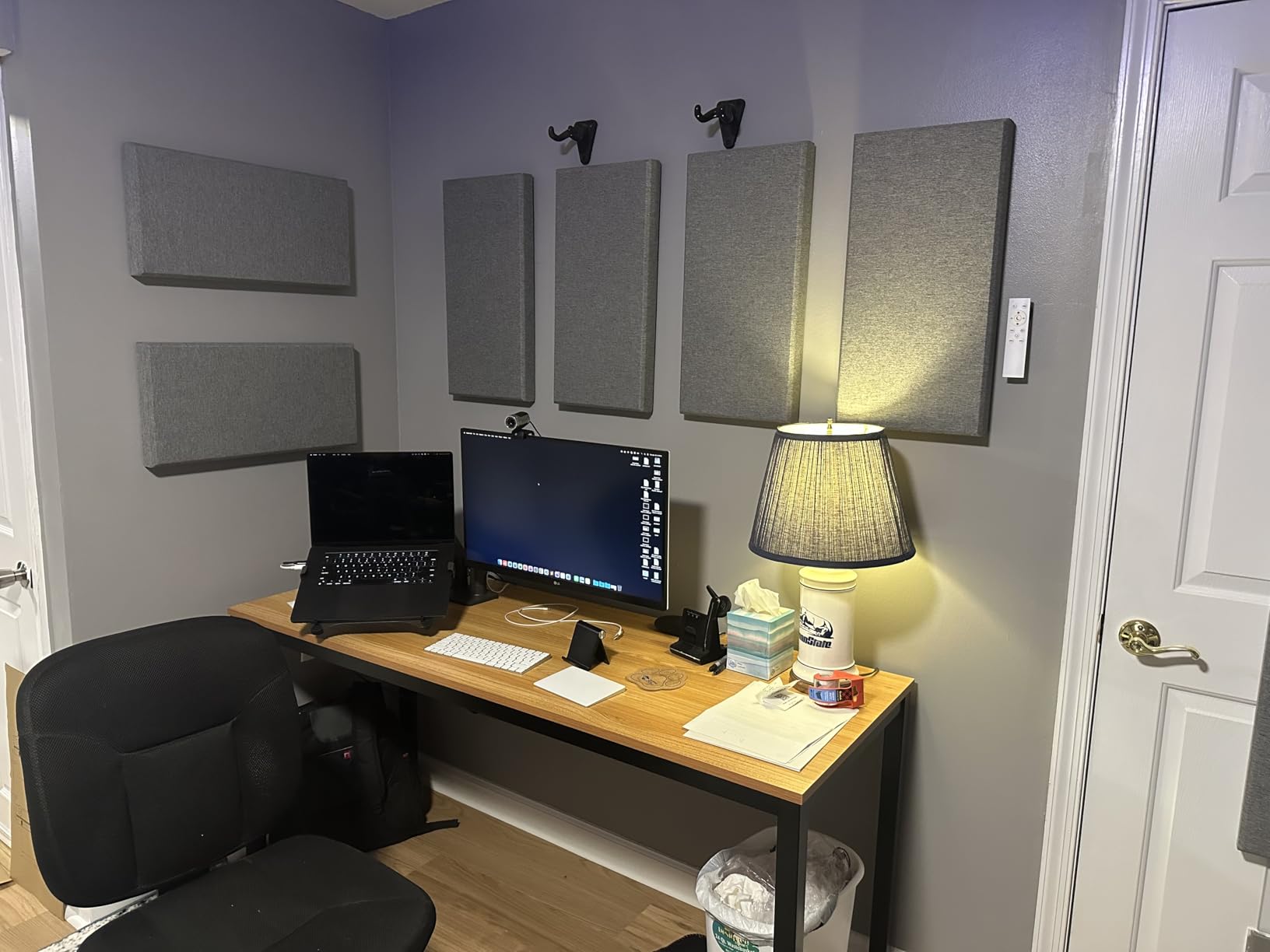
They suit a bedroom studio where you want a real broadband absorber at the listening position but do not want to frame your own panels. The 23.6 by 11.8 inch format stacks vertically, so two panels cover a narrow wall beside a monitor pair cleanly.
The E0 environmental rating and a two-year manufacturer warranty also make them easier to defend to a housemate than an uncertified tile.
Who should skip it
The listing has the smallest review base in this guide at 203 ratings. That is not a defect, but it is a shorter track record, and long-term durability of a fiberglass core wrapped in fabric is something you learn over years rather than months.
If you need low-frequency control, keep looking. These absorb reflections well; they do not trap corners. Add bass traps as a separate step.
6. TONOR 47.2 x 23.6 x 0.35 8-Pack – The Biggest Panels With the Easiest Install
TONOR Large Acoustic Panels Self Adhesive-8 Pack 47.2″ X 23.6″ X 0.35″
8 x 47.2 x 23.6 inches
212.2kg/m3 polyester
NRC 0.9
Full-back adhesive
Pros
- Enormous 47.2 x 23.6 inch panels covering 61.1 sq ft
- Full-back adhesive needs no tape or screws
- Highest quoted polyester density in this guide at 212.2kg/m3
- Stripe pattern reads as intentional decor
- Reinforced corner packaging
Cons
- Only 0.35 inch thick despite the size
- NRC claim sits oddly with the thin profile
- Backing is hard to reposition once applied
- Needs a smooth clean surface
- Widest spread of mid-tier ratings in the set
Eight panels of 47.2 by 23.6 inches cover roughly 61 square feet, which means a whole ceiling or two full walls in a single order. For a large room where you want an even, uninterrupted coverage pattern rather than a grid of small squares, the sheer size is genuinely useful.
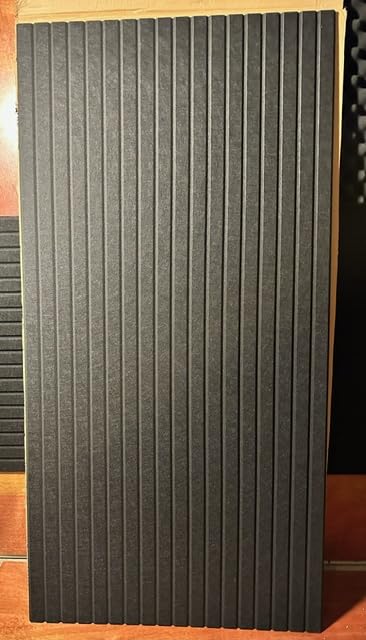
Buyers like that the full-back adhesive means no tape, no screws and no drill, and that the classic stripe pattern reads as deliberate wall decor rather than studio gear. The stated density of 212.2kg/m3 is the highest quoted among the polyester options we compared.
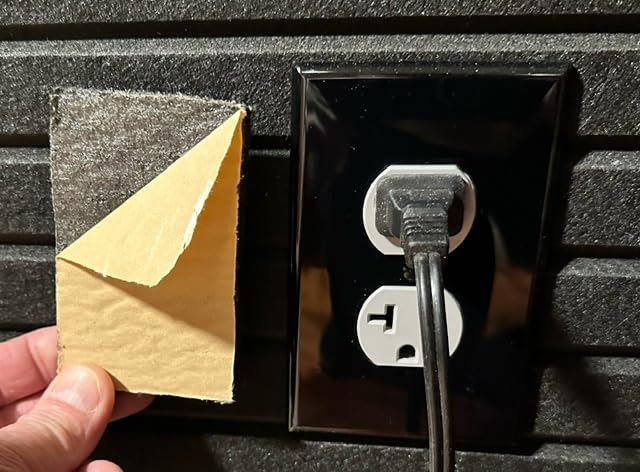
The problem is the profile. At 0.35 inch these are among the thinnest panels in the guide, even though they are the largest. A stated NRC of 0.9 on a panel this thin should make you skeptical, and buyers do exactly that: the common reservation is the mismatch between the imposing size and the shallow depth.
That mismatch is not fatal for echo control. It is fatal if you were hoping to solve a bass problem. Performance here depends almost entirely on how much of the room you are willing to cover.
Who the TONOR panels suit
They suit large multipurpose rooms, living room studios and home theaters where you want a lot of covered surface with no drilling and no visible fixings. The stripe pattern works well in a bedroom or lounge.
They are also a good pair with corner bass traps: use the big thin panels across the broad surfaces for reflection control, then place traps in the corners for the low end.
Who should skip it
Skip them if you want to relocate panels later. The adhesive is difficult to reposition once applied, and it will lift on a textured wall. Test a corner with a spare panel before you commit to a full layout.
You will also need genuinely smooth, clean surfaces. On drywall with texture, use a panel that brings its own mechanical fixings.
7. JaneTech Art Acoustic Panels 48 x 32 8-Pack – Decor That Absorbs Mid Frequencies
JaneTech 8-Pack Art Acoustic Wall Panels 48×32 Inches Acoustic Treatment Panels- Decorative Soundproof Wall Panels for Studios, Offices, Home, Included Nano Glue Stickers
48 x 32 inch overall
Polyester fiber
Flat 2D printed texture
Nano glue stickers
Pros
- Sold as wall art
- so the room still looks like a home
- Eight print designs across multiple sizes
- Nano glue stickers make a three-step install
- Polyester avoids the mildew risk of low-density felt
- Light at 4.2 pounds for the pack
Cons
- Flat 2D panel with printed texture rather than 3D relief
- 16 x 12 inch panels in a light build give limited bass control
- Nano stickers are weaker than construction adhesive
- Thickness not stated in the spec sheet
- No published NRC figure
Some rooms cannot look like a studio, and that is a real constraint rather than a preference. These panels are sold as decorative art prints with acoustic backing, and buyers install them in home offices, living rooms and home theaters precisely because nobody objects to them.
There are eight print designs in the Celestial Echoes family alone, plus larger 72 by 48 inch versions, which lets you build a full feature wall with matching artwork. The pack weighs 4.2 pounds, light enough that one person can mount them with a helper on a ladder.
Be clear-eyed about what you are buying. These are flat 2D panels whose dimensional look is a printed texture, not a true 3D relief, and the listing says so directly. That means they do the visual work of absorption rather than the scattering work, so they will not create diffusion the way a grooved panel does.
Who the JaneTech art panels suit
They suit home office studios, podcast rooms and multipurpose living spaces where appearance comes before maximum low-frequency control. Buyers report that the artwork reads as intentional, which removes the most common objection to acoustic treatment in a shared home.
They are also a reasonable second layer in a room that already has thicker panels, filling the awkward gaps between windows and doors where a large rigid panel will not fit.
Who should skip it
Skip them for bass work and for critical listening at the listening position, where depth matters more than looks. Each panel is only 16 by 12 inches, so you need many of them to cover any real surface, and no NRC figure is published.
The nano glue stickers are also weaker than construction adhesive and will not hold on a textured wall. If your drywall is textured, choose a panel with nails or a Z-clip system instead.
8. Dmsky 18-Pack 12 x 12 x 0.4 – The Most Reviewed Tile in the Guide
18 Pack Gray Acoustic Panels 12″X12″X 0.4″ Soundproof Wall Panels Wall Decoration Sound Absorbing Panel High-Density Sound Deadening Panels Acoustic Treatment Panel For Home Studio
18 x 12 x 12 x 0.4 inches
215kg/m3 polyester
NRC not published
Self adhesive
Pros
- The most reviewed product here at roughly 3700 ratings
- 215kg/m3 density is high for a budget tile
- Chamfered 45 degree edges remove visible gap lines
- Very low cost per square foot
- Large 18 pack covers 18 sq ft
Cons
- Adhesive effectively permanent and can strip paint
- Not practical to relocate
- Some tiles arrive deformed from vacuum packing
- Actual size about 11.75 inches
- Repeated reports of a musty odor developing
With roughly 3,700 ratings this is the most established product in the guide, and it sits at number 12 in Recording Studio Acoustical Treatments. If you want a long, well-documented record rather than a recent listing with a thin review count, this is the tile people actually keep buying.
The 45 degree chamfered beveled edge is the detail that matters most in practice. Plain square tiles leave visible gap lines that make a wall look unfinished; the chamfer closes those lines so a covered ceiling or wall reads as one continuous surface. Density is quoted at 215kg/m3, high for a budget tile, and buyers report it genuinely taking echo out of a room.
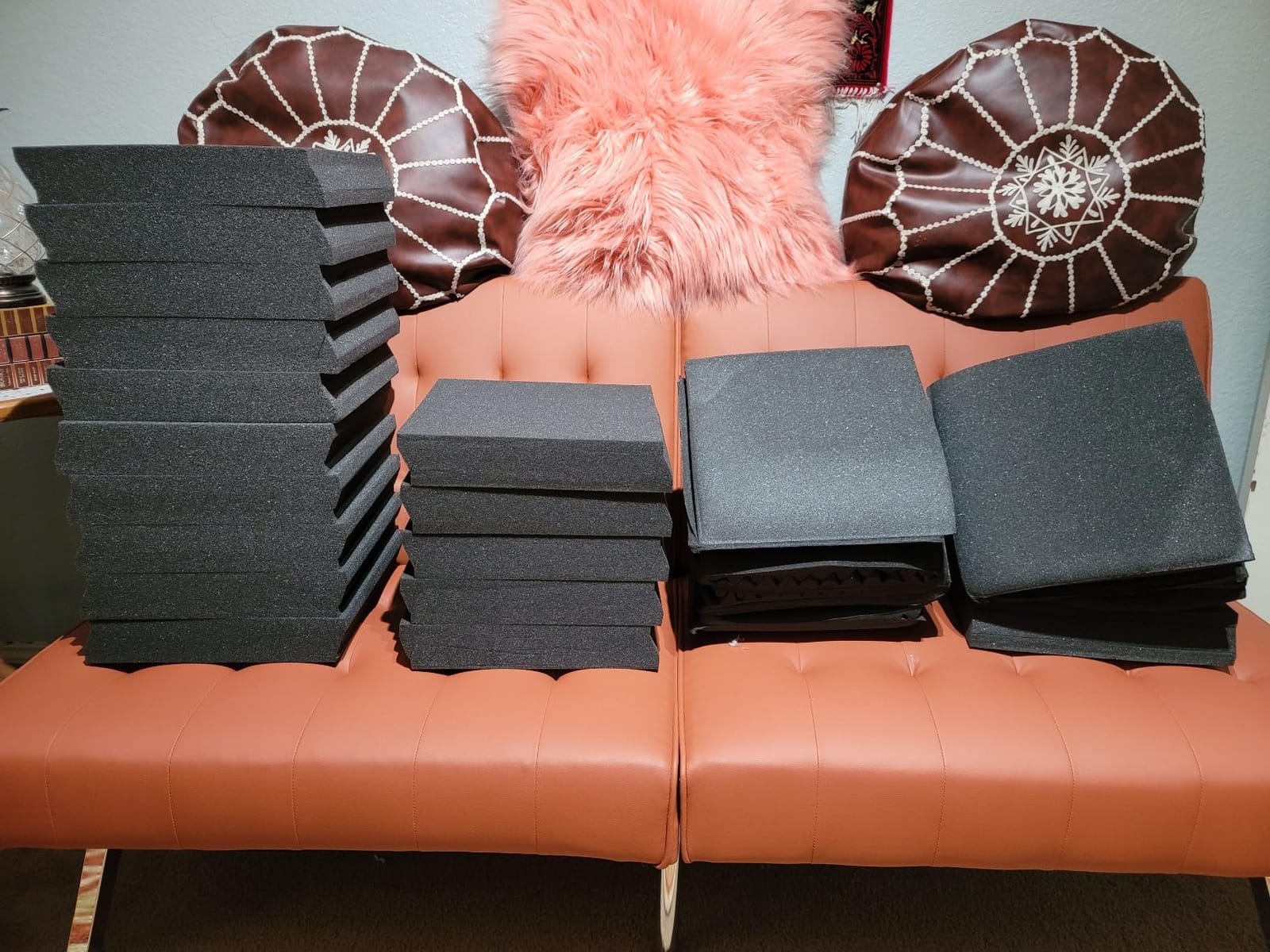
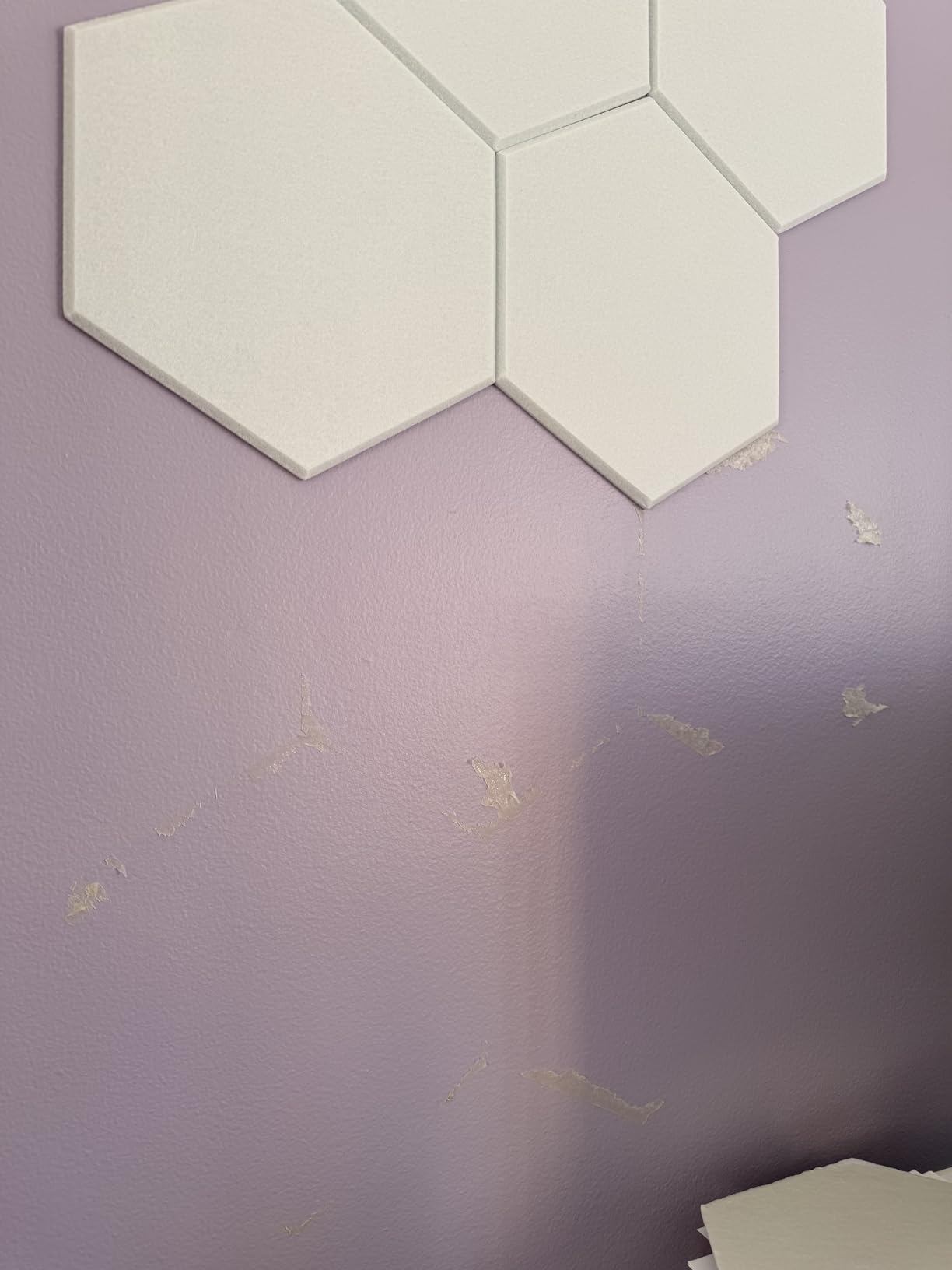
It is also the most polarizing. Ten percent of its ratings are one star, and the two recurring warnings are that the adhesive is effectively a one-way decision that can strip paint, and that a subset of packs develops a musty or mildew smell within a few months of installation.
Buyers also report that tiles measure about 11.75 inches rather than 12, and that some arrive deformed from vacuum packing. If you rent, or if you care about the paint on the wall, this is not the product for you.
Who the Dmsky tiles suit
They suit owners who want to cover a whole ceiling or several walls and care most about cost per square foot. Eighteen panels at 12 by 12 inches give you 18 square feet, and the chamfered edge makes large layouts look deliberate.
They cut cleanly with a large paper cutter, which matters if your layout has to fit around a window or a light fitting.
Who should skip it
Skip them if you rent. The adhesive is effectively permanent, several buyers report it stripped paint, and there is no practical way to relocate the panels later. Use a removable mounting method instead.
The recurring musty odor reports are worth taking seriously in an enclosed bedroom studio. Air the tiles for several days before mounting, and do not cover a small room entirely in them.
9. JBER 4-Pack 7 Inch Corner Bass Traps – The Cheapest Fix for Corner Boom
JBER 4Pack Acoustic Foam Corner Bass Traps, Studio Foam Corner Block Finish
4 pack
7 inch triangular profile
12 x 7 x 7 inches
Corner or wall mount
Pros
- Lowest cost way to address corner bass buildup in this guide
- 7 inch depth gives a real triangular profile
- Square edges look professional rather than toy-like
- Installs with glue tape or nails
- Multiple pack counts and 3 inch or 7 inch depths
Cons
- Foam cannot replace broadband panels at the listening position
- Small surface area per trap versus a 24 x 48 panel
- Foam collects dust and degrades visually
- Absorption is directional so placement matters
- No published NRC figure
Corner bass buildup is the complaint that comes up most often in home studio threads, and this is the cheapest credible answer we found. Owners put one in each corner and report smoother low end and less boom in small rooms, which is exactly what corner trapping is supposed to do.
The 7 inch triangular profile is the point. Flat tiles cannot fill a corner, so they leave the worst part of the room untreated. A 7 inch triangle physically occupies the corner volume where pressure waves stack, and the shape matters more than the branding.
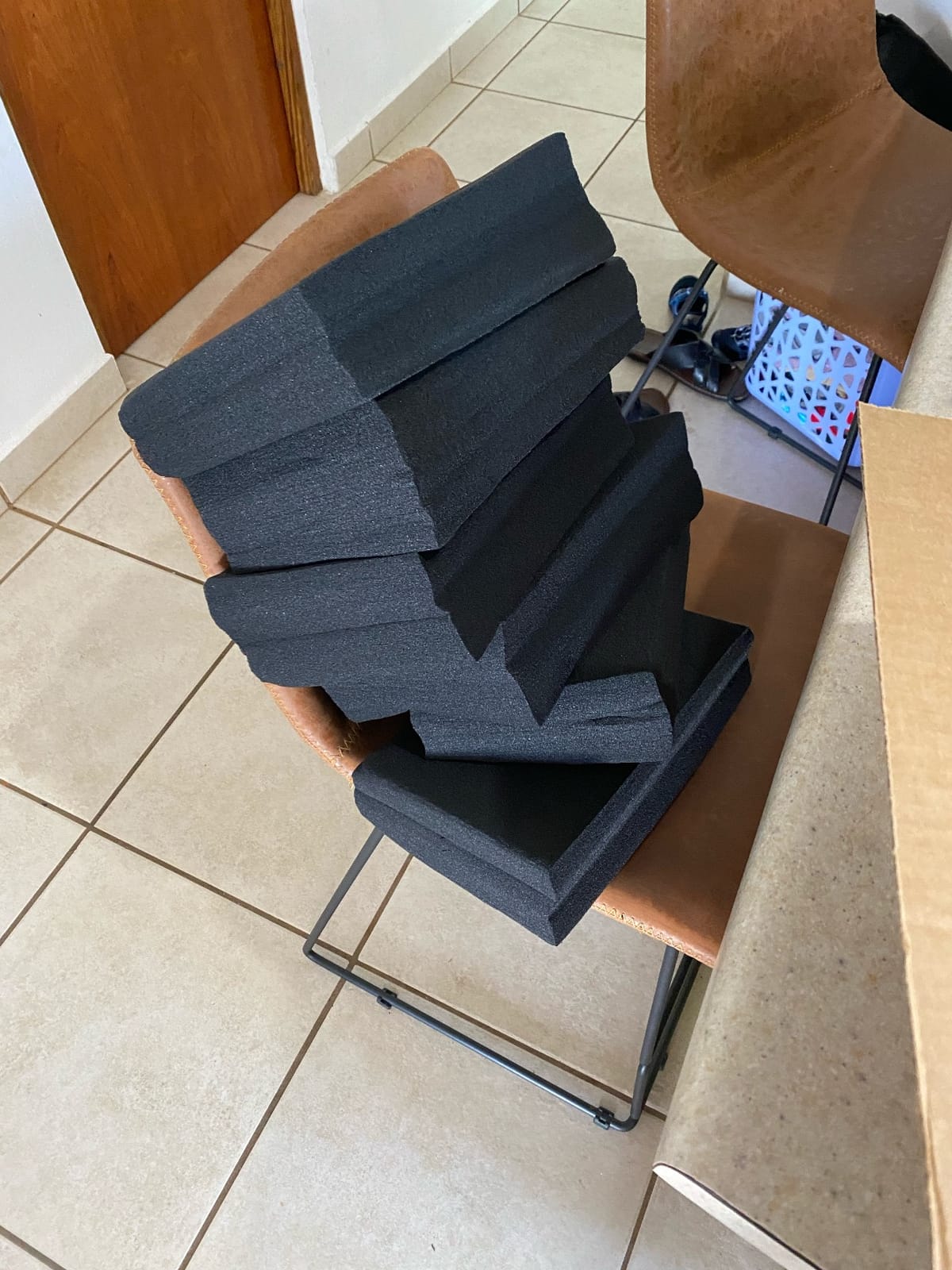
The square-edged finish is the other thing buyers like. It reads as professional studio treatment rather than generic wedge foam, and the sharp edges make four traps in four corners look deliberate. Mounting is flexible: glue, double-sided tape or nails, vertically in a corner or horizontally along a wall.
The recurring framing in reviews is that these supplement broadband absorption rather than replace it. They are open-cell foam, so they do not add density-driven low-frequency performance the way a mineral wool or fiberglass trap would.
Who the JBER traps suit
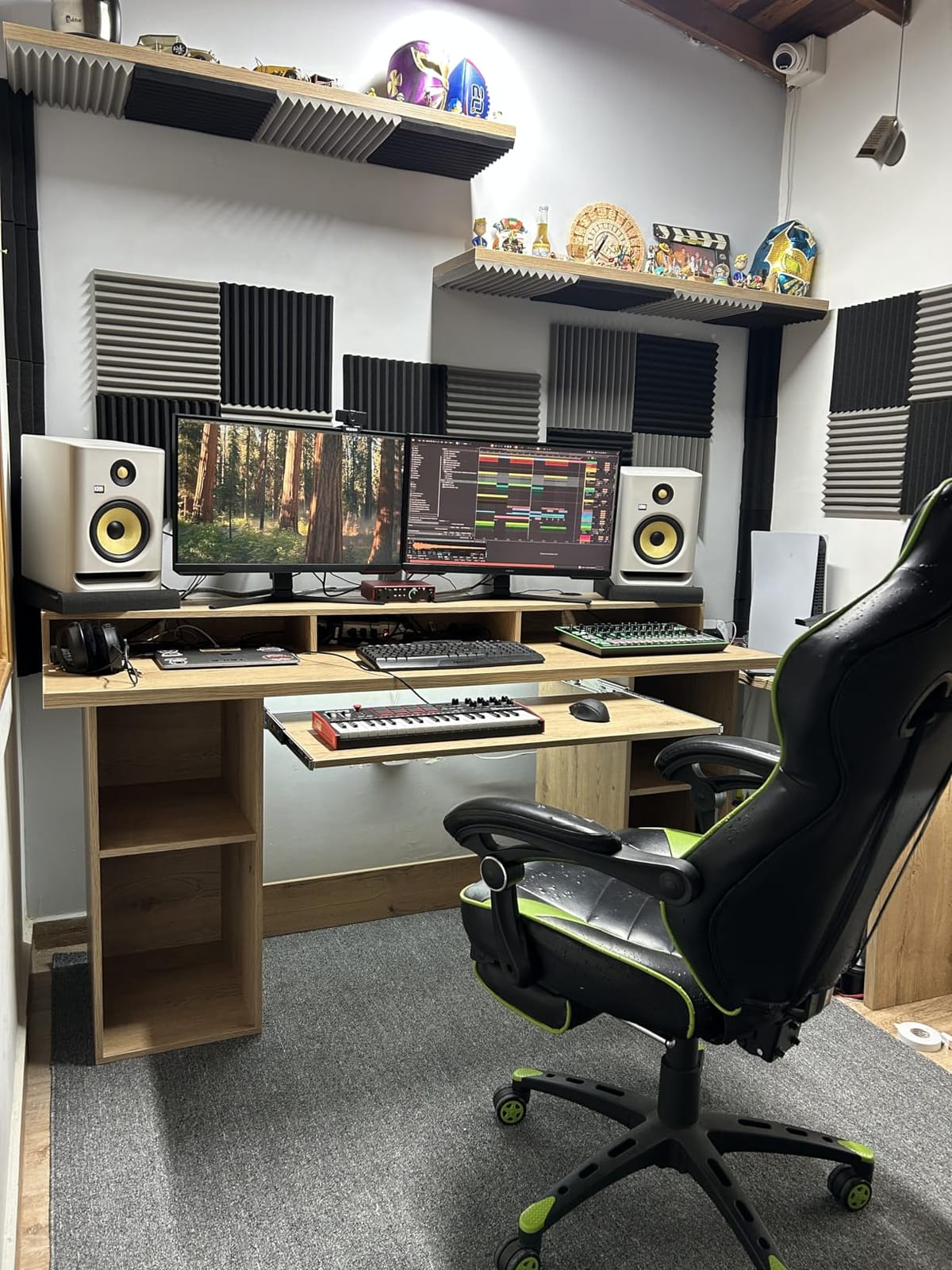
They suit anyone whose first problem is bass in a small square room, especially someone working with a limited budget. Four traps cover the four corners of a typical bedroom studio and cost less than one framed panel.
They also suit larger rooms that already have wall panels and need the corners finished, since the pack counts and 3 inch or 7 inch depths let you scale corner coverage room by room.
Who should skip it
Skip them as your only treatment. A room with four corner traps and nothing else still has hard parallel walls producing flutter echo across the listening position, so pair them with panels or a broadband absorber.
Also weigh placement over count. Because absorption here is directional, four traps placed badly will outperform six traps placed at random, so measure your corners and mount them high and tight.
10. Geynnple 48 x 24 x 2 Foam 4-Pack – Large Foam Panels That Recover Their Shape
Geynnple 4 Pack Sound Proof Foam Panels |48″×24″×2″ Quick-Recovery Soundproof Wall Panels | High Density Sound Dampening Panels for Home Studio (Black)
4 x 48 x 24 x 2 inches
Polyurethane foam
Quick-recovery profile
0.3 kg per panel
Pros
- Large 48 x 24 inch footprint at 2 inches thick
- Recovers shape faster than typical vacuum-packed foam
- Low weight mounts easily with tape or staples
- Buyers report reduced echo around desk and corner positions
- Multiple profile shapes to mix across a room
Cons
- Adhesive not included
- Marketing says soundproof but reviews say dampening only
- Some confusion over pack quantity wording
- No published NRC figure
- One-star reviews cite unmet soundproof expectations
Foam almost always arrives crushed in the box, and this is one of the few packs where buyers say the recovery is genuinely fast. The quick-recovery profile expands back to full shape within a day or two, which avoids the multi-day air-out that plagues cheaper vacuum-packed foam.
The 48 by 24 inch footprint at 2 inches thick is unusual for foam. Most foam tiles are 12 by 12, so a handful of these covers a first reflection wall that would otherwise need a dozen pieces. Buyers report a real reduction in echo around the desk and in the corners behind their monitors.
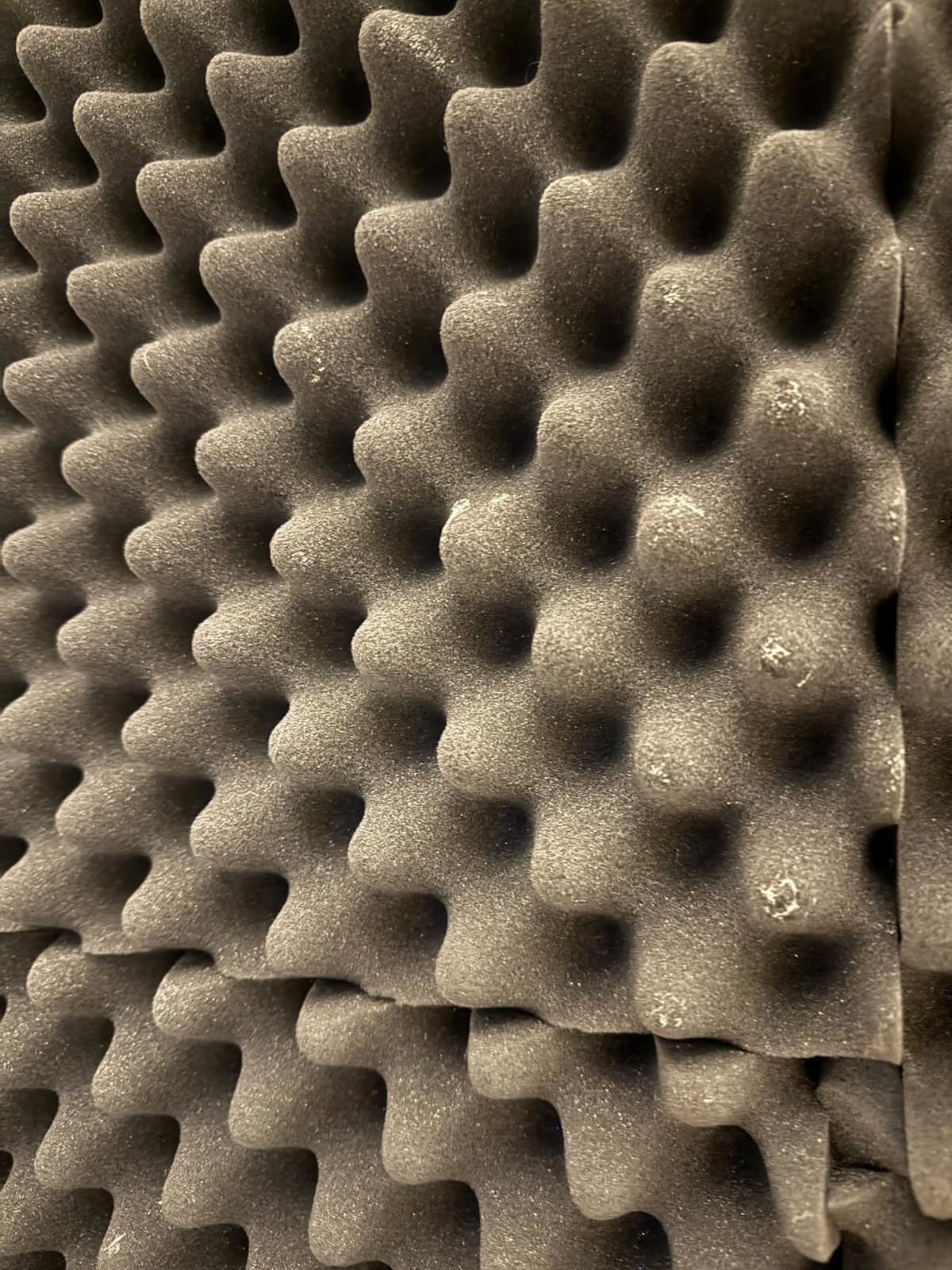
The dominant theme in the reviews is a distinction buyers want stated clearly: these dampen reflections and lower the level inside the room, but they do not soundproof anything. Several one-star reviews exist purely because the word soundproof set an expectation the product cannot meet.
There is no published NRC figure, so you cannot compare these objectively against the mineral wool and fiberglass options on paper. What you can compare is size, which favors them: at 0.3 kg per panel they are light enough to mount on walls and doors with adhesive strips or staples.
Who the Geynnple panels suit
They suit someone who wants full-size panel coverage in a foam format, for a large home theater that doubles as a mix room, or a rehearsal space where you want reflections gone across a wide wall.
The profile variety is genuinely useful. You can mix egg, pyramid, mushroom and I-shapes across a room so the surface does not read as one repeating pattern, and the 2 inch depth is thicker than most foam tiles.
Who should skip it
Skip them if you need a written absorption figure to justify the purchase, or if bass is the target. Open-cell foam without a density figure is a guess, and 2 inches will not reach the bottom octaves.
Adhesive is not included and the mounting method is entirely up to you, which is another reason to buy your own fixings rather than assume a kit. Buy enough for all four panels before you start.
How Many Acoustic Panels Your Room Actually Needs?
Start with coverage, not with a product. Measure the two walls that face your listening position, plus the ceiling section between your monitors and your head, and treat roughly 30 to 40 percent of those surfaces. A room where 40 percent of the reflective surface is absorbed will feel dramatically calmer than one where you have hung six panels in random spots.
For a room under 150 square feet, eight 2 inch panels plus four corner traps is a realistic starting point. That is enough to control first reflection points, calm flutter echo between parallel walls, and give the corners somewhere to put low-frequency energy.
For a room between 150 and 300 square feet, plan for 12 to 16 panels and a full set of corner traps. Add a ceiling cloud above the listening position, because at this size the ceiling becomes a significant early reflection source for both mixing and vocal recording.
Above 300 square feet, treat walls first, then corners, then the ceiling, and expect the treatment to be one part of a larger room design rather than a single purchase. Long rectangular rooms also need their short-end walls treated to break up the standing wave along the long axis.
A useful test for whether you have gone far enough is the clap test. Stand in your listening position and clap once, sharply. What you want is a fast, dead slap with a short tail. If you hear a ring or a flutter that lingers, you need more absorption at the first reflection points rather than in a corner you cannot see.
If you are working from a printed checklist rather than a wall measurement, our guides to portable power station solar panels and radiant heat panels for enclosures use the same room-math approach we applied here, and the habit of measuring before buying pays off on either topic.
Where to Place Panels and Where to Start?
First reflection points and the mirror trick
The first reflection point is where sound from your monitor hits the side wall and returns to your ear. To find it, sit in your listening position and have someone hold a mirror along the side wall between the monitor and your head. Wherever you see the monitor reflected is the spot to treat first.
Move up and down the wall while keeping the mirror against the wall, and you will trace a curve. That curve, not a straight horizontal line, is where broadband panels belong. If you only mount panels at one height, you will leave most of the reflection untreated.
Corners, ceiling and rear wall
Corners are where pressure waves stack, so a triangular trap physically filling the corner does more per unit of money than any flat panel. Treat all four corners even if they sound fine, because room modes move with where you sit.
The ceiling directly between your monitors and your head is the next priority. A cloud hung on a simple frame at roughly the same height as your monitors removes the strongest ceiling reflection in the room, and it is where vocalists recording in the same space notice the biggest change.
The rear wall behind your listening position is last, not first. It matters for early reflection points on rear-ported monitors and for reducing the slap you hear between you and the speakers, but it will not fix a room that is untreated everywhere else.
Common treatment mistakes
The most common mistake is treating only high frequencies with thin foam. When you remove the highs and leave the bass, the room can sound thinner and honkier than before, which sends you back to your monitors with a fresh layer of doubt.
The second mistake is random placement. Twelve panels spread evenly around a room will do less than eight panels at the first reflection points, corners and ceiling, because absorption is only useful where sound actually hits it.
The third is over-treatment. If your room goes so dead that you lose all sense of space and every reverb tail disappears, pull one panel off the rear wall and listen again. A live room with controlled problems is the goal, not an anechoic chamber.
Acoustic Treatment vs Soundproofing: What Panels Cannot Do
Acoustic treatment controls what happens inside your room. Soundproofing controls how much sound crosses the boundary between your room and the rest of the world. No panel on a shopping list will stop a neighbor’s television, traffic, or your own microphone from being heard in the next room.
Absorption works by converting sound energy into a small amount of heat as air movement is dissipated across millions of fibers in the core. That is why a 2 inch mineral wool panel can remove reflections inside the room and still transmit almost everything striking it from behind.
Blocking transmission requires mass, air gaps and decoupling: a heavy mass loaded vinyl or double drywall assembly, with the inner layer mechanically decoupled from the structure, plus sealed gaps, a solid core door and, ideally, a second layer of glass. That is a construction project rather than a shopping decision.
What you can do cheaply is reduce how much noise enters in the first place. Soft furnishings help: a rug, a heavy curtain over the window behind your desk, and a bookcase on the wall you are not treating all absorb some energy and take the edge off a sharp room.
What Panels Change in Your Recordings and Mixes
Vocal clarity improves first. When a singer records in a reflective room, the microphone picks up the direct voice plus a delayed copy off the wall, roughly 10 to 30 milliseconds later. That short delay is inside the range where your brain starts to perceive two sounds, which is the boxy, doubled quality most people describe as a bad vocal recording. Absorbing the wall behind the singer removes the second copy.
Sibilance improves next. Bright reflections stacking in a small room reinforce the highest frequencies unevenly, so consonants jump forward and backward in level between takes. Panels at the reflection points flatten that variation, which means far less compression and de-essing by the end.
Low-mid muddiness is where depth matters most. Small rooms put a room mode in the 100 to 200 Hz range, and that boom adds to anything you record at that pitch. Two inch panels help with reflections; only corner traps and thicker depths move the mode itself.
Noise floor and headroom improve indirectly. When the room is not adding 6 to 10 dB of low-frequency buildup, your preamps and interface have more clean headroom before they reach their own limits, and your recordings start closer to the noise floor of the microphone.
For recording drums, the priority list is different: kick and floor tom positions first, then the wall behind the kit, then the ceiling above it. Panels treat the room; they do not replace isolation booths for tracking loud sources.
Buying Guide: Core Material, Thickness, NRC and Mounting
Thickness decides the low-frequency cutoff
Thickness is the single most useful comparison when you are choosing between panels at the same nominal price. Air-filled cavities work best at the frequency where their depth is roughly comparable to the quarter wavelength, so depth sets the low end of what you can absorb.
At 1 inch, expect useful absorption above roughly 1 kHz, which handles sibilance and hiss but nothing structural. At 2 inches you reach down toward roughly 250 Hz, which covers most vocal body and the upper bass. At 3 to 4 inches, and especially in a corner triangular profile, you start engaging the region where room modes live.
That is why we recommend spending on fewer, thicker panels before spending on more, thin ones. Six 2 inch panels will treat a room better than twenty 0.4 inch tiles covering the same total area, because the thin tiles stop working exactly where the problems start.
Core material compared
Mineral wool and rigid fiberglass are the reference materials for broadband absorption, and both are dense, consistent and effective across a wide band when depth is adequate. The ATS panel uses a mineral wool core in a wood frame, and the UMIACOUSTICS panels use a white fiberglass core under fabric.
Polyester fiber is the value material. It is lightweight, cheap, consistent enough and easy to cut, and it performs well for mid and high frequencies when the density is around 200kg/m3, which is where the BXI, Dmsky and TONOR products sit.
Open-cell foam is the cheapest and the least dense. It is fine for large-area reflection control and rear-wall treatment, and it is a poor choice for bass. Thin foam wedges at one inch are essentially decoration; at two inches they are useful.
NRC, the noise reduction coefficient, is an average of absorption at four mid frequencies and it hides the low end. Two panels can share an NRC of 0.9 while one of them does nothing below 500 Hz, so read the depth and the core alongside the number rather than sorting by NRC alone.
Mounting, fire rating and rental-friendly installs
Mechanical fixings beat adhesive in almost every case. Z-clips, French cleats and impinger clips hold more weight, and the UMIACOUSTICS panels are the only ones here designed to be genuinely removable with the supplied template and nails.
Adhesive is what makes the TONOR and Soon Global panels attractive for renters, but it has real trade-offs. The Dmsky tiles are the cautionary example: buyers report paint stripping and hours of scraping, and once applied they are effectively permanent. For a rental, choose removable tape or a hook-and-loop mounting method.
Check the fire rating for your situation. Some of the polyester tiles here are rated Class B1 flame retardant and the TroyStudio foam meets California Technical Bulletin 117-2013, which is the common reference in US residential builds. The Soon Global listing lists no warranty and the JaneTech listing publishes no NRC, so ask before you buy rather than after.
Finally, consider off-gassing in an enclosed bedroom studio, which came up repeatedly in forum discussions. Air any new panels for several days before mounting, ventilate the room during the first week, and avoid covering a small room completely in the thinnest tiles.
Frequently Asked Questions
What are the best acoustic panels for a home studio?
The best acoustic panels for a home studio are 2 inch thick fabric-wrapped mineral wool or fiberglass panels for first reflection points, paired with triangular corner traps for the low end. A typical bedroom studio needs 8 to 12 panels plus 4 corner traps, covering 30 to 40 percent of the wall and ceiling surface with a target RT60 of 0.3 to 0.5 seconds.
How many acoustic panels does my room need?
Under 150 square feet, plan on 8 broadband panels plus 4 corner traps. Between 150 and 300 square feet, go to 12 to 16 panels, all four corners, and a ceiling cloud. Above 300 square feet, treat the two side walls first, then the corners, then the ceiling, and expect to add coverage in stages.
Are acoustic foam panels actually worth it?
Yes, with a caveat. Foam at 2 inches thick is an effective large-area reflection absorber and works well on a rear wall, behind a vocalist or across a ceiling. One inch foam is mostly decorative. Foam will not control bass, and covering only the highs in a room with low-frequency buildup can leave the room sounding thinner than before.
What are the best brands of acoustic panels?
The brands with the longest and most detailed buyer records in this category are ATS Acoustics, UMIACOUSTICS, TONOR, BXI and Dmsky. ATS Acoustics publishes the highest stated NRC in our comparison and includes a mounting template and hardware. Always check whether a brand publishes a depth, a core material and a fire rating, because many listings publish none of the three.
What is the difference between acoustic treatment and soundproofing?
Acoustic treatment controls reflections, reverberation and standing waves inside your room by absorbing sound energy. Soundproofing controls how much sound crosses a wall, ceiling or door, which requires mass, air gaps, decoupling, sealed edges and a solid core door. Panels of any thickness will not stop noise passing through a wall.
What thickness acoustic panel do I need for bass?
Two inches is the minimum worth quoting for most rooms, reaching down toward roughly 250 Hz. For the region where small room modes live, between about 100 and 200 Hz, you want 3 to 4 inch panels mounted as triangular corner traps, where the corner volume itself helps. Thickness matters more than brand for low-frequency work.
The Verdict: Best Acoustic Panels for Home Studios in 2026
Start with the ATS Acoustics 2 inch mineral wool panels at the first reflection points, add four corner traps, then fill the ceiling. That combination treats the three problems that affect recordings and mixes most: reflections, flutter echo and corner bass. If you cannot drill, the Soon Global packs get you most of the way there with no tools at all.
Spend your remaining budget on depth rather than quantity, keep the thin tiles for decorative and echo-control use, and test the room with a clap before you buy the next panel.