
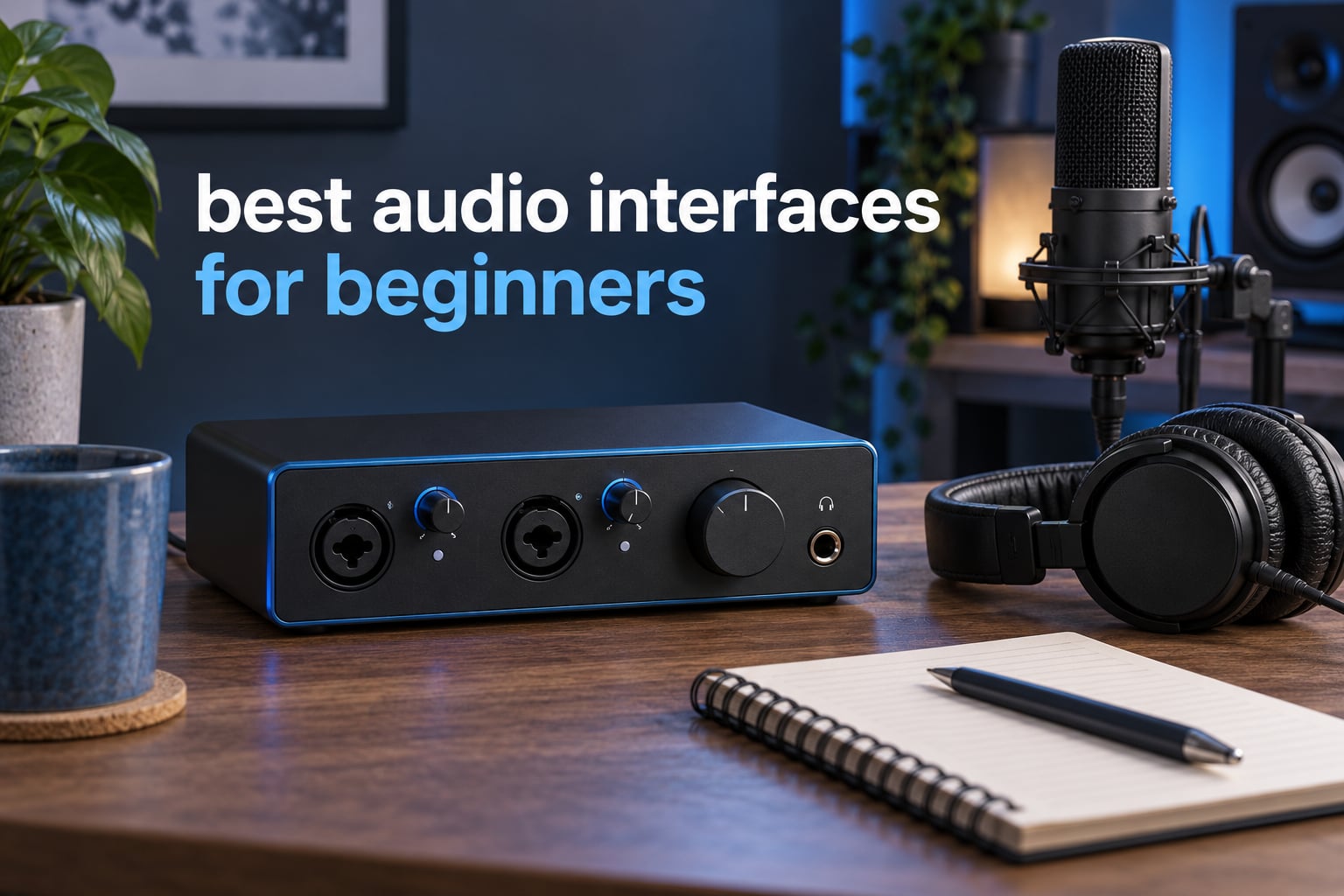
If you want one answer: the Behringer UMC22 is the most dependable first audio interface for beginners in 2026, because it has two real preamps, 48V phantom power, direct monitoring and a driver setup that works on day one. If your voice is the only thing you record, step up to the Focusrite Scarlett Solo 4th Gen for cleaner conversion and a mic gain ring that tells you when the level is right.
That is the honest shortlist. Most beginners spend weeks comparing charts and never record anything, so I built this roundup around what actually matters in a first home studio: how many inputs you really need, how much gain you can get before the noise floor shows up, and whether the software installs without a fight. Every unit below was checked against its spec sheet and owner reviews, and each section tells you who the box suits and who should skip it.
If you are building out the rest of the room too, our guides to the best kettlebell sets for beginners and the best wood routers for beginners cover the kind of budget-first thinking that carries over to a first recording setup: buy the tool that does the one job you will actually do.
Table of Contents
Top 3 Best Audio Interfaces for Beginners in 2026


M-Audio M-Track Solo
- No driver install
- XLR plus line input
- USB direct monitoring
- Mac Windows iOS
Best Audio Interfaces for Beginners in 2026: Quick Overview
| Product | Specs | Action |
|---|---|---|
| Behringer UMC22 |
|
Check Latest Price |
| Focusrite Scarlett Solo 4th Gen |
|
Check Latest Price |
| M-Audio M-Track Solo |
|
Check Latest Price |
 M-Audio M-Track Duo M-Audio M-Track Duo |
|
Check Latest Price |
 PreSonus AudioBox 96 PreSonus AudioBox 96 |
|
Check Latest Price |
 Audient EVO 4 Audient EVO 4 |
|
Check Latest Price |
 MOTU M2 MOTU M2 |
|
Check Latest Price |
 Audient iD4 MKII Audient iD4 MKII |
|
Check Latest Price |
 Arturia MiniFuse 1 Arturia MiniFuse 1 |
|
Check Latest Price |
 Mackie Onyx Producer 2X2 Mackie Onyx Producer 2X2 |
|
Check Latest Price |
What Is an Audio Interface and Do Beginners Need One?
An audio interface is a small external box that replaces your computer’s built-in sound card. It converts the analog signal from a microphone or instrument into digital audio your DAW can record, then converts playback back to analog for headphones and monitors.
You need one the moment you record anything through a mic or a cable, stream with chat audio, or want to hear your own take while recording. Your laptop’s built-in input has a high noise floor, no phantom power and usually one jack, so it is the limit on your recordings rather than the microphone.
The one case where you can skip it: MIDI-only setups with virtual instruments. The interface still improves your playback audio, but the input section is not doing any work.
1. Behringer UMC22 – The Most-Bought First Interface
Behringer UMC22 Audiophile 2×2, 48 kHz USB Audio Interface with Midas Mic Preamplifier | For Recording Microphones and Instruments
USB 2.0
2 channels
24-bit 96 kHz
Midas mic preamp
48V phantom
Pros
- Midas-designed preamp records clean vocals and instruments
- Direct monitor switch with status and clip LEDs
- Bus powered so no adapter is needed
- Works with Pro Tools Ableton Live and Cubase
Cons
- Combo jack needs the cable to match the source
- Two channels limits multi-instrument sessions
The UMC22 is the box I keep recommending first, and the owner reviews explain why: it has one of the largest review bases of anything in this category, and the reasons people repeat are always the same three. The Midas-designed preamp records a usable vocal, the direct monitor switch gives you zero-latency tracking, and USB power means one cable and no brick.
Front panel gives you a combo jack that accepts XLR or quarter-inch TRS for a mic, plus a separate quarter-inch instrument input for guitar. Rear panel carries the 48V phantom power switch, balanced TRS monitor outputs and the USB port. On the original 48 kHz unit the converters are modest, and this listing runs at 96 kHz, which is more than a beginner needs.
What you get for the least setup time
Installation is the whole pitch. No external power supply, no driver maze, and the clip LED tells you when you have overcooked a take instead of letting you discover it in the edit. Owner reviews repeatedly describe it as the first interface they owned and the one they still had years later.
One detail beginners miss: the combo input does not auto-detect what you plugged in. Plug a balanced XLR mic into a quarter-inch TS cable and you will get a thin, quiet signal, so match the connector to the source rather than to the port.
Where the two-channel limit bites
The boundary shows up the day you want to record guitar and vocals together, or track a duet. There is no third input, and the balanced TRS outputs are the only monitor path, so adding a second person means adding a headphone splitter.
Reviewers also treat the bundled software as irrelevant, which is fair. This is a conversion and preamp box, not a package deal. If your DAW is already chosen, ignore the marketing and buy on I/O and preamp quality.
2. M-Audio M-Track Solo – Cheapest Way Into Recording
M-AUDIO M-Track Solo USB Audio Interface
USB Type B
1 channel
48 kHz
Combo XLR plus line input
Phantom power
Pros
- No driver install on Mac Windows or Linux
- USB direct switch gives zero-latency tracking
- Transparent Crystal preamp handles condenser and dynamic mics
- Works with phones tablets and laptops
Cons
- Only one combo input so no two-track capture
- Quarter-inch line input is mono TS only
- Uses legacy USB Type B
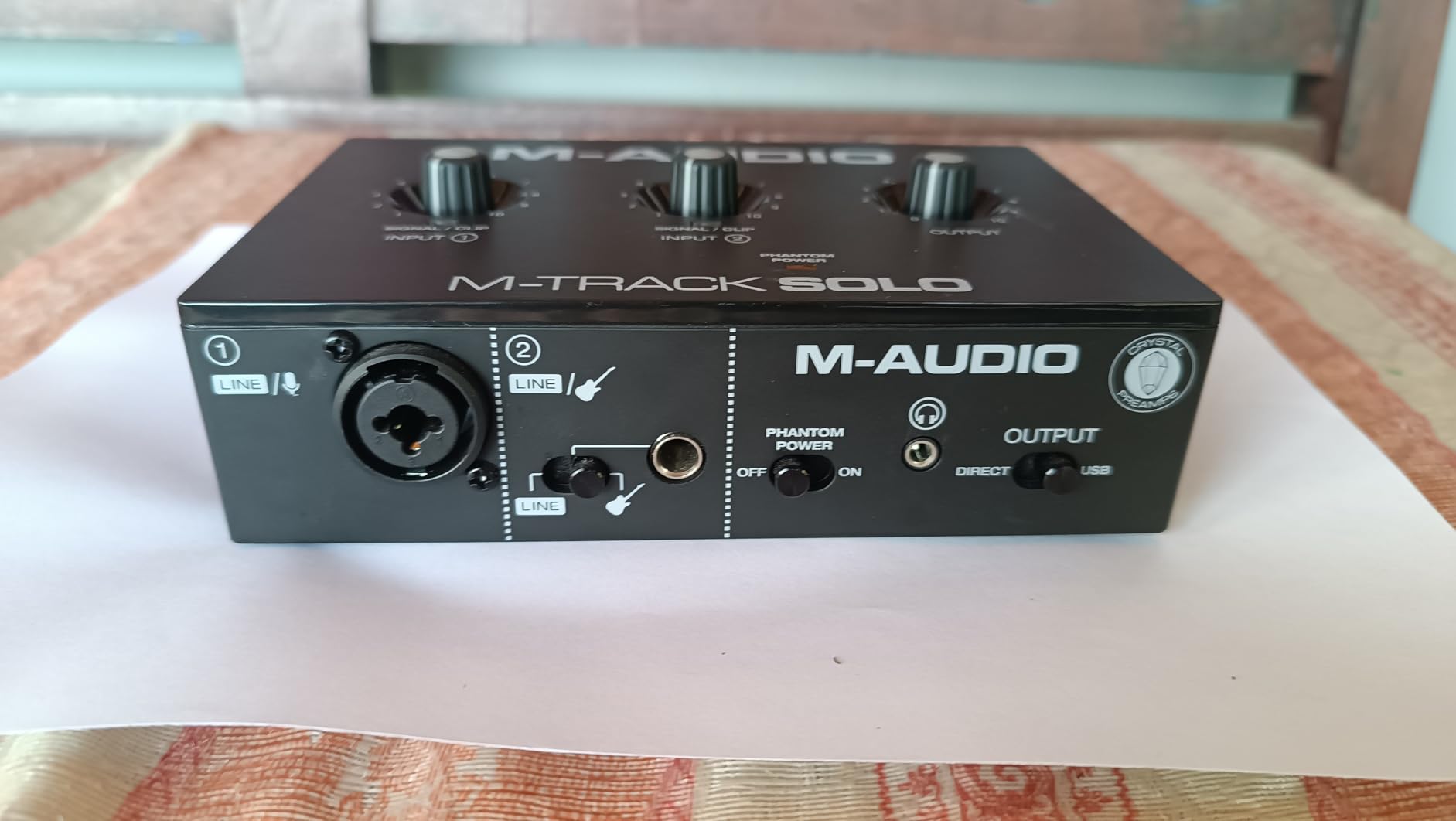
The M-Track Solo is the box I suggest when someone is recording one voice, one instrument or a podcast and does not want to spend real money to find out whether they enjoy it. It weighs 10.6 ounces, draws power over USB and needs no driver on any major desktop operating system, so the gap between opening the box and recording a take is about five minutes.
The single combo input handles a microphone on XLR or a line source on quarter-inch, with phantom power for condensers. A USB and direct switch on the top toggles between round-trip monitoring and hardware pass-through, which is the feature that makes tracking a guitar feel normal rather than laggy.
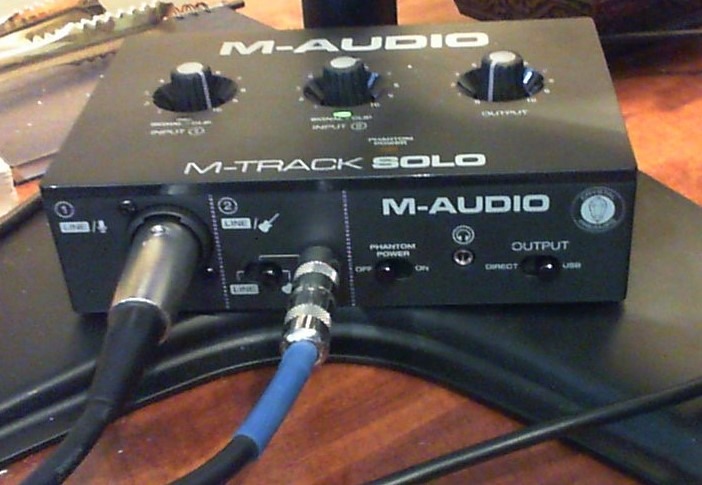
Reviewers like that the Crystal preamp produces usable signal from both dynamic and condenser microphones, and that the headphone output is a quarter-inch jack rather than the tiny three-and-a-half millimeter socket that forces an adapter. Include MPC Beats and Ableton Live Lite and the package covers a first year of work for most people.
The build is the honest tradeoff: a light plastic chassis that reviewers describe as cheap, and a gain pot whose taper jumps from almost nothing to extremely hot near the top of its travel. Set levels with the meters in your DAW rather than by ear at first.
Best fit for a single-voice home setup
Podcasters and solo vocalists get the most from this box because the use case only ever needs one source at a time. Owner reviews describe it as recommended for single-source recording, and the zero-latency switch means you can speak while monitoring yourself without the delay that makes beginners stop recording.
Because it works with phones and tablets as well as computers, it doubles as an iPad capture box when you are away from the desk. Check that your device has the cable and the app support before you commit.
What you give up versus a two-input box
The one input is the real limit. You cannot record a mic and a guitar at once, which rules out the most common beginner project: layering a performance with a sung part.
Also expect a modest ceiling. It resolves at 48 kHz, and the quarter-inch line input is mono only, so a stereo source will not capture properly. If any of that matters, spend a little more on a two-channel box.
3. M-Audio M-Track Duo – Two Inputs For Guitar And Voice
M-AUDIO M-Track Duo USB Audio Interface
USB Type B
2 channels
48 kHz
Two combo XLR inputs
Phantom power
Pros
- Two combo inputs record a mic and an instrument together
- Clean monitoring with no hiss at high gain
- Instant plug-and-play on Mac Windows and Linux
- Direct monitoring switch
- Compact enough for a small desk
Cons
- Gain pot taper jumps from quiet to very hot
- Phantom power can feel under-driven for condensers
- Light plastic body with foam feet
The Duo is the version of the Solo I usually suggest instead, because one extra input removes the single most common beginner frustration. Two combo XLR inputs mean a condenser mic in one and an electric guitar in the other, tracked at the same time, with balanced quarter-inch outputs for whatever monitors you have.
Owners consistently describe the monitoring as clean with no hiss even at high gain settings, and the direct switch means you can hear yourself without latency. Recognised immediately on Mac, Windows and Linux with no extra drivers, which matters if you are switching between a desktop and a laptop mid-project.
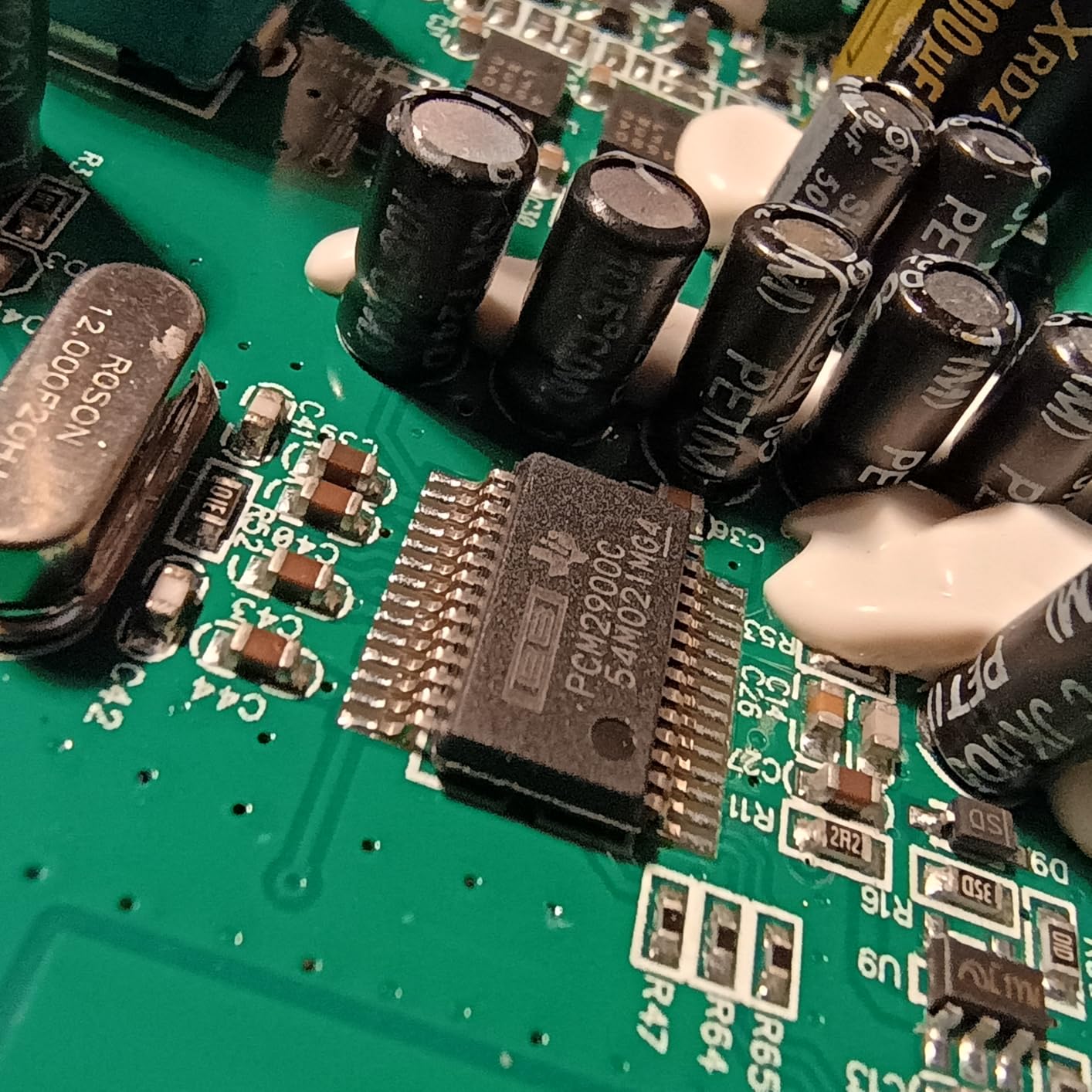
The layout is straightforward: controls on the top face, XLR inputs at the back, headphone and stereo quarter-inch outputs alongside them. It measures 4.34 by 7.5 by 2.13 inches, so it slides under a monitor shelf without forcing a desk reshuffle.
The criticisms in reviews are consistent enough to plan around. The gain taper is poorly linearised, so the top of the range goes hot fast, and the phantom power circuit can feel under-driven on demanding condensers. Turn the gain down and work up, and match your condenser to the preamp rather than the reverse.
When two inputs change the project
Recording guitar and vocals together, or tracking a duo one performer at a time, are the scenarios people describe in reviews as the reason the Duo works. Each source gets its own preamp, so you can balance levels before the DAW ever sees the signal.
It also suits a keyboard or synth through the line input, though remember that is a stereo source on a mono path, so record it as two mono takes or check what your DAW does with the channel.
Where the low ceiling shows
48 kHz resolution and a modest conversion stage put this box at the entry point rather than the destination. Fine for demos and learning, thin once you start stacking plugins.
The plastic body with foam feet also slides on a glass or laminate desk, which reviewers mention more often than the sound quality does. A small non-slip pad solves it for almost nothing.
4. PreSonus AudioBox 96 – Best Software Bundle Of The Budget Group
PreSonus AudioBox 96 25th Anniversary USB Audio Interface
USB 2.0
2 channels
24-bit 96 kHz
Class-A mic preamps
MIDI I/O
Pros
- Class-A preamps give a full clear sound from any mic type
- 24-bit 96 kHz converters
- Mixer control blends inputs with playback at zero latency
- Bus powered so it works anywhere
- Includes Studio One Artist and the Studio Magic suite
Cons
- Global 48V phantom power cannot be switched per channel
- Two inputs only
- Software downloads require product registration
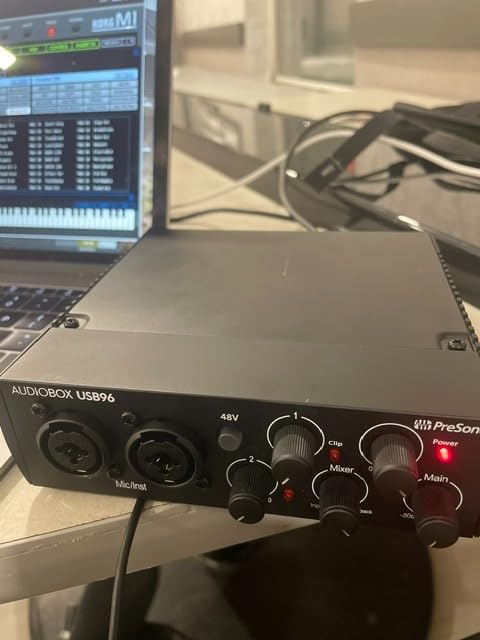
The AudioBox 96 stands out for two reasons a beginner cares about: the preamps are Class-A, and the bundle is the deepest in this group. Studio One Artist plus Ableton Live Lite and the Studio Magic plug-in suite means you can start recording immediately without deciding what to buy first.
Reviewers highlight the mixer control, a knob that lets you blend the analog input against playback for zero-latency monitoring, which is the least obvious but most useful feature on the front panel. Bus power keeps the cable count to one, and balanced quarter-inch outputs plus a high-powered headphone amp cover both monitoring setups.
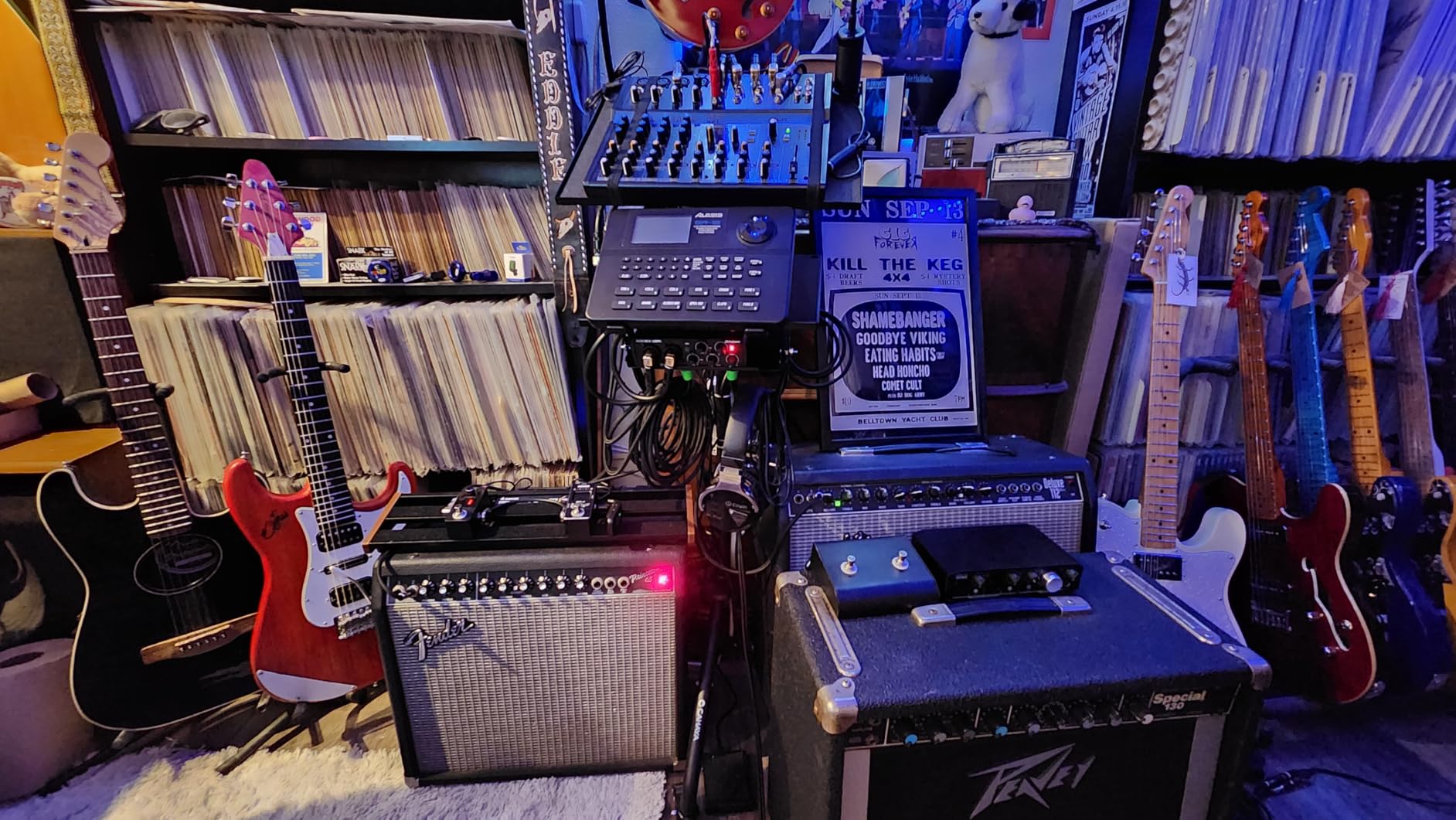
Two instrument inputs handle guitar, bass and line-level sources, and MIDI in and out is included, so a controller with legacy MIDI DIN plugs works without a separate interface. It also lists smartphone and tablet compatibility, which makes it a reasonable travel capture box.
Registration is required to download the software, so factor in a few minutes and an email address before you sit down to record. The converters run 24-bit at 96 kHz, well past what a beginner needs and above most of this price group.
Why the software bundle matters here
This is the one pick on the list where the bundle is a genuine argument rather than filler. If you have no DAW, Studio One Artist is a complete recording and mixing environment rather than a demo, so you can build a track without spending another cent.
Forum discussions about this category repeatedly warn against installing a huge plugin bundle you will never open. The honest rule: use the DAW, ignore the extra instruments unless you want them, and pay for nothing yet.
Watch the shared phantom power switch
The 48V supply is global, not per channel. If you run a dynamic ribbon microphone in one input you cannot leave phantom power on for the other, which limits the sessions this box handles well.
Reviewers also point to the two-input ceiling as the main limit. If you plan to record two people at once rather than overdubbing, look at a four-input model instead.
5. Focusrite Scarlett Solo 4th Gen – Best Sound For One Voice
Focusrite Scarlett Solo 4th Gen USB-C Audio Interface
USB-C
1 mic preamp
24-bit 192 kHz
120dB dynamic range
Air mode
Pros
- 4.6 rating with about 80 percent five-star reviews
- 120dB dynamic range from flagship converters
- Air mode adds presence and harmonic drive
- Clear gain LED ring shows level at a glance
- Pro Tools Intro+ Ableton Live Lite Cubase LE included
Cons
- Only one mic preamp
- Included cable is USB-A to USB-C
- Can need an external booster with very quiet dynamic mics
If your plan is one voice, one instrument, one take at a time, this is the best-sounding box here and the one I put at the top of the shortlist for solo singers. The converters deliver 120 dB of dynamic range, the same family Focusrite uses in its flagship studio interfaces, and reviews show about 80 percent five-star ratings.
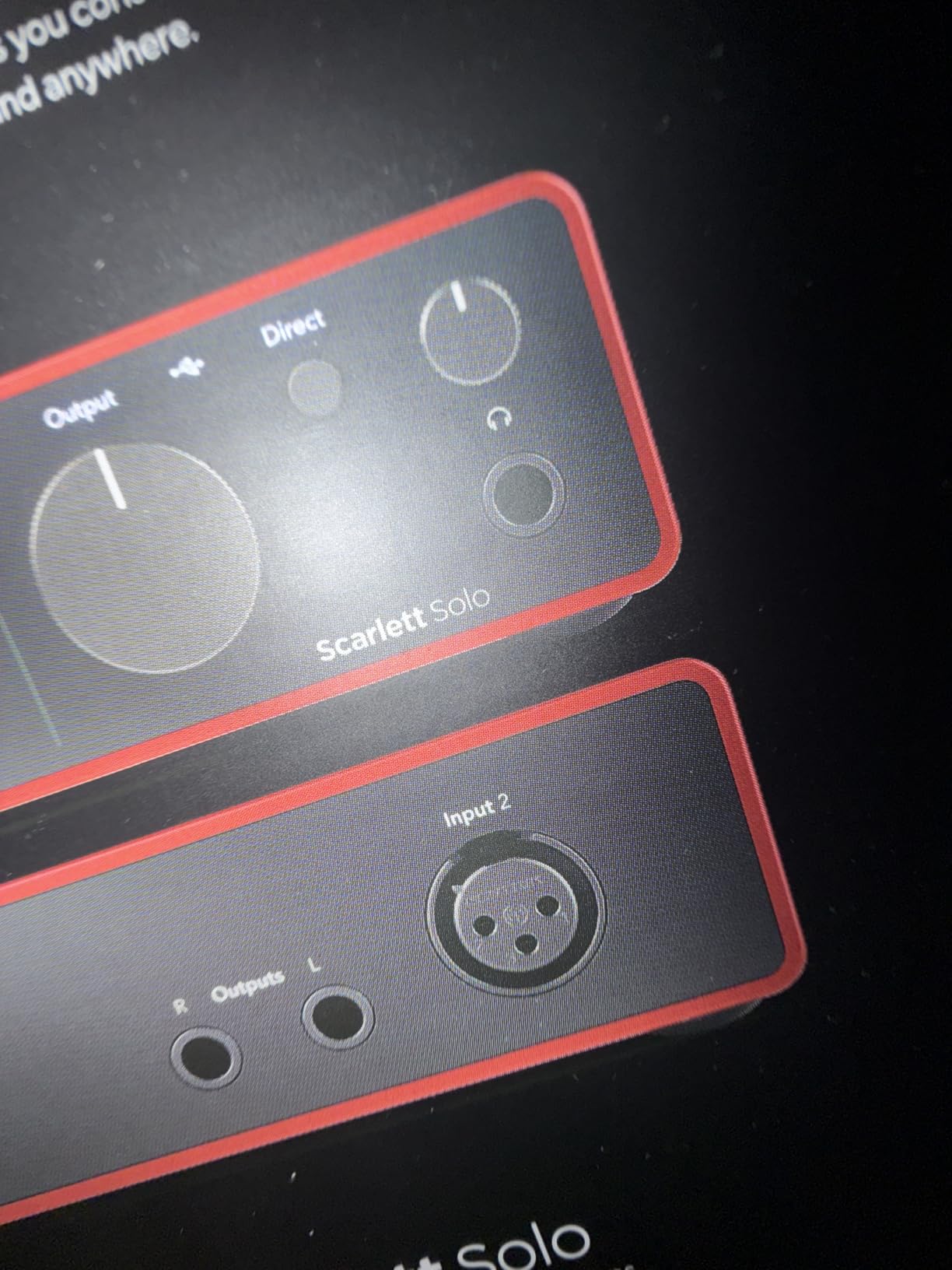
Air mode is the feature beginners underrate. It adds presence and harmonic drive so a vocal sits forward in a mix without extra EQ, which saves a new producer from reaching for a plugin they do not understand yet. The gain ring around the preamp control lights up as level rises and turns red near clipping, so you can set gain without watching a meter.
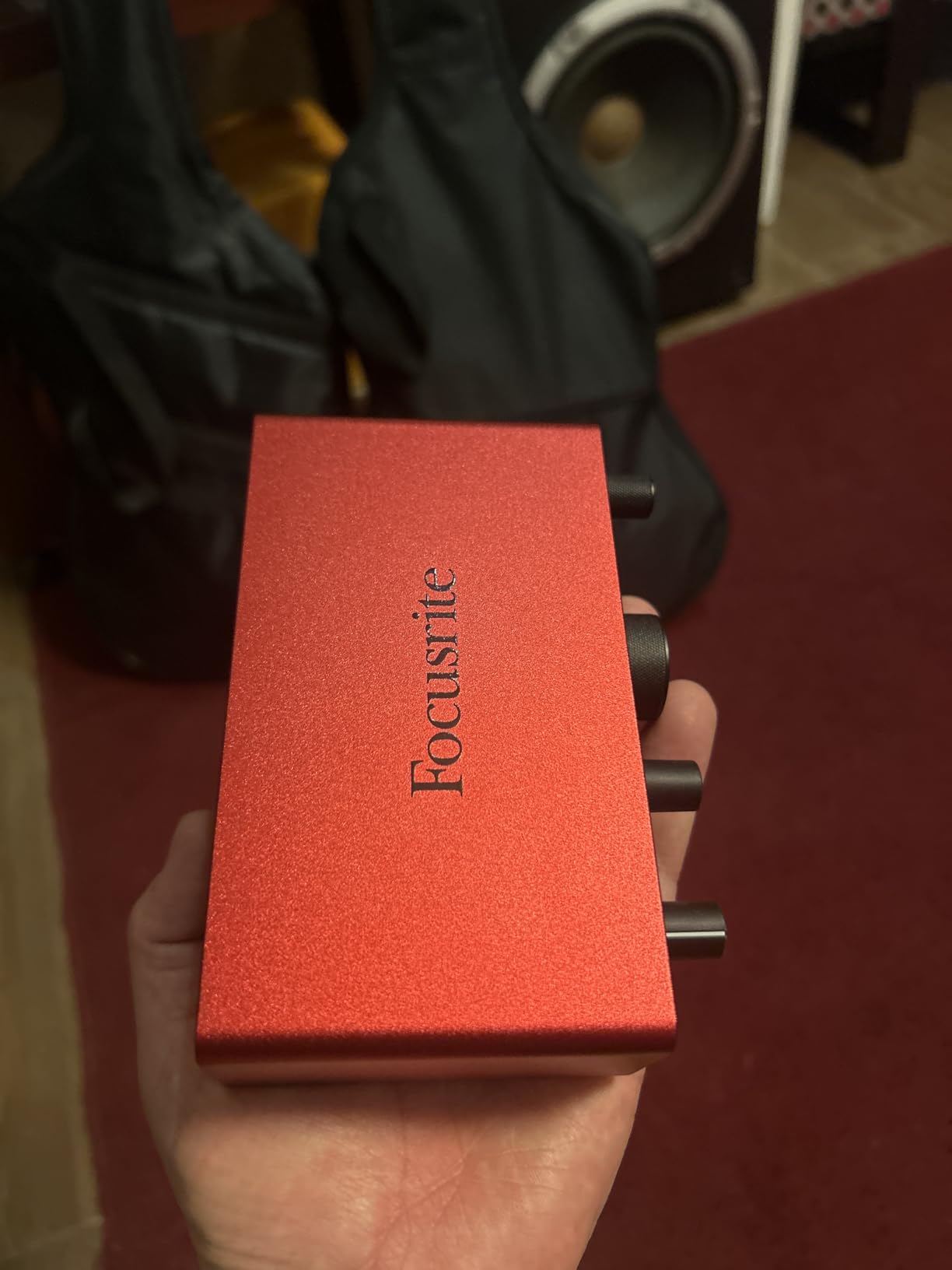
One XLR mic preamp plus one Hi-Z instrument input covers vocals or a single guitar, and it runs 24-bit at 192 kHz. It works with PC, Mac and iPad, and the bundled software is the most complete here, with Pro Tools Intro+, Ableton Live Lite, Cubase LE and the Hitmaker Expansion.
Two practical notes from reviews: the included cable is USB-A to USB-C, so a USB-C laptop may need the other one, and very quiet dynamic microphones sometimes need an inline booster to reach usable gain on the single preamp.
Best fit for a solo singer or songwriter
Solo vocalists and guitar songwriters get the most from this unit because one preamp is genuinely all the recording needs. Overdubbing is the normal workflow, and low latency plus direct monitoring keeps takes tight.
It is also the choice for anyone whose laptop only has USB-C ports, since the connection is native rather than adapted. Reviewers rate the near-zero latency as one of the reasons the unit feels immediate while tracking.
Where one input becomes a real limit
The single preamp cannot record a band, a duo or a mic plus stereo source at the same time. That is not a flaw for a songwriter, but it ends the conversation the day you want to track two performers live.
The headphone output also drives high-impedance headphones less easily than a dedicated amp. If you use demanding studio cans, budget for a small headphone amplifier.
6. Audient EVO 4 – Best For Podcasting And Streaming
Audient EVO 4 USB Audio Interface
USB 2.0
2 channels
24-bit 96 kHz
Two EVO preamps
Smart Gain and loopback
Pros
- Two Audient EVO preamps record a clear dynamic signal
- JFET instrument input adds warmth for guitar and bass
- Smart Gain and Smart Touch Point simplify level setting
- Loopback captures system audio with your performance
- Bus powered and compact
Cons
- Capped at 24-bit 96 kHz
- Two inputs and two outputs only
- iOS use needs a powered USB hub
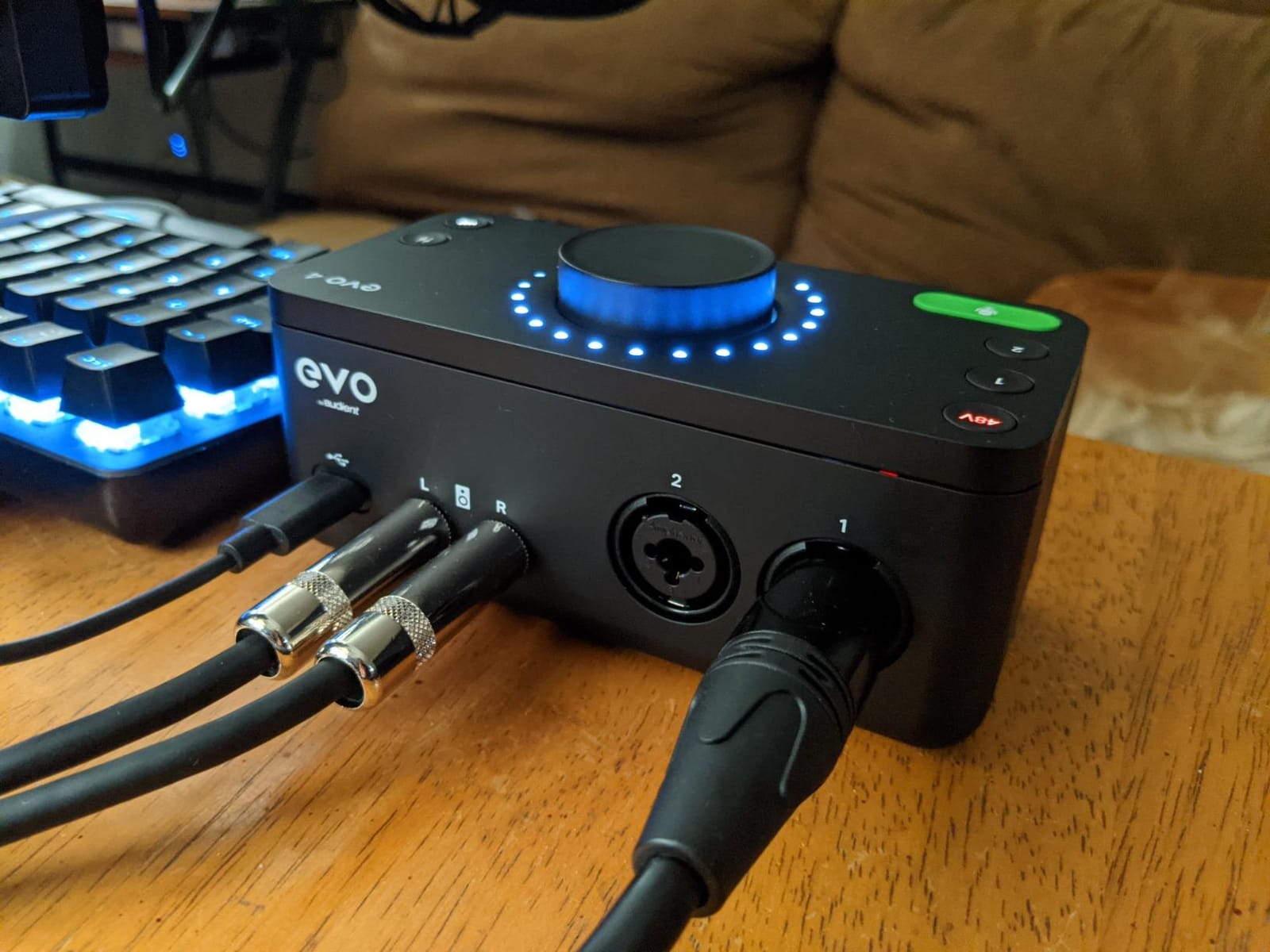
The EVO 4 is the pick I send podcasters and streamers to, and the reason is the loopback function. It captures system audio alongside your voice in one file, so you can record a walkthrough, a stream highlight or a gameplay clip without a second piece of software stitching two tracks together.
Smart Gain and the Smart Touch Point handle level setting from the front panel, which is the single feature that reduces beginner confusion most. Two EVO mic preamps mean a two-person interview on one box, and the JFET instrument input gives guitar and bass a warmer harmonic character than a typical line input.
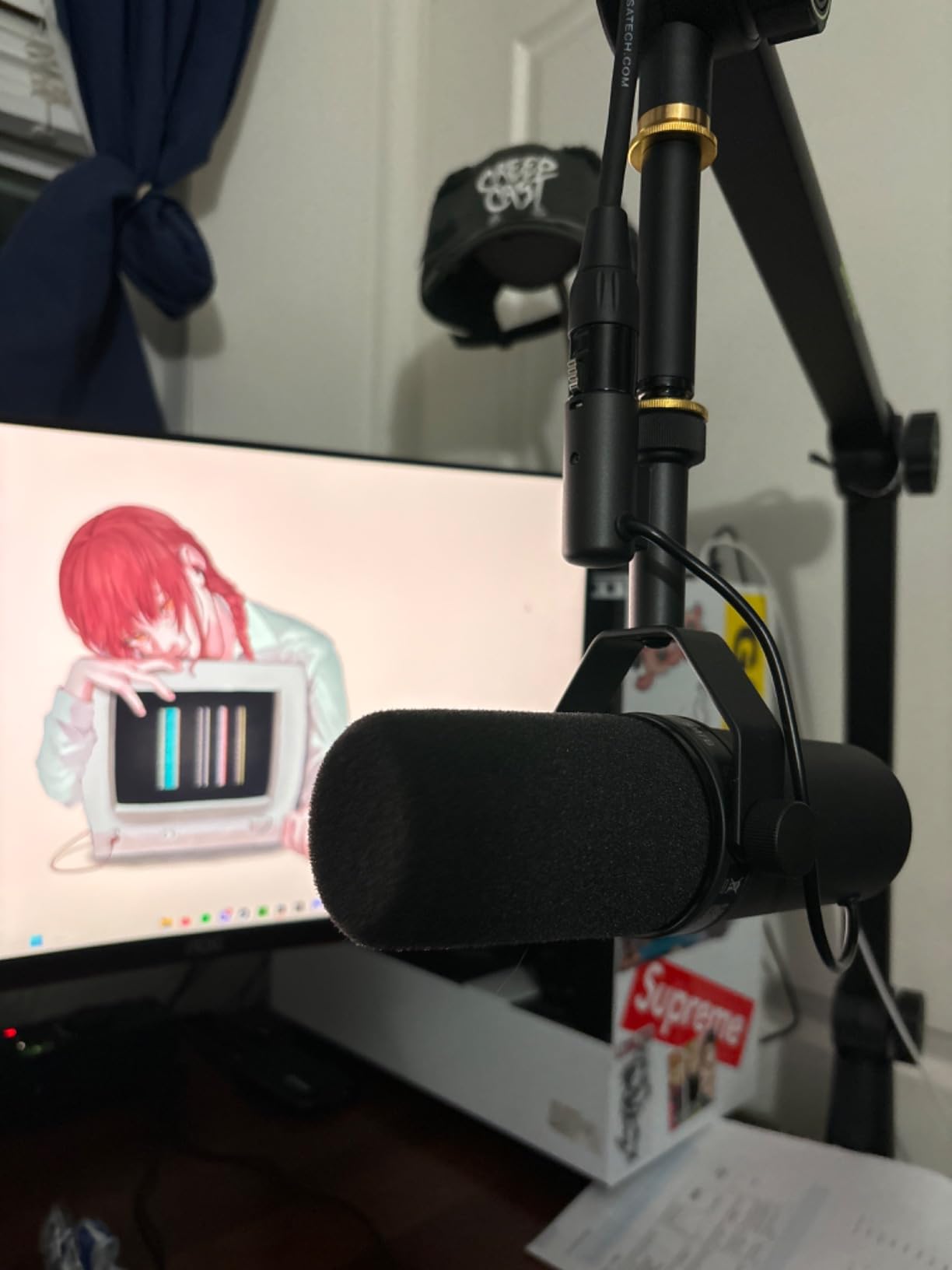
It is USB bus powered, so there is no adapter to lose, and it runs 24-bit at 96 kHz through a high-definition AKM converter. A free software and plug-in package is included, and the three-year warranty is longer than most rivals in this group.
Reviewers describe captures as clean and transparent, with loopback utility as the recurring reason for purchase. Note that iOS use requires a powered USB hub, which is worth checking before you plan to record on a tablet.
Best fit for two-person podcasting
Two preamps in a 2-by-2 layout is the correct shape for a host plus guest, a duet recording, or layering two instruments. Because the Smart Gain control meters from the front, you set both levels before anyone starts talking.
For streamers and gamers, loopback removes the need for a virtual audio cable. That one feature is why this unit keeps appearing in podcasting recommendations despite a smaller review base than the budget boxes.
What the 96 kHz ceiling means
Capped at 24-bit 96 kHz, this loses nothing for voice, guitar or streaming. The number only matters if you plan to record at very high rates for oversampled mastering, which most beginners never do.
Two inputs and two outputs is the hard boundary. Once a project needs a third source, you are replacing the box rather than adding to it, and that is the moment the buying guide below says to move up.
7. MOTU M2 – Best For 24-Bit 192 kHz Recording
MOTU M2 USB-C Audio Interface
USB-C
2 channels
24-bit 192 kHz
Two preamps
Hardware monitoring
Pros
- 24-bit 192 kHz conversion for a first interface
- Two clean preamps
- Hardware monitoring switch for direct low-latency monitoring
- Compact metal chassis with clear controls and meters
- Over 6GB of free software and content included
Cons
- Two-in two-out only
- Bundled content requires MOTU account registration
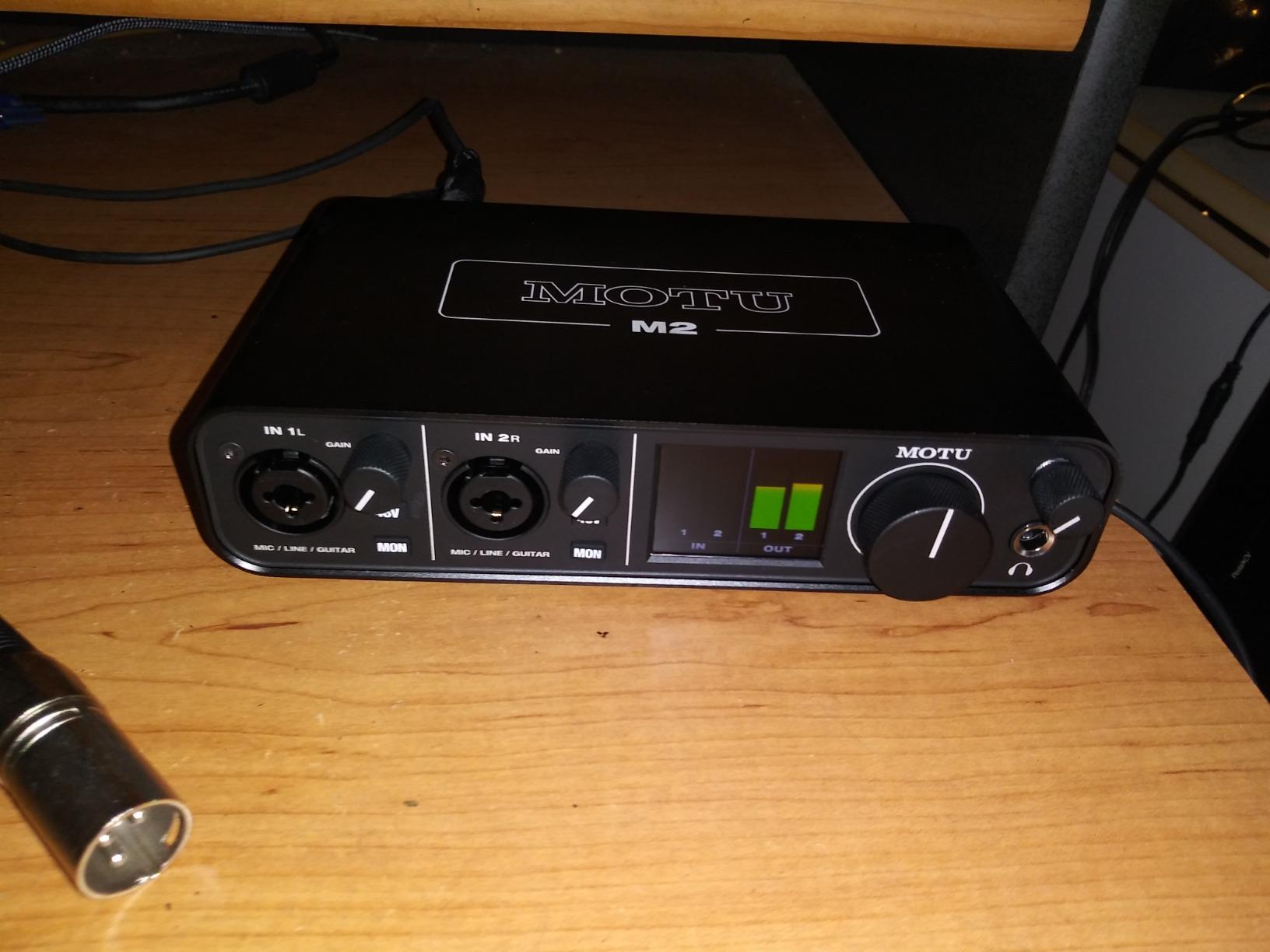
The M2 is the unit I recommend when a beginner wants headroom in the spec sheet and does not mind a smaller community. Two preamps running 24-bit at 192 kHz is a conversion ceiling that rivals twice its price class, and reviews show roughly 83 percent five-star ratings.
The hardware monitoring switch gives direct, low-latency monitoring, and the metal chassis feels more substantial than the plastic boxes at this level. Front-panel controls and meters are legible in a dim room, which matters more than spec sheets suggest when you are tracking at midnight.
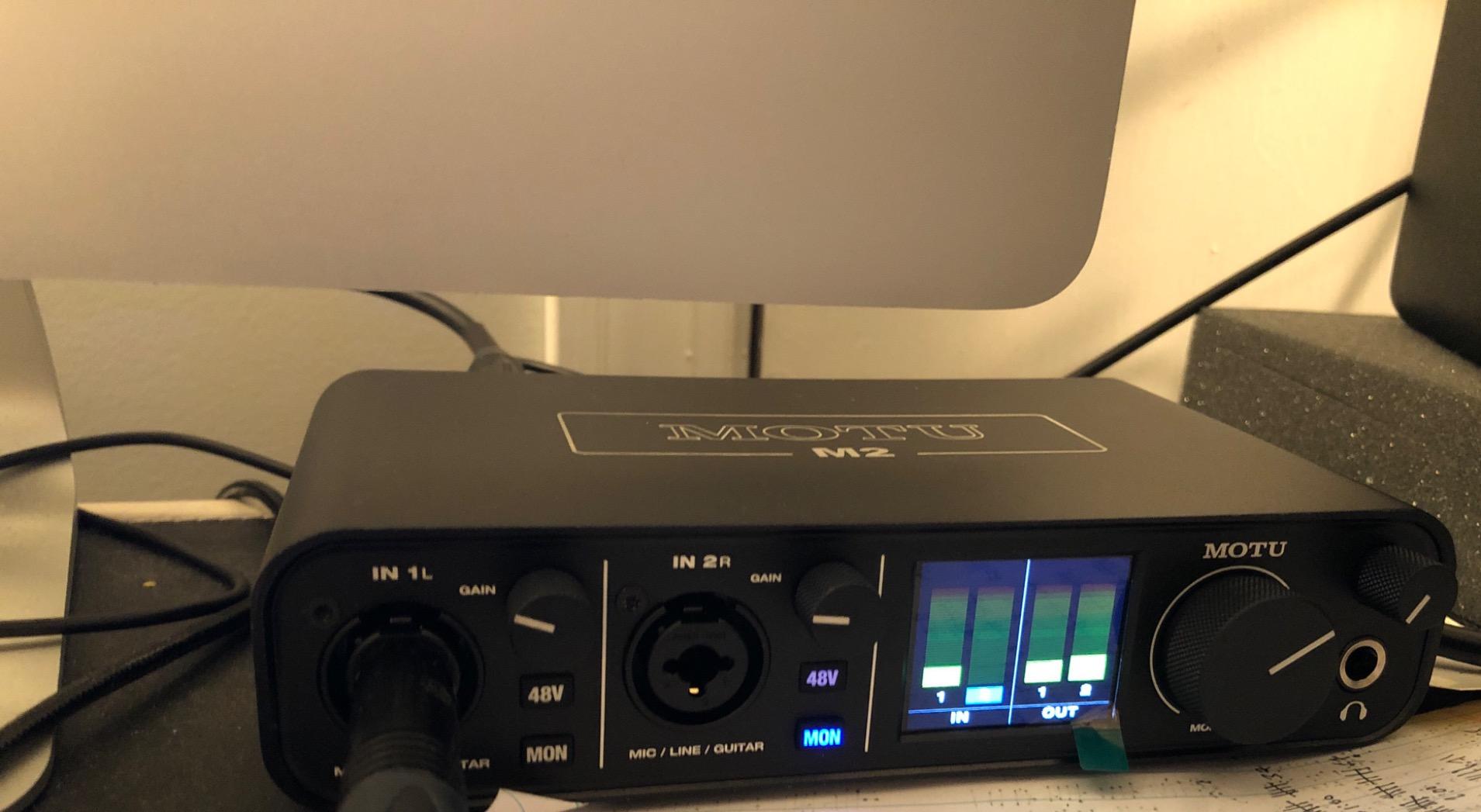
It runs on macOS, Windows and iOS, so the same box covers a desktop session and a tablet capture session. Over 6 GB of free music software and content comes with it, though you need a MOTU account to download any of it.
Weight is 612 g and the footprint is 7.5 by 4.25 by 1.75 inches, which is portable but no longer pocket-sized. The two-in, two-out layout is the only structural limit reviewers mention, and it is the same limit every two-channel box here carries.
Where the high resolution actually earns its place
Recording at 24-bit 96 kHz or higher leaves headroom for aggressive editing, de-noising and resampling later, which is exactly the kind of processing a beginner learns to want within a year. It also opens options for high-quality sample-rate conversion on export.
If you are only ever recording speech for a podcast, none of this reaches your ears. The conversion ceiling matters when you plan to record instruments and resample.
Best fit for a small metal-chassis desk setup
Users describe this as a first serious interface, and the metal body is the part people mention most warmly after the sound. It stays on the desk rather than sliding around, and survives being moved between rooms better than plastic alternatives.
The account registration step is the one friction point. Do it before you need to record, not the night before a session, and the bundle is a genuine bonus rather than a paperweight.
8. Audient iD4 MKII – Best For Two-Person Recording
Audient Audio Interface iD4 MKII, Class A Console Microphone Preamp (High Speed USB-C, Monitor Mix and Monitor Panning Function, 2 Headphone Outputs, Mac/PC/iOS Compatible), Black
USB-C
1 mic preamp
24-bit 96 kHz
Class-A console preamp
2 headphone outputs
Pros
- Class-A mic preamp derived from the ASP8024 HE console
- Two independent headphone outputs for a second person
- Monitor mix and panning balance direct signal against playback
- All-metal desktop housing
- High-speed USB-C with bus power
Cons
- Only one microphone preamp
- Maximum resolution is 24-bit 96 kHz
- Bundled software leans toward the Cubase ecosystem
The iD4 MKII is unusual in this lineup because it has one mic preamp and two headphone outputs. That combination is built for a specific beginner situation: one performer recording, one person listening, both on the same interface with no splitter in between.
The preamp is Audient’s Class-A design taken from the ASP8024 HE console, and reviews put it at roughly 83 percent five-star ratings. The monitor mix knob lets you dial the direct signal against playback, and monitor panning decides whether the performer hears themselves centred or hard to one side, which stops a new vocalist panicking while overdubbing.
The all-metal housing is stable and portable at 740 g, with high-speed USB-C and bus power so one cable handles data and power. It lists Mac, PC and iOS compatibility, and the bundle includes Steinberg Cubase LE, Cubasis LE 2, Retrologue 2, Twonotes and a Loopmasters sample pack.
Because it records one mic at a time, it suits voice, podcast and streaming work completely. Guitarists tracking an amp and a vocalist at once should look elsewhere, since a second preamp is a requirement there rather than a preference.
Why dual headphone outputs matter
Duet and co-writing sessions are the use reviewers describe. When a second person can plug in and hear themselves with the same monitoring blend as the performer, you avoid buying a headphone splitter and juggling level matching between two sets of cans.
Podcasters recording a host and a guest get the same benefit, though only one mic can be live at a time, so the box is for overdubbed conversation rather than a live two-person table.
The one-input ceiling is real
Everyone in this roundup carries a two-channel ceiling except the single-input boxes, and the iD4 is on the single-input side. Recording two microphones simultaneously is not possible here.
The 24-bit 96 kHz maximum and the Cubase-weighted bundle are the other trade-offs. If you plan a Pro Tools or Ableton workflow permanently, the software leans one way; if you are undecided, that matters less than the monitoring features.
9. Arturia MiniFuse 1 – Best For MIDI Controllers And Loopback
Arturia MiniFuse USB Audio & MIDI Interface, MiniFuse 1
USB-C
1 XLR plus 2 TRS
24-bit 192 kHz
5-pin MIDI I/O
Loopback
Pros
- Exceptionally low noise floor with a transparent signal path
- Five-pin MIDI in and out plus a rear USB hub port
- USB-C bus power and a small metal body
- Loopback captures in-game audio with a voice take
- Five-year warranty and a generous software bundle
Cons
- Only one XLR preamp
- Registration required before driver updates
- Headphone output does not drive low-impedance in-ear monitors well
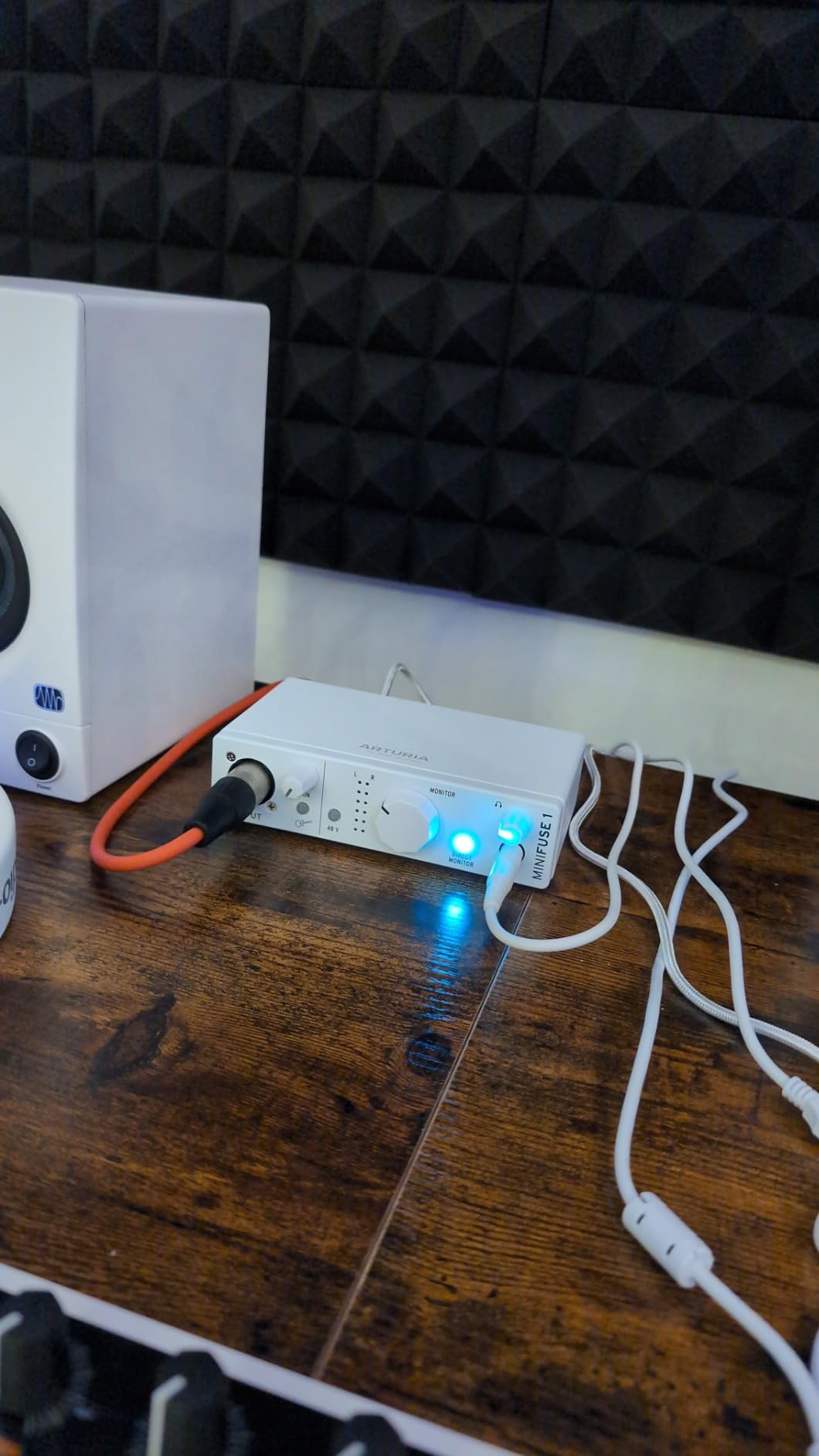
The MiniFuse 1 is the one box here that answers the MIDI question properly. It has five-pin MIDI in and out, so a controller with legacy DIN plugs connects directly, and a rear USB hub port gives newer controllers a place to plug in without a second cable to the computer.
Reviewers rate it at roughly 81 percent five-star and single out the noise floor as the standout. An exceptionally low noise floor means you can push preamp gain for a quiet condenser without dragging hiss into the recording, which is the technical reason this box sounds better than its size suggests.
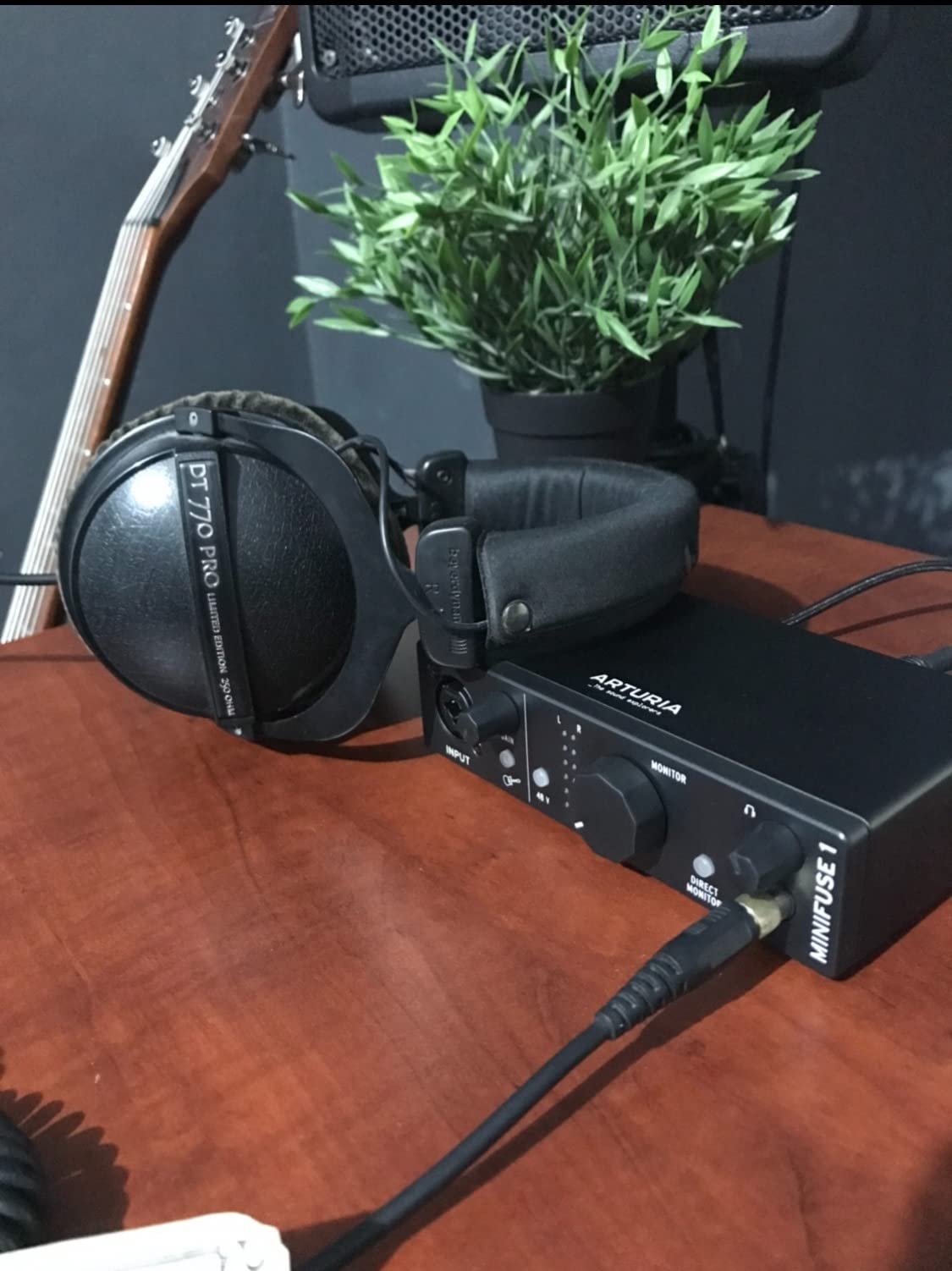
Connections cover one combo mic, instrument and line XLR input with 48V phantom power, plus two quarter-inch instrument or line TRS inputs for a stereo keyboard or a pair of sources. Loopback captures in-app or in-game audio alongside a voice take, which makes it a good fit for content creators who do both.
The bundle includes Ableton Live Lite, Analog Lab Intro, Arturia FX, Guitar Rig 6 LE, Auto-Tune Unlimited and a Splice plan, and the five-year warranty is the longest here, with over 200 reliability checks per unit.
Best fit for a keyboard-first home studio
Two TRS inputs let you record a keyboard in stereo while a mic sits on the XLR channel, or capture two instruments at once. For synth and electronic producers who already own controllers, that combination removes the usual adapter chain.
The USB hub port is the detail reviewers mention when setting up a small desk. A controller that needs power and data uses the interface for both, leaving one free port on the computer.
Before you buy, check the headphone output
The single XLR preamp rules out two microphones at once, and the headphone output does not drive low-impedance in-ear monitors well. If you monitor with IEMs, plan on a small amplifier.
Driver updates are gated behind product registration, so set up the account during setup rather than when a session is booked. Aside from that, the feature list here is unusually complete for a first box.
10. Mackie Onyx Producer 2X2 – Best Metal Build With MIDI
Mackie Audio Interface, Onyx Producer 2X2 USB Audio Interface with MIDI (Onyx Producer 2-2)
USB 2.0
2 channels
24-bit 192 kHz
Onyx preamps
MIDI I/O
Pros
- Two boutique Onyx preamps with 48V phantom power
- Combo inputs accept mic line and Hi-Z sources
- Zero-latency direct monitoring with a strong headphone amp
- 24-bit 192 kHz recording plus MIDI I/O
- Bus powered metal chassis
Cons
- Only two inputs and two outputs
- Quarter-inch headphone jack suits beginners more than advanced workflows
- Drivers and software bundle are less current
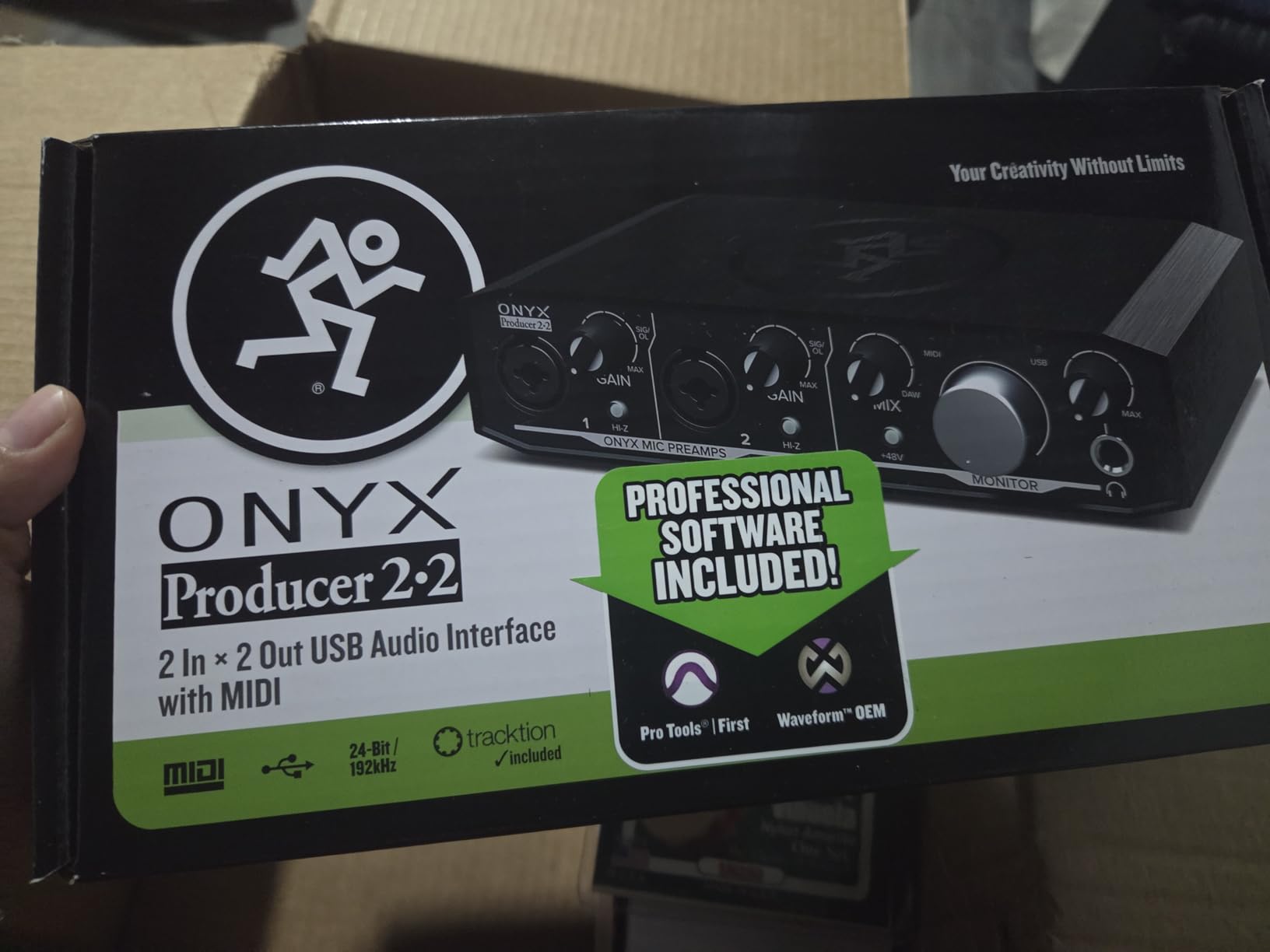
The Onyx Producer 2X2 is the sensible buy when you want a metal box with a strong headphone amplifier and MIDI at a modest outlay. Two boutique Onyx preamps with 48V phantom power feed combo inputs that accept mic, line and Hi-Z instrument sources in the same jack, so you can swap between a condenser and a guitar without rewiring.
Zero-latency direct monitoring of the analog inputs means tracking is immediate, and dedicated outputs handle studio monitors separately from the headphone amp. USB 2.0 bus power means no adapter, and the metal chassis is described in reviews as built to take daily use.
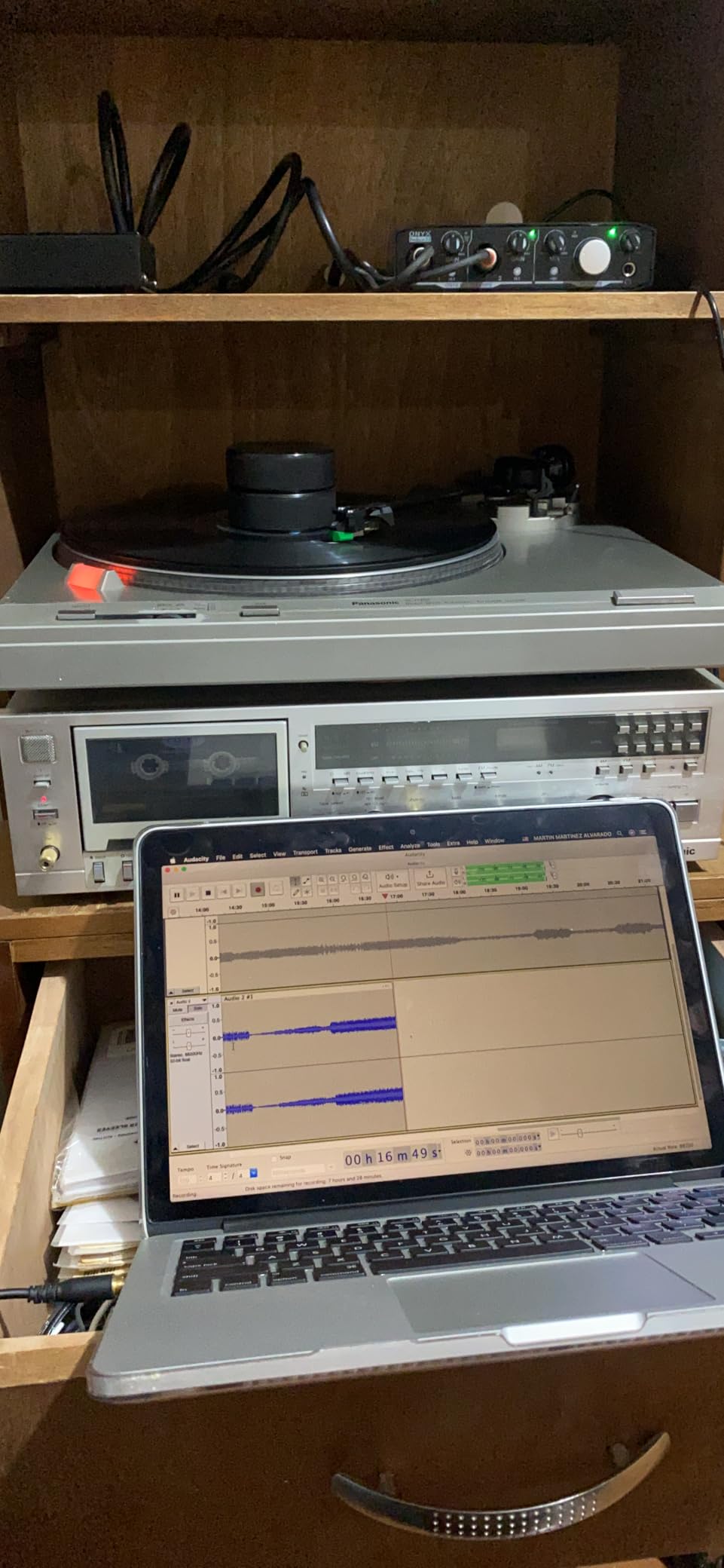
It records at 24-bit and 192 kHz with MIDI I/O included, and runs on macOS, Windows and iOS. The Musician Collection adds 23 plugins and instruments, which is a generous package for a step-up box in this category.
The smaller review base is the honest caveat here, and it reflects an older design rather than a weak one. Drivers and the software bundle are less current than newer rivals, so expect occasional software updates rather than a modern ecosystem.
Best fit for a permanent desk setup
Buyers treat this as a mid-range step up rather than a starter throwaway. The metal chassis, the strong headphone amp and the 192 kHz converters are the parts that matter once you stop moving the box between rooms.
The powerful headphone output is useful for closed-back monitoring on a budget, which is exactly the situation most beginners are in while their monitors are still being chosen.
Where the age shows
Two inputs and two outputs is the standard ceiling, and the quarter-inch headphone output plus older-style controls suit a beginner workflow more than an advanced one. Nobody describes the layout as modern.
If your priority is current software and long driver support, a newer USB-C model fits better. If it is build and monitoring, this one still earns its place.
How To Choose An Audio Interface: A Beginner’s Buying Guide
Start with the number of sources you will record at the same time, then work outward. Everything else on the spec sheet is secondary, and buying inputs you will never use is the most common first mistake.
How many inputs do you actually need?
One input covers a solo vocalist, a solo guitarist or a single-source podcast. Two inputs cover guitar plus vocals, a host plus guest overdub, or a mic plus a stereo keyboard. Four inputs are where a small band or a full drum kit starts to make sense.
Forum discussions about this category keep circling the same confusion: a two-channel box feels limiting the first time you try to track two people. If a duet or a duo is on your roadmap within a year, buy the four-input model now rather than replacing later.
Hi-Z, line and XLR inputs explained
Hi-Z instrument inputs are for guitar, bass and other pickups. They are designed for the low impedance and high signal level of an instrument, and a dynamic mic or an electric guitar into a line input is the most common beginner wiring mistake.
Line inputs are for already-amplified sources like a keyboard, a mixer output or a stereo playback device. XLR combo inputs accept a balanced microphone or a quarter-inch TRS cable, which makes them the most flexible jack on any of these boxes.
Preamp quality, converters and noise floor
The preamp is what turns a quiet mic signal into a recordable level. Its gain range and noise floor decide whether a condenser mic sounds clean or hissy, and the interface, not the microphone, sets the ceiling on your recording quality.
Converters matter less than beginners expect. A 24-bit 96 kHz converter is more than enough for every project on this list; anything above that is headroom for future processing rather than audible improvement today. Read reviews for described noise floor and gain headroom, not for marketing adjectives.
Phantom power and the ribbon mic trap
Condenser microphones need 48V phantom power, which the interface supplies from a rear switch. Dynamic microphones and most ribbon microphones do not, and sending phantom power to a ribbon microphone can damage it.
Global phantom power, as found on the PreSonus AudioBox 96, cannot be switched per channel. That matters only when you mix a ribbon microphone with a condenser on the same box, which is exactly the scenario this box cannot serve.
Latency and buffer size in plain numbers
Latency is the round-trip delay between you playing something and hearing it back. Buffer size controls it: a smaller buffer means lower latency and a heavier CPU load, a larger buffer means stability and a delay you can feel while playing.
Use a 128-sample buffer for tracking vocals and acoustic instruments, 64 samples for electric guitar and low-latency monitoring when your computer can handle it, and 256 samples or more while mixing a large project. Clicks and pops usually mean the buffer is set too low for the computer, not that the interface is faulty.
USB-C versus Thunderbolt and driver reliability
For any interface on this list, USB-C is the right answer. Thunderbolt exists for high-channel-count professional boxes, not for a two-channel beginner rig, and it costs more money for no benefit at this level.
Check the port on your computer rather than the port on the box. Some units include a USB-A to USB-C cable, which is awkward on a USB-C-only laptop, and phone and tablet use may need a powered USB hub. If you are building the rest of a workspace on a budget, our beginner maintenance kit guide follows the same buy-the-right-tool-once approach.
Common Beginner Mistakes To Avoid On Your First Recording
Buying a four-input interface for a solo project leaves you paying for gain structure you cannot use, and buying a one-input interface for a duet leaves you rewiring mid-session. Count the sources, not the features.
Ignoring driver quality causes more frustration than any preamp. Install the driver from the manufacturer before your DAW, update it, and if you see dropouts, raise the buffer size before blaming the hardware. A buffer that is too small is the usual cause of clicks and pops.
Forgetting phantom power is the classic condenser-mic failure. If a condenser sounds thin and quiet, check the rear switch before you blame the microphone or the preamp, and check it again after any move.
Buying for the software bundle is the most expensive habit. Install the DAW, ignore the rest, and pay for upgrades only when you hit a limit. A large plugin library you never open adds clutter and nothing to the recording.
Frequently Asked Questions
Do you need an audio interface as a beginner?
Yes, if you record anything through a microphone or an instrument cable, stream with chat audio, or want to monitor your own voice while recording. A computer’s built-in sound card has a high noise floor, usually one input and no phantom power, so it limits the recording rather than the microphone. If you only use MIDI controllers and virtual instruments, you can skip the input section, though an interface still improves your playback audio.
What audio interface should I get as a beginner?
The Behringer UMC22 is the most dependable first choice, with two Midas-designed preamps, 48V phantom power, direct monitoring and USB power, so it needs one cable and no adapter. If you only record one voice or one instrument, the Focusrite Scarlett Solo 4th Gen gives cleaner conversion and a gain ring that shows your level. For podcasting and streaming, the Audient EVO 4 adds loopback for capturing system audio.
What is the best audio interface for a beginner guitarist?
Look for at least one Hi-Z instrument input, which is a quarter-inch jack designed for pickups rather than a line-level cable. The Focusrite Scarlett Solo 4th Gen pairs one XLR mic preamp with one Hi-Z input and adds Air mode for extra presence on a clean tone. If you want to record guitar and vocals at the same time, choose a two-input box such as the M-Audio M-Track Duo or the Audient EVO 4.
What are the top 5 audio interfaces?
For beginners, the five most recommended units are the Behringer UMC22 for two preamps at an entry outlay, the Focusrite Scarlett Solo 4th Gen for the cleanest single-voice conversion, the Audient EVO 4 for podcasting and loopback, the MOTU M2 for 24-bit 192 kHz in a metal chassis, and the Arturia MiniFuse 1 for MIDI controllers and a low noise floor.
What’s a better interface than Focusrite?
Alternatives depend on the weakness you want to fix. The Audient EVO 4 adds loopback for streaming and two front-panel gain controls. The MOTU M2 gives you 192 kHz conversion and a metal chassis. The Arturia MiniFuse 1 adds five-pin MIDI, a USB hub and a very low noise floor, and the M-Audio M-Track Duo gives two combo inputs with no driver installation at all.
What is the best inexpensive audio interface?
The M-Audio M-Track Solo is the lowest-cost route into recording, with one combo XLR input, phantom power, a USB and direct switch for zero-latency monitoring, and no driver installation on Mac, Windows or Linux. The Behringer UMC22 costs a little more and gives you two preamps, balanced outputs and direct monitoring, which is why it is usually the better first buy.
Which audio interface has the best sound quality?
At this level the differences are smaller than the marketing suggests. The Focusrite Scarlett Solo 4th Gen leads on published specs with 120 dB of dynamic range from flagship converters, the Audient iD4 MKII uses a Class-A console preamp, and the Arturia MiniFuse 1 is noted for an exceptionally low noise floor. For voice, the gap between these and a budget box is small; it widens once you record instruments.
Do I need an audio interface if I only use MIDI?
Not for input. MIDI controllers send notes and control data, not audio, so you can produce with virtual instruments using your computer’s own output. An interface still helps for playback quality, for connecting studio monitors or headphones properly, and for recording any microphone or instrument you add later. If you plan to record vocals within a year, buy the interface now.
Conclusion: Our Best Audio Interface Picks for 2026
The best audio interfaces for beginners are not the ones with the longest spec sheet. The Behringer UMC22 remains the pick I recommend most often because two real preamps, phantom power and direct monitoring solve the whole beginner problem for the least fuss. Record one voice and want the cleanest conversion instead? The Focusrite Scarlett Solo 4th Gen is the upgrade that makes a difference on every take.
Add the Audient EVO 4 if you are podcasting or streaming, the MOTU M2 or Arturia MiniFuse 1 if you want metal build and MIDI, and the M-Audio M-Track Solo if you want the cheapest way to find out whether you enjoy recording at all. Install the driver, set the buffer to 128, and record something this week.