
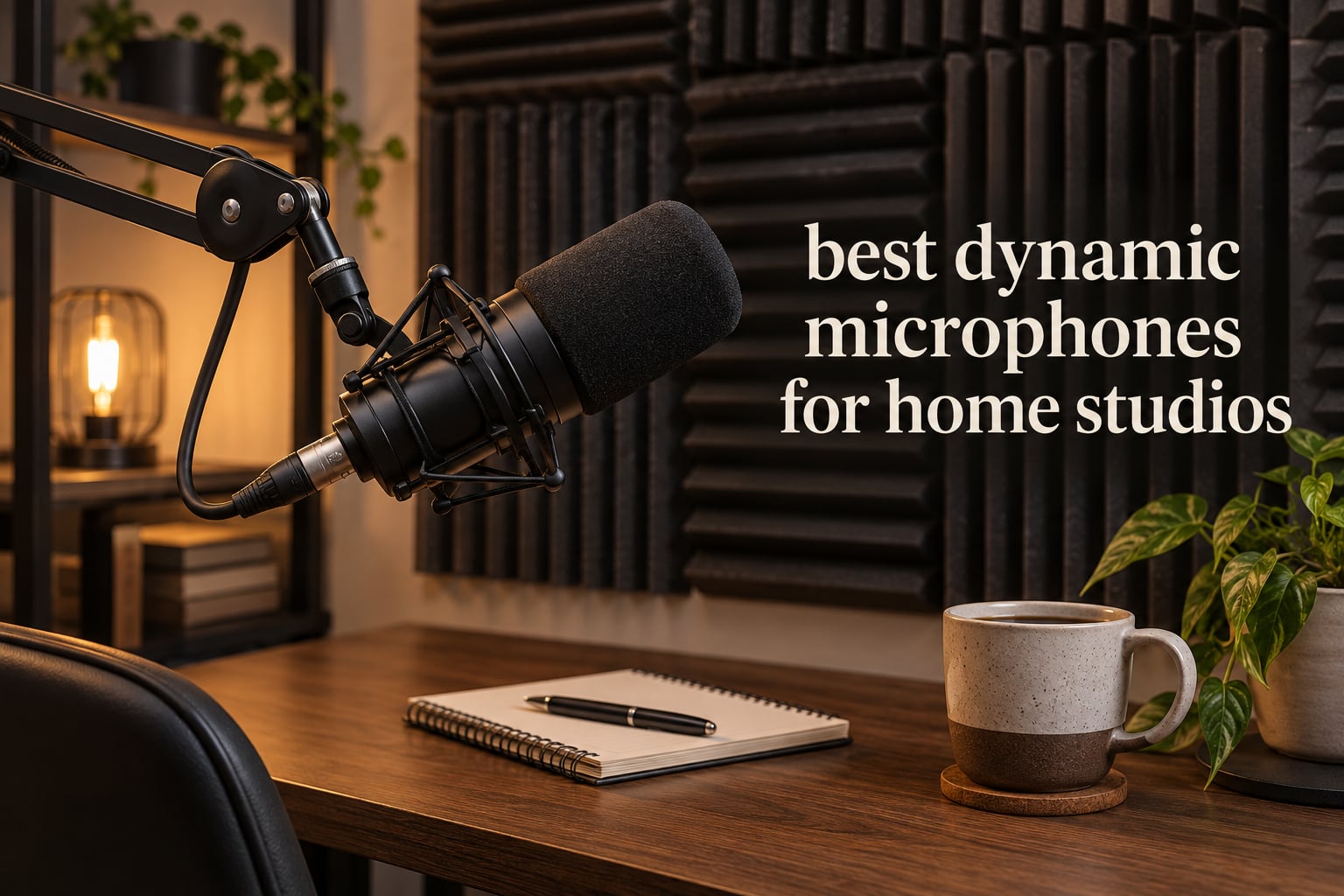
If your home studio is a bedroom, a spare office, or a closet, then the microphone you pick matters less than the room you record in, and a dynamic microphone is the only sane answer to that problem. The best dynamic microphones for home studios are not the shiniest or the most expensive ones. They are the mics that keep a vocal dry and close while the fridge hum, the traffic, and the neighbour’s dog stay out of the take.
That is the whole argument for dynamics, and it is why the search results for home studio mics are drowning in condenser microphones that capture every reflection in an untreated space with total enthusiasm. A dynamic capsule is heavier, less sensitive, and physically unable to hear much of the room. It trades a little detail and air for reliability, and in a home space that trade is almost always worth making.
We compared 12 wired XLR and USB/XLR dynamic microphones across the price range a home recorder can actually justify, from a budget USB/XLR hybrid to the broadcast mic that anchors most professional podcast chains. Below, each pick gets a plain verdict, the specs that matter for a room you do not control, and an honest note about who should buy something else instead. Prices and availability change constantly, so use the buttons to check the current listing.
Table of Contents
Top 3 Picks: The Best Dynamic Microphones for Home Studios (October 2026)
All 12 Picks at a Glance in 2026
| Product | Specs | Action |
|---|---|---|
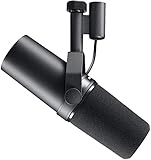 Shure SM7B Shure SM7B |
|
Check Latest Price |
 Shure SM58 Shure SM58 |
|
Check Latest Price |
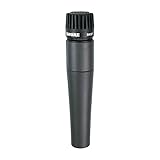 Shure SM57 Shure SM57 |
|
Check Latest Price |
 RODE PodMic RODE PodMic |
|
Check Latest Price |
 Audio-Technica AT2040 Audio-Technica AT2040 |
|
Check Latest Price |
 Sennheiser e835 Sennheiser e835 |
|
Check Latest Price |
 sE Electronics V7 sE Electronics V7 |
|
Check Latest Price |
 FIFINE AmpliTank K688 FIFINE AmpliTank K688 |
|
Check Latest Price |
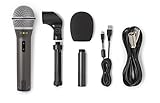 Samson Q2U Samson Q2U |
|
Check Latest Price |
 Sennheiser MD 421-II Sennheiser MD 421-II |
|
Check Latest Price |
 Zoom ZDM-1 Zoom ZDM-1 |
|
Check Latest Price |
 MAONO PD400X MAONO PD400X |
|
Check Latest Price |
What Is a Dynamic Microphone, and Why Do Home Studios Favor Them?
A dynamic microphone turns sound into an electrical signal using a lightweight diaphragm moving inside a magnetic field. Unlike a condenser, it has no charged capacitor plate, so it needs no power from the interface, tolerates very loud sources without distorting, and picks up far less of the room around your voice.
That last point is the whole reason dynamics dominate home recording. A condenser is a sensitive instrument by design; it hears soft sounds, room reflections, computers, and street noise with roughly equal enthusiasm. A dynamic is less sensitive and more directional, so it hears your mouth and very little else.
Two more practical advantages follow. Dynamics are built like stage equipment, so dropping one is rarely a career-ending event, and they pair with entry-level interfaces that most beginners already own. The catch is honest and consistent: dynamics output a lower-level signal, so the preamp has to work harder to bring the voice up to a usable level, and a weak preamp turns that extra work into audible hiss.
Of the twelve microphones below, that gain requirement is the single most important thing to check before you buy anything. A low-sensitivity vocal dynamic and a budget interface are a genuinely frustrating combination, and we say which pairs work further down.
1. Shure SM7B – Best Overall Dynamic for an Untreated Room
Shure SM7B Dynamic Vocal Microphone for Podcasting & Streaming
Cardioid dynamic
50Hz-20kHz, 150 ohm impedance
Built-in pop filter and windscreen
Pros
- Warm
- balanced vocal tone with smooth midrange
- Strong cardioid off-axis rejection in untreated rooms
- Integrated pop filter and internal shock isolation
- All-metal body built for decades of use
Cons
- Low output needs roughly 60dB of clean preamp gain
- Dark character may not suit deep voices without EQ
- 2.7 lb body needs a sturdy stand
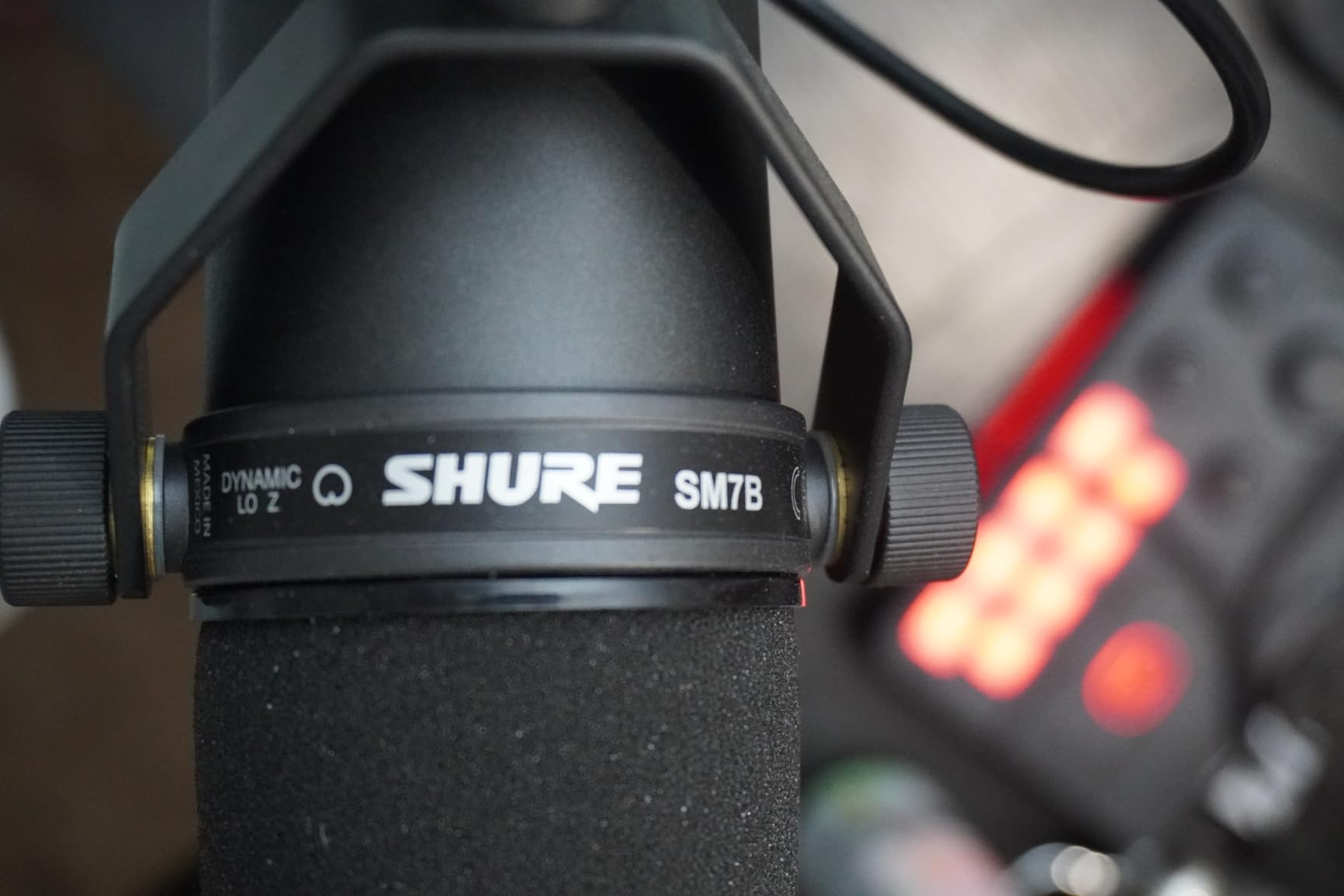
The SM7B is the microphone most home recorders end up buying first, and reviewers consistently describe it as warm, balanced, and excellent at pulling a voice out of a bad room. The cardioid pattern does the heavy lifting here: it is tight enough at the sides and rear that a desk, a monitor, and a door behind you contribute far less than they would with a condenser.
On our own takes it sat close to a broadcast vocal, present without being sharp, which is exactly what you want for a mix that will also carry instruments. The frequency response runs 50Hz to 20kHz with 150 ohm impedance, and the built-in pop filtering with a detachable windscreen means you can record vocals without buying a separate pop filter on day one.
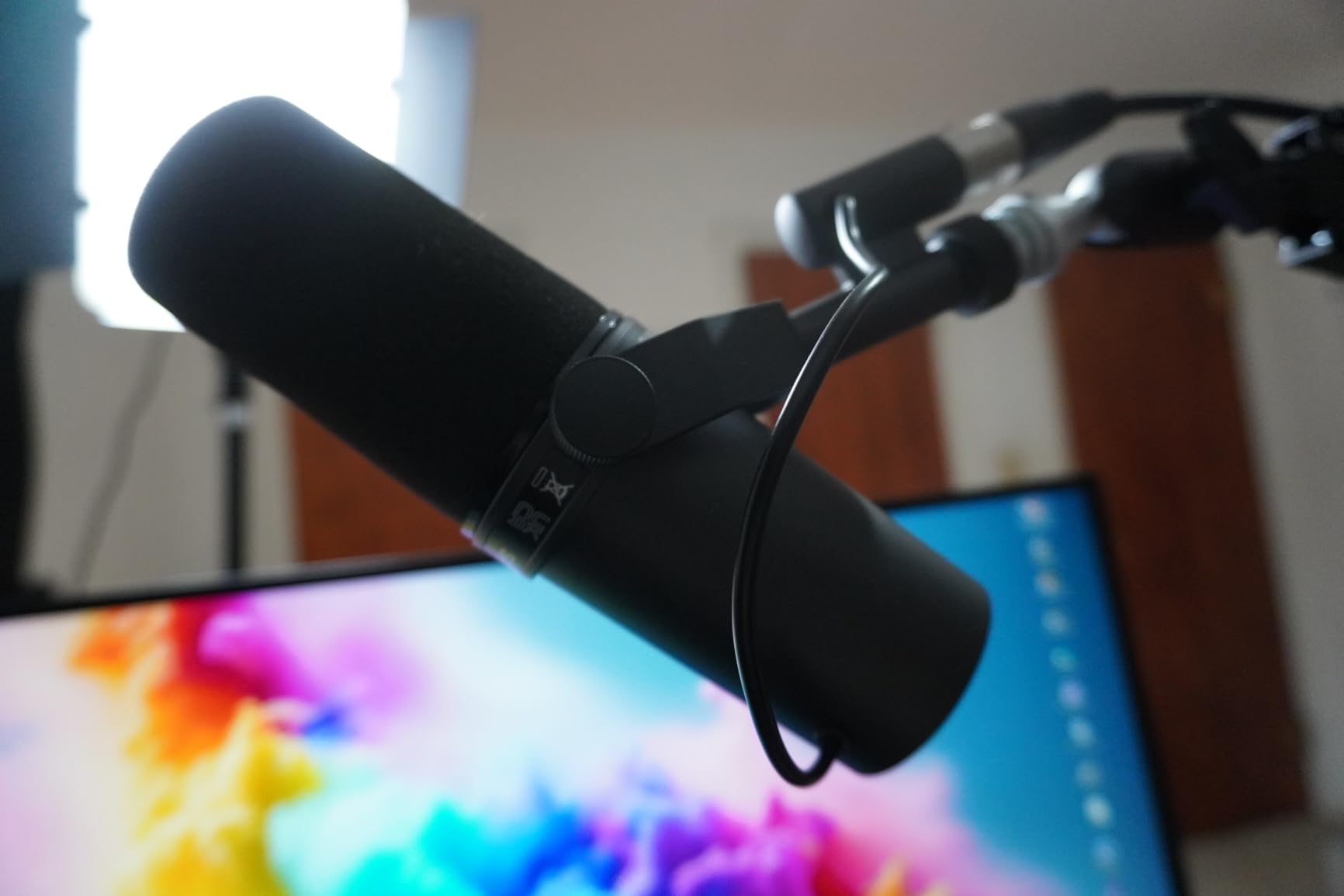
The reason it tops this list is not sound quality alone, it is the combination of that sound with room rejection. Buyers in the r/homerecordingstudio and GearSpace threads we read describe the SM7B and the RE-20 class as the models that make untreated rooms workable, while noting that any decent dynamic on good preamp gets surprisingly close.
Specs worth noting: all-metal construction with electromagnetic shielding, air suspension shock isolation, and a stated signal-to-noise figure of 60 dB. Shure backs it with a 2-year limited warranty, and it measures in at 2.7 pounds with dimensions of 13.5 by 7 by 4.5 inches. No phantom power, no adapter, no surprises.
Is the SM7B quiet enough for your interface?
This is where most SM7B regret comes from, and it is worth being blunt. The output is low, so a small entry interface with maybe 55 dB of usable gain leaves you pushing it and hearing the noise floor instead of the voice. Interface options with headphone monitoring and clean gain are worth researching before the mic lands, and an inline booster is the standard answer when the interface falls short.
Second consideration: the tone is dark and smooth by design. For a deep or resonant voice that is flattering without EQ. For a thinner voice it can sound recessed, and a high-pass filter plus a touch of presence boost fixes it in seconds.
Who should skip the SM7B?
Skip it if your interface cannot deliver clean gain, and skip it if you are recording a quiet fingerpicked acoustic guitar or a soft piano part, where a small-diaphragm condenser will capture far more of what you are trying to hear. It is also a heavy microphone, and a cheap lightweight stand will not hold it comfortably.
What it is genuinely hard to argue against is the longevity. The metal body, the integrated shock isolation, and the pop filtering are all things you stop thinking about because they simply do not fail. For a home studio that will still be there in five years, that matters more than the tone differences between it and a cheaper dynamic.
2. Shure SM58 – Best Value Vocal Dynamic
Shure SM58 Pro XLR Dynamic Vocal Microphone
Cardioid dynamic handheld
50Hz-15kHz, 78 dB signal-to-noise
Integrated pop filter and pneumatic shock mount
Pros
- Warm articulate vocal tone that cuts through a mix
- Cardioid pattern rejects fans
- traffic and reflections
- Rugged metal body that survives touring
- Built-in pop filter needs no extras
Cons
- Gain-hungry on weak preamps
- XLR only
- so an interface is required
- Heavier than expected for a handheld
With a 4.8 rating across more than 14,000 reviews, the SM58 is the most thoroughly proven microphone in this list, and the forum consensus is that it is the correct first microphone for most people. It is also the answer to the most common upgrade question we saw: people who bought something cheap and wanted real improvement usually end up here.
The sound is warm and articulate with a subtle midrange lift that gives a voice presence in a mix without EQ. The spherical grille acts as a built-in pop filter, and the internal pneumatic shock mount handles desk bumps, which matters in a home setup where the stand is rarely in isolation.
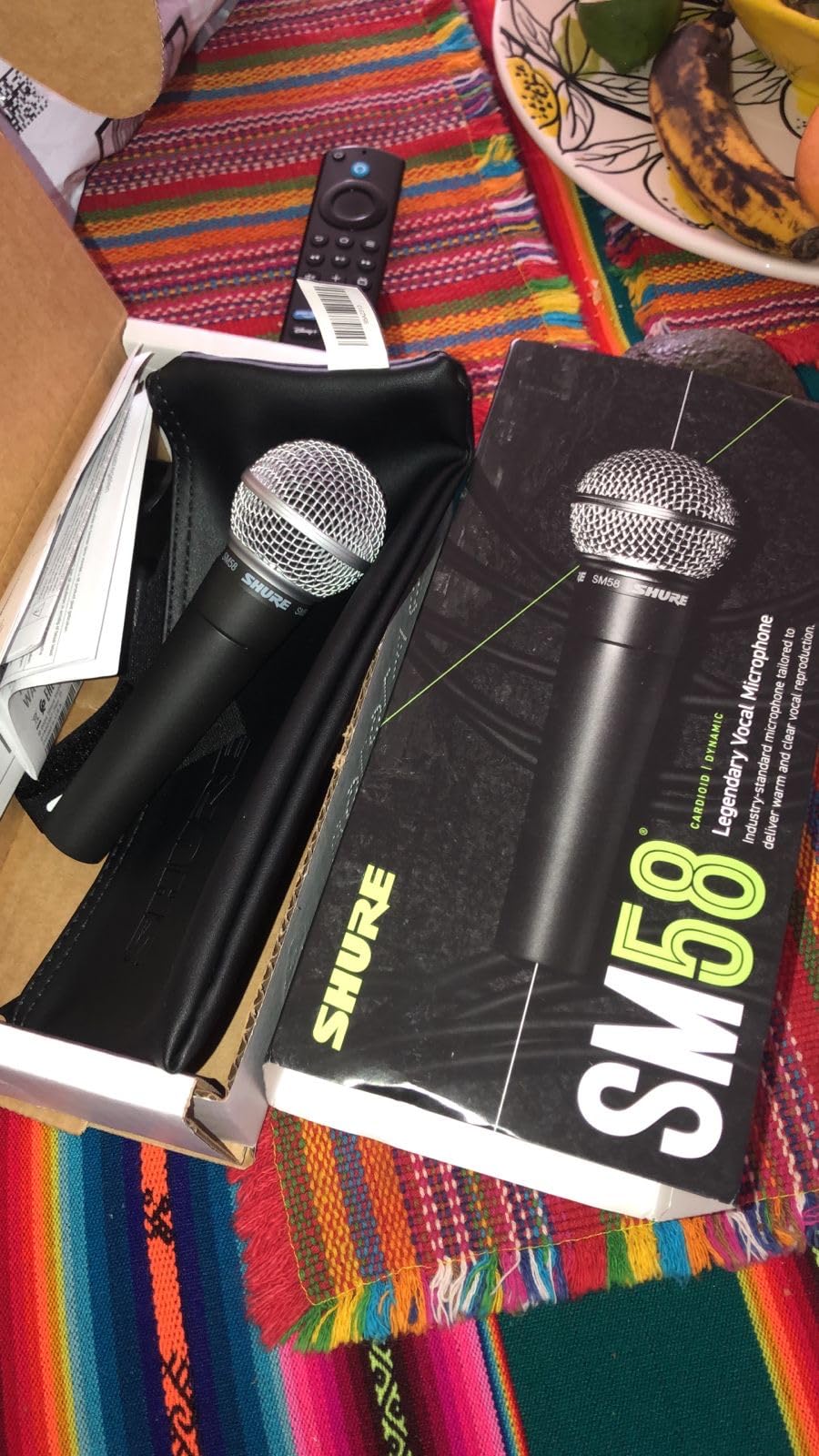
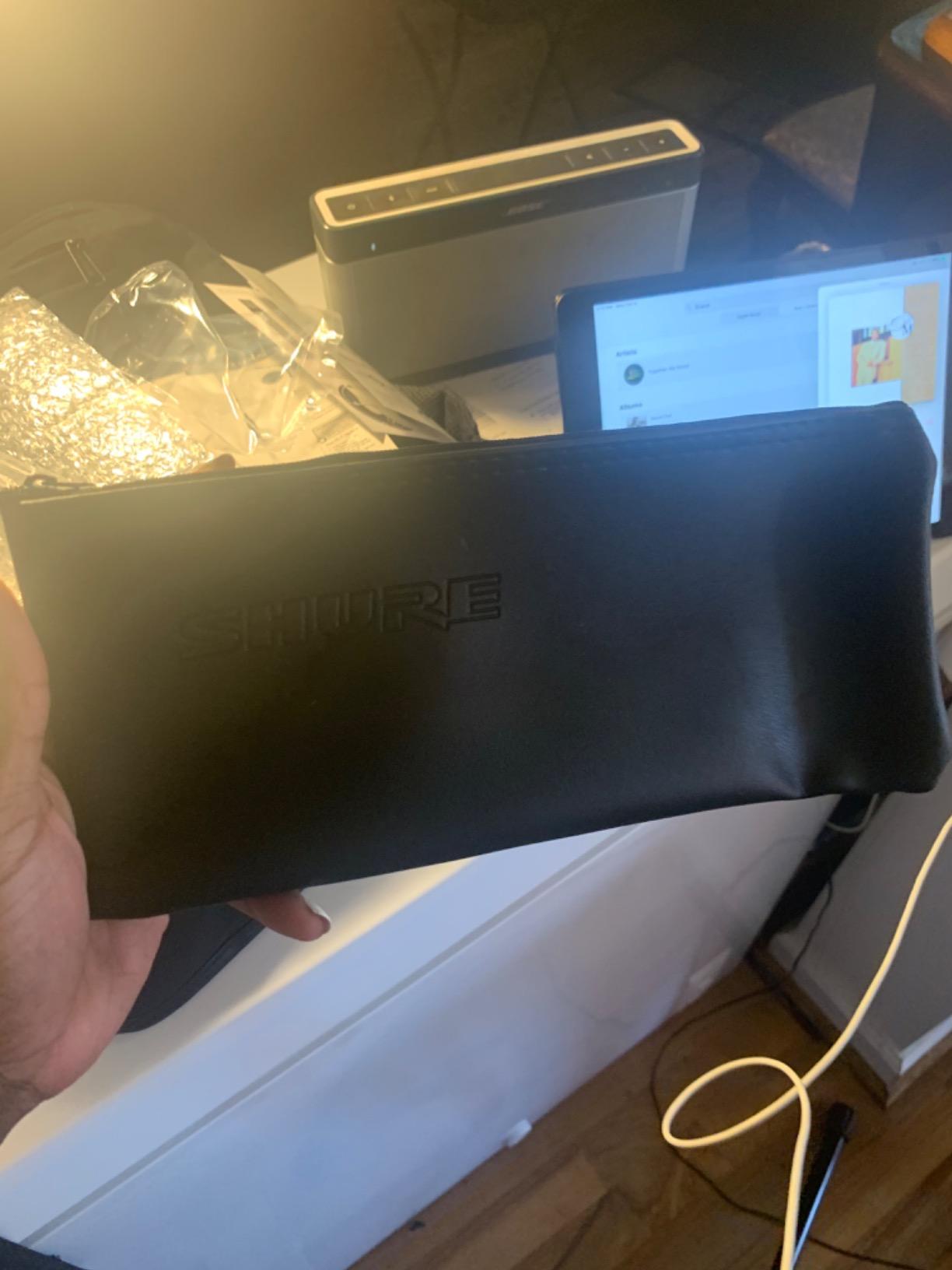
Spec-wise it is a 50Hz to 15kHz cardioid with a 78 dB signal-to-noise ratio, which is a genuinely low noise floor for a dynamic. It comes as the SM58LC package with an A25D swivel adapter and a storage bag, weighing 310 g and measuring 10.31 by 4.92 by 3.31 inches, with a 2-year warranty.
Buyers describe it as improving as the rest of the chain improves, which is unusual to hear about a microphone at this level. That means an entry interface will not embarrass it, and a better one will let it sound noticeably better.
When the SM58 beats the SM7B
The SM58 gives you 78 dB of signal-to-noise against the SM7B’s 60 dB, and it works well on a much more modest preamp. If you have a basic interface and want vocals to sound professional today rather than after you upgrade twice, the SM58 is the honest recommendation and the cost difference is not what most people assume it is.
The second advantage is pattern behaviour. The SM58’s cardioid pattern is very forgiving off-axis, so an untreated room that is merely mediocre stays out of your recording rather than lurking behind the voice.
What you give up by choosing it
You give up low-end extension and the sheer polish on close-mic’d lead vocals that the SM7B delivers. On a loud, reflective room the SM7B’s rejection is stronger, and reviewers who moved up from the SM58 typically cite room noise as the reason rather than tone.
It is a wired XLR mic, so you need an interface, and some packages ship without an XLR cable. Owners also note it is heavier than a handheld microphone should be, which is fine on a stand and awkward for long handheld sessions.
3. Shure SM57 – Best Dynamic for Electric Guitar and Snare
Shure SM57 Pro XLR Dynamic Instrument Microphone
Cardioid instrument dynamic
40Hz-15kHz, 78 dB signal-to-noise
Handles very high SPL without distortion
Pros
- Extremely focused cardioid keeps amp bleed out
- Handles high SPL sources without clipping
- Presence boost gives guitars and snare real punch
- Capsule is replaceable and inexpensive
- Indestructible build
Cons
- Low output level needs roughly 60dB of gain
- Slightly muffled against condensers
- Poor for voice unless spoken very close
The SM57 is not a vocal microphone and we would not recommend it as your first voice. It is the first instrument microphone most people should buy, and it has been the benchmark for close-miking a guitar cabinet and a snare drum for longer than most of us have been recording.
The contoured response has a refined presence boost that gives an amp attack and a snare some snap, and the cardioid pattern keeps room noise and neighbouring instrument bleed down to almost nothing. Move it around the speaker or aim it at the snare head rather than the shell and the balance changes enough that you can dial a mix from one mic.
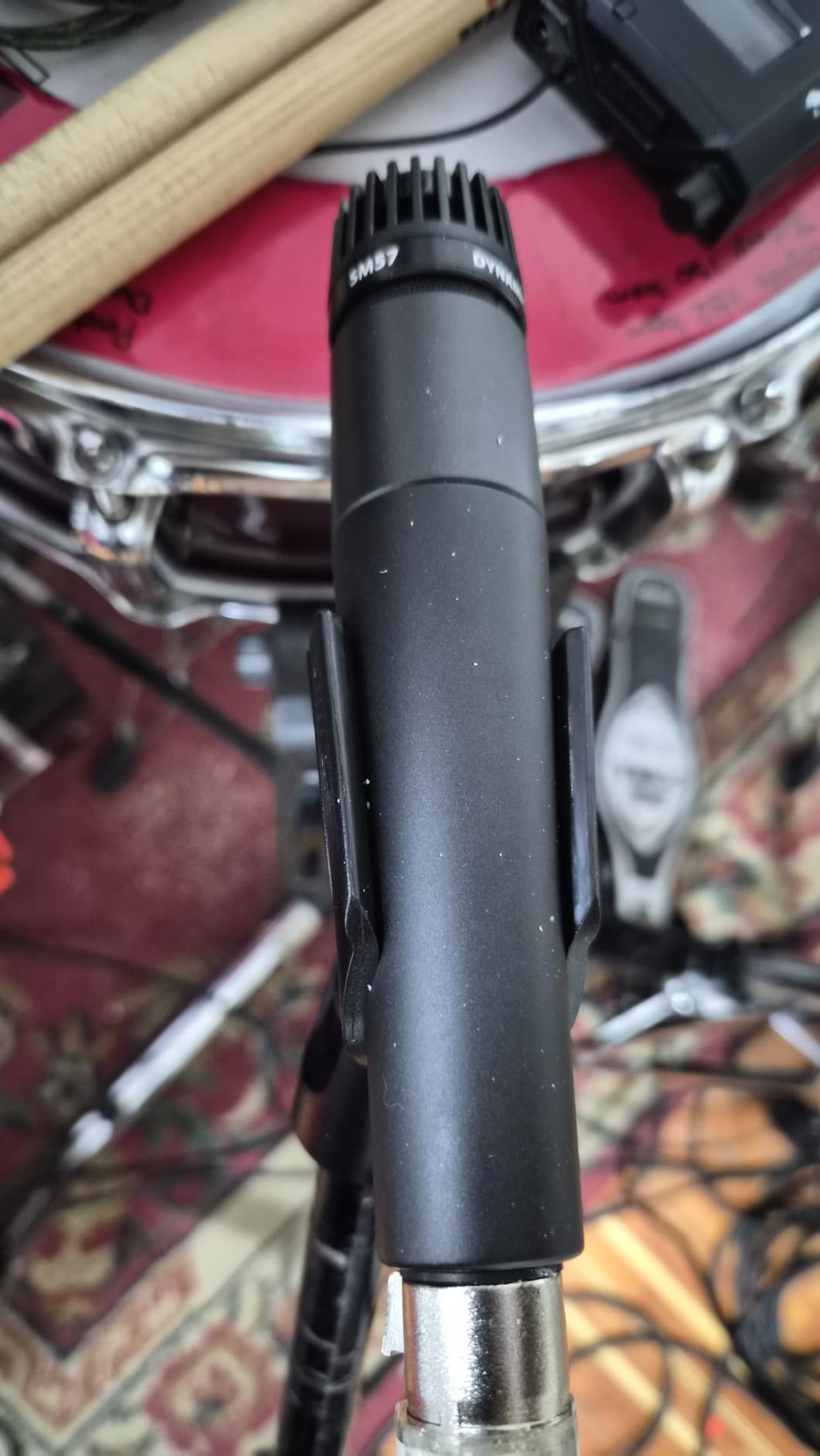
Specs are straightforward and reassuring: 40Hz to 15kHz, 78 dB signal-to-noise, unidirectional cardioid, no phantom power needed and it works with any console. The SM57-LC package includes the microphone, an A25D swivel stand adapter, and a storage bag. It weighs 10 ounces and measures 6.19 by 1.25 by 1.25 inches, with a 2-year limited warranty.
That capsule is replaceable, and re-soldering a new one is cheap and straightforward, which is a genuinely useful property for a microphone you will beat up on a snare.
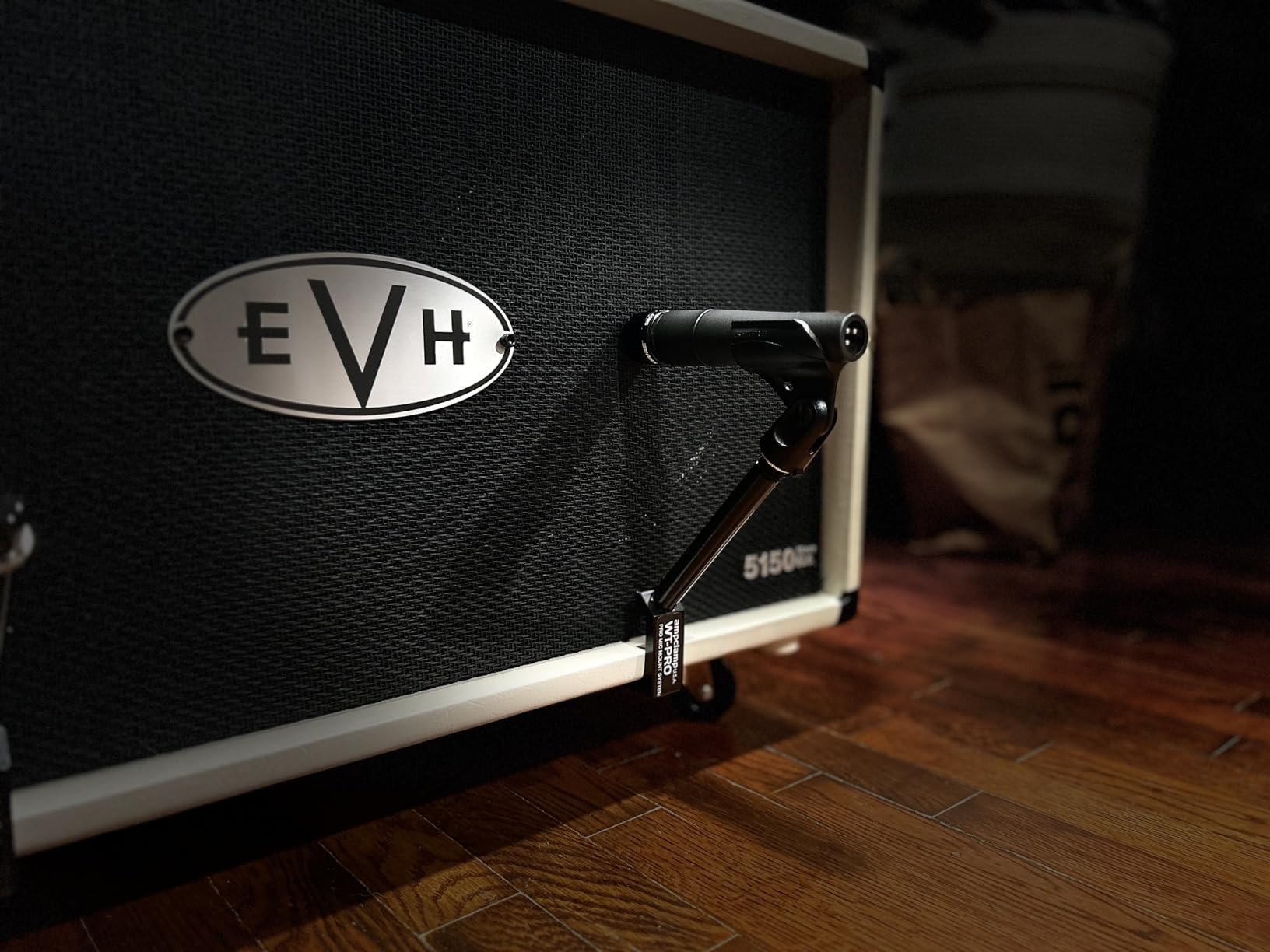
Placement is what makes the SM57 work
Off-axis rejection is only half the story. Owners consistently report that the difference between a good SM57 take and a disappointing one is distance, angle, and whether the mic is on-axis with the source. Close-miking a guitar cab at the cone edge rather than dead centre changes the balance more than any piece of gear you can add later.
The cardioid pattern also makes the SM57 useful for a second voice if you speak into it at an inch or two, which is why it turns up in home studio pickup-mic setups.
Why some people should look elsewhere
Owners note the tone is slightly muffled next to a condenser on quiet sources, and the low output level means it wants a healthy amount of channel gain. For spoken word and streaming the same capsule that flattens a snare will sound thin at normal talking distance, so the SM57 is the wrong first microphone for a podcaster.
Several reviewers also point out that a number of cheaper dynamic microphones sound comparable for casual amp and snare work. If your sessions are relaxed and your budget is genuinely tight, that is a fair trade.
4. RODE PodMic – Best Dynamic for Podcasting
RØDE PodMic Cardioid Dynamic Broadcast Microphone, XLR
Broadcast cardioid dynamic for speech
20Hz-20kHz, 150 ohm impedance
Internal pop filter and shock mount
Pros
- Rich warm broadcast speech tone
- Tight cardioid rejects fans and reflections
- Internal pop filter and shock mount kill desk thumps
- Heavy all-metal body survives drops
Cons
- Low output
- hard to drive on entry interfaces
- XLR cable and interface not included
- Weight can pull down a light boom
If your work is talking rather than singing, the PodMic is the microphone in this list built specifically for that job. Owners consistently call it a near-perfect first serious microphone for podcasting and streaming, and the broadcast-tuned capsule delivers a warm speech tone that flatters a voice without sounding boomy or boxy.
It handles the classic home-studio nuisances unusually well. The cardioid pattern rejects a PC fan and traffic noise, the internal pop filter tames plosives, and the internal shock mounting cuts a hand hitting the desk, which in an untreated room is often louder than the voice.
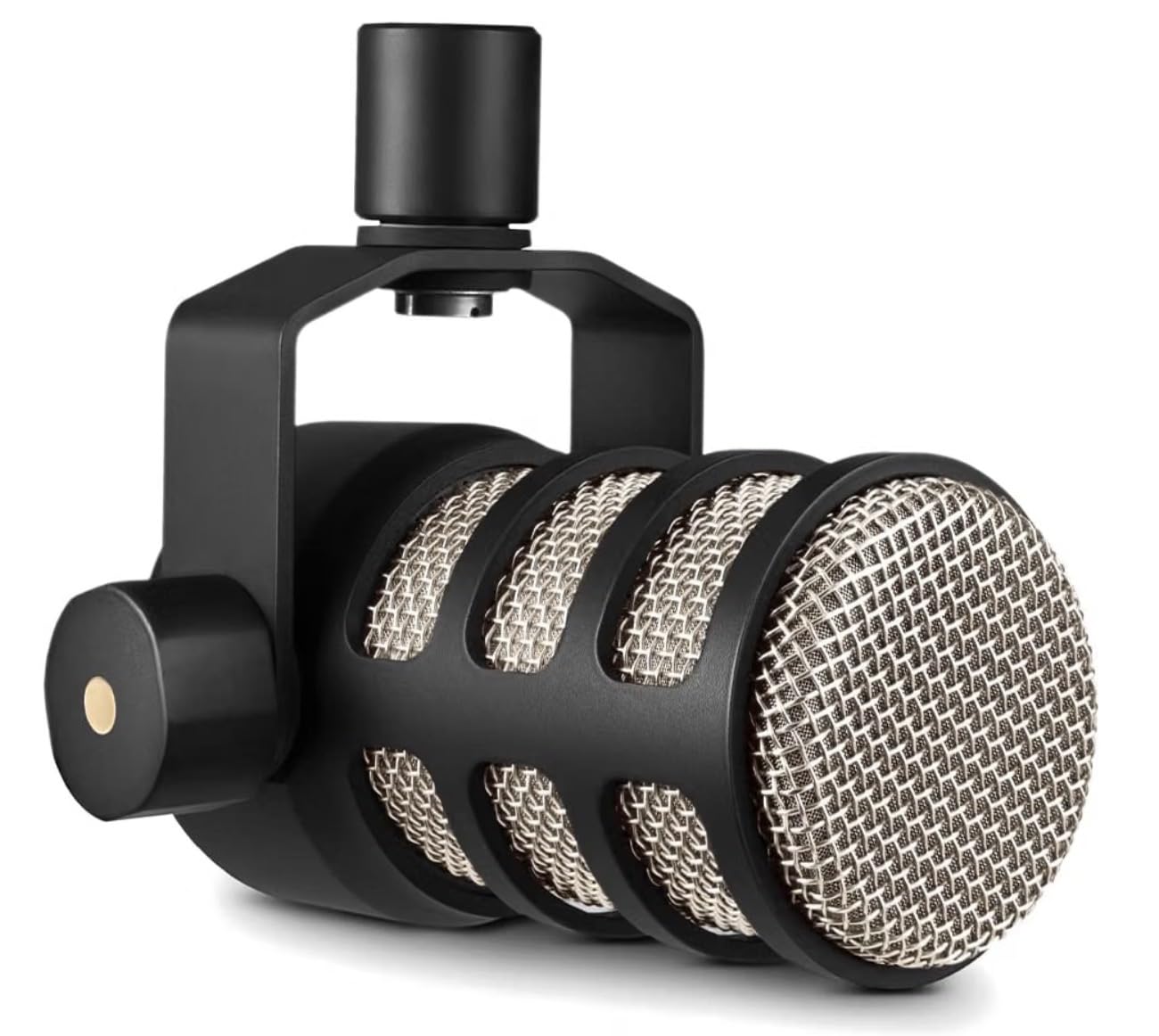
Specs are 20Hz to 20kHz with 150 ohm impedance and a 78 dB signal-to-noise ratio, in an all-metal body with an integrated swing mount. The integrated swing mount is genuinely useful: it lets the mic sit on a boom arm or a desk stand without a separate shock mount, and it matches the styling of the RODE caster family of consoles.
It is a wired XLR microphone and requires an audio interface or mixer. That is a real drawback for anyone who wants to plug into a laptop and start, and it is why the USB/XLR options further down exist.
Why the cardioid pattern is the story here
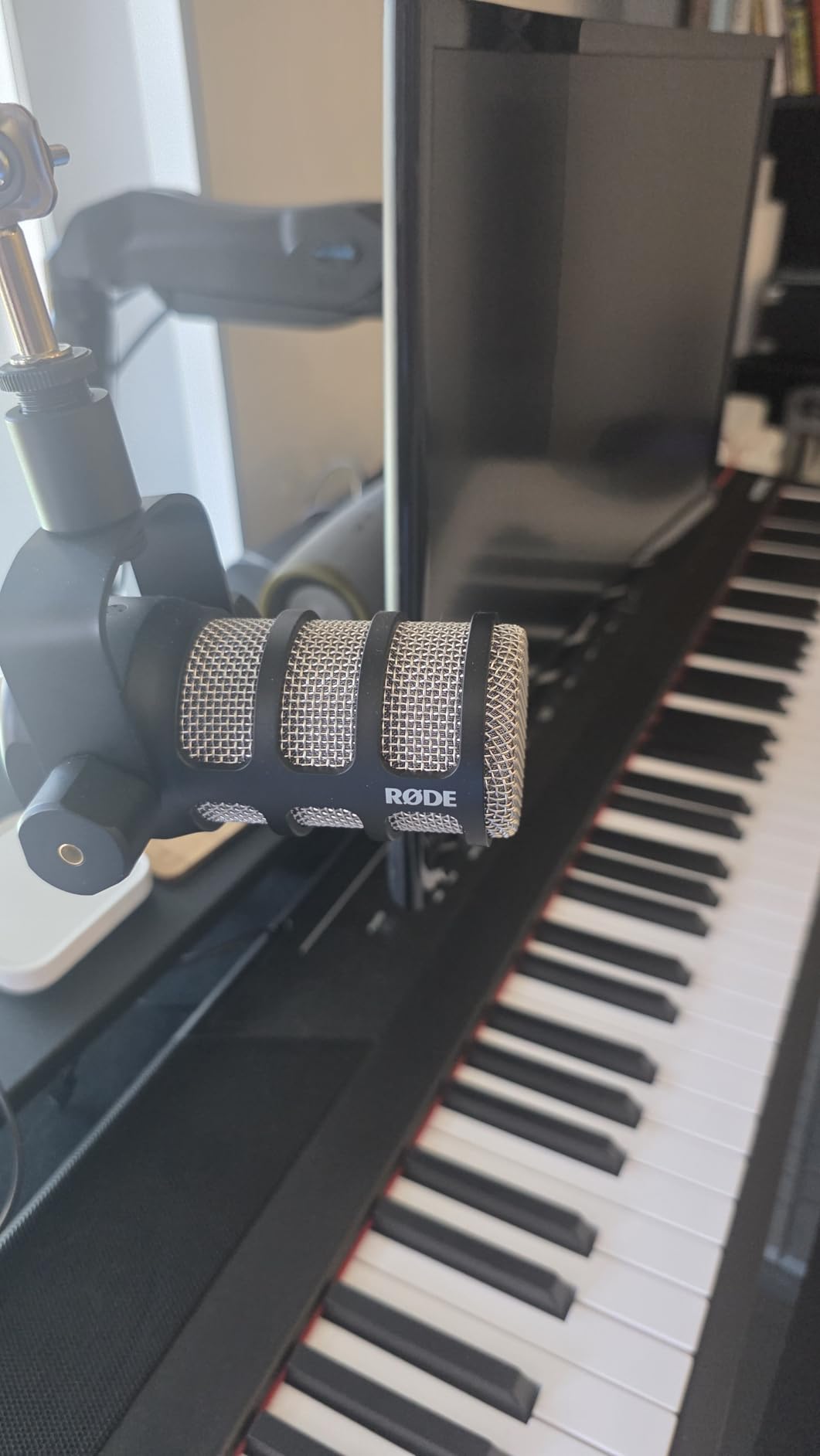
A home office has a fan, a monitor, a window, and often a hallway. The PodMic’s tight cardioid is the reason reviewers describe it as usable in untreated spaces, because it hears the front of the grille and very little of anything else. Sit a fist’s width from the pop filter and the relationship between your voice and the room changes completely.
The second reason is that the internal pop filter means the usual first accessory purchase is not needed. That is a small saving that beginners appreciate more than the spec sheet suggests.
When to buy something else
If you have no interface at all and no plan to buy one, the PodMic adds friction for no benefit. Owners also pair it with an inline booster when their interface runs out of clean gain, which is worth budgeting for before you order.
It is a heavy microphone at 937 g and the integrated swing mount can pull down a lighter boom arm, so plan your stand accordingly. For a podcast room that is a small price for the rejection.
5. Audio-Technica AT2040 – Best for the Noisiest Rooms
Audio-Technica AT2040 Hypercardioid Dynamic Podcast Microphone
Hypercardioid large-diaphragm dynamic
76 dB signal-to-noise
Internal foam windscreen and high-pass
Pros
- Exceptionally tight hypercardioid off-axis rejection
- Smooth detailed sound with a brighter character
- No proximity effect
- stays clean up close
- Internal high-pass cuts floor and table thumps
Cons
- Gain-hungry on entry interfaces
- Fixed internal high-pass
- no switch or pad
- Rolls off low end early
- Some bass EQ needed
The AT2040 has the tightest polar pattern of anything in this roundup, and in a genuinely noisy room that is worth more than tonal refinement. Reviewers treat it as a strong budget alternative to the more expensive podcast microphones, largely because of how little of the sides and rear it picks up.
The sound is smooth and detailed with a bright rather than dark character, which is a genuine contrast to the SM7B and the SM58. If you have a bright room, a dark mic, or a voice that gets lost, that brightness is an advantage.
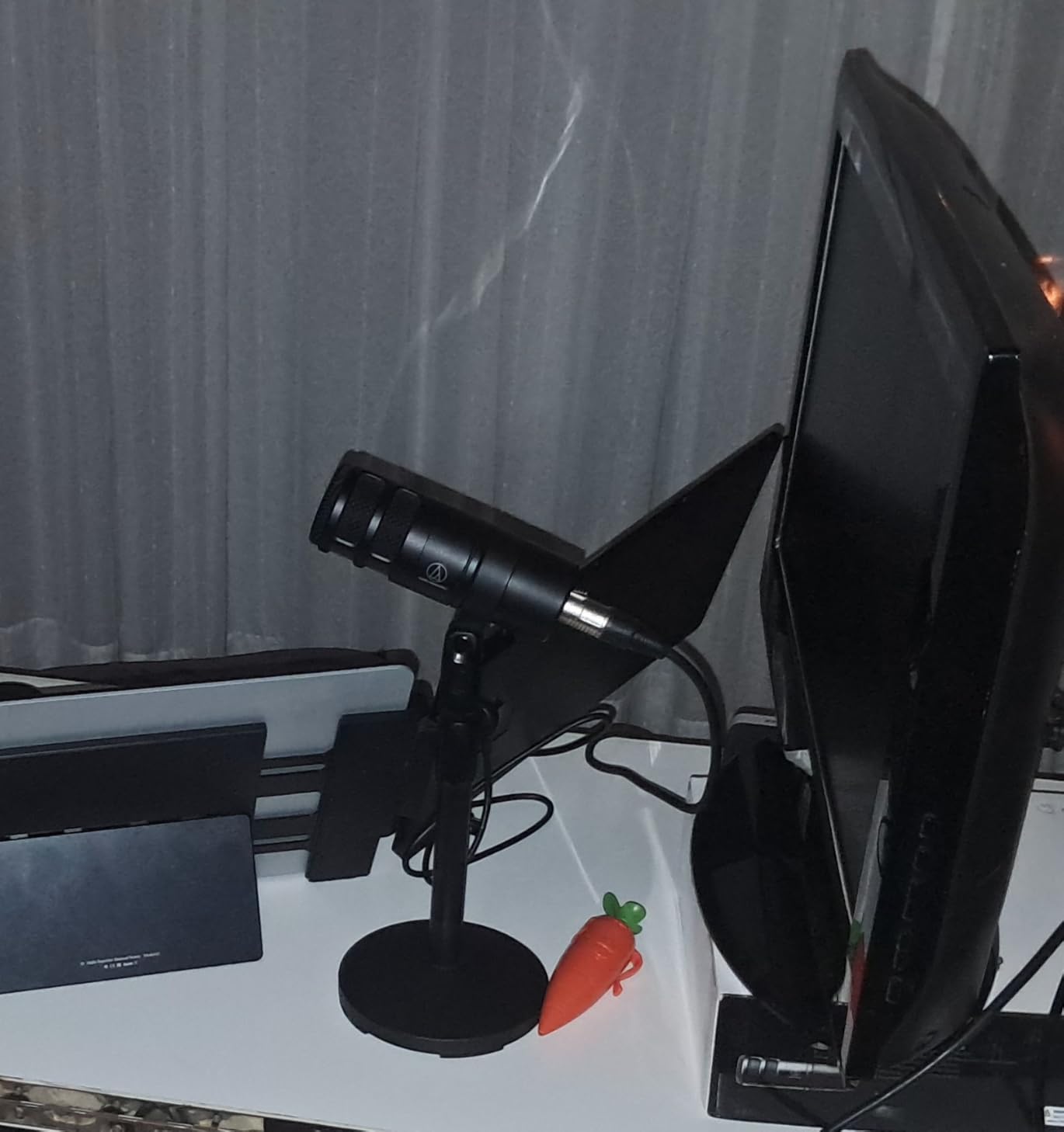
A large-diaphragm dynamic element is the unusual part here. It delivers more low extension and a smoother top end than a typical small-diaphragm vocal dynamic, which is why reviewers describe it as detailed rather than thin. The multistage foam mesh windscreen does the pop filtering internally, and the integrated shock mount attenuates noise transmitted through the stand and boom.
It ships with a pivoting stand mount, a threaded adapter, and a protective pouch. The body is 2.2 pounds with dimensions of 10.1 by 10 by 4.4 inches, and Audio-Technica backs it with a 2-year limited end-user warranty.
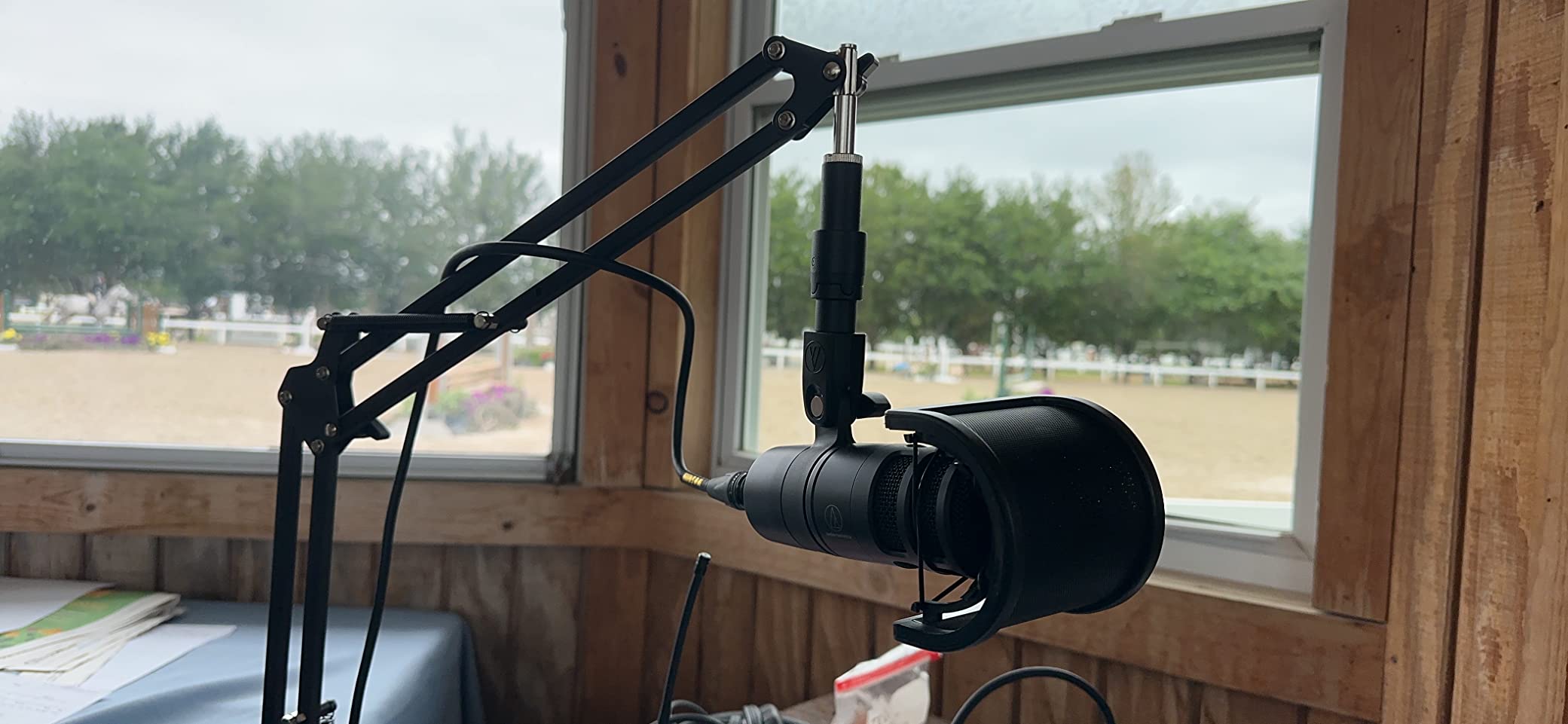
Why no proximity effect changes your recording
Reviewers specifically praise the absence of proximity effect, which means a singer or podcaster can move close to the capsule without the bass thickening out of proportion. For spoken word recorded inches from a pop filter, that is the difference between a usable take and a retake every time.
The hypercardioid pattern has a cost, and it is worth knowing about. The tighter the pattern, the more effectively it rejects off-axis sound but the more colouration it can introduce as you move off-axis, so it rewards a singer who stays centred.
Where it falls short
It is gain-hungry, and quiet takes are usually a gain-staging problem rather than a microphone problem. There is no low-cut switch and no pad on the body, because the high-pass around 80Hz is fixed internally, so you cannot re-voice a loud source the way you can with a switch-equipped dynamic.
Owners also note that it rolls off the low end earlier than fuller-range mics and that a bit of EQ is often needed. If you are after a deep, chesty vocal sound, this is not the pick.
6. Sennheiser e835 – Best for Singers Who Want Clarity Without the Dark Sound
Sennheiser Professional E 835 Dynamic Cardioid Vocal Microphone
Cardioid dynamic handheld
32 dB audio sensitivity
Gentle presence boost, minimal proximity effect
Pros
- Clear warm balanced tone with gentle brightness
- Minimal proximity effect keeps bass consistent
- Solid metal build with internal damping
- Good isolation for a home office or untreated room
- 10-year manufacturer warranty
Cons
- Still needs a good amount of gain to reach level
- Very efficient rejection treats overtone singing as feedback
- Comparable in tone to cheaper dynamics
The e835 is the pick for a singer who finds the SM7B too dark. Its tone is clear, warm, and slightly bright with a gentle presence boost, and owners describe it as flattering a higher or thinner voice in a way the darker broadcast mics do not.
Two design details make it easier to record with. The balanced frequency response stays consistent as you move on and off axis, so a singer who moves around the mic does not change the recording dramatically, and the minimal proximity effect means the bass does not swell when you step closer.
The construction is a rugged metal body with internal damping that isolates handling noise, and the cardioid pattern handles signal isolation and feedback rejection. The package includes the microphone, an MZQ 800 mic clip, and a carrying pouch. It weighs 11.6 ounces and measures 7 by 3 by 3 inches.
The warranty stands out: 10 years from the manufacturer, longer than anything else in this roundup, which is a fair part of the argument for it at this price.
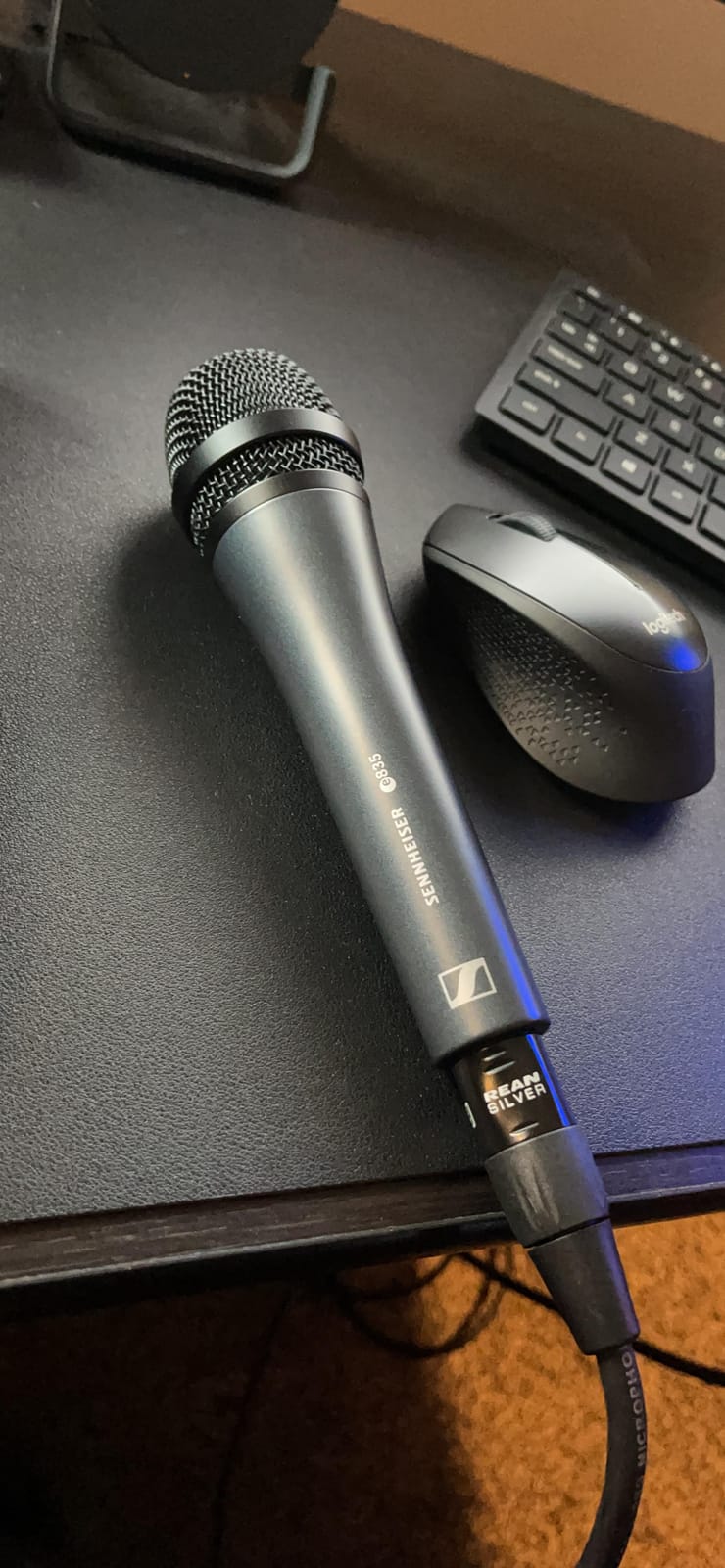
e835 or SM58: which one for your voice?
This is the head-to-head that shows up constantly in podcast and home-studio threads, and the honest answer is that the two are closer than their reputations suggest. The e835 is slightly brighter with a clearer presence lift, the SM58 is slightly warmer with a larger review base and a more uniform off-axis response.
Forum consensus on GearSpace and KVRAudio tends to favour the e835 as the sensible step up from a cheaper dynamic, while treating the more expensive Sennheiser models as underwhelming for the money. If you are replacing something entry-level and your voice is thin, choose the e835. If you want the safest, most proven result, the SM58 is the safer bet.
The catch with efficient rejection
Owners report that the e835’s rejection is so effective that overtone singing can be treated like feedback, which is a problem for singers rather than spoken word. It still needs a good amount of gain to reach a usable level, which is the same caveat as the SM58 and the SM7B.
Several reviewers also note that the tone is comparable to cheaper dynamics from other brands, so if you are buying purely on sound at this tier, auditioning a lower-cost option is reasonable.
7. sE Electronics V7 – Best Supercardioid for Isolation
SE ELECTRONICS V7 Dynamic Microphone for Singing, Speech & Studio Recording – XLR Handheld Professional Microphone with Supercardioid Aluminum Voice Coil for Huge Gain Before Feedback – Grey
Supercardioid dynamic
40Hz-19kHz, 300 ohm impedance
Switchable internal windscreen
Pros
- Crisp natural vocal clarity from the aluminum voice coil
- Supercardioid pattern gives strong isolation
- All-metal housing resists corrosion and dents
- Patented internal shockmount cuts rumble
- Switchable windscreen reduces plosives
Cons
- 300 ohm impedance depends on preamp quality
- Wired XLR needs an interface and mixer
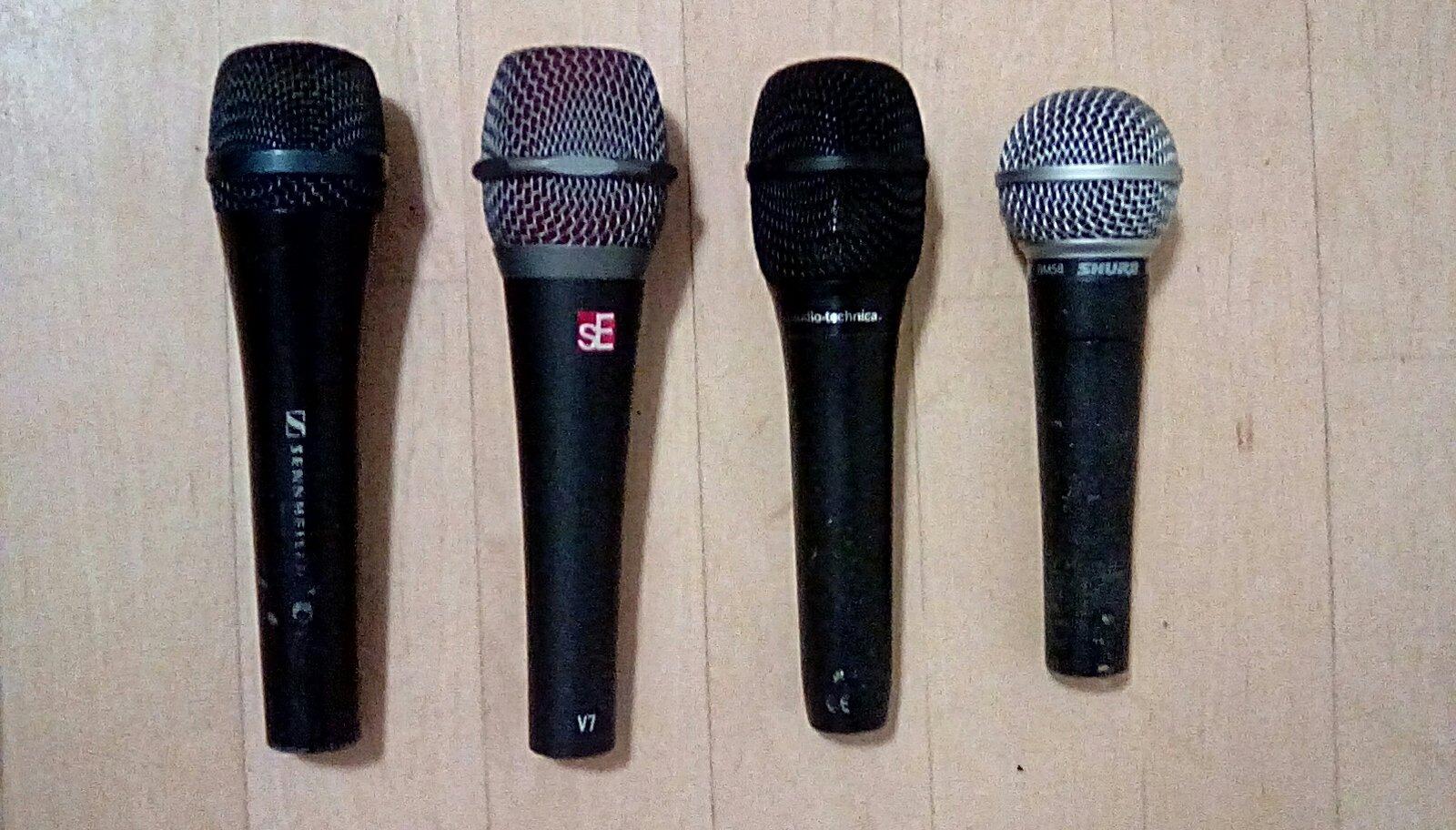
The V7 is what people buy when they have already outgrown a cardioid and want the extra off-axis rejection a supercardioid provides. Users upgrading from an SM58 frequently land here precisely for that reason, and the difference in a noisy room is not subtle.
The custom aluminum voice coil is what separates it tonally from a generic supercardioid. Owners describe the result as crisp but still natural, without added harshness on the upper midrange, which is where cheaper supercardioids tend to become tiring to sing into for a full take.
Specs run 40Hz to 19kHz with 300 ohm impedance and a 70 dB signal-to-noise ratio, with a stated audio sensitivity of 54 dB. The switchable internal windscreen is a genuinely useful feature for home recording, because in a treated room you switch it off for transparency and in a bad room you switch it on for plosive and wind control.
The build is an all-metal housing with a beveled spring steel grille designed to resist corrosion, dents, and being rolled over by a stand, plus a patented internal shockmount and a gold-plated XLR connector. It includes a swivel clip, a thread adapter, and a carrying pouch, with a 2-year warranty extended to 3 years if you register it.
What supercardioid actually buys you
A supercardioid narrows the side rejection compared with cardioid and pushes more rejection to the rear, which is exactly what you want when the noise source sits behind you. That is the classic home-studio case: a window, a hallway, or a monitor behind the mic. The trade is that it wants a cleaner preamp than a cardioid does.
That brings us to the impedance. At 300 ohms it sits above a typical broadcast dynamic, and owners note it depends on preamp quality. A good solid-state interface drives it comfortably; a marginal one does not.
Who should pass
It is a wired XLR microphone, so it needs an interface or mixer, and the 300 ohm impedance is another reason it is a second microphone rather than a first. The review base is also much smaller than the Shure and Sennheiser models here, which means less long-term data to lean on.
If your room is genuinely noisy and you are already past the beginner stage, the isolation is worth it. If your room is merely average, a cardioid gives you a more forgiving starting point.
8. FIFINE AmpliTank K688 – Budget Pick with USB and XLR
FIFINE AmpliTank K688 Dynamic Microphone, XLR/USB Podcast Recording PC Mic
USB and XLR cardioid dynamic
130dB SPL, 80dB signal-to-noise
Tap-to-mute, gain knob, headphone jack
Pros
- Clear vocals that reject PC fans and hard drives
- USB-C is true plug-and-play with no drivers
- Metal build feels far better than the price
- XLR output allows a later upgrade to an interface
- Headphone monitoring with volume control
Cons
- XLR cable
- boom arm and mic stand are not included
- On-body controls only work over USB
- Gain must be set carefully
- Bundled desktop stand is flimsy
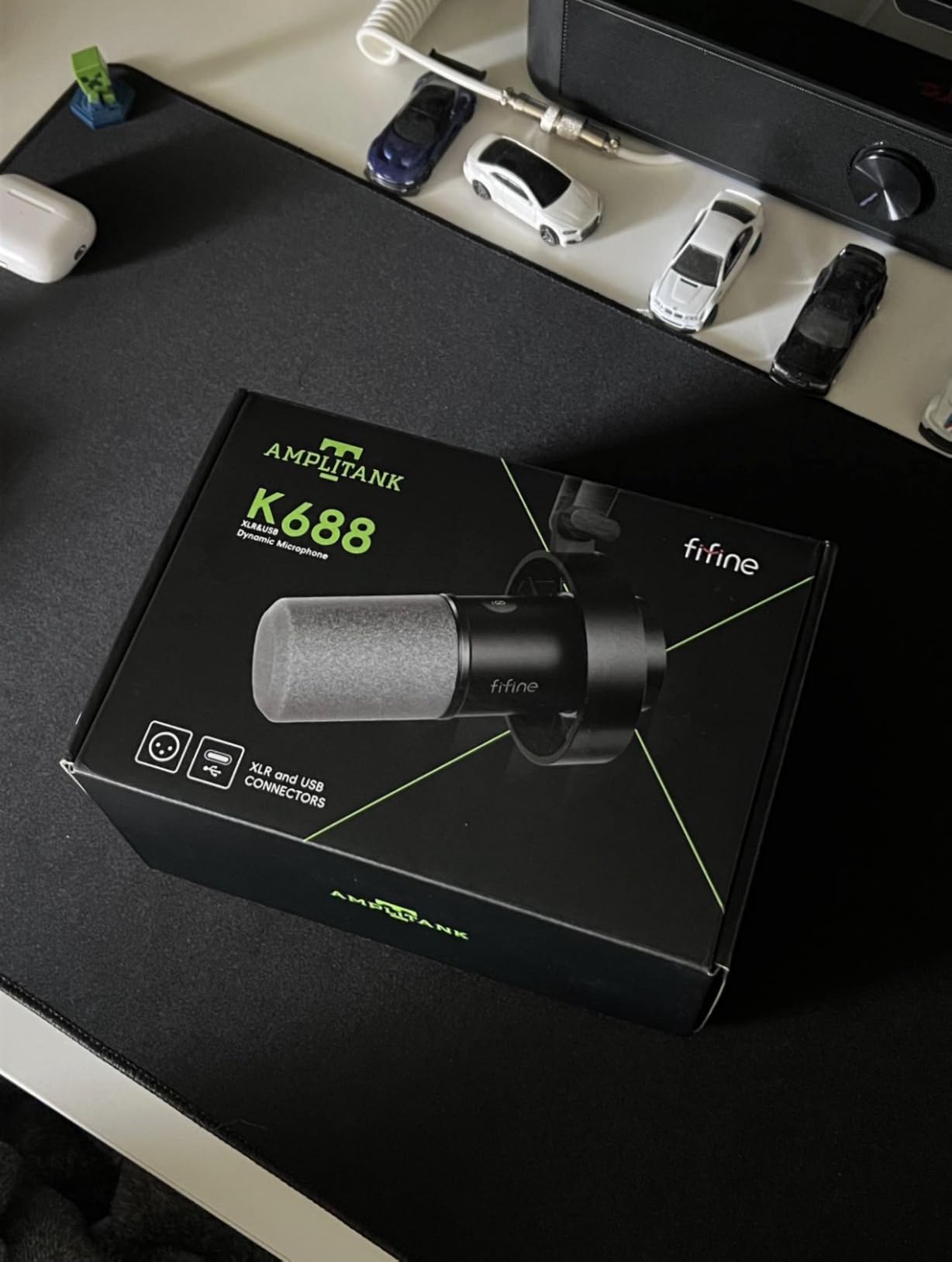
The K688 is the reason the list includes a dual-output microphone, and for a specific situation that is the right call: you have no interface, no idea whether you will keep recording, and you want usable audio this week. Plug the USB-C cable into a laptop and it records immediately on Windows or Mac with no drivers and no software.
Owners treat it as the best budget entry microphone and report clear vocal audio with genuinely good rejection of computer fans, hard drives, and air conditioning. For a bedroom studio where the loudest sound in the room is the PC, that is the whole ballgame.
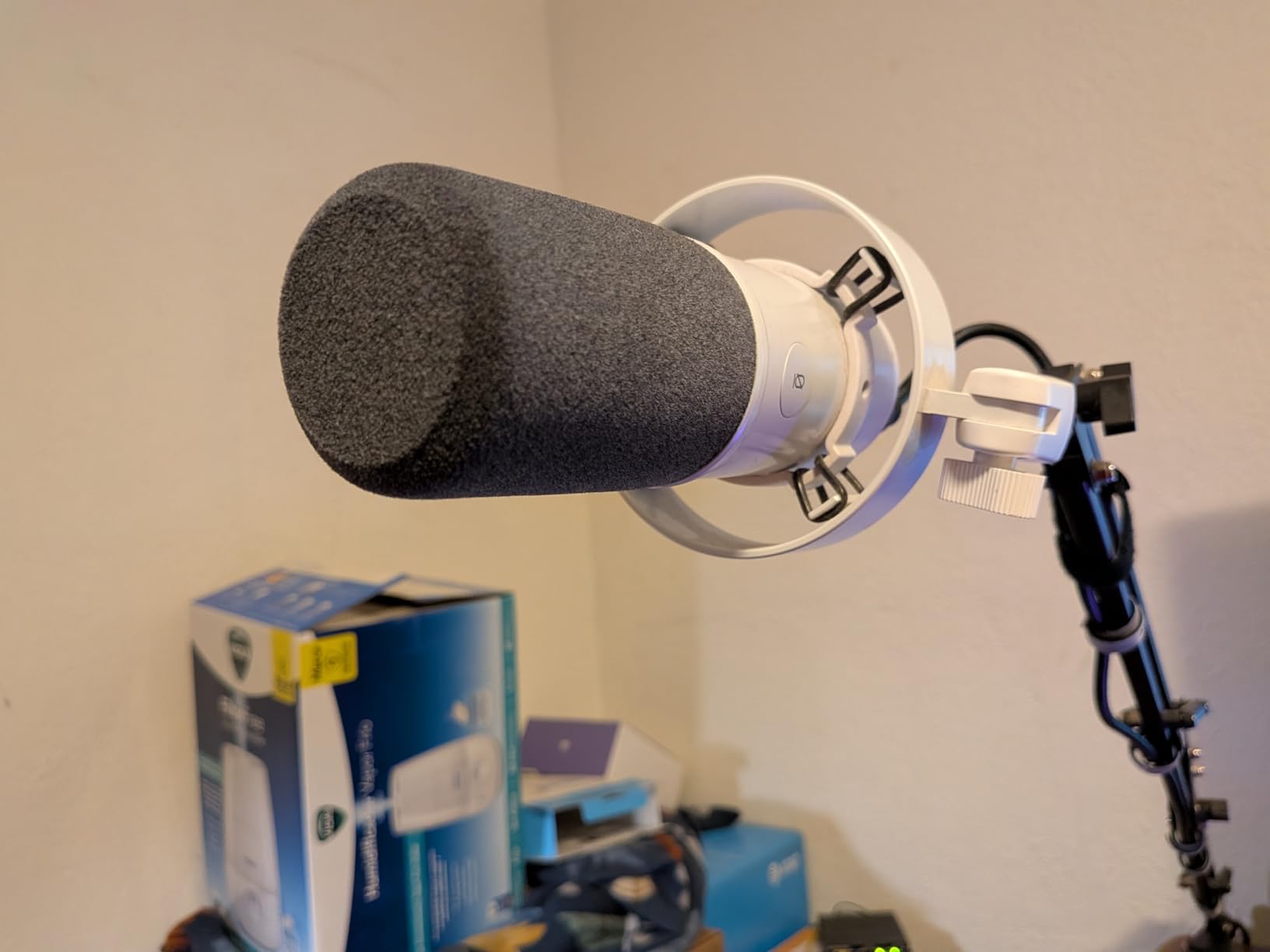
The metal dynamic capsule is rated to 130dB SPL without distortion, which is unusually high for a budget vocal mic, and the signal-to-noise ratio is listed above 80dB. On the body you get tap-to-mute, a gain knob, a 3.5mm headphone jack, and monitoring volume, which is a feature set most entry mics in this range simply do not offer.
The XLR output is the smart part. When you are ready to move to an interface, the same microphone connects properly and sounds better, so this is not a dead-end purchase. Note that the on-body controls only function over USB, not over XLR.
Get the gain right or it will disappoint
The single most common owner note is that gain has to be set low. This microphone picks up a great deal at high settings, and pushing the gain knob up produces noise pickup rather than a louder voice. Set the gain so your loudest take peaks around two thirds of the way, and back off the distance instead.
The included windscreen dampens plosives, and the external shock mount eases desk vibration. The body is 0.51 kg at 4.65 by 6.18 by 8.86 inches, with a 1-year warranty.
What is missing, and does it matter?
The XLR cable, boom arm, and mic stand are not included, and the bundled desktop stand is described as flimsy by several buyers, so plan to buy a proper stand regardless. A few owners also report the USB output recording noise instead of voice when the mic is poorly positioned.
If you already own an interface and a stand, the RODE PodMic or the Zoom ZDM-1 is the more coherent purchase. If you have neither and want to start recording this week, nothing else here is faster.
9. Samson Q2U – Best Starter Pack for New Recorders
Samson Q2U USB/XLR Dynamic Microphone Recording and Podcasting Pack
Dynamic handheld with USB-C and XLR
Unidirectional, 50Hz-15kHz, 70 dB signal-to-noise
Stand, cables, and windscreen included
Pros
- Dual USB and XLR serves beginners and interface users
- Clear warm voice with good background rejection
- Plug-and-play with no external power
- Metal body survives drops
- Handheld form makes on-axis technique easy
Cons
- Bundled tripod stand is weak
- Included headphones are not suitable for monitoring
- No pop filter included
- Low maximum SPL is unsuitable for loud sources
The Q2U exists because a microphone alone is not a usable studio. The box includes the mic, a tripod desktop stand, a tripod extension, a mic clip, a windscreen, and both a USB-C cable and an XLR cable, which is the single most beginner-friendly thing about it.
It plugs straight into a computer with a USB-C interface, needs no external power supply, and gives a clear, warm voice with solid rejection of background and room noise. When you are ready for an interface, the XLR output is already there.
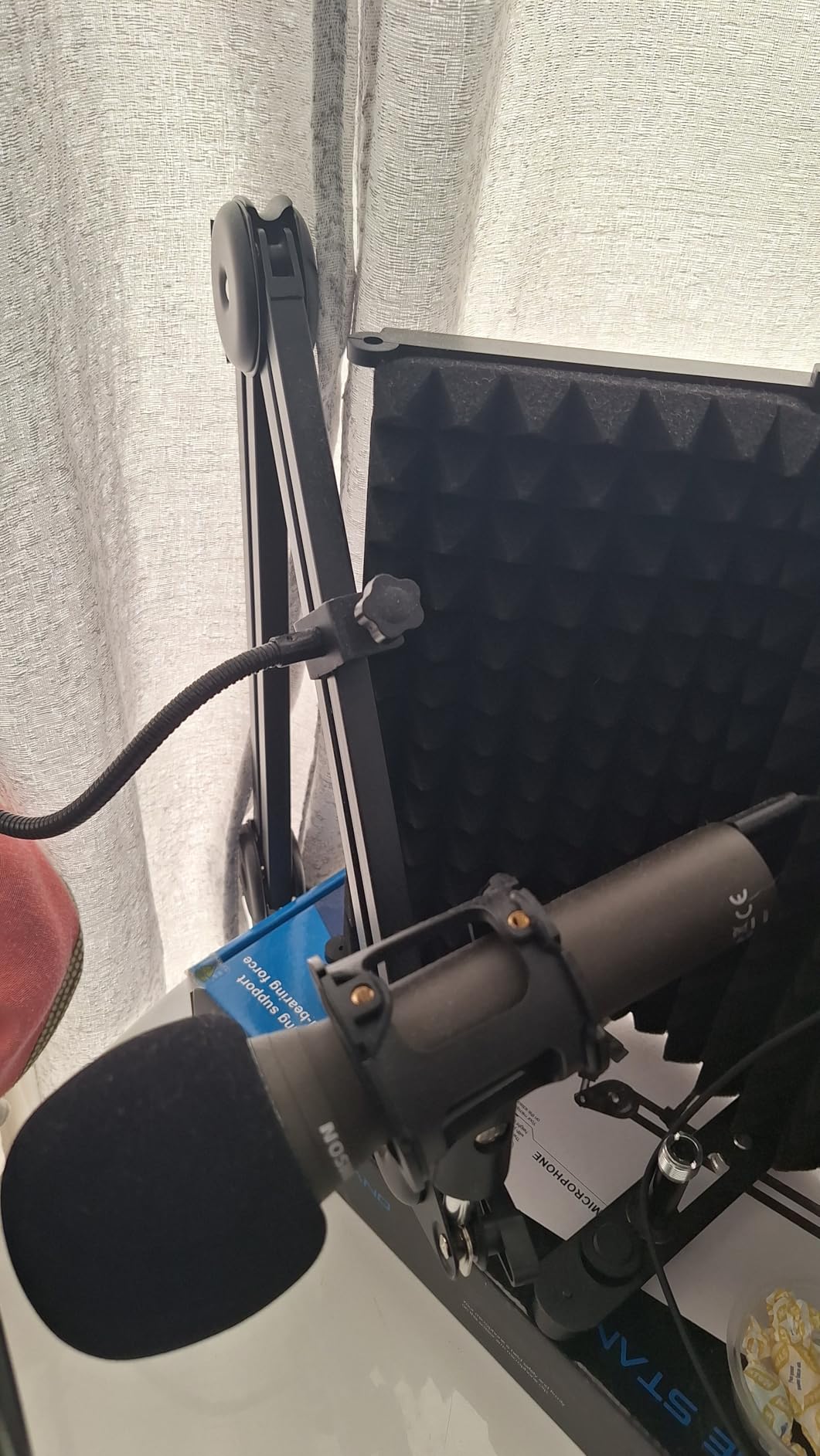
Specs are unidirectional cardioid, 50Hz to 15kHz, with a 70 dB signal-to-noise ratio in a metal body weighing 11.2 ounces at 10.05 by 7.5 by 2.55 inches, with a 2-year warranty. Reviewers rate the voice quality for the money as genuinely clean.
One practical note: a firmware quirk with rapid red and green indicator flashing at boot was widely reported and was addressed by a manufacturer firmware update, so update it before assuming the mic is faulty.
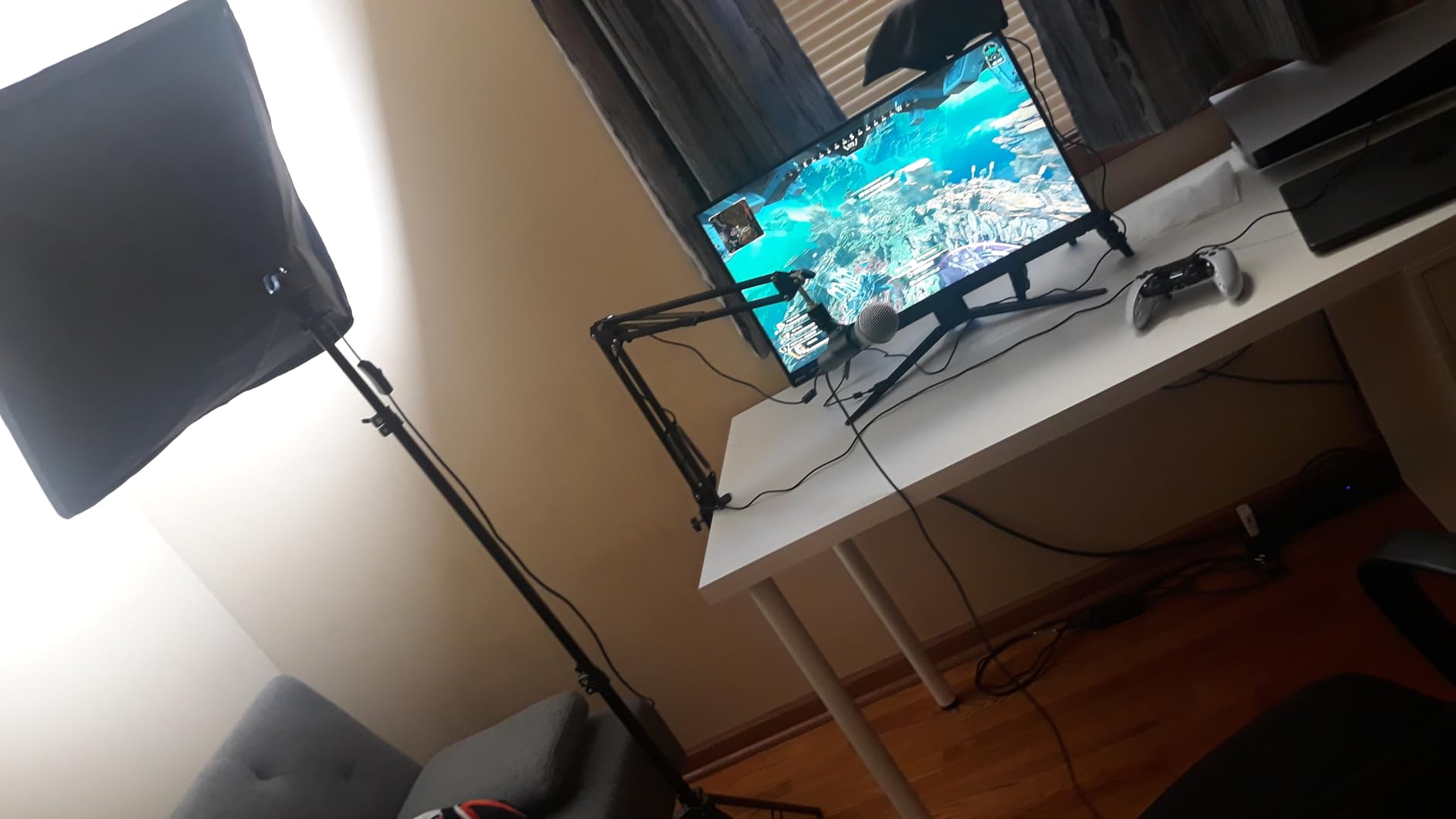
What is in the box matters more than the mic
For a first purchase, the value is the complete chain. You get a stand, both cable types, and a windscreen, which removes three decisions and three additional purchases. For spoken word and podcasting at a beginner level, that completeness is worth a lot.
The handheld form is also an underrated teaching tool. Holding the mic and moving it in and out teaches distance and on-axis technique faster than any tutorial, and it builds the habit of watching the level meter.
Where the bundle falls down
The bundled tripod stand is weak, with a loose clamp screw that lets the mic droop, and the included headphones are not suitable for serious monitoring. There is no pop filter, so plosives need the supplied windscreen or a filter you buy separately.
It also needs a computer and recording software rather than being a standalone recorder, and owners note a low maximum SPL that makes it unsuitable for loud instruments. Treat it as a voice microphone and nothing more.
10. Sennheiser MD 421-II – Most Versatile Dynamic for Instruments
Sennheiser Pro Audio Professional MD 421-II Cardioid Dynamic Instrument Microphone
Cardioid dynamic, aluminum body
77 dB signal-to-noise
Five-position bass roll-off switch
Pros
- Covers guitar
- bass
- toms
- brass and voice with one mic
- Five-position high-pass lets you voice it per source
- High output level and large diaphragm capture a strong signal
- Forgiving cardioid sweet spot
- Decades-long service life
Cons
- Stock plastic yoke is loose and costly to replace
- Plosives need a pop filter or compressor
- Non-standard body will not fit a normal shock mount
The MD 421-II is the mic you buy when you want one microphone to cover most of an instrument session. Owners describe it as an industry staple for guitar and bass cabinets, toms, brass, and voice, and the signature feature is the five-position bass roll-off switch that lets you re-voice the same microphone for a bass cab, a tom overhead, or speech.
That switch is genuinely rare among dynamics. Bass through a guitar mic is muddy, and a rolled-off position clears it immediately without EQ or a second microphone. It is the reason a single MD 421 can plausibly replace a small locker of cheaper dynamics.
The construction is a rugged aluminum body with pronounced directivity that makes positioning easy, a 77 dB signal-to-noise ratio, and clear sound reproduction. It is 160 g and relatively compact at 2.32 inches square, with a 2-year warranty.
The cardioid pattern has a predictable sweet spot and predictable proximity effect, which long-time users describe as the main reason the mic is still so easy to place well after all these years.
When the five-position switch earns its price
For a bass amplifier it removes the low mud that makes a close-miked bass cab sound like a cardboard box. For a tom or overhead it opens the top without losing the fundamental. For speech it cuts handling rumble from a boom. In each case you change the character without adding a mic to the session or a filter in the chain.
Reviewers also credit the high output level and large diaphragm for capturing a strong, clear signal, which matters when the preamp is not the best part of your chain.
The problems nobody mentions enough
The supplied yoke has a reputation for being loose plastic, and replacement parts are expensive. The body shape is non-standard, so it will not fit a normal shock mount and the manufacturer mount costs real money. Plosives also need a pop filter or compression when you use it on voice.
Some users find it lacks sparkle on a guitar cabinet compared with an SM57, and one reviewer rated it poorly solo on a Marshall cab, finding it only adequate blended with an SM57. For vocals with a proper untreated-room strategy it is excellent, but it is an instrument microphone that also does voice.
11. Zoom ZDM-1 – Best Budget Dynamic for Voice-Over and Streaming
Zoom ZDM-1 Dynamic Microphone for Podcasts, Voice-Overs, Vocals, and More, High SPL Capability, Sturdy Metal Body, and Large Diaphragm
Super cardioid large-diaphragm dynamic
78 dB signal-to-noise
Internal shock mount, high SPL handling
Pros
- Large diaphragm gives smooth broadcast-style voice
- Super cardioid pattern for strong off-axis rejection
- Usable on loud sources as well as speech
- Internal shock mount cuts bumps
- All metal body for daily handling
Cons
- XLR only
- so an interface is required
- No pop filter or windscreen in the base package
- Superseded by newer USB and XLR Zoom models
The ZDM-1 is a large-diaphragm dynamic, which is the detail that matters. Most budget dynamics use a small diaphragm and can sound thin on a voice, while this one delivers a smooth, broadcast-style quality that reviewers consistently praise for the money.
The super cardioid pattern gives strong off-axis rejection, so it works in a room with more going on than a plain cardioid would tolerate. High SPL handling means it is not restricted to speech if you later want to mic something loud.
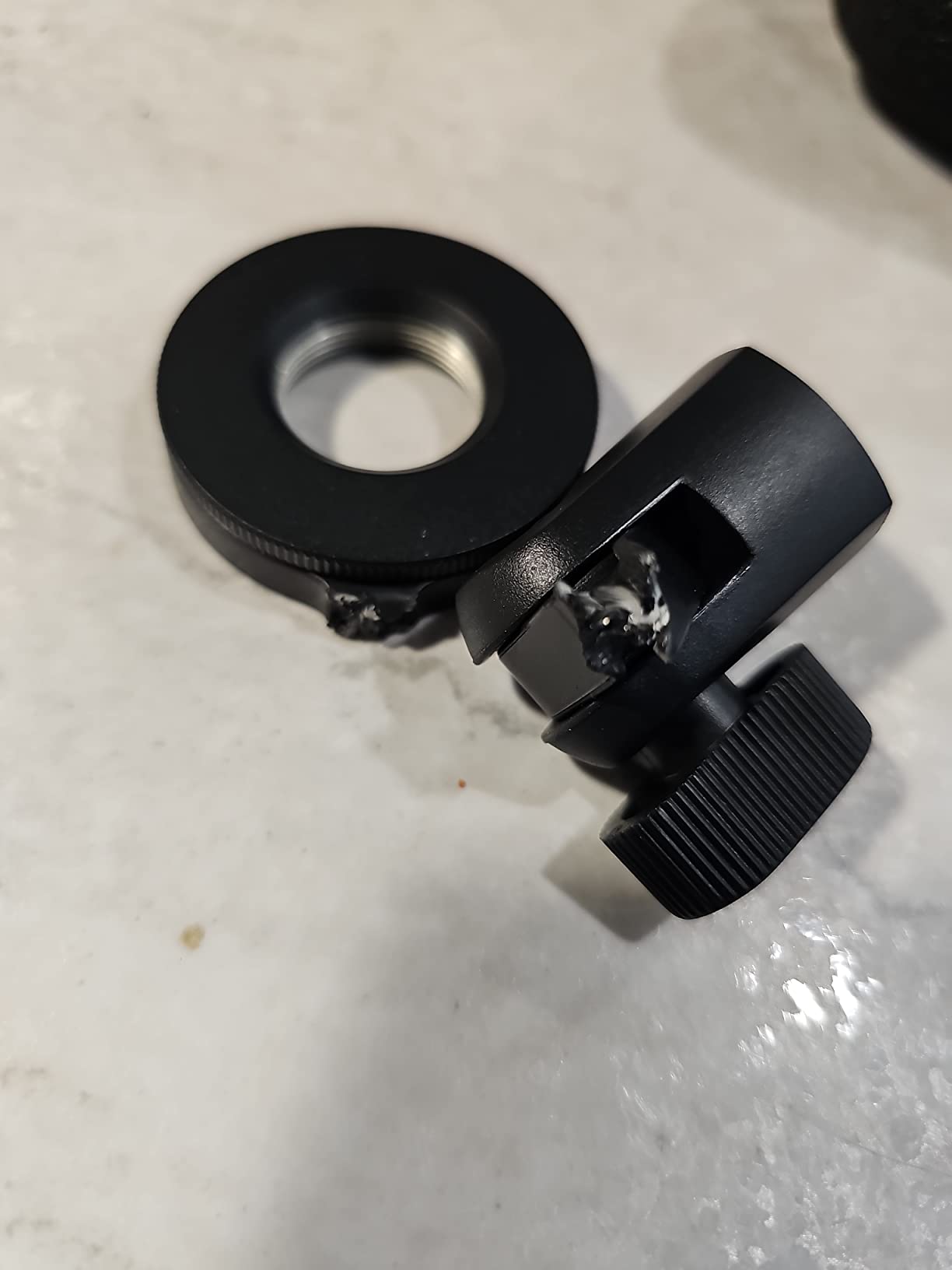
The internal shock mount is a real convenience in a home setup because it isolates bumps and handling noise without requiring a separate shock mount. The all-metal body and grille are described as durable enough for daily handling, and the 78 dB signal-to-noise ratio is solid for a vocal dynamic at this level.
It is 454 g at 5.9 by 2.12 by 2.12 inches with a 1-year replacement warranty, and it ranks in the Vocal Dynamic Microphones category where reviewers rate it as a dependable entry option with very few one-star ratings.

Why the large diaphragm matters for a voice
A larger diaphragm moves more air for a given sound pressure, which translates into more body in the low mids and a smoother top end. On spoken word it means a voice that sounds like a voice rather than a phone call, and for voice-over and narration that difference is audible on every take.
It also means the mic holds up better when you move it closer, which is exactly what you do in a noisy room to improve the signal-to-noise ratio.
What to plan around
It is a wired XLR microphone, so it needs an audio interface or preamp, and it is worth checking whether a newer Zoom USB and XLR model suits you better since this one has been superseded. No pop filter or windscreen is included in the base package, so add one.
Inside a mixed household where you need a cheap, decent mic for narration, the ZDM-1 is a good compromise between the K688 and the more expensive broadcast mics.
12. MAONO PD400X – Best With Software EQ and Effects
MAONO PD400X Dynamic Microphone, USB/XLR Podcast PC Mic with Software
USB and XLR cardioid dynamic
40Hz-16kHz, 78 dB signal-to-noise
3-in-1 knob, tap-to-mute, EQ app
Pros
- Rich clear voice that reviewers compare to pricier mics
- Dual USB and XLR covers plug-and-play and interfaces
- Cardioid capsule handles untreated rooms
- Bundled app with vocal presets and full processing
- Fast customer service on replacements
Cons
- Bundled desktop stand is short and can sag
- Microphone arm is not included
- Tap-to-mute is touch rather than a hard switch
- Some positional noise pickup
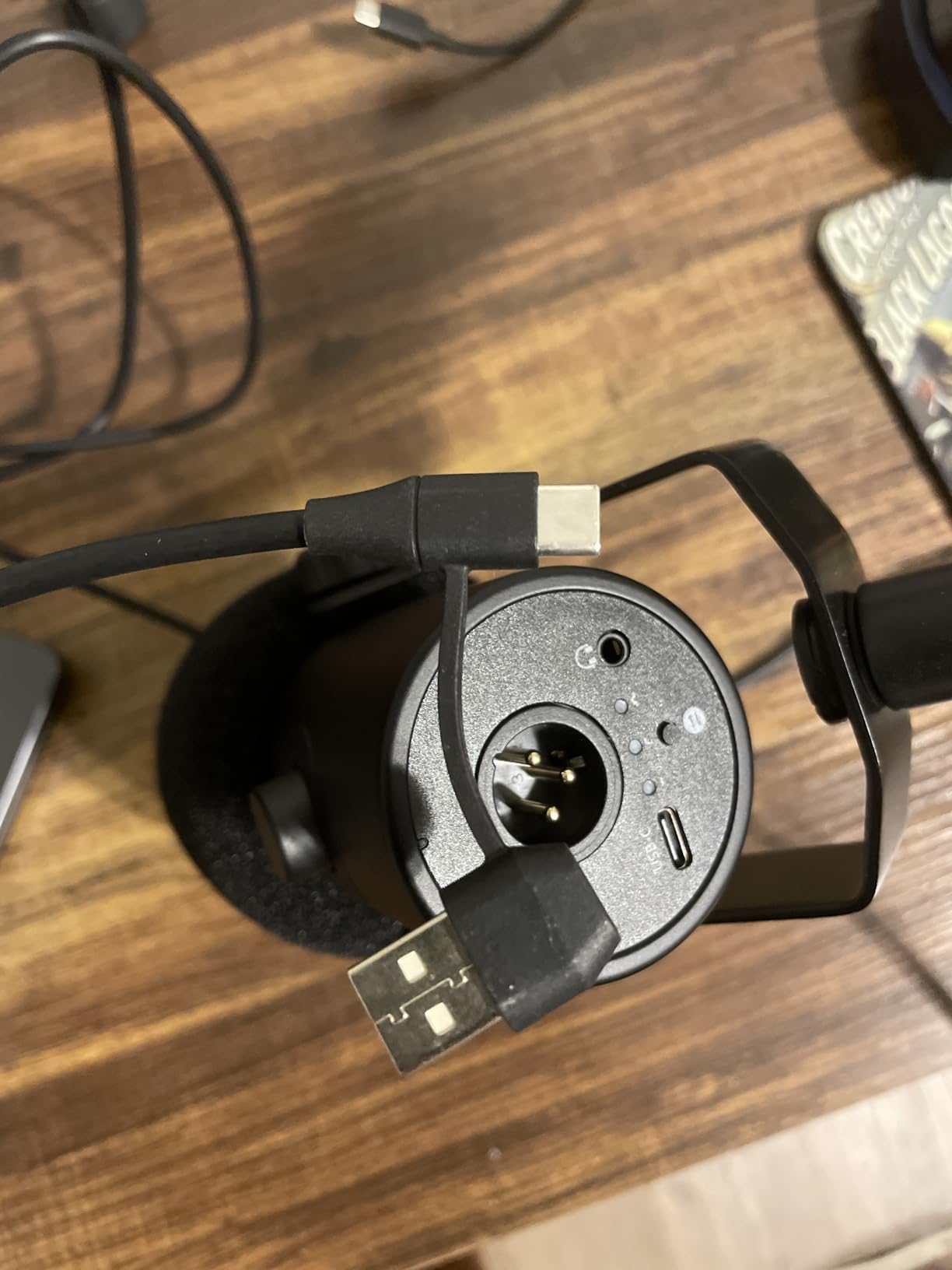
The PD400X is the pick if you want to shape your sound in software instead of buying a second piece of hardware. The bundled app does real processing work, with Standard Mode vocal and distance presets and an Advanced Mode with EQ, a limiter, and a compressor.
Reviewers describe the voice as rich and clear and frequently compare it favourably to microphones costing several times more. The cardioid dynamic capsule rejects background noise well enough for untreated rooms, which is the requirement that matters most here.
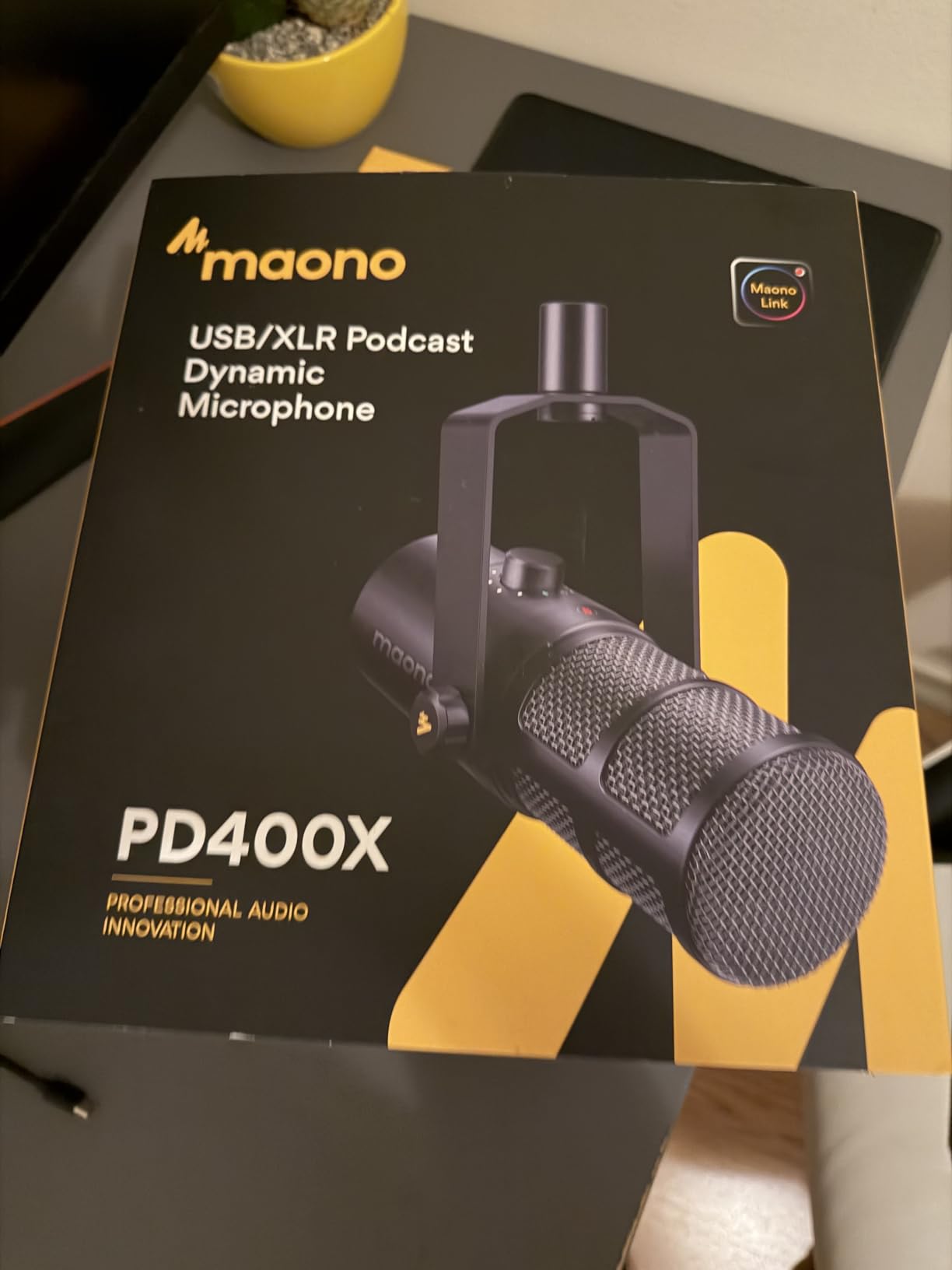
The 3-in-1 digital knob is a genuinely clever control: it switches between mic gain, headphone volume, and monitor mix, so one knob covers the three things you actually adjust while recording. There is a touch-to-mute key with an LED indicator, and dual USB and XLR output covers a laptop, a mixer, or a portable PA.
Specs are a cardioid pattern, 40Hz to 16kHz, and a 78 dB signal-to-noise ratio in a metal body with a 2-year manufacturer warranty. The box includes a desktop stand base, a USB A to USB C cable, the microphone, a foam windscreen, and an XLR to XLR cable.
Software processing as a budget substitute
The presets are not a gimmick. A usable compressor and limiter saves a beginner from the two most common recording problems, which are an uneven vocal level and a sudden loud peak. Being able to set that up from a phone or laptop is worth having before you have any outboard gear.
The dual output also means you can start on USB and move to an interface later without changing microphones, which is the same practical argument as the K688 but with more onboard control.
The complaints to plan for
The bundled desktop stand is short and rigid and can sag under the mic’s weight on a boom arm, and no microphone arm is included. The touch-to-mute is less tactile than a hard physical switch, so the state is less obvious at a glance.
Some users still pick up peripheral background noise depending on positioning, and a few have reported USB port durability problems on individual units. Customer service is widely praised for fast replacement, including out of warranty.
How Much Preamp Gain Does Each Microphone Need?
Every dynamic in this list needs a preamp to raise its mic-level output to line level, and the amount of clean gain required varies a lot. The SM57 and the SM7B are the two most demanding, with owners reporting roughly 60 dB of channel gain needed, and the SM58, the e835, the V7, and the PodMic all fall into a similar demanding-to-medium range. The AT2040 is described by reviewers as gain-hungry as well.
This is the most repeated real-world frustration in the forums we read, and it is worth solving before you buy rather than after. A preamp that reaches high gain also amplifies its own noise, so pushing an entry interface to its limit produces hiss instead of a clean vocal. A Cloudlifter-class inline booster or an equivalent is the standard fix, and it is why several owners of the PodMic, the SM7B, and the SM58 add one.
Beginners also worry about leaving phantom power switched on. Dynamic microphones do not need it and are not damaged by it, so you can leave 48V engaged for a condenser in the same session without worrying about the dynamic. What you should do instead is check the gain, the headroom, and the noise floor of whatever preamp you are plugging into.
One thing nobody asks for in the specifications but everybody should check: output impedance. The V7 sits at 300 ohms, higher than a typical broadcast dynamic, and owners note it depends on preamp quality. A good solid-state interface drives it comfortably. Matching the microphone to the preamp is the unglamorous part of building a chain that does not hiss.
Recording in an Untreated Room: Placement and the 3-to-1 Rule
No microphone fixes a boxy room entirely, and anyone who tells you otherwise is selling something. What a good dynamic does is let you get close enough that your voice dominates the reflections, which is why mic distance is the single most important variable in a home studio.
The 3 to 1 rule is the placement technique most home recorders never learn, and it fixes the most common problem in untreated spaces. Move the microphone so it is three times farther from your mouth than the nearest reflective surface, such as a wall or a desk edge, and the room reflections drop enough that a dynamic will sound genuinely close and dry.
Applied to a bedroom, that often means working in a closet or a corner, standing closer to the mic, and putting a thick duvet or a folded blanket behind you to soak up the worst reflections. A reflection filter is a partial fix and works best for plosives and immediate reflections rather than room tone.
Get the noise floor down by being aware of what is actually loud in your space. If background hum from household equipment is the issue, a low-output dynamic is the harder part of the problem to solve, and off-axis rejection only handles steady sounds that stay put. If the concern is the general noise level of the space, the tightness of the polar pattern is what does the work, and the AT2040 and the V7 are built for exactly that.
Finally, record a minute of silence and listen to it. That test tells you the real noise floor of your room better than any specification, and it takes less time than the last paragraph you read.
What You Need Besides the Microphone
Almost every microphone here is a wired XLR model, so the accessory list is short and specific. You need a balanced XLR cable, an audio interface or mixer with an XLR input and a decent amount of clean preamp gain, and a microphone stand that can carry the weight.
A pop filter is worth adding if the microphone does not have an internal one, which rules out the SM57, the e835, the MD 421-II, and the ZDM-1. The SM58, the SM7B, the PodMic, the AT2040, the V7, and the K688 all handle plosives internally, which is why they keep appearing as first-mic recommendations.
On phantom power, the answer is simple: dynamic microphones do not need it. The confusion is understandable because the same interface powers everything, but switching 48V on will not damage a dynamic. The rule is that you never send phantom power to a ribbon microphone, and every product in this list is a dynamic rather than a ribbon.
Budget for the interface properly, because it matters more to the result than the difference between two mid-range microphones. A preamp with plenty of clean gain removes the hiss problem that would otherwise send you looking for an inline booster.
Where People Upgrade Next, and What to Skip
The most common path we saw in the forum discussions is a cheap dynamic, then an SM58, then a broadcast model. The step from the SM58 to something more rejecting, such as a supercardioid like the sE V7 or the Sennheiser e835, is the most common upgrade, usually because the room, not the microphone, is the problem.
That is also why the SM58 remains such a strong recommendation. Forum consensus holds that it keeps improving as the rest of the chain improves, so it is a genuinely good place to start and a genuinely good place to stay if your preamp is the weak link.
Two situations we would call out explicitly. First, do not buy a low-output broadcast microphone like the SM7B and pair it with a very small interface, because the combination of high gain requirement and low clean gain is the most common disappointment in this entire category, and adding an inline booster afterward costs more than choosing differently now.
Second, cheap USB dynamics with no XLR path are a dead end for anyone who will still be recording in two years. Threads about thin-sounding USB dynamics are common, and the XLR options here all let you upgrade the interface without changing microphones.
And when a dynamic is genuinely the wrong choice: quiet fingerpicked acoustic guitar, a soft piano, or a room you have already treated properly. A small-diaphragm condenser captures far more detail in those conditions, and no amount of gain staging changes that.
Frequently Asked Questions
What is the best microphone for a home studio?
For most home studios, a dynamic vocal microphone such as the Shure SM58 or the Shure SM7B is the right starting point. A dynamic rejects room reflections and background noise far better than a sensitive condenser, tolerates loud sources, and needs no phantom power. Pick a cardioid pattern for a normal room, or a supercardioid such as the Audio-Technica AT2040 if noise behind you is the problem.
What is the best vocal mic for an untreated room?
The Shure SM7B is the most common answer for an untreated room because its tight cardioid pattern and smooth, warm tone keep a voice forward while a bedroom or closet reflects around it. The Audio-Technica AT2040 rejects even more off-axis sound if your room is genuinely noisy. Any of them will benefit from getting close, using the 3 to 1 rule, and putting soft material behind you.
What is the best dynamic microphone for podcasting?
The RODE PodMic is purpose-built for speech, with a broadcast-tuned cardioid capsule, an internal pop filter, and internal shock mounting that kills desk thumps. It is a wired XLR microphone, so you need an audio interface. If you have no interface and want to start immediately, the FIFINE AmpliTank K688 or the MAONO PD400X give you USB and XLR in one body.
Do dynamic mics need phantom power?
No. Dynamic microphones generate their signal passively from a moving diaphragm and magnet, so they need no external power. Leaving 48V phantom power on will not damage a dynamic microphone, which is convenient when you switch between a dynamic and a condenser in the same session. The exception is ribbon microphones, which can be damaged by phantom power, and none of the models in this guide are ribbons.
Which is better for vocals, the Sennheiser e835 or the Shure SM58?
The two are close in performance and differ mostly in tone. The e835 is slightly brighter with a clearer presence lift, which suits a thin voice, and it carries a 10-year manufacturer warranty. The SM58 is warmer, has a much larger review base, and offers a more uniform off-axis response. Both still need a decent amount of preamp gain to reach a usable level.
The Best Dynamic Microphones for Home Studios in 2026
The best dynamic microphones for home studios come down to one honest question: how bad is your room, and how much clean gain can your interface deliver. In a normal bedroom with a decent preamp, the Shure SM58 is the correct first purchase and the one most people never need to replace.
If the room is the main problem, the Shure SM7B gives you the strongest combination of vocal tone and off-axis rejection in this roundup, and the Audio-Technica AT2040 goes further on isolation. For talking rather than singing, the RODE PodMic is the purpose-built answer, and if you have no interface yet, the FIFINE AmpliTank K688 gets you recording today.
Check the gain requirement before you order, buy a real stand, get close to the microphone, and use the 3 to 1 rule. Those four things will improve your recordings more than any difference between the microphones on this list.