
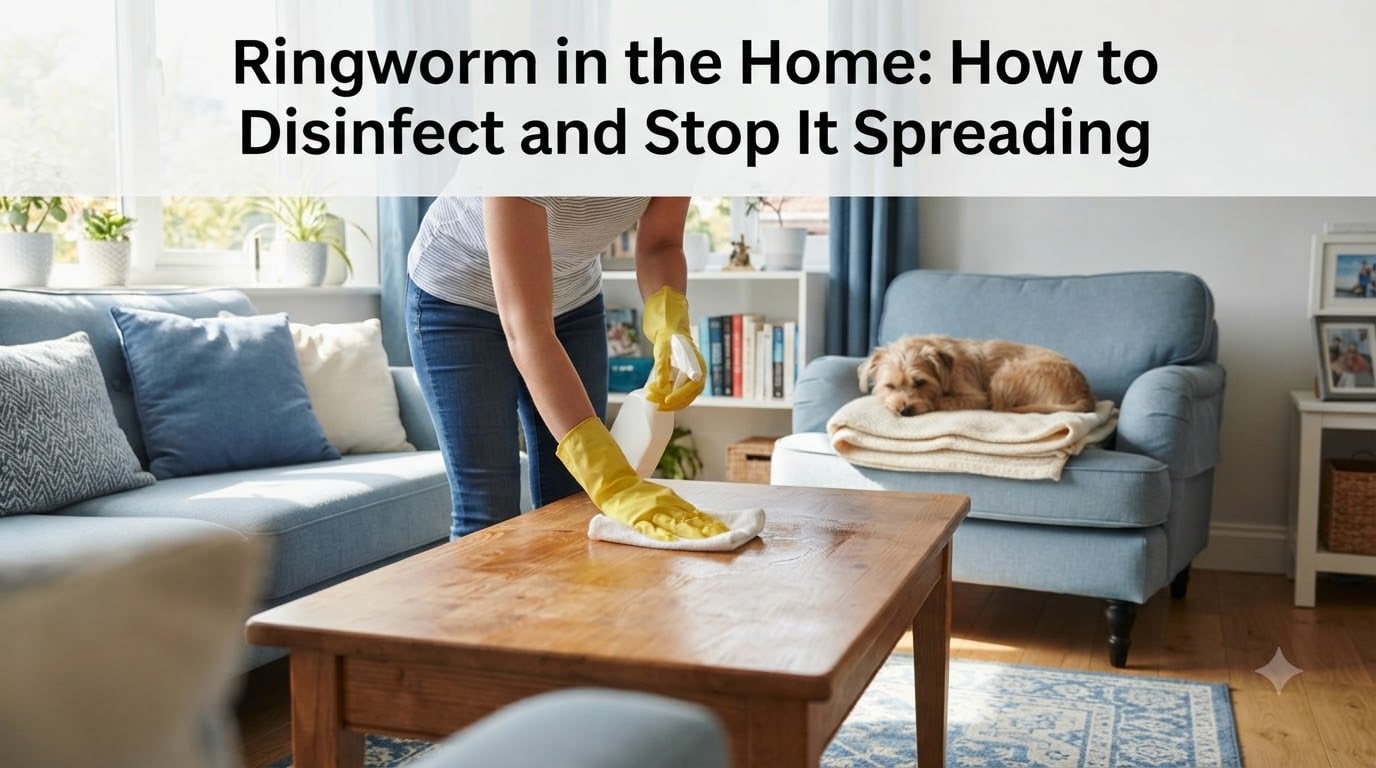
When someone in your household has ringworm, the panic feels real. The rash is ugly, the spots keep appearing, and one Google search later you’re convinced the fungus is living in every fiber of your sofa. I get it. Our team has walked through this with families, pet owners, and even one foster-care volunteer who had ringworm in four rooms of her house.
Here’s the good news: ringworm is treatable, and you can disinfect your home to stop it spreading. This guide covers exactly how to do both. I’ll walk you through the disinfectants that work, the cleaning steps that actually matter, and the small daily habits that keep the fungus from bouncing back between family members and pets.
Table of Contents
What Is Ringworm and How Does It Spread Indoors?
Ringworm is a contagious fungal infection, not a worm. Medically it’s called tinea corporis when it shows up on the body, and it’s caused by a group of fungi called dermatophytes. These fungi feed on keratin, the protein in your skin, hair, and nails, which is why ringworm shows up as a ring-shaped, scaly, itchy rash with a raised border.
Inside the home, ringworm spreads in three main ways. First, direct skin-to-skin contact with an infected person or pet. Second, contact with contaminated items like towels, bedding, hairbrushes, and shared clothing. Third, contact with contaminated surfaces, especially soft surfaces that trap skin flakes and pet hair.
The tricky part is that ringworm spores are tough. They can survive on surfaces for 12 to 18 months under the right conditions, according to veterinary and dermatology sources. That’s why a single wiped-down counter isn’t enough. You need a real disinfection routine, repeated daily for the first couple of weeks, to fully break the cycle.
Disinfectants That Actually Kill Ringworm
Not every household cleaner kills ringworm. Soap and water alone will not do it. You need a disinfectant with proven antifungal action, and you need to use it correctly. Here are the products that actually work, based on what dermatologists, the CDC, and veterinary shelters recommend.
Bleach Solution
Diluted chlorine bleach is the gold standard for hard, non-porous surfaces. The CDC recommends 1/4 cup of household bleach per gallon of water (roughly a 1:10 dilution). Apply it to a pre-cleaned surface, leave it wet for at least 5 minutes, then rinse. Never mix bleach with ammonia or acids like vinegar. The fumes are dangerous and the mixture is ineffective.
Lysol and EPA-Registered Disinfectants
Lysol spray and similar EPA-registered disinfectants do kill ringworm when used as directed. Look for the EPA registration number on the label and confirm the product is fungicidal. Allow the surface to stay visibly wet for the full contact time listed on the bottle, usually 3 to 10 minutes.
Accelerated Hydrogen Peroxide (Rescue)
Veterinary shelters dealing with ringworm outbreaks often turn to accelerated hydrogen peroxide products like Rescue. They’re effective against fungal spores, safe on most surfaces, and less corrosive than bleach. They also have a shorter required contact time, which makes a big difference when you’re disinfecting daily.
What About Vinegar and Hydrogen Peroxide (3%)?
You will see vinegar recommended on forums all the time. Unfortunately, the science is limited. White vinegar has some mild antifungal activity, but it does not reliably kill ringworm spores on surfaces. Hydrogen peroxide at 3% is more useful but still not as effective as bleach or EPA-registered disinfectants. Use vinegar and 3% peroxide as a secondary wipe-down, not as your primary defense.
Step-by-Step Guide: How to Disinfect Your Home After Ringworm
This is the process I would follow if I had to disinfect a home with active ringworm. It mirrors the cleanup sequence used by veterinary shelters during outbreaks, and it focuses on the order that matters most: removing organic debris first, then disinfecting.
Step 1: Vacuum and Remove Hair and Debris First
Fungal spores cling to hair, skin flakes, and dust. If you disinfect a surface that still has organic debris on it, the disinfectant cannot reach the spores underneath. Vacuum every soft surface first: carpets, rugs, upholstered furniture, mattresses, and any fabric the infected person or pet has touched. Use a vacuum with a HEPA filter if possible, and immediately dispose of the vacuum bag in a sealed plastic bag.
Step 2: Wash With Hot Water and Detergent
For hard surfaces, wash with warm water and a strong detergent to remove grease, oils, and remaining debris. For fabrics, launder them in hot water (140°F or higher) with detergent. This step alone removes up to 90% of contamination. Most people skip it and go straight to disinfectant, which is why their cleanup does not work.
Step 3: Apply Disinfectant and Let It Sit
Apply your chosen disinfectant and let it sit for the full contact time on the label. For bleach solution, that is at least 5 minutes. For Lysol, follow the bottle. Wiping it off immediately is one of the most common mistakes. The disinfectant needs dwell time to actually kill the spores.
Step 4: Rinse and Dry
Rinse disinfected surfaces with clean water if your disinfectant requires it (bleach does). Then dry thoroughly. Fungi thrive in moisture, so a damp surface is an open invitation for recontamination.
Step 5: Repeat Daily for 2 to 3 Weeks
One round of cleaning is not enough. Ringworm spores are hardy, and shedding continues as long as someone (human or pet) is infected. Plan to repeat the high-touch surfaces daily and the rest of the home every 2 to 3 days until 2 weeks have passed without new lesions appearing.
Laundry and Bedding: Killing Ringworm in Fabrics
Fabrics are where ringworm hides longest. Bedsheets, towels, pillowcases, and clothing all need daily washing during an active infection. Socks, underwear, and pajamas are the highest priority.
Wash in hot water at 140°F (60°C) or higher. Add your regular detergent, and for whites add chlorine bleach. For colors, use an EPA-registered laundry disinfectant like Lysol Laundry Sanitizer or pine oil-based products. Cold water will not kill ringworm spores. If your washing machine only reaches warm, run an extra long cycle.
Skip the fabric softener. It can trap spores in the fibers. Dry on high heat for at least 30 minutes. The heat from the dryer adds another layer of killing power. Don’t shake out infected laundry before washing. Shaking releases spores into the air, where they resettle on nearby surfaces.
For items that cannot go in the washing machine, like delicate bedding or stuffed animals, seal them in a plastic bag for 2 weeks. The spores will die without a host. If you want to keep the item, dry cleaning is also effective. Either way, separate it from clean laundry.
Room-by-Room Ringworm Cleaning Checklist
Most guides give you general advice. Here is what I would actually clean, room by room, when ringworm is in your house. Walk through each room every 2 to 3 days during the outbreak.
Bedroom
Strip the bed and wash all bedding in hot water. Vacuum the mattress, flip it if possible, and spray with a fabric-safe disinfectant. Wipe down the headboard, nightstand, lamp switches, and alarm clocks. Don’t forget the closet handles and any clothing that’s been worn recently.
Bathroom
Wash towels after every use. Never share towels during an outbreak. Wipe down the sink, faucet handles, tub, shower floor, and toilet handle with bleach solution or an EPA-registered disinfectant. Replace the bath mat if it’s heavily used, or wash it in hot water with each load of laundry. Throw out disposable razors used by the infected person.
Living Room
Vacuum upholstered furniture thoroughly, including under the cushions. Wipe down remote controls, light switches, doorknobs, and any shared surfaces like coffee tables. If the infected person has been lying on the couch, cover it with a washable blanket during the outbreak and wash the blanket every few days.
Kitchen
Disinfect counters, the sink, and the faucet handle. Wash dish towels and hand towels more frequently. Replace the kitchen sponge every 2 to 3 days; sponges are a common reinfection source. Avoid sharing cups, utensils, and water bottles.
Car Interior
Cars are often forgotten. Wipe down the steering wheel, gear shift, door handles, seatbelt buckles, and child car seats with disinfectant. Vacuum the seats and floor mats. If the infected person has been driving, treat the car as a high-priority surface for the duration of the outbreak.
Dealing With Pets: How to Clean When Your Cat or Dog Has Ringworm
About 60% of household ringworm cases involve a pet as the original source. Cats, especially kittens, can carry ringworm without obvious symptoms and still shed spores throughout the house. If your pet has been diagnosed, two things must happen at the same time: veterinary treatment for the animal and environmental decontamination for your home.
Confine the infected pet to one room that is easy to clean, ideally a room with hard floors rather than carpet. Vacuum and mop that room daily. Wash your hands every time you handle the pet, and wear long sleeves if the lesions are on the animal’s body. Treat the pet’s bedding like you treat your own: hot water wash, daily.
Skip the home remedies like apple cider vinegar or essential oils on your pet. They are not effective and can irritate the skin. Your vet will prescribe oral antifungals, medicated dips, or topical treatments. Until the fungal cultures come back negative (usually after several weeks of treatment), keep up the cleaning routine.
How to Stop Ringworm From Spreading Between Family Members?
Cleaning is only half the battle. The other half is changing the daily habits that allow the fungus to move from person to person. Here are the rules that consistently stop the spread in multi-person households.
First, treat every infected person at the same time. If one family member is being treated but another has early or mild symptoms, the infection bounces back and forth. Second, no shared towels, washcloths, clothing, or hairbrushes. Label personal items if you have to. Third, keep the infected area clean and dry. Fungi love moisture, so dry thoroughly after showering and change socks and underwear daily.
Cover the lesions with a clean bandage or loose clothing when possible, especially in shared spaces. After applying antifungal cream, wash your hands with soap and water. Finally, avoid scratching. Scratching spreads spores to your fingernails, which then deposit them on every surface you touch.
How Long Does Ringworm Survive on Surfaces?
Ringworm spores can survive on hard surfaces for months and on soft surfaces for up to 18 months in the right conditions. The exact timeline depends on humidity, temperature, and the material. Hard, dry surfaces are less hospitable than soft, humid, organic materials like carpet or upholstery.
This is why the daily cleaning routine matters. You are not just removing visible contamination. You are killing spores that have been sitting on surfaces for weeks. The good news is that the spores eventually die without a host, so your home will become low-risk about 2 weeks after the last active case has been treated and all surfaces have been cleaned. Until then, assume any surface could be contaminated.
When to Call a Doctor or Vet
Home disinfection works best alongside treatment. If over-the-counter antifungal creams (clotrimazole, miconazole, terbinafine) have not improved the rash after 2 weeks of consistent use, see a doctor. You may need a prescription-strength topical or oral antifungal.
Call your doctor immediately if the rash is on the scalp, beard, or nails, or if it shows signs of bacterial infection (increasing pain, pus, fever, red streaks). People with weakened immune systems, including those on chemotherapy or living with HIV, should skip the home treatment and call their doctor on day one.
For pets, call your vet at the first sign of hair loss, scaly patches, or excessive scratching. Ringworm in cats and dogs almost always requires prescription treatment, and delaying veterinary care makes the household cleanup much harder.
Frequently Asked Questions
How to sanitize a house after ringworm?
Vacuum all soft surfaces to remove hair and debris first, then wash with hot water and detergent. Next, apply an EPA-registered disinfectant or a bleach solution (1/4 cup per gallon of water) and let it sit for 5 to 10 minutes. Repeat daily for high-touch surfaces and every 2 to 3 days for the rest of the home until 2 weeks pass without new lesions.
Does Lysol stop the spread of ringworm?
Yes, Lysol and other EPA-registered fungicidal sprays kill ringworm when used as directed. The key is keeping the surface visibly wet for the full contact time listed on the label, usually 3 to 10 minutes. Wiping it off too early is the most common mistake.
How to stop the spread of ringworm in the house?
Treat every infected person and pet at the same time, do not share towels or clothing, wash bedding in hot water daily, vacuum soft surfaces, disinfect high-touch areas with bleach or an EPA-registered spray, and keep the infected area clean and dry. Cover lesions when possible and wash hands after touching them.
How long can ringworm live on bedsheets?
Ringworm spores can survive on bedsheets and other fabrics for months, and under the right conditions up to 18 months. Wash sheets, pillowcases, and blankets in hot water at 140°F or higher every day or two during an active infection, and dry on high heat for at least 30 minutes.
Does vinegar kill ringworm on surfaces?
Vinegar has mild antifungal activity but does not reliably kill ringworm spores on surfaces. Use it as a secondary wipe-down at best. For primary disinfection, use a bleach solution (1:10 dilution) or an EPA-registered fungicidal cleaner like Lysol or accelerated hydrogen peroxide products.
Does bleach kill ringworm on surfaces?
Yes, diluted chlorine bleach kills ringworm on hard, non-porous surfaces. Mix 1/4 cup of household bleach per gallon of water, apply to a pre-cleaned surface, and let it sit for at least 5 minutes before rinsing. Do not mix bleach with ammonia or vinegar, and ensure good ventilation.
Final Thoughts on Stopping Ringworm in the Home
Dealing with ringworm in the home comes down to three pillars: clean, disinfect, and prevent spread. Vacuum and wash first, then apply a real disinfectant with enough dwell time. Repeat the routine daily for high-touch surfaces, and keep up laundry, hand washing, and no-shared-items habits until the infection has fully cleared.
Be patient with the timeline. Spores are stubborn, and consistency beats intensity. If you keep up the routine for 2 to 3 weeks and treat every person and pet at the same time, you will break the cycle. And if anything looks worse instead of better, loop in a doctor or vet. They can prescribe stronger antifungals that work alongside your home disinfection to get rid of ringworm for good.