
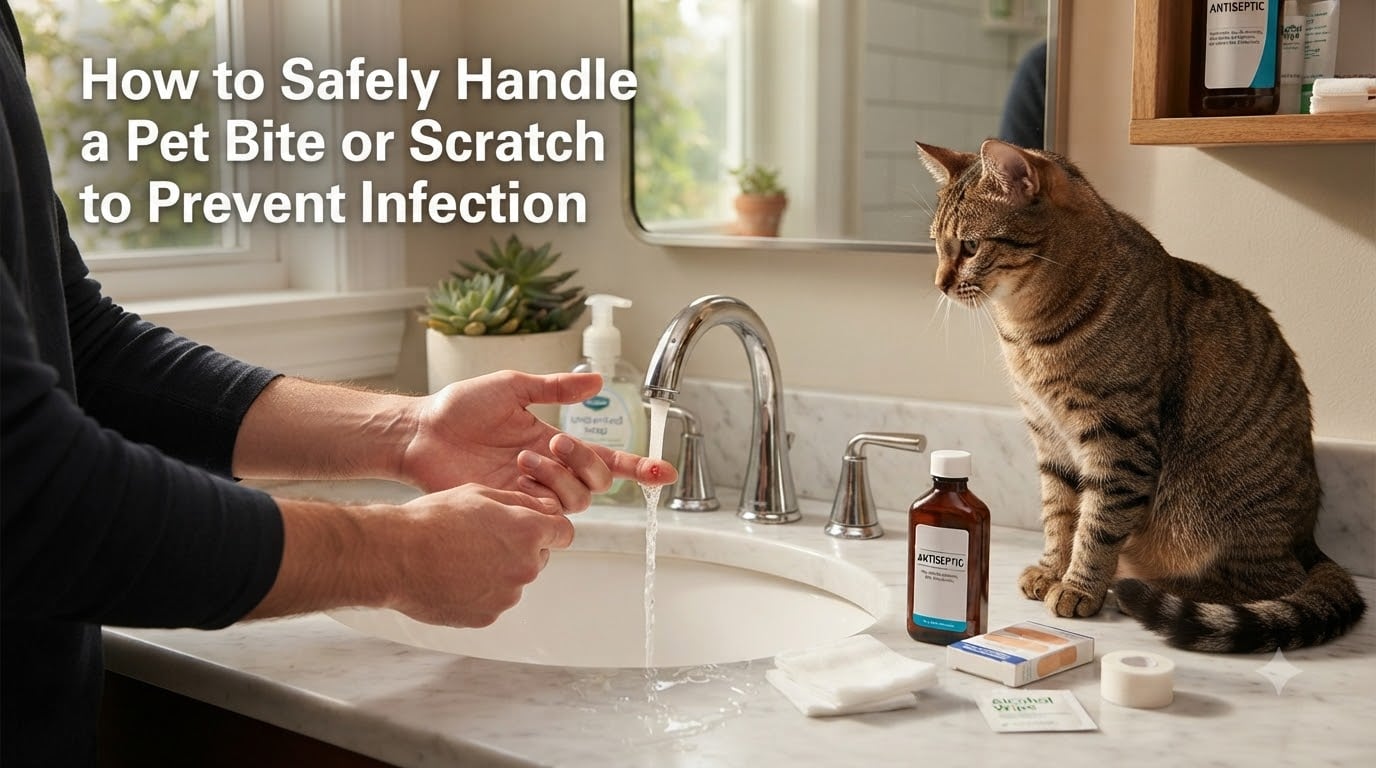
Every year, millions of pet owners deal with the unexpected: a playful nip from a puppy, a defensive scratch from a startled cat, or an accidental bite during a tug-of-war game. I learned this the hard way when my own cat caught me during a routine nail trim—what looked like a tiny puncture turned into a red, throbbing finger within 36 hours.
Knowing how to safely handle a pet bite or scratch to prevent infection is essential for anyone who shares their home with animals. The steps you take in the first few minutes can mean the difference between a wound that heals cleanly and one that requires urgent medical treatment. This guide covers everything you need to know, from immediate first aid to recognizing when professional care is necessary.
Table of Contents
Why Pet Bites and Scratches Need Immediate Attention?
Pet mouths and claws harbor bacteria that can cause serious infections if they enter your skin. The most common culprit is Pasteurella multocida, a bacterium found in the mouths of most cats and dogs. According to medical research, between 28% and 80% of cat bites become infected, while dog bites have an infection rate closer to 10-15%.
The risk isn’t limited to outdoor animals. Even vaccinated, indoor pets carry bacteria in their mouths. Scratches from cat claws can also introduce pathogens, especially since cats frequently lick their paws. The good news is that prompt, proper wound care dramatically reduces your chances of complications.
Immediate Wound Care: Step-by-Step First Aid
Follow these steps within the first few minutes of any pet bite or scratch to minimize infection risk. This is the exact protocol I use after any animal encounter, and it’s what medical institutions like Johns Hopkins and Mayo Clinic recommend.
Step 1: Wash the wound with soap and water for at least 5 minutes. Run warm water over the wound under pressure from the faucet. Use mild soap liberally. Don’t scrub aggressively, as this can bruise tissue and push bacteria deeper.
Step 2: Apply direct pressure if the wound is bleeding. Use a clean cloth or sterile gauze. Most minor bites stop bleeding within 10 minutes. If bleeding doesn’t stop after 15 minutes of firm pressure, seek medical help.
Step 3: Clean with antiseptic if available. After washing, apply an antiseptic solution like povidone-iodine or chlorhexidine. These help kill remaining bacteria that soap and water might miss.
Step 4: Apply antibiotic ointment. A thin layer of over-the-counter antibiotic cream (such as bacitracin or Neosporin) provides additional protection against infection.
Step 5: Cover with a clean bandage. Use a sterile bandage to keep the wound clean. Change the dressing at least once daily or whenever it becomes wet or dirty.
Step 6: Watch for signs of infection. Monitor the wound for 24-48 hours. Redness, swelling, warmth, or pus are all warning signs that need medical attention.
What NOT to do: Don’t use hydrogen peroxide on open wounds—it can damage tissue. Don’t apply alcohol, which stings and slows healing. Don’t ignore deep puncture wounds, even if they seem small.
Cat Bites vs Dog Bites: Understanding the Different Risks
Not all bites carry the same risk. Cat bites are significantly more dangerous than dog bites, despite often appearing less serious. Here’s why this matters for your treatment decisions.
Cat teeth are thin and sharp, creating deep puncture wounds that close quickly on the surface. This traps bacteria inside, where it multiplies in an oxygen-free environment. Dog bites typically cause tears or crush injuries that are easier to clean thoroughly.
Cat scratches also pose real risks. A scratch from a cat who has recently licked its paws can introduce bacteria into your skin. Always clean cat scratches the same way you’d clean a bite.
If you’ve been bitten by a cat on your hand, wrist, or any joint, consider seeking medical care even if the wound looks small. These areas have little soft tissue and are prone to infection that can spread to tendons and bones.
Signs of Infection to Watch For
Infection from a pet bite or scratch typically develops within 24-48 hours, though some can appear up to a week later. Knowing the warning signs helps you act quickly before complications develop.
Early signs (within 24 hours):
Redness spreading from the wound
Warmth around the affected area
Mild swelling
Increasing pain or tenderness
Advanced signs (require immediate medical care):
Pus or cloudy discharge
Fever above 100.4°F (38°C)
Red streaks extending from the wound
Swollen lymph nodes near the wound
Loss of function in the affected area
Flu-like symptoms (fatigue, body aches)
Cellulitis, a spreading skin infection, can develop quickly if bacteria enter deeper tissue. In rare cases, the infection can spread to the bloodstream, causing sepsis—a life-threatening condition. Don’t wait to see if symptoms improve; seek care at the first sign of spreading infection.
When to Seek Medical Care
Deciding between home treatment, urgent care, and the emergency room can be confusing. Use this framework to make the right call based on your situation.
Go to the emergency room immediately for:
Severe bleeding that won’t stop with pressure
Deep puncture wounds, especially on the face, neck, hands, or joints
Bites from wild animals or stray animals with unknown vaccination status
Signs of serious infection (fever, red streaks, significant swelling)
Loss of sensation or movement in the affected area
Visit urgent care within 24 hours for:
Any cat bite that broke the skin
Deep dog bites that may need professional cleaning
Wounds that may need stitches (typically within 6-8 hours)
Bites from animals whose vaccination status is uncertain
Wounds in people with diabetes or compromised immune systems
Home treatment is usually sufficient for:
Superficial scratches from a healthy, vaccinated household pet
Minor scrapes that don’t break the skin deeply
Shallow bites from pets with known vaccination history
When in doubt, call your doctor’s office. Many clinics have nurse advice lines that can help you assess the severity of your wound and direct you to appropriate care.
Rabies and Tetanus: What You Need to Know
Two vaccination concerns come up frequently with pet bites: rabies and tetanus. Here’s how to think through each one.
Rabies Considerations
If your pet is vaccinated and the bite occurred during normal play or handling, rabies is extremely unlikely. However, contact your veterinarian to confirm your pet’s vaccination status if there’s any doubt.
Seek immediate medical attention for rabies post-exposure prophylaxis if:
The animal was a stray or wild animal (bat, raccoon, skunk, fox)
Your pet’s vaccination status is unknown or lapsed
The bite was unprovoked and the animal behaved oddly
The animal can’t be observed for 10 days
Rabies is almost always fatal once symptoms develop, but prompt treatment after exposure is highly effective. Don’t delay if you have any concerns about rabies exposure.
Tetanus Guidelines
Tetanus bacteria can enter through any break in the skin. If your last tetanus booster was more than 5 years ago and the wound is deep or contaminated, you may need a booster shot. For minor clean wounds, a booster is typically recommended if it’s been more than 10 years.
When you see a doctor for a bite, they’ll review your vaccination history. If you’re unsure when you last had a tetanus shot, mention it during your visit.
High-Risk Groups: Who Needs Extra Caution
Some people face higher complication risks from pet bites and scratches. If you fall into any of these categories, consider seeking medical care even for minor wounds.
People with diabetes: Elevated blood sugar impairs immune function and circulation, making infections harder to fight. Diabetics are also more likely to develop serious complications like cellulitis.
Immunocompromised individuals: This includes people on chemotherapy, taking immunosuppressant medications, living with HIV, or having autoimmune conditions. Any bite or scratch warrants a call to your doctor.
Elderly adults: Aging immune systems and thinner skin increase infection risk. What’s a minor scratch for a young adult could become serious for someone over 65.
Young children: Kids are more likely to be bitten on the face, head, and neck, which are higher-risk areas. They also may not report symptoms clearly. When in doubt, have a pediatrician evaluate the wound.
Pregnant women: Pregnancy alters immune function, and some infection treatments aren’t safe during pregnancy. Consult your OB-GYN or primary care provider for guidance.
Preventing Future Pet Bites and Scratches
The best way to handle a pet bite is to avoid one in the first place. Most bites and scratches are preventable with proper training and awareness.
Learn to read animal body language. Cats flatten their ears, twitch their tails, and dilate their pupils when stressed. Dogs show stress through lip-licking, yawning, and looking away. Recognizing these signs helps you back off before a bite occurs.
Never disturb eating or sleeping animals. Surprising a pet is a common cause of defensive bites. Teach children to leave pets alone during meals and naps.
Socialize pets early. Puppies and kittens who meet lots of people and animals in their first few months grow into adults who are less likely to bite out of fear.
Use proper handling techniques. Don’t pull pets’ tails or ears. Support cats properly when picking them up. Never approach an unfamiliar animal without letting them sniff you first.
Keep pets mentally stimulated. Boredom and excess energy often lead to nipping during play. Provide appropriate toys and regular exercise to keep pets calm and content.
Build a pet first aid kit. Include antiseptic wipes, sterile gauze, antibiotic ointment, bandages, and your vet’s emergency number. Having supplies ready helps you respond quickly when accidents happen.
Frequently Asked Questions
What are the odds of a dog bite getting infected?
Dog bites have an infection rate of roughly 10-15%, though this varies based on wound location and depth. Bites on the hands and face are more likely to become infected due to bacteria exposure and complex tissue structure. Prompt washing with soap and water for at least 5 minutes significantly reduces infection risk.
How quickly can an animal bite get infected?
Most animal bite infections develop within 24-48 hours, though some can appear as late as 7-10 days after the bite. Watch for redness, swelling, warmth, pain, and pus during the first 48 hours. Early treatment with antibiotics is highly effective for infections caught quickly.
How likely is a cat bite to get infected?
Cat bites are considerably more dangerous than dog bites, with infection rates between 28% and 80%. Their sharp, narrow teeth create deep puncture wounds that trap bacteria inside the tissue. Any cat bite that breaks the skin warrants medical evaluation, especially if it’s on the hand or wrist.
How do you tell if a dog bite is infected or healing?
A healing bite shows gradual improvement: reduced redness, less swelling, and diminishing pain. An infected bite shows spreading redness, increasing warmth, swelling, pus, or red streaks extending from the wound. Fever or flu-like symptoms also indicate infection. Trust your instincts—if something seems wrong, contact a healthcare provider.
Does a dog scratch require antibiotics?
Not always. A minor scratch from a healthy, vaccinated dog that you clean thoroughly usually heals without antibiotics. However, seek medical care if the scratch is deep, shows signs of infection, or if you have a compromised immune system. Cat scratches are more likely to need antibiotics due to bacterial exposure from licking paws.
What should you do if a pet scratches or bites you?
Wash the wound with soap and water under pressure for at least 5 minutes. Don’t scrub. Apply direct pressure if bleeding. Once clean, apply antibiotic ointment and cover with a sterile bandage. Monitor for 24-48 hours for signs of infection. Seek medical care for deep wounds, cat bites, or any wound from a stray animal.
Final Thoughts
Knowing how to safely handle a pet bite or scratch to prevent infection empowers you to act quickly and confidently when accidents happen. The key steps are simple: wash thoroughly with soap and water for at least 5 minutes, apply antibiotic ointment, cover with a clean bandage, and monitor for infection signs over the next 48 hours.
Don’t hesitate to seek medical care when something feels off. Cat bites, deep puncture wounds, and any injury from a stray animal deserve professional evaluation. The information in this guide reflects the latest guidance from medical institutions for 2026 and is intended to help you make informed decisions—it’s not a substitute for professional medical advice. Keep your veterinarian’s number and your primary care provider’s contact info readily available, and remember that prompt action is your best defense against infection.