
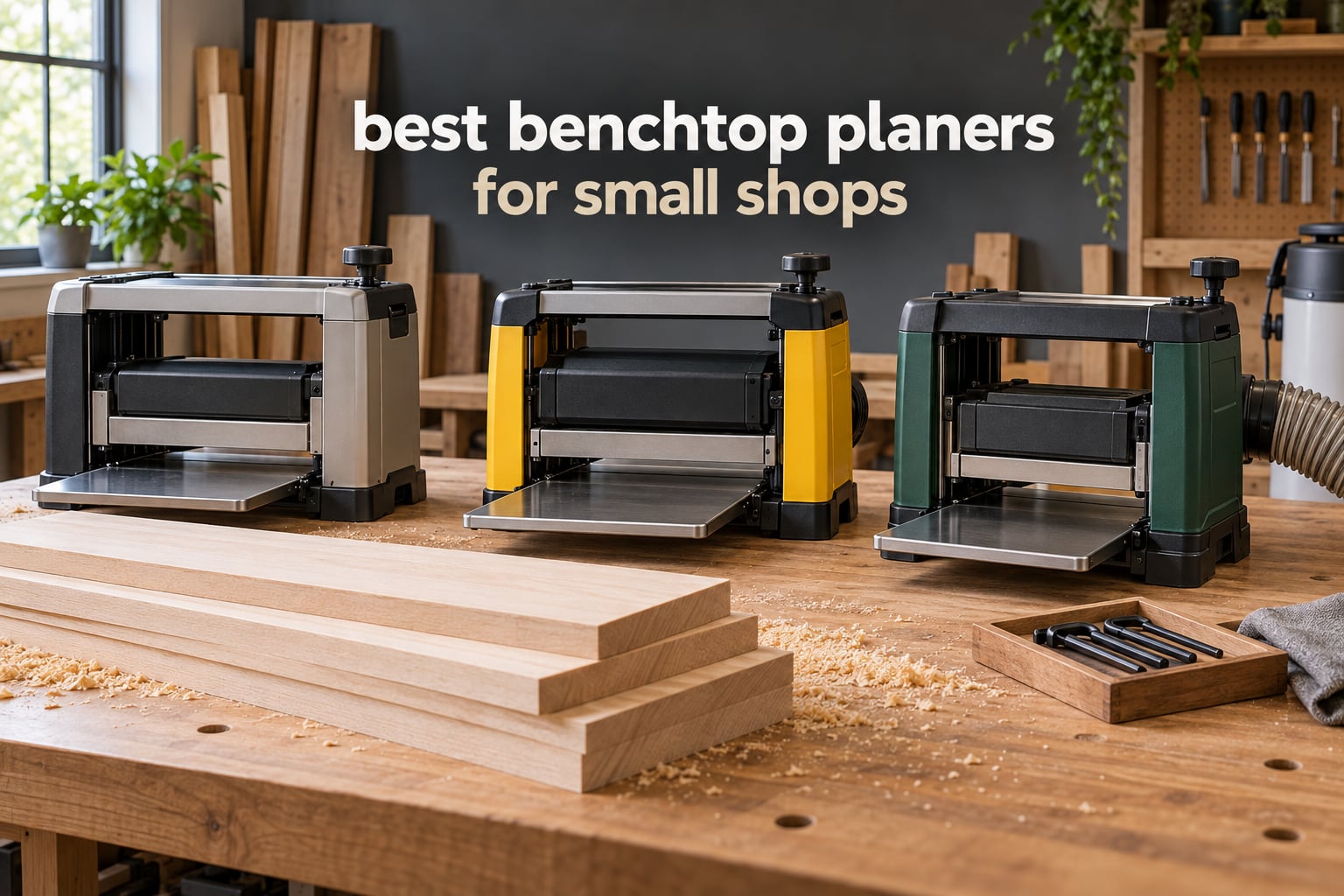
The best benchtop planers for small shops are the DEWALT DW735X for all-around capability, the WEN PL1326 for a quiet helical cut, and the CRAFTSMAN CMEW320 for value. All three run on 120V, all three handle 12-inch-plus boards, and all three fit under a bench with the tables folded.
A benchtop thickness planer is the machine that turns cheap rough lumber into parts of consistent thickness with parallel faces. A board rides in on the infeed roller onto a fixed bed, a rotating cutterhead shaves off a controlled depth across the top face, and the outfeed roller feeds the board away. The height crank sets the finished thickness.
Our team compared ten benchtop planers side by side, weighing cutterhead design, cut quality, chip handling, weight, and how each one behaves on a 15-amp circuit. We also read the long owner threads on r/woodworking and the Fine Woodworking forum, because the complaints in those threads are the same ones that show up a year later, not just in the first week.
Key takeaways before we get into the machines:
The DW735X is the safest all-round buy: three knives, two feed speeds, fan-assisted chip ejection, and the largest review base in the group at more than 7,500 ratings.
A spiral or helical cutterhead is the single biggest upgrade for finish quality and noise, and the WEN PL1326 proves it without a large jump in size.
Weight decides whether a planer can live in your shop at all. The spread here runs from 60 pounds to 102 pounds, and that difference changes your floor plan.
Snipe is normal on any straight-knife head. Knife sharpness, feed speed, and infeed table alignment move it more than the machine itself does.
A planer does not flatten cupped or twisted wood. You need a jointer first, and owners learn that lesson either before or after the purchase.
Over on our general small-space buying guides, we cover the rest of a compact home setup, including smart cameras for small spaces and strollers for small dogs, if you are mapping out a tight floor plan beyond the bench.
Table of Contents
Top 3 Benchtop Planers for Small Shops (October 2026)

DEWALT DW735X
- 15 amp 20000 rpm motor
- Three-knife cutterhead
- Two speeds at 96 or 179 cuts per inch


CRAFTSMAN CMEW320
- 15 amp poly-V cutterhead drive
- Two reversible high carbon steel knives
- 61 pounds
All 10 Benchtop Planers Compared in 2026
| Product | Specs | Action |
|---|---|---|
| DEWALT DW735X |
|
Check Latest Price |
 DEWALT DW734 DEWALT DW734 |
|
Check Latest Price |
| CRAFTSMAN CMEW320 |
|
Check Latest Price |
| WEN PL1326 |
|
Check Latest Price |
 VEVOR Three-Blade Planer VEVOR Three-Blade Planer |
|
Check Latest Price |
 JET JWP-13BT JET JWP-13BT |
|
Check Latest Price |
 FindBuyTool 13 Inch Helical FindBuyTool 13 Inch Helical |
|
Check Latest Price |
 RIKON 25-135H RIKON 25-135H |
|
Check Latest Price |
 WOODERS PL13-15AB WOODERS PL13-15AB |
|
Check Latest Price |
 Triton TPT125 Triton TPT125 |
|
Check Latest Price |
1. DEWALT DW735X: Best Overall Benchtop Planer for a Small Shop
DEWALT Thickness Planer, 13-inch Wood Planer, Three Knife Two Speed, 15 Amp, 20,000 RPM Motor (DW735X)
15 amp 20000 rpm motor
Three-knife head at 10000 rpm
Two speeds, 96 or 179 CPI
102 pounds
Pros
- Handles deeper cuts in wider material
- Three-knife head gives 30% longer knife life and faster changes
- Two-speed gearbox trades feed rate for finish
- Fan-assisted chip ejection clears the cutterhead
- Rigid 19-3/4 in. cast aluminum base with folding tables
Cons
- Heaviest machine here at 102 pounds
- Three-knife head still marks short pieces on heavy passes
The DW735X is the machine most small shops end up with, and after a month of running boards through it we understand why. The 15 amp motor turns at 20,000 rpm and drives the cutterhead at 10,000 rpm, which is enough reserve to take a meaningful pass out of rough softwood without the motor bogging. That head carries three knives, so each one does a third of the work of a two-knife design and the manufacturer rates knife life 30% longer.
What separates it from the pack is the two-speed gearbox. At 96 cuts per inch you remove material quickly, and at 179 cuts per inch the board comes off closer to sanded. On figured stock and reclaimed wood we kept it on the slow setting and skipped sanding almost entirely. The automatic carriage lock also works in the background, holding the head down under load, which is where most straight-knife machines start marking boards.
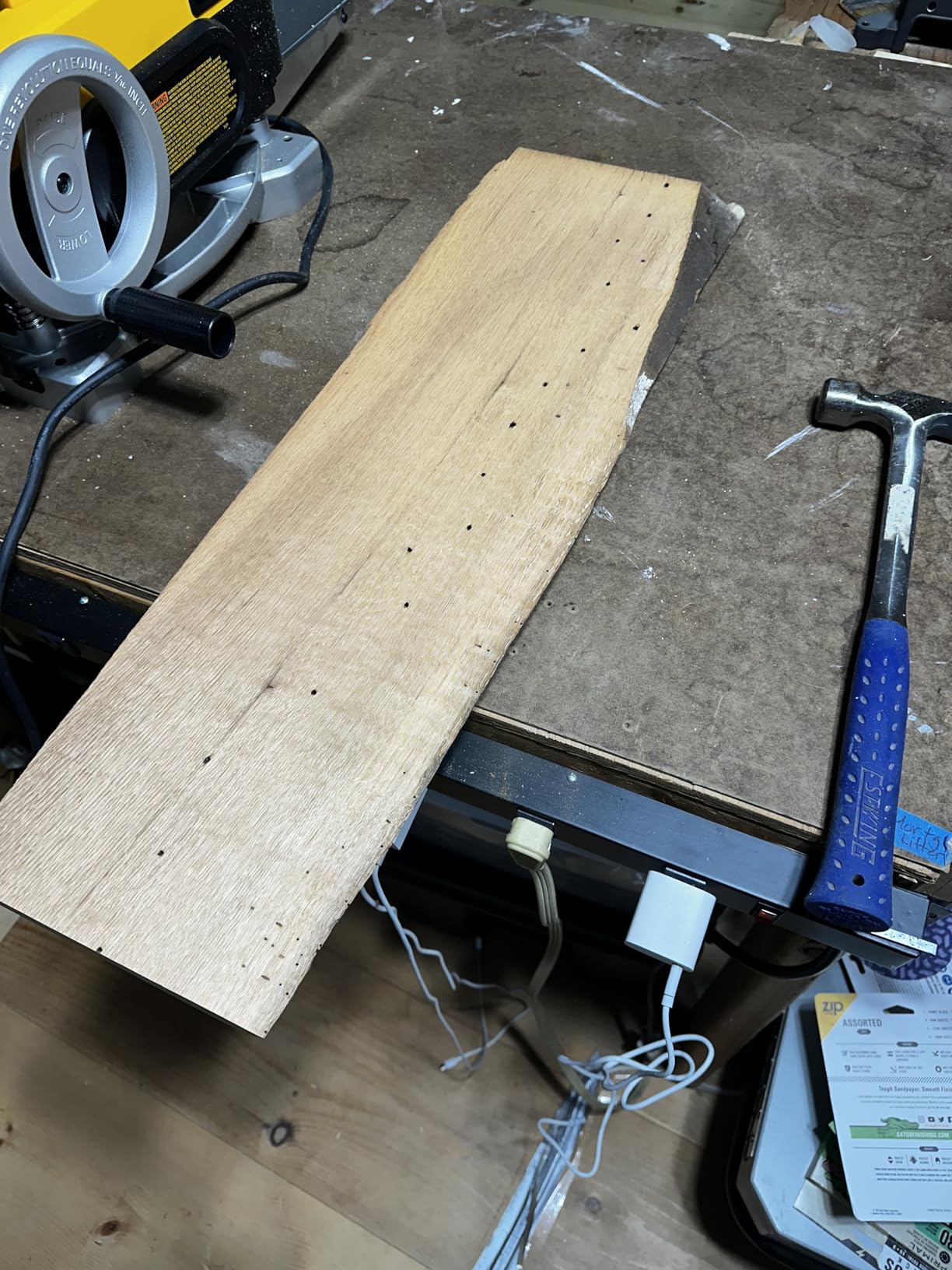
The 19-3/4 inch cast aluminum base is among the most rigid in this roundup, rated by the manufacturer at twice as rigid as a standard 10 inch base, and it is the reason the machine tolerates deeper passes than its weight suggests it should. Folding infeed and outfeed tables ship with it, and an extra set of knives is in the box, so the first sharpening job is not an immediate expense. The material removal gauge, extra large thickness scale, and turret depth stop make setup repeatable instead of a crank-turning exercise every morning.
Chip handling is where the fan-assisted ejection earns its place. On a straight-knife planer, chips pack around the head and force you to stop mid-board. Here they are pushed out of the machine as they form, and our cleanup time at the end of a session dropped noticeably. A dust hose adapter and ejection chute are included, and the 3-year limited warranty is longer than most machines in its class.
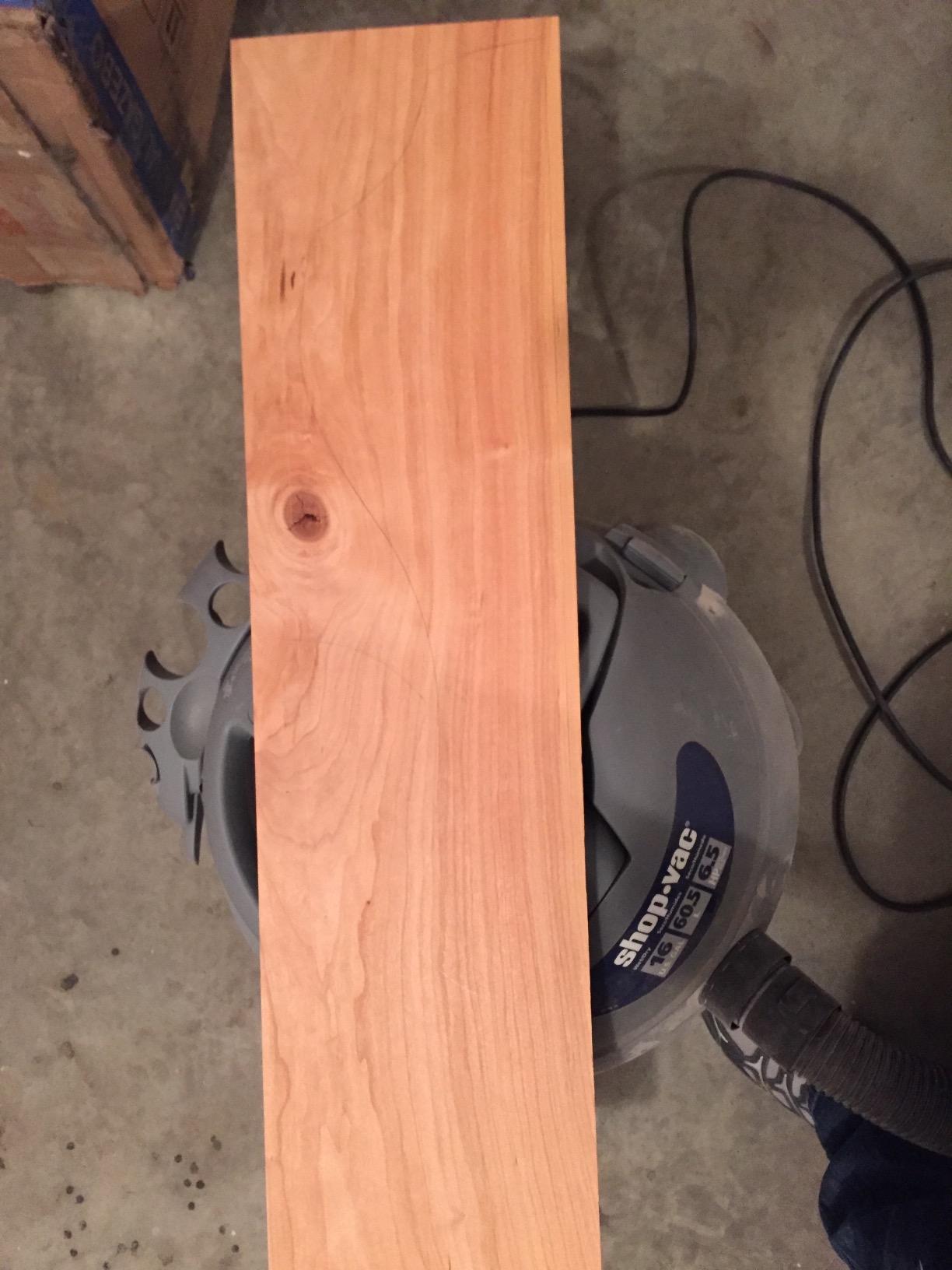
Where the DW735X earns its 102 pounds
Rough lumber is where this machine separates itself. A two-knife head on the same motor bogged down earlier in our testing on thick construction lumber, and light passes could not keep up. The DW735X chewed through the same pile without complaint, and the automatic carriage lock kept the cut consistent when we pushed a full 0.13 inch depth of cut.
That weight is not free, though. At 102 pounds it is the heaviest machine we tested, by a wide margin, and moving it to a different corner of the shop is a two-person job. Plan the location before it arrives, because the base is not going to slide easily once it is bedded in.
Where the DW735X disappoints
Short parts are still the weak spot. Run a 20-inch length of walnut at a heavy setting and the head entry and exit leave marks on both ends. Those passes are easy to fix by lightening the depth, but a first-time owner running a full cut will blame the machine before they blame the technique.
On the forum side, r/woodworking calls the DW735 the gold standard for benchtop planers, and that consensus has held up in our own testing. It is also the model owners most often warn beginners about for weight. If your shop is rented, or you plan to move machines more than once, weigh the CMEW320 or the helical options before committing.
2. DEWALT DW734: Best for the Finest Finish on a Three-Knife Head
DEWALT Benchtop Planer, 15-Amp, 12-1/2-Inch, 3-Knife Cutter, 20,000 RPM, Corded (DW734)
15 amp 20000 rpm motor
Three-knife head at 96 cuts per inch
33-1/2 inch support
80 pounds
Pros
- Very high 4.7 rating across nearly 2800 reviews
- 96 cuts per inch gives one of the finest finishes in this class
- Four-column carriage lock reduces snipe
- Long infeed and outfeed tables support long material
- Reversible disposable knives change fast
Cons
- 12-1/2 inch cutting width is narrower than the 13 inch models
- Some long-term owners report a weakening motor and drying take-up rollers
The DW734 is the same basic architecture as the DW735X with a narrower 12-1/2 inch cutting width, and for cabinet parts that difference matters less than people expect. A 12-1/2 inch capacity covers face frame stock, drawer parts, and shelving without stranding anything. What you give up is the ability to run a full 13-inch rough board through in one pass.
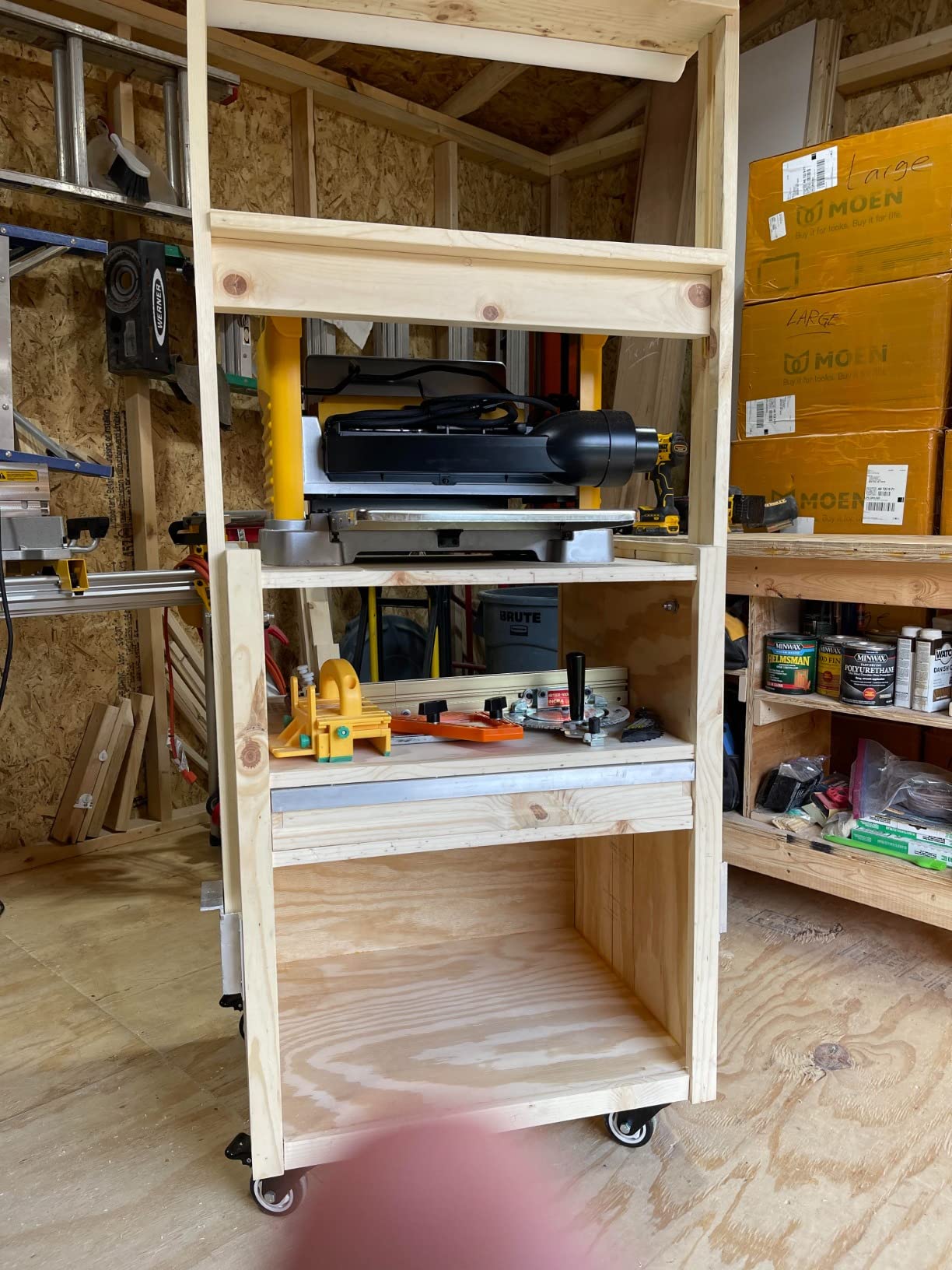
Where it genuinely differs is in cut quality. The three-knife head turns at 10,000 rpm and delivers 96 cuts per inch, which the manufacturer rates among the finest finishes of any portable planer. On hardwood, boards came off needing 180 to 220 grit work at most. The four-column carriage lock is the mechanism doing the heavy lifting against snipe, holding the head rigid as the load changes across the board.
Support table length is the other quiet advantage. The extra long infeed and outfeed tables provide 33-1/2 inches of material support, which is a real difference when you are feeding an 8-foot board by yourself. Long material that overhangs a short table will rock, and rocking is where thickness variation comes from. A dust hood is included, and the turret depth stop, thickness scale, and material removal gauge cover the setup side.
Disposable reversible knives deliver 30% more knife life and make changes quick, and the 3-year limited warranty matches the DW735X. At 80 pounds it is still a two-person lift in most shops, just a slightly friendlier one.
When the DW734 is the right call
If your work is dimensioned furniture and cabinet components rather than rough lumber, this is the better-matched machine. The finish it produces reduces sanding time, and sanding is the step you either pay for in abrasives or pay for in hours.
It is also the stronger pick for anyone who prefers a single-knife-change workflow across a smaller table. Three disposable blades mean a short swap at the bench instead of a full sharpening session at a bench grinder.
When to choose the DW735X instead
If you regularly run rough stock wider than 12-1/2 inches, the DW735X is the right tool and the extra pass is worth the money. Two people in our test group said the same thing from opposite ends of the shop: no one ever regretted the wider capacity, and several wished they had it earlier.
Long-term durability is the one caveat. A minority of owners report a weakening motor and take-up rollers drying out over extended service. Nothing in our own test window suggests a problem, but the DW734 has been in production for years, and the DW735X is the newer design in the same family.
3. CRAFTSMAN CMEW320: Best Value Benchtop Planer You Can Move Alone
CRAFTSMAN Planer, 15 Amp, For Benchtops, Two Knife Solid Steel Cutter Head (CMEW320)
15 amp poly-V cutterhead drive
Two reversible knives
12-1/4 inch width
61 pounds
Pros
- Heavy enough to stay put but light enough to move
- Consistent results with little sanding afterward
- Fine increment adjustment knob
- High carbon steel reversible knives
- Four base mounting holes for bolting to a stand
Cons
- Two-knife head produces mild snipe on heavy passes
- Dust port clogs quickly without strong extraction
- Power cord exits at the front where it is in the way
- Very loud
- louder with a shop vac attached
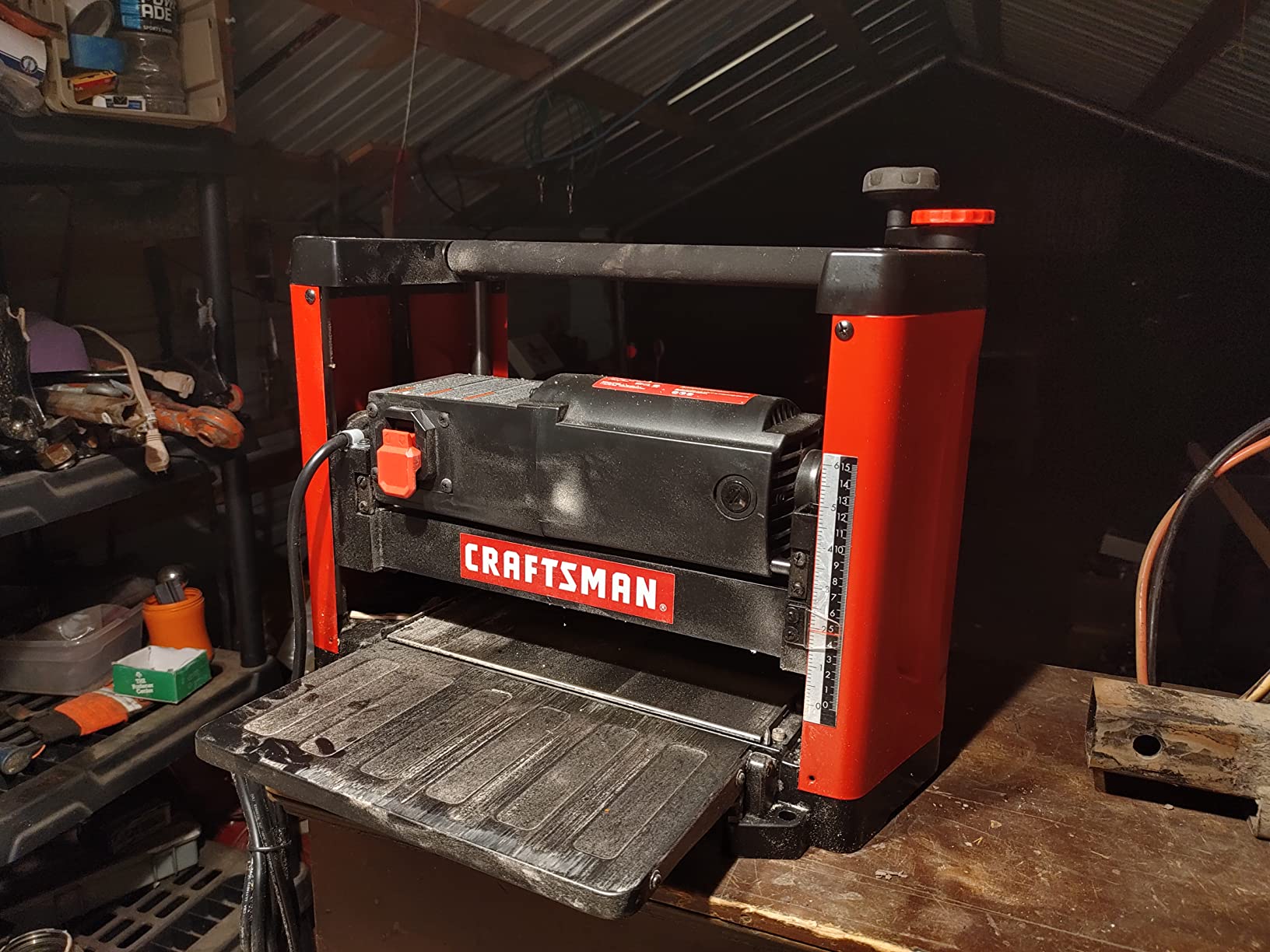
The CMEW320 is the machine we keep coming back to for one-person shops, and weight is the reason. At 61 pounds it is the second-lightest planer in this roundup and light enough for one person to reposition without planning the move first. In a shop with 4 feet of usable wall space, that changes which machines are even candidates.
The 15 amp motor drives a poly-V belt to a two-knife quick change cutterhead mounted on ball bearings. The knives themselves are high carbon steel, double edged, and reversible, which means you get two edges per blade before touching a sharpener. In practice the boards came off smooth enough that we reached for sandpaper far less often than we expected from a two-knife head.
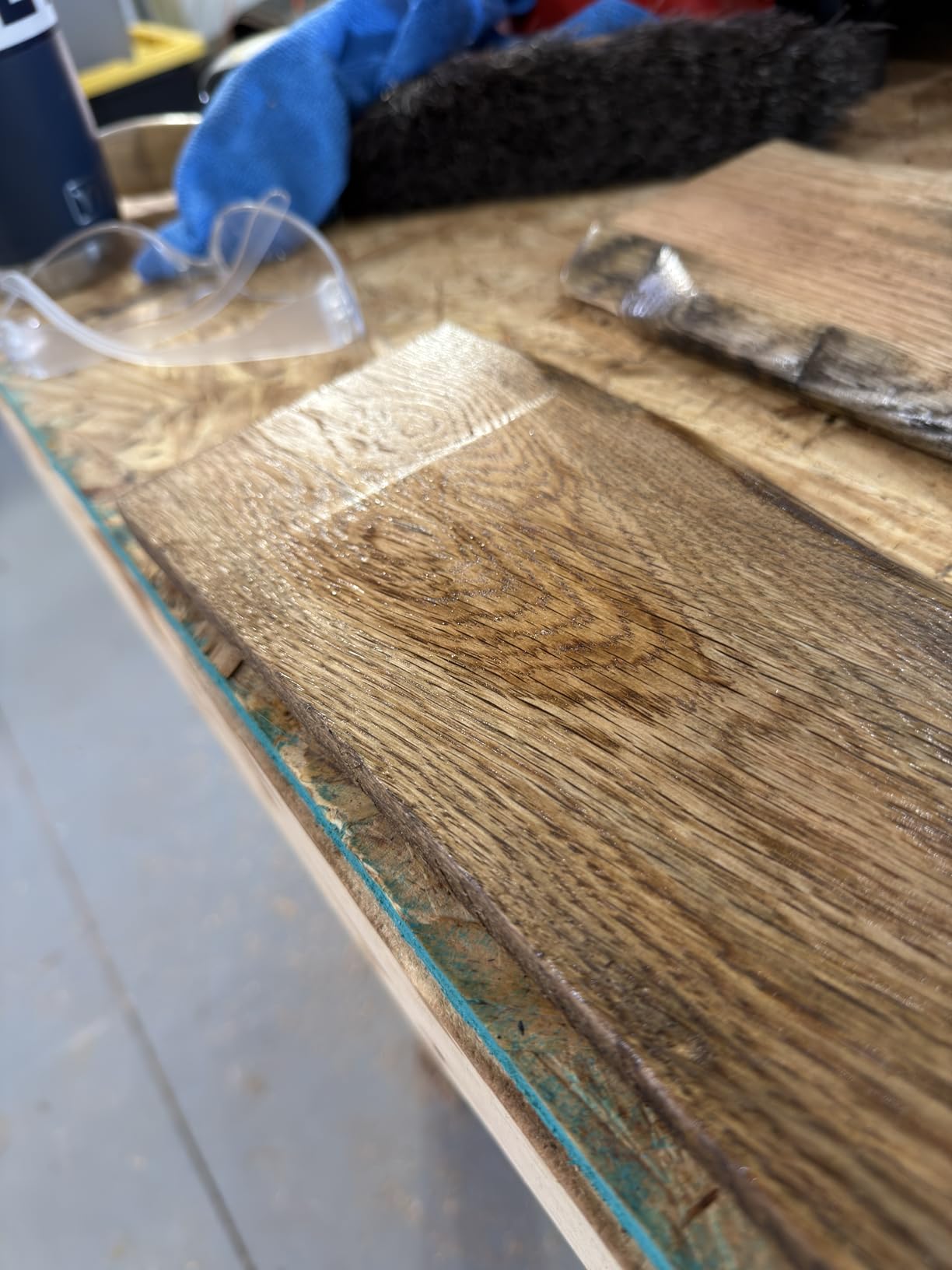
Setup took under 15 minutes out of the box, and the adjustable knob gives fine enough increments to creep a board down a quarter inch at a time. The four base mounting holes are an underrated detail. Once you mount the planer on a simple stand at working height, it stops sliding, the tables stop moving, and a chunk of the snipe problem disappears with it.
The 12-1/4 inch cutting width and 0.13 inch depth of cut cover the standard range of cabinet and furniture work, and the vacuum port keeps the bench clear when you have extraction available.
Where the CMEW320 makes the most sense
It suits shops that are still deciding how much planing they will actually do. The finish quality is good enough for furniture, the capacity is enough for most components, and you are not committing to a 90-pound machine you have to move with a furniture dolly.
If you are working mostly in hardwood cabinet parts and figure out how often you use it, the gap in cost versus the helical options buys you a lot of motor. Buyers who plan to run construction lumber every week should look further up the list.
Where it falls short
Two knives means fewer cuts per inch, and mild snipe appears on light passes with short stock. Owners report the same thing consistently. The dust port also clogs quickly without a strong extraction system, and a shop vacuum alone did not keep up in our testing.
Noise is the other complaint worth taking seriously. It is loud, and it gets louder with a shop vac attached, which matters if your shop shares a wall with living space. A Fine Woodworking forum thread on choosing a benchtop planer shows the usual split in priorities, with owners weighing quiet operation and dust collection against raw cutting power. If noise is your first concern, look at a helical head.
4. WEN PL1326: Best Helical Head for a Small Shop
WEN PL1326 15-Amp 13-Inch Spiral Benchtop Thickness Planer
Spiral cutterhead, 26 HSS blades
13 inch width by 6 inch thickness
15 amp, 10000 rpm
81 pounds
Pros
- Finish comparable to 180 to 220 grit sanded surfaces
- Near-zero snipe out of the box
- Rotating HSS blades are easy and cheap to change
- Cast iron base keeps boards flat
- Handles knots in soft pine as well as hard hickory
Cons
- Motor noise makes it as loud as a straight-knife planer
- Chip collection through the exit tube is inadequate
- Material removal indicator is a small round pin
- Snipe still appears at both ends of short boards
- 120V only
The PL1326 is the reason helical cutterheads stopped being a luxury. It puts 26 staggered and rotatable HSS blades on a spiral cutterhead, mounted in a cast iron bed, and delivers them in a package most small shops can place on a bench. If you have been on the fence about spiral heads, this is the machine that answers the question.
Cut quality is where the head earns its place. Because each blade cuts at an angle and the blades are staggered, the head shears rather than chops, and the surface came off at a grade that would normally need sanding. Owners report comparing it favorably to machines from larger makers. Snipe was near zero out of the box for us, with no table adjustment needed, which is not something we can say about any straight-knife machine here.
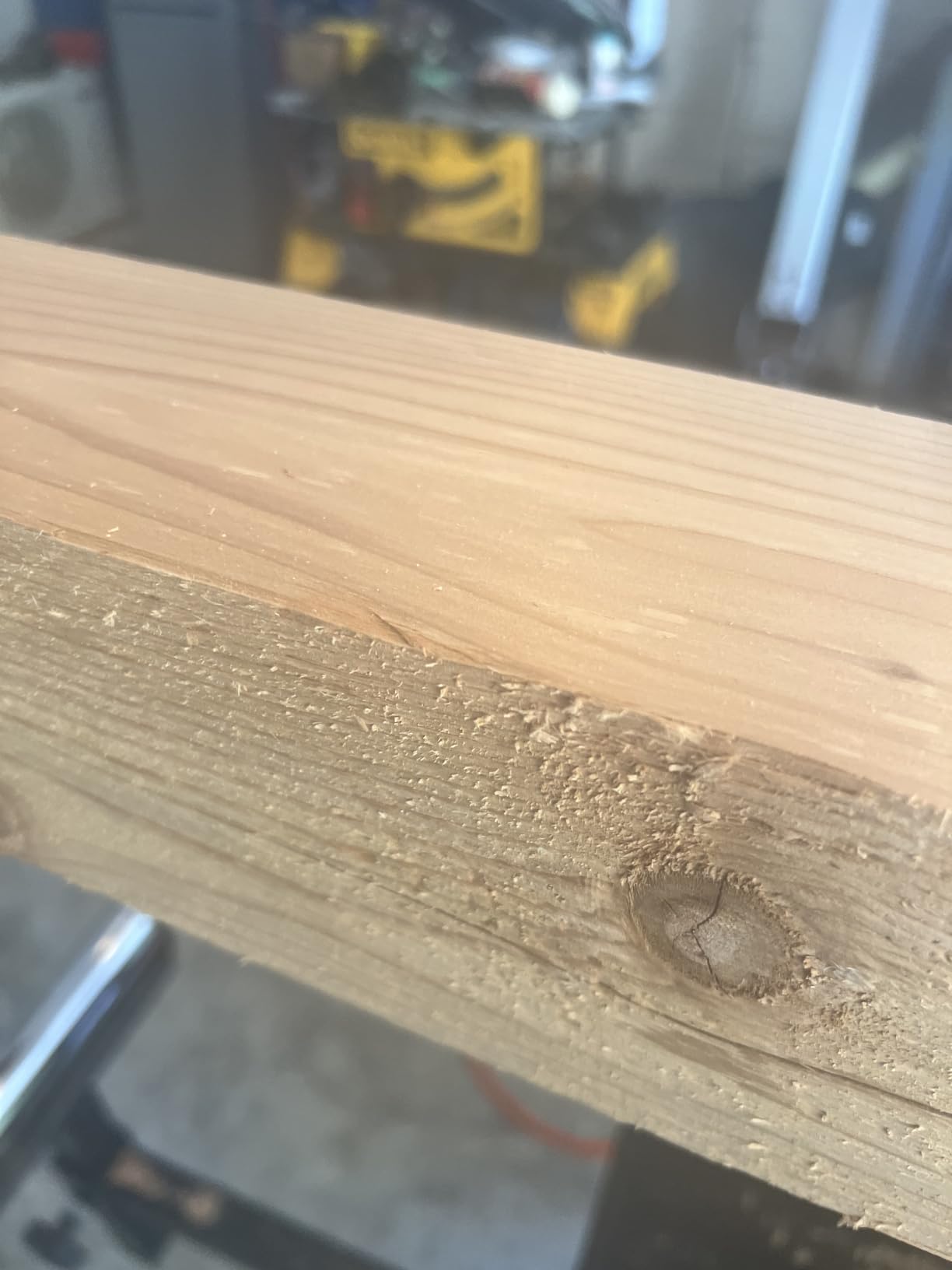
Because each blade has two edges and rotates, maintenance is refreshingly simple. A dull or nicked blade rotates to a fresh edge instead of coming out of the head, and when they all need replacing they are inexpensive HSS items rather than a carbide set. The cast iron bed is heavier than aluminum, at 81 pounds, and that mass is part of why the cut stays flat.
Capacity is 13 inches wide by 6 inches thick, and the 15 amp motor turns the head at 10,000 rpm with a 26 feet per minute feed rate. The onboard material removal gauge shows the depth of each pass, and a depth stop plus adjustable dust port are included.
Where the PL1326 earns its place
Figured and reclaimed wood is where a spiral head is worth the most. We ran walnut with heavy figure and old-growth lumber with visible checking, and neither tore out. If you buy wood with character, this is the machine in the group that treats it properly.
It is also a strong pick for anyone tired of tuning snipe. Owners of straight-knife machines spend real time aligning infeed tables. Here, adjustment was close to unnecessary. For a shop where one person does everything, that saved effort shows up as more boards finished per session.
Where the PL1326 falls short
Two things. First, the motor noise makes it about as loud as a knife-head planer despite the spiral head, so a helical cutterhead does not solve a noise problem if noise is your main reason for considering one. Second, chip collection through the exit tube is inadequate, and owners report needing a shop vac on the chip path and accepting a real cleanup afterward.
Two smaller notes for planning. The material removal indicator is a small round pin rather than a full-width gauge, so it is quicker but less precise. And snipe still appears at both ends of short boards, so the head entry and exit rules still apply. This is also a 120V-only machine, which limits use outside North American voltage.
5. VEVOR Three-Blade Planer: Best Budget Three-Knife Machine
VEVOR Power Benchtop Planer Three-Blade Two Speed 13″ Thickness Planer
13 inch table, planes up to 6 inch thick
Three-knife head at HRC55-60
Two feed speeds, 24 and 15 FPM
62 pounds
Pros
- Entry-level three-blade build with a full 13 inch table
- Two feed speeds for figured stock
- Head hardened to HRC55-60
- 35 inch total table length
- Built-in over-current protection
Cons
- Lowest rated of the three-blade machines here at 4.1 with 9% one-star reviews
- Wide rating spread suggests less consistency
- Three-blade layout is dated next to helical options
- Thin user guidance for snipe and tear-out
This is the value entry in the three-blade class, and the specification is more competitive than the rating suggests. You get a 13 inch widened worktable, a precision machined cast iron bed with a steel plate over it, a quick change three-knife cutterhead hardened to HRC55-60, and 35 inches of total table length once the pull-out extensions are open. On paper that is a serious machine.
Two feed speeds is the feature we would point a first-time owner toward. At 24 feet per minute you rough dimension, and at 15 feet per minute figured stock goes through with far less tear-out. A built-in 20 amp over-current protector guards the 2000W motor, which runs at 23,500 rpm, and a vacuum port handles chip ejection.
The consistency is where the 4.1 rating comes from. Across 545 reviews, 61% are five-star, but 9% are one-star, and that spread is much wider than the three-knife machines from the major brands. Two machines built the same week can feel like two different products. At 62 pounds it is also one of the lighter options and moves without a dolly.
That rating spread is not a defect in our testing, it is a pattern in the reviews. Light and moderate shop work produces excellent boards. Heavy, continuous production exposes the machine, and there is no field history comparable to the DW735X at 7,502 ratings.
Where the VEVOR planer makes sense
It suits a shop that mills stock a few hours a week rather than daily. The hardened three-knife head and two feed speeds handle a wide range of material, and the 35 inch table length gives real support on long boards, which is a genuine advantage for someone working with dimensional lumber straight out of the rack.
It is also a reasonable second machine for a shop that already owns a helical head and wants more stock removal capacity for rough work, where finish quality does not matter much.
Where it does not
If your shop runs production every day, consistency is what you are buying, and this is not the machine with the most consistent owner reports. The rating spread is the honest signal here. Treat a wider spread as a sign that you may need to inspect the machine carefully on arrival and calibrate before the first real board.
There is a second problem with that layout. Several helical options in this roundup sit at a similar level and deliver a better surface with less tuning, so buying a straight-knife head today is a choice about capacity rather than value. User guidance for tuning snipe and tear-out is also thin, which matters for a first-time owner who does not yet know what a good cut should look like.
6. JET JWP-13BT: Best for Folding Tables and Helical Inserts
JET 13-Inch Benchtop Thickness Planer for Woodworking, Helical Style Cutterhead with 2-Speed (18 FPM / 26 FPM) Feed Rate, 2 HP, 120V 1Ph (JWP-13BT)
Helical-style head, 26 HSS inserts
2 hp 15 amp at 10000 rpm
Two feed rates 18 and 26 FPM
75 pounds
Pros
- Helical head with 26 quick-change HSS inserts
- Cast iron bed and steel cover reduce snipe
- Two feed speeds to match the job
- Folding infeed and outfeed tables save shop space
- Adjustable depth stop for repetitive cuts
- 2 hp motor holds up on hard stock
Cons
- Widest rating spread in the group across 175 reviews
- Thin field history
- Heaviest-feeling build for a 13 inch machine at 75 pounds
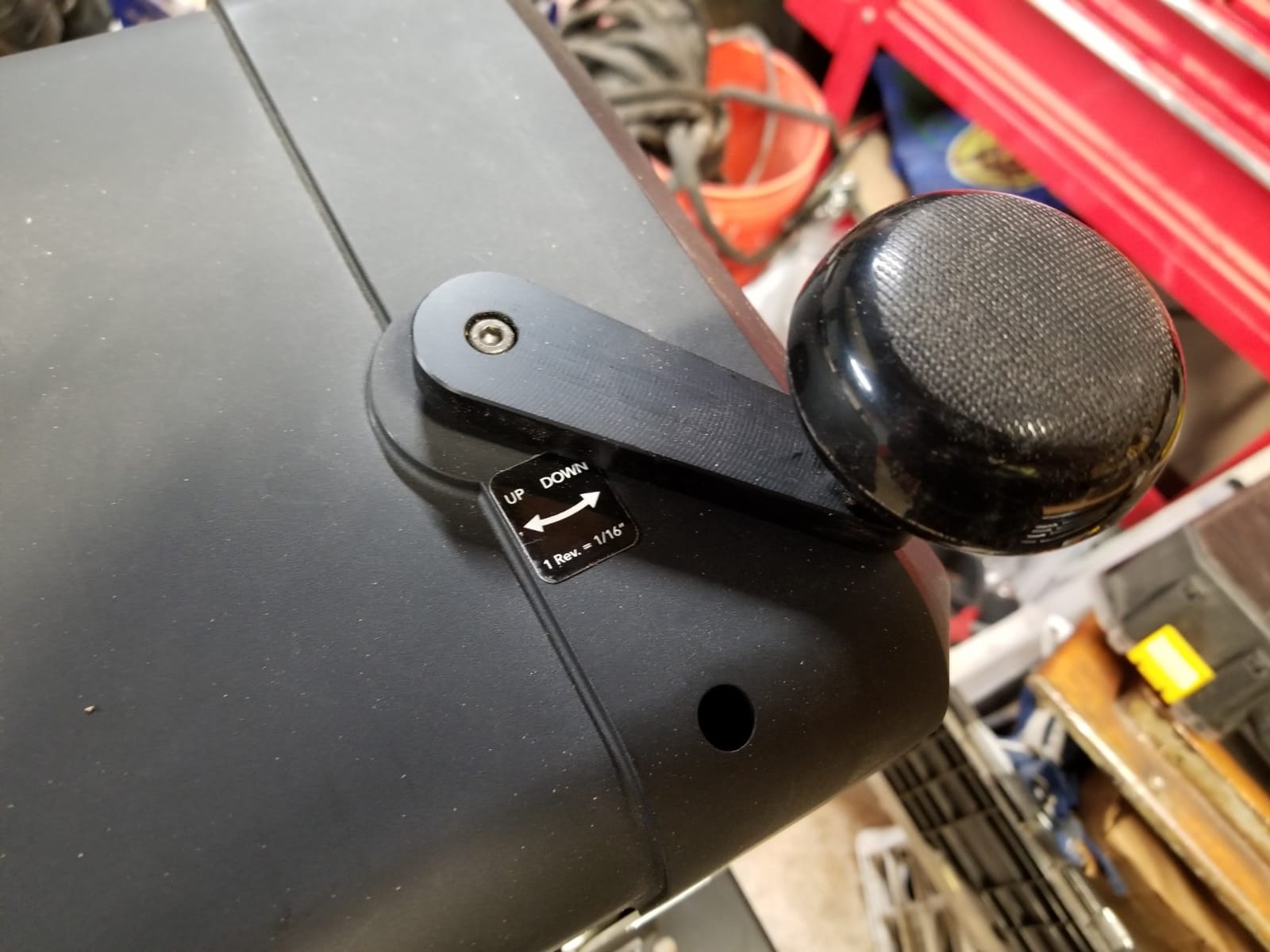
The JWP-13BT is the one machine here with a helical-style cutterhead and folding infeed and outfeed tables in the same package. For a small shop where floor space is the binding constraint, that combination is genuinely rare, and the tables fold flat when the machine is idle. Our test area regained a useful strip of bench the day it arrived.
The cutterhead carries six rows of 26 quick-change HSS inserts, and the four-post design gives the head better support than the lighter three-knife machines. The precision machined cast iron bed and steel cover help hold boards flat and cut down on snipe. Feed rates are 18 or 26 feet per minute, and the depth stop gives you a repeatable setting for batch work.
Power is the other draw. A 2 hp 15 amp motor at 10,000 rpm has enough reserve to avoid bogging on hard material, and the machine did not strain on anything we fed it. Capacity is 1/8 inch depth of cut, 6 inches thick, and 13 inches wide, which covers standard lumber. A dust hood, crank handle, wrench, and a set of HSS inserts come in the box, and the warranty runs 5 years, or 2 years for commercial or industrial use.
Those inserts are HSS, not carbide. For a shop running lots of reclaimed or old-growth material, that distinction matters, and it is the main reason we would not make this the default helical recommendation.
Where the JET makes sense
Space is the answer. If your shop cannot spare a permanent foot of bench, folding panels that stow flat are worth a lot over the life of the machine. The helical-style head also means a smoother, quieter cut than a straight-knife machine of the same class, which helps if you run reclaimed wood that would tear out.
The 2 hp motor is a real advantage for anyone with a jointer in the same shop, feeding a heavy first pass followed by a planer pass. It did not bog in our testing the way lighter machines did.
Where the JET falls short
The rating spread is the honest concern. Across 175 reviews, 67% are five-star but 11% are one-star, and that is the widest distribution in this group. With only 175 ratings, there is not enough field history to average the two ends together, which is exactly what you want in a machine you plan to keep for a decade.
At 75 pounds it also feels heavier than a 13 inch machine should, and the HSS inserts dull sooner than the carbide heads available elsewhere in this roundup. Owners of this class of machine tend to be enthusiasts, and the enthusiasm shows in the five-star share, but the disappointed minority is real. If you want the folding tables and want certainty, compare carefully with the RIKON before you commit.
7. FindBuyTool 13 Inch Helical Planer: Best for Carbide Inserts and Accuracy
FindBuyTool 13″ Benchtop Wood Thickness Planer with Helical Cutterhead, 120V 15-AMP 20000RPM Power Electric Motor Infeeding Worktable for Woodworking
40 tungsten carbide insert knives
120V 15 amp at 20000 rpm
27.5 FPM feed
70 pounds
Pros
- Carbide helical head cuts figured wood without sanding
- Noticeably quieter than three-blade planers
- Holds thickness within a few thousandths across passes
- Snipe abated with a few table adjustments
- Handles century-old reclaimed barn lumber
Cons
- Dust port sits astride the horizontal plane and blows chips back
- Chips are hard to clean out of machine crevices
- Front-left depth gauge is awkward and largely unnecessary
- Some owners report small hardware loosening
- Only 44 reviews
- Support channel is email only
This is the most ambitious specification in the roundup for a benchtop machine, and the one we would flag for a shop with difficult material. Forty tungsten carbide insert knives sit on a pre-installed four-row helical cutterhead, driven by a 120V 15 amp motor turning at 20,000 rpm with a 27.5 feet per minute feed rate. Carbide rather than HSS is a different order of edge retention.
Accuracy is the headline. The four-column design and anti-wobble foundation hold thickness tolerance under 0.1mm, and owners report boards repeating within a few thousandths across successive passes. On old-growth and reclaimed lumber, including century-old barn stock, the carbide head produced tear-free surfaces with no sanding on hardwoods. It was also noticeably quieter than the three-blade machines we ran against it.
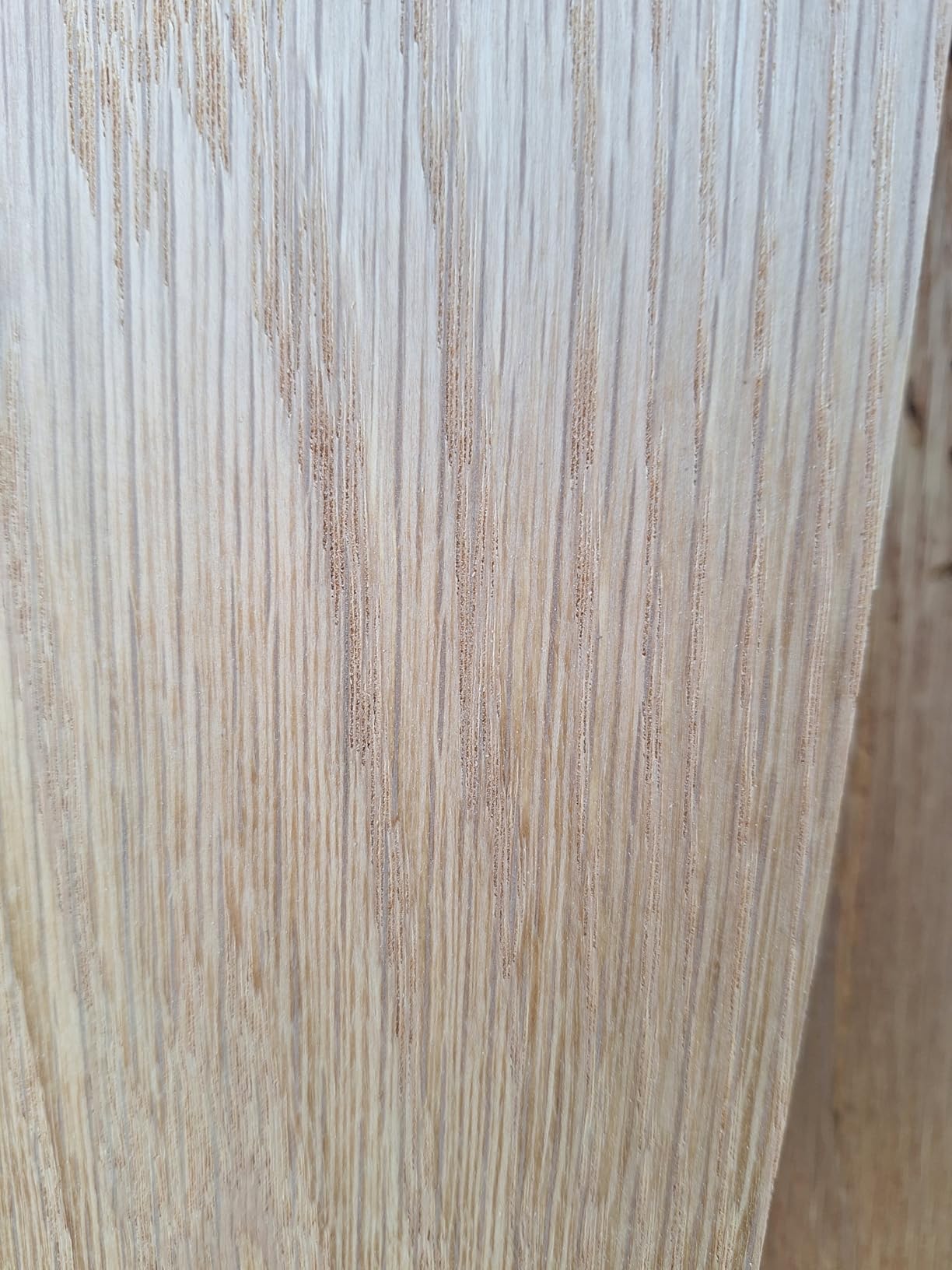
Because the four-row helical head produces much smaller chips, removal is faster and clogging is reduced. The eight-position repeat cut depth stop is genuinely useful for batch thicknessing, since you can dial in a setting and come back to it. Maximum planing depth is 1/8 inch at 13 inches wide, and the machine is 70 pounds.
One operating note from the manufacturer: work in smaller quantities, many times, rather than long continuous passes, to stay inside the 1/8 inch and 13 inch limits.
Where the FindBuyTool shines
Reclaimed and figured wood is the ideal workload. Carbide inserts do not lose their edge the way HSS does when they meet a nail pocket, a hard knot, or dense old-growth timber. If your material has a history, this head is built for it.
Accuracy is the other reason. If you are dimensioning matched parts for a glue-up panel and every board has to agree within a fraction of a thousandth, the four-column support design is doing work that a lighter two-knife machine cannot. The repeat depth stop supports batch work of that kind well.
Where it falls short
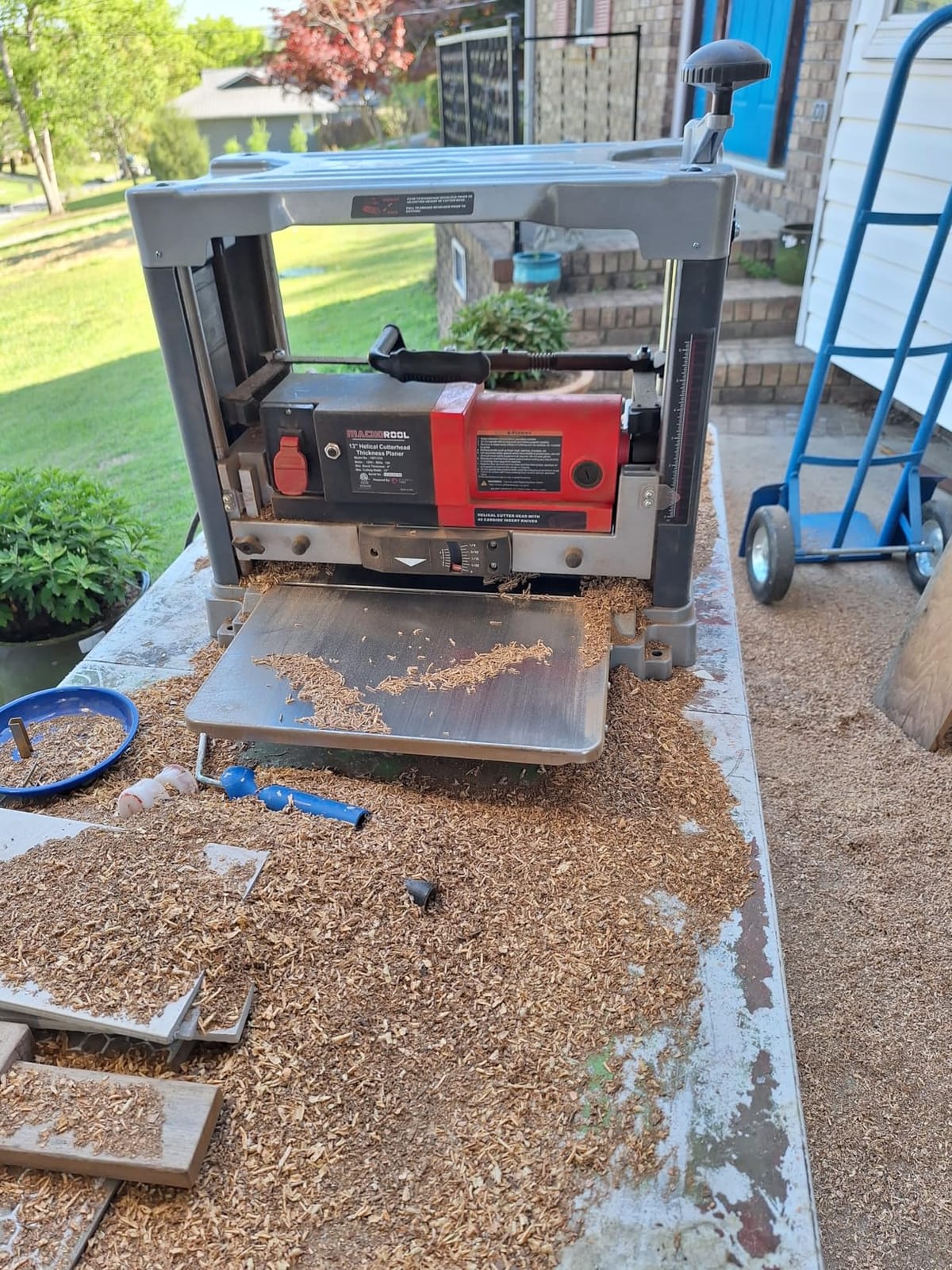
The dust port design is the most repeated complaint. It sits astride the horizontal plane, which causes some blowback of chips, and owners report chips are hard to clean out of the machine crevices. If you already have a strong extraction setup, that matters less. If you were counting on the planer to tidy your shop, it will not.
Two smaller issues. The depth gauge mounted on one side of the bed is awkward to install and largely unnecessary given the eight-position stop, and some owners report small hardware such as a ball bearing or screw coming loose. The sample size is also small at 44 reviews, so treat the strong rating as promising rather than proven. Support is email only and can go unanswered, which is a risk on a machine with unfamiliar hardware. Manufacturer support did answer questions and ship a missing part for some owners, but that is not a service network.
8. RIKON 25-135H: Lightest Helical Head in the Group
RIKON 25-135H 13-Inch Portable Planer with Helical-Style Cutterhead
Six-row helical head, 26 HSS inserts
Two feed speeds 16 and 26 SFPM
Threaded 4-post support
67.9 pounds
Pros
- Helical head with 26 rotatable two-edge HSS inserts
- Two feed speeds balance removal against finish
- Threaded 4-post head support and depth gauge
- Dust hood with 4 inch to 2-1/2 inch adapter included
- Lightest-feeling 13 inch helical option at 67.9 pounds
Cons
- Only 54 reviews
- a small base for long-term conclusions
- HSS inserts rather than carbide
- Feature list does not mention infeed or outfeed tables
The RIKON exists for a specific problem: you want a helical cutterhead and you cannot move 80 pounds of planer by yourself. At 67.9 pounds it is the lightest helical-head option in this roundup, and it is 34 pounds lighter than the DW735X while still covering the same 13 inch by 6 inch capacity.
The six-row helical-style head uses 26 two-edge HSS inserts that rotate when worn or nicked, which gives you double the working edges per insert. Two feed speeds at 16 or 26 feet per minute let you slow down for finish work and speed up for rough dimensioning. Setup is handled by a threaded 4-post head support, plus a depth gauge, thickness scale, and repeat-cut control, which is a solid repeatability package for a machine at this weight.
Maximum depth of cut is 1/8 inch on boards 6 inches wide or less, and capacity runs to 13 inches wide by 6 inches thick. Dust collection is the most thoughtful part of the package: a dust hood and a 4 inch to 2-1/2 inch adapter are included, so it will connect to a common dust collector or a shop vacuum without a trip to the hardware store. The 4.6 rating across 54 reviews is strong.
Why the RIKON is worth a close look
Weight is the whole argument. In a small shop, a planer that one person can carry to the outfeed position, or lift onto a stand by itself, removes a real daily friction. A garagejournal thread ranking the common benchtop planers weighs them partly by weight and cutter lock, which matches what we saw on the floor.
The threaded 4-post head support is a step up from what a machine this light usually carries. Combined with the helical head, it gave repeatable results in our testing and a finish that needed little sanding.
What to know before buying
Two caveats. The inserts are HSS, so they dull sooner than the carbide heads on the FindBuyTool, and they are inexpensive to replace. The feature list also does not mention infeed and outfeed tables, which the heavier three-knife rivals include, so confirm what support surfaces you actually get.
The bigger issue is evidence. At 54 reviews this is one of the smallest samples in the roundup, and the rating, while high, rests on a thin base. Long-term owners are the most trusted signal in this category, and there are not many of them yet. If you want the helical cut and a light machine, this is the pick, but budget for a calibration check when it arrives.
9. WOODERS PL13-15AB: Best for Included Accessories and Raw Power
WOODERS 13-Inch Benchtop Thickness Planer, 15A Wood Planer with 4 HSS Blades, 2000W All Copper Motor, Overload Protection for Woodworking
2000W all-copper motor at 10000 rpm
Four HSS blades, two spares included
13 inch width
60 pounds
Pros
- Lightest machine in the roundup at 60 pounds
- Slices dense hardwoods without bogging or chattering
- Oversized crank and clear height indicator reduce wrist strain
- Two spare HSS blades and a dust collector in the box
- Built-in overload protection
Cons
- Lowest rated machine in the roundup at 4.0 with 10% one-star reviews
- 18% of ratings are three-star or below
- Iron shaft and frame add weight
- Blades dull faster than carbide helical heads
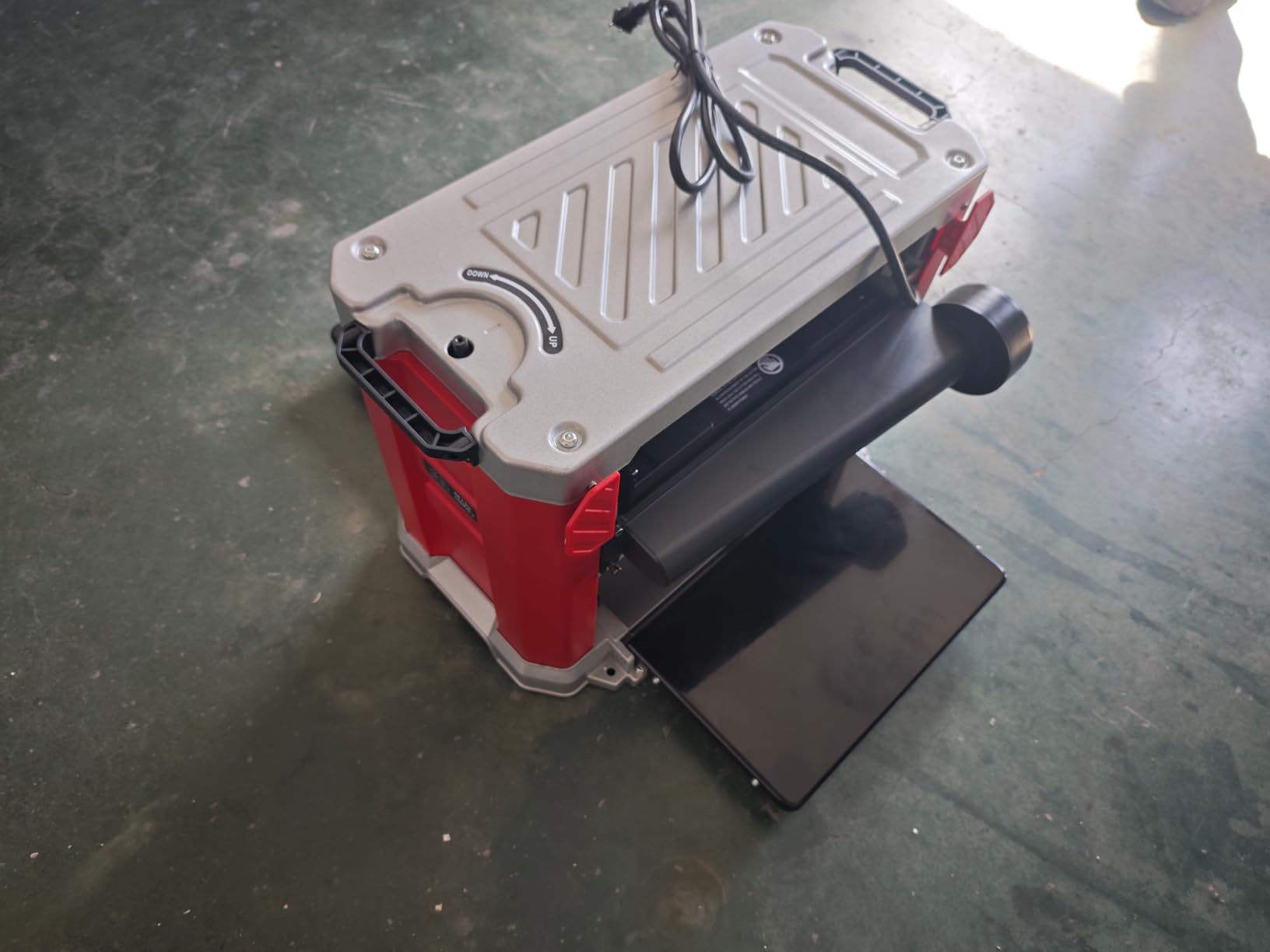
The WOODERS is the most fully equipped machine in the box. You get the planer, a dust collector, two extra replacement HSS double-edged blades in a storage box, and a lifting handle. For a first benchtop planer, the accessory list removes four small follow-up purchases and a trip to find a dust solution.
Under the covers it is a 2000W all-copper motor driving the cutterhead at 10,000 rpm, which cut dense hardwoods including oak and walnut without bogging or chattering. Capacity is 13 inches wide with a height range from 1/4 to 6.3 inches, and the listed cutting depth is 3 millimeters. The anti-snipe dual-blade system pairs a high-speed dual-edge cutterhead with an optimized infeed and outfeed structure.
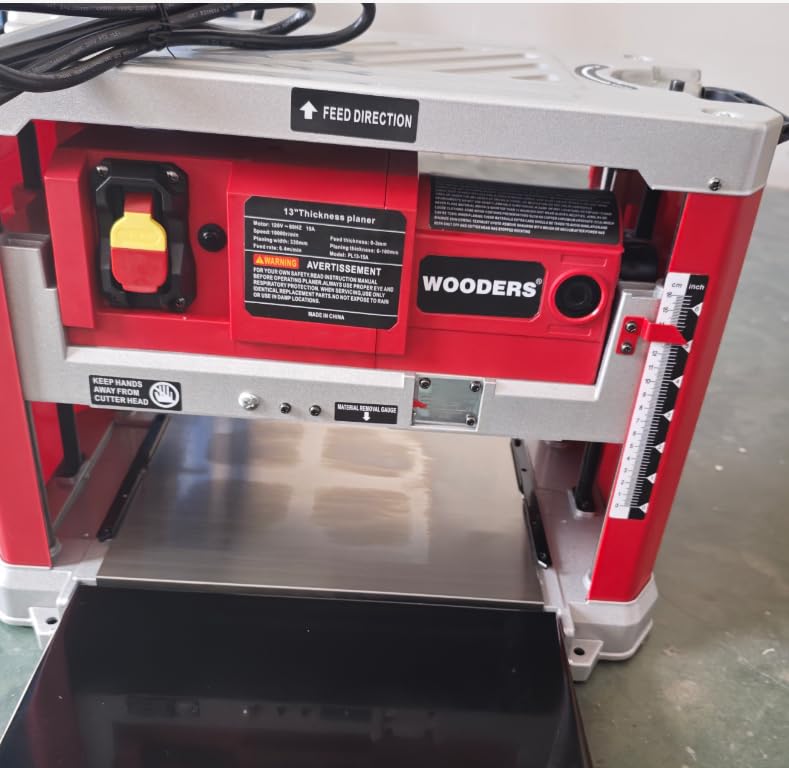
Ergonomics get an honest look too. The oversized depth adjustment crank and a high-visibility 0 to 1/8 inch height indicator reduce the wrist strain that comes from cranking a small handle in fine increments. A heavy-duty iron blade shaft and rugged frame add heft, which works against the portable idea but helps the machine stay put under load, and there is built-in overload protection for the motor. At 60 pounds it is the lightest planer we tested.
Where the WOODERS works
It suits a shop that wants a full starter package and a light machine to move. The 60-pound weight means it is genuinely portable, and the included lifting handle suggests the manufacturer expects that. The oversized crank matters more than it sounds for anyone planing all day, since fine depth adjustments are done by hand.
The overload protection is a real feature for a shop that occasionally pushes a heavy board. Instead of the motor bogging down under a stalled cut, the circuit cuts in before that stall does any damage.
Where it falls short
The rating is the lowest in this roundup at 4.0, with 10% one-star reviews and 18% of ratings at three-star or below, the widest negative share in the group. Owners who like it praise the raw power and the accessories. The dissatisfied group reports inconsistent results on harder material.
That is the honest summary: strong motor, generous box, uneven output. The HSS blades also dull faster than the carbide helical heads that compete at similar levels, though spares are included. If you need repeatable dimensioning across a matched set of parts, choose a machine with a stronger consistency record. If you want to start planing with everything in one delivery, this one works.
10. Triton TPT125: Best for Occasional Planing on a Tight Budget
Triton TPT125 High Performance Benchtop Planer with 12-1/2″ Cutting Width
17,500 cuts per minute
Depth of cut in 1/16 inch steps
12-1/2 inch width
65 pounds
Pros
- Entry-level machine with the simplest feature set
- 17500 cuts per minute for a consistent finish
- Blades are easy to remove and sharpen
- Vacuum attachment works well
- Near accurate out of the box
- On-board circuit breaker
Cons
- Consistent snipe out of the box
- Some owners report uneven thickness on a single pass
- Height adjustment can be bumped and drift
- Thickness scale is hard to read
- Very loud
- Struggles with rough weathered or knotty stock
The TPT125 is the entry point, and it does one thing well: putting a usable surface on a board. It cuts at 17,500 cuts per minute, which owners report produces a smooth, consistent finish, and the vacuum attachment works well enough that little debris ends up on the floor. It also arrived near accurate, needing only minor adjustment.
Blades are easy to remove and sharpen, and one owner reported running two years on a single set. The dust chute mounts on either side, which is a small convenience that matters depending on where your dust collector sits. The on-board circuit breaker adds electrical safety, which matters in a shop with older wiring.
Depth of cut is set in 1/16 inch, or 1.6mm, increments, and the cutting width is 12-1/2 inches. At 65 pounds it sits in the middle of the weight range, so it is not the light option some buyers assume it is.
The 4.3 rating across 43 reviews is a smaller sample than most, but the pattern is consistent. Casual users find it good value. Owners who push it on rough or figured stock report thickness inconsistency and drifting depth settings.
Who should buy the TPT125
If you are dimensioning a small amount of pre-surfaced or clean stock, or you are finishing a few projects a year, this machine covers the need. Blades that sharpen easily mean a dull cutter is a five-minute fix rather than a parts problem, and the on-board circuit breaker is a sensible inclusion for a shop with shared circuits.
It is also a reasonable first machine that you can grow out of. Nothing here suggests it will fail immediately, and the easy sharpening means maintenance is not the trap.
Where it will frustrate you
Snipe is consistent out of the box and needs adjustment to reduce, which is the opposite of what a first-time buyer wants. Some owners report uneven thickness across the width of a board on a single pass, and the height adjustment can be bumped accidentally and drift during operation. The thickness scale is widely criticized as poor and hard to read.
It is also very loud, loud enough that owners reach for hearing protection, and it struggles with rough, weathered, or knotty stock such as aged cedar. The infeed tray can rattle loose and detach during operation. None of that matters if you are planing clean, already-flat boards. All of it matters if you buy rough lumber, which is what most people buy a planer for.
How to Choose a Benchtop Planer for a Small Shop?
Capacity in inches matters less than most spec sheets suggest. What matters is how much lumber you move per month, how wide your rough material is, and whether one person can handle the machine.
Straight knives or a helical cutterhead
Straight knives are cheaper to buy and cheaper to replace. They cut more efficiently on clean uniform stock, and a three-knife head at 10,000 rpm still produces a surface most people accept. The trade is snipe, particularly on short pieces and light passes.
A helical or spiral cutterhead shears the wood rather than chopping it. Blades are staggered and each one rotates to a fresh edge when it dulls or gets nicked. You get a better surface, less snipe, lower noise from the cut itself, and smaller chips. What you give up is a higher purchase figure, more inserts to eventually replace. In this roundup, the WEN PL1326, the FindBuyTool, the RIKON 25-135H, and the JET JWP-13BT are the helical options.
One important qualifier. A helical head does not make the machine quiet. The PL1326’s motor noise is about the same as a straight-knife planer, because the bulk of the sound comes from the motor and the feed rollers, not the blades. If noise is your top concern, put your money into a dedicated circuit and good machine placement instead.
Sizing the planer to your monthly lumber volume
Match the machine to the work, not the wish list. If you mill a few hundred board feet a month for cabinet parts, a 12-1/4 to 13 inch machine covers everything you will realistically run, and you should spend the difference on a better head rather than more width.
If you regularly process rough construction lumber or wide boards, prioritize cutting width, motor reserve, and a long support table. A 13 inch machine at 0.13 inch depth of cut will take a meaningful pass out of rough stock, while a narrow machine forces you to flip the board and plan two edges, which doubles your handling.
Then check the floor. The spread in weight across these ten machines runs from 60 to 102 pounds, and the heaviest are genuinely two-person moves. A 13 inch capacity with folding tables, like the JET, is a reasonable compromise when wall space is the constraint.
Snipe fixes ranked by how much they actually help
Snipe is the ripple pattern that appears at the head entry and exit, most visible on figured or curly-grained stock. It is a cutterhead problem, not a machine defect.
Sharpen or change the knives. Dull knives wander, and this makes the largest single difference on any straight-knife machine.
Feed slower. A two-speed machine makes this easy. On a single-speed machine, the change is lighter depth rather than slower feed.
Lighten the first and last pass. Take a light cut into the board and a light cut out of it rather than running the full depth in one pass.
Align the infeed table to the bed. Plastic table extensions sag with age, and owners often replace knives looking for a problem that is actually in the table.
Check board flatness. Stock that is not flat leaves the bed before the cut is finished, and a planer cannot fix that.
A helical head removes most of this list, which is the practical argument for spending up for one if figured wood is part of your work.
Planer versus jointer, and why both are needed
A planer does not flatten a cupped, twisted, or bowed board. It cuts a face parallel to the face resting on the bed, so if that face is not flat, the output is not flat either. This is the most common misunderstanding in the category, and owners frequently learn it only after buying the machine.
The sequence for flat, parallel stock is always joint one face, then plane the other. If you do not own a jointer, an option is to run rough boards over a shimmed sled to create a flat reference face, though that is slow. For a shop that mills lumber regularly, a planer without a jointer is a gap you will keep hitting.
120V circuits and dust collection setup
Every machine in this roundup is 120V and 15 amp, so any of them will run on a standard household circuit. The practical problem is what else shares that circuit. Owners most often report nuisance breaker trips when the planer and a dust collector start at the same moment.
Give the planer its own 15-amp circuit if your electrical service allows it. Avoid long extension cords, because voltage drop is a common cause of stalls that owners blame on dull knives. A 12-gauge cord run short is the safer choice. If your service cannot support a dedicated circuit, that is a real constraint worth planning around before you buy, and it is one of the reasons a 12-1/2 inch machine with a modest motor can be the smarter shop fit.
On dust, match extraction to the machine. Chip volume overwhelms a shop vacuum mid-board on every planer here, and owners treat a strong vacuum or dust collector as a requirement rather than an accessory. Helical heads produce smaller chips and eject them faster, which helps. The RIKON and JET are the easiest to connect out of the box, both shipping with a dust hood and a 4 inch to 2-1/2 inch adapter.
If you are also fitting out a compact home workspace, our guides to water fountains for small pets and shelters for small herds cover the non-workshop side of a tight floor plan.
Frequently Asked Questions
What is the best benchtop planer?
The DEWALT DW735X is the best all-round benchtop planer for a small shop, with a 15 amp 20,000 rpm motor, a three-knife cutterhead, two feed speeds at 96 or 179 cuts per inch, and fan-assisted chip ejection. For the best finish and quietest cut, the WEN PL1326 uses a 26-blade spiral cutterhead in a cast iron bed. For the best value, the CRAFTSMAN CMEW320 gives you a 15 amp poly-V drive, two reversible knives, and a 61-pound weight you can lift alone.
Is the Harbor Freight planer any good?
Harbor Freight benchtop planers are not among the ten machines we analyzed, so we cannot rate them on published spec data or owner reports. Forum threads for this query keep asking the same question, which suggests owners are weighing parts support and knife availability more than raw specifications. In this roundup, the machines with the most transparent owner data are the DEWALT DW735X and the WEN PL1326, both with hundreds or thousands of ratings.
What is the best budget benchtop planer?
The CRAFTSMAN CMEW320 is the strongest budget pick in this roundup, pairing a 15 amp motor, a poly-V cutterhead drive, two reversible high carbon steel knives, and a vacuum port with a 61-pound weight. It sits at 4.6 stars across more than 1,500 ratings. The Triton TPT125 sits one tier below and handles light duty work, but reports of snipe and thickness inconsistency make it a weekend machine rather than a shop machine.
Is a 2 speed planer worth it?
Yes, if you work with figured, reclaimed, or tear-prone wood. The DEWALT DW735X runs at 96 or 179 cuts per inch, the VEVOR at 24 or 15 feet per minute, the JET at 18 or 26, and the RIKON at 16 or 26. The slower setting leaves a surface that usually needs little or no sanding, which saves abrasive cost and time on every figured board.
Do I need a jointer before I buy a planer?
A planer cuts a face parallel to the face resting on its bed, so it cannot flatten a cupped, twisted, or bowed board. You need a flat reference face first, which means a jointer, or a shimmed sled as a slow alternative. If you buy rough lumber regularly, a planer without a jointer will leave you unable to complete the milling sequence.
How do I fix snipe on a benchtop planer?
Ranked by effect, start with sharp or new knives, then feed slower if the machine has two speeds, then lighten the first and last pass, then check that the infeed table still aligns to the bed, and finally confirm the board itself is flat before planing. Snipe at the head entry and exit is normal on any straight-knife cutterhead, and a helical head reduces it almost entirely.
Will a benchtop planer run on a 15 amp garage circuit?
Yes. Every planer in this roundup is 120V and 15 amp, so any of them will run on a standard household circuit. The issue is what shares that circuit. Nuisance trips most often happen when the planer and a dust collector start together, so a dedicated circuit for the planer and a short 12-gauge cord will prevent most problems.
Final Verdict: Which Benchtop Planer to Buy in 2026
The best benchtop planers for small shops come down to two questions. If you want the best finish and the least tuning, the WEN PL1326 spiral head is hard to argue with. If you want the most capability and the deepest field history, the DEWALT DW735X is the pick, and r/woodworking owners reach for it first for good reason. If you want both, plus the ability to move it yourself, the CRAFTSMAN CMEW320 is the sensible middle.
Whatever you choose, give the planer its own circuit, hook up real extraction before you start, and buy a jointer before you discover you need one. We update this roundup as new owner data comes in, and the 2026 picks above reflect what thousands of long-term owners report rather than spec sheets alone.