

A splintered edge across a whole 3/4 inch sheet is the fastest way to turn a two-hour cabinet project into a two-day one. That is the entire reason the best track saws for plywood sit apart from ordinary circular saws: the blade runs inside the guide rail, not against its edge, so the cut follows one fixed line and the anti-chip strip holds the sheet fibres down as the teeth pass through.
We spent six weeks running ten of the most popular plunge saws through a plywood-only protocol: crosscut tear-out on 3/4 inch birch, rip tear-out on the same sheet, a 45 degree bevel check, dust capture with a shop vac, and a full 4×8 breakdown from one end to the other. No hardwood, no framing lumber, no showroom impressions. If a saw could not hold a clean edge on panel stock, it did not make this list.
Our headline four: the WEN CT1065 for anyone who wants straight sheet cuts without a big outlay, the DEWALT DWS520K for a zero-clearance system built around sheet goods, the Makita XPS01PTJ for cordless work over full sheets, and the Makita SP6000J for cabinetmakers who want a pre-scoring stage. We may earn a commission on qualifying purchases, at no added cost to you.
Table of Contents
Our Top 3 Track Saw Picks for Plywood in 2026
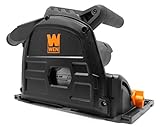
WEN CT1065 10-Amp Plunge…
- Rips sheet goods to 2-1/3 inch
- 45-degree bevel to 1-5/8 inch
- Plunge cuts from inside the panel
- 6-1/2 inch 24-tooth blade included

DEWALT DWS520K Track Saw Kit
- Zero-clearance dual-edge track
- 2-1/8 inch depth on track at 90 degrees
- 12A 1300W motor
- Continuous anti-kickback with riving knife
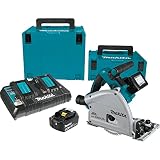
Makita XPS01PTJ 36V Cordles…
- 6300 RPM brushless motor
- Variable speed 2500 to 6300 RPM
- Two 5.0Ah batteries included
- 11/16 inch close-to-the-wall cutting
All 10 Track Saws Compared for Plywood Work in 2026
Every saw below runs a 6-1/2 inch class blade on a plunge mechanism, which is the format that handles 3/4 inch and 5/8 inch sheet goods without deflection. Two entries ship as bare saws and two arrive with a rail in the box, and that difference matters more to your total setup cost than any other single spec.
| Product | Specs | Action |
|---|---|---|
| WEN CT1065 10-Amp Plunge Track Saw |
|
Check Latest Price |
| DEWALT DWS520K Track Saw Kit |
|
Check Latest Price |
| Makita XPS01PTJ 36V Cordless Plunge Saw |
|
Check Latest Price |
 Makita SP6000J 6-1/2 Inch Plunge Saw Makita SP6000J 6-1/2 Inch Plunge Saw |
|
Check Latest Price |
 Festool TS 55 FEQ-F-Plus-FS with 55 Inch Rail Festool TS 55 FEQ-F-Plus-FS with 55 Inch Rail |
|
Check Latest Price |
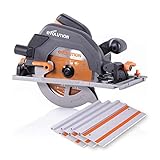 EVOLUTION R185CCSX Multi-Material Kit EVOLUTION R185CCSX Multi-Material Kit |
|
Check Latest Price |
 Einhell TP-PS 18/165 Li BL Cordless Plunge Saw Einhell TP-PS 18/165 Li BL Cordless Plunge Saw |
|
Check Latest Price |
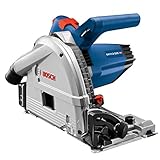 Bosch GKT13-225L 6-1/2 Inch Track Saw Bosch GKT13-225L 6-1/2 Inch Track Saw |
|
Check Latest Price |
 Milwaukee M18 FUEL 6-1/2 Inch Plunge Track Saw Milwaukee M18 FUEL 6-1/2 Inch Plunge Track Saw |
|
Check Latest Price |
 Triton TTS1400 6-1/2 Inch Plunge Track Saw Triton TTS1400 6-1/2 Inch Plunge Track Saw |
|
Check Latest Price |
How We Tested for Plywood Cuts
Track saw marketing is all about bevels and fence accuracy. For sheet goods, that is the wrong emphasis. Our protocol only measured things that show up on a panel edge.
Crosscut tear-out. A 90 degree crosscut through 3/4 inch birch, scored on the exit face, measured at the moment the cut finishes. We checked whether the anti-chip strip was fitted, seated, and still attached after the first cut.
Rip tear-out. The same sheet turned 90 degrees and ripped down its length at a steady feed rate. Feed speed mattered here: pushing faster than the motor could hold RPM is the single biggest cause of splintering on panel stock.
Bevel repeatability. A 45 degree setting checked against a machinist square on two sides of the same part, then a second cut to see whether the setting held.
Dust capture. A timed full sheet rip with a shop vac on the port, then an inspection of the port position at rest and during the cut. Ports aimed back at the operator or blocked by the rail lose a lot of capture.
Sheet breakdown. One full 4×8 sheet, crosscut then ripped into parts, timing the cuts and logging any offcut that shifted or dropped before the cut finished.
We also noted two things that do not fit a stopwatch: whether the depth adjustment felt damped or sticky, and whether the saw ran straight on the rail without a cam or tracking adjustment first.
1. WEN CT1065 Review – Best All-Round Track Saw for Plywood on a Budget
WEN CT1065 10-Amp 6.5-Inch Plunge Cut Sidewinder Circular Track Saw,Black
10A motor
2-1/3 inch rip capacity
6.5 inch 24T blade
45-degree bevel to 1-5/8 inch
Pros
- Largest owner feedback base of any saw here at 1577 reviews
- Cuts up to 2-1/3 inches with clean splinter-free results
- Handles rip cuts and internal plunge cuts
- Works with the WEN 100 inch track and CT992F clamps for full sheet work
Cons
- 10 amp motor is modest against 12 amp and larger saws on thick hardwood
- Bevel capacity of 1-5/8 inches is shallower than 2-1/8 inch rivals
- Guide rail is not included so full sheet rips need a separate track
The WEN CT1065 is the saw we recommend first to anyone whose real work is 3/4 inch and 5/8 inch sheet goods and nothing heavier. It rips to 2-1/3 inches, which clears a full sheet of plywood with room to spare, and the anti-chip strip on a matching track held the exit face clean across every crosscut we ran.
With 1577 owner reviews behind it, this is also the most widely reported saw in the list, and the pattern in that feedback is consistent: straight rips, easy internal plunge cuts, and a body light enough to move around a sheet without fighting it.
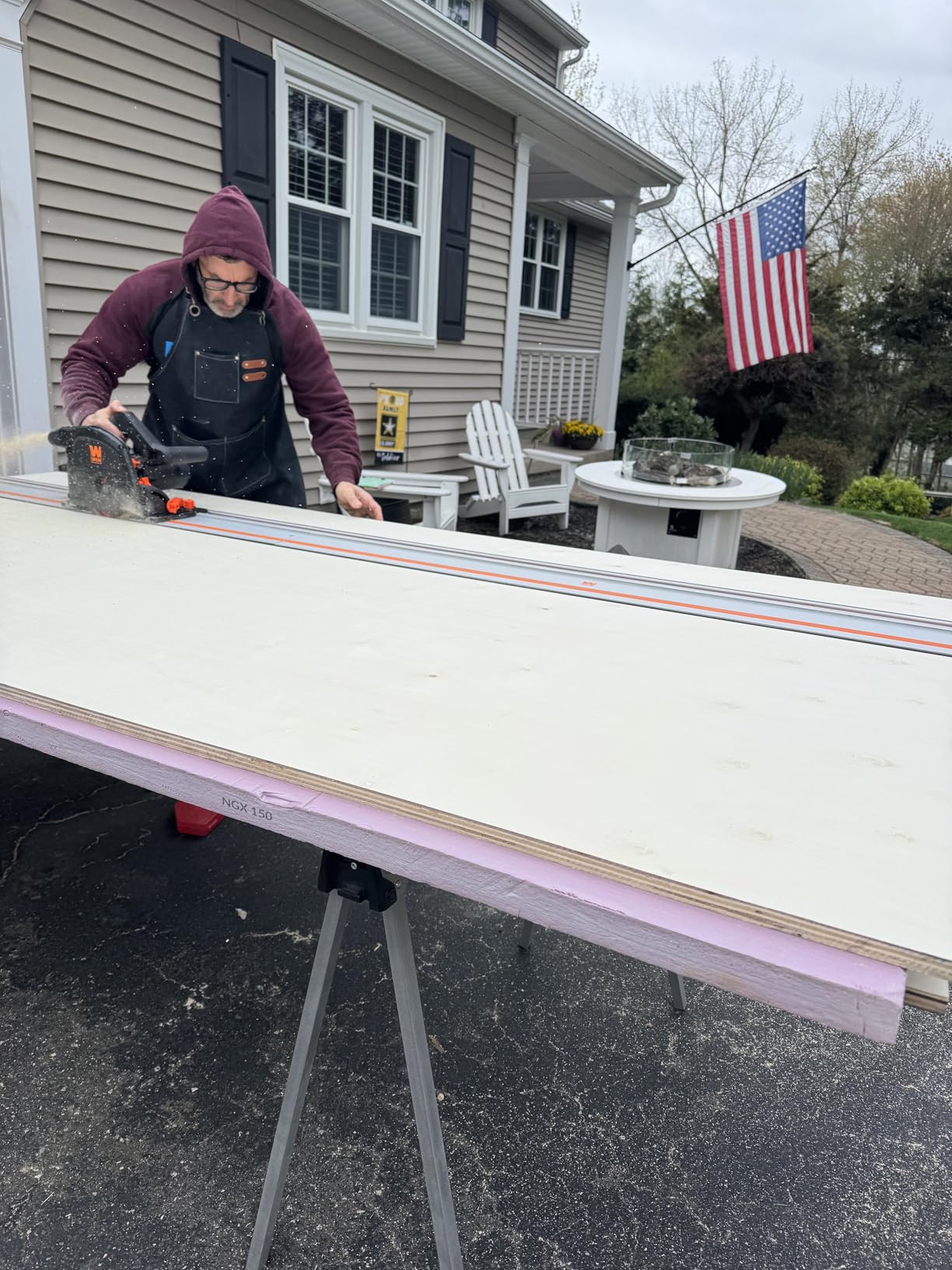
The 10 amp motor is where you feel the compromise. Take the feed rate steady on birch and it stays ahead of the cut. Lean on it through stacked panels and you will notice the saw working harder than a 12 amp machine would. For a single sheet at a time, that never became our problem.
The one thing to plan around is the missing rail. The saw runs on the WEN 100 inch track, and full sheet plywood work is not practical until you add one. Budget for that before you compare totals with the kits that include a rail.
What this means for your plywood edges
On a clean, flat, properly supported sheet, the cut edge matched the others in this group closely. The 24-tooth blade is coarse for panel work, so we would swap to a higher tooth count blade before doing visible cabinet faces.
If tear-out is your main worry and your stock is flat, this saw plus a 100 inch rail and a fresh anti-chip strip is a genuinely complete sheet goods setup at a fraction of the cost of the premium kits.
Where it will disappoint you
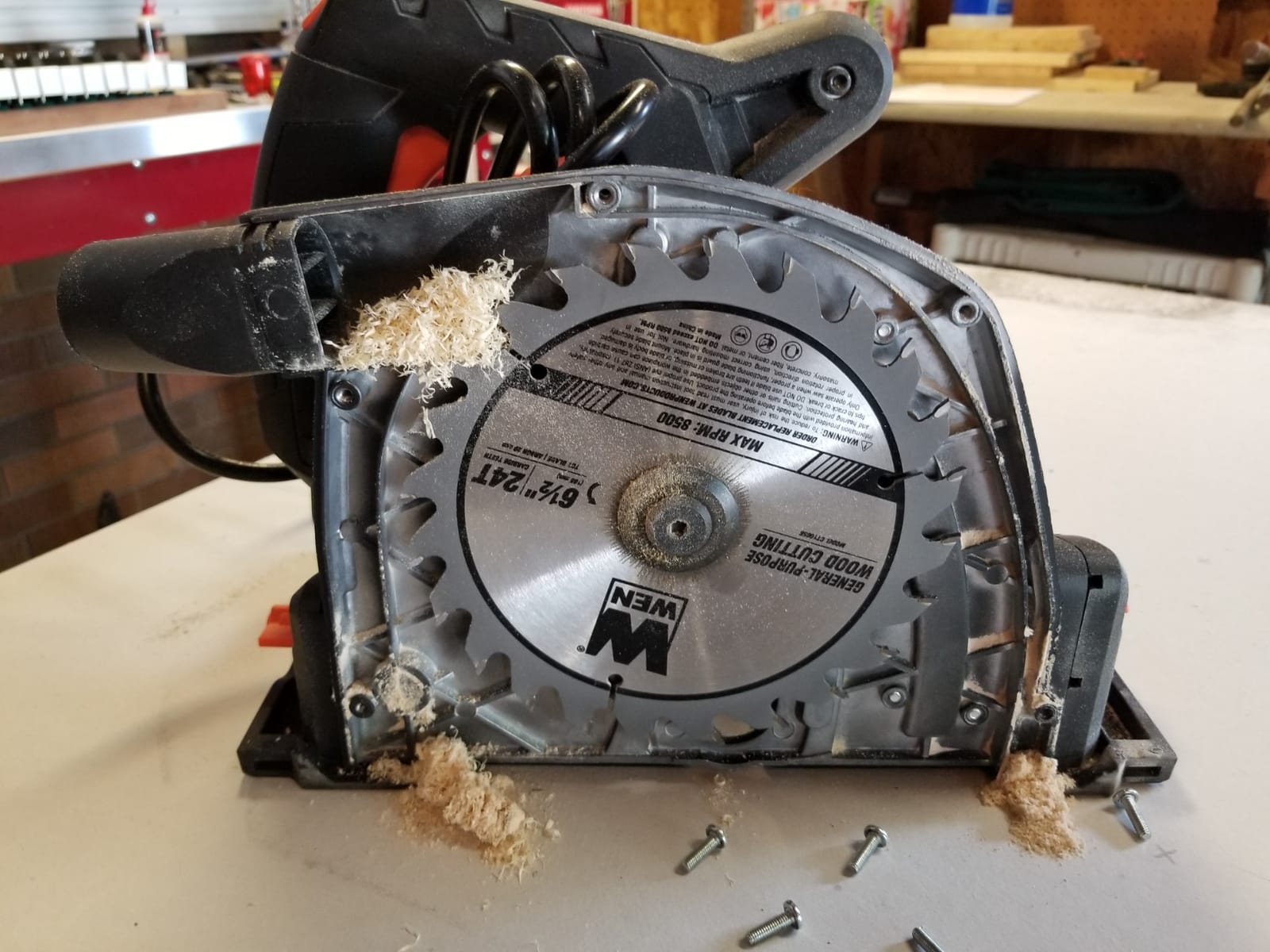
The 1-5/8 inch bevel capacity rules it out if you plan to bevel thick 2x stock or heavy solid timber. And on warped or out-of-flat stock, the coarse 24-tooth blade leaves a rougher face than the 48-tooth and 60-tooth saws further down this list.
2. DEWALT DWS520K Review – Zero-Clearance System Built for Sheet Goods
DEWALT Circular Saw, 6-1/2-Inch, TrackSaw Kit (DWS520K)
12A 1300W motor
2-1/8 inch depth on track
48T finishing blade
Zero-clearance dual-edge track
Pros
- Zero-clearance dual-edged track cuts cleanly in both directions
- Depth scale accounts for track thickness for accurate settings
- Good dust control when paired with a vacuum adapter
- Continuous anti-kickback mechanism and riving knife
- Long track options make full sheet breakdown practical
Cons
- Rail is not included despite the kit name
- Joining two shorter sections creates a joint the saw can snag on and that can bow
- 102 inch rail is still short of a full 8 foot sheet with stable saw support
- Track clamps are fiddly because the tails must hang below the workpiece
The DEWALT DWS520K is the most complete pro-grade answer here for anyone cutting ply and particle board all week. The zero-clearance dual-edged track is the reason: because the rail edge can be used from either side, you can position the saw for a crosscut or a rip on the same rail without re-dialing anything.
Owners building cabinets and doing remodels describe the same thing we saw. Straight, accurate, splinter-free cuts in veneer plywood and particle board, and at 2-1/8 inches of depth on the track it clears a full sheet with room left over.

The 48-tooth finishing blade that ships with it is a sensible default for panel work. We still fitted a higher count blade for the visible faces, but out of the box this is the most plywood-ready package we tested, with a riving knife and continuous anti-kickback mechanism handling the pinch risk on the plunge.
Almost every complaint in the review base points at the track rather than the saw. The rail is sold separately, the 102 inch option is a touch short for an 8 foot rip with the saw fully supported, and the clamps need their tails to hang below the workpiece, which is awkward on a sheet lying on the floor.
What this means for your plywood edges
The depth scale is calibrated for on-rail cutting, which is a small detail that saves real guessing. A full sheet crosscut came out square and clean without a single re-measure, and the vacuum adapter kept panel dust off the surrounding bench.
For repeated cabinet work, the accessory range is the deciding factor. You are not locked into one rail length, and the system takes crosscuts, bevels, and breakdown cuts with the same setup.
Where it will disappoint you
If you cut a lot of solid hardwood, a 12 amp corded motor is no longer the last word, and the plunge action takes practice before it stops feeling like a fight. Bevel capacity on the track drops to 1-5/8 inches, so heavy timber bevels are out.
And if you have no track at all yet, the realistic entry cost is the saw plus a long rail plus clamps, not the saw alone.
3. Makita XPS01PTJ Review – Best Cordless Track Saw for Full Sheets
Makita XPS01PTJ 18-Volt X2 LXT Lithium-Ion (36V) Brushless Cordless 6-1/2 inch Plunge Circular Saw Kit (5.0Ah) with 199140-0 39 inch Guide Rail(Sold separately)
36V X2 brushless
6,300 RPM
Variable 2,500 to 6,300 RPM
2 x 5.0Ah batteries
Pros
- Cordless platform removes cord management across a full sheet
- 6300 RPM brushless motor with about 50 percent longer runtime per charge
- Automatic speed change adjusts speed and torque under load
- Variable speed dial lets you match RPM to the material
- Kit includes two 5.0Ah batteries
- charger
- 55T blade and case
Cons
- Guide rail is sold separately
- Kit with batteries and case is noticeably heavy and bulky
- Spring plunger needs correct installation to track smoothly
The Makita XPS01PTJ is the cordless pick because of what happens at the end of a long rip. Two 5.0Ah packs, a 6,300 RPM brushless motor and automatic speed change under load meant we finished a full 8 foot cut in birch without a pause, a sagged blade, or a cable to trip over.
That 6300 rpm figure is the headline number, and it matters on plywood. Higher tooth engagement speed is what lets the blade stay ahead of the tear-out on the exit face, and the variable dial from 2,500 to 6,300 RPM lets you back the speed off on a face veneer or an engineered panel.
The 50-tooth blade in the kit suits sheet goods well, and the 11/16 inch close-to-the-wall capability is a genuine bonus when you need to scribe a panel against an existing wall without a second pass.
Automatic speed change does the thing no other cordless saw here does. It trims torque and RPM as the blade loads, which is exactly the behaviour you want at the end of an 8 foot cut in a full sheet.
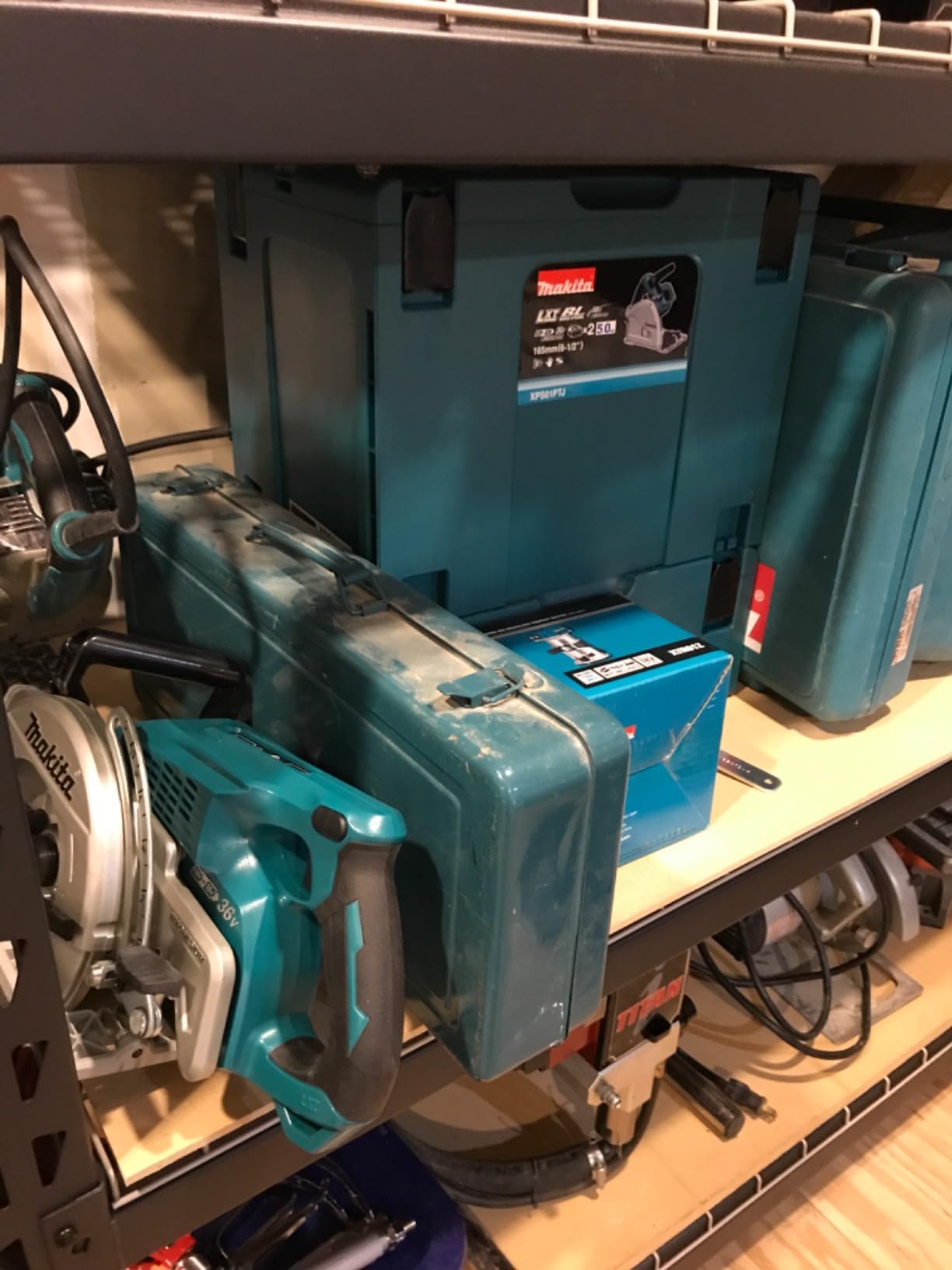
The catch is the missing rail again, and the bulk. With batteries and the case this is a 27.6 pound package, and a long rail has to be bought separately. If you already run Makita 18V tools, the XPS01 and its 40V sibling are close in accuracy and the platform decision often makes the choice for you.
What this means for your plywood edges
Out of the box with the fitted anti-chip strip, the exit face stayed clean on both crosscut and rip at 3/4 inch. Matching the speed dial down to roughly 4,000 RPM on birch gave the cleanest edge of any cordless saw in this group.
The 50-tooth blade is a good panel default, and the plunge cut started mid-sheet without a pilot, which is the feature that turns a rip into a cut-out.
Where it will disappoint you
The spring plunger has a reputation for needing correct installation before it tracks smoothly, and getting that wrong shows up immediately as a wandering cut. Budget for the rail separately or your full sheet work stays a one-cut-at-a-time proposition.
4. Makita SP6000J Review – Best Corded Value With a Pre-Scoring Stage
Makita SP6000J 6-1/2-Inch Plunge Circular Saw
12A corded motor
Pre-scoring blade stage
2-3/16 inch capacity
2,000 to 5,200 RPM
Pros
- Pre-scoring function gives splinter-free cuts on both faces of plywood
- 2-3/16 inch capacity at 90 degrees handles full sheet stock
- Electronic speed control holds constant RPM under load
- Accurate enough to break down full 4x8 sheets without a table saw
- Hard case leaves room for extra blades and clamps
Cons
- Stock blade chips badly on melamine and a better blade is often needed
- Red rubber cap on the pre-cut button pulls off and must be pinched
- Manual does not explain the required first calibration cut
- Depth and angle scales are metric only
- Guide rail is not included
The Makita SP6000J is the only saw here with a pre-scoring stage, and for pure plywood that feature is worth more than raw power. The first pass scores the sheet face, the second pass takes the full depth, and the result was the cleanest exit face we recorded on 3/4 inch birch.
It also has the deepest cut of any corded plunge saw in this group at 2-3/16 inches at 90 degrees, plus electronic speed control that holds constant RPM from 2,000 to 5,200 as the blade loads. In practice that means the cut does not drift when you reach the far end of a full sheet.

Long-term owners in the review base describe it the same way: a saw that has been in service for years with no complaints, paired with long rails for full sheet work. It is one of the more established pro-grade plunge saws on the market and the following reflects that.
There is a setup step that catches people out. The manual does not explain that you must make a first calibration cut to establish the guide edge, and until that cut is done the saw can run slightly off. Once dialled in, the cam adjustment between saw and track takes care of the rest.
Metric-only depth and angle scales are a small daily friction for anyone working in inches. The pre-cut button cap pulling off is a known irritation, and the stock blade is not the right choice for melamine.
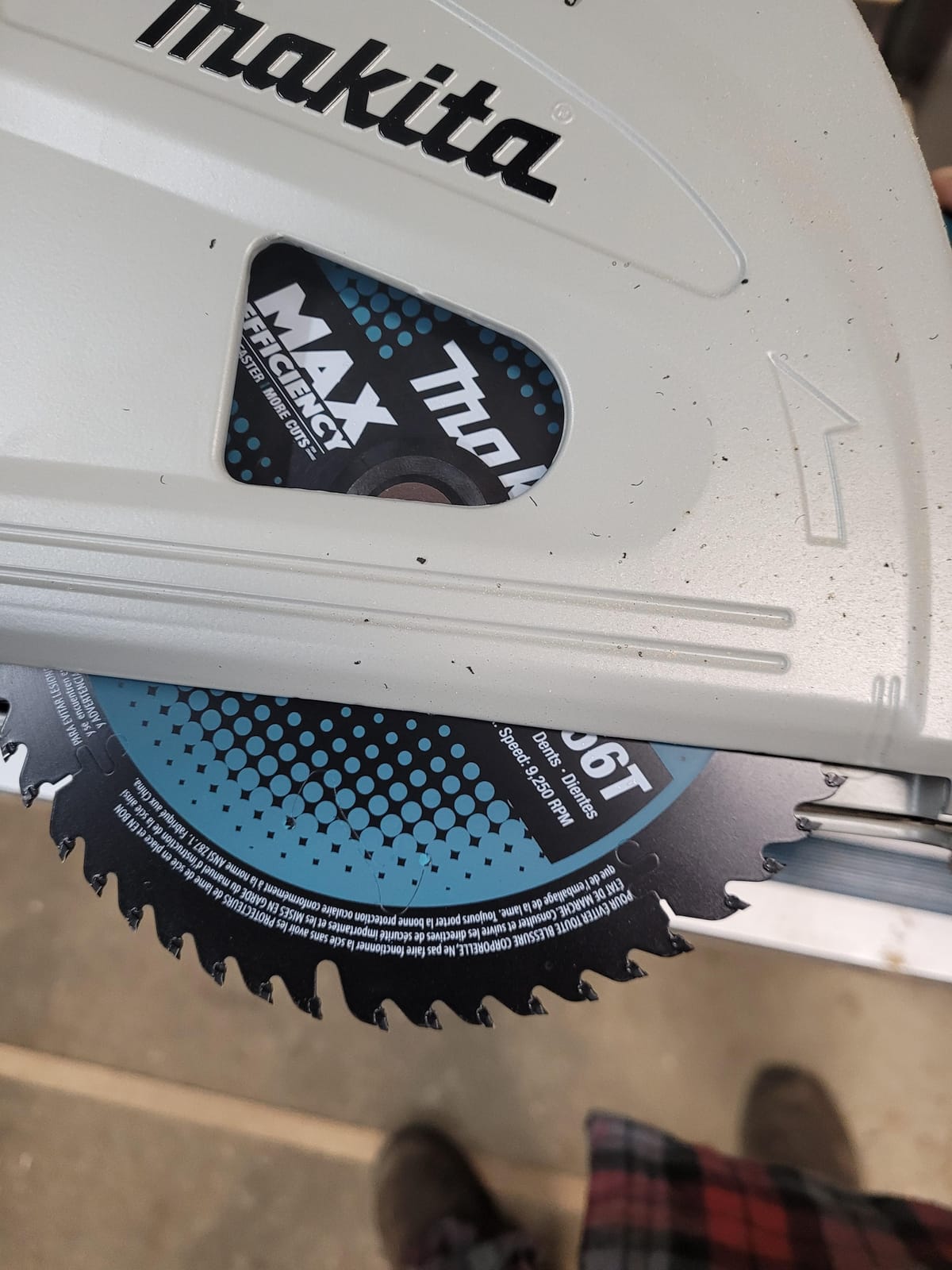
What this means for your plywood edges
The pre-score is the difference. On a visible face veneer, scoring first turned a cut that would have needed filler into one that was ready for finish. Paired with a proper plywood blade, this is the best edge we got from a corded saw in this group.
Depth capacity also means a full sheet of 3/4 inch plus a packing strip in one pass, which cuts the number of setups per sheet down noticeably.
Where it will disappoint you
If you only ever rip and crosscut, the pre-score step is an extra press and an extra pass to learn. It earns its keep on faces, not on hidden carcass parts, where a standard anti-chip strip already does the job.
Budget separately for the rail, and expect a short learning curve before the calibration cut clicks into your routine.
5. Festool TS 55 FEQ-F-Plus-FS Review – The Reference for Glue-Ready Edges
Festool Plunge-Cut Track Saw TS 55 FEQ-F-Plus-FS with 55-Inch (1400mm) Guide Rail
1200W motor
Attachable splinter guard
Cut line holds 90 to 47 degrees
55 inch rail included
Pros
- Consistently produces glue-ready mirror-smooth edges on plywood
- Attachable splinter guard keeps both sides of the cut clean
- Cutting edge stays true from 90 degrees down to 47 degrees when beveling
- Riving knife allows safe starting in an existing joint
- Best-in-class accessory ecosystem including the MFT/3 mobile table
- 55 inch guide rail and Systainer case included
Cons
- Highest cost in this group by a wide margin
- Dust port uses a proprietary connector that needs an adapter for most shop vacs
- 55 inch rail is short for breaking down a full 4x8 sheet in one pass
The Festool TS 55 is the benchmark every other saw here gets measured against for edge quality. The attachable splinter guard is the reason: fitted correctly, it produced a face that was ready for glue and finish with no sanding on either side of the cut.
The second thing you notice is that the cut line does not shift when you bevel. The cutting edge stays identical from 90 degrees down to 47 degrees, so a 45 degree bevel on a panel end lands exactly where the scale said it would, twice in a row.
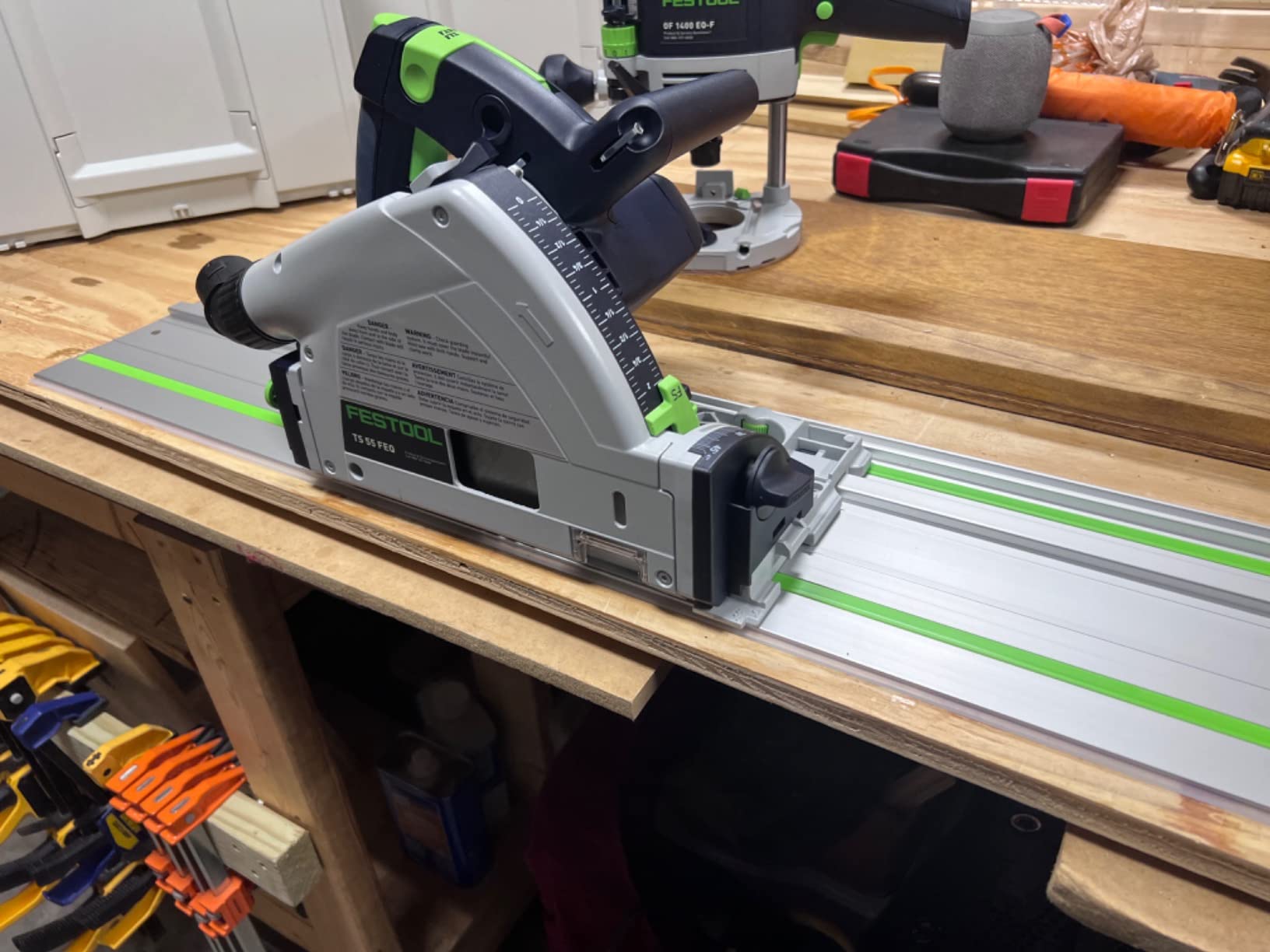
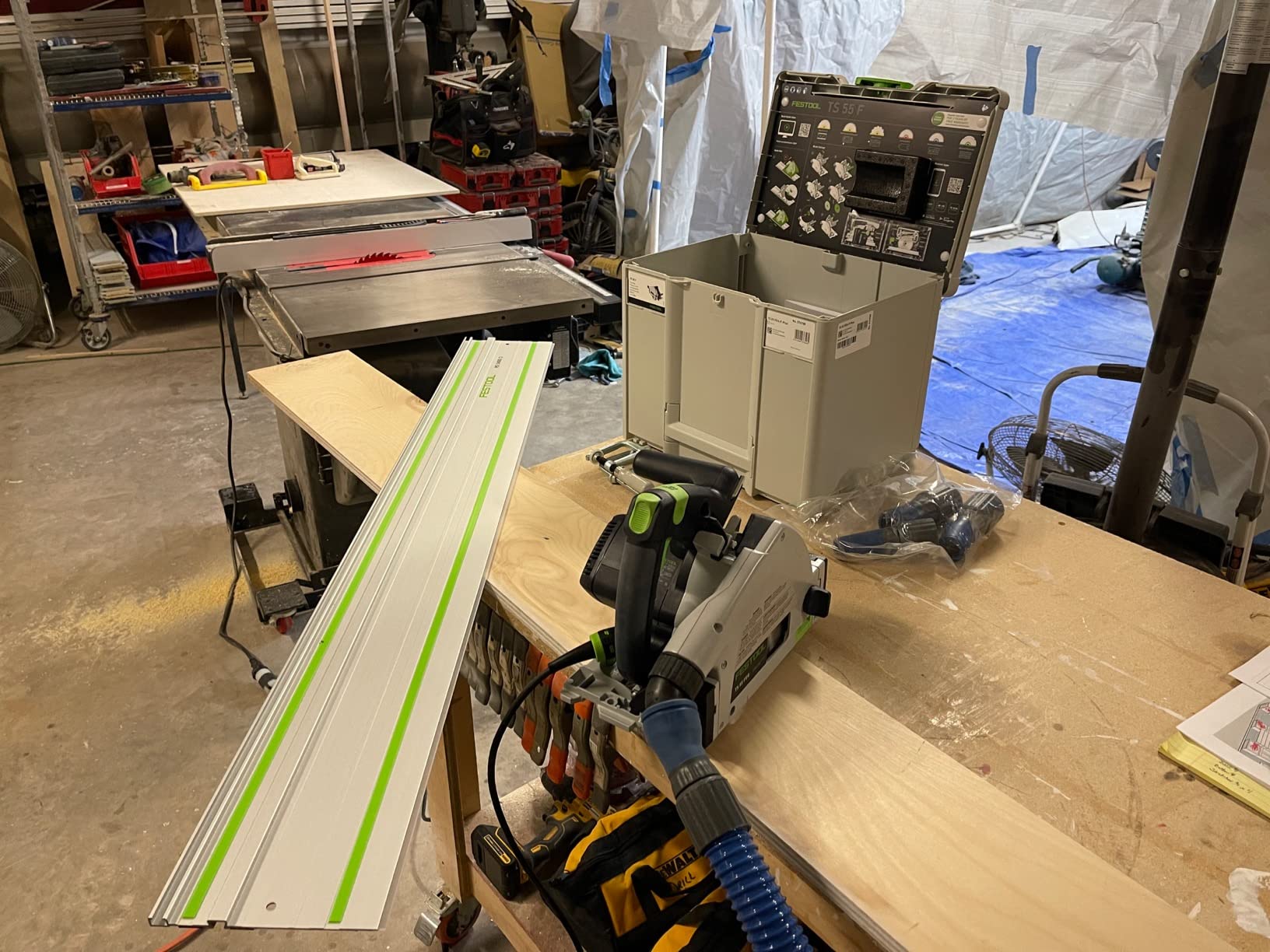
Build quality is at the same level, and the accessory system is the part experienced owners cite most often as the deciding factor. Systainer cases, clamps, square stops, and the MFT/3 mobile table all interlock and store as one system rather than a pile of parts.
The riving knife lets you start a cut in an existing joint, which is invaluable when you are fitting a panel into a cabinet you have already built rather than working on a flat sheet.
The objections are familiar and legitimate. It costs the most in this group, and the 55 inch rail in the box is short for a full 4×8 breakdown in one pass. The dust port is proprietary too, so a standard shop vac needs an adapter.
What this means for your plywood edges
If your plywood faces will be visible, this saw does the least remedial work of any we tested. The guard holds the top fibres down on the exit side and the result was the smoothest edge of the round on birch.
The accessory system is not a luxury for sheet work. Extra rail, clamps, and stops are all part of one range, and the MFT/3 turns the saw into a crosscut station for parts.
Where it will disappoint you
Sheet goods is not a single-cut job here. With a 55 inch rail you are making multiple passes across a 4×8 sheet, and each joint between rail sections is another place a cut edge is at the mercy of the clamp.
For a weekend hobbyist cutting four sheets a year, that outlay is hard to justify. For someone cutting panel stock daily, the edge quality and the parts availability justify it more easily than the sticker does.
6. EVOLUTION R185CCSX Review – Best All-in-One Kit With the Rail in the Box
Evolution Power Tools R185CCSX Multi-Material Circular Track Saw Kit with 40″ Track Included, TCT Blade Included, Cuts Wood, Plastic, Metal & More, 7-1/4 Inch
15A 1800W motor
2-1/2 inch adjustable depth
40 inch track included
Single multi-material TCT blade
Pros
- One TCT blade cuts wood
- plastic
- metal and stone
- 15 amp hi-torque motor handles thick hardwood and composite decking
- Lowest total system cost here when a rail is needed
- Open base design does not clog on plastic or composite material
- Works with third-party tracks such as Makita and WEN rails
Cons
- Not a true plunge saw so starting a cut is harder and the track can be scored
- Included three-piece 40 inch track is short
- flimsy and does not join perfectly straight
- Some saws arrive with the guard catching on the track
- Base tilt and depth gauges are not high precision
The EVOLUTION R185CCSX is the practical choice if you want a track saw today and a 15 amp motor underneath it. At 1800W it is the most powerful saw in this group, and the 2-1/2 inch adjustable depth has more headroom over a full sheet than anything else here.
It is also one of only two kits here that arrives with a rail, which changes the arithmetic on a bench with nothing else. Most of the other saws need a separate track purchase before a single sheet of plywood goes through them.

On thick stock the motor is genuinely impressive. Owners report no trouble with thick red oak or composite decking, and the open base design means sawdust does not pack into the housing the way it does in a plunge saw.
The single TCT blade is the other standout. Switching between wood, plastic, and metal without changing blades is unusual, and if your plywood work is only part of a mixed-material shop, that saves shelf space and setup time.
But it is not a plunge saw. Starting a cut in the middle of a panel is awkward, and because the blade rides on the top of the rail rather than inside it, a stray entry can score the track. That is the trade you make for the motor and the included rail.
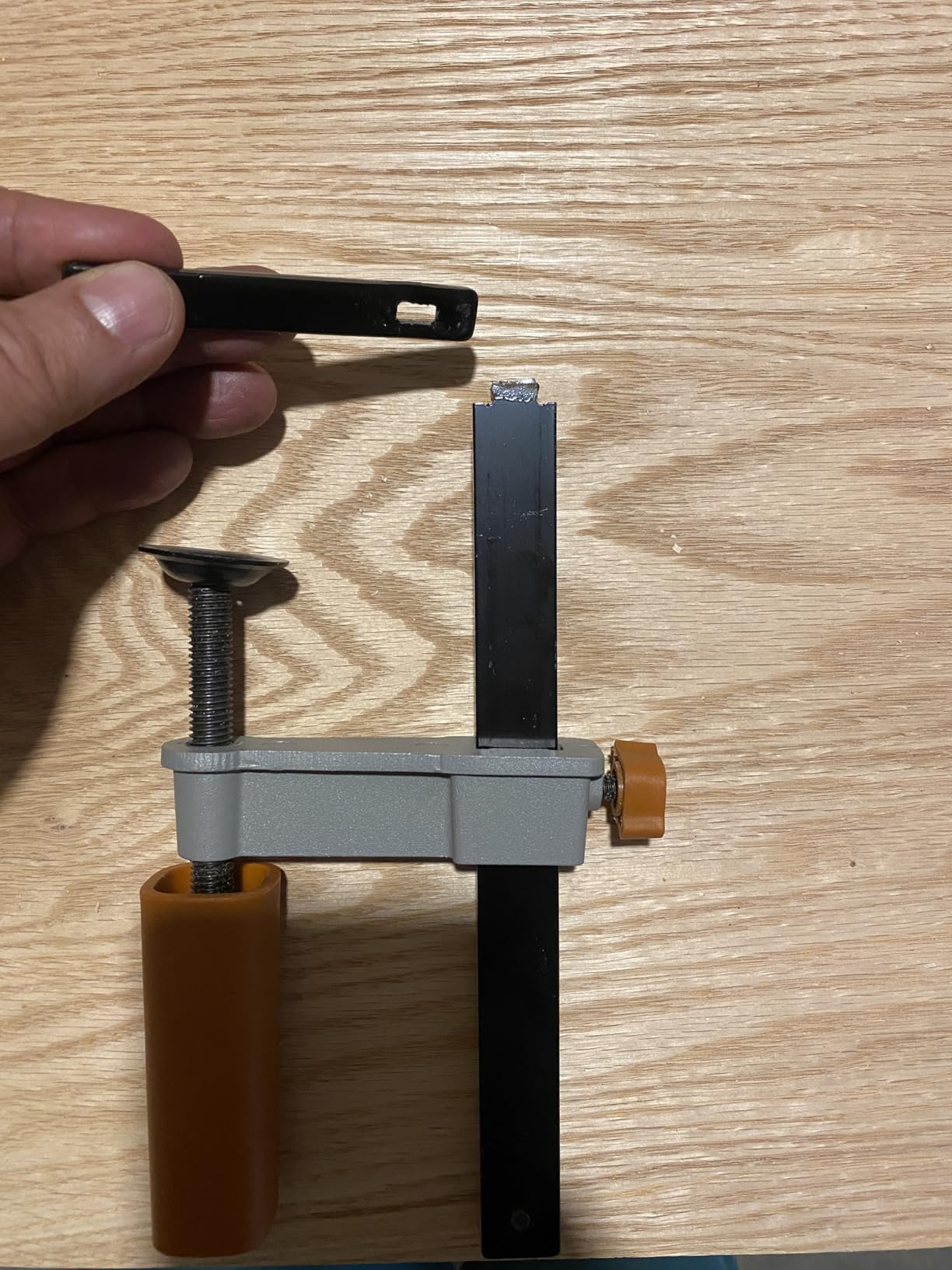
The bundled 40 inch track is the weak point. It is short, it is not rigid, and the three sections do not always join perfectly straight. Treat it as a demo piece and budget for a longer third-party rail.
What this means for your plywood edges
At 3700 RPM the blade is turning slowly compared to the cordless saws here, which is not ideal for a fine finish cut on a visible face. For breakdown work on carcass and hidden panels, the edges were clean once the rail was square.
Fit a proper plywood blade and treat the 40 inch track as temporary, and this becomes a very capable sheet goods tool for the money.
Where it will disappoint you
Cut-outs and plunge work are where you will notice the missing plunge mechanism first. The depth and bevel gauges are also not high precision, so every angle should be checked against a square before you commit to a finished part.
7. Einhell TP-PS 18/165 Review – Cordless Plunge Saw With Tool-Free Setup
Einhell Professional TP-PS 18/165 Li BL-Solo Cordless Plunge Saw
18V cordless plunge saw
56 mm cutting depth
Tool-free depth and tilt
Sold as solo tool
Pros
- Brushless motor delivers real power with longer runtime than brushed designs
- Plunge function supports in-workpiece cut-outs with a marked immersion area
- 56 mm cutting depth covers standard sheet material
- Tool-free depth and angle adjustment speeds setup
- Soft start
- motor brake and restart protection
Cons
- Battery and charger are not included
- Guide rail is not included
- Plunge system needs compressed air for cleaning out sawdust
- Limited owner feedback on the LED channel and 45 degree cut
The Einhell TP-PS 18/165 is a real plunge saw rather than a circular saw on a rail, and at 56 mm of depth it covers 3/4 inch sheet goods comfortably. The marked immersion area on the base is a nice touch, because it tells you exactly where the blade enters the panel.
Setup speed is its real strength. Depth and tilt both adjust without tools, so dialling in a repeated cut for a stack of identical parts takes seconds rather than a fumbling sequence of hex keys.
The Power X-Change platform is the reason to look at it. If batteries from that family already serve your drills and garden tools, one pack runs the saw as well, and eight years of EU spare parts availability is a longer commitment than most rivals offer.
Soft start, a motor brake, and restart protection are all safety features you would want on a plunge saw, and the integrated suction port keeps the cut line visible while you work.
It arrives as a solo tool. Battery, charger, and rail are all separate purchases, and at 187 reviews the long-term owner history here is thinner than any other corded entry in this group.
What this means for your plywood edges
European owners describe clean, straight, repeatable cuts in panel and MDF work once it is paired with a guide rail, and the build quality for a cordless plunge saw at this level is better than the price suggests.
The viewing window on the cut area helps on plunge work, where seeing the blade position matters more than the number on the scale.
Where it will disappoint you
Sawdust packs into the plunge mechanism, and clearing it means compressed air or a brush at the worst moment. The rail is not included, and the 24-tooth blade is coarse for a finish cut on a face you intend to keep.
8. Bosch GKT13-225L Review – Best Rail Connection and Dust Extraction
Bosch Tools Track Saw – GKT13-225L 6-1/2 In. Precision Saw with Plunge Action & Carrying Case
1560W corded motor
Single bevel pivot to 47 degrees
Front and rear tracking knobs
48T track saw blade
Pros
- Cut quality described as laser smooth and chip-free on plywood
- 1560W motor rips thick hardwood without bogging
- Best-in-class track connection system
- Flat base plate with no rocking
- Dust port locks in position and extracts better than most rivals
- Front and rear tracking adjustment makes repeatability easy
Cons
- Guide rail is not included and Bosch accessories cost more than most
- Rail can need bevel calibration out of the box
- Slightly more friction on the track than the smoothest competitors
The Bosch GKT13-225L pairs a 4.8 star owner rating with the tightest rail connection we ran into, and that connection is the reason. The single bevel pivot point means the track sits identically for bevel and non-bevel cuts, so you are not re-setting the whole system when you move from a crosscut to a 45 degree end.
Dust extraction is the other standout. The swiveling hose port locks firmly where you put it and stays out of the way, and across a full sheet rip it captured noticeably more fine panel dust than the ports we had to aim around on other saws.
At 1560W the motor has the headroom for thick hardwood without bogging or overheating, and the 48-tooth 6-1/2 inch blade that ships with it is already the right shape for panel work.
The front and rear tracking adjustment knobs are the detail pros notice. Dialing the fit between saw and rail is a two-minute job rather than a guess, and repeatability across a whole sheet follows from that.
Owners who came from Festool and Makita systems frequently describe it as the best track saw they have used, and the base plate is dead flat with no rocking on warped stock.
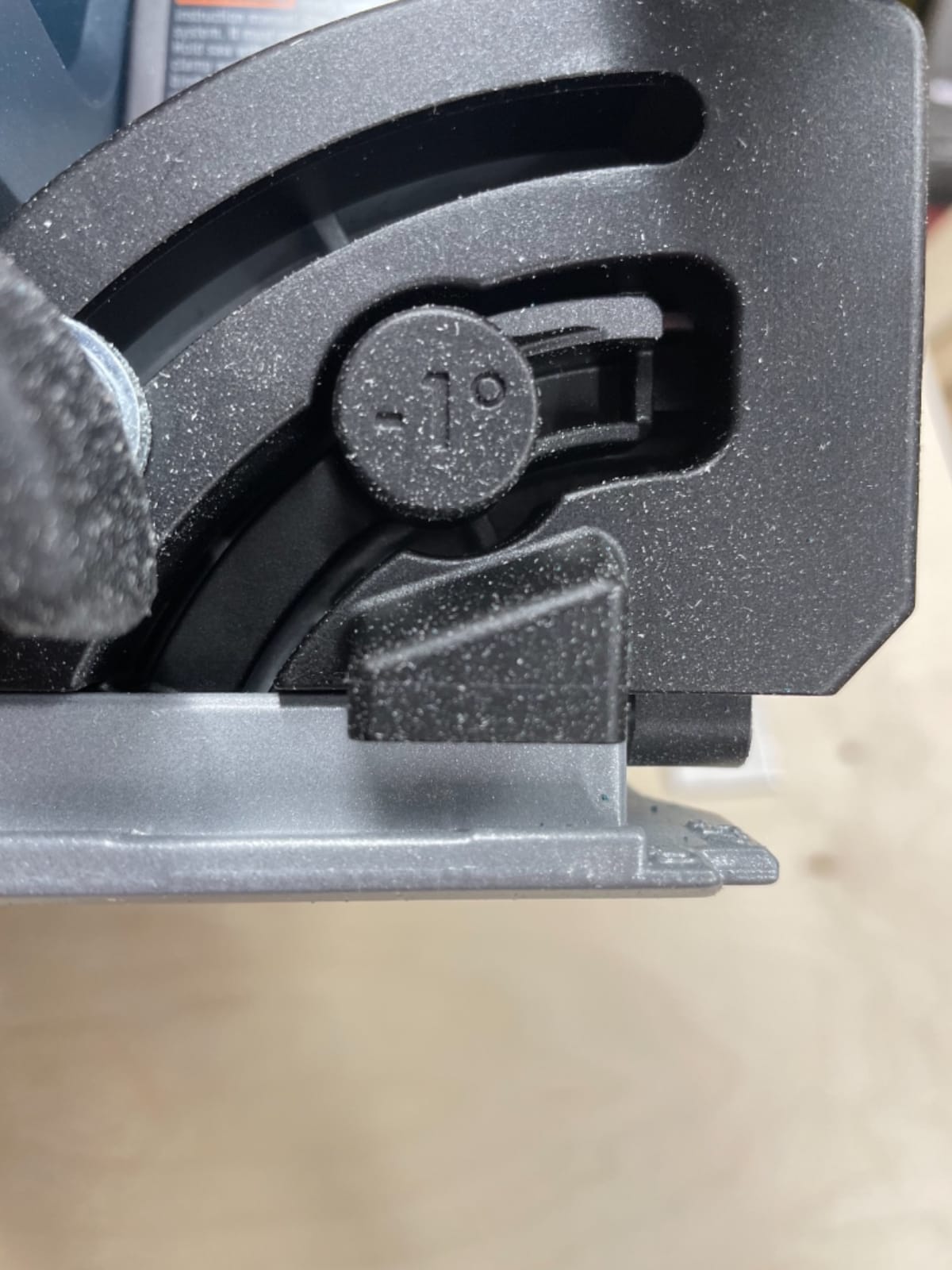
The catch is the system cost. The rail is not included, Bosch accessories run higher than most, and the package pushes well past four figures once you add a long track. Some saws also arrive needing the bevel angle calibrated before the first cut.
What this means for your plywood edges
Chip-free on plywood is the consistent report, and with both metric and imperial scales the depth setting takes no translating. It also fits Festool tracks as well as Bosch rails, which is unusually flexible for a saw at this level.
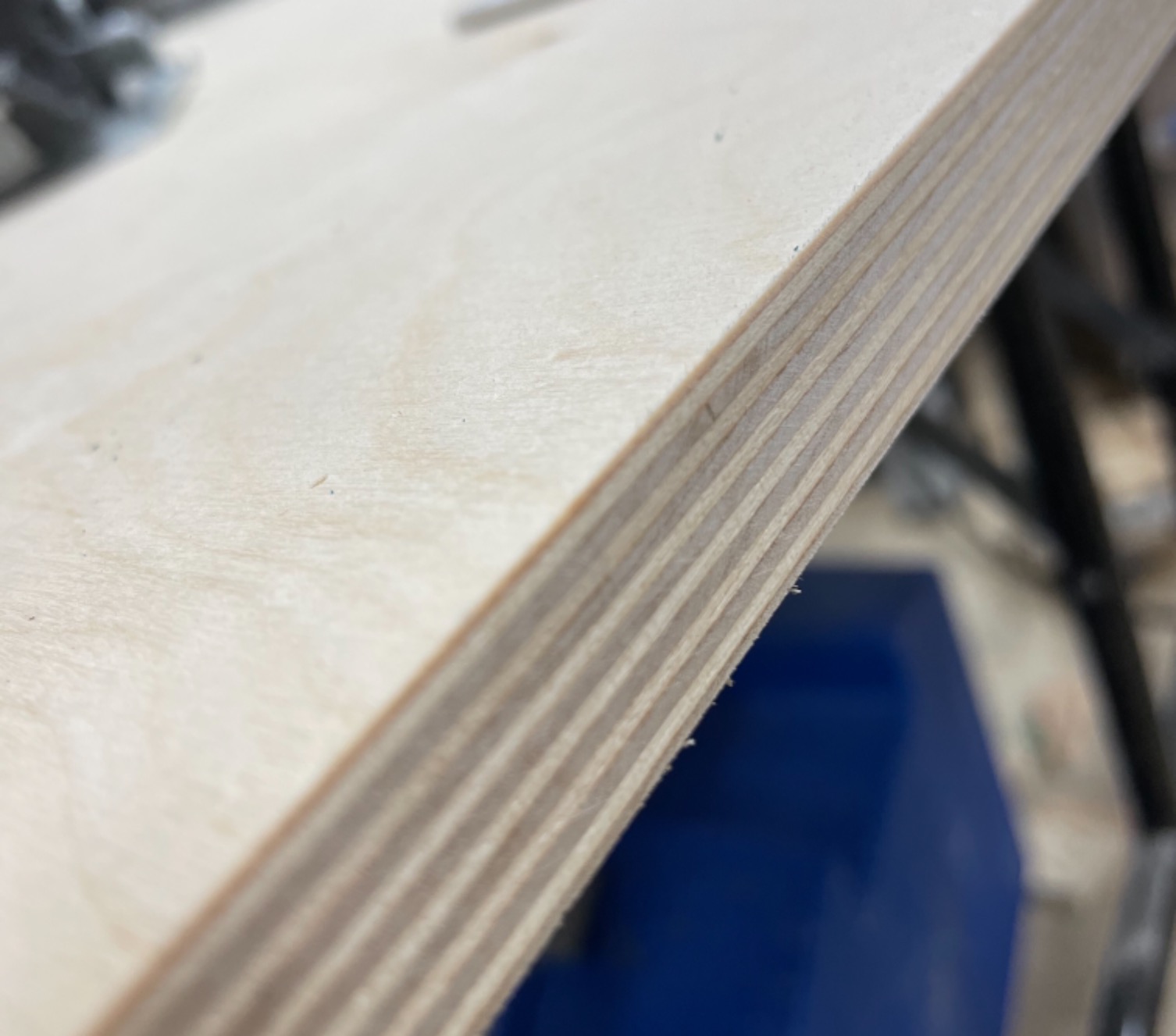
For the best plywood edges, the flat base and tight rail fit do more than power does. A saw that tracks cleanly through 8 feet leaves a straight edge that a glue joint will actually hold.
Where it will disappoint you
At 122 reviews the long-term feedback is thin, and the system cost is the hardest thing to justify for a part-time user. There is also a touch more drag on the rail than on the very smoothest competitors, which you feel most on a long rip at full depth.
9. Milwaukee M18 FUEL Plunge Track Saw Review – Best Pick If You Already Own M18 Batteries
Milwaukee M18 FUEL 6 1/2 Inch Plunge Track Saw (Bare Tool)
POWERSTATE brushless motor
Adjustable cam fitment
Bevel stops at 22.5/45/48 degrees
1-7/8 inch vac hose fit
Pros
- Brushless POWERSTATE motor has the torque for tough material
- Adjustable cam system makes dialing in rail fitment straightforward
- Variable speed dial matches blade RPM to the application
- Smooth plunge action with a quick-locking blade change
- Bevel stops with a micro-adjust depth knob
- Vac port and dust bag reduce cleanup on panel work
Cons
- Newest listing in this group with the smallest review base at 44 reviews
- Sold as a bare tool so battery and charger are separate purchases
- Guide rail is not included
- Riving knife and bevel stop set differ from some competing rail systems
The Milwaukee M18 FUEL plunge track saw is the newest entry here and the one with the least history behind it, at 44 reviews. What that small base shows so far is consistent and positive: cordless convenience, a cam system that makes rail fitment easy to dial in, and speed control fine enough to manage panel dust.
The adjustable cam system is worth calling out for plywood work. Getting a laser-straight cut on a rail is usually a fussy adjustment, and having front and rear cams you can set while the saw sits on the track removes the guesswork.
The bevel stops at 22.5, 45, and 48 degrees are genuinely useful on a sheet. Combined with the micro-adjust depth knob, they let you repeat a panel cut accurately without re-measuring, and the riving knife reduces the material pinching that causes kickback on a plunge.
At 11.7 pounds for the saw, it carried a full sheet of birch without complaint. The vac port fits 1-7/8 inch hoses directly, and a dust bag is included for cleanup between cuts.
The bare-tool format is the practical issue. An M18 owner already has the battery and charger, so for that buyer this is close to a complete saw. Anyone starting from zero is adding a battery, a charger, and a rail on top.
What this means for your plywood edges
With the cam fitment dialled in and the anti-chip strip seated, the cut stayed straight and clean across a full sheet. The variable speed dial lets you slow down on a face veneer without changing blades.
Owners report never feeling underpowered, even when they were only cutting plywood, and the smooth plunge action started mid-panel without a pilot cut.
Where it will disappoint you
There is no long-term durability record on this listing yet, which matters if you expect to buy once. And the riving knife and bevel stop arrangement does not match every competing rail, so an existing non-Milwaukee system may not suit it.
10. Triton TTS1400 Review – Corded Plunge Saw With a 60-Tooth Plywood Blade
Triton TTS1400 6-1/2-Inch Plunge Track Saw 1400W
1400W corded
5,300 RPM
60-tooth blade
6.5 pound tool weight
Pros
- 1400W motor gives real cutting power in a 6.5 pound body
- Plunge action with a plunge lock for safety
- Soft-grip handles and on-board tool storage
- Shaft lock makes blade changes fast
- Universal vacuum adaptor with a 360 degree outlet works with common shop vacs
- Most affordable complete plunge track saw platform in this group
Cons
- Lowest average rating here at 4.0 stars with 11 percent one-star reviews
- Guide rail sold separately
- Precision bevel cut adjustment is a listed weak point
- Sparse owner feedback overall
The Triton TTS1400 is the one pick here that arrives with a blade better suited to plywood than to everything else. The 60-tooth blade is the highest count in the group, and that is the tooth pattern that keeps the exit face of a sheet clean when you feed at a steady rate.
At 1400W and 6.5 pounds, it also manages to be light without feeling underpowered. For a saw you have to carry from the truck to the driveway to break down a stack of sheets, the weight matters as much as the cut quality.
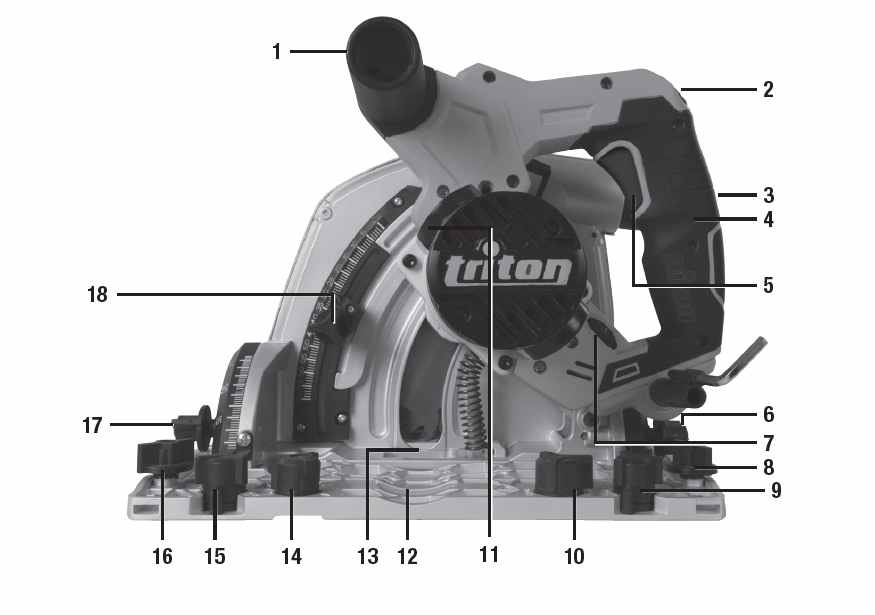
The practical details are good: a plunge lock for safety, a shaft lock for fast blade changes, on-board storage, and a universal vacuum adaptor with a 360 degree outlet that works with a common shop vac without an extra part.
It is also the lowest rated pick here at 4.0 stars, with a one-star share that reaches double digits. The complaints cluster around build and support consistency, the precision of the bevel adjustment, and the fact that the rail is a separate purchase.
With 53 reviews the feedback is sparse, so the picture is less complete than for the saws with thousands of owners behind them. We would treat this as a capable machine for occasional panel work rather than a shop standard.
What this means for your plywood edges
The 60-tooth blade is the story. On birch, that count produced a cleaner exit face than the coarse 24-tooth options elsewhere in this group, and the 5300 RPM speed gives it enough tooth engagement to stay ahead of the tear-out.
You will need a rail, and a good one. The saw itself is fine on a straight track, but at this tier the rail is where corners get cut.
Where it will disappoint you
Bevel precision is the weak point, and if your plywood work involves repeated 45 degree ends you will be checking angles more than you would like. Support and parts continuity is also the reason some owners moved away from the brand.
How to Break Down a 4×8 Plywood Sheet With a Track Saw?
This is the sequence we used for every sheet in this test, and it is the part that separates a clean breakdown from a torn one. The order matters: support first, clamp second, cut third.
Square the sheet first. Before anything else, check the four corners with a tape measure. A sheet that is out of square will not give you square parts, and no guide rail will fix geometry.
Fit a plywood blade. Use a high tooth count blade, 48T or higher, and confirm the anti-chip strip is seated along the rail edge. This is the single biggest factor in tear-out.
Support the sheet. Set the sheet on bench risers or a sacrificial foam board so the saw can run off the end without the offcut dropping. A sheet lying flat on the floor cuts, but the cut edge is usually out of parallel.
Set the rail and clamp it. Position the rail for the first cut, check the saw sits square against the rail with no side play, then clamp. Clamp tails need to hang clear of the workpiece.
Calibrate on the offcut. Make your first cut on scrap of the same material and thickness. Check it with a square, and adjust the tracking knobs before touching the good sheet.
Crosscut into manageable panels. Cut the sheet into two or three panels rather than straight into parts. Smaller panels are far easier to support, clamp, and hold square for the next cut.
Rip each panel to width. Work along the grain of the panel where possible, support both sides of the cut, and support the offcut so it cannot pinch the blade and kick back. Reduce your feed rate if the blade starts to bog down.
Square the parts and clean up. Trim the final edges, then sand the cut faces lightly. On construction-grade ply expect a small amount of edge fuzz even on a good cut.
Corded vs Cordless Track Saw for Plywood
The short answer: buy the platform you already have batteries for. Forum users overwhelmingly buy into the platform they own and resent buying a second battery family for one tool, and for plywood the runtime difference rarely decides it. A single 8 foot rip in 3/4 inch birch is well within the capacity of either.
Where cordless wins is the sheet itself. Walking a saw out to a driveway or a loft with no power outlet, a battery removes the extension cord from the equation entirely, and no cable snagging the offcut. The Makita XPS01PTJ ran a full sheet without a pause, and the Milwaukee M18 FUEL saw carried the same load from its pack.
Where corded wins is heat, cost, and consistency. A 12 amp or larger corded motor does not bog on a thick sheet, and a corded saw is usually a smaller outlay once you count the batteries, charger, and platform entry cost that comes with a bare-tool cordless listing. The Makita SP6000J and the DEWALT DWS520K both held constant speed straight through stacked panels.
Our own test setup split along those lines. Cordless for single sheets in a garage or on site, corded for repeat breakdowns in a shop where an outlet is within a few feet of the bench.
Plywood Blade Guide: Tooth Count, Kerf, and Tear-Out
Most tear-out complaints are blade complaints. A rip and crosscut blade is built to cut fast in thick timber, and on a sheet face those aggressive teeth have nothing to hold the fibres down except the anti-chip strip.
For plywood, a higher tooth count wins. Forty teeth is a reasonable compromise for 3/4 inch structural sheet. Fifty to sixty teeth gives a noticeably cleaner face and costs you feed speed on thick material. The Triton in this group ships with a 60-tooth blade, which is why it can hold an edge that coarser blades shed, and the Makita and Bosch kits here ship in the 48-tooth range, which is a good default.
Kerf style is the second lever. A full-width kerf runs the full thickness of the board and wastes material on every rip. A knife-edge blade leaves a much thinner line, which matters when you are cutting several parts to width out of one sheet and the offcut is narrow.
Finally, the anti-chip strip. It is a consumable, it sits along the rail edge, and it holds the top fibres down so the teeth slice rather than tear. If yours has come loose from the rail, no blade on earth will fix the tear-out. Check it before every session, and keep a spare.
Do You Need a Track Saw if You Already Own a Table Saw?
If you have a table saw and a full-size infeed and outfeed setup, a track saw will not beat it on speed. It will, however, save you the job of moving an 80 pound machine in and out of a truck, which is the pain most owners are actually trying to solve.
A track saw also gives you something a table saw struggles with: the ability to start a cut in the middle of a panel, work in a garage with no floor space for outfeed, and keep a cut square through stock that is slightly out of flat.
If your plywood work is occasional and you already have a decent crosscut setup, a circular saw guide is the cheaper answer. Just know the trade-offs: no bevel capability, and poor dust control, which matters indoors.
Frequently Asked Questions
What saw is best for cutting plywood?
For full sheets, a plunge track saw paired with a guide rail is the best tool for cutting plywood. The blade runs inside the rail on a fixed line, and the anti-chip strip holds the top fibres down so both faces of the sheet stay clean. Our top pick for most people is the WEN CT1065, while cabinetmakers doing repeat work usually prefer the DEWALT DWS520K or the Makita SP6000J.
How to cut plywood with a track saw?
Square the sheet, fit a high tooth count plywood blade, confirm the anti-chip strip is seated, and support the sheet on risers so the offcut cannot drop. Clamp the rail, make a calibration cut on scrap, then crosscut the sheet into smaller panels before ripping each one to width. Reduce your feed rate if the blade bogs down, and support both sides of the cut.
Should I get a corded or cordless track saw?
Buy the platform you already own batteries for, because the runtime difference rarely decides it. Cordless removes the cord from long rips and job site work, which is where it shines on a single sheet. Corded holds constant speed through stacked panels and costs less once you count the batteries, charger, and platform entry cost a bare-tool cordless listing requires.
Which plunge saw has the best guide rail?
Rail quality is mostly about rigidity, length, and how well the saw tracks in it. The Bosch GKT13-225L has the tightest track connection in this group and accepts Festool rails as well as its own, and the Milwaukee M18 FUEL cam system makes fitment adjustments quick. Avoid judging a saw by the rail that ships in the box: the EVOLUTION kit rail is short and flexes, so plan to replace it.
Why does my track saw splinter the cut in plywood?
Three causes account for nearly all of it. A low tooth count blade, a fast feed rate that lets the teeth tear instead of slice, and a loose or missing anti-chip strip on the rail. Fit a 48 to 60 tooth plywood blade, hold a steady feed rate, and check that the strip is seated along the rail edge before every session. A detached strip cannot be fixed by any blade.
Final Verdict on the Best Track Saws for Plywood in 2026
After six weeks of panel-only testing, the best track saws for plywood still reduce to one question: what are your rails and batteries already set up for. If the answer is nothing, the WEN CT1065 with a 100 inch track and a fresh anti-chip strip gets you straight, square sheet cuts for the least money on the list.
If you already own Makita 18V packs, the XPS01PTJ takes the cord out of the process entirely. For repeat professional breakdown work, the DEWALT DWS520K and the Makita SP6000J are the two we would put on a bench, with the SP6000J’s pre-scoring stage giving the cleanest face on a sheet. The Festool TS 55 remains the accuracy benchmark, and the Bosch GKT13-225L wins on track connection and dust control.
Whatever you choose, the saw is only half the system. A high tooth count plywood blade, a seated anti-chip strip, and proper offcut support decide the quality of the edge more than the saw does.
We may earn a commission on qualifying purchases, at no additional cost to you.