
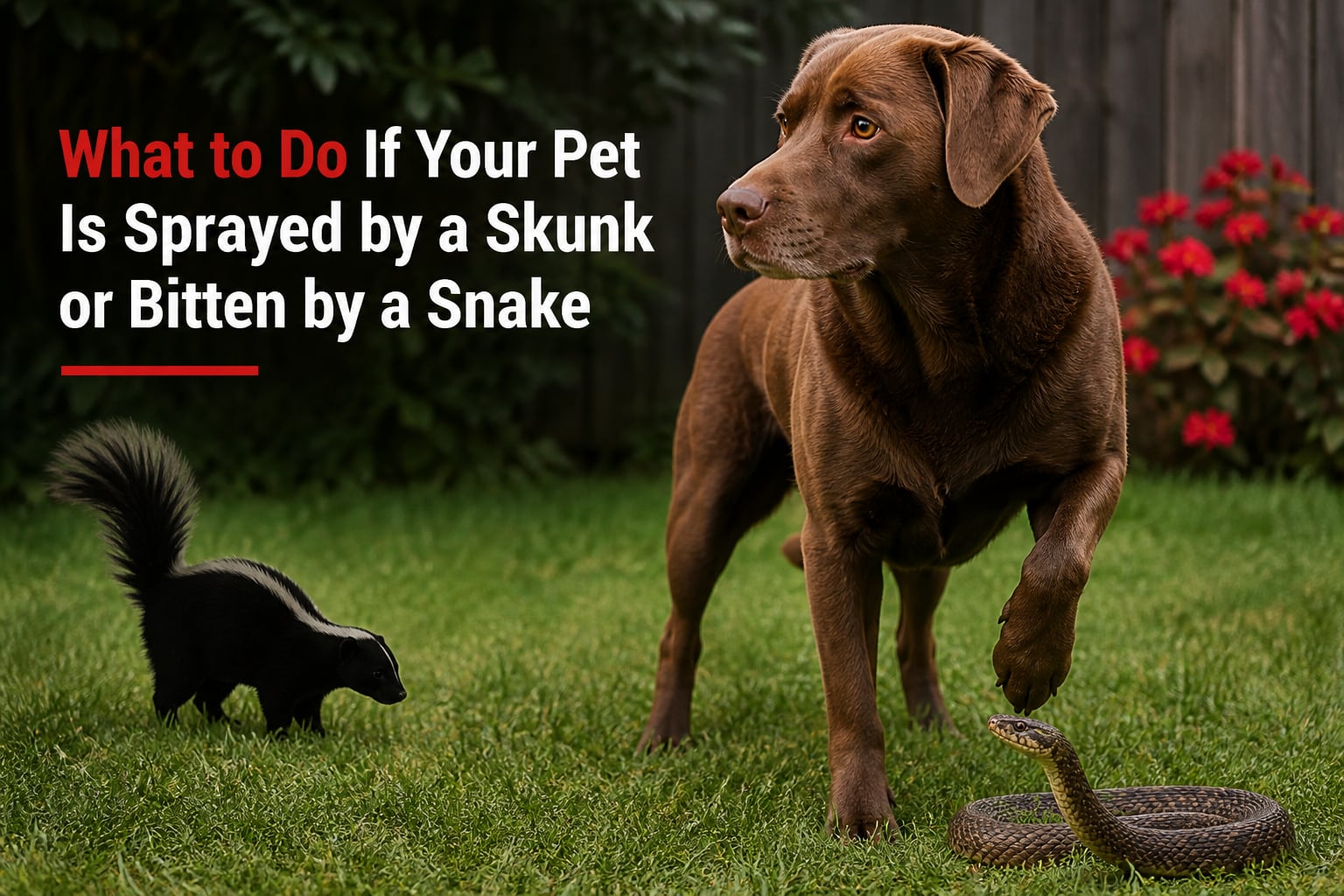
It is 9 PM on a Tuesday and your dog just burst through the back door reeking of skunk. Or worse, you hear a yelp on the trail and see two puncture wounds on your dog’s leg. If you are wondering what to do if your pet is sprayed by a skunk or bitten by a snake, the next few minutes matter more than you think.
Both emergencies share a common framework: stay calm, act fast, and know exactly when professional help is needed. I have spent years pulling together veterinary guidance from Cornell, the ASPCA, and emergency clinics to create a clear, practical action plan for pet owners facing either situation.
This guide covers both scenarios in one place, because no single resource currently does. You will get the exact de-skunking recipe with measurements, step-by-step snake bite emergency procedures, the science behind why skunk smell refuses to leave, and clear warning signs that mean you need to head to the emergency vet right now.
Save this page. The one time you need it, you will not have time to search.
Table of Contents
Quick Reference: Skunk Spray vs Snake Bite at a Glance
Here is a side-by-side comparison so you can immediately identify which emergency you are dealing with and what your first action should be.
Skunk Spray: The smell hits you instantly, usually described as burning rubber mixed with garlic. Your dog may be squinting, pawing at their face, or drooling excessively. The urgency level is moderate unless the spray hit the eyes or mouth directly. Your first action is to keep the dog outside and check their eyes.
Snake Bite: You may hear a yelp or see your dog jump back suddenly. Look for two puncture wounds, rapid swelling, weakness, or pale gums. The urgency level is critical. Your first action is to keep the dog as still as possible and head to the emergency vet immediately.
Key difference: Skunk spray is almost always survivable and rarely life-threatening. Snake bites, especially from venomous species like rattlesnakes, can be fatal within hours without treatment.
Why Skunk Smell Is So Hard to Remove: The Science
Skunk spray is not just a bad odor. It is a chemical weapon designed by nature to persist.
The smell comes from organic sulfur compounds called thiols and thioacetates. Thiols are the same family of compounds that give garlic, onions, and natural gas their distinctive smells. Skunk spray contains concentrated amounts that your nose can detect at parts per billion, which is why even a tiny amount overwhelms your senses.
Thioacetates are the real problem. When they get wet, they convert into thiols, which reactivates the smell. This is why your dog smells fine for a day, then stinks again after a walk in the rain or a swim. Each time the coat gets damp, the thioacetates release fresh odor molecules.
This chemistry is exactly why tomato juice does not work. Tomato juice only masks the smell temporarily by overwhelming your nose with a stronger scent. It does not break down the thiols at all. As soon as the tomato smell fades, the skunk odor returns in full force.
The only way to truly neutralize skunk spray is through oxidation. You need to chemically break the sulfur bonds so they become water-soluble and can be rinsed away. That is where the hydrogen peroxide and baking soda mixture comes in, which we cover in the next section.
What to Do If Your Pet Is Sprayed by a Skunk: Step-by-Step Decontamination
Follow these steps in order. Timing matters because the longer the spray sits on the coat, the more it penetrates the skin and the harder it becomes to remove.
Step 1: Keep your pet outside. Do not let them run through the house. Skunk oil transfers to carpets, furniture, and walls. The smell will linger for months.
Step 2: Check eyes and mouth first. If your dog was sprayed directly in the face, flush their eyes with sterile saline or cool water for several minutes. Squinting, redness, or excessive tearing means the spray hit the cornea and you should call your vet.
Step 3: Wipe down with paper towels. Blot the sprayed areas to remove excess oil before bathing. Do not rub, which pushes the oil deeper into the coat.
Step 4: Mix the de-skunking solution. In an open container (never a sealed bottle), combine:
1 quart of 3% hydrogen peroxide
1/4 cup baking soda
1 to 2 teaspoons of Dawn dish soap
Critical safety warning: Never store this mixture in a closed container. The chemical reaction between hydrogen peroxide and baking soda produces gas that can cause a sealed bottle to explode. Mix it fresh each time and use it immediately.
Step 5: Apply to a DRY coat. Do not wet your dog first. Forum users and veterinary sources agree that wetting the coat first locks the skunk oils against the skin, making them harder to remove. Work the mixture into the fur while it is still dry, massaging it deep into the undercoat.
Step 6: Let it sit for 5 minutes. The solution needs time to oxidize the thiols. Keep your dog distracted with treats. Avoid the eyes, nose, and mouth during application.
Step 7: Rinse thoroughly. Use lukewarm water and rinse until the water runs completely clear. Any residue left on the skin can cause irritation, especially in dogs with sensitive skin.
Step 8: Repeat if necessary. Heavy spraying may require two or three rounds. It is normal for some odor to linger for days or weeks, especially when the coat gets damp.
Note on dark-coated dogs: Hydrogen peroxide can lighten dark fur, sometimes noticeably. This is a cosmetic side effect, not a health risk. If your dog has a dark coat and you are concerned about bleaching, talk to your vet about commercial enzymatic cleaners like Nature’s Miracle or Skunk-Off as an alternative.
What If You Cannot Bathe Your Pet Immediately?
Sometimes you cannot do a full decontamination right away. Maybe it is the middle of the night, you do not have hydrogen peroxide on hand, or your dog just had surgery and cannot get wet. Here is what to do in the meantime.
First, contain the smell. Keep your pet in one room with hard floors, ideally a bathroom or laundry room. Place old towels on the ground and confine them there until you can do a proper decontamination.
Second, wipe down the coat with paper towels to remove surface oil. Focus on the areas that got hit worst. You can use a small amount of dish soap on a damp cloth for a spot clean, which will reduce some of the odor without a full bath.
Third, run a fan or open windows to ventilate. Skunk odor compounds settle into fabrics and walls, so the faster you move air, the less permanent damage you will have to your home.
Finally, get the ingredients or a commercial enzymatic cleaner as soon as possible. The longer the spray sits, the more deeply it penetrates the coat and the more treatments you will need.
When Skunk Spray Becomes a Medical Emergency?
Most skunk spray incidents are smelly but harmless. However, there are specific situations where skunk spray becomes genuinely dangerous and you need to seek veterinary care.
Spray directly in the eyes can cause corneal damage. The thiols are irritants that can inflame and damage the surface of the eye. Signs include severe squinting, holding the eye shut, excessive tearing, or visible redness. Flush the eye immediately with saline or water and call your vet.
Spray in the mouth can cause drooling, vomiting, and loss of appetite. If your dog was sprayed while barking or with their mouth open, rinse their mouth with water and monitor them closely.
Respiratory distress can occur in brachycephalic breeds like pugs and bulldogs, or in dogs with pre-existing respiratory conditions. Watch for wheezing, coughing, or labored breathing.
Heinz body anemia is the most serious and least known complication. In rare cases, the compounds in skunk spray can cause oxidative damage to red blood cells. This leads to Heinz body formation, a condition where red blood cells are destroyed faster than the body can replace them. Symptoms include lethargy, pale gums, weakness, loss of appetite, and rapid breathing. These symptoms may not appear for 24 to 72 hours after exposure.
If your dog received a heavy, direct spray, especially to the face, monitor them for three days. Cornell University’s canine health center specifically warns that severely skunked dogs should be watched for these signs.
Rabies concern: Being sprayed by a skunk does not transmit rabies. However, if a skunk actually bit your pet during the encounter, rabies is a real concern. Skunks are one of the primary rabies carriers in North America. If your pet was bitten, wash the wound and contact your vet immediately to assess rabies booster needs.
What to Do If Your Pet Is Bitten by a Snake: Emergency Steps
A snake bite is a veterinary emergency. If you suspect your pet has been bitten by a snake, take these steps immediately.
Step 1: Stay calm and keep your pet calm. Increased heart rate and movement spread venom through the bloodstream faster. Carry your dog to the car if possible. Do not let them walk.
Step 2: Identify the snake if you can do so safely. Note the color, pattern, and size. Do not attempt to kill or capture the snake, as this puts you at risk of a bite. A photo from a safe distance helps the vet determine whether antivenom is needed.
Step 3: Call the emergency vet while driving. Call ahead so they can prepare antivenom and triage your pet the moment you arrive. Every minute counts with venomous snake bites.
Step 4: Keep the bite area below heart level. Position your pet so the bitten limb is lower than the heart during transport. This slows venom circulation.
Step 5: Remove collars and harnesses near the bite site. Snake bites cause rapid swelling. A collar around a swelling neck can cut off the airway.
What NOT to do: Do not apply a tourniquet. Do not cut the bite wound. Do not try to suck out the venom. Do not apply ice. Do not give your dog pain medication or any human medication. All of these can make the situation worse and waste critical time.
While driving to the vet: Keep your pet as still as possible. Have someone sit with them in the back seat. Cover them with a blanket to keep them warm, as shock can set in quickly. Talk to them calmly to keep their heart rate down.
The most important thing you can do is get to a vet fast. Antivenom is the single most effective treatment for venomous snake bites, and it is only available through veterinary clinics.
Snake Bite Symptoms and Survival Timeline in Dogs
Symptoms of a snake bite can appear within minutes or take up to an hour to show, depending on the type of snake, the amount of venom injected, and where the bite occurred.
Immediate signs include yelping or jumping back, two puncture wounds (though sometimes only one is visible), and rapid swelling around the bite area. You may also see bleeding from the wound.
Progressing symptoms within the first hour include weakness, collapse, vomiting, diarrhea, dilated pupils, and pale or dark gums. Breathing may become rapid and shallow.
Severe symptoms include bleeding from the nose, mouth, or injection site, difficulty breathing, seizures, and unconsciousness. These indicate systemic envenomation and require immediate aggressive treatment.
Survival timeline: With prompt veterinary treatment including antivenom, most dogs survive venomous snake bites. Without treatment, a dog may survive 1 to 3 hours after a severe rattlesnake bite, though the timeline varies based on the size of the dog, the amount of venom, and the bite location.
Can a small dog survive a rattlesnake bite? Yes, but smaller dogs are at higher risk because the same amount of venom represents a larger dose relative to body weight. A 10-pound dog needs immediate treatment, as they have less time before the venom reaches dangerous levels. Small dogs generally require antivenom more urgently than larger breeds.
Non-venomous bites from snakes like garter snakes or rat snakes are less dangerous but still require veterinary attention. The bite can become infected, and without a photo, you cannot be certain the snake was non-venomous.
How to Prevent Skunk and Snake Encounters
The best emergency is the one that never happens. Here are proven prevention strategies for both scenarios.
Skunk prevention: Skunks are nocturnal and most active at dawn and dusk. Keep your dog on a leash during these hours and avoid letting them roam unsupervised in the yard. Install motion-activated lights around your property, as skunks avoid well-lit areas. Secure trash cans with tight-fitting lids and remove food sources like fallen fruit or pet food left outdoors. Seal gaps under decks, sheds, and porches where skunks may den.
Snake prevention: Stay on cleared trails when hiking and keep your dog on a leash. Avoid tall grass, rocky areas, and brush piles where snakes hide. Consider snake avoidance training if you live in an area with venomous species. This training uses positive reinforcement to teach dogs to recognize and avoid snakes. Keep your yard free of debris, wood piles, and tall grass that attract snakes and their prey.
Year-round awareness: Both skunks and snakes are most active in warm months, typically April through October depending on your region. Be extra vigilant during these months and always carry a leash.
What to Keep in a Pet Emergency First Aid Kit
Being prepared saves precious minutes during an emergency. Keep a dedicated pet first aid kit stocked with the following items.
For skunk spray: 3% hydrogen peroxide (check expiration date regularly, as it loses potency over time), a box of baking soda, a small bottle of Dawn dish soap, and a measuring cup. Store them together in a labeled container so you are not searching cabinets at 10 PM.
For snake bites: Sterile gauze pads, vet wrap, a pair of tweezers, and a pet-safe antiseptic. Do not include tourniquets or suction devices, as these do more harm than good.
General supplies: Saline solution for eye flushing, a digital thermometer, a blanket for transport, disposable gloves, and paper towels. Keep your regular vet and nearest emergency vet phone numbers saved in your phone and taped inside the kit.
Frequently Asked Questions
What neutralizes skunk spray?
A mixture of 1 quart 3% hydrogen peroxide, 1/4 cup baking soda, and 1 to 2 teaspoons of Dawn dish soap neutralizes skunk spray. The hydrogen peroxide oxidizes the sulfur compounds (thiols) into water-soluble molecules that rinse away. Baking soda accelerates the reaction and dish soap breaks down the oily base. Never store this mixture in a sealed container, as it produces gas.
Will Dawn dish soap remove skunk smell from dogs?
Dawn dish soap alone will not remove skunk smell. It helps break down the oily base of the spray but cannot neutralize the sulfur compounds that cause the odor. Dawn works as part of the hydrogen peroxide and baking soda mixture, where it assists in lifting the oils so the oxidizing agents can reach and neutralize the thiols.
What are the symptoms of skunk spray toxicosis in dogs?
Symptoms of skunk spray toxicosis include lethargy, weakness, pale gums, loss of appetite, rapid breathing, and in severe cases, collapse. These symptoms can indicate Heinz body anemia, a condition where red blood cells are destroyed by oxidative damage from the skunk spray compounds. Symptoms may appear 24 to 72 hours after exposure. If your dog shows these signs after a heavy skunk spray, seek veterinary care immediately.
How long will a dog smell after being sprayed by a skunk?
A dog may smell for several days to several weeks after being sprayed, even after proper decontamination. The thioacetates in skunk spray reactivate when the coat gets wet, causing the odor to return. Multiple treatments with the hydrogen peroxide mixture may be needed. The smell typically fades gradually over 2 to 3 weeks with repeated baths.
What should I do if I think my dog has been bitten by a snake?
Keep your dog calm and still, carry them to your car, and drive to the nearest emergency vet immediately. Call ahead so they can prepare antivenom. Keep the bite area below heart level and remove any collars near the swelling. Do not apply a tourniquet, cut the wound, suck out venom, apply ice, or give any medication.
How long can a dog survive after being bitten by a snake?
With prompt veterinary treatment and antivenom, most dogs survive snake bites. Without treatment, a dog may survive 1 to 3 hours after a severe venomous bite, though this depends on the dog’s size, the amount of venom, and the bite location. Smaller dogs have less time because the venom represents a larger dose relative to body weight. Immediate veterinary care is critical.
Can a small dog survive a rattlesnake bite?
Yes, a small dog can survive a rattlesnake bite with prompt veterinary treatment. However, small dogs are at higher risk because the same amount of venom is more dangerous relative to their body weight. A 10-pound dog needs antivenom as quickly as possible. Do not wait to see if symptoms develop. Head to the emergency vet immediately.
How soon after a snake bite will a dog show symptoms?
Snake bite symptoms can appear within minutes or take up to an hour to show. Immediate signs include yelping, puncture wounds, and rapid swelling. Progressing symptoms within the first hour include weakness, vomiting, pale gums, and dilated pupils. Even if symptoms seem mild at first, they can worsen rapidly. Always seek veterinary care immediately after a suspected snake bite.
Should I be worried if my dog got sprayed by a skunk?
In most cases, skunk spray is not life-threatening and is primarily an odor problem. However, you should be concerned if the spray hit the eyes or mouth directly, if your dog shows signs of respiratory distress, or if lethargy, pale gums, or weakness develop within 24 to 72 hours. These can indicate eye damage or Heinz body anemia. Contact your vet if any of these symptoms appear.
Do snakes put off a skunk smell?
Some snakes, particularly garter snakes, can release a musk from their cloacal glands that has a sulfurous, skunk-like odor. This is a defense mechanism and is not related to actual skunk spray. The smell is less potent and easier to remove than skunk spray. If your dog rolls on or picks up a garter snake, a standard bath with dish soap is usually sufficient to remove the musk.
Conclusion
Knowing what to do if your pet is sprayed by a skunk or bitten by a snake comes down to preparation and speed. For skunk spray, the hydrogen peroxide, baking soda, and Dawn mixture applied to a dry coat is your best weapon. For snake bites, staying calm, keeping your pet still, and getting to an emergency vet fast is the only correct response.
The two emergencies could not be more different in severity, but they share one truth: the actions you take in the first ten minutes shape the outcome. Keep the de-skunking ingredients stocked, keep your emergency vet’s number saved, and keep your pet on a leash in skunk and snake territory.
Review this guide before you need it. Bookmark it, share it with other pet owners, and build your first aid kit this week. When the moment comes, you will be ready.