
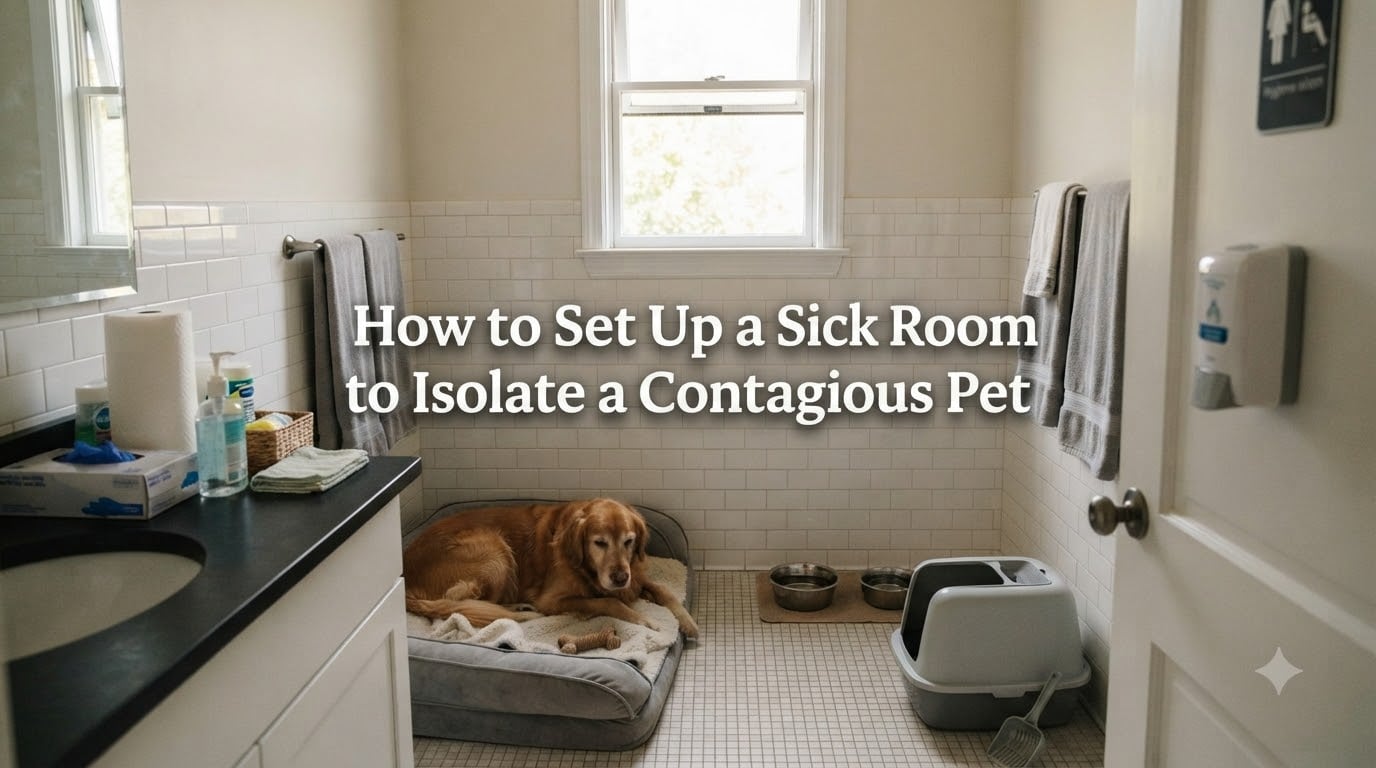
When I set up a sick room to isolate a contagious pet for the first time, I worried I had missed something critical. The good news is that isolation works, and it is not complicated once you know the rules. This guide walks you through the entire process, from choosing the right room to knowing when your pet is safe to come out.
Whether you are dealing with kennel cough, ringworm, parvo, or a new foster with unknown health status, a properly isolated sick room protects your other pets, your family, and the sick pet itself. I have helped foster rescues, dealt with my own dog’s respiratory infection, and consulted with veterinarians to put together the most complete, practical guide you will find.
Table of Contents
What Is Pet Isolation and When Is It Needed?
Pet isolation is the practice of separating a sick or contagious animal from other pets and family members to prevent the spread of infectious disease. It involves a dedicated room, separate supplies, and strict hygiene rules while the pet recovers.
You need to set up an isolated sick room whenever your pet has a confirmed or suspected contagious illness. The most common triggers include kennel cough, canine influenza, feline upper respiratory infections, parvovirus, distemper, and ringworm. New pets coming from shelters, foster networks, or unknown backgrounds also need a 14-day quarantine period because incubation can hide early symptoms.
Isolation also protects people in some cases. Diseases like rabies, certain bacterial infections, and some parasitic conditions are zoonotic, meaning they can pass from animals to humans. A closed-door sick room with its own supplies is your first line of defense.
When you set up a sick room to isolate a contagious pet, you are not just following rules. You are giving your sick pet a calm space to recover while keeping the rest of your household safe.
Quarantine vs Isolation: What Is the Difference?
Quarantine applies to animals with unknown health status who may have been exposed to a disease. Isolation applies to animals who are already showing symptoms or have a confirmed diagnosis. Both require separation, but isolation usually demands stricter hygiene because the pet is actively shedding the pathogen.
Choosing the Right Room for Your Pet’s Isolation
The best room for isolation is a small, easy-to-clean space with a door that closes fully and minimal foot traffic. Bathrooms, laundry rooms, and spare bedrooms are common choices.
Look for a room with hard, non-porous flooring like tile, vinyl, or sealed hardwood. Carpet absorbs pathogens and is very hard to disinfect properly. If you must use a carpeted room, lay down a plastic tarp or washable rugs that can be laundered in hot water.
Ventilation is critical, especially for airborne diseases like kennel cough. A room with a window that opens slightly is ideal. Avoid rooms connected directly to where other pets sleep, eat, or play. The ASPCA recommends at least 20 feet of separation between isolation areas and healthy animal housing when possible.
Popular forum users often ask if a bathroom is good enough. In my experience, a bathroom works well for short-term isolation of cats and small dogs, but the ventilation is often poor. Crack the window, run the exhaust fan, and consider a small HEPA filter for added air cleaning.
Essential Supplies for a Pet Sick Room
Before bringing your sick pet into the room, gather every supply you need. Running back and forth to shared spaces increases contamination risk. Here is the complete checklist I use for every isolation setup.
- Food and water bowls (plastic or stainless steel, dedicated to this room only)
- Bedding that can be washed in hot water or discarded (old towels work great)
- Litter box and litter (for cats) or pee pads (for dogs)
- Medications in a labeled container
- Cleaning supplies including pet-safe disinfectant, paper towels, and trash bags
- Gloves (nitrile or latex) and a dedicated apron or shirt
- Hand sanitizer or a handwashing station just outside the door
- Thermometer for daily temperature checks
- Towels and blankets for warmth and comfort
- Trash can with a lid lined with a plastic bag for soiled items
- Baby gate or x-pen if you need to keep a pet within a section of the room
- A small HEPA air purifier if the room has poor ventilation
Keep a designated “sick pet kit” in the room. Never share these supplies with your healthy pets. The cost of duplicate items is far less than the cost of treating a household outbreak.
Setting Up the Isolation Space Step by Step
Once you have your supplies, follow these steps to set up a sick room that keeps everyone safe and helps your pet recover comfortably.
Step 1: Deep clean the room. Remove all rugs, curtains, and soft items that cannot be washed. Wipe down hard surfaces with a pet-safe disinfectant like diluted bleach (1:32 ratio) or accelerated hydrogen peroxide. Let everything dry fully.
Step 2: Set up the floor plan. Place the bed in a quiet corner away from drafts. Put food and water on the opposite side to encourage gentle movement. Set up the litter box or pee pad in a different corner to keep eating and bathroom areas separate.
Step 3: Add ventilation. Open a window a few inches if weather permits. Position a small fan to push air out of the room. For airborne illnesses, a HEPA purifier cuts down on circulating pathogens significantly.
Step 4: Post clear signage. Tape a sign on the door that says “Sick Pet – Do Not Enter” along with the pet’s name and basic instructions. This protects guests, kids, and even forgetful family members.
Step 5: Create a hygiene station. Place gloves, hand sanitizer, a dedicated outfit (like an old sweatshirt), and a trash bin just outside the door. Anyone entering should put on gloves and wash hands before and after.
Step 6: Stock the room with comfort items. Add a worn t-shirt of yours for familiar scent. Cats usually want a hiding spot, so include a covered bed or cardboard box. Dogs generally want to see you, so set a chair near the bed.
Step 7: Test the setup. Spend 15 minutes in the room yourself. Check the temperature, check for drafts, and make sure you can reach everything without leaving the door open.
Common Diseases That Require Isolation
Not every illness means isolation. Common conditions that typically require a sick room setup include:
- Kennel cough (Bordetella): A highly contagious respiratory infection that spreads through air and droplets. Isolation usually lasts 10 to 14 days after the last cough.
- Canine influenza: Similar to kennel cough but often more severe. Isolation can last up to 4 weeks.
- Parvovirus: A serious, often fatal virus that spreads through feces. Strict isolation lasts through full recovery, often 3 to 4 weeks.
- Feline upper respiratory infections: Caused by herpesvirus or calicivirus. Isolation usually lasts 2 to 3 weeks.
- Ringworm: A fungal infection that is contagious to other pets and humans. Treatment and isolation often last 6 weeks or more.
- Distemper: A severe viral disease requiring strict isolation for the entire treatment period.
Always confirm the diagnosis and recommended isolation period with your veterinarian. Some diseases require longer isolation than others, and your vet will tailor the plan to your pet’s specific situation.
Preventing Disease Transmission Within the Home
Isolation only works if you follow strict hygiene protocols. I learned this the hard way when I spread kennel cough to my second dog through a shared towel. Here is how to avoid the same mistake.
Always care for healthy pets first. Feed, walk, and play with your healthy animals before entering the sick room. This reduces the chance of carrying pathogens back to them on your hands or clothes.
Wear dedicated clothing. Put on a specific shirt, sweatshirt, or apron before entering the sick room. Remove it before touching other pets. Some people use a separate pair of slip-on shoes or shoe covers for high-risk situations like parvo.
Use gloves every time. Disposable gloves are cheap and effective. Pull them on before entering, and remove them inside the room before opening the door. Wash hands immediately afterward.
Wash hands thoroughly. Even with gloves, wash hands with soap and warm water for at least 20 seconds after handling the sick pet. Hand sanitizer works when a sink is not available.
Do not share items. Use separate bowls, toys, leashes, brushes, and litter scoops for the sick pet. If you must share, disinfect the item for the recommended contact time before using it with another animal.
Keep the door closed. A closed door is the simplest barrier. Even with a barrier, never let the sick pet roam the house or interact with other animals.
For multi-pet households without a spare room, consider using a large dog crate or x-pen in a corner of one room, separating the area with a baby gate. Many foster families use this setup successfully.
Hygiene and Sanitation Protocols for the Sick Room
Clean the room daily, and spot-clean accidents immediately. A consistent routine keeps pathogens from building up and protects everyone in the household.
Daily tasks:
- Scoop the litter box or replace pee pads at least once a day
- Wash food and water bowls with hot, soapy water
- Wipe hard surfaces with a pet-safe disinfectant
- Refresh bedding or replace soiled materials
- Take out the trash to an outdoor bin
Weekly deep clean:
- Wash all bedding in hot water (at least 140°F) with bleach if safe for the fabric
- Disinfect walls, baseboards, and any hard surfaces the pet has touched
- Replace the litter entirely and clean the box with hot water and bleach
- Vacuum and mop (if applicable) using a disinfectant solution
For parvo, use a bleach solution (1:32 dilution) because parvo is notoriously resistant to many disinfectants. For ringworm, use diluted lime sulfur or accelerated hydrogen peroxide. Always ask your vet which disinfectant is best for the specific illness.
Many Reddit users in foster communities recommend DIY box fan air filters as a budget option. They combine a box fan with a furnace filter rated MERV 11 or higher. While not as effective as a true HEPA filter, they meaningfully improve air quality for under $30.
How Long Does Pet Isolation Last?
Isolation duration depends on the disease, the pet’s immune response, and your vet’s guidance. Here are general timelines for common conditions.
- Kennel cough: 10 to 14 days after the last cough
- Canine influenza: 21 to 28 days from onset
- Parvovirus: Throughout treatment, often 3 to 4 weeks minimum
- Feline URI: 14 to 21 days
- Ringworm: Until two negative cultures, often 4 to 6 weeks
- New pet quarantine: 14 days minimum for unknown health status
Ending isolation too early is one of the most common mistakes. Even when your pet looks better, they may still be shedding the pathogen. Always confirm with your vet before bringing your pet back into shared spaces.
Caring for Your Sick Pet During Isolation
Isolation is tough on pets. They are away from their family and may not understand why. Daily care and emotional support matter as much as hygiene.
Check on your pet at least every few hours. Talk softly when you enter, and spend time sitting in the room so they know they are not abandoned. Most dogs want companionship when sick, even if they sleep more than usual. Cats often prefer quiet observation but still appreciate your presence.
Feeding: Sick pets often have reduced appetite. Offer small, frequent meals of their favorite food. Warming the food slightly boosts aroma and appeal. If your pet refuses food for more than 24 hours, call your vet.
Hydration: Always provide fresh water. For pets that are not drinking well, ask your vet about offering low-sodium broth or unflavored Pedialyte.
Medication: Give medications exactly as prescribed. Use pill pockets or wrap pills in a small amount of wet food to make dosing easier.
Monitoring: Track temperature, appetite, energy, and symptoms. A simple notebook or phone note helps you spot trends and gives your vet useful data.
On the emotional side, give your pet enrichment that does not require much energy. Food puzzles, licking mats, and quiet cuddle sessions work well. For cats, a perch near a window keeps them engaged without physical effort.
One more tip from my own experience: isolation is also hard on the humans. Take breaks, ask for help from friends or family, and remember that this is temporary. Your pet is counting on you, and you are doing a great job.
Frequently Asked Questions
How to quarantine a sick cat at home?
Set up a small, easy-to-clean room like a bathroom with a closed door. Provide food, water, a litter box, bedding, and a hiding spot. Use gloves and wash hands before and after every interaction. Keep the cat indoors and away from other pets for the full period recommended by your vet, usually 14 to 21 days for upper respiratory infections.
What is isolation of sick animals?
Isolation is the practice of separating a sick or contagious animal from other pets and people to prevent the spread of infectious disease. It involves a dedicated room, separate supplies, and strict hygiene protocols until the pet is no longer contagious.
How do I quarantine my dog at home?
Choose a room with a closed door and hard flooring. Set up bedding, food, water, and potty supplies. Post a sign on the door, wear gloves when entering, and always handle the healthy pets first. Wash hands thoroughly and use dedicated cleaning supplies. Quarantine typically lasts 14 days for new pets without symptoms and longer for confirmed illnesses.
How to isolate a dog with kennel cough?
Place the dog in a well-ventilated room with a closed door, separate food and water bowls, and a bed that can be washed. Wear gloves and wash hands after every visit. Keep the dog away from other pets and shared spaces for at least 10 to 14 days after the last cough. Run an air purifier if possible to reduce airborne spread.
Do dogs want to be left alone when sick?
Most dogs do not want to be left alone when sick. They seek comfort, reassurance, and the presence of their favorite humans. While they may sleep more and want less physical activity, they still benefit from short, calm visits several times a day. Avoid isolating them emotionally along with physically.
When can isolation end for my pet?
Isolation can end when your pet is no longer shedding the pathogen and your vet confirms it is safe. Times vary by condition: kennel cough usually ends 10 to 14 days after the last cough, parvo requires complete recovery, and ringworm needs two negative cultures. Always get vet approval before ending isolation.
Final Thoughts on Setting Up a Sick Room for Your Contagious Pet
Knowing how to set up a sick room to isolate a contagious pet protects your entire household and speeds up your pet’s recovery. Pick the right room, stock it with dedicated supplies, follow strict hygiene, and give your sick pet plenty of calm companionship.
When in doubt, call your vet. They can confirm the diagnosis, recommend the right isolation duration, and suggest the best disinfectant for your specific situation. Your sick pet is lucky to have someone willing to do this work, and soon they will be back to their happy, healthy self.