
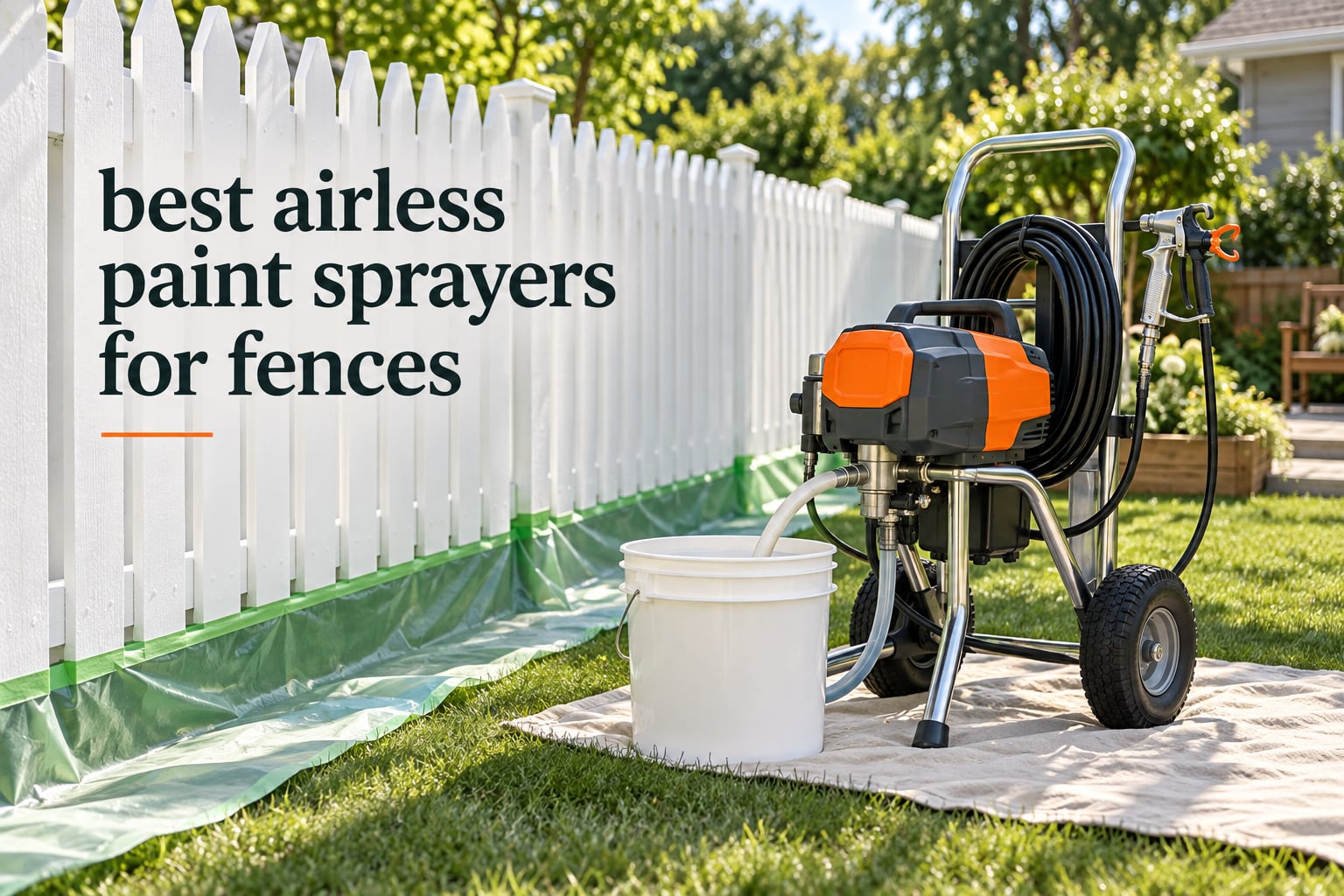
A 200-linear-foot wooden fence is one of the biggest paint jobs most homeowners take on, and one of the worst to do with a brush. The boards are porous, the gaps between pickets swallow roller nap, and the whole thing needs two coats. Airless spray is the only everyday tool that pushes thick exterior latex and semi-transparent fence stain through the gun unthinned and lays it down in a fraction of the time.
That makes the best airless paint sprayers for fences a short list with a clear winner. I spent weeks comparing ten stand-mounted, cart-mounted and cordless machines against the same criteria: flow rate for long fence lines, pressure control for switching between stain and paint, hose length, direct feed from a bucket, and how honestly the machine handles cleanup. These are the ten I would actually put on a fence line in 2026.
If your fence is also a pet boundary, you may be choosing a fence and a containment system at the same time. Our guides to the best wireless dog fences for large yards and the best GPS dog fences with no subscription are worth reading before you start, so the spray job and the fence layout do not fight each other.
Short answer up front: the Graco Magnum X5 is the best airless paint sprayer for most fences, and the Titan ControlMax 1700 is the one to buy if you are painting in a tight yard where overspray lands on something that cannot be repainted.
Table of Contents
Top 3 Airless Paint Sprayers for Fences (September 2026)
The X5 wins the fence job because adjustable pressure control is the feature that matters outdoors. You turn it down for stain, turn it up for solid body paint, and the flexible suction tube pulls straight from a 5-gallon bucket so you are not babysitting an onboard tank.
The ProX19 is the machine to buy if you paint more than one fence a year. Its InstaClean pump filter and reversible RAC IV SwitchTip attack the clogging problem that fence owners complain about more than any other, and it is rated for far heavier annual use than any homeowner machine here.
The VEVOR 950W is the value pick. Its 2.0 LPM flow is the highest in the budget group, the included 18.9 inch extension pole removes most of the ladder work, and nearly a thousand owners rate it in the fours.
All 10 Sprayers at a Glance
| Product | Specs | Action |
|---|---|---|
 Graco Magnum X5 Airless Paint Sprayer Graco Magnum X5 Airless Paint Sprayer |
|
Check Latest Price |
 Graco Magnum ProX19 Cart Graco Magnum ProX19 Cart |
|
Check Latest Price |
 Graco Cordless Handheld Sprayer Graco Cordless Handheld Sprayer |
|
Check Latest Price |
 Titan ControlMax 1700 Titan ControlMax 1700 |
|
Check Latest Price |
 InoKraft MaXpray M3 Cart InoKraft MaXpray M3 Cart |
|
Check Latest Price |
 VEVOR 950W Stand Sprayer VEVOR 950W Stand Sprayer |
|
Check Latest Price |
 Gyfent X9 Airless Sprayer Gyfent X9 Airless Sprayer |
|
Check Latest Price |
 InoKraft NEO Sprayer Kit InoKraft NEO Sprayer Kit |
|
Check Latest Price |
 VEVOR 750W Stand Sprayer VEVOR 750W Stand Sprayer |
|
Check Latest Price |
 MAXXT 3300 PSI Stand Sprayer MAXXT 3300 PSI Stand Sprayer |
|
Check Latest Price |
1. Graco Magnum X5 Airless Paint Sprayer – Best for Most Fences
Graco Magnum X5 Airless Paint Sprayer, Interior & Exterior
3000 PSI
Fully adjustable pressure
Sprays from 1 or 5 gallon bucket
25 ft hose
15 lb
Pros
- Adjustable pressure control sprays paint or stain unthinned
- Flexible suction tube draws from a 1 or 5 gallon bucket
- Supports up to 75 ft of paint hose
- Stainless steel build rated for projects up to 10 gallons
Cons
- Not built for heavy multi-story or professional volume work
- Add-ons and tips are extra purchases
The Graco Magnum X5 is the machine I put on nearly every fence because it does the one thing outdoors jobs ask for and most sprayers do not: it lets you change the pressure. Fence stain and solid exterior latex are not the same material, and a single fixed-pressure machine will either atomize one of them badly or clog on it.
Owners rate it 4.6 out of 5 across almost 6900 reviews, which is the deepest pool of real-world feedback in this group. That matters more than any spec sheet, because fence spraying is a repetitive, unglamorous job and a machine that is still going after three seasons is worth far more than one with a better headline number.
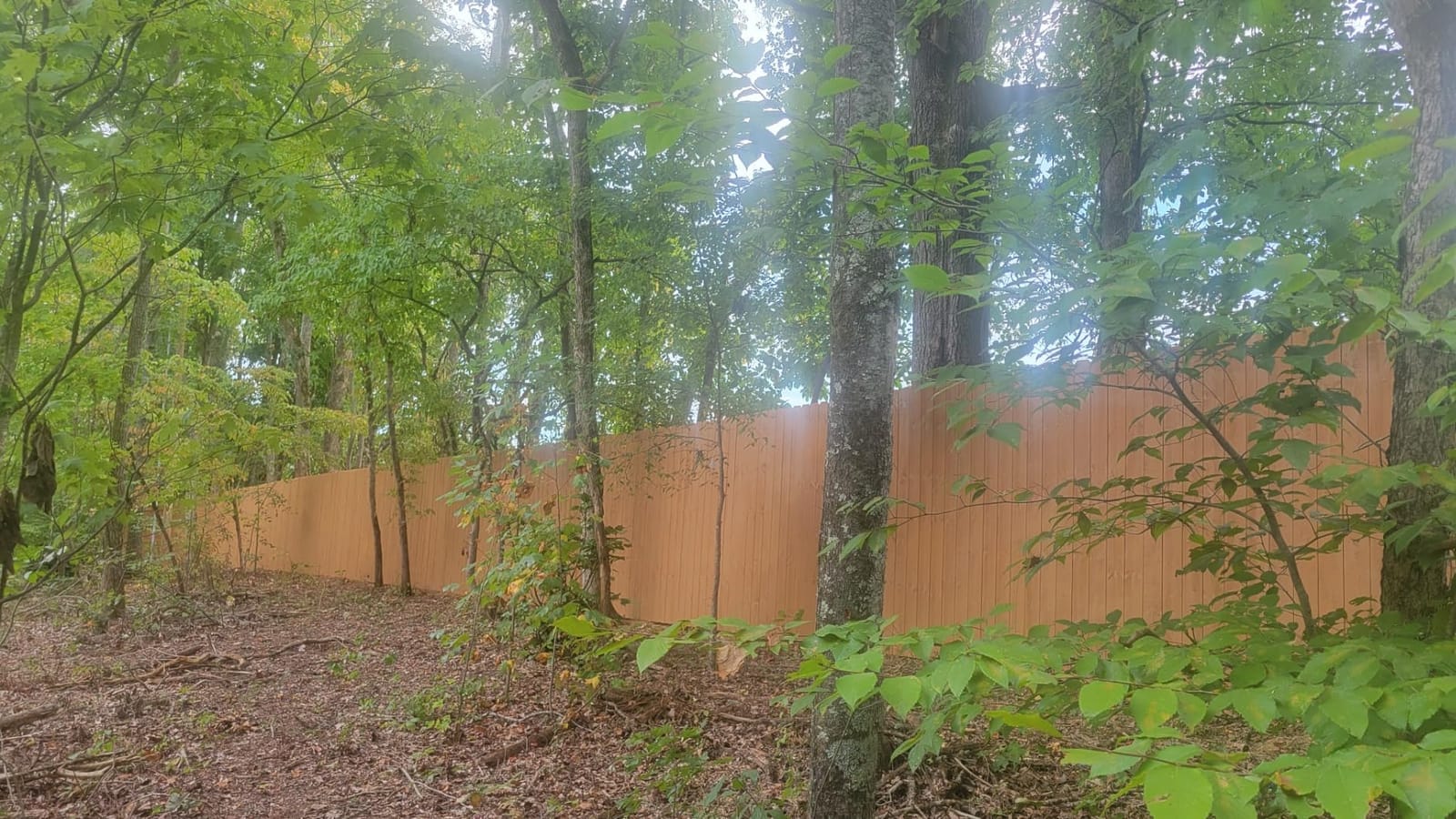
The flexible suction tube is what makes it a fence machine rather than a trim machine. It reaches down into a 5-gallon bucket of exterior acrylic, so you refill a bucket instead of stopping every few minutes to top up a small tank. On a long run that is the difference between finishing the second side of the fence before dinner and not.
One r/HomeImprovement owner stained roughly 500 linear feet of board-on-board fence in a single day with this model, both faces. That is the kind of number that sets the bar for this whole list, and it comes from a homeowner machine rated for projects up to 10 gallons, not a contractor rig.
Why the adjustable pressure matters on a fence
Semi-transparent stain needs less pressure than solid latex because it is thinner and you want the wood grain to show through. A machine that runs one fixed pressure either spits droplets that soak in unevenly or shears the stain so fine it looks like paint.
Turn the knob, retest on cardboard, and the same machine handles a fence that gets solid paint two years from now. That versatility is why I rank it first for anyone who is not a dedicated contractor.
Where it falls short
It is a homeowner machine, and the manufacturer is clear about that. If you are painting a fence every week across multiple properties, you will be pushing past its duty cycle and the 3000 PSI ceiling will feel modest.
Also expect to buy tips and a gun separately at some point. Keep the reversible tip habit early and it costs you nothing but a minute, because a cleared tip takes seconds while a stripped one takes an afternoon.
2. Graco Magnum ProX19 Cart – Best for Contractors and Multi-Sided Fences
Graco 17G180 Magnum ProX19 Cart Paint Sprayer, Blue & white
3000 PSI
ProX stainless piston pump
InstaClean filter
RAC IV SwitchTip
Rated to 500 gal per year
Pros
- InstaClean pump filter reduces clogs from debris in paint
- RAC IV SwitchTip reverses to clear blockages fast
- PowerFlush adapter connects to a garden hose for cleanup
- Rated for up to 500 gallons of annual use
Cons
- 42 lb cart is bulkier to move than smaller stand models
- New users need practice with pump pulsing and tip sizing
The Magnum ProX19 carries the highest rating in this roundup at 4.7 across 1020 reviews, and it is the pick for anyone whose fence is not a one-time project. Its ProX stainless steel piston pump pushes thick latex unthinned at 3000 PSI, which is the pressure you want when the coating has not been watered down to help the machine.
The two features that matter most on a fence are both about problems rather than performance. The InstaClean pump filter catches debris in the paint before it reaches the tip, and the RAC IV SwitchTip flips inside the guard to blast a blockage backward out of the orifice. Tip clogging is the single most repeated complaint from fence owners everywhere, and this machine attacks it from both ends.

One first-time sprayer ran 70 gallons through this machine without a serious issue, and owners finishing cabinets, sheds and whole exteriors report the same consistency. At 500 gallons of recommended annual use, it is built for people who paint repeatedly rather than once.
The PowerFlush adapter is a small thing that pays off immediately. It connects to a garden hose and flushes the pump and hoses outside in minutes, which matters when cleanup is the part of the job you least want to do at nine at night.
What you give up for the extra capability
Weight. At 42 pounds plus the cart, this is a two-person lift to load and a deliberate pull to move across uneven ground. If your fence is a single straight run in the yard, a 15-pound stand model is genuinely easier to reposition.
The pump also pulses as it cycles, which produces a faintly uneven fan width that beginners mistake for a bad setup. Watch a full cycle on cardboard, and the pulsing reads as normal rather than as a fault.
Tip choice on thick latex
Owners upgrading a factory 0.015 inch tip to a 0.019 inch tip is the most common fix reported in reviews, and it applies directly to fence work. A larger orifice moves heavier latex without forcing it, and a reversible tip like this one turns a stoppage into a ten-second fix.
3. Graco Cordless Handheld Sprayer – Best When There Is No Outlet Nearby
Handheld Paint Sprayer
DEWALT XR lithium ion
2000 PSI
0.25 gallon cup
Sprays without thinning
Pros
- No cord to run to the fence line
- Runs on DEWALT XR batteries most owners already own
- Triax triple piston pump
- Setup from box to first coat in about five minutes
Cons
- 32 oz cup means constant refills on a full fence
- Struggles with thick latex at higher settings
- Hand fatigue over long sessions
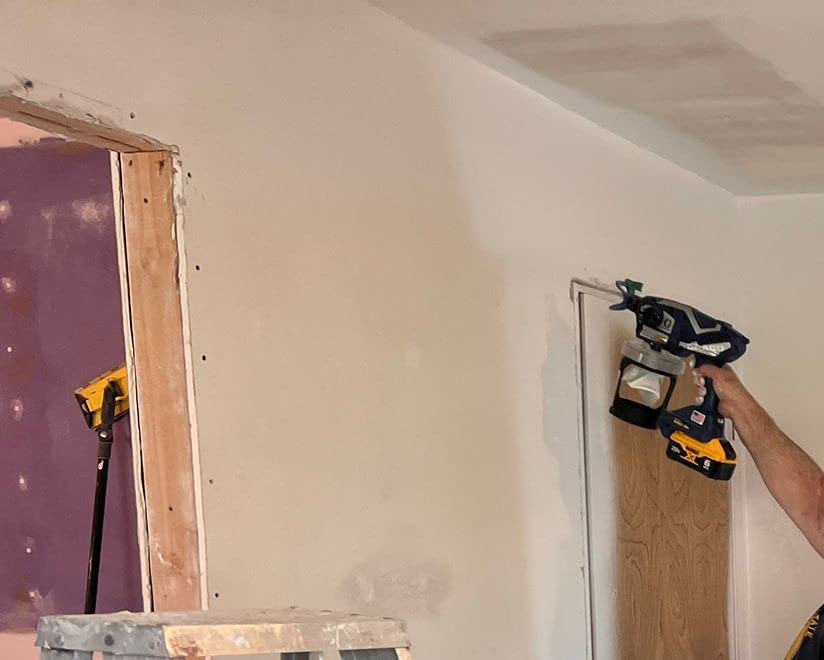
This is the pick when the fence is at the far end of the property and running an extension cord to it is the thing stopping you from starting. It runs on the DEWALT XR lithium ion system, so if you already own XR batteries and a charger, the total cost of getting onto the fence drops to the price of a bare tool.
At 16 ounces with a 0.25 gallon cup and 2000 PSI, it is built for furniture, wainscoting, trim and short runs rather than a full side of picket. The 4.1 rating across 756 reviews reflects genuinely split sentiment, and the split is almost entirely about the cup size rather than the finish.
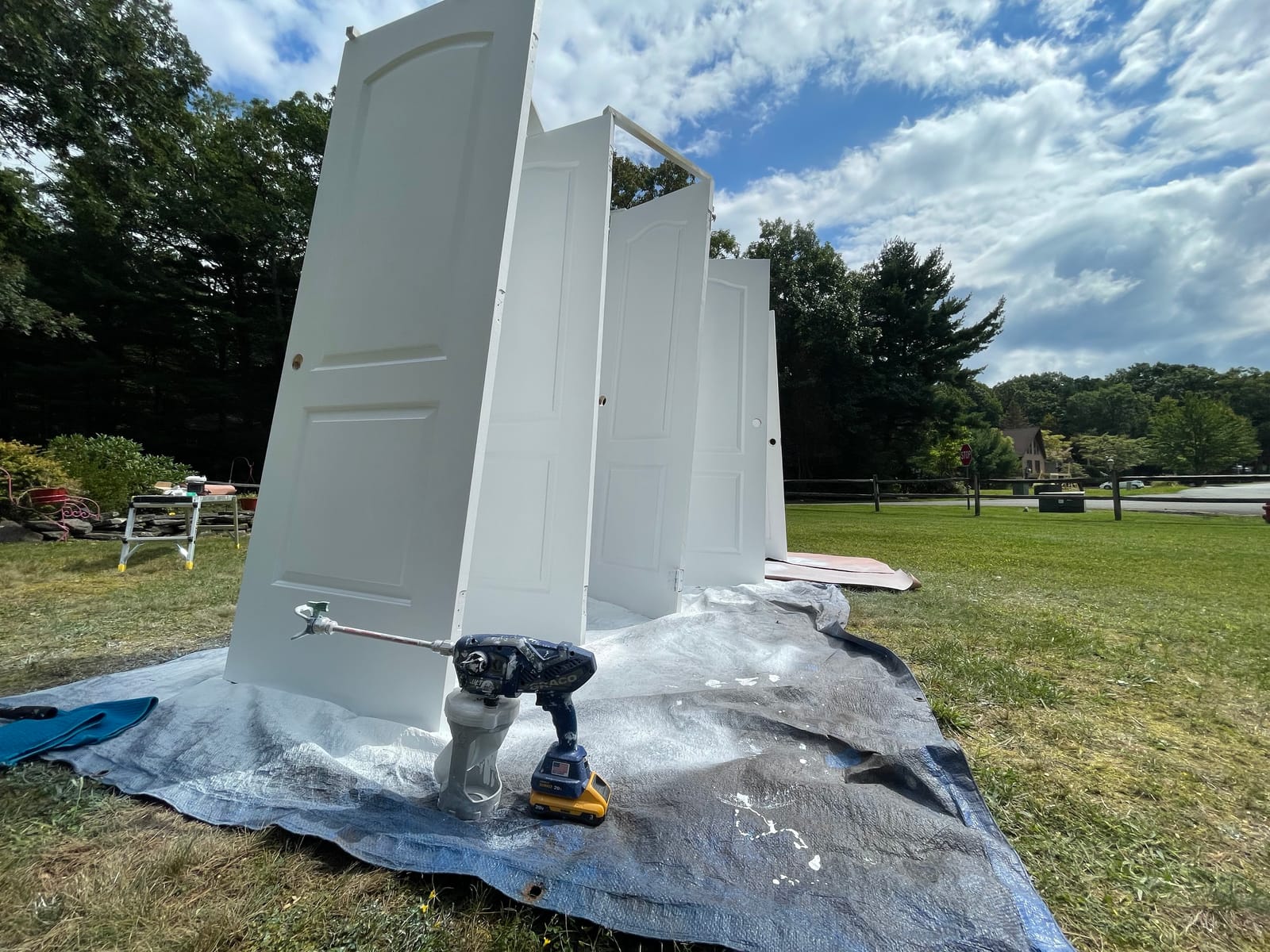
Owners who prime and thin appropriately praise a genuinely excellent finish and near-zero setup time. The finish quality on a fence gate or a short run of cedar is where this machine earns its place, because there is no hose to trip over and no wet line to carry back to the machine.
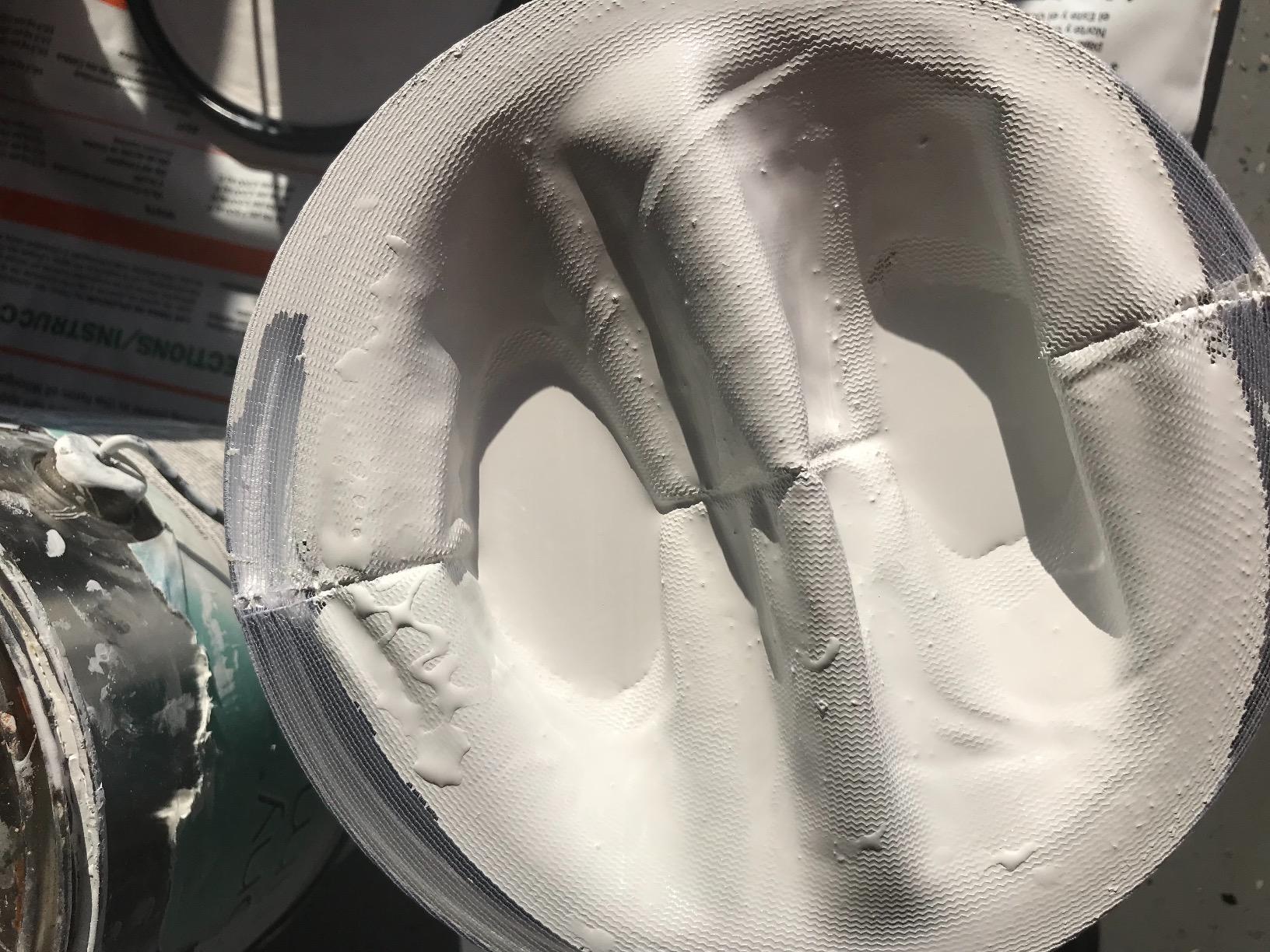
A smaller group who moved up from a Magnum ProX19 call it underpowered on thick store-brand latex, with clogging every few seconds at higher settings. The fix those reviewers land on is the same one: keep the filter screen and tip shield clean, and use a smaller-bore tip.
When the cup is actually fine
If the job is a gate, a couple of panels, or touch-ups on a fence you are not fully refinishing, a 32 oz cup is an advantage. You carry almost nothing, you do not prop a bucket open in the grass, and there is no suction tube to keep submerged.
The trade becomes bad the moment you are finishing 200 linear feet. Refilling that cup every few minutes across a long fence line is the labor you bought the sprayer to avoid.
When to walk away from it
Skip this machine for solid body paint on a long fence. Its 2000 PSI ceiling and small pump are not built to drive a thick latex topcoat, and fighting a clog on a visible fence board is how people end up brush-finishing a section and resenting the sprayer.
4. Titan ControlMax 1700 – Best for Low Overspray in Tight Yards
Titan ControlMax 1700 HEA Airless Paint & Stain Sprayer, Low Overspray
HEA technology cuts overspray up to 55%
1500 PSI
30 ft hose
515 HEA tip included
19.4 lb
Pros
- HEA spray cuts overspray by up to 55% for a softer pattern
- Moves easily around a property on a compact stand
- Simple to flush after a job
- Contractors report finish quality matching higher priced machines
Cons
- 1500 PSI ceiling means thick topcoats can clog
- Non-standard hose inlet limits replacement parts
- Bulky suction filter will not fit inside a 5 gallon pail
The Titan ControlMax 1700 is the answer when the fence is squeezed between a neighbor’s car, a garden and a wall you do not want to repaint. Its HEA high efficiency airless technology cuts overspray by up to 55 percent while still atomizing properly, which is the trade you want when the wind is not cooperating and a roller would be faster.
At 1500 PSI this is the lowest ceiling in the roundup, and that is deliberate rather than a flaw. Lower pressure means a softer, wider, more forgiving fan, and on a fence with a lot of posts, pickets and gaps, a machine you can feather is often more useful than a machine that will atomize paint you do not want on the car two doors down.
The box includes a 30 foot hose, a 515 HEA tip, the HEA gun and a nozzle, so the essentials are covered out of the box. Contractors using it for cabinets, houses and millwork report a finish that matches much more expensive machines once the tip and filter are set correctly.
One free tip that appears again and again in reviews is adding the Wagner 0580611-B filter and swivel and running 353-series tips. That combination is the difference between a smooth result and a tip that clogs every twenty minutes.
Where the 1500 PSI limit bites
Thick topcoats. A heavy gel-coat or an unthinned low-build latex can outrun the pump, and the tip needs reversing or the pressure turning up. For standard exterior acrylic fence paint and ordinary semi-transparent stain, the ceiling is rarely the problem.
The bulky suction filter is a genuine annoyance for direct-from-bucket work, since it will not sit inside a standard 5-gallon pail fitting. Budget for transferring the paint or a siphon setup if you plan to feed it from a bucket.
How overspray is actually managed
No sprayer eliminates overspray outdoors. What a reduced-overspray machine does is shrink the radius so a plastic sheet hung on the neighbor’s side and a wind check before you trigger the gun are enough. If your yard is truly boxed in, this is the machine to build the job around.
5. InoKraft MaXpray M3 Cart – Best for Tall Fences and Long Reach
InoKraft MaXpray M3 Cart Airless Paint Sprayer, 3300 PSI 0.33 GPM
3300 PSI
0.33 GPM output
Rolling cart
50 ft of hose
18 in extension
Pros
- 3300 PSI and 0.33 GPM give fast even coverage on long fence runs
- Two connectable 25 ft hoses plus 18 in extension cut repositioning
- Reversible 515 tip clears clogs without disassembly
- Flush-Ease valve and cleaning kit simplify cleanup
Cons
- Rated for up to 200 gallons per year
- below contractor machines
- Light review count compared with the Graco units
The MaXpray M3 is built around the specific problem tall fences create: you should not be walking backwards down a 200 foot line holding a wet line in one hand. Fifty feet of connectable hose, an 18 inch extension rod and a 360 degree swivel at the gun mean you can spray a full side from a fixed position and move the surface rather than yourself.
At 3300 PSI and 0.33 GPM, it has more headroom than most machines here, and owners report smooth streak-free coverage with no thinning on latex and acrylic. The 4.6 rating across 183 reviews is high, though the pool is small enough that I would weight it below the Graco X5 in terms of long-term evidence.
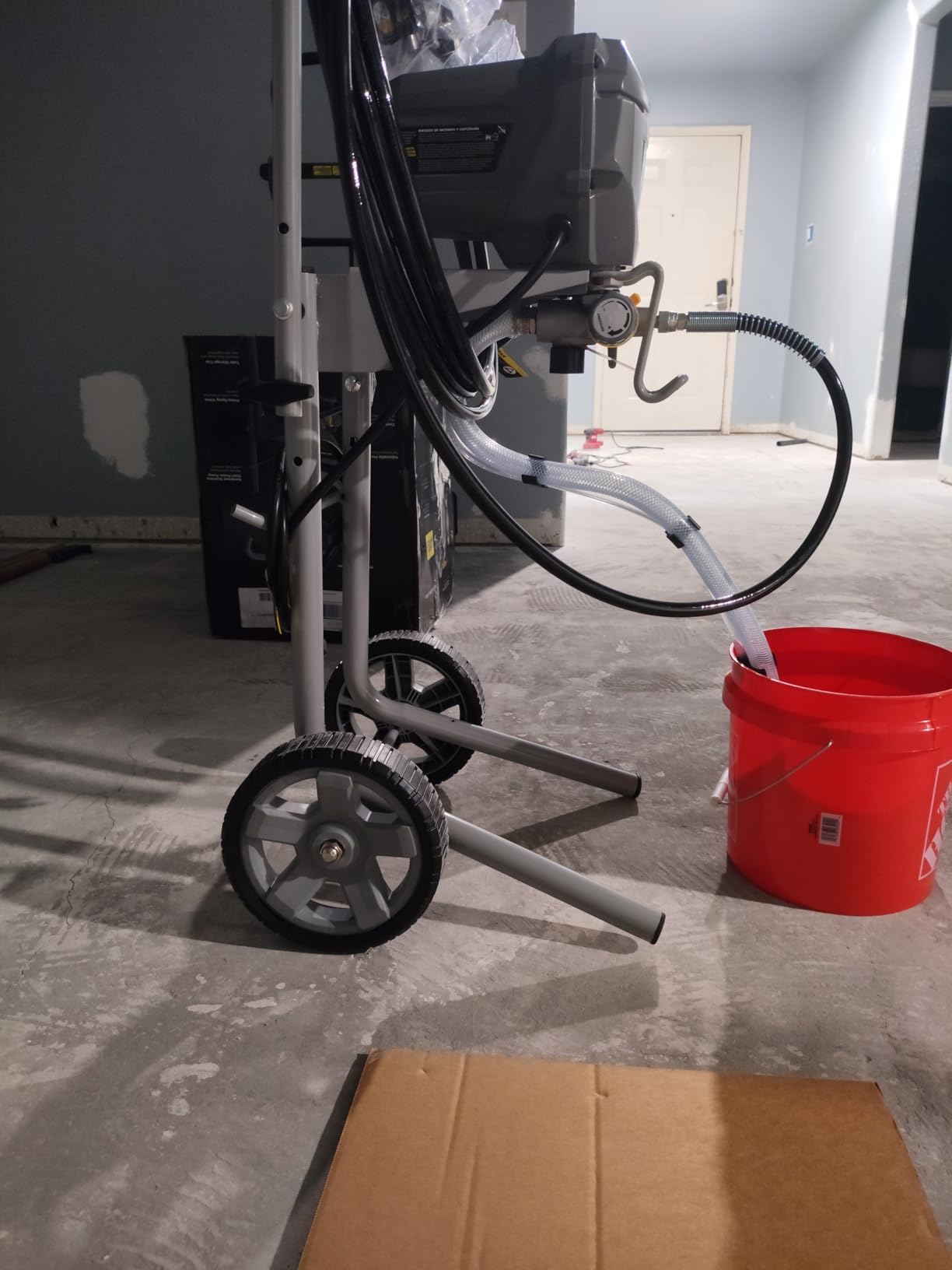
The Flush-Ease valve is the feature that changed my mind about this machine. You push paint through, you turn the valve, you push water through, and the same reversible 515 tip clears the line at the end. On a cart sprayer that will otherwise crouch next to the fence with dried paint in it, that is a real quality of life gain.
It comes with the 18 inch extension, a cleaning kit and instructions that actually help, plus a one-year warranty. Recommended annual use is up to 200 gallons, which comfortably covers a few fences a year for a serious homeowner.
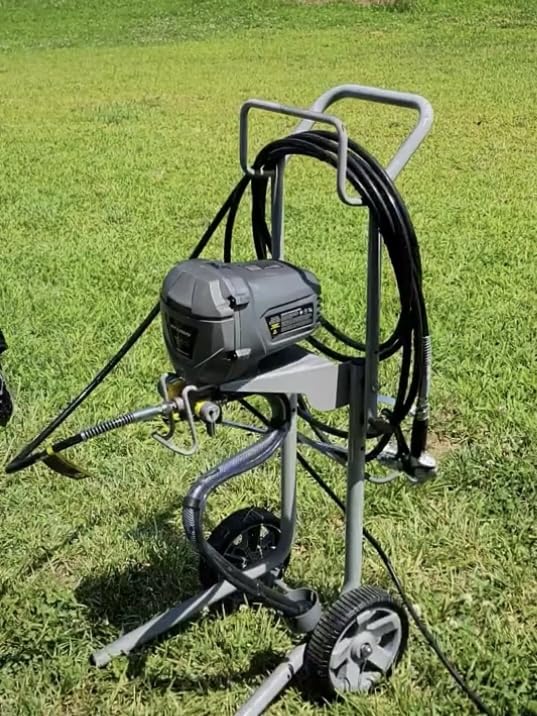
When reach beats raw flow
On a six-foot board-on-board fence, the extension rod lets you reach the top rail from flat without tipping the gun upward. That keeps your spray pattern vertical instead of stretched, and it means no ladder, no ladder shifting, and no paint on the rung you are standing on.
The trade is weight. With the cart and hoses, this is one of the larger machines here, and it wants a level path. Along a narrow side yard it will be more annoying than a 15-pound stand model.
What 200 gallons per year really means
It is a serious-homeowner rating, not a one-fence rating and not a contractor rating. If this is the only fence you will ever spray, the ProX19 and X5 are better buys. If you are staining fences and decks as a side business, the 200 gallon ceiling is worth respecting.
6. VEVOR 950W Stand Sprayer – Best Value for a Full Fence
VEVOR 950W Stand Airless Paint Sprayer, 3000PSI High Efficiency Electric Airless Sprayer, Handheld Paint Sprayers for Home Interior and Exterior Furniture and Fences, Fine and Even Painting Effect
950W motor
Up to 3000 PSI
2.0 LPM max flow
15 m hose
18.9 in pole
Pros
- Highest flow rate in the budget group at 2.0 LPM
- Fan atomization gives a fine even finish with less waste
- Full metal frame with rubber hose for durability
- 18.9 in extension pole cuts ladder work
Cons
- 22 lb is heavy for a stand machine in this class
- Best suited to water based materials like latex and stain
The VEVOR 950W is the machine I would tell someone to buy if they want a full fence done well on a limited budget. Its 2.0 LPM flow is the highest in the value group, and flow rate is the number that determines how many linear feet leave the gun in an hour.
Owners rate it 4.3 across 959 reviews and repeatedly single out the even fan atomization and the low speed setting that cuts paint consumption across big surfaces. For a fence with a lot of area per gallon, that low gear is the difference between a two-gallon day and a five-gallon day.
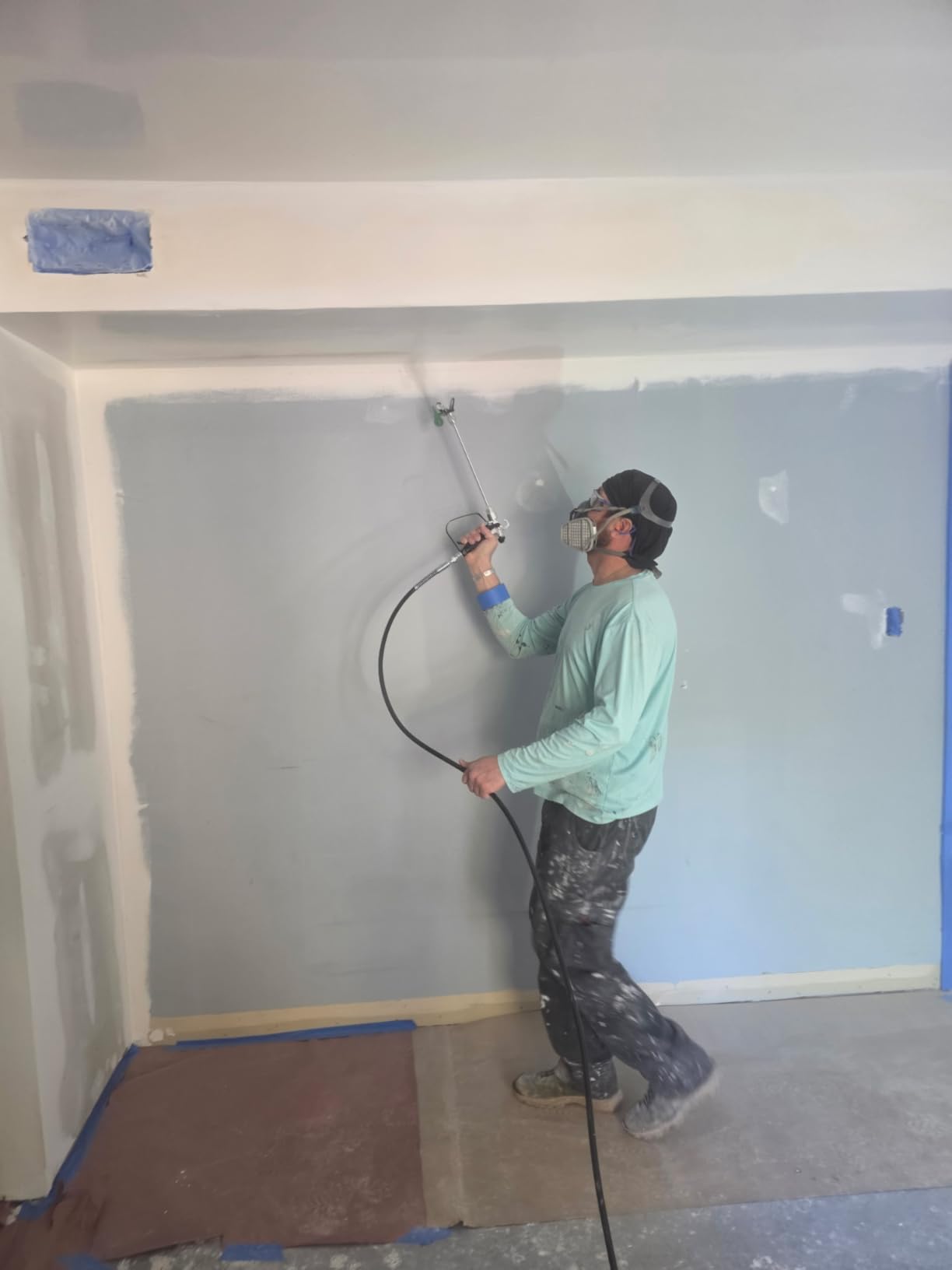
The included 18.9 inch extension pole is the item that most often gets mentioned as a reason owners can finish without a ladder. On a standard six-foot fence it handles the top rail, and the 15 meter hose means the machine can sit in one place for an entire run.
The detachable pump body is a genuine design choice rather than a gimmick. It comes apart for cleaning, and owners credit that with fewer clogs, which is the other complaint that dominates fence sprayer reviews.
Where the value runs out
At 22 pounds it is the heavy end of the stand sprayer class, and it is built for water-based coatings. Wood lacquer, latex and stain are its lane. If you need to push an oil-based product through it, expect to thin more than you would on a machine with a higher pressure ceiling.
The short power lead is also mentioned often enough to plan around. Bring an outdoor-rated extension lead and place the machine on the driest, flattest ground you can find.
Why I rank it above the smaller 750W
Both are solid, and the 950W carries more reviews. The 950W wins on the only spec that scales with fence length: 2.0 LPM against 1.2 LPM. Over a 200 foot run, that difference is measured in hours, not minutes.
7. Gyfent X9 Airless Sprayer – Best for Mixed Paint Types
Gyfent x9 Airless Paint Sprayer, 650W 3000 Psi, 0.39 Gpm
650W motor
3000 PSI
0.39 GPM
25 ft hose
11.8 in extension rod
Pros
- Handles both water based and oil based paints
- 0.39 GPM is a high flow rate for the class
- 11.8 in extension rod reaches fence tops and high trim
- Complete package includes hose
- rod
- cleaning kit and PPE
Cons
- Manufacturer forbids running the machine idle
- Coatings still need a tip size and viscosity check
The Gyfent X9 is the pick when your fence project is not purely water-based. Most homeowner sprayers in this roundup are happiest pushing acrylic latex and water-based stain, and the X9 is specified for water-based and oil-based coatings both, with fully adjustable pressure and motor speed for the difference.
At 3000 PSI and 0.39 GPM it has more flow than most machines here, and buyers specifically call out how unusual that is for the tier. Flow is what sizes a sprayer to a fence line, so on paper it covers a long run faster than most of this list.
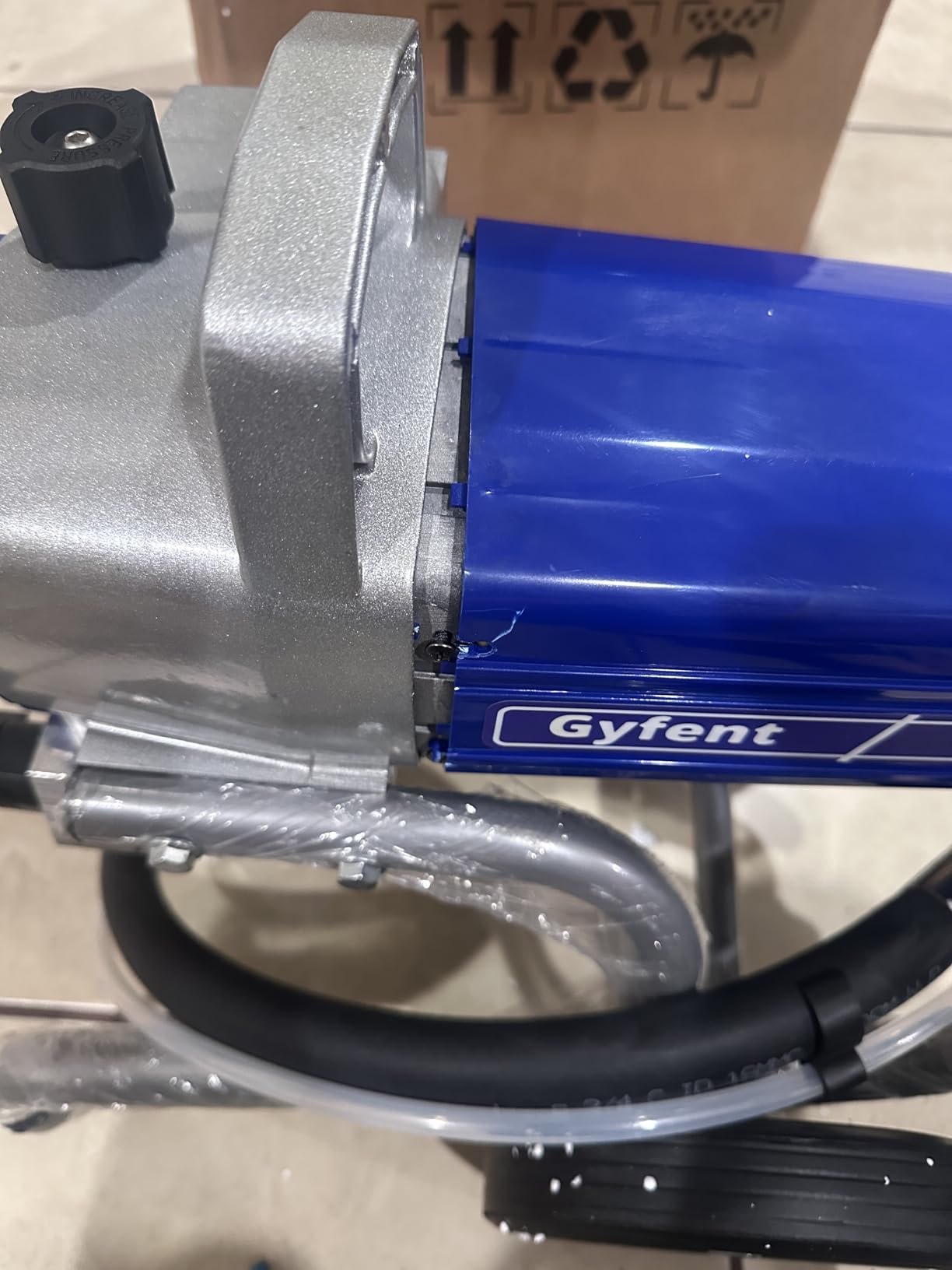
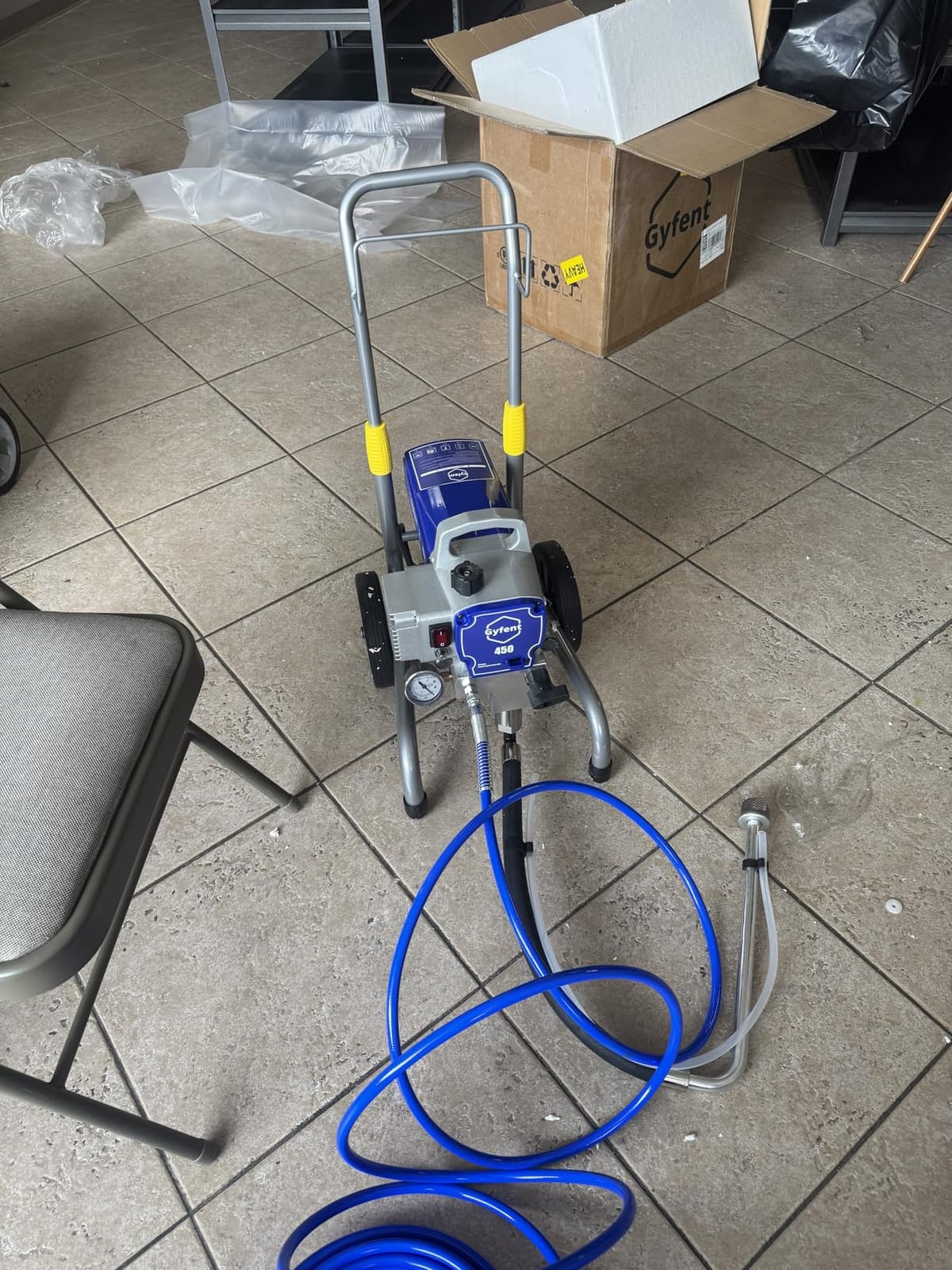
The accessory package is unusually complete. You get the 25 foot hose, the 11.8 inch extension rod, a cleaning kit, gun lubricant, a strainer, a viscosity cup, a measuring cap, a replacement seal and protective gear, which removes the usual first-trip-to-the-hardware-store problem.
Owners report good, adjustable spray patterns across fences, decks, cabinets and interior walls. The single operational point that appears again and again is to read the quick guide carefully and never let the pump run dry, since that is the leading cause of reported problems.
What the idle rule actually changes
The manufacturer explicitly forbids running the machine idle, and that is a real habit to unlearn. People trigger the gun, notice nothing coming out, and hold the trigger while they watch the paint travel down the line. Every one of those seconds is a dry pump seal.
Get into the routine of priming with the gun pointed at a bucket, and never trigger with the tip away from a surface unless you are deliberately flushing. That single habit prevents most of the failures reported for machines in this class.
Where the class runs out of road
The 134-review pool is small, and recommended annual use of 200 gallons keeps it in serious-homeowner territory. Coatings also still need a tip size and viscosity check before you commit a full bucket of stain to a first coat.
8. InoKraft NEO Sprayer Kit – Best All-in-One Kit for First-Time Users
InoKraft NEO Airless Paint Sprayer Kit, 3000 PSI 0.26 GPM, Lightweight
3000 PSI
0.26 GPM
10 lb body
25 ft hose
12 in extension
Pros
- Lightest stand machine here at 10 lb for long sessions
- Sprays latex
- acrylic
- stain and primer unthinned from 1 or 5 gallon containers
- Kit includes masking film
- tape
- strainer and touch-up brush
- Integrated Flush-Ease valve speeds cleanup and storage
Cons
- 0.26 GPM is the lowest flow rate in this group
- No inline pressure gauge makes fine adjustment harder
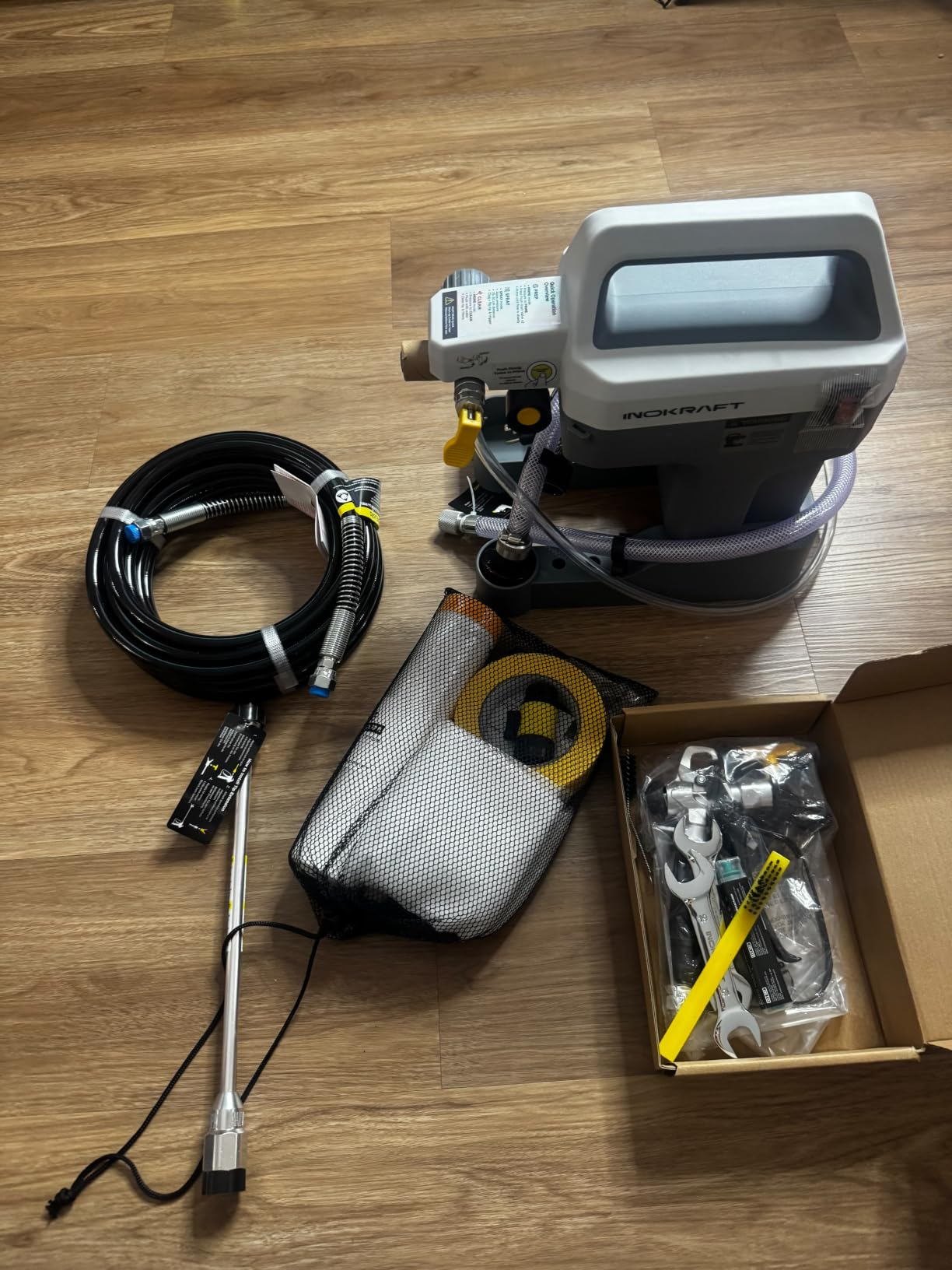
The InoKraft NEO is the pick for a first fence job, and the reason is the box rather than the machine. It ships with masking film, painter’s tape, a 250 micron strainer, a touch-up brush and the cleaning tools, which is a surprising amount of the total job already handled before you unbox anything else.
Owners rate it 4.4 across 1083 reviews, and first-time users consistently call out near-streak-free coverage and easy cleanup with nothing more than a bucket of water. The integrated Flush-Ease valve and built-in storage make the end of the job a five-minute task rather than an evening project.
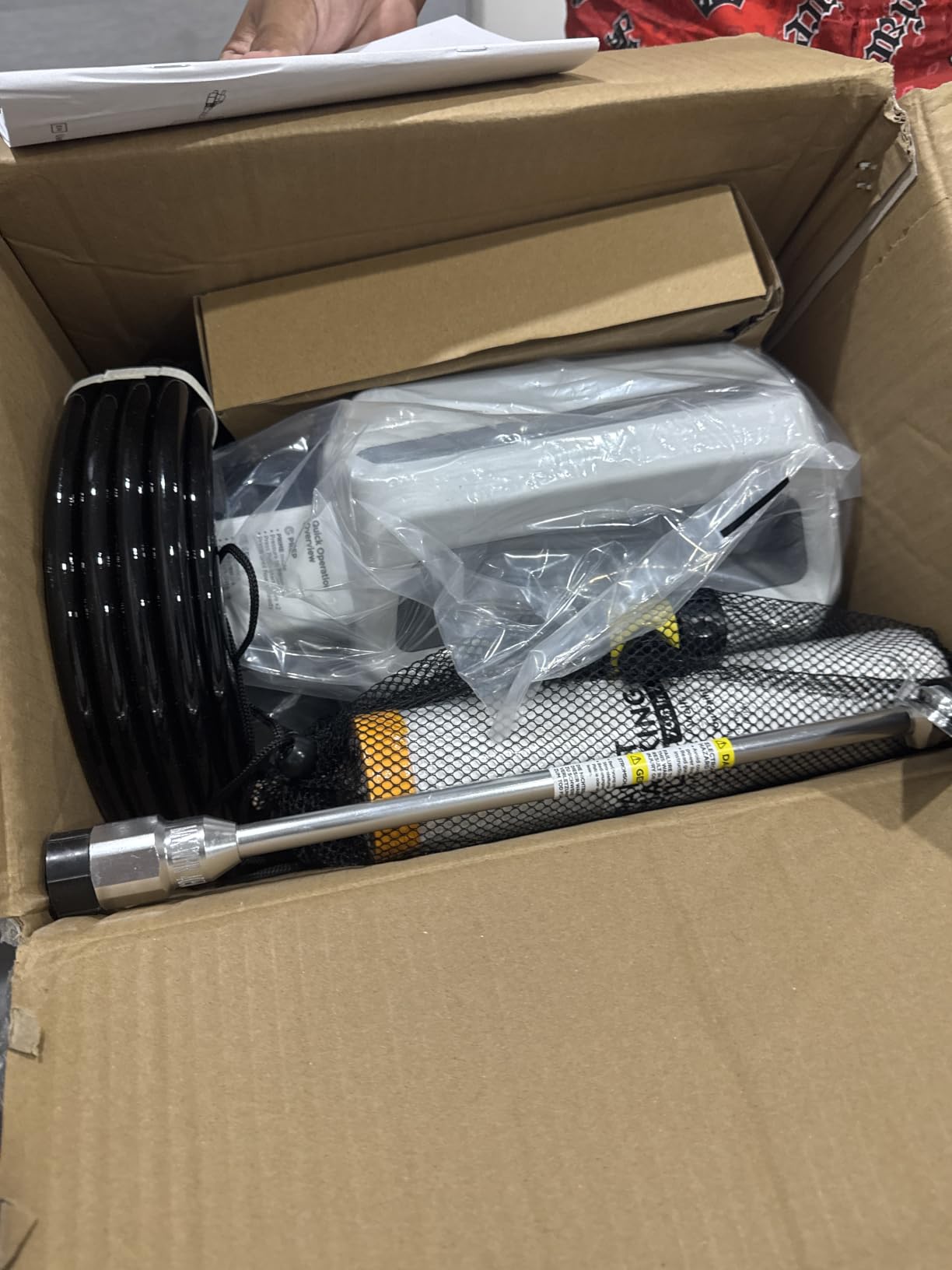
At 10 pounds it is the lightest stand machine here. If your fence line involves a gate, a side path and a slope, the weight of the machine is something you feel after the first hour, and this one simply does not have that problem.
The 12 inch extension and 360 degree swivel handle fence tops and gate edges, and the 25 foot high-pressure hose covers a decent run without dragging the machine across the grass.
When 0.26 GPM is the wrong number
This is the honest limitation. If your fence is 300 or 400 linear feet, the lowest flow rate in the group becomes the whole story. You will finish, but you will finish later than you would with anything else on this list.
The absence of an inline pressure gauge compounds it slightly, because you are dialling in by feel and by what the tip does rather than by reading a number. For a first project, learning on cardboard makes that a non-issue.
Why the kit matters more than the specs
Masking is what makes outdoor spraying survivable, and most first-timers underestimate it. Having film, tape and a strainer in the box means you mask before you start rather than after the first pass of paint lands somewhere it should not.
First-time owners also report finishing a full interior in roughly three hours with easy water-bucket cleanup, which is a fair proxy for how little friction this machine creates on a first project.
9. VEVOR 750W Stand Sprayer – Best Budget Sprayer with Reach
VEVOR 750W Stand Airless Paint Sprayer, 3000PSI High Efficiency Electric Airless Sprayer, Fine and Even Painting Effect, Handheld Paint Sprayers for Home Interior and Exterior Furniture and Fences
750W motor
Up to 3000 PSI
1.2 LPM max flow
7.6 m hose
Extension pole
Pros
- 3000 PSI covers large fence
- deck and exterior areas quickly
- Fan atomization gives an even fine result with less waste
- Full metal frame and rubber hose for wear and heat resistance
- Extension pole reduces bending and climbing on fence work
Cons
- Listed box contents are minimal so tips and filters may need buying separately
- 19.6 lb is heavy for the class
- 1.2 LPM is slower than the 950W on very large surfaces
The VEVOR 750W is the budget option when the fence is not enormous and you would rather spend nothing at all than buy a contractor machine. At 3000 PSI it holds full household pressure, and owners put the even finish on fences and exterior furniture right alongside the more expensive machines on their lists.
It carries 803 reviews at 4.3, which is a substantial pool of evidence for a low-cost machine, and the low gear is again the most-praised feature because it reduces how much paint a big surface drinks.
The most repeated piece of advice in reviews is to thin thicker coatings slightly and keep the detachable pump body clean after each use. Both are easy habits, and both come directly out of the machine’s design, so there is no workaround to learn.
Where the 950W earns its extra spend is flow. 1.2 LPM against 2.0 LPM is a real gap once you are past a single side of a fence, but on a 100 foot run with one or two gates, this machine keeps up.
What the sparse box actually costs you
The listed contents are minimal, so expect to buy a tip, a filter and a gun separately if the set is incomplete in your region. Budget for that before the fence day, not during it, because a fence project with no spare tip is a project that stops.
Keeping a pack of tips and a spare filter is standard practice on any airless machine, not a quirk of this one. The reversible tip that ships with the better machines is what saves the day when a blockage happens mid-run.
How this compares to spending more
Against a used mid-range machine, the honest question is how many fences you will spray. One fence, sometimes, is exactly the case where a low-cost machine with a maintained pump and a clean tip is the correct purchase.
If you are already planning the deck and the fence and maybe the shed, the difference in flow rate between this and a higher-flow machine starts to matter. Match the machine to the total area, not the single afternoon.
10. MAXXT 3300 PSI Stand Sprayer – Best Three-Pressure Setup
MAXXT Airless Paint Sprayers, 3300PSI Motorized Paint Sprayer with Stand, High Efficiency Spray Paint Machine for Home, Outdoor DIY Handyman Shed Garage House Painting Deck Fence Furniture
3300 PSI
0.32 GPM
0.82 hp pump
3 pressure modes
304 stainless steel
Pros
- Three-mode control at 500
- 1500 and 2900 PSI
- 0.82 hp pump and 0.32 GPM output for an even fast spray
- 304 stainless steel resists corrosion
- Flexible suction hose feeds from 1 or 5 gallon buckets
Cons
- Short primer hose splatters if not held in the bucket
- Can stripe at pattern edges on thicker materials
- Some reports of overheating and limited warranty support
The MAXXT is unusual in that it gives you three fixed pressure settings rather than one continuous adjustment. A three-mode button steps the pump between 500, 1500 and 2900 PSI, and for a fence job that covers stain at one end and solid paint at the other, discrete steps are faster than hunting for a number on a knob.
At 3300 PSI ceiling, 0.32 GPM output and a 0.82 hp pump, the hardware is competitive with machines costing considerably more. Owners report satisfaction rising sharply once they learn which mode suits which material, and several describe finishing entire sides of houses with even, fast coverage.
The 304 stainless steel body is a real material upgrade over painted steel in an outdoor machine that will sit in damp grass. It is the kind of detail that shows up as a lower complaint rate three seasons later.
Recommended use covers decks, fences, house exteriors and large DIY projects, and the stand format moves between fence sections without a full lift. Owners commonly reach speeds up to 9 times a roller, with a one-year warranty behind it.
Where the three modes work against you
Discrete settings are coarse. When you are feathering a post or working near a window frame, you cannot land between 1500 and 2900, and that is where the edge striping complaints come from on thicker materials.
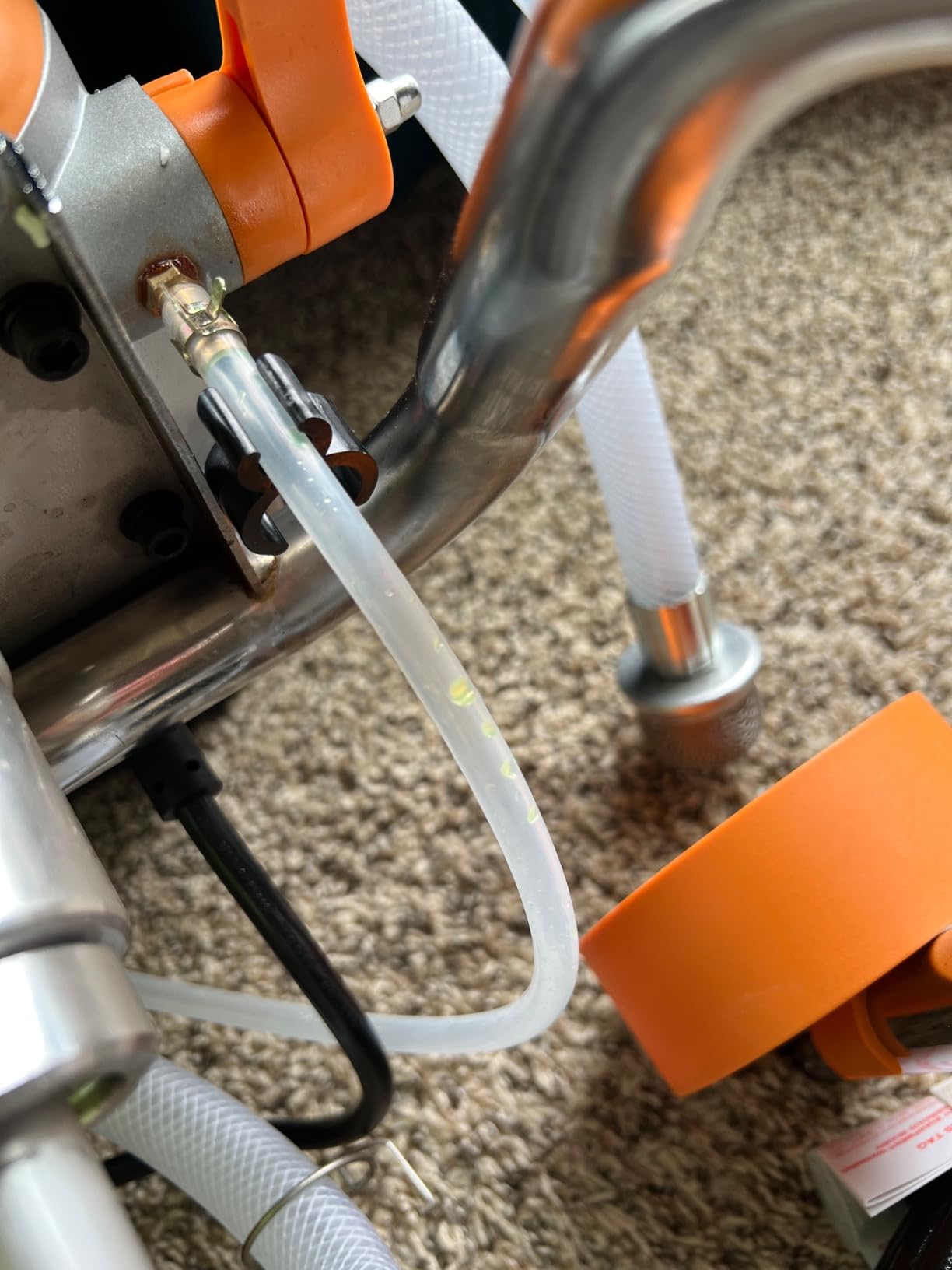
Start in the middle mode and work down for trim and posts rather than trying to fine-tune. The short primer hose also needs to be held in the bucket or you will spray paint across the grass, which is a small annoyance repeated all afternoon.
What the reviews flag most
Poor performance on thick wood stain is the most common negative, along with a handful of durability and customer support complaints that keep the 4.2 average honest. If your fence project is heavy stain, choose a machine with a larger orifice tip by default.
What Actually Matters When You Buy a Fence Sprayer?
How we picked these ten
We ranked these machines on the four factors that decide whether a fence job goes well: flow rate relative to fence length, real pressure control, feed setup, and how the machine behaves during cleanup. Marketing claims about being faster than a roller tell you nothing useful, so we ignored them and read the flow rates, pressure ceilings, hose lengths and cup sizes instead.
We also weighted the volume of real owner feedback heavily. A machine rated 4.3 on a thousand reviews has been through more fence projects than a machine rated 4.8 on forty, and on a tool this mechanical, the failure data matters more than the first impression.
Flow rate decides how long the fence takes
Flow rate, measured in gallons per minute or litres per minute, is the single number that sizes a sprayer to a fence. It is how much coating leaves the gun per minute, and everything else on the machine exists to support it.
Use this as your sizing guide rather than any brand claim: a handheld unit under 0.2 GPM suits a gate and a few panels, a 0.26 to 0.33 GPM stand machine comfortably covers a typical 150 to 250 linear foot fence in a day, and anything above that is built for repeated work rather than one weekend.
Pressure control matters more than peak PSI
Every machine here reaches 2000 to 3300 PSI, and that range is mostly marketing. A sprayer that is locked at maximum pressure will either atomize stain like paint or struggle with a thick topcoat, and you cannot fix either in the field.
What you want is a knob or a button that lets you drop pressure for stain and a lower-viscosity coating, and raise it for a heavier body coat. That is the single clearest reason the Graco X5 ranks first in this roundup.
Read the spray tip code before you buy
A three-digit tip code tells you everything: double the first digit for the fan width in inches, and read the last two digits as the orifice size in thousandths of an inch. A 515 tip is a 10 inch fan with a 0.015 inch hole, and a 517 is a 10 inch fan with a 0.017 inch hole.
Buy a reversible tip if you can. It flips inside the guard and blasts a blockage backward out of the hole, which is the difference between a ten-second pause and stripping a tip at the fence line. Replace tips after roughly 15 to 40 gallons of latex and 35 to 60 gallons of oils and stains.
Direct feed beats an onboard tank on fences
Fence work consumes coating in volume, not in careful little touches. Every machine here that pulls from a 1 or 5 gallon bucket via a flexible suction tube will save you more time than any other single feature, because your stops become bucket changes instead of tank refills.
The exception is the cordless handheld, where a 32 oz cup is the whole reason the machine weighs 16 ounces. If you go cordless you accept the refills as the price of not running a cord.
Hose length is reach, and reach is not walking backwards
A 25 foot hose covers a decent run. 50 feet and up, and you can plant the machine once per fence section and move the spray pattern instead of dragging wet hose across wet grass, which is faster and far less frustrating.
If your fence is six feet or taller, budget for an extension rod or pole as well. Several machines here include one, and the ones that do not are much easier to work with a ladder when you do. More on tall-fence reach in our invisible fence guides for dogs, where the same back-yard reach problem comes up in a different context.
Graco or Titan: which brand for a fence
If the shortlist is Graco versus Titan, the honest answer is that Graco builds the more repairable machine and Titan builds the more forgiving one. Graco wins on pump longevity, filter design and reversible tip technology, and its machines are easier to find parts for years later.
Titan wins on overspray control. The HEA spray pattern in the ControlMax 1700 wastes noticeably less coating in a confined yard, and on a fence bordered by a neighbor’s car that is a real advantage. Choose by yard, not by brand loyalty.
Rent, buy, or hire out
For one fence, renting is usually the right financial call. A rental avoids the purchase entirely for a weekend, but it also adds a full flush before you return it, so budget an extra hour you did not plan for.
Buying wins once you have a second project on the calendar, because the machine, the tips and the cleanup kit are all reusable and the second job costs only paint. Hire a pro when the fence is tall, the rot is structural, or the prep is larger than the painting.
Fence Prep and Spraying Technique
Prep the fence before you think about the sprayer
A sprayer will not fix rot, and painting over rot wastes the whole job. Replace warped or soft boards first, cut out anything punky at the posts, and let new pressure-treated wood dry properly before coating it.
Power wash the fence and let it dry completely. Washing takes off the chalky oxidized layer that makes new paint peel, and spraying over damp wood causes adhesion failure that shows up a year later.
Mask before you trigger the gun. Hang film on the neighbor’s side, cover plantings and cars, and tape off post caps and any hardware you do not want coated. Our guides to the best invisible fences for cats touch on the same back-yard setup, where knowing what sits near the fence line before you cover it in plastic saves a lot of work.
A drop sheet thrown over the end of a fence section turns it into a spray booth and catches most of what would otherwise drift behind the boards. It is the simplest overspray control available and it costs one sheet.
Set pressure low, then walk it up
Start at the lowest pressure that will atomize the coating and test on cardboard. If the fan edge is soft and ragged, you need more pressure. If you are getting a fine mist you cannot control, back it off.
Hold the gun 12 to 18 inches from the fence, perpendicular to the boards. Moving it back flattens the fan and throws more coating past the wood, which is overspray you are paying for.
Overlap each pass by about 50 percent. Miss that overlap and you will see the lines in the finished fence under raking afternoon light, which is exactly the light a fence gets.
Back-brush and use two coats
On porous, textured or board-on-board surfaces, back-brush the coating into the wood with a brush while it is still wet. Spray lays the coating down and the brush pushes it into grain and gaps where it would otherwise bridge.
Two thin coats beat one thick coat every time. The first coat is a keying coat that seals the surface, and the second is the one that reads as a finish. Give the first coat the drying time the coating manufacturer specifies, not the time you think it needs.
Stain and paint do not want the same setup
Semi-transparent stain is the coating that clogs tips most, because pigmented stain carries solids that catch at the orifice. Thin stain only as far as the manufacturer allows, step up to a larger orifice such as a 517 or 519, and check the tip every few minutes while you spray.
Solid fence paint is more forgiving and behaves more like interior latex. If you are switching between them across a project, a machine with adjustable pressure, like the X5, saves you a lot of trial and error.
Wind rules that decide the day
Do not spray in wind, and that is not a soft recommendation. Wind carries coating to your neighbor’s siding, your own siding, cars and plantings, and no filter or pressure setting makes that acceptable at speed.
Check the wind in the morning when you set up, and again before each section. If the grass is moving in gusts, wait. The job will still be there in an hour, and a repainted fence will not.
Cleanup is not optional
Flush the machine immediately after the job, while the paint is still workable. Dried latex inside a pump and hose is the single most common reason a working sprayer is returned or discarded.
Run water or the appropriate solvent through the gun and hose until it runs clear, then reverse the tip and flush the guard. Machines with a Flush-Ease valve, like the MaXpray M3 and the NEO, turn this step into a few minutes of work.
Run the storage fluid through before you put the machine away for the season, and store it dry. A reversible tip kept in your pocket costs almost nothing and saves the next job.
Respect the pressure
The number one rule with an airless sprayer is to never point the gun at yourself, another person, or an animal. At 3000 PSI, a tip that touches skin injects coating under the skin, which is a genuine emergency rather than a painful prank.
Wear eye protection, gloves, hearing protection and a respirator rated for the coating, and keep children and pets off the spray zone. Trigger discipline matters: the gun does not spray when the trigger is released, so never hold it against a surface you do not want coated.
If the fence is attached to a structure built before 1978, assume lead paint may be present and get the lead-safe guidance you need before power washing or sanding. Lead dust is a serious exposure risk and it is regulated for a reason.
Frequently Asked Questions
Are paint sprayers any good for fences?
Yes, and for long wooden fences they are the best everyday option. An airless sprayer pushes thick exterior latex or fence stain through unthinned and covers fence boards roughly three times faster than a roller, which turns a weekend job into an afternoon. The trade is masking and overspray, so prep and wind checks matter as much as the machine.
What GPM do I need for a fence sprayer?
For a typical 150 to 250 linear foot fence, look for 0.26 to 0.33 gallons per minute from a stand-mounted machine. Below 0.2 GPM suits gates and short panels, and above 0.33 GPM is built for repeated work. Flow rate is the number that determines how many linear feet leave the gun in an hour.
Is a handheld or cart airless sprayer better for fences?
A stand or cart model is better for a full fence because it draws straight from a 1 or 5 gallon bucket and keeps spraying while you walk the line. A handheld cordless unit is better for gates, short runs and any fence far from an outlet, since it weighs about 16 ounces and needs no hose.
What is the best airless paint sprayer for staining a fence?
The Graco Magnum X5 is the best overall fence sprayer because its adjustable pressure control handles both semi-transparent stain and solid paint on the same machine. For stain specifically, pair it with a larger reversible orifice tip such as a 517 and check the tip every few minutes, since pigmented stain is the coating that clogs most often.
Is there a lot of overspray with an airless paint sprayer?
There is some, and outdoors it is mostly a wind problem. HEA technology on the Titan ControlMax 1700 cuts overspray by up to 55 percent compared with standard airless spray. You can reduce the rest by holding the gun 12 to 18 inches from the boards, starting at low pressure, and not spraying at all when the wind is up.
Why does my paint sprayer tip keep clogging?
The usual causes are a tip that is too small for the coating, dried paint left in the gun from last time, debris in the paint, and a filter that was never cleaned. Semi-transparent stain is the worst offender because pigment solids catch at the orifice. Use a larger reversible tip, flush the machine after every use, and check the tip every few minutes while spraying.
What is the number one rule when using airless spray guns?
Never point an airless spray gun at yourself, another person, or an animal, and never trigger it with nothing in the path. At 3000 PSI a tip that touches skin injects coating under the skin. Keep the trigger discipline, wear eye protection, gloves and a respirator, and keep children and pets out of the spray zone.
Should I rent or buy an airless sprayer for one fence?
Rent for one fence, and buy once you have a second project planned. Renting avoids the purchase but requires a full flush before you return the machine, so add about an hour you did not plan for. Buying costs more upfront but every fence after the first costs only paint, and the machine, tips and cleanup kit are reusable.
Conclusion
The Graco Magnum X5 is the best airless paint sprayer for fences because adjustable pressure control, bucket feed and a deep owner-review history make it the machine most homeowners can use on both stain and solid paint without second-guessing the settings. It is the pick we would hand to almost anyone reading this.
Pick the Titan ControlMax 1700 if your yard is tight and overspray would land on something you cannot repaint. Choose the InoKraft MaXpray M3 for tall fences where reach and hose length matter, the VEVOR 950W if you want the most coverage per dollar, and the Graco ProX19 if painting fences is something you will do again all year.
Whichever one you choose, spend the saved spraying time on power washing the fence, replacing soft boards and masking the neighbor’s side. A sprayer is a shortcut over preparation, never a substitute for it.