
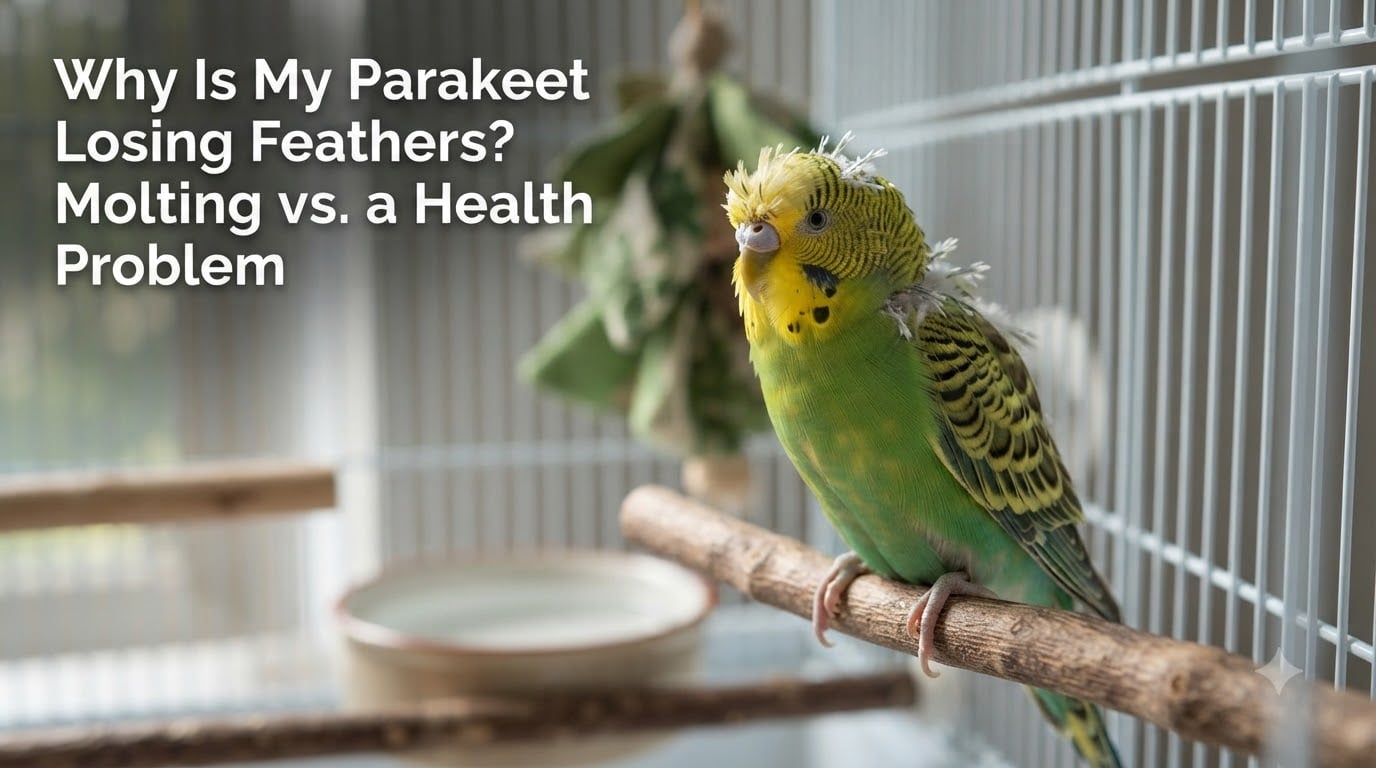
I noticed feathers collecting at the bottom of my budgie’s cage last spring and immediately panicked. Was it normal molting, or was my parakeet losing feathers because something was wrong? After talking to my avian vet and spending weeks observing, I learned that the answer usually lives in the details: where the feathers fall from, how they look, and how my bird behaves.
If you’re staring at feathers on the cage floor wondering the same thing, this guide is for you. I’ll walk you through what healthy molting looks like, the five most common causes of abnormal feather loss in parakeets, how to tell plucking from a natural molt, and the exact signs that mean you need to see a vet now.
Table of Contents
Why Parakeets Lose Feathers?
Parakeet feather loss happens for two broad reasons: natural molting or an underlying health or behavioral problem. A healthy budgie sheds old feathers gradually so new ones can grow in, usually twice a year. That process is normal and looks orderly. Abnormal feather loss, on the other hand, leaves bald patches, exposed skin, or feather damage that signals something else is going on.
The five most common reasons a parakeet loses feathers are molting, parasites or mites, self-plucking from stress or boredom, nutritional deficiencies, and viral infections like French Moult or Psittacine Beak and Feather Disease. In my experience, ruling those out in order – starting with molting and ending with viruses – is the fastest way to figure out what’s happening with your bird.
What Normal Molting Looks Like in a Parakeet?
A normal molt is symmetrical, slow, and painless. Your parakeet will drop a few feathers at a time, both sides of the body usually matching, and you’ll see plenty of new pin feathers pushing through the skin to replace them. Appetite often ticks up a bit because feather regrowth takes protein and energy.
How Often Parakeets Molt
Most parakeets molt twice a year, typically in spring and fall, though some budgies molt lightly every couple of months. Each molt can last six to eight weeks. If your budgie is molting more frequently or for longer stretches, it is usually still normal, but keep an eye out for any bald patches or behavior changes.
You may notice your bird is a little quieter or more irritable during heavy molts. That is common because new pin feathers can feel itchy or tender. Older parakeets sometimes molt harder and look ragged for longer stretches, which is also normal.
Pin Feathers: What They Are and How to Spot Them
Pin feathers (also called pinfeathers) are new feathers wrapped in a waxy keratin sheath. They look like tiny white or grayish spikes poking through the skin, most visible on the head, neck, and back. They are a great sign your bird is replacing feathers properly.
Never pull or pinch a pin feather. The sheath protects a blood vessel and nerve while the feather matures. If your parakeet lets you, very gently rolling the sheath between your fingertips can help it flake off and free the new feather. Bathing or misting your bird with lukewarm water softens the sheaths and makes molting more comfortable.
5 Common Causes of Abnormal Feather Loss
When feather loss looks uneven, leaves bald spots, or comes with scratching, lethargy, or bleeding, you are probably dealing with one of these five causes.
Feather Plucking and Over-Preening
Self-plucking is when a parakeet pulls its own feathers out, often leaving raw or irritated skin behind. Over-preening is the milder version where the bird chews or frays feathers without removing them entirely. Both usually start on the chest, shoulders, or thighs, where the beak can easily reach.
The most common triggers are stress, boredom, hormonal changes, and skin irritation. Once it becomes a habit, plucking can persist even after the original cause is gone. I have seen parakeets barber their feathers down to the shaft when their environment stayed the same for months without enrichment.
Parasites and Mites
External parasites like mites, especially scaly face mites (Knemidocoptes) and red mites, can drive feather loss and intense scratching. You might see crusty material around the beak, eyes, or legs, and your bird may seem restless at night if mites are in the cage.
Avian vets treat mite infestations with prescription sprays or oral medications. Over-the-counter mite sprays sold in pet stores are usually too weak and can be dangerous to small birds, so skip them and book a vet visit if you suspect parasites.
Nutritional Deficiencies
Birds fed an all-seed diet often lack vitamin A, calcium, iodine, and quality protein, all of which feathers need to grow properly. A classic sign is dull, brittle plumage or feathers that grow in twisted or frayed.
Switching to a balanced pellet diet supplemented with fresh vegetables (think dark leafy greens, carrots, sweet potato) usually improves feather quality within a molt or two. Adding a small amount of egg food or cooked legumes during heavy molts gives the extra protein new feathers need.
Stress and Boredom
Stress is one of the biggest hidden causes of parakeet feather loss. Major changes – moving cages, a new pet or person in the home, loud noises, or a house full of predators (including cats that watch the cage) – can trigger a molt or even plucking within days. One forum user described their African Grey pulling most of its body feathers out within 24 hours of a stressful move.
Boredom is the chronic cousin of stress. Parakeets are intelligent, social birds that need toys, foraging activities, and daily out-of-cage time. A lonely, under-stimulated budgie is far more likely to start grooming itself aggressively.
Viral Diseases (French Moult and PBFD)
Two viruses deserve a clear mention because they cause serious feather loss:
French Moult virus (polyomavirus) affects young parakeets most heavily, causing flight and tail feathers to grow in deformed or fall out suddenly. Affected chicks sometimes cannot fly at all.
Psittacine Beak and Feather Disease (PBFD) is caused by a circovirus and leads to progressive feather loss, deformed beak growth, and immune suppression. It is more common in cockatoos and African Greys but does occur in budgies.
Both conditions require a vet’s diagnosis through blood work or PCR testing. They are not treatable at home, and affected birds need professional care to manage symptoms and protect any cage mates.
Normal Molting vs Feather Plucking: How to Tell the Difference
This is the question I get asked most often, so I built a simple comparison you can use right at the cage. The biggest clues are symmetry, skin condition, and behavior.
A normally molting parakeet shows symmetrical feather loss (equal on both sides), new pin feathers coming in, no bald patches, and just a mild uptick in preening. Skin stays smooth and covered by either old or new feathers.
A plucking parakeet usually leaves irregular bald patches, often on the chest, thighs, or shoulders where the beak can reach. You may see broken or chewed feathers, redness, scabs, or scratches. Birds that are plucking often preen obsessively for long stretches, sometimes even when there is nothing left to remove.
If you are still unsure, your vet can do a feather follicle biopsy or blood work to confirm whether feather loss is behavioral or medical. That test alone gave me real peace of mind when I needed it.
When to See an Avian Vet?
Some feather loss situations cannot wait. Book an avian vet appointment if you notice any of the following:
Bald patches where the skin is exposed, especially if the skin looks red, scabby, or bleeding. Skin irritation often points to plucking, mites, or infection, all of which need treatment.
Feathers that look chewed, frayed, or barbered down to the shaft. This is a strong sign of behavioral plucking or a nutritional problem.
Lethargy, fluffed-up feathers for long periods, a drop in appetite, or changes in droppings. These systemic signs mean the problem is more than skin deep.
Sudden heavy feather loss in a young bird, or any sign of beak deformity or crusting around the face. These are red flags for viral diseases like PBFD or French Moult.
Open-mouth breathing, tail bobbing while resting, or weight loss. These suggest respiratory or systemic illness that needs urgent care.
Home Care vs Vet Visit: A Simple Decision Tree
Here is the framework I use for any of my birds. Start at the top and work down until you land on an answer.
If feather loss is symmetrical, you can see lots of pin feathers, and your parakeet is eating, singing, and active, this is almost certainly normal molting. Care at home with good nutrition, gentle mist baths, and patience.
If you see bald patches, broken feathers, scratching, or crusty skin, that points to a problem. Schedule a vet visit within the next few days.
If feather loss comes with lethargy, appetite loss, weight loss, breathing changes, or any bleeding, head to the vet today, not next week. Many bird illnesses escalate fast.
If you see any signs of mites, scaly crusts around the beak or feet, or suspect your bird was exposed to a sick bird, also call the vet. Self-treating with store-bought sprays usually wastes time and can make things worse.
Supporting Your Parakeet’s Feather Health
Good feather health starts long before a problem shows up. Feed a varied diet built around high-quality pellets, supplemented with fresh vegetables, a small amount of seed, and occasional protein-rich treats during heavy molts.
Keep the cage clean and the air free of drafts, cigarette smoke, and aerosol sprays, all of which can irritate skin and feathers. Provide a shallow dish of lukewarm water two or three times a week so your bird can bathe, which keeps pin feathers soft and reduces over-preening.
Offer toys, perches of different textures, and daily out-of-cage time. Rotate toys weekly so your bird stays curious. Foraging toys that hide treats inside are especially good for preventing the boredom that often leads to plucking.
Finally, build a relationship with an avian vet before you have an emergency. A yearly wellness check catches nutritional gaps, slow infections, and subtle feather issues before they become real problems.
Frequently Asked Questions
What disease makes birds lose feathers?
Several diseases can cause feather loss in parakeets, including French Moult (polyomavirus), Psittacine Beak and Feather Disease (PBFD), and chronic mite infestations like scaly face mites. Bacterial skin infections and fungal infections such as ringworm can also damage feathers and follicles. A vet can diagnose the cause through physical exam, skin scrapings, or PCR blood tests.
Is it normal for parakeets to lose feathers?
Yes, seasonal molting is normal and happens twice a year, usually in spring and fall. Each molt lasts roughly six to eight weeks and produces visible pin feathers as new plumage grows in. Feather loss outside of molt cycles, bald patches, or feathers that look chewed are not normal and should be checked.
Is molting painful for parakeets?
Molting is not painful, but it can be uncomfortable. Pin feathers have a blood supply and nerve endings under the keratin sheath, so they can feel itchy or tender, especially on the head and neck. Most parakeets simply want more rest, gentle bathing, and minimal handling during heavy molt periods.
Will parakeet feathers grow back?
Yes, healthy parakeet feathers grow back as long as the follicle is intact. Tail and flight feathers typically regrow in four to eight weeks, while body feathers can take several months to fully replace. If feathers are missing for months or come back deformed, talk to an avian vet to rule out follicle damage or viral disease.
How can I treat my budgie who is losing feathers?
Start by checking whether the loss is symmetrical and pin feathers are present, which points to normal molting. Improve diet with pellets and fresh vegetables, offer lukewarm baths, and add toys and out-of-cage time to reduce stress. If you see bald patches, scratching, lethargy, or damaged feathers, schedule an avian vet visit instead of home treatment.
What time of year do parakeets molt?
Most parakeets molt twice a year, with the heaviest molts in spring and fall. Indoor birds under artificial lighting may molt more often and less predictably. Each molt can last six to eight weeks depending on the bird’s age, diet, and overall health.
Final Thoughts on Parakeet Feather Loss
A parakeet losing feathers is unsettling, but in most cases the cause is a normal molt or a fixable problem. Start by looking at symmetry, checking for pin feathers, and watching your bird’s energy and appetite. From there, work through the most common issues: stress, diet, parasites, and only rarely viral disease.
When in doubt, call your avian vet. Feather problems caught early almost always have a good outcome, and waiting tends to make everything harder on your bird. With the right care and a watchful eye, your parakeet’s plumage will be back to its bright, full self in no time.