
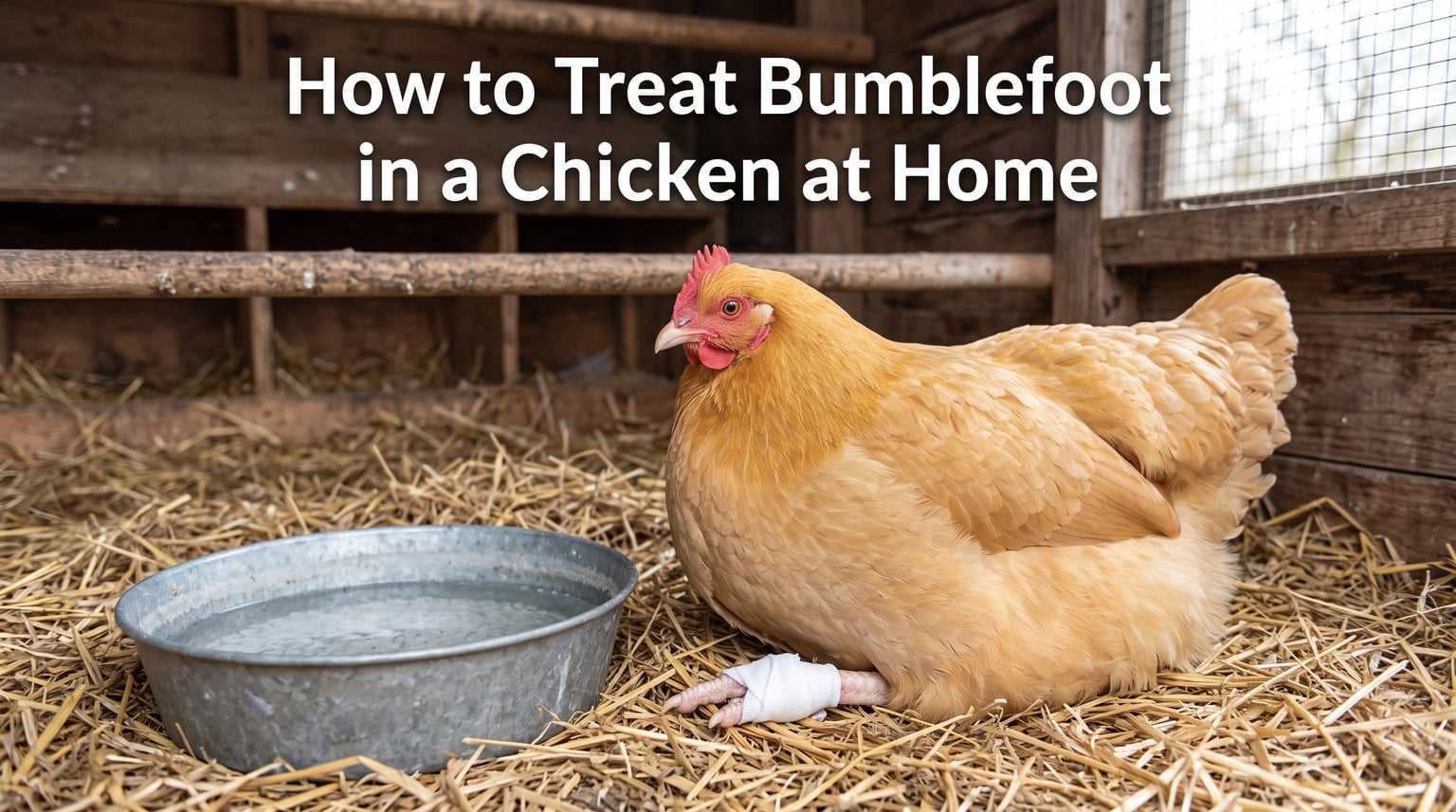
Yes, you can treat bumblefoot in a chicken at home for mild and moderate cases. Bumblefoot (pododermatitis) is a staph infection of the footpad that responds well to warm Epsom salt soaks, careful removal of the infected core, and daily bandaging when caught early. I have walked several of our own hens through this exact treatment, and most recovered within 2 to 3 weeks with no vet visit needed.
This guide covers how to recognize bumblefoot, grade its severity, decide whether home treatment is safe, and walk through the entire process with specific measurements and timelines you can follow tonight. You will also learn what to skip, what to never put on the wound, and how to keep it from coming back.
Table of Contents
What Is Bumblefoot in Chickens?
Bumblefoot is a bacterial infection of the footpad caused by Staphylococcus bacteria. The technical term is pododermatitis, and it shows up as a swollen, often scabbed footpad with a hard core inside. The bacteria enter through a small cut, scrape, or puncture, then form an abscess underneath the skin.
The hallmark of bumblefoot is a black or dark scab on the bottom of the foot, with a firm, yellow-white “kernel” or “plug” of infected tissue beneath it. If left alone, that core grows and can spread into deeper tissue, tendon, and bone.
Signs and Symptoms of Bumblefoot
Most cases start subtly. Watch for these signs, especially in heavy breeds and older hens.
Limping or favoring one foot
Swollen, warm, or red footpad
A round black scab or plug on the underside of the foot
A visible lump or “kernel” under the scab
Reluctance to perch or jump up to the roost
Sitting more than usual during the day
In severe cases, the bird stops eating and isolates herself
If you spot a black scab plus a limp, you are almost certainly looking at bumblefoot. The earlier you treat it, the faster the recovery.
Severity Grading: Mild, Moderate, and Severe Cases
Before you start home treatment, grade the case. We use a 1 to 5 system based on the Chicken Chick and Azure Farm Life grading models. Match your chicken to the right grade before deciding to treat at home.
Grade 1 (Mild): Small scab, slight swelling, no limp. Chicken behaves normally. Excellent candidate for home treatment.
Grade 2 (Mild-Moderate): Larger scab (pea-sized), mild swelling, occasional limp. Home treatment is appropriate.
Grade 3 (Moderate): Obvious swelling, persistent limp, larger kernel under the scab. Home treatment can work but requires more skill and patience.
Grade 4 (Moderate-Severe): Significant swelling, multiple scabs, bird clearly in pain. Vet consultation strongly recommended.
Grade 5 (Severe): Swelling spreads to toes or hock, bird refuses to walk, possible bone involvement. Veterinary care required.
If you are between grades 3 and 4, and you are not confident with the procedure, a vet visit is the safer route.
What Causes Bumblefoot in Chickens?
Bumblefoot does not appear out of nowhere. It results from bacteria entering through a foot injury, often combined with conditions that weaken skin or stress the footpad.
The most common causes we see in our own flock are rough, narrow roosts that cause splinters and pressure sores. Hard landings from high perches also bruise footpads and create entry points for bacteria.
Wet, soiled, or ammonia-heavy bedding is another major factor. Constant moisture softens the footpad and lets bacteria thrive. Heavy breeds, overweight birds, and birds on vitamin A deficient diets are more prone to it as well.
Supplies You Will Need for Home Treatment
Gather everything before you catch the chicken. A smooth procedure takes 20 to 30 minutes from soak to bandage.
Epsom salt (magnesium sulfate)
Betadine (povidone-iodine 10%)
Warm water in a shallow container
Clean towels or paper towels
Sterile gauze pads (2×2 inch)
Non-stick wound pad (Telfa)
Self-adhering vet wrap (1 inch wide)
Plain antibiotic ointment (Neosporin, no pain relief)
Sterile tweezers or hemostats
Scalpel, sharp nail clippers, or sterilized razor blade
Optional: drawing salve such as PRID or ichthammol
How to Treat Bumblefoot in a Chicken at Home (Step-by-Step)
Follow these steps in order. Most mild cases resolve after 7 to 14 days of daily treatment.
Step 1 – Secure the chicken. Wrap the bird in a towel with wings tucked and feet exposed. Have a helper if possible. Stay calm and talk softly; stress makes everything harder.
Step 2 – Soak the foot. Fill a shallow container with warm water (around 100 degrees F) and dissolve 1 to 2 tablespoons of Epsom salt per quart. Soak the affected foot for 15 to 20 minutes. This softens the scab and reduces bacterial load.
Step 3 – Remove the scab and core. Gently lift the softened scab with sterile tweezers. Underneath, you will find the kernel – a firm, cheese-like plug of infected tissue. Squeeze the sides of the foot to push the kernel out, or use the tweezers to pull it slowly. Some pieces may come out in stages.
Step 4 – Flush the wound. Mix 1 part Betadine with 10 parts clean water. Flush the cavity thoroughly to remove debris and bacteria. Pat dry with clean gauze.
Step 5 – Apply antibiotic ointment. Pack the cavity with plain Neosporin (no lidocaine, no benzocaine). These additives are toxic to chickens.
Step 6 – Bandage. Place a non-stick pad over the wound, wrap with sterile gauze, then secure with self-adhering vet wrap. Do not wrap so tight that you cut off circulation. Change the bandage every 24 to 48 hours.
Step 7 – Repeat daily. Soak, clean, re-apply ointment, and re-bandage for 7 to 14 days until the wound closes and no more kernel material emerges.
Natural Treatment Options for Mild Bumblefoot
For Grade 1 cases or as a complement to standard care, several natural options exist.
Drawing salves such as PRID or ichthammol 20% help pull infection toward the surface. Apply a thin layer under the bandage daily.
Activated charcoal poultices and medical-grade honey (Manuka) can be applied to the wound before bandaging. Both have antibacterial properties supported by veterinary literature.
For natural methods to work, you need consistency. Expect 2 to 3 weeks of daily soaks and dressing changes. If there is no improvement after 10 days, switch to surgical removal.
Critical Wound Care Warnings You Must Know
Some over-the-counter products are dangerous for chickens. Never use these on bumblefoot wounds.
Ointments containing lidocaine or benzocaine (topical anesthetics are toxic to poultry)
Neosporin “Plus” or “Pain Relief” versions
Full-strength hydrogen peroxide on open tissue – it damages healing cells
Petroleum jelly as the primary treatment (it traps bacteria)
Stick with plain Neosporin, plain triple antibiotic ointment, or Vetericyn spray. These are safe and effective.
Bumblefoot Recovery Timeline and What to Expect
Most cases follow a predictable timeline when treated correctly.
Mild (Grade 1 to 2): 7 to 14 days. The wound closes within the first week, and the bird returns to normal activity by day 10.
Moderate (Grade 3): 2 to 6 weeks. Larger cavities take longer to fill in. Expect daily bandage changes for at least 3 weeks.
Severe (Grade 4 to 5): Months, or the infection becomes chronic even with vet care.
Watch for red flags during recovery: foul smell, spreading redness, pus that does not reduce, or a sudden limp returning after initial improvement. Any of these signals a vet visit.
Should You Separate the Chicken from the Flock?
Yes, separate the bird during treatment. Chickens are curious and will peck at bandages, often pulling them off within hours.
A dog crate, spare rabbit hutch, or a sectioned-off corner of the coop works well. Provide food, water, and a low perch (8 to 12 inches off the ground) to reduce pressure on the healing foot. Keep the area dry and clean.
Once the wound is fully closed and bandaging stops, you can return her to the flock.
When You Should Call a Veterinarian
Home treatment is appropriate for Grade 1 to 3 cases. Reach out to an avian or poultry vet if you see any of these signs.
Swelling that spreads up the leg or into the hock joint
Multiple bumblefoot lesions on both feet
Bird refuses food or water for more than 24 hours
No improvement after 7 to 14 days of diligent home treatment
Bumblefoot that keeps coming back in the same bird
Avian vets can provide injectable antibiotics, deeper surgical removal, and pain management. If you do not know an avian vet, your local agricultural extension office or state poultry lab can usually recommend one.
How to Prevent Bumblefoot in Your Flock?
Once you have treated bumblefoot, focus on prevention. It is far easier than treatment.
Replace narrow, rough roosts with wider, smooth boards. A 2×4 with the wide side up lets chickens grip without putting pressure on the footpad. Keep roosts under 3 feet off the ground for heavy breeds.
Maintain dry, clean bedding. Wet or soiled litter is the single biggest risk factor. Spot clean daily and replace bedding every 1 to 2 weeks.
Feed a balanced diet with adequate vitamin A, biotin, and protein. Deficiencies weaken skin and slow healing. Avoid obesity by limiting scratch grains and offering free choice on greens.
Do quick foot checks during monthly flock inspections. Catching bumblefoot at Grade 1 saves weeks of work.
Frequently Asked Questions
Can chickens heal from bumblefoot on their own?
Very rarely. Mild Grade 1 cases sometimes resolve without intervention, but once the kernel forms, the infection almost always progresses without treatment. Soaking and bandage care are required in nearly every case.
How do you heal bumblefoot fast?
Soak the foot in warm Epsom salt water for 15 to 20 minutes, remove the scab and kernel with sterile tweezers, flush with diluted Betadine, apply plain antibiotic ointment, and bandage. Repeat daily. Mild cases heal in 7 to 14 days.
Does hydrogen peroxide help bumblefoot?
Hydrogen peroxide can clean the surface of a wound, but it damages healing tissue and slows recovery when used repeatedly. Diluted Betadine is a safer, more effective option for chickens.
How do you draw out a bumblefoot infection?
Apply a drawing salve such as PRID or ichthammol 20% under the bandage, and soak the foot in warm Epsom salt water daily. These help push infection toward the surface so the kernel can be removed.
What happens if bumblefoot is left untreated?
The infection spreads into deeper tissue, tendon, and bone. The chicken becomes increasingly lame, may stop eating, and can develop septicemia, which is fatal without aggressive treatment.
Is bumblefoot fatal in chickens?
Early-stage bumblefoot is not fatal and resolves with home treatment. Advanced bumblefoot that reaches the bone or bloodstream can kill a chicken, so do not delay treatment once you spot the signs.
Final Thoughts on Treating Bumblefoot at Home
Treating bumblefoot in a chicken at home is realistic, affordable, and effective when you catch it early. Grade 1 and 2 cases almost always clear up with daily Epsom salt soaks, kernel removal, and bandaging.
Gather your supplies tonight, inspect your flock this weekend, and act quickly the moment you see a black scab. Your chickens are counting on you, and now you have a clear plan to follow.