
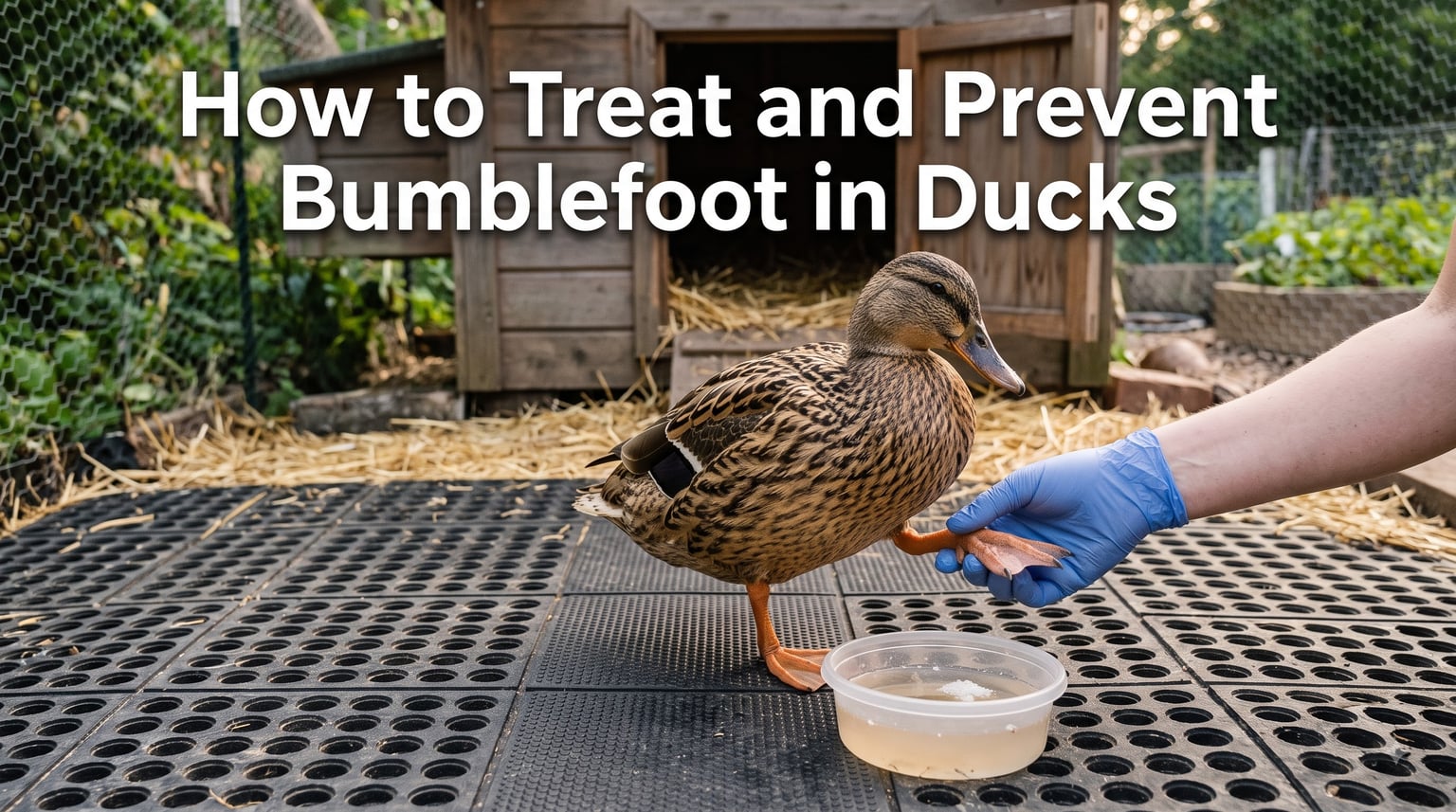
Bumblefoot in ducks is a painful bacterial foot infection that, when untreated, can become life-threatening. After losing my first duck to this condition, I have spent the last three years learning exactly how to catch it early, treat it at home, and prevent it from coming back. This guide walks you through everything I wish I had known back then.
If you keep ducks in your backyard, knowing how to treat and prevent bumblefoot is one of the most important skills you can develop. We will cover the medical definition, the warning signs, a proven home treatment protocol, when to call a vet, and a complete prevention plan you can start using today.
Table of Contents
What Is Bumblefoot in Ducks?
Bumblefoot in ducks is a bacterial infection of the plantar foot pad, also known as plantar pododermatitis. It usually begins with a tiny cut, scratch, or pressure sore on the underside of the foot. Once bacteria, most commonly Staphylococcus aureus, slip through that break in the skin, they create a swollen, inflamed lesion with a hard center called a kernel or plug.
The condition develops in stages. In the early stage, you might notice a small pink or red bump on the foot pad. As the infection progresses, the bump hardens into a scabbed-over abscess filled with a cheese-like pus. In advanced cases, the infection travels into deeper tissues and bone, causing osteomyelitis and potentially fatal septicemia.
Ducks are particularly prone to bumblefoot because they spend so much time walking on hard or abrasive surfaces. Heavy breeds like Pekins, Rouens, and Swedish ducks are at higher risk because their weight puts extra pressure on the foot pads. Even lighter breeds can develop it when their environment is rough, dirty, or damp.
Veterinarians classify the severity into mild (Grade 1), moderate (Grade 2-3), and severe (Grade 4-5). Mild cases look like a small red dot on the pad with no swelling. Moderate cases show a noticeable limp and a clearly defined scab or scabbed plug. Severe cases include extreme swelling, heat, lameness, and visible bone involvement.
What Causes Bumblefoot in Ducks?
Bumblefoot has multiple causes that almost always work together rather than alone. The most common cause is repeated pressure or trauma on the foot pad, which weakens the skin and allows bacteria to enter.
Surfaces matter more than most keepers realize. Concrete, rough gravel, sharp rocks, wire flooring, and coarse sandpaper-like ground all damage the foot pads over time. I have personally seen pea gravel cause more cases of bumblefoot in ducks than any other single factor. Reddit and Backyard Chickens forums confirm this pattern across hundreds of threads.
Weight is another contributor. Overweight ducks place more pressure on each foot pad, accelerating wear. Ducks that grow too fast on high-calorie feed, or that get limited exercise, develop thicker pads that crack more easily.
Wet, dirty bedding creates the perfect breeding ground for Staphylococcus. When bedding stays damp for days, bacterial counts spike. Cuts or splinters on the pad then turn into infected wounds within hours.
Other contributors include vitamin A deficiency, which weakens skin integrity, and lack of swimming water. Swimming actually helps ducks because the water softens and cleans the foot pads. Ducks without access to clean water lose this natural therapy.
Jumping down from tall ramps or roosts can also cause the micro-trauma that starts the cycle. If your ducks regularly drop more than 18 inches onto hard ground, the repeated impact damages their pads over time.
How to Recognize Bumblefoot in Ducks?
Early detection is the single biggest factor in successful treatment. Bumblefoot caught in stage 1 almost always responds to home treatment within 1-2 weeks. The same infection caught late often requires surgery and months of recovery.
The earliest signs are subtle. Watch for a duck sitting more than usual, walking with a slight hesitation, or favoring one foot. The foot pad may look pinker or redder than normal, with a small dot that does not fade when pressed.
As the infection progresses, you will see swelling, heat, and a clearly raised bump. The duck will visibly limp or hop. A scab forms over the top, often with a black or dark center. This is the protective cap the body builds over the infection.
Bumblefoot is sometimes confused with a callus. The difference matters. A callus is a flat, smooth thickening of the skin with no redness, no heat, and no limp. Bumblefoot is round, raised, and painful. Pressing on it will make the duck pull the foot away.
Severe bumblefoot presents with the duck refusing to walk, sitting on the ground constantly, swelling up the leg, and sometimes a foul smell from the foot. The duck may stop eating and become fluffed up and lethargic. At this point, the infection has likely spread to deeper tissues.
Check your ducks feet monthly as part of routine care. Pick each duck up, gently turn it over, and look at both foot pads in good light. A flashlight helps. A healthy pad is smooth, supple, and uniformly pink. Anything raised, scabbed, or hot warrants closer attention.
How to Treat Bumblefoot in Ducks at Home?
Home treatment works for mild and many moderate cases. You will need Epsom salts, a clean towel, Vetericin spray or diluted Betadine, non-stick gauze pads, vet wrap, and an antibiotic ointment like silver sulfadiazine or triple antibiotic cream. Plan for twice-daily sessions for 2-6 weeks.
Step 1: Assess the Severity
Before treating, decide whether home care is appropriate. If the duck is eating, drinking, and walking (even with a limp), and the lesion is a single small bump, home treatment is a reasonable first step. If the duck is lethargic, not eating, or has swelling up the leg, skip directly to the vet.
Step 2: Soak the Foot Daily
Prepare a warm Epsom salt soak using 1 tablespoon of Epsom salt per quart of warm water. The water should be deep enough to cover the foot pad. Hold the duck calmly and soak the affected foot for 10-15 minutes, twice daily. The warmth softens the scab, reduces inflammation, and helps draw out infection.
Some keepers wrap the duck in a towel with the head covered to keep it calm. Others use a small laundry basket lined with a towel. Whatever method you use, make sure the duck feels secure and the water stays warm throughout the soak.
Step 3: Clean the Wound
After soaking, gently pat the foot dry with a clean towel. Apply Vetericin spray or diluted Betadine (povidone-iodine) to the affected area. Do not pick or cut the scab unless it falls off naturally during the soak. Pulling the scab prematurely can push infection deeper.
If the scab has softened enough to lift on its own during the soak, carefully remove it with sterile tweezers. Many home treatment success stories on forums involve letting the soak do the work rather than forcing the kernel out.
Step 4: Apply Antibiotic Ointment
Apply a thin layer of silver sulfadiazine cream or triple antibiotic ointment to the cleaned wound. Silver sulfadiazine is widely considered the gold standard for bumblefoot treatment because it penetrates well and fights both Staphylococcus and Pseudomonas bacteria.
Step 5: Bandage the Foot
Place a non-stick gauze pad over the wound. Wrap the foot gently with 1-2 layers of self-adhering vet wrap, taking care not to wrap too tightly. Circulation must remain healthy. You should be able to slip a finger between the wrap and the leg.
Keeping the bandage on is one of the biggest challenges. Duck booties or repurposed infant socks help. Some keepers use a small piece of pool noodle as a protective donut around the foot. Change the bandage daily, or any time it gets wet or dirty.
Step 6: Repeat and Monitor
Repeat the soak-clean-ointment-bandage cycle twice daily. Most mild cases show clear improvement within 5-7 days. Moderate cases take 2-3 weeks. Severe home-treated cases can take 6 weeks or longer. Track progress with photos so you can spot real change versus wishful thinking.
If you see no improvement after 10 days, or if the swelling worsens, the duck needs veterinary care. Persistent treatment without results wastes time and lets the infection get a deeper hold.
Recovery Timeline
A Grade 1 case typically resolves in 1-2 weeks with home treatment. A Grade 2 case takes 2-4 weeks. Grade 3 cases average 4-6 weeks. Grade 4-5 cases require veterinary intervention and may take months to fully resolve, if at all.
During recovery, keep the duck in a clean, dry area with soft bedding like straw or pine shavings. Limit swimming to short supervised sessions so bandages stay dry. Separate the duck from aggressive flock mates that might peck at the bandage.
When to See a Veterinarian for Duck Bumblefoot?
Knowing when to stop home treatment and call a vet is just as important as knowing how to start. The wrong call in either direction wastes time, money, or your ducks life.
See a vet immediately if your duck shows any of these red flags: swelling that extends up the leg, refusal to eat for more than 24 hours, hot swelling that feels feverish, foul-smelling discharge, visible bone exposure, or both feet affected at once. These signs indicate the infection has moved beyond what topical care can reach.
An avian or poultry vet will typically perform surgical debridement under anesthesia. This involves removing the kernel, cleaning the infected tissue, flushing the wound, and often placing antibiotic-impregnated beads or systemic antibiotics. Expect costs between $300 and $900 depending on severity, location, and whether complications develop.
After surgery, the duck usually needs antibiotics for 7-14 days, daily bandage changes, and restricted activity. Most vets will also recommend follow-up visits to ensure proper healing. The total bill, including medication and rechecks, can run $500 to $1,200.
For very severe or recurring cases, especially in older or chronically ill ducks, euthanasia is sometimes the most humane option. Discuss quality of life openly with your vet. A duck that cannot walk, eat, or socialize is not living well.
How to Prevent Bumblefoot in Backyard Ducks?
Prevention is far easier and cheaper than treatment. After fixing bumblefoot in my own flock three times, I now follow a prevention routine that has kept us bumblefoot-free for 18 months straight.
Provide Soft, Dry Surfaces
The single most effective prevention step is giving your ducks soft surfaces to walk on. Straw, pine shavings, rubber mats, and grass all work. Remove pea gravel, sharp rocks, wire, and concrete wherever possible. Replace with sand if you need drainage, and add rubber stall mats in high-traffic areas.
Keep Bedding Clean and Dry
Wet bedding is a bacterial breeding ground. Spot-clean droppings daily, replace wet bedding within hours, and do a full clean-out weekly. Good ventilation in the coop helps bedding dry faster and keeps bacterial counts down.
Offer Swimming Water
Clean swimming water naturally cleans and softens the foot pads. Ducks without pond access are statistically more prone to bumblefoot. If you cannot offer a pond, a kiddie pool changed daily works. The water softens pads, washes away debris, and lets ducks exercise.
Feed a Balanced Diet
Vitamin A supports skin and pad integrity. Add leafy greens, carrots, sweet potato, and peas to the diet. Avoid overfeeding high-calorie treats that lead to obesity. A duck at a healthy body weight puts far less stress on each foot pad.
Trim Roosts and Ramps
Keep roosts and ramps low. Ducks do not need tall roosts like chickens. A 6-12 inch roost is plenty. Cover ramps with rubber matting or carpet to soften landings. Eliminate any jumping-down points higher than 18 inches.
Check Feet Monthly
Make monthly foot checks part of your routine. Pick each duck up, look at both pads, and feel for heat or swelling. The earlier you catch a developing lesion, the faster home treatment works.
Quarantine New Birds
New ducks can carry Staphylococcus on their feet. Quarantine for 2-3 weeks, perform a foot check, and treat any lesions before introducing them to the flock. This single habit has prevented countless bumblefoot outbreaks in established flocks.
Frequently Asked Questions About Bumblefoot in Ducks
How do I keep my ducks from getting bumblefoot?
Provide soft, dry surfaces like straw or rubber mats, keep bedding clean, offer swimming water for natural pad care, feed a balanced diet with vitamin A, and check feet monthly. Remove rough surfaces such as pea gravel, wire, and concrete wherever possible.
Will bumblefoot heal on its own for ducks?
No. Bumblefoot in ducks will not heal on its own because the hard kernel or plug traps bacteria inside the foot pad. Without removal of the kernel and topical antibiotics, the infection progresses deeper and can become life-threatening.
Is it safe to eat a duck with bumblefoot?
No, do not eat a duck that has or recently had bumblefoot. Systemic antibiotics leave residues in tissue, and active infection makes the meat unsafe. If a duck recovers fully and finishes any withdrawal period, consult your vet before processing.
How to prevent bumblefoot from getting worse?
Start twice-daily Epsom salt soaks immediately, apply antibiotic ointment, bandage the foot, and separate the duck onto clean dry bedding. Catch it early and the infection usually responds within 1-2 weeks. If no improvement appears in 10 days, see a vet.
Can bumblefoot spread to other ducks?
Yes, bumblefoot can spread through shared surfaces contaminated with Staphylococcus bacteria. Wet bedding, dirty pools, and rough ground all carry the bacteria. Quarantine affected ducks and disinfect shared areas to protect the rest of your flock.
How long does bumblefoot take to heal in ducks?
Mild cases heal in 1-2 weeks, moderate cases in 2-6 weeks, and severe cases can take several months with surgical and antibiotic treatment. Consistency with twice-daily soaks and bandage changes is the biggest factor in healing speed.
Bumblefoot in ducks is a serious condition, but one you can absolutely manage with the right knowledge and consistent care. Catch it early with monthly foot checks, treat it promptly with twice-daily soaks and proper bandaging, and prevent it by giving your flock soft dry surfaces and clean swimming water. If you see the warning signs, start treatment today. Your duck’s life quite literally depends on how fast you move.