
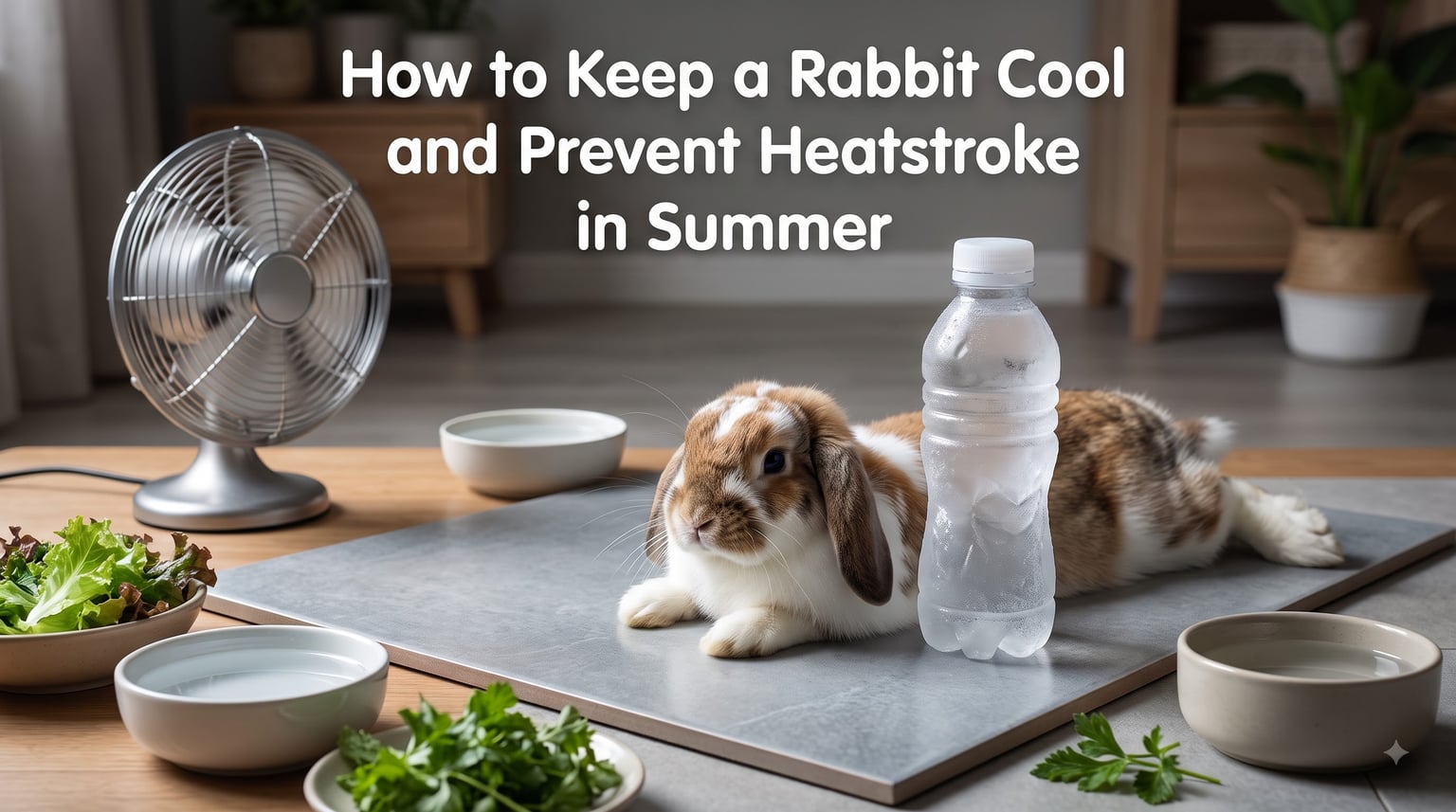
Learning how to keep a rabbit cool and prevent heatstroke in summer can literally save your bunny’s life. Rabbits are far more sensitive to heat than most pet owners realize, and a hot afternoon can turn dangerous faster than you’d expect. Once temperatures climb past 80 degrees Fahrenheit (27 degrees Celsius), your rabbit enters the danger zone where heatstroke becomes a real threat.
I have spent years caring for rabbits through brutal summer heatwaves, and the single most important thing I learned is that prevention starts long before the temperature spikes. Rabbits cannot sweat like we do, and they cannot pant effectively like dogs. Their main cooling system runs through their ears, which simply is not enough when the air around them feels like an oven.
This guide walks you through every cooling method I rely on, the exact temperatures that signal danger, the early warning signs of heatstroke, and exactly what to do in an emergency. Whether your rabbit lives indoors or in an outdoor hutch, these strategies will help you keep them safe all summer long.
Table of Contents
Why Rabbits Struggle in the Heat?
Rabbits regulate their body temperature almost entirely through their ears. Blood vessels inside those large, thin ears expand when the rabbit gets warm, allowing heat to escape into the surrounding air. This process, called ear vasodilation, works well in moderate temperatures but fails fast when the air itself is hot.
Unlike humans, rabbits cannot sweat. Unlike dogs, they cannot pant effectively. This means when the ambient temperature rises, your rabbit has almost no backup cooling mechanism. Their body temperature can climb quickly, and once it crosses around 104 degrees Fahrenheit (40 degrees Celsius), internal organ damage begins.
Wild rabbits evolved to survive in cool underground burrows where temperatures stay stable year-round. Our pet rabbits inherited that same biology, but they live in houses, apartments, and hutches far above ground. That mismatch between their biology and their environment is exactly why summer is the most dangerous season for rabbits.
What Temperature Is Too Hot for Rabbits
Rabbits thrive in temperatures between 50 and 70 degrees Fahrenheit (10 to 21 degrees Celsius). Once the thermometer hits 77 degrees Fahrenheit (25 degrees Celsius), you need to start paying close attention. At 80 degrees Fahrenheit (27 degrees Celsius) and above, the risk of heatstroke rises sharply.
Anything over 85 degrees Fahrenheit (29 degrees Celsius) is considered critical, and you should treat it as an emergency situation even if your rabbit looks fine. Heatstroke can develop in minutes at those temperatures, especially for rabbits in direct sun or poorly ventilated hutches.
Humidity makes everything worse. High humidity reduces the effectiveness of evaporative cooling, which is how damp towels and misting work. If you live in a humid climate, treat temperatures five to seven degrees lower than the danger threshold as your warning point. A muggy 78 degree day can be just as risky as a dry 85 degree one.
Certain rabbits face higher risk than others. Long-haired breeds like Angoras, overweight rabbits, elderly rabbits over six years old, and very young kits all struggle more in the heat. If your rabbit falls into any of those categories, lower your personal danger threshold by at least five degrees.
How to Keep a Rabbit Cool in Summer: 10 Proven Methods
These are the cooling techniques I have tested and relied on through multiple summers. Use as many as you can combine, because layering methods always works better than relying on just one.
1. Provide frozen water bottles. Fill two-liter plastic bottles with water, freeze them solid, and place them in your rabbit’s enclosure. Your rabbit will stretch out alongside them or rest a paw on top. Always wrap frozen bottles in a thin towel so the ice does not directly contact fur and skin. Keep a rotation of two or three bottles in the freezer so you always have a frozen replacement ready.
2. Use ceramic or marble tiles. Ceramic and marble tiles stay naturally cool to the touch, even in warm rooms. Place a few large tiles in your rabbit’s favorite resting spots. They will seek them out and lie flat on the cool surface. Pop spare tiles in the fridge for an hour before placing them for an extra cooling boost.
3. Position a fan for airflow. A small oscillating fan keeps air moving, which helps evaporative cooling work better. Never point a fan directly at your rabbit, because constant direct airflow can stress them. Instead, aim the fan so it creates general air circulation in the room or across the hutch. Reddit rabbit owners recommend placing frozen water bottles in front of the fan for a DIY cooling breeze.
4. Offer plenty of fresh water. Hydration is your rabbit’s internal cooling system. Provide both a water bottle and a heavy ceramic bowl, because rabbits drink more from bowls. Change the water twice daily during hot weather, and keep it in the coolest spot in the enclosure.
5. Dampen your rabbit’s ears. Because ears are a rabbit’s primary cooling organ, gently misting or wiping the ears with a cool, damp cloth helps a lot. Use room-temperature water, never ice-cold. Lightly moisten the back of the ears every few hours during peak heat.
6. Hang damp towels over the hutch. For outdoor rabbits, draping wet towels over the top of the hutch creates evaporative cooling as the water evaporates. Re-wet the towels every couple of hours. This works especially well when combined with a gentle breeze or fan.
7. Create a cool zone in your home. Pick the coolest room in your house, often a basement or a north-facing room, and set up your rabbit’s space there. Close curtains and blinds to block direct sunlight. Keep this room as your rabbit’s dedicated summer retreat.
8. Use a cooling mat designed for pets. Pressure-activated cooling mats provide a consistent cool surface without electricity or freezing. Place one in a shaded resting area. These mats typically stay 5 to 10 degrees cooler than the ambient temperature.
9. Groom your rabbit regularly. Removing loose undercoat fur helps air reach your rabbit’s skin and prevents trapping heat against the body. Long-haired breeds need daily brushing in summer. For rabbits with heavy mats, consider a professional trim, but never shave a rabbit down to the skin because their skin burns easily.
10. Reduce physical activity during heat. Skip playtime and handling during the hottest parts of the day, usually late morning through late afternoon. Let your rabbit rest quietly and save interactive sessions for early morning or evening when temperatures drop.
How to Keep Indoor Rabbits Cool
Indoor rabbits generally have it easier than outdoor ones, but a hot house can still be dangerous. Your first step is identifying the coolest room and relocating your rabbit there during heatwaves. Close blinds, curtains, and shutters on sun-facing windows to keep interior temperatures down.
If you have air conditioning, use it. Set the thermostat no higher than 75 degrees Fahrenheit (24 degrees Celsius) on hot days. If you do not have AC, a combination of fans, frozen bottles, closed curtains, and ceramic tiles will help significantly. Many rabbit owners on Reddit report that a single window fan pulling hot air out at night drops room temperature by several degrees.
Watch out for sun pools on floors. A patch of sunlight moving across your living room might feel harmless, but a rabbit napping in direct sun can overheat quickly. Block these sun patches with furniture or close curtains during peak hours.
How to Keep Outdoor Rabbits Cool?
Outdoor rabbits face the greatest summer risk, and a hutch in full sun can become lethal within hours. Position the hutch in permanent shade, ideally under a tree or against a north-facing wall. If natural shade is not available, build a shade structure using breathable fabric or a tarp elevated above the hutch to allow airflow.
Insulate the hutch roof. A hutch with a flat or sloped roof absorbs direct sun and radiates heat downward. Cover the roof with a reflective material or layer of straw to create a heat barrier. Hang damp towels over the roof and re-wet them throughout the day for evaporative cooling.
Ensure maximum ventilation. Open all hutch doors and windows during the day, and use wire mesh sides rather than solid walls where possible. Consider bringing outdoor rabbits indoors during extreme heatwaves, because even the best outdoor setup cannot match indoor temperatures on a 95 degree day.
Check on outdoor rabbits at least three times daily during hot weather. Morning, midday, and evening checks let you catch problems early and refresh cooling supplies. Forum users consistently emphasize that outdoor rabbits need the most vigilant monitoring.
Cooling Rabbits Without Air Conditioning
Many homes, especially in Europe, do not have air conditioning. If that is your situation, focus on combining multiple low-tech methods for maximum effect. Frozen water bottles paired with a fan, damp towels over hutches, ceramic tiles in shaded areas, and closed curtains during the day can keep your rabbit safe even without AC.
One creative solution from Reddit rabbit owners involves building a simple DIY cooling setup. Place a shallow pan of ice in front of a battery-powered or solar fan, and the fan blows cooled air across the rabbit’s space. These setups cost around $30 to build and can make a real difference during heatwaves.
Open windows at night when temperatures drop, and close them early in the morning before the day heats up. This traps cooler air inside. Use blackout curtains to prevent the greenhouse effect during daytime sun hours.
Signs of Heatstroke in Rabbits
Catching heatstroke early gives your rabbit the best chance of survival. The first warning signs are often subtle, so you need to know your rabbit’s normal behavior to spot changes. Watch for rapid or labored breathing, which often looks like exaggerated chest movements or open-mouth breathing.
Other early signs include lethargy, reluctance to move, and a stretched-out body position with the head thrown back. Your rabbit’s ears will feel hot to the touch, sometimes appearing red or flushed. You may notice a wet chin from drooling, which signals severe distress.
In advanced stages, your rabbit may show loss of coordination, convulsions, or unconsciousness. By this point, heatstroke has progressed to a life-threatening stage. Never wait for these late symptoms before acting, because early intervention is the difference between recovery and tragedy.
What to Do If Your Rabbit Has Heatstroke
If you suspect heatstroke, act immediately. Every minute counts, and waiting can be fatal.
Step 1: Move your rabbit to a cool, shaded area right away. Get them out of direct heat and into the coolest spot available.
Step 2: Dampen your rabbit’s ears with cool, not cold, water using a cloth or spray bottle. Focus on the ears because that is where heat exchange happens. You can also dampen the paws gently.
Step 3: Call an exotic or rabbit-savvy veterinarian immediately. Tell them you are on your way with a rabbit showing heatstroke symptoms. Time is critical.
Step 4: Offer cool water to drink, but never force water into a rabbit’s mouth. Place a bowl nearby and let them drink voluntarily.
Step 5: Place frozen water bottles wrapped in towels near your rabbit during transport to the vet. Keep the car air conditioning on.
Critical warning: Never submerge your rabbit in cold water or use ice directly on their body. Sudden temperature drops cause shock, which can be just as fatal as the heatstroke itself. Cooling must be gradual and gentle.
Special Care for High-Risk Rabbits
Long-haired breeds like Angoras, Cashmeres, and Lionheads need extra attention in summer. Daily grooming is essential to remove loose undercoat that traps heat. Consider trimming long fur around the rear end, because urine and droppings mat the fur in summer heat, which leads to fly strike.
Fly strike is a horrific summer condition where flies lay eggs on soiled fur, and the resulting maggots attack the rabbit’s flesh. Check your rabbit’s bottom every single day during summer. Keep the area clean and dry, and seek immediate veterinary help if you see any signs of fly eggs or maggots.
Elderly rabbits and those with arthritis have trouble repositioning themselves to cool areas. Help them access shaded spots and cooling tiles. Overweight rabbits carry an insulating layer of fat that traps heat, so work with your vet on a year-round weight management plan rather than crash dieting in summer.
Never leave your rabbit in a parked car. A car’s interior can reach 120 degrees Fahrenheit (49 degrees Celsius) within minutes, even with windows cracked. Heatstroke in a parked car is almost always fatal for rabbits. If you must travel, bring a portable cooling setup and never leave your rabbit unattended.
Frequently Asked Questions
What temperature is too hot for rabbits in summer?
Temperatures above 80 degrees Fahrenheit (27 degrees Celsius) are dangerous for rabbits. The ideal range for rabbits is between 50 and 70 degrees Fahrenheit. At 77 degrees Fahrenheit (25 degrees Celsius), you should begin active cooling measures, and anything above 85 degrees Fahrenheit (29 degrees Celsius) is a critical emergency.
How to keep bunnies cool in summer heat?
Use frozen water bottles wrapped in towels, ceramic or marble tiles, fans for airflow, fresh water in bowls, damp towels over hutches, and ear misting. Keep rabbits in shaded, well-ventilated areas. Combining multiple cooling methods works far better than relying on a single technique.
How to save a bunny from heat stroke?
Move the rabbit to a cool area immediately, dampen the ears with cool water, and call a rabbit-savvy veterinarian right away. Offer cool water to drink. Never submerge the rabbit in cold water because sudden temperature changes cause fatal shock. Cooling must be gradual.
How to keep bunnies cool without AC?
Combine frozen water bottles in front of fans, damp towels draped over the hutch for evaporative cooling, ceramic tiles in shaded resting spots, closed curtains during the day, and windows opened at night. A shallow pan of ice placed in front of a fan creates a simple DIY cooling breeze.
Can rabbits have ice cubes in their water?
Yes, a few ice cubes in your rabbit’s water bowl are safe and help keep the water cool. Many rabbits enjoy nudging the cubes. Avoid putting so many ice cubes that the water becomes freezing cold, and always provide fresh water in addition to iced water.
Stay Ahead of the Heat
Keeping your rabbit cool in summer comes down to preparation, vigilance, and layering multiple cooling strategies. Know your temperature thresholds, stock up on frozen bottles and ceramic tiles before the heatwave hits, and check on your rabbit frequently during hot weather.
Remember that learning how to keep a rabbit cool and prevent heatstroke in summer is not a one-time task. It is a daily commitment through the hottest months. Your rabbit depends entirely on you to manage their environment, because they simply cannot cool themselves effectively once temperatures rise.
Start preparing your cooling supplies in spring so you are ready the moment the first hot day arrives. Your rabbit will thank you with many more happy, healthy summers by your side.