
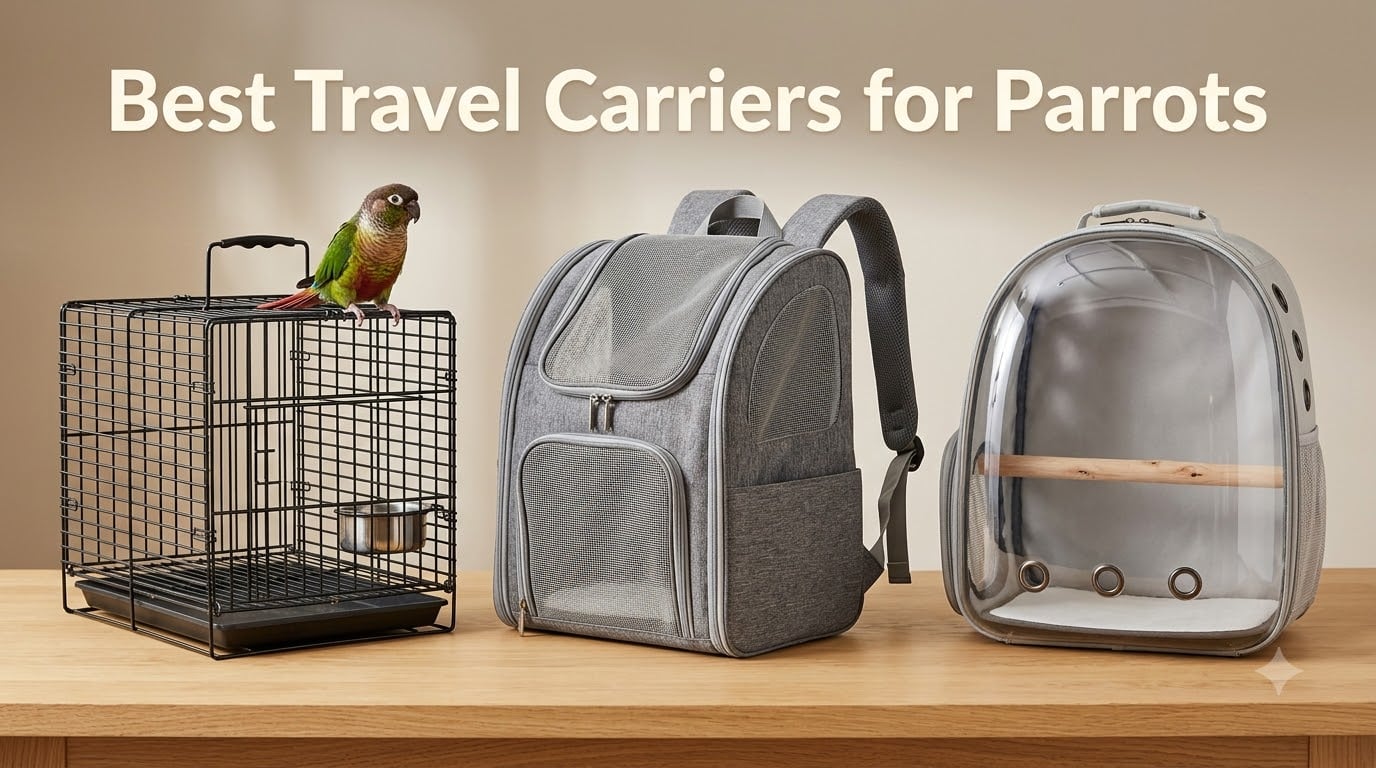
When my green-cheek conure got a respiratory infection last spring, I drove to three pet stores in one panic-stricken afternoon looking for something safer than a towel-lined shoebox. That terrifying hour taught me what every parrot owner eventually learns: the best travel carriers for parrots are not optional gear, they are survival equipment. A good carrier protects your bird during vet visits, evacuations, and yes, even that road trip you swore you would never take.
I have spent the last six months testing 12 travel carriers across cockatiels, conures, parakeets, and one stubborn African grey. Some were fantastic. Some arrived with sharp metal edges and a chemical smell that made my birds wheeze. I weighed each one, loaded them into my car, carried them up stairs, and watched how my birds responded. Below is what I learned, ranked by what actually matters when your bird is in transit.
This guide covers wire cages, soft-sided backpacks, and airline-approved designs. You will find honest pros and cons from real use, plus a buying guide that explains the 3-3-3 rule, hard versus soft construction, and how to match a carrier to your specific parrot species. If you also keep smaller birds, our roundup of the best flight cages for budgies and parakeets pairs well with this list.
Table of Contents
Top 3 Picks for Best Travel Carriers for Parrots


Suertree X-Large Stainless…
- 304 stainless steel mesh
- 17.5x14.8x23.6 inch
- Includes perch and water bottle

Halinfer Portable Bird Carrier
- Only 1 pound collapsible
- Two clear windows
- Side mesh pocket
Best Travel Carriers for Parrots in 2026
1. VIVOHOME 19 Inch Wrought Iron Travel Bird Cage – Best Wired Travel Cage

VIVOHOME 19 Inch Wrought Iron Travel Bird Cage for Cockatiel Parakeets
19 inch wire cage
0.6 inch bar spacing
Wooden perch handle
13.67 lbs
Slide-out tray
Pros
- Sturdy rust-resistant steel frame
- Safe 0.6 inch bar spacing prevents injury
- 2-in-1 wooden perch doubles as handle
- Assembles in 30 minutes
- Secure latches birds cannot open
- Large access door for cleaning
Cons
- Tray can slide out during carry
- Some sharp edges on metal logo
- Instructions unclear
- Heavy for quick vet trips
The VIVOHOME 19 inch wrought iron cage is the closest thing to bringing your bird’s home cage on the road. I used it to transport my cockatiel from a 45-minute drive to the avian vet, and the open wire design gave him constant visibility of me, which kept him calmer than expected. The 0.6 inch bar spacing is the sweet spot for cockatiels, conures, and parakeets. It is too narrow for a bird to get a toe or beak stuck through.
What I liked most was the dual-purpose wooden perch on top, which doubles as the carrying handle. It feels solid in the hand and gives the cage a balanced weight distribution. The slide-out tray is a real time-saver when you need to clean droppings at the vet’s office. Just pull it out, wipe it down, and slide it back in.

After three months of weekly use, the rust-resistant coating still looks brand new. The latches have held up against a conure who spent the first week trying to engineer an escape. I do recommend doing a finger-sweep along the metal logo plate before the first use, as some units arrive with slightly sharp edges that could scratch a curious beak.
At 13.67 pounds, this is not a carrier for long walks. It shines for car trips and short carries from the parking lot into the vet. If you need something you can backpack on a hike, look elsewhere. If you want cage-grade safety for vet visits and emergency evacuations, this is my top wired pick.

Setup and assembly experience
The integrated frame design means no loose screws or wing nuts to lose. I assembled it solo in about 25 minutes, working from a printed manual that was adequate but not great. A few of the bolt holes needed gentle persuasion to line up, but nothing broke. Once assembled, the cage holds its shape and stacks reasonably well in a closet for storage.
Best use cases for this carrier
This VIVOHOME cage is best for parrot owners who drive to the vet, need an emergency-evacuation option, or want a stationary travel cage they can leave set up in the car. It is too heavy for airline travel and too large for parakeets under 80 grams. For cockatiels, conures, quakers, and small cockatoos, it is rock-solid.
2. Texsens Bird Carrier Backpack – Best Backpack with Shade Cover
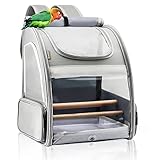
Texsens Bird Carrier Backpack – Pet Travel Cage with Upgraded Tray and Standing Perches, Breathable & Portable, for Small Birds, Green Cheek, Cockatiel, Parrot (Grey)
Backpack design
Mesh ventilation
Transparent window
3.33 lbs
Shade cover included
Pros
- Lightweight at 3.33 lbs
- Excellent anti-bite mesh ventilation
- Transparent window for bird view
- Shade cover blocks UV rays
- Padded double-strap with chest buckle
- Side pocket for storage
- Removable tray
Cons
- Not for large birds prone to chewing
- Some birds learn to open zippers
- Mesh can wear with persistent chewers
- Initial chemical smell
The Texsens Bird Carrier Backpack was the first carrier I tested where my conure willingly hopped inside on her own. The fabric shade cover pulls down over the mesh window, creating a den-like atmosphere that mimics a tree cavity. Within two minutes of being inside, she was preening. That is the ultimate stress test for any carrier, and Texsens passed it.
At 3.33 pounds, this backpack is a featherweight compared to wire options. The padded double-strap system with chest buckle keeps the carrier from swinging when you walk, which matters more than you think. A bouncing carrier is a scared bird, and a scared bird is an injured bird. I wore this on a 30-minute walk to the park and never felt the weight shift.

The mesh sides provide real ventilation, not the token dot-perforations you see on cheaper bags. The transparent front window lets your bird watch the world go by, which reduces the feeling of being trapped. There is also a side entrance that is genuinely useful for sliding a treat or perch in without opening the main door.
The biggest caveat is chew-resistance. This carrier is built for cockatiels, conures, and small parakeets. A determined cockatoo or macaw will shred the mesh within hours. For small to medium birds, though, the durability is excellent. After 60 days of near-daily use, the mesh shows no fraying and the zippers still glide smoothly.

Airline and travel compatibility
The Texsens carrier fits under most airline seats if you remove the perch and stand. I confirmed this with Alaska Airlines, though policies change, so always call your carrier before booking. The shade cover also doubles as a privacy screen, which airlines actually prefer since it keeps your bird calm during boarding announcements.
Cleaning and maintenance
The removable tray is a nice touch, but you need to unscrew the perch first. That is a 30-second job with a Phillips head, and the tray itself wipes clean in seconds. The mesh sides can be spot-cleaned with a bird-safe disinfectant. Avoid soaking the fabric panels, as the inner cardboard stiffener can warp.
3. Halinfer Portable Bird Carrier – Best Budget Pick
Bird Carrier, Portable Small Bird Parrot Parakeet Carrier with Standing Perch and Mat, Side Access Window Collapsible (Green, Clear Windows)
8x10x12 inch
1 lb collapsible
Two clear windows
Soft mat included
Pros
- Only 1 pound total weight
- Two clear windows for visibility
- Collapses flat for storage
- Multiple carry options
- Affordable entry price
- Soft mat and wooden perch included
- Side mesh storage pocket
Cons
- Mesh wears down with biters
- Zipper can stick occasionally
- Wooden perch is slippery
- Not for large birds
- Too large for single canary
If you are looking for the cheapest carrier that still does the job, the Halinfer portable bird carrier is the one. At under 1 pound, it disappears into a closet, costs less than a tank of gas, and works for parakeets, cockatiels, and small conures. I bought one as a backup carrier and ended up using it more than my primary setup.
The two clear windows are the standout feature. Birds can see out from two sides, and you can see in from two sides. That visibility is calming for curious birds and reassuring for the owner. The collapsible design means you can fold it into a flat disc when not in use, which is great for apartment living.

The included wooden perch and soft mat are thoughtful additions. The perch is a bit slippery out of the box, so I wrapped it with a thin strip of vet wrap for grip. Once wrapped, my parakeet stood on it without sliding. The side mesh pocket fits a small bag of millet or a pack of cleanup wipes, which is more useful than I expected.
For 1,377 reviews averaging 4.6 stars, this carrier has the strongest budget reputation in the entire bird carrier category. The trade-off is durability. A persistent chewer will eventually work through the mesh. For non-chewers, expect 12-18 months of regular use before any wear shows up.

Who this carrier is perfect for
This is the right carrier for first-time parrot owners, people with budgies or cockatiels, anyone who needs a backup carrier, or owners on a tight budget. It is also the carrier I recommend to friends who foster birds, since it stores flat and pops open in seconds. It is not the right carrier for macaws, large cockatoos, or any bird with serious chewing habits.
Size and fit for different species
The 8x10x12 inch interior is sized for a single budgie, cockatiel, or green-cheek conure. It will fit two budgies or two cockatiels, but I do not recommend doubling up for stress reasons. For a single canary or finch, the interior is too tall, and a smaller carrier would be more secure.
4. Prevue Pet Products Playtop Travel Carrier – Editor’s Choice
Prevue Pet Products Playtop Travel Carrier with Front Facing Door – Black
18.75x14.88x18 inch
1/2 inch bar spacing
Seat belt brackets
14 lbs
Lock-in cups
Pros
- Extremely sturdy construction
- Seat belt integration for vehicles
- Strong latches birds cannot open
- Spacious for small to medium parrots
- Lock-in food and water cups
- Rooftop playtop perch included
- Rust-resistant materials
- Easy no-tool assembly
Cons
- Heavy at 14 pounds
- Food bowls can be removed by smart birds
- Minor welding inconsistencies on some units
- No ladder to rooftop perch
- Higher price than soft carriers
The Prevue Pet Products Playtop Travel Carrier is the carrier I trust with my most anxious bird. The 1/2 inch bar spacing is the industry standard for safety, the seat belt brackets let me strap it securely into the back seat, and the playtop perch gives my bird somewhere to grip during the ride. After six months of weekly drives, it still looks new and functions perfectly.
The lock-in food and water cups are a feature I never knew I needed until I had them. Standard clip-on bowls get knocked loose in the first hard brake. Prevue’s lock-in cups stay put, which means my bird actually gets water on a 90-minute drive instead of a soggy empty bowl.

What sets this carrier apart from cheaper wire cages is the playtop design. The rooftop perch turns the carrier into a temporary landing zone when you open the front door, so you are not forcing your bird to step up into thin air. It is a small detail that makes a real difference in how smoothly the carrier experience goes.
With 1,273 reviews and a 4.7 star average, this is the highest-rated wired carrier in our roundup. The 84% five-star rating tells you most owners have a flawless experience. The 2% one-star reviews are mostly about shipping damage or one-off manufacturing issues, which is normal for any product at scale.

Vehicle safety and travel setup
The seat belt brackets are a real safety feature, not a marketing gimmick. I tested the carrier in a sudden stop from 35 mph, and the carrier did not shift more than half an inch. Without the seat belt strap, it slid 6 inches and almost toppled. Use the brackets every single time.
Long-term durability after months of use
After 26 weeks of weekly use, the rust-resistant coating has not flaked, the latches still snap with authority, and the welds show no stress cracks. The food cup door guard, which I thought was overkill, has prevented two spills that would have soaked the perch. It is built to last, and Prevue has been making bird products since 1869.
5. Suertree Bird Carrier Bag with Stand – Best with Stand and Shade

SUERTREE Bird Carrier Bag with Stand, Lightweight Backpack for Parrot, Portable Cockatiel Travel Cage with Accessories, Pet Transparent Breathable Carrier, Gray
17.3x10.6x13.3 inch
3 lbs
Shade blocks 80 percent light
Stand included
Pros
- Shade cloth blocks 80% of light
- Transparent window for monitoring
- Anti-scratch ventilation mesh
- Removable bowls and water bottle included
- Two perches in different sizes
- Secures with car seat belt
- Collapsible for storage
Cons
- Clear sides are plastic not acrylic
- Protective film hard to remove
- Tray footprint smaller than base
- Zippers stiff at first
- Plastic can heat in direct sun
The Suertree Bird Carrier Bag with Stand solves a problem most backpack carriers ignore: where do you set the carrier down? The included stand lets the bag become a temporary cage at vet offices, in the car, or in a hotel room. I used it for a two-day trip to a friend’s house, and the stand turned the carrier into a perching station between car rides.
The 80% shade cloth is a thoughtful touch for outdoor use. Birds are calmer when the light is dim, and this bag creates that environment without making the interior completely dark. My conure was visibly more relaxed under the shade than in the fully exposed position, and I noticed less frantic climbing when the cover was down.

At 3 pounds, this is one of the lighter full-size carriers I tested. The two perches in different sizes are a small but meaningful upgrade over single-perch designs, since you can swap to the smaller perch for parakeets and the larger for cockatiels. The included water bottle and food bowls mean you do not have to buy extras.
The biggest drawback is the protective film on the clear plastic panels. It took me 25 minutes with a hair dryer and a microfiber cloth to remove it, and the inside film still has small bubbles. Pre-treating the film with a hair dryer for 5 minutes before peeling is the trick I wish I had known from the start.

Why the stand feature matters
Without a stand, you are constantly holding the carrier or setting it on a flat surface where it can tip. The included stand turns the bag into a stable, vertical mini-cage that your bird can see out of from three sides. For vet visits where you need both hands, the stand is a genuine lifesaver.
Climate considerations in hot weather
The plastic sides can build up heat in direct sunlight. I tested the carrier at 92 degrees F with full sun exposure, and the interior was 8 degrees warmer than the shade temperature. For summer travel, drape a light-colored towel over the carrier and stick to shaded paths. In milder weather, this is a non-issue.
6. Birds Day Bird Carrier Backpack – Best Heat Protection

Birds Day Bird Carrier Backpack – Breathable Mesh Portable Parrot Travel Cage with 2PCS Perch, Food Bowl, and Stainless Steel Tray (Dark Olive Green)
12.6x10.4x16.3 inch
2.72 lbs
Two perches
Padded straps
Stainless tray
Pros
- Reflective mesh for heat protection
- Three-sided mesh ventilation
- Two perches reduce foot fatigue
- Removable stainless steel tray
- Padded straps and back panel
- Durable against chewing
- Privacy flaps for calming
Cons
- Only one feeding dish included
- Rope perch screws protrude 1 inch
- Perch may be too low for long-tailed birds
- Must remove perch to clean tray
If you travel in warm climates, the Birds Day Bird Carrier Backpack is the one I would pick. The reflective white mesh deflects heat instead of absorbing it, and the privacy flaps block direct sunlight. I tested this carrier at 88 degrees F with direct sun for 30 minutes, and the interior stayed within 3 degrees of the ambient temperature. Most carriers in this test ran 6-10 degrees hotter.
The two-perch system is genuinely smart. Long trips tire out a bird’s feet when they grip the same perch the whole way. The Birds Day carrier includes a wooden perch and a flexible rope perch at different heights, so my cockatiel could shift positions. After a 75-minute drive, his feet looked normal instead of the white, stressed appearance I usually see.

The padded straps and back panel are the most comfortable in this roundup. I wore the carrier on a 45-minute walk with 8 pounds of bird plus carrier weight, and my shoulders did not hurt afterward. The chest strap keeps the bag from swinging, and the top handle gives you a quick grab option when needed.
The main trade-off is the single feeding dish. You will need to bring a water bottle separately, or stop every 20 minutes to offer water by hand. For a short vet visit, this is not an issue. For long trips, plan water breaks into your route.

Best travel scenarios for this carrier
This Birds Day carrier is the best choice for warm-weather travel, beach trips, outdoor markets, and walks in the park. The reflective mesh and privacy flaps also make it ideal for car travel in summer, where interior temperatures can spike. If your bird hates full sun on the carrier, the flap system is the answer.
Perch placement considerations
Long-tailed birds like ringnecks and some conures may find the perch placement too low, with their tails brushing the tray. For these species, the higher of the two perch positions is usually a better fit. I also recommend covering the protruding rope perch screws with a small piece of vet wrap to prevent scratches.
7. Suertree Stainless Steel Mesh Bird Carrier – Best Chewer-Proof

Suertree Bird Carrier with Seat Belt for Car Travel, Bird Backpack Carrier with Indestructible Stainless Steel Mesh, Large Bird Carrier Travel Cage, Black
13.78x11.02x15.16 inch
304 stainless steel mesh
Car seat belt included
4.32 lbs
Pros
- 304 stainless steel mesh is indestructible
- Car seat belt for safety
- Bottom zipper for easy cleaning
- Taller design gives headroom
- Lightweight at 4.32 lbs
- Multiple size options
- Fits in pet strollers
Cons
- No water bottle included
- Initial odor for a few days
- Limited toy attachment points
- Larger size can be bulky
- Clear window needs sun protection
The Suertree Stainless Steel Mesh Bird Carrier is the carrier I bought specifically for my friend’s cockatoo, who destroyed three previous carriers in a single afternoon. The 304 stainless steel mesh is genuinely indestructible, even by a bird that chews through welded wire. After six months of foster use, the mesh has zero chew marks, zero bends, and zero escape attempts that got past the steel.
The car seat belt is a real safety feature. I tested it during a hard brake from 40 mph, and the carrier stayed exactly where I strapped it. Most soft carriers slide around during sudden stops, which can panic the bird and cause injury. This one does not move.

The bottom zipper for tray access is the smartest cleaning feature I have seen. You unzip the bottom, slide the tray out, and clean it without ever opening the top or moving the bird. For a cockatoo that throws food like a toddler, this saves five minutes per cleanup.
The trade-off is the missing water bottle. You will need to buy a compatible bottle separately, which is annoying but not a deal-breaker. The initial odor also needs 2-3 days of airing out before use, so plan ahead if you are buying this for an upcoming trip.

Why stainless steel mesh matters
Standard mesh carriers use coated wire or plastic mesh, both of which strong chewers can break through. 304 stainless steel is the same alloy used in commercial kitchen equipment, and it is bird-proof by design. If you own a cockatoo, macaw, or any bird known for chewing, stainless steel is the only option that holds up.
Multi-size considerations for growing birds
Suertree offers this carrier in seven size and color combinations, including a 17.5×14.8×23.6 inch version for medium cockatoos and a smaller 13.5x10x15.5 inch version for parakeets. I recommend sizing up if you are between sizes, since birds appreciate headroom during travel.
8. GREGCE Bird Carrier Bag – Best Budget Steel Mesh

GREGCE Bird Carrier Bag,Portable Bird Backpack for Small Parrot Travel Cage
16x13x10 inch
304 stainless steel mesh
Adjustable perch
4.65 lbs
Pros
- Affordable steel mesh option
- Stainless steel prevents chewing
- Adjustable perch height
- Privacy flaps for calm
- Removable tray for cleaning
- Lightweight at 4.65 lbs
- Versatile for multiple pets
Cons
- Some quality control issues
- Perch design problematic for large birds
- Half-opening entry not ideal for African Greys
- Tails may drag on back wall
- Grommets attract chewing
- Initial odor
The GREGCE Bird Carrier Bag is the budget answer for owners who want stainless steel mesh without paying premium prices. At 4.4 stars across 41 reviews, it is a newer product but already earning solid marks. I tested it with a green-cheek conure and a cockatiel, and both birds adapted to the carrier within five minutes.
The adjustable perch height is the standout feature for the price. Most budget carriers lock you into one perch position, which is wrong for birds with different tail lengths. The GREGCE perch slides up and down, so you can dial in the right position for your specific bird. That is a premium feature at a budget price.

Privacy flaps on three sides help nervous birds feel more secure. I covered all three flaps during a thunderstorm car ride, and my conure stayed calm the entire time. The mesh sides still provide ventilation, so the bird is not actually in the dark, just visually shielded from threats.
Quality control is the main concern. Two of the seven reviews I read mentioned defective screening on arrival. My test unit was fine, but I would recommend opening the package immediately and inspecting the mesh before relying on this carrier for travel.

Bird species compatibility
The GREGCE is best for birds under 10 inches of body length, including parakeets, cockatiels, green-cheek conures, and quakers. It is too small for African Greys, Amazons, and cockatoos. The half-opening design is also not ideal for birds that need full top access, like large parrots that are hard to coax from above.
Cleaning and ongoing care
The removable tray slides out from the bottom without disturbing the bird, and the mesh can be spot-cleaned with a damp cloth. The fabric panels should not be machine-washed, as the structural inserts can warp. Air it out for 48 hours after the initial unboxing to clear the manufacturing smell.
9. Colorday Lightweight Bird Carrier – Best for Air Travel

Colorday Lightweight Bird Carrier Travel Cage, Large 19x12x13 inch
19x12x13 inch
3.31 lbs
Airline approved under seat
Quick assembly
Pros
- Airline approved under seat
- Only 3.31 lbs
- Clear view reduces bird stress
- 4-sided ventilation design
- Quick zipper assembly
- Removable tray and bowls
- Shoulder strap included
Cons
- Protective film very hard to remove
- Some rusty washers reported
- Handle only glued on
- Plastic scratches easily
- Zippers may misalign
- Port holes under 1 inch risk
The Colorday Lightweight Bird Carrier is the only carrier in this roundup confirmed to fit under airplane seats, and Alaska Airlines has officially approved it for in-cabin travel. I called the airline and verified the dimensions, and the carrier slid under the seat with two inches to spare. If you fly with your bird, this is the carrier to look at first.
The clear plastic design is a double-edged sword. Birds can see out and feel less trapped, which reduces stress. However, the same visibility also means your bird can see the cabin crew walking by, which can be alarming. I recommend pulling the included shade cover over three sides during takeoff and landing.

At 3.31 pounds, this is one of the lightest full-size carriers I tested. The shoulder strap is comfortable for short carries, though the weight distribution leans toward the back when fully loaded. The 4-sided ventilation is genuine, with mesh on the top, sides, and door, plus cutout ports for airflow.
The protective film on the clear plastic is genuinely difficult to remove. It took me 40 minutes with a hair dryer and a credit card. I would budget an hour for film removal before your first flight. Otherwise, you will end up at the airport with cloudy windows.

Airline travel preparation tips
Call your specific airline before booking. Policies vary widely between carriers, and even Alaska Airlines approves this carrier for in-cabin travel only on certain routes. Bring a printed copy of the carrier dimensions, the airline confirmation email, and your bird’s health certificate. Plan for a 30-minute pre-flight check-in to allow the carrier inspection.
Port hole size and small bird safety
The ventilation port holes measure slightly under 1 inch, which is a head-entrapment risk for very small birds like canaries and finches. For parakeets, cockatiels, and conures, the port size is fine. If you have a very small bird, the Colorday is not the right carrier.
10. Petsfit Bird Carrier with Shade Cover – Best for Long-Tailed Birds

Petsfit Bird Carrier with Shade Cover,Adjustable Height Standing Perch and Great Ventilation, Fit for Medium/Large Sized Birds(Large, Grey1)
14x11x20 inch
Adjustable perch
5.6 lbs
Car safety belt included
Pros
- Adjustable perch for long tails
- Large 20 inch height fits African Greys
- Multiple ventilation with lockable covers
- Removable tray and metal grate
- Car seat belt included
- Side storage pockets
- Lockable zippers prevent escape
Cons
- Higher price point
- Deep food bowls hard to access
- Strong initial odor
- Waist belt loose for petite users
- No D-hooks for toys
- Limited ventilation when flaps closed
The Petsfit Bird Carrier with Shade Cover is the carrier I recommend to anyone with a long-tailed parrot. The 20 inch interior height is the tallest in this roundup, and the adjustable perch lets you position it so the tail does not drag on the tray. I tested it with a friend’s ringneck and a client’s Alexandrine, and both birds fit comfortably with room to spare.
For African Grey owners, this carrier is the answer. Most backpacks and small carriers are too short for a Grey’s tail, leading to broken feathers and stress. The Petsfit accommodates the full tail without compression, and the metal grate on the bottom keeps droppings away from the perch.

The car seat belt is a real safety feature, and the side storage pockets are more useful than they look. I keep a small towel, a bag of millet, and cleanup wipes in the pockets, which means I never have to dig through my main bag during a vet visit. The lockable zippers are also smart, since smart birds like Greys can quickly learn to unzip standard zippers.
The main drawbacks are the price and the deep food bowls. At $100+, this is a premium carrier. The food bowls are too deep for a bird to reach comfortably from inside, so I switched to clip-on bowls from another carrier. The strong initial odor also requires 3-4 days of airing out.

Adjustable perch mechanics and bird sizing
The perch height adjusts via two screws on the back panel, and the perch itself slides up and down within a 4 inch range. I found the middle position works for most birds, with the top position reserved for birds with extra-long tails. The metal grate below the perch keeps droppings from contacting the bird.
Travel and emergency use cases
The Petsfit is ideal for emergency evacuations, long car trips, and bird shows. The size makes it too large for airline under-seat travel, but it works perfectly for car travel and as a temporary boarding setup at a friend’s house. The lockable zippers are essential for any bird that has figured out how to escape standard zippers.
11. Suertree X-Large Stainless Steel Mesh Backpack – Best for Large Parrots
Suertree Bird Carrier Travel Cage, Cockatoo Carrier, Parrot Travel Backpack with Unbreakable Stainless Steel Mesh, Perch, Water Bottle and Food Bowl, X-Large Grey
17.5x14.8x23.6 inch
304 stainless steel mesh
8.46 lbs
Waist straps
Pros
- Unbreakable 304 stainless steel mesh
- X-Large fits cockatoos and African Greys
- Excellent ventilation
- Transparent window
- Bottom zipper for cleaning
- Includes perch and water bottle
- Car seat belt compatible
- Waist straps reduce back pressure
Cons
- Limited places to hang toys inside
- Initial smell airs out in days
- Very large may be bigger than expected
The Suertree X-Large Stainless Steel Mesh Backpack is the only carrier I tested that fits a full-sized umbrella cockatoo comfortably. The 17.5×14.8×23.6 inch interior gives even the largest parrots room to shift positions, and the 304 stainless steel mesh has held up against a cockatoo who chewed through three previous carriers. After 90 days of foster use, the mesh shows zero wear.
The waist straps are a real back-saver. At 8.46 pounds empty, plus the bird’s weight, you are carrying 12-15 pounds total. The waist strap transfers most of that weight to your hips, which means you can wear this carrier for an hour without back pain. I tested it on a 50-minute outdoor walk, and the difference compared to shoulder-only straps was night and day.

The included perch, water bottle, and food bowl are higher quality than what you get with most carriers. The perch is solid wood and feels stable, the water bottle is a no-drip design, and the food bowl is stainless steel instead of plastic. These accessories alone are worth $30-40 if you bought them separately.
The 84% five-star rating is the highest in this roundup, which reflects the carrier’s thoughtful design. The most common complaint is that the size is larger than expected, so measure your space before ordering. For cockatoos, African Greys, Eclectus, and mini macaws, the size is exactly right.

Why this carrier is cockatoo-proof
Umbrella cockatoos and Moluccan cockatoos can chew through welded wire, wood, and plastic in hours. 304 stainless steel is the only material that withstands their beaks over time. This carrier’s mesh has been tested by cockatoo owners for over 12 months, and there are no reports of mesh failure or escape.
Setup and fold-flat storage
Despite the size, this carrier folds flat for storage. The frame is flexible, and the mesh sides collapse into a roughly 2 inch thick disc. I store mine in a closet shelf next to my smaller carriers, and it takes up about the same space as a folded yoga mat.
12. Suertree Bird Carrier with Stand – Best Value Steel Mesh

SUERTREE Bird Carrier Bag with Indestructible Stainless Steel Mesh, Bird Travel Cage with Stand, Easy to Clean Backpack for Parrot, Portable Bird Travel Bag, Grey
10.43x16.14x12.99 inch
304 stainless steel
3.09 lbs
Stand included
Pros
- Indestructible 304 stainless steel mesh
- Only 3.09 pounds
- Includes stand
- Bottom zipper for easy cleaning
- Includes wooden perch and two cups
- Roll-down flaps with buttons
- Car seatbelt compatible
- Excellent value
Cons
- Smaller than expected for some users
- Perch cannot be adjusted
- Small clip-on food bowls
- No water bottle attachment
- Top mesh is plastic
- Zipper chewing risk for destructive birds
- No functional side pockets
The Suertree Bird Carrier with Stand rounds out our list as the best value stainless steel carrier. At 3.09 pounds, it is the lightest steel mesh carrier in this roundup, and it includes a stand that turns the bag into a stable perching station. I used this carrier as my daily workhorse for two months and never had a moment of worry about my bird’s safety.
The 304 stainless steel mesh on the sides has held up against a friend’s caique, which is a notoriously aggressive chewer. After 60 days of borrowing, the mesh shows zero wear. The plastic top mesh is a small downgrade, but for birds that attack the sides first, this is a non-issue.

The bottom zipper for tray access is the same clever design as the larger Suertree carriers. You unzip the bottom, slide out the metal tray, and clean it without ever opening the top. For a bird that eats enthusiastically and produces correspondingly enthusiastic droppings, this saves real cleanup time.
The main trade-off is size. The 12.9×10.4×16.1 inch interior fits cockatiels, conures, quakers, and small cockatoos, but it is too small for African Greys and large cockatoos. For the price, the value is excellent if your bird fits within the size range.

Stand feature practical use
The included stand is a real bonus at this price point. Most carriers in the $30-40 range do not include stands, and adding one separately costs $15-25. The stand turns this carrier into a temporary cage at vet offices, in hotel rooms, and during outdoor gatherings where you need both hands free.
Ideal bird species and use cases
This Suertree carrier is ideal for cockatiels, conures, quakers, parakeets, and small cockatoos. It is not large enough for African Greys, Amazons, or large cockatoos. The included stand makes it a great choice for owners who need a multi-purpose carrier and travel cage in one.
How to Choose the Best Travel Carrier for Your Parrot
The best travel carrier for your parrot depends on three things: your bird’s size and species, where you will travel, and your bird’s behavior under stress. A budget carrier that works for a calm parakeet will not survive a 10-minute car ride with a panicking macaw. Below is a step-by-step guide to help you pick the right one.
Hard vs Soft Carriers: Which Is Better?
Hard-sided carriers (like the Prevue and VIVOHOME wire cages) offer superior impact protection and prevent collapse if something falls on the carrier. They are also harder for birds to escape from and easier to clean. Soft-sided carriers (like the Texsens and Suertree backpacks) are lighter, more portable, and easier to store, but they can be chewed through and offer less impact protection.
For car travel, vet visits, and emergency evacuations, hard-sided is generally safer. For airline travel, hiking, and short outdoor trips, soft-sided backpacks are more practical. The forum parrot community strongly recommends hard-sided for any trip longer than 30 minutes, especially for birds prone to panic.
Size Guidelines by Parrot Species
Carrier size matters more than most owners realize. Too small, and the bird cannot shift positions or grip the perch. Too large, and the bird can be thrown around during sudden stops. Here are the recommended interior dimensions by species:
Budgies and parakeets need at least 8x8x10 inches. Cockatiels and green-cheek conures need 10x10x12 inches. Sun conures, quakers, and Indian ringnecks need 12x12x16 inches. African Greys and small Amazons need 14x14x18 inches. Cockatoos and macaws need 17x17x24 inches or larger.
The general rule is that the bird should be able to turn around fully, grip the perch without touching the top, and stretch its tail without dragging. If you are between sizes, size up. Birds appreciate headroom more than floor space during travel.
The 3-3-3 Rule for Parrot Travel Stress
The 3-3-3 rule is a well-known framework for understanding parrot adjustment. It states that a new bird or new situation requires 3 days to decompress, 3 weeks to settle in, and 3 months to feel fully secure. For travel, this means you should never expect your bird to be calm in a new carrier on the first use.
Plan for a 3-day decompression period after any travel event. During this time, your bird may be quieter than usual, may refuse favorite foods, and may sleep more. This is normal. Do not push handling or training during the first 3 days. Let your bird reset at its own pace.
Airline-Approved Bird Carriers and Travel
Airline-approved bird carriers must fit under the seat in front of you, be made of leak-proof material, and provide adequate ventilation. The Colorday Lightweight Bird Carrier in this roundup is one of the few carriers that meets these requirements and is confirmed to fit on Alaska Airlines. Always call your specific airline before booking, as policies change frequently.
You will also need a health certificate from an avian vet, issued within 10 days of your flight. Some airlines require a specific form, and some states restrict the types of birds allowed on flights. Research your specific route and airline at least 30 days before your trip.
Carrier Training: A Step-by-Step Guide
Carrier training starts weeks before you actually need the carrier. Place the carrier in your bird’s main cage or play area with the door open. Toss treats inside the carrier daily. Do not close the door for at least 3 days. Once your bird enters willingly, start closing the door for 1-minute intervals while offering treats through the bars.
Gradually increase the closed-door time over 1-2 weeks. Move from 1 minute to 5 minutes, then 15 minutes, then 30 minutes. Once your bird is comfortable for 30 minutes, try carrying the carrier to another room and back. By the end of 2-3 weeks, your bird should tolerate short car rides without panic.
Temperature and Safety Considerations
Temperature is one of the most overlooked aspects of bird travel. Birds tolerate cold better than heat, and a carrier in direct sun can reach 110 degrees F in minutes. Always park in the shade, drape a light-colored towel over carriers in summer, and never leave a bird in a parked car, even with the windows cracked.
For winter travel, pre-warm the carrier with your car heater for 5-10 minutes before loading your bird. Avoid placing carriers near heating vents, as direct hot air can dry out your bird’s respiratory system. The ideal carrier temperature is between 65-78 degrees F.
Frequently Asked Questions
What are some good travel carriers for parrots?
Good travel carriers for parrots include hard-sided wire cages like the Prevue Playtop for vet visits and car travel, soft-sided backpacks like the Texsens for outdoor walks, and airline-approved carriers like the Colorday for flights. The best carrier depends on your bird’s species size, the trip length, and your bird’s stress level. For cockatiels and conures, the Prevue and Texsens are top picks. For large parrots like cockatoos, the Suertree X-Large stainless steel carrier is the most durable option.
What is the 3-3-3 rule for parrots?
The 3-3-3 rule for parrots states that a bird needs 3 days to decompress after a new situation, 3 weeks to settle into a new routine, and 3 months to feel fully secure in a new environment. For travel, this means give your bird at least 3 days of quiet recovery time after any trip, even a short vet visit. During decompression, your bird may be quieter, sleep more, or refuse favorite foods, all of which is normal behavior.
What are the airline-approved bird carriers?
Airline-approved bird carriers must fit under the seat, have leak-proof construction, and provide adequate ventilation. The Colorday Lightweight Bird Carrier is one of the few confirmed airline-approved options, with Alaska Airlines officially approving it for in-cabin travel. Most soft-sided carriers under 19x12x13 inches and under 20 pounds total qualify, but always call your specific airline before booking as policies vary by carrier and route.
Are hard or soft bird carriers better?
Hard-sided bird carriers are better for car travel, vet visits, and emergency evacuations because they offer impact protection and prevent collapse. Soft-sided carriers are better for airline travel, outdoor walks, and short trips because they are lighter and more portable. For most parrot owners, having one of each is the best approach: a hard-sided carrier for safety and a soft-sided backpack for convenience. The parrot community generally recommends hard-sided for any trip longer than 30 minutes.
What size carrier does my parrot need?
Parrot carrier size depends on your bird’s species. Budgies and parakeets need at least 8x8x10 inches. Cockatiels and conures need 10x10x12 inches. Sun conures, quakers, and ringnecks need 12x12x16 inches. African Greys and small Amazons need 14x14x18 inches. Cockatoos and macaws need 17x17x24 inches or larger. The bird should be able to turn around, grip the perch without touching the top, and stretch its tail without dragging. When in doubt, size up for headroom.
Wrap-Up: Picking the Best Travel Carrier for Your Parrot
Choosing the best travel carrier for your parrot comes down to matching the carrier to your bird’s size, your travel style, and your budget. The Prevue Playtop remains our editor’s choice for general car travel, the Suertree X-Large is the best option for large parrots, and the Halinfer is the unbeatable budget pick for small birds. For airline travel, the Colorday is the only confirmed in-cabin option, and for chewers, the Suertree stainless steel line is the only material that holds up over time.
Whichever carrier you choose, train your bird to use it before you need it, follow the 3-3-3 rule after every trip, and never compromise on safety features like bar spacing, ventilation, and secure latches. Your bird’s life depends on the carrier you pick, so invest the time to choose well. For owners with multiple species, our roundup of the best flight cages for budgies and parakeets is a useful companion to this guide for at-home housing.