
Guinea pigs are social herd animals that thrive with companionship, but introducing two unfamiliar pigs can feel nerve-wracking if you do not know what to expect. Knowing how to bond two guinea pigs without fighting comes down to preparation, neutral territory, patience, and the ability to tell normal dominance behavior from genuine aggression. When you follow a structured process, most introductions go smoothly within hours to days.
I have helped bond dozens of guinea pig pairs over the years, and the biggest mistake I see is owners rushing the process. Skipping quarantine, using a cage one pig already considers home, or panicking at the first rumble strut can all derail a pairing that would have succeeded. This guide walks you through every step, from pre-bonding prep to recognizing when a match simply will not work.
By the end, you will understand exactly what supplies you need, how to set up the introduction space, what behaviors are normal versus dangerous, and how long to expect the process to take. Let’s give your guinea pigs their best shot at a lifelong friendship.
Table of Contents
Why Guinea Pigs Need a Companion?
Guinea pigs are naturally social animals that live in herds in the wild. A solo guinea pig can become depressed, lethargic, and less active without a same-species companion. No matter how much time you spend with your pig, human interaction cannot replace the constant grooming, play, and communication that another guinea pig provides.
Studies and rescue organizations consistently recommend keeping guinea pigs in pairs or small groups. A bonded pair will eat together, sleep piled up for warmth, and engage in popcorning and wheeking far more than a pig kept alone. Companionship reduces stress-related behaviors like bar-chewing and excessive hiding.
In some countries, including Switzerland, it is actually illegal to keep a single guinea pig because their need for social contact is so well documented. If you have one guinea pig, finding them a compatible friend is one of the best things you can do for their quality of life.
Pre-Bonding Preparation: Quarantine and Health Checks
Before any face-to-face introduction, your new guinea pig must complete a quarantine period. This protects your existing pig from contagious conditions the newcomer might be carrying, even if they look perfectly healthy. Skip this step and you risk infecting your resident pig with parasites, fungal infections, or respiratory illness.
A proper quarantine lasts a minimum of 14 days, with 21 days being ideal. During this time, house the new pig in a completely separate room. Wash your hands between handling each pig, and care for your resident pig first so you are not carrying anything from the newcomer.
Watch the new pig closely for signs of illness during quarantine. Look for hair loss that could indicate ringworm, excessive scratching that points to mange mites, discharge from eyes or nose, lethargy, or changes in appetite. A vet check during week one of quarantine is strongly recommended, especially for pigs from pet stores or rescues with unknown health histories.
Parasites like mites and lice are extremely common in new guinea pigs and may not show symptoms immediately. If you notice any scratching or skin issues, have your vet run a skin scraping before ending quarantine. Treating both pigs for parasites reactively after bonding is far more stressful than preventing transmission in the first place.
Set up the quarantine cage with everything the new pig needs: fresh hay, pellets, a water bottle, and at least two hiding spots. Use separate cleaning supplies, food scoops, and bedding materials for each pig during this period to avoid cross-contamination.
Choosing the Right Match: Gender and Personality
The single biggest factor in bonding success is choosing compatible guinea pigs. Gender plays a major role, but personality, age, and prior social experience matter just as much. Understanding the success rates for different pairings helps you set realistic expectations before you start.
For same-sex pairs, two females (sows) generally have the highest success rate, with experienced owners and rescues reporting bonding success around 80%. Two males (boars) are more challenging, with success rates closer to 20% when both are adult and neither has been neutered. However, pairing a baby male with an older male bumps the success rate up to roughly 90%, because the younger pig accepts the older one as dominant without contesting the hierarchy.
If you want a male-female pair, the male should be neutered and given at least six weeks post-surgery before introduction, since viable sperm can remain for that period. Never pair an intact male with a female unless you are prepared for a litter within weeks.
Personality also plays a huge role. Two highly dominant, assertive pigs will clash regardless of gender. A confident pig paired with a more submissive one tends to work best. If you are adopting from a rescue, ask staff to help with matchmaking based on temperament. Many rescues offer bonding sessions where you can test compatibility before committing.
Adolescent guinea pigs between 3 and 8 months old deserve special caution. Hormonal surges during this period can cause previously bonded pairs to suddenly fight. If you are bonding an adolescent, be prepared for the dynamic to shift as they mature.
Setting Up Neutral Territory for the First Meeting
The first introduction must happen in neutral territory, a space where neither guinea pig has lived, slept, or spent significant time. If one pig feels the space belongs to them, they will defend it aggressively against the newcomer. This is the number one cause of failed first meetings.
Good neutral spaces include a clean bathroom floor, a hallway, a playpen set up on hard flooring, or a large folding exercise pen. Avoid carpeted areas that hold scent, and never use a cage either pig has occupied. The space should be at least 8 to 10 square feet to give both pigs room to retreat if they need a moment.
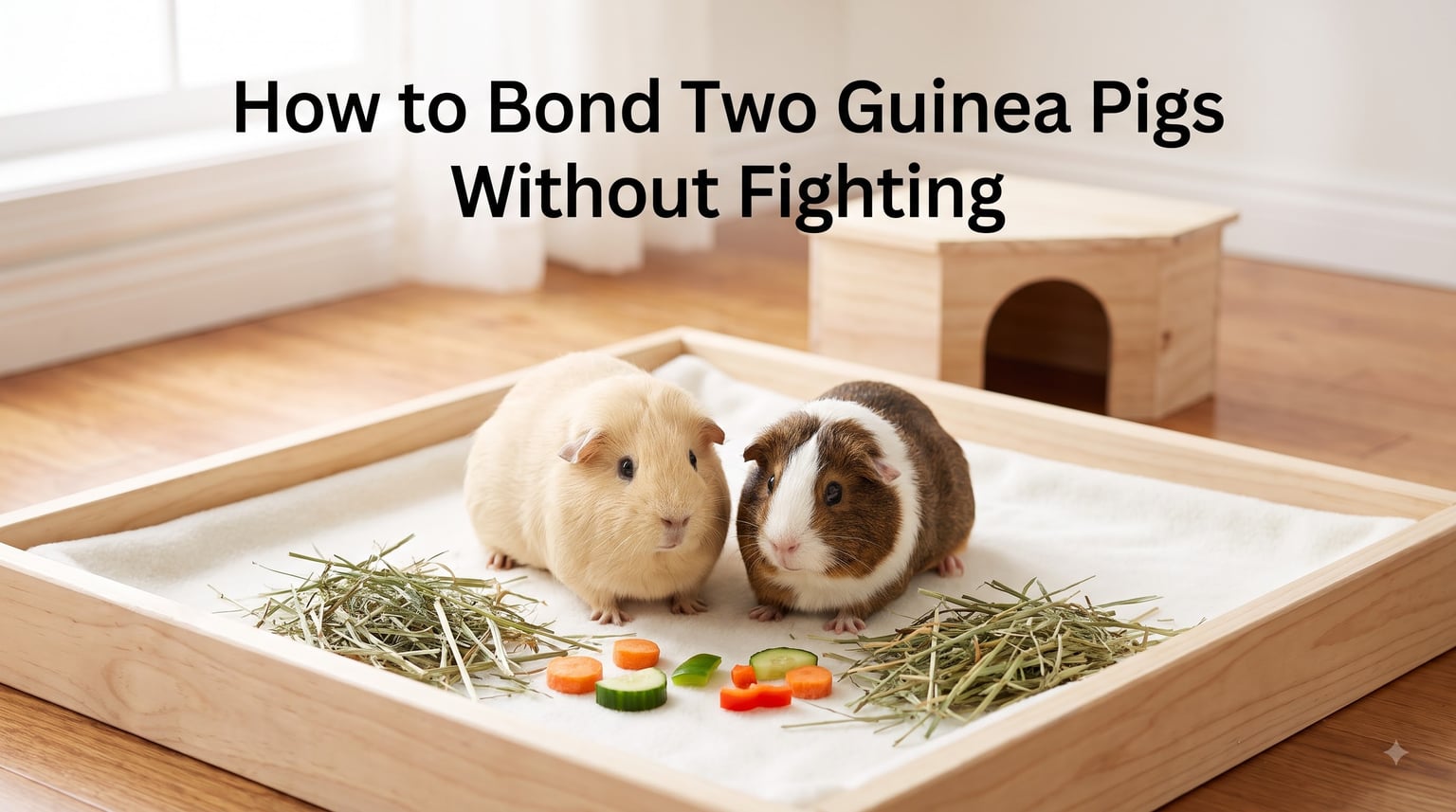
Line the floor with fresh fleece or clean towels that have no pig scent. Add multiple hiding spots, ideally with two exits each so neither pig can corner the other. Open-ended tubes, igloos with doors on both sides, and draped fleece forests work well. Place several piles of fresh hay and a few vegetable pieces around the space to encourage relaxed foraging side by side.
Timing matters too. Choose a time when the house is quiet and you can supervise without distraction for at least one to two hours. Late afternoon or early evening often works well, as guinea pigs are naturally active during these periods. Have a towel or dustpan nearby in case you need to separate them quickly.
Step-by-Step: How to Bond Two Guinea Pigs Without Fighting
Here is the exact six-step process I use to bond two guinea pigs without fighting. Follow these steps in order and do not skip ahead, even if things seem to be going well.
Step 1: Complete Quarantine
Finish the full 14 to 21 day quarantine described earlier. Confirm both pigs are healthy, eating well, and free from parasites or skin conditions. If either pig is sneezing, scratching excessively, or showing any sign of illness, delay the introduction until they are fully recovered.
Step 2: Scent Swapping
Before they ever see each other face to face, start swapping their scent. Take a piece of fleece or bedding from each pig’s cage and place it in the other pig’s enclosure for 24 hours. This lets each pig become familiar with the other’s smell without the stress of a direct encounter. Repeat this for 3 to 5 days.
Step 3: Side-by-Side Housing
Move their cages next to each other with a few inches of space between the bars so they can see and smell each other without physical contact. Observe their reactions. If they are calm, eating normally, and showing curiosity rather than teeth chattering at the divider, they are ready for the next step. Maintain this arrangement for 2 to 3 days.
Step 4: The First Face-to-Face Meeting
Set up the neutral territory space as described above. Place both guinea pigs into the space at the same time, ideally from opposite sides. Do not push them toward each other. Stand back and observe. Expect rumble strutting, mounting, nose-to-nose sniffing, and some chasing. These are normal dominance behaviors, not fighting.
Keep the session going for at least 30 minutes unless dangerous behavior occurs. If things are going well with only normal dominance displays, extend the session to an hour or more. Many pairs need several hours in neutral territory before the hierarchy is established.
Step 5: Gradual Increase in Time Together
If the first session goes well, repeat daily sessions in neutral territory for 2 to 3 days, gradually increasing the duration. You should see a reduction in dominance behaviors each day as the hierarchy solidifies. The pigs should start showing relaxed behaviors like eating together, exploring, and occasionally resting near each other.
Step 6: Move Into the Shared Cage
Once the pigs are consistently calm together in neutral space, thoroughly clean the cage they will share. Replace all bedding with fresh fleece or shavings that carry neither pig’s scent. Rearrange or replace hideys and accessories so the space feels new to both pigs. Remove any hidey with only one exit, as these can lead to cornering incidents.
Place them into the cleaned cage together and monitor closely for the first few hours. The first night in a shared cage is a critical transition point, so keep an eye on them for any sign of aggression flaring up in the new territory.
Understanding Guinea Pig Behavior During Bonding
One of the most common mistakes new owners make is confusing normal dominance behavior with fighting. Guinea pigs must establish herd hierarchy before they can live peacefully together, and this process involves some behaviors that look alarming but are completely healthy. Knowing the difference keeps you from separating a pair that is actually bonding successfully.
Normal dominance behaviors include rumble strutting, where one pig sways their hips side to side while making a low rumbling sound. This is how guinea pigs assert rank. Mounting is another common and normal behavior, performed by both males and females to establish who is in charge. Nose-to-nose sniffing, raised heads, chasing in short bursts, and even mild teeth chattering are all part of the negotiation process.
You may also see teeth chattering that sounds like a rapid clicking, yawning to show teeth as a warning, and butt-sniffing. These can look confrontational, but as long as neither pig is drawing blood or launching full-body attacks, they are part of normal bonding. The key is to watch whether the behaviors escalate or de-escalate over time.
Dangerous behaviors are different in intensity and intent. Look for raised hackles combined with a stiff, sideways posture, loud continuous teeth chattering that does not stop, full-body lunging attacks where one pig flies at the other, and biting that breaks the skin. A guinea pig rearing up on its hind legs with mouth open is in full offensive mode.
The general rule from experienced owners and rescues: let them work it out unless blood is drawn or a pig is being relentlessly attacked with no chance to retreat. Jumping in too early resets the bonding clock because the hierarchy never gets established.
Warning Signs: When to Separate Fighting Guinea Pigs
Knowing when to intervene is critical for safety. Some behaviors are absolute hard stops that mean you must separate the pigs immediately. If you see any of the following, end the session right away.
Blood being drawn is the universal stop signal. Whether it is a bitten ear, a scratched nose, or any visible blood, the session is over. Biting through fur to draw blood indicates genuine aggression, not dominance. Across all major guinea pig forums and rescue resources, blood is the one indicator everyone agrees means the pairing may never work.
Full-body lunging attacks, where one pig launches at the other like a missile and latches on, are another clear stop sign. This is different from a brief chase. A true attack involves airborne lunging and not letting go. If you see a guinea pig rearing up on its back legs, exposing its teeth, and striking downward, that is an aggressive attack that will likely result in injury if not stopped.
Persistent, relentless chasing that goes on for more than a few minutes without either pig backing down also warrants a break. A dominant pig chasing and the subordinate retreating is normal. Both pigs locked in continuous circling and lunging without any de-escalation is heading toward a real fight.
Never use your bare hands to separate fighting guinea pigs. A pig in fight mode will bite anything that comes near, including your fingers. Use a towel, a dustpan, a piece of cardboard, or a pigloo to slide between them. Gently place a barrier in between and herd one pig away. Once separated, return them to their individual spaces and reassess whether this pairing is viable.
Timeline and Success Expectations
One of the most common questions I hear is how long bonding takes. The honest answer is that it varies widely, but having concrete milestones helps you gauge whether you are on track or need to adjust your approach.
First 24 hours: Expect active dominance displays including rumble strutting, mounting, chasing, and teeth chattering. If no blood is drawn and both pigs are eating, you are on the right track. Some pairs settle within the first few hours of neutral territory time, while others need multiple sessions across the day.
First week: Dominance behaviors should be noticeably decreasing. You should see the pigs eating near each other, exploring the space together, and occasionally resting in the same area. Brief moments of calm between dominance displays are a strong positive sign. By the end of week one, most compatible pairs can share a thoroughly cleaned cage.
Two weeks: A successfully bonded pair should be comfortable together, sharing food, sleeping near each other, and showing minimal conflict. Occasional minor dominance reminders are normal, but the intense behaviors from the first few days should be gone.
When to consider bonding failed: If you have done multiple neutral territory sessions over 2 to 3 weeks with no decrease in aggression, or if blood is drawn on more than one occasion despite proper technique, this pairing may not work. Some pigs are simply too dominant to accept a companion, and that is okay. It is better to maintain them as neighboring solo pigs than to force a dangerous situation.
What to Do When Bonding Fails
A failed bonding is not the end of the road for your guinea pig’s social life. There are several paths forward, and some failed pairs can be successfully re-homed with different companions. Here is what I recommend based on experience.
Side-by-side permanent housing is the most common solution for incompatible pigs. House them in cages next to each other so they can see, smell, and interact through the bars without physical contact. Many pigs that cannot share a cage still benefit from the presence of a neighbor. This setup provides social enrichment without the risk of injury.
Try a different match. Sometimes the problem is not bonding in general, but this specific pairing. A highly dominant pig might fail with another dominant pig but succeed with a calm, submissive companion. Rescues often offer matchmaking services and trial bonding sessions for exactly this reason. Do not assume one failed attempt means your pig must live alone forever.
The bonding bath technique is a last-resort method that works for some stubborn pairs. The idea is to bathe both pigs together in the same tub, which creates a shared stressful experience and washes away territorial scent markers. After the bath, place them together in neutral territory while they are still slightly damp and focused on grooming themselves rather than fighting. This method is not guaranteed and should only be attempted after standard bonding has failed.
Consult a guinea pig rescue. Many rescues have extensive bonding experience and may be willing to help facilitate a match. Some will even let you bring your pig in for a supervised bonding session with several potential companions. This takes the guesswork out of matchmaking and gives your pig the best chance of finding a compatible friend.
The 3-3-3 Rule Explained
You may have heard of the 3-3-3 rule in the context of adopting dogs, but guinea pig owners have adapted this framework to describe how a new pig adjusts after coming home. Understanding these phases helps you time the bonding process correctly.
3 days to decompress: In the first three days, a new guinea pig is overwhelmed by the change in environment. They may hide constantly, eat less than normal, and seem fearful. This is not the time to start bonding. Focus on letting them settle into their quarantine space quietly.
3 weeks to settle in: Over the next three weeks, the pig learns their routine, becomes comfortable with their surroundings, and starts showing their true personality. This is the window where you can begin scent swapping and side-by-side housing in preparation for bonding.
3 months to feel fully at home: By three months, the pig has fully adjusted to their environment and routine. A bonded pair should be living comfortably together by this point, and any remaining social quirks are likely permanent. If bonding has not succeeded by the three-month mark, consider alternative arrangements or a different companion.
Frequently Asked Questions
How long does it take to bond two guinea pigs?
Bonding two guinea pigs typically takes anywhere from a few hours to two weeks. Some pairs establish hierarchy within the first neutral territory session, while others need multiple sessions over several days. Most compatible pairs can share a cage within one to two weeks if no blood is drawn and dominance behaviors decrease over time.
Can you put two guinea pigs together right away?
No, you should never put two guinea pigs together immediately. The new pig needs a 14 to 21 day quarantine first to prevent spreading parasites or illness. After quarantine, follow a gradual process of scent swapping, side-by-side housing, and neutral territory introductions before they share a cage.
Is it normal for two guinea pigs to fight when bonding?
Yes, certain behaviors that look like fighting are normal during bonding. Rumble strutting, mounting, chasing, teeth chattering, and nose-to-nose confrontations are all part of establishing herd hierarchy. These are not real fights. Actual fighting involves full-body lunging, biting that draws blood, and relentless attacks. Normal dominance behaviors decrease over time, while real fighting escalates.
What is the 3-3-3 rule for guinea pigs?
The 3-3-3 rule describes a new guinea pig’s adjustment timeline: 3 days to decompress from the move, 3 weeks to settle into their routine and show their true personality, and 3 months to feel fully at home. Bonding should begin after the initial decompression period and ideally progress during the settling-in phase.
Do guinea pigs fight to the death?
Guinea pigs rarely fight to the death on their own, but severe untreated aggression can cause fatal injuries. This is why you must supervise bonding sessions and separate pigs immediately if blood is drawn. Never leave newly bonding pigs unsupervised, especially overnight, until you are confident the hierarchy is stable.
Conclusion: Setting Your Guinea Pigs Up for Success
Learning how to bond two guinea pigs without fighting is about respecting their natural social structure. Quarantine first, match by gender and personality, introduce in neutral territory, and let them work through dominance behaviors without panicking. Most pairs that are going to work will show clear progress within two weeks.
Remember that blood is the one hard stop, never hesitate to separate if you see it. And if a pairing does not succeed, side-by-side housing or a different companion can still give your pig the social enrichment they need. Patience and observation are your most important tools throughout this process.
Your guinea pigs deserve companionship, and with the right approach, you can give them a stable, happy bond that lasts for years.