
When I first spotted a damp, messy patch under my hamster’s tail, my heart sank. Was this ordinary diarrhea from a bit too much cucumber, or the terrifying “wet tail” I had read about on hamster forums? Knowing the difference between wet tail vs ordinary diarrhea in hamsters can mean the difference between a 24-hour recovery at home and losing your pet within 48 hours.
I have spent the past few months digging into veterinary guides, exotic pet forums, and breeder experiences to put this article together. You will learn what each condition actually is, how to compare symptoms at home, when to rush to a vet, and how to prevent either problem from coming back. The goal is to give you clear, actionable answers when minutes matter.
Table of Contents
What Is Wet Tail in Hamsters?
Wet tail is a serious bacterial infection called proliferative ileitis, most often caused by Lawsonia intracellularis overgrowth in the gut. The infection inflames the small intestine, producing severe watery diarrhea and the wet, matted fur around the tail that gives the disease its name.
Wet tail can kill a hamster within 48 hours if left untreated, especially in juveniles. It is not just loose stool – it is a fast-moving intestinal disease that requires emergency veterinary care. The bacteria thrive when a hamster is stressed, when hygiene slips, or when a new diet overwhelms the gut flora.
You will see the term “wet tail” used loosely online, but medically it refers to proliferative ileitis, not every case of damp fur. That distinction matters because ordinary diarrhea is far less dangerous and usually self-limiting.
The bacteria attach themselves to the cells lining the ileum, the final section of the small intestine. Over several days of unchecked growth, they trigger massive inflammation and stop the gut from absorbing water, electrolytes, and nutrients. That is why dehydration hits so quickly and why even a short delay in treatment can be fatal.
What Does Ordinary Hamster Diarrhea Look Like?
Ordinary diarrhea in hamsters is loose or watery stool caused by dietary upset, sudden food changes, too much fresh produce, contaminated food, or mild stress. It is not the same as wet tail, even though both can leave the rear end damp.
Typical triggers include an abrupt switch in pellets, an overdose of watery vegetables like cucumber or lettuce, or fruit with high sugar content. Mild diarrhea often clears up within 24 hours once the trigger is removed and hydration is supported.
Hamsters with ordinary diarrhea usually stay alert, keep eating, and remain curious. Their fur may be slightly messy, but they do not show the hunched posture or dramatic lethargy that signals wet tail.
A useful rule of thumb: if your hamster is still interested in treats, still exploring the cage, and still reacting to your voice, the diarrhea is most likely dietary rather than infectious. Watch closely, but there is usually no need to panic.
Wet Tail vs Ordinary Diarrhea: Side-by-Side Comparison
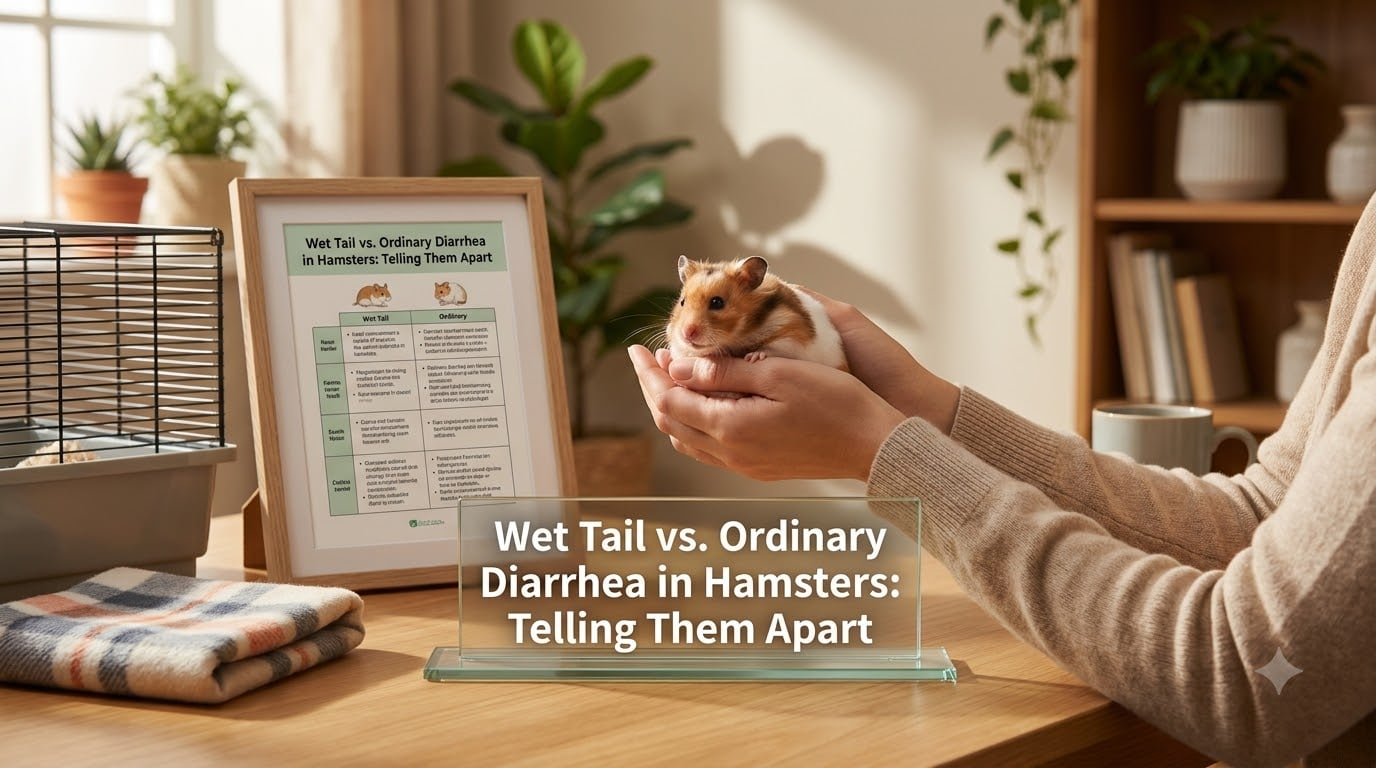
This table shows the key differences between wet tail and ordinary diarrhea in hamsters. Use it as your quick-reference checklist when symptoms appear.
| Feature | Wet Tail (Proliferative Ileitis) | Ordinary Diarrhea |
|---|---|---|
| Cause | Bacterial overgrowth, usually Lawsonia intracellularis | Diet change, too much wet food, mild stress |
| Speed of onset | Hours – can deteriorate within a day | Gradual, often tied to recent food |
| Severity | Life-threatening, emergency | Usually mild and self-limiting |
| Stool appearance | Very watery, sometimes bloody or mucousy | Soft or loose, normal color |
| Energy level | Lethargic, hunched, unresponsive | Still active and alert |
| Appetite | Refuses food and water | May eat normally or slightly less |
| Age most at risk | Syrian hamsters under 12 weeks especially | Any age |
| Treatment | Urgent vet visit, antibiotics, fluids | Diet adjustment, hydration at home |
| Contagious | Highly contagious between hamsters | Not contagious |
If your hamster shows more than two symptoms from the wet tail column, treat it as an emergency. Do not wait to see if it improves. The 48-hour rule is real, and many owners wish they had acted sooner.
Early Signs of Wet Tail You Should Never Ignore
Wet tail moves fast, so catching the first signs gives your hamster the best chance. Here are the warning signs hamster owners and exotic vets report most often.
- Wet, matted fur around the tail and rear – The hallmark symptom. Fur looks pasted down and stained.
- Very watery diarrhea – Stool is liquid, sometimes with a foul smell or mucus.
- Hunched posture – The hamster sits with a curved back, eyes half-closed, looking miserable.
- Lethargy and unresponsiveness – Does not react to you, food, or sounds the way it usually does.
- Refusing food and water – Stops eating its favourite treats within hours.
- Dehydration signs – Skin tents when gently pinched, sunken eyes, dry gums.
- Weight loss and a rough coat – Visible within 24 hours of onset.
Syrian hamsters under 12 weeks are the most vulnerable, but wet tail can strike hamsters of any age or breed. Newly bought hamsters are especially at risk because the stress of moving triggers bacterial overgrowth. Dwarf hamsters can get wet tail too, though the bacterial strain sometimes differs.
Why Stress Triggers Wet Tail but Not Ordinary Diarrhea
The bacteria that cause wet tail live naturally in small amounts inside a hamster’s gut. The problem starts when stress tips the balance in their favour. Moving to a new home, a noisy environment, rough handling, or even a cage cleaning can suppress the immune system and let Lawsonia intracellularis multiply rapidly.
Once the bacteria take over, they damage the intestinal lining. The gut cannot absorb water or nutrients, so severe diarrhea follows. Dehydration sets in within hours, and the hamster can collapse.
Ordinary diarrhea works differently. It usually comes from food the gut cannot digest, so the intestines push it out quickly with extra water. Removing the trigger food and giving plain pellets lets the gut settle back down.
Common stress triggers worth watching for include a recent cage move, a new pet in the home, loud music, drafts, overcrowded housing, and rough handling. Reducing these triggers is one of the best ways to prevent wet tail in the first place.
How Veterinarians Diagnose Each Condition
When you bring a hamster to an exotic vet, the first step is a physical exam. The vet checks hydration, temperature, weight, and palpates the abdomen. They will ask when symptoms started, what the hamster ate recently, and whether anything stressful happened.
For wet tail, vets often run a fecal test or PCR test to confirm Lawsonia intracellularis. They may also test for related bacteria like Campylobacter and rule out Tyzzer’s disease and Giardia. Quick diagnosis matters because waiting even 12 hours lowers survival odds.
Ordinary diarrhea usually does not need lab work. If symptoms match a clear dietary trigger and the hamster is otherwise alert, the vet often recommends simple home treatment and a follow-up if there is no improvement in 24 hours.
If the diagnosis is unclear, vets sometimes run bloodwork to check for systemic infection or organ damage. This is rare for ordinary diarrhea but common in advanced wet tail cases where dehydration has already taken hold.
Treatment Options for Wet Tail and Ordinary Diarrhea
Wet tail requires prescription treatment. Vets typically give antibiotics such as metronidazole or enrofloxacin, plus subcutaneous fluids to fight dehydration. Some also prescribe probiotic support to restore gut flora. Without antibiotics, survival rates drop sharply – most wet tail cases do not resolve on their own.
Wet tail drops sold in pet shops are not a substitute for veterinary antibiotics. They may help with very mild cases but are not strong enough for a full-blown infection. Community forums report mixed results, with most owners saying a vet visit saved their hamster.
Ordinary diarrhea is treated at home by removing the trigger food, offering only fresh water and plain pellets, and adding gentle hydration through cucumber or a vet-approved electrolyte solution. Most cases clear up within 24 to 48 hours.
Recovery times differ dramatically. A hamster with ordinary diarrhea often bounces back in a day or two. A hamster recovering from wet tail needs a week or more of supportive care, soft food like baby food pumpkin, and a quiet, warm cage.
For mild dehydration, your vet may recommend unflavored Pedialyte diluted with water at a 1:1 ratio. For severe dehydration, subcutaneous fluids under the skin are far more effective and are usually given in the clinic.
Wet Tail Home Emergency Checklist: What to Do in the First 24 Hours
Use this checklist while you arrange transport to a vet. Speed matters more than perfection, and these steps can buy precious time for your hamster.
- Move the hamster to a clean, quiet cage with soft paper bedding – avoid dusty substrates.
- Place the cage in a warm, dim area around 70 to 75 degrees Fahrenheit.
- Offer plain water and an electrolyte solution if your vet has recommended one.
- Remove all fresh vegetables, fruits, and treats until diarrhea stops.
- Offer a teaspoon of plain baby food pumpkin to slow diarrhea and provide calories.
- Quarantine the sick hamster from any cage mates – wet tail spreads fast.
- Disinfect food bowls, water bottles, and toys with a pet-safe disinfectant.
- Call an exotic vet immediately and describe symptoms clearly.
- Keep the hamster warm during transport using a small fleece pouch.
Do not force-feed a lethargic hamster. If they refuse food for more than a few hours, let the vet handle fluid and nutrient support. Forcing food or water into a weak hamster can cause aspiration pneumonia, which is often fatal.
Myth Buster: Does Wet Food Cause Wet Tail?
No. This is one of the most common myths in hamster care. Wet food does not cause wet tail. The disease is bacterial, and it comes from stress, overcrowding, or a compromised immune system, not from a piece of cucumber.
Too much wet food can cause ordinary diarrhea because of the extra water and sugar, but that is a digestive issue, not an infection. Owners on hamster forums have shared stories of sick hamsters eating wet food for weeks while recovering, with no link to wet tail.
If you feed vegetables or fruit, keep portions small – a thumbnail-sized piece of cucumber or carrot is plenty. Moderation prevents ordinary diarrhea, not wet tail. The myth persists because new owners notice both at the same time and assume causation, but the underlying cause of wet tail is always bacterial.
How to Prevent Wet Tail and Ordinary Diarrhea
Prevention starts with reducing stress. Place the cage in a quiet room away from drafts, loud speakers, and direct sunlight. Handle new hamsters gently for the first two weeks and let them settle before introducing major changes.
Quarantine any new hamster for at least two weeks before introducing it to others. Wet tail spreads quickly through shared bedding, food bowls, and air in small spaces. Wash your hands and any shared equipment between handling different hamsters.
Keep the cage clean but do not over-clean. Removing all scent markers stresses hamsters. Spot-clean soiled areas weekly and do a full clean every two to three weeks. Use a hamster-safe disinfectant and rinse thoroughly.
Feed a stable diet of quality pellets with small, measured amounts of fresh vegetables. Avoid sudden diet changes, which upset the gut and can trigger ordinary diarrhea. Introduce new foods one at a time so you can spot problems early.
When Diarrhea in Hamsters Becomes an Emergency
Head to a vet the same day if you notice any of these red flags: refusal to eat or drink for more than a few hours, blood or mucus in stool, severe lethargy, hunched posture, sunken eyes, or rapid weight loss. Each of these signals dehydration or systemic infection.
Wet tail does not wait. The 48-hour rule is real – many hamsters deteriorate within that window. Trust your instincts: if your hamster looks “off” and you suspect wet tail, treat it as an emergency.
If your regular vet does not see hamsters, call ahead to confirm. Exotic vets and small-mammal specialists are far better equipped to treat wet tail than general practitioners. Some emergency clinics also treat hamsters, but call first so the team can prepare.
Recovery Expectations and Long-Term Care
A hamster recovering from ordinary diarrhea usually returns to normal behavior within 48 hours and needs no special follow-up beyond a stable diet. A hamster recovering from wet tail takes longer – often one to three weeks of supportive care, soft food, and a clean, calm environment.
Watch for relapse signs in the weeks after treatment: returning lethargy, loose stool, or weight loss. Some hamsters are left with a sensitive gut and need a plain, consistent diet for life. Probiotic support from your vet can help rebuild healthy gut flora.
Keep a simple log of your hamster’s weight, droppings, and eating habits for the first month after recovery. Catching small changes early makes a big difference, especially if wet tail returns.
Frequently Asked Questions
Is all hamster diarrhea wet tail?
No. Ordinary diarrhea is usually caused by diet changes, too much fresh produce, or mild stress, and it is not life-threatening. Wet tail is a bacterial infection called proliferative ileitis that produces severe, watery diarrhea and can kill a hamster within 48 hours. The two look similar at first glance, but wet tail comes with lethargy, hunched posture, and refusal to eat.
Can a hamster recover from wet tail without antibiotics?
Recovery without antibiotics is rare. Most wet tail cases need prescription antibiotics such as metronidazole or enrofloxacin, plus fluids for dehydration. Wet tail drops sold in pet shops may help very mild cases but are not a reliable substitute for veterinary treatment.
What does wet tail diarrhea look like?
Wet tail diarrhea is very watery, often with a foul smell, and sometimes contains mucus or blood. It is paired with wet, matted fur around the tail and rear end. The hamster usually looks hunched, lethargic, and unresponsive.
What does ordinary hamster diarrhea look like?
Ordinary hamster diarrhea is loose or soft stool that may look pale or slightly green if vegetables are the cause. The hamster usually stays alert, keeps eating, and the mess is limited to the rear end. It clears up within 24 to 48 hours once the trigger food is removed.
How quickly does wet tail kill a hamster?
Wet tail can kill a hamster within 24 to 48 hours if untreated. Young Syrian hamsters are the most vulnerable, but any hamster can deteriorate quickly. Immediate veterinary care is the only reliable way to save a hamster showing wet tail symptoms.
Is wet tail contagious to humans?
Wet tail is not considered a major zoonotic risk, but the bacteria involved, including Lawsonia intracellularis and Campylobacter, can cause illness in people with weakened immune systems. Always wash your hands thoroughly after handling a sick hamster or cleaning its cage.
Wet Tail vs Ordinary Diarrhea: Final Thoughts for Worried Owners
Telling wet tail vs ordinary diarrhea in hamsters comes down to one question: how sick does your hamster look? Ordinary diarrhea is messy but mild, and your hamster still eats and moves. Wet tail is a fast-moving bacterial infection that strips energy, appetite, and hydration within hours.
If you suspect wet tail, do not wait. Call an exotic vet, follow the emergency checklist above, and keep your hamster warm and quiet. Ordinary diarrhea can usually be managed at home with a stable diet and good hydration.
The best protection is prevention: a low-stress environment, a clean but familiar cage, and a stable diet. With the right care, most hamsters never experience wet tail, and ordinary diarrhea stays a minor inconvenience rather than a crisis.