
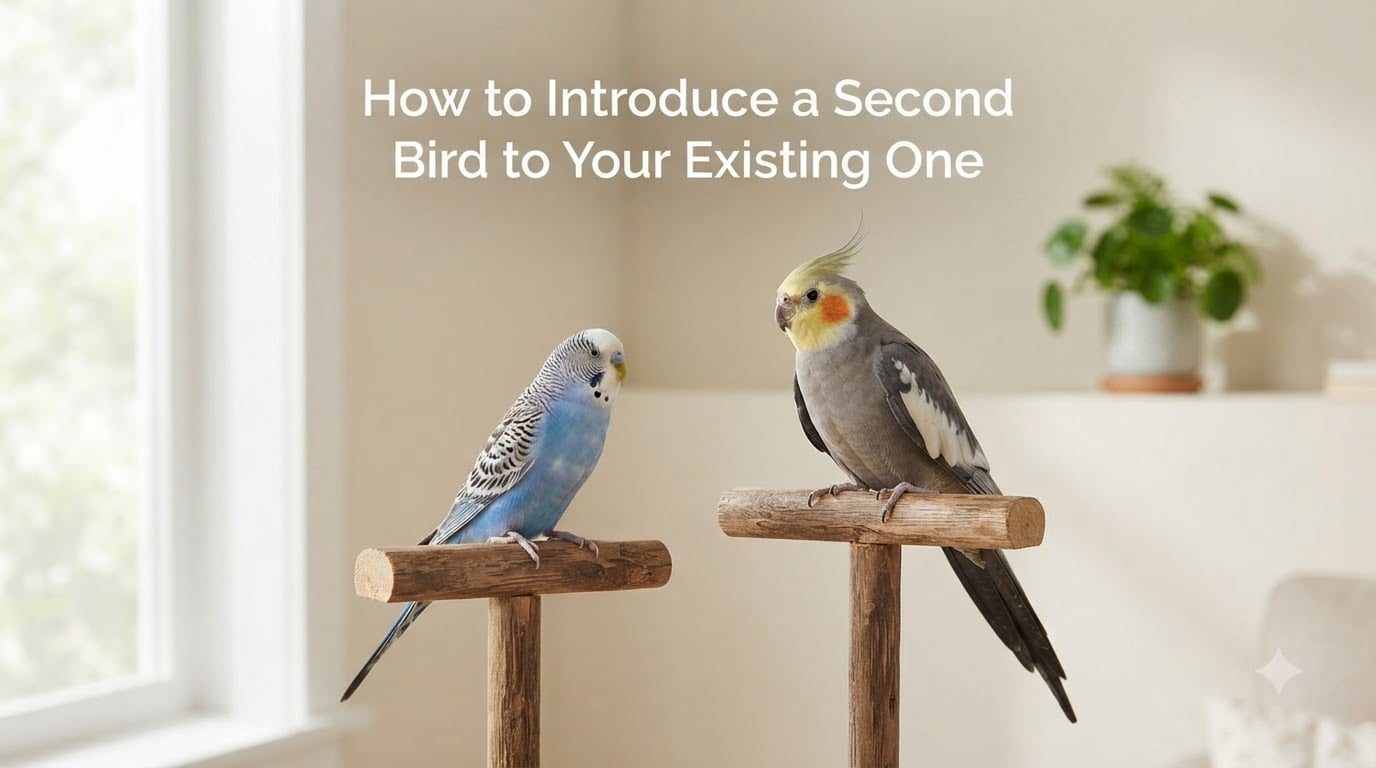
Bringing a second bird into your home sounds simple, but it is one of the most emotionally charged decisions you will make as an owner. I have walked friends through this process for years, and the same truth keeps surfacing: how you introduce a second bird to your existing one decides whether you end up with a peaceful flock or a stressed household. This guide collects everything I have learned from avian vets, behaviorists, and real bird owners who have done it well and done it badly.
In the next ten minutes, you will get a step-by-step plan for a safe introduction, a body language cheat sheet, the truth about the 3-3-3 rule, and what to do when things go sideways. No fluff, no product pushing, just the practical roadmap I wish someone had handed me on day one.
Table of Contents
Should You Get a Second Bird? Key Considerations First
Before we get into the introduction steps, slow down for a moment. Not every bird needs or wants a companion, and forcing one on a content solo bird can backfire badly. Parakeets, cockatiels, conures, and most parrot species are flock animals by nature, but individual personalities vary wildly.
Here are the honest questions I ask every owner before they commit:
Is your existing bird showing signs of loneliness, such as feather plucking, excessive screaming, or obsessive bonding to you?
Do you have time to manage two cages, two feeding routines, and twice the vet bills?
Can you afford a second cage, separate supplies, and a likely vet visit for the new bird?
Is your current bird healthy and stable enough to handle the disruption?
If your answer is “yes, yes, yes, and yes,” then proceed. If not, the most loving choice might be more interaction time with your existing bird, enrichment toys, or even a mirror. The bird community calls the impulse to collect birds Multiple Bird Syndrome, and it is a real trap. I have seen owners go from one bird to six in a year because each new bird seemed like the answer to the previous one’s behavior problems. It rarely works that way.
How to Introduce a Second Bird to Your Existing One: Quarantine Comes First?
The single most important step in any bird introduction happens before the birds ever see each other. It is called quarantine, and skipping it is the fastest way to turn a happy home into a sick one.
Quarantine means keeping your new bird in a completely separate room with its own air supply for a minimum of 30 days. Some avian vets push that to 45 days for high-risk species. Birds can carry psittacine beak and feather disease, polyoma, and a half dozen other illnesses that spread through airborne particles, shared food, and even your hands.
During quarantine, you should:
Schedule a vet visit within the first week to test for common pathogens
Watch for symptoms like lethargy, discharge from the nose or eyes, unusual droppings, or feather loss
Handle the quarantined bird last and wash your hands thoroughly before touching your resident bird
Use separate air space if possible, meaning a different room with its own ventilation, not just a divided space
This step has saved me countless heartbreaks. One owner I advised skipped quarantine to “save time,” and within two weeks her resident macaw tested positive for a respiratory infection that cost over a thousand dollars to treat. The lesson: quarantine is not optional when you introduce a second bird to your existing one.
Setting Up Separate Living Spaces for Each Bird
Even after quarantine passes, the rule remains: each bird needs its own cage. Birds are territorial, and no amount of training will override the instinct to defend a space they call home.
The first bird gets to keep their original cage and preferred spot. The second bird needs a separate cage of appropriate size, placed in a different part of the house at first. This reduces the chance of either bird feeling invaded.
Set up the new cage with the essentials:
Multiple perches at different heights and textures
Separate food and water dishes (do not share)
Foraging toys and enrichment items
A play stand for out-of-cage time in a neutral area
A common mistake is housing birds side by side from day one. I learned this the hard way with my own budgies. Even after a clean quarantine, the original bird displayed aggressive posturing whenever they saw the new bird. Moving the cages farther apart, then gradually bringing them closer over weeks, resolved it. Patience beats proximity every time.
The 3-3-3 Rule for Birds and What It Means
You will hear the 3-3-3 rule referenced constantly when researching how to introduce a second bird to your existing one. It is a rough timeline that helps set realistic expectations, not a strict schedule.
The rule breaks down like this:
3 days to decompress. The new bird is overwhelmed by a new environment, new sounds, and new people. Expect fear, silence, and possibly refusal to eat.
3 weeks to settle in. The new bird starts showing its real personality. You will see preferences emerge for food, toys, and favorite perches.
3 months to feel at home. The new bird trusts you, accepts the household rhythm, and is ready for real flock dynamics.
This rule applies to both birds. Your resident bird also needs time to adjust to the disruption of a new presence in the home. Treat the first 90 days as a transition period for the entire flock, not just the newcomer.
Step-by-Step Introduction Process
Once quarantine ends and both birds are healthy, you can begin the actual introduction. Here is the sequence I follow, and the same one most avian behaviorists recommend.
Step 1: Visual Introduction at a Distance
Place the cages in the same room but on opposite sides. Let the birds see each other without any possibility of physical contact. Watch their body language for signs of curiosity versus aggression. Curious birds lean forward, chirp softly, and may bob their heads. Aggressive birds flatten their feathers, dilate their pupils, and lunge toward the cage bars.
Keep this distance-based setup for about a week, moving the cages slightly closer every few days if reactions stay positive.
Step 2: Supervised Parallel Play
Bring both birds out of their cages at the same time and let them perch on separate stands in a neutral room. Do not let them fly to each other yet. Use treats and calm verbal praise to keep the energy relaxed.
This stage teaches the birds that being out together is safe and rewards come from calm behavior rather than confrontation.
Step 3: First Physical Meeting on Neutral Ground
After a week or more of positive parallel play, allow the birds to approach each other on a shared play stand or open floor space. Stay hands-on ready with a towel, just in case one bird escalates. Have two trusted helpers if possible, one for each bird.
The towel is not for punishment. It is a gentle way to separate birds fast if a fight breaks out, before serious injury occurs. Most bird owners never need it, but you will thank yourself for having one nearby.
Step 4: Gradual Integration
If the first meeting goes well, repeat supervised sessions daily. Increase the duration by 10 to 15 minutes as long as both birds remain calm. Never leave two unfamiliar birds unsupervised until you are confident they can coexist peacefully, which can take weeks or months.
Reading Bird Body Language During Introduction
This is the section I wish every guide included because reading your birds correctly is the difference between a smooth intro and a disaster.
Friendly body language looks like this:
Soft, relaxed feather position, not puffed up or tightly held against the body
Mutual preening, where one bird gently grooms the other
Regurgitation between bonded birds (normal, even if it grosses you out)
Head bobbing and playful chasing without contact
Sitting close together on the same perch without crowding
Warning signs include:
Lunging at cage bars or the other bird
Biting, feather pulling, or foot-locking fights
Pinpoint pupils with flared tail feathers
Loud, sharp screams directed at the other bird
One bird trapping the other in a corner
Playing can look rough, so do not panic at every chase. Real fighting involves pinning the other bird down, biting with intent, and refusing to back off. If you are unsure, separate them and try again later.
Managing Jealousy and the First Bird Priority Rule
Jealousy is one of the most common introduction problems, especially in birds that have been solo companions for years. The good news is that jealousy is manageable with consistent habits.
The first bird priority rule is simple: your original bird always comes first. You greet them first in the morning, feed them first, and offer head scratches first. This is not cruelty to the new bird. It is reassurance to the resident that they have not been replaced.
I follow this rule religiously with my own flock. When I bring in a new bird, the first three months are about protecting the bond with the established bird. The new bird gets plenty of attention, just always after the resident.
Watch for behavioral changes in your resident bird that signal jealousy:
Screaming when you hold or feed the new bird
Aggression directed at you when interacting with the new bird
Regression in training or tricks the bird previously knew
Feather plucking or self-mutilation
If any of these appear, double down on first bird priority and reduce the new bird’s access to your resident’s favored spots and people for a few weeks.
Species Mixing Warnings and Compatibility
Not all bird species mix safely, and this is where many new owners make a dangerous mistake. A small bird in the same cage as a large bird is at serious risk, regardless of how friendly the large bird seems.
Rule of thumb from avian vets:
Never house a small species (finches, budgies, parrotlets) with a large species (cockatoos, macaws, Amazons)
Same-species pairings, especially two males or a male and female, generally work better than mixed-species pairings
Quaker parrots and conures can sometimes cohabitate peacefully, but monitor closely
Aggressive species like Indian ringnecks often need solitary housing even with their own kind
Personality matters more than species in many cases. A calm cockatiel may accept a budgie, while a territorial one rejects its own reflection. Always test compatibility with supervised meetings before committing to shared housing.
When the Introduction Fails: What to Do Next
Sometimes, despite your best efforts, two birds simply cannot coexist. This is more common than online guides admit. Real bird owners report that 10 to 20 percent of introductions end in permanent separation.
Signs the introduction has failed permanently:
Constant aggression that does not improve after 3 months of gradual work
One bird injuring the other, even through the cage bars
Severe stress in either bird, indicated by feather plucking or appetite loss
One bird actively hunting or cornering the other during playtime
If this is your situation, do not feel like a failure. Some birds are wired to be solo. Your options include maintaining two separate cages with separate out-of-cage time, or, in rare cases, rehoming one of the birds to a calmer environment. Rehoming should always be the last resort, but it can be the kindest choice for a chronically stressed bird.
The best approach is to accept the outcome early. Pushing birds that hate each other to bond usually ends with injury or behavioral collapse. A peaceful two-cage household is a perfectly valid goal.
Frequently Asked Questions
How long does it take to introduce a second bird to your existing one?
The full process typically takes 3 to 6 months from the moment you bring the new bird home. Quarantine alone requires 30 to 45 days, followed by gradual visual and physical introductions over another 6 to 12 weeks. Rushing this timeline almost always backfires.
What is the 3-3-3 rule for birds?
The 3-3-3 rule describes how long a new bird needs to decompress (3 days), settle in (3 weeks), and feel at home (3 months). It applies to both the new bird and the resident bird, helping owners set realistic expectations during the introduction period.
Can different species of birds live together?
It depends on the species. Same-species pairings generally work best. Small birds should never share a cage with large birds because of injury risk. Mixed-species cohabitation is possible with species of similar size and temperament, but always requires close supervision and separate cages as backup housing.
How do I know if my birds are fighting or playing?
Playing involves chasing, soft vocalizations, and gentle beak contact without force. Fighting involves biting with intent, feather pulling, pinning the other bird down, and loud aggressive screaming. When in doubt, separate them and try again later. Real fights escalate quickly and rarely resolve on their own.
Final Thoughts on a Successful Bird Introduction
Learning how to introduce a second bird to your existing one is less about a perfect technique and more about respecting the birds’ natural pace. The owners who succeed are the ones who treat the process as a 3-month project, not a weekend event.
Quarantine first, set up separate cages, follow the gradual introduction steps, read body language carefully, honor your first bird’s priority, and accept that some pairings simply will not work. Run that playbook faithfully and you give every bird in your home the best possible shot at a calm, bonded flock in 2026 and beyond.