
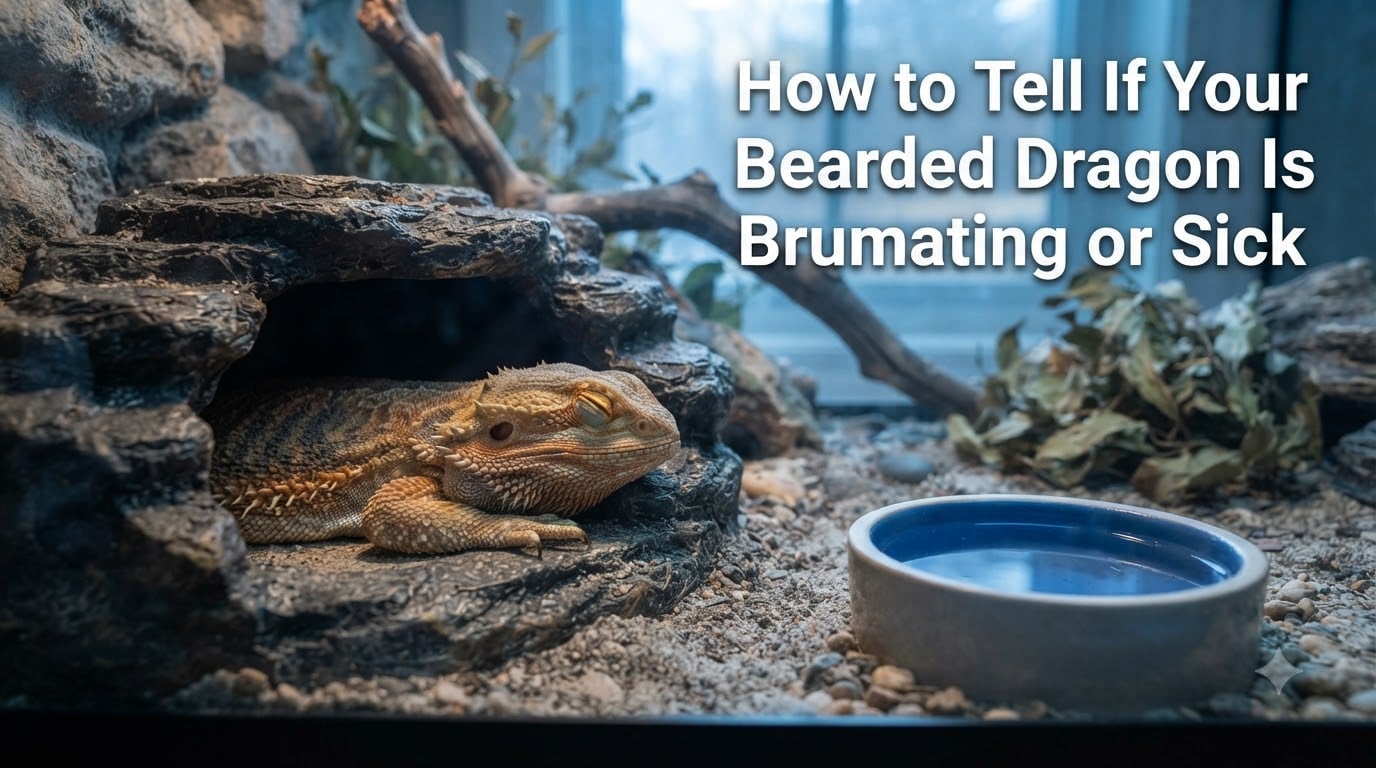
Last winter, my six-year-old beardie Blue went 11 weeks barely moving, eating nothing, and sleeping on the cool side of his tank. I nearly called the vet three times. Turns out, that long winter stretch was textbook brumation. But I have also watched a friend’s juvenile dragon quietly fade in similar conditions, and that story ended at an emergency vet. That is the heart of the problem with bearded dragon brumation: it looks almost identical to a serious illness, and confusing the two can be fatal.
So how to tell if your bearded dragon is brumating or sick when the early signs look the same? Both states involve sleeping more, eating less, hiding, and looking generally “off.” The difference shows up in subtle details: weight loss rate, breathing quality, body posture, eye shape, and fecal output. In this guide, I will walk you through the reliable signals our team has compiled from veterinary sources and owner experience, so you can make a calm decision instead of a panicked guess.
By the end, you will know exactly what brumation looks like, which symptoms cross the line into illness, how long brumation can last at different ages, and when a vet visit is non-negotiable. Whether your dragon is a hatchling or a seasoned adult, this is the reference I wish I had years ago.
Table of Contents
What Is Brumation in Bearded Dragons?
Brumation is a natural, reptile version of hibernation. Because bearded dragons are ectotherms (cold-blooded), their body temperature, heart rate, digestion, and immune activity all depend on the heat in their environment. When days shorten and ambient temperatures drop, their internal systems slow down dramatically to conserve energy through the lean months.
During true brumation, your dragon’s digestive system essentially shuts down. Food sitting in the gut will rot rather than digest, which is why brumating dragons stop eating on their own. Their breathing slows, sometimes to one breath every few seconds. They may sleep for days at a time, then briefly wake, shift position, drink a little water, and sleep again.
This is not the same as hibernation in mammals, even though people use the words interchangeably. Brumation allows periodic awakenings. A brumating dragon can and does stir. It is normal for them to open their eyes, look around, drink, then settle again. A truly hibernating mammal would not do that. That single difference alone helps answer the most common panic question: how to tell if your bearded dragon is brumating or dying, because a dead dragon will not stir at all.
Bearded Dragon Brumation Signs to Watch For
These are the reliable signals that your dragon is in a healthy brumation cycle. If your pet checks most of these boxes, brumation is the most likely explanation:
Spending less time under the basking lamp and choosing the cool side or a hide instead.
Retreating to cooler areas of the enclosure and refusing to bask even when offered heat.
Loss of appetite that builds gradually over a week or two, going from eager eating to picking at food to refusing everything.
Sleeping for longer stretches, sometimes 12 to 18 hours a day, often with eyes closed and body relaxed.
Hiding more often, wedging into caves, hammocks, or under decor for hours or days.
Reduced bowel movements, sometimes none for weeks, because there is no food being processed.
Slower reaction time when gently disturbed, but still responsive if you pick them up or move them.
Drinking water when offered, even if they refuse food.
Notice the pattern. Every one of these signs has to do with energy and activity, not with physical deterioration. A brumating dragon still looks like a healthy dragon. The skin stays supple, the fat pads on the head stay plump, the eyes stay clear when open, and breathing stays slow but rhythmic. If you check these signals and they line up, the chances are strong that you have a healthy brumation on your hands.
How to Tell If Your Bearded Dragon Is Brumating or Sick: Comparison Guide
This is the heart of the question. The two states share a lot of surface symptoms, but they diverge once you look closely. Use this comparison to assess your dragon’s real condition.
| Behavior or Sign | Normal Brumation | Possible Sickness |
|---|---|---|
| Sleep duration | Long but broken by brief wakes | Constant sleep with no response to touch |
| Appetite loss | Gradual, paired with seasonal cue | Sudden, with weight dropping fast |
| Body weight | Stable or very slow decline | Rapid loss over days or a few weeks |
| Breathing | Slow, even, silent | Open-mouth, wheezing, mucus, gasping |
| Eyes | Closed but alert when awake | Sunken, crusty, swollen, or constantly half-closed |
| Skin | Normal color, smooth, sheds on schedule | Wrinkled, discolored, yellow, or dark patches |
| Fat pads | Plump and full | Sunken or hollow looking |
| Fecal output | Minimal or none, normal color when present | Runny, bloody, smelly, or no output with belly swelling |
| Posture | Relaxed, sprawled, belly down | Limp, twisted, head tilted, limping |
| Reaction to warmth | Slowly stirs and moves toward heat | Ignores heat source entirely |
| Age group | Usually 12 months or older | Any age, especially juveniles |
| Season | Late fall to early spring in Northern Hemisphere | Any time of year |
The two key differentiators I watch for are weight and breathing. A brumating dragon does not lose weight fast because they are not burning fuel. A sick dragon often loses weight visibly within a week or two, even when not eating. Breathing is even more telling. Slow and rhythmic is fine. Open-mouth breathing, popping chest, audible wheeze, or any mucus from the nose or mouth means respiratory infection, not brumation.
Red Flag Symptoms That Mean Your Dragon Is Sick, Not Brumating
Some symptoms should never be written off as brumation. If your dragon shows any of the following, treat it as a vet emergency rather than a winter nap:
Weight loss of more than 5% of body weight in under two weeks, or visible thinning of the tail base and fat pads.
Open-mouth breathing, wheezing, or clicking sounds while at rest. This is the loudest warning sign for respiratory infection.
Discharge from the eyes, nose, or mouth, including bubbles, mucus, or crusting.
Tremors, twitching, or full-body shaking, which can indicate calcium deficiency or metabolic bone disease.
Sunken eyes or visible dehydration, where the skin tent stays raised when gently pinched.
Swollen limbs, tail, or vent, or any bruising or discoloration.
Vomiting, regurgitation, or runny stool with a foul smell, which points to parasites or gut infection.
Limping, dragging limbs, or an arched back while standing.
Sudden black beard combined with lethargy and no appetite, especially in a juvenile.
I cannot stress this enough: when dragons die during what owners thought was brumation, almost every post-mortem story on reptile forums points back to one of these symptoms being ignored. Brumation does not cause these problems. Underlying parasites, infections, or husbandry errors do. If your dragon looks dehydrated, is losing real weight, or is breathing with the mouth open, the safe move is to assume sickness and act.
How Long Does Bearded Dragon Brumation Last?
There is no single answer, because brumation is a biological response, not a timer. Most adult bearded dragons brumate anywhere from a few weeks to four months, with two to three months being most common in my experience and in veterinary data. Some dragons go longer if the temperature cue stays mild through winter.
What determines the duration is how cold and how dark the environment is, plus the dragon’s individual biology. A dragon kept in a room where winter daylight hours drop naturally will often brumate longer than one kept under consistent lighting year round. Dragons in the Southern Hemisphere often brumate during June through August instead of December through February.
Juveniles under 12 months should not brumate at all. If a baby or young dragon goes into a long sleep, treat it as a sign to see a vet, not as a seasonal cycle. Hatchlings under six months cannot sustain long fasts and lose body condition quickly.
Juvenile vs Adult Bearded Dragon Brumation
Age matters more than most owners realize. Adult dragons above 12 months brumate as a normal seasonal behavior. Their bodies have enough fat reserves and stable immune systems to handle weeks of fasting. Their metabolism is already geared for the slow-down.
Juveniles under 12 months have very different physiology. They are still building bones, growing fast, and their immune systems are still developing. A juvenile that goes dormant can decline within days rather than weeks because they have no fat reserves to draw on. This is why experienced keepers and reptile vets flag any “brumation-like” behavior in babies as a red flag.
If your young dragon stops eating and starts sleeping more, do not wait it out. Book a vet visit, bring a fresh fecal sample for parasite screening, and ask the vet to check calcium and blood glucose. The difference between brumation and a sick juvenile is measured in days, not weeks.
How to Care for a Brumating Bearded Dragon?
When you have a healthy brumating adult, your job is mostly hands-off. But “hands-off” still means a real routine. Here is how to care for a brumating dragon without undermining the cycle or missing early illness:
Keep the basking spot at 95 to 105 degrees F and the cool side at 75 to 80 F. Do not crank heat to “wake them up” faster. Brumation is supposed to be cool, and warm ambient tanks actually suppress the natural cycle.
Maintain a regular day and night light cycle, around 10 to 12 hours of light in winter. Use a timer so it stays consistent.
Offer fresh water daily, even if they ignore it. Brumating dragons wake occasionally and drink. Some owners offer a shallow soak once a week in warm (not hot) water.
Remove any uneaten insects or fresh food after an hour. Food left in the tank rots fast and can cause serious gut problems.
Weigh your dragon weekly on a kitchen scale and write it down. A drop of 5% or more over two weeks is a vet signal, not brumation.
Check on them daily without disturbing them. Look at breathing, eye clarity, and posture. Talk softly. They should still react to your voice or touch.
Do not handle them for long periods. Short picks to weigh or check over is fine. Extended handling burns energy they cannot spare right now.
Hydration is the single biggest practical win during brumation. A dragon can survive weeks without food but only a short time without water. Always keep clean water available. Some owners lightly mist the snout with a dropper when they check in, just to support moisture intake.
How to Prepare Before Brumation Starts?
The best time to handle brumation is before it begins. About two to four weeks before your dragon normally slows down, take these steps:
Book a vet visit and bring a fresh fecal sample for parasite screening. Sick dragons brumate too, and a brumating sick dragon is the worst-case scenario.
Confirm weight, body condition, and fat reserves with the vet. A dragon needs full fat pads to brumate safely.
Drop overnight temperatures by 5 to 10 degrees to mimic the natural seasonal cue. Do not drop day temperatures.
Shorten the photo period by 30 to 60 minutes per week until you hit about 10 hours of daylight in the enclosure.
Stop offering food 7 to 10 days before full brumation so the gut is empty. Any food still sitting in the stomach when true dormancy hits will rot.
Do a final hydration soak in shallow warm water to make sure they start the cycle well hydrated.
This pre-brumation prep is the step most forums wish they had known about. Skipping it is how parasites sneak into an unchecked brumation period, and how leftover food turns into a gut-impact emergency mid-bruma.
How to Help Your Bearded Dragon Come Out of Brumation
Brumation ends on its own timeline, but you can help the transition go smoothly. Most dragons wake up gradually over one to three weeks. Here is what to do during that window:
Gradually extend the daylight hours back up to 12 to 14 hours over one to two weeks.
Raise basking temperatures by 2 to 3 degrees every few days until you hit normal summer levels (about 105 F basking).
Offer fresh water daily and soak them in shallow warm water twice during the first week to rehydrate.
Start with soft, easy foods like squash, greens, and small amounts of insect prey. Avoid a big meal of crickets or roaches right away.
Watch for normal stools in the first two weeks. A return to normal digestion is the best sign that brumation is fully behind them.
Schedule a post-brumation vet check if your dragon lost more than 10% of body weight or if anything looks off post-wake.
Do not force wake them. Disturbing a brumating dragon repeatedly can cause stress, weight loss, and immune suppression. Let them set the pace. Healthy dragons come out curious, hungry, and alert within a few weeks once the season cues shift.
When to Contact a Reptile Vet
When in doubt, call. That is the single rule I would want pinned to every beardie enclosure. Specifically, contact a reptile-experienced vet if you notice any of the red flag symptoms listed above, if your juvenile dragon is showing brumation-like behavior, if weight drops sharply during brumation, or if breathing sounds change at all. Do not wait it out for a week. Reptile illness escalates faster than mammal illness because their bodies hide symptoms well.
Before the visit, take three quick notes: when the behavior started, the current weight versus the last known weight, and any husbandry changes (new bulb, new decor, room temperature shifts). That information helps the vet triage quickly.
Frequently Asked Questions
How to tell if a bearded dragon is brumating or dying?
A brumating dragon breathes slowly but rhythmically, has plump fat pads, and stirs when touched or warmed. A dying dragon is limp, unresponsive, may have sunken eyes, open-mouth breathing, or visible weight and fat loss. If your dragon is unresponsive for 24+ hours or shows any red flag symptoms, contact an emergency reptile vet right away.
How do I get my beardie out of brumation?
Do not force it. Gradually extend the photo period to 12 to 14 hours of light over one to two weeks, raise basking temps by 2 to 3 degrees every few days, offer fresh water and soft foods, and let them wake on their own timeline. Most dragons come out fully within 1 to 3 weeks once cues shift.
How long will a bearded dragon stay in brumation?
Most adult bearded dragons brumate for 2 to 3 months, with the full range being a few weeks up to 4 months. Juveniles under 12 months should not brumate and need a vet visit if they appear to be entering dormancy.
Can I wake up my bearded dragon during brumation?
You can briefly wake them to weigh them, soak them, or check on their health, but do not repeatedly disturb them or force a full wake-up. Forced waking causes stress, burns stored energy, and can suppress the immune system. Let brumation run its natural course.
Is my bearded dragon sick or just brumating if they won t eat?
Both sick and brumating dragons lose appetite, so food refusal alone is not a clue. Check weight, breathing, eyes, fat pads, and stool. Healthy brumation brings slow and stable signs, while sickness brings rapid weight loss, respiratory symptoms, sunken eyes, or strange posture.
Do bearded dragons brumate with eyes open?
Not usually. A brumating dragon typically sleeps with eyes closed but opens them briefly when they stir to drink or shift position. Constantly open or sunken eyes during supposed brumation is a sign of illness, not dormancy.
Final Thoughts on Telling Brumation From Sickness
Learning how to tell if your bearded dragon is brumating or sick comes down to three habits: weekly weighing, daily visual checks, and honest readiness to call the vet when something looks wrong. Brumation is healthy, predictable, and seasonal. Illness is sudden, progressive, and physically visible. Your job is to spot which one you are looking at and respond accordingly.
For 2026 and beyond, keep this checklist taped near the enclosure: weigh weekly, watch breathing, check eyes and fat pads, offer water, remove uneaten food, and write dates down. With those habits, you will rarely be caught off guard. And if you ever are, the reptile vet is one call away. Take care of your dragon, trust your eyes, and never feel bad about double-checking with a professional when the line between brumation and sickness feels blurry.