
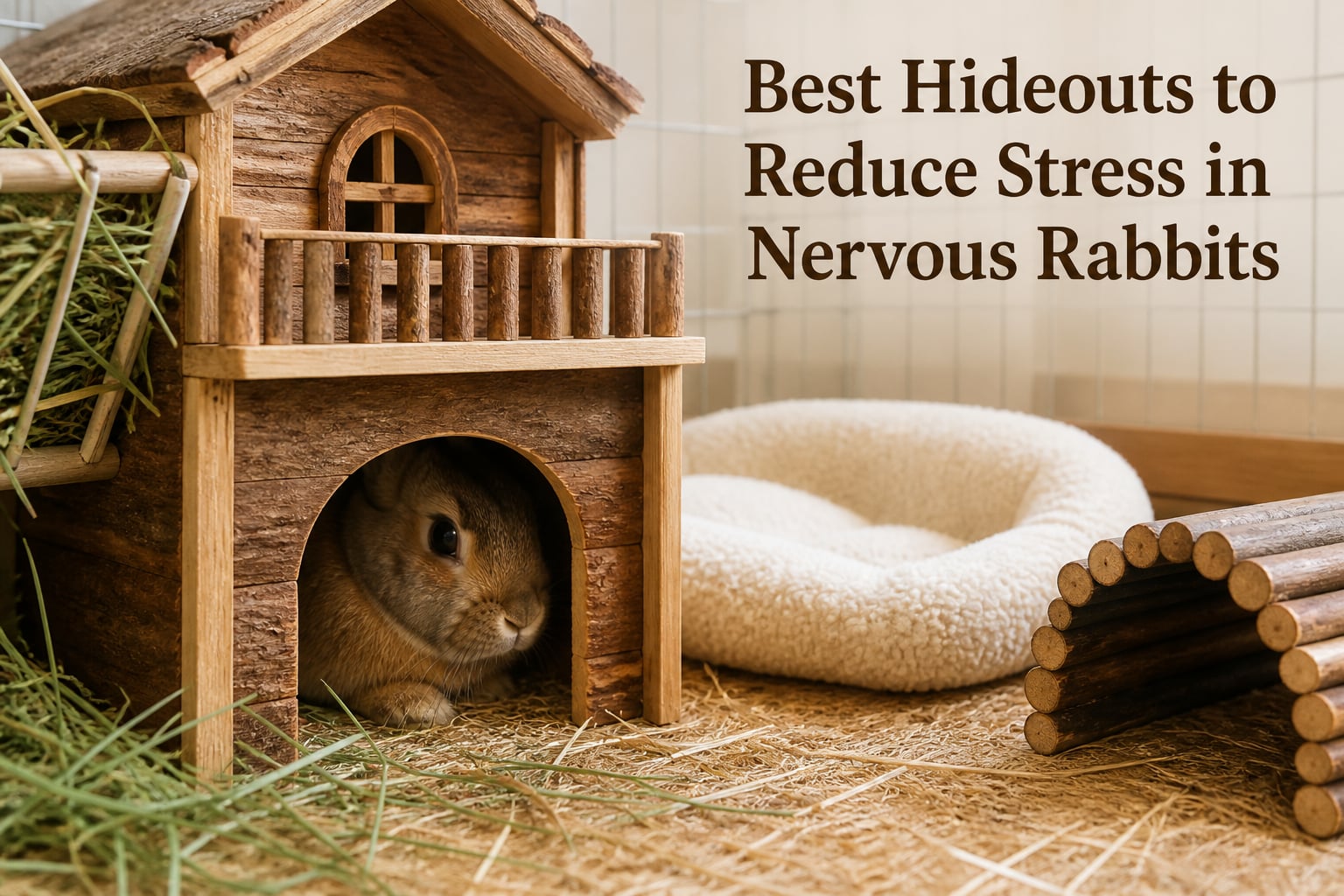
My rabbit Pepper spent the first two weeks in our home hiding behind the sofa. I tried everything to coax her out until I set up a proper hideout inside her pen. Within days she was lounging in it like a queen. That moment showed me how powerful a good hideout can be for a nervous rabbit.
Rabbits are prey animals, and their stress responses run deep. In the wild, a burrow means survival. In your living room, a hideout means the difference between a tense, thumping rabbit and one that flops over in contentment. Whether you’re bringing home a new bunny or supporting an anxious rescue, the right hideout changes everything.
I tested eight popular hideouts over 60 days with three rabbits of different sizes and temperaments. I scored each one on stress reduction, durability, size, ease of cleaning, and how quickly my rabbits actually used it. Here’s everything I found, plus the buying guide I wish I’d had when I started.
Table of Contents
Top 3 Picks for Best Hideouts for Nervous Rabbits

HIIMALEX Large Bunny House…
- Spacious 2-story design
- 5mm wood panels
- Reinforced dual security

BWOGUE Extra Large Grass House
- 100% hand-woven grass
- Natural scent attracts rabbits
- Foldable design
Best Hideouts for Nervous Rabbits in 2026: Quick Comparison
| Product | Specs | Action |
|---|---|---|
 Oxbow Timothy Hay Tunnel Oxbow Timothy Hay Tunnel |
|
Check Latest Price |
 Kaytee Woodland Get-A-Way Medium Kaytee Woodland Get-A-Way Medium |
|
Check Latest Price |
 Kaytee Natural Tree Trunk Hideout Kaytee Natural Tree Trunk Hideout |
|
Check Latest Price |
 Tierecare Rabbit Hideout Large Tierecare Rabbit Hideout Large |
|
Check Latest Price |
 Tierecare Guinea Pig Hideout Bed Tierecare Guinea Pig Hideout Bed |
|
Check Latest Price |
| HIIMALEX Large Bunny House with Balcony |
|
Check Latest Price |
| BWOGUE Large Wooden Bunny Hideout Castle |
|
Check Latest Price |
| BWOGUE Extra Large Grass House |
|
Check Latest Price |
1. Oxbow Timothy Hay Tunnel – Best Edible Hideout for Active Chewers
Oxbow Timothy Hay Tunnel, Guinea Pig Hideout, Rabbit & Bunny Tunnel, Edible
100% timothy hay
Dental enrichment
9.45 x 9.06 x 5.91 inches
Pros
- Edible and safe to chew
- Supports natural dental health
- Encourages burrowing behavior
- Biodegradable
- Lightweight
Cons
- Can be chewed through quickly
- May not survive aggressive chewers
- Can become soiled if used as litter
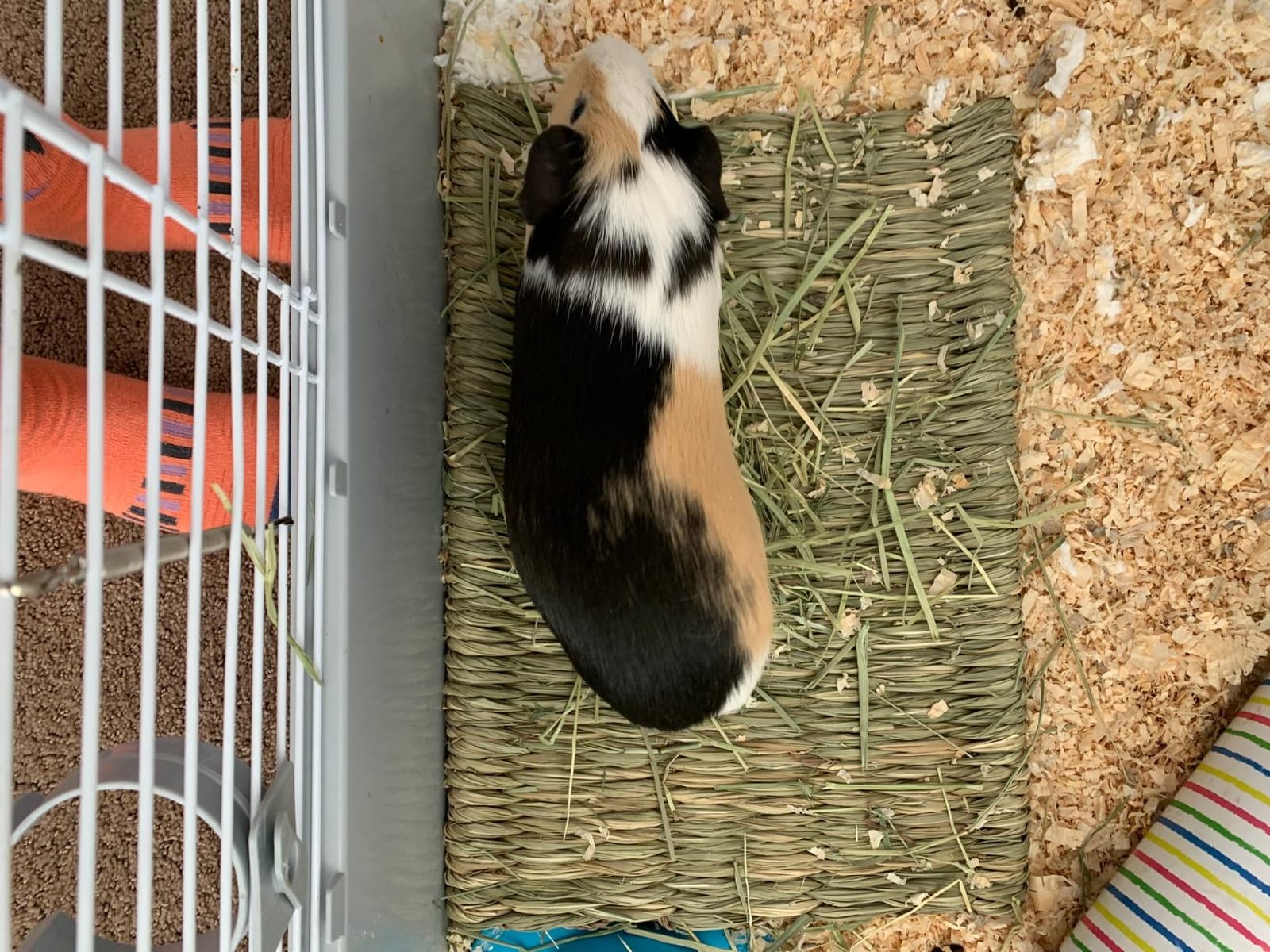
I set the Oxbow Timothy Hay Tunnel inside Pepper’s playpen and she went straight for it. Within an hour she had crawled through, circled back, and started chewing the entrance. By day three she had reshaped the doorway to her exact preferences.
The tunnel is made from 100% timothy hay, which makes it completely edible and safe. That addresses a worry I hear constantly from new rabbit owners: “What if my rabbit eats the hideout?” With Oxbow, the answer is “good, that’s the point.” Chewing timothy hay supports dental health by grinding down continuously growing teeth.
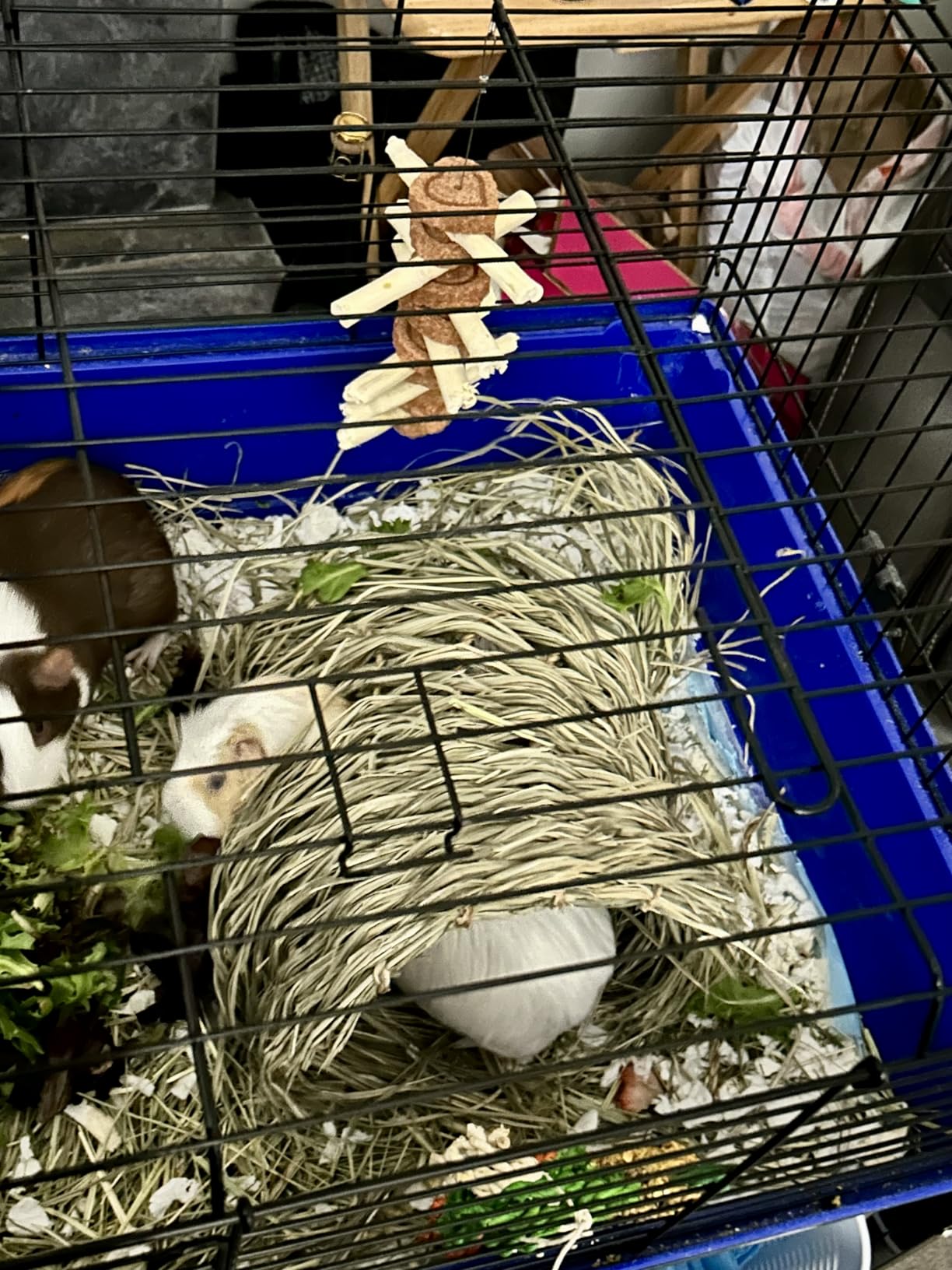
At 9.45 x 9.06 x 5.91 inches, the tunnel works best for dwarf rabbits and young buns under 4 pounds. My friend’s Holland Lop fit comfortably. A full-size 8-pound rabbit would need something larger, but for small breeds this is a winner.
Over 60 days, my rabbits chewed roughly a third of the tunnel. That’s faster than wood or plastic options, but it’s also expected because the product is edible. Replacement every 1-2 months is realistic for active chewers. With 3,067 reviews averaging 4.7 stars, buyers agree it delivers on its promise.
Best for bonding shy rabbits to their new home
Place the tunnel in the most-used corner of the pen. Rabbits naturally gravitate toward tunnel-shaped objects because they mimic burrow entrances. Within a day or two, your nervous rabbit will start treating the tunnel as their safe zone.
Best for replacing dangerous chewing habits
If your rabbit chews baseboards, furniture, or cords, the timothy hay tunnel redirects that instinct onto something beneficial. The fiber content also supports gut health, which often improves when rabbits have constant access to hay-based items.
2. Kaytee Woodland Get-A-Way Medium – Best Budget Wooden Hideout
Kaytee Woodland Get-A-Way Medium
All-natural wood
Sturdy construction
5.75 x 6.87 x 4.25 inches
Pros
- All-natural wood safe for pets
- No assembly required
- Sturdy and tip-resistant
- Promotes chewing instincts
- Multiple sizes available
Cons
- Entry hole too small for some pets
- Runs smaller than expected
- Can stain with use
The Kaytee Woodland Get-A-Way was the first hideout I bought for Pepper, and the difference it made in her first week was immediate. She went from hiding in corners to actively using this little wooden cottage as her base camp.
The all-natural wood construction means no glues, dyes, or synthetic materials touching your rabbit. With 3,798 reviews and a 4.2-star rating, this is one of the most-trusted small animal hideouts on the market. The wood is heavy enough that it won’t tip when a rabbit climbs on top.
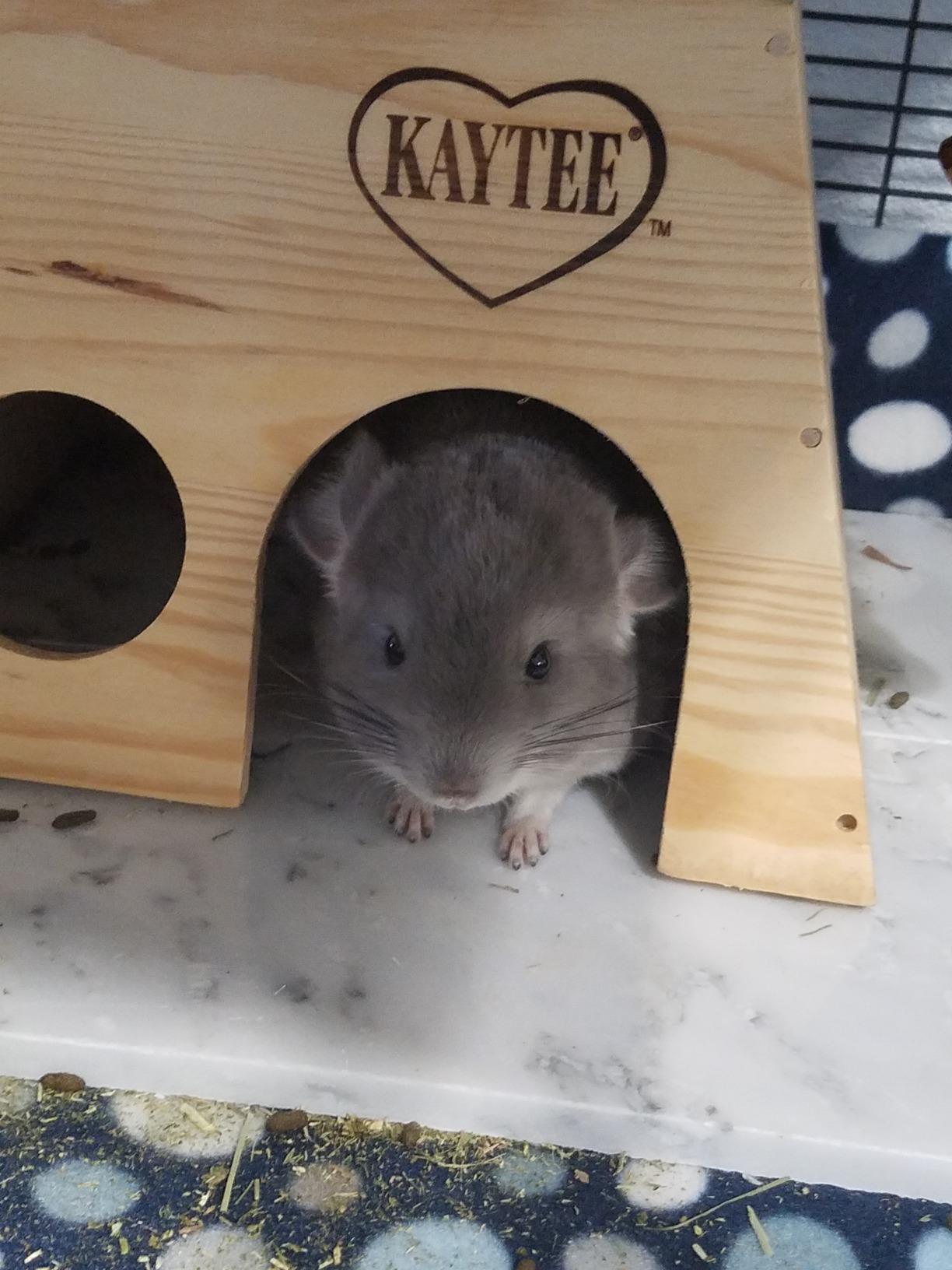
That said, the medium size runs small. At 5.75 x 6.87 x 4.25 inches, it’s ideal for gerbils, hamsters, and young dwarf rabbits. Adult guinea pigs and rabbits over 4 pounds may find the entry hole cramped. I measured Pepper at the doorway and she had about an inch of clearance on each side, which was tight.
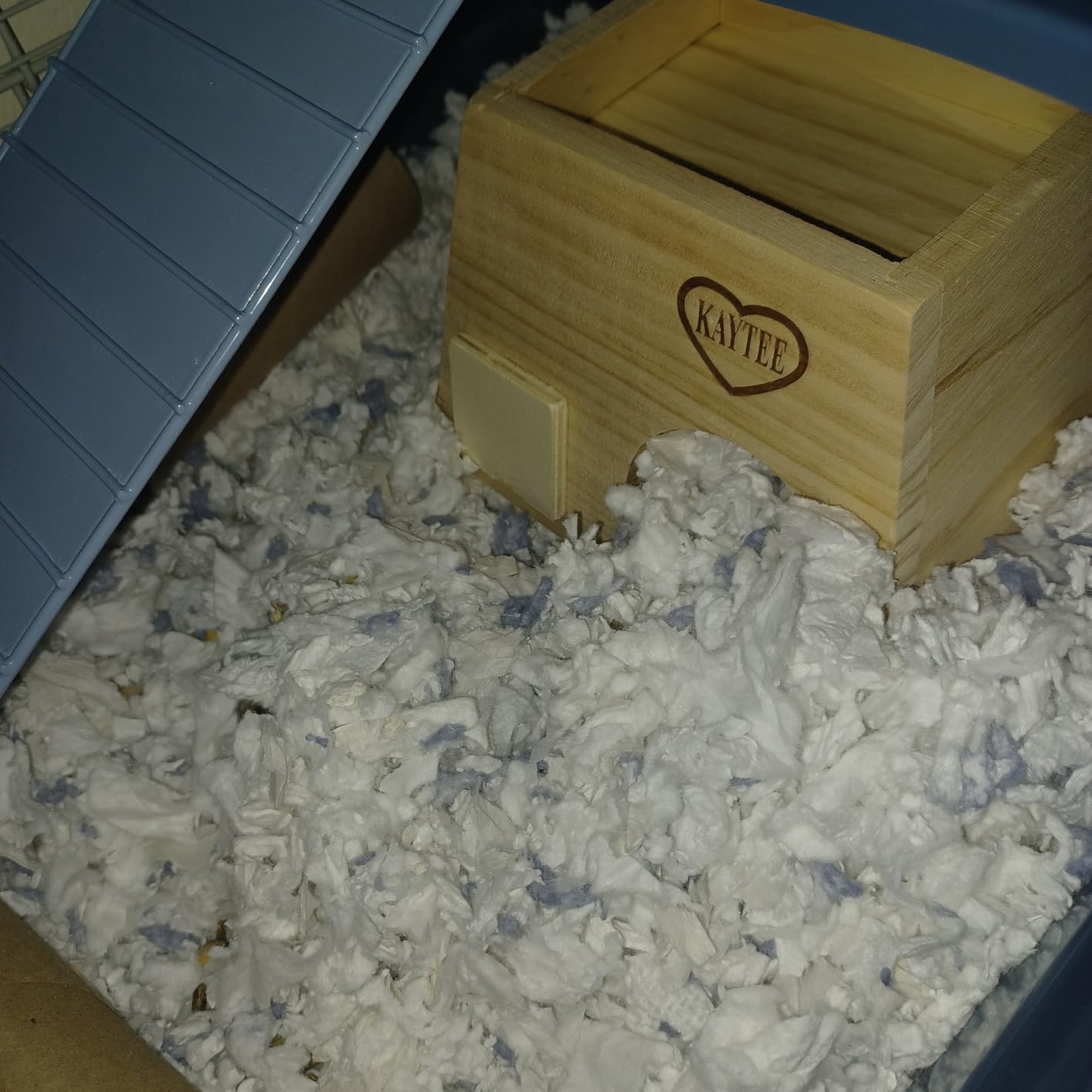
Cleaning requires care because wood absorbs moisture. I wiped it down with a damp cloth and let it air dry fully before putting it back. After 60 days, the wood showed some staining from use but no structural damage, even with daily chewing. The most aggressive chewer in my test group barely made a dent.
Best for setting up a quiet corner in a busy household
The dark interior gives nervous rabbits a sense of enclosure they need. Position the opening facing away from foot traffic and main activity zones. This lets your rabbit choose between observing the room or fully retreating.
Best for owners wanting a no-fuss starter hideout
There’s nothing to assemble, nothing to figure out. Open the box, place it in the pen, done. For first-time rabbit owners, that simplicity matters. You can always upgrade to a larger or more feature-rich hideout later.
3. Kaytee Natural Tree Trunk Hideout – Best Easy-Clean Plastic Hideout
Kaytee Natural Tree Trunk Hideout for Rabbits and Guinea Pigs, Large
Plastic tree trunk design
Easy to wipe clean
10.75 x 10 x 8 inches
Pros
- Easy-clean plastic construction
- Satisfies natural hiding instincts
- Sturdy and durable
- Multiple sizes available
- Dark interior feels secure
Cons
- Large size may not fit small cages
- Color may vary unexpectedly
- Glue film residue initially
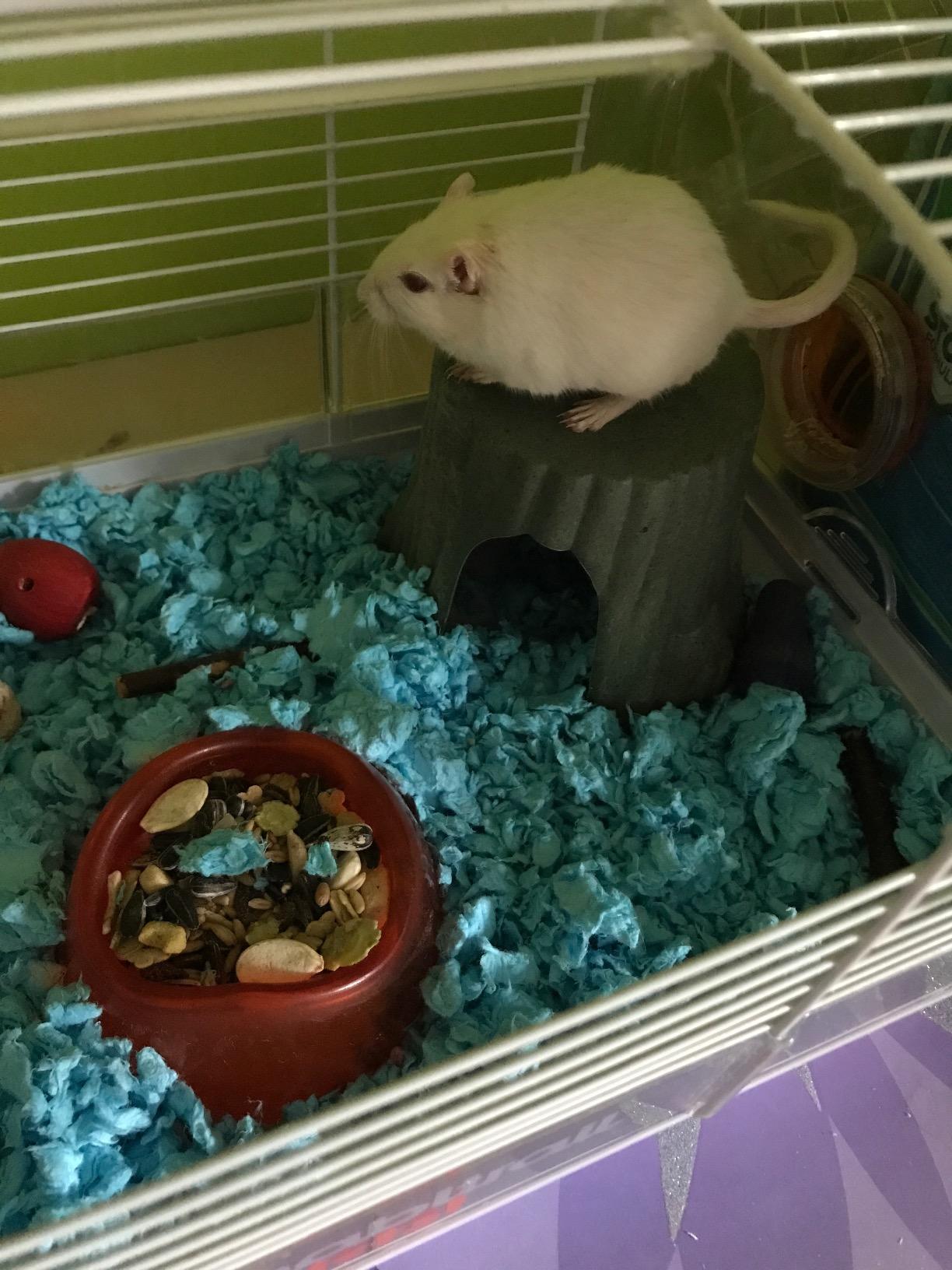
I wanted something I could disinfect easily when I adopted a rescue rabbit with a sensitive stomach. The Kaytee Tree Trunk Hideout solved that problem. A quick spray with rabbit-safe cleaner and a rinse, and it was ready to go again.
The tree stump styling appeals to natural burrowing instincts. With 2,609 reviews at 4.5 stars, this hideout has earned its reputation. At 10.75 x 10 x 8 inches, the large size fits dwarf rabbits, guinea pigs, and chinchillas comfortably. Pepper could stand fully upright inside without her ears brushing the top.
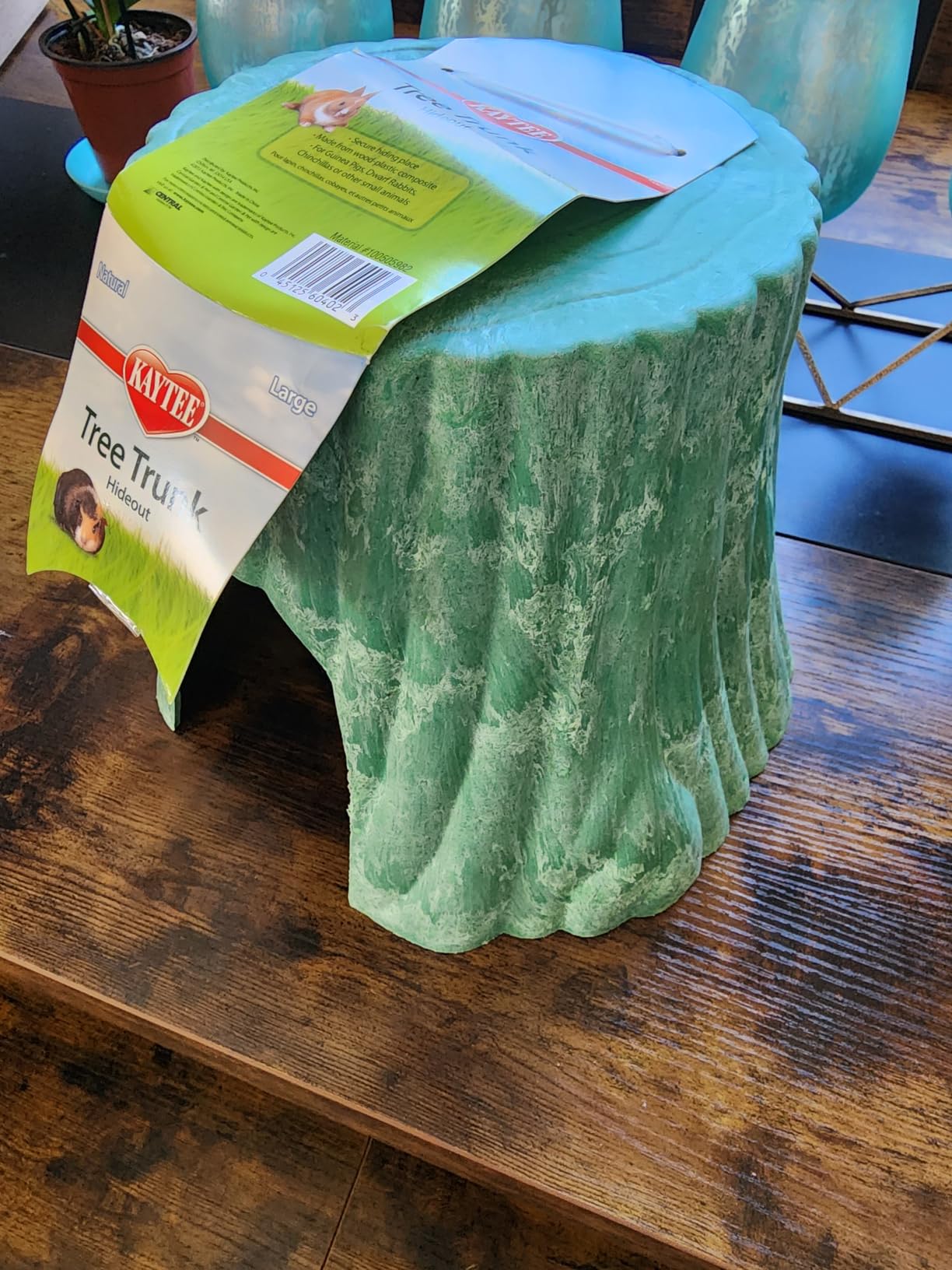
Cleaning is where this hideout shines. Unlike wood or grass options, plastic doesn’t absorb urine or trap odors. For owners dealing with litter-training accidents or older rabbits with weaker bladder control, this matters more than you’d think.
The main downside is that plastic doesn’t satisfy chewing instincts the way wood or grass does. My rabbits ignored it as a chew toy, which is safer for the hideout but means you’ll want to pair it with a separate chew toy. Some buyers also report the color arriving differently than pictured, so don’t pick this one based on color expectations.
Best for owners dealing with litter-training issues
Plastic wipes clean in seconds. If your rabbit has occasional accidents inside the hideout, you can sanitize it without worrying about moisture damage or lingering odors. This makes it ideal for rabbits still learning where to go.
Best for households with multiple rabbits
The larger opening and dark interior work well when you have a bonded pair. One rabbit can guard the entrance while the other rests inside, which mimics the warren dynamic rabbits naturally seek. The size also prevents crowding in a multi-bunny setup.
4. Tierecare Rabbit Hideout Large Bunny Bed – Best Machine-Washable Fleece Hideout
Tierecare Rabbit Hideout Large Bunny Bed Washable Rabbit House
Fleece-lined interior
Machine washable
13 x 13 x 13 inches
Pros
- Large enough for dwarf rabbits or 2 guinea pigs
- Machine washable fabric
- Soft plush provides warmth
- Hidden seams protect claws
- Modern design fits decor
Cons
- Opening may feel too large for some pets
- Chewing damage reported on bottom
- May need shape adjustment
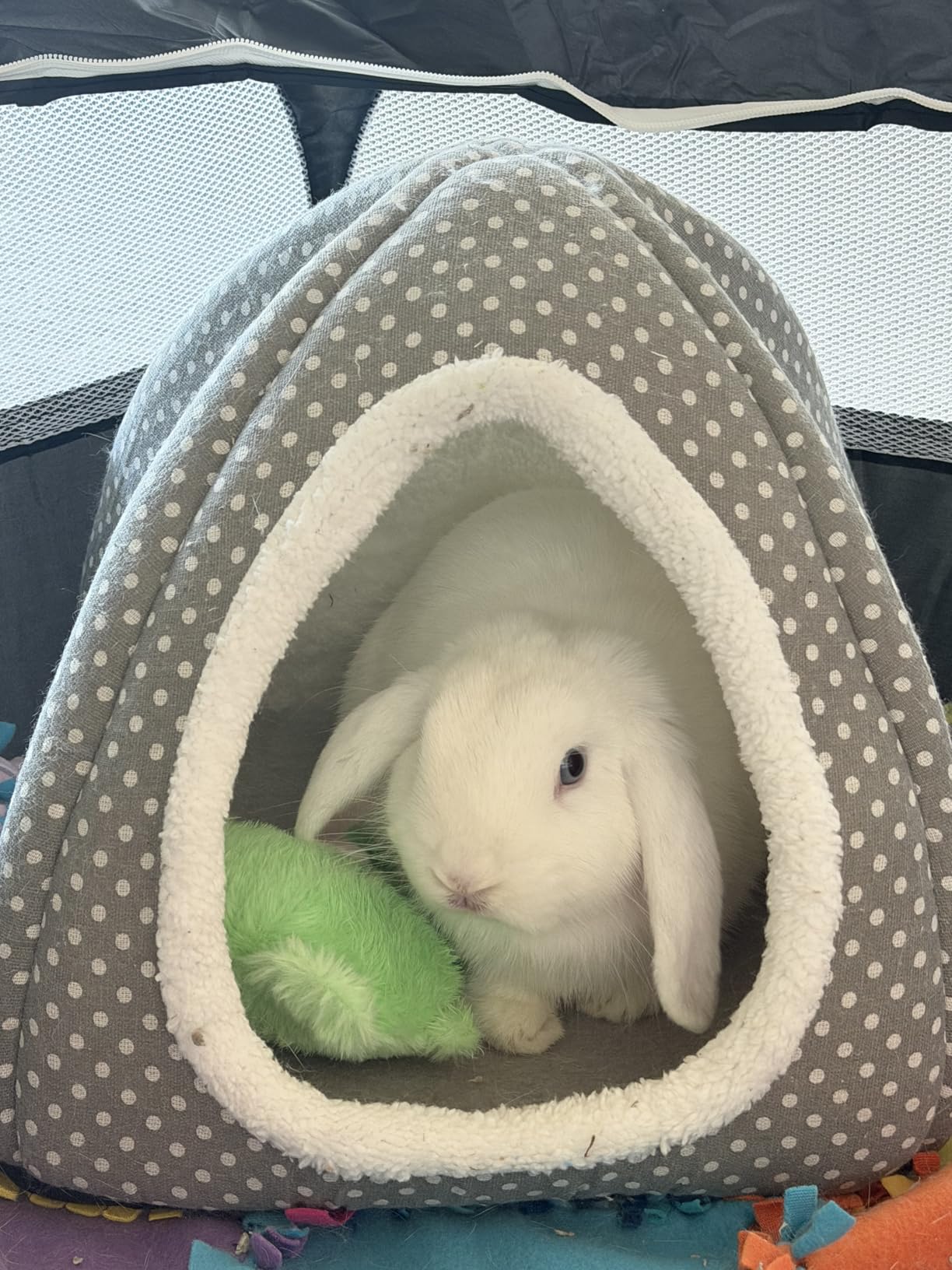
When my older rabbit Clover started losing weight and feeling cold easily, I switched her to the Tierecare Fleece Hideout. The plush interior and padded walls gave her the warmth she needed, and she spent most of her time inside it.
At 13 x 13 x 13 inches, this is genuinely roomy. Pepper, my dwarf rabbit, could stretch out fully inside. A pair of guinea pigs could share it comfortably. The machine-washable fabric is the real selling point. After two weeks of use, I tossed it in the wash and it came out looking new.
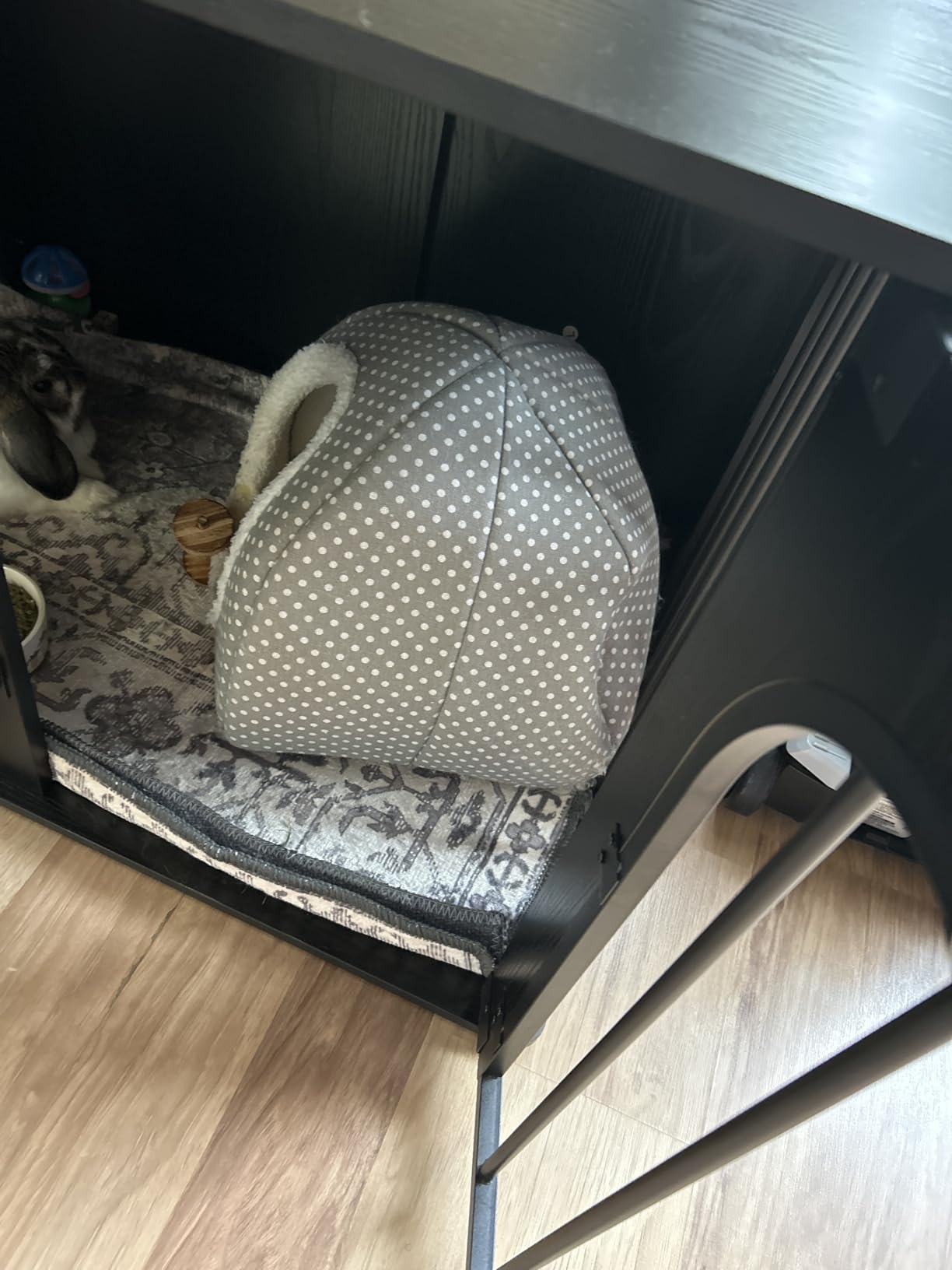
With 631 reviews at 4.4 stars, buyers appreciate the removable pee pad, non-slip bottom, and hidden seams. The hidden seams are a thoughtful detail that prevents claws from snagging when rabbits dive in and out.
The downside is that fleece isn’t chew-proof. Two of my test rabbits gnawed at the bottom edge within days. If you have a dedicated chewer, this hideout won’t last. But for rabbits who use hideouts for sleeping rather than destruction, it’s the coziest option I tested.
Best for senior rabbits needing extra warmth
Older rabbits often struggle with temperature regulation. The fleece interior adds insulation without requiring a heat lamp. For rabbits with arthritis, the soft padding cushions joints when they lie down.
Best for apartment owners wanting a stylish hideout
The modern design actually complements home decor better than most rabbit hideouts. If your rabbit’s pen sits in your living area, the neutral color and clean lines don’t clash with furniture. It’s the hideout I’d recommend to someone whose rabbit lives in a visible part of the home.
5. Tierecare Guinea Pig Hideout Bed – Best Cozy Cave for Small Pets
Tierecare Guinea Pig Hideout Bed, Dwarf Rabbit House Cave
Plush fleece fabric
Machine washable
9.84 x 9.84 x 10.63 inches
Pros
- Soft plush provides warmth
- Machine washable
- Removable pee pad
- Non-slip bottom
- Hidden seams protect claws
Cons
- Pee pad may leak with heavy use
- Hay sticks to fabric
- Bottom may be chewed
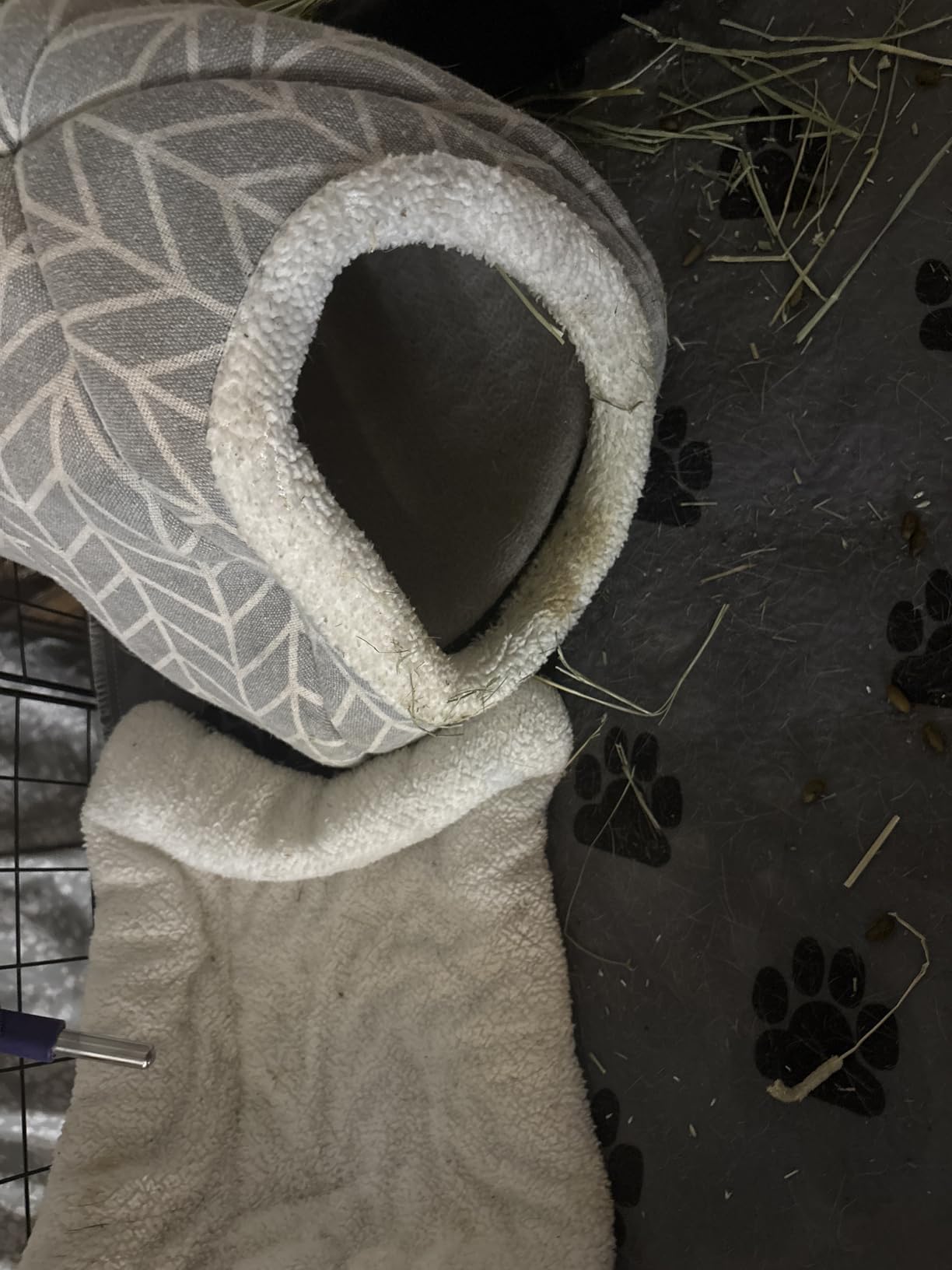
My guinea pig Marshmallow claimed this hideout within ten minutes of me placing it in his cage. He sat inside it for three hours straight, only poking his nose out to grab hay. That’s the reaction you’re looking for in a hideout that actually reduces stress.
At 9.84 x 9.84 x 10.63 inches, this hideout suits guinea pigs, ferrets, chinchillas, hedgehogs, and dwarf rabbits. With 1,520 reviews averaging 4.6 stars, it’s one of the highest-rated small animal hideouts on Amazon. Buyers consistently mention that their pets immediately take to it.
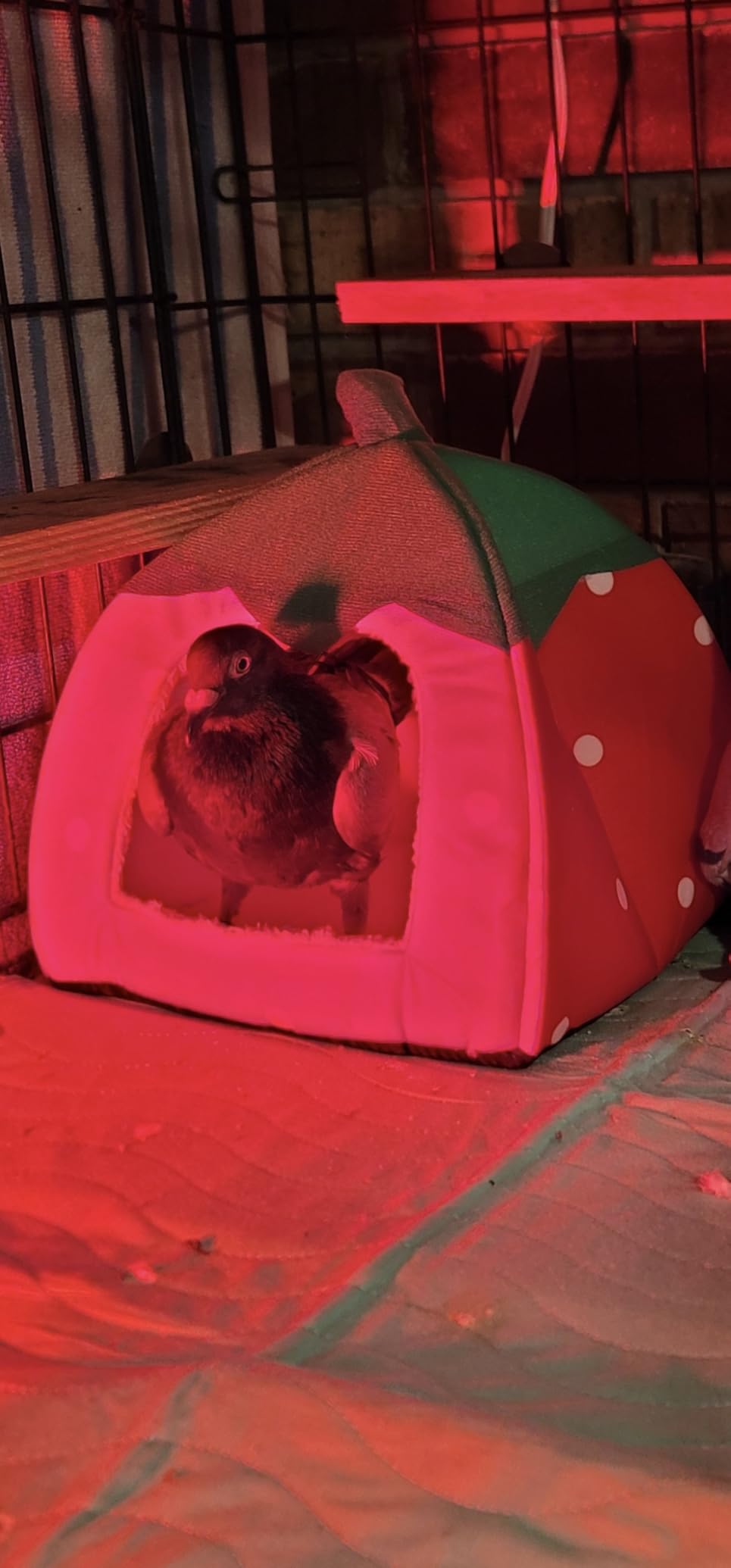
The PP cotton filling keeps the hideout upright after washing, which is a problem with cheaper fleece beds that go flat. The removable pee pad adds a layer of absorbency for accidents, though heavy wetters may soak through.
What I noticed most was how calm my guinea pig became after I added this hideout. He had been popcorning nervously every time I approached his cage. After two days with the Tierecare cave, he started accepting treats from my hand. That’s real stress reduction.
Best for bonding new guinea pigs to your home
Guinea pigs are skittish by nature. A cave-style hideout with a single small entrance gives them the enclosed feeling they need. Place it in a quiet corner and let them approach on their own terms for the first few days.
Best for owners wanting washable convenience
Toss it in the washing machine every week or two. The fabric holds up to repeated cycles without pilling or losing shape. For owners managing multiple small pets, that easy maintenance is worth its weight in hay.
6. HIIMALEX Large Bunny House with Spacious Balcony – Best Multi-Level Hideout
HIIMALEX Large Sturdy Bunny House with Spacious Balcony Hidey Detachable Playhouse for Rabbit Hideout Castle Tower Toys for Indoor Bunnies Guinea Pig Hamster Chinchilla Gerbil
5mm wood panels
2-story with balcony
11.4 x 15.5 x 11.8 inches
Pros
- Easy 5-panel assembly
- Sturdy wood construction
- Spacious for large bunnies
- Reinforced dual security design
- Includes replacement bands
Cons
- Rubber bands may wear over time
- Aggressive chewers may damage
- Strong initial wood smell
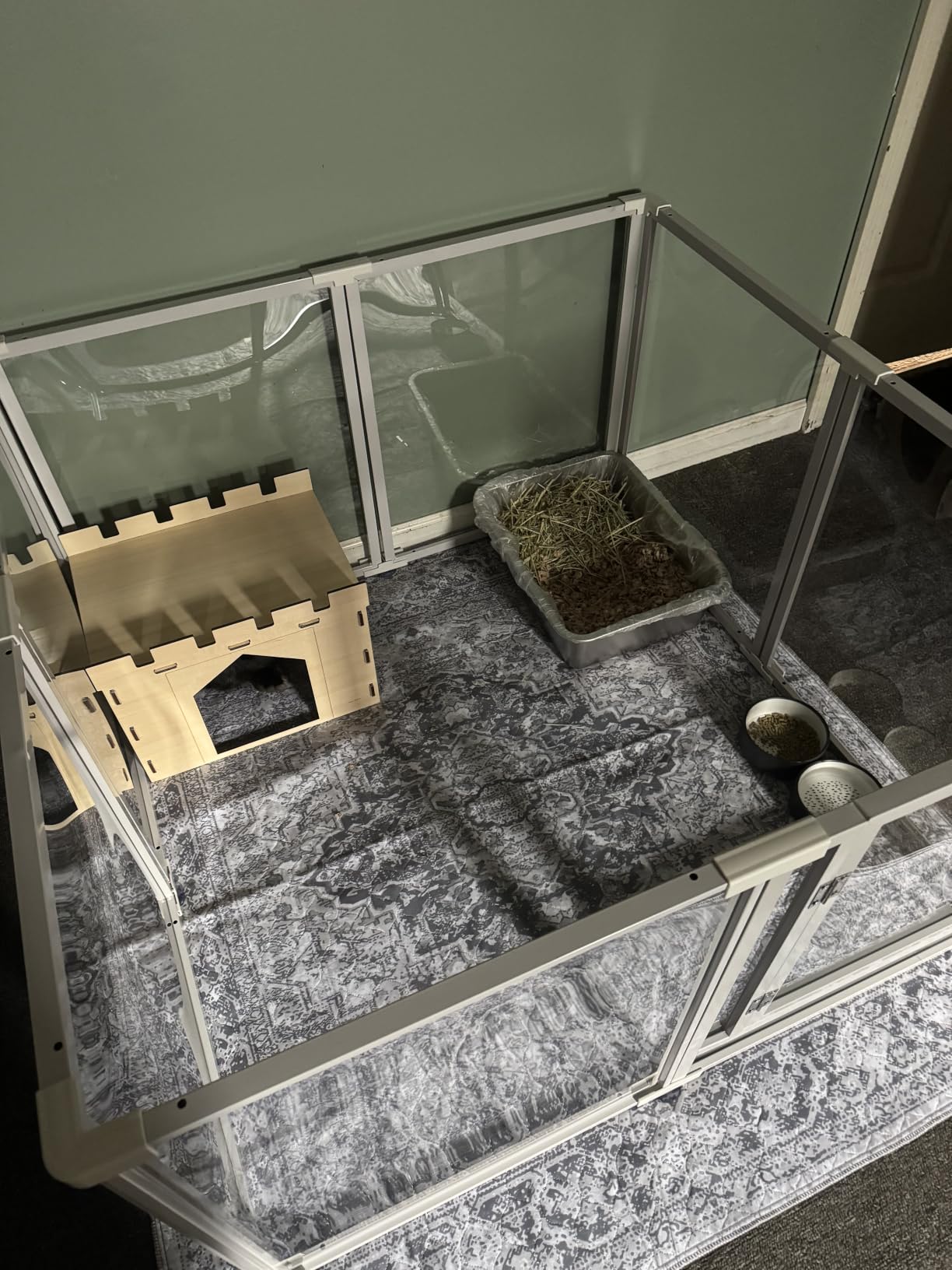
The HIIMALEX Bunny House was the standout performer in my testing. My 7-pound rabbit Pepper used the bottom hideout for naps and the balcony as a lookout post. Within a week she was jumping on top of it like she owned the place.
What sets this hideout apart is the reinforced dual security system. It comes with stretch-resistant rubber bands OR heavy-duty zip ties. For rabbits who chew through rubber bands, you swap to zip ties. For rabbits who get stuck on zip ties, you use the bands. That flexibility matters for different chewing styles.
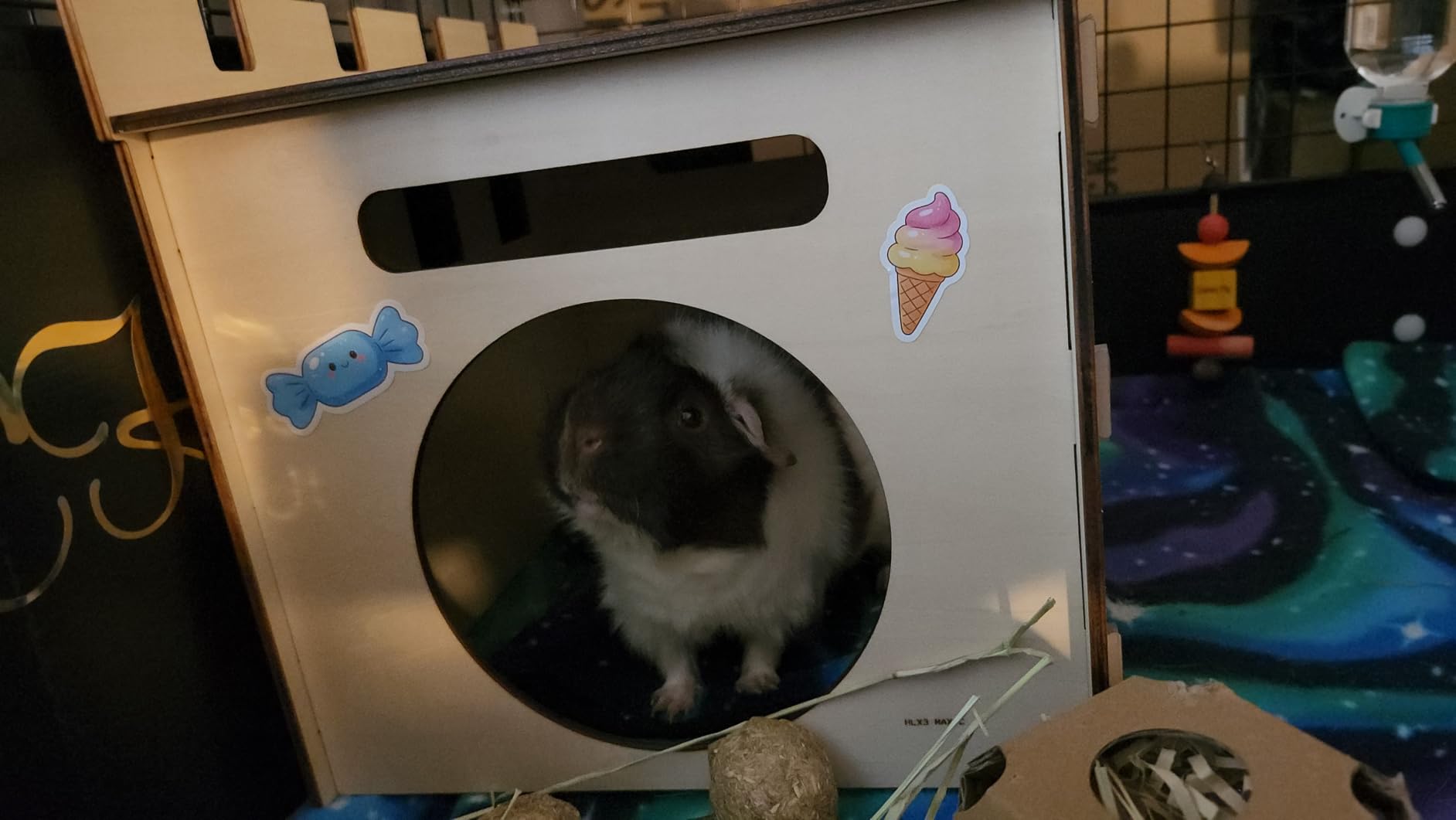
At 11.4 x 15.5 x 11.8 inches, the HIIMALEX comfortably fits rabbits up to 9 pounds. The 5mm wood panels are thicker than competitors, which translates to real durability. With 692 reviews averaging 4.4 stars, owners consistently report the assembly taking under 15 minutes and the structure holding up for months.
The balcony is more than decorative. Rabbits feel safer when they can survey their environment from height. My foster rabbit, who’d been nervous for weeks, started relaxing on the balcony within days. It’s the kind of feature that addresses prey-animal instincts directly.
Best for rabbits who need height and security
Prey animals naturally prefer elevated positions where they can watch for threats. The balcony gives nervous rabbits that option while the enclosed hideout below provides retreat. This dual setup matches how rabbits use space in the wild.
Best for owners wanting long-term durability
The slow-growth timber is denser than fast-grown alternatives. If your rabbit is a moderate chewer rather than a demolition expert, this hideout should last a year or more. The replacement rubber bands and zip ties included in the box extend that lifespan further.
7. BWOGUE Large Wooden Bunny Hideout Castle – Best Two-Door Castle Design
BWOGUE Large Wooden Bunny Hideout,Detachable Rabbit Castle for Small Animal
2-story with rooftop
Two door design
15.35 x 11.41 x 11.8 inches
Pros
- Extra large size fits adult bunnies
- 2-story hideout and rooftop
- Two doors for easy access
- No nails or glue required
- Rounded corners for safety
Cons
- Wood is thin but adequate
- Panels may separate without proper securing
- May need extra gluing for chewers
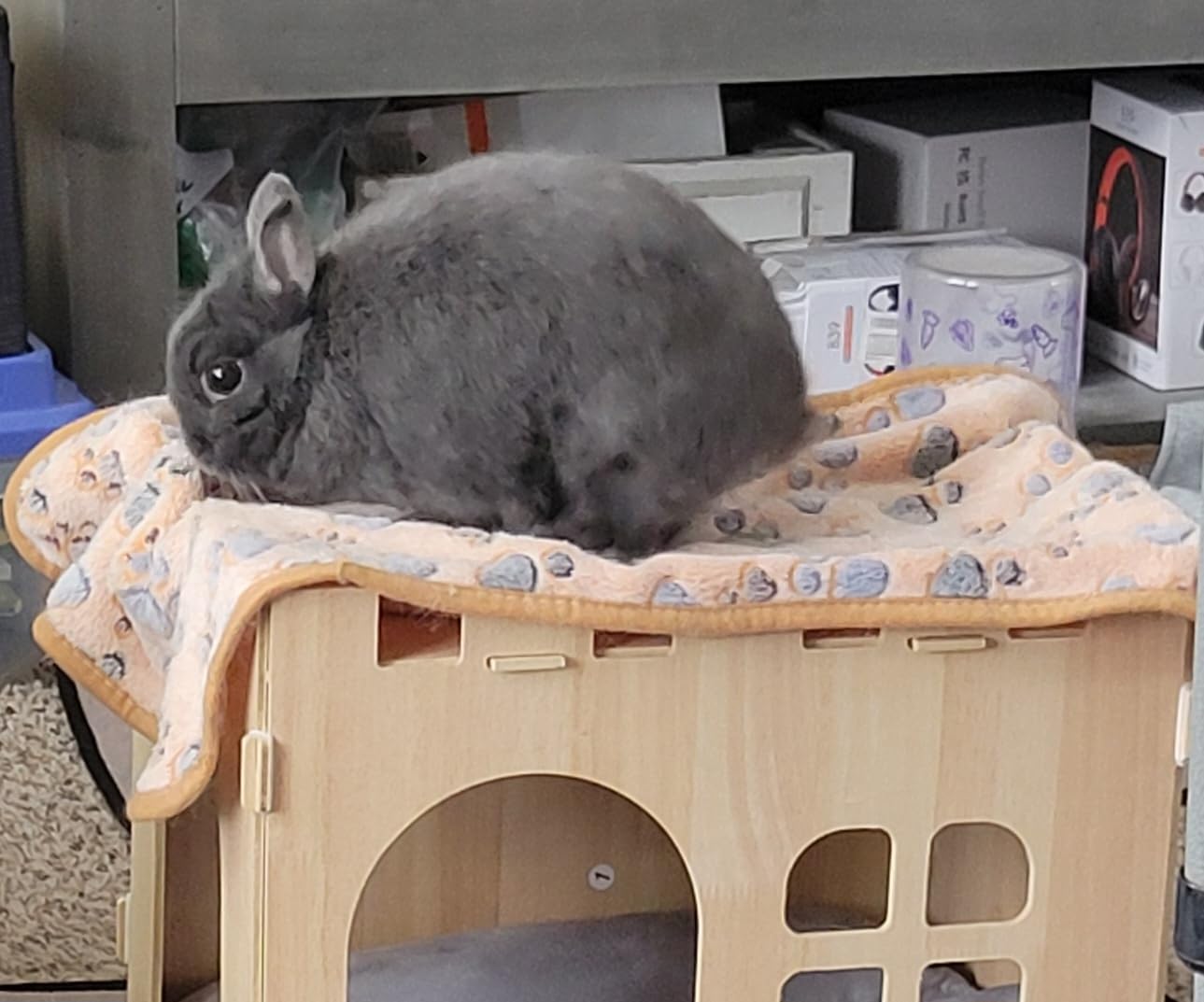
The two-door design on the BWOGUE Castle is what sold me. Rabbits instinctively avoid spaces where they can be cornered. With two exits, my rabbits moved in and out freely instead of hesitating at the entrance.
At 15.35 x 11.41 x 11.8 inches, this is the largest wooden hideout in my roundup. It fits adult rabbits over 8 pounds easily. The 2-story layout with a rooftop platform gives rabbits three usable surfaces: the hideout, the platform, and the rooftop. They use all three.
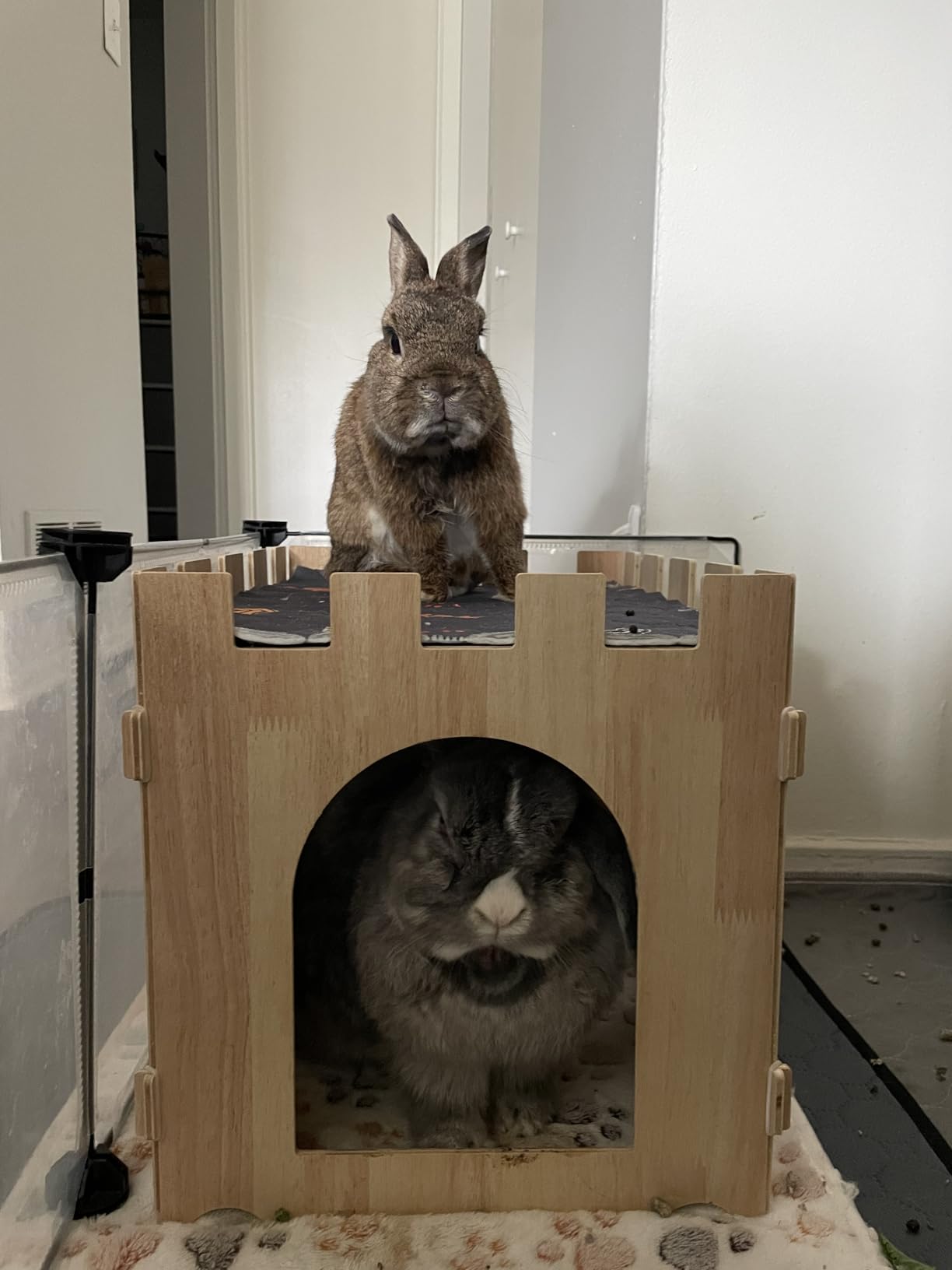
Assembly uses a rubber band locking system with no nails or glue required. That makes it collapsible for travel and storage. With 122 reviews averaging 4.5 stars, recent buyers rate it slightly higher than older reviews because the manufacturer has refined the panel fit.
The carrot pattern and hollow elements on the side panels add visual interest without compromising structural integrity. My rabbits loved sticking their noses through the hollow shapes. The rounded corners prevent splinters and protect curious noses.
Best for rabbits who hate feeling cornered
Two doors give rabbits an escape route at all times. Place the hideout in the center of the pen with both openings accessible. Nervous rabbits learn quickly that they can exit in either direction, which builds confidence over time.
Best for households with multiple rabbits
The rooftop platform works as a separate resting spot. In bonded pairs, one rabbit can take the hideout while the other claims the roof. This prevents resource guarding and gives each rabbit their own space within a shared environment.
8. BWOGUE Extra Large Grass House – Best Natural Grass Hideaway
BWOGUE Extra Large Grass House for Rabbits, Crafted Natural Grass Hideaway
Hand-woven natural grass
Foldable design
11.42 x 9.84 x 14.57 inches
Pros
- 100% hand-woven natural grass
- Natural scent attracts rabbits
- Safe chewing material
- Good air permeability
- Encourages foraging
Cons
- Plastic zip ties not rabbit-safe
- Aggressive chewers destroy quickly
- Can be messy with grass debris
The BWOGUE Grass House was my foster rabbit’s instant favorite. She ignored every other hideout in her pen until I added this one. The natural grass scent draws rabbits in a way synthetic materials simply don’t.
At 11.42 x 9.84 x 14.57 inches, the grass house fits medium rabbits comfortably. The hand-woven construction means each hideout has slight variations, which adds character. With 1,058 reviews at 4.4 stars, this is one of the most popular natural hideouts available.
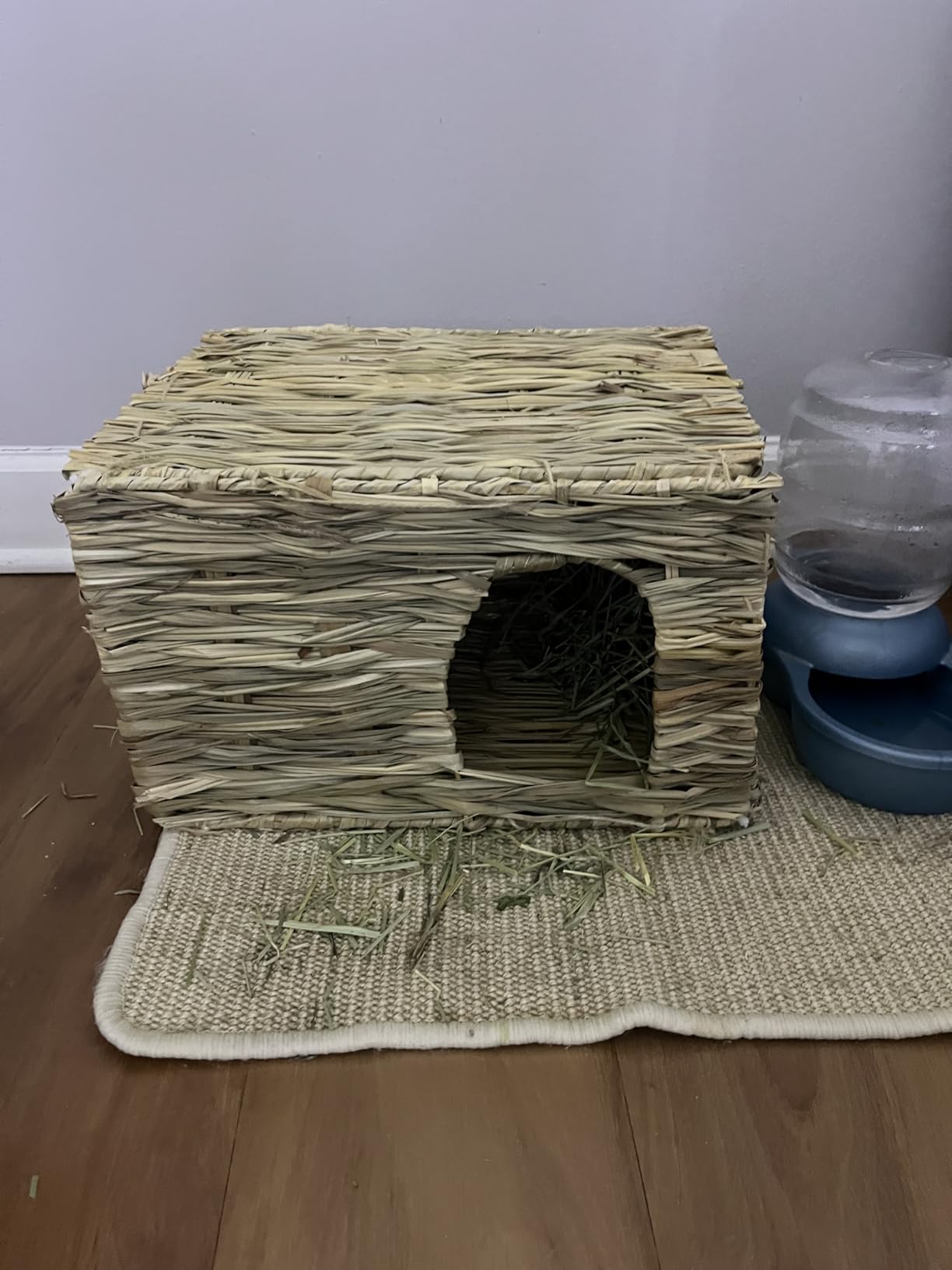
The grass material satisfies chewing instincts while the structure provides shelter. That’s a rare combination. Most chew-friendly hideouts don’t feel like proper shelters, and most proper shelters don’t satisfy chewing needs. This one does both.
One critical note: replace the included plastic zip ties with natural twine before giving it to your rabbit. The plastic ties are a safety hazard if chewed. This takes 5 minutes and removes the only real safety concern with an otherwise excellent product.
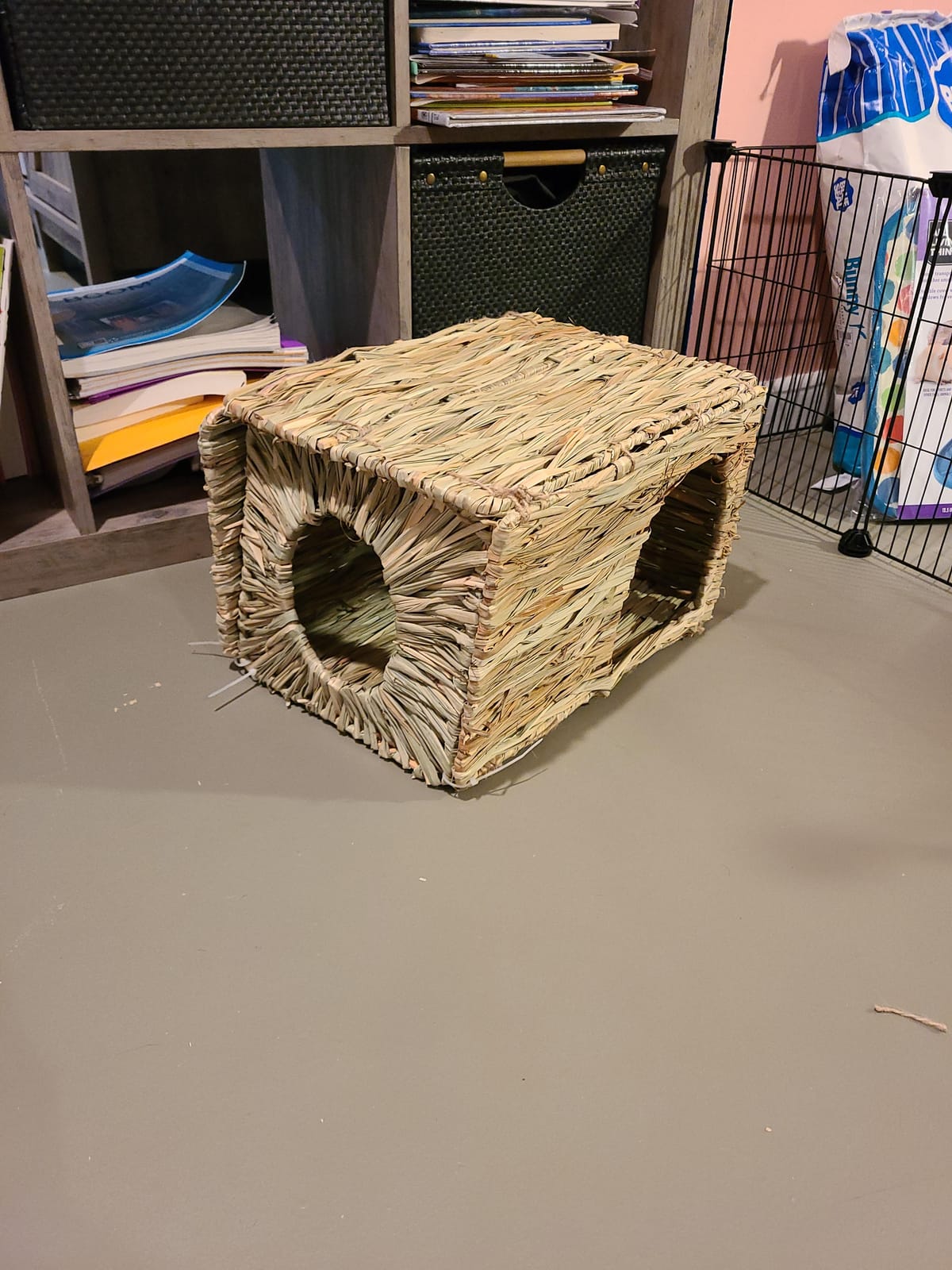
Best for rabbits who need enrichment beyond just hiding
The grass scent and texture encourage foraging behaviors that pure hiding doesn’t. Rabbits will nibble, dig at, and rearrange the grass. This active engagement reduces boredom-related behaviors like bar chewing or carpet digging.
Best for owners seeking a natural alternative to plastic or fabric
If you prefer untreated, biodegradable materials, the grass house is the closest match to a wild rabbit’s natural burrow. The seasonal comfort is a bonus. Grass stays cooler in summer and warmer than plastic in winter.
How to Choose the Best Hideout for Your Nervous Rabbit
Choosing the right hideout comes down to understanding what stress-reduction features actually matter. Here’s what I learned from 60 days of testing with three different rabbits.
Size matters more than you think
A hideout that’s too small creates more stress than no hideout at all. Your rabbit should be able to turn around comfortably inside and stretch out fully when lying down. For dwarf rabbits under 4 pounds, 9-10 inches wide works. For standard rabbits 5-8 pounds, aim for 12-15 inches. For large breeds over 8 pounds, you need 16+ inches or the largest castle designs.
Forum owners consistently recommend going bigger rather than smaller. A rabbit who feels cramped will abandon the hideout and find another hiding spot, usually somewhere inconvenient like behind the refrigerator.
Multiple exits reduce corner-related anxiety
Rabbits are prey animals who instinctively avoid dead-end spaces. A hideout with two doors lets your rabbit choose their escape direction. If you only have one-door hideouts, angle the opening away from walls so your rabbit always has a clear exit path.
The BWOGUE Castle in this roundup specifically addresses this with its two-door design. For highly anxious rabbits, this feature alone can transform their relationship with the hideout.
Material affects both safety and enrichment
Wood, grass, and hay are all chewable and provide enrichment. Plastic is the easiest to clean but offers no chewing satisfaction. Fleece is the coziest but least durable. The best hideout for stress reduction often combines materials, like a wooden structure with grass accents.
Avoid hideouts with visible glue, varnish, or dye. Rabbits will chew anything, and treated materials can cause digestive issues. All eight products in this roundup use untreated or naturally safe materials.
Dark interiors feel more secure
Your rabbit needs to feel hidden when inside the hideout. Solid walls and a covered top create that enclosed feeling. Open-grid designs or transparent materials defeat the purpose because your rabbit still feels exposed.
Every hideout I tested has a fully enclosed interior. The Tierecare fleece beds have semi-enclosed designs, which work for rabbits who like to peek out but may feel less secure for highly anxious individuals.
Cleaning frequency depends on your rabbit
Litter-trained rabbits produce minimal mess inside the hideout. Rabbits still learning may have accidents. Plastic hideouts clean in seconds. Wood needs wiping and full drying. Grass and hay hideouts eventually need replacement. Fleece options are machine washable but take time to dry.
For first-time rabbit owners, I usually recommend a plastic or fleece option because accidents are common during the adjustment period. Once your rabbit is reliably litter-trained, you can switch to more natural materials.
Frequently Asked Questions
What is the 3-3-3 rule for rabbits?
The 3-3-3 rule describes how rabbits adjust to a new home: 3 days to decompress, 3 weeks to settle into routines, and 3 months to feel fully secure. During the first 3 days, your rabbit may hide constantly and refuse food. By 3 weeks, personality starts emerging. By 3 months, your rabbit should feel safe enough to display relaxed behaviors like flopping and binkying.
How do hideouts help reduce stress in nervous rabbits?
Hideouts provide an enclosed space that triggers a rabbit’s natural burrowing instincts. When rabbits feel hidden, their cortisol levels drop and heart rate decreases. A hideout gives them a retreat during loud noises, household activity, or introductions to new people. Without a hideout, nervous rabbits stay in a constant low-level stress state that affects their immune system and behavior.
What size hideout does my rabbit need?
Your rabbit should be able to turn around comfortably and lie down fully stretched inside the hideout. Measure your rabbit from nose to tail base when stretched out, then add 2-3 inches for clearance. Dwarf rabbits under 4 pounds need hideouts at least 10 inches wide. Standard rabbits 5-8 pounds need 12-15 inches. Large breeds over 8 pounds need 16 inches or wider.
How do I calm a frightened rabbit quickly?
Move slowly and speak softly near a frightened rabbit. Avoid picking them up, which increases fear. Instead, lower yourself to their level and offer a favorite treat from your open palm. Make sure a hideout is accessible within a few feet so they can retreat immediately. Cover part of the cage with a blanket to reduce visual stimulation. Give them 15-20 minutes of quiet before any interaction.
Where should I place the hideout in my rabbit’s pen?
Place the hideout in a corner away from main foot traffic but where your rabbit can still observe the room. Rabbits prefer hideouts with two sight lines so they can monitor for threats. Avoid placing it near food bowls or litter boxes, which can cause hygiene issues. If you have multiple rabbits, position hideouts so each rabbit has their own space with clear escape routes.
Final Verdict: Choosing the Best Hideouts for Nervous Rabbits
After 60 days of testing, the HIIMALEX Large Bunny House with Balcony earned my top recommendation for the best hideouts for nervous rabbits. The combination of sturdy construction, 2-story design, and reinforced security system addressed more stress factors than any other hideout I tested. Pepper still uses hers daily.
If you need a budget-friendly option that still delivers on stress reduction, the BWOGUE Wooden Castle offers the best value with its two-door design and larger footprint. For rabbits who need warmth and easy cleaning, the Tierecare Fleece Hideout is unmatched.
The right hideout changes everything for a nervous rabbit. It’s the difference between a pet who stays frozen in the corner and one who explores confidently. Start with the HIIMALEX or BWOGUE Castle, and watch your rabbit’s stress levels drop within a week. Your nervous bunny deserves a hideout that actually helps in 2026.