
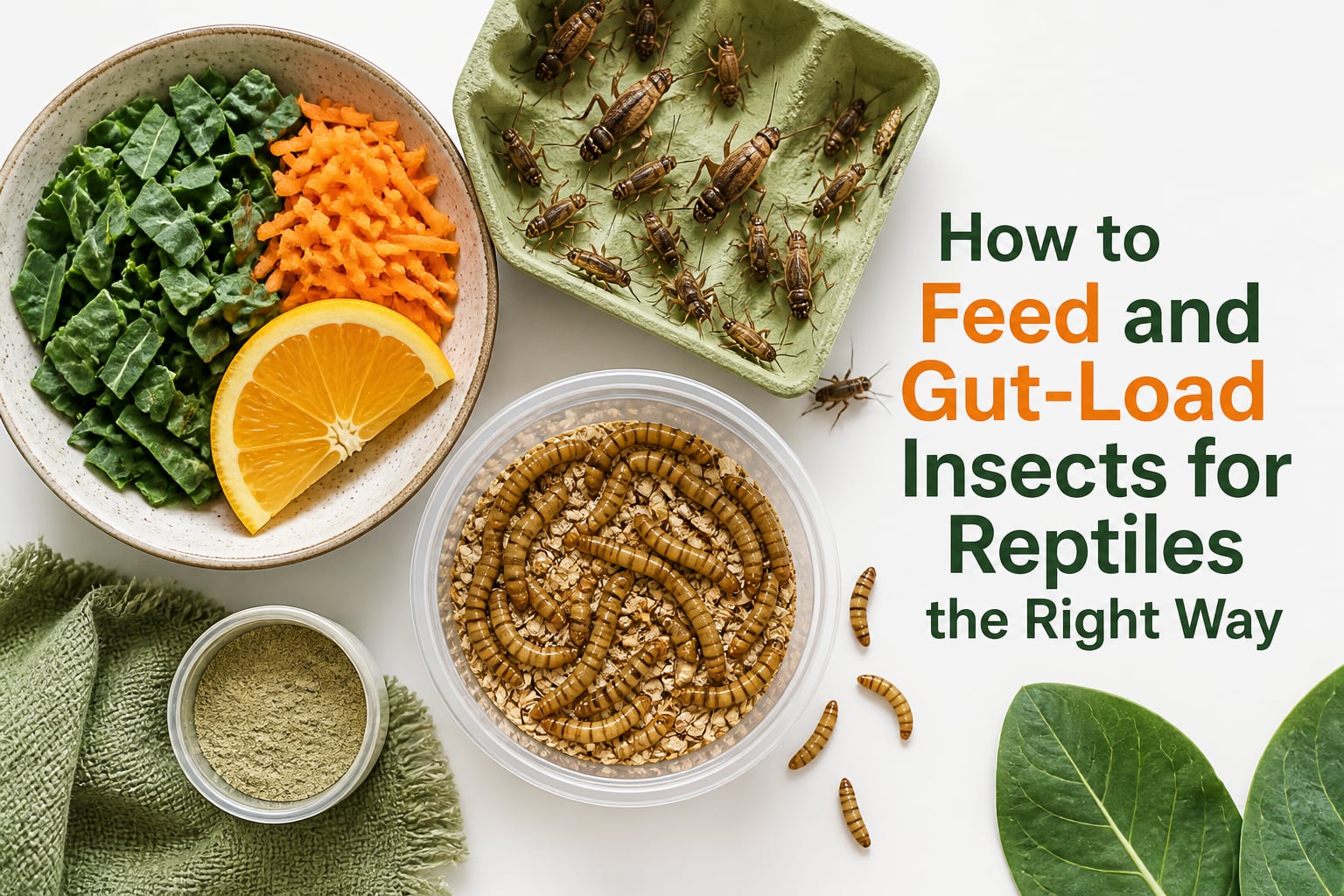
Feeding crickets, roaches, or mealworms straight out of the bag to your bearded dragon or leopard gecko is like serving an empty plate. The secret to a healthy insectivorous reptile is gut loading insects for reptiles 24 to 72 hours before mealtime. I have kept reptiles for years, and once I started gut loading consistently, the difference in energy, color, and growth was immediate. This guide walks you through exactly what to feed, how long to do it, and the mistakes that waste your effort.
Table of Contents
What Is Gut Loading and Why It Matters for Your Reptile?
Gut loading means feeding your feeder insects a nutrient-dense diet shortly before offering them to your reptile, so the insects’ digestive tracts become packed with the vitamins and minerals your pet needs.
Think of the insect as a delivery vehicle. An unfed cricket is mostly chitin and water. A gut-loaded cricket carries calcium, vitamin A, and carotenoids straight into your reptile’s system.
The goal is to maximize the nutritional content of the insect, not to sustain or breed the colony. That distinction matters because a gut loading diet is richer and more targeted than what you would feed insects long-term.
Why Gut Loading Insects Prevents Metabolic Bone Disease and Other Issues?
Feeder insects raised on plain grain or bran are calcium-poor, with an unfavorable calcium-to-phosphorus ratio. Reptiles eating them over months can develop metabolic bone disease, a condition that softens bones and can be fatal if left untreated.
Gut loading fixes this by loading the insect’s gut with calcium-rich foods and vitamin-rich foods right before feeding. Your bearded dragon or crested gecko absorbs those nutrients along with the insect itself.
Vitamin A deficiency is another silent problem in reptile nutrition. Orange vegetables like carrots and sweet potatoes are high in carotenoids, which your reptile converts to usable vitamin A. Gut loading is the most natural way to deliver it.
If you skip gut loading, you are not just cutting calories. You are removing the bridge between the insect and the vitamins, D3, and calcium your reptile cannot produce on its own.
How to Gut Load Insects Step by Step?
Follow this process for any common feeder insect, adjusting only the timing for the species.
Step 1: Separate your feeders from your breeding colony. Keep a dedicated gut-loading container so the rich diet does not interfere with long-term insect health.
Step 2: Add a shallow source of moisture. Use a damp paper towel, a slice of orange, or a commercial water gel. Open water dishes drown crickets quickly.
Step 3: Add the gut loading food. Layer in dark leafy greens, grated carrots, and a small amount of a commercial gut load formula for balanced nutrition.
Step 4: Wait the right amount of time. For crickets and dubia roaches, 24 to 48 hours is the sweet spot. For mealworms, pull them from the fridge a day early and gut load for 24 hours with wheat bran or a product like Repashy.
Step 5: Feed them off promptly. Do not leave insects on a gut load diet indefinitely. After 72 hours the calcium levels drop again and the insects can starve or die.
Step 6: Remove uneaten fresh food daily. This prevents mold growth, the most common reason keepers lose a batch of insects during gut loading.
Best Foods to Use When Gut Loading Insects for Reptiles
The best gut loading diet is high in calcium and low in oxalates, which bind calcium and block absorption.
Best vegetables and greens: Collard greens, mustard greens, dandelion greens, turnip greens, butternut squash, and sweet potato. Avoid spinach because its oxalate content limits nutrient absorption.
Best fruits (use sparingly for moisture): Oranges, pears, apples, and papaya. Dubia roach breeders often avoid citrus for breeding colonies, but it works well for short-term gut loading.
Best dry options: Dry oats, wheat bran, and high-quality commercial gut load formulas. Keepers on Reddit also report good results with rabbit food pellets as a dry base.
A commercial gut load diet is convenient and consistent, but pairing it with fresh produce gives you the best coverage. Variety is the single most important factor, because no single food delivers every vitamin your reptile needs.
Common Gut Loading Mistakes Reptile Keepers Make
The most common mistake is gut loading for too long. After about 72 hours, insects begin to use up the nutrients you loaded them with, so the benefit fades.
Another frequent error is confusing gut loading with dusting. Dusting insects with a calcium or vitamin D3 powder adds nutrients to the outside of the insect, while gut loading fills the inside. Do both for full coverage.
Finally, keepers often skip removing wet food, which leads to mold and dead insects. A quick daily check of the container saves the whole batch and keeps your bearded dragon diet clean.
Frequently Asked Questions
How to properly gut-load insects?
Place feeder insects in a clean container with a shallow moisture source and a mix of dark leafy greens, grated carrots, and a commercial gut load formula. Let them feed for 24 to 72 hours before offering them to your reptile, then remove uneaten food daily to prevent mold.
How to gut-load crickets for reptiles?
Keep crickets in a separate gut-loading container with collard greens, carrots, orange slices for moisture, and a dry grain base. Allow them to feed for 24 to 48 hours, which is the window that maximizes calcium and vitamin levels.
How long does it take for mealworms to gut-load?
Mealworms should be removed from refrigeration a day in advance and gut loaded for about 24 hours using wheat bran, Repashy, or sliced vegetables like carrots and potatoes.
What happens if you don’t gut-load crickets?
Without gut loading, crickets are calcium-poor and low in essential vitamins. Feeding them long-term to insectivorous reptiles can lead to nutritional deficiencies, weakened immune function, and metabolic bone disease.
Conclusion: Building a Consistent Gut Loading Routine
Gut loading insects for reptiles is the single highest-impact habit you can build for a bearded dragon, leopard gecko, or chameleon. Separate your feeders, offer a mix of calcium-rich greens and a quality commercial diet, and stick to the 24 to 72 hour window.
Pair gut loading with light dusting of calcium and vitamin D3, and you have covered the inside and the outside of every insect. Your reptile gets the nutrients, and you stop worrying about deficiencies.