
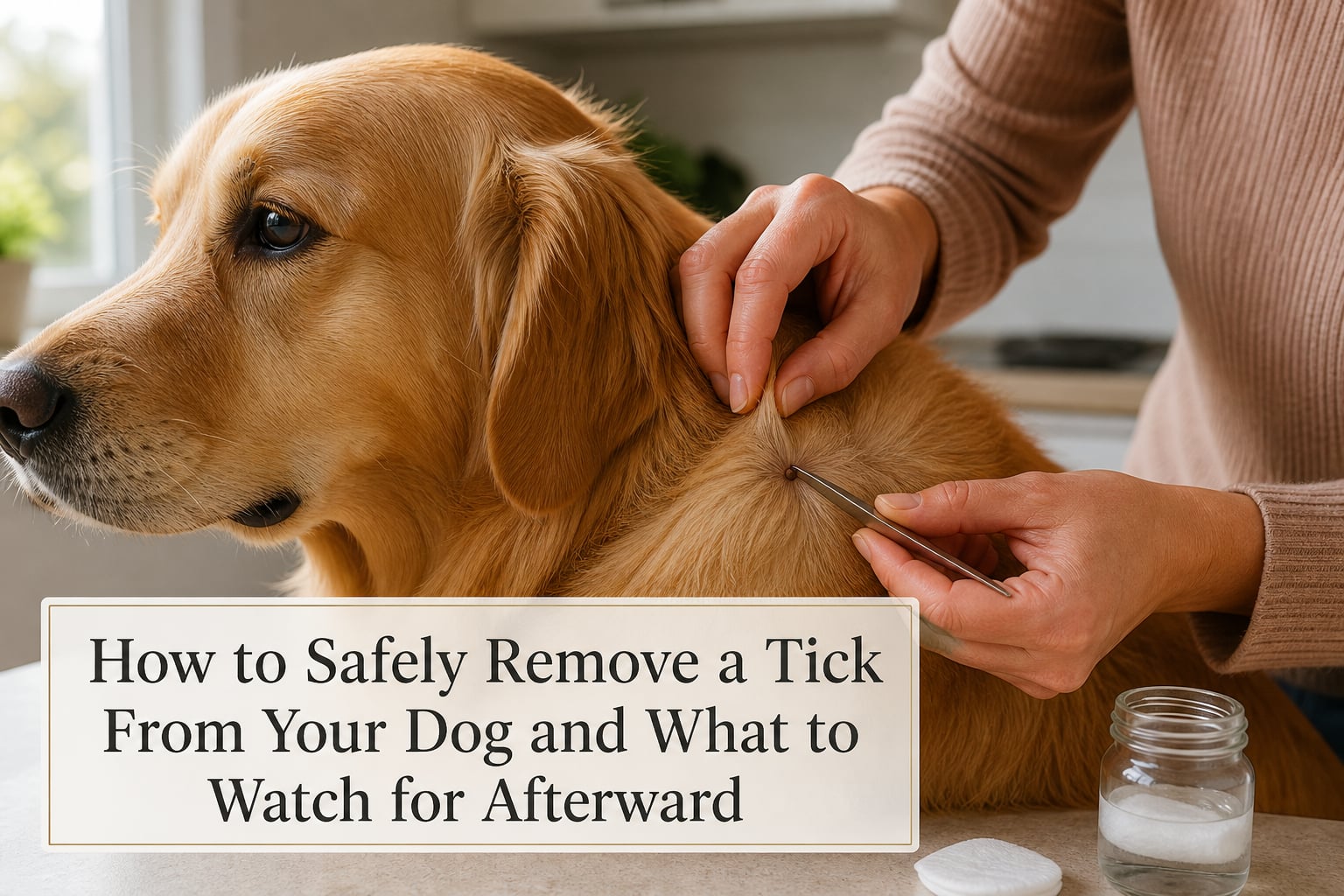
I still remember the first time I found a tick on my dog. My heart sank, my hands started shaking, and I made every mistake in the book. If you’re reading this with a tick staring back at you right now, take a breath. You’ve got this, and your pup is going to be fine.
Knowing how to safely remove a tick from your dog is one of those skills every dog owner eventually needs. Tick populations are climbing in many regions, and these tiny parasites can transmit serious diseases within hours of attachment. This guide walks you through the exact steps our team uses, what to do afterward, and the warning signs that mean a call to your veterinarian is in order.
Table of Contents
What Ticks Look Like and Why They’re Dangerous?
A tick is a small, blood-feeding parasite with a one-piece body that swells as it feeds. Before feeding, an adult tick can be as small as a sesame seed. After feeding, it may balloon to the size of a small grape. Many people mistake ticks for skin tags or warts once they’re engorged, but the eight legs are the giveaway.
Ticks attach using harpoon-like barbs in their mouthparts. They secrete a mild anesthetic so your dog doesn’t feel the bite, which is why they’re so easy to miss. The real danger isn’t the bite itself, it’s what ticks carry: bacteria, protozoa, and viruses that cause tick-borne diseases.
Pathogen transmission can begin within 3 to 6 hours of attachment for some diseases. That’s why prompt, complete removal matters so much. The longer a tick stays attached, the higher the risk.
Tools You’ll Need for Safe Tick Removal
Before you start, gather your supplies. Scrambling mid-removal is when mistakes happen, especially when your dog decides she’s had enough cooperation.
Here’s what our team keeps in a small tick removal kit:
Fine-point tweezers or a tick removal hook (Tick Tornado or Tick Take are popular hook styles)
Disposable gloves to protect your hands from any pathogens
Rubbing alcohol for disinfecting tools and the bite site
Antiseptic solution like chlorhexidine or povidone-iodine
A small sealed container or zip-top bag in case you want to save the tick for vet identification
Treats to reward your dog afterward and keep the experience positive
A second pair of hands helps tremendously, especially with squirmy dogs or thick-coated breeds. If you have a helper, ask them to gently hold and distract your dog with treats while you work.
How to Safely Remove a Tick From Your Dog: Step-by-Step
The technique is simple but precision matters. Follow these steps exactly, and the tick will come out cleanly without leaving mouthparts behind.
Step 1: Put on gloves and position your dog. Get your dog calm and settled. A helper makes this easier. Speak softly and offer treats throughout.
Step 2: Part the fur and locate the tick’s head. The head is the part buried in the skin. You want to grasp the tick as close to your dog’s skin as possible, not by the body.
Step 3: Grasp the tick with fine-point tweezers or a hook. With tweezers, grip the tick right at the skin surface. With a tick hook, slide the tool along the skin until the tick sits in the narrow slot.
Step 4: Pull straight up with steady, even pressure. Do not twist, jerk, or wiggle. A slow, constant pull straight upward releases the barbs without breaking the mouthparts. This takes more force than most people expect.
Step 5: Inspect the bite site. A small dark dot may remain. That’s usually a tiny piece of mouthpart or just a scab. If you see a larger piece stuck in the skin, see the FAQ section below.
Step 6: Clean the area with antiseptic. Dab rubbing alcohol or chlorhexidine on the bite. Don’t use harsh chemicals like hydrogen peroxide; it can slow healing.
Step 7: Dispose of the tick. Submerge it in rubbing alcohol, seal it in a bag, or flush it down the toilet. Never crush a tick between your fingers.
Common Mistakes to Avoid During Tick Removal
I’ve made some of these mistakes myself. Learning what NOT to do is just as important as learning the right technique.
Don’t twist or jerk. Old advice suggested twisting clockwise to release the barbs. Modern veterinary guidance says pull straight up. Twisting increases the chance of leaving mouthparts behind.
Don’t use Vaseline, heat, or alcohol to suffocate the tick. These methods stress the tick and can cause it to regurgitate pathogens into your dog, increasing infection risk. Pull the tick off directly.
Don’t squeeze the tick’s body. Pressure on the body can push saliva and bacteria into the bite wound. Always grip at the head.
Don’t use your bare fingers. Even if you’re squeamish about gloves, pathogens can enter through tiny cuts on your hands. Gloves take 5 seconds to put on.
What to Do After Removing the Tick From Your Dog?
Once the tick is out, your work isn’t quite finished. Post-removal care is where most owners skip steps and where problems can quietly start.
First, clean the bite area thoroughly with antiseptic. Apply a small amount of antibiotic ointment if your dog tends to scratch the spot. Monitor the area daily for 7 to 10 days. Some redness and a tiny scab are normal.
If you live in a Lyme-endemic area or your dog isn’t on tick prevention, consider saving the tick in a sealed bag with the date. Your vet can identify the species and assess disease risk. Many clinics will accept saved ticks for identification.
Wash your hands thoroughly, even though you wore gloves. Clean your tweezers or hook with rubbing alcohol. Wash any bedding your dog was on during the removal.
What to Watch For After Tick Removal: Warning Signs
This is the part most articles rush through, and it’s the part that worries you most. After tick removal, dogs usually feel completely fine. But if a disease was transmitted, symptoms can appear anywhere from a few days to several weeks later.
In the first 24 to 72 hours, watch for:
Excessive lethargy or hiding behavior
Loss of appetite lasting more than a day
Swelling or redness spreading around the bite site
Fever (warm ears, dry nose, shivering)
Within 2 to 4 weeks, watch for these tick-borne disease signs:
Lyme disease: Lameness that shifts between legs, joint swelling, fever, lethargy. A “bull’s-eye” rash is rare in dogs but possible.
Ehrlichiosis: Nosebleeds, bruising, lethargy, swollen lymph nodes, fever.
Babesiosis: Dark or orange urine, pale gums, weakness, rapid breathing.
Anaplasmosis: Similar to Lyme with joint pain and lethargy.
If you spot any of these, don’t wait. Call your vet and mention the tick bite, including the date and location where you found it.
When to Call the Vet: Clear Red Flags
Most tick removals end without any issues. But some situations warrant an immediate call to your veterinarian, even if your dog seems fine right now.
Call your vet if the tick’s head or mouthparts remain embedded and you can’t remove them easily. A small piece usually works itself out, but a larger fragment can cause infection. Don’t dig into your dog’s skin trying to extract it; you’ll cause more harm.
Call your vet if your dog develops any of the warning signs listed above. Mention the tick bite date, where it was attached, and whether your dog is on tick prevention. This helps your vet decide on testing or observation.
Call your vet if you removed a swollen or engorged tick. Engorged ticks have fed longer and carry higher disease risk. Your vet may recommend a baseline blood test now and a follow-up test in 4 to 6 weeks.
If your dog seems “off” in any way that worries you, trust your instincts. Vets would rather answer a phone call than treat a missed disease. We’ve called our own vet over what turned out to be nothing more than a sleepy afternoon, and they were gracious about it every time.
Frequently Asked Questions
What to watch out for after removing a tick from a dog?
Watch for lethargy, loss of appetite, fever, joint swelling, and spreading redness at the bite site in the first 24 to 72 hours. Over the next 2 to 4 weeks, monitor for signs of tick-borne diseases like Lyme disease (lameness shifting between legs), ehrlichiosis (nosebleeds, bruising), and babesiosis (dark urine, pale gums).
How soon after a tick bite will a dog get sick?
Symptoms can appear anywhere from a few days to several weeks after a tick bite. Some dogs show signs within 24 to 72 hours, while Lyme disease symptoms typically appear 2 to 5 weeks after attachment. Prompt tick removal (within the first 24 hours) significantly reduces the risk of disease transmission.
What should I put on my dog after removing a tick?
Clean the bite site with rubbing alcohol or chlorhexidine antiseptic, then apply a small amount of antibiotic ointment. Avoid hydrogen peroxide, essential oils, or harsh chemicals. Monitor the area daily for 7 to 10 days and contact your vet if you see spreading redness, swelling, or pus.
Do dogs feel better after tick removal?
Most dogs feel immediate relief after a tick is removed, especially if the tick was large or attached in a sensitive area like the ear or between toes. Some dogs may scratch the spot briefly, but normal behavior typically returns within an hour. Persistent discomfort or lethargy beyond 24 hours warrants a vet call.
What if the tick head stays in my dog’s skin?
If the tick’s mouthparts remain embedded, don’t dig into the skin trying to extract them. Clean the area with antiseptic and monitor for signs of infection like redness, swelling, or pus. Small fragments usually work themselves out within a few days. Call your vet if you see spreading redness or if a larger piece remains stuck.
You’ve Got This
Finding a tick on your dog is unsettling, but now you have a clear plan for how to safely remove a tick from your dog and what to watch for afterward. Breathe, gather your tools, pull straight up, and clean the area.
Then give your pup a treat, mark your calendar for 4 weeks of monitoring, and keep your vet’s number handy. The fact that you took the time to learn this means your dog has a careful owner, and that’s the single biggest factor in keeping them safe. Take a deep breath. You’re doing great.