
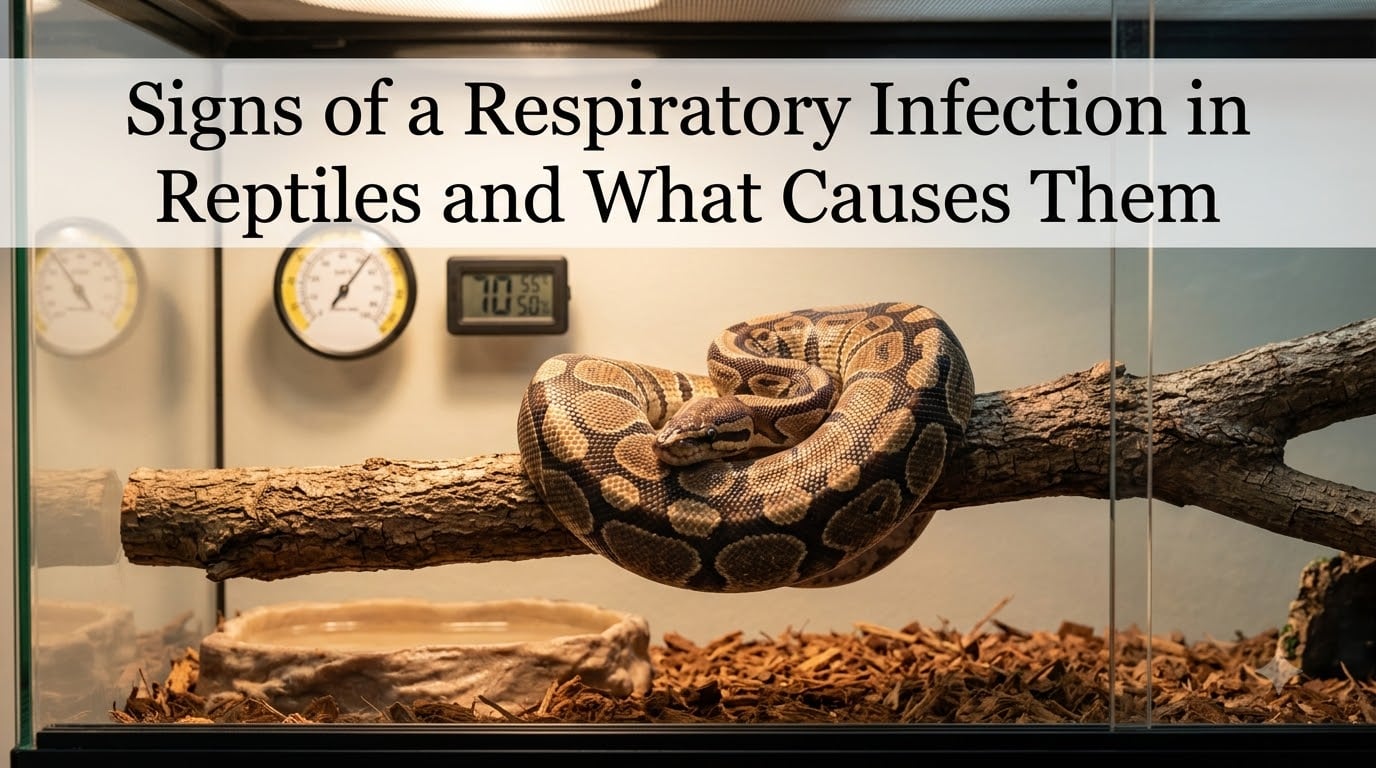
Respiratory infections are among the most common and potentially dangerous health problems reptile owners face. Whether you keep a ball python, bearded dragon, leopard gecko, or corn snake, knowing how to spot trouble early can mean the difference between a quick recovery and a fatal outcome.
I have spent years working with reptile keepers, veterinarians, and rescue organizations, and one pattern stands out clearly. Owners who catch symptoms early almost always see better outcomes. Those who wait too long often face heartbreak.
This guide covers the signs of a respiratory infection in reptiles and what causes them, along with species-specific symptoms, diagnosis, treatment options, and a prevention checklist you can use right away. By the end, you will know exactly what to look for and when to act.
Table of Contents
What Is a Respiratory Infection in Reptiles?
A respiratory infection in reptiles is a bacterial, viral, or fungal infection that affects the upper airways, lower respiratory tract, or lungs. These infections cause inflammation, mucus buildup, and difficulty breathing.
Unlike mammals, reptiles cannot cough effectively. Their respiratory system relies on a different mechanism, which means mucus and fluid tend to accumulate rather than clear out. This makes infections more stubborn and more dangerous in reptiles than in many other pets.
Most respiratory infections in captive reptiles start as bacterial infections caused by gram-negative bacteria. Common culprits include Pseudomonas, Klebsiella, Aeromonas, and Proteus species. Mycoplasma is another organism frequently linked to chronic respiratory disease, especially in turtles and tortoises.
Viral and fungal causes are less common but do occur. Parasites can also contribute to respiratory distress in some cases. The underlying trigger, however, is almost always poor husbandry.
Signs of a Respiratory Infection in Reptiles and What Causes Them: Symptoms to Watch
Recognizing the signs of a respiratory infection in reptiles early gives your pet the best chance at recovery. Symptoms range from subtle early warnings to severe, unmistakable distress.
Early Warning Signs
The first signs are often easy to miss. A slight wheeze, occasional open-mouth breathing, or a subtle clicking sound when your reptile breathes can all indicate the start of an infection.
Other early symptoms include sneezing, clear nasal discharge, and a slight decrease in appetite. Your reptile may spend more time in the warmest part of the enclosure as it tries to fight off illness through behavioral fever.
Moderate Symptoms
As the infection progresses, symptoms become more obvious. You may notice bubbly or stringy mucus around the mouth and nostrils. Breathing becomes labored, with visible effort in the chest or body wall.
Lethargy sets in. Your reptile may refuse food entirely and show less interest in its surroundings. The breathing rate increases noticeably, and you might hear rattling or whistling sounds from across the room.
Severe Symptoms
In advanced cases, open-mouth breathing becomes constant. Your reptile may gasp for air, and the mucous membranes in the mouth may appear red and inflamed. Stomatitis, or mouth rot, can develop alongside the respiratory infection.
Crusty nostrils, thick yellow or green discharge, and significant weight loss indicate a serious condition. At this stage, the infection may have progressed to pneumonia, which can be fatal without immediate veterinary intervention.
Species-Specific Symptoms
Different reptile species show respiratory infections in slightly different ways. Understanding these variations helps you act faster.
Ball Python Respiratory Infection Signs
Ball pythons are one of the most commonly affected species. Owners on reptile forums frequently report hearing a chirping, clicking, or whistling noise when their ball python breathes. This is often the very first sign.
Ball pythons may also hold their head elevated or at an unusual angle to keep airways open. Bubbly stringy saliva around the mouth, combined with refusal to eat, strongly suggests a respiratory infection.
Bearded Dragon Respiratory Infection Signs
Bearded dragons often show mucus bubbles around the mouth and nostrils. Owners report seeing their dragon gaping with the mouth open for extended periods, even when not basking.
Lethargy and loss of appetite typically accompany these breathing changes. A bearded dragon with a respiratory infection may also develop darkened beard coloration and appear weak when handled.
Leopard Gecko Respiratory Infection Signs
Leopard geckos tend to show nasal discharge and labored breathing. You may notice clicking sounds when they breathe, especially at night when the house is quiet.
Weight loss can happen quickly in leopard geckos because their tails store fat reserves. A gecko that stops eating and develops a thinning tail alongside breathing symptoms needs immediate attention.
Corn Snake Respiratory Infection Signs
Corn snakes display many of the same symptoms as ball pythons. Wheezing, open-mouth breathing, and excess mucus are common. You may also notice the snake resting with its head pointing upward.
Regurgitation of meals can occur in severe cases. If your corn snake refuses food for multiple feedings and shows any breathing changes, treat it as a potential respiratory infection.
Turtles and Tortoises
Turtles and tortoises often show swollen eyes and nasal discharge alongside respiratory distress. Mycoplasma infections are particularly common in these species and tend to become chronic without treatment.
Floating lopsided or struggling to dive can indicate fluid buildup in the lungs for aquatic turtles. This is a medical emergency.
Primary Causes of Respiratory Infections in Reptiles
Understanding what causes respiratory infections in reptiles is essential for both treatment and prevention. Most cases trace back to environmental factors that weaken the immune system.
Environmental Causes
Incorrect temperature is the number one contributor. Reptiles rely on external heat to maintain their immune function. When temperatures fall below the Preferred Optimal Temperature Zone (POTZ), the immune system weakens and bacteria multiply.
Excessive humidity is another major factor, particularly for arid species like bearded dragons kept too damp. Conversely, snakes that need moderate humidity can develop respiratory problems if conditions are too dry, which irritates the respiratory lining.
Poor ventilation traps bacteria and ammonia from waste. Enclosures with stagnant air create a breeding ground for pathogens that overwhelm your reptile’s defenses.
Bacterial Infections
Gram-negative bacteria cause most reptile respiratory infections. Pseudomonas, Klebsiella, Aeromonas, and Proteus are frequently identified in cultures. These bacteria are opportunistic, meaning they take hold when the immune system is already compromised.
Mycoplasma and Chlamydophila are also significant pathogens. Mycoplasma infections tend to be chronic and recurrent, requiring long-term management.
Viral and Fungal Causes
Viral infections like inclusion body disease in boas and pythons can cause or mimic respiratory symptoms. Fungal pneumonia, while less common, can occur in reptiles kept in persistently damp, unsanitary conditions.
Parasitic infections can also contribute to respiratory distress, particularly lungworms in certain species. A veterinarian can identify these through specialized testing.
Stress and Weakened Immunity
Stress from overcrowding, improper handling, recent transport, or relocation suppresses the immune system. Wild-caught reptiles are especially vulnerable because they arrive already stressed and may carry pathogens.
A new reptile entering your collection should always be quarantined for at least 90 days. This prevents both stress-related illness and potential spread to other animals.
How Veterinarians Diagnose Respiratory Infections?
A reptile veterinarian uses several tools to diagnose respiratory infections accurately. Diagnosis matters because the treatment changes depending on the underlying cause.
The exam starts with a physical assessment. The vet listens to the lungs, checks the mouth for mucus and inflammation, and evaluates overall body condition. They will ask about your temperature settings, humidity levels, and feeding schedule.
Radiographs (X-rays) help the vet see fluid or infection in the lungs. Bacterial cultures and sensitivity testing identify the specific bacteria present and which antibiotics will work. PCR testing can detect Mycoplasma and other organisms that do not show up on standard cultures.
Blood work may reveal elevated white blood cell counts, confirming infection. In some cases, the vet performs an endoscopic exam to visualize the airways directly.
Treatment Options
Treating a respiratory infection in reptiles requires addressing both the infection itself and the underlying environmental cause. Without fixing the husbandry, even the best medication will fail.
Antibiotics are the primary treatment for bacterial infections. Commonly prescribed medications include ceftazidime, amikacin, and enrofloxacin. The specific drug and dosage depend on culture and sensitivity results, which is why veterinary testing matters.
Supportive care includes raising the enclosure temperature slightly to help the immune system function. Some owners use nebulization therapy, delivering medication directly through mist, under veterinary guidance.
Fluid therapy helps dehydrated reptiles recover. Assisted feeding may be necessary for reptiles that have stopped eating. Anti-inflammatory medications like meloxicam can reduce discomfort and swelling in the respiratory tract.
Most importantly, you must correct the environmental problem. Adjust temperature, humidity, and ventilation before the course of antibiotics ends. Without this step, the infection is likely to return.
Prevention and Home Care Checklist
Preventing respiratory infections is far easier than treating them. This checklist covers the most important steps you can take to protect your reptile.
Temperature and Humidity
Research the specific POTZ for your species and measure it with a reliable digital thermometer, not a guess. Provide a gradient so your reptile can self-regulate by moving between warm and cool zones.
Monitor humidity with a hygrometer. Desert species need low humidity, while tropical species need higher levels. Use a thermostat to maintain consistency and prevent dangerous fluctuations.
Enclosure Hygiene
Clean the enclosure regularly to prevent bacteria buildup. Remove waste daily and do a full deep clean monthly. Disinfect with reptile-safe products and rinse thoroughly.
Ensure proper ventilation. Screen tops or vented enclosures allow fresh air circulation, which prevents the stagnant conditions bacteria love.
Quarantine New Reptiles
Always quarantine new arrivals for 90 days minimum. Keep them in a separate room with separate equipment. This protects your existing collection and gives the new reptile time to recover from transport stress.
While Waiting for a Vet Appointment
If you suspect a respiratory infection and cannot see a vet immediately, raise the basking temperature by a few degrees to support immune function. Keep the enclosure clean and dry. Offer water and easy-to-digest food.
Do not attempt home antibiotic treatments with leftover medications or pet store remedies. Improper dosing can harm your reptile and create resistant bacteria.
When to Seek Veterinary Care
Any reptile showing open-mouth breathing, audible wheezing, or significant mucus discharge needs to see a reptile veterinarian right away. These are not symptoms to monitor at home.
If the only sign is a single sneeze or a brief period of open-mouth breathing after eating, you may have a little time. But if symptoms persist beyond 24 hours or worsen, schedule an appointment.
Respiratory infections can progress to pneumonia quickly. Reptiles that go untreated for extended periods have a much lower survival rate. When in doubt, always consult a professional.
Owners on reptile forums consistently report that cases caught early responded well to a single course of antibiotics. Cases where owners waited weeks before seeking help often required multiple rounds of treatment and sometimes ended in loss.
Frequently Asked Questions
Can reptiles recover from respiratory infections without meds?
Most reptiles cannot fully recover from a bacterial respiratory infection without veterinary medication. Mild cases caught very early may improve with corrected husbandry alone, but bacterial infections typically require antibiotics. Waiting too long without treatment risks progression to pneumonia, which can be fatal.
Will a snake’s respiratory infection go away on its own?
A snake’s respiratory infection rarely resolves without intervention. Snakes cannot cough effectively, so fluid and bacteria accumulate in the lungs. Correcting temperature and humidity may help in the earliest stages, but most cases require antibiotics prescribed by a reptile veterinarian.
Are reptile respiratory infections contagious?
Yes, respiratory infections can be contagious between reptiles, especially when caused by bacteria like Mycoplasma or certain viruses. Always isolate any reptile showing symptoms and practice strict hygiene with separate equipment for each animal.
What does a respiratory infection look like in a ball python?
Ball pythons with respiratory infections typically show wheezing, clicking or chirping sounds when breathing, bubbly saliva around the mouth, nasal discharge, lethargy, and refusal to eat. The snake may also hold its head elevated to keep airways open.
How to get rid of a respiratory infection in bearded dragons?
Treating a bearded dragon respiratory infection requires veterinary antibiotics, raising the basking temperature slightly, ensuring proper humidity, improving ventilation, and providing supportive care like fluids and assisted feeding. Never use over-the-counter remedies without veterinary guidance.
Can a bearded dragon survive a respiratory infection?
Yes, bearded dragons can survive respiratory infections when treated promptly. Most respond well to a course of antibiotics when the infection is caught early. Delayed treatment significantly reduces survival chances.
Conclusion
Understanding the signs of a respiratory infection in reptiles and what causes them can save your pet’s life. Early detection of symptoms like wheezing, mucus discharge, open-mouth breathing, and lethargy gives you the best window for successful treatment.
Most respiratory infections stem from preventable husbandry problems. By maintaining correct temperature, humidity, ventilation, and quarantine protocols, you dramatically reduce the risk to your reptile.
If you notice any symptoms, do not wait. Contact a reptile veterinarian right away. Quick action with proper medication and corrected environmental conditions leads to recovery in the vast majority of cases.