
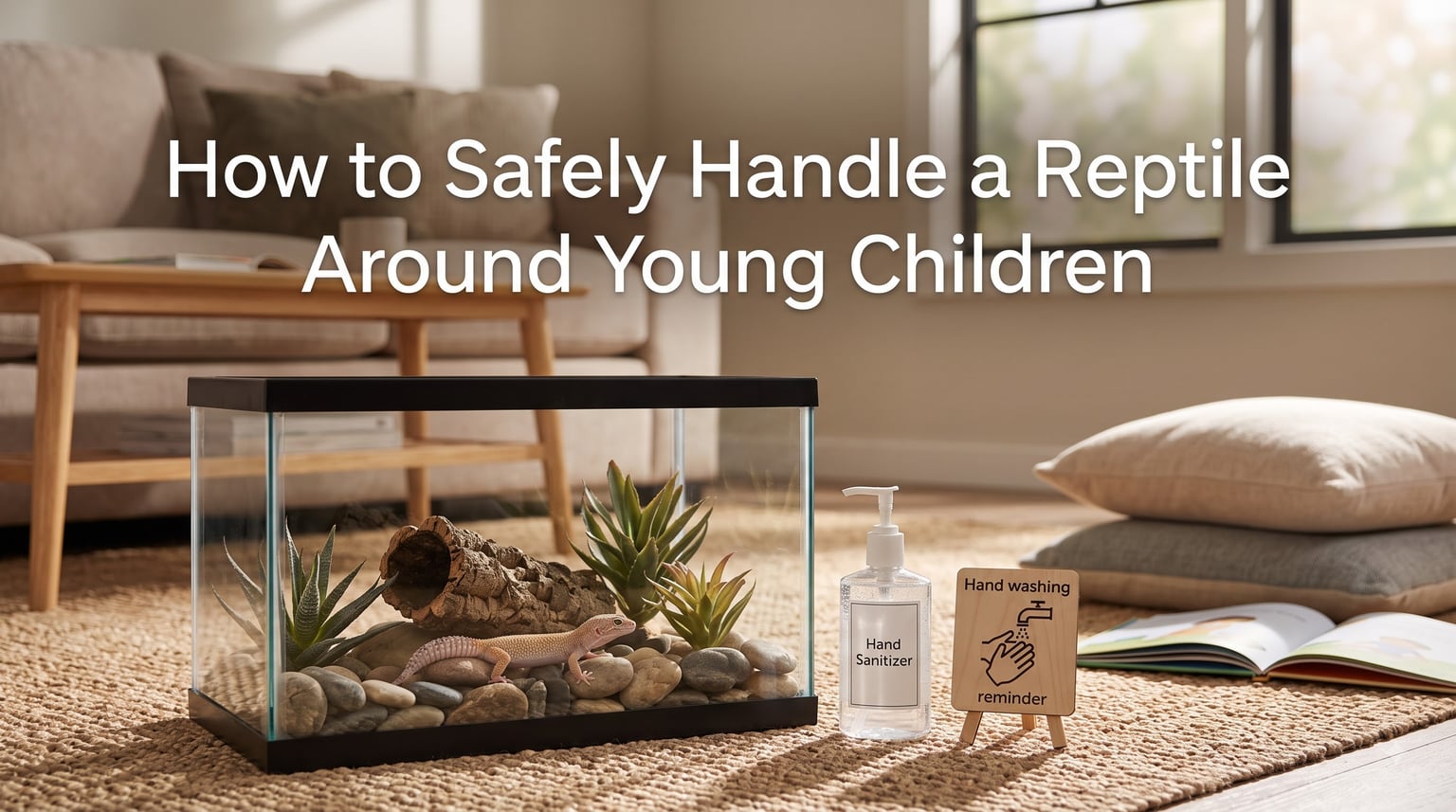
Reptiles are fascinating pets, but they require specific care when young children are in the home. The CDC reports that children under 5 are at higher risk for serious illness and hospitalization caused by Salmonella infection from reptiles and amphibians. This guide explains how to safely handle a reptile around young children, so families can balance curiosity with safety.
I’ll walk you through the health risks, the age-based rules our team uses with our own families, and the exact hygiene steps that prevent illness. You’ll also get a printable checklist for feeding time, habitat cleaning, and what to do if a bite or scratch happens.
Table of Contents
Why Reptile Safety Matters for Young Children?
Reptiles carry bacteria in their digestive tracts that can transfer to humans during contact. Children under 5, pregnant women, elderly people, and anyone with a weakened immune system face the highest risk of severe illness. The HSE and CDC both recommend that households with children under 5 avoid owning reptiles entirely because the consequences of a single infection can include hospitalization.
We’ve seen this play out in hundreds of parent reports on forums like r/reptiles and r/snakes. The pattern is consistent: most incidents happen when supervision lapses, or when a child touches a reptile’s enclosure, water bowl, or food without washing hands afterward. Prevention is straightforward, but it has to be consistent.
What Diseases Can Reptiles Pass to Humans?
Reptiles can transmit several bacterial and parasitic infections to humans. Understanding the risks helps you apply the right precautions.
Salmonella: The most common reptile-borne illness. Reptiles shed Salmonella in their feces, and the bacteria can live on their skin, in their water, and on every surface in their enclosure. Symptoms include diarrhea, fever, and stomach cramps that start 6 to 72 hours after exposure.
Botulism: Aquatic reptiles like turtles can carry Clostridium bacteria that produce toxins. Children under 1 are especially vulnerable, which is why turtles with shells under 4 inches are federally banned for sale in the US.
Mycobacterium marinum: Causes skin infections when contaminated water enters a cut or scrape. It’s also called “fish tank granuloma” and shows up as red bumps on hands or arms.
Aeromonas: Another waterborne bacteria that causes wound infections and, in rare cases, sepsis.
Parasites: Some reptiles carry Giardia or Cryptosporidium, which spread through fecal-oral contact and cause prolonged diarrhea.
Cross-contamination is the main way these diseases spread. A child touches a reptile, then touches their face, food, or another toy, and the bacteria transfer. This is why every expert guideline circles back to the same rule: hand washing immediately after contact is non-negotiable.
Age-Based Guidelines for Reptile Interaction
These age brackets come from HSE guidance, the CDC, and a synthesis of advice from reptile-owning parents on Reddit. Use them as your starting point.
Under 2 Years Old
Do not let infants or toddlers under 2 have direct contact with reptiles. Their immune systems are still developing, and they put their hands in their mouths constantly. We recommend keeping the reptile’s enclosure in a room the child cannot access without adult help.
Ages 2 to 4 Years
Children in this group can view the reptile from a safe distance and learn to observe without touching. If they do touch, an adult must guide the hand, control the animal, and wash the child’s hands afterwards. Avoid letting children under 5 hold reptiles on their own, even for a few seconds.
Ages 5 to 8 Years
Many reptile owners on r/geckos and r/snakes allow closely supervised handling starting at age 5 or 6. The child must follow hand washing rules consistently, sit on the floor during handling, and release the animal calmly. Most children at this age still lack the fine motor control needed to grip a squirming reptile safely, so close adult help is required.
Ages 9 and Up
Older children can handle reptiles with decreasing supervision, but the hand washing rule never goes away. By this age, they can also help with habitat cleaning, which gives them a sense of responsibility and reinforces hygiene habits.
How to Handle a Reptile Safely Around Children?
Safe handling is a calm, repeatable process. Follow these steps every time, even if the child has handled the same animal dozens of times before.
Wash your own hands and the child’s hands before handling. This prevents transferring anything from your hands to the animal.
Sit on the floor with the child in your lap or beside you. This keeps the height short so a dropped reptile falls only a few inches.
Remove the reptile from its enclosure yourself. Lift it from underneath with both hands, supporting its body and legs.
Guide the child’s hand. Place their hand on the reptile’s back or side rather than letting them grab. Squeezing triggers a defensive bite.
Keep sessions short. Five to ten minutes is plenty for most species. Longer sessions stress the animal and tire the child.
Return the animal to its enclosure before the child moves. Never let a child walk around holding a reptile.
Wash hands immediately after returning the reptile to its home.
Supervision never means watching from the next room. It means your hands are within reach and your eyes are on the animal at all times. Even calm reptiles have bad days and can bite without warning.
Hand Washing and Hygiene Protocols
Hand washing is the single most effective way to prevent Salmonella transmission from reptiles. According to CDC data, thorough hand washing after reptile contact reduces infection risk by over 90%. Here’s the routine our team uses.
Wet hands with warm running water.
Apply soap and lather for at least 20 seconds. Sing the “Happy Birthday” song twice if you need a timer.
Scrub between fingers, under nails, and the backs of hands.
Rinse thoroughly under running water.
Dry with a clean paper towel or cloth towel dedicated to pet areas.
Use hand sanitizer only when soap and water are not available. Soap and water are always better. Keep a tube of reptile-safe disinfectant near the enclosure for surfaces, and clean bowls, decor, and water dishes with a bleach solution (1 part bleach to 10 parts water) outside of the kitchen sink. Never clean reptile equipment in a sink used for human food preparation.
How to Read Reptile Body Language and Stress Signs?
Most bites happen because someone missed the warning signs. Reptiles communicate stress through specific behaviors, and teaching these to children is one of the most valuable safety skills.
Fast, jerky movements: The reptile is trying to escape. Lower stimulation, move slower, or return it to the enclosure.
Hissing, mouth gaping, or tail rattling: Clear defensive signals. The animal is telling you it feels threatened.
Musk or foul smell: Many lizards and snakes release a defensive odor when scared. This is a hard stop sign.
Darkened beard (bearded dragons): A black beard means stress, illness, or feeling threatened. Pause handling immediately.
Tail whipping or tight coiling: A snake preparing to strike or defend itself.
Closed eyes or hiding the head: Overstimulation. The animal needs a break.
Make a game of “spot the stress sign” with your child. Reward them for correctly identifying when the reptile wants to be left alone. This builds empathy and dramatically reduces bite incidents.
Habitat Cleaning, Feeding, and Feeding-Time Safety
Most reptile bites happen during feeding. A hungry lizard or snake sees a warm hand and mistakes it for food. Children should never be present during feeding, and parents should use feeding tongs or hemostats rather than fingers.
For habitat cleaning, take the reptile out of the enclosure first and place it in a secure temporary container. Wear disposable gloves when handling soiled substrate, and clean the enclosure outdoors or in a designated utility sink. Avoid breathing dust from dry substrate, especially with species that use sand or crushed walnut, since particulate matter can cause respiratory irritation.
Keep reptile food, water, and cleaning supplies in a separate kit. Label the kit clearly so visitors and family members know these items are not for human use. If you feed your reptile live rodents, never leave them unsupervised with the snake. Live prey can seriously injure a reptile that is not hungry.
What to Do If a Reptile Bites or Scratches Your Child?
Even with perfect precautions, bites and scratches can happen. Here’s the response sequence our team uses and recommends.
Stay calm. A panicked reaction scares the child and can cause the reptile to bite harder.
Gently remove the reptile. For small lizards, run cool water over the reptile’s nose to encourage release. For snakes, do not pull; pour cold water or a small amount of alcohol near the snake’s mouth.
Place the reptile back in its enclosure immediately.
Wash the wound with soap and warm water for at least 5 minutes.
Apply antiseptic and cover with a clean bandage.
Watch for signs of infection over the next 48 hours: redness, swelling, warmth, pus, or fever.
Seek medical attention if the child is under 5, if the wound is deep, if a venomous species was involved, or if infection signs appear.
For venomous reptiles, which should never be kept as family pets, call poison control immediately at 1-800-222-1222 in the US or your local emergency number. Antivenom needs to be administered by medical professionals as soon as possible.
Best Reptile Species for Families With Children
Species selection matters. Choose docile, hardy animals that tolerate gentle handling and have calm dispositions. The species below are commonly recommended by herpetology veterinarians and experienced hobbyists.
Leopard gecko: Small, docile, and tolerant of handling. Low-maintenance and slow-moving, ideal for first reptile owners with children.
Crested gecko: Easy to handle, requires no live insect feeding. More jumpy than a leopard gecko but generally calm.
Bearded dragon: Larger and slower than geckos. Kids love them, but they need bigger enclosures and UVB lighting.
Ball python: Very docile snakes that tolerate handling well. Never wrap around a child’s neck, and always supervise handling.
Corn snake: Calm, hardy, and non-venomous. A great choice for older children interested in snakes.
Avoid large constrictors, venomous species, and aggressive lizards like tegus or monitors unless you are an experienced reptile keeper with no young children in the home. The Bio Dude and several herpetology forums recommend these guidelines as a starting point for families.
Frequently Asked Questions
Are reptiles safe around babies?
No, reptiles are not considered safe around babies. The CDC and HSE recommend that children under 5 avoid direct contact with reptiles because their immune systems are still developing and they put their hands in their mouths frequently. Infants face the highest risk of severe Salmonella infection, dehydration, and hospitalization. Keep reptile enclosures in a room the baby cannot access.
Is it safe to touch reptiles?
Touching reptiles is safe for adults and older children if you follow strict hygiene practices. Wash hands thoroughly with soap and water before and after handling, avoid touching your face, and never eat, drink, or smoke while handling reptiles. People with weakened immune systems, pregnant women, and children under 5 should not touch reptiles or their enclosures.
Is it safe for babies to touch snakes?
Babies should never touch snakes. Snakes can carry Salmonella on their skin, and even a non-venomous snake can cause injury if a baby grabs it roughly. Larger snakes like ball pythons can constrict if wrapped around a small neck, which is a serious risk for infants. Keep snakes in a secure enclosure that babies cannot access.
What diseases can reptiles pass to humans?
Reptiles can pass Salmonella, Mycobacterium marinum, Aeromonas, Giardia, Cryptosporidium, and certain strains of Clostridium that cause botulism. Salmonella is the most common and causes the most outbreaks. Symptoms include diarrhea, fever, stomach cramps, and in severe cases, hospitalization. Hand washing after reptile contact is the most effective prevention.
What age can a child handle a reptile?
Most veterinarians and reptile-keeping guidelines recommend waiting until at least age 5 before allowing supervised reptile handling. Children under 5 should observe only. From age 5 onward, handling should always be supervised by an adult, with hand washing before and after, and sessions kept under 10 minutes.
How do I introduce my child to a reptile safely?
Start with observation only. Let the child watch the reptile in its enclosure for several days. Teach them hand washing rules before any contact. Read a children’s book about reptiles together. When ready for handling, sit on the floor, support the animal yourself, guide the child’s hand, and keep the session under 5 minutes. Finish with hand washing.
Final Thoughts on Reptile Safety at Home
Knowing how to safely handle a reptile around young children comes down to three habits: supervise every interaction, wash hands every time, and respect the animal’s stress signals. Children under 5 should observe rather than handle, and no child should ever be alone with a reptile, even for a moment.
Print the checklist below and post it near your reptile’s enclosure. It is the same routine our team uses, drawn from CDC guidance, HSE recommendations, and the practical wisdom of experienced reptile-keeping parents.
Family reptile safety checklist: Wash hands before and after handling. Children under 5 observe only. Sit on the floor for handling. Sessions under 10 minutes. Use tongs for feeding. No eating, drinking, or face-touching during handling. Clean enclosures in a designated sink. Watch for stress signs. Call a doctor if a bite or scratch shows infection.