
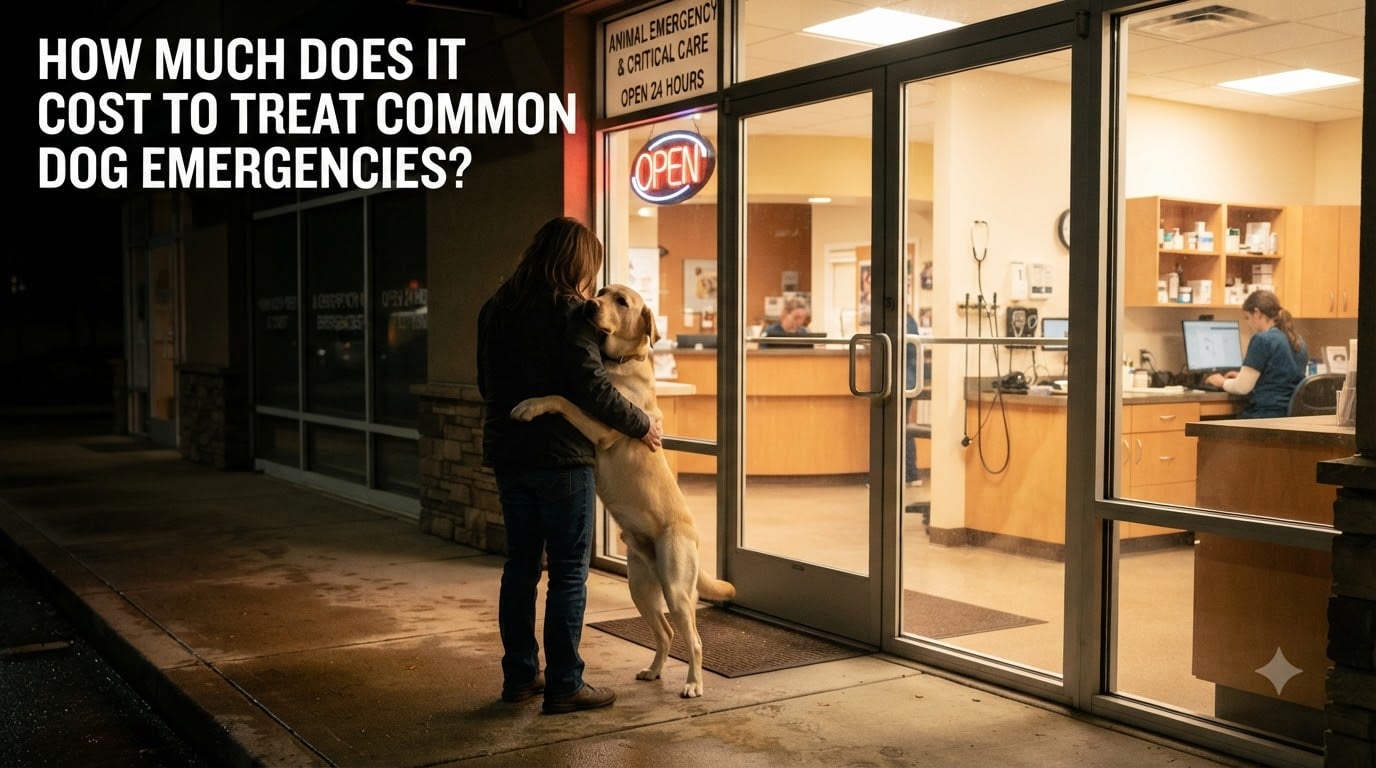
Last year, my friend’s Labrador swallowed a sock and ended up at the emergency vet. The total bill? $4,200. She had no idea dog emergency vet costs could climb that high in a single night.
I spent weeks researching emergency veterinary pricing so you don’t get caught off guard. Here’s what I found: the average emergency vet exam runs $135 to $150 for dogs, but total bills commonly reach $1,000 to $5,000 once diagnostics and treatment get added.
This guide breaks down real costs for common dog emergencies, explains why prices vary so much, and shares practical ways to afford care when your dog needs it most. I’ve pulled pricing data from veterinary sources, pet insurance companies, and actual owner experiences shared on Reddit and dog forums.
Table of Contents
What Is an Emergency Vet and When Do You Need One?
An emergency vet clinic provides immediate, life-saving treatment for pets during critical situations. These facilities operate 24 hours a day, 7 days a week, with specialized staff and advanced diagnostic equipment ready at any moment.
Unlike your regular veterinarian who sees scheduled appointments, emergency vets handle crisis situations only. They’re staffed with veterinarians trained in emergency and critical care, plus technicians who can run blood work, X-rays, and surgery on demand.
You need an emergency vet when your dog’s condition can’t wait for a regular appointment. Common situations include trauma from accidents, toxin ingestion, breathing difficulties, seizures, bloat, or sudden collapse. If you’re unsure, most emergency clinics will assess your dog over the phone and tell you whether to come in immediately.
Average Dog Emergency Vet Costs Overview
A typical emergency vet visit for a dog costs between $150 and $1,500, with the national average exam fee around $135 to $150. However, once you add diagnostics, treatment, and hospitalization, total bills commonly range from $1,000 to $5,000.
Here’s the breakdown of what to expect at a typical emergency visit:
Emergency exam fee: $100 to $260
Blood work (CBC + chemistry panel): $80 to $200
X-rays (2-3 views): $150 to $250
Ultrasound: $300 to $600
IV fluids (per day): $50 to $200
Hospitalization (1-2 days): $600 to $1,700
Hospitalization (3-5 days): $2,000 to $3,500
Emergency surgery: $2,000 to $5,000
Complex surgery (bloat, fractures): $5,000 to $10,000+
Location dramatically affects pricing. Urban emergency clinics in cities like New York or Los Angeles often charge 30% to 50% more than rural facilities. After-hours visits (nights, weekends, holidays) typically include a $50 to $150 surcharge on top of the exam fee.
Common Dog Emergencies and Their Treatment Costs
Some emergencies hit dog owners more often than others. Here are the most common situations and what they typically cost based on actual veterinary bills and owner reports.
Bloat (Gastric Dilatation-Volvulus): $3,000 to $7,500
Bloat is a life-threatening emergency where the stomach fills with gas and twists on itself. Deep-chested breeds like Great Danes, Standard Poodles, and German Shepherds face the highest risk.
Surgery must happen within hours to save the dog. The procedure itself runs $3,000 to $5,000, but post-operative care and hospitalization can push the total to $7,500 or more. One Reddit user shared that their Great Dane’s bloat surgery totaled $8,200 including three days of ICU care.
Foreign Body Ingestion: $2,000 to $5,000
Dogs eat things they shouldn’t: socks, toys, rocks, corn cobs. When an object blocks the intestines, emergency surgery becomes necessary.
Endoscopic removal (when possible) runs $1,500 to $3,000. Full abdominal surgery with intestinal repair costs $3,000 to $5,000. My friend’s $4,200 sock-removal surgery fell right in this range.
Hit by Car or Major Trauma: $1,000 to $10,000+
Trauma cases vary wildly depending on injuries. Minor wounds might cost $1,000 to treat, while a dog with internal bleeding, fractures, and collapsed lungs could generate bills exceeding $10,000.
Emergency stabilization alone (IV fluids, pain meds, initial X-rays) typically runs $500 to $1,000. Then surgery, hospitalization, and follow-up care add up quickly.
Toxin Ingestion: $500 to $3,000
Chocolate, grapes, xylitol, antifreeze, and certain medications can poison dogs. Treatment depends on what they ate and how long ago.
Inducing vomiting and administering activated charcoal might cost $200 to $500. If the dog needs overnight monitoring with IV fluids and blood work, expect $1,000 to $2,000. Severe cases requiring anti-seizure medication or dialysis can hit $3,000 or more.
Urinary Blockage (especially in male cats, but dogs too): $1,500 to $4,000
When a dog can’t urinate, toxins build up fast. Emergency catheterization, blood work, and hospitalization typically cost $1,500 to $3,000. Surgery to remove bladder stones adds another $1,000 to $2,000.
Severe Vomiting and Diarrhea: $500 to $2,500
What starts as an upset stomach can escalate quickly, especially in puppies or small breeds. Treatment includes fluids, anti-nausea medication, and diagnostic tests to rule out obstructions or pancreatitis.
Mild cases treated outpatient cost $300 to $800. Cases requiring 24-48 hours of hospitalization run $1,500 to $2,500.
Seizures: $500 to $3,000
A first-time seizure requires immediate workup. Emergency vets run blood tests, sometimes spinal taps, and start anti-seizure medication.
Initial stabilization costs $500 to $1,000. If the dog clusters seizures (multiple in 24 hours), ICU monitoring for 1-2 days costs $2,000 to $3,000.
Heatstroke: $1,000 to $5,000
Heatstroke kills fast. Emergency cooling, IV fluids, blood work, and monitoring for organ damage commonly total $1,500 to $3,000. Severe cases with kidney failure or clotting disorders can exceed $5,000.
Bite Wounds or Abscesses: $300 to $2,000
Wound cleaning, antibiotics, and minor surgery to drain abscesses typically run $300 to $1,000. Deeper wounds requiring drains and hospitalization cost $1,000 to $2,000.
Parvovirus (puppies): $1,000 to $4,000
Parvo treatment requires aggressive IV fluids, antibiotics, anti-nausea medication, and 5-7 days of isolation. Most cases cost $1,500 to $3,000, with severe cases reaching $4,000+.
Diagnostic Tests and Procedures That Drive Up Costs
The exam fee is just the entry point. Most emergency visits require additional diagnostics that can double or triple your bill within the first hour.
Blood work is almost always the first add-on. A complete blood count (CBC) and chemistry panel together cost $80 to $200. These tests reveal infection, organ function, and electrolyte imbalances.
X-rays run $150 to $250 for 2-3 views. If the vet needs multiple angles or a specialist to interpret them, costs climb higher. Ultrasound costs $300 to $600 but provides detailed images of soft tissues the X-rays can’t capture.
IV fluids at $50 to $200 per day seem modest until you realize many dogs need 2-4 days of hospitalization. Add monitoring fees, medications, and repeat blood work, and a “simple” overnight stay easily reaches $1,500.
Sedation and anesthesia add $100 to $500 depending on the procedure. Emergency surgery requiring general anesthesia starts at $1,000 just for the drugs and monitoring, before the surgeon’s fees even begin.
Why Emergency Vets Cost More Than Regular Vets
Emergency vet pricing reflects the reality of running a 24/7 facility with specialized staff. Here’s what you’re actually paying for:
Around-the-clock staffing: Veterinarians, technicians, and support staff must be present 24/7, including holidays. Shift differentials and overnight pay increase labor costs significantly.
Advanced equipment: Digital X-ray, ultrasound, in-house labs, and surgical suites represent millions in investment plus ongoing maintenance.
Specialized training: Emergency veterinarians complete additional years of training in critical care, surgery, and toxicology.
Immediate availability: Unlike scheduled appointments, emergency clinics must be ready for anything at any time, from a Chihuahua choking to a Great Dane in cardiac arrest.
Higher overhead: Urban locations, 24-hour utility costs, and specialized supplies all contribute to higher fees.
The after-hours surcharge ($50 to $150 extra) reflects the cost of keeping the facility open when most businesses are closed. Weekend and holiday surcharges work the same way.
Factors That Affect Your Emergency Vet Bill
Your final bill depends on several variables beyond just the type of emergency.
Location matters most. Emergency vet costs in San Francisco run 40-60% higher than the national average, while rural Midwest clinics often charge 20-30% less. State regulations and cost of living drive these differences.
Time of day affects pricing. A Sunday afternoon visit typically costs more than a Tuesday morning visit. Major holidays (Christmas, New Year’s, July 4th) carry the highest surcharges.
Your dog’s size influences medication and equipment costs. A 5-pound Chihuahua needs smaller drug doses than a 150-pound Mastiff, but some costs scale the other way: larger dogs need more anesthesia, more fluids, and larger equipment.
Severity determines everything. A dog with mild vomiting that responds to one injection costs far less than one requiring surgery, ICU care, and specialist consultation.
Breed predispositions affect both emergency likelihood and treatment costs. Brachycephalic breeds (Bulldogs, Pugs) often need breathing-related emergency care. Deep-chested breeds face bloat risk. Toy breeds are prone to hypoglycemia and traumatic injuries.
Emergency Signs Every Dog Owner Should Know
Recognizing emergencies early saves lives and money. The longer you wait, the worse (and more expensive) treatment becomes.
Go to the emergency vet immediately if your dog shows any of these signs:
Difficulty breathing, choking, or blue gums
Unconsciousness or collapse
Seizures lasting more than 2 minutes or multiple seizures
Suspected poisoning or toxin exposure
Severe bleeding that won’t stop
Hit by car or major trauma
Inability to urinate or defecate
Distended, hard stomach (possible bloat)
Heatstroke symptoms (excessive panting, drooling, weakness)
Severe vomiting or diarrhea, especially with blood
Inability to stand or walk
Eye injuries or sudden blindness
Allergic reaction with facial swelling
When in doubt, call the emergency clinic. They can help you decide whether your dog needs immediate care or can wait for your regular vet.
How to Pay for Emergency Vet Care?
Emergency vet bills can hit thousands of dollars in hours. Here are real options pet owners use to manage these costs.
Pet Insurance
Pet insurance typically reimburses 70-90% of covered expenses after your deductible. Most policies cost $30 to $70 monthly for dogs. Pre-existing conditions aren’t covered, which is why enrolling early matters.
For emergencies, accident-only plans start around $15 monthly and cover injuries, poisonings, and trauma. Comprehensive plans add illness coverage but cost more. Many policies require you to pay upfront and submit claims for reimbursement.
Payment Plans and Financing
Most emergency clinics offer payment plans through third-party lenders like CareCredit or Scratchpay. These work like medical credit cards with promotional interest-free periods (usually 6-18 months).
Ask about payment plans before treatment begins. Many clinics require 30-50% down with monthly payments for the balance. Some offer in-house payment arrangements without third-party involvement.
Emergency Fund
Veterinary experts recommend keeping $1,000 to $2,000 set aside specifically for pet emergencies. This fund should be separate from regular savings and replenished after use.
Start small if needed: $50 monthly into a dedicated savings account adds up to $600 in a year. Once you hit your goal, redirect that money to insurance premiums or investment.
Charitable Organizations and Crowdfunding
Several nonprofits help with emergency vet costs. The Pet Fund, RedRover, and many breed-specific rescues offer financial assistance for urgent care.
GoFundMe campaigns work surprisingly well for pet emergencies. Many campaigns reach their goals within days when shared widely on social media. Some emergency clinics maintain lists of local charities that help with vet bills.
Negotiating Your Bill
Yes, you can negotiate veterinary bills. Ask for an itemized estimate upfront, then discuss what’s essential versus optional. Some clinics offer discounts for paying cash upfront.
If costs are truly prohibitive, ask about humane euthanasia versus expensive treatment with poor prognosis. Quality of life matters, and sometimes the kindest choice is also the most affordable.
Frequently Asked Questions About Dog Emergency Vet Costs
How much is a typical emergency vet visit for a dog?
A typical emergency vet visit for a dog costs $150 to $1,500, with the national average exam fee around $135 to $150. However, once diagnostics, treatment, and hospitalization are added, most owners pay $1,000 to $5,000 total.
Why is the dog ER so expensive?
Emergency vet costs more because of 24/7 staffing, advanced equipment, specialized training, and immediate availability. After-hours surcharges of $50 to $150 reflect the cost of keeping the facility open nights, weekends, and holidays.
What if I can’t afford an emergency vet?
If you can’t afford emergency vet care, ask about payment plans, apply for CareCredit financing, contact pet charities like The Pet Fund or RedRover, start a crowdfunding campaign, or discuss whether treatment is financially feasible with the vet. Some clinics offer cash discounts or sliding-scale fees.
How much is ER surgery for a dog?
Emergency surgery for dogs costs $2,000 to $5,000 on average. Complex procedures like bloat surgery or fracture repair can exceed $5,000 to $7,500, especially with post-operative hospitalization and ICU care.
Does pet insurance cover emergency vet visits?
Most pet insurance plans cover emergency vet visits once your deductible is met, typically reimbursing 70-90% of costs. Accident-only plans start around $15 monthly, while comprehensive coverage runs $30 to $70 monthly. Pre-existing conditions are excluded, so enroll before emergencies happen.
How can I prepare financially for a dog emergency?
Build an emergency fund of $1,000 to $2,000 specifically for pet care, enroll in pet insurance while your dog is healthy, research local emergency clinics and their payment policies, and know your financing options like CareCredit before you need them.
Final Thoughts on Dog Emergency Vet Costs
Dog emergency vet costs catch most owners off guard. The $150 exam fee is just the start; total bills commonly reach $1,000 to $5,000 once treatment begins.
The best protection is preparation. Set aside an emergency fund, consider pet insurance, and know your local emergency clinic’s location and payment policies before crisis hits. When you understand typical costs for common dog emergencies, you can make faster decisions when seconds count.
If you’re facing an emergency right now, call your nearest emergency vet clinic. They’ll talk you through your options and help you prioritize your dog’s care based on what’s medically necessary and financially feasible.