
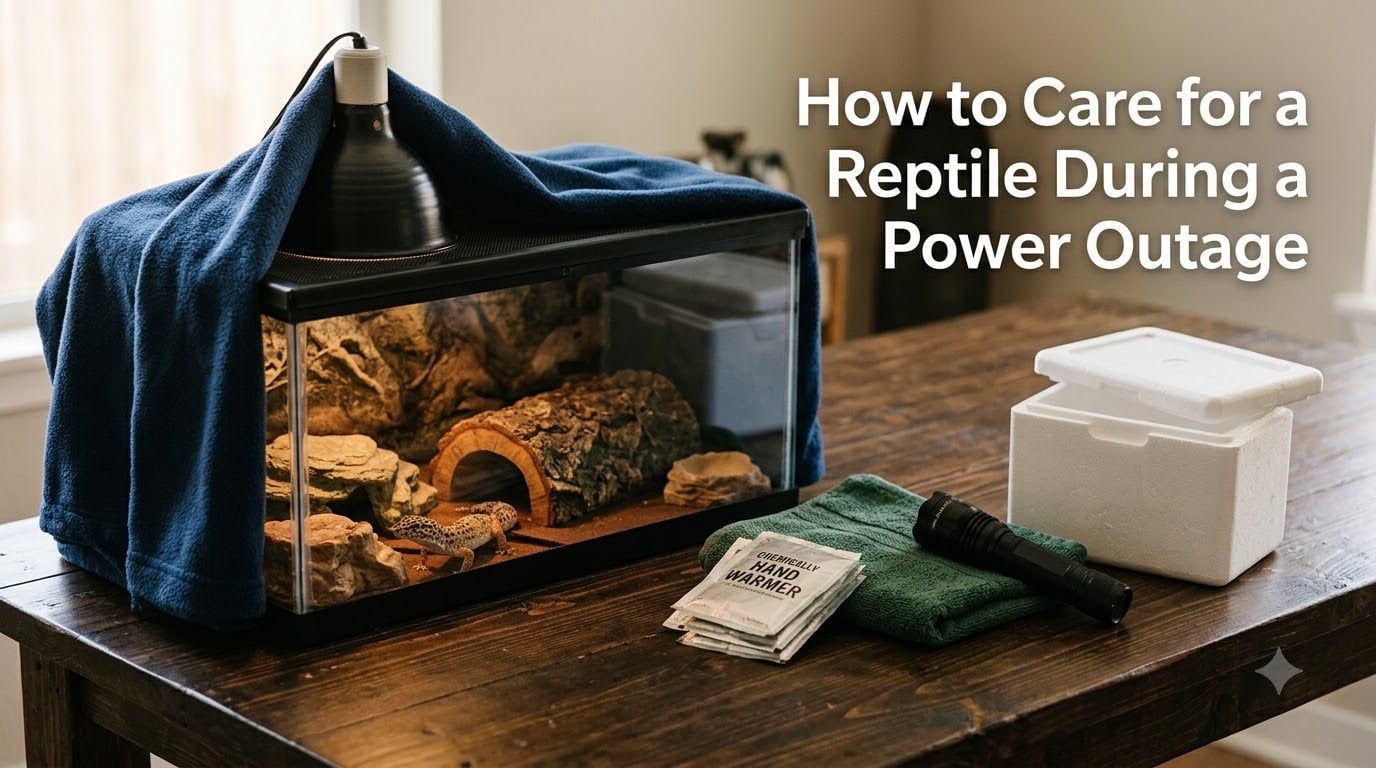
When the lights go out and your reptile’s heat lamp goes dark, panic sets in fast. I have been there, staring at a cold enclosure during a winter storm, wondering how long my ball python could survive without heat. Knowing how to care for a reptile during a power outage can literally save your pet’s life.
Reptiles are ectothermic, meaning they depend entirely on external heat sources to regulate their body temperature. Without a functioning heat lamp or ceramic emitter, their metabolism slows, digestion stalls, and their immune system weakens. The good news is that a few simple emergency techniques can keep your scaly friend safe for hours or even days.
In this guide, our team breaks down every step you need to take before, during, and after a power outage. From DIY heat sources to species-specific temperature minimums, this is the checklist I wish I had during my first blackout with reptiles.
Table of Contents
How to Care for a Reptile During a Power Outage: Quick Emergency Steps
If the power just went out, follow these five steps immediately to stabilize your reptile’s environment.
Step 1: Do not panic. Most healthy reptiles can tolerate cooler temperatures for several hours without lasting harm. Acting calmly helps you make better decisions for your pet.
Step 2: Cover the enclosure. Drape blankets, towels, or a sleeping bag over and around the tank. This traps existing heat and slows the temperature drop significantly.
Step 3: Add an emergency heat source. Place wrapped hand warmers, a hot water bottle, or a heated rice sock against the outside of the enclosure, never inside it. Direct contact can burn your reptile.
Step 4: Move your reptile to a smaller space if needed. A plastic tub, deli cup, or snake bag inside an insulated cooler retains heat far better than a large glass terrarium.
Step 5: Monitor your pet. Check for signs of distress every 30 to 60 minutes, including lethargy, closed eyes, or labored breathing. Adjust insulation and heat sources as temperatures shift.
Emergency Heat Sources for Reptiles
You do not need electricity to keep your reptile warm. Several household items and affordable supplies work well as backup heat sources during a reptile power outage.
Hand warmers and heat packs: These are the most popular option among experienced reptile keepers on Reddit and reptile forums. Activate a chemical hand warmer, wrap it in a sock or towel, and place it outside the enclosure or inside a cooler near your reptile. Never let a heat pack touch your pet directly, as surface temperatures can exceed safe limits.
Hot water bottles: Fill a rubber or thick plastic bottle with hot water and wrap it in a towel. This provides steady radiant heat for two to four hours before needing a refill. Our team keeps two water bottles on rotation so one is always warming up.
Body heat: For smaller reptiles and snakes, placing your pet in a breathable pillowcase or snake bag tucked under your clothing uses your own body heat. Forum users report this method works well for ball pythons and leopard geckos during short outages.
Your vehicle: If you have fuel and it is safe to run your car, the interior heats up quickly. Place your reptile in a secure, ventilated carrier and bring it into the warmed vehicle for short periods. Never leave your pet unattended in a car.
Rice or bean sock: Fill a clean cotton sock with dry rice or beans, microwave it for two to three minutes, and wrap it in a towel. It holds heat for roughly 30 to 45 minutes and is reusable indefinitely.
How to Insulate a Reptile Enclosure?
Insulation is just as important as adding heat. A well-insulated enclosure holds warmth far longer, reducing how often you need to swap out heat packs or water bottles.
Step 1: Layer blankets and towels. Cover the top, back, and sides of the enclosure with thick fabric. Glass tanks lose heat rapidly through all surfaces, so covering as much area as possible makes a real difference.
Step 2: Add cardboard. Slide sheets of cardboard between the blanket layers and the glass. Cardboard adds an extra thermal barrier and helps block cold drafts from windows.
Step 3: Use a Styrofoam cooler for small reptiles. Place your reptile in a deli cup or ventilated plastic tub, then set that container inside a Styrofoam cooler with a heat pack. This is the DIY setup Reddit users in cold climates swear by.
Step 4: Leave ventilation gaps. Never seal the enclosure completely. Your reptile still needs fresh air, so leave a small opening or poke holes in any plastic container you use.
Step 5: Block drafts. Move the enclosure away from windows, exterior walls, and exterior doors. A room with no windows and a closed door holds heat much better.
Species-Specific Temperature Needs
Different reptiles tolerate cold differently. Knowing the minimum safe temperature for your specific animal tells you when to act and when you still have time.
Bearded dragons: These desert reptiles need a basking spot around 95 to 110 degrees Fahrenheit normally. During an outage, keep their ambient temperature above 65 degrees Fahrenheit. A bearded dragon can handle a drop to 60 degrees for a few hours, but prolonged exposure below that risks serious health problems.
Ball pythons: Ball pythons thrive with ambient temperatures of 75 to 85 degrees Fahrenheit. They can tolerate temperatures down to about 70 degrees for up to 24 hours without major issues, but anything below 65 degrees becomes dangerous.
Leopard geckos: Leopard geckos prefer a warm side of 88 to 92 degrees Fahrenheit. During an outage, aim to keep them above 70 degrees. They are relatively hardy and can handle short drops, but sustained cold below 65 degrees impairs digestion.
Corn snakes and king snakes: These North American species tolerate cooler temperatures better than tropical reptiles. Ambient temperatures between 65 and 75 degrees are survivable for a day or more, though they should not be fed at these temperatures.
Crested geckos: Crested geckos actually prefer cooler conditions, with ideal temperatures between 72 and 78 degrees Fahrenheit. They are among the easiest reptiles to keep safe during a power outage, since typical room temperature often falls in their comfort zone.
How Long Can Reptiles Go Without Heat?
This is the question reptile owners ask most during an outage, and unfortunately, no competitor gives a clear answer. The honest response depends on species, age, health, and ambient room temperature.
As a general rule, a healthy adult reptile can survive without supplemental heat for 24 to 48 hours if the room stays above 65 degrees Fahrenheit. Juveniles, hatchlings, and sick animals have less reserve and may start struggling within 12 hours.
If your home drops below 55 degrees Fahrenheit, the safe window shrinks dramatically. At those temperatures, you need to act within 4 to 6 hours to prevent metabolic shutdown and respiratory infections.
Reddit users in extreme cold climates, including those dealing with minus 20 degree Celsius conditions, report that proper insulation combined with heat packs can extend safety well past 24 hours. Preparation is the single biggest factor in how long your reptile can safely endure an outage.
Feeding Guidelines During an Outage
One of the most important rules of reptile power outage care is to stop feeding until heat returns. Reptiles need elevated body temperatures to digest food properly.
If your reptile eats while cold, the food sits in the stomach undigested and can rot, causing potentially fatal impaction or bacterial infection. This applies to all insectivores, carnivores, and herbivores without exception.
Stop feeding as soon as the power goes out. Resume feeding only after the heat source has been restored and the enclosure has returned to normal operating temperatures for at least 24 hours.
Keep your reptile hydrated throughout the outage. Offer fresh water and mist the enclosure if your species requires higher humidity. Most reptiles can go several days without food safely, but dehydration sets in much faster.
Humidity Considerations During Power Outages
Temperature gets all the attention during an outage, but humidity matters too. Many reptiles, especially tropical species, rely on specific humidity ranges to stay healthy.
Without heat lamps and ceramic emitters running, enclosures often become more humid as ambient moisture has nowhere to evaporate. For arid species like bearded dragons, this temporary humidity spike is rarely dangerous for short periods.
For tropical species like crested geckos and ball pythons, maintaining humidity above 50 percent helps prevent dehydration and stuck sheds. Mist the enclosure with room-temperature water if the humidity drops too low.
Avoid soaking your reptile in warm water during an outage unless a veterinarian specifically recommends it. The rapid temperature change can cause more stress than it relieves.
Signs of Reptile Distress to Watch For
Knowing when your reptile is in trouble helps you decide whether to escalate your response. Watch for these warning signs during any power outage.
Lethargy and unresponsiveness: Some slowing is normal as temperatures drop, but if your reptile does not react to gentle touch or seems completely unresponsive, it may be too cold.
Closed eyes during the day: Diurnal reptiles like bearded dragons that keep their eyes shut during daylight hours may be experiencing thermal stress.
Labored breathing or open-mouth breathing: This is a red flag for respiratory infection, which can develop quickly after cold exposure. Seek veterinary help if you notice wheezing, clicking sounds, or mucus around the mouth.
Lack of movement for extended periods: While reptiles slow down in the cold, complete immobility for many hours signals that body temperature has dropped dangerously low.
Discoloration or darkening: Some reptiles darken in color when stressed or cold. If your pet looks noticeably different from its normal coloration, take action to warm the enclosure.
Pre-Outage Preparation Checklist
The best time to prepare for a power outage is before it happens. Use this checklist to build a reptile emergency kit you can grab at a moment’s notice.
Stock chemical hand warmers or reusable heat packs. Keep at least 10 to 12 on hand, since each one lasts about 8 to 12 hours.
Save two or three thick towels and a heavy blanket specifically for enclosure insulation. Store them near the tank so you can deploy them quickly.
Keep a Styrofoam cooler, a plastic tub with a locking lid, and a snake bag or pillowcase ready for relocation. Poke ventilation holes in the tub ahead of time.
Buy a battery-powered digital thermometer with a probe. This lets you monitor enclosure temperature even when the power is out.
Charge a portable power bank for your phone so you can contact a veterinarian or reptile boarding facility if needed.
Keep a list of emergency contacts, including your exotic vet, local reptile boarding facilities, and friends with generators who might house your pet temporarily.
Frequently Asked Questions
What to do for reptiles during power outage?
Cover the enclosure with blankets and cardboard to trap heat, add a wrapped heat source like hand warmers or a hot water bottle outside the tank, move your reptile to a smaller insulated container if needed, and stop feeding until heat is restored.
Will my bearded dragon be OK during a power outage?
A healthy adult bearded dragon can tolerate temperatures as low as 65 degrees Fahrenheit for several hours. As long as you insulate the enclosure and provide an alternative heat source, most bearded dragons handle short outages without lasting harm.
How long can a lizard live without a heat lamp?
Most healthy adult lizards can survive 24 to 48 hours without a heat lamp if room temperature stays above 65 degrees Fahrenheit. Hatchlings and sick lizards have a shorter safe window of about 12 hours.
How to keep a snake warm without electricity DIY?
Place the snake in a breathable snake bag or pillowcase inside a Styrofoam cooler with a wrapped chemical heat pack. Alternatively, tuck the bagged snake under your clothing to use body heat, or run your vehicle and bring the snake inside in a secure carrier.
How long can reptiles last without water?
Most reptiles can survive 3 to 7 days without water depending on species and humidity levels. However, always offer fresh water during an outage, since dehydration sets in faster than starvation.
Conclusion
Knowing how to care for a reptile during a power outage comes down to three things: preparation, insulation, and monitoring. Stock your emergency kit before you need it, insulate the enclosure the moment the power fails, and watch your pet closely for signs of distress.
Reptiles are tougher than they look. With hand warmers, blankets, and a Styrofoam cooler, you can keep your pet safe through most outages. Stay calm, act quickly, and your scaly companion will be back under their heat lamp before you know it.