
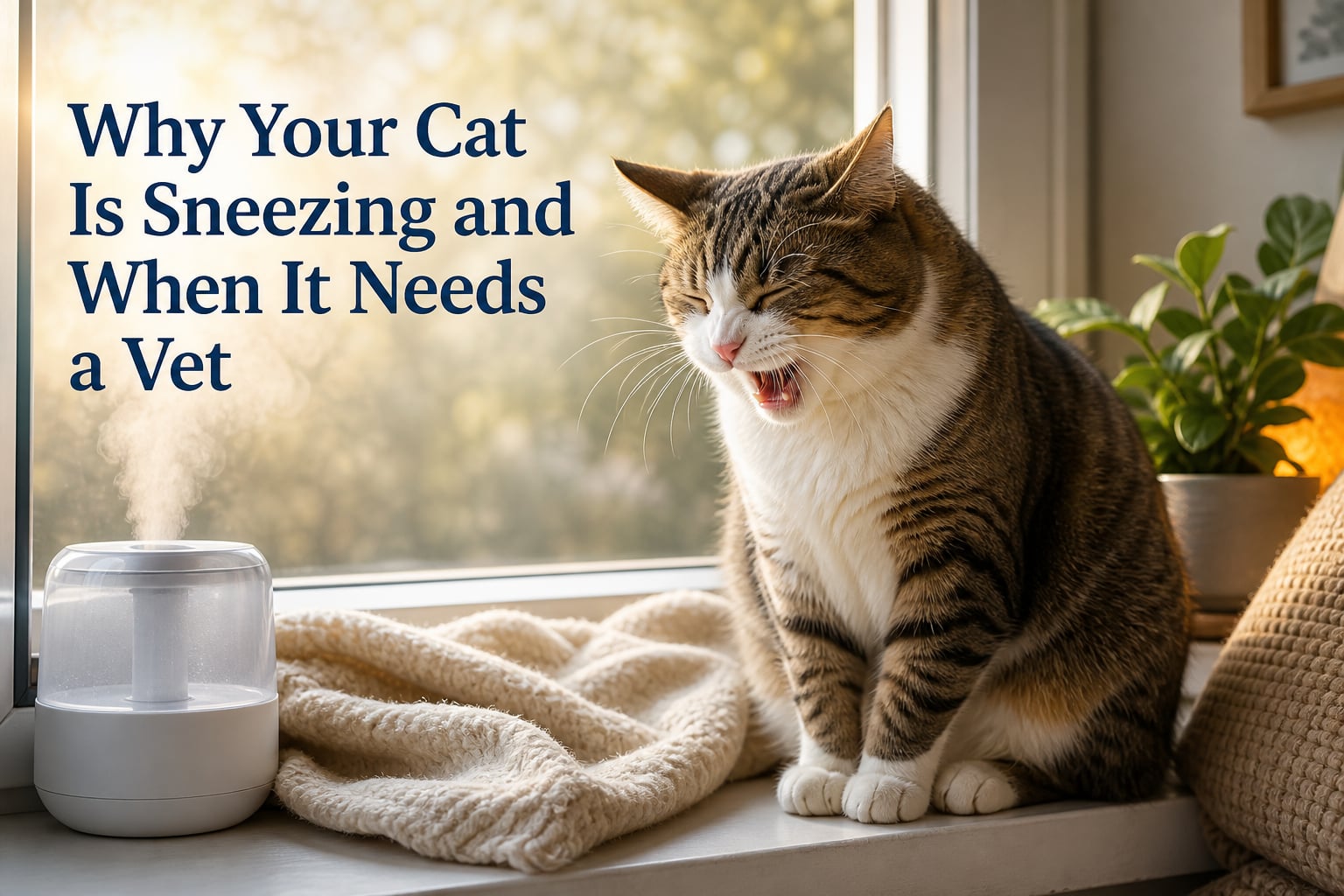
Hearing your cat sneeze once or twice might make you smile. Hearing it sneeze every few minutes for three days straight makes you worry. I have been there at 11 PM, phone in hand, Googling symptoms while my cat looked at me like nothing was wrong.
Cat sneezing is one of those topics where a little knowledge goes a long way. Most of the time, it is harmless. But sometimes, it signals something that needs real veterinary attention. Knowing the difference saves you stress, saves your cat discomfort, and saves you from unnecessary vet bills.
This guide breaks down why your cat is sneezing and when it needs a vet, covering every common cause, clear warning signs, at-home care you can try right now, and a symptom timeline so you know exactly how long to wait before calling the clinic.
Table of Contents
Common Causes of Cat Sneezing
Cats sneeze for the same reason we do: their body is trying to clear something irritating from the nasal passages. The cause ranges from a speck of dust to a serious infection. Here is what our team found after comparing veterinary sources and real owner experiences.
Viral Infections
Viral upper respiratory infections are the number one cause of persistent cat sneezing. Feline herpesvirus (FHV-1) and feline calicivirus account for roughly 80 to 90 percent of these infections. These viruses spread easily between cats, especially in shelters and multi-cat homes.
Symptoms usually include sneezing, nasal discharge, watery eyes, and sometimes a mild fever. Most viral infections run their course in 7 to 21 days, but herpesvirus can linger in the body for life and flare up during stressful times.
Bacterial Infections
Bacteria like Bordetella bronchiseptica, Chlamydia felis, and Mycoplasma can cause sneezing on their own or as a secondary infection after a virus has already weakened your cat’s immune defenses. Bacterial infections often produce thicker, yellowish or greenish nasal discharge.
These infections typically require antibiotics from your vet. They will not resolve on their own the way many viral infections do.
Allergies and Environmental Irritants
Cats can be sensitive to dust, pollen, mold, scented candles, cleaning products, cigarette smoke, and even certain types of cat litter. If your cat sneezes only in a specific room or right after you clean, an environmental trigger is a likely culprit.
Switching to a low-dust litter, running an air purifier, and avoiding strongly scented products around your cat can make a big difference. One Reddit user in r/CatAdvice shared that simply switching litters stopped their cat’s daily sneezing fits entirely.
Foreign Objects
Cats are curious. A blade of grass, a seed pod, or a small piece of debris can get lodged in a nasal passage. This usually causes sudden, violent sneezing from one nostril, often with pawing at the face.
If your cat cannot dislodge the object on its own, a vet needs to remove it. Leaving a foreign body in place can lead to infection and serious complications.
Dental Disease
This surprises many owners. The roots of a cat’s upper teeth sit right next to the nasal passages. An infected tooth root can create inflammation that leads to chronic sneezing, sometimes with discharge from one nostril.
If your cat has bad breath, drools, drops food, or avoids eating hard kibble alongside the sneezing, dental disease could be the underlying cause. Your vet can take dental X-rays to confirm.
Tumors and Chronic Conditions
In older cats, persistent sneezing that lasts weeks or months, especially with bloody discharge from one nostril, can point to nasal tumors or chronic rhinitis. These are less common but important to rule out, particularly in senior cats.
Chronic rhinitis causes ongoing inflammation of the nasal lining and can be frustrating to manage. Your vet may recommend advanced diagnostics like rhinoscopy or a nasal biopsy to pinpoint the problem.
Why Your Cat Is Sneezing and When It Needs a Vet: Warning Signs
Not every sneeze warrants a vet visit. But certain symptoms change the picture immediately. Here is a clear list of warning signs that mean you should call your vet without waiting.
Sneezing lasts more than 7 to 10 days without improvement
Nasal discharge is thick, yellow, green, or bloody
Discharge comes from only one nostril, which can signal a foreign object or tumor
Your cat stops eating or drinking, even for 24 hours
There is noticeable weight loss or severe lethargy
Your cat has difficulty breathing, open-mouth breathing, or wheezing
Eyes show discharge, redness, swelling, or squinting
You see swelling around the nose or face
Your cat is a kitten, senior, or has a weakened immune system
Sneezing comes with a fever or your cat feels warm to the touch
Emergency signs requiring immediate care: Difficulty breathing, blue-tinged gums, extreme lethargy, or collapse. These are not “wait and see” situations. Get to an emergency vet right away.
Urgent but not emergency signs: Loss of appetite lasting over 24 hours, thick colored discharge, or sneezing that worsens after a week. Call your vet for a same-week appointment.
Normal Sneezing vs Concerning Sneezing
Sometimes you just need a quick reference. Here is how to tell the difference at a glance.
Normal sneezing looks like this:
One or two sneezes, then nothing for hours or days
No discharge, or just a tiny amount of clear fluid
Your cat eats, drinks, plays, and acts completely normal
It happens after dusting, cleaning, or using a new product
Concerning sneezing looks like this:
Sneezing multiple times per hour for several days
Thick, colored, or bloody discharge
Accompanied by eye discharge, drooling, or lethargy
Your cat hides, stops grooming, or refuses food
The Feline Herpesvirus Connection
Feline herpesvirus deserves its own section because it is behind so many sneezing cases. Once a cat contracts FHV-1, the virus stays in the body for life. Most of the time, it lies dormant and the cat shows no symptoms at all.
Stress is the big trigger. Moving to a new home, a new pet arriving, a change in routine, or even a trip to the vet can reactivate the virus. When that happens, you see sneezing, nasal discharge, and sometimes eye ulcers.
Forum users in r/CatAdvice and r/catcare consistently confirm this pattern. Their cats flare up during stressful events and recover once things settle down. Some vets recommend L-lysine supplements to help manage flare-ups, though research results have been mixed.
If your cat has recurrent sneezing episodes every few months, ask your vet whether feline herpesvirus could be the underlying cause. Once you know, you can manage flare-ups more confidently.
At-Home Care Tips for a Sneezing Cat
If your cat is sneezing but otherwise acting normal, you can try these home care steps while monitoring for changes.
Run a humidifier near where your cat sleeps to moisten nasal passages
Bring your cat into the bathroom while you take a warm shower, so the steam helps clear congestion
Wipe away discharge gently with a warm, damp cloth
Switch to a low-dust, unscented cat litter
Avoid scented candles, strong cleaners, and air fresheners near your cat
Run an air purifier with a HEPA filter to reduce allergens
Warm up wet food slightly to make it more aromatic, encouraging your congested cat to eat
Keep your cat indoors and away from other cats until symptoms pass
Make sure your cat stays hydrated by offering fresh water frequently or using a cat fountain
One cat owner on r/CatAdvice shared that 15 minutes of bathroom steam twice a day cleared their cat’s congestion within three days. These simple remedies genuinely help when the underlying issue is mild.
What to Expect at the Vet?
Knowing what happens during the visit takes some anxiety out of the experience. Here is a typical process for a sneezing cat appointment.
First, your vet does a full physical exam. They check your cat’s temperature, listen to the lungs, examine the eyes and nose, and look inside the mouth for dental issues. Be ready to answer questions about when the sneezing started, what the discharge looks like, and whether your cat is eating normally.
Depending on what they find, your vet may recommend additional diagnostics. Common ones include:
Blood work to check for infection or underlying disease
Nasal swabs to test for specific viruses and bacteria
Dental X-rays to check for infected tooth roots
Rhinoscopy, which uses a small camera to examine the nasal passages
Imaging like X-rays or CT scans for chronic or severe cases
Treatment depends on the diagnosis. Viral infections often just need supportive care. Bacterial infections get antibiotics. Dental issues require professional cleaning or extraction. Allergies may call for environmental changes or medication.
For cost expectations, a basic exam typically runs $50 to $100. Add $100 to $200 for blood work, $40 to $80 for nasal swabs, and $200 or more for dental X-rays. A straightforward viral infection visit might total $75 to $150, while a complex diagnostic workup could reach $500 to $1,000 or more. Costs vary by location and clinic.
Prevention Tips to Reduce Cat Sneezing
You cannot prevent every sneeze, but you can reduce the frequency and severity of respiratory issues with a few consistent habits.
Keep your cat current on the FVRCP vaccine, which protects against herpesvirus and calicivirus
Schedule annual vet checkups, twice yearly for senior cats
Stay on top of dental health with regular cleanings and at-home care
Use low-dust, unscented litter and scoop daily
Avoid smoking or vaping indoors
Run a HEPA air purifier, especially in multi-cat households
Quarantine new cats for at least two weeks before introducing them to resident cats
Minimize stress during moves, travel, and household changes
Keep your cat indoors to reduce exposure to infected animals
How Long to Wait Before Worrying: A Symptom Timeline
One of the biggest gaps in most cat sneezing articles is a clear timeline. Owners constantly ask how long they should watch and wait. Here is a practical guide based on veterinary guidance and real owner experiences.
Days 1 to 3: Monitor at home if sneezing is the only symptom and your cat eats, drinks, and behaves normally. Try steam therapy and keep the environment clean. Most mild cases improve within this window.
Days 4 to 7: Continue home care but pay closer attention. If sneezing is not improving or new symptoms appear, call your vet to schedule an appointment. This is especially important if discharge thickens or changes color.
Day 7 and beyond: If sneezing persists past a week, schedule a vet visit. Lingering symptoms often point to a bacterial infection that needs antibiotics, a dental issue, or a chronic condition.
Immediate action: Do not wait if your cat stops eating entirely, has trouble breathing, or shows bloody discharge. These are red flags that need same-day attention.
Kittens under 6 months and senior cats over 12 years have weaker immune systems. For them, shorten the timeline by half. A kitten sneezing for more than 3 to 4 days should see a vet sooner rather than later.
Frequently Asked Questions
What will a vet do for a sneezing cat?
A vet will perform a physical exam, check your cat’s temperature, examine the nose, eyes, and mouth, and ask about symptom history. Depending on findings, they may recommend blood work, nasal swabs, dental X-rays, or imaging. Treatment could include antibiotics, antiviral medication, supportive care, dental treatment, or environmental changes.
How much is a vet visit for a sneezing cat?
A basic exam typically costs $50 to $100. Add $100 to $200 for blood work and $40 to $80 for nasal swabs. A straightforward visit for a mild viral infection might total $75 to $150. More complex diagnostic workups involving X-rays or rhinoscopy can reach $500 to $1,000 or more.
What helps a cat stop sneezing?
Home remedies include using a humidifier, running bathroom steam sessions, wiping away discharge, switching to low-dust litter, avoiding scented products, and warming wet food to encourage eating. If sneezing stems from a bacterial infection or dental disease, your cat needs veterinary treatment such as antibiotics or dental care.
When should I worry about a cat sneezing?
Worry when sneezing lasts more than 7 to 10 days, discharge is thick or bloody, your cat stops eating, breathing becomes difficult, or you notice eye discharge and swelling. Kittens, seniors, and cats with weakened immunity need earlier attention. Difficulty breathing is always an emergency.
Why is my cat sneezing but seems fine?
If your cat sneezes occasionally but eats, drinks, plays, and acts normally, it is likely reacting to dust, a scent, or a mild irritant. Occasional sneezing without other symptoms is usually harmless. Monitor for a few days and note whether anything in the environment changed recently.
Can indoor cats get respiratory infections?
Yes. Indoor cats can catch viral and bacterial infections from other cats in the household, through carried-in germs on shoes or clothing, or from a latent herpesvirus flare-up triggered by stress. Vaccination and good hygiene help reduce the risk even for strictly indoor cats.
Final Thoughts on Cat Sneezing
Cat sneezing covers a wide spectrum from completely harmless to seriously concerning. The key is paying attention to the details: how long it has been going on, what the discharge looks like, and whether your cat still acts like itself.
Most sneezing episodes resolve on their own within a week. When they do not, or when other symptoms join the picture, your vet is your best resource. Trust your instincts. You know your cat better than anyone, and if something feels off, it is worth getting checked.
Keep this guide handy, bookmark the warning signs list, and remember that understanding why your cat is sneezing and when it needs a vet is the single most important step you can take to keep your feline companion healthy and comfortable.