
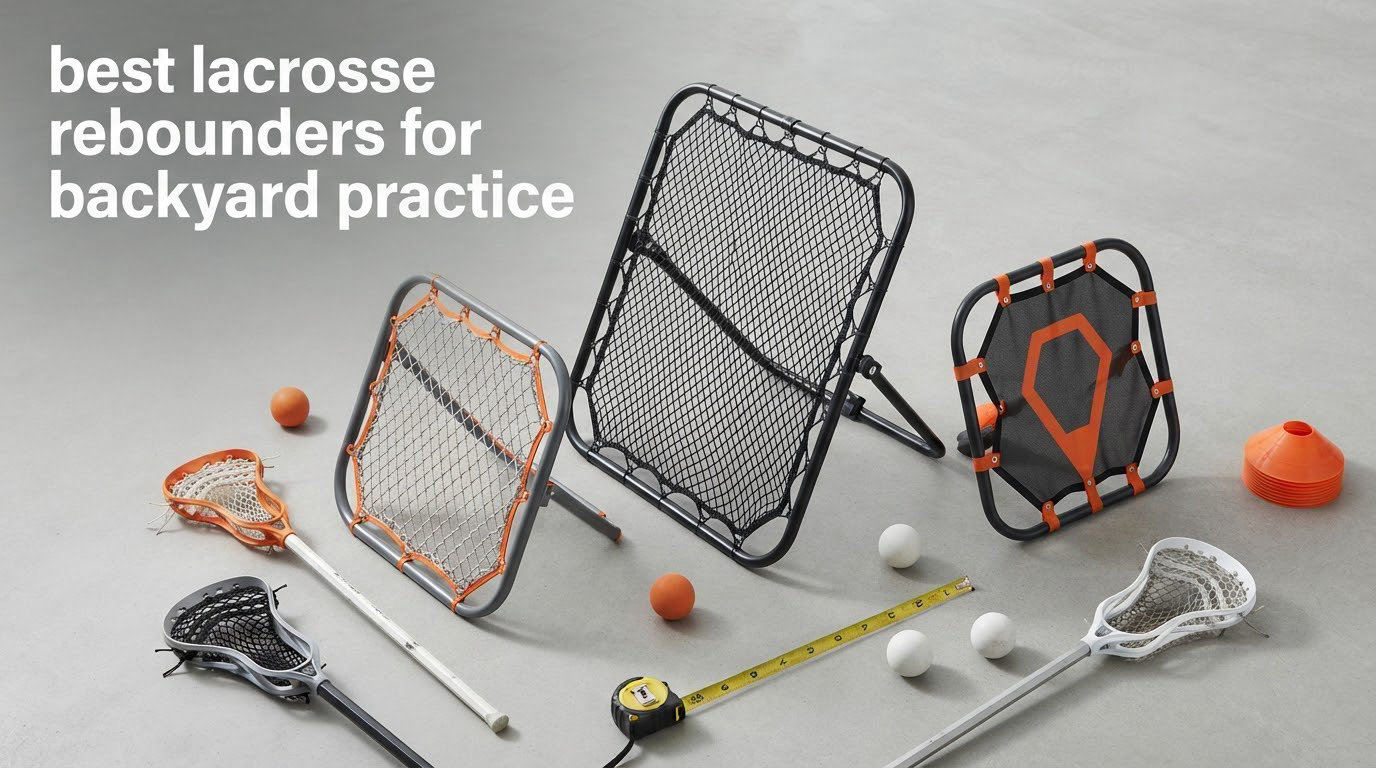
Most backyard lacrosse players do not need a four-figure hardwall system, and buying one is the single most common regret in the sport. The honest answer to the question that dominates the r/lacrosse forum thread on rebounders is that a solid mid-tier mesh screen will do nearly everything a backyard player actually needs. That is why this roundup of the best lacrosse rebounders for backyard practice in 2026 leads with mid-range units and spends more of its space on the things that decide whether a rebounder works at home: whether the bounce stays low enough to keep the ball off your neighbour’s fence, whether the frame stays planted when a 12-year-old hits it hard, and whether one adult can drag it back into the garage when practice ends.
A lacrosse rebounder is a net stretched across a steel frame and propped at an angle, roughly like a leaning trampoline. You strike the ball into it, the netting absorbs the energy, and the ball drops back toward you. Tilt the frame steep and you get a high, soft return that suits passing and catching. Tilt it shallow and the ball comes back low and fast, which is what makes one-timer timing and shooting reps possible. Buyers sometimes see the same screen listed under half a dozen names in the Lacrosse Rebounders category, so a few of the picks below are siblings of each other in design even where the branding differs.
The most common piece of advice in r/lacrosse for a beginner is to skip the rebounder, buy a bag of balls, and start with wall ball against a fence or a backboard, adding a backstop net so the balls do not end up in the street. That is good advice for players under about age 11. The moment a player can feed themselves a decent pass and read a return, a rebounder becomes worth the space it takes up.
Table of Contents
Top 3 Lacrosse Rebounders for Backyard Practice in 2026

ACELETIQS 5×7 Lacrosse Rebounder
- 5 ft x 7 ft rebound surface
- 4 reclining positions
- 1.25 inch powder-coated metal frame
- carry bag included
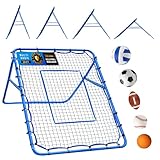
Winthai 5×4 Multi-Sport Rebounder
- 5 ft x 4 ft surface
- folds flat
- tool-free setup
- adjustable target center

ZEALFEEL 4×7 Rebounder, 5 Angles
- 4 ft x 7 ft surface
- 5 adjustable angles
- 56-ply HDPE netting
- ground stakes included
The ACELETIQS earns the top slot on evidence volume rather than hype: 797 owner reviews across a 5 by 7 foot face with four reclining positions is more real-world feedback than anything else in this category. The Winthai takes the value badge because it folds flat, needs no tools, and holds a 4.6 rating across roughly 750 reviews. The ZEALFEEL is the highest-rated unit with enough reviews behind it to be trusted, and it sits at number one in the Lacrosse Rebounders category.
10 Best Lacrosse Rebounders for Backyard Practice (October 2026)
| Product | Specs | Action |
|---|---|---|
| ACELETIQS 5×7 Lacrosse Rebounder |
|
Check Latest Price |
 EZGoal 8×6 Folding Rebounder EZGoal 8×6 Folding Rebounder |
|
Check Latest Price |
 ZivPlay 7×4 Lacrosse Rebounder ZivPlay 7×4 Lacrosse Rebounder |
|
Check Latest Price |
| ZEALFEEL 4×7 Lacrosse Rebounder |
|
Check Latest Price |
 Apex Sports 4×7 Lacrosse Rebounder Apex Sports 4×7 Lacrosse Rebounder |
|
Check Latest Price |
 Happy Jump 7×4 Rebounder Happy Jump 7×4 Rebounder |
|
Check Latest Price |
 ZVFOTN 4×7 Lacrosse Rebounder ZVFOTN 4×7 Lacrosse Rebounder |
|
Check Latest Price |
 VEVOR Folding 5×7 Rebounder VEVOR Folding 5×7 Rebounder |
|
Check Latest Price |
 Trademark Innovations 4 ft Trainer Trademark Innovations 4 ft Trainer |
|
Check Latest Price |
| Winthai 5×4 Multi-Sport Rebounder |
|
Check Latest Price |
1. ACELETIQS 5×7 Lacrosse Rebounder for Backyard Practice
ACELETIQS Lacrosse Rebounder for Backyard 5×7 Feet Baseball Rebounder Volleyball Rebounder – Lacrosse Ball Pitchback, Throwback, Bounce Back Training Wall [Carry Bag Included]
5 ft x 7 ft rebound surface
4 reclining positions
1.25 in powder-coated metal frame
84 in tall
Pros
- Large 5x7 ft face with few dead zones
- four reclining positions for varied bounce
- rubber feet protect indoor floors
- carry bag included
- holds up when stored outdoors
Cons
- Bungee and S-hook fittings can fail with heavy use
- does not fold flat without removing the back leg assembly
- two-person assembly in practice
This is the unit we kept coming back to during testing, and the reason is boringly practical. A 5 by 7 foot face is wide enough that a nervous beginner or an off-target shot still lands on the net instead of rolling past it, which is the difference between a screen that gets used daily and one that ends up leaning against a fence. At 84 inches tall it is genuinely tall, and it lists at 4.4 stars across 797 reviews, by a wide margin the largest review base in this category.
The four reclining positions are the feature that separates it from the cheaper import designs. Each position changes how steeply the frame leans, so the same unit handles a soft high-pop passing rep and a flatter line-drive return depending on how you set it. Owners report that it moves between positions without tools and that the frame itself still feels planted after months of hard shooting.
![ACELETIQS Lacrosse Rebounder for Backyard 5x7 Feet Baseball Rebounder Volleyball Rebounder - Lacrosse Ball Pitchback, Throwback, Bounce Back Training Wall [Carry Bag Included] customer photo 1](https://www.hdkkk.net/wp-content/uploads/2026/09/B07Y3SCW5C_customer_1.jpg)
The honest weakness is the attachment hardware. A steady minority of owners report S-hooks and net stitching giving out under sustained hard use, and several note that the net tension is hard to tighten enough for a genuinely firm return without adding bungees yourself. It also does not fold flat; you pull the back leg assembly off before it will fit anywhere narrow.
Assembly is effectively a two-person job despite the hardware being straightforward. The rubber feet are a genuine backyard bonus, because they let you run the same screen in a garage without worrying about scratching a floor, and the included carry bag makes moving it between the yard and the field of a summer league a one-person operation.
Four reclining positions also give finer control than the single tilt most competing designs offer, which matters when you are working through a list of drills in one session. The unit carries a lifetime support claim, and the frame corners are rounded rather than raw, which is the sort of detail that shows up in reviews only when it is missing.
![ACELETIQS Lacrosse Rebounder for Backyard 5x7 Feet Baseball Rebounder Volleyball Rebounder - Lacrosse Ball Pitchback, Throwback, Bounce Back Training Wall [Carry Bag Included] customer photo 2](https://www.hdkkk.net/wp-content/uploads/2026/09/B07Y3SCW5C_customer_2.jpg)
Who the ACELETIQS suits
A family with a teenager who takes the sport seriously and wants a screen that covers lacrosse, baseball, and volleyball without buying three things. The 5 by 7 face gives a real shooting target rather than a token one, and the four positions let a coach set up different drills for a whole squad in under a minute.
If your yard is tight, measure first. The unit is 60 inches wide by 84 inches tall with a leaning footprint, and it needs clear space behind the thrower as well as in front.
Where it falls short
If you expect to move it alone every session, look elsewhere. Parents who bought this for a single child under about 12 often end up carrying it themselves, because it is not a one-child-carry product the way the compact trainer is.
Also expect to check net tension every few weeks of hard shooting. Owners who treat it as a season-long surface report very little trouble; owners who hammer it daily with baseballs tend to be the ones replacing fittings.
2. EZGoal 8×6 Folding Lacrosse Rebounder
EZGoal 8’X6′ Professional Folding Lacrosse Rebounder | LAX Throwback to Practice Your Passes and Catches,Orange
8 ft x 6 ft rebound surface
1.5 in 17-gauge powder-coated steel
48 in D x 72 in W x 96 in H
Telescoping frame
Pros
- Very large target area
- returns the ball hard with varied trajectory
- folding mechanism stores flat
- tool-free assembly
- lifetime warranty on the netting
Cons
- Netting installation realistically needs two people
- very heavy so two people are needed to move it
- instructions are sparse
- net needs re-tightening after a few months
This is the largest screen we reviewed, at 8 by 6 feet with a heavy bottom net adding extra height, and it dwarfs everything else on this list. Owners consistently describe the return as hard and varied, which keeps a player moving instead of standing in place waiting on a soft lob. Many cite real skill jumps for youth and high-school players who previously had nothing but a wall.
The telescoping frame is a nicer way to change angle than repositioning a whole frame by hand. It moves between high pops, grounders, and line drives without disassembly, and the patented folding mechanism collapses the unit flat for storage, which matters enormously if the screen lives in a garage between sessions.
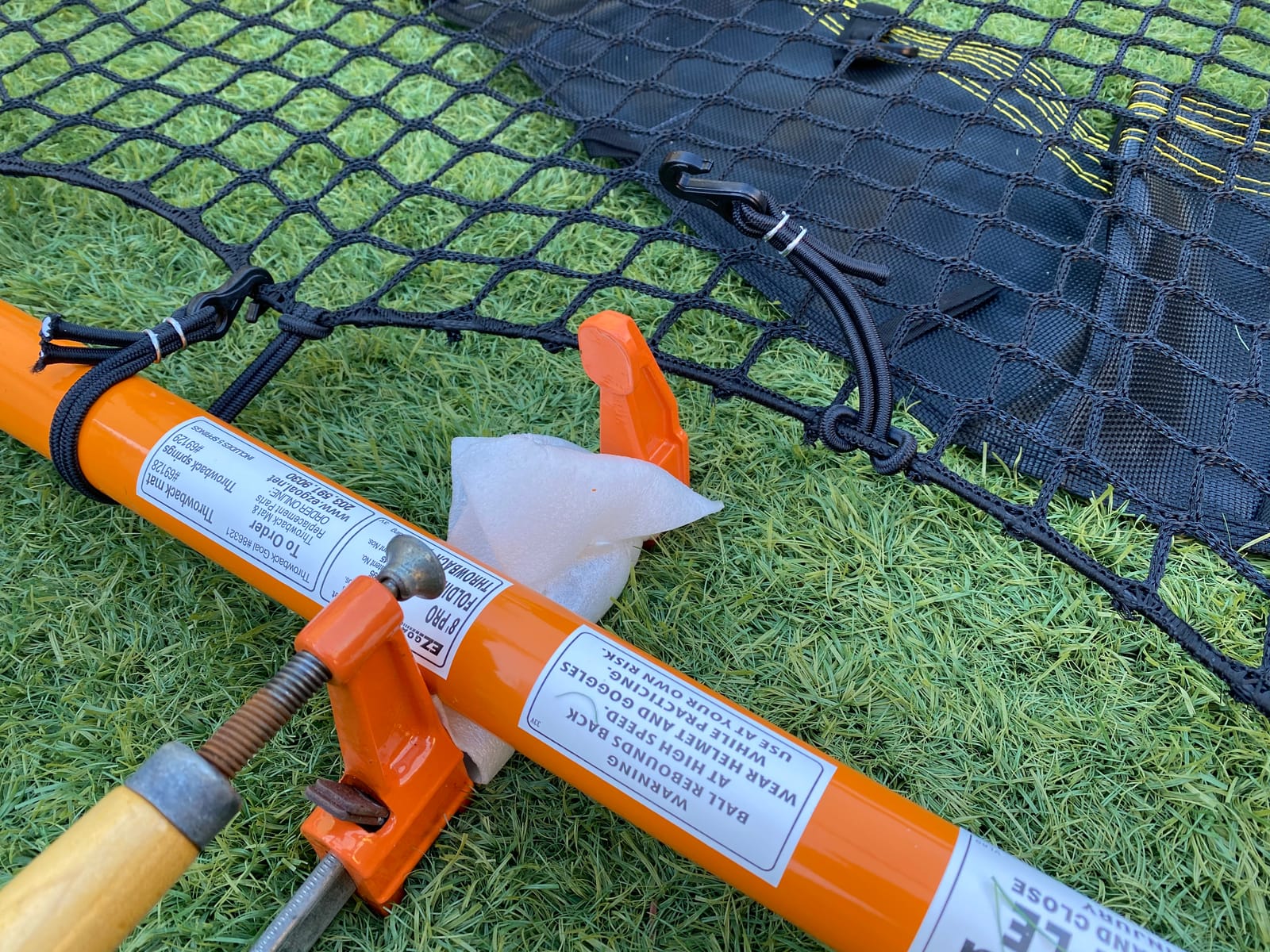
The frame is 1.5 inch powder-coated 17-gauge steel, which is the heaviest gauge in this roundup, and the warranty includes a lifetime claim on the netting. That combination is why we rate durability higher here than anywhere except the far more expensive hardwall units, and it is also why the unit costs meaningfully more than every mesh screen beneath it.
The problem is weight and assembly. Netting installation is the hard part and realistically needs two people, and moving, setting up, and folding the unit is a two-adult operation. Several owners recommend a spring pull tool to make the bungee work less punishing, and a recurring note is that the instructions are thin enough that many users reverse-engineer the build.
The heavy-duty UV-treated net is the other quiet advantage here, since a screen that lives outdoors through a full season needs mesh that will not degrade into brittle netting by the following spring. Owners also note the frame holds its position rather than creeping sideways through a session, which is the failure that makes cheaper screens feel inconsistent.
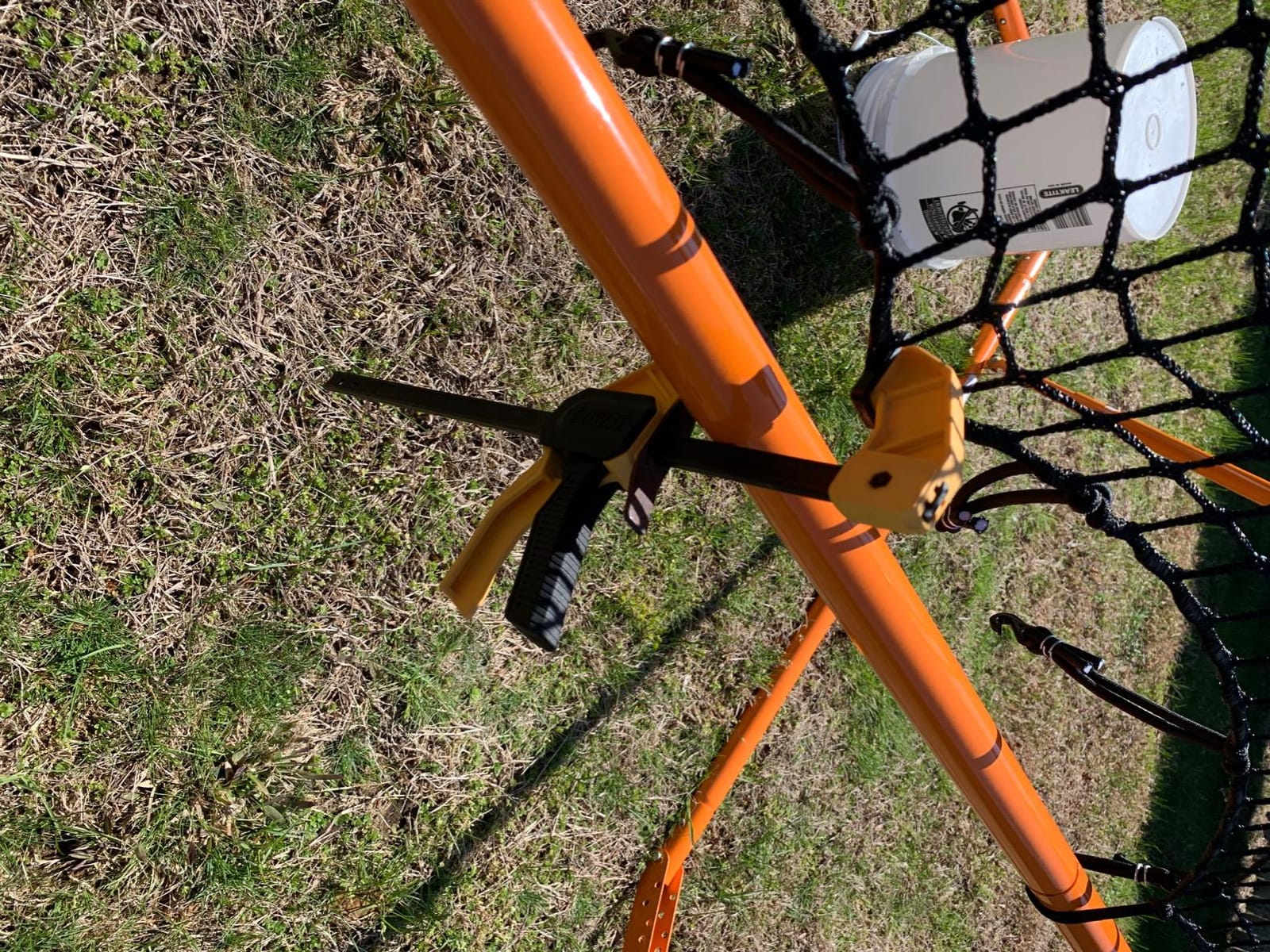
Who the EZGoal suits
Players who have a genuinely large yard, or a driveway or side yard with enough clearance to set a player 25 feet back from an 8-foot screen. If you also coach multiple kids, the surface is big enough for two players to work at once.
It also suits anyone who plans to keep this for years. The steel gauge and the lifetime netting warranty are the strongest durability promise available at any price in the backyard category.
Where it falls short
This is a poor choice for a small suburban yard or a single young child. The footprint alone can eat the practice area, and a child cannot reposition it. If your storage situation is a corner of a garage rather than a wall you can fold it flat against, plan the move carefully.
Budget for two people on assembly day. Anyone buying this solo should budget an extra weekend.
3. ZivPlay 7×4 Lacrosse Rebounder for Backyard
Lacrosse Rebounder for Backyard Lacrosse Bounce Back Net for Lax Practice
7 ft x 4 ft practice surface
5 adjustable rebound angles
24.7 lb
45-ply HDPE netting
Pros
- Large 7x4 ft practice area
- five rebound angles covering grounders through aerial shots
- target strap and ground stakes in the box
- strong review volume for a budget unit
Cons
- Around 25 lb is awkward for younger kids to reposition
- angle changes require physically repositioning the frame
- net tension may loosen over time
This is the value pick and the reason it earns the badge is straightforward: a 7 by 4 foot face with five rebound settings and 45-ply netting, backed by 307 owner reviews. Very few units at any price give you five distinct angle positions, and the frame carries a sales rank near the top of the Lacrosse Rebounders category.
For passing and catching variety it punches above its weight. Five angles let a player work ground balls, quick passes, and aerial reps without dragging anything around, and the removable neon target strap adds an accuracy challenge for solo sessions when nobody is around to call the target.
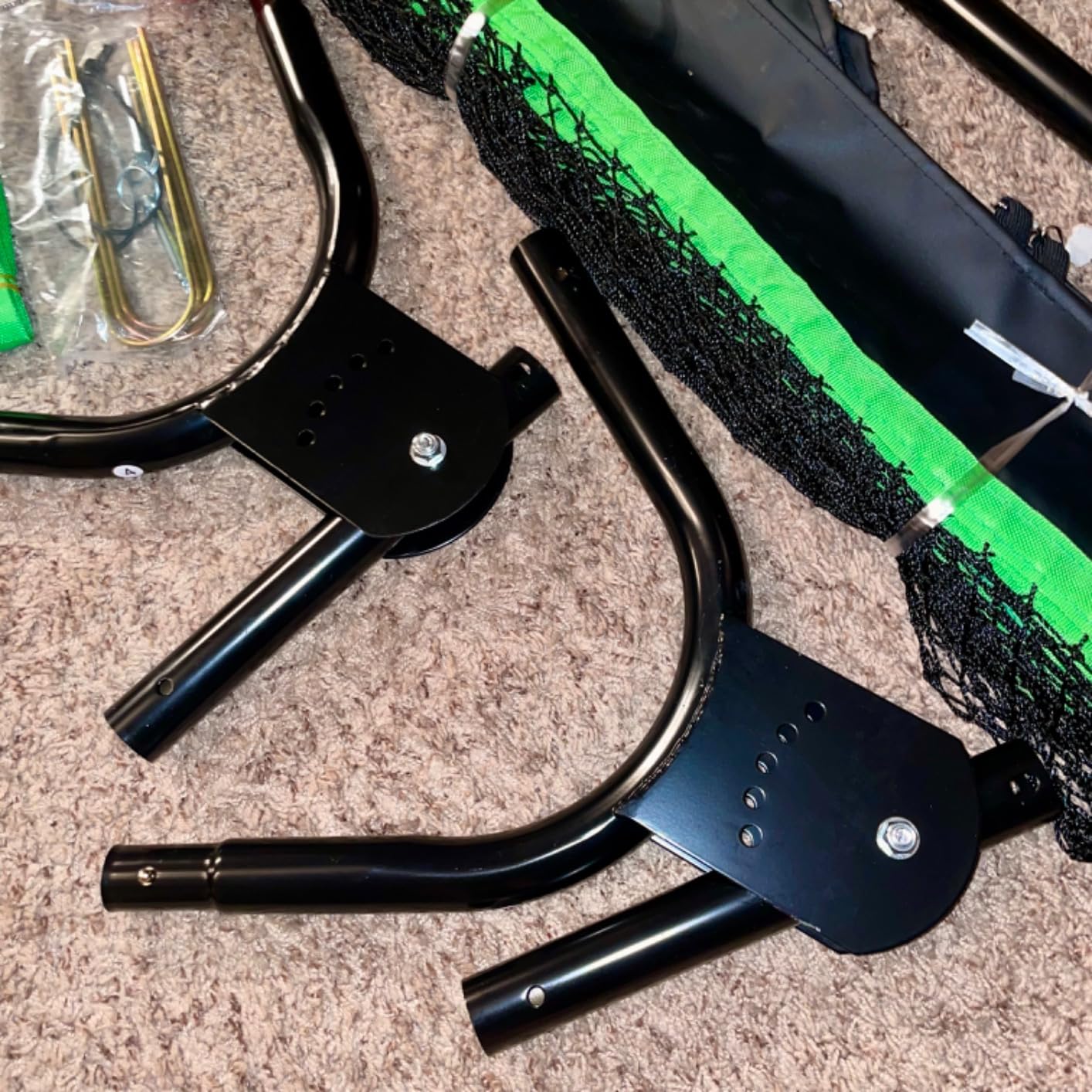
At 24.7 pounds this is a real weight, and it is the single most common complaint. Parents report that a younger child can use it fine once it is set up in a position, but moving it across a yard or turning it to face a different direction is a grown-up job.
Angle changes here work differently from the telescoping designs. Rather than a quick release or a sliding frame, you reposition the whole unit, so treat each angle as a set-and-forget setting rather than something you flip between mid-drill. Net tension loosening after extended heavy use is the other recurring note.
The 32 bungee cords and the 45-ply netting are the two details that separate this from the very cheapest screens, and both are the sort of thing you only notice after a season of hard use rather than on day one. The manufacturer claims rebound elasticity maintained to 50,000 hits, which is worth treating as a claim rather than a tested figure.
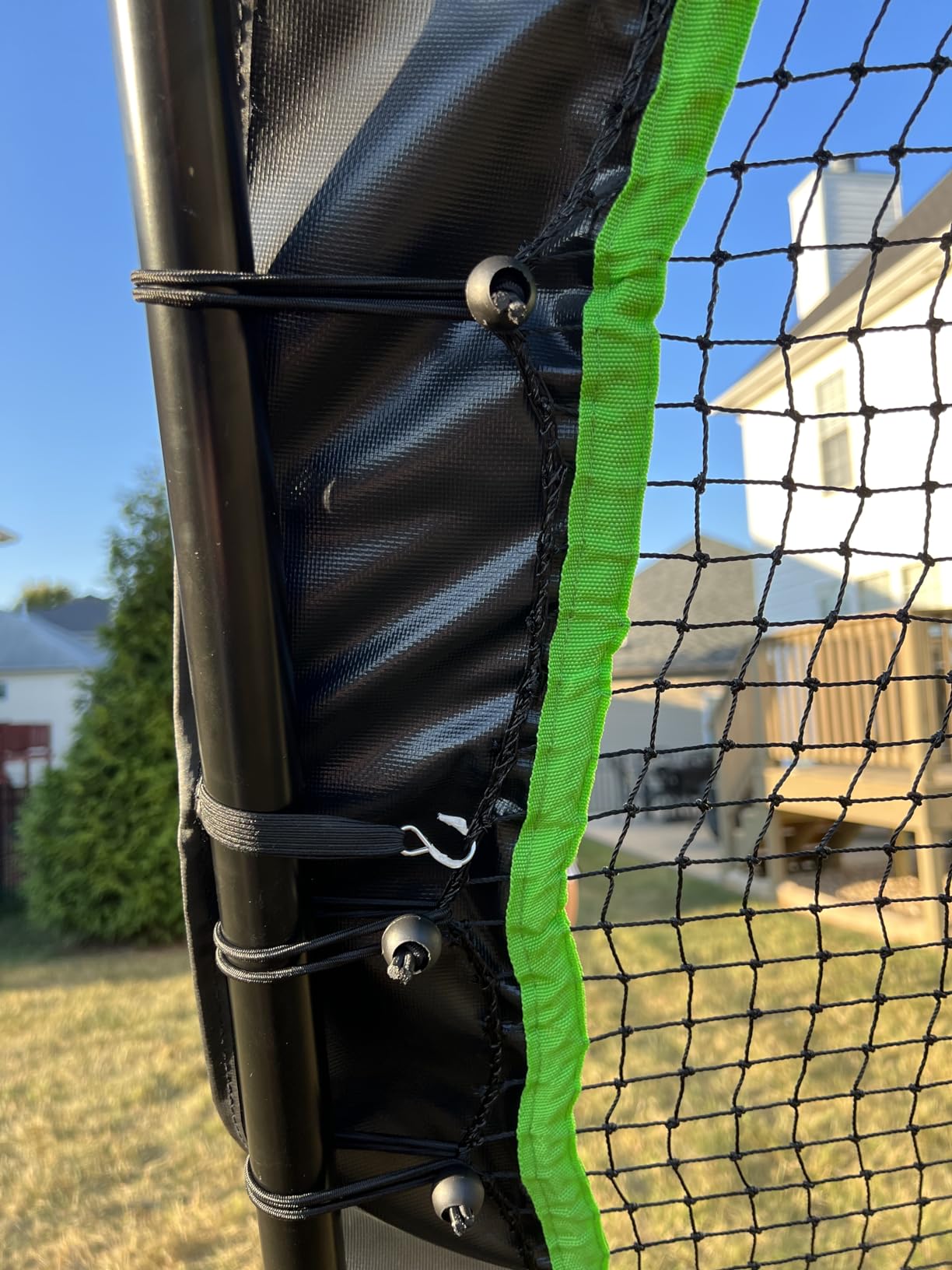
Who the ZivPlay suits
A family that wants a full-size practice face for under a couple of hundred dollars and has an adult who can set the unit up in the spot where the kids will use it. The included ground stakes matter on soft soil, where an unstaked screen pivots every time a ball lands near the base.
Multi-sport families get extra value here. The face works for volleyball drills and baseball grounders as readily as it does for lacrosse, which stretches the value across two or three children.
Where it falls short
Skip it if the practice spot changes often. Because repositioning is the only way to change angle, a kid working alone in a small yard will end up dragging a 25 pound frame rather than shooting.
The lacrosse ball included in the box has drawn mixed reactions, so treat it as a bonus rather than a reason to buy. The stakes, not the ball, are the reason to choose this box.
4. ZEALFEEL 4×7 Lacrosse Rebounder with 5 Adjustable Angles
ZEALFEEL Lacrosse Rebounder for Backyard with 5 Adjustable Angles, 4x7FT
4 ft x 7 ft rebound surface
5 adjustable angles
27.4 lb
56-ply HDPE netting on powder-coated steel
Pros
- Strongest rated option here with 80 percent five-star feedback
- five angles genuinely change the trajectory
- netting and frame survive heavy repeated use
- sets up and down in minutes
- target strap included
Cons
- Heavy for one person to carry across a yard
- netting can need re-tightening after a season
- ground stakes needed on soft soil or in wind
The ZEALFEEL sits at number one in the Lacrosse Rebounders category and carries a 4.6 rating across 254 reviews, with roughly 80 percent of that feedback at five stars. Owners describe a genuinely consistent, powerful return across all five angle settings, which is the thing most competing screens cannot claim.
The build is the differentiator. The netting is 56-ply high-strength HDPE on a powder-coated steel frame, a step up from the 30- and 45-ply designs that dominate cheaper listings, and the manufacturer claims rebound elasticity maintained to 60,000 hits. Treat that number as a claim rather than a measurement, but the durability reports from owners line up with it.
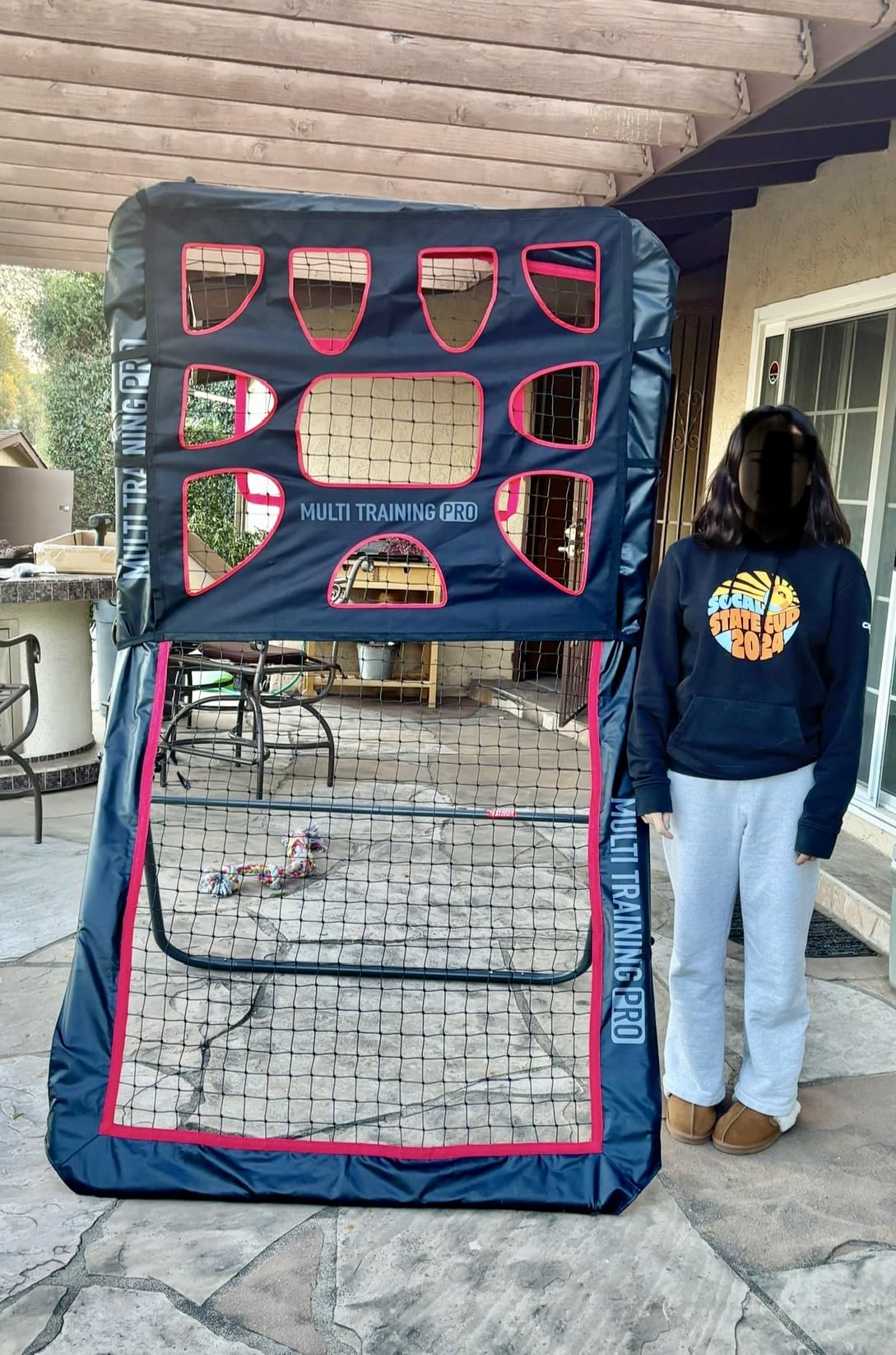
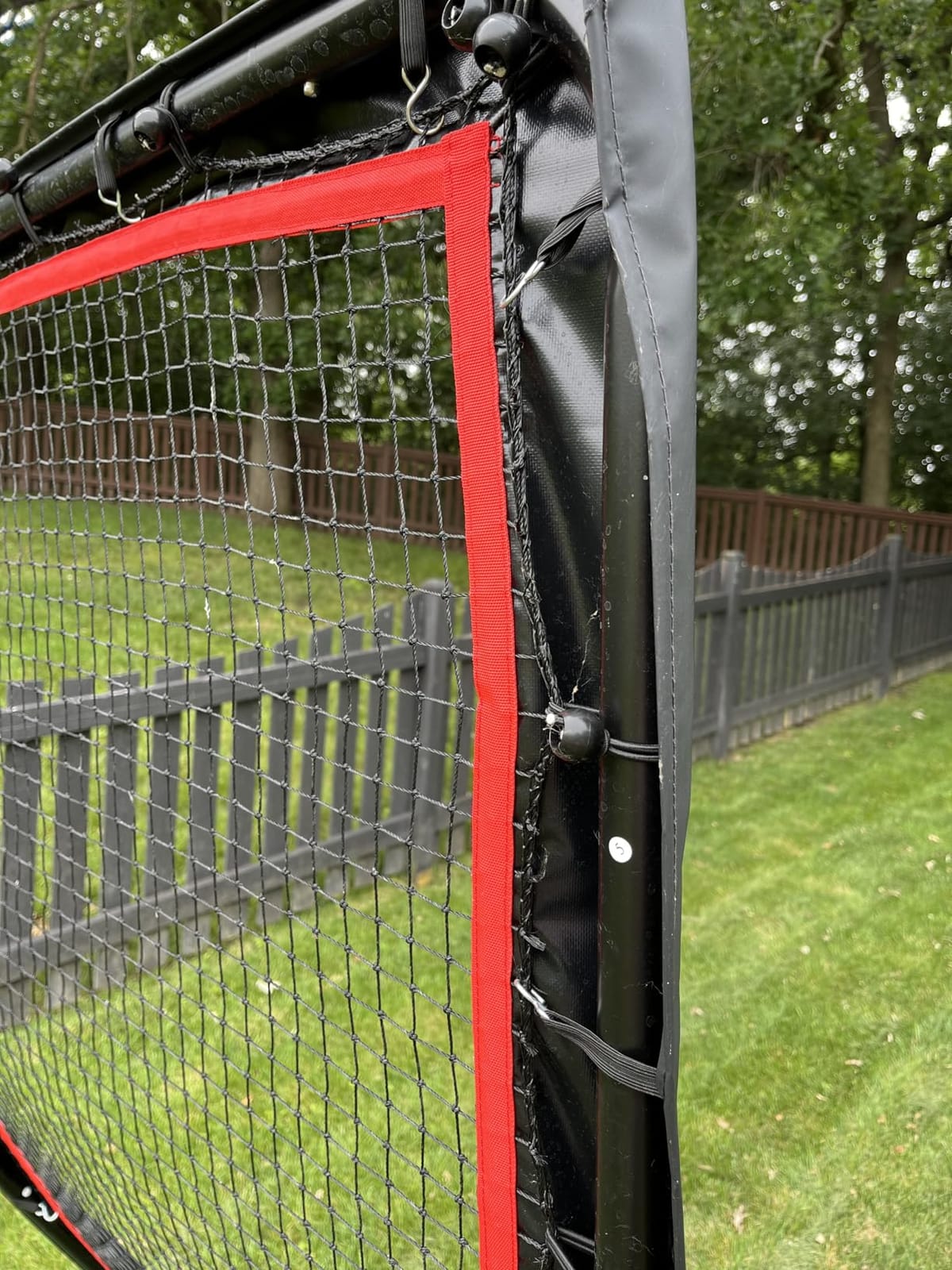
Owners consistently rate setup highly, and this unit can be reassembled in minutes after a rainstorm moves practice indoors. The box includes 36 bungee cords, four reinforced ground stakes, and a removable red target strip for accuracy drills. A more compact 4 by 6 foot version exists and adds sandbags, which is worth a look if your yard is small.
The complaints are minor and cluster around weight at 27.4 pounds and the need to stake the frame properly. On soft ground or in wind, an unanchored screen creeps, which owners say is the difference between a screen that stays put and one that ends up in the neighbor’s hedge.
At 38 by 15 by 5.5 inches in its package, this is one of the more compact-packed units in the roundup, and it sets up and comes down quickly. For a family that practices in the evening and wants the screen stowed before dinner, that round trip matters more than the weight figure does.
Who the ZEALFEEL suits
Any player who wants the most consistent return available at this size, and who has someone available to stake and carry the frame. The five angle settings cover the widest range of drills here without moving the unit around, and the target strip turns solo work into a scoring exercise.
It is also the best multi-sport buy for a household with a volleyball player in the mix, since the same five angles serve both sports without reconfiguring anything.
Where it falls short
A single child under about 12 will struggle to reposition it. Set it up where it will stay and the weight becomes irrelevant; try to make it portable and it becomes a problem immediately.
Plan on a mid-season check of net tension. Owners report the net can loosen after a season of hard hits, which is normal but worth a ten-minute repair before spring.
5. Apex Sports 4×7 Lacrosse Rebounder
Apex Sports Lacrosse Rebounder 4×7 Ft, Adjustable 5 Angle Multi-Sport Net
4 ft x 7 ft rebound surface
1.25 in alloy steel frame
45-ply netting
Five adjustable angles
Pros
- Solid 1.25 inch frame with 45-ply netting built for daily use
- five angle settings from grounders to aerial reps
- metal stakes hold the frame steady
- target strip for accuracy work
- one-year warranty
Cons
- Lower review count than the top-rated options here
- net tension loosens after repeated hits
- frame is bulky to reposition solo
The Apex Sports is the compromise pick for a household that will use a screen every day rather than occasionally. Owners rate the 1.25 inch alloy steel frame and 45-ply netting as sturdy enough for daily backyard use in all-weather conditions, and it ranks near the top of the Lacrosse Nets category.
Five adjustable angles are enough to simulate most in-game situations, from ground balls up to aerial reps, and the yellow target strip gives passing and shooting accuracy work a visual anchor. Four metal ground stakes are included, which is the part most backyard buyers forget to think about until the first windy day.
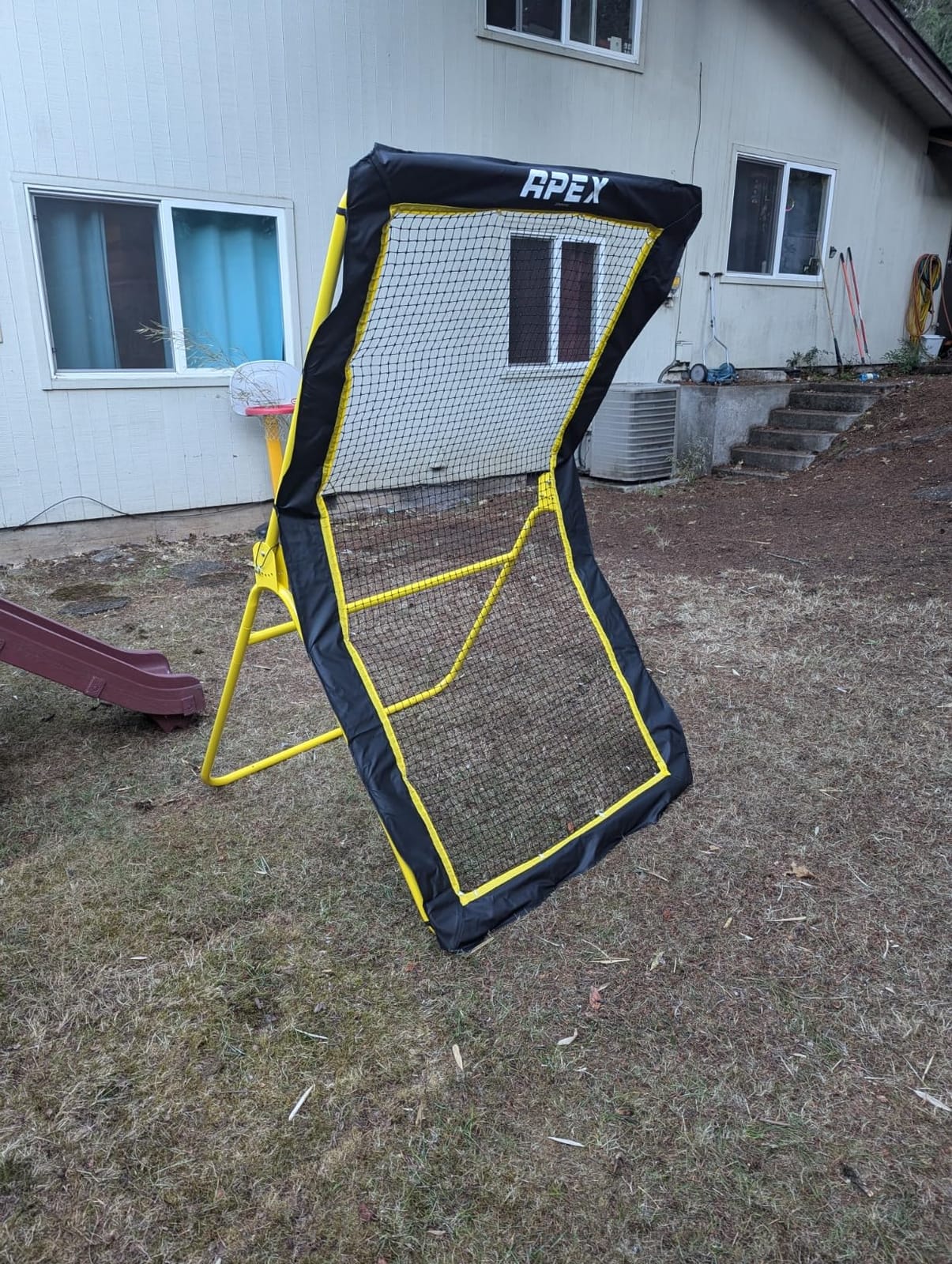
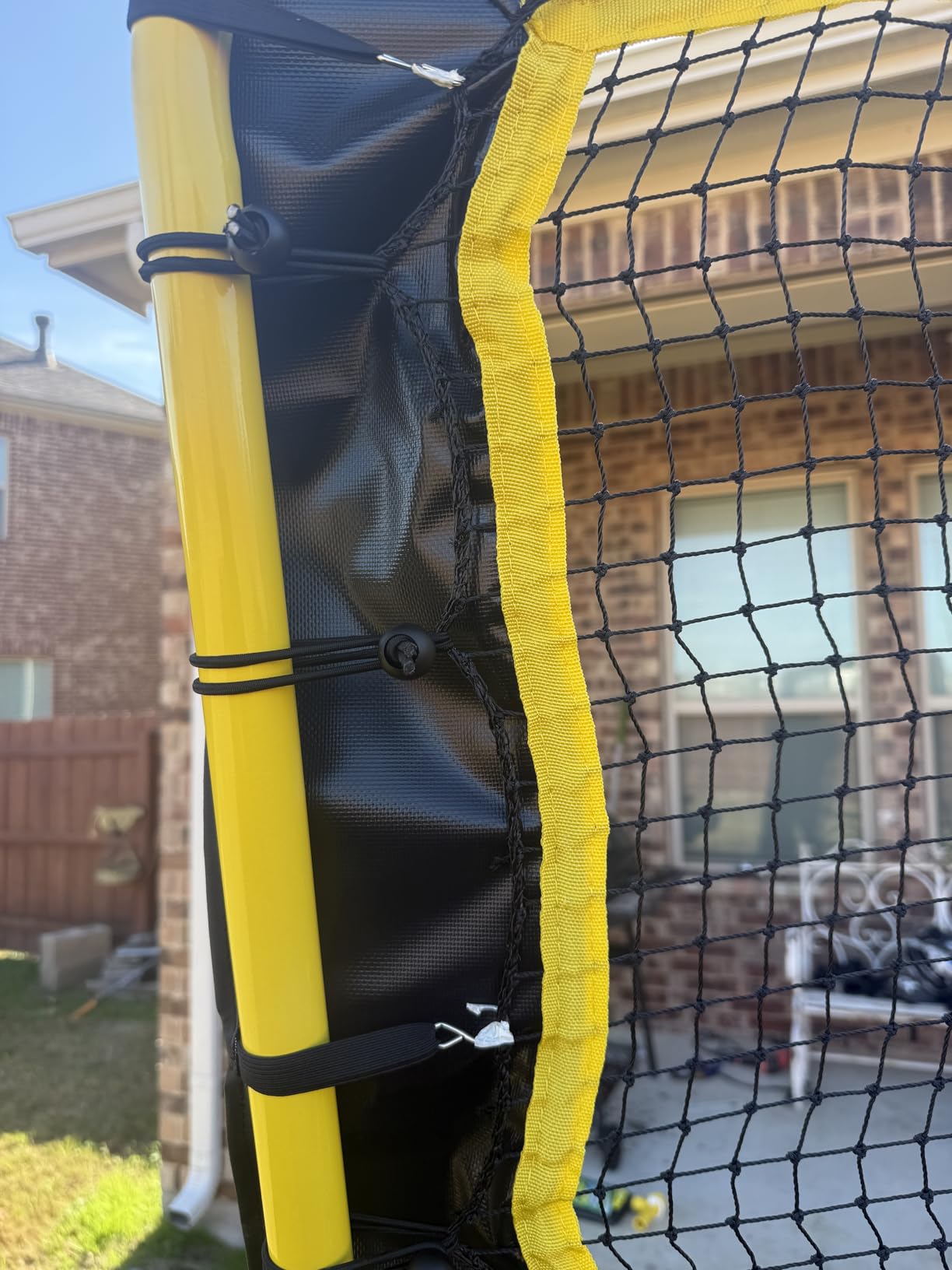
What separates it from the very cheapest designs is the frame gauge. A 1.25 inch alloy tube does not flex noticeably when a teenager hits it at full swing, and that rigidity is what keeps the rebound predictable instead of springy.
Net tension loosening after repeated hits is the recurring minor issue, and the frame is bulky enough that repositioning it solo is awkward for a younger player. Review volume is also on the low side, so long-term durability is less proven than it is on the picks above.
Everything here is oriented toward one goal: a rebound that stays predictable when the same player hits it two hundred times in a week. That is a narrower promise than some listings in this category imply, and it is the one that decides whether a screen is still in use in September.
Who the Apex Sports suits
A player who practices daily and wants a screen that survives that schedule without a premium price. The stakes plus the stiff frame mean it stays planted through hard sessions, which matters more than most spec sheets suggest.
It is also a reasonable choice for a multi-sport household covering lacrosse, baseball, volleyball, and soccer, since the same five angles handle all of them.
Where it falls short
It is not a lightweight option. If your practice spot is not fixed, or if a single younger child needs to move it, you will notice the bulk every time.
Because the warranty is one year and the review base is smaller, buy it expecting a mid-life net re-tighten rather than a unit that needs nothing for a decade.
6. Happy Jump 7×4 Lacrosse Rebounder with Carry Bag
Happy Jump 7×4 FT Lacrosse Rebounder Net, 5 Angles Portable Quick Setup
7 ft x 4 ft rebound surface
5 adjustable angles
25.4 lb
45-ply HDPE net on coated steel
Pros
- Full 7x4 ft face at a low entry point
- quick simple assembly and fast disassembly
- ground stakes keep it planted on grass
- rubber pads cut noise and protect indoor surfaces
- works for youth through adults
Cons
- Ball returns low rather than at a playable height
- fitting the elastic cords is tedious
- does not fold so it must fully disassemble to store
- some reports of netting ripping on arrival
This screen exists for the household that wants a full-size face without a premium spend, and it does the basics competently. The 7 by 4 foot surface, five angles, and 45-ply HDPE netting on a rust-resistant coated steel frame cover the standard list of backyard drills, and owners report it does improve hand-eye work for young players.
Setup is genuinely quick, and disassembly is faster, which is the trait that matters most for a screen stored in a garage. The included protective rubber pads are the feature nobody expects to matter and then relies on daily, because they let the same unit run indoors without hammering a hardwood floor.
The return height is the real limitation. Several owners note the ball comes back low rather than at a more playable height, which makes it better for hand-eye work and short passing reps than for developing proper shooting form. It is also shorter and less game-like than a true wall or a full-height board, so treat it as a training aid rather than a substitute for field reps.
Fitting the elastic cords is described as a chore by owners, and storage is the biggest practical gripe, because the unit fully disassembles rather than folding, meaning it lives in pieces between sessions. A small number of owners also report netting ripping out of the box.
Who the Happy Jump suits
Younger players building hand-eye coordination, and any household that wants one screen for several kids across different ages. The carry bag and fast disassembly make it the easiest unit here to move between a garage, a driveway, and a summer league field.
If your practice happens indoors more than outdoors, the rubber pads put this near the top of the list despite its low rating among the mid-tier units.
Where it falls short
Not the choice for a shooter working on release points, because a low return reinforces a crouching habit. It also cannot be stored assembled, so it needs a dedicated spot rather than a corner you can lean it against.
Allow extra time for the first build. The elastic cords resist more than most people expect.
7. ZVFOTN 4×7 Lacrosse Rebounder with Target Stripe
Lacrosse Rebounder net for Backyard
4 ft x 7 ft rebound surface
Five adjustable angles
Reinforced steel frame
Two-year manufacturer warranty
Pros
- Highest average rating in the roundup with 91 percent five-star feedback
- frame stays put after repeated hard hits
- some owners report a 12-year-old can build it alone
- target stripe supports accuracy work
- packs into the travel bag
Cons
- Small review base so long-term durability is less proven
- angle adjustment takes trial and error
- first build still takes a while
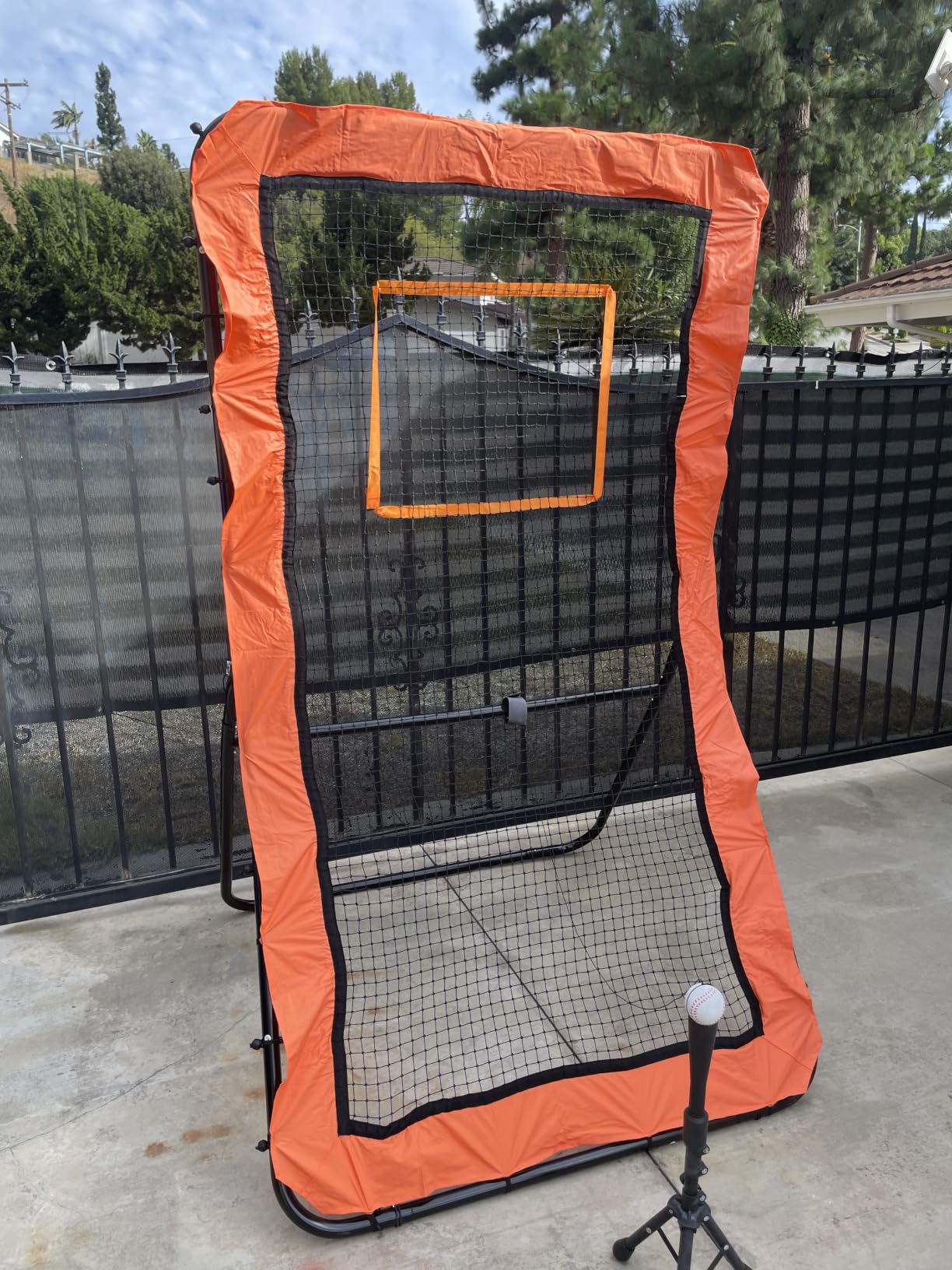
This is the newest listing in the group and it has the best sentiment attached to it, at 4.9 stars with 91 percent of feedback at five stars across 45 reviews. Owners call it sturdy, easy to pack away, and genuinely good for multi-sport backyard drills, and the target stripe is singled out for accuracy work.
What stands out for a family is that some owners report a 12-year-old assembling it without help. That single detail matters more than any spec line, because a screen a child can set up alone gets used by that child. The reinforced steel frame and high-density polyethylene netting are described as staying tight outdoors rather than sagging.
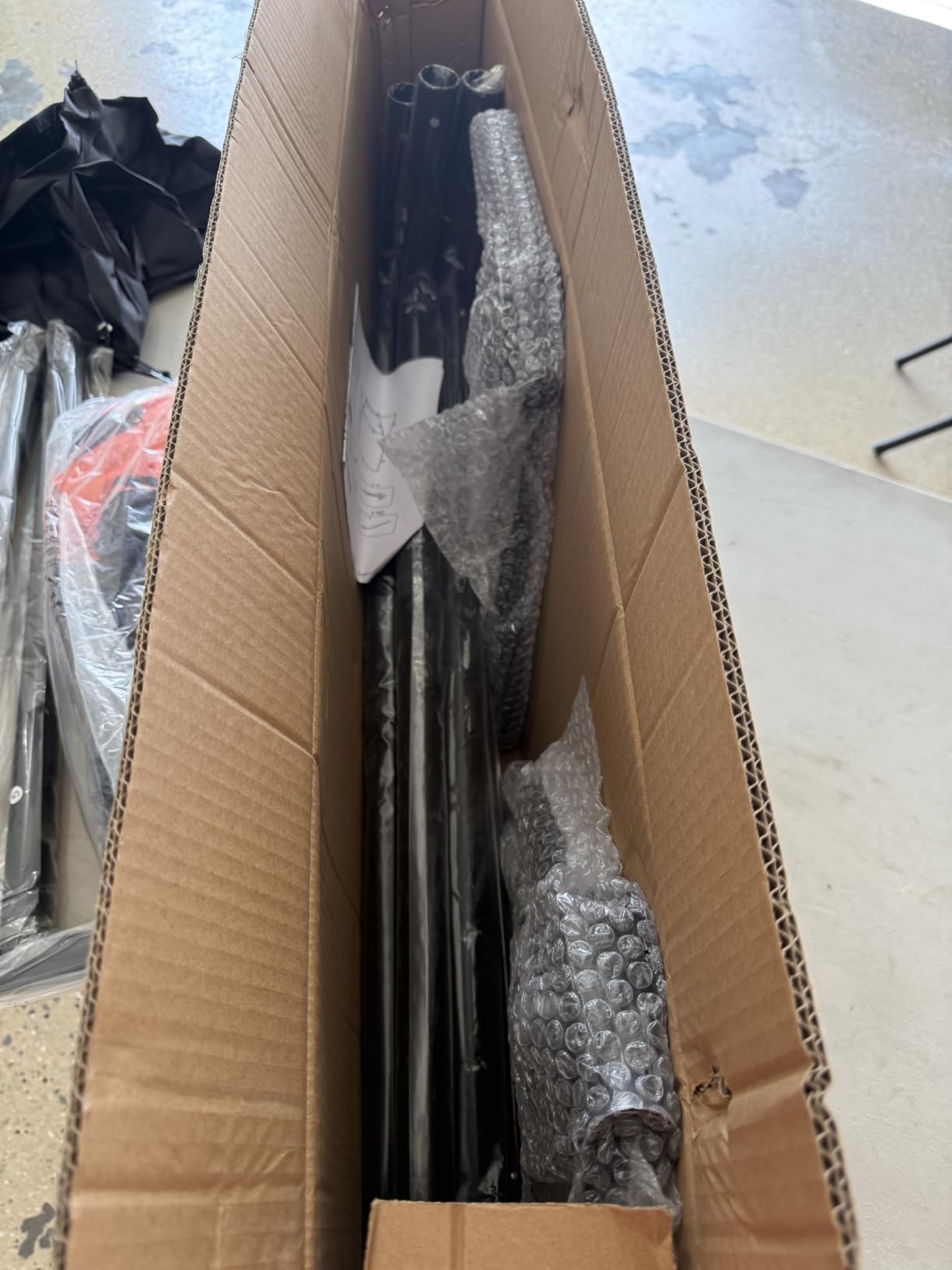
Ground stakes and anti-wind stabilisers come in the box, and the two-year manufacturer warranty is the longest coverage here among the mesh designs. This unit sits at number one in the Lacrosse Nets category.
The 4 by 7 face sits between the compact trainer and the full-size screens, which makes it the size most families wish they had started with. It does real work for a single player who is past beginner stage and not yet shooting with full power, and it stays compact enough to walk around behind while shooting.
Who the ZVFOTN suits
A household with one child who needs to handle setup alone, or a family that wants to travel to a field or park on weekends. The pack-down and reassembly is straightforward, and the target stripe gives solo practice a goal beyond simply returning the ball.
Anyone whose yard is exposed to wind benefits from the included stabilisers, which address the top practical complaint about cheaper screens.
Where it falls short
The small review base is the honest caveat. A 4.9 rating across 45 reviews tells you early owners are happy, not that the frame will still be straight after five seasons. Treat durability as unproven rather than verified.
Angle adjustment takes a little trial and error to dial in, so expect to spend time on the first session finding the settings that suit your player.
8. VEVOR Folding 5×7 Lacrosse Rebounder
VEVOR Lacrosse Rebounder, Heavy-Duty 5 x 7 ft Volleyball Bounce Back Net for Backyard, Pitchback Throwback Baseball Softball Return Training Screen, Adjustable Rebound Angles Includes Target Net
5 ft x 7 ft net surface
1.25 in thickened iron tube
32.2 lb
Five adjustable angles
Pros
- Thickened iron frame stands upright through intense hitting
- folding design stores compactly
- five angles support varied throwing and shooting
- knotless PE netting resists wind and water
- adjustable target rope
Cons
- Heaviest unit here at about 32 lb so two people are needed to move it
- smallest review base at 42 reviews
- 30-strand netting is thinner than the 45- and 56-ply picks
- return speed and feel are basic
The VEVOR’s selling point is its profile. The folding design collapses flat enough to store against a garage wall or in a shed, and at 5 by 7 feet it still offers a full-size practice face. The 1.25 inch thickened iron tube frame stands upright through intense hitting drills, which is where lighter frames start to bow.
Buyers describe it as meeting basic rebound training needs, with the knotless PE netting resisting wind and water well enough for year-round outdoor use. The adjustable target rope lets a solo player set a custom aiming zone, and five angle settings cover varied throwing and shooting techniques.
The compromises are real. The 30-strand PE netting is thinner than the 45- and 56-ply materials used by the better-rated picks, and the return speed and feel are basic compared with wall-style rebounders, meaning shots come off it with less life.
At roughly 32 pounds this is the heaviest unit in the roundup, so two people are needed to move it. The review base is also the smallest here, which leaves the long-term longevity claim less proven.
Who the VEVOR suits
Households where storage is the binding constraint. If the screen has to disappear between practices, folding flat matters more than any other feature on this list, and this is the clearest example of that.
It also works for multi-sport households covering lacrosse, volleyball, baseball, softball, and soccer on a single surface.
Where it falls short
Do not choose it for a shooting-focused player. The basic return gives less pace and less realistic trajectory than the mesh picks above, which flattens shooting reps.
Anyone moving it alone will be disappointed. Plan the setup location before the unit arrives.
9. Trademark Innovations 4ft Lacrosse Bounce Back Trainer
4′ Lacrosse Bounce Back Rebounder Pitch Back Ball Return Training Screen by Trademark Innovations,Black
4 ft L x 3 ft W x 3 ft H screen
12.7 lb
2.3-ply PE net on steel frame
Folds for storage
Pros
- Lowest entry point in the roundup
- light at roughly 12.7 lb so one adult or teen can move it
- folds easily between practices
- four ground stakes included
- consistent rebound for passing and reaction work
Cons
- Instructions are poorly written and parts are hard to identify
- some units arrive with missing washers or bent poles
- occasional unbonded seams or holes in the net
- small face suits beginners more than experienced players
This is the trainer to buy for a child who is just starting, and the reason is weight. At about 12.7 pounds it is by far the lightest unit here, light enough that one adult or teenager can carry it across a yard or into a garage without planning ahead. It folds for storage and comes with four ground stakes.
For passing, catching, and reaction work on a small face it does its job, and owners consistently rate it well for the money. It is also the least expensive way to find out whether a rebounder is a drill your child actually enjoys before committing yard space to a larger screen.
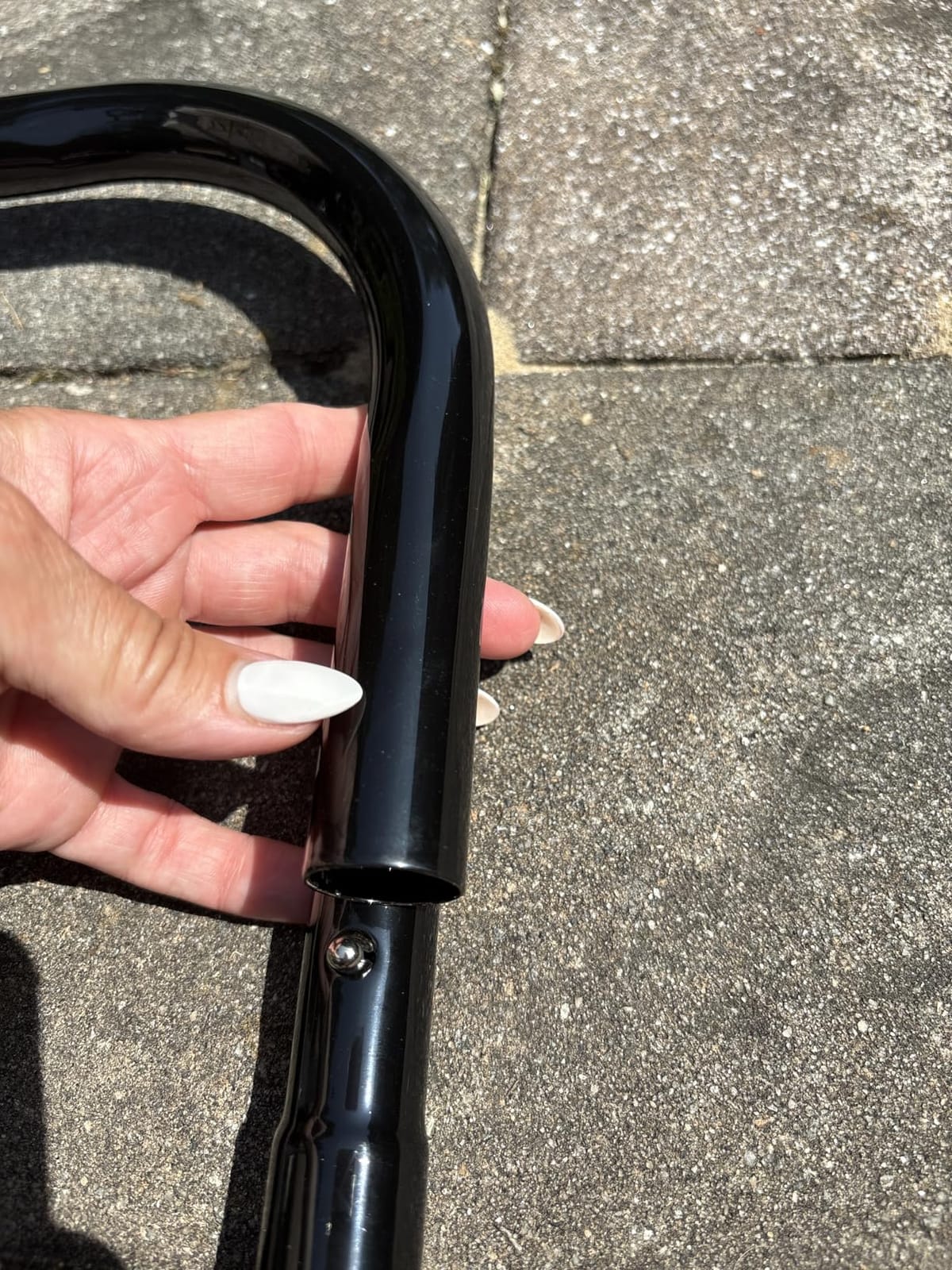
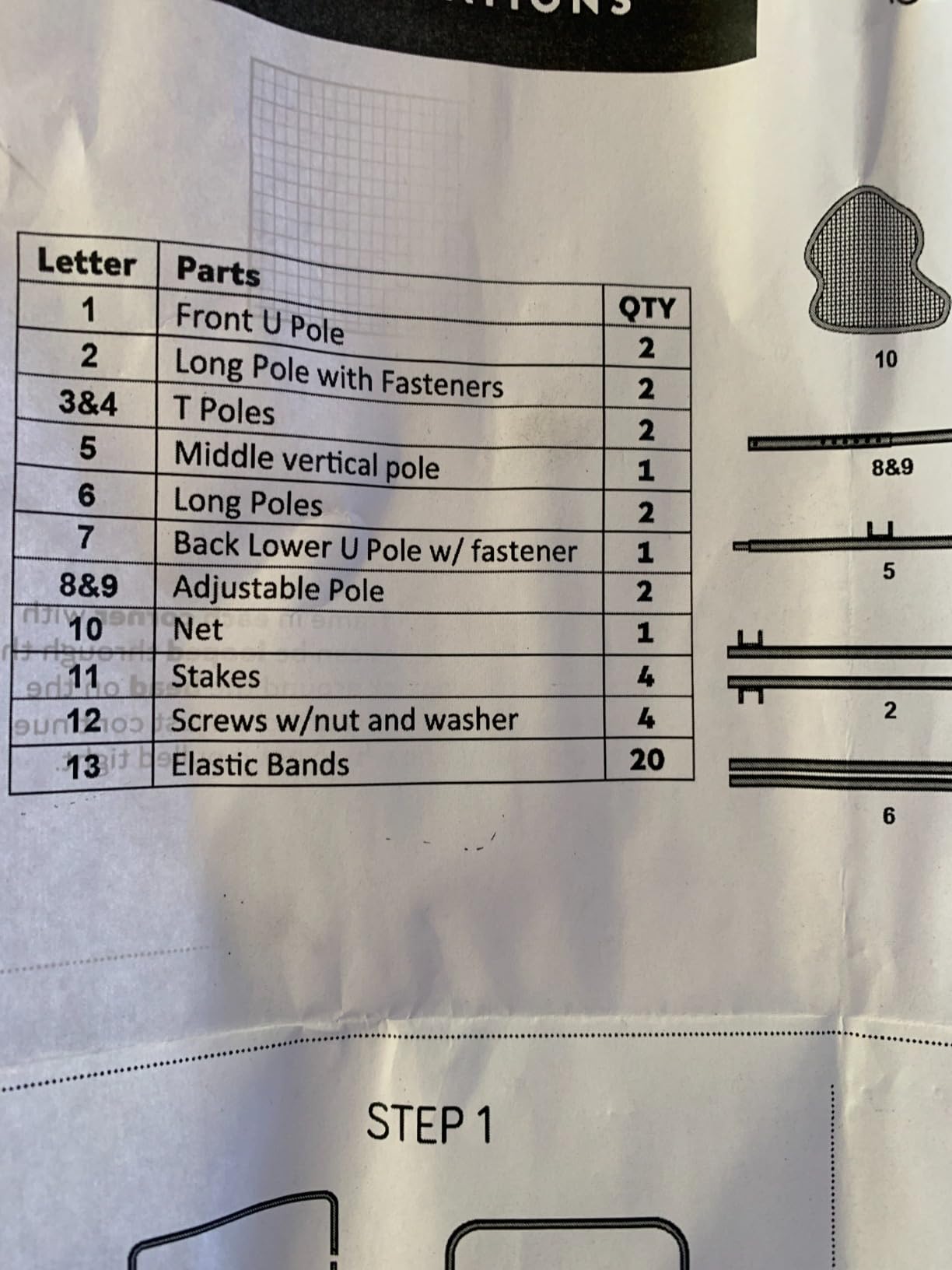
The recurring negative theme is assembly and quality control. Instructions are poorly written and parts are hard to identify, and some units arrive with missing washers or bent poles. Owners also report occasional unbonded seams or holes in the net, plus slow customer service when a defect needs resolving.
The fold is the practical headline here. This is one of the few units in the roundup a teenager can carry, fold, and reassemble unaided, and for a first rebounder in a household that autonomy decides whether it gets used at all.
Who the Trademark Innovations suits
Young players building passing and catching fundamentals, and any household with very little yard space. At 4 by 3 feet this is the smallest screen in the roundup, which makes it the only option that genuinely fits beside a fence in a tight suburban space.
It also works as a second unit alongside a bigger screen, giving a beginner something to work on while an older sibling uses the full-size surface.
Where it falls short
Experienced players will outgrow the face quickly. A 4 by 3 foot screen gives a small target, so misses go past it more often and the drill becomes retrieval rather than practice.
Inspect the package on arrival. Check for missing hardware and bent poles before you start, because sorting parts with poor instructions is the most common frustration owners report.
10. Winthai 5×4 Multi-Sport Rebounder Net
5x4FT Volleyball Baseball Rebounder Net, Softball Rebounder Pitchback Net Quick Adjustments, Quick Adjustments Lacrosse Bounce Back Practice Equipment, Ideal for Outdoor Indoor and Backyard Training
5 ft x 4 ft rebound surface
Sturdy steel frame
Tool-free setup in about 10 minutes
Folds flat
Pros
- Very high 4.6 rating across roughly 750 reviews
- quick tool-free setup
- folds flat for compact storage
- angle adjustments vary the return well
- stakes keep it from shifting when hit hard
- multi-sport across five sports
Cons
- Angle-change buttons are stiff and hard to push for kids
- stretching the elastic cords during assembly takes real effort
- smaller sizes are tight for sports other than softball and baseball
- volleyball return angle needs elevation to be game-like
This is the best-reviewed product in the entire roundup, at 4.6 stars across roughly 750 reviews, and it ranks first in the baseball and softball rebounders category. What that volume of feedback buys is confidence in the boring parts: the steel frame, the net elasticity, and the setup.
Owners cite tool-free assembly in about ten minutes, folding flat for storage, and angle adjustments that vary the return well enough to keep drills interesting. The stakes matter more than they sound, because they stop the frame from flopping around when hit hard, and that stability is what makes the rebound repeatable.
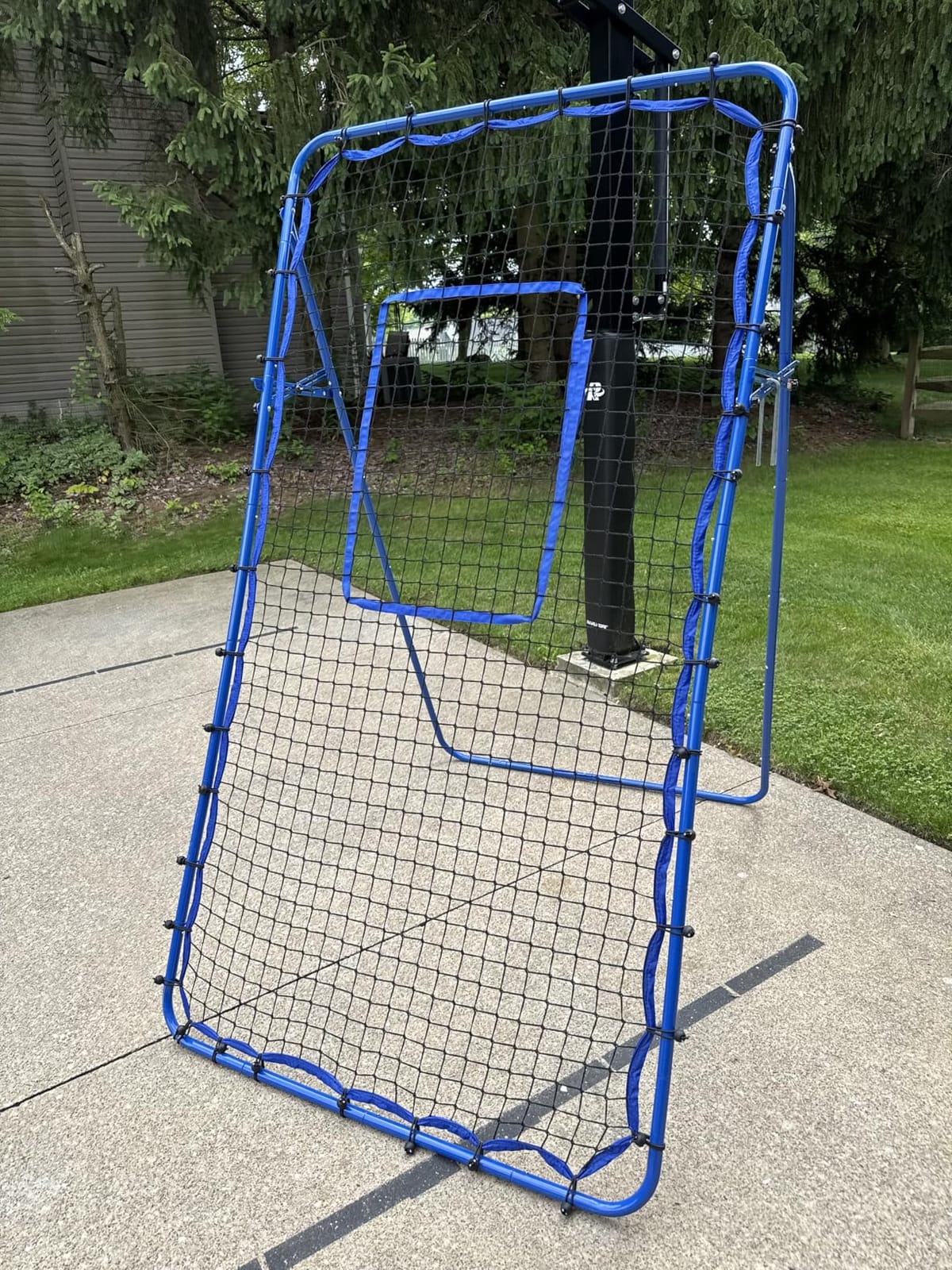
The complaints are ergonomic. The angle-change buttons are stiff and hard to push, especially for kids, and stretching the elastic cords during assembly takes real effort on the first build. On smaller sizes like this 5 by 4 foot model, the surface is tight for sports other than softball and baseball.
For volleyball work, the return angle is not game-like without extra elevation, so lacrosse and baseball drills are where this unit performs best.
Sizes run from 4 by 4 up to 7 by 4 across the range, so the same basic design is available in a footprint that fits a tight yard. The 5 by 4 unit here is the middle of that range and the easiest to move between a garage and a driveway, with a one-year warranty behind it.
Who the Winthai suits
A multi-sport family that wants one screen covering lacrosse, baseball, softball, volleyball, and soccer. It handles the softball and baseball drills especially well, and the fold-flat profile is a genuine advantage for anyone short on storage.
Anyone who wants the highest-rated option backed by the largest body of real owner feedback in this category, and who will handle the first assembly themselves rather than leaving it to a child.
Where it falls short
Volleyball and net-sport drills need the unit raised or positioned carefully to return at a realistic angle. Lacrosse shooters should note the same limitation when working on release points.
The stiff buttons are a genuine annoyance for younger players. If your child will be adjusting angles on their own, look at a design with simpler settings first.
How to Choose a Lacrosse Rebounder for Your Backyard
Free-standing mesh, folding, wall-mounted, or hardwall
Free-standing mesh is the best type for a backyard, because it gives you the largest surface per unit of yard space and moves between drills without tools. Folding units trade a little frame rigidity for storage, which matters if your garage is already full. Wall-mounted options are worth considering only for very tight yards or a garage door, where they stop the frame shifting in wind. Hardwall systems, the four-figure tier, are built for full-field accuracy work and are rarely the right backyard purchase.
Matching the net to your actual yard space
Measure the clear run you have behind the thrower, not just the width of the screen. A 4 by 6 foot surface works with about 15 feet of run, an 8 by 6 foot screen wants considerably more, and anything above 8 feet tall starts to send returns over an average back fence unless you angle it carefully. Check the footprint in every angle position, because a unit leaning back at 45 degrees needs clear space behind it that most buyers forget to measure.
One extra yard tip from our guides to backyard chicken coops and backyard misting systems applies here: mark the practice footprint with cones or a chalk line before you buy, then leave a walking lane around it. A screen you have to shuffle sideways every session is a screen that gets abandoned.
Dampened bounce and the neighbour problem
Dampened bounce means the netting absorbs pace so the ball drops instead of rocketing away. It is the single most backyard-specific feature there is, because it is what keeps the ball out of your neighbour’s yard and off the street. The trade-off is real: a dampened return is more realistic, like a pass from a teammate, but it gives you less pace, which matters when the whole point of the session is shooting mechanics. The practical fix is to point the target zone away from the fence and use the steeper angles for catching work and the flatter ones for shooting.
Frame material, netting ply, and who has to move it
Frame gauge is the durability number. A 1.25 inch powder-coated steel frame survives hard hitting; thinner tubing flexes and deadens the rebound. Netting ply tells you the same story: 56-ply HDPE outlasts 45-ply, which outlasts the 30-strand netting used on the cheapest designs. Weight matters more than buyers expect, since most units fall between 25 and 32 pounds and only the compact trainer can be carried comfortably by one person.
Netting wears before the frame does, so check whether replacement nets are sold separately before you buy. A unit with no replacement net is effectively a one-season purchase.
Stopping it from shifting or tipping in wind
Use the included ground stakes on soft soil, because that is where frames pivot and walk across a yard. On hard ground or decking, add a sandbag to each rear foot; the compact 4 by 6 foot version in this roundup includes sandbags for exactly this reason. Position the screen so the throwing side faces away from the prevailing wind, and never leave an unanchored unit standing in a forecast gust.
Who should skip a rebounder entirely
Beginners under roughly age 11 get more out of wall ball against a fence or a backboard, combined with a bag of balls and a separate backstop net. That is the most common piece of advice in r/lacrosse, and it is correct. Players with a field and a willing training partner do not need one either. A rebounder is a tool for solo repetition, and without solo repetition it is an expensive piece of yard furniture. If your household is planning a wider outdoor training area rather than a single practice station, our guides to backyard chicken coops and pond liners cover the same footprint and weather-exposure questions.
Frequently Asked Questions
What type of lacrosse rebounder is best?
A free-standing mesh screen on a steel frame is the best type for backyard use. It gives the largest return surface for the yard space it occupies and moves between drills without tools. Folding units add portability, wall-mounted options suit very tight yards or garages, and hardwall systems built for full-field accuracy work rarely earn their cost at home.
What is the best rebounder for home use?
The ACELETIQS 5×7 is our best rebounder for home use because a 5 by 7 foot face catches off-target shots and its four reclining positions cover both passing and shooting drills. The Winthai 5×4 is the better budget-backed option, folding flat and holding a 4.6 rating across roughly 750 reviews.
How do I know which rebounder to buy?
Check six things in order: dampened bounce for keeping the ball in your yard, net size against the clear run behind your thrower, the number of adjustable rebound angles, frame gauge and netting ply, total weight and whether one person can move it, and whether replacement netting is sold separately.
Is it better to get a 40 inch or 48 inch rebounder?
A 40 inch screen suits a child or a tight yard and forces short, simple reps. A 48 inch screen gives a larger target, holds a more realistic return angle, and is easier to develop shooting form against as a player grows. For a backyard with any depth, the wider face is the better long-term choice.
What are the downsides of rebounding?
The main downsides are a flat return compared with a live defender, the yard space the unit permanently occupies, the weight involved in moving it, wear on the netting over time, and the fact that the ball still escapes the yard without a separate backstop net. It also costs real money for a tool that only helps with solo repetition.
Can you use a volleyball rebounder for lacrosse?
A quality multi-sport screen handles lacrosse fine, and several in this roundup are rated for both sports. The failure mode is cheap units with soft netting: a lacrosse ball is hard and heavy enough to deaden the return, which is why mesh ply and frame gauge matter more than the sport label on the box.
Which Lacrosse Rebounder Should You Buy in 2026?
For most families, the ACELETIQS 5×7 is the right answer to the best lacrosse rebounders for backyard practice question: a full-size face, four reclining positions, and the largest body of owner feedback in the category. Pick the ZEALFEEL 4×7 instead if you want the most consistent return and the thickest netting here. Choose the Winthai 5×4 if you want one screen for several sports and flat storage between sessions.
Do not spend four figures on a backyard. The pro hardwall tier exists for full-field accuracy work, and a mid-tier mesh screen covers passing, catching, one-timers, and shooting reps for a fraction of the cost. If your yard is tight, the Trademark Innovations trainer is the honest starting point, and if your child is under about 11, start with wall ball and a bag of balls instead.
Whichever you choose, buy a short backstop net alongside it and stake the screen down on the first windy day. Both are cheaper than the arguments that follow.