
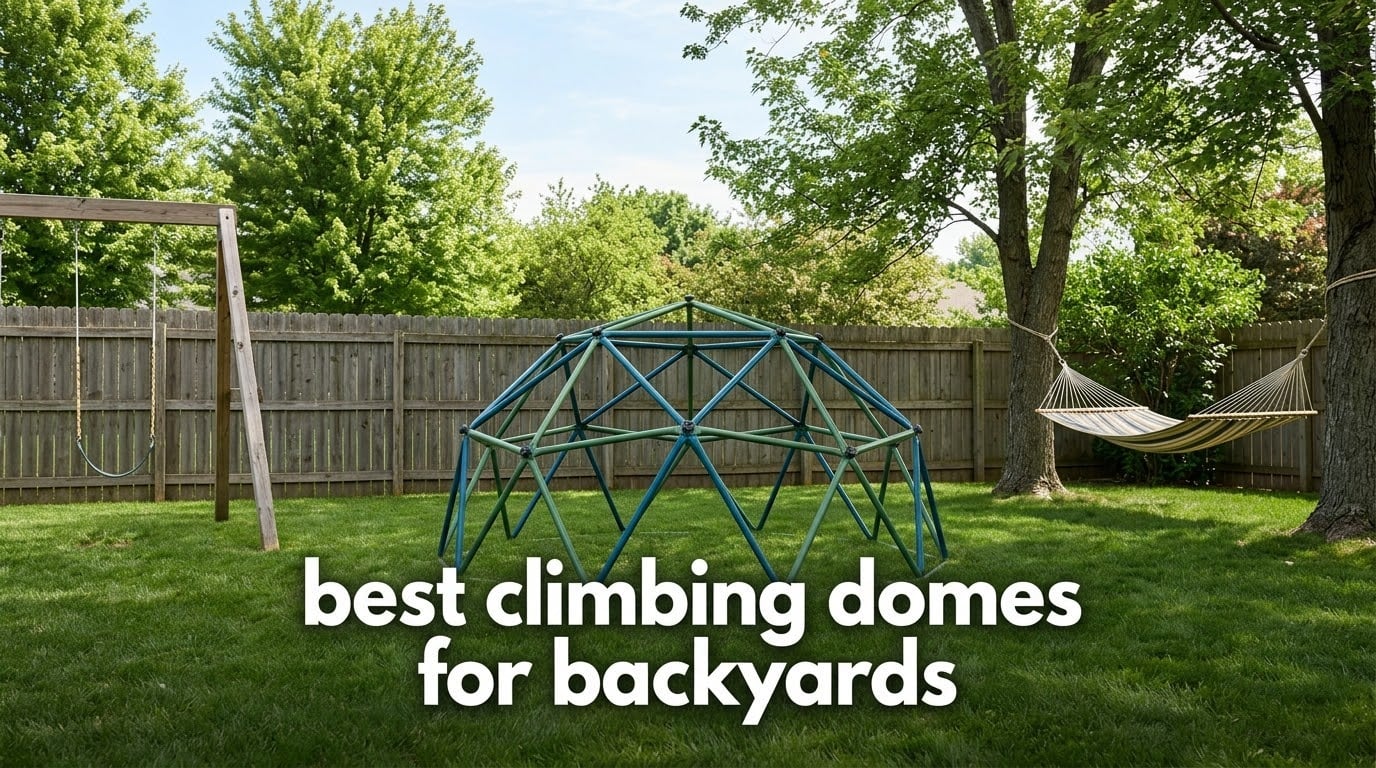
A climbing dome is a freestanding, hemispherical metal jungle gym whose intersecting steel bars form a climbable lattice that children scale from every side, built from powder-coated or galvanized steel and rated for a few hundred to several thousand pounds. If you are comparing the best climbing domes for backyards, the difference between a good one and a disappointing one is almost never the shape. It is the steel gauge, the total weight rating, and whether two adults can finish the build in an afternoon.
We spent weeks working through the review history on eight domes families compare most often, cross-checking manufacturer ratings against owner complaints, and working out the yard math that nobody in this category publishes. What we found is a category split into two groups: heavy galvanized frames that adults genuinely climb, and lighter marketplace domes that are fine for a four-year-old and become frustrating by age eight.
A dome is also one of the few backyard toys that does real work. Kids grip, pull, cross, plan a route and take turns, with no batteries, no charging and no noise. The same reasons parents chase climbing walls for their goat enrichment setups apply here, scaled down and made safer. Our top pick has been the most heavily reviewed dome in the category for years, and it stayed in front after we read the one-star reviews as closely as the five-star ones.
Table of Contents
Top 3 Picks for Best Backyard Climbing Domes in 2026

Lifetime Geometric Dome…
- 5 ft H x 10 ft W footprint
- 600 lb total capacity
- Ages 24 months to 10 years
- Powder-coated steel with HDPE grips

GIKPAL 10 ft Hammock Dome
- 1000 lb capacity
- 65 hot-dip galvanized pipes
- Detachable mat and swing
- 10 ft diameter by 5 ft high

Zupapa 10FT Dome Climber
- 1000 lb capacity
- Hot-dip galvanized 60+ micron zinc
- 1.2 mm steel tubing
- Integrated basketball hoop
Our editor’s choice is the Lifetime Geometric Dome Climber, the widest-reviewed dome in the group with 5,391 ratings at 4.8 stars. The GIKPAL earns best value because it pairs a 1000 lb galvanized frame with a detachable mat that converts from ground pad to hammock. The Zupapa goes to the slot for anyone who wants a parent or teenager to climb it, because its hot-dip galvanized poles have held adults well over 300 lb in owner reports.
All 8 Climbing Domes Compared Side by Side in 2026
| Product | Specs | Action |
|---|---|---|
| Lifetime Geometric Dome Climber |
|
Check Latest Price |
| Zupapa 10FT Climbing Dome |
|
Check Latest Price |
 EASY OUTDOOR Space Dome GD-810 EASY OUTDOOR Space Dome GD-810 |
|
Check Latest Price |
 VEVOR 10FT Geometric Dome Climber VEVOR 10FT Geometric Dome Climber |
|
Check Latest Price |
| GIKPAL 10ft Hammock Swing Dome |
|
Check Latest Price |
 Hapfan Dome with Saucer Swing Hapfan Dome with Saucer Swing |
|
Check Latest Price |
 GVDV 10 FT Dome with Hammock GVDV 10 FT Dome with Hammock |
|
Check Latest Price |
 Hapfan Dome with Cargo Net Hapfan Dome with Cargo Net |
|
Check Latest Price |
1. Lifetime Geometric Dome Climber – The One That Survives a Decade of Summers
Lifetime Geometric Dome Climber Play Center – Climbing Dome Jungle Gym
5 ft H x 10 ft W
600 lb total capacity
Ages 24 months to 10 years
Powder-coated steel, 47.26 kg
Pros
- Most reviewed dome in the category at 5391 ratings
- Sturdy enough that owners report adults climbing it
- Ten foot footprint fits several children
- Coating has held up through years of sun and snow
Cons
- Assembly runs 2-4 hours and needs two adults
- Instructions are vague at the final dome-top step
- Steel poles get very hot in full sun
The Lifetime is the dome most families meet first, and the one most of them keep. It assembles to 5 ft high and 10 ft wide, weighs 104.2 lbs, and carries a 600 lb total rating with a manufacturer recommendation of 24 months to 10 years. Six children is the listed player count, which matches what you actually see on a busy Saturday morning.
What earns it the top slot is the boring stuff. Owners describe the powder-coated frame as still tight years after the original build, and the HDPE climbing grips as the part kids actually use to get up the first two feet. Several reviewers mention it doubling as a pull-up and chin-up bar for adults, which is not a spec on the box but tells you how the frame flexes under load.
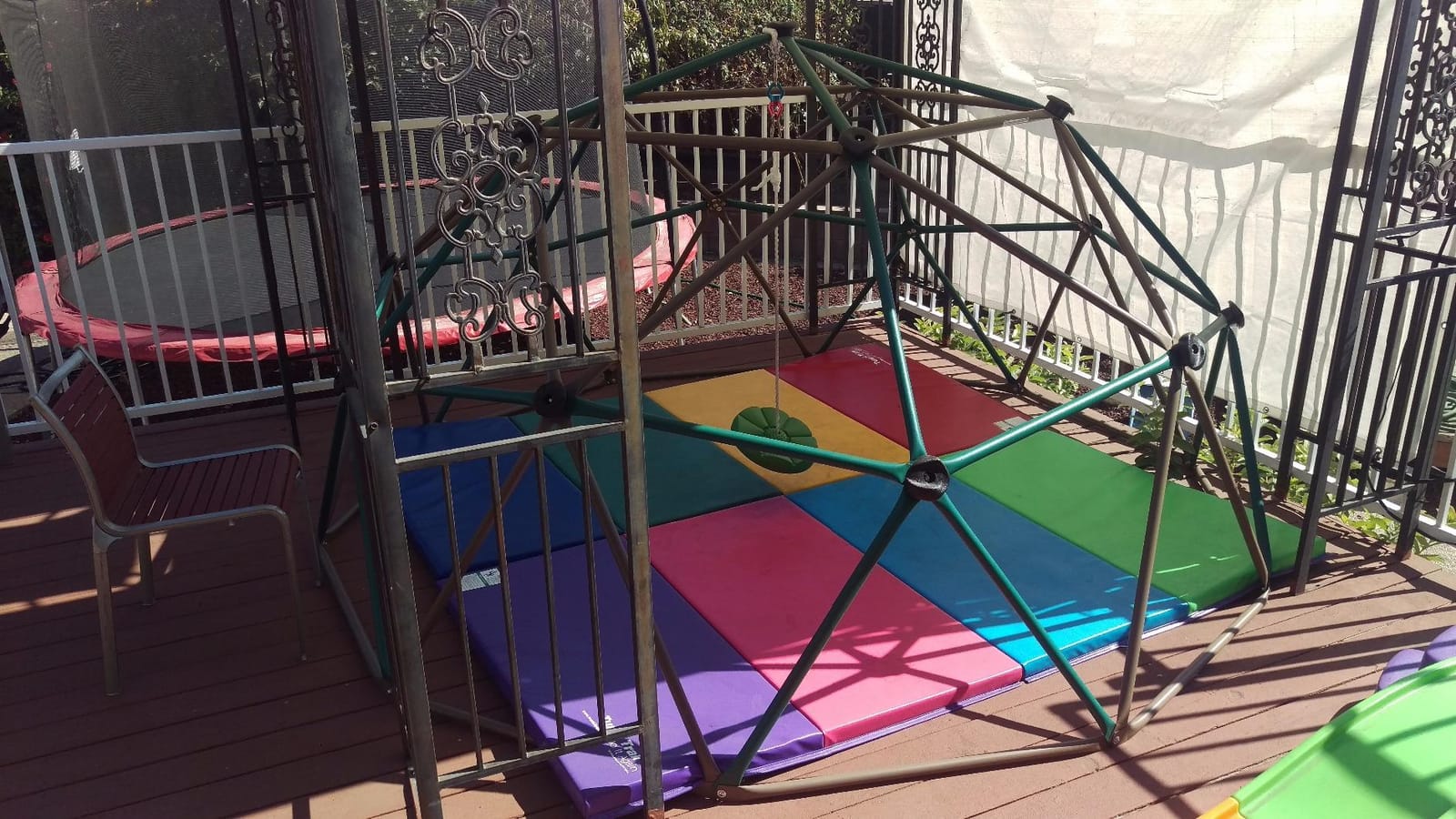
The build is the honest weakness. Reviewers uniformly budget two to four hours and recommend a drill, locking pliers and reading every direction before opening the first bag. The specific sticking point is the last dome-top section, where the order in which you stack the upper joints determines whether the frame closes at all. A few owners also reported bolt quality problems during assembly, which is worth having a spare hardware kit on hand for.
Two summer details come up repeatedly. The bare steel poles get hot enough that kids avoid the sunward side at midday, and the pole ends are not rubber-dipped, so owners in wet climates touch them up with a rust-inhibiting paint after the first season. Neither is a dealbreaker, but both are predictable and manageable.
Capacity is worth pausing on. At 600 lb total, that is a combined limit across everyone on the dome at once, not a per-child number, and it is the lowest total rating in this group. A parent plus two children still lands well inside it.
Who the Lifetime Geometric Dome suits
It suits families with a mixed age spread, because 24 months is one of the wider stated ranges in the category and the lattice is gentle enough at the base for a preschooler to get moving independently. It also suits anyone who wants a mature kid to keep using the dome instead of graduating off it at eight.
It suits buyers who value the review base. With 5,391 ratings, you can read years of owner reports about this exact frame, which is not true of anything newer in the category.
Who the Lifetime Geometric Dome does not suit
It does not suit small lots. A 10 ft footprint plus the 6 ft clearance zone that safety guidance calls for on all sides means you need roughly 22 ft of clear width to do this properly, and the 104.2 lb frame is genuinely awkward to shift for mowing.
It also does not suit a family expecting an adult to hang off it regularly with a second adult joining in. For that, move up to a 1000 lb galvanized frame.
2. Zupapa 10FT Climbing Dome – the Galvanized Frame Adults Actually Climb
Zupapa 10FT Climbing Dome, Outdoor Jungle Gym for Kids with Climbing Grip – Geometric Dome Climber Outdoor Playset and Easy Assembly Outdoor Play Equipment for Kids (Blue, 10FT)
10 ft cube
1000 lb capacity, 6 players
Hot-dip galvanized 60+ micron zinc
1.2 mm alloy steel
Pros
- Adults well over 300 lb reported climbing it
- Hot-dip galvanizing resists rust
- Integrated basketball hoop adds variety
- Five reinforced top beams
Cons
- Printed instructions are hard to read
- Needs 2-3 people to hold bar ends
- Bolts must stay loose until the frame closes
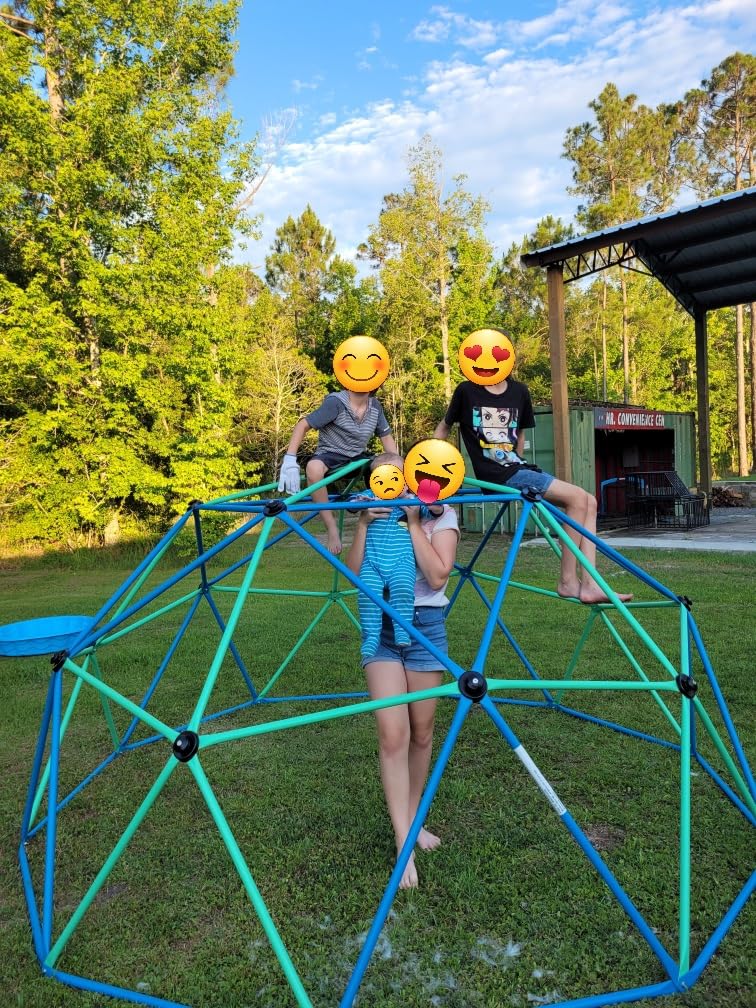
The Zupapa is a genuine cube rather than a low hemisphere, standing 10 ft on a side, and that extra height is the whole point of it. Poles are hot-dip galvanized at 450C with a zinc layer of 60 microns or more, which is a measurable step above a painted frame, and the 1.2 mm tubing is among the heavier-gauge steel in this group, and the 60 micron zinc layer is stated as a minimum rather than a marketing word.
With a 1000 lb total rating across five reinforced top beams, this is the dome that shows up in conversations about whether a parent can climb it. Multiple owners report adults well over 300 lb on the frame without flex, and one notes the whole thing can be rotated for mowing once it is built.
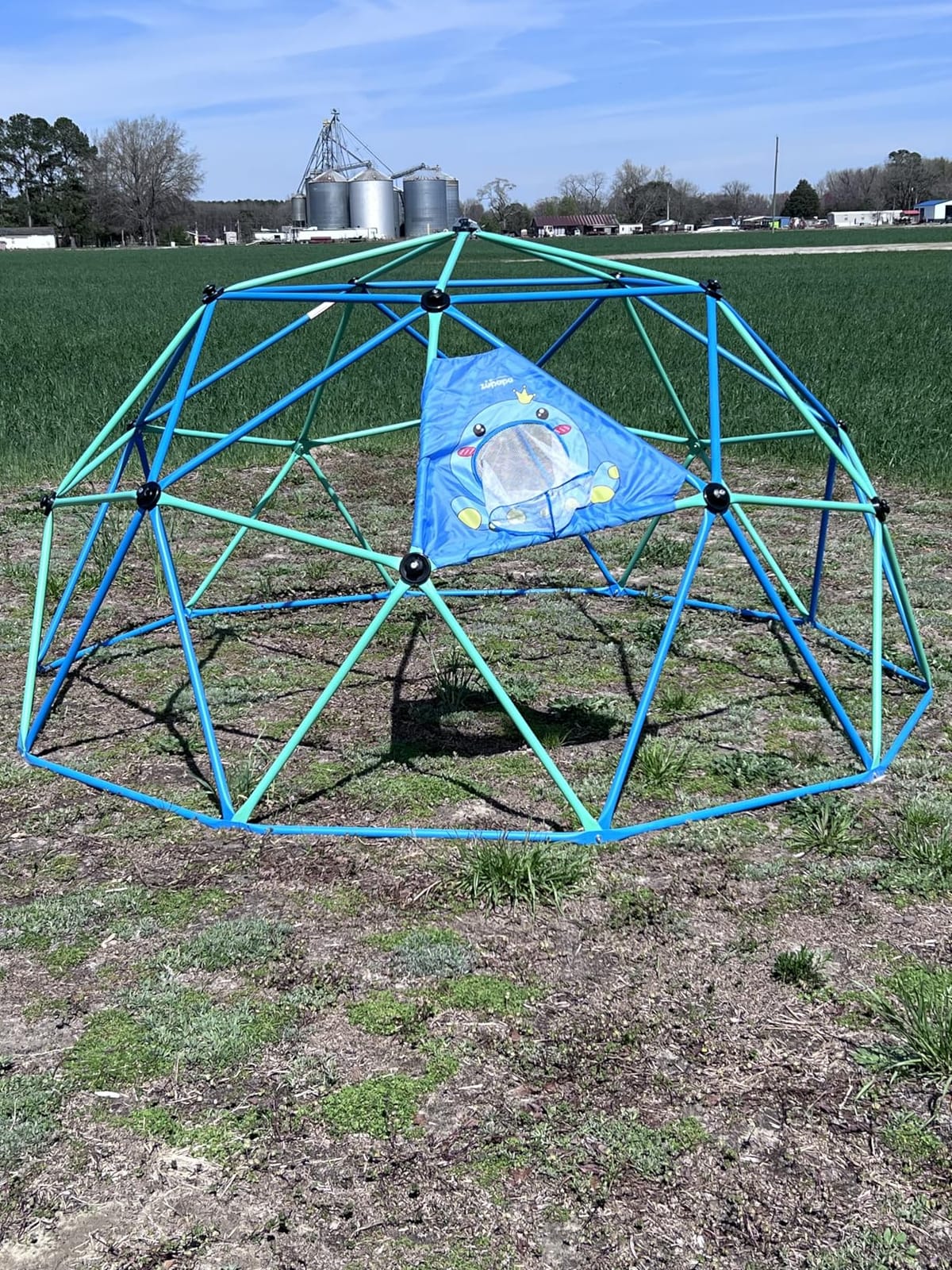
Assembly is where the complaints concentrate, and they are consistent. Reviewers describe the printed directions as choppy and the photographs as barely legible, so the practical approach is to sort the bars by shape first and treat the paper as a rough map. You will need to hold four or five bar ends while inserting bolts, which is genuinely a three-person job at the widest points.
One technique comes up in nearly every review: leave the bolts hand-tight for the entire build. Owners who tightened as they went found the frame would not close and had to strip it back down. The basketball hoop and backboard are the feature most mentioned in positive reviews, giving kids something to do at the top other than sit.
Customer service also draws specific praise, with owners reporting defective parts replaced quickly rather than argued about.
Who the Zupapa 10FT dome suits
It suits families with teenagers or adults who want to climb, which is a live question in parent forums and one the 5 ft residential domes answer badly. The 1000 lb rating and the reinforced top beams are the reasons.
It also suits anyone in a wet or coastal climate, because hot-dip galvanizing is a physical zinc layer rather than a coating that can chip. Reviewers in damp conditions report no rust development.
Who the Zupapa 10FT dome does not suit
It does not suit anyone with a small or busy yard. A 10 ft cube is the largest footprint here and it needs clearance around all four flat sides, not just a circular perimeter.
It does not suit a solo builder, and it is the least forgiving of the group during assembly. Plan three adults and a full evening, and read the part shapes before you start.
3. EASY OUTDOOR Space Dome GD-810 – Commercial Hardware in a Smaller Footprint
EASY OUTDOOR Space Dome Climber for Kids Backyard Jungle Gym 1000 lb GD-810
91 x 46 x 91 inches
1000 lb capacity, 5 kids
Ages 3-9
2 year limited warranty, 74 lbs
Pros
- Aircraft nuts and heavy connector plates
- Rock solid with 250+ lb adults
- No rust or sun discoloration reported
- Smallest footprint in the group
Cons
- Two-person build running 2-4 hours
- Very heavy with no wheels
- Every bolt must be fully tightened
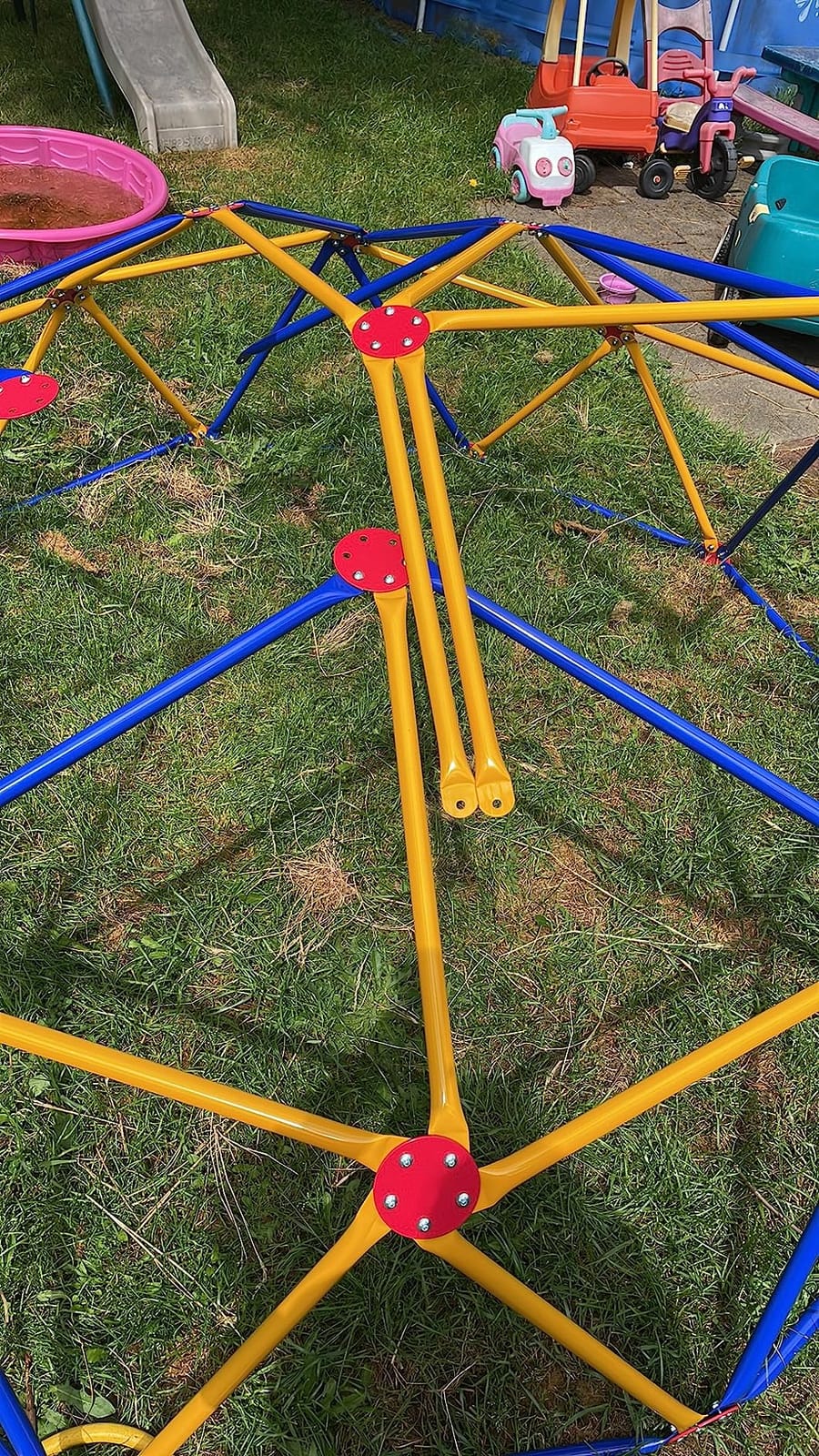
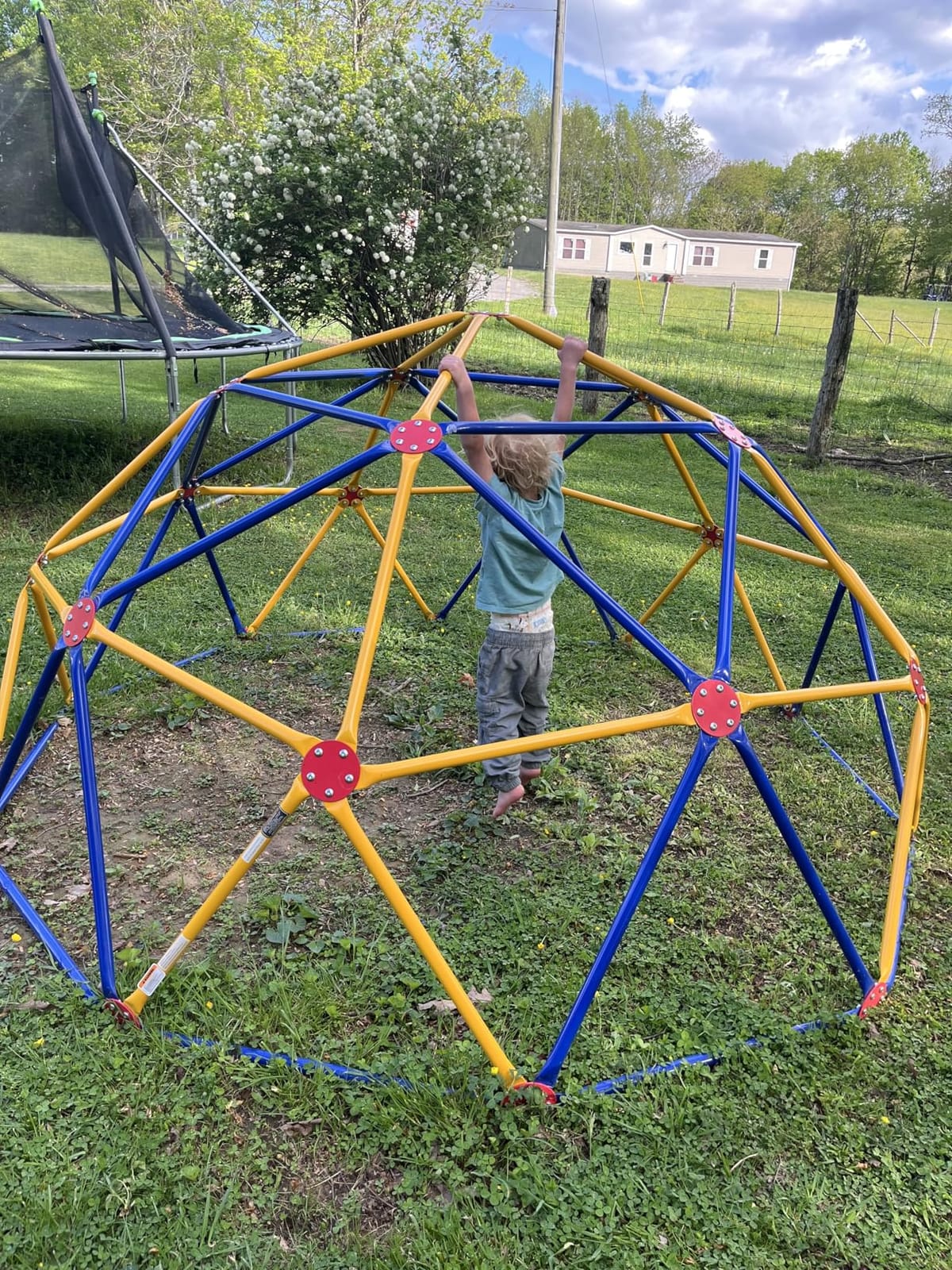
This is the one to look at if your yard simply will not take a 10 ft footprint. At 91 x 46 x 91 inches it is the most compact dome in the group, and reviewers repeatedly describe it as the option that fits where a full swing set cannot. Ages 3 to 9, five players, 1000 lb total capacity.
What separates it from cheaper frames is the hardware. Commercial-grade bolts, washers and connector plates, plus aircraft nuts with protective nut covers that keep sharp edges away from children’s hands. Owners report it staying rock solid with adults over 250 lb on it and multiple kids climbing at the same time, and one specifically notes no rust or sun discoloration after years outdoors.
The 2 year limited manufacturer warranty is above the 1 year that has been the category norm, and the unit is rated for fenced residential yards, playgrounds and large indoor rooms. Reviewers like it for imaginative play, describing kids turning it into a rocket ship or a lion cage, which is a nice reminder that the frame is only half the toy.
The catch is weight. At 74 lbs with no wheels, owners describe relocating it across grass as a real job and advise positioning it once where you want it. Every bolt has to be fully tightened or the frame loses stability, which adds time at the end of an already long build.
One reviewer received a package with a large share of the hardware missing, and the manufacturer resolved it. Packaging appears to be the weak point rather than the product.
Who the EASY OUTDOOR GD-810 suits
It suits small and mid-sized lots, and parents who want a dome that leaves room for other play. At 91 inches across it is the smallest footprint here, and the one that fits a typical suburban yard without taking the whole space.
It suits anyone planning to keep the dome in one place for years, because the reported finish durability and the 2 year warranty both reward leaving it alone.
Who the EASY OUTDOOR GD-810 does not suit
It does not suit families who move their play equipment around, or who mow often and expect the dome to shift easily. Seventy-four pounds with no wheels is a two-person lift.
The 46 inch height also caps the difficulty. It is a strong, safe dome rather than a challenging one, so a ten-year-old will likely outgrow it faster than they will outgrow the 10 ft models.
4. VEVOR 10FT Geometric Dome Climber – the Most Feature Per Square Foot
VEVOR Climbing Dome for Kids 3 to 10 Years Old 10FT Geometric Dome Climber
10 ft dome, 120 x 120 x 60 in
750 lb load capacity
Ages 3-10, up to 4-5 kids
80 lbs with swing
Pros
- Climbing
- swing and hammock in one footprint
- Hot-dip galvanized UV and rust resistant
- ASTM and CPC certified
- Cut-preventing handle design
Cons
- 750 lb is below the 1000 lb frames
- Instructions and video need close study
- Extra hardware adds build steps
VEVOR packs the most play modes into a single 10 ft footprint. Alongside the dome you get a swing and a detachable cushion that works as a ground pad on the lower level or a hammock above, and a 10 ft size rated for 4 to 5 children aged 3 to 10. Owners like the three-in-one arrangement because it keeps the footprint from feeling like one activity.
The frame is hot-dip galvanized, coating-treated steel described as thickened, with claims of resistance to UV, rust and corrosion. It is ASTM and CPC certified, and the handle design is cut-resistant, which matters more than it sounds when small hands grip horizontal bars all afternoon.
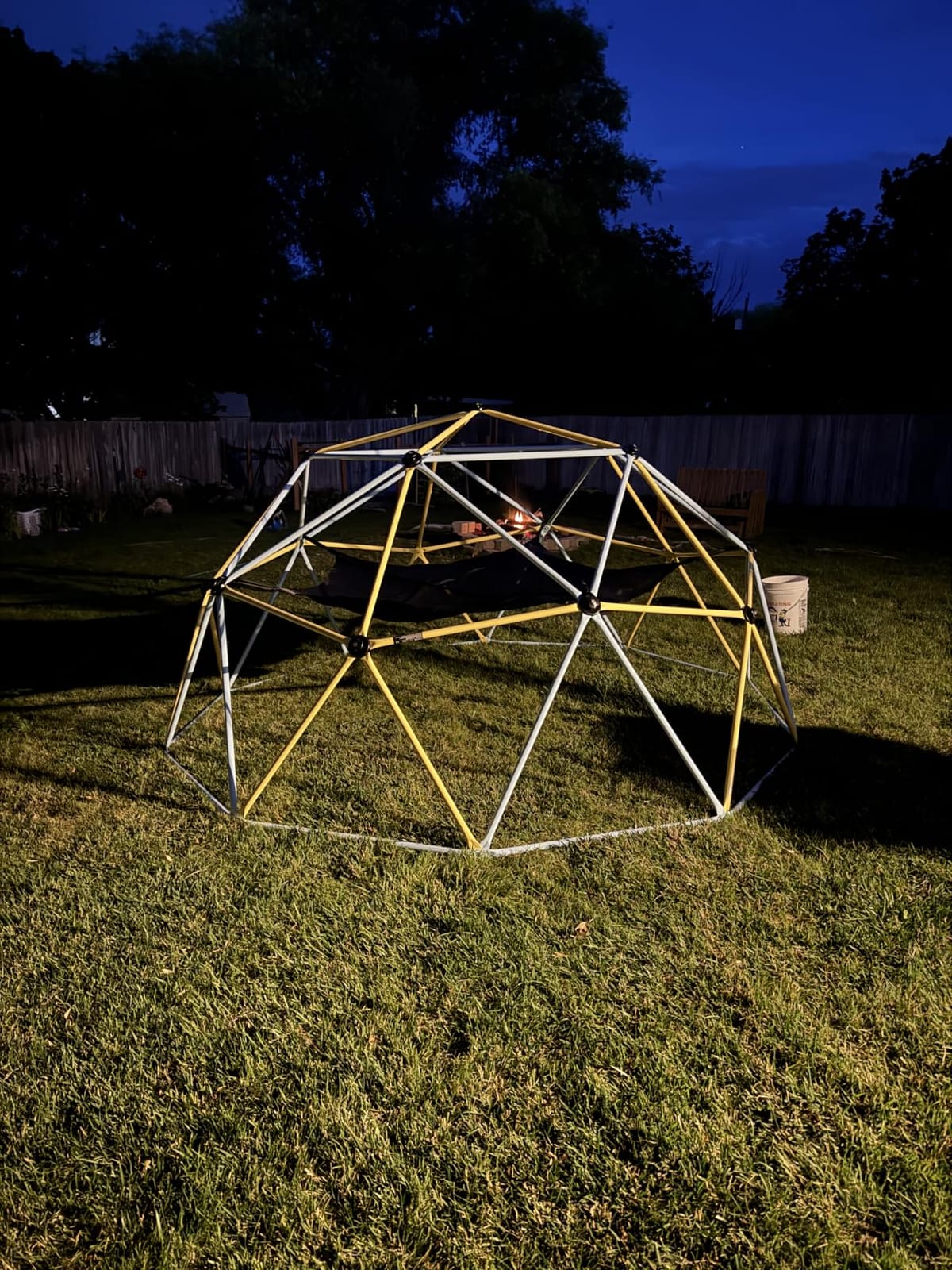
The hammock is a PP mesh fabric that resists rain and UV, which is the right material choice for something permanently outdoors. Buyers mention the tools, manuals and video guides being included, and the certification showing up as a genuine confidence signal in reviews rather than a box claim.
Two things hold it back. At 750 lb the frame sits between the 600 lb residential units and the 1000 lb galvanized ones, which is a strange middle ground if you have two adults who want to climb together. And the swing and hammock hardware adds steps to an assembly that reviewers say needs close study of the instructions and video.
At 80 lbs it is in the same awkward-to-move category as most domes here, though the folding nature of the swing attachment makes it a little more flexible than the solid frames.
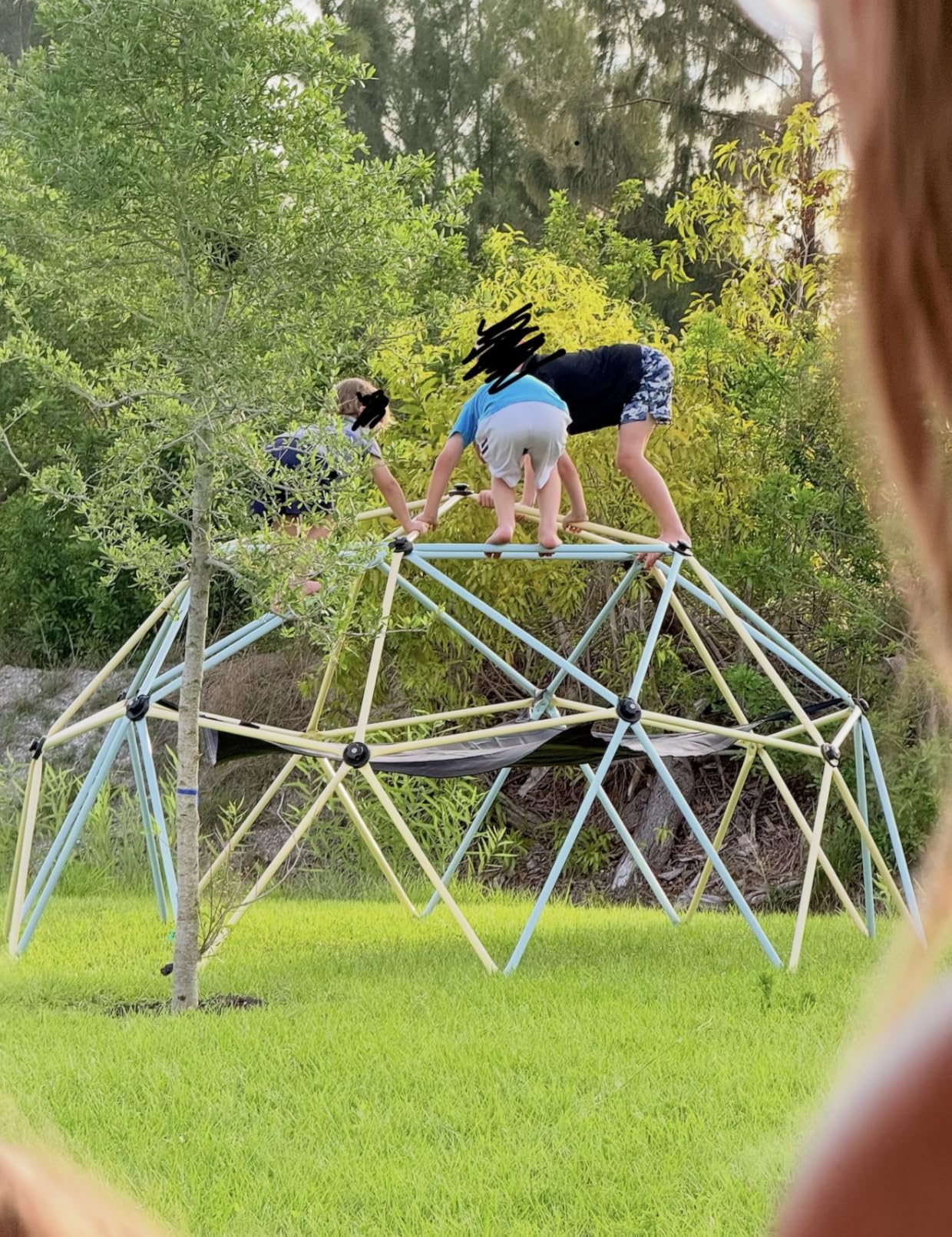
Who the VEVOR 10FT dome suits
It suits families who want more than climbing without buying a separate swing set, and who are working with a limited footprint where adding a second structure is not realistic. The detachable cushion genuinely changes how the dome is used rather than just adding an accessory.
It suits buyers who put certification weight. ASTM and CPC certified with a cut-preventing handle design is a stronger safety story than most listings in this category offer.
Who the VEVOR 10FT dome suits less well
It suits heavy adult use less well, because 750 lb divided between two adults gets thin quickly. If the plan is for a parent and a teenager on the dome at once, go to a 1000 lb frame.
It also suits less well anyone who wants the simplest possible build. Three separate systems have to be attached, and that is more opportunity for the build to go wrong.
5. GIKPAL 10ft Hammock Swing Dome – the Best Balance of Sturdiness and Play Value
Climbing Dome with Hammock Swing Seat 10ft Outdoor Jungle Gym Kids Playset
10 ft diameter by 5 ft high
1000 lb capacity, 65 pipes
Detachable mat and swing
Ages 3-10, 76.5 lbs
Pros
- 1000 lb on a mid-tier frame
- 2-in-1 detachable mat adds real play value
- No flex when an adult hangs off it
- Smooth frame with no sharp edges
Cons
- Instructions best decoded by letter codes
- Fewer straps included than the build needs
- Awkward solo with up to six poles held at once
The GIKPAL is the frame we kept coming back to when the spec sheets were lined up. Sixty-five hot-dip galvanized pipes with 25.5 mm thick iron walls give it a 1000 lb capacity, which puts it in the same class as the Zupapa at a lower tier, and the surface is smooth with no sharp points, edges or corners anywhere on the frame.
The differentiator is the detachable mat, which works as a ground pad on the first floor or a hammock on the second. Families report the kids using the net and the hammock for hours, and one notes the 10 ft height feels genuinely challenging to adults. A listed lifetime warranty with 24/7 customer service and a 90 day no-questions-asked window is also more generous than most.
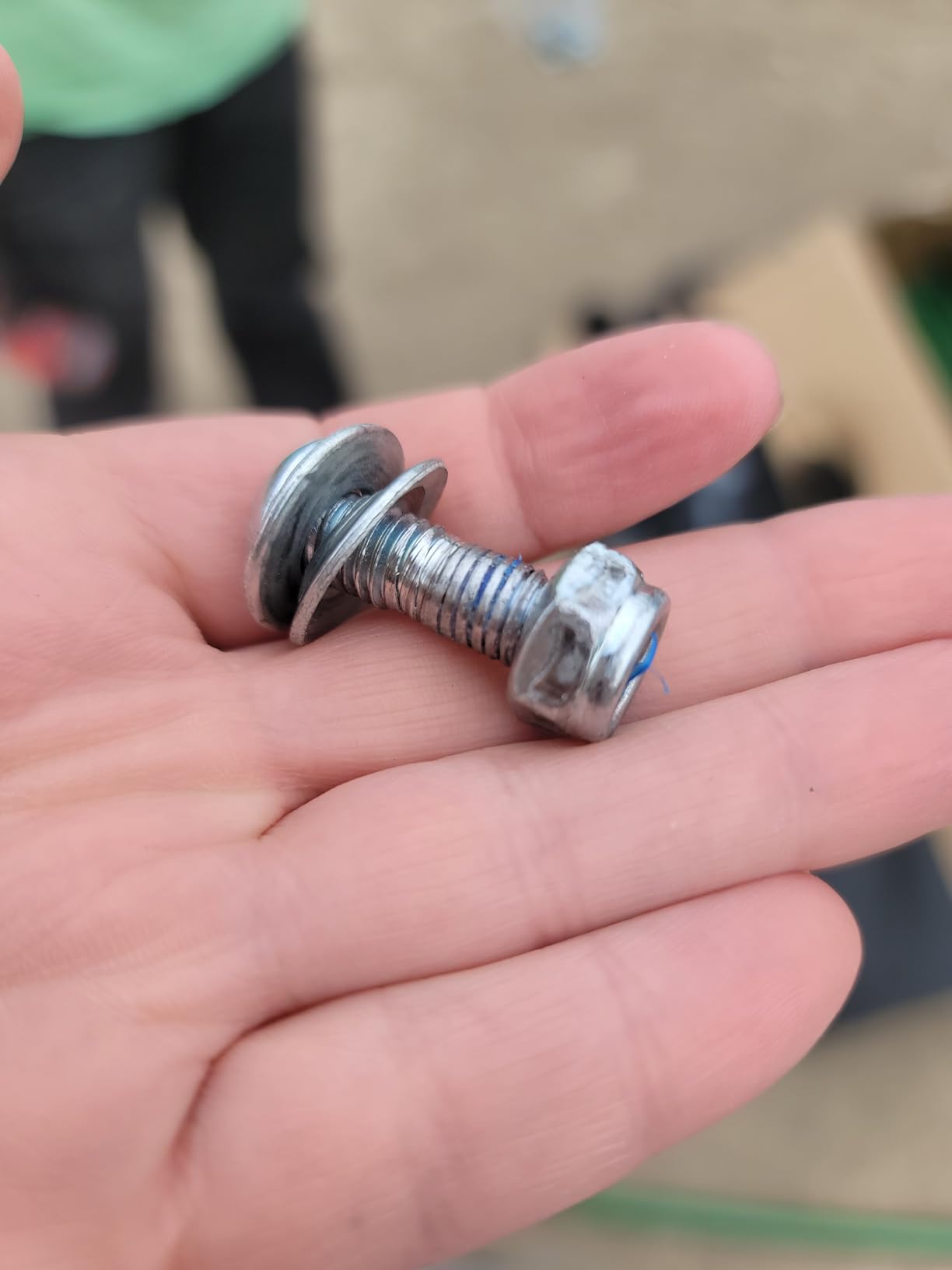
Documentation is the weak point. Buyers advise identifying parts by the letter codes rather than following the pictures, and one group of owners found the listed dimensions did not match the variant they actually received. The hardware count comes up too: five straps are included but the build wants them for both the hammock and the swing.
Assembly means holding up to six poles at once, which reviewers call tricky solo. The steel is thick enough that at least one owner considered the listed weight capacity optimistic, which is a fair caution to hold even on a 1000 lb rating.
On the plus side, it is light enough at 76.5 lbs that one adult can reposition it for mowing, which is more than can be said for the heavier units in this roundup.
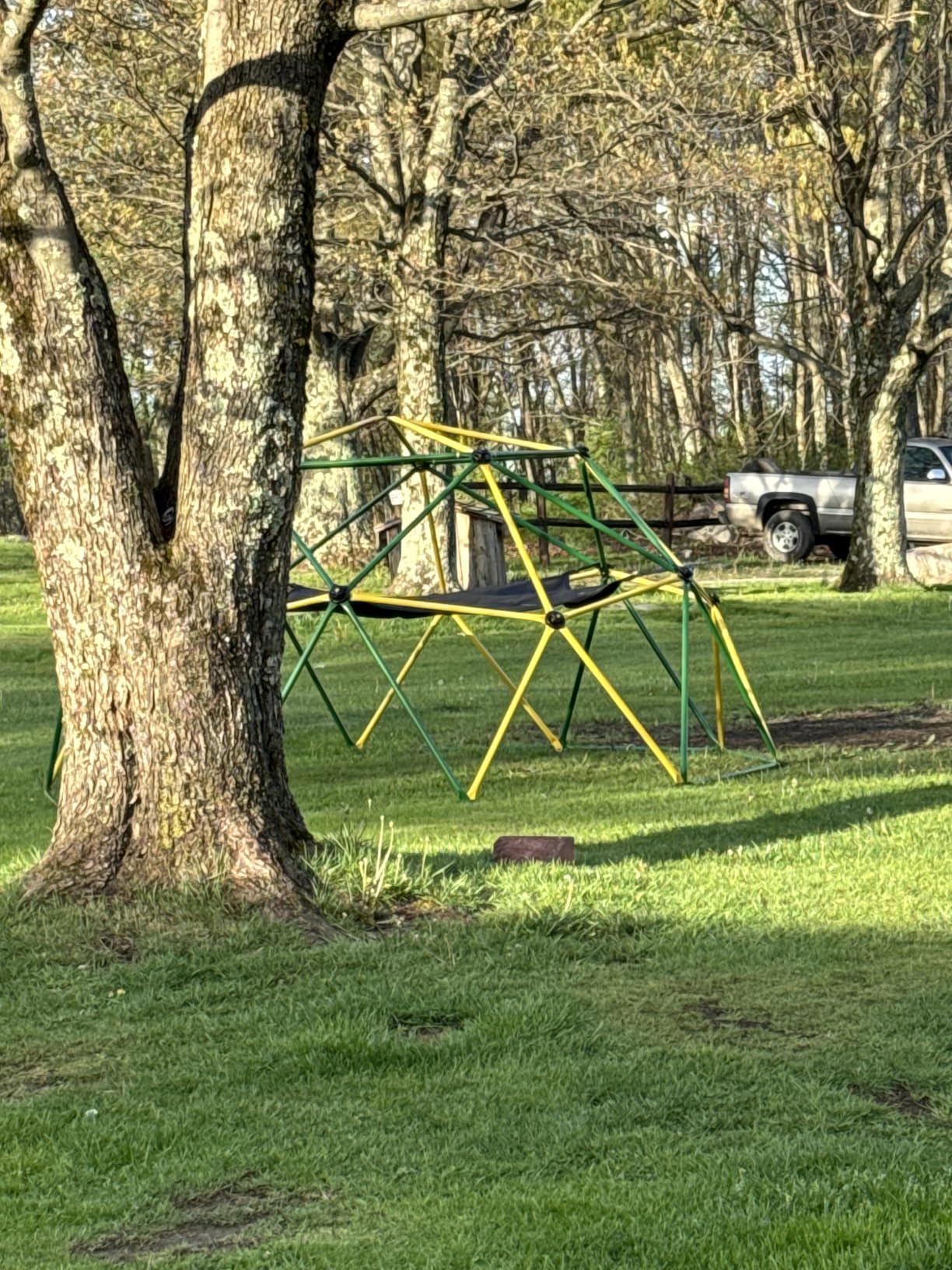
Who the GIKPAL 10ft dome suits
It suits families who want a genuinely strong frame and a real second activity, without moving up to a model with a swing or basketball hoop permanently bolted to it. The mat conversion is a low-cost way to add a second activity.
It suits buyers who want warranty cover that does not expire in a single season, and families who value a frame with no exposed sharp points because younger children are on it.
Who the GIKPAL 10ft dome does not suit
It does not suit anyone who wants to skip the documentation. If you are not willing to sort parts by letter code and check the variant dimensions on arrival, a model with a usable video guide will go smoother.
It also does not suit a one-person build, and the strap shortfall means you may need to source a couple of extras before starting.
6. Hapfan 10 ft Dome with Saucer Swing – for Kids Who Climb Then Fly
Hapfan 10 ft Climbing Dome Swing Set with Saucer Swing for Kids 3-12
10 x 10 x 5 ft, 65 steel tubes
800 lb total, 400 lb swing
Ages 36 months to 10 years
Pros
- Saucer swing rated to 400 lb
- Easier build than most
- no extra tools needed
- Thicker tubing on the top five poles
- Moveable for rearranging the yard
Cons
- 800 lb is below the 1000 lb frames
- Only 133 lb per single tube
- Bolt direction changes between layers
The saucer swing is what buyers respond to here, and it is rated to 400 lb, which is higher than most swings bundled with domes. It hangs off a 10 x 10 x 5 ft frame of 65 rust-resistant steel tubes, supported by a PP jumping mat, and gives kids five play modes in one footprint: climbing, hanging, jumping, crawling and swinging.
Construction is sensible in the places that matter. The top five poles use thicker tubing for added support, and the whole set is described as needing no additional tools for assembly, which is unusual in this category and matters when you have not bought a socket set yet.
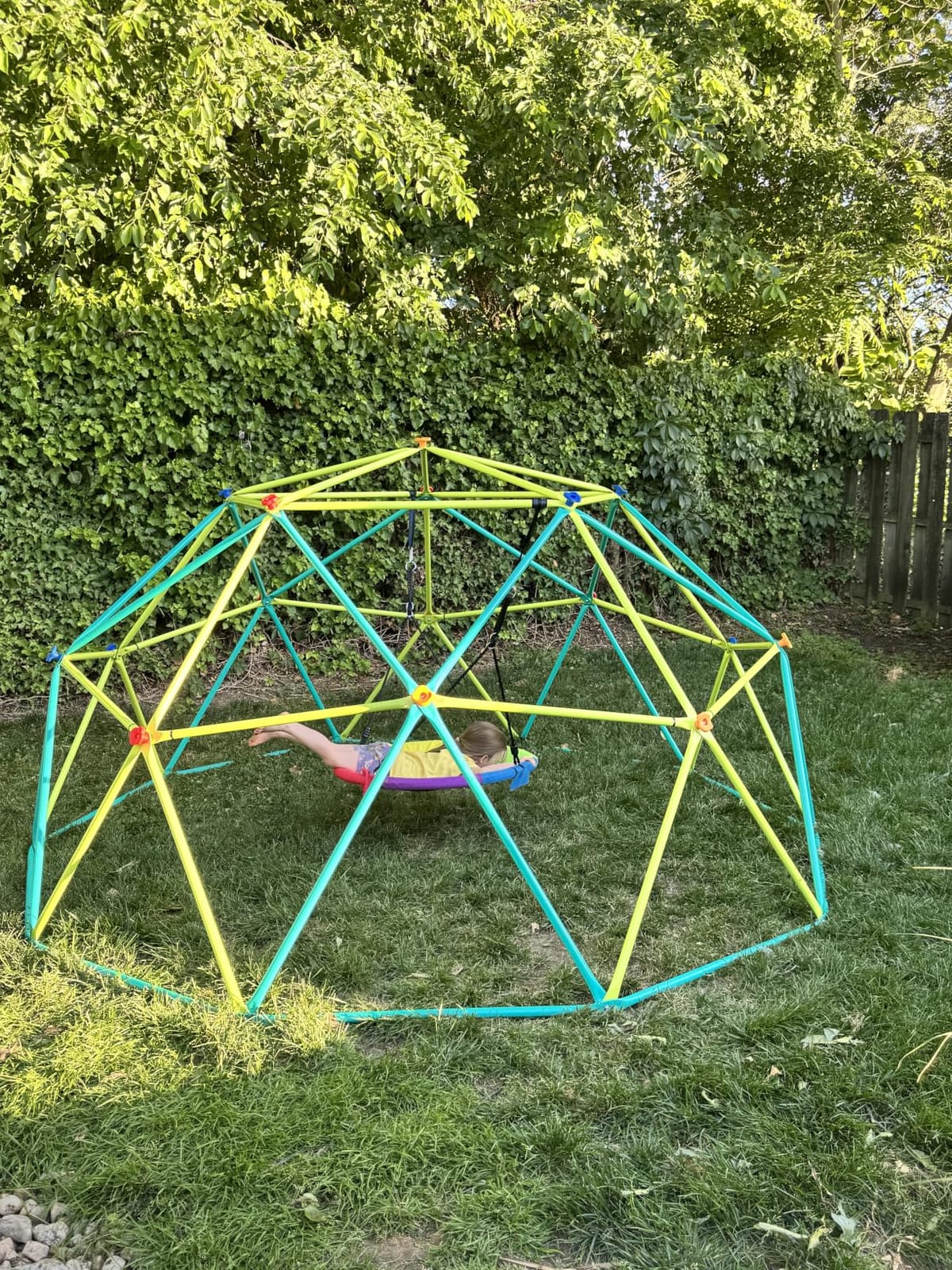
The per-tube rating is the spec to understand. Total capacity is 800 lb, but any single tube handles 133 lb, which limits how much weight can hang from one spot. That is a meaningful limit if you are hanging a cargo net or planning to use the frame as a pull-up bar, and it is why this sits below the 1000 lb frames despite the swing being heavier-duty than theirs.
Assembly requires two people even though no tools are needed, and the trick that catches people out is that bolt direction differs between the bottom layer and the upper layers. The assembly video on the product page is the practical route through that. The upside is that the set is described as moveable for mowing and rearranging.
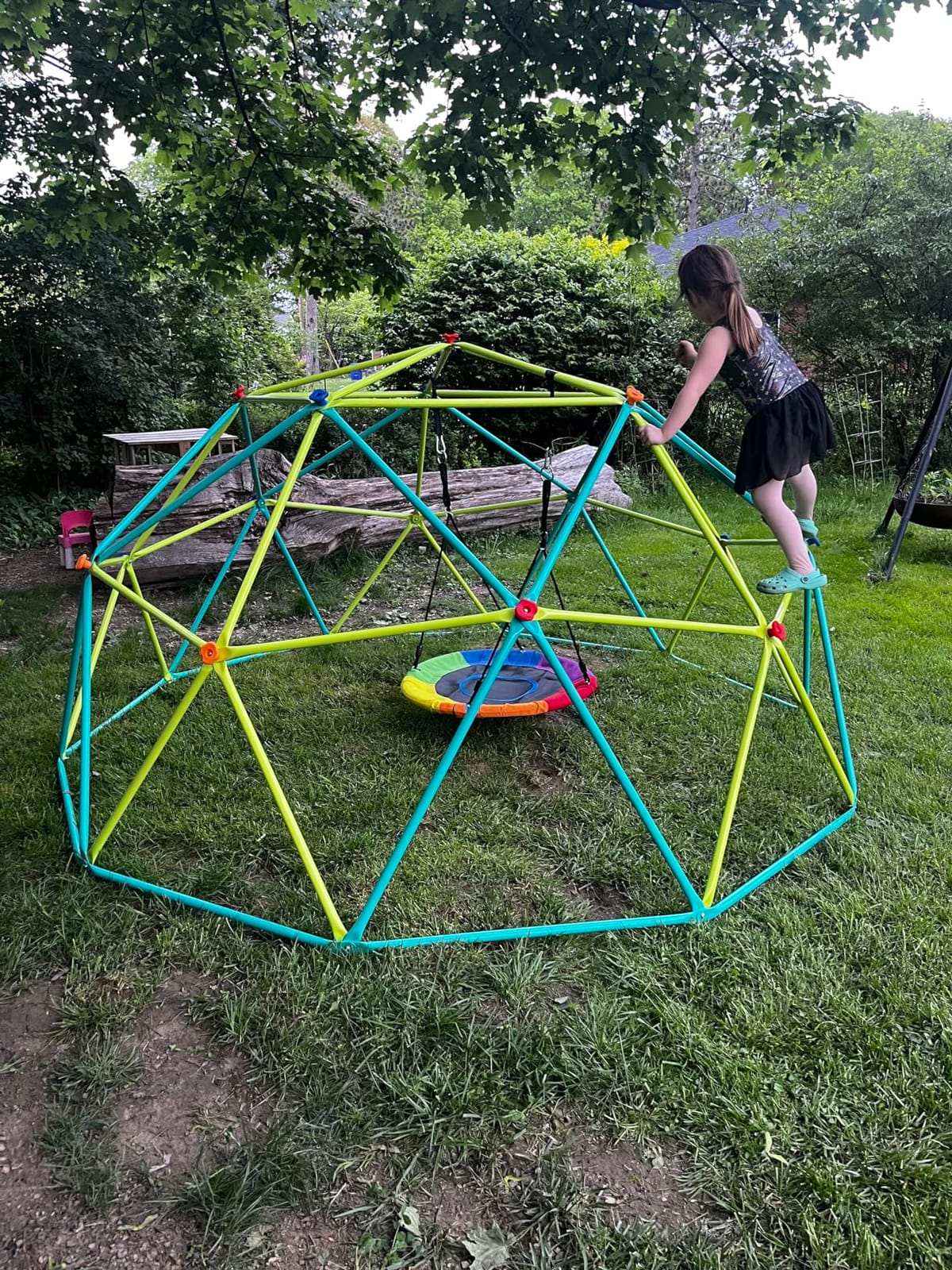
Who the Hapfan saucer swing dome suits
It suits families with a child who climbs and then wants to be swung, because the two activities share one footprint instead of competing for yard space. A 400 lb rated saucer swing is the heaviest swing in this group.
It suits buyers nervous about a build that needs extra tools, since this one goes together with what is already in the drawer. Owners also like that it can be dragged into a new position rather than fixed in one spot.
Who the Hapfan saucer swing dome does not suit
It does not suit a plan involving two adults climbing at once, or anyone hanging serious extra weight from a single tube. At 133 lb per tube, the frame is a kids and one-adult structure.
It also does not suit buyers who prefer not to follow a video during assembly. The mixed bolt direction is a small thing that undoes a lot of people when they only have paper.
7. GVDV 10 FT Dome with Hammock – the Lightest Frame You Can Still Climb
GVDV 10 FT Climbing Dome with Hammock, Certified Jungle Gym for Kids 3-12
10 ft dome
1000 lb total, 150 lb per tube
Hammock rated to 256 lb
ASTM certified, ages 36 months+
Pros
- Light enough to shift across the yard
- Hammock doubles as a fall cushion
- ASTM certified with no sharp points
- Usable indoors as a tent with blankets
Cons
- Instructions basic and partly out of order
- Keep bolts loose until the frame closes
- Two to three people needed for assembly
The GVDV is the one we would put on a small list with a big family. At 1000 lb total capacity with 150 lb per tube, the numbers match the heavier frames even though the unit is light enough to move across the yard for mowing, and owners consistently single that out as the practical difference between this and a 100 lb frame that never moves again.
The hammock is rated to 256 lb and fits two to three kids. Reviewers describe it serving double duty as a rest spot and as an extra safety cushion for falls off the lower level, which is a clever use of the same piece of fabric. The frame is hot-dip galvanized with a UV and corrosion-resistant textured coating, and the listing is ASTM certified with a smooth, skin-friendly surface and no sharp points.
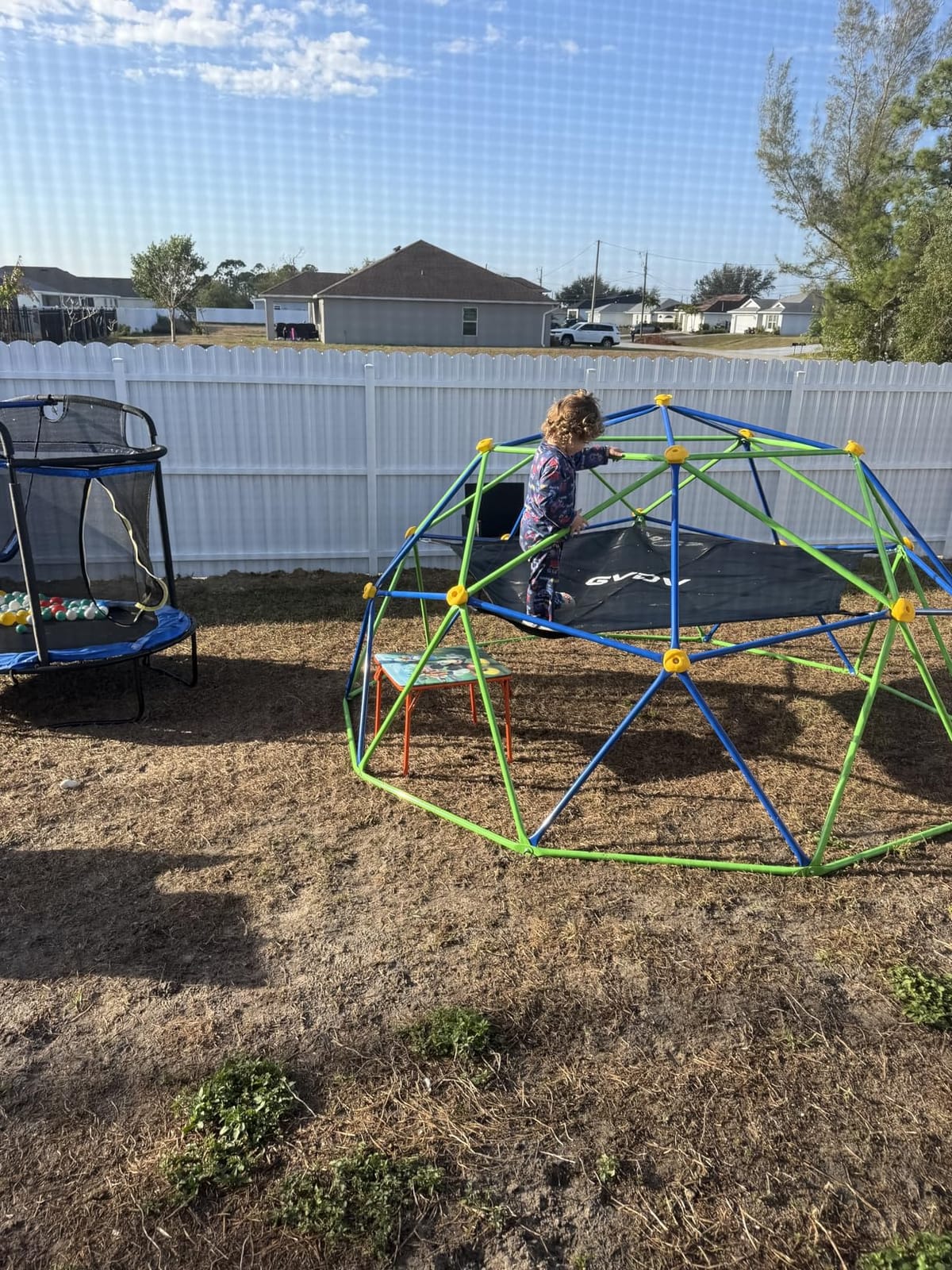
It is also the only unit here that is listed for indoor as well as outdoor use. Owners drape blankets or tarps over it to make a play tent, which extends the season considerably in colder climates where nobody is going outside in the middle of winter.
The build is the complaint. Instructions are described as basic, confusing and partly out of order, and two to three people are needed. As with the other units in this roundup, bolts should be left loose until the frame is closed. Hammock attachment is fiddly and reviewers warn that the eyebolts are easy to miss in the box, so check the packaging before you start.
Customer service is worth flagging as a positive: owners report a torn hammock replaced and hardware costs refunded after a delivery issue.
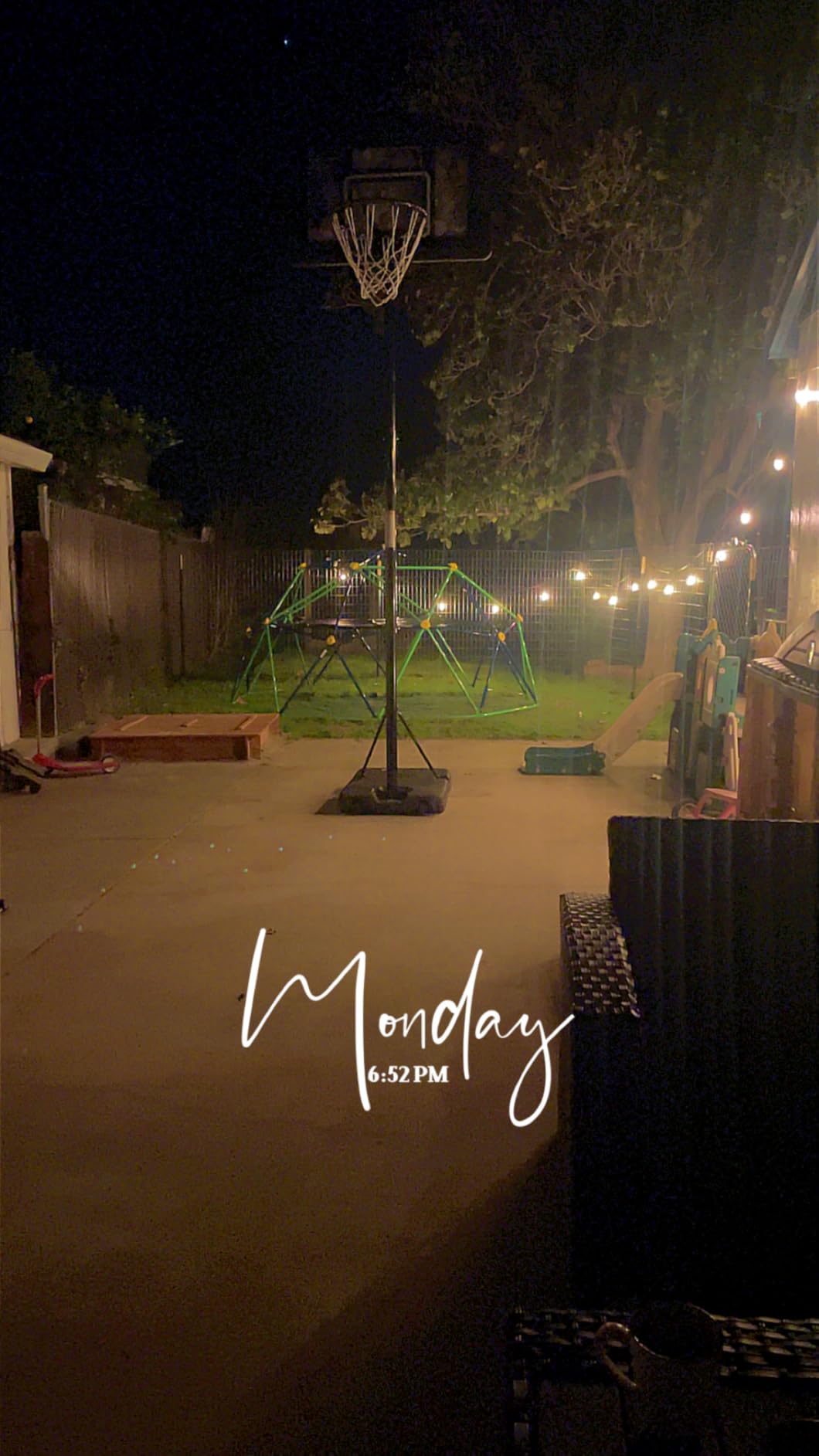
Who the GVDV 10 FT dome suits
It suits families who want a 1000 lb frame without a permanent hole in the lawn, and parents in colder regions who want an indoor play tent option for the winter months. The 256 lb hammock for two to three kids is a genuine bonus on its own.
It suits buyers who want a textured, coated surface rather than smooth bare steel, since the textured coating is easier on bare feet in summer.
Who the GVDV 10 FT dome does not suit
It does not suit anyone who wants to rely on printed directions alone. The reports of steps being out of order are consistent enough that owners recommend a drill and two or three helpers, and checking the eyebolts on arrival before starting.
It also does not suit a one-person build, despite being the lightest frame here.
8. Hapfan 10 ft Dome with Climbing Cargo Net – the Easiest Route to the Top
Hapfan 10 ft Climbing Dome with Climbing Cargo Net for Kids 3-12
10 ft dome, 65 steel tubes
800 lb total, 133 lb per tube
10 point rope net
Ages 36 months up
Pros
- Net gives younger kids a real route to the top
- Net has 10 hanging points that hold three kids
- 4.7 star average in the review set
- Light enough to move for mowing
- Muted colors blend into the yard
Cons
- Written instructions confusing
- video is the practical route
- Two to three people needed
This dome carries a 4.7 star average on the review set we worked from, and the reason is the net rather than the frame. The multi-color rope net has 10 hanging points spread across the structure, which owners say lets younger children reach the top and hang safely upside down instead of having to navigate the steel lattice. The net comfortably holds three children at once.
The frame itself is 65 rust-resistant steel tubes with 800 lb total capacity and 133 lb maximum weight per single tube. Reported durability is good through Florida heat and rain, and the muted white and green color scheme is one reviewers mention as a plus for a structure sitting in plain sight year round.
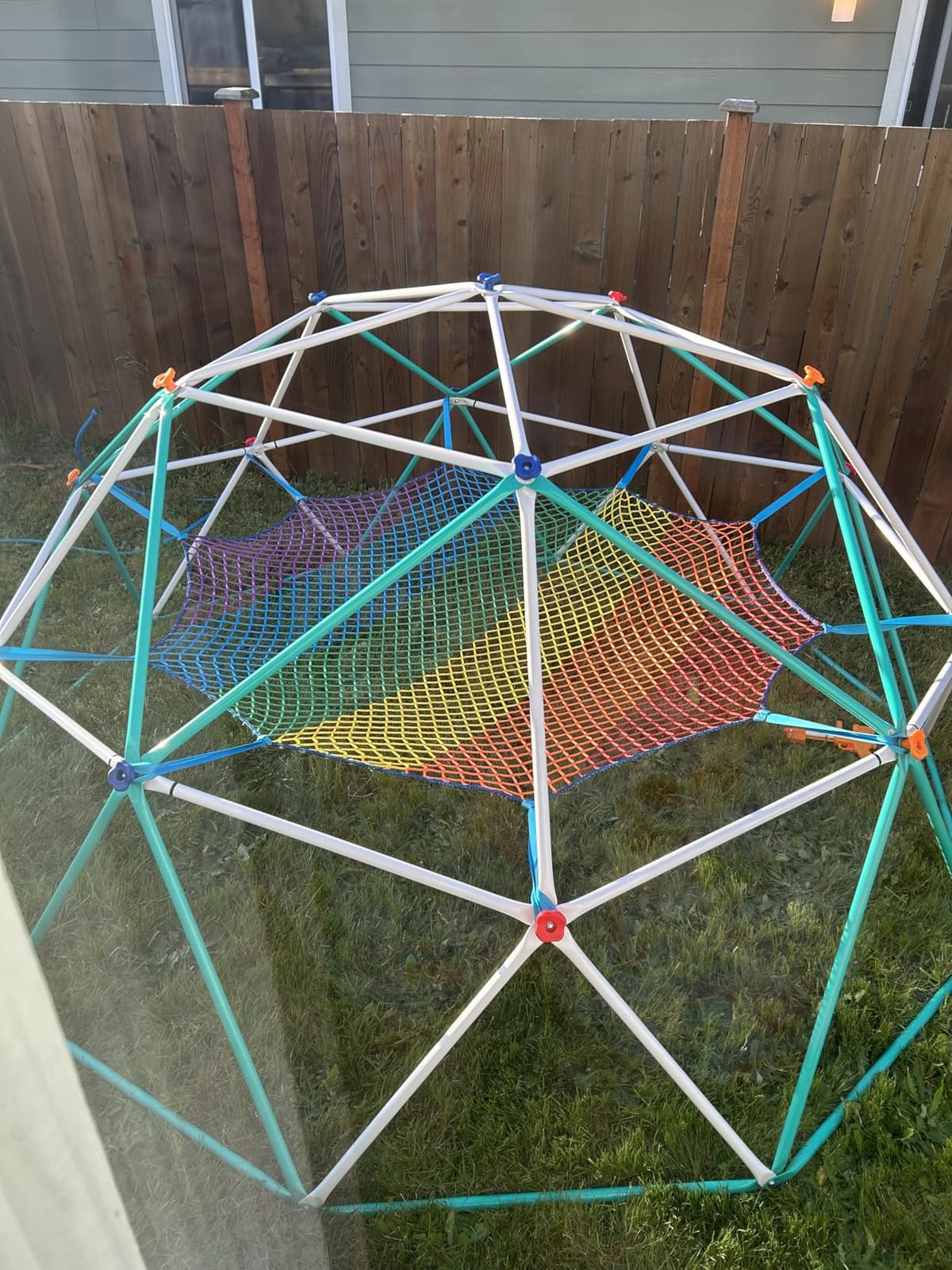
Assembly is the reason it is not the top pick despite the rating. Several owners rebuilt the base multiple times because the written instructions were confusing, and the consistent recommendation across the reviews is to ignore the paper and follow the assembly video instead. At least two people are needed, ideally three, and reviewers mention expecting bumps and bruises during the build.
Counterintuitively, the light weight is a genuine feature here. Owners say the freestanding climber is light enough to move for mowing, which means it does not have to be sited once and abandoned, and the 800 lb with 133 lb per tube limit is the same constraint as the Hapfan saucer swing model above.
Who the Hapfan cargo net dome suits
It suits families with children on the younger end of the range, because the net is a genuine climbing route rather than a decoration. A three-year-old who cannot yet read the steel lattice can still get to the top, which changes the age the dome works for.
It suits buyers who will spend ten minutes watching the assembly video first. Doing that turns the single most common complaint about this product into a non-issue.
Who the Hapfan cargo net dome does not suit
It does not suit buyers planning to load the frame with adults. At 800 lb total and 133 lb per tube, it is a children’s structure with room for one adult at a time.
It also does not suit anyone who wants a straightforward paper build, and the review base is the thinnest here at 105 ratings, so you have less long-term history to lean on than with the Lifetime or the Zupapa.
How to Choose a Climbing Dome for Your Backyard?
Is a climbing dome worth it?
Yes, in most backyards, and the deciding factor is space rather than price. A dome earns its footprint when you have a flat, clear patch of lawn, more than one child, a kid who burns energy indoors, and a structure that works in all four seasons.
It is worth less when the yard is small, when there is a single younger child, or when it would end up next to a fence or a play structure. Buyers in parent forums repeatedly frame the purchase around the build rather than the toy, and the honest version of that concern is that the dome is only as good as the weekend you spend putting it together.
Steel gauge and coating decide how long it lasts
Powder-coated steel is a paint layer over steel. Hot-dip galvanized steel is steel that has been dipped in molten zinc, so the protection is part of the metal rather than a film on top. For a structure standing in rain, snow and sun year round, the second one ages better, and four of the eight domes here use it.
Beyond coating, look at the tubing diameter and the hardware. The 1.2 mm galvanized tubing on the Zupapa and the 25.5 mm walls on the GIKPAL are at the thick end of what is available, while aircraft nuts with protective covers, as on the EASY OUTDOOR, keep sharp edges away from small hands. Connector plates and bolt grade matter more than most listings admit.
Weight capacity is a total limit, not a per-child limit
This is the most misunderstood number in the category. A 600 lb rating means 600 lb of children on the dome at the same moment, not 600 lb per child, and it includes adults. Per-tube limits are a separate and lower number: 133 lb on both Hapfan models, 150 lb on the GVDV.
For most families with three or four kids under 40 lb each, every dome in this group passes comfortably. The rating starts to matter when a parent and a teenager climb together, and that is the point where 600 lb and 750 lb frames stop being enough.
Match the dome height to the oldest child
Buy for the tallest child who will use it, not the youngest, because children grow into a dome rather than out of a play structure. Under 3 years, a low plastic dome is the right call. From 3 to 5, a 4 to 5 ft dome with a gentle incline works. From 5 to 8, a standard 5 ft steel dome is the sweet spot. From 8 to 12, look for 6.5 ft and taller with more handholds and a higher capacity.
The practical failure mode is a 5 ft residential dome at age nine: the child can still climb it, but has nothing left to master. A 10 ft cube like the Zupapa or the Hapfan models extends well past that point.
Do the clearance math before you buy
Safety guidance calls for 6 ft of clearance in every direction around the dome, free of obstacles, and the dome footprint is only half the space you need. A 10 ft dome needs a roughly 22 ft circle of usable yard. The EASY OUTDOOR at 91 inches across needs about 19 ft.
Measure the clear width of your yard, not its total width, and subtract anything fixed: a fence line, a downspout, an above-ground pool, a swing set beam. If your clear circle comes out under 18 ft, the EASY OUTDOOR is realistically your only option in this group. While you are measuring, note where water runs, because a dome beside a downspout will show rust first.
Dome or full jungle gym?
A dome is a climbing-only structure with a much smaller footprint than a swing set with a slide and a fort. If your yard can only take one piece of equipment and your child climbs more than they swing, a dome spends that space well. If siblings fight over who gets the swing seat, a dome loses to a combo unit.
There is a third option worth knowing about: several of the domes here ship with a swing or a swing-compatible attachment point, which gets you most of the way to a combo set without doubling the footprint. The VEVOR, GIKPAL and both Hapfan models all do this, and it is the reason a dome-plus-swing configuration is becoming the default in this category.
If you are still working out what an outdoor play structure should include alongside a dome, our guide to natural climbing branches and surfaces covers the grip and texture principles that translate from a play yard to a climbing wall.
Budget by tier, and buy the frame, not the accessories
The category splits into four tiers. Budget units are single-material domes with the thinnest steel and the shortest documentation. Mid-range is where most of this group sits, with galvanized frames and 750 to 1000 lb ratings. Premium adds a genuine second activity, a swing or a converted mat. Commercial grade is a different purchase entirely, built for a park rather than a lawn.
Within any tier, spend on the frame and steel, not on accessories. A cargo net, a hammock or a tent cover costs a fraction of a dome and can be added later, whereas a thin frame cannot be upgraded. Add-ons also carry a warranty caveat: attach anything to the frame only where the manufacturer approves it.
Anchoring, Clearance, and Ground Surfacing
Anchoring is the question parents ask experienced owners most often, and almost no editorial page in this category answers it. The short answer is that a dome sitting on level ground is a wide, low, heavy object, and most wind or climbing loads are handled by that weight alone. It shifts in high wind, particularly on hard soil or a slope, and a manufacturer-approved anchor kit or a ground stake set removes the question.
Two practical methods work. Concrete-set anchors are the permanent option and suit clay or rocky ground where stakes will not hold. For most lawns, driven ground anchors with a strap or eyelet around a base tube are faster and reversible. Whichever you choose, check the manual, because an anchor that fights the frame can bow a pole over time.
Clearance is the other half. Keep 6 ft free on every side, which means no fence within 6 ft, no swing set beam overhead, no tree within reach and no hard surface such as a patio edge or concrete path. A dome next to a fence is the most common placement mistake, and it removes the landing area on one entire side.
Underneath, rank the options by how they protect a fall from dome height. Engineered wood fibre or poured rubber surfacing performs best and is what most public playgrounds use. Nine inches of rubber mulch is the next tier and is widely available in bags. Rubber mats and foam tiles of an inch or more work well over a hard base. Pea gravel and sand are acceptable. Grass on its own is the least protective, because it compresses and the ground underneath hardens over a season.
Assembly time is worth planning around, since it is the largest source of buyer anxiety in this category and the entire video results for this query is build content. Across this group, owners report two to four hours with two adults, and three-plus hours with three. The EASY OUTDOOR, Zupapa and GIKPAL are the three-person jobs. The Hapfan and VEVOR models include an assembly video that shortens the build. Every one of them should be assembled by at least two adults, and a drill plus locking pliers will save you time on all eight.
Maintenance is light. Check the coating annually, touch bare or scratched steel with rust-inhibiting paint before wet weather sets in, and inspect bolt heads once a season because climbing loads work them loose. If you want the dome through winter, a fitted cover keeps snow from packing into the lattice, and a tarp underneath once the ground thaws keeps mud out of the frame.
One more note for anyone planning the wider yard. Once you have cleared the space for a dome, that same cleared zone usually has room for a pond feature or a low water feature at the perimeter, as long as it stays outside the 6 ft clearance and the fall zone.
Frequently Asked Questions
Are climbing domes worth it?
Yes, in most backyards. A climbing dome earns its footprint when you have a flat, unobstructed patch of lawn at least 6 ft clear on every side, more than one child using it, and an active kid who needs full-body climbing work every day. It is less worthwhile on a very small lot, next to a fence, or when a single toddler is the only user.
What to put under a climbing dome?
Ranked best to worst: engineered wood fibre or poured rubber surfacing, 9 inches of rubber mulch, rubber mats or foam tiles at least 1 inch thick, pea gravel, then sand. Grass alone is the least protective because it compresses. Safety guidance also calls for 6 ft of clearance in every direction with no fence, tree or hard surface inside that zone.
Are climbing domes good for kids?
Yes. The physical work is grip strength, hand-eye coordination, balance and cardiovascular conditioning, and the cognitive work is route planning and problem solving. On top of that, a shared dome forces turn-taking and negotiation between siblings and friends. The benefit depends entirely on matching dome difficulty to the child’s age and size, so a 5 ft frame that a four-year-old loves will bore a ten-year-old.
What age is appropriate for a jungle gym?
Ages 2 to 3 suit low plastic domes of about 3 ft. Ages 3 to 5 suit 4 to 5 ft domes with a gentle incline. Ages 5 to 8 suit standard 5 ft steel domes with resin or HDPE grips. Ages 8 to 12 suit 6.5 ft and taller frames with more handholds and a capacity of 750 to 1000 lb. Weight capacity, not the printed age, is the real constraint.
What is the best climbing frame for a 10-year-old?
Height matters more than brand at that age. Look for 6.5 ft or taller with 750 to 1000 lb total capacity and a non-slip textured coating, and expect 5 ft residential domes to be at the top of their useful range. Add a cargo net or rope route so the child has a climbing challenge that is not just the steel lattice. In this group the Zupapa 10 ft cube is the strongest option for older kids.
Conclusion
After working through the review history on eight domes, the choice comes down to three questions. How much clear yard do you actually have, how old is the tallest child, and is anyone going to climb it who is not a child.
For most families, the best climbing domes for backyards choice in 2026 is the Lifetime Geometric Dome Climber. It has the deepest review history in the category, a coating that has survived years of weather reports, a footprint that suits a standard suburban yard, and the widest stated age range. Read the instructions fully, budget two adults and a few hours, and lay surfacing before you build rather than after.
Move up to a 1000 lb galvanized frame, such as the Zupapa or the GIKPAL, if a parent or teenager is going to climb. Move down to the EASY OUTDOOR if the yard is the constraint, and add the Hapfan cargo net model if you have a three-year-old who needs a route to the top before they can read the lattice.