
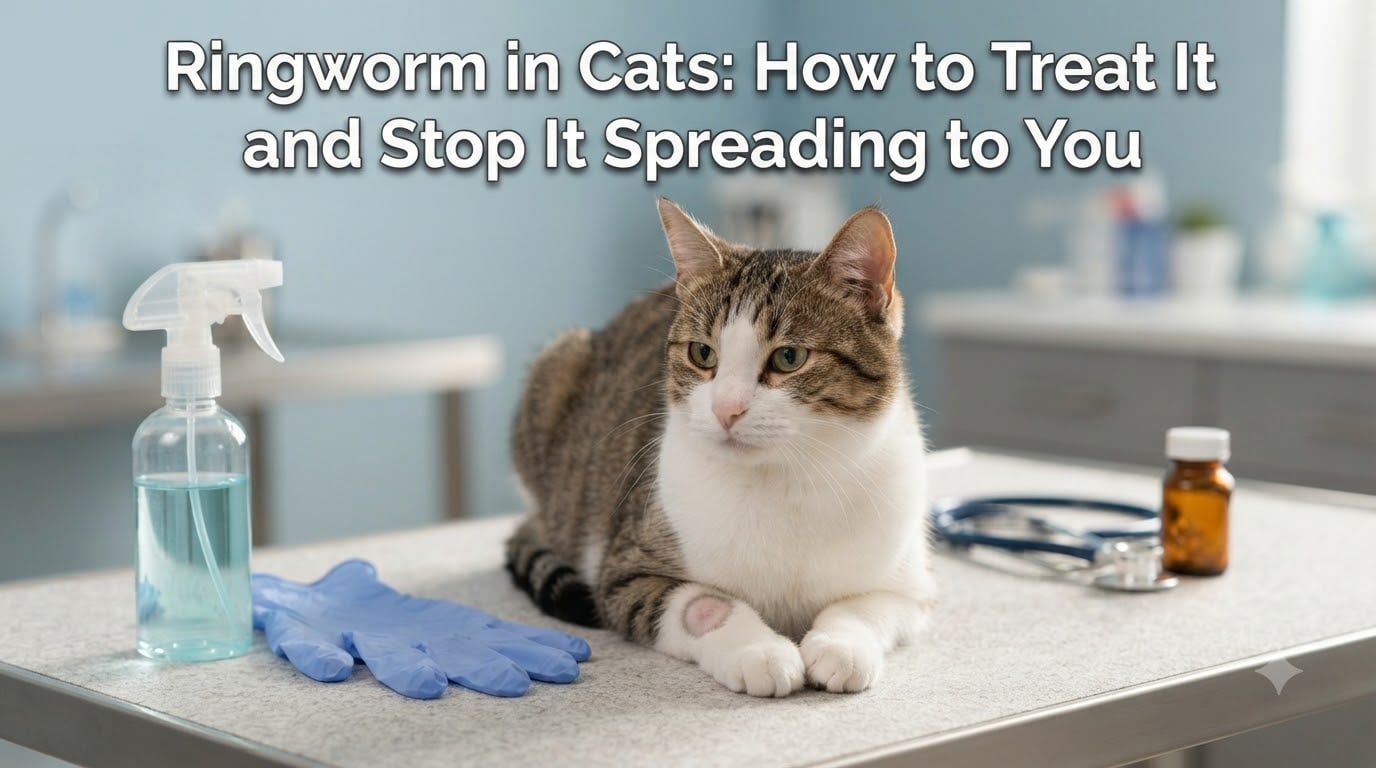
Discovering ringworm in your cat can feel alarming, especially when you realize it can spread to you and your family. The good news is that ringworm in cats is treatable, and with the right steps you can stop it from jumping to humans and other pets.
I have helped foster families and multi-cat households work through ringworm outbreaks, and one thing always holds true: the owners who follow a consistent treatment and cleaning plan get the fastest results. In this guide I will walk you through everything from spotting the first symptoms to disinfecting your home so the infection does not come back.
By the end, you will know exactly how to treat ringworm in cats, how long treatment takes, and how to protect everyone under your roof.
Table of Contents
What Is Ringworm in Cats?
Ringworm is not actually a worm at all. It is a fungal skin infection caused by organisms called dermatophytes, which feed on keratin found in the outer layers of skin, hair, and claws.
The name comes from the red, circular rash that often appears on human skin. In cats, though, the appearance can be much subtler. The most common fungus responsible is Microsporum canis, which accounts for the vast majority of feline cases.
Understanding that ringworm is a fungal infection (medically called dermatophytosis) matters because it tells you why treatment requires antifungal medication rather than deworming products. The fungus produces tough spores that can survive in the environment for over a year, which is why cleaning is just as important as medicating your cat.
How Do Cats Get Ringworm?
Cats pick up ringworm through contact with fungal spores. These microscopic spores spread several ways.
Direct contact with an infected animal is the most common route. Kittens, outdoor cats, and cats in shelters or multi-pet households face the highest exposure risk. A cat can also catch ringworm by touching contaminated objects such as shared bedding, grooming tools, carpet, or furniture where spores have settled.
The tricky part is that some cats carry ringworm spores on their fur without showing any symptoms. These asymptomatic carriers can still infect other animals and people in the home. Stress, illness, or a weakened immune system can trigger the carrier to develop an active infection weeks or months later.
Kittens under one year old and cats with conditions like FIV or feline herpesvirus are especially vulnerable because their immune systems are less equipped to fight off the fungus.
Symptoms of Ringworm in Cats
Ringworm in cats does not always look the way people expect. The classic circular, hairless lesion is common, but many cats show much subtler signs.
The most frequent symptoms include:
Circular or irregular patches of hair loss, often on the face, ears, paws, or tail
Dry, scaly, or flaky skin that may look like dandruff
Crusty or thickened skin patches
Redness or inflammation around affected areas
Brittle, deformed, or rough claws in some cases
Mild itchiness, though many cats do not scratch at all
One reason ringworm goes unnoticed early on is that some cats barely react. A small patch of stubble or slightly rough skin behind an ear might be the only clue. Long-haired cats can hide lesions under their fur, so you may need to part the coat and check close to the skin.
In more advanced cases, lesions spread across the body, hair loss becomes widespread, and secondary bacterial infections can develop. If you notice your cat losing fur in patches, schedule a vet visit rather than waiting to see if it resolves on its own.
How Vets Diagnose Ringworm in Cats?
Veterinarians use several tools to confirm ringworm because visual inspection alone is unreliable. Many skin conditions in cats look similar, so getting a definitive diagnosis prevents wasted time and money on the wrong treatment.
The Wood’s lamp examination is often the first step. The vet shines a specific type of ultraviolet light on your cat’s fur in a darkened room. About 50 percent of Microsporum canis strains glow apple-green under the lamp. A negative result does not rule out ringworm, but a positive one gives a quick answer.
A fungal culture is the most reliable diagnostic method. The vet plucks hairs from the edge of a lesion and places them in a special culture medium. Results take one to three weeks because the fungus grows slowly, but this test confirms the species and guides treatment.
Some clinics now use PCR testing, which detects fungal DNA and can return results in a few days. PCR is faster and increasingly common, though it may cost more than a traditional culture. Your vet may also examine hair or skin scrapings under a microscope to look for fungal spores directly.
Ringworm Treatment Options for Cats
Effective treatment usually combines topical and oral antifungal therapy. Using only one approach often fails because the fungus lives both on the skin surface and deep in the hair follicles.
Topical treatments include antifungal creams, ointments, and dips applied directly to the cat. Common options contain miconazole or clotrimazole for spot lesions. For broader coverage, vets often recommend lime sulfur dips or miconazole-chlorhexidine shampoos. Lime sulfur dips are highly effective but smell like rotten eggs and can stain surfaces, so many owners apply them outdoors or in a designated area.
Oral antifungal medications are essential for moderate to severe cases and any infection involving the claws. Itraconazole is the most commonly prescribed oral antifungal for cats. Terbinafine is another effective option, particularly for stubborn or recurrent infections. These medications work systemically, reaching the fungus inside hair shafts where topical products cannot penetrate.
Oral antifungals require a veterinary prescription and regular monitoring because they can affect liver function. Your vet will likely run bloodwork before starting treatment and periodically during the course.
How long does treatment take? Most cats need a minimum of six weeks of consistent treatment, and some require eight to twelve weeks. Forum data from foster communities consistently shows that owners who stop treatment early see the infection return. The general rule is to continue treatment until your cat produces two negative fungal cultures taken two to three weeks apart.
Never stop giving medication just because the lesions disappear. The fungus can still be present in the hair follicles even after visible signs clear up.
How to Treat Ringworm in Cats at Home?
While prescription medication is the foundation of treatment, what you do at home determines whether the infection clears quickly or lingers for months.
Here is what effective home care looks like:
Give oral medication at the same time each day to maintain consistent levels
Apply topical treatments exactly as prescribed, covering the lesion and a margin of healthy skin around it
Clip hair around lesions (with vet approval) so medication reaches the skin more easily
Wear disposable gloves during every treatment and dispose of them immediately
Wash your hands thoroughly with soap and warm water after handling your cat
Keep your cat in a single, easy-to-clean room during the entire treatment period
Many owners ask whether natural remedies like coconut oil, apple cider vinegar, or tea tree oil can treat ringworm. There is no reliable veterinary evidence that these home remedies cure ringworm in cats. Some, like tea tree oil, are actually toxic to cats and should never be used. Stick with vet-prescribed antifungal treatments rather than risking delayed recovery or harm.
Another common question is whether human ringworm cream is safe for cats. Some over-the-counter products containing miconazole or clotrimazole are used in veterinary medicine, but you should only apply them under your vet’s guidance. Dosing and formulation differ for cats, and using the wrong product can irritate the skin or delay proper treatment.
How to Stop Ringworm Spreading to You and Other Pets?
Ringworm is zoonotic, meaning it moves between animals and humans. The fungus spreads through direct skin contact with an infected cat or indirect contact with contaminated fur, bedding, or surfaces.
To protect yourself and your family:
Limit direct contact with the infected cat until treatment is well underway
Wear long sleeves, gloves, and an apron when applying medication or handling the cat
Wash hands and arms immediately after every interaction
Designate one person as the primary caretaker to reduce exposure for others in the household
Keep the infected cat isolated in a separate room away from other pets
Do not share grooming tools, bedding, or food bowls between animals
Children, elderly family members, and anyone with a weakened immune system are at higher risk of infection. If someone in your home falls into one of these categories, talk to your doctor about extra precautions and monitor their skin for any new rashes.
In multi-cat households, all cats should be checked by a vet even if only one shows symptoms. Ringworm spreads quickly between cats sharing space, and treating only the visibly infected cat almost always leads to a cycle of reinfection. Some vets recommend a prophylactic antifungal shampoo or dip for exposed cats to prevent the fungus from taking hold.
If you or a family member develops a red, itchy, circular rash, see a doctor or pharmacist. Human ringworm infections are usually mild and respond well to over-the-counter antifungal creams within two to four weeks.
How to Disinfect Your Home After Ringworm?
Environmental cleaning is the step most owners underestimate, and it is also the step that prevents reinfection. Ringworm spores are remarkably resilient and can linger on surfaces for over 12 months.
Follow this disinfection protocol throughout treatment and again after your cat clears the infection:
Vacuum carpets, rugs, and furniture daily, then empty the canister or dispose of the bag in an outdoor trash bin
Clean hard floors and non-porous surfaces with a bleach solution of one part household bleach to ten parts water (roughly one pint of bleach per gallon of water)
Let the bleach solution sit on surfaces for at least ten minutes before wiping
Wash all pet bedding, blankets, and your own clothing in hot water with detergent, then dry on the highest heat setting
Replace or wash soft items that cannot be bleached, such as cat beds and fabric toys
Disinfect grooming tools, food bowls, and carriers with the bleach solution or discard them
Change furnace and air filters regularly, as spores can circulate through ventilation
Be honest with yourself about items that cannot be properly disinfected. A beloved cardboard cat scratcher or a deeply contaminated fabric cat tree may need to be thrown away. Replacing a $30 item is far cheaper than treating a recurring infection for another three months.
When to See a Vet for Ringworm?
Any suspected ringworm case warrants a veterinary visit. Attempting to treat it at home without a confirmed diagnosis often wastes time, since the symptoms overlap with allergies, mites, and bacterial infections.
Schedule a vet appointment promptly if you notice:
Patches of hair loss that are spreading or multiplying
Crusty, inflamed, or weeping skin lesions
Changes in claw appearance or your cat licking paws excessively
A new cat or kitten entering your home showing any skin abnormalities
Seek urgent care if the infection seems severe or your cat is immunocompromised. Cats with FIV, chronic illness, or those on immunosuppressive medication can develop widespread, aggressive ringworm that requires more intensive treatment. Also contact your vet if lesions are not improving after two to three weeks of consistent treatment, as this may indicate resistance or a need to switch medications.
No competitor covers this clearly, so I will: ringworm itself is rarely life-threatening to a healthy adult cat, but in kittens or debilitated animals the stress of a prolonged infection can become serious. Do not delay seeking veterinary care for young, elderly, or sick cats.
Frequently Asked Questions
How to stop a cat from spreading ringworm?
Isolate the infected cat in a separate room, wear gloves and protective clothing when handling them, wash your hands immediately after every interaction, and disinfect all bedding, surfaces, and grooming tools with a bleach solution (1 part bleach to 10 parts water). Continue treatment and cleaning until your vet confirms two negative fungal cultures.
How contagious is ringworm from cat to human?
Ringworm is highly contagious from cats to humans, especially to children, elderly adults, and anyone with a weakened immune system. The fungus spreads through direct contact with the cat or its fur, and indirectly through contaminated bedding, furniture, and surfaces. Most human cases are mild and clear with over-the-counter antifungal cream in two to four weeks.
What kills ringworm fast in cats?
The fastest and most reliable approach combines oral antifungal medication (such as itraconazole or terbinafine) with topical treatments like lime sulfur dips or miconazole-chlorhexidine shampoo. Even with aggressive treatment, ringworm typically takes a minimum of six weeks to fully clear because the fungus lives deep in hair follicles. Stopping treatment early is the most common reason infections return.
Can I still cuddle my cat with ringworm?
It is best to limit close physical contact with an infected cat until treatment is well underway and lesions are healing. If you must handle your cat, wear long sleeves and gloves, wash your hands and arms immediately afterward, and avoid touching your face. Children and immunocompromised family members should avoid contact entirely until your vet confirms the infection has cleared.
Conclusion
Ringworm in cats is a stubborn but completely treatable fungal infection. The key to success is consistency: give every dose of medication, clean your home thoroughly throughout the process, and keep going until your vet confirms two negative cultures.
Do not let the treatment timeline discourage you. Most cats recover fully within six to twelve weeks, and by following the prevention steps above you can protect your family and other pets from catching it. If you found this guide on ringworm in cats helpful, bookmark it for the cleaning checklist and share it with anyone dealing with the same challenge.