
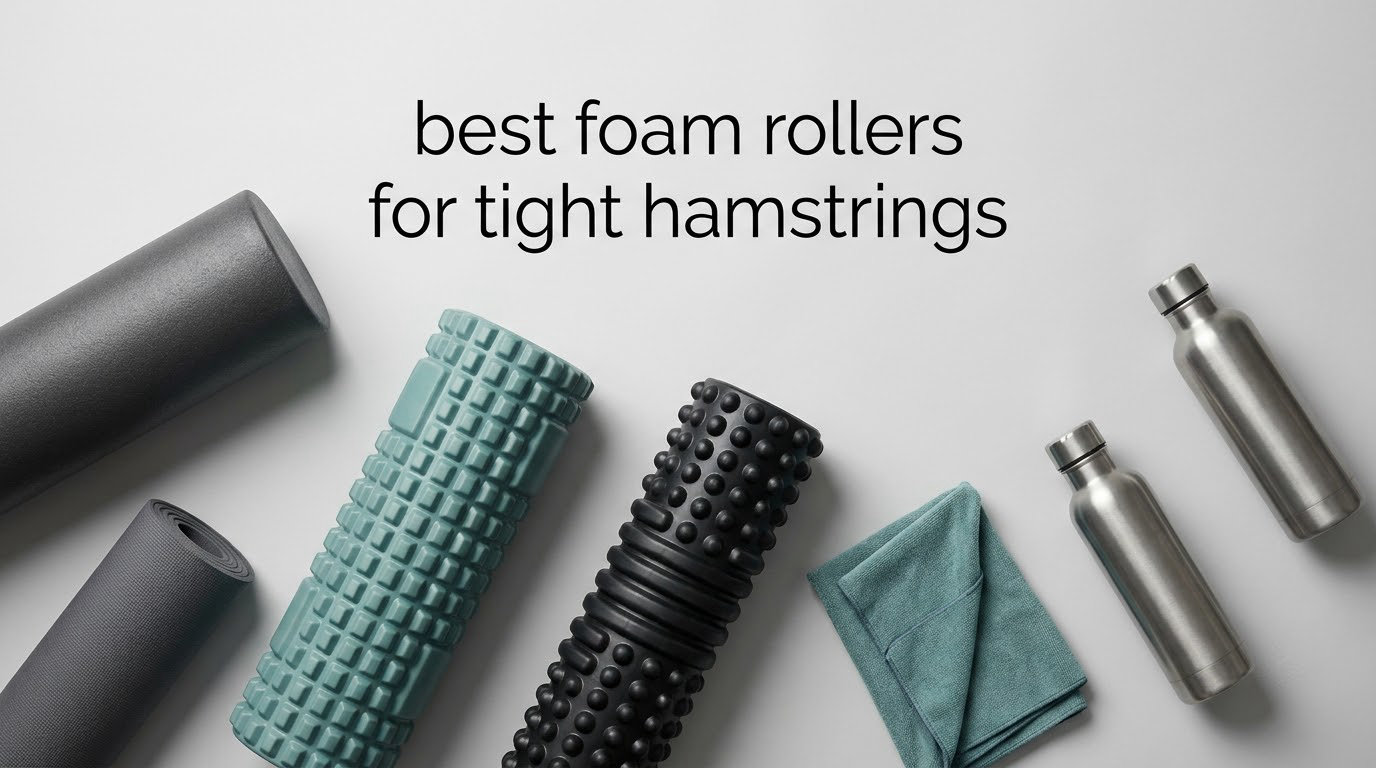
The best foam roller for tight hamstrings is a firm, high-density cylinder at least 12 inches long with a textured surface, because hamstrings carry most of your body weight while you roll them. A roller that is too soft compresses skin without reaching the muscle belly, and one that is too hard without texture makes the muscle brace instead of release. Density, texture and length decide whether a session actually loosens anything.
Our team compared eight rollers over six weeks of rolling, logging how each one behaved on hamstrings after running, after leg day, and on the chronic morning stiffness that desk work leaves behind. The protocol was identical for every roller: sit, support with the hands, move about one inch per second, hold 20 to 30 seconds on any tender spot.
Two things came out of that testing. Hamstrings behave differently from calves and quads because the muscle sits underneath you rather than in front of you, so you need more compression and less surface area. And the pain of rolling is not a scorecard: when people describe a session as brutal, the fix is usually a different position and less body weight on the target, not a softer roller.
Beginners should move from medium density to firmer textured foam over a few weeks rather than day one. The same density-versus-support logic appears in our memory foam pillow guide and our orthopedic memory foam bed roundup.
Table of Contents
Top 3 Best Foam Rollers for Tight Hamstrings in 2026
321 STRONG 3-Zone Roller
- Medium density EVA foam
- Patented three-zone surface
- 12.5 inch length

TriggerPoint GRID 1.0
- Multi-density GRID surface
- Firm EVA hollow core
- Textured ridges and nodules
All Eight Rollers at a Glance
| Product | Specs | Action |
|---|---|---|
| 321 STRONG 3-Zone Massage Roller |
|
Check Latest Price |
| TriggerPoint GRID 1.0 Foam Roller |
|
Check Latest Price |
 Amazon Basics High Density 24 Inch Amazon Basics High Density 24 Inch |
|
Check Latest Price |
 The Original Body Roller The Original Body Roller |
|
Check Latest Price |
 Gimme 10 Medium Density Roller Gimme 10 Medium Density Roller |
|
Check Latest Price |
 OPTP PRO-Roller 36 Inch OPTP PRO-Roller 36 Inch |
|
Check Latest Price |
 Day 1 Fitness High Density 12 Inch Day 1 Fitness High Density 12 Inch |
|
Check Latest Price |
 FITINDEX Vibrating Foam Roller FITINDEX Vibrating Foam Roller |
|
Check Latest Price |
1. 321 STRONG 3-Zone Massage Roller – Best Overall for Tight Hamstrings
321 STRONG Patented 3-Zone Massage Roller, Medium Density for Exercise
Medium density EVA foam
Patented 3-zone surface
12.5 inch length
8.6 ounces
Pros
- Patented zones vary pressure from fingertip to palm feel
- EVA foam over a core that resists cracking
- Comfortable on already sore tissue
- Light at 8.6 ounces so you can reposition easily
Cons
- Too gentle for very deep dense knots
- 12.5 inch length means repositioning mid hamstring
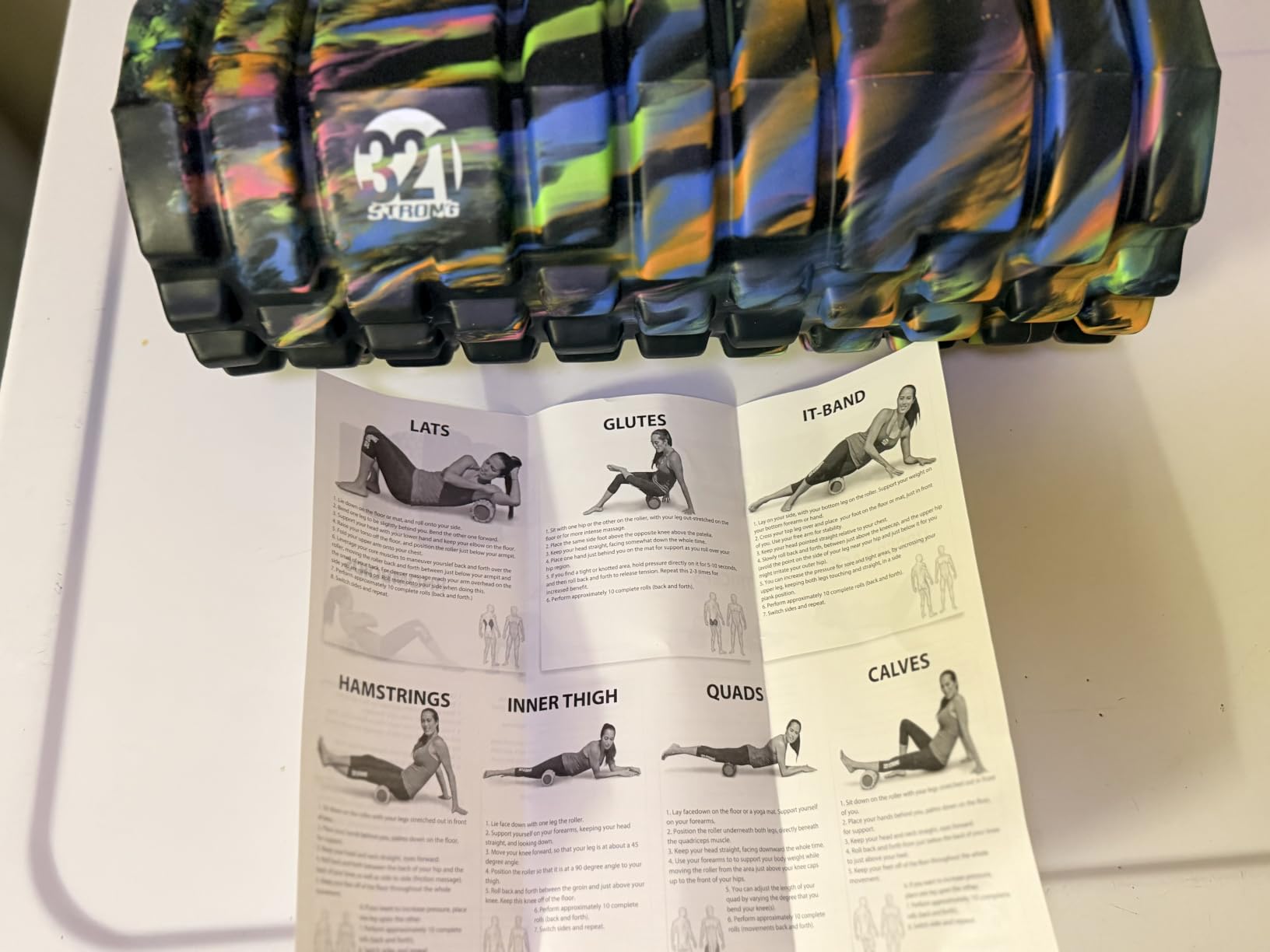
This is the roller we kept reaching for first, mostly because the three-zone surface solves the problem that makes people quit rolling. The projections are not decorative: they spread your weight across a wider contact patch, so the same body weight feels like less pressure per square inch on a sensitive spot.
Rated 4.5 across more than 42k reviews, it is the most thoroughly used roller in this group, and reviewers describe the three zones as what lets them work a hamstring without dreading the tender band near the knee.
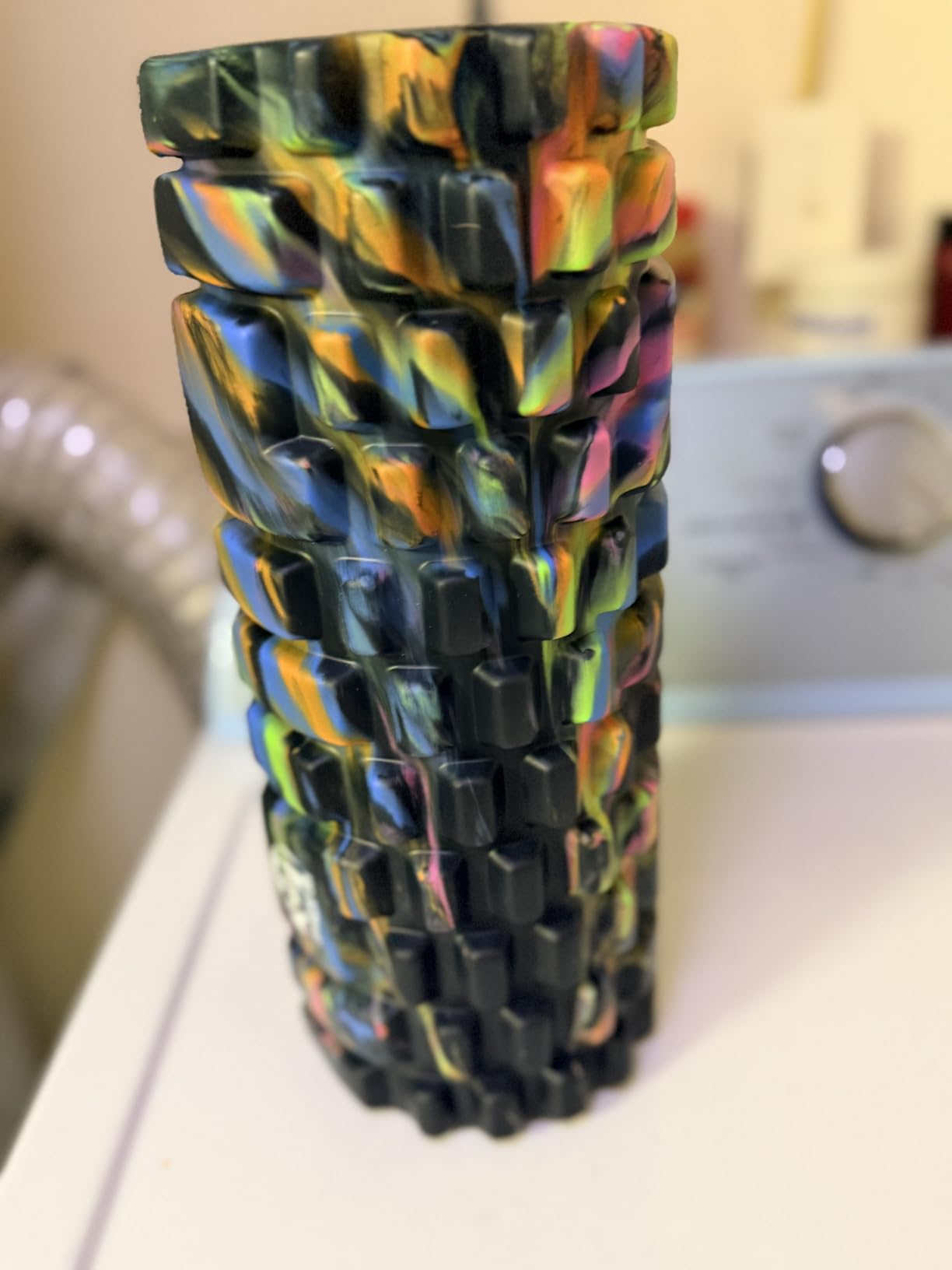
Construction matters more than it sounds. This one is closed-cell EVA foam over an EPP core rather than a hollow plastic tube, and reviewers report it resists cracking under load, the failure mode that ends most budget rollers after a few months. The honest limitation is density: medium suits most people and is wrong for someone whose hamstrings feel like rope, because on deep knots you can feel the roller bottom out before the muscle does.
Who it suits and what you will notice
For beginners, desk workers, and anyone rolling after a run, the medium density lets you use bodyweight without bracing, and the three zones give variety without buying a second tool. The trade-off is length: at 12.5 inches you cover roughly the upper two thirds of a hamstring before moving the roller.
Where it falls short
If you are over 200 pounds and your hamstrings are genuinely dense, medium density feels like rolling a pillow, and a firm textured or vibrating roller is the better tool. At 8.6 ounces it is also the lightest option here, which is genuinely useful where a 36 inch cylinder is awkward to store.
2. TriggerPoint GRID 1.0 – Best Foam Roller for Stubborn Hamstring Knots
TriggerPoint Grid 1.0 Foam Roller – 13″ Multi-Density Massage Roller for Deep Tissue & Muscle Recovery – Relieves Tight, Sore Muscles & Kinks, Improves Mobility & Circulation – Targets Key Body Parts
Multi-density GRID surface
Firm EVA hollow core
1.1 pounds
Pros
- Zones let you vary firmness across one roller
- Firm hollow core gives deep compression
- Ridges and nodules target trigger points
- Highest average rating in the group at 4.7
Cons
- Firm feel is too intense for beginners
- Premium compared with plain smooth cylinders
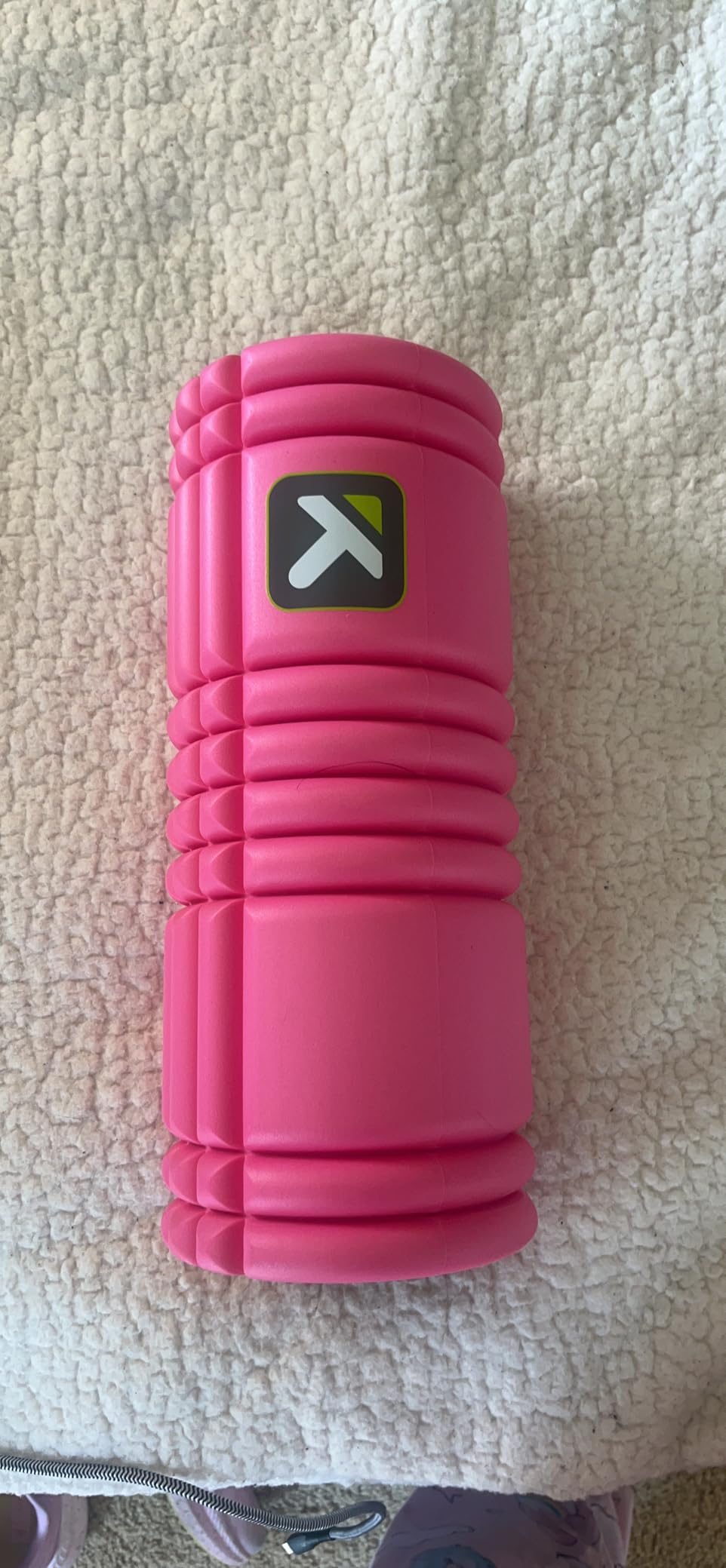
This is the roller to buy if your hamstrings stay tight no matter how long you roll them. The GRID surface varies in density across the same cylinder, so you start on a softer zone to get the muscle to relax, then move onto the firmer ridges for the stubborn band in the middle of the belly.
It holds the highest average rating in our set at 4.7 across nearly 24k reviews, and reviewers single out the multi-density zones as the reason it works on hamstrings specifically rather than just on calves.
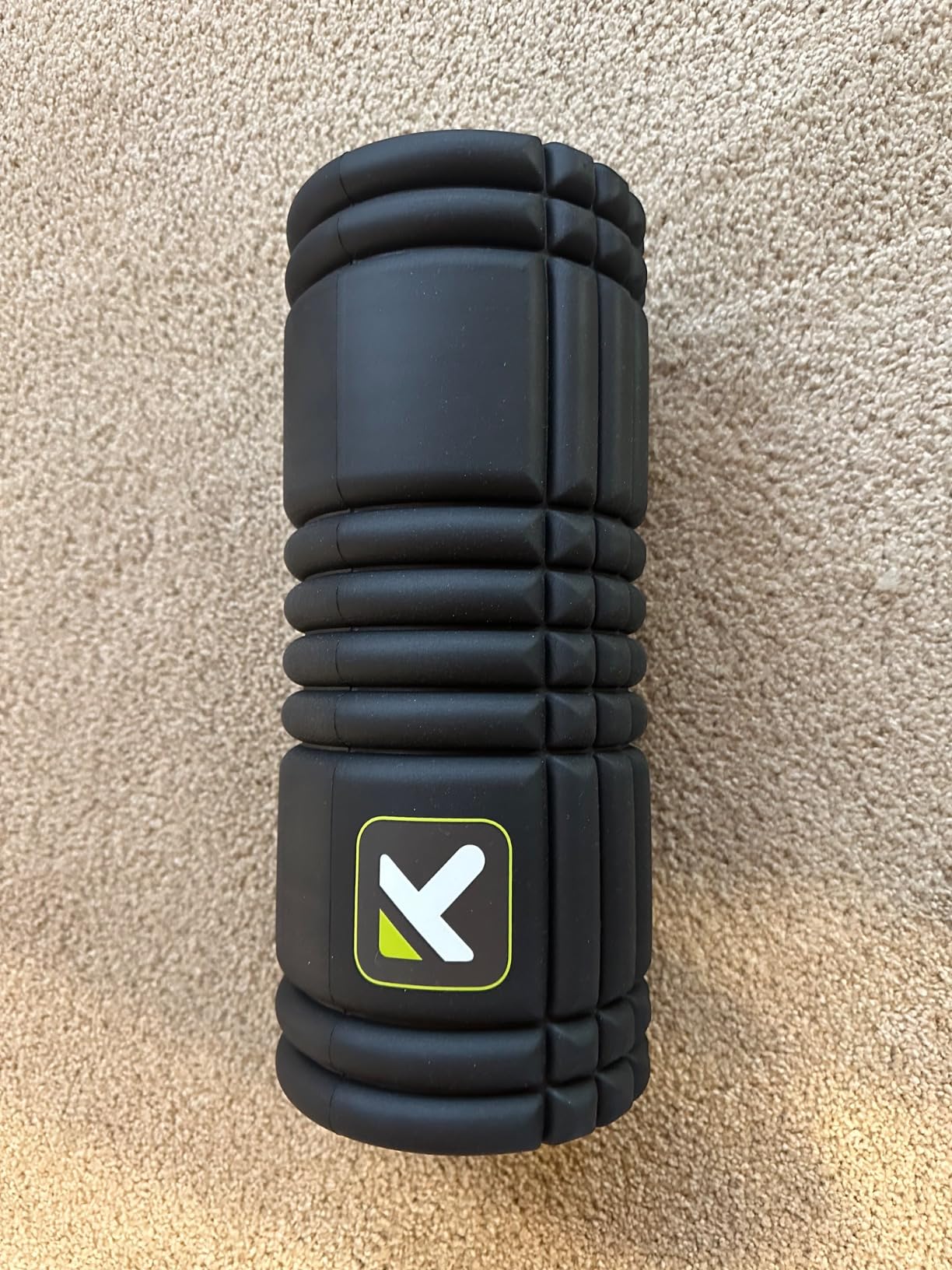
The hollow core is the other half of the story. Rather than a solid plastic rod, it is EVA foam wrapped around a hollow structure, which gives firmer compression without the punishing hardness of a solid roller. Durability came up repeatedly: owners rolling two or three times a week report the ridges not wearing flat, which matters because a worn smooth roller is just an expensive stick.
Deciding factors before you buy
Check your tolerance against the word firm. Beginners are warned about this more than any other downside: the first two sessions on a TriggerPoint can be uncomfortable enough to make you abandon it. It is also a 13 inch roller, so you will reposition as you work down the leg.
Where it falls short
The premium buys surface geometry rather than length, so if your main problem is covering a long posterior thigh, a longer firm roller is the smarter spend. Keep the firm zones off your lower back, where many people find them too much.
3. Amazon Basics High Density Foam Roller, 24 Inch – Best Value Long Roller
Amazon Basics High Density Foam Roller for Exercise and Recovery, 24 Inches, Black
Firm polypropylene core
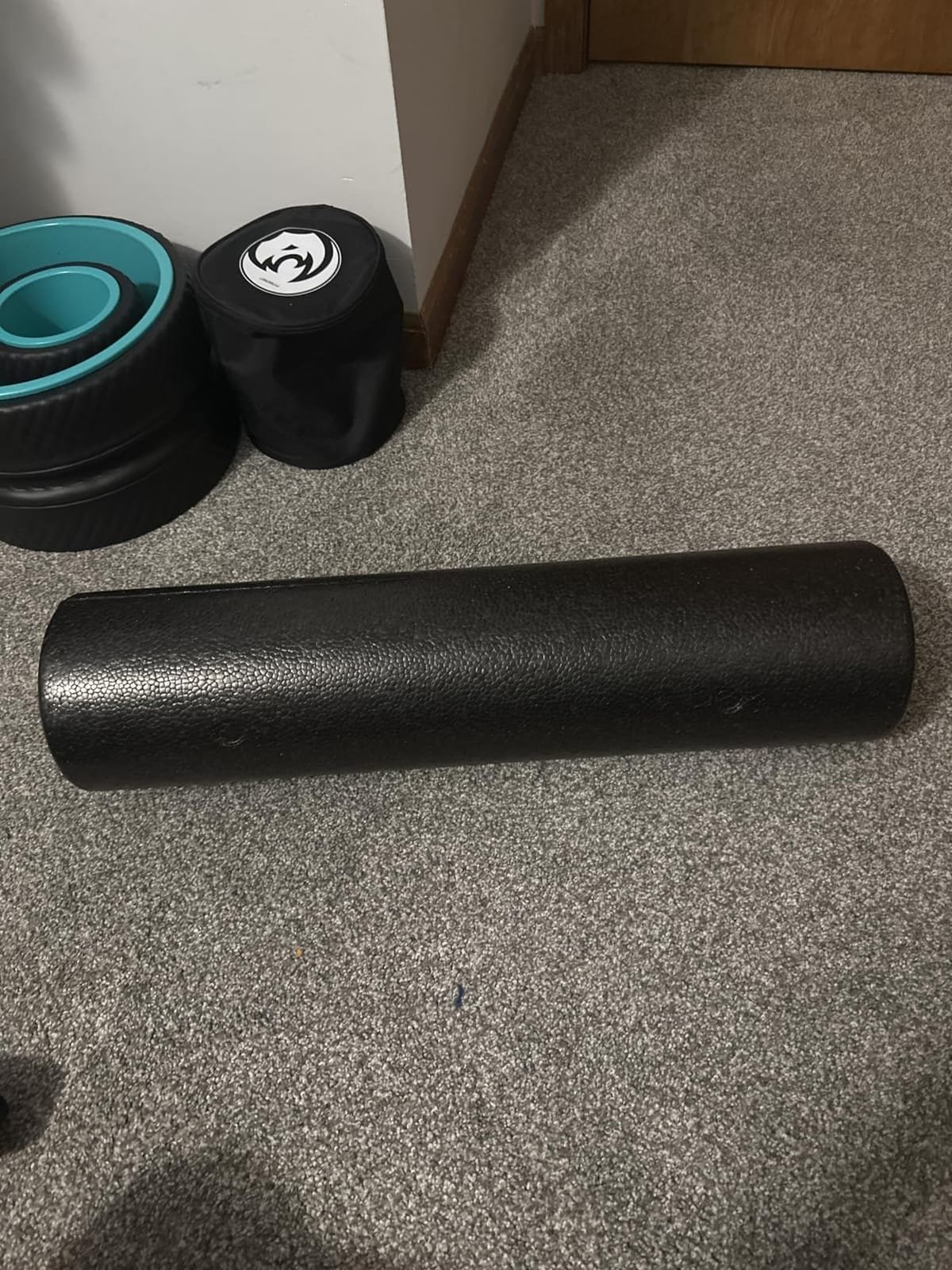
24 x 6 x 6 inches
Molded comfort edges
Pros
- 24 inches covers a whole hamstring in one pass
- Firm core holds shape over years
- Lightweight and easy to carry
- Reviewers say it performs like costlier rollers
Cons
- Very firm on tender or injured tissue
- Smooth surface gives no texture for trigger points
Length is the feature people underestimate. At 24 inches, this roller covers the entire posterior thigh from glute crease to knee in a single pass, which removes the constant repositioning that makes short rollers feel like a chore.
Rated 4.6 from more than 19k reviews, it is the option we recommend when someone wants one roller that handles hamstrings, calves, quads and back without a second purchase.
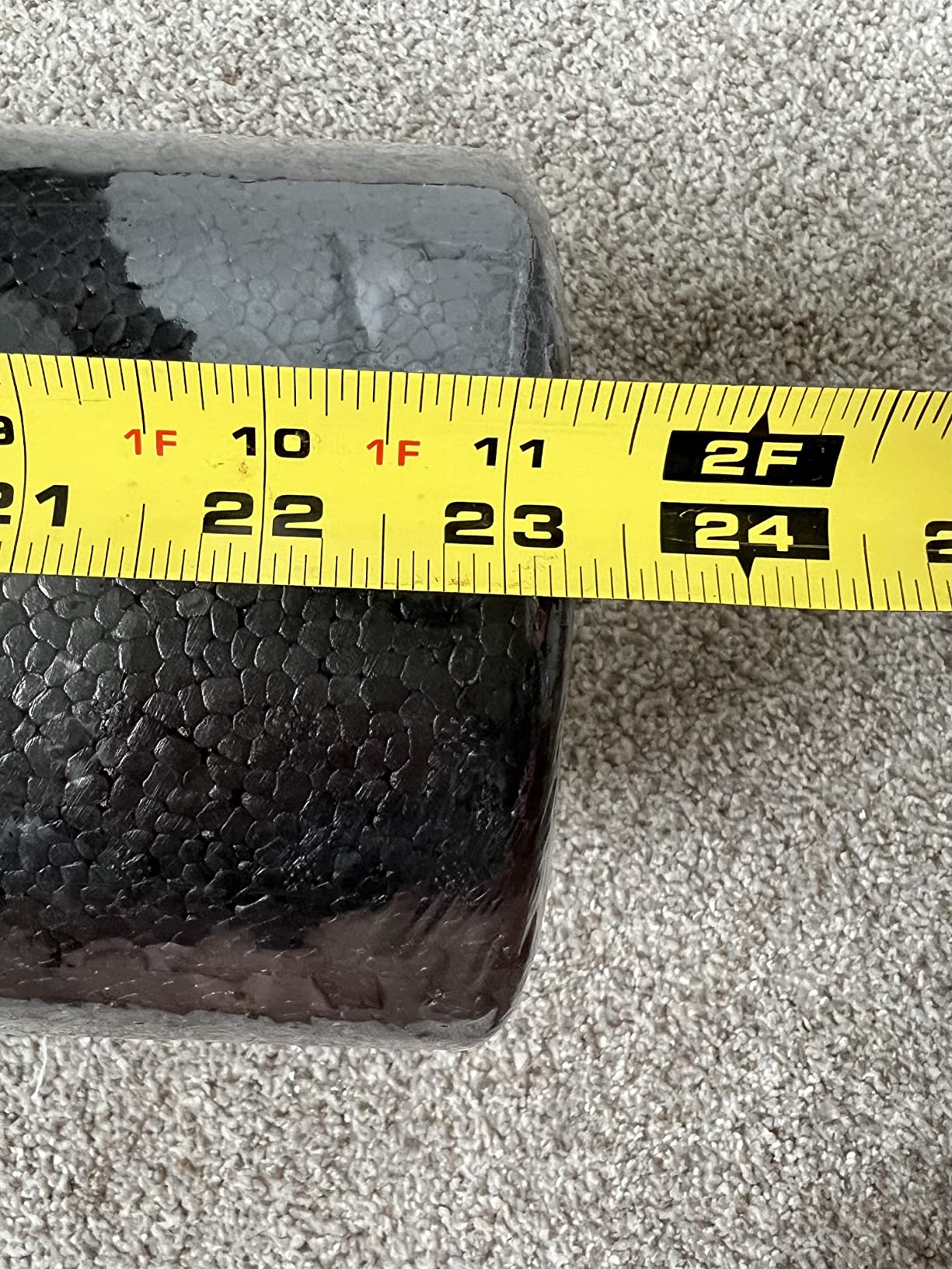
The firm polypropylene core is what separates it from cheap soft foam. Reviews describe it as holding its firmness after a year of regular use, which matters more than any texture feature if you roll daily, and the molded edges spread contact on a roller firm enough that the edge is what meets your skin at an angle.
What you trade away
There is no texture. You can apply broad sustained pressure along the muscle belly, but you cannot pin a single trigger point and lean into it, which is what people with stubborn knots actually need. Firm density is also aggressive on sore muscle, so give it a few minutes rather than your full weight on day one after leg day.
Who should pick it
Anyone over 180 pounds, anyone who moves between a gym and home, and anyone who wants a single roller for a full leg. It is the least fiddly product in this list, and that simplicity is a real advantage for consistency.
4. The Original Body Roller – Best for Pinpoint Hamstring Knots
The Original Body Roller – High Density Foam Roller Massager for Deep Tissue Massage of the Back and Leg Muscles – Self Myofascial Release of Painful Trigger Point Muscle Adhesions (Blue)
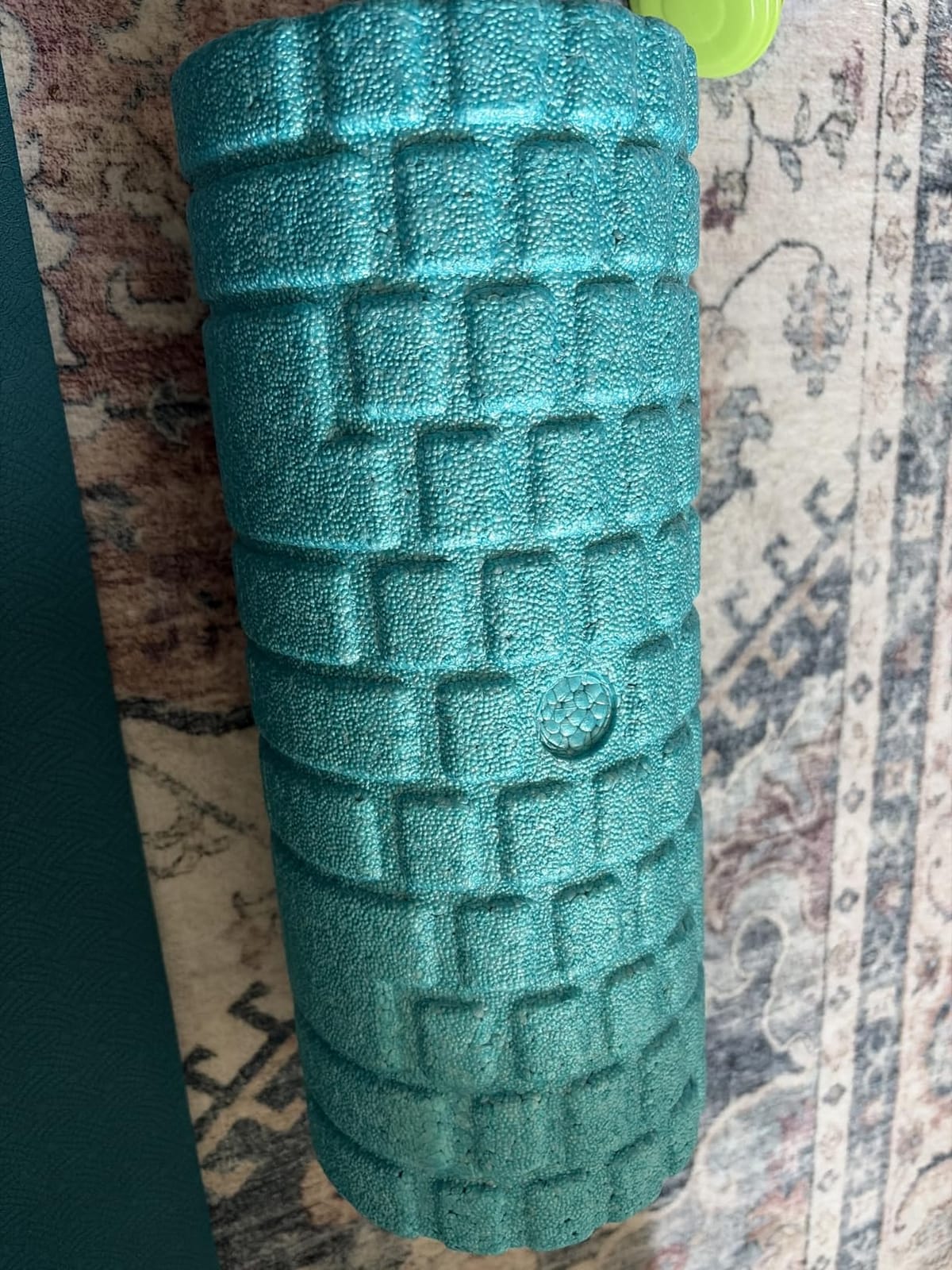
Dual grid texture
12.5 x 5.25 inches
3.21 ounces
Pros
- Ridged side and spiked side give two intensities
- Very light at 3.21 ounces
- Dual texture works well for running recovery
Cons
- Short body for a full hamstring pass
- Spiked side can be uncomfortable on sensitive tissue
- Spiked texture is aggressive for chronic tightness
The idea here is variety within one roller. One side is a ridged grid that behaves like fingers, and the reverse is a field of pointed bumps that bites deeper into a stubborn spot, so you can escalate only when you have earned it.
Rated 4.4 across roughly 16k reviews, it is the most polarizing of the eight, and the rating itself tells you why: people who like aggressive spot work rate it well, and people who want a smooth surface rate it poorly.
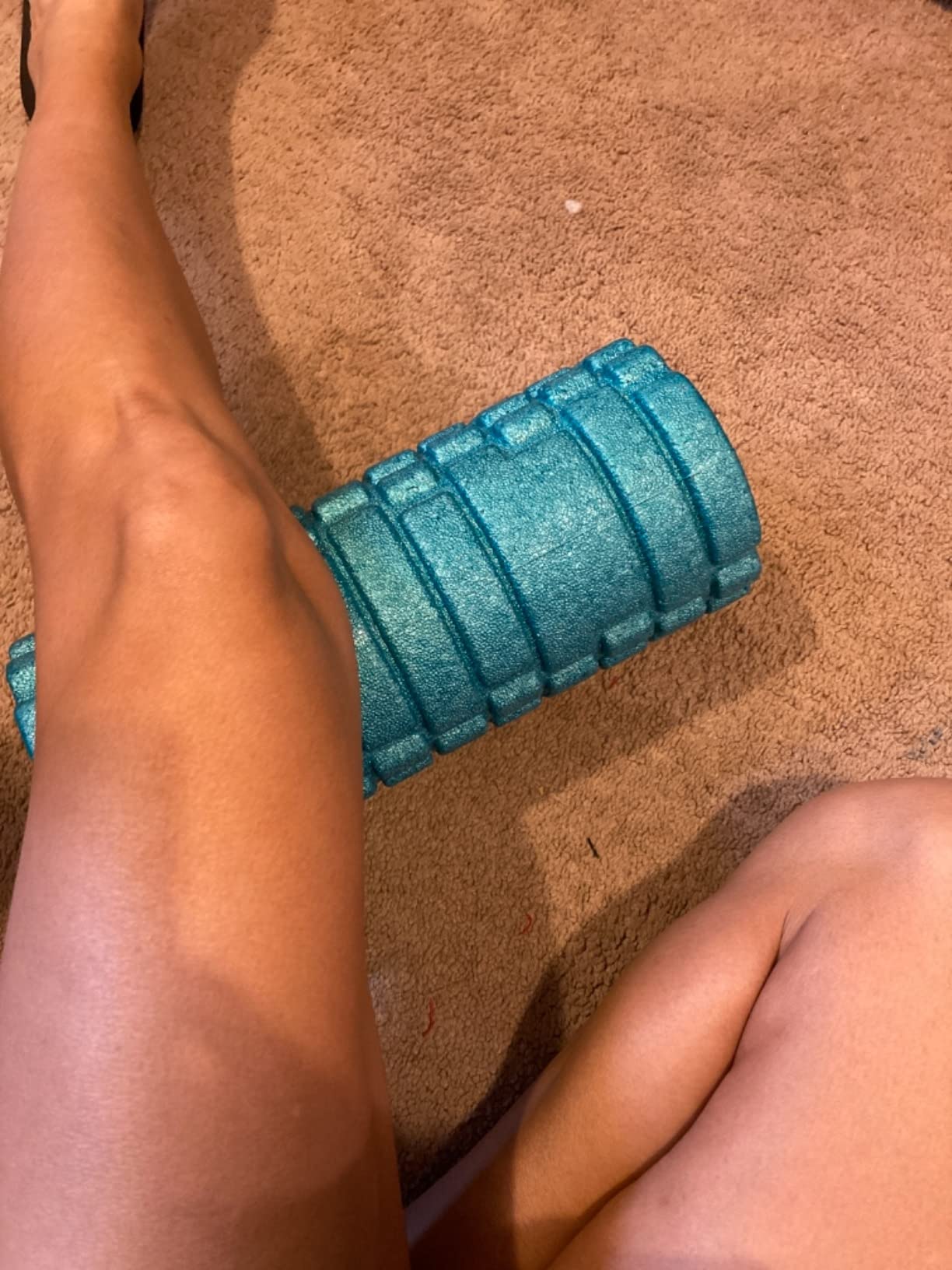
At 3.21 ounces it is by far the lightest roller here, so it is the one to keep in a gym bag or a suitcase, and runners tend to carry it for the small specific spots that appear after long mileage. The EPP construction is tough: it is the same family of dense foam used in car bumpers, and it does not crack the way hollow plastic cores can after repeated locker drops.
Where it works well
Use the ridged side for the general pass and save the spiked side for one or two specific spots at the end, because the ridged pass is what gets the muscle to stop guarding first. The weight and size make this the most practical textured option for a gym bag or a small studio.
Where it falls short
At 12.5 inches it is short, and the pointed side is genuinely unpleasant on tissue that is already sore. Several reviewers describe it as too aggressive after a hard session rather than a recovery tool, and if your hamstrings are tight but not knotted you are paying for spikes you will mostly avoid.
5. Gimme 10 Medium Density Roller – Best for Beginners
Gimme 10 Massage Roller for Physical Therapy, Back Pain and Muscle Massage
Medium density EVA foam
ABS core
12.5 x 5.25 inches
Rated to 485 lbs
Pros
- Medium density releases tight spots without intense pressure
- Three texture zones in one roller
- Supports up to 485 lbs without bending
- Backed by a one year warranty
Cons
- Noticeable give suits moderate knots rather than deep ones
- Awkward for very localized trigger points
- One review reports an inner shell crack after about six weeks
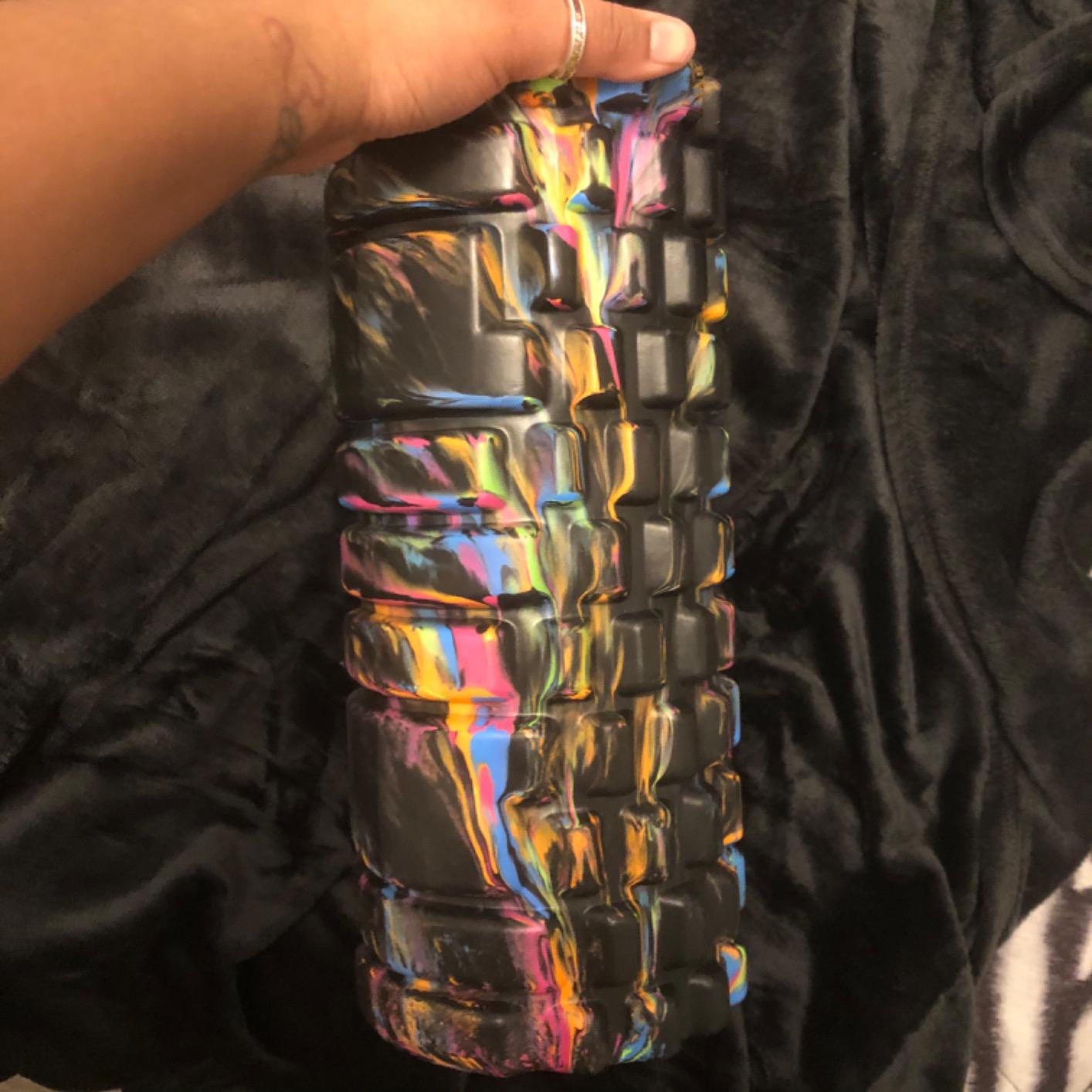
This is the roller we would hand to someone who has never foam rolled and is intimidated by the idea. Medium density plus a three-zone surface means you can find a comfortable pressure within the first ten seconds instead of committing to a hard surface and quitting.
Rated 4.6 from about 7.5k reviews, reviewers describe it as the balanced middle ground for hip and thigh work, which is precisely the hamstring problem area.
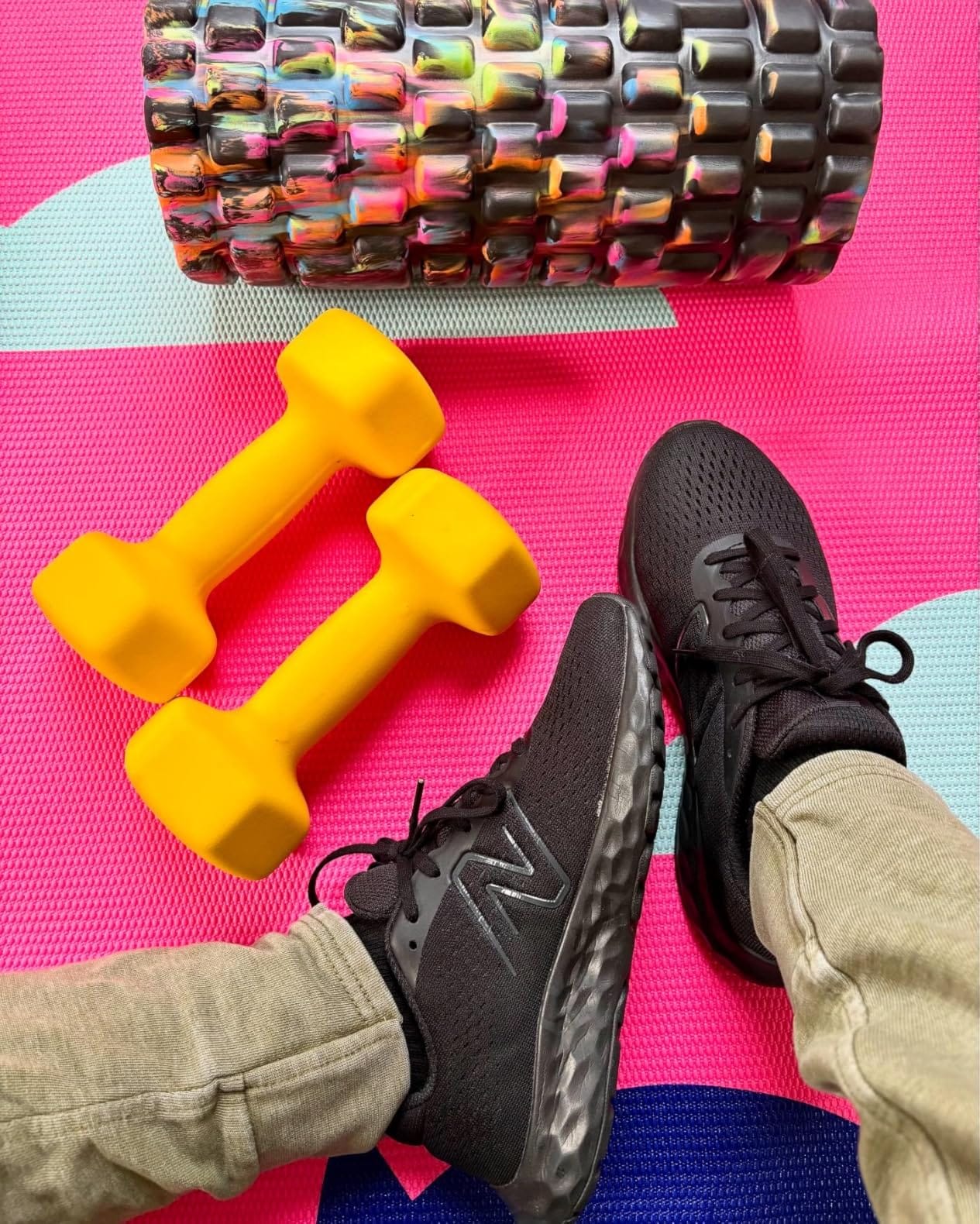
The 485 pound support rating is worth noting for anyone who dismissed foam rollers as too soft under load, and the reviews broadly support the core holding under heavier body weight. The one year warranty is not universal in this category and removes some risk on a first purchase.
Why beginners do better on it
Medium density is forgiving enough that you can roll for a full two minutes without bracing, and bracing is the real reason people quit: a muscle that tenses under pressure stops lengthening no matter how hard you push. It also works well as a gentle second roller for calves and lower back on days when the firm rollers feel excessive.
Where it falls short
Noticeable give means it is the wrong tool for very dense, deep knots, so you will likely outgrow it within a few months. The elongated shape is also difficult to dig into a small trigger point with, and a few reviews mention an inner shell cracking after roughly six weeks of daily use.
6. OPTP PRO-Roller 36 Inch Soft Density – Best Full Leg Coverage
OPTP PRO-Roller Soft Density Foam Roller – Round, Blue, 36″ x 6″
Soft closed-cell EVA foam
36 x 6 x 6 inches
15 ounces
Pros
- 36 inch length covers glute to knee in one pass
- Soft density suits sensitive tissue
- Closed cell foam wipes clean after sweaty sessions
- Heat molded construction resists flattening
Cons
- Smooth surface has no texture for knots
- Bulky to store and travel with
- Soft foam gives way under heavier body weight
Thirty-six inches is the full posterior chain in one object. Sit on it and work from glute crease to knee, then reverse the orientation and cover the calf without moving anything, which was the fastest two-leg routine we tried.
It shares the highest average rating in this group at 4.7, with roughly 6.6k reviews, and physical therapy and studio users are the core of that group.
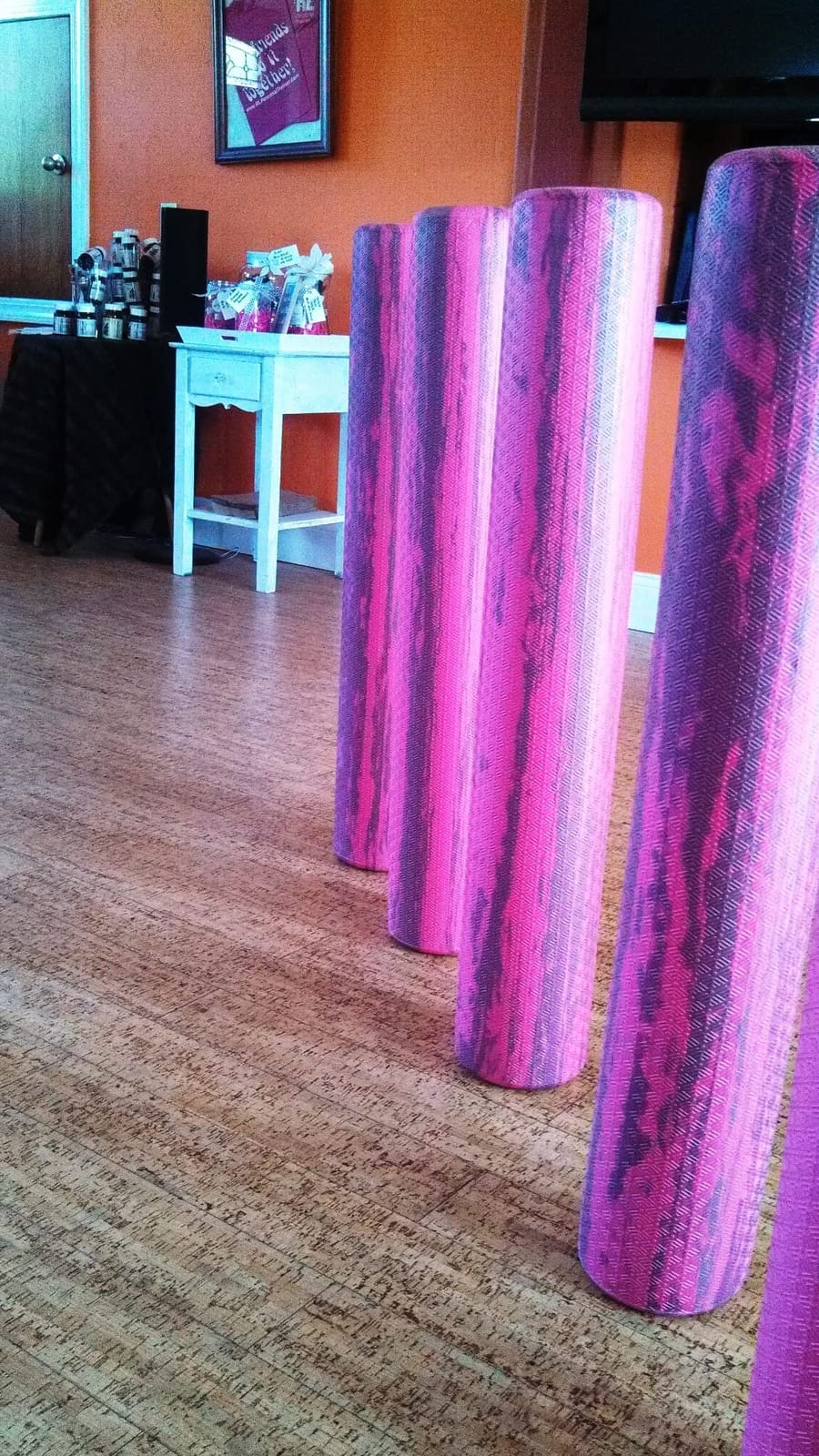
Closed-cell EVA is the practical win. It wipes clean rather than absorbing sweat, and heat molding is why the shape holds over years instead of developing the flat spots that end open-cell rollers. Soft density is the deliberate trade: for chronic tightness that is uncomfortable but not injured, a long soft roller gets you through the full session without the early stoppage firm rollers cause.
Where the length pays off
If you roll both legs at once by crossing one ankle over the other, a 36 inch roller handles the doubled-up position, and shorter rollers make that technique awkward. It is also the single roller that covers hamstrings, calves and lower back, which suits clinic and studio work.
Where it falls short
There is no texture at all, so deep knots need a second, smaller tool, and soft foam compresses more under heavier body weight. A 36 inch cylinder is also genuinely awkward to store in an apartment or pack for a trip.
7. Day 1 Fitness High Density 12 Inch – Best Budget Roller
Day 1 Fitness High Density Muscle Foam Rollers – Sports Massage Rollers for Stretching, Physical Therapy, Deep Tissue, Myofascial Release – Ideal for Exercise and Pain Relief – Solid Black, 12″
High-density EPP foam
12 x 6 x 6 inches
9.91 ounces
Pros
- Firm high density EPP that resists bending
- Travel friendly at under 10 ounces
- Range of lengths covers 12 to 36 inches
Cons
- 12 inch length is short for a full hamstring
- Smooth hard surface can be uncomfortable on sore muscle
- No texture for targeted trigger point work
This is the straightforward answer for someone who wants firm foam and nothing else. High-density EPP resists bending and breaking under body weight, which is the honest reason cheap rollers fail, so this one survives daily use better than its price suggests.
Rated 4.5 from roughly 5.7k reviews, it is treated in the reviews as a durable general-purpose roller for myofascial release rather than a specialist tool.
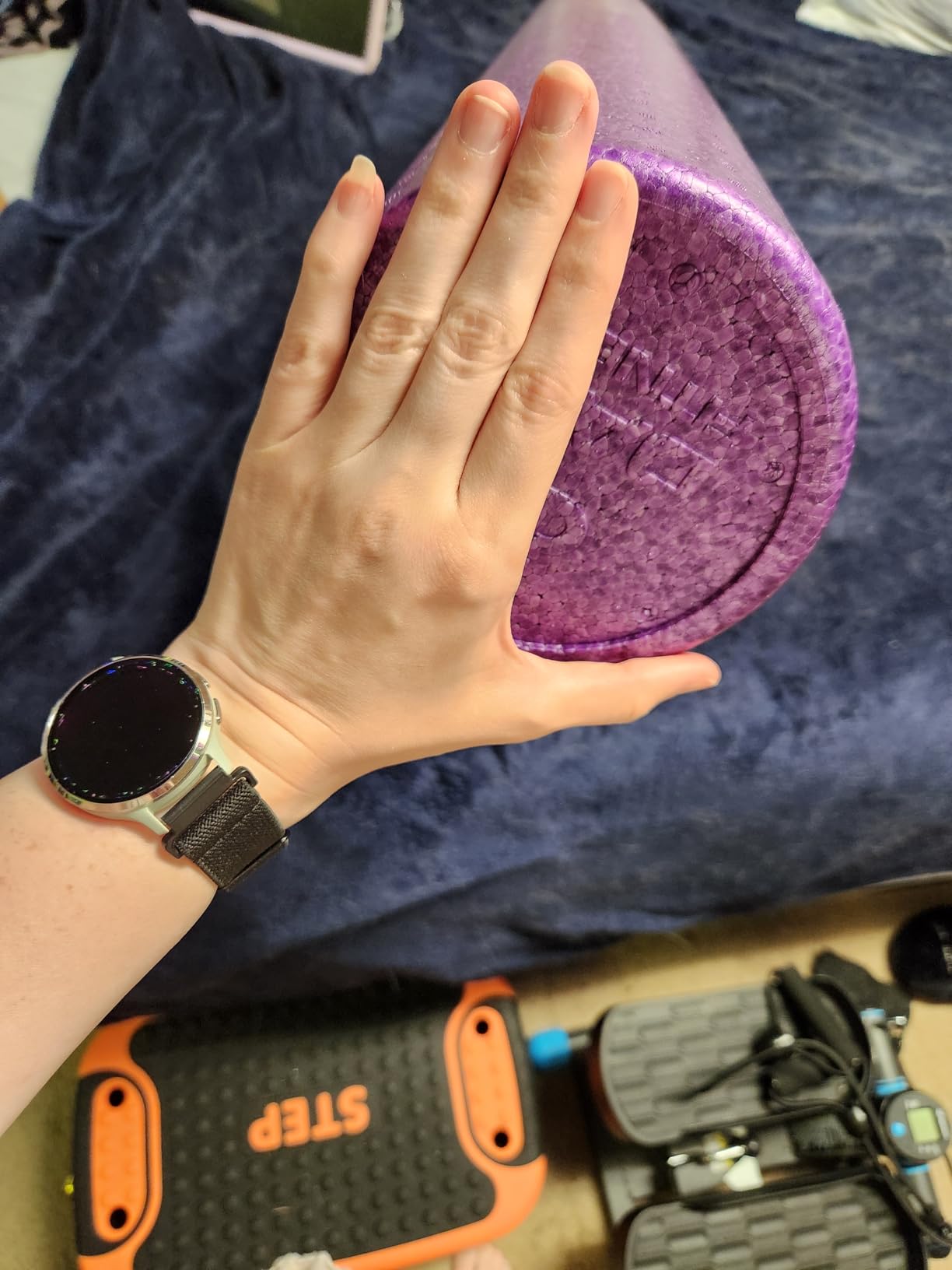
The broader line covers 12, 18, 24 and 36 inch versions, so one brand handles a travel roller, a full-leg roller and a twin-leg roller without switching materials mid-routine, and at 9.91 ounces it packs flat for anyone rolling at home before or after work.
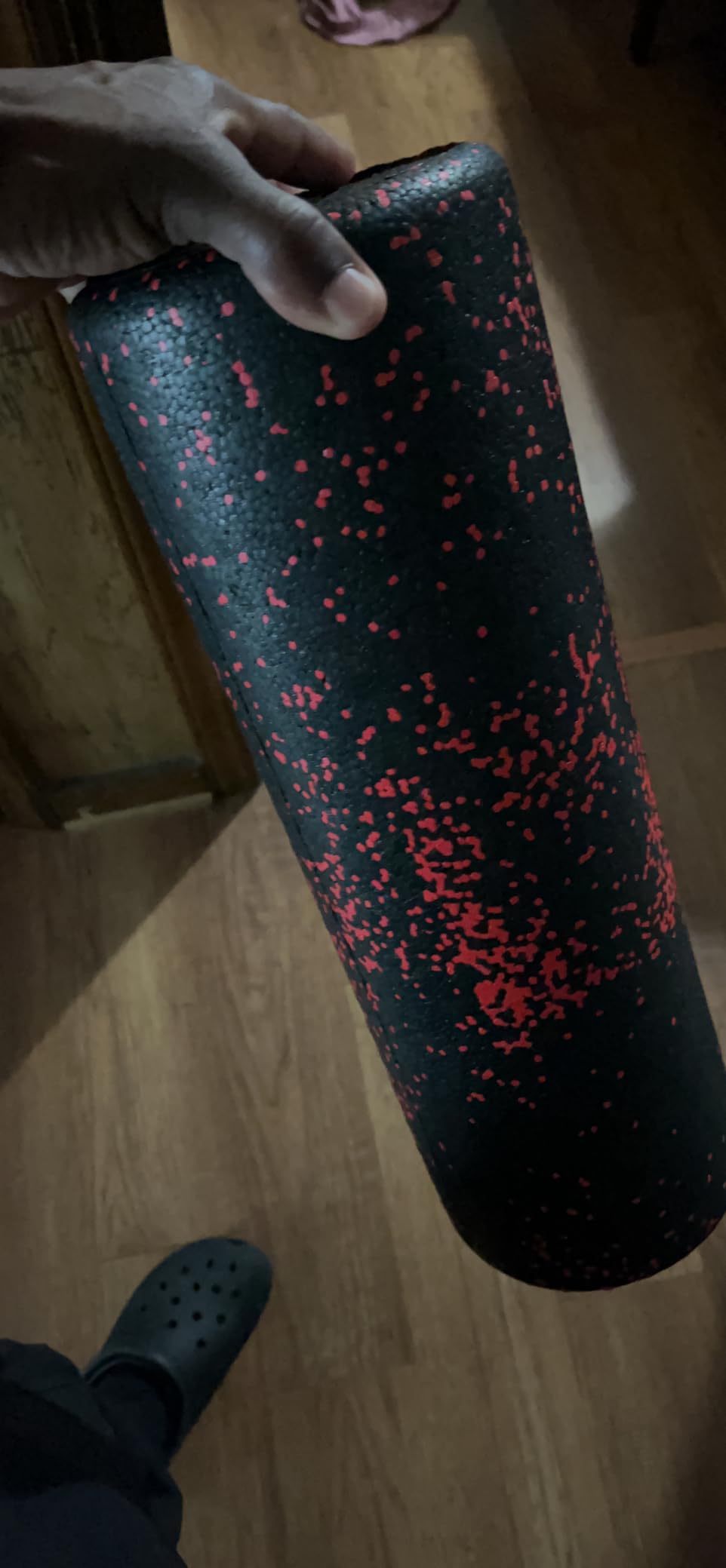
When it is the right call
Choose this if your hamstrings are firm rather than knotted, and if you are over 180 pounds and need density more than texture. A smooth firm roller is very good at the broad pass up the posterior thigh, and there is nothing to learn: no buttons, no settings, no battery.
Where it falls short
Twelve inches is short, so you are constantly shifting position, and the surface has no geometry to work a specific tender point. Very firm and very smooth is also a poor combination on already sore muscle, so if you are recovering from a hard session rather than managing chronic tightness, a medium roller serves you better.
8. FITINDEX Vibrating Foam Roller – Best Vibrating Option
FITINDEX Vibrating Foam Roller for Exercise,5 Vibration Speeds,Rechargeable
Five vibration speeds 1500 to 3200 RPM
Three density zones
USB-C charging
11.4 inches
Pros
- Vibration reduces the body weight needed per spot
- Five speeds plus three density zones
- Fully charges in about five hours
- Over two hours of runtime per charge
Cons
- Smallest roller in the set at 11.4 inches
- Heaviest at 3.11 pounds
- Battery is a wear item and the lowest rated at 4.3
Vibration is the only feature in this roundup that changes the physics of the session. Because the surface pulses, you can hold a spot with noticeably less of your own body weight, which is the answer for people whose hamstrings brace the moment they press.
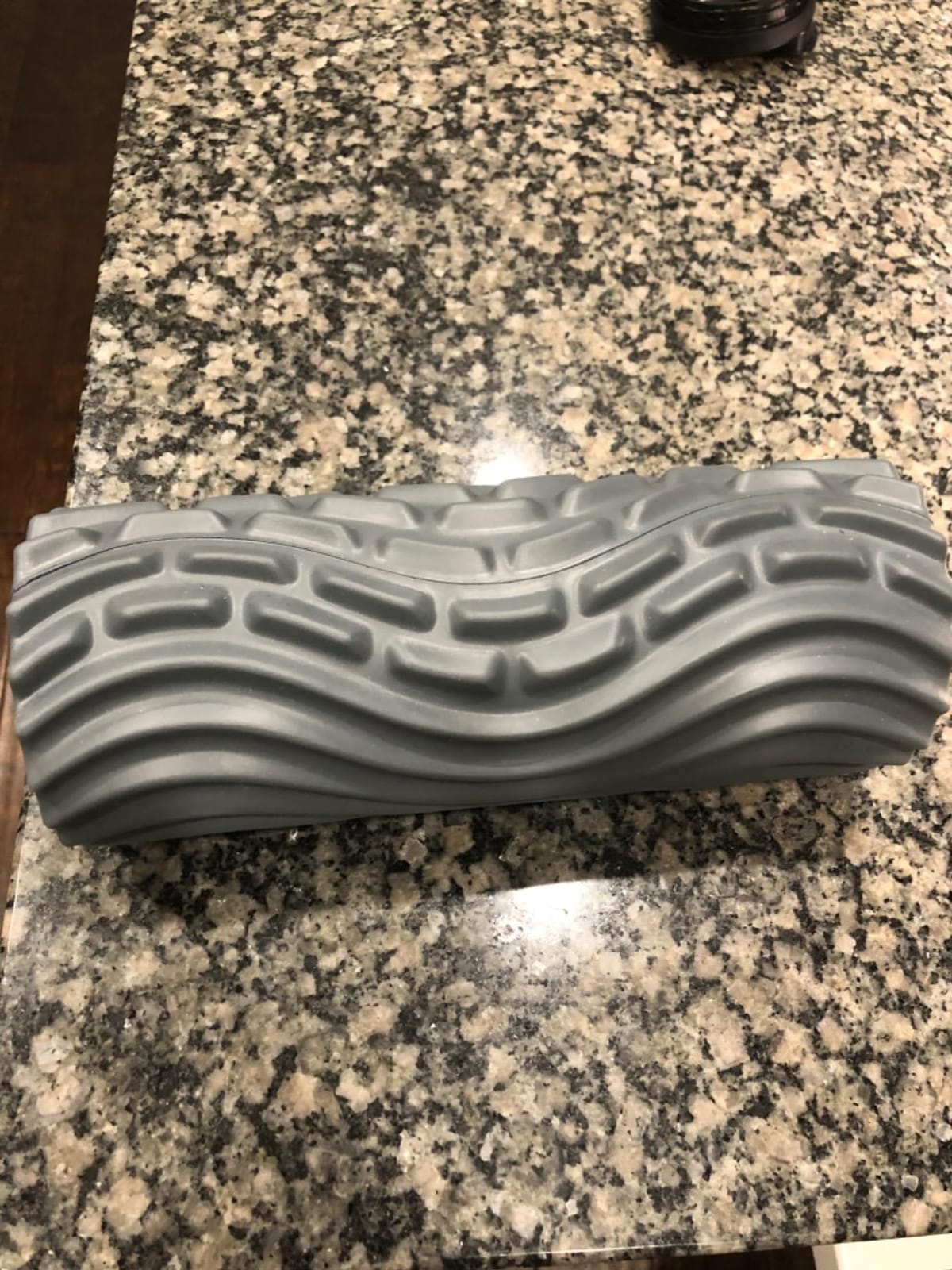
Five speed settings from 1500 to 3200 RPM combined with a three-in-one density wave pattern give more usable combinations than a single-texture roller, and that range is what makes it adaptable rather than gimmicky.
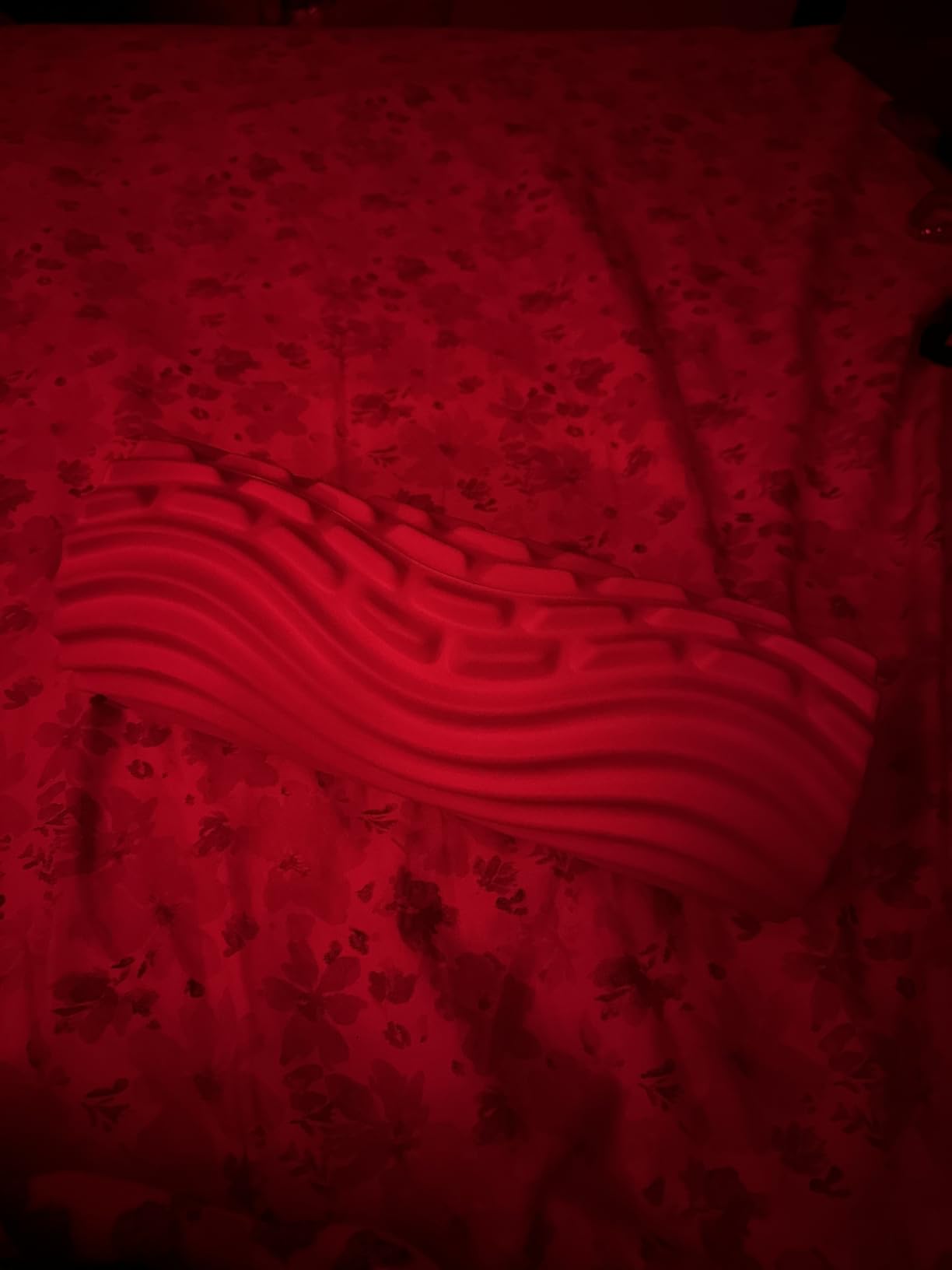
USB-C charging is a real convenience: a full charge takes about five hours and delivers more than two hours of use even on the highest setting, so a weekly routine is covered by a single charge. The body is 11.41 inches and 4.72 inches in diameter at 3.11 pounds, compact but noticeably heavier than any static roller here, and that weight is the motor and battery.
When vibration earns its cost
It earns its cost when your hamstrings hurt to touch, when you cannot stop guarding, or when one spot has not moved in weeks, and it helps older users or anyone with limited upper body strength who wants less leaning on the hands.
Where it falls short
It is the smallest roller here at 11.41 inches and the lowest rated at 4.3 across about 3k reviews, with 7 percent one-star feedback concentrated on the battery and the bulk. Once the battery wears out the roller still works as a static cylinder, but you are carrying dead weight for a feature that no longer fires.
How to Foam Roll Tight Hamstrings Without Making Them Worse?
Technique matters more than the roller, and the protocol we used across all eight products was identical: sit with the roller under the meat of the hamstring, place your hands behind you for support, and keep the opposite leg straight rather than bent for stability.
Start at the glute crease, not the knee. The upper hamstring belly takes pressure far better than the area just behind the knee, which is thin, nerve-dense and easily irritated.
Roll at roughly one inch per second. Slow rolling creates sustained pressure; fast rolling just sweeps past.
Pause 20 to 30 seconds on any tender spot. Longer than 30 seconds adds irritation without adding benefit, and shorter rarely changes anything.
Reduce pressure rather than increasing it when it hurts. Cross the ankle over the opposite knee to take weight off the target leg, or drop onto your forearms.
Work both sides for the same time. A tighter side often feels worse simply because you have spent more effort on it.
Finish with a gentle hamstring stretch. Holding the stretch for 30 seconds after rolling takes advantage of the temporary range of motion you just created.
If rolling makes the hamstrings worse rather than better, the most common cause is bracing, not the roller, and a muscle that guards under pressure will tighten further. Cut pressure immediately and return once you can tolerate the contact without clenching. The same support-versus-pressure trade-off shows up in our orthopedic memory foam dog bed roundup for anyone whose hips ache from sitting all day.
Rolling works in two to three minute blocks and the effect fades within a few hours, which is why experienced users call it a short-term fix. Someone who sees lasting change after a month has combined it with loaded stretching, which is where durable gain actually comes from.
How to Choose: Density, Texture, Length and Vibration
Density is the single biggest variable. A controlled study comparing different foam roller densities on hamstring stiffness and flexibility in active men found larger short-term flexibility gains from firmer rollers. The practical translation: go firmer than instinct suggests, but only as firm as your tolerance allows, because a roller you dread is one you stop using.
Under 130 pounds, or new to rolling: start medium. You need enough density to reach the muscle, not enough to make you tense.
130 to 200 pounds: medium to high density. Most people in this range are best served by a firm textured roller.
Over 200 pounds: high density or a vibrating roller. A soft roller simply compresses before it transmits any meaningful pressure.
Texture decides what kind of work you can do. A smooth cylinder is for broad sustained passes over the whole muscle belly and is the right choice for a full leg in one pass. A ridged or grid surface lets you pin a specific tender spot, and a spiked surface goes further still, but only once you can handle ridged texture without bracing.
Length is about coverage and technique. A 12 to 13 inch roller suits a single-leg routine and travels well. A 24 inch roller covers one whole hamstring without repositioning. A 36 inch roller lets you roll both legs at once by crossing one ankle over the other, which was the fastest routine we tried. Diameter affects stability more than pressure: a 5.25 inch roller is easier to control when you lean on one hand, while 6 inches is steadier for a cross-legged both-legs position.
Vibrating rollers earn the extra cost only for a specific problem: a spot that will not release under static pressure, or a hamstring too sore to accept your body weight. For daily maintenance a good static textured roller is the better long-term purchase.
For pinpoint knots, a non-cylinder tool is often more effective than any of these. A lacrosse ball, a peanut roller, or a short length of PVC pipe against a wall applies very high pressure to one centimetre of tissue, which a 5 inch cylinder physically cannot do. Experienced lifters on training forums describe those tools as more effective for a specific knot than a foam roller of any density.
When Not to Foam Roll Your Hamstrings
First, the distinction that matters most: tight is not the same as strained. Tight hamstrings feel restricted, shorten your forward fold, and hurt only under pressure or stretch. A hamstring strain is an acute injury that behaves differently enough that rolling is the wrong response.
Do not roll, and get it assessed, if you have any of the following.
A sharp pain at the moment of injury, followed by bruising or swelling in the posterior thigh.
Pain that is present at rest or at night, or that wakes you from sleep.
A visible deformity, or pain that you can trigger by pressing firmly on the muscle belly itself.
Weakness in knee flexion, or a foot that drags when you walk.
Tingling, numbness, or radiating pain down the leg below the knee.
That last group overlaps with a different problem. Sciatic nerve tension, proximal hamstring tendinopathy near the ischial tuberosity, and referred low back pain can all feel like tight hamstrings, and none of them improve from sustained compression. Pain that radiates below the knee, sits in the buttock crease, or has persisted for weeks with no change deserves a clinician rather than a foam roller.
Within a normal session, stop and reassess if pain becomes sharp rather than dull, if you feel numbness or tingling, if the muscle cramps, or if the area is hot and swollen. Dull ache during a hold is expected; sharp or escalating pain is not.
Finally, roll gently for the first two or three sessions after an acute strain, and only once a clinician has cleared active bleeding and tearing. Aggressive rolling over the first 48 hours after a hard workout can make soreness worse rather than better.
Frequently Asked Questions
Can a foam roller help with tight hamstrings?
Yes. A foam roller applies sustained pressure along the hamstring belly, which temporarily reduces stiffness and increases range of motion without damaging tissue. Sit on the roller, support yourself with your hands, move roughly one inch per second, and pause 20 to 30 seconds on tender spots rather than rolling quickly over them. The effect is real but temporary, lasting a few hours, so pair it with loaded stretching for durable change.
What is the best roller for tight hamstrings?
A firm, high-density foam roller at least 12 inches long with a textured surface. For most people the 321 STRONG three-zone roller is the best single pick, because medium density with three pressure zones lets you start comfortable and increase intensity. If your knots are stubborn, the TriggerPoint GRID 1.0 with its multi-density zones is the stronger tool. If you need full leg coverage in one pass, a 24 to 36 inch smooth firm roller beats both.
Should a foam roller be hard or soft for hamstrings?
Firmer than most people expect, but only as firm as your tolerance allows. A roller that is too soft compresses before it reaches the muscle, and one that is too hard without texture causes muscle guarding, which tightens the muscle further. Under 130 pounds or new to rolling should start medium, 130 to 200 pounds works best with medium to high density, and over 200 pounds needs high density or a vibrating roller.
How do you foam roll hamstrings when they hurt so much that rolling makes it worse?
Reduce pressure instead of increasing it. Cross one ankle over the opposite knee to take weight off the target leg, drop down onto your forearms, or roll the thigh above the knee where the muscle is thicker. Sharp pain means stop. Dull ache during a 20 to 30 second hold is normal, but escalating, electric, or cramping pain is your muscle guarding rather than releasing, and pushing through it makes tightness worse.
How long does it take to fix extremely tight hamstrings?
Expect minutes of relief per session and weeks of real change. A single rolling session improves range of motion for a few hours, which experienced users describe as a short-term fix. Durable change comes from combining regular rolling with loaded hamstring stretching over roughly a month or more. If your hamstrings feel identical after a month of consistent daily work, the problem is more likely nerve tension or tendinopathy than ordinary tightness.
Should you use a foam roller on a strained hamstring?
Not in the first 48 hours, and not aggressively at any point without clearance from a clinician. Sharp pain at the moment of injury followed by bruising or swelling points to a strain rather than tightness. Stop rolling entirely and seek assessment if you have pain at rest or at night, visible deformity, weakness in knee flexion, a dragging foot, or tingling and radiating pain below the knee, since none of those improve with compression.
The Best Foam Rollers for Tight Hamstrings in 2026: Final Verdict
After six weeks of rolling, the 321 STRONG three-zone roller is the best foam roller for tight hamstrings for most people, because medium density with three pressure zones is the only combination here that works on a first-timer and on a 42k-review veteran without adjustment. Buy the TriggerPoint GRID 1.0 instead if your knots resist everything else, and buy a 24 or 36 inch firm smooth roller if full-leg coverage matters more than spot work.
Whatever you pick, use it the same way: slow rolling, 20 to 30 second holds, pressure you can reduce at will, and stretching after every session. Consistency beats equipment, and the foam roller is a maintenance tool rather than a treatment for an injury.