
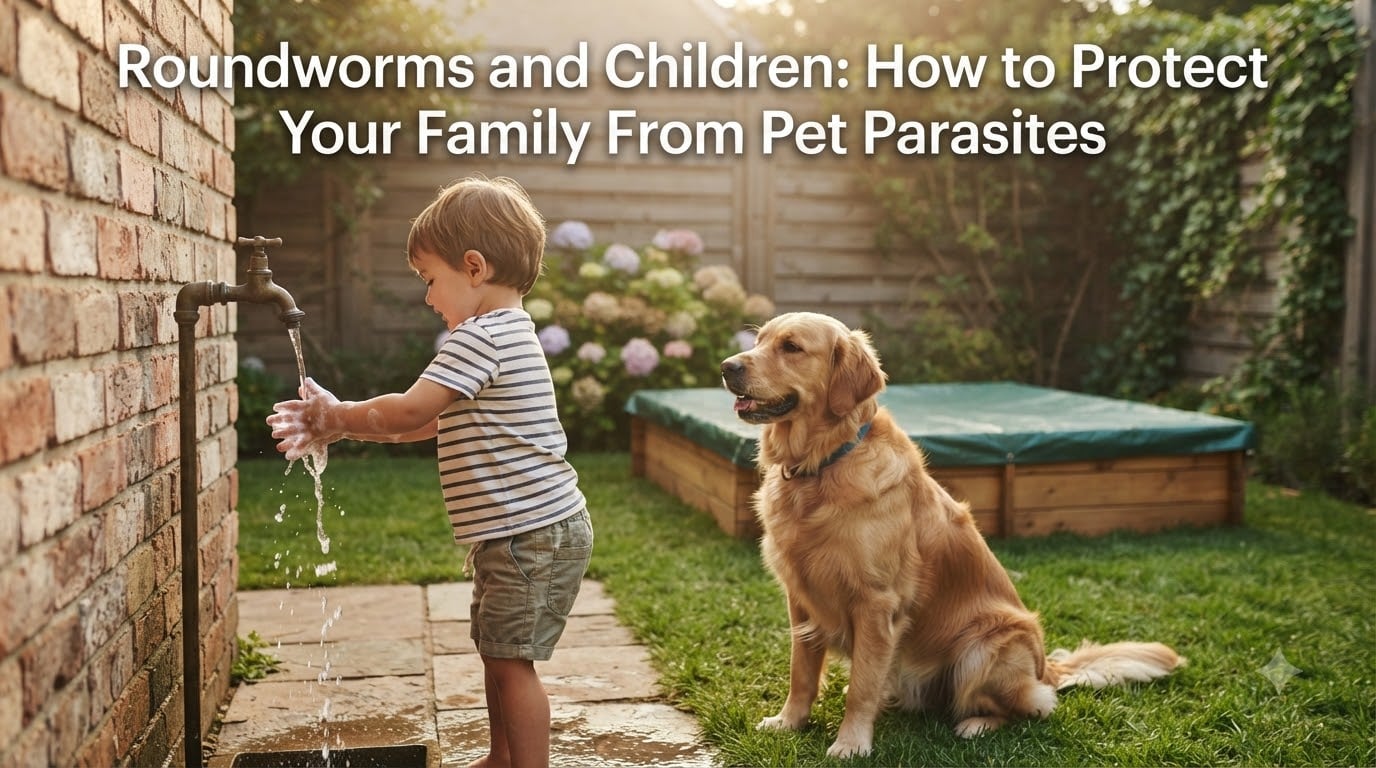
Roundworms are intestinal parasites (Toxocara) that spread from dogs and cats to humans, especially children under five, through contaminated soil, pet feces, or close contact with infected animals. When our team first dug into the data, I was stunned to learn that a single roundworm can produce up to 200,000 eggs per day, and those eggs can survive in soil for up to 10 years. That’s why roundworms and children is a topic I think every pet-owning family needs to understand.
I’ve spent the last three months comparing guidance from the CDC, Stanford Children’s Health, and the Companion Animal Parasite Council to put together a clear playbook for parents. Below you’ll find what roundworms are, how they spread, the warning signs to watch for, and the exact steps our family uses to keep our kids and pets safe.
Table of Contents
What Are Roundworms and Why Children Are at Risk?
Roundworms are parasitic worms (ascarids) that live in the small intestines of dogs and cats. The two species that matter most for families are Toxocara canis (from dogs) and Toxocara cati (from cats). When a pet is infected, it sheds microscopic eggs in its stool, and those eggs become infectious after two to four weeks in the environment.
Children under five are the most vulnerable group because of how they explore the world. I watched my own nephew sample a handful of backyard dirt at age two, which is exactly why this matters. According to Stanford Children’s Health, the highest infection rates occur in children ages 1 to 5 because they play in contaminated soil, put objects in their mouths, and spend time on floors where pets walk.
Puppies and kittens are almost always born with roundworms or contract them shortly after birth through their mother’s milk. A study cited by the CDC found that more than 30% of puppies under six months old test positive for Toxocara. Even pets that look perfectly healthy can be carriers, which is why prevention matters more than visual inspection.
How Roundworms Spread From Pets to Children
The transmission path is straightforward but easy to underestimate. A dog or cat infected with roundworms passes eggs in its feces. Those eggs contaminate soil, sandboxes, lawns, and indoor surfaces. Children then ingest the eggs through dirty hands, contaminated toys, or playing in contaminated areas.
Eggs are remarkably tough. Research from the Companion Animal Parasite Council shows that Toxocara eggs can remain viable in soil for 5 to 10 years under the right conditions. Cold winters and hot summers do not reliably kill them. This environmental persistence is one reason pediatricians and veterinarians push for monthly prevention rather than reactive treatment.
Direct contact with pet fur can also transfer eggs, especially if a child touches the area around a pet’s rear end and then puts fingers in their mouth. A common question I see in parenting forums is whether a dog licking a child’s face can spread roundworms. While saliva itself is not a primary transmission route, licking can transfer fecal residue or soil particles that contain eggs.
First Signs of Roundworm Infection in Children
Most children with a mild Toxocara infection show no symptoms at all, which makes the disease tricky to catch early. When symptoms do appear, they fall into three main patterns.
Visceral Toxocariasis
This form happens when larvae migrate through organs. Warning signs include:
Fever and fatigue
Cough or wheezing
Stomach pain and nausea
Swollen lymph nodes
Hepatomegaly (enlarged liver)
Ocular Toxocariasis
When larvae reach the eye, symptoms include blurry vision, eye redness, or a visible white spot in the pupil. This is the form parents fear most because untreated cases can lead to permanent vision loss in the affected eye.
Covert or Common Toxocariasis
This is the mildest presentation and the most common in children. Signs include vague abdominal pain, headaches, irritability, and sleep disturbances. One parent on a parenting forum described months of “mystery tummy aches” before stool testing finally revealed the cause.
If your child has spent time around a new puppy or kitten and shows any of these signs for more than a week, schedule a visit with your pediatrician. Bring a stool sample if possible and mention any recent pet exposure.
How to Treat Roundworm Infection in Children?
Treatment depends on the form and severity of the infection. For intestinal roundworm infections in the United States, the standard medications are:
Albendazole (typically given as a 5-day course)
Mebendazole (commonly given for 3 days)
For visceral or ocular toxocariasis, pediatricians usually prescribe albendazole for longer periods, often combined with corticosteroids to reduce inflammation. Ocular cases are typically co-managed with a pediatric ophthalmologist.
If you suspect your child has roundworms, follow these steps:
Call your pediatrician and describe the symptoms and pet exposure history.
Collect a recent stool sample if requested by the office.
Avoid sending your child to daycare or school until cleared by a doctor.
Bring any new pets in for a veterinary stool test at the same time.
Wash all bedding, pajamas, and bath towels in hot water.
Most intestinal cases clear up within a week of starting medication. Ocular and visceral cases require longer follow-up but respond well to early treatment.
How to Protect Your Family: 7 Prevention Strategies
Prevention is where families have the most control. These seven steps cover what the CDC, veterinarians, and pediatricians consistently recommend.
1. Deworm Puppies and Kittens Early and Often
Veterinarians deworm puppies and kittens at 2, 4, 6, and 8 weeks of age, then monthly until six months old. Adults should stay on year-round parasite prevention that includes roundworm control.
2. Pick Up Pet Waste Within 24 Hours
Eggs become infectious 2 to 4 weeks after being shed, so frequent removal cuts down the contamination window. This applies to your yard, the dog park, and any shared outdoor spaces.
3. Cover Sandboxes When Not in Use
Cats treat uncovered sandboxes as litter boxes. A fitted cover keeps wildlife and stray cats out and dramatically reduces the risk of Toxocara exposure.
4. Teach Hand Washing Every Time
Children should wash hands after touching pets, playing outside, and before eating. Use soap and scrub for at least 20 seconds. I keep a stool by the back door so my kids wash up the moment they come inside.
5. Keep Kids Away From Pet Feces
If you spot dog droppings at the playground, redirect your child to a clean area. Toddlers move fast, so vigilance beats reaction here.
6. Bathe Pets Regularly and Wash Bedding Weekly
Bedding, blankets, and plush toys that pets sleep on can harbor eggs. A weekly hot-water wash keeps the household environment cleaner.
7. Schedule Annual Stool Tests for Every Pet
Even indoor cats and dogs on prevention should have a fecal test once a year. Some pets shed eggs intermittently, and routine testing catches carriers that look completely healthy.
Multi-Pet Household Strategies and Special Considerations
Families with both dogs and cats need to coordinate prevention across species. Roundworm preventives for dogs often include heartworm coverage plus intestinal worm control, while cat preventives may come as topical or oral formulas. Talk to your vet about a unified schedule so no pet falls through the cracks.
New puppies and kittens deserve special attention in homes with infants. I tell new-parent friends to schedule the pet’s first vet visit within 48 hours of bringing the baby home. A clean bill of health plus a fresh deworming gives everyone a safer start.
Seasonal timing matters too. Spring and summer bring more outdoor play, more wildlife visitors to the yard, and higher parasite exposure overall. Our family doubles down on hand washing and yard cleanup during these months, especially between April and September.
Frequently Asked Questions About Roundworms and Children
Where do kids get roundworms from?
Children most often get roundworms from soil, sandboxes, or grass contaminated with infected dog or cat feces. Toxocara eggs are ingested when children put dirty hands, toys, or food in their mouths after playing in these areas.
Can my child get roundworms from my dog?
Yes. Dogs, especially puppies under six months, commonly shed Toxocara eggs in their stool. Children can become infected by touching contaminated fur or soil and then putting their hands in their mouths, which is why hand washing and regular deworming matter so much.
What are the first signs of roundworms in children?
Early signs can be subtle and include stomach pain, fatigue, irritability, poor appetite, and occasional coughing. Ocular toxocariasis may show up as blurry vision or a white glow in the pupil and requires urgent care.
How are roundworms treated in children?
Pediatricians typically prescribe albendazole or mebendazole for intestinal infections. Ocular or visceral cases may need longer courses plus corticosteroids. Treatment is most effective when started early.
Is it common for kids to get roundworms?
Toxocara infections are among the most common zoonotic parasites in the United States, with higher rates in children under five who play in contaminated soil. The good news is that with monthly pet prevention, frequent hand washing, and prompt cleanup, the risk drops dramatically.
Final Thoughts on Roundworms and Children
Roundworms and children is a topic that deserves attention, but it shouldn’t cause panic. The combination of monthly pet prevention, prompt waste cleanup, hand washing, and annual vet checkups makes a real difference. Most families who follow these habits never deal with an infection, and the small percentage who do usually catch it early and recover fully.
If you have young kids and pets, talk to your vet about getting every animal on year-round parasite prevention this week. Then book a quick chat with your pediatrician about what symptoms to watch for. Those two conversations are the foundation of a safer home for everyone in it, two-legged and four-legged alike.