
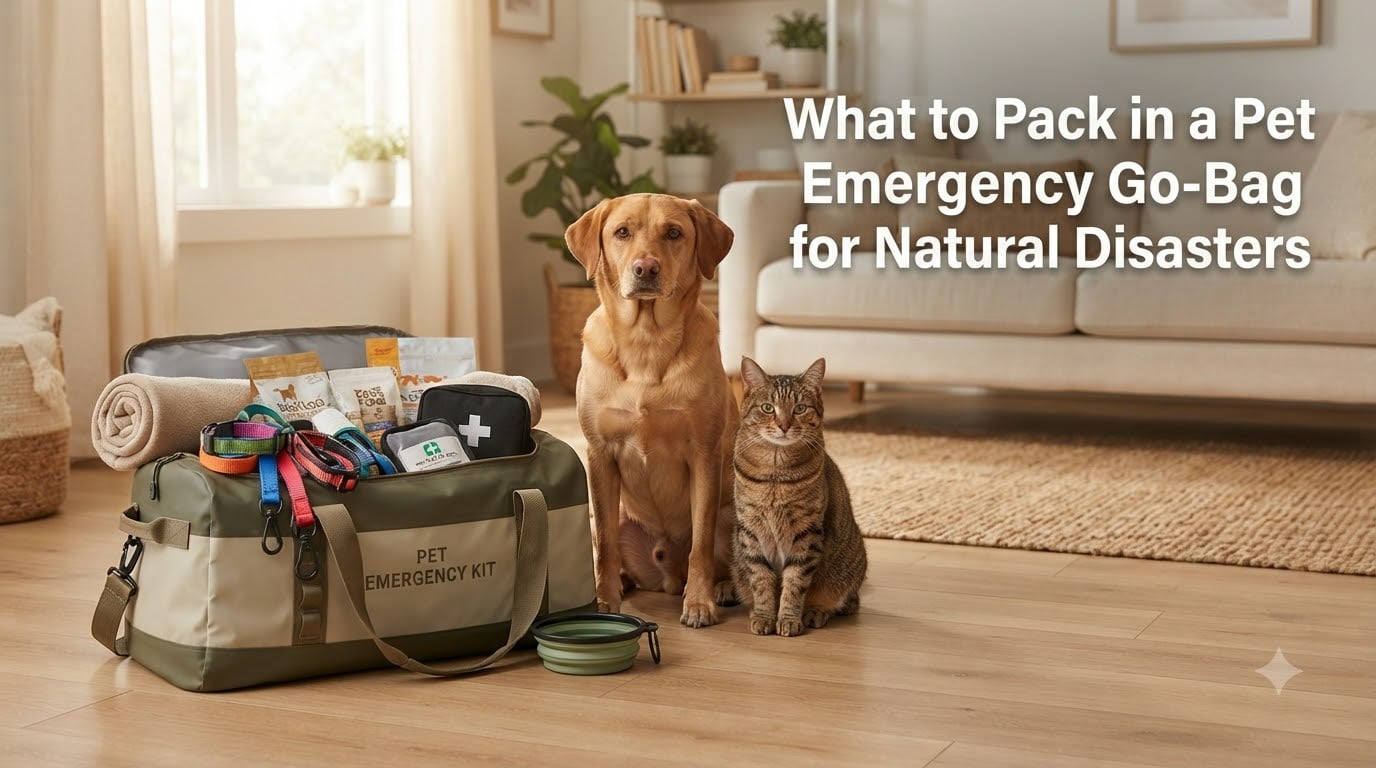
When I packed my first pet emergency go-bag after our neighbor lost everything in a wildfire, I realized how unprepared most of us are. Natural disasters give you minutes, not hours, to evacuate. A pre-packed go-bag means your dog, cat, or other pet has everything they need to survive when you cannot stop to think.
Your pet emergency go-bag should hold 3-7 days of food, water, medications, identification, first aid supplies, and comfort items. Store it near an exit so you can grab it on the way out. Refresh the contents every 6 months. This guide walks through every item our team recommends based on FEMA, Red Cross, and veterinary guidance.
Table of Contents
Why Every Pet Owner Needs an Emergency Go-Bag?
Disasters do not wait for convenient timing. Hurricane evacuation orders can come with 24-hour notice. Wildfires can force you out in under an hour. Earthquakes strike without warning at all. When evacuation orders arrive, shelters and hotels may not accept pets without proof of vaccination and current medications.
I learned this the hard way when our area had a flash flood warning in 2026. I ran around our house gathering leashes, food bowls, and medicine for our two cats while rain pounded the roof. That chaos convinced me to never wait until the next emergency. A packed go-bag removes that scramble and keeps your pet safe.
Beyond convenience, a go-bag addresses real safety risks. Pets lose collars when frightened. Stress causes digestive issues. Injuries happen during transport. Having supplies ready means you can treat wounds, calm anxiety, and prove ownership when shelters ask for documentation.
Food and Water Supplies for 3-7 Days
Pack at least 3 days of food and water for your pet, though 7 days is safer for hurricane or wildfire evacuations where supply chains break down. Calculate based on your pet’s normal daily portions and round up by 20% since stressed animals often eat more.
For each pet in your household, include:
Dry food in a waterproof container (rotate every 6 months to prevent staleness)
Wet food pouches like Weruva Pumpkin Pouches that do not require refrigeration and contain extra hydration
Manual can opener if you pack canned food
Collapsible silicone bowls (one for food, one for water)
Bottled water: 1 gallon per pet per day for 7 days
Treats your pet recognizes, useful for calming during transport
For our 12-pound terrier mix, I pack 4 pounds of dry kibble and 14 water bottles. For our two cats, we keep 2 cans plus 4 pouches per cat. Label everything with your pet’s name and the packing date so you know when to swap it out.
Medications and Medical Records
If your pet takes daily medication, missing doses during an evacuation can trigger serious health problems. Diabetic pets, epileptic animals, and those with heart conditions cannot skip pills for days without consequences. Pack a full medication supply plus copies of every prescription.
Essential medical items for your go-bag include:
2-week supply of all prescription medications (rotate every refresh)
Vaccination records, especially rabies certificates
Photocopies of medical history and current conditions
Veterinarian contact information plus a backup vet’s number
Pet insurance policy details and claim forms
Allergy information if your pet reacts to specific medications
Store papers in a waterproof zip-lock bag inside your go-bag. Take photos of every document and save them to your phone. Many emergency shelters require rabies proof before accepting pets. Our vet recommended keeping a printed summary on the bag’s exterior pocket so we do not have to dig during a crisis.
Identification: Tags, Microchip, and Photos
Scared pets slip collars. Loud thunder and unfamiliar smells cause even well-trained animals to bolt. During Hurricane Katrina, over 250,000 pets were displaced, and many were never reunited with owners because identification failed. Backup identification saves lives.
Your pet emergency go-bag should contain multiple forms of ID:
Updated collar tag with current phone number (not just your home address)
Backup collar and harness in case the original breaks
Microchip registration confirmation showing your current contact details
Recent photos of your pet from multiple angles, plus photos with you for proof of ownership
Written physical description including breed, weight, color patterns, and any distinguishing marks
I keep two printed photo sets in our bag. One is a clear headshot. The other shows our cats with me holding them. That second photo helped a neighbor identify our escaped tabby after a thunderstorm rattled our windows. Verify your microchip registry has your current cell number, not just a home landline.
Carriers, Leashes, and Transport Equipment
You cannot carry a panicking 60-pound dog down a smoky street, and a stressed cat will shred your arms trying to escape. Proper carriers and restraints protect both of you during evacuation. Each pet needs their own carrier sized for safe travel.
Transport gear to pack:
Sturdy carrier or crate for each pet (labeled with your contact info)
2 leashes (backup in case one breaks)
Head halter or harness for dogs that slip collars
Carrier sheet or blanket for warmth and stress reduction
Seatbelt harness or carrier strap for car evacuation
Practice loading your pet into the carrier before an emergency. Our veterinarian at the local emergency clinic told us most owners never train carrier entry, so cats and small dogs panic when forced inside during a crisis. Spend 5 minutes daily for a week putting treats inside the carrier. It removes chaos when seconds count.
Sanitation Supplies You Cannot Forget
Evacuation shelters and hotels often require proof you can manage your pet’s waste. Forget sanitation supplies and you may be turned away. Pack enough waste management gear for the full evacuation period plus extras for unexpected delays.
Sanitation essentials include:
Small litter box and 7-day supply of litter for cats
Poop bags (at least 30, in a waterproof pouch)
Paper towels and absorbent pads
Pet-safe disinfectant wipes
Trash bags for waste containment
Disposable gloves for handling injured or sick pets
For our go-bag, we use a folding silicone litter box that flattens to fit beside the water bottles. It saves space and works at any hotel. Include a small bottle of unscented bleach diluted 1:32 with water for sanitizing surfaces if your pet has an accident in a shelter.
First Aid Kit Components for Pets
Human first aid kits miss critical items for animals. Gauze works for both, but you need pet-specific supplies like a muzzle (even gentle pets bite when hurt) and an antiseptic safe for licking wounds. A basic pet first aid kit costs under $25 to assemble.
Your pet’s first aid kit should include:
Gauze pads, rolls, and adhesive tape
Antiseptic wipes or chlorhexidine solution (pet-safe)
Tweezers and blunt-tip scissors
Digital thermometer (pet normal temp is 101-102.5°F)
Hydrogen peroxide (to induce vomiting only when directed by a vet)
Self-adhering bandage wrap that does not stick to fur
Emergency muzzle or strips of gauze to wrap the muzzle
Towel and blanket for warmth or restraint
Take a basic pet first aid course through your local Red Cross chapter. Our team completed one in 2026, and the hands-on training taught us skills no checklist can replace, like how to check a pet’s pulse and what to do for heatstroke. Keep your first aid kit in a bright red pouch inside your go-bag so it is easy to find.
Familiar Comfort Items to Reduce Stress
Pets sense danger. Thunder, smoke, and shaking buildings trigger cortisol spikes that cause trembling, hiding, and destructive behavior. Familiar items with your scent lower stress hormones and prevent escape attempts during evacuation. Comfort items are not luxuries. They are survival tools.
Pack these comfort essentials:
Worn t-shirt or blanket carrying your scent
Favorite toy (rotate every refresh so it smells familiar)
Small bed or pad that fits inside the carrier
Calming aids like Feliway spray for cats or Adaptil for dogs
Photograph of family members if your pet is bonded to multiple people
Our anxious rescue cat calms dramatically when she smells my husband’s old hoodie. That single item prevents her from soiling the carrier during long evacuations. For dogs, a chew toy or Kong loaded with peanut butter provides distraction during loud thunder or helicopter rescue operations.
How to Build and Maintain Your Pet Emergency Go-Bag?
Building a go-bag takes about 90 minutes the first time. Start with a large waterproof duffel or backpack. Pack heavy items at the bottom, light items on top, and keep the medication pouch accessible in an outer pocket. Label the bag clearly with your pet’s name and species.
Follow these steps to assemble your bag:
Gather all supplies in one room and check them against this checklist
Pack food, water, and bowls in waterproof containers first
Add medications, medical records, and ID photos in labeled zip-lock bags
Place comfort items and toys on top for quick access
Include a printed emergency contact list with vets, shelters, and your out-of-area relative
Store the bag near your main exit, ideally by the door you use for evacuation
Conduct a practice evacuation with your pet every 6 months
Refresh your go-bag every 6 months. Mark your calendar for spring and fall checkups. Rotate food and water, replace expired medications, and update photos if your pet’s appearance changed. Check that microchip registration still has your current phone number.
For multi-pet households, color-code each animal’s supplies. We use red tags for our dog and blue for our cats. Keep each pet’s documents in separate zip-lock bags so you can grab only what you need if you evacuate only some animals. Pack at least one extra leash and carrier in case a neighbor asks you to shelter their pet too.
Consider seasonal risks. Hurricane season runs June through November. Wildfire season peaks in dry months. Earthquake and tornado risks vary by region. Adjust your go-bag supplies if you live in a high-risk area for specific disasters.
Frequently Asked Questions About Pet Emergency Preparedness
What things to put into an emergency bag before storms?
Pack 3-7 days of food, bottled water, medications, vaccination records, current ID photos, leash, carrier, waste bags, and comfort items like a worn t-shirt. Store everything in a waterproof duffel near your exit door.
How to prepare pets for natural disasters?
Build a go-bag with supplies, update microchip registration, train your pet to enter their carrier calmly, identify pet-friendly evacuation shelters in advance, and practice loading pets into your vehicle within 10 minutes.
What to put in a disaster go bag?
Include food, water, bowls, medications, vaccination records, ID tags, recent photos, carrier, leash, harness, first aid kit, litter supplies, poop bags, comfort items, and emergency contact information for veterinarians and family.
What are the 5 P’s of disaster preparedness?
The 5 P’s are People, Pets, Prescriptions, Papers, and Priceless items. For pets, this means ensuring your animal is accounted for with supplies, medications, medical records, and irreplaceable comfort items ready to evacuate.
Build Your Pet Emergency Go-Bag Today
A pet emergency go-bag is one of the most important purchases you will never regret. Our team has seen too many families lose pets simply because supplies were not ready. Take 90 minutes this weekend to gather everything on this checklist. Your pet depends on you to be prepared when disaster strikes.
Start by gathering food and water containers, then add medications, identification, and first aid supplies. Store the completed bag near your door and set a calendar reminder to refresh contents every 6 months. Share this guide with fellow pet owners in your community. When everyone prepares, more pets survive natural disasters.