
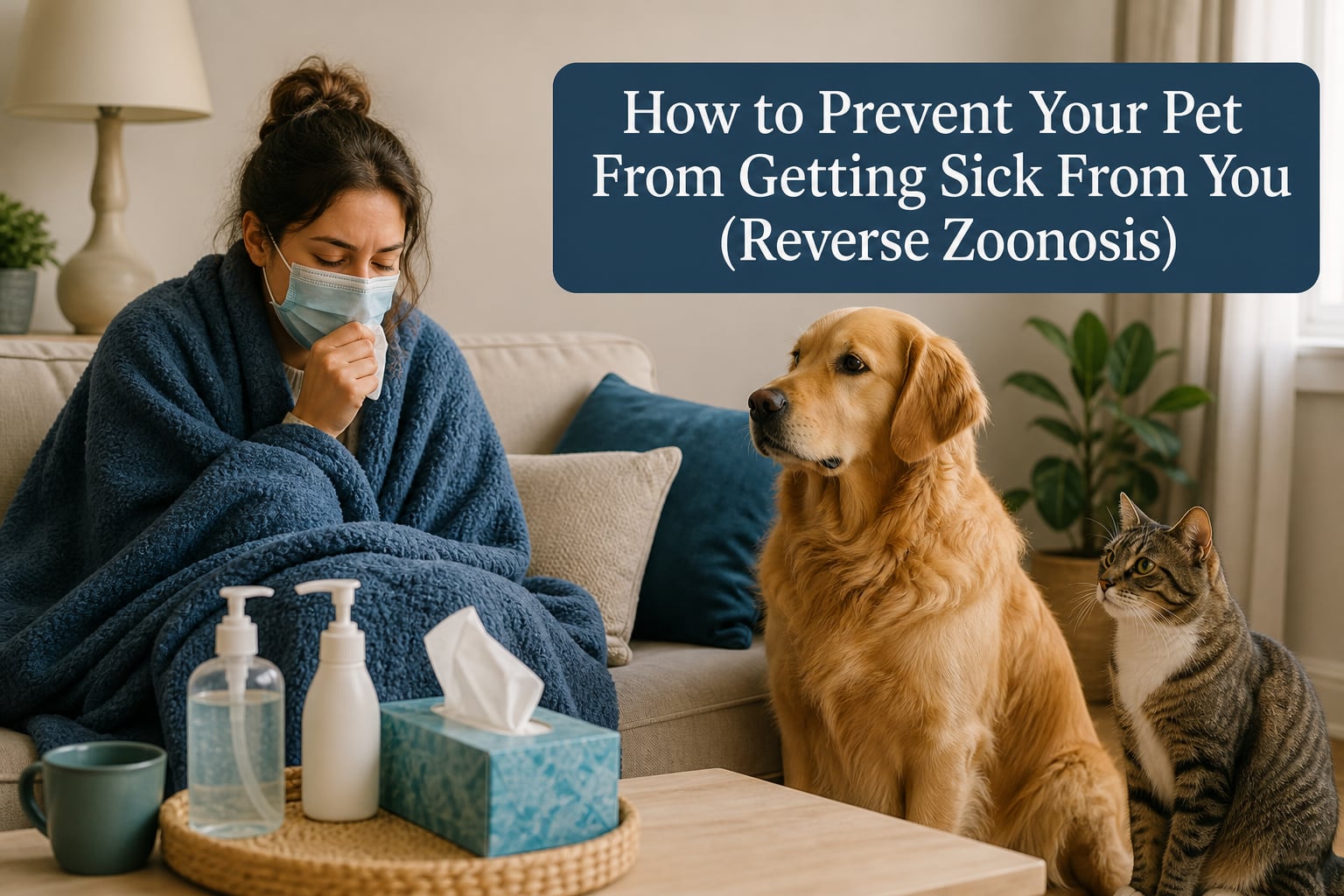
When I came down with the flu last winter, my dog Mochi refused to leave my side. He curled up on the couch, licked my face, and shared my pillow. Two days later, Mochi was coughing and lethargic. Our vet confirmed what I had not considered: he had caught my flu. That week sparked a deep dive into something most pet parents have never heard of, called reverse zoonosis or zooanthroponosis, the transmission of human diseases to pets.
Most pet owners have heard of zoonosis, where diseases jump from animals to humans. Fewer realize that the reverse flow is just as real. Scientists now confirm that human-to-pet transmission happens far more often than we once thought. In this guide, I will walk you through what reverse zoonosis is, which diseases you can pass to your pets, the symptoms that should worry you, and a step-by-step prevention protocol you can start using tonight.
Table of Contents
What Is Reverse Zoonosis?
Reverse zoonosis is the transmission of infectious diseases from humans to animals. Scientists also call it zooanthroponosis or anthropozoonosis, terms you will see in academic papers. The pathogen travels the opposite direction of the more familiar zoonotic disease, meaning it moves from a sick owner into a susceptible pet.
Every time a human pathogen infects a new animal host, the odds of a genetic mutation go up. A virus that barely replicated in a dog can adapt, change, and become something a dog spreads more easily. That is one reason researchers at the University of Florida Emerging Pathogens Institute, including Dr. Benjamin Anderson, now describe reverse zoonoses as an emerging One Health concern. It is not just a pet problem. It is a public health tracker.
You can spread reverse zoonotic diseases through:
- Respiratory droplets from coughing, sneezing, or breathing near your pet
- Direct contact such as kisses, face-to-cuddle, or letting pets sleep on your pillow
- Contaminated surfaces like shared food bowls, water glasses, or doorknobs your pet touches
- Fecal-oral routes when hygiene slips after using the bathroom
- Skin contact with rashes, sores, or wounds you may carry
If you have ever wondered, can I make my dog sick when I am sick, the honest answer is yes, in more cases than pet owners realize.
Zoonosis vs Reverse Zoonosis: Key Differences
The difference between zoonosis and reverse zoonosis is the direction of transmission. Both involve pathogens crossing the species barrier, but which species acts as the source matters for prevention, tracking, and treatment. Below is a quick comparison I built after cross-referencing CDC and AVMA definitions.
| Feature | Zoonosis | Reverse Zoonosis (Zooanthroponosis) |
|---|---|---|
| Direction | Animal to human | Human to animal |
| Common examples | Rabies, Lyme disease, Salmonella | COVID-19, H1N1 flu, tuberculosis, strep throat |
| Public awareness | High | Low to moderate |
| Tracking infrastructure | Well established through CDC and vet reports | Growing, with new pet surveillance programs |
| Risk to other humans | Direct via animal contact or food | Potential rebound via mutated pathogen in pet |
| One Health priority | Long-standing | Rising after COVID-19 pandemic |
You will notice many pathogens appear in both columns. COVID-19, for instance, is zoonotic at its origin (likely a bat or intermediate host) and reverse zoonotic when owners pass it to cats and dogs at home. This two-way movement is exactly why researchers insist on a One Health approach that considers human, animal, and environmental health as one connected system.
Diseases Humans Can Pass to Pets
The list of diseases transferable from humans to animals has grown sharply since 2020. Here are the most documented reverse zoonotic diseases, with examples I pulled from peer-reviewed studies in PMC, CDC reports, and veterinary case literature.
COVID-19 (SARS-CoV-2). Cats, dogs, hamsters, and even big cats in zoos have tested positive after close contact with infected owners. Symptoms range from mild respiratory issues to pneumonia. A 2023 study in Nature documented hamsters as a species where the virus spread back to humans in Hong Kong, an example of how reverse zoonosis can rebound.
Influenza A (including H1N1). During the 2009 swine flu pandemic, several dogs and cats developed flu after their owners got sick. Ferrets are highly susceptible and have served as the standard lab model for human flu for decades. A sick owner can pass the seasonal flu to pets through coughing or shared utensils.
Tuberculosis. Documented cases show pet cats and dogs developing active TB from owners with pulmonary disease. Symptoms include weight loss, coughing, and enlarged lymph nodes.
Strep throat (Group A Streptococcus). Yes, pets can get strep from humans. A 2023 case series documented two family dogs developing severe strep infections, including one fatal case, after their owners had active strep throat. Wash your hands and avoid face kisses when you have a sore throat.
Norovirus. This common stomach bug crosses to pets, especially in multi-pet households. Vomiting, diarrhea, and lethargy in a pet following your own stomach flu should raise a flag.
MRSA (Methicillin-resistant Staphylococcus aureus). Pets living with someone in a healthcare setting or who has had recent surgery can pick up this resistant bacteria. Skin infections and post-surgical complications in pets have been linked back to human carriers.
Ringworm (Dermatophytosis). Despite the name, ringworm is a fungus, not a worm, and it travels easily between humans and pets through shared bedding, towels, or direct contact with infected skin.
Dengue fever. Documented in dogs in endemic countries. Owners with active dengue can pass the virus, especially during the viremic window.
Common cold (rhinovirus, coronavirus strains). Less commonly transmissible than flu, but not zero. Dogs and cats can develop respiratory symptoms after prolonged close contact with a heavily congested owner.
Mpox (formerly monkeypox). The 2022 outbreak saw pet dogs test positive after close contact with infected owners. The CDC now recommends isolating from pets if you are infected.
Symptoms of Reverse Zoonosis in Pets
The challenge for pet owners is that reverse zoonosis symptoms in pets look almost identical to many other common illnesses. Knowing what your own illness was, and when exposure happened, makes a big difference at the vet. I recommend keeping a simple log: when you got sick, what symptoms you had, and when your pet’s symptoms started.
By disease category, here is the symptom checklist I share with friends who ask me about reverse zoonosis prevention.
Respiratory symptoms:
- Coughing that lasts more than 48 hours
- Sneezing fits, especially after close contact with you
- Labored breathing or rapid breathing at rest
- Nasal or eye discharge that becomes thick or colored
Gastrointestinal symptoms:
- Vomiting, especially when you also had a stomach bug
- Diarrhea lasting more than 24 hours
- Sudden loss of appetite or refusing favorite treats
- Lethargy combined with any GI sign
Systemic or behavioral changes:
- Fever (warm ears, warm belly, shivering)
- Low energy or hiding more than usual
- Sudden weight loss
- Lethargy that does not match the weather or exercise
Skin and external signs:
- New rashes, bald patches, or circular lesions (possible ringworm)
- Skin sores that do not heal within 3 days
- Worsening of any chronic skin condition
If your pet shows any of these within 7 to 14 days of your own illness, mention your timeline to your vet. Reverse zoonosis is more likely to be confirmed when the vet knows what exposure your pet had.
Risk Factors: Which Pets Are Most Vulnerable
Not every pet gets equally sick after exposure. Some pets handle human pathogens better, while a few are genuinely at high risk. The four main risk categories I see consistently flagged in veterinary literature are:
Young pets. Puppies and kittens under one year have immature immune systems. Their first exposure to a novel pathogen often produces more severe symptoms. They are also curious, which increases contact with contaminated surfaces.
Senior pets. Older dogs and cats often have chronic conditions, slower immune responses, and less physiologic reserve. A flu that bounces off a 3-year-old can hospitalize a 12-year-old.
Immunocompromised pets. Pets on chemotherapy, with FIV (cats), or with autoimmune disease fall into this group. Their reduced immunity makes them more vulnerable to almost every pathogen you carry.
Brachycephalic and chronic-condition breeds. Pugs, French bulldogs, and Persian cats already deal with respiratory limitations. A respiratory virus on top of narrow airways can be dangerous. Pets with chronic kidney disease, heart disease, or diabetes also handle infection less gracefully.
Multi-pet households also have elevated baseline risk. If one pet becomes a carrier or subclinical shedder, others in the home can amplify the pathogen. I have seen households where a single sick owner triggered a chain reaction across three cats and two dogs in a week.
How Reverse Zoonosis Happens: The Science Behind It
The science behind reverse zoonosis comes down to one ugly word: mutation. Every time a pathogen replicates inside a host, it copies its genetic code. Mistakes happen during copying. Most mistakes are harmless, but some give the pathogen new abilities, like binding to a new cell receptor.
Viruses that use the ACE2 receptor, including SARS-CoV-2, are particularly good at cross-species jumps because ACE2 appears in many mammals. Dogs, cats, hamsters, ferrets, and even some livestock express ACE2 in similar ways to humans. Once a virus adapts to bind animal ACE2, it has crossed the species barrier.
RNA viruses (like influenza and coronavirus) mutate faster than DNA viruses. They lack the proofreading step DNA viruses use, so each replication can introduce errors. Every infection in a new species is a new lottery ticket for mutation. That is why researchers worry less about, say, a bacterial reverse zoonosis and more about repeat flu or COVID cross-species events.
The CDC and the One Health Institute frame it simply. When we track pets for human-origin pathogens, we get an early signal on variants. Pets living with us are sentinels. Their illnesses can warn us before a pathogen adapts enough to spread widely in humans again.
Step-by-Step Prevention Protocol
This is the section I most wish had existed when Mochi got sick. None of the major guides I found offered a clear, numbered protocol. Below is the one I now follow in my own house and share with anyone who asks.
Step 1: Wash your hands before touching your pet. Use soap and warm water for at least 20 seconds. Do this before and after feeding, petting, picking up, or cleaning. Hand sanitizer works in a pinch but is not as effective as a full wash for enveloped viruses.
Step 2: Wear a mask around your pets when you have respiratory symptoms. This sounds excessive, but it cuts droplet transmission dramatically. A simple surgical mask works. If you cannot mask, turn your head away during coughs and sneezes.
Step 3: Do not kiss your pets, and do not let them lick your face. I know. This one hurts. But reverse zoonosis prevention tips from the CDC are consistent on this. Skip face kisses until you have been symptom-free for 48 hours.
Step 4: Sleep separately while symptomatic. Your pillow and bedsheets carry respiratory droplets all night. Pets sleeping against your face have a direct line to infection. Set up a cozy alternative bed for them in the same room if separation causes anxiety.
Step 5: Use separate utensils, towels, and dishes. Do not share food, glasses, or washcloths with your pet, no matter how cute the begging looks. Wash their bowls in hot soapy water daily.
Step 6: Disinfect high-touch surfaces. Wipe doorknobs, light switches, faucet handles, and remote controls once a day. Use an EPA-registered disinfectant that works against enveloped viruses.
Step 7: Cover coughs and sneezes properly. Use a tissue or your elbow. Wash your hands right after. This is basic, but pets often press their face against us when we sneeze.
Step 8: Isolate when you have COVID-19, flu, or a confirmed contagious illness. Have another household member feed and walk your pets if possible. If you live alone, wash thoroughly before and after every interaction and wear a mask.
Step 9: Keep up with pet vaccinations and vet checkups. A well-timed bordetella or influenza vaccine for dogs reduces severity if exposure happens. Yearly wellness visits catch early signs of trouble.
Step 10: Monitor your pet for 14 days after your own recovery. Symptoms can lag. Keep a small log of appetite, energy, and any respiratory or GI signs so you can give your vet a clean timeline.
Multi-Pet Household Strategies
Reverse zoonosis prevention in a multi-pet household is genuinely harder than in single-pet homes. You cannot simply isolate one cat if you have four. Here is what I have landed on after talking to two veterinarians and reviewing the AVMA multi-pet guidance.
Designate a primary caregiver. Pick the healthiest, lowest-risk household member to handle feeding, walking, and litterbox duty if you are sick. That person should also wash hands between pets in a multi-pet home.
Temporarily separate sleeping arrangements. Spread pets across separate rooms or zones for the duration of your illness. Pets that normally co-sleep should sleep apart to reduce droplet sharing.
Stagger feeding times and bowls. Do not let all pets eat from the same bowl or lick the same surface. Use individual dishes and clean them between meals.
Watch for the index case. Multi-pet homes usually see one pet get sick first. Once identified, keep that pet isolated from the others until a vet rules out (or confirms) reverse zoonosis.
Clean shared items daily. Bedding, blankets, toys, and brushes can all carry pathogens. Wash on hot cycles or disinfect with vet-approved cleaners.
Ventilate shared spaces. Open windows or run an HVAC fan to reduce airborne droplet concentration. Good airflow helps even in winter.
None of these steps are perfect. But layered together, they cut your risk meaningfully. Reverse zoonoses prevention is rarely about one silver bullet. It is about consistent, small choices.
When to See a Veterinarian
Do not wait. Call your vet right away if your pet shows any of these red flags after you’ve been sick:
- Difficulty breathing, blue gums, or rapid panting at rest
- Vomiting or diarrhea lasting more than 24 hours
- Refusal to eat or drink for more than 12 hours
- Sudden lethargy or collapse
- Persistent fever or any seizure-like activity
- Visible skin lesions or rapidly spreading rash
Tell your vet what illness you had and when. Mention if you tested positive for COVID-19, flu, strep, or any other confirmed diagnosis. This context speeds up reverse zoonosis workups and helps your vet choose the right tests. In our case with Mochi, our vet was able to confirm H1N1 exposure only because I had a positive flu test on file.
Isolate or Limit Contact: A Quick Decision Guide
One question I kept getting from friends: do I keep my pet home or send them somewhere when I am sick? Here is the simple decision guide.
If you have a confirmed contagious illness (COVID-19, flu, strep, TB, norovirus, mpox), isolate your pet from you as much as possible. Send them to a trusted friend or family member if available.
If you have a mild cold without fever, keep distance during peak symptoms and use the protocol above. Boarding or pet-sitting is not usually necessary.
If your pet is immunocompromised, elderly, or a young puppy or kitten, isolate more aggressively even for mild illness. Their risk profile is higher.
If you live alone and cannot isolate, do what I did after Mochi got sick. Mask up, wash hands obsessively, and keep your pet in a separate room at night until you are 48 hours symptom-free.
Frequently Asked Questions
What is reverse zoonosis?
Reverse zoonosis, also called zooanthroponosis, is the transmission of an infectious disease from a human to an animal. It is the opposite of the better-known zoonosis, which moves from animals to humans.
Can animals get sick from their owners?
Yes. Dogs, cats, ferrets, hamsters, and many other pets have documented infections after exposure to sick humans, including COVID-19, H1N1 flu, tuberculosis, strep throat, and norovirus.
What is an example of a reverse zoonosis?
A common example is a pet dog or cat catching COVID-19 from an infected owner. Documented cases also include household dogs developing strep throat and cats contracting H1N1 influenza during the 2009 pandemic.
How do zoonotic diseases spread from humans to pets?
Spread usually happens through respiratory droplets, direct face contact, shared utensils or bedding, and contaminated surfaces. Close-contact pets such as those that sleep on the bed or get face kisses are at highest risk.
How can I prevent transmitting illness to my pets?
Wash hands before handling your pet, avoid face kisses and shared sleep, wear a mask during respiratory illness, disinfect high-touch surfaces, and consider temporary isolation if you have a confirmed contagious disease.
Can dogs catch the human flu?
Yes. Dogs can contract H1N1 and other influenza A strains from sick owners. Symptoms include coughing, lethargy, loss of appetite, and fever. Most cases are mild, but senior or immunocompromised dogs can develop pneumonia.
When should I take my pet to the vet after I have been sick?
Take your pet to the vet if they develop breathing trouble, persistent vomiting or diarrhea, refusal to eat, severe lethargy, or any new skin lesions within 14 days of your own illness. Mention your own diagnosis to speed up testing.
Can zoonosis spread from animals to humans too?
Yes. Zoonosis (animal to human) is well documented for rabies, Lyme disease, Salmonella, and many other pathogens. Reverse zoonosis (human to animal) is the opposite direction and has become a major research focus since COVID-19.
Final Thoughts on Protecting Your Pets
Reverse zoonosis is real, it is more common than we used to think, and it is something every pet owner can take practical steps against. After seeing Mochi fight the flu I gave him, I now follow the ten-step protocol without exception. I also keep his bordetella and flu vaccines current and keep a small illness log whenever either of us is under the weather.
The good news is that preventing reverse zoonosis does not require expensive gear or complicated routines. It requires the same hygiene habits we learned in the pandemic: washing hands, keeping distance when sick, and disinfecting shared surfaces. Pair those habits with awareness of which pets face the highest risk, and you can dramatically lower the odds your pet ever catches what you have.
If you take one thing from this guide, let it be this: when you feel that first sneeze coming on, reach for the soap and the mask before you reach for your pet. A small change in habit protects the companions who depend on us completely.