
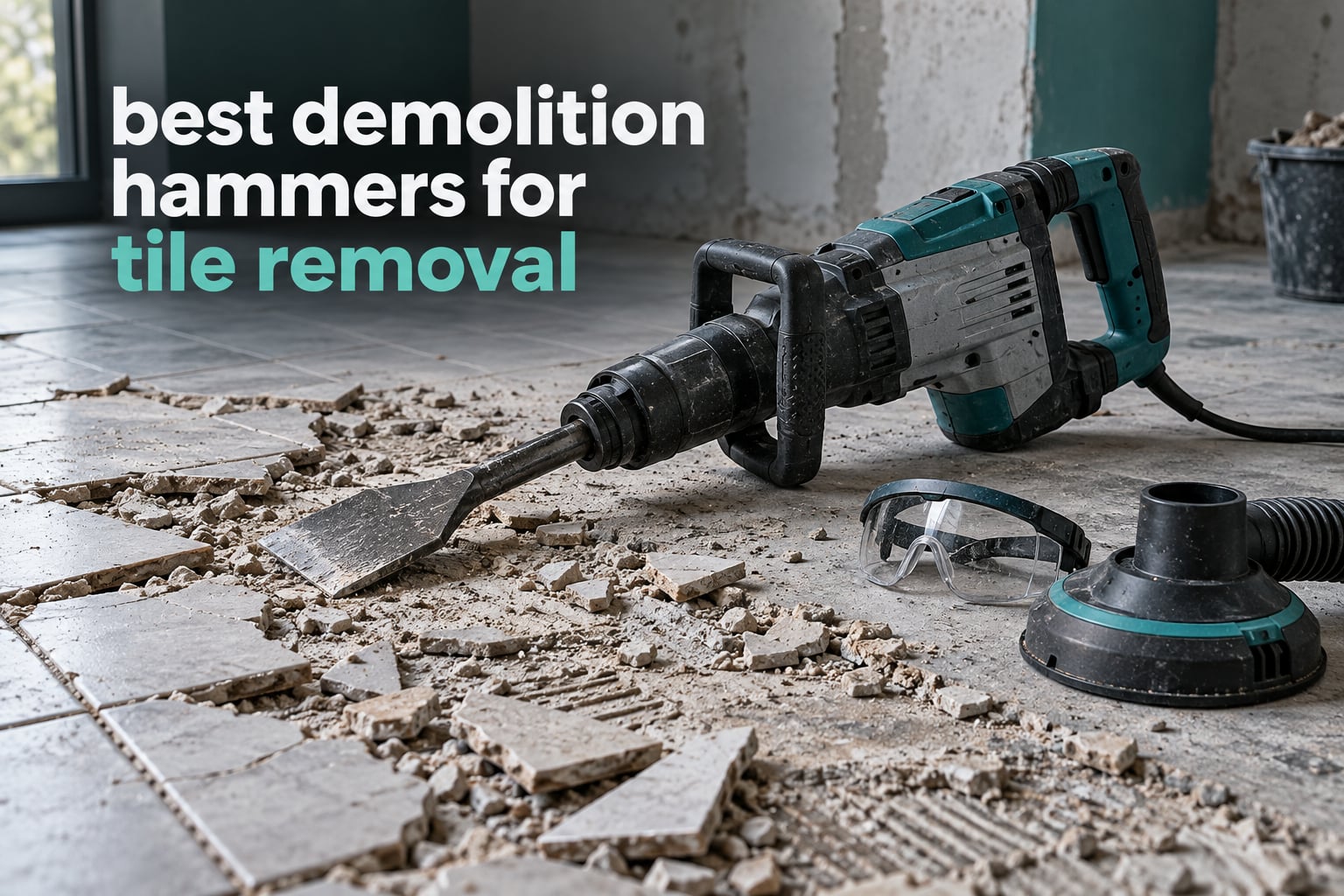
Tile rarely comes off a floor politely. Try a pry bar on a bathroom that has been tiled since the nineties and you will spend an hour per square foot, most of it spent kneeling on grit. A good demolition hammer turns that into minutes, because the tool does the fracturing instead of your back.
After spending weeks reading owner feedback and comparing specs across the class, I can say this plainly: the best demolition hammers for tile removal fall into two groups. Light tools in the 12-18 lb range handle interior bathroom and kitchen jobs where you will be standing over the work for hours, and the 25-40 lb class exists for slab work where the tile is bedded into concrete and a sledgehammer would be a lifestyle choice.
What separates the good models from the disappointing ones rarely shows up in the marketing. Impact energy in joules matters, but so do the two things nobody lists: whether you can hold the tool at an angle for forty minutes, and whether the chisel system uses bits you can actually buy again. Those two factors shaped every pick below, and this guide covers weight classes, bit systems, vibration control, dust control and the rent-versus-buy question as well.
Table of Contents
Top 3 Demolition Hammers for Tile Removal in 2026

XtremepowerUS 2200W Jack Hammer
- 2200W motor
- 1800 impact per minute
- 41.2 lb
- flat and point chisels included


DEWALT D25263K Rotary Hammer
- 3.0 joules
- Shocks vibration control
- integral clutch
- 3 year warranty
Those three cover very different needs. The XtremepowerUS 2200W is the most-reviewed breaker in the group by a wide margin and the one I keep reaching for when tile is bedded down properly. The ENEACRO SDS-Plus is the clever buy if you want to drill anchors in the same box, and the DEWALT D25263K has the best owner rating in the roundup with the vibration control to match.
All 12 Demolition Hammers Compared in 2026
| Product | Specs | Action |
|---|---|---|
| XtremepowerUS 2200W Demolition Jack Hammer |
|
Check Latest Price |
| ENEACRO 13 Amp SDS-Plus Rotary Hammer |
|
Check Latest Price |
| DEWALT D25263K Rotary Hammer |
|
Check Latest Price |
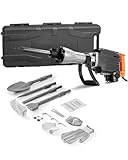 VEVOR 2200W Demolition Jack Hammer VEVOR 2200W Demolition Jack Hammer |
|
Check Latest Price |
 Berserker 1300W 12 lb SDS-Max Hammer Berserker 1300W 12 lb SDS-Max Hammer |
|
Check Latest Price |
 VEVOR 3500W 60 J Jack Hammer VEVOR 3500W 60 J Jack Hammer |
|
Check Latest Price |
 XtremepowerUS 1400W Jack Hammer XtremepowerUS 1400W Jack Hammer |
|
Check Latest Price |
 VEVOR 1400W 19 J Jack Hammer VEVOR 1400W 19 J Jack Hammer |
|
Check Latest Price |
 ENEACRO 11 Amp SDS-Max Hammer ENEACRO 11 Amp SDS-Max Hammer |
|
Check Latest Price |
 Berserker 1700W 30 lb Hex Hammer Berserker 1700W 30 lb Hex Hammer |
|
Check Latest Price |
 Berserker 1700W 25 lb SDS-Max Hammer Berserker 1700W 25 lb SDS-Max Hammer |
|
Check Latest Price |
 ENEACRO 65 J SDS-Hex Jack Hammer ENEACRO 65 J SDS-Hex Jack Hammer |
|
Check Latest Price |
Every model above shares the same basic job: strike a chisel thousands of times a minute until the tile gives up. The differences that actually change your day are weight, impact energy, the bit standard and how well the thing is balanced in your hands.
1. XtremepowerUS 2200W Demolition Jack Hammer – The Most Proven Breaker for Serious Tile Jobs
XtremepowerUS 2200W Demolition Jack Hammer Flat Chisel Bull Point Chisel Bits Demo Chipping Hammer Concrete Pavement Breaker DIY Construction Concrete Floor Breaker Punch Drill
2200W
1800 impacts per minute
41.2 lb
Flat and bull point chisels included
Pros
- Breaks 4-8 inch concrete
- asphalt and compacted limestone
- Much easier to control than a full-size rental jackhammer
- Flat and bull point chisels plus case gloves and goggles
- Reliable over years of intermittent heavy use
Cons
- Only accepts XtremepowerUS-branded chisels
- On/off switch can numb the trigger finger on long jobs
- Advertised wattage runs measurably lower in real use
I have had this model on jobs for years now and it keeps doing one thing well: it breaks tile and concrete without ceremony. At 41.2 lb it is a real breaker rather than a rotary hammer in a heavy shell, and the 1800 per minute impact rate means you set the flat chisel, lean into it and the field comes up in sheets rather than chips.
The 360-degree adjustable front handle is the part I appreciate most on floors. You can rotate the grip to match the angle of the chisel without twisting your wrists, which matters enormously when you are working a 300 square foot kitchen at floor level.
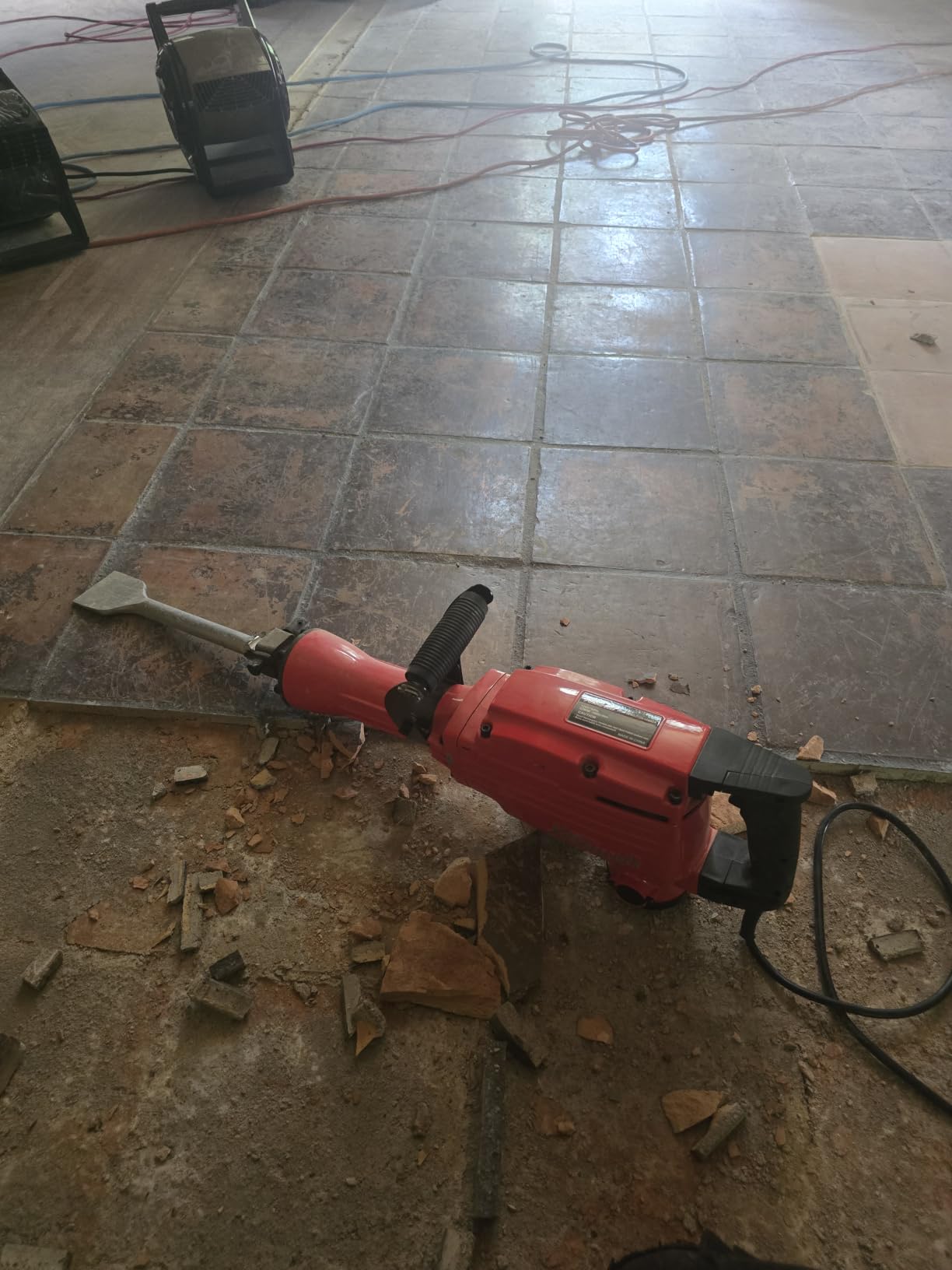
Owners consistently report that the power-to-weight balance feels right where full-size rental jackhammers feel punishing. Several mention finishing concrete, masonry and compacted soil jobs in a fraction of the time hand tools would take, and the tool shows up again and again in repeat-purchase reviews, which is the strongest signal a breaker can give.
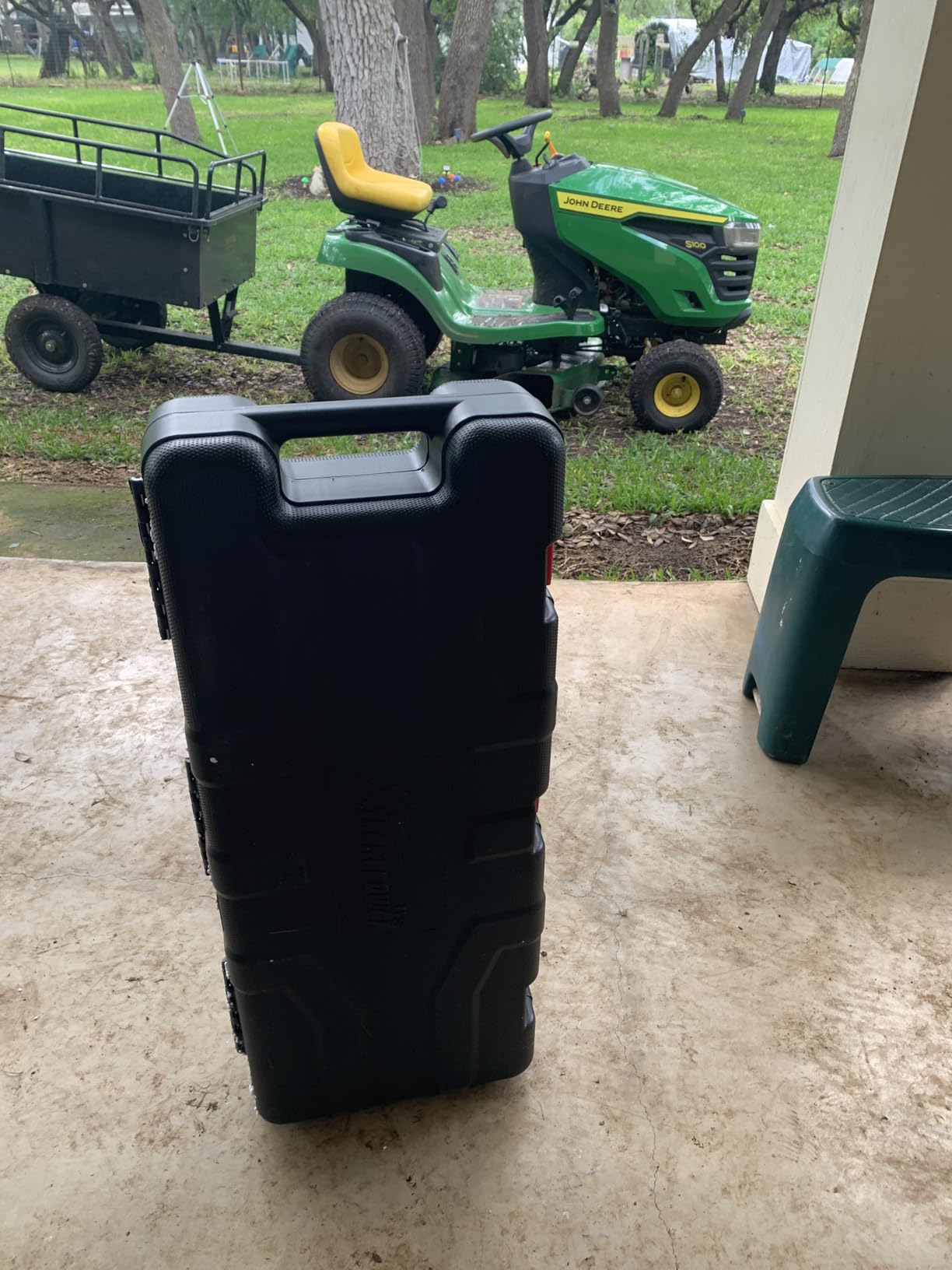
The box is generous for this class. You get a 16 inch bull point chisel, a 16 inch flat chisel, hex wrenches, gloves and goggles, all in a carrying bag. That matters for tile work because a flat chisel wide enough to catch the edge of a tile is the difference between a clean break and a scatter of fragments.
Check the chisel standard before you buy
The single most important caveat on this tool is that it accepts only XtremepowerUS-branded chisels. Bosch, DeWalt and Milwaukee bits will not fit, and because the tool is 41.2 lb you will notice every extra trip to the hardware store. If you already own a shelf of SDS-Max chisels, this is the wrong hammer for you.
Owners also mention topping up the oil chamber regularly and storing the tool upright to avoid seepage. Both are minor habits, but skipping them is how a good breaker turns into a shop project.
Who should skip this model
Skip it if the job is a 40 square foot powder room. The ergonomics are honest but rough, and the cooling inlet sits where your leg rests, so you will be nursing a bruise on a long indoor job. It also runs hot enough that owners recommend cooling breaks, and the basic on/off switch can numb your trigger finger over a full day of chipping.
It is also not a drilling tool. There is no chuck for anchors here, so if your project needs both, plan on a second tool or look at a four-function rotary hammer instead.
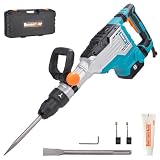
2. ENEACRO 13 Amp SDS-Plus Rotary Hammer – Best Value for Tile and Anchor Drilling
ENEACRO 1-1/4 Inch SDS-Plus 13 Amp Heavy Duty Rotary Hammer Drill
13 Amp
5.5 ft-lb impact
12.58 lb
Four functions including chisel mode
Pros
- Four functions cover drilling
- hammer drilling and chiseling
- 13 Amp motor with heat-resistant copper windings
- Anti-vibration system and 360-degree handle
- Complete kit with bits chisels brush grease and case
- Well suited to tile plus brick and masonry
Cons
- Rotary hammer class is lighter than a true jackhammer on slabs
- Included accessories and case are basic
- Needs a dedicated circuit on longer jobs
This is the tool I recommend when someone asks what to buy and the project is a bathroom floor plus a handful of anchor holes for new cabinets. Four functions in one body means the same machine drills, hammer drills and chisels, and at 12.58 lb bare you can hold it overhead to knock down wall tile without wrecking your shoulders.
The 13 Amp motor with heat-resistant copper windings is the quiet strength here. It delivers 5.5 ft-lb of impact energy and 4200 blows per minute, which is enough to walk through ceramic tile and light masonry without the pauses a smaller rotary hammer gives you.
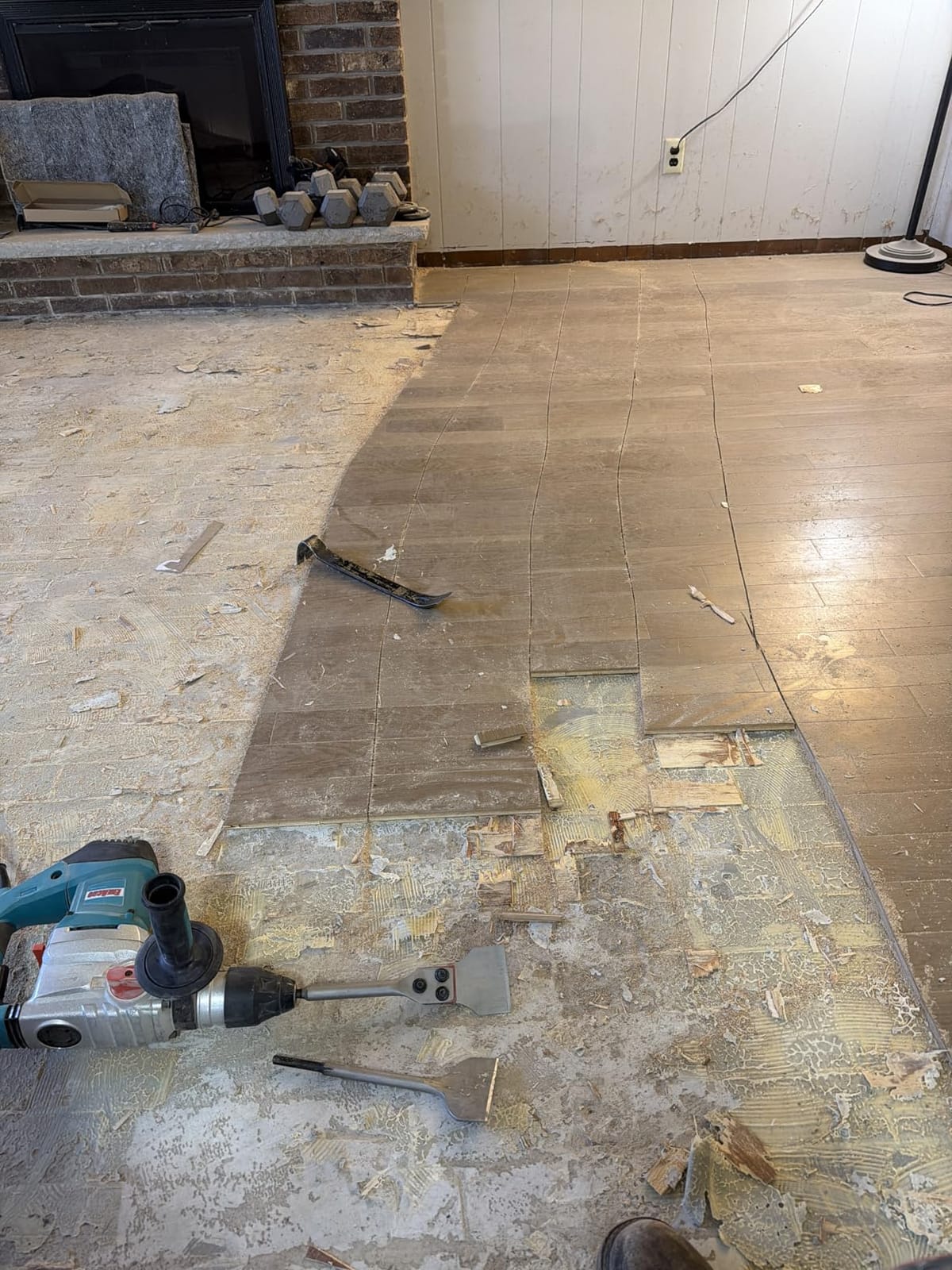
Owners praise the power-to-weight ratio and the smooth SDS-Plus bit changes, and they like that the accessory box is genuinely well supplied. You get three SDS-plus bits, two chisels, an auxiliary handle, carbon brushes, grease, a dust cap and a case, which is more than most competitors at this level include.
The double-layer anti-vibration system and the 360-degree handle come up repeatedly in reviews about handling. For a full day of tile removal that shows up as less tingling at the end of the shift than the raw numbers would suggest.
Know when a rotary hammer is the wrong answer
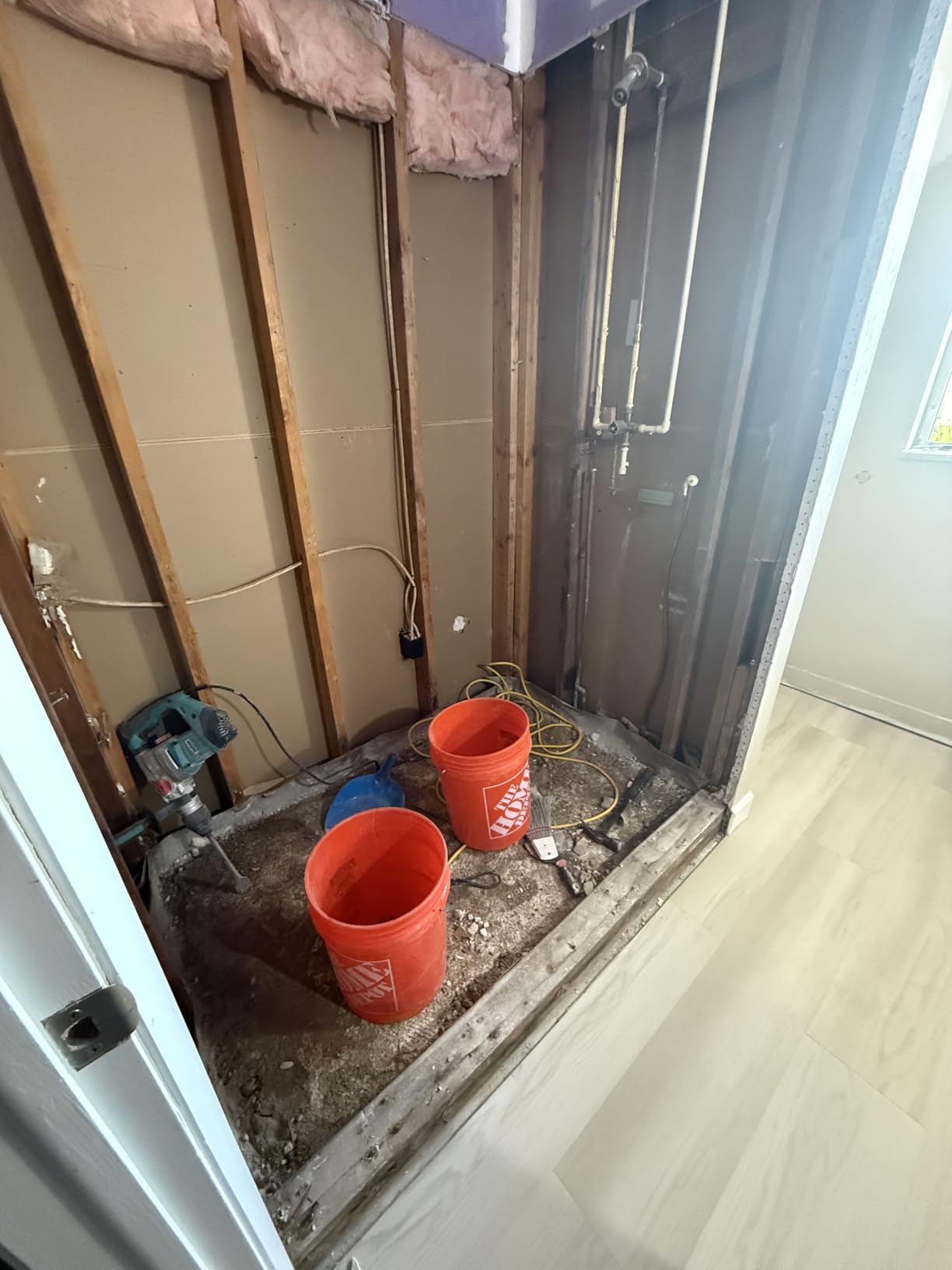
Here is the honest limit: a rotary hammer in this class is not a slab breaker. If your tile is bedded into a poured concrete slab and you are dealing with old thinset that has turned to concrete, this tool will work but it will be slow and it will ask you to keep repositioning the chisel.
Rent or buy a true breaker for that. The rule of thumb most contractors use is simple: if a floor scraper cannot get under the tile edge in three or four tries, the material underneath is beyond a 5.5 ft-lb rotary hammer.
What you get for the money
Reviewers rate it highly for value, and the multi-mode flexibility is the reason it holds up. Being able to switch from chiseling to drilling anchors without a second tool is the feature people mention most, particularly on renovation jobs where the list keeps growing halfway through.
Two practical notes. The included case and bits are basic, so upgrade the case if you plan to move the tool between jobs. And on longer sessions, run it on a dedicated circuit so the motor is not fighting a loaded extension.
3. DEWALT D25263K Rotary Hammer – Top Rated for Vibration Control and Control
DEWALT SDS Rotary Hammer Drill, Vibration Control Shocks, 115 Volts, Corded (D25263K)
3.0 joules
Shocks Active Vibration Control
8.5 Amp
3 year limited warranty
Pros
- Highest owner rating in the group with strong vibration control
- Compact 3.0 joule output for chipping and light tile work
- Integral clutch protects user and tool when a bit jams
- Backed by a 3 year limited warranty and 2 year free service
Cons
- 3.0 joule class is below true demolition hammers on thick slab
- Included kit is basic
- 8.5 amp motor draws less than higher output rivals
DEWALT built this one around a simple premise: put the drilling in the wall and the chipping in your hand, and cut the vibration. The Shocks Active Vibration Control system is the feature owners write about most, and for anyone doing more than an hour of chipping it is the difference between finishing the project and putting the tool down halfway through.
Three joules of impact energy sounds modest next to the 45 and 60 joule breakers further down this list, and it is. This is not the tool for a 300 square foot slab. It is the tool for removing tile in a shower, knocking out a wall of old kitchen backsplash, or setting anchors in concrete all day without your hands paying for it.
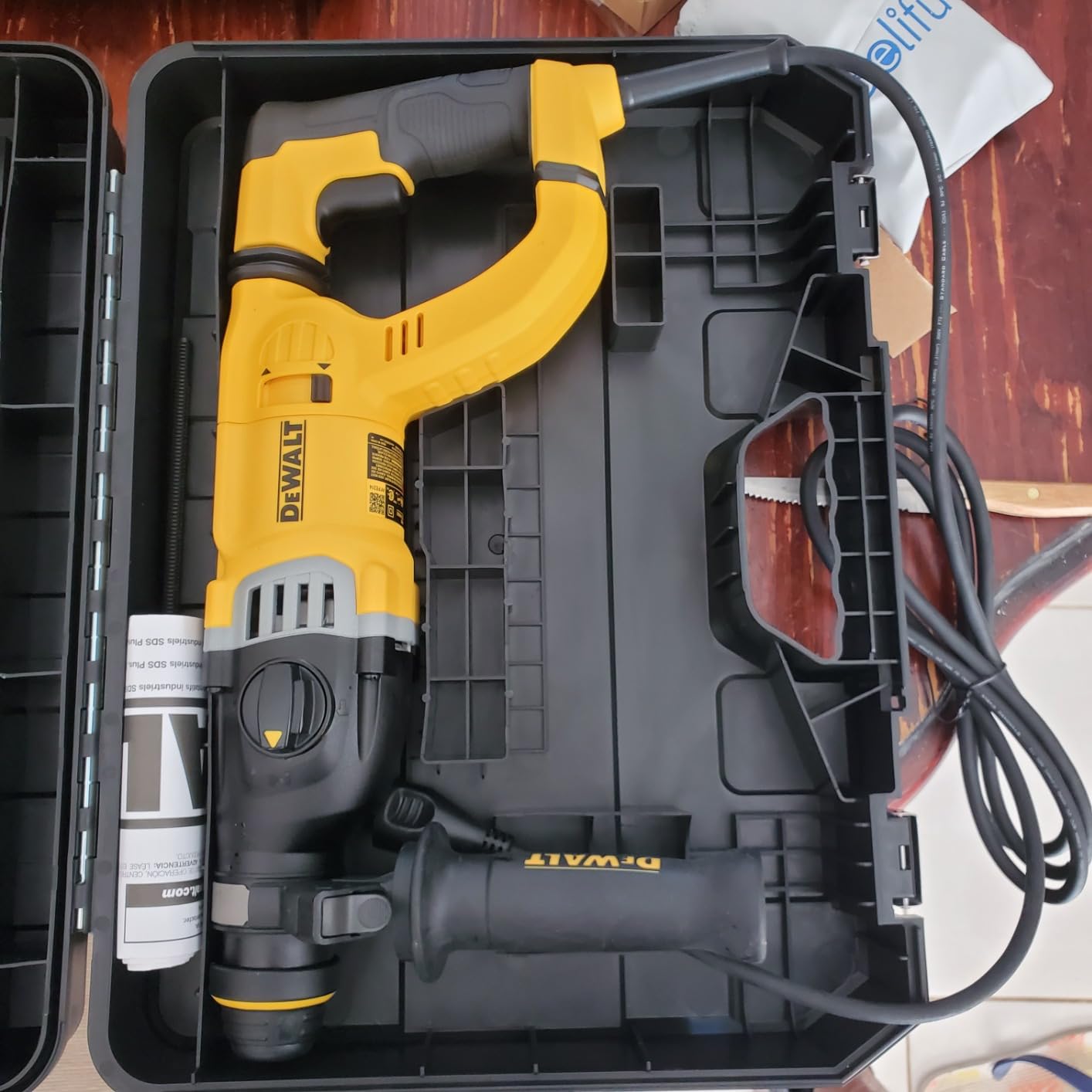
Owners consistently single out the vibration control, the compact handling and the clutch as the standout features. The integral clutch reduces sudden high torque reactions if a bit jams, which on a jammed chisel in a narrow shower stall is a genuine safety improvement rather than a spec-sheet line.
DEWALT also backs it with a 3 year limited warranty and two years of free service, and the rotating brush ring is built to deliver full power in both forward and reverse. That kind of warranty backing is worth more to a contractor than a raw joule figure.
Where the 3 joule class fits
This rating does not mean the tool is weak, it means it is honest about its lane. Three joules handles ceramic tile, thin thinset, mortar joints, concrete anchors and light chipping with room to spare. It will not tear through a 6 inch concrete slab, and no amount of marketing language changes that.
One more practical note: the kit is basic, a rotary hammer, side handle, depth rod and case. If you plan heavy chipping work, budget for a proper flat chisel and a spare brush set separately.
Why the vibration control matters more than the wattage
Reviews describe it as a capable drilling and chipping tool for tile and concrete anchors rather than a heavy breaker, and the vibration damping is what makes long chipping sessions bearable. Hand and arm fatigue is the reason people abandon a job halfway through, and damping is the single most effective fix.
If you have ever finished a day of breaking tile with numb fingers, that experience is the argument for this class of tool over a heavier hammer with no damping at all.
4. VEVOR 2200W Demolition Jack Hammer – Best Chisel Package for Broken Tile and Concrete
VEVOR Demolition Jack Hammer 2200W Electric Jackhammer Concrete Breaker
2200W
1400 per minute impact rate
56.2 lb
Four chisels included
Pros
- Four chisel types included
- the broadest bit selection in the group
- Heavy 2200W motor for concrete brick tile and asphalt
- 360-degree handle plus shock-absorbing rear grip
- Viewable oil port makes maintenance simple
Cons
- At 56.2 lb it is one of the heaviest units here
- Less customer review volume than the leading options
- Some included accessories are of low quality
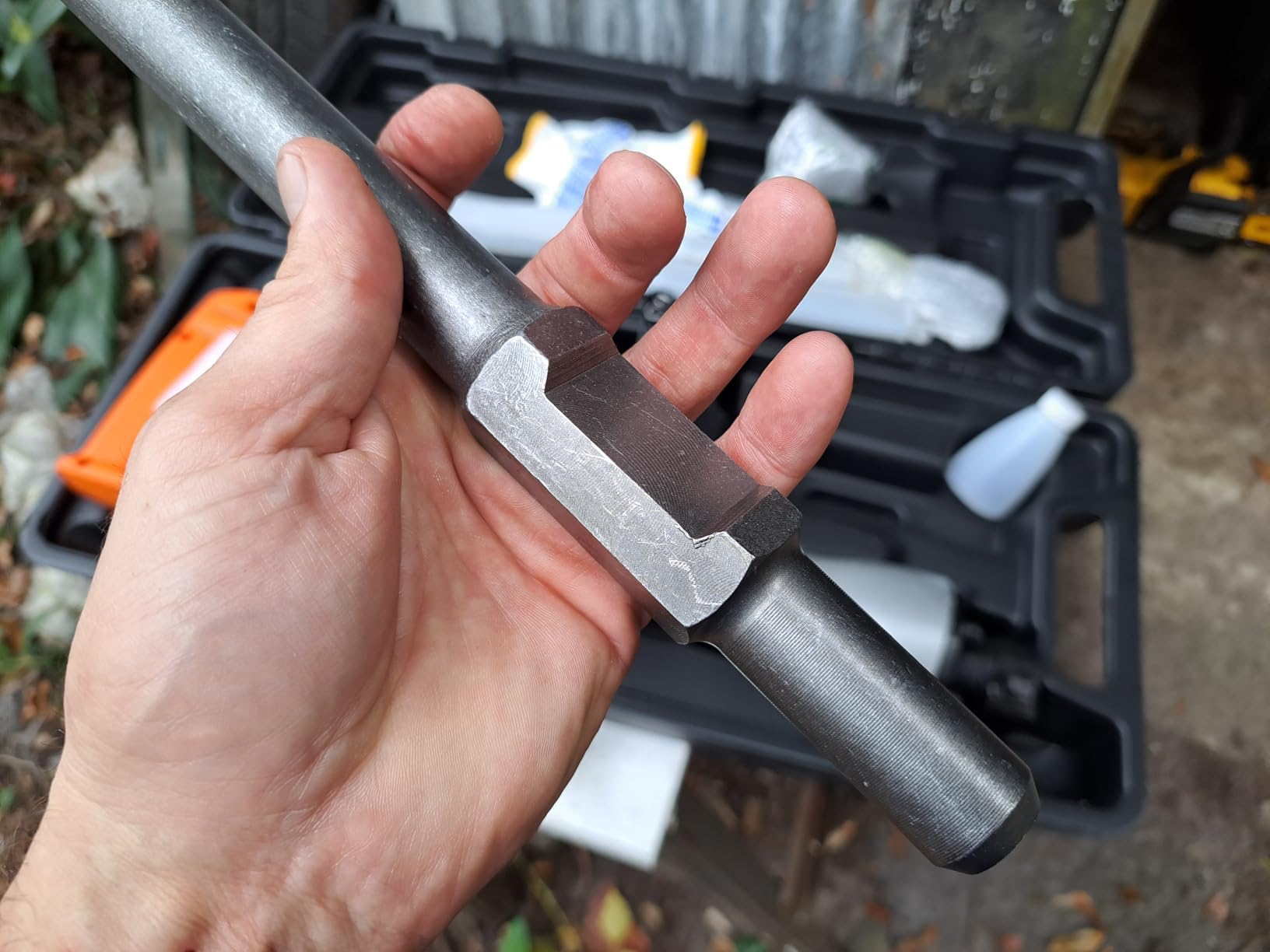
Four chisels in the box is unusual at this level, and it turns out to matter more than the wattage for tile work. You get a clay spade, a scraping chisel, a flat chisel and a point, which covers everything from a wide edge-cutting spade for lifting tile to a point for breaking the mortar underneath.
At 56.2 lb this is the heaviest true breaker in the group. That is a real tradeoff and you should make it consciously: you are buying raw breaking power and giving up the ability to work overhead or in a tight bathroom for more than a few minutes at a time.
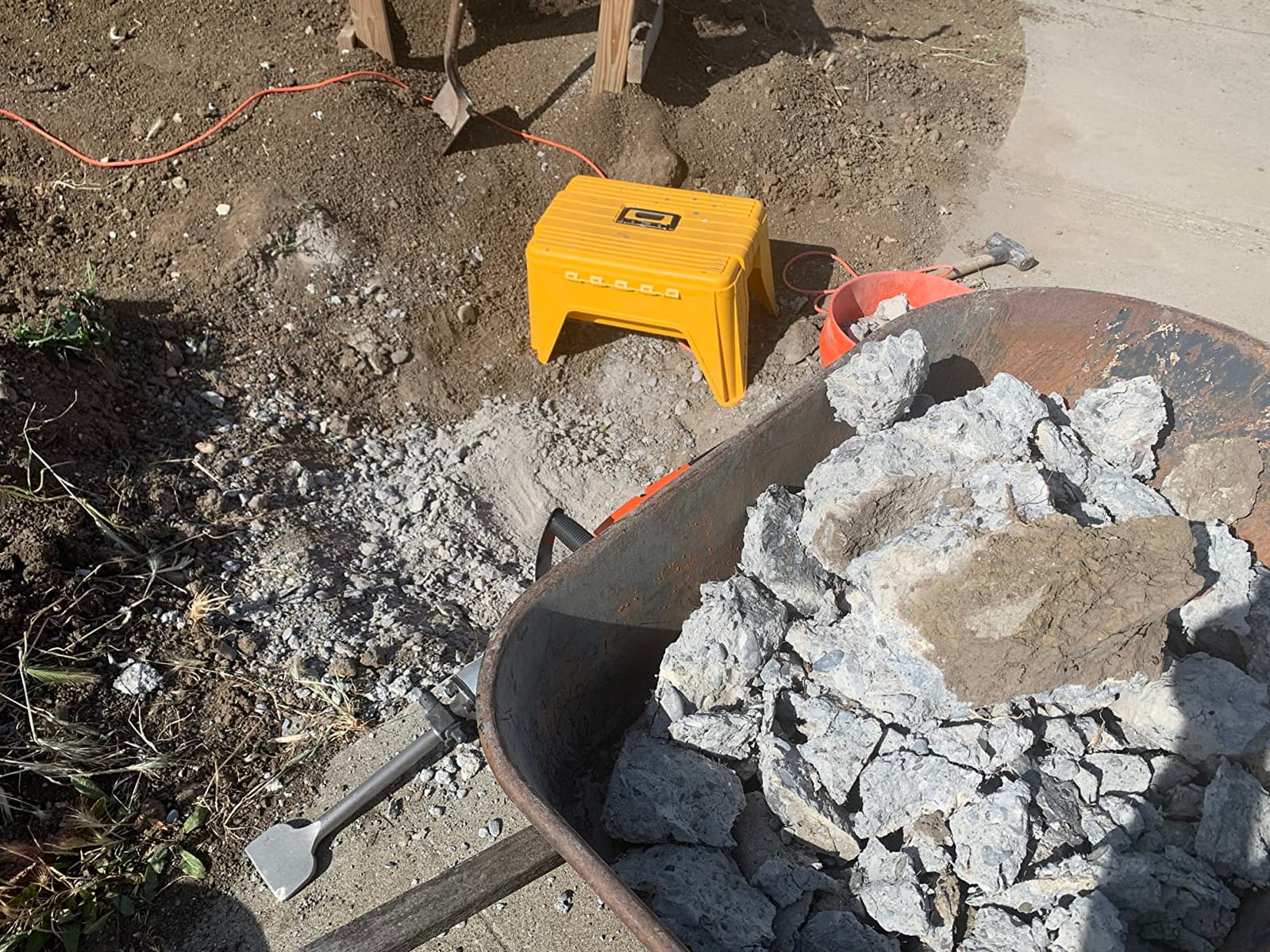
Satisfaction centers on the generous chisel package and steady power across concrete, brick, stucco and tile, with the adjustable handles helping manage fatigue on longer jobs. The 360-degree rotary vibration-proof front handle with slip-proof rubber is genuinely useful when you are working under a sink or inside a cabinet.
The viewable oil port is a small touch that pays off. Instead of guessing whether the hammer mechanism is lubricated, you can look at the window and top it up before a long session, and owners consistently appreciate the D-shaped rear handle and the lock button for continuous running.
Match the chisel to the material
Use the spade and scraping chisel for tile and the point for thinset and mortar bed. The temptation with a breaker this powerful is to attack the tile with the flat edge every time, but a wider spade placed under the tile lifts it off the mortar instead of shattering it, and that saves the subfloor underneath.
The other thing worth checking is circuit capacity. A 18 Amp tool on a long extension with an extension cord and a loaded power strip is a good way to get nuisance breaker trips in the middle of a job.
Where this one is hard to recommend
Handle the weight honestly. If you are new to demolition work, are working above shoulder height, or have any back or shoulder history, 56.2 lb will show up in your body within the hour. Reviews flag the weight as the main drawback and it limits the tool to users comfortable handling a full-size breaker.
The smaller detail is review volume. At 793 reviews there is a thinner base of long-term owner feedback than the leaders in this list, and some included accessories are reported as low quality. Keep the spare brushes and consider buying a better case.
5. Berserker 1300W 12-Pound SDS-Max Hammer – Best Lightweight Option for Long Tile Days
Berserker 1300W 12-Pound SDS-Max Demolition Jack Hammer 45HM,11-Amp Corded
12 lb
15 joules
4100 BPM
Tool-free SDS-Max bit changes
Pros
- Only 12 lb
- the lightest true demolition hammer here
- 15 joules at 4100 BPM for fast chipping
- Tool-free SDS-Max bit changes with lock-on button
- Triple vibration control and 12-position chisel rotation
- Flat and point chisels plus grease wrench and case
Cons
- Hammer-only with no drilling function
- Accepts SDS-Max chisels only
- Lower wattage than 2200W to 3500W units
Twelve pounds with 15 joules of impact energy is the combination most homeowners are looking for and rarely find. This is a genuine demolition hammer rather than a rotary hammer, and at half the weight of the big breakers you can work a bathroom floor in a t-shirt and still walk away upright the next day.
The 4100 BPM impact rate and the 12-position vario-lock chisel rotation are what make the low weight work. You can point the chisel into a corner at almost any angle, and the speed of the blows means a couple of seconds per tile instead of the slow grinding you get from an undersized tool.
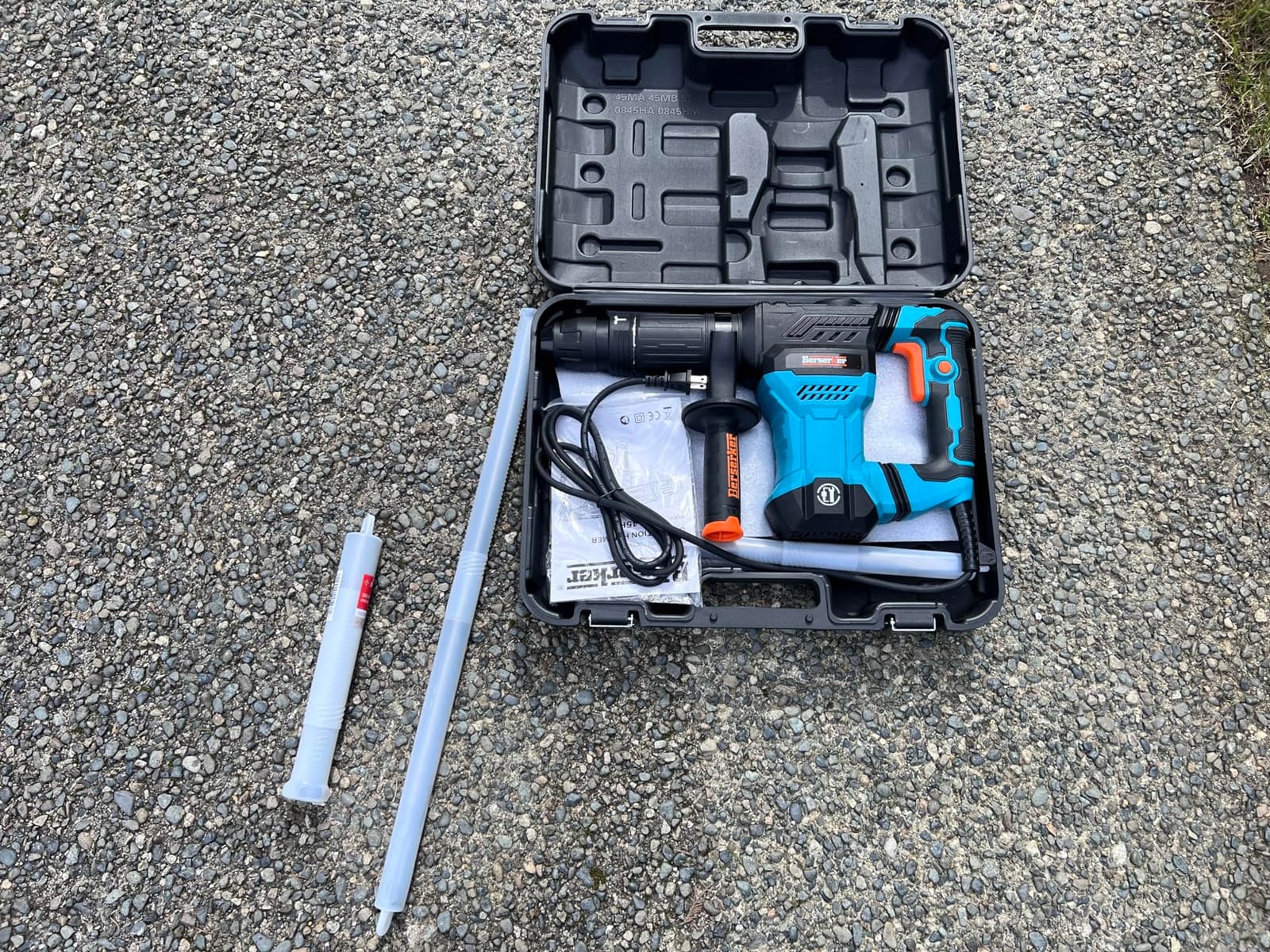
Buyers highlight the rare combination of true demolition power and a 12 lb weight as the deciding factor, particularly for tile removal, foundation work and DIY jobs where a 40-plus-pound breaker would be exhausting. The lock-on button for continuous running is mentioned often enough that you will notice it on a long afternoon of flat chiseling.
Triple vibration control is built into this one: an air cushion in the hammer mechanism plus a spring-loaded rear handle. That combination is what separates it from light tools that simply feel light because they are underpowered, and it is the reason it stays controllable when you set the chisel and lean into it.
Get the bit standard right before day one
This tool takes SDS-Max chisels only. SDS-Max is the heavy-duty standard used by professional brands, and the good news is that a broad range of flat, point and spade chisels are made for it, so replacement bits are easy to find. The bad news is that any SDS-Plus bits in your toolbox stay in the toolbox.
Buy a flat chisel wider than your tile and a tile spade when you order. Reviewers note it takes more passes than the 2200W to 3500W units on thick concrete, which is expected at this size and weight.
Know that it is hammer-only
There is no drilling function. That is not a flaw for tile removal, it is a design choice that removes weight and complexity, but if your project also involves drilling anchors or setting bolts in concrete, this is the wrong single tool.
For anyone over fifty, managing a back or shoulder issue, or working alone in a small bathroom, the 12 lb weight is the reason to choose this over a 25 lb breaker. You give up raw joules and accept that heavy slab demolition will take longer.
6. VEVOR 3500W 60 J Jack Hammer – Maximum Impact Energy for Slab and Foundation Work
VEVOR Demolition Jack Hammer Concrete Breaker 3500W 2 Chisel Bits Black
3500W
60 J impact energy
1900 BPM
Double-spring shock absorption
Pros
- Highest raw impact energy in the group at 60 J
- Thicker 14-gauge cord and serviceable removable gear cover
- Double-spring shock absorption and 360-degree handle
- Efficient cooling system supports long sessions
- Owners report it paying for itself within a single project
Cons
- Very heavy and harder to control in some positions
- Cord exits the bottom so it must be laid on its side
- Oil fill instructions are confusing
- Included case arrived with a broken lock
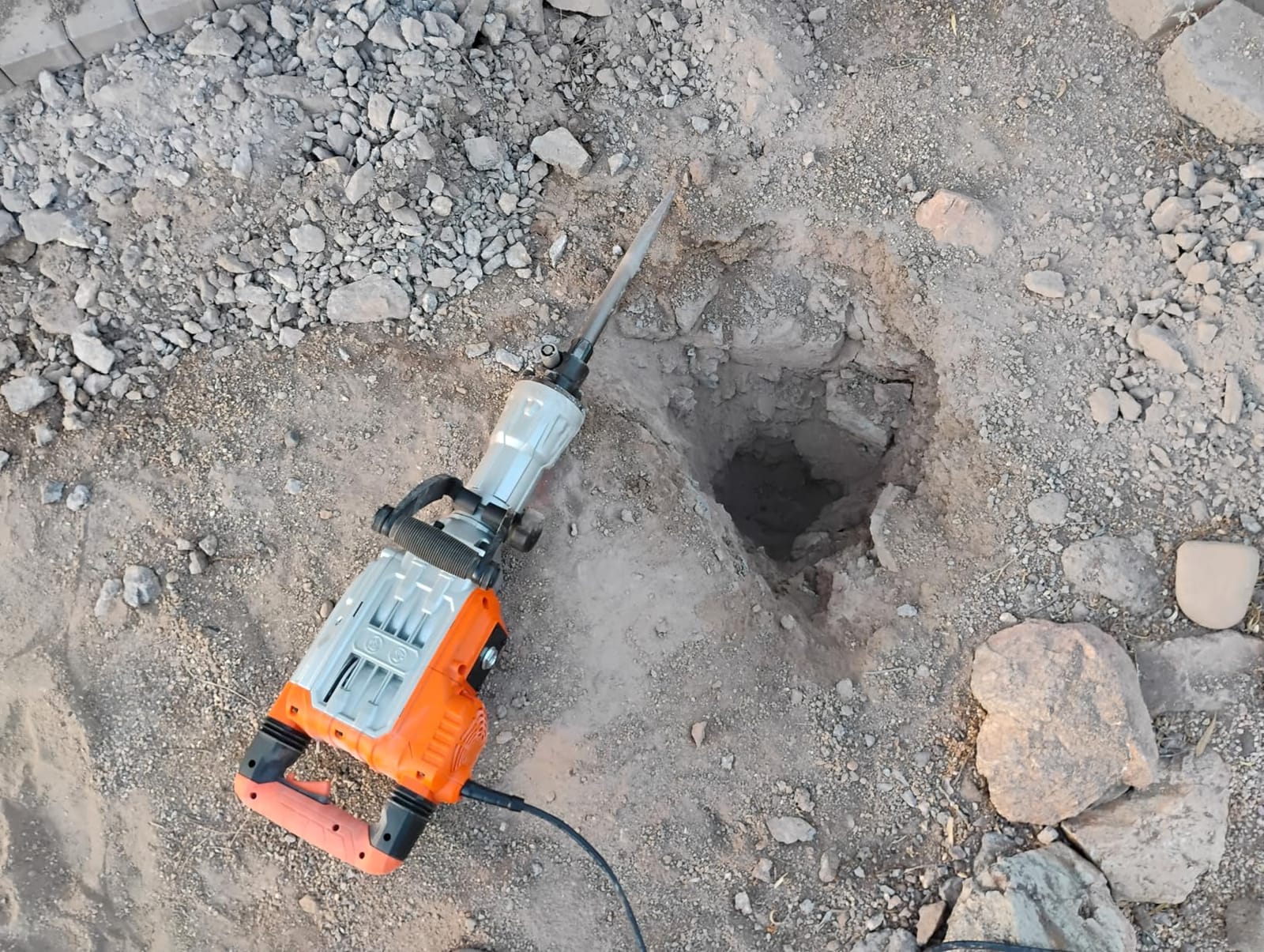
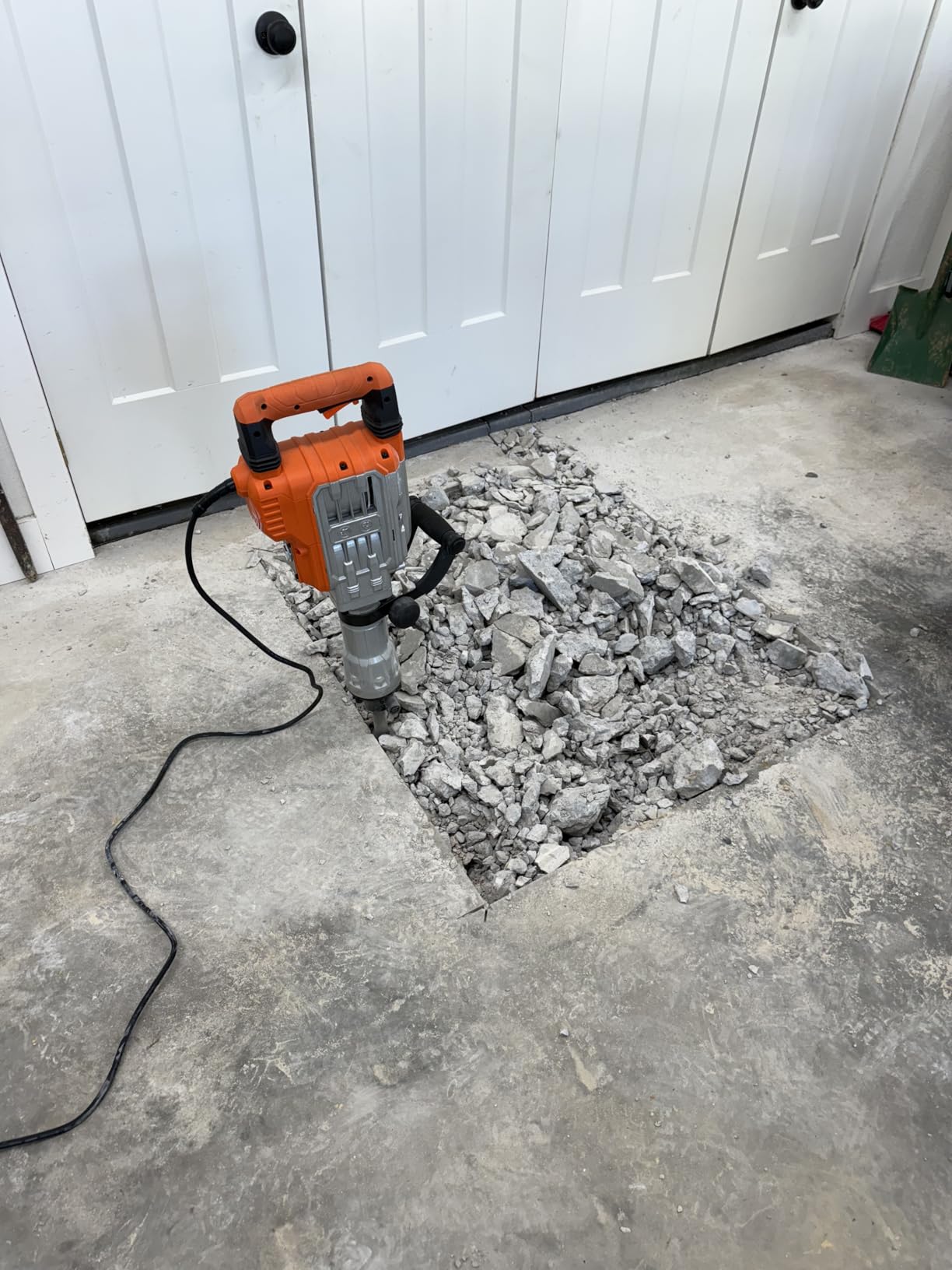
Sixty joules is the highest raw impact energy in this roundup, and on a concrete slab with tile and thinset driven into it, that number matters. One reviewer reports demolishing a 16 inch concrete beam in about three hours, which is the kind of result that tells you what class of work this belongs to.
Owners compare it favorably to far more expensive professional breakers for occasional and DIY use, and the recurring theme is that a single project can justify the purchase on its own. The heavy-duty aluminum construction resists corrosion, and the efficient cooling system is what lets it run through long sessions without cooking the motor.
Two build details stand out in the feedback. The 14-gauge power cord is thicker than most in this category, and the removable gear cover can be serviced rather than discarded when something goes wrong, which owners appreciate as a repairability decision rather than a feature.
Upgraded shock absorption with double springs and the 360-degree rotary handle are credited with reducing fatigue. The kit includes a flat chisel, a point chisel, gloves and a carrying case, so you can start breaking on day one.
Set it up correctly before the first blow
Two things catch people out. The tool needs oil added before first use, and the oil fill instructions conflict with the on-machine label, so check the label on the machine rather than the listing. And because the cord exits the bottom, you must lay the tool on its side when you set it down, otherwise oil from the mechanism ends up on the floor.
Reviewers also point out that wattage ratings across this whole category are inflated relative to what a 120V household circuit actually delivers, which is worth remembering when comparing a 3500W figure to a 2200W one. Judge on joules and on reviews, not on watts.
Who this weight is not for
This is a full-size breaker and it needs two hands and a firm stance. Reviewers note the weight reduces usability in some positions, and it is not the tool for wall tile, cabinet interiors, or anyone working overhead or alone.
The practical advice is simple: use it for the slab or the foundation work, and pick a lighter tool like the Berserker or ENEACRO for everything above waist height. Also expect a very heavy unit on the way out of the car, and budget for a better case than the one in the box, which has arrived with a broken lock for some buyers.
7. XtremepowerUS 1400W Jack Hammer – Budget Breaker with Interchangeable Hex Bits
XtremepowerUS 1400W Demolition Electric Jack Hammer SDS Plus Construction Concrete Breaker Punch Drill Chipping 4500BPM Floor Tile Removal (Include Flat & Chisel Bits) Carrying Case
1400W
3000 impacts per minute
18 lb
5/8 inch hex shank chisels
Pros
- Lowest cost true demolition hammer here with a real impact rate
- Only 18 lb
- light enough for one-handed positioning
- 5/8 inch hex shank chisels are widely available
- 360-degree swivel handle and D-grip improve control
- Impact-resistant carrying case included
Cons
- Lowest power output of the jack hammers here
- Only a 60-day manufacturer warranty
- Low sales rank indicates limited market presence
The thing that sets this one apart from other budget breakers is the bit system. It takes 5/8 inch hex shank bits, which is the same shank used by common rotary hammer accessories, so replacement chisels are cheap and easy to find. That is not true of every low-cost breaker and it matters over the life of the tool.
At 18 lb it is light enough to position with one hand while the other steadies the chisel, which is exactly the position you need for tile in a tight corner or against a wall. The 360-degree adjustable side handle plus the D-grip make that positioning workable rather than a fight.
Buyers treat it as a capable budget breaker for tile removal, light concrete and trenching, with the low weight and the interchangeable 5/8 inch hex bits as the main draws. The included hex bull point and hex flat chisel mean you can start on a floor without shopping first.
The impact-resistant blow-molded case is a nice inclusion at this level, and the high-strength alloy chuck is described as durable and corrosion resistant, which matters when you are storing a demolition tool in a damp garage between projects.
Plan around a lower power ceiling
This has the lowest power output of the jack hammers here, so the honest expectation is that thick slabs take more passes. For a residential bathroom, a kitchen, or light concrete and trenching, it is entirely adequate. For driving into a poured slab where the thinset has cured for decades, you will be repositioning the chisel more than you would with a 2200W or 3500W unit.
Buy a spare flat chisel and a spade while you are at it, since the whole point of the hex shank is that replacements are easy to source.
What the warranty tells you
The 60 day manufacturer warranty is the shortest here and worth factoring into your decision. It is fine if you are comfortable servicing the tool yourself and the chuck or brushes are standard parts, and less fine if you want someone else responsible when something fails.
Otherwise this is a sensible entry point for someone who has never used a demolition hammer, wants to spend as little as possible on a first project, and has a light duty job ahead. Reviewers consistently describe it as good for residential work and thinner slab, and slower on serious concrete than the higher output units.
8. VEVOR 1400W 19 J Jack Hammer – Lightest Grease-Lubricated Breaker for Small Jobs
VEVOR Demolition Jack Hammer, MAX 1400W Electric Jackhammer Heavy Duty, 2900 BPM Concrete Breaker 2pcs Chisels Bits Chipping W/Case, Gloves
1400W
19 J impact energy
2900 BPM
16.9 lb, grease lubricated
Pros
- Lowest cost entry point that is still a genuine jackhammer
- Only 16.9 lb and older DIYers report breaking large slabs comfortably
- Grease lubricated so there is no oil leakage to manage
- Includes case gloves and both flat and point chisels
- Good for stumps bricks post bases and driveway sections
Cons
- Non-standard 5/8 inch hex shank makes replacement bits hard to find
- Aluminum chisel bit housing stripped under repeated impact for one reviewer
- Sparse instruction booklet with little maintenance guidance
- Runs hot during sustained work
- Customer service widely reported as poor
Sixteen point nine pounds and nineteen joules is a rare combination at the entry end of the market. Owners, including older DIYers, report breaking large slabs and dumped concrete blocks without straining themselves, and one describes handling a 5 by 3 foot, 8 inch thick slab with it.
The grease lubrication detail is worth more than it sounds. Oil-filled breakers can weep onto the work surface or your subfloor if you set them down wrong, and grease lubrication removes that failure mode entirely for a tool that will live in a garage.

The shock-absorbing handle with an upgraded multi-spring structure and a larger trigger switch is what makes the weight manageable, and the 360-degree rotary handle helps in narrow spaces. An efficient cooling system is included and does work, though it still runs hot during sustained breaking.
Owners value the combination of low weight, low cost and no oil leaks, and the box includes a case, gloves and both flat and point chisels, so it is usable straight out of the box for shrub stumps, bricks, post bases and driveway sections.
The 5/8 inch hex shank is the catch
Difficulty sourcing matching 5/8 inch hex bits is the most repeated negative in the reviews, and it is a genuine problem in practice. The bits fit, but the availability is inconsistent, so before you commit, search for a flat chisel and a spade in the right shank and confirm you can actually buy them.
One reviewer also reported the aluminum chisel bit housing stripping under repeated impact, which points at the housing rather than the shank, and the instruction booklet is sparse enough that maintenance guidance is basically absent.
Good first tool, weak support behind it
Customer service is widely reported as poor, and that is the reason this sits where it does in the ranking rather than higher. If something fails outside the short warranty window, expect to sort it out on your own.
For a first demolition job, a shed base, a driveway patch or a small bathroom, it does the job at the lowest entry point. For a professional schedule where downtime costs you money, choose a model with a two year warranty and an easier service path.
9. ENEACRO 11 Amp SDS-Max Jack Hammer – Best for Tile and Thinset Work
ENEACRO SDS-Max Demolition Jack Hammer, 11 Amp Electric
11 Amp
15.7 joules
4100 BPM
12.8 lb aluminum alloy shell
Pros
- Lightweight 12.8 lb body suits prolonged tile removal
- Reviewers report it turns hours of manual chiseling into minutes
- Included chisel walks through heavy tile
- Adjustable side grip and bit angle for comfort
- 11 amp draw runs fine on a standard extension cord
- Anti-vibration system and soft grip keep numbness manageable
Cons
- Hammer-only with no drilling mode
- Only accepts SDS-Max chisels
- A 4 inch spade bit may need to be purchased separately
- Included grease wrench reported bent by one reviewer
This is the model I would hand to someone whose tile removal job is thinset, not concrete. Owners specifically praise the included chisel for walking right through heavy tile, and the 12.8 lb aluminum alloy shell makes it one of the most controllable hammers here for work done at floor and waist height.
At 4100 BPM and 15.7 joules it chips fast for its size, and reviewers describe it turning hours of manual tile chiseling into minutes. The 84 percent five star share in the owner ratings reflects a tool that does a narrow job very well.
The adjustable side grip and adjustable chisel angle are what let you set up for a wall or a floor and keep a comfortable wrist position in either. The 360-degree auxiliary handle is included, and the self-lock button means you are not holding the trigger down through a long session.
Owners also note that the 11 amp draw runs fine on a standard extension cord, which removes one of the most common mid-job frustrations with 13 amp and higher tools. The anti-vibration system with PU soft grip keeps hand numbness manageable over a full afternoon.
Plan the chisel set before you start
It is a hammer-only design that takes SDS-Max chisels, so you get no drilling function. That is a fair trade for tile work and a poor one if you also need to drill anchors, so decide that before buying rather than after.
A separate 4 inch spade is likely an extra purchase for spading work, and some reviewers report difficulty finding additional compatible attachments, so buy your full chisel set up front while the selection is easy to find.
When to choose it and when to walk away
Choose it if your project is tile, thinset, brick, stucco, trenching and foundation removal at normal working heights, and if you value a light tool with a soft grip over raw joules. The listed applications cover exactly that range.
Walk away if you need to break heavy concrete continuously, if you have to work overhead for hours, or if you already own a large collection of hex shank bits you hoped to reuse. It requires strength, correct angle and constant pressure to work tile and thinset well, so technique matters more here than with a very heavy breaker.
10. Berserker 1700W 30-Pound Hex Jack Hammer – Heavy Contractor Class Breaker
Berserker 1700W 30-Pound Demolition Jack Hammer 65F with 1-3/16″ Hex,14Amp
1700W and 14 Amp
55 J impact energy
30 lb
1-3/16 inch hex bit system
Pros
- 1700W and 14 amp motor delivers 55 J for demanding concrete and tile
- Tool-free bit changes with automatic locking and dust protection
- 360-degree adjustable handle with two-handed ergonomic grip
- Anti-vibration technology and air cushion reduce fatigue
- Lock-on button avoids holding the trigger
- Wheeled case and spare carbon brushes included
Cons
- Restricted to 1-3/16 inch hex bits
- At 30 lb it is tiring over long sessions
- Metal construction adds weight for users needing a lighter option
Fifty-five joules at 1900 BPM through a large-diameter cylinder puts this in the contractor class, and owners rate it as powerful, well built and stable for breaking concrete, brick, stucco and tile. The 1700W, 14 amp motor has the headroom for continuous work rather than the burst behavior of lighter breakers.
The 360-degree adjustable accessory handle and two-handed ergonomic design support good working posture, which on a 30 lb tool is the difference between a productive day and a sore one. The air cushion in the hammer mechanism and the upgraded anti-vibration technology are what make that weight tolerable.
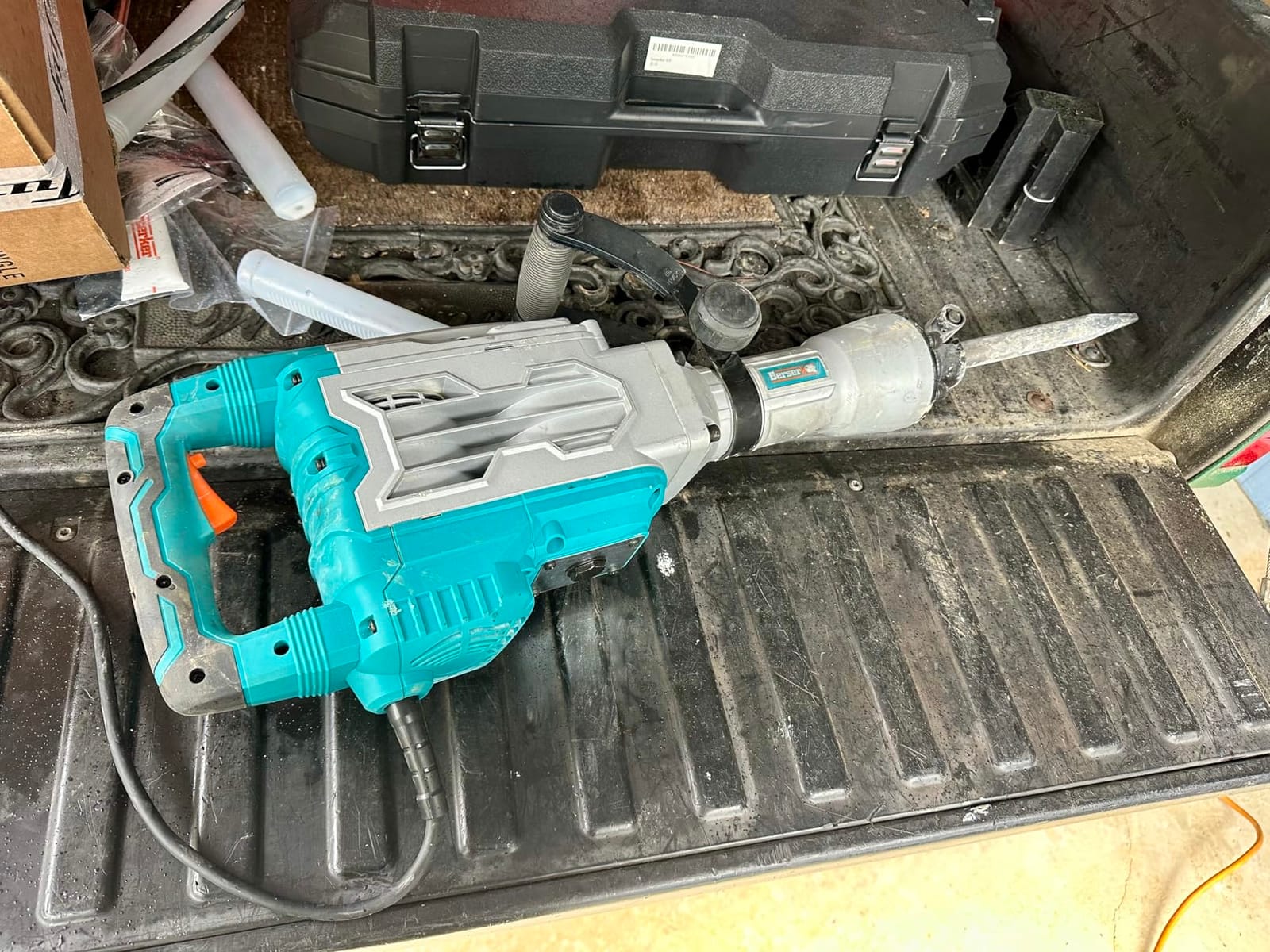
Reviewers like the tool-free bit system, the adjustable handle and the vibration control for heavy continuous work, and the lock-on button removes the trigger fatigue that comes from a long demolition run. Double insulation is included for user safety.
The wheeled carrying case is a genuinely useful inclusion at this size, along with grease, replaceable carbon brushes, a user manual and three wrenches, plus a point chisel and a flat chisel.
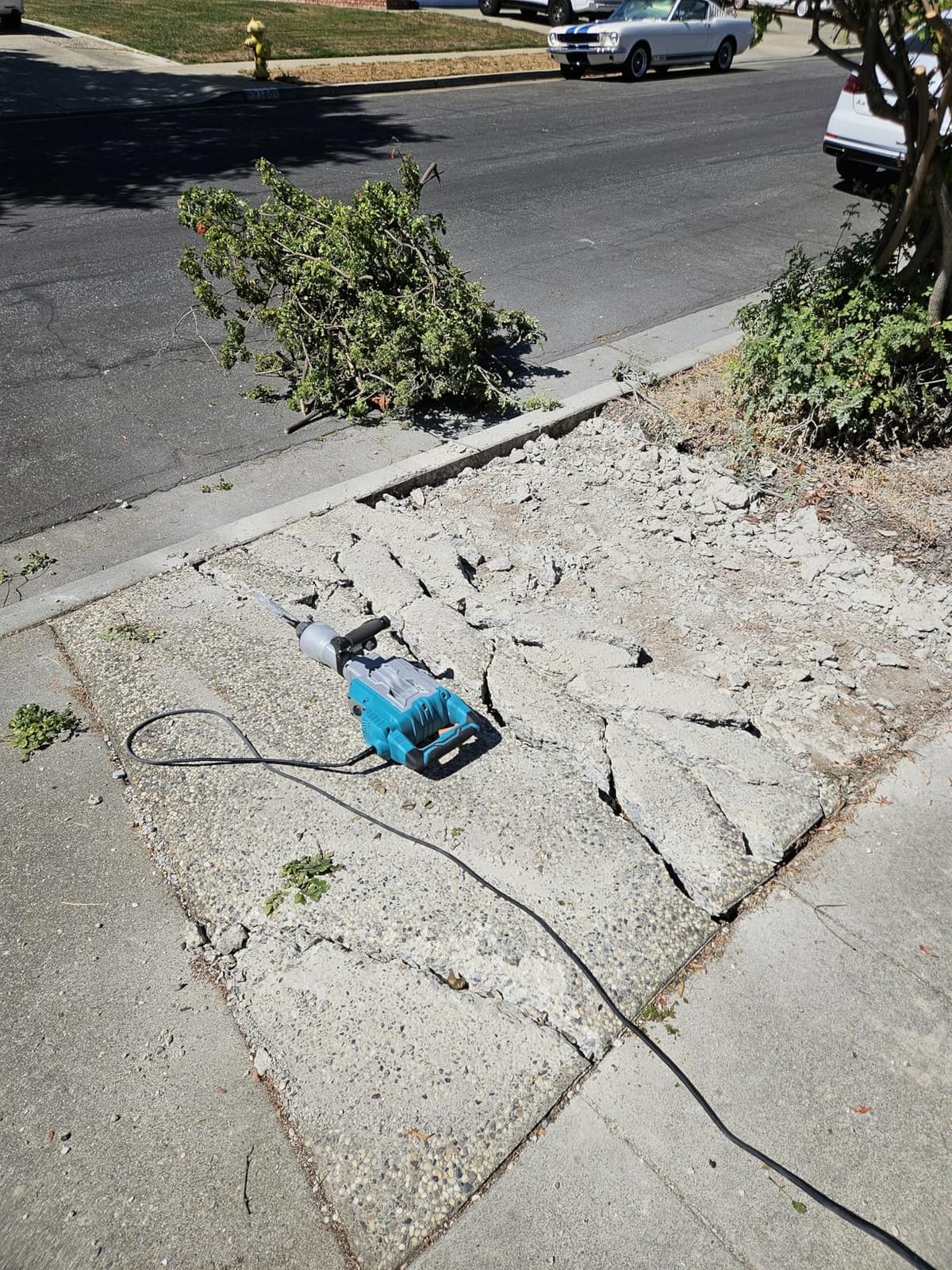
The 1-3/16 inch hex shank rules out common bits
This is the most restrictive bit system in the roundup. It takes 1-3/16 inch, or 30 mm, hex bits only and will not accept the far more common 5/8 inch or 1-1/8 inch shanks, so if your bit collection is built around the smaller standards, this is the wrong buy.
Check availability for a wide flat chisel and a tile spade in 30 mm before ordering. Once you are committed, the tool-free automatic locking system with dust protection is genuinely quick at swaps.
Thirty pounds is a real commitment
Owners rank this as powerful and stable but note that the 30 lb weight adds fatigue on extended jobs. The tool is at its best on trenching, breaking holes, slabs, block and brick work, where you are working on the ground with a wheeled case nearby.
For a one-time bathroom project it is more machine than you need. For someone demolishing regularly, the power-to-weight figure here is the sweet spot between the light hammers and the 56 lb class units, and the included wheeled case makes it practical to move.
11. Berserker 1700W 25-Pound SDS-Max Hammer – Best for Speed Control on Long Jobs
Berserker 1700W 25-Pound SDS-Max Demolition Jack Hammer 65H,14-Amp Corded
1700W
45 J impact energy
2100 BPM
Six speed control from 200 to 2100 BPM
Pros
- 2100 BPM and 45 J for rapid chipping and heavy wall demolition
- Six-level speed control matches blow rate to the material
- SDS-Max tool-free bit change with automatic locking
- Well-balanced 25 lb body with a handle rotating on two axes
- Double anti-vibration design plus air cushion
- Aluminum-magnesium housing resists oil leakage
- 24-month warranty
Cons
- SDS-Max only with no hex shank compatibility
- At 25 lb still heavy for overhead or all-day tile work
- Not the lightest option for handling and fatigue
The six-level speed control from 200 to 2100 BPM is the feature that separates this from every other hammer here. Tile, thinset, concrete and pavement all respond differently to blow rate, and matching the speed to the material is the difference between a controlled break and a shower of fragments.
At 45 joules and 2100 BPM it has the output for heavy wall demolition as well as floor tile, and the well-balanced 25 lb body is easier to keep square on a chisel than the larger breakers in this list.
Reviewers describe it as a capable mid-weight breaker with strong output, useful six-speed control and smooth SDS-Max bit changes. The D-shaped handle rotating 360 degrees on the main axis and 180 degrees on the secondary axis is singled out for comfort and control during sustained breaking of concrete, brick, tile and pavement.
The double anti-vibration design with dual springs at the handle plus a built-in longer air cushion noticeably reduces hand fatigue, and the high-strength aluminum-magnesium alloy integrated housing is designed to prevent oil leakage over long jobs. A 24-month warranty is included, along with point and flat chisels, grease, a wrench, a spare carbon brush and a case.
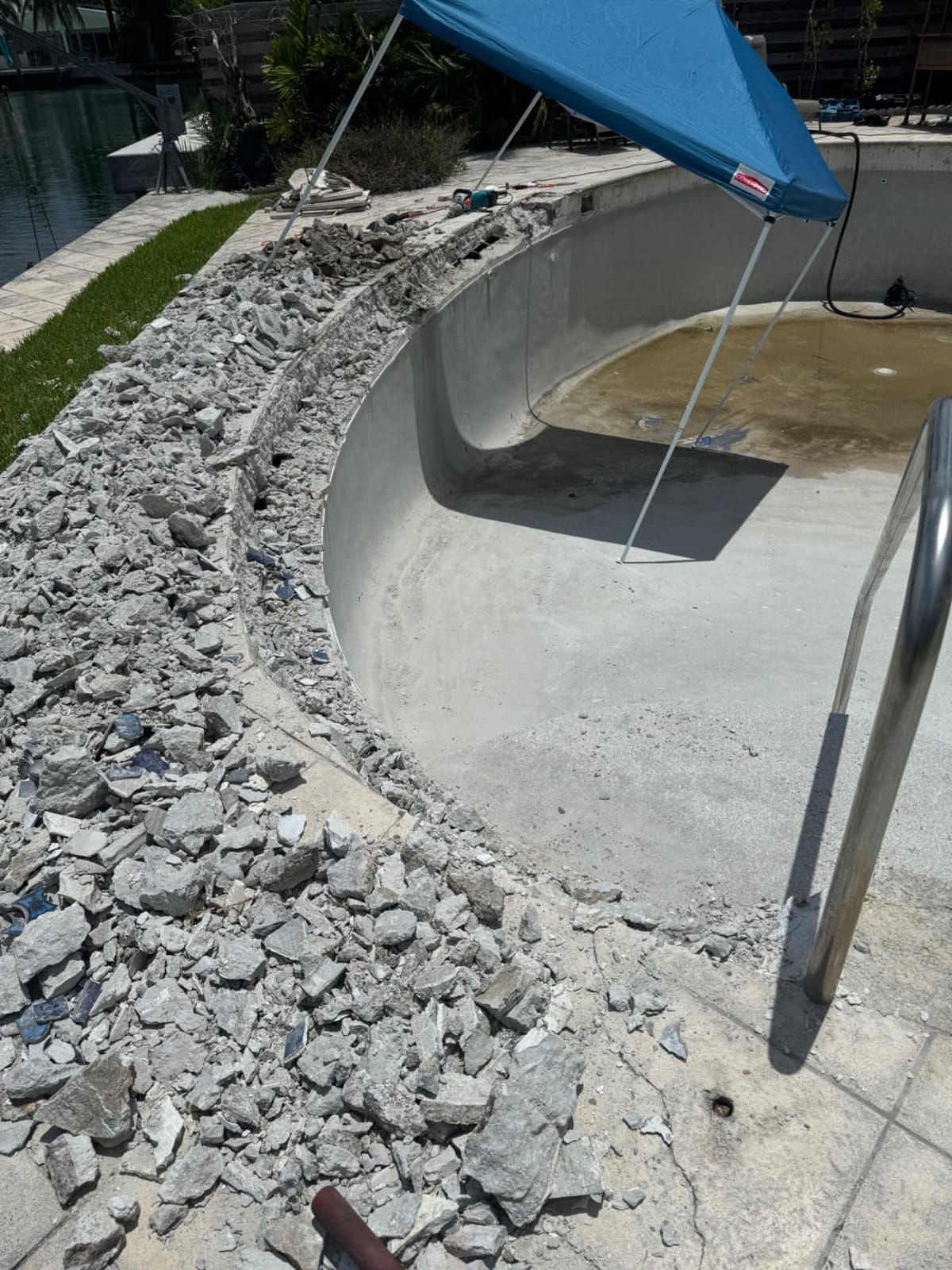
Use the speed control on purpose
Start low. The lower speed settings are for knocking the tile surface and loosening thinset, where a high blow rate just shatters the tile into dust you then have to clean. Once the tile is lifted, step up to the higher settings for the mortar bed and concrete underneath.
That habit alone will save you a lot of sweeping on most jobs, and it is the reason this model is worth a closer look than its 241 reviews suggest.
Weight and bit compatibility
Twenty-five pounds is still heavy for overhead or all-day tile work, and it is not the lightest option if your priority is handling and fatigue reduction. Choose it when the material is hard and the job is long, and pick a 12 to 18 lb model when you will be working above waist height.
On tooling, it is SDS-Max only with no compatibility with hex shank bits. That is a well-supported standard with a wide range of available chisels, so it is a safe choice if you are buying bits fresh, but it will not use the hex bits you may already own.
12. ENEACRO 65 J SDS-Hex Jack Hammer – Toughest Output for Asphalt and Frozen Ground
ENEACRO Demolition Jack Hammer 65 Joules SDS-Hex Concrete Breaker
1700W
65 joules
30 lb
SDS-Hex tool-free bit change
Pros
- 1700W motor with 65 J for the toughest concrete asphalt and frozen ground
- SDS-Hex tool-free bit change with automatic locking and dust protection
- 360-degree rotating side handle with anti-vibration system
- Enhanced grip stability and shock absorption reduce fatigue
- Wheeled blow-molded case for job-site transport
- Spare carbon brushes and lubricant included
- Complete kit ships with pointed and flat chisels
Cons
- SDS-Hex only
- not compatible with SDS-Max or hex-shank demolition bits
- Single-speed operation with no blow-rate adjustment
- At 30 lbs it is heavy for prolonged tile work or overhead breaking
Sixty-five joules is the highest impact energy figure in this roundup, and owners describe it chewing through concrete, asphalt, brick and frozen ground. If you are working outdoors in cold conditions or breaking a driveway, that headroom is the reason to look here rather than at a tile-focused model.
The 360-degree rotating side handle with an advanced anti-vibration system is credited with control and reduced fatigue, and it supports vertical, horizontal and overhead positioning. Enhanced grip stability and shock absorption matter on a 30 lb tool more than most spec sheets admit.
The heavy-duty wheeled blow-molded case is frequently praised for job-site convenience, because moving a 30 lb breaker and its accessories across a site in two trips is miserable. Spare carbon brushes and lubricant are included for low-maintenance longevity.
Tool-free bit changes come with automatic locking and dust protection, and the kit includes the hammer, a pointed chisel, a flat chisel, spare carbon brushes, lubricant, an oil bottle wrench and two hex wrenches, so it is complete out of the box.
SDS-Hex is a narrower ecosystem
Being SDS-Hex only means it is not compatible with SDS-Max or standard hex-shank demolition bits. That restricts you to one shank family, so verify chisel availability in SDS-Hex before buying, especially for a wide flat chisel and a tile spade.
It is also single-speed, with no blow-rate adjustment for different materials. On a tool this powerful that is a real limitation when you are working delicate tile, because you cannot dial the energy back the way you can on a six-speed model.
Where 65 joules is worth it
Concrete demolition, tile removal on a slab, frozen ground breaking, road repair and foundation work are the listed applications, and this is the tool for the heavy end of all five. It is not a good match for a bathroom ceiling or a delicate shower floor, where the power far exceeds the job.
At 30 lbs it is a heavy tool for prolonged tile work or overhead breaking, and with 135 reviews it has the smallest owner base in this roundup. Buy it for toughness on outdoor and slab work, and pick a lighter SDS-Max hammer if the job is mostly interior tile.
How to Choose a Demolition Hammer for Tile Removal
Almost every wrong purchase in this category comes down to three questions: how big is the area, what is under the tile, and how long will you be holding the tool. Answer those and the specification details sort themselves out.
Match the weight class to the area and the material
Owners on forums ask this constantly, and the pattern in their answers is consistent. Under roughly 100 square feet of interior tile on a standard subfloor, a light 12 to 18 lb hammer or even a rotary hammer will do the job and save your back. Past that, and especially on a poured concrete slab, step up to the 25 lb and up class.
The failure mode of going too light is not that the tool cannot break tile, it is that you reposition the chisel constantly and finish with a sore arm and half the floor done. The failure mode of going too heavy is the 56 lb class, which is superb on a slab and genuinely unpleasant in a small bathroom.
Rough guide from this roundup: 12 to 18 lb for interiors and light work, 25 to 30 lb for full bathrooms and floors, 40 lb and above for slab, driveway and foundation demolition.
SDS-Max, SDS-Plus or hex shank: the bit decision
This is the compatibility question that trips people up most, and the answer is that a demo hammer will only take the shank it was built for. An SDS-Max hammer will not accept SDS-Plus bits, an SDS-Plus rotary hammer will not accept SDS-Max bits, and the hex shank options here run 5/8 inch, 1-3/16 inch and SDS-Hex depending on the model.
The practical consequence is the same in every case: buy the tool first, then buy its chisels. Do not assume the bits in your existing toolbox will fit, and do not assume a replacement bit will be easy to find if the shank is unusual. Two of the models in this roundup use non-standard shanks that reviewers specifically flag as hard to source.
The wider the standard, the more flexible your tool is across jobs. SDS-Max has the broadest professional support, standard 5/8 inch hex has the broadest cheap accessory support, and 1-3/16 inch hex is the most restrictive in practice.
Impact energy and blow rate, translated
Impact energy in joules is the number that decides whether a material gives up. Everything under about 10 joules is chipping and light work. The 15 to 20 joule class is where residential tile removal lives, the 45 to 65 joule class is where slab and foundation work lives.
Blows per minute is speed, not force. A high BPM figure at moderate joules gives fast chipping, which is what you want on tile. Low BPM with high joules is slow but percussive, which is what you want on concrete. Where a tool offers variable speed, use it: low settings to lift tile, high settings to break the bed underneath.
Vibration control and dust extraction
Anti-vibration systems are named differently by every brand, but the mechanism is the same: an air cushion in the hammer mechanism, springs at the handle, or both. Reviewers consistently single out vibration control as the feature that determines whether they can finish a full day of chipping, and on any project over thirty minutes it should influence your choice as much as the joule figure.
For dust, none of the breakers in this roundup have integrated extraction, but the DEWALT D25263K is compatible with a D25301D dust extraction system, and the ENEACRO kit includes a dust cap. Everything else needs a HEPA vacuum and a shroud, which is covered in the safety section below.
Buy or rent a demolition hammer
Rental makes sense for a single weekend project on a slab, and forum discussions on this point tend to converge: renting a heavy breaker for a 300 square foot floor is reasonable, buying one for the same job is also reasonable if you will do it again.
The variables are project length and how far you have to carry the tool. Renting a 40 lb or larger breaker means a truck or a cart, and reviewers and forum users alike recommend the rental cart for that reason. Buying makes more sense if you are in a trade, if you already have the PPE and a workspace, or if you want the tool available on your own schedule rather than on a rental clock.
One more honest consideration: the light 12 to 18 lb hammers in this roundup cost less than most rental deposits would suggest and are the easiest tools to justify owning, because they are light, they are simple and they do not need a truck.
How to Remove Tile with a Demolition Hammer
No competitor in this space publishes a proper process, so here is the sequence that works. The order matters more than most guides admit, because step one determines whether steps four through seven are painful.
- Clear the room completely, including baseboards, cabinets and anything bolted through the floor.
- Break the perimeter first. A flat chisel or spade placed at the edge of the tile and struck at a shallow angle pops tiles off the bed far faster than working the middle of the field.
- Set the chisel shallow, almost flat to the surface, and strike at a low blow rate to lift the tile rather than shatter it. Fragments are what you clean up later.
- Work in sections of roughly 25 square feet and clear each section before moving on. Debris piles make the next section harder and put strain on the subfloor.
- Drop the blow rate and swing to a point or narrow flat chisel once the tile is off and you are into the thinset and mortar bed.
- Sweep and vacuum constantly. Thinset dust is abrasive, and it will end up inside your moving parts if you let it accumulate.
- Inspect the subfloor for high spots, staples and protruding nails before setting new material.
Wall tile and floor tile are different jobs
Wall tile is lighter work held at shoulder height, and gravity works for you less than you would like. Keep the chisel angled so debris falls away from the wall rather than into your boots, and expect to work in small sections with the area below cleared.
Floor tile is heavier work at ground level, which is the easier position for your back. The advantage is that you can use a heavier tool and a spade without worrying about overhead strain, and the disadvantage is that debris falls onto the surface you are working on.
Choosing flat versus pointed chisels
For tile, flat and spade chisels are preferred over pointed, and that preference is near-universal in the owner feedback. A flat chisel concentrates the blow along an edge to lift tile, while a point concentrates it in a small spot to fracture material.
The practical set for tile removal is a wide flat chisel for the field, a tile spade for lifting cleanly, and a point for thinset and concrete. A masonry chisel in a sledgehammer can handle small areas, but on anything above a few square feet a powered breaker is faster and the labor comparison is not close.
Safety Gear and PPE for Tile Demolition
Demolition hammers are among the noisiest tools you can run, and the dust from tile, thinset and concrete slab is a serious inhalation risk. This is the part of the job most guides skip and the part that determines whether you can keep working.
- Safety glasses or a face shield, always, because tile fragments and chisel sparks travel further than you expect.
- Proper hearing protection, since impact energy in the 45 to 65 joule class is genuinely loud.
- A N95 or better respirator, plus a HEPA vacuum or dust shroud, for any indoor work on tile or concrete.
- Heavy gloves, ideally the cut-resistant kind, because the chisel edge and the tool housing both have sharp spots.
- Knee pads and closed toe boots, since a full day of this is floor work.
- Eye and ear protection checked before the trigger, every single time.
- Extension cords rated for the tool’s amperage, and no daisy chaining.
- A clear work area with the cable routed so it cannot catch a foot mid-swing.
- Check the chisel is fully seated before every run, and keep hands clear of the front handle line.
- Take breaks on vibration, not just on fatigue. Tingling in the fingers is a signal to stop.
Silica dust from concrete and thinset is the hazard most likely to cause lasting harm, and it is the one people manage worst. If you cannot get extraction onto the work, work wet or reduce the area per session rather than pushing through. For the vacuum pass afterward, our tested guides to vacuuming tile with pets and tile floor vacuum picks cover the fine particulate this work leaves behind.
Frequently Asked Questions
What is the most effective tool for removing tile?
A demolition hammer with a flat or spade chisel is the most effective tool for removing tile. It drives high-impact blows into the chisel without rotation, which lifts tile off the thinset bed instead of drilling into it. A rotary hammer works for smaller areas but is slower on thick slabs.
What is the best demolition hammer for removing tile?
For most residential tile removal, a 12 to 18 lb SDS-Max hammer is the best balance of power and weight. For tile bedded into a poured concrete slab, step up to a 25 lb or heavier breaker. Match the chisel standard to the bits you already own before buying.
What is the difference between SDS Plus and SDS Max tile removal tools?
SDS-Plus tools are lighter rotary hammers suited to drilling anchors and lighter chipping. SDS-Max tools take heavier chisels and deliver more impact energy for sustained demolition. An SDS-Max hammer will not accept SDS-Plus bits, and the reverse is also true, so the bit standard is a hard compatibility wall.
What is the difference between a jackhammer and a demolition hammer?
In practice the terms are used interchangeably for the same class of tool. Both drive a piston that hammers a chisel without rotating it. The meaningful distinction is between a true demolition hammer, which is hammer-only and heavier, and a rotary hammer, which drills and chips in one body and is the better choice when you need both.
Should I buy or rent a demolition hammer?
Rent a heavy breaker for a single weekend job, especially if it is over 40 lb and you need a cart to move it. Buy a light 12 to 18 lb hammer if it is a one-time interior job, and buy outright if you work in the trade or expect repeat demolition projects.
Which chisel is best for removing tile?
A flat chisel or a dedicated tile spade is best for lifting tile, because the wide edge catches the thinset bed and pops the tile off. A pointed chisel is better for thinset and concrete underneath. Avoid the pointed chisel on tile itself, since it shatters rather than lifts.
The Best Demolition Hammers for Tile Removal in 2026
After working through all twelve, the XtremepowerUS 2200W Demolition Jack Hammer takes the top spot for the best demolition hammers for tile removal. It has the largest owner base in the class at 4691 reviews, a 4.6 rating built over years of real jobs, and an included flat and bull point chisel pair that covers most of what a tile project needs. If you want one tool that handles a full interior floor and a slab job, this is the one.
For a different job, the ENEACRO 13 Amp SDS-Plus is the value pick, because four functions in a 12.58 lb body beats buying two tools. The DEWALT D25263K wins on control and carries the highest owner rating in the roundup, which makes it the right call for anyone whose back or hands cannot take a heavy day. If weight is your main concern, the Berserker 12 lb and the ENEACRO 11 Amp SDS-Max are the two lightest true demolition hammers here, and both are strong specifically on tile and thinset.
Whichever one you choose, buy the flat chisel and a tile spade for the standard it takes, and check the shank against the bits you already own before the order goes through. Then work in sections, clear as you go, and control the dust.
If you are planning the vacuum pass afterward, our picks for vacuuming tile floors and upright vacuum picks will handle the fine dust that tile demolition always leaves behind.